139. ‘I Remember You’, by Frank Ifield

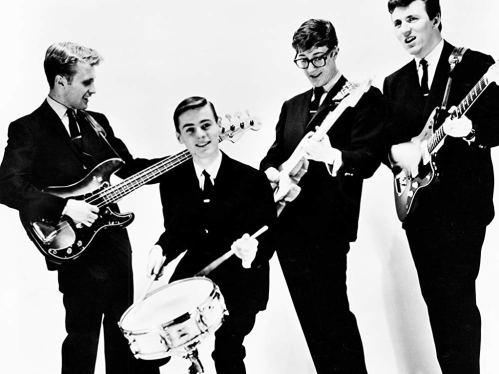
For the 3rd post in a row, we have somebody new at the top of the charts. Mr. Frank Ifield is going to burn very brightly, and very briefly, across British pop in 1962-63 and he kicks things off here with a big ol’ seven-week stay at #1.

p021yt5y

I Remember You, by Frank Ifield (his 1st of four #1s)

7 weeks, from 26th July – 13th September 1962

Let’s get down to business, then. What is this new and rather sudden singing phenomenon all about? On first listen… I’m not sure. There’s a nice, rolling C&W rhythm, and a lot of harmonica. This is a record that is harmonica-heavy. I remember you-oooh… You’re the one who made my dreams come true, A few, Kisses ago…

He’s got a distinctive voice, does Frank Ifield. It’s a good voice; but not what I’d call a particularly enjoyable voice. He has a tendency to launch into extremely high notes at the end of each line, for a start. Then there’s the way he takes the phrase out of the blue, and adds about eight extra syllables onto the end. Wiki describes Ifield as a ‘singer and guitarist who often incorporated yodelling’, but I wouldn’t describe what he’s doing here as ‘yodelling’ exactly. It’s more that he’s just fannying about when he should be getting on with singing the song.

Singing style aside, I’m not terribly sure what this song is about, either. He ‘remembers’ a girl, but that’s because he just kissed her. When my life is through, And the angels ask me, To recall, The thrill of them all… That’s a strange thing to think, as you kiss the love of your life – that you’ll remember it on your deathbed. Or is it extremely romantic? Kind of? Contrast these very lightweight lyrics with those of Ray Charles in the previous chart-topper. Big difference.

FRANK_IFIELD_I+REMEMBER+YOU+-+2ND-571711

If you’re getting the feeling that I’m not terribly into this record, then you’d be right. This is the first time I’ve ever heard it and, to be honest, it’s average. Even the music is a weird kind of Americana: a British interpretation of Country & Western (Ifield was British-Australian). You can imagine him on a music-hall stage, perched on a wooden fence, chewing a bit of straw. Howdy pardner…! But – and this might just be me – I’m also getting slight Merseybeat vibes. Maybe it’s the way his sentences run on – You’re the one who said I love you too, Yes I do, Didn’t you know…. – or maybe it’s the chord progression. The harmonica ‘riff’ which I complained about at the start kind of reminds me of ‘Please Please Me’ by The Beatles. The Merseybeat explosion is less than a year off, and the bands that would lead it were already around and making music, and so perhaps it’s not so far-fetched to be hearing the sounds already creeping through.

The end of ‘I Remember You’ sounds pretty cheesy and cheap, and I, personally, was glad that we got there in just over two minutes. If ‘I Can’t Stop Loving You’ was a Champions League kind of record; then this is solidly League One. The Scunthorpe United of chart-topping singles. It’s a cover of an old forties standard – which means that the blame can’t be heaped wholly at Frank Ifield’s door and that the people of 1962 would perhaps have already known the song, giving it a head start in its bid for the top. Yet, I remain unconvinced that this is what the charts needed. And why on earth it stayed at #1 for seven weeks, selling over a million copies in the process, is a real mystery. Maybe it shouldn’t be, though: bland and accessible sells – always has, always will.

I’ll hold off on any Frank Ifield biography for now – this is just the beginning of a big twelve months for him, and we’ll be hearing a lot more from him very, very soon. For now, let’s leave the bio at him being (half) Australian, and thus the first in a very long line of Aussie chart-toppers. To be at the head of a list that contains Kylie, The Seekers, Olivia Newton-John and Peter Andre is a proud achievement indeed…

138. ‘I Can’t Stop Loving You’, by Ray Charles

1962 throws up another curveball. From Elvis at his mid-career blandest, to the throwaway fun of ‘Come Outside’, to this classic with a capital C, L, A, S, S, I and C. Which way will it swing next? For the moment, who cares? This is pop music at its very finest.

Ray-Charles-008

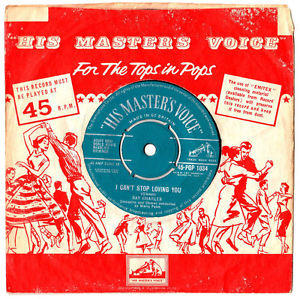
I Can’t Stop Loving You, by Ray Charles (his 1st and only #1)

2 weeks, from 12th – 26th July 1962

I can’t stop loving you… I’ve made up my mind, To live in memories, Of the lonesome times… A soft rhythm tickled out on the drums, meandering jazz-bar piano, swooning strings. This is a supremely well-made record; simple, yet soaring. I know it, indirectly; and yet I’ve never really listened to it.

It’s a song about a man who has resigned himself to living in the past. I can’t stop wanting you… It’s useless to say… So I’ll just live my life, In dreams of yesterdays… Both the lyrics and Ray Charles’s voice are raw and unadorned. There are no metaphors or flowery allusions here – he calls a spade a spade. When he says he’s blue you know he means it.

I can’t think of any song that we’ve featured so far on this countdown that has relied so much on backing singers. This whole song is a call and response between Charles and the guys lined up behind his piano. They remain in the same pitch, while he rises and falls around them. This contrast is most effective in the Since we’ve been apart… line. The backing singers softly plead; Charles almost yells the line out. And the bit where he tells them to Sing the song, children… is just pure class.

s-l300 (1)

What I wrote about the song – that I knew it without really knowing it – could apply just as well to Ray Charles himself. I know he was blind, and played a piano. That there was a movie made about him starring Jamie Foxx. Beyond that, to my shame, I’m a-blank. He had more famous hits than this: ‘Hit the Road, Jack’, ‘I Got a Woman’ and ‘Georgia on My Mind’. But sometimes the Chart-Gods decide to dish you out just one chart-topping single, and you just have to take it when it comes your way.

I feel that Charles is one of those American singers whose US success never quite translated to the same levels on the other side of the Atlantic. Billy Joel’s another such artist, as perhaps is Bruce Springsteen. Still, when you’re described as a ‘genius’ by Sinatra, and have featured in the top-10 of ‘Rolling Stone’s ‘Greatest Artists’ and ‘Greatest Singers of All Time’ polls, maybe you don’t much miss the recognition from one insignificant little island.

I should note – though I’m not sure if anyone will be interested – that this is the first chart-topper I have been unable to find on Spotify. They have all manner of (much longer) album versions, live versions, and re-recorded versions of ‘I Can’t Stop Loving You’, but not the original single cut. YouTube came to my rescue, however, and the link below should be the genuine, 1962 chart-topper. One of the classiest songs to have reached the summit so far, I’d say. Sing the song, children…

137. ‘Come Outside’, by Mike Sarne with Wendy Richard

The charts of spring/summer 1962 have proven to be a little schizophrenic… We’ve veered from the safe ‘Wonderful Land’ to the zany ‘Nut Rocker’ to the bland ‘Good Luck Charm’, and now to this. How to describe this latest #1? This… This is a ‘Carry On…’ film distilled into a two and a half minute pop song.

wr_g1

Come Outside, by Mike Sarne with Wendy Richard (their 1st and only #1s)

2 weeks, from 28th June – 12th July 1962

Mike Sarne is at a dance with his girl. She wants to keep dancing; he wants to get her outside for a spot of you-know-what. Little doll, We’ve been jivin’ all night long, Little doll, got a feelin’ something’s wrong, Cause it ain’t right to wanna keep on dancin’, There won’t be any time left, For romancin’… The chords are copy-paste rock ‘n’ roll, the backing singers straight out of a Neil Sedaka number.

It’s a novelty record; but it’s a very listenable novelty record. That’s one thing worthy of noting: so far all the ‘silly’ chart-toppers have still had a high level of musicianship and song-writing go into them. From ‘That Doggie in the Window’, to ‘Hoots Mon!’ to the aforementioned ‘Nut Rocker’ – they may have been at various points irritating, cloying and/or twee, but they were all still produced with the same level of skill and attention as a ‘straight’ hit single. Whereas, growing up as a child of the nineties, ‘novelty’ songs meant cheap and nasty tracks like ‘Mr Blobby’, ‘Bob the Builder’ and the ‘Crazy Frog’.

So, I wonder when we’ll have our first truly bad novelty chart-topper. ‘Come Outside’ certainly isn’t it. This is a loving pastiche of all that’s great about rock ‘n’ roll music, with a very British twist. You can tell that Sarne isn’t a natural born singer, yet he tries his best, plays it straight, and I love his sub-cockney accent. Richard, his co-star, doesn’t sing any lines herself – she’s there to voice her objections to his advances. ‘Vocal interjections’ are, I believe, the technical term… Sarne: Come outside… Richard: What for? S: Come outside… R: What’s the rush? S: There’s a lovely moon out there… R: It’s cold outside…

dedae2d4922d292e46309c108364555b

This is a linguistic time-capsule of a record. When Richard shouts ‘Belt up!’ and ‘Give over!’, it suddenly sounds very old-fashioned, and I’m pretty sure that nobody has referred to ‘slap and tickle’ for at least thirty years. Plus, the reason that Sarne is so desperate to get his bird outside is because he’s promised her old man to have her home ‘bout  half past ten, which is peak-1962. By the final chorus Sarne has gotten very insistent – perhaps a little too insistent to these post-#metoo ears – causing Richard to shout ‘Lay off!’ and ‘Stop shoving!’. But, to be fair, she sounds like she could take care of herself, and come the end she’s given in very easily: Come outside… You are a one… Come outside… Oh all right… Come outside… Not for too long… The fade-out, in which the couple make their way out of the dancehall, bickering about how he needs a shave, is the high point of the whole disc.

Mike Sarne had a handful of minor hits in the UK, none of which came close to matching this debut. He went into acting, presenting and directing. Wendy Richard went on to become one of the most recognisable actresses on British television, starring in ‘Are You Being Served?’ (a show every bit as silly and camp as this song) and, of course, in ‘EastEnders’ for twenty-odd years. She died in 2009.

While I do like this record on its own merits; it also reminds me of lazy, hazy Saturday mornings a decade or so ago listening to ‘Sounds of the Sixties’ on Radio 2. My radio alarm would wake me to the voice of the late, great Brian Matthew – a voice, rich and syrupy, that I would happily have paid to hear read the phone-book. It was on one such morning that I heard ‘Come Outside’ for the first time, and it’s had a spot on my playlists ever since.

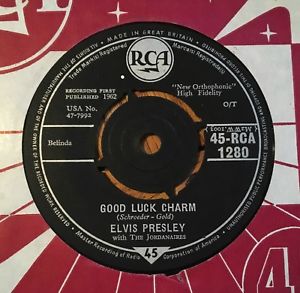
136. ‘Good Luck Charm’, by Elvis Presley

Uh-huh-huh, Uh-huh-huh, Uh-huh-huh, Oooh yeah… Sorry, I think I just dosed off. Where was I? Oh, right. It’s Elvis again. How many #1s is that, now? I’ve lost track… Eleven? Thanks.

1a05378768dab97cbc98827b6cd5841c

Good Luck Charm, by Elvis Presley (his 11th of twenty-one #1s)

5 weeks, from 24th May – 28th June 1962

This is the sound of Elvis in complete cruise-control. If his career were a long-haul flight (bear with me…) then we would currently be five-hours in, cruising at 37,000 feet, meals served, lights dimmed, pilots snoozing with their feet up.

Don’t want a four-leaf clover, Don’t want an old horse-shoe… These are the things Elvis doesn’t need – along with a silver dollar, a rabbit’s foot on a string and a lucky penny – because he has his girl. Come on and… Be my little good luck charm, You sweet delight… I want a good luck charm, A-hangin’ on my arm, To have, To hold, Tonight…

And that’s pretty much it. Elvis sounds bored. The music sounds like one of the pre-set backing rhythms on an old Casio keyboard that I had as a kid. After two verses and two choruses, we get to the spot where the solo should be. And the solo is Elvis going ‘Uh-huh-huh’… over and over again. When you think back to the energy of his fifties number ones – his growl on ‘Jailhouse Rock’, for example – or the startling newness of his Sun Record, pre-chart topping days, then you have to feel sad that he had been reduced to songs like this. It’s not awful. It’s OK. But the problem is that it’s not trying to be anything more than just OK.

s-l300

And coming as it does, hot on the heels of Elvis’s best two post-army chart toppers – ‘Little Sister / Her Latest Flame’ and ‘Can’t Help Falling in Love’ – it really does feel like a step backwards. He was capable of so much more. It’s a well-known fact that Elvis was up for recording pretty much anything that his manager, Colonel Parker, suggested, and that Col. Parker had absolutely no qualms about milking his hit-record machine for all he was worth. (‘Song of the Shrimp’, ‘(There’s) No Room to Rhumba in a Sports Car’ and ‘Petunia, the Gardner’s Daughter’ are all titles of songs recorded by ‘The King of Rock ‘n’ Roll’ between 1961 and 1967.) ‘Good Luck Charm’ is probably the one UK chart-topper record that best encapsulates this mid-career malaise.

I wrote in my previous post that the zany ‘Nut Rocker’ was just what we needed to liven things up at the top of the charts. This, however, is just what we didn’t need. I’ve listened to it six or seven times while writing this post and am pretty sure that my brain has started to melt. To think that this was the country’s number one selling song for five (5!) weeks. Really, record buying public of 1962? Really…?

134. ‘Wonderful Land’, by The Shadows

In the wake of Elvis scoring his tenth #1 single, The Shadows are just about keeping up the pace with their eighth. With added strings! And horns!

A1x5FMeD9GL._SL1000_

Wonderful Land, by The Shadows (their 8th of twelve #1s)

8 weeks, from 22nd March – 17th May 1962

Just as they did with Cliff on ‘The Young Ones’, Hank, Bruce and the boys have gone all orchestral. ‘Wonderful Land’ soars high, off above the clouds and away, sounding for all the world like the theme to a middle-of-the-road Western.

I wonder – as I wondered with Cliff on ‘The Young Ones’ – if the band were looking to broaden their appeal, to go after the teeny-boppers and their parents (and maybe even their grandparents). Whatever the plan – it clearly worked. Only two other records in the whole of the 1960s spent eight weeks at number one.

Personally, I am really struggling to see why this record connected in such a way with the general, record-buying public. It’s nice enough; but eight weeks at the top of the charts…? It’s not that nice. I’ll refer back to my complaint about previous instrumental chart-toppers – that an instrumental simply has to try that much harder than a song with lyrics. The lyrics are what draw you in, are 70% of what you remember about a song. Ok, ok, so you might remember a riff, or an intro, or a guitar solo – but not in the same way that you connect with a song’s lyrics. It means that, to me, instrumental records remain a little abstract; difficult to truly love. A few instrumentals get it so, so right (‘Cherry Pink and Apple Blossom White’, by ‘Prez’ Prado) while most fall flat to some degree (‘Side Saddle’, by Russ Conway.) For me, ‘Wonderful Land’ falls into the latter category. But maybe I’m just a philistine.

THE_SHADOWS_WONDERFUL+LAND+-+2ND-570309

I do like the bit with the jingly-jangly guitars, the flickery bit… I have no idea what the official guitaring terminology is… Lightly-plucked? It’s cool, and drenched in an other-worldly echo. And ‘Wonderful Land’ gets a lot of love – even to this day – as one of The Shadows best songs. But I enjoyed their previous chart-topper, the crunchy, surfy ‘Kon-Tiki’, more than this. What do I know?

I feel like I should be giving a record such as this – a colossal, chart-humping giant of a record – more of a write-up. But I’m pretty much out of things to say. It’s not like this is the last we’ll hear from The Shadows – they’ll be back soon enough (with much better songs!) Still, worthy of note is the fact that, after 1961 gave us lots of one-week chart-toppers, lots of bye-roads to wander up and get lost in; the first three #1 singles of 1962 have taken us right into the middle of May!

133. ‘Can’t Help Falling in Love’ / ‘Rock-A-Hula Baby’, by Elvis Presley

Wise men say, Only fools… would be surprised at Elvis Presley claiming yet another UK #1. His sixth inside fifteen months. And with it, he takes his chart-topping singles account into double figures.


91eaiwS0ygL._SY355_

Can’t Help Falling in Love / Rock-A-Hula Baby, by Elvis Presley (his 10th of twenty-one #1s)

4 weeks, from 22nd February – 22nd March 1962

One of the good things about Elvis’s post-army career is that he never released two similar records in a row. We’ve had operatics (‘It’s Now or Never’) followed by a ballad (‘Are You Lonesome Tonight?’) followed by oompah (‘Wooden Heart’) followed by a return to La Scala (‘Surrender’) then a spot of rock ‘n’ roll (‘Little Sister’ / ‘His Latest Flame’) and now some more balladry.

Some supreme balladry. Because ‘Can’t Help Falling in Love’ is Elvis at the height of his crooning powers – a classy, classy record. Not one that I probably have to describe in too much detail, given its ubiquitousness, but I’ll give it a go anyway. A simple piano melody, the ‘ting’ of a xylophone, and The King: Wise men say, Only fools rush in, But I can’t help, Falling in love with you… Oh, Elvis, do go on… Shall I stay, Would it be a sin, If I can’t help, Falling in love with you…? That voice. There are no operatics, nothing fancy; but you’re dragged in, and left as putty in his hands. It’s a very chivalrous love song, too – with the singer almost apologising for his affections.

It’s like an update of the big fifties ballads – ‘Here in My Heart’, ‘Answer Me’ and so on – with the same OTT emoting (Take my hand, Take my whole life too…), but much more stripped back. And yet compared to its contemporaries, this record – all of Elvis’s records for that matter – sounds incredibly polished. Very crisp and very clear. As if it’s been recorded in the most palatial of recording studios using the most up-to-date equipment (to be fair, it probably was). If ‘Can’t Help Falling in Love’ was in a high-school class with all the other recent #1 singles – suspend your disbelief for just a second, please – then it would be the cool kid, the rich kid, the captain of the football team with the cutest cheerleader girlfriend.

Two bits stand out in particular: the twang of the guitar in the bridge, and the moment when Elvis and the backing singers combine for the final verse. Mmmm. Shivers. Elvis released some drivel in the 1960s; but when he was at the top of his game, releasing beauties such as this, there was no touching him. Cliff could but watch and weep.

For proof of the transcendent nature of this song, look no further than the fact that this is both the unofficial club anthem of Sunderland F.C. and my parents’ ‘song’ – despite the fact that they had barely started primary-school when this was at the top of the charts. And just a few weeks ago, while on holiday in Cambodia, I heard a busker performing it in the street.

r-553725-1311448310.jpeg.jpg

So: ‘Can’t Help Falling in Love’ is an utter classic. The song on the flip-side of this disc, on the other hand… Well, let’s pull no punches here: it’s Elvis at his shitty B-movie contractual soundtrack worst. ‘Rock-A-Hula Baby’, or to give it its’ bandwagon-jumping full title ‘Rock-A-Hula Baby (Twist Special)’, sets out to be a fun song, with a Rock-a-hula, rock rock-a-hula, Wow! intro, and I want to find it fun… But I can’t.

Because I don’t believe Elvis himself is having much fun here. He sounds like he’s going through the motions as he describes his Hawaiian lover with silly lines like: When she starts to sway, I gotta say, She really moves the grass around… and Although I love to kiss my little hula-miss, I never get the chance, I wanna hold her tight, All through the night, But all she wants to do is dance… And if he ain’t enjoying it, then how are we meant to?

Couple this with the terrifying guitar effects – Rock! Whhrrraa! – and the ridiculously cheesy chorus-line ending, and you’ve got a hot mess. Still, at least it’s a rocker – ridiculously fast-paced and over in under two minutes. An up-tempo bad record is always, I repeat always, better than a slow-tempo bad record.

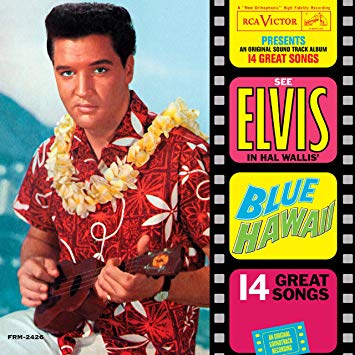
Both sides of this disc featured on the latest Elvis film, ‘Blue Hawaii’ – a film that I’ve never seen but, going by its write-up on Wiki, might be worth checking out. Sample sentence: “Before Ellie can drown herself, Chad (Elvis’s character) saves her and administers an overdue spanking.” Quite. And though we’ve covered a fair few double ‘A’-sides up to now, none of them have contrasted as much as this pair of songs do. Surely ‘Can’t Help Falling in Love’ could have stood alone and still made it to #1? Surely people weren’t buying this disc for ‘Rock-A-Hula Baby’?? But it’s there, in the annals of British chart history, as much of a hit as its far-superior twin. And that egalitarianism, that chance that any song can get to number-one as long as enough people buy it, is why we love the charts. Isn’t it…?

132. ‘The Young Ones’, by Cliff Richard & The Shadows

We enjoyed/suffered through (delete according to personal preference) a Cliff-less 1961. But Britain’s great rock ‘n’ roll hope kicks off 1962 with… (pause for dramatic effect)… his most famous hit?

The-Young-Ones-1961-film-images-630814b5-6ace-499e-8614-12e90dccdd6

The Young Ones, by Cliff Richard (his 5th of fourteen #1s) and The Shadows (their 7th of twelve #1s)

6 weeks, from 11th January – 22nd February 1962

OK, there are the Christmas songs. And ‘Summer Holiday’. And ‘Congratulations’… Let’s just say that this is his most famous song not about festivities and/or vacations. Though this latest chart-topper is a celebration of sort – a celebration of being young!

Its starts with some Shadows ™ guitar, before Cliff comes in with his gossamer-light voice… The young ones, Darlin’ we’re the young ones, And the young ones, Shouldn’t be afraid… I am slightly loathe to admit it, but I have missed that voice of late… To live, Love, While the flame is young, ‘Cause we may not be the young ones very long… Any song performed by The Shadows and sung by Cliff can’t fail to be of a certain standard. It may well be cheesy, and the lyrics might be very trite, but downright bad? Unlikely.

And ‘The Young Ones’ does have its moments. I love the beat-band drum fills, while the guitars are very reminiscent of Buddy Holly’s mid-tempo hits – ‘Heartbeat’, ‘Maybe Baby’ and the like. Yet it’s far from perfect –  corny couplets like: Oh I need you, And you need me, Oh my darlin’, Can’t you see…? make sure of that.

And then there are the violins. Yep, Cliff’s gone orchestral. By the end the strings are swirling and cascading, drowning out Hank and Bruce’s guitars. (I can’t help wondering if this was one of those tracks, like the minimalist ‘Travellin’ Light’, on which The Shadows were a little bored…) I had to double-check that I was listening to the original version, rather than some kind of polished re-release… I’d see this as Cliff’s attempt to move away from teeny-bop discs like ‘Please Don’t Tease’ and ‘I Love You’ – his bid for adult-artist longevity.

7140gXm67-L._SL1280_

In that regard it’s a very clever record. The lyrics are about being young; and yet the production is very grown-up. It isn’t enough of a departure to alienate the screaming fifteen year-olds, but it’s classy enough to get grandma interested. And there’s a bittersweet edge to the closing lyrics that will appeal to mum and dad: And someday, When the years have flown, Darlin’ then we’ll teach the young ones, Of our own…

I wouldn’t call it a sell-out in the same way that Elvis prancing about in Lederhosen singing ‘Wooden Heart’ was a sell-out. Because, let’s face it, Cliff has never – in terms of his chart-topping singles, at least – managed to justify his tag as Britain’s foremost rock ‘n’ roller. From the opening chords of his first #1 he’s been planted firmly in the middle of the road. But… Something definitely clicked here, and his career has kicked up a gear. Thanks to its role on the soundtrack to Cliff’s movie of the same name, ‘The Young Ones’ had built up a staggering 500,000 pre-orders before its release, meaning that it rocketed straight in to the charts at Number One – only the 3rd single (and the 1st single not released by a certain Elvis Presley) to do so. It remains his biggest seller in the UK.

And its legacy was such that twenty years later it became the theme tune to BBC sitcom ‘The Young Ones’, in which Rik Mayall played a lisping, tantrum-throwing, anarchy-loving Cliff fan. The joke of course being that, by 1982, young people with any aspirations towards being cool couldn’t possibly be Cliff fans. But, the eighties are a long way off yet in our world. It’s January of 1962, Cliff and The Shadows are the biggest pop-stars in the country, and they’ve just scored their biggest hit yet. Though, as with all of us, they may not be the young ones very long…

‘Starry Eyed’, by Michael Holliday – The UK Number 1s Blog Anniversary Special

This week marks the 1st anniversary of The UK Number 1s Blog (** Trumpet Fanfare**)! In the past year we’ve covered the period from Nov. ’52 to Nov’ 61, with 129 chart-topping songs featured. We’ve survived pre-rock, rode the rock ‘n’ roll revolution, and are now well on our way towards the swinging sixties… Thanks to everyone who has read, followed, commented and enjoyed.

To celebrate this milestone, I’m going to take a short break from the usual countdown to repost seven songs that I have really enjoyed discovering over the past year. These aren’t necessarily the best songs to have topped the charts – there’ll be no Buddy Holly, Johnnie Ray, Connie Francis, Elvis or The Everly Brothers (follow the links if you want to read about them) – as I’ve been listening to, and loving, those artists for years. This week will be all about the forgotten gems, the hits I’d never heard before, the songs that have slipped through the cracks…

My final choice is ‘Starry Eyed’, by Michael Holliday. As we moved further into the rock ‘n’ roll age, the songs that hit the top spot became more and more familiar. But in amongst all the Cliff and Elvis came this little gem – the first #1 of the sixties. It’s not the most instant song, but it snags on something and stays with you long after you expect it to have faded. It’s ethereal and dreamy, but with a solid pop hook. Enjoy.

(PS. That’s it for my week-long anniversary recap of my favourite chart-topping discoveries. Normal service will resume with my next post – the 130th UK #1 single.)

BtTnVMQBmkKGrHqEH-D8EvE9BvcOBL7ZdIM5g_12

Here we go then. One tentative foot in front of the other. A hop and a skip and… We’re into the 1960s! Hurrah! It’s one small step for man… as someone will quite famously say before this decade is through.

Starry Eyed, by Michael Holliday (his 2nd of two #1s)

1 week, from 29th January – 5th February 1960

On first listen, however, the 1960s sounds suspiciously like the 1950s. Backing singers? Check. Basic rock ‘n’ roll guitar? Check. Croony male lead singer? Check. Where’s the innovation? Where are the groovy new sounds? Where are all the drugs and free love?

Bum-bam-bum-bam-bum… Why am I so starry-eyed, Starry-eyed and mystified, Every time I look at you, Fallin’ stars come into view… So far so standard. A song about being in love, and about seeing stars because you’re so in love, and to be honest it’s been done a million times before. When we touch I hear angels sing, When we kiss I hear wedding bells ring… Yeah yeah, blah blah blah.

But actually, to dismiss this song because of its unremarkable lyrics would be to do it a huge disservice. Because, on a second, third and fourth listen, this record has got a lot going for it. Firstly there are the backing singers and their Bum-bam-bums. They’re not just any old Bum-bam-bums – they sound echo-y and ethereal, like woozy church bells or a trippy version of the intro to ‘Mr. Sandman.’ It’s really cool.

Adding to this effect is the guitar, which is restricted to a few strums during the verses and chorus but which comes in nice and layered, fed through the same robotic distortions as the backing singers, during the solo. It gives the record a real dreamy quality, like the singer’s dazed after a blow to the… Wait, I get it! He’s starry-eyed. He has been whacked over the head. With love!

78964385

I could complain about Michael Holliday’s sonorous voice being a little too sombre, a little too straight-laced for this song but, after a few listens, it kind of works. His voice has an innocence to it, as he gazes into his lovers mystical eyes and his pupils morph into cartoon love-hearts. Underpinning it all there’s a groovy little rhythm – a bossanova? – that actually makes it quite a sexy record. A record to which there’s more than meets the ear and which improves with every listen. We’re not in the swinging sixties just yet; but this is a sniff of what’s to come…

‘Starry Eyed’ is certainly a lot better than the song which first brought Mr. Holliday to our attention a couple of years back – the fairly bland and saccharine ‘The Story of My Life’. I mentioned then that he only ever scored a handful of hits in his career – in fact he managed to squeeze two #1s from just three top ten hits. The story of his life – see what I did there! – is in truth quite a tragic one. Holliday suffered from crippling stage fright and, shortly after ‘Starry Eyed’ hit the top spot, he suffered a nervous breakdown. He took drugs to keep going and sadly died of an overdose in 1963, aged just thirty-eight. He joins the ‘Died Far Too Early’ club along with the likes of Dickie Valentine and Buddy Holly, perhaps proving that pop stars have always died young and in dubious circumstances, and that it didn’t just start with Jimi Hendrix. Remember him this way: by discovering – as I’ve just done – this forgotten gem of a UK Number One.

127. ‘Michael’, by The Highwaymen

We begin our next chart-topper with a whistle. We haven’t had a whistle-y #1 for a while, maybe not since the ‘Age of Whistling’ back in 1957-’58. And then an oh-so gentle, almost soothing acoustic guitar comes in…

the-highwaymen_thumb

Michael, by The Highwaymen (their 1st and only #1)

1 week, from 12th – 19th October 1961

Back in my last post, I asked you to imagine this year, 1961, as a huge variety show, with all manner of artists on the bill. Well, keep that image in mind and picture, as The Shadows wrap up their little Hawaiian interlude, the curtains parting to reveal a forest backdrop, a pile of leaves and upturned logs, a ‘fire’ made from strips of crepe paper and a fan, and five fresh-faced boys – The Highwaymen.

The tune is instantly recognisable, by anyone who’s visited a church, or been a Boy Scout, or attended a Primary School… Michael row the boat ashore, Hallelujah, Michael row the boat ashore, Hallelujah… Just when you thought 1961 couldn’t get any more eclectic – we’re getting a hymn!

Fifty percent of this song is that very chorus, repeated over and over, and over. In between, each Highwayman takes turns in singing a single-line verse: Sister help to trim the sails, Hallelujah… The river Jordan is chilly and cold, Hallelujah… The river is deep and the river is wide, Milk and honey on the other side… Hallelujah, Hallelujah and Hallelujah… It ends with the same haunting whistles that kicked us off. And that’s it.

Wiki lists this as ‘Collegiate Folk’, and I am 100% certain that this is the first and only ‘Collegiate Folk’ record to top the UK Singles Charts. It’s a very accurate genre title too, as all five Highwaymen were undergraduate students at Wesleyan University in Connecticut. Under what circumstances they went from a mere college band to trans-Atlantic chart-toppers is unclear. It really does beg the question…

the-highwayman-michael-ex-united-artists-1961

…what in seven hells is this doing atop the UK hit parade? If you thought The Temperance Seven or Shirley Bassey’s show-tunes were a bit on the random side then this is completely out of the left-field. At the same time, though, I will at some point have to realise and accept that literally anything can top the singles chart. We’ve had some weird number ones; and there is weirder to come, trust me on that.

And yet… This may be a weird chart-topper; but it’s a very simple, very normal song. Kinda dull. You can understand why Benny Hill, and Mr Blobby, and The Teletubbies – with all their technicolour silliness – have UK #1s more than you can understand this becoming the biggest selling single in the country for one week in the autumn of ’61. The five boys in this band – Dave, Bob, Chan and two Steves – are spectacular in their ordinariness. They look like the sweetest bunch of apple-pie lovin’, church-goin’, all-American boys-next-door. A ‘highwayman’, as far as British readers will be aware, was a 17th-18th century armed robber, which makes it look like an odd choice of band name for such sweet looking lads. Even their voices are – how to put this nicely? – fairly ordinary. But what do I know – maybe their ordinariness is what won people over? They are clearly not trying to be Elvis, or Liberace, or even Cliff, and people do like an everyman with an acoustic guitar…

I have to admit that – as one of the most irreligious people around – I want to hate this record. But I can’t. It’s a nice song. It’s soothing. I’ll put it on next time I can’t sleep. And The Highwaymen didn’t much bother the charts after this. All but one of them returned to their studies after the success died down. But maybe, just maybe, the folk scene that grew so big in the mid-to-late sixties – The Byrds, The Seekers, Peter, Paul and Mary, even Bob Dylan – can perhaps trace a small part of its popularity back to this unlikely smash hit.

Two other things to mention before we’re done… One: that these Highwaymen are in no way related to the Willie Nelson, Johnny Cash supergroup (though they did try to sue them for appropriating their name). And two: the fact that this great African-American gospel hymn was white-washed to such success at the height of the US Civil Rights movement perhaps says something about American society at the time… Something that I am in no way qualified to discuss and will just leave hanging here…

That aside, I’m just excited to see what on earth 1961 will throw up at the top of the UK singles charts next! Pan-pipes? The can-can? Mongolian throat-singing?? Whatever’s coming – bring it on!

126. ‘Kon-Tiki’, by The Shadows

As we continue our slow meander along the highways and bye-ways of 1961 –it does feel that this year is taking a little longer to get through than previous ones – it’s time for a little interlude.

the-shadows-kon-tiki-1961-5

Kon-Tiki, by The Shadows (their 6th of twelve #1s)

1 week, from 5th – 12th October 1961

Picture, if you possibly can, the year 1961 as a TV variety show. On the bill are some huge, established stars – Elvis, the Everlys, Shirley Bassey – along with some new up and coming teen sensations – Johnny Tillotson, Helen Shapiro – and some quirky little gems – Floyd Cramer and The Temperance Seven. Maybe Cliff – who won’t actually be hitting #1 this year – can be the MC. OK? Well, to this weird mental image you can add the house band, the ones that pop up and play as the curtains drop and the scenery gets shifted. They are, of course, The Shadows.

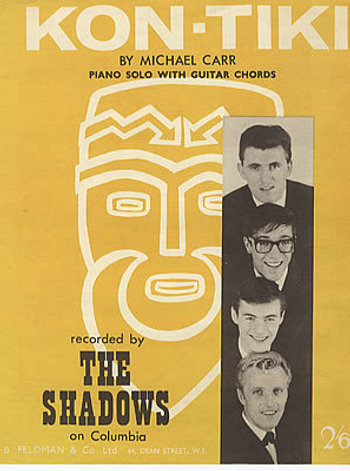
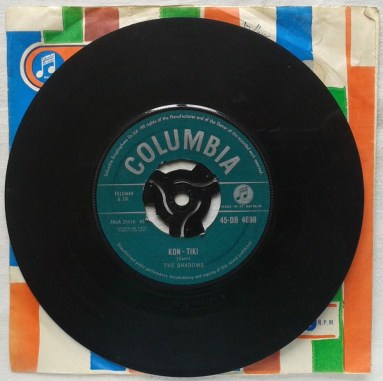
‘Kon-Tiki’ is another instrumental. A lilting little slice of surf-rock. It’s got cool drum-fills, a nice crunchy, tinny edge to the guitars and a hint of reverb around the main riff. There’s a couple of call and response bits between the lead and the bass, and the ending has some gnarly (did they say ‘gnarly’ in the early sixties?) echo. It’s a decent enough record – I’m not sure that the Shadows made many poor ‘solo’ records – but when it ends less than two minutes in you’re left wondering… Is that it?

It’s far from being one of their bigger hits (I wasn’t particularly familiar with it before starting this post) and it kind of feels like filler. Something thrown together as the guys were jamming. A ‘B’-side, maybe? But hey, what do I know. It was a UK number one single; only the band’s second solo chart-topper.

the-shadows-kon-tiki-36.jpg

The Kon-Tiki was actually a raft used in a 1947 expedition across the Pacific Ocean by the Norwegian explorer, Thor Heyerdahl. ‘Kon-Tiki’ was chosen as it was an old name for the Incan sun-god. What all this had to do in inspiring the writing of this perky guitar instrumental is, to be honest, unknown. My best guess is that it sounds kinda tropical, kinda surfy, and could work well as the soundtrack to a sunset luau on the beaches of Hawaii. Compared to ‘Apache’, which really did conjure up images of Indian braves galloping across the plains, ‘Kon-Tiki’ is a little more abstract.

Maybe that’s fine, though. It’s a nice enough tune, a pleasant one-week interlude on our journey through 1961. It reminds us that The Shadows are still around, are still the biggest British band of the time. Maybe it needs no further meaning than that.

As I mentioned at the start of this post, it does feel like we’ve been lingering in 1961 for quite a while now. In actual fact, with twenty-one number one singles, 1961 has by far the most chart-toppers of any year yet covered. But that’s OK. It’s proving a nice place to be. Jazz, rock, showtunes, instrumentals… all genres are welcome here. And, if you thought it’s been eclectic recently; just wait till you hear what’s up next!