165. ‘Little Children’, by Billy J. Kramer with The Dakotas

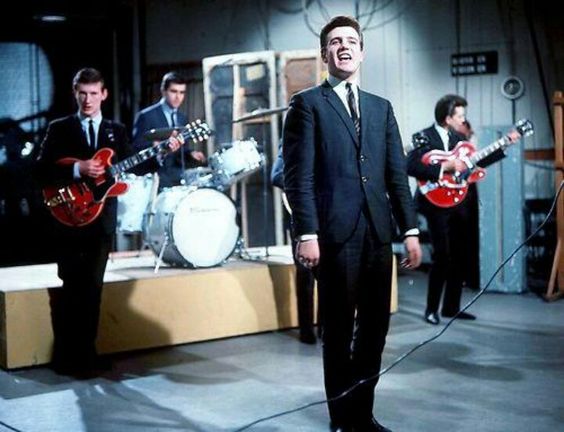
One of the earliest stars of the Beat explosion, Billy J. Kramer, returns for one last go on top. And he starts this latest #1 off with an intro full of intrigue. An intriguing intro. It’s a little slow and shuffling, a little woozy, like a pub band that’ve had one too many warming up for their final encore of the night. All that’s missing is a harmonica…
6cc7e1b14fc26365e667d3fc768e5a9d

Little Children, by Billy J. Kramer with The Dakotas (their 2nd and final #1)

2 weeks, from 19th March – 2nd April 1964

Then the lyrics come in, and the intrigue grows ten-fold. Little children, You better not tell on me… I’m telling you… Little children, You better not tell what you see… It’s a song that tells a story – rather than the traditional ‘I love you, I’m in heaven, Hold my hand’ kind of songs that we’ve had a lot of recently – and that’s always a good thing. It makes them easier to write about for a start. But… And I’m sure you noticed it too… Those opening lines do sound kinda creepy.

It gets worse, too, before it gets better. I’ll give you candy, And a quarter, If you’re quiet, Like you oughta be, And keep the secret with me… Yep. I know. But, just as you reach for the phone to call ChildLine, all becomes clear. He wants the children to bugger off so that he can kiss and cuddle with their – presumably safely over-age – older sister. Nothing more sinister here than a spot of mild bribery. Phew.

Still, this is a strange little song. And not just because of those lyrics. I like it, the slightly seedy rhythm and the fact that it paints a picture of a very specific and believable scenario. Why does he not want his secret exposed? You saw me kissing your sister, You saw me holding her hand, But if you snitch to your mother, Your father won’t understand… Are her parents simply over-protective? Or has he got a reputation as a bit of a bounder? The best bits are the growled asides: I wish they would take a nap… And the simple, snide Go anywhere…! Add to this the fact that there isn’t really a chorus or a solo, just four ascending verses in which the singer grows more and more frustrated about not being left alone with his beau. I like it, even though it’s a strange song. I like it because it’s a strange song.

Billy-J-Kramer-The-Dakotas-Little

Given all the American references littered throughout the song – ‘quarters’, ‘movies’, ‘going steady’ – I was convinced that this #1 was going to add to the list of Beat-hits-that-were-actually-covers, but no. It was written by two American songwriters – J. Leslie McFarland and Mort Shuman – but Billy J. and The Dakotas recorded the first and only version. Apparently Kramer had been offered another Lennon and McCartney song but turned it down for something quirkier. Kudos to him for that. Although it has to be said that, as fun as this record is, ‘Bad to Me’, their first, Beatles-written, chart-topper is the superior disc.

That was it for Billy J. and number one hits. In a similar fashion to Gerry & The Pacemakers, his career fell off a cliff in 1965 as the Beat movement split into all its different sub-factions. He would only have one further UK Top 10, and parted from The Dakotas in 1967. In the seventies he worked in cabaret and regional television, and to this day he still does a turn on the oldies circuits. He has also been married twice, and so he must have persuaded those pesky kids to clear off, eventually…

164. ‘Anyone Who Had a Heart’, by Cilla Black

Alright, chuck? What’s your name and where d’you come from? Me name’s Cilla, and I’m from Liverpool.

1962 and ’63 were barren years in terms of women reaching number one in the UK. 1963 had precisely zero female #1s, while 1962 had just the one – Wendy Richard popping up as the featured artist on Mike Sarne’s ‘Come Outside’ (and she didn’t even sing on that record!) No, if we are counting #1 discs sung solely by women we have to look all the way back to Helen Shapiro’s ‘Walkin’ Back to Happiness’ from October 1961! No pressure then, Cilla…

00849490_1024x1024

Anyone Who Had a Heart, by Cilla Black (her 1st of two #1s)

3 weeks, from 27th February – 19th March 1964

This is a dramatic record. Right from the opening chords. Dun… Dun Dun… It’s the sort of song sung onstage, in a movie, while a murder is being committed in the wings. We’ve got a jabbing piano, cascading strings, and those rolling drums that are fast becoming the sound of the mid-sixties. Anyone who ever loved, Could look at me, And know that I love you…. It’s the song of a spurned lover. One who demands better. Knowing I love you… so, Anyone who had a heart, Would take me in his arms and, Love me too…

Writing the words out like that, though, cannot convey the brilliantly stop-start, woozy way that they come at the listener – loud then quiet, soft then angry. The pauses before the ‘so’ and the ‘who’ in the chorus are perfect, as is the whispered What am I to do… before the gorgeous horn solo.

It is a slice of supreme balladry – a seriously classy record. And when you discover, as I just did, that it was written by Burt Bacharach and Hal David, then that makes complete sense. It’s their 4th UK chart-topper so far. And the soaring ending – with the Anyone who had a heart would love me too… lines emphasised by drumbeats on each word, and Yeah Yeahs from the backing singers, is possibly the most sixties thing we’ve heard yet in this countdown.

Cilla-Black-–-Anyone-Who-Had-A-Heart

The only unconvincing thing about this record is… sorry Cilla… the voice. Technically, it’s great. But, for me, it sounds just a little young. Anyone who had a heart would love me too… is a difficult line to sell, and in the hands of a twenty-year old Cilla Black it sounds a little bratty. You don’t like me so you must have something wrong with you… My first instinct is to ask: Did Dusty ever sing this? Dusty would have done it justice. And she did. It’s not her finest effort, and I’m not sure about the guitars in place of the piano, but still… Nobody conveys stoic heartbreak like Ms. Springfield. On top of this, the song was originally recorded by Dionne Warwick, who also gave a more grown-up rendition.

But, still, this single launched Cilla Black as one of the biggest British female singers of the decade. Her take on ‘Anyone Who Had a Heart’ was the biggest selling song by a woman for the entirety of the 1960s! She was, as many people know (and as she kept reminding us for years to come), best mates with The Beatles, coming up through the same club circuit as they did. John Lennon introduced her to Brian Epstein, and the band even accompanied her during her audition for Parlophone.

Maybe what I’m mistaking for brattishness was actually the reason Cilla Black became so popular – her genuine girl-next-door, cheeky charm. She’ll top the charts again very soon and so we’ll hold off talking about what was to come for our Cilla for now. It is interesting to note, though, that both she and the last woman to top the charts, the aforementioned Wendy Richard, went to on to be better known for their TV work than their singing. More on that later…

Listen to every #1 so far with this handy playlist:

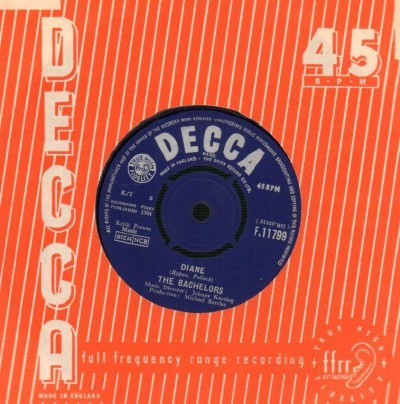
163. ‘Diane’, by The Bachelors

Ladies and Gentlemen! ‘Diane’, by The Bachelors, is the UK’s one hundred and sixty-third number one single… Nope. Me neither.

The-Bachelors-signed-music-memorabilia-singer-legend-autograph-I-Believe-Ramona-Sound-of-Silence-Diane-Conleth-Cluskey,-con-dec-declan-john-stokes.jpg.opt600x374o0,0s600x374

Diane, by The Bachelors (their 1st and only #1)

1 week, from 20th – 27th February 1964

It’s been a good long while since we arrived at a chart-topper that I’d never, ever heard before. Yodeller par excellence Frank Ifield’s version of ‘Confessin’ was probably the last. But even before pressing play, I can kind of predict what we’re heading for here. ‘Diane’, by ‘The Bachelors’ doesn’t, to me, scream rock ‘n’ roll abandon.

And yup, the intro has a strong whiff of barbershop quartet: Smile for me-e-e-e…. My Diane… Close harmonies, and long drawn out notes. But no sooner has this opener swooped to a close than in comes a lilting country rhythm. I’m in heaven, When I see you smile, Smile for me, My Diane… It’s a song about a woman, called Diane, and how much a boy loves her. She lights the road home. No matter where he roams etc. etc. (Has there ever been a non-country and western song featuring the word ‘roam? I don’t think so…)

The Beat-invasion may have had a strong chokehold on the charts at this time, but other songs could still poke through. This had a solitary week at the top, and I have the feeling that that was because there was little in the way of competition – a default #1 because, well, something has to be number one. It’s cute, and pleasant enough, but…

I’m not too sure what to make of it. Maybe it’s insignificant enough for me to simply make nothing of it. It’s a country-ish, barbershop-ish (I do like the ah-oh-oh-ohs!) little ditty that I have to admit I was singing along to by the fourth listen. Actually, I’ve just realised that I’m also getting hints of Cliff – in both the swaying guitars last heard in ‘Summer Holiday’ and the band’s name (Bachelors, get it?)

7M_1085

Who exactly were these Bachelors? Well, they were Irish, which makes them the very first Irish act to top the British charts, preceding U2 and Boyzone, and the other Irish chart-dominators of the eighties and nineties. So that’s something. There were three of them – Conleth, Declan and John, and they made a decent mid-sixties career out of re-interpreting old tunes from the 1920s and ‘30s in a vaguely Beat-ish way. ‘Diane’ was originally written as the theme song to a 1927 silent movie, for example. Slim Whitman, Jim Reeves and Vic Damone all did their own versions at one time or another. The lads also scored hits with covers of songs like ‘I Believe’ and ‘Hello Dolly!’ While other Beat groups were looking forward; The Bachelor-boys were looking back.

Nothing dates this song, though, as much as the ending. Back in the dark and distant Pre-Rock days almost every song ended with a huge, soaring climax that had been signposted a mile off. And The Bachelors here do their best to recapture those halcyon days. The song slows down, the singer revs up and… Smile for meeeeeee, My… Di….AAAAAAANE! We finish all misty-eyed for the days of Al Martino and David Whitfield.

I don’t begrudge this song its week on top of the charts; but at the same time I’m not terribly sad that we won’t be hearing from The Bachelors ever again. Interestingly, not only does this record give us our first Irish #1, it also sees the name Diane (or variants thereof) sprint into the lead as the name featured in the most chart-topping singles. With two. This, and Paul Anka’s ‘Diana’. We’ve also had a Joe, a Rose Marie, a Hernando, a Josephine, a Mary, a Cathy, a Laura, a Johnny and a Michael, all on one chart-topper each. Not something I ever thought I’d keep an eye on but, now that I have done, it’s kind of fascinating. Which name will be the winner? And who’d have thought that a Josephine would have topped the charts before, say, a Sue or a Jenny?

162. ‘Needles and Pins’, by The Searchers

The Searchers return for a second run at the top. And if their first #1 – ‘Sweets For My Sweet’ – was a cute little slice of Beat-pop; then this is next-level stuff entirely. This baby is a classic!

The_Searchers_1965-resize

Needles and Pins, by The Searchers (their 2nd of three #1s)

3 weeks, from 30th January – 20th February 1964

We start with a simple, chiming riff. In my previous post on The Searchers, I mentioned that they had a sound slightly removed from frenetic Merseybeat – a bit more sedate, a bit more melancholic – a sound that wouldn’t sound out of place on Indie records of the 1980s. Well, that sound is back here.

Lyrically, too, this is a more complex record than the likes of ‘Do You Love Me’ and other such pub-singalongs. And no, ‘Needles and Pins’ doesn’t refer to waking up with a dead arm; it’s about the feeling you get when you see a lost love. One that did you wrong. I saw her today, I saw her face, It was a face I loved, And I knew, I had to run awa-y…

It’s also a song about bruised pride… Because of all my pride, The tears I gotta hide… and a song with an air of revenge about it: Let her go ahead, And take his love instead, And one day she will see, Just how to say please, And get down on her knees, Yeah that’s how it begins, She’ll feel those needles and pins, Hurtin’, Hurtin’… This is one grown-up love song. It’s like the sophisticated older brother of discs like our last chart-topper, ‘Glad All Over’, looking down his nose at his younger siblings’ silly little songs.

I wish I had the musical vocabulary to describe the chord structures and the key and whatever it is that gives this record its ‘mood’. Whatever it is that makes this song so good. But then again, if I could dissect it and pinpoint it’s genius maybe it would lose some of its magic. It’s a sad-sounding song about a sad-sounding break-up; and it’s superb. By the final verse, it’s reached a bit of a crescendo. Two voices – the lead singer (Mike Pender) and a high-pitched back-up which just adds to the emotion. Oh, needles and pins… And those drum-fills. Oh those drum-fills.

the-searchers-needles-and-pins-7-45_44502391

I’ve been kind of surprised, listening to them all in a row, how cheesy (for want of a better word) these early Beat #1s have been. Musically they’ve been a huge step forward but, in lyrical terms, records like ‘From Me to You’, ‘Bad to Me’, and ‘I Like It’ haven’t moved on much from the 1950s.

‘Needles and Pins’ is different. Though I was shocked to find out that it is actually a cover. It’s a song I’ve loved for a long time and have assumed for years was a Searcher’s original. But no. It’s a Jack Nitzsche and Sonny Bono song, originally recorded by Jackie DeShannon in 1963. I feel betrayed… I really do. This – and I realise that this is a bold statement to make – is the first pop song I ever loved. I must have been maybe seven, and it was on a sixties mix-tape (which I’m sure I’ve mentioned before) in our family car. It would be playing on a Sunday evening as we drove home from dinners at my grandparents, along dark roads under orange streetlights. A melancholy scene for a melancholy song.

Actually, that’s another thing that has surprised me – just how many of these early Beat chart-toppers were covers. Since Gerry & The Pacemakers kicked the movement off in April ’63, I make this six covers out of eleven (I’m counting ‘You’ll Never Walk Alone’ in this, though it isn’t your average Beat-pop number). I just assumed these boys with guitars were all writing their own songs. How wrong I was!

Anyway, the ‘Needles and Pins’ story doesn’t end with The Searchers. It’s classic status is confirmed by the fact it’s been covered by The Ramones and Tom Petty. It’s a song so good that it might just give you needles and pins! (Though I’ve always said ‘pins and needles’ – I guess that didn’t scan quite as well…)

Follow along with my Spotify playlist:

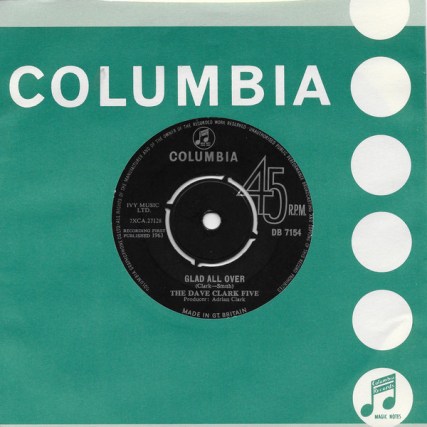
161. ‘Glad All Over’, by The Dave Clark Five

And so we launch head-first into 1964. Suddenly we are in the mid-sixties! Doesn’t time fly! And kicking off the new year are some newbies at the top of the UK singles charts: The Dave Clark Five.

mezzanine_296

Glad All Over, by The Dave Clark Five (their 1st and only #1)

2 weeks, from 16th – 30th January 1964

Interestingly, none of the acts that topped the charts in 1963 were one-offs. Every single one of them had hit #1 previously, or would go on to hit #1 again. But the very first chart-topping act of 1964 are… drum roll… one #1 wonders!

Anyway, this a barnstorming way to start off. We get a thumping, grinding drum-beat designed to blow away any lingering new year hangovers, which is quickly joined by a bass and a stabbing saxophone. Then the singer (Mike Smith, not Dave Clark) jumps in: You say that you love me, All of the time, You say that you need me, You’ll always be mine…

The beat then morphs into an insistent, irresistible galloping-horse rhythm that will last for the whole song. And then comes a chorus that pretty much everyone knows: And I’m feelin’… Glad all over…Yes, I’m a-… Glad all over…!

It’s an non-stop sledgehammer of a song, with large swathes of call-and-response and a key-change that is pointless trying to resist. Other girls may try to take me away… (you can just pictures the girl’s eyes rolling at this point)… But you know, It’s by your side, I will stay… It’s a fun disc. File it under ‘unsophisticated’. This and The Tremeloes’ ‘Do You Love Me’ from a few posts ago would make a great drunken-1am-singalong double-header.

R-5972494-1481232145-4446.jpeg

Like ‘You’ll Never Walk Alone’, this is also a huge football, and rugby, crowd song – the call and response bits work perfectly – and is usually played after a home-team scores (Crystal Palace started it when ‘Glad All Over’ was still in the charts and lots of other teams followed suit). It was last seen in the UK charts a couple of years ago when Glasgow Rangers fans did a mass-download campaign. In fact, I’d have to say that this is just the latest in a run of chart-toppers that have entered the public consciousness like few previous #1s have. From ‘Sweets For My Sweet’ through ‘Do You Love Me’, plus the recent Beatles chart-toppers… I’ll bet most people on the streets could sing a line or two from all of these songs, even today. Just goes to show how much the music from this era lingers on.

Since we’ll never hear from them again on this countdown – just who were The Dave Clark Five? Well, you’ll be shocked to discover that there were five of them, and that they were ‘led’ by one Dave Clark, who also drummed on all their hits. They were from Tottenham, in North London, and were at the vanguard of the ‘Tottenham Sound’ -which I’m not sure sounded any different to the Mersey-sound, or any other variety of Beat-band sound, but hey – they were representing. As I mentioned, this was their one and only #1; but they scored Top 10s throughout the sixties before splitting up in 1970.

There you have it then. 1964 is off and running with a boisterous pop number. I don’t go in for previews very often in these posts, but I have to mention here that ’64 is going to be a stellar year for chart-topping singles. One of the very best… if not the best… years in terms of #1 quality. Over the course of the next twenty-two hits we’ll hear some classics, meet some legends, and have a generally pretty ‘groovy’ time (that’s how people talked back in the sixties…)

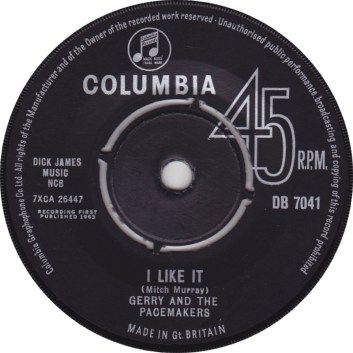
152. ‘I Like It’, by Gerry & The Pacemakers

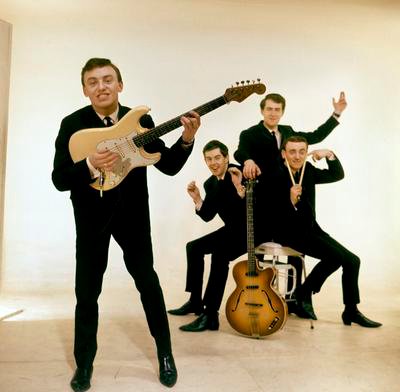
Act III of the Merseybeat spring offensive sees Gerry and the lads score a quick return to the top. ‘How Do You Do It?’ and ‘I Like It’ acting as the bread; The Beatles’ ‘From Me to You’ as the filling. A sandwich to change pop music as we know it.

gerry-pacemakers-500

I Like It, by Gerry & The Pacemakers (their 2nd of three #1s)

4 weeks, from 20th June – 18th July 1963

The previous two songs were super perky, ultra-upbeat, and positively dripping in youthful enthusiasm, and the formula isn’t altered very much here. We get a swingin’ little intro, and then: I liiike it, I liiike it…! If you didn’t know that Gerry & The Pacemakers were Liverpudlian, then you do know. This is a great record, but Gerry Marsden’s scouse rasp is possibly the highlight of the whole shebang.

I liiike it…. I liiike itI like the way you run your fingers through my hair… And I like the way you tiddle my chin… I docked ‘From Me to You’ a couple of points for being a little simple, a little gauche. And I suppose I’ll have to do the same thing here… Except. The charm of this song – of this whole embryonic musical movement – is its down-to-earth charm. These are regular blokes singing a regular, catchy song about love; there are no flowery romantic declarations from note-perfect crooners (see: Frank Ifield) or glossy-teethed American superstars (see: Elvis) here.

Look, for example, at the line: And I like the way you straighten my tie, And I like the way you’re winkin’ your eye, And I know I like you…! Or the And I like the way you let me come in, When your mama ain’t there…. (wink wink) It could have been written by a fourteen-year-old, and that’s all part of the allure. I suppose all the big British pop movements had their roots with kids on the streets: punk, Britpop, garage… and Merseybeat is no different. Music for kids; by kids.

gerry-and-the-pacemakers-i-like-it-1963-14

Just like its immediate predecessors, ‘I Like It’ is another short, sharp pop song; another two minute wonder. And like all the best pop songs there’s nothing too sophisticated going on here. In fact, I’ve covered many better-sung and better-performed songs on this countdown. But… this is the glorious sound of four boys jamming away in their garage, and it presses all my buttons. And ‘boys’ they truly were – Gerry, his brother Fred, Les and Arthur were all aged around twenty when their careers went stratospheric. For a while, in the summer of ’63, the smart money might have been on this four-piece going on to be the biggest band on the planet…

But, of course, that didn’t happen. Perhaps the reason I was a bit harsh on ‘From Me to You’ in my last write-up is that it comes loaded with the knowledge of what The Beatles would go on to do. It’s a perfectly decent pop song but, in my opinion, wouldn’t come near a Beatles Top 20. Whereas, ditties like ‘How Do You Do It?’ and ‘I Like It’ were as good as it got for Gerry and the gang. This is all we know them for; and that’s fine.

Before we finish, I’d like to indulge in a bit of a metaphor. Bear with me, and picture if you can these three Merseybeat chart-toppers from April-July 1963 as a huge meteor killing off hundreds of dinosaurs. These dinosaurs being… *clears throat* … Adam Faith, Anthony Newley, Michael Holliday, Frankie Vaughan, Alma Cogan, Helen Shapiro, The Everly Brothers, Tommy Steele and countless other artists who never topped the UK charts and who I can’t therefore link to… Their careers were all pretty much obliterated (or, at least, heavily affected by) this unstoppable Merseybeat fireball. May they rest in peace. Vive la revolution!

149. ‘Foot Tapper’, by The Shadows

Once again, The Shadows replace themselves at #1, and all I have to say is ‘Thank God!’ Thank God that ‘Summer Holiday’ wasn’t their final UK chart topper. For the group that contributed more to British rock ‘n’ roll than any other act to bow out from the top spot with a record as sickeningly twee and limp as that would have been a travesty.

shadows_014

Foot Tapper, by The Shadows (their 12th and final #1)

1 week, from 28th March – 4th April 1963

Thank God for ‘Foot Tapper’, then, as it ensures that Hank, Bruce and the other two score their final number one with, in my opinion, the best of the lot. OK, ok, ‘Foot Tapper’ might not be as sweeping as ‘Apache’, as epic as ‘Wonderful Land’ and it might not rock as hard as ‘Kon-Tiki’; but it is an insanely catchy little number.

What does it consist of? A light and limber riff? Check. Natty little drum fills? Check. A bouncy bassline? Check. A super-appropriate title? Check. (Go on – press play on the link below and watch your feet start tappin’.) Unlike their previous #1, ‘Dance On’, this one really does get you moving. This record just has a joie de vivre about it, a certain je ne sais quoi… It’s a song of such special potency that it’s got me speaking French.

It’s a very fitting way to round off three months of unparalleled Shadows dominance in the UK Singles charts. We’ve had The Shadows with Cliff twice (‘The Next Time’ and ‘Summer Holiday’), we’ve had solo-Shadows (‘Dance On!’ and now this) and we’ve had ex-Shadows (‘Diamonds’ from Jet Harris and Tony Meehan). They’ve replaced themselves at the top twice this year already, and now sit right behind Elvis Presley himself as the act with the most #1s in chart history. (Skip forward forty-six years, and The Shadows still remain joint-fifth in the all-time #1s list – level with Take That, and behind only Elvis, The Beatles, Cliff, Westlife and Madonna.)

And while we’re on the theme of Dominance, it is worth noting that ‘Foot Tapper’ is the 3rd chart-topper to be taken from the soundtrack to ‘Summer Holiday’. I’m not sure that there has ever been a more successful soundtrack than that. And… these Cliff ‘n’ Shadows number ones over the past few months have all been produced by the same man: Norrie Paramor. The same Paramor that also produced the only non-Shadows chart-topper of 1963 so far, Frank Ifield’s ‘The Wayward Wind’. So it could be argued that it is he that truly has the charts in a chirpy, string-drenched stranglehold.

shadows-the-foot-tapper-the-breeze-and-i-db-4984-3572-p

Back to the record in question, though, and I am not alone in holding ‘Foot Tapper’ in high-regard. The tune was, of course, the theme to ‘Sounds of the Sixties’ on Radio 2 – a show that I’ve mentioned before and will happily mention again whenever the opportunity arises. This meant that, no matter what tunes had been played in the preceding two hours – Procol Harum, Velvet Underground, experimental Scott Walker ‘B’-sides… – the last tune you always heard was this. Da-da-da-doo-doo, Doo-doo-dun-dun-da-da…

And so. We arrive at the end of an era. And I don’t just mean in the sense that we’ll never hear from The Shadows again. I mean that this is officially the end of the ‘rock ‘n’ roll age’, which we’ve been wading through ever since Bill Haley shouted ‘One, two, three o’clock…’ back in November 1955. Because of this I’m going to break my own rules slightly and do the next recap one song early (Gasp!) The first number one single after said recap will then be the starting pistol for perhaps the biggest, most influential movement in British popular music history! I’m excited! Are you…?

148. ‘Summer Holiday’, by Cliff Richard & The Shadows

The doors are locked, the suitcases stowed in the boot, the dog’s at the kennels. Dad starts the car and mum turns to the kids in the backseat. We’re all going on a summer holiday… she sings… No more working for a week or two…

602bb35a-ef2d-4113-b481-6ad4b02f8f33_1.bfe8d4d664a2e2f37aa93658ea409266

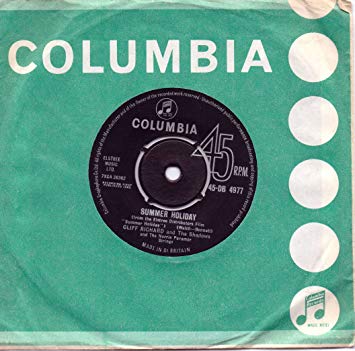
Summer Holiday, by Cliff Richard (his 7th of fourteen #1s) & The Shadows (their 11th of twelve #1s)

2 weeks, from 14th – 28th March / 1 week, from 4th – 11th April 1963 (3 weeks total)

Chances are, if you had any sort of semi-regular, middle-class British childhood in the latter half of the twentieth century, you will have lived through that very scene. I know I have – more than once. There can’t be many better known #1 hits than this? I’m racking my brain to think of chart-toppers that more people will know the words to, and I can come up with ‘Hey Jude’, and ‘Bohemian Rhapsody’…

We’re goin’ where the sun shines brightly, We’re goin’ where the sea is blue, We’ve seen it in the movies, Now let’s see if it’s true… It’s a horrendously twee song. The jaunty guitar ‘riff’, the glockenspiel, the strings that are apparently now a constant part of Cliff’s musical journey… And those lyrics. So we’re goin’ on a summer holiday, To make our dreams come tr-u-u-u-ue… Fo-or me and you… ‘Trite’ doesn’t even begin to cover it. Then there’s the key-change, and the humming to fade. Humming!

This should be an awful song. It is awful. And yet, it’s not. Not really. Because deep down in even the hardest, most cynical and blackened hearts there remains a kernel of the-child-that-was. And that little kid, in the backseat of his family’s Ford Escort, cares not for the sickeningly perky guitar and the vomit-inducing lyrics; to him it is simply the sound of, well, the summer holidays.

91ueecyvlfL._SX355_

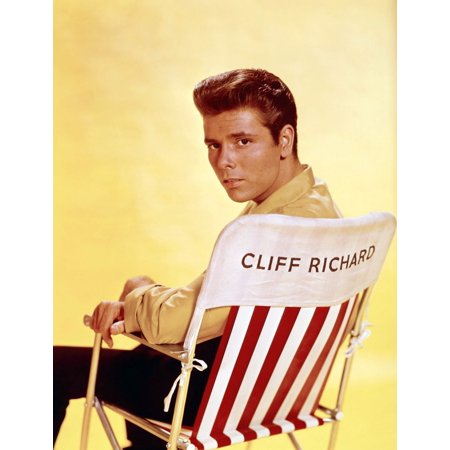
This song is Cliff doing what he does best. Cliff at his Cliffest. Peak Cliff. This will be his last chart-topper for a while, and it’s kind of fitting that we pause here. ‘Summer Holiday’ draws to an end his teeny-bopper stage – very soon he’ll be usurped by a four-piece from Liverpool as Britain’s foremost pop-act of the age. And it’s the perfect song to do so with, as any lingering hope that Cliff was Britain’s great rock ‘n’ roll hope is finally, brutally, irrevocably snuffed out in this record’s opening chords. Looking back at his seven #1s so far, only ‘Please Don’t Tease’ came anywhere close to being a rocker; and even then it was a super-mild rocker. The coconut korma of rock ‘n’ roll records. ‘Summer Holiday’ is, of course, one of the songs that Cliff performed on Wimbledon’s Centre Court during that rain delay, a moment still commemorated every year in Middle England’s village halls…

‘Summer Holiday’ is also the second chart-topping record from the hit movie of the same name, after ‘The Next Time’ / ‘Bachelor Boy’. Which is impressive – not many movies spawn two #1s (and it’s not finished with the chart-toppers yet!)

It also, and this is something that’s just came to me, confirms ‘Summer’ as the biggest single theme in pop music, after Christmas. We’ve already had ‘Here Comes Summer’ by Jerry Keller as a chart-topper in 1959, and I can think of at least three more summer-themed number ones through the years (there are surely others…) Which makes it all the odder that winter was barely finished when this song actually topped the charts… The power of Cliff! Even the seasons couldn’t contain him!

147. ‘The Wayward Wind’, by Frank Ifield

I have to admit – I’m struggling to ‘get’ Frank Ifield, Britain’s pop-idol du jour in 1962-3. We’ve arrived at Pt. III of his chart-topping quadrilogy (that’s a word, right?) and still the key to his success is eluding me.

FRANK-IFIELD-88-600x417

The Wayward Wind, by Frank Ifield (his 3rd of four #1s)

3 weeks, from 21st February – 14th March 1963

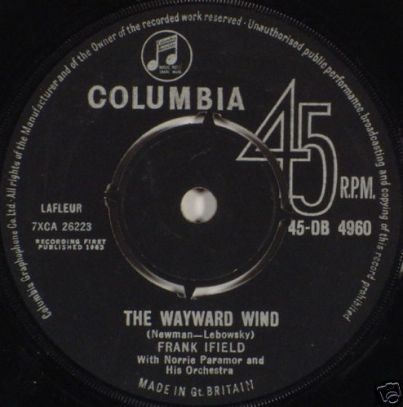
At the very least ‘The Wayward Wind’ is an improvement on Ifield’s last #1, the demented ‘Lovesick Blues’. Largely because the yodelling (Oh God, the yodelling…) is kept to a minimum. Instead we get a harmonica riff (that sounds suspiciously like it’s from an early-Beatles B-side…) and the story of a wanderer:

Oh the wayward wind, Is a restless wind, A restless wind, That yearns to wander… And I was born, The next of kin, Ah, the next of kin, To the wayward wind… It was originally, you may have guessed from those lyrics, a Country & Western song from the fifties – the rest of the lyrics are all about ‘railroad tracks’ and ‘border towns’. Which means it’s the third hit running in which Frank Ifield and his producers have taken an old song and tarted it up to fit in with the sound of the time – i.e. the soon-to-explode ‘beat movement’.

It’s probably the best of Ifield’s three chart-toppers; though that is very, very faint praise indeed. I like the way that strings and cymbals come in on the verses as the ‘wayward wind’ – it’s a nice effect. And we make it almost a minute into the song before the first yodel: made me a sl-a-a-a-eeee-ave…! Frank clearly couldn’t help himself. Maybe it was an actual affliction – yodelling Tourettes? – and he did it even when talking…? He saves it for that line and that line only, though, for which we can all be grateful.

690a_12

Like all of Ifield’s hits, ‘The Wayward Wind’ isn’t a song I’d ever heard before. The one good thing about his year in the sun is that all these tunes are completely new to me. There is at least a novelty value to his work. It was quite the popular tune, however, especially in the mid-to-late fifties. Our old friend Jimmy Young did a version (which makes complete sense, thinking about it – this could be ‘The Man from Laramie’ Pt. II) along with Patsy Cline, Sam Cooke and The Everly Brothers. The Beatles included it in their early live shows (I knew it – that harmonica!)

Let’s look at this as a throwback. In fact, let’s view the entire career of Frank Ifield as a throwback. He sings nicely, properly (your gran would have liked him, no doubt) with good enunciation. He was the final Pre-Rock star, the successor to the likes of Jimmy Young, Guy Mitchell and Frankie Laine, and his sudden popularity was the final twitch of a corpse that had been trampled over by rock ‘n’ roll and that was about to be completely buried by beat groups.

But, at the end of the day, this isn’t a very good record. Solid at best. Competent. Maybe his final chart-topper will unlock the mystery of Frank Ifield’s success? Maybe… Anyway, to finish… I’ve really held off mentioning this, but hey… ‘The Wayward Wind’ sounds, to me, like a euphemism for a fart.

On that note…

144. ‘The Next Time’ / ‘Bachelor Boy’, by Cliff Richard & The Shadows

As in 1962, the first number one of 1963 is by Cliff and his gang. New year; new Cliff? Well, kind of. His sound is changing… For the worse, mostly.

1444315144-a30ba8d4cf695a5867db18bd869743e3-600x337

The Next Time / Bachelor Boy, by Cliff Richard (his 6th of fourteen #1s) and The Shadows (their 9th of twelve #1s)

3 weeks, from 3rd – 24th January 1963

The first thing I noticed after pressing play on ‘The Next Time’ was that there’s an awful lot of piano. Previously, no matter how bland and soppy Cliff got – and he’s been plenty bland and soppy in his five previous chart-toppers – they were all guitar-led tracks. The Shadows are here, apparently, but quite why they were deemed necessary is beyond me. If I were Hank Marvin I wouldn’t have bothered getting out of bed for this one.

Away from the instruments, Cliff is properly crooning. They say I’ll love again someday, A true love will come my way, The ne-e-e-ext time… But after you there’ll never be a next time, Fo-o-o-or me… The song unravels at a snail’s pace, the verses and chorus blending together in a soggy mush. Lord, this is dull. It sounds like something Cliff should have been releasing in his forties; not when he was twenty-two!

There are lots of recurring themes here. It isn’t the first time that The Shadows have had their name on a disc to which their contribution was minimal (see ‘Travellin’ Light’.) It isn’t the first time that Cliff – the man who just three years ago was being hailed as Britain’s great rock ‘n’ roll hope – has released bland, saccharine crap (see ‘I Love You’.) But the more it happens the less I find I have the patience to listen to it.

By the time Cliff’s gone all nineties Hugh Grant, mumbling that he’s Still so very much in love… I’m over it. Grow some balls, Clifford. I can’t think of many previous #1s that were so lacking in oomph, so in need of a kick up the backside.

513F9A3QraL

Can the flip-side of this double-‘A’ redeem it? Well, straight away I’m getting strong whiffs of ‘Whatever Will Be Will Be’, both in the lilting rhythm and in the lyrics. When I was young, My father said, ‘Son I have something to say…’ And what he told me, I’ll never forget, Until my dying day… What is it that his dad imparts, in this testosterone-fuelled ‘Que Sera Sera?’ Well… Son you are a bachelor boy, And that’s the way to stay, Son you be a bachelor boy, Until your dying day…

Why his father is so anti-marriage is not explored, which is a shame, but Cliff wastes no time in putting Pop’s wise words into action. When I was sixteen, I fell in love, With a girl as sweet as can be, But I remembered just in time, What my daddy said to me… There’s no suggestion that he is staying unattached for any kind of racy, sow-my-wild-oats kind of reasons. No, not our saintly Cliff. He concedes, grudgingly, that he probably will fall in love eventually; though he doesn’t sound thrilled at the prospect. Until then though he’s Happy to be a bachelor boy… so on and so forth.

It’s better than ‘The Next Time’, but that’s a very low bar to get over. It’s faster paced, and at two minutes doesn’t outstay its welcome. I suppose this song would have been forgotten completely in the canon of British pop, even in the canon of Cliff, if it hadn’t become a sort of self-fulfilling prophecy: Sir Cliff has famously never married. Never even had a serious girlfriend, it seems. Which means that every time the ‘Daily Mail’ runs a story about Cliff and one of his female friends they will, without fail and to this very day, though he’s pushing eighty, trot out the ‘Bachelor Boy’ headlines. I bet he wishes he’d never recorded the bloody song.

Of course, there have always been rumours that Cliff is something of a ‘confirmed bachelor’, ‘not the marrying kind’, a ‘friend of you-know-who’ if you know what I mean, nudge, nudge… And people always argue that, in these enlightened times, he should just come out with it. But when you’ve been courting the evangelical Christian market for decades, and risk losing the only people that still buy your records in doing so… Anyway, all this is neither here nor there. The fact that I’ve started blethering on about this rather than the chart-topping record in question is a sign that I should wrap up.

Both ‘The Next Time’ and ‘Bachelor Boy’ featured on the soundtrack to ‘Summer Holiday’ – Cliff’s latest box-office smash (the 2nd biggest movie of 1963). And I hope you’re ready for more from Cliff and more from The Shadows, because they are going to utterly dominate the first three months of this year. Yay….