Should Have Been a #1…? ‘They Don’t Know’, by Tracey Ullman

Thanks again to our guest writers this week, who have donated fine posts on the Stones, Wizzard, ‘Crimson and Clover’, and the very concept of being ‘number one’... Our final guest post of the week comes from Kevin (AKA freddybobs) with the record he wishes could have taken that final step up to the number one position. And it’s another classic…

As in sport, getting to number one can grant you immortality, but the runners-up are yesterday’s jam in no time at all. So it is that ‘Karma Chameleon’ is still ubiquitous 40-plus years on, but you never hear a song that it kept pegged at number two for two weeks in the autumn of 1983.  I speak of “They Don’t Know” by Tracey Ullman.
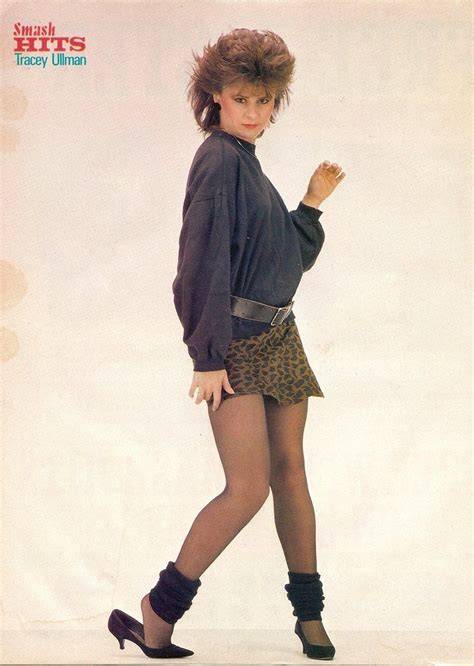
They Don’t Know, by Tracey Ullman

#2 for 2 weeks in October 1983, behind ‘Karma Chameleon’

I think it’s one of the great love songs. No, I really do. It’s not a power ballad, because it doesn’t need to be. There’s no desperation or yearning or heartache to tell of; it’s a simple and joyful paean to young love where the only thing that matters is being with that one person, regardless of what others think. Because you know, and they don’t.

Kirsty MacColl was nineteen when she wrote it, and took the original version all the way up to #62 in 1979.  Some prefer her version, but for me Tracey’s cartoon-character voice sounds younger, and contributes to the overall feel of wide-eyed innocence.

The song opens with wedding chimes, lolloping piano and Tracey singing wistfully about her love for her own Prince Charming despite the disapproval of everyone she knows.  The words she uses describe something universal. I get a feeling when I look at you, she sings.  We don’t know what that feeling is, but we definitely recognise it. And her friends? When they look at you, they don’t see what I see... These are not complicated sentiments, they’re very simple; but they say more about the helpless joy of young love than a dozen Celine Dion songs ever could. And ultimately, the denouement: They’ve never heard of love.  No, they don’t understand; they couldn’t possibly. 

The song’s innocent feel is enhanced by its strong ’60s and Phil Spector influences. There’s definitely some Ronettes or Shangri-Las there, particularly in the “do do do” backing vocals in the middle-eight – ironically from Kirsty herself – as is the “Bay-bee” crescendo, a couple of notes that Tracey couldn’t quite reach…
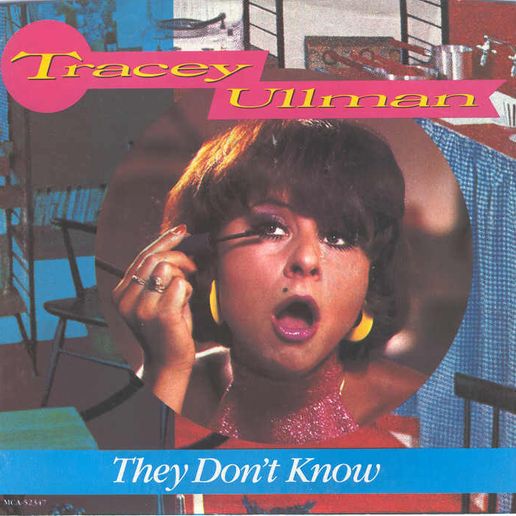
The song was accompanied by a cheap and cheerful video featuring Tracey getting ready for a date at the bowling alley, blotting her lipstick with the Marc Bolan pics on the wall and pointing excitedly at her engagement ring. Then she sees his terrible attempts at bowling and grimaces at his awful shoes, but it doesn’t matter; she loves his faults as well. At the end, she’s wearing slippers at the supermarket; she’s dowdy, with a child in the trolley and another on the way. But “they” weren’t proved right. She fantasises about Paul McCartney and rolls her eyes when her moustachioed hero pinches her ass, but her joyfulness is undiminished.

And that’s one of the two elements that make this song so poignant. The song captures a feeling that everyone has at some stage or other, but yes, it’s bound to fade. No-one wants to live with that intensity forever, but it’s a shame it’s gone. 

The other element, of course, is Kirsty MacColl’s death aged just forty-one in Mexico in 2000. She debuted with her version, and the whole premise of the song – embarking on one of life’s great adventures – mirrors her own tentative steps into the music business.  And tragically, she died while there were still so many adventures ahead of her.

‘They Don’t Know’ was the second of three top ten hits by Tracey Ullman in 1983. She had a couple of minor hits in 1984 and then decided her pop career had probably peaked. So she resumed her comedy career to great success in the USA, where of course she premiered ‘The Simpsons’.

But yes, this stalled at number two behind ‘Karma Chameleon’, a frothy and lightweight zillion-seller, condemning this fabulous song to be forgotten before that year’s Christmas decorations were up. No-one ever said it was fair, but it would have been nice if Tracey and Kirsty had sneaked just a week from Boy George. For young lovers everywhere.

Thanks again freddybobs, and everyone else who has contributed a post, a like or a comment this week. And to everyone who has voted in our ultimate #1s polls below, too. There are still 24 hours to vote before I reveal the results, and it remains close!
What Does It Mean to Be Number One…?

For our fourth guest post of the week, Keith (AKA nostalgicitalian) is pondering a philosophical point that all music lovers will have contended with at some time… The enduring popularity of terrible songs.

My friend Stewart, over at The UK Number Ones Blog reached out a while back and asked if I’d participate in a guest feature. By the time this posts, his site will have almost reached its 1000th number one song. This guest post is to help celebrate that amazing achievement.

Stewart gave us guest writers a lot of freedom. We could write whatever we want, as long as it has a connection to the “top of the charts.” With that being said, let’s pause for a moment and define “number one.”

According to Merriam-Webster: “Number one most commonly refers to the primary, most important, or highest-ranking person, thing, or priority in a given group.” I like this definition a little bit better: “Something that is first in rank or highest in quality.”

In other words, a number one song should be something of high quality. It should be the “best” song on the chart, but that isn’t always the case. You can glance over every Billboard Hot 100 chart and see for yourself here.

As I looked over the charts, I found that there were plenty of songs that had me wondering, “Just how did that piece of garbage go to number one?!” For starters, here is a quick list of number one songs from the 1960’s that left me shaking my head: ‘Alley Oop’, ‘Itsy Bitsy Teeny Weeny Yellow Polka Dot Bikini’, ‘Mr. Custer’, ‘Sukiyaki’, ‘Dominique’, ‘Ringo’, ‘Winchester Cathedral’, and ‘Honey’.  Some of them were number one for multiple weeks! 

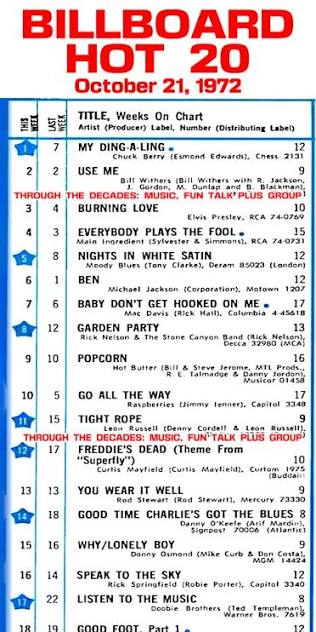
I realize that some of those would be considered novelty songs. Novelty songs would begin to fade from the chart in the ’80s, but there were still some that hit number one in the ’70s.  Who can forget ‘The Candy Man’, ‘My Ding-a-Ling’, ‘The Streak’, and the awful ‘Disco Duck’?  Maybe I should rephrase the question to read “Who would like to forget them?” When you go back to the definition, is Disco Duck “something that is first in rank or highest in quality?” I highly doubt it! 

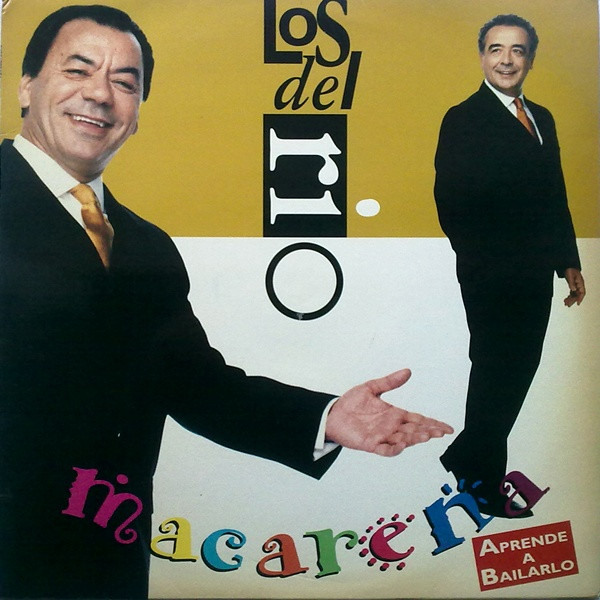
In 1996, the ‘Macarena’ was number one for a whopping fourteen weeks!  For what it is worth, it was a dance craze (much like ‘The Twist’ in the ’60s, which also went to number one).  It played at weddings and parties as well as on the radio.  It truly was popular, but was it really the best song of 1996?  There were only nine number one songs that year. You could argue that ‘One Sweet Day’ from Mariah Carey & Boyz II Men (11 weeks) or ‘Because You Loved Me’ from Celine Dion (6 weeks) were better songs, but musical tastes are subjective.

While I don’t find myself listening to much “current” music, there are certainly songs that fall into that category that I like.  However, I will offer one more song that I cannot believe spent multiple weeks at number one. Consider 2020’s ‘The Box’ by Roddy Rich. It contains many uses of the F-word and the N-word, and references to female genitalia, sexual acts and sexual innuendo. This was an 11-week number one song.

If a number one song should represent the “highest in quality,” and considering the songs presented above, does a song reaching number one really mean anything? I used to believe it did, but looking back I’m not so sure. One is just a number.

Keith writes about music, pop culture and life at nostalgicitalian.com. Thanks again Keith, for an original take on our topic. And for not giving in to nostalgia, and for pointing out that crap songs have been around for just as long as good ones!

I think this post is the perfect companion for our ongoing polls, in which you can choose your ‘best’ and ‘worst’ from my own favourite and least-favourite chart-toppers. Well over three-hundred and fifty votes have been cast so far, and it is still very tight at the top of both polls. Every vote counts! Results will go out on Sunday.

The Billboard Hot 100 Vs The UK Singles Chart

Our next guest post comes from another long-time follower, who joined our journey sometime around the late 1950s. Max (aka Badfinger) blogs on music and pop culture at powerpop.blog, and has kept up with our wanderings through the charts even though we left his preferred ’60s and ’70s eras behind a while back. Today he’s writing about a lost hit from that time, and how it highlights the differences between the charts on either side of the Atlantic…

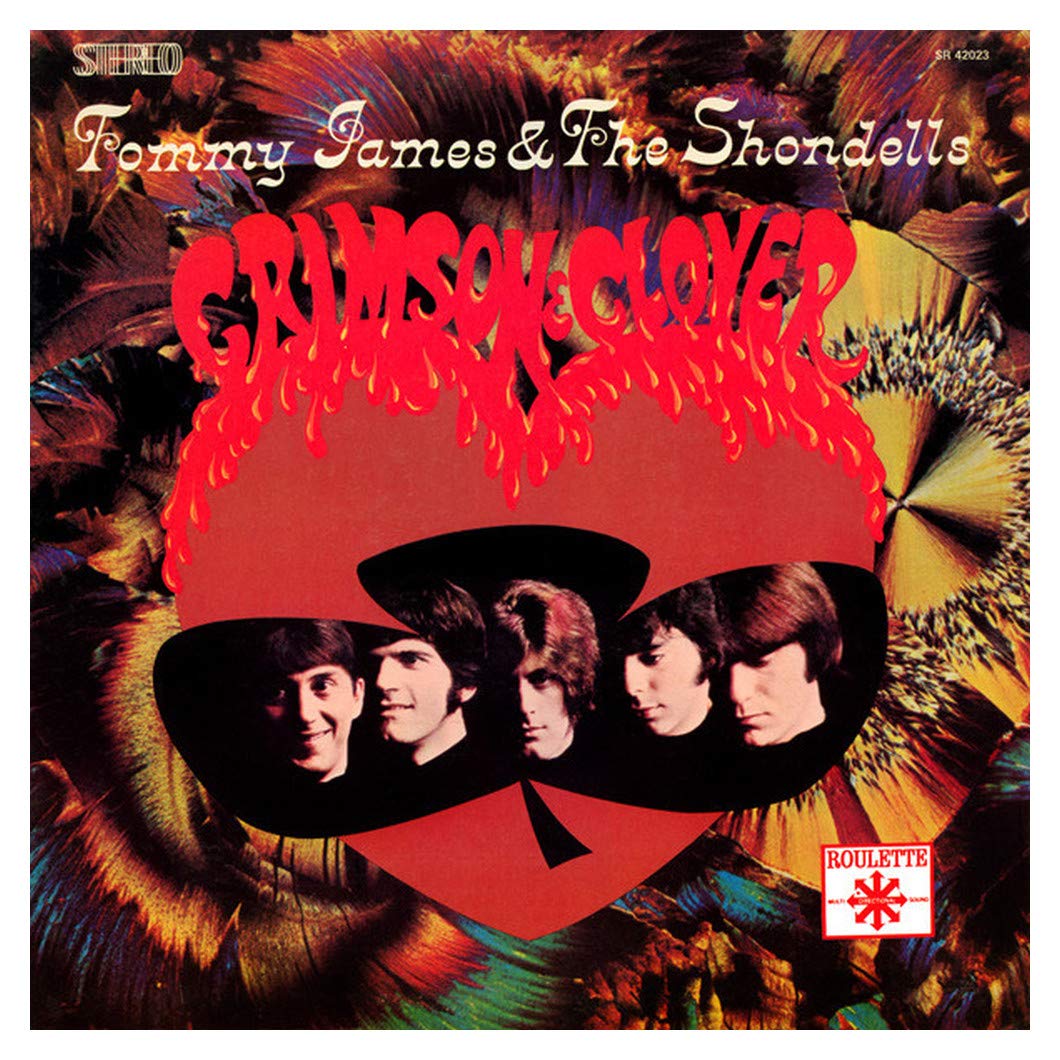
When I was growing up, my sister had this single. It was cracked, so she taped the B-side with scotch tape, and I would listen to it over and over. Of course, it went like “Crimson and Clov-CLICK-er.” But I didn’t care; it was a great song to me even with the hideous CLICK.

Now to the subject of the post. I’ve always been fascinated by how some bands could be huge in one country and barely make a dent in another. In America, we missed out on a lot of British acts like T. Rex, Status Quo, and Slade. At the same time, the UK never fully embraced some major American artists such as CCR, Bob Seger, and Grand Funk Railroad. They were certainly known there, but they never enjoyed the kind of success they had back home. I always wondered about that in bands and songs.

While I was writing up this song up a few years ago and typing out the chart position of it, I was shocked when I saw a blank in the UK chart position. I thought the source was wrong, so I emailed Stewart; no dice, it didn’t chart. This song is one of those records that proves the charts don’t always make sense. Tommy James and the Shondells were no strangers to success in the UK. ‘Mony Mony‘ had reached No. 1 there. But when it was released in early 1969, it failed to chart at all.

Part of the problem may have been that the song was unlike anything else on the radio at the time. It moved at a slower pace at mid-tempo. The tremolo effects on Tommy James’ voice and guitar gave it a dreamy sound. American audiences loved it. British listeners may have found it a little too different, bubblegum, or old hat. The UK music scene was changing quickly in 1969. Harder rock bands and progressive groups were starting to get more attention.

There is also the possibility that the record simply did not receive the promotion it needed. Maybe ‘Crimson and Clover’ (released January 1969) came too close after ‘Mony Mony’ (March 1968). Tommy James was always a bigger act in the United States and Canada than in Britain. In those days, radio play and television appearances could make a huge difference. If a record was not pushed hard enough, a song could get lost among dozens of new releases arriving every week. Of course, there was always the opposite, such as Ian Dury and the Blockheads, ‘Hit Me With Your Rhythm Stick’, and many others that hit number 1 in the UK and did nothing here.

Just so everyone knows, I’m not knocking the UK for it not charting. It’s just amazing to me, though, how one song can be so big in one country and flop in the other…either way! Whatever the reason, Joan Jett actually charted Crimson and Clover in 1982 at #60 in the UK, and her version peaked at #7 in America and #4 in Canada. At least it made an appearance in the UK Charts!

Thanks again, Max. Everyone else be sure to check out his blogs, through which I’ve discovered so many songs over the years. And don’t forget to vote for the Best and Worst #1s! Results out on Sunday!

My First #1… ‘See My Baby Jive’, by Wizzard

Today’s guest post comes from long-time follower John, aka popchartfreak, who I believe may have been my first ever commenter, back when each of my posts attracted around 2.5 views. He’s written about the first single he ever parted with cold, hard cash for. And it’s a classic. (Certainly cooler than the first record I ever bought, which was the soundtrack to ‘Joseph and His Technicolour Dreamcoat’.)

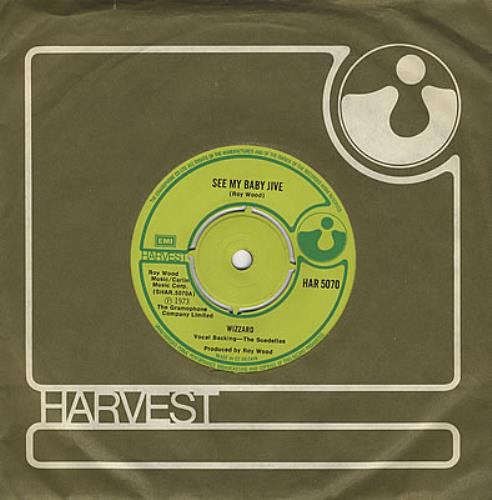
How could I celebrate the Number Ones Blog’s anniversary theme? Well, why not my first purchase of a single that was about to hit number one with the help of my pocket money: ‘See My Baby Jive’ by Wizzard, in 1973.

That track triggered in me a massive enthusiasm for Roy Wood, Wizzard, ELO and The Move back-catalogue to boot. Top Of The Pops helped: the outlandishly colourful outfits and makeup on Top Of The Pops and the Phil Spector wall-of-sound-reinvented was thrilling. I loved that record, a sort of glam rock update of the 60’s with added excitement so much so that it sat on top of my personal weekly charts for a record ten weeks.

So what exactly is great about it? In the first five seconds it sounds like an attention-grabbing aeroplane engine on Loud morphing into a furious drum beat, an orchestra strings section, female backing vocals and horns. It’s ten seconds in before Roy starts singing Look out! Look out! The backing singers stay on board throughout, giving it Ronettes vibes through to the hook and back to the verse. There’s no pace let up, the horn section stays big with lots of intricate riffs in the mix, to the instrumental bridge when the strings take centre stage, then the sax, then back to Roy. Verse, chorus, repeat chorus to a crescendo, different parts sung for variation and then to the final sax fizzle out solo via an instrumental bit, oh-oh-ohs, and the kitchen sink thrown in for added excitement. Talk about epic! My jaw still drops at this record, a mini-masterpiece of pop. Love it.

In total, Roy released a trio of Phil Spector-ish hit singles: ‘Angel Fingers’ (another number one) and ‘I Wish It Could Be Christmas Everyday’ – a universal Christmas classic that peaked at #4 (behind Slade), and that is still in the UK charts every Christmas fifty-three years later. Roy flirted with all sorts of stuff: ’50s revivalism for Wizzard, and his quirky solo career – album ‘Boulders’ was fabulous, he did 100% everything on the album instrumentally and vocally, hopping from Eurovision gospel to a ‘2001: A Space Odyssey’ pastiche of a computer in love. Later, hit single ‘Forever’ was a Beach Boys via Neil Sedaka pastiche, and ‘Going Down The Road’ was bagpipes reggae. The man was a musical hero who could turn his hand to anything. Everybody in the UK still knows who Wizzard are in the 2020’s: that Father-Christmas-decked-out bloke who wishes it could be Christmas everyday! I just wish they could hear ‘See My Baby Jive’ for a change!

Thanks John. A great post on a great song. And a reminder to vote for your best and worst #1s before I reveal the results on Sunday!

1000 Number Ones Down… Vote for Your Favourites (and Least Favourites…)

Welcome all. We’re on the verge of celebrating a milestone I’m not sure I ever imagined reaching when starting this blog back in January 2018: our 1000th number one!

Before we get to that, from tomorrow we’ll be marking the milestone with a week of guest posts from some of our long-time followers, readers and commenters. And before that, why don’t we open things up to the floor?

Over the past eight and a half years, I’ve published thirty recaps, in which I’ve stopped every thirty (or more recently, fifty) number ones to reflect on chart trends. And, most importantly, to choose a Best and a Worst chart-topper from each recap. Now it’s over to you, to vote on your favourites from my thirty best, and worst, chart-topping singles. At the foot of this post, you’ll find two polls in which you can vote for as many of the songs as you like. I’ll reveal the results in a week, just before covering the 1000th #1. Have at it. This is democracy manifest!

I did the same thing a few years ago (you can see the results here). I’ve wiped those scores, and added the most recent winning records, so even if you voted back then please do so again! I also did a poll for Christmas #1s, and that poll remains open if you’d like to have your say there.

But before all that, I thought it would be fun to go through my stats and see which posts, and which songs, have had the most engagement over the past eight years. (Again, I did this after the 500th #1, and the results were somewhat surprising…) Here are my most viewed posts from each decade covered. Interestingly, none of the current most-viewed posts are the same as those most-viewed after the 500th #1…

1950s – ‘You Belong to Me’, by Jo Stafford

The second-ever UK number one, scoring a week in early 1953 after Al Martino had kicked things off. So I suppose time has been on this post’s side, given that it’s been online since January 2018. And the song was a huge hit in its day, staying on the UK charts (then just a Top 12) for nineteen weeks, and staying at #1 in the US for up to 12 weeks (depending on which chart you look at in those pre-Billboard Hot 100 days).

But still, it is not the first record you think of when someone says ‘the 1950s’. Bill Haley, Elvis and all the other rock and rollers were still a good three years off. A little digging has given a possible explanation for ‘You Belong to Me’ being searched for more often than your average pre-rock ‘n’ roll hit, as it has featured in horror film ‘The Nun’ and TV series ‘Fallout’ in recent years.

1960s – ‘The Sun Ain’t Gonna Shine Anymore’, by The Walker Brothers

A bit more of a classic this, our most-viewed #1 from the sixties. Still, it ain’t the Beatles or the Stones. One theory I have is that huge, generational hits have so much written about them that any link to my little blog is buried on page 300 of a Google search. Whereas for slightly less famous hits, I might appear higher up in a search.

Also interesting is the fact that you have to scroll pretty far down my list of most-viewed posts to find a #1 from the ’60s. This is, in fact, only my 33rd most viewed chart-topper. There really is quite the disparity between that decade, compared to the seventies and eighties. Even the fifties rates higher on average. I have no theories to posit as to why this might be…

1970s – ‘Whispering Grass’, by Windsor Davies & Don Estelle

Backing up my theory that the least remembered songs do well on little-known blogs such as mine, here are Windsor Davies and Don Estelle singing an old Ink Spots tune, while in character for their roles in ‘It Ain’t Half Hot Mum’. Of all my posts on 1970s number ones, this has had the most views, by quite some distance. In fact, after the homepage, this is the most-viewed chart-topper…

Another idea I have is the ‘bookmark theory’, in which someone bookmarks a particular post rather than the blog homepage, and whenever they return to the site it racks up another view for said random post. So if you are the reader who bookmarked ‘Whispering Grass’, do own up!

1980s – ‘Relax’, by Frankie Goes to Hollywood

The only most-viewed post that matches with the Very Best #1s lists that you can vote on below, ‘Relax’ is an eighties classic. So it makes sense that this is the most viewed post from that decade. But then it leaves me wondering why this is the only one of my ‘most-viewed’ posts to make sense like that…

1990s – ‘The Millennium Prayer’, by Cliff Richard

From a bawdy and controversial eighties classic… to this. Yes, my most viewed post from the decade of Britpop and boybands, the decade that is so ‘in’ with the kids right now, is Cliff Richard at his most God-bothering.

Time isn’t even on this song’s side, as it was the penultimate #1 of the ’90s, so has technically been playing catch-up. At the time of publication, I remember that ‘The Millennium Prayer’ sent my views spiking to their highest-ever levels, causing me to wonder if Cliff’s more rabid fans had spotted it and had been sharing. But then, I was far from complimentary about it, so I also worried that Cliff himself had seen it and was going to come after me with a lawsuit. So far, nothing quite so dramatic has happened…

2000s (so far) – ‘The Masses Against the Classes’, by Manic Street Preachers

And my most-viewed ’00s #1 is the decade’s, and the millennium’s, first. Which lends more credence to the ‘time is on its side’ theory. But I think this was also a beneficiary of the huge spike in views I enjoyed after ‘The Millennium Prayer’, as I published it a few days later and it went similarly viral. Or maybe it’s just popular because it’s such a freaking tune!

Anyway, that’s what people have viewed over the years, and I am always grateful for anyone who takes the time to read any one of my posts. Now it’s time to choose your favourites from my favourite chart-toppers. Take your pick from the Beatles, the Stones, ABBA, Blondie, Bowie, Marvin Gaye, Jerry Lee Lewis, Eminem, Beyonce and, um, Bucks Fizz. Multiple votes are allowed. Vote for them all if you wish!

Or you can indulge your dark side. Who wants to hear the best #1s when you can hate-listen to these horrors from Dana, Engelbert Humperdinck, Westlife, Ray Stevens, Jive Bunny, Donny Osmond, Robson & Jerome and, um, Elvis.

500 Number Ones Down…

The last chart-topping record I featured was as average as you can get: ‘A Little Peace’. A nice acoustic pop song with nice sentiments sung by a nice girl… Except, it was actually quite a notable chart milestone – the UK’s 500th number one single.

Which means, in just over four earth years we have covered almost thirty chart years! From Al Martino belting out the very first chart-topper, ‘Here in My Heart’ in 1952, past the pre-rock years, rock ‘n’ roll, Elvis, Merseybeat, four lads from Liverpool, the Summer of Love, the come-down, glam, disco, post-punk and new wave… To the spring of 1982.

Which means, at the current pace, we’ll hit the 1990s early next year, and we’ll meet the 1000th UK number one (although, actually, that’s a song which has already featured in the first 500… don’t ask…) sometime in early 2026! But, really, it’s dangerous to look that far ahead in life. I’m in no rush.

The pleasure here is to be had from the slow stroll: the discovery of lost gems, the re-discovery of all-time classics, a shrug of the shoulders at the boring ones, and a crack of the knuckles before I dive in studs-up on an absolute shocker of a song. And, of course, the fact that I’ve picked up so many dedicated followers, readers and commenters, without whom this pursuit would be pointless…

To celebrate this minor achievement, I had a look at my stats, and can now reveal the most viewed posts from each decade I’ve covered. I may have my favourites, but these are apparently the #1s that the good followers of WordPress (and beyond) want to know about…

The 1950s:

‘She Wears Red Feathers’, by Guy Mitchell

The most viewed post from the decade of Elvis, Buddy and the Killer is a song from the days when barely anyone had heard the phrase rock ‘n roll. It was just the 6th song I covered, so I guess it has had a bit of a head start. Read my original post here. (I wasn’t kind…)

The 1960s:

‘House of the Rising Sun’, by The Animals

Probably not the first song you’d guess for the sixties, but an undeniable classic nonetheless. The longest, and possibly the most risqué, song to have topped the charts at that point. Read my original post here.

The 1970s:

‘Rivers of Babylon’ / ‘Brown Girl in the Ring’, by Boney M

Despite coming towards the end of the decade, this one gets all the hits. It’s actually my most viewed post… ever. It’s also one of the best-selling singles of all time. Underestimate Boney M at your peril would be the lesson! Read my original post here.

The 1980s (so far):

‘Green Door’, by Shakin’ Stevens

Despite publishing it barely a month ago, ‘Green Door’ is already my most viewed post from the 1980s. Interestingly, of the four songs, only ‘House of the Rising Sun’ is one that you could find much critical acclaim for. Guy Mitchell, Boney M and Shaky all had something much more elusive (and lucrative)… popular appeal. And apparently still do!

And finally, before I go, a bonus. My least viewed post and, by these metrics, the least popular of the first 500 #1s…

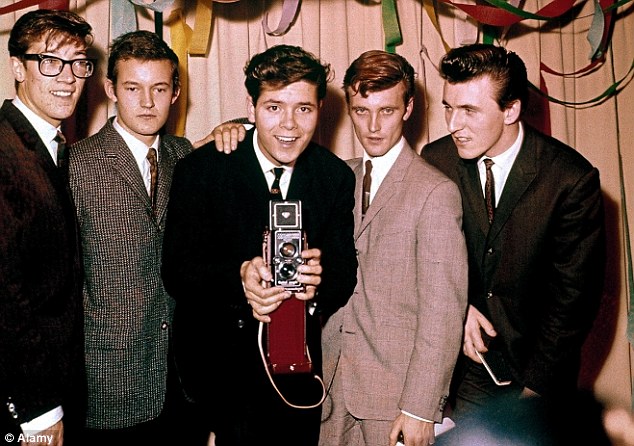
‘Dance On!’, by The Shadows

Yes, this one-week number one from early 1963 has had barely any views. That could be comment on the state of popular music in the months just before the Beatles went supersonic. Or a comment on my writing. But I quite like the tune. Give it some love here.

Thanks everyone for reading and commenting over the past four years. For the rest of the week, I’ll be posting some cover versions of classic #1s. Here’s to the next 500!