In a presumably intentional move, Christina goes from ‘dirrty’ to ‘beautiful’…
Beautiful, by Christina Aguilera (her 4th and final #1)
2 weeks, 2nd – 16th March 2003
She knew what she was doing, representing all the facets of freshly-‘Stripped’ Xtina (the album’s third single was ‘Fighter’). And sonically, this is completely different from ‘Dirrty’s mucky synths and horny beats. It’s a pretty, piano-led ballad, very Beatlesy, with growing strings lending some orchestral grandeur.
It’s very pleasant, very grown-up, and a worthy riposte to those who tut-tutted after hearing its predecessor. This is one tune that everyone from primary school kids to grandma could sing along to. It also stands out in the charts of early 2003, as clearly being recorded on actual instruments, with little to no obvious electronic embellishment. And Christina manages to reign in her over-singing fairly well. It’s still there in dribs and drabs throughout, because she can’t help herself, but when she finally does let rip in the middle-eight, it’s an almost triumphant moment.
It’s the words of this song that, ironically, bring me down today. Yes, ‘Beautiful’ has gone down as a modern anthem of empowerment, still very well regarded by the LGBT community; but in walking the tightrope between ‘affecting’ and ‘trite’, I’d say this topples over more towards the latter. You are beautiful, No matter what they say… Maybe I’m just immune to the charms of this sort of song, as I’ve mentioned before, but I struggle to see how lyrics so basic could make anyone feel anything.
The video was more thought-provoking, featuring characters struggling with anorexia, and racism, as well as their gender and sexuality. In fact, this is two number ones in a row to feature a gay kiss in the video. The future is well and truly here! I was seventeen when this came out (a few months before I, too, came out), surely a prime age to be inspired by its message. But what I remember most was squirming with embarrassment when the video came on, worried that friends would make a connection between the two guys kissing and me.
Like Lady Gaga’s ‘Born This Way’ almost a decade later, the people that are left feeling the most positive from songs like this are the artists performing them, who get a nice sense of self-satisfaction. And as much as I like Christina, and love Gaga, and think both songs are good, the messages behind them are the least impactful aspects for me. Though it is worth noting, perhaps, that in 2002 Christina couldn’t actually use words like ‘gay’ and ‘transgender’ in her lyrics, whereas Gaga could in 2011.
As with several of the songs on ‘Stripped’, ‘Beautiful’ was written by Linda Perry, of 4 Non Blondes fame. Perry had previously worked with Pink, and had intended this song for her, but was blown away by Christina’s demo. This added to a growing beef between Pink and Aguilera, who had already argued over a chair on the set of the ‘Lady Marmalade’ video. And in all honesty, two pop divas fighting over furniture probably has much resonance within the gay community than lyrics about being ‘beautiful no matter what they say’…
This was Christina’s final UK number one, but she was good for ten further Top 10 singles through to the mid-2010s, including three more from ‘Stripped’. And for those of you who see her over-singing as a fun quirk rather than a criminal act, may I point you towards the album’s final single, the caterwauling ‘The Voice Within’, which made #9 towards the end of 2003.
Up next, on UK Number Ones Blog. Schoolgirls…! Lesbians…! Russians…! Are you ready to clutch your pearls??
All the Things She Said, by t.A.T.u (their 1st and only #1)
4 weeks, 2nd February – 2nd March 2003
I well remember the furore about t.A.T.u, about this song, and about the video. And we’ll get to the furore in a minute. But it’s a shame that this song is remembered for the fact that it featured ‘lesbian’ schoolgirls, and that there were bans left, right and centre, and not because it’s a great pop song.
Because it really is. It’s an electro-grunge-dance mashup, with crunching power chords, at least two great synth riffs, and a brilliant shoutalong chorus. It’s cool, edgy, and yet retains a catchy Eurotrash edge. The two girls’ voices have a fairy-like high pitch, and a memorable way of pronouncing the English lyrics, AKA the ABBA-effect. It’s brilliant fun to yell out Have I lost my mind… mimicking the Russian accent (the original version is called ‘Ya Soshla S Uma’ in Russian – the lyrics were re-written but retained the lesbian content). The man responsible for the re-write, and the production, was synth pop royalty Trevor Horn, who of course gave us the Buggles, but who has also had input on chart-toppers from Frankie Goes to Hollywood, Boyzone, to LeAnn Rimes.
This, plus ‘Sound of the Underground’, as well as ‘Dirrty’, and Sugababes’ two 2002 #1s, were all part of the vanguard, dragging pop away from millennial bubblegum and glitchy R&B and into a future of big beefy power chords, and big beefy choruses. (It’s perhaps no coincidence that while listening to ‘All the Things She Said’ when writing this post, Spotify auto-played Lady Gaga’s 2011 hit ‘Judas’ straight after). I’d say that this record was overshadowed by a couple of other, huge pop tunes that come later on this year, but I’d also say that the controversy it created also didn’t help it retain credibility. (It is on its way back, though, and is poised to re-enter the charts following a feature on the ‘Heated Rivalry’ soundtrack.)
Predictably, conservative outlets criticised the song and the video for promoting homosexuality and paedophilia. The two members of t.A.T.u were fifteen at the time, but they do little more than kiss in the video. Cultural figures like Richard and Judy were moved to campaign against it, though. Meanwhile, more liberal voices criticised the fact that t.A.T.u – Lena Katina and Julia Volkova – were just playing at being gay as a record-shifting gimmick, a fact given credence by the fact that both women have since denied being in a relationship, while Volkova has made anti-gay statements (though that’s potentially a sensible career move in Putin’s Russia).
Perhaps surprisingly, t.A.T.u were not one-hit wonders. They remain the only Russian act to have topped the UK singles chart. The shouty drum ‘n’ bass of ‘Not Gonna Get Us’ made #7 later in the year, and the lead single from their follow-up album ‘All About Us’ made #8 in 2005. They also did Eurovision. I actually bought that second album, and can attest to the quality of that single and one of the follow-ups, ‘Loves Me Not’, both of which were similarly angsty electro-grunge. t.A.T.u were certainly one-trick ponies – shouty faux-lesbian electro – but it just so happens that shouty faux-lesbian electro is right up my street.
2002, the year reality TV took over the singles chart, ends. And 2003 begins with more reality TV fodder…
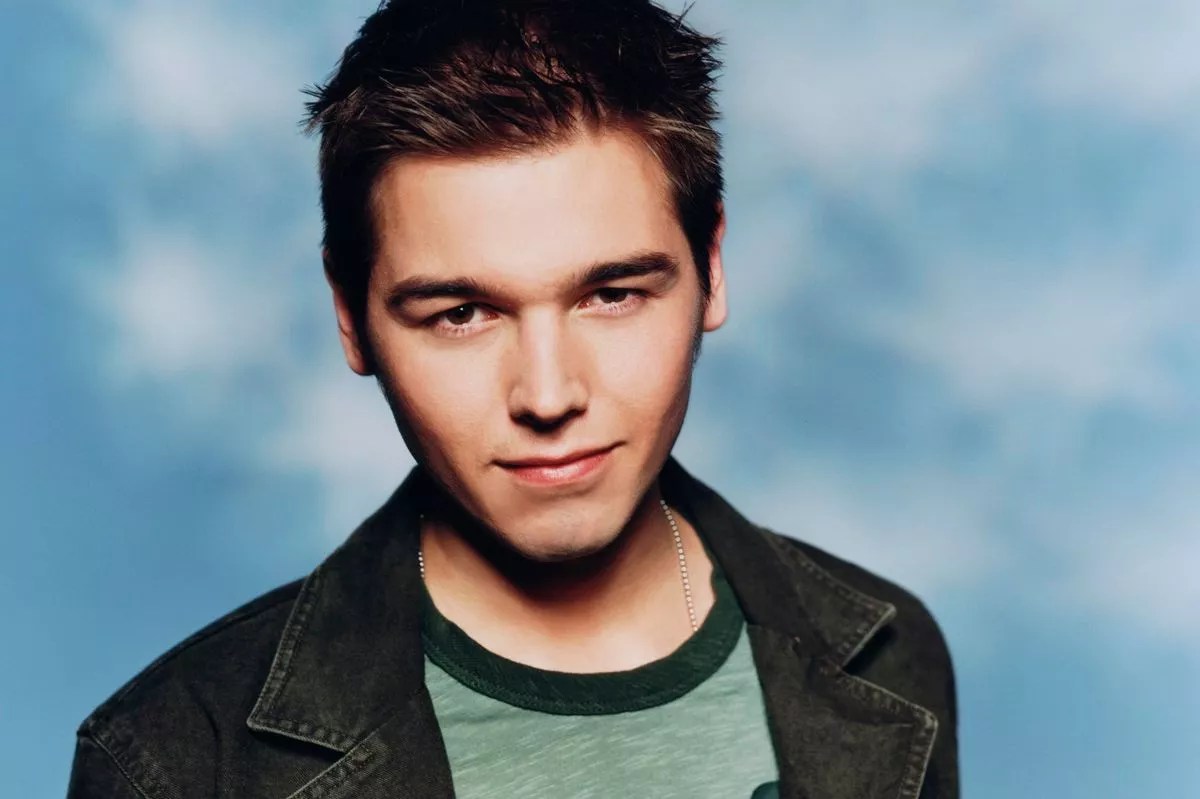
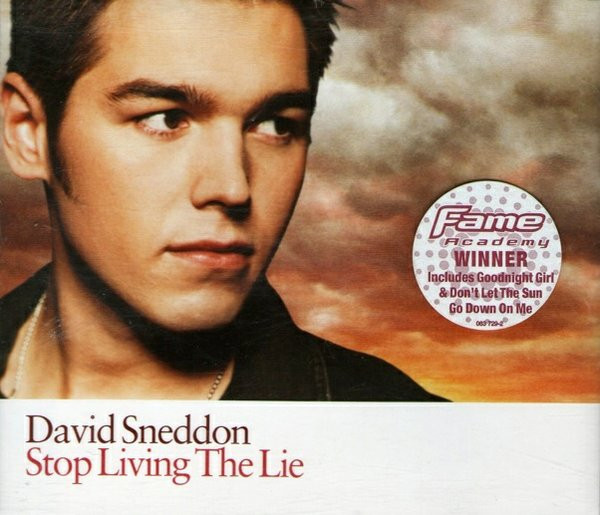
Stop Living the Lie, by David Sneddon (his 1st and only #1)
2 weeks, 19th January – 2nd February 2003
And this is fodder, especially compared to the classic it knocked off the #1 spot. David Sneddon was the winner of ‘Fame Academy’, the BBC’s attempt at getting in on the singing contest craze, after ‘Pop Idol’, ‘Popstars’ and ‘Popstars – The Rivals’ had all aired on ITV.
And in the best tradition of Auntie Beeb, ‘Fame Academy’ was promoted as a slightly higher brow sort of singing contest. The contestants were called ‘students’, they worked on their craft, they were encouraged to write their own songs. There would be no pratting around in ponytails, over-singing to ‘Baby One More Time’ here.
Which meant that it produced a winning single as dull as ‘Stop Living the Lie’, and a winner as dull as David Sneddon. Even his name is dull. David Sneddon is a plumber from Paisley, not a pop star from Paisley. I’m sure he was a nice boy. I’m sure he was talented to a certain extent. And he does have a cute boyishness to him. But Lord, this is such earnest claptrap, plodding and po-faced, with profoundly teenage lyrics about people not living their authentic lives. Who is going to save her, No-one wants to know her…
I don’t think pop stardom is something that can be taught. Sure, you can refine a kid’s dancing technique, and give them a new haircut; but there has to be something there in the first place. The X-Factor, as it were. Simon Cowell and Louis Walsh, for all their faults, knew this. They knew that cute young people singing basic but catchy tunes sold. There was a reason Gareth Gates didn’t write his own songs. I go back to the argument I made when writing about Darius’s ‘Colourblind’, that just because a song has been written by the person singing it does not automatically make it a good song.
The album version of ‘Stop Living the Lie’ has a much more rousing electric guitar riff, which gave me cause to sit up when I played it. Sadly the single remix removed this guitar, presumably because of worries that the sort of people who’d be buying this record couldn’t cope with that much rock.
David Sneddon lasted for four singles, each one charting lower than the one before, then moved into songwriting. He’s written for (predictably) X-Factor winner Matt Cardle and Westlife’s Shane Filan, and (less predictably) Lana Del Rey. And in fairness to the format, ‘Fame Academy’ did produce two other charting artists: runner up Sinead Quinn and 3rd placed Lemar, the latter of whom went on to have genuine chart success for much of the rest of the decade.
I’ve been intending to do this ‘remembering’ post for several years now, but each time I’ve let it pass by unmentioned. Finally, on the tenth anniversary of his death, here is my Remembering David Bowie post…
I think I put it off so many times because I was, and still am, over-awed by David Bowie’s back catalogue. I am no Bowie buff, and I didn’t want to embarrass myself writing the same old blah blah blahs about ‘Heroes’ or ‘Starman’.
So I’ve decided not to think too much about it. I’ve gone with my gut, and chosen five of his hits that I enjoy. Two I’ve loved for a long time, two I don’t know so well, and one that I just discovered while going through his discography in preparation for this post, released across a twenty-year period. They all made the UK Top 10, which is the one requirement I used to keep the task from getting too impossible.
Anyway, here’s five singles to take us on a journey through a musical career like few others…
‘Drive-In Saturday’, #3 in 1973
Not one of his better remembered glam numbers, but the follow-up to ‘The Jean Genie’ is a woozy wonder. A doo-wop pastiche set in the post-apocalyptic year 2033 (I bet that sounded very far off when he wrote it…)
‘Knock on Wood’ (Live), #10 in 1974
This is the one I just discovered in going through his discography, and it sticks out. Making #10 towards the end of his imperious Ziggy Stardust and Aladdin Sane phases, this is a rocking cover of the sixties soul classic, recorded live in Pennsylvania. Not well received at the time, I think it’s an interesting counterpoint to his artier recordings, and he sounds great on it.
‘Boys Keep Swinging’, #7 in 1979
This late-seventies stomper sees Bowie doing Bryan Ferry, with a touch of the Velvet Underground and lots of his old glam sound. And lots of drag, some of it quite terrifying. For an artist remembered for his gender-bending, this is Bowie at his bendiest. Pure camp.
‘Absolute Beginners’, #2 in 1986
Possibly my favourite Bowie track (said as someone who has probably listened to about 20% of his entire output). His last big, big hit, reaching #2 in the spring of 1986, this is a brilliant, upbeat ballad with about five different hooks. It marks an artist as special when they can churn something like this out to order for a movie soundtrack, more than twenty years into their career. And is there a sweeter lyric than: I absolutely love you, But we’re absolute beginners…?
‘Jump They Say’, #9 in 1993
Although I struggle to appreciate all of his work, it’s admirable how Bowie never settled, never rested on his considerable laurels. His final album, ‘Blackstar’, is one of his most challenging, and was released exactly two days before he died. While his penultimate UK Top 10 single was this jarring neo-funk single, inspired by the suicide of his schizophrenic half-brother. And yet, there’s still a great pop sensibility to it, and he managed to make it a commercial success, taking it to #9 in 1993.
Apologies for not writing as much as I usually do in a ‘remembering’ post. A mix of time constraints, and an inability to do Bowie justice. Anyway, in this case it’s probably better to let the music do the talking. I hope you enjoy these picks!
If anyone wants to attempt an argument for TV talent shows not being the death of popular music, then this is usually the first (and perhaps only) piece of credible evidence they can produce… Girls Aloud.
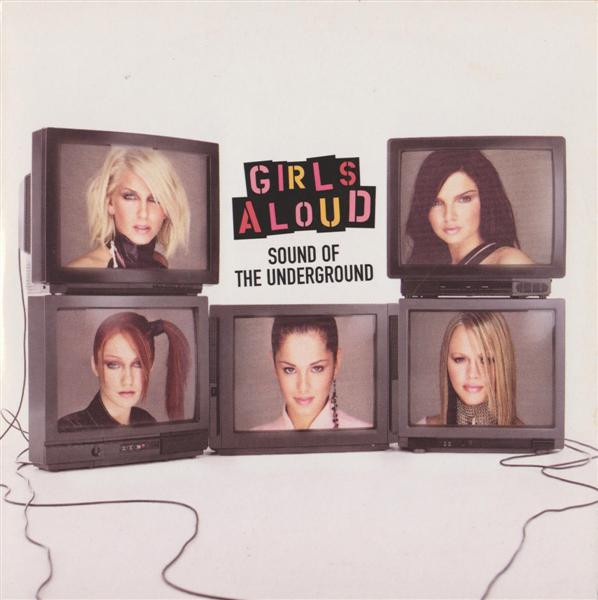
Sound of the Underground, by Girls Aloud (their 1st of four #1s)
4 weeks, 22nd December 2002 – 19th January 2003
The Christmas #1 for 2002, by the winning girl group from ‘Popstars – The Rivals’, is the best talent show #1 so far by miles, and miles. It may be the best ever, because it remains a brilliantly fresh pop record, and the descending guitar lick that takes us to the chorus still sounds thrilling.
Guitars? In a pop record? By a girl group? In 2025, in a world with Olivia Rodrigo and Billie Eilish, that sounds perfectly believable. But that’s because acts like Girls Aloud made it so, by blurring the lines between pop and rock, cool and uncool, indie and manufactured. When I was going to indie nights at the student union a couple of years after this had been at number one, you were just as likely to hear Girls Aloud as you were the Arctic Monkeys. And hey, naming your manufactured TV pop group’s debut single ‘Sound of the Underground’ is a pretty ballsy move.
Speaking of the guitars, with this coming a few weeks after Las Ketchup, is it too soon to claim an early noughties surf rock revival? I can think of at least one more upcoming, classic #1 that will also feature them. It has to be said, if you had ‘Sound of the Underground’ described to you before ever hearing it – a TV singing contest girl group, surf guitars, drum ‘n’ bass beat – you’d be forgiven for expecting a car crash.
This, and Sugababes’ two chart-toppers from earlier in the year, set pop music on its way for the rest of the decade. Girls Aloud were the Spice Girls – fun, playful, gobby – to Sugababes’ All Saints – cooler, more attitude, looked like they could handle themselves in a fight. But they needed one another to bounce off; I don’t remember it ever being painted in the press as a rivalry. And of course, the two groups would eventually release a chart-topping duet.
We should take a moment to remember One True Voice, the boyband ‘rivals’ of Girls Aloud. The premise of ‘Popstars – The Rivals’ was that the two groups would release their debut singles the week before Christmas, and the winner would get the festive #1. (Though it would have been hilarious if neither had…) In the end, Girls Aloud sold 213,000 copies that week, almost 70,000 more than One True Voice’s single ‘Sacred Trust’, a rather more predictable, disco-lite ballad (which I’m listening to now for the first time in twenty-three years, and actually quite enjoying…)
One True Voice lasted for exactly one more single, which limped to #10. Girls Aloud, meanwhile, did a little better… We needn’t have worried that they might peak with their debut for, as good as ‘Sound of the Underground’ is, they have at least five better singles in their arsenal. This was the first of twenty consecutive Top 10 hits, right through to 2009. Sadly not enough of them made number one, but when I do my Girls Aloud – Best of the Rest post it will be wall-to-wall bangers.
This number one marks the beginning, and the end, of two eras. It is the last chart-topper from ‘the Golden Era of Boybands’ (1989-2002). It is also the start of a strange late-career run for Elton John, in which he will be remixed, duet with dead rappers, and commit atrocities in the name of charity…
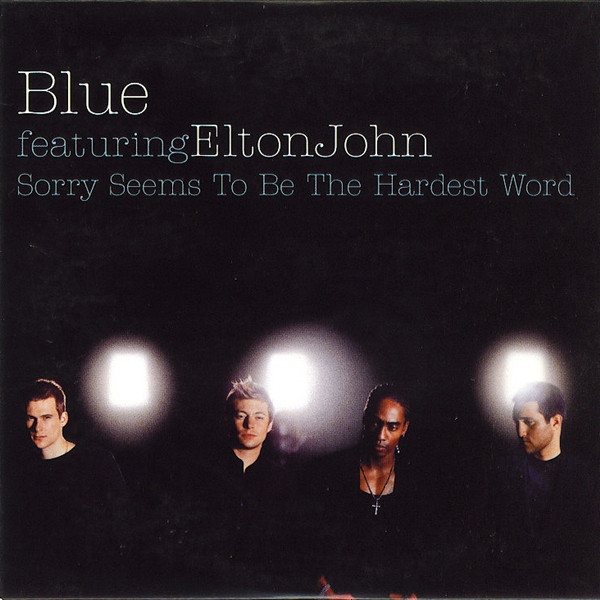
Sorry Seems to Be the Hardest Word, by Blue (their 3rd and final #1) ft. Elton John (his 5th of ten #1s)
1 week, 15th – 22nd December 2002
Compared to some of those records to come, I like this take on Elton’s 1976 #11 hit. It’s true enough to the original, with Elton’s piano coming through loud and clear, and keeps the Parisian sidewalk feel of the solo (swapping the accordion for a harmonica), with enough modern dressing for it to fit in and be a 21st century success. Starting songs with a vinyl crackle was apparently very hot in late 2002.
I will say that the addition of a modern R&B drumbeat, and a slightly faster tempo, means that this version is far less desolate than the original, and therefore loses some of its emotional heft. And I will also say that it is interesting to contrast the polished, technically very good, boyband voices of Blue with Elton’s gruff authenticity, and to wonder how far Reg Dwight might have got had he auditioned in front of Simon Cowell and the other ‘Pop Idol’ judges…
So, I like this, and liked it at the time, but I’m not sure deep down if it’s really much good. Is it just working with good source material? Is it given credibility thanks to Elton performing on it? I suppose it’s not much different to him and George Michael doing ‘Don’t Let the Sun Go Down on Me’ a decade earlier.
Like I said, this is it for boybands at the top of the charts, for a while anyway. Busted and McFly will dominate the next few years, but for my money they were boys in a band rather than ‘boybands’. It’s an important distinction! Therefore this is the end of a lineage that started with NKOTB thirteen years earlier, past Take That’s slow climb to credibility, Boyzone’s dullness, 5ive’s fun, Westlife’s relentlessness… I make it twelve boybands in total, with around forty chart-toppers, totals that could increase depending on how we class Boyz II Men, Hanson, and Blazin’ Squad. Disparage them if you will, but they were pretty much the sound of the charts for an entire generation.
For my final post of the year, let’s go back twenty-six years. Back to the final day of the 20th century. The Millennium. I was thirteen and remember it well: the day long coverage on TV, the fireworks, the fear that society might collapse at midnight, that I got to drink sparkling wine…
But, did the final UK singles chart do justice to the millennium just past? Did it manage to sum up the sounds of a century? Did we go out with a bang? Well….
10. ‘Back in My Life’, by Alice Deejay (up 1 / 5 weeks on chart)
The record at #10 on this week sets the scene beautifully. This was the sound of the late nineties: a Dutch Eurodance ‘project’ with some basic beats, basic lyrics, and a basic ‘dancing in front of a waterfall’ video. It’s ‘basically’ a slightly harder-edged Vengaboys. This was the follow-up to Alice Deejay’s better (and better known) breakthrough #2 ‘Better Off Alone’, and had been as high as #4 in the charts in early December.
9. ‘Kiss (When the Sun Don’t Shine)’, by Vengaboys (up 1 / 3 weeks on chart)
Oops. Like summoning an evil spirit by the mere mention of its name, here are the Vengaboys. Following up their two 1999 #1s, ‘Kiss (When the Sun Don’t Shine)’ had made #3 a couple of weeks before this. It is a little less in one’s face compared to, say, ‘Boom Boom Boom Boom’. Which is maybe why it didn’t do as well… Or maybe Vengaboys fatigue had set in? In earlier posts, I posited a theory that disposable tripe like this was so succesful at the turn of the millennium because we were all worried that the world would end, and just wanted to party. The first two records in this Top 10 do seem to give my theory some credence…
8. ‘Say You’ll Be Mine’ / ‘Better the Devil You Know’, by Steps (down 1 / 2 weeks on chart)
No turn of the millennium chart would be complete without some Steps, an ever-present between ’97 and 2001. ‘Say You’ll Be Mine’ is a pleasant pop tune, but it’s nobody’s favourite Steps song. The video is a nice time-capsule of late nineties movie parodies: ‘Romeo + Juliet’, ‘Titanic’, ‘Austin Powers’, and a fairly daring recreation of the ‘hairgel’ scene from ‘There’s Something About Mary’.
Steps did love a double-‘A’, and on the other side of the disc was this camp cover of a Kylie classic. The devil horns and long red coats are, I’m just going to say it, iconic. They do not outdo Kylie’s version, but they stick so close to it that they can’t really go wrong. This record entered at a fairly lowly (by Steps’ standards) #7 in Christmas week, but would climb to #4 in the new year to keep up an unbroken run of Top 5 hits for the group.
7. ‘Cognoscenti Vs. Intelligentsia’, by the Cuban Boys (down 3 / 2 weeks on chart)
Right. Y2K might not have brought about the end of the world, but two minutes into this next record you will perhaps begin wishing for it. There’s a lot to unpack here. It’s based around a sped-up, soundalike sample of Roger Miller’s ‘Whistle Stop’, AKA the minstrel’s tune from Disney’s ‘Robin Hood’. It had been the soundtrack to one of the earliest internet memes, ‘The Hampster Dance’, and there was a copyright controversy which delayed the release date. It had been promoted on, of all places, John Peel’s Radio 1 show, and had been at #4 for Xmas. And in some ways this is perfect for our dawn of the 21st Century Top 10: striking, modern, rooted in internet culture, completely and utterly banal…
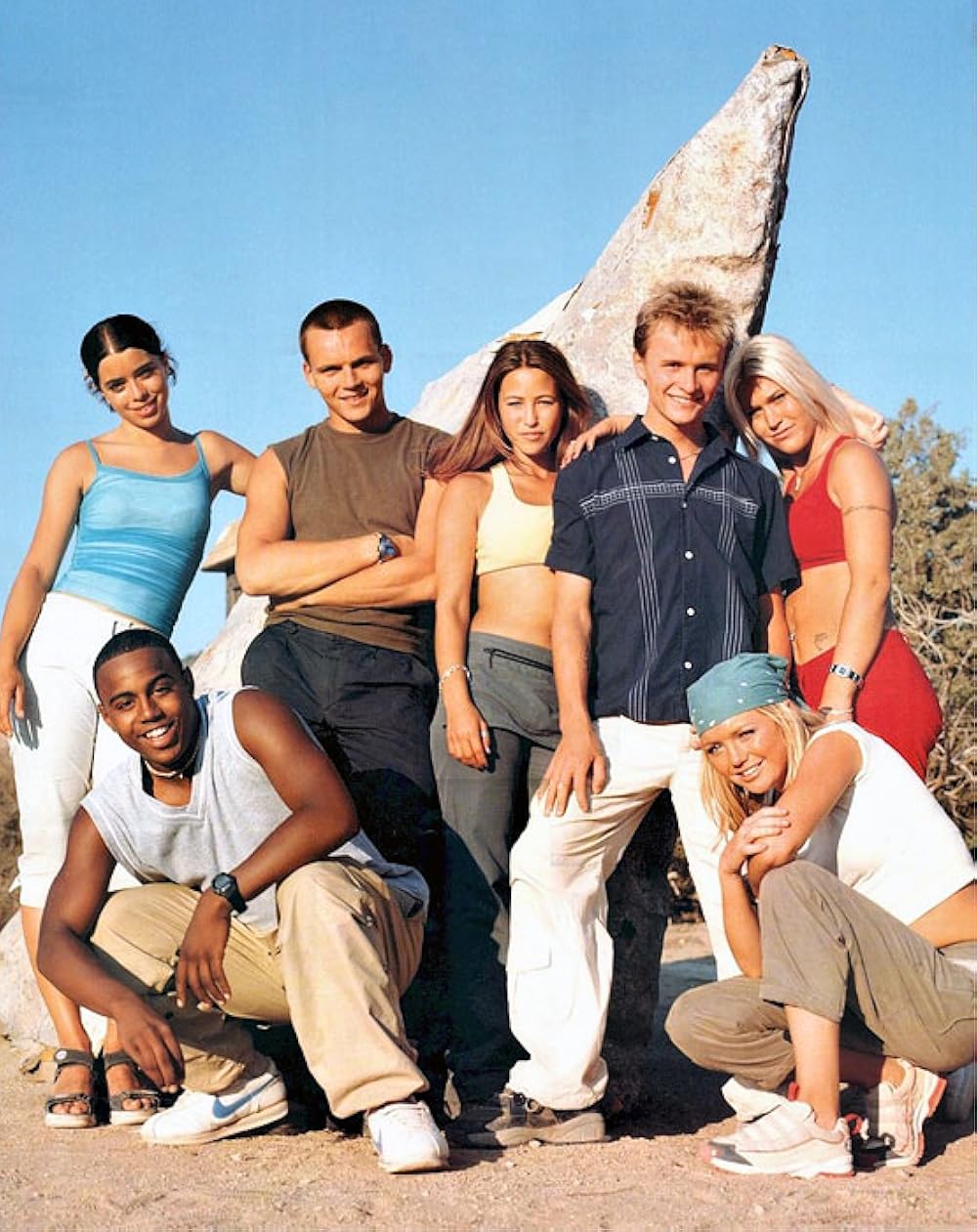
6. ‘Two in a Million’ / ‘You’re My Number One’, by S Club 7 (down 1 / 2 weeks on chart)
We’ve had Steps, let’s have S Club. ‘Two in a Million’ isn’t one of their classics, and I struggled to remember it even after the chorus came along. It’s a nice enough slice of medium-tempo soul pop, but let’s skip forward to the flip-side…
…because this sort of breezy, Motown-lite pop is what S Club excelled at. ‘You’re My Number One’ was like a warm-up for their massive smash ‘Reach’ the following summer, but I’m enjoying it more today because it hasn’t been overdone. And I’m not one for nostalgia, but by God that video – with it’s crap choreo, its tomfoolery, its outfits – is so of its time it hurts. This double-A would rocket up to #2 in the new year, keeping S Club’s 100% Top 5 record intact.
5. ‘Re-Rewind (The Crowd Say Bo Selecta)’, by Artful Dodger ft. Craig David (up 1 / 4 weeks on chart)
Peaking at #2 before and after the festive period, though slumping temporarily on this week’s chart, here is the sound of the new millennium. Those staccato 2-step garage beats would go on to be one of the sounds of 2000-2001, while seventeen-year-old Craig David would be the first big breakout star of the 21st century, scoring two #1s in the coming months. I wouldn’t say I love this as a piece of music, but as a scene setter few songs take you back to the turn of the millennium as effectively as this.
4. ‘Mr. Hankey the Christmas Poo’, by Mr. Hankey (up 4 / 2 weeks on chart)
Clearly released with the Christmas number one in mind, here’s a cartoon character which Wikipedia nicely sums up as a ‘sentient piece of feces’. Mr. Hankey, the Christmas Poo had featured in a South Park episode way back in 1997, but a combination of the series taking off a little later in Britain, plus Chef’s success the year before, led to this release in late 1999. Mr Hankey, The Christmas Poo, He’s small and brown and comes from you… It has the sound of a classic fifties festive tune-slash-television theme and did, I will confess, raise a smile on these unwilling lips. It is not a patch on ‘Chocolate Salty Balls’ however, and was nowhere near as succesful. (Though it would obviously have been somewhat satisfying if this had peaked at number two…)
3. ‘Imagine’, by John Lennon (non-mover / 2 weeks on chart)
Many will be holding their heads in their hands at the thought of ‘Mr. Hankey the Christmas Poo’ rubbing shoulders with ‘Imagine’. But I like to see this juxtaposition as the magic of the charts… Anyway, we all know ‘Imagine’, and would all probably be happy never hearing ‘Imagine’ again, despite it being a beautiful song. It had been re-released ahead of the new year, presumably with the aim of making it the millennium’s final #1. It fell a couple of places short, but this did mark the third occasion on which it had made the Top 10.
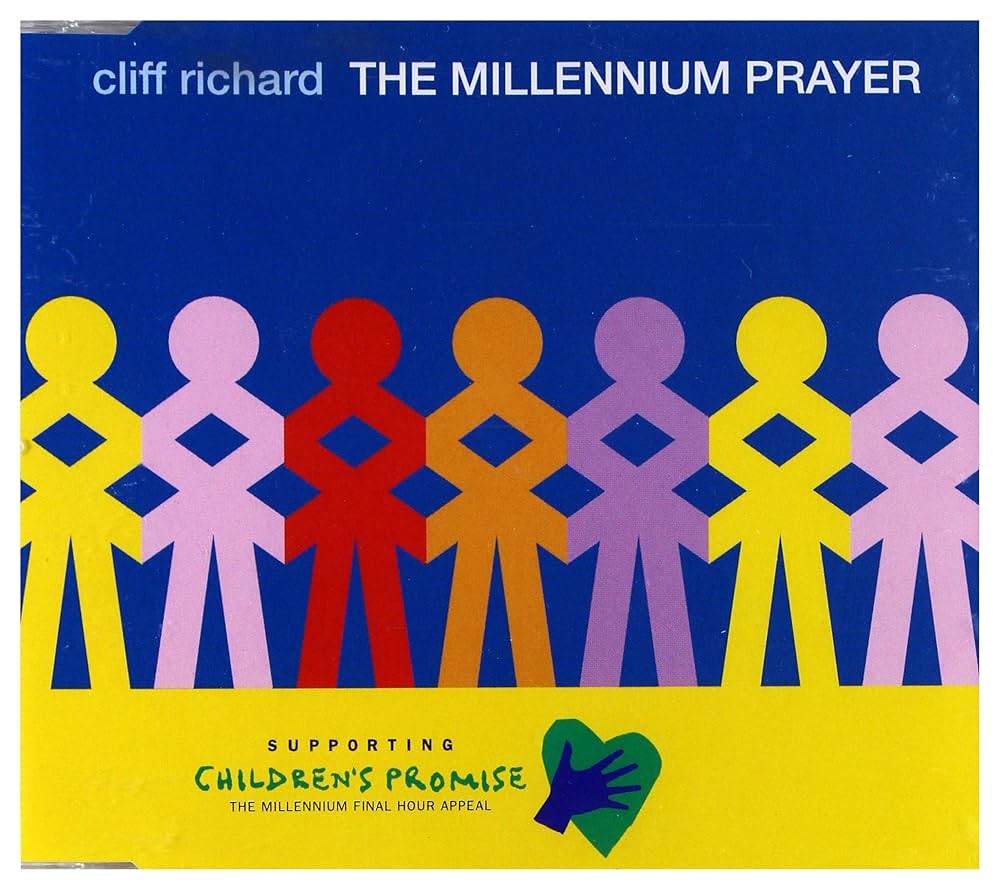
2. ‘The Millennium Prayer’, by Cliff Richard (non-mover / 6 weeks on chart)
This weird Top 10 sees arguably Britain’s two biggest pop acts represented in the Top 3, with Cliff joining a Beatle as the century drew to an end. It also sees one of the worst Top 2s of all time. I wrote all about Cliff’s final number one here, and have no wish to revisit it….
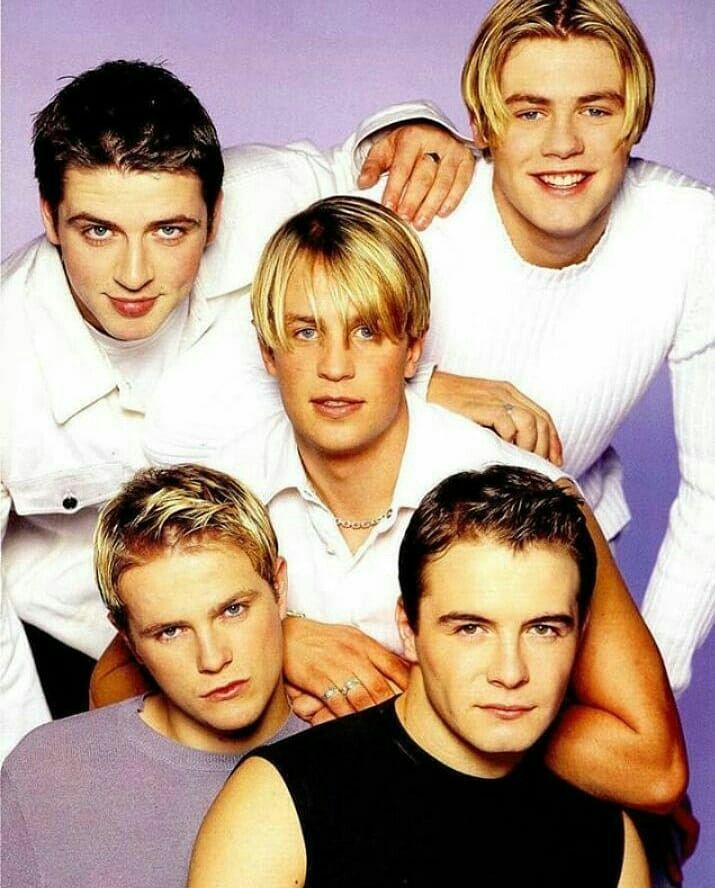
1. ‘I Have a Dream’ / ‘Seasons in the Sun’, by Westlife (non-mover / 2 weeks on chart)
Ditto the record that was at number one, Westlife’s fourth of their breakout year and the previous week’s Christmas chart-topper. I have tried to be as kind as possible about some of Westlife’s many #1s, and have enjoyed a couple, but this double-‘A’ is as syrupy, saccharine, and cynical as you can get. Read my full post on it here, and discover why I named it as one of my very worst number ones here.
What strikes me about this chart is how normal it is, considering the looming spectre of Y2K. I thought that would have been more of a theme in this Top 10 but, aside from Cliff and John Lennon, it’s mainly just a routine run-down of Eurodance, disposable pop and Christmas novelties. It’s refreshing , however, to see a festive chart that isn’t just a replica of the Spotify ‘Christmas Hits’ playlist, as the modern charts now are.
Our regular blog will resume early next week, where we left it in December 2002. I hope everyone has a great new year, and that 2026 is full of health, wealth and happiness… and great music!
I’d like to wish each and every one of UK Number Ones Blog’s readers a very merry Christmas. In blog world its December 2002, but in the real world it’s December 2025, and I hope the festive season is a great one for all of you.
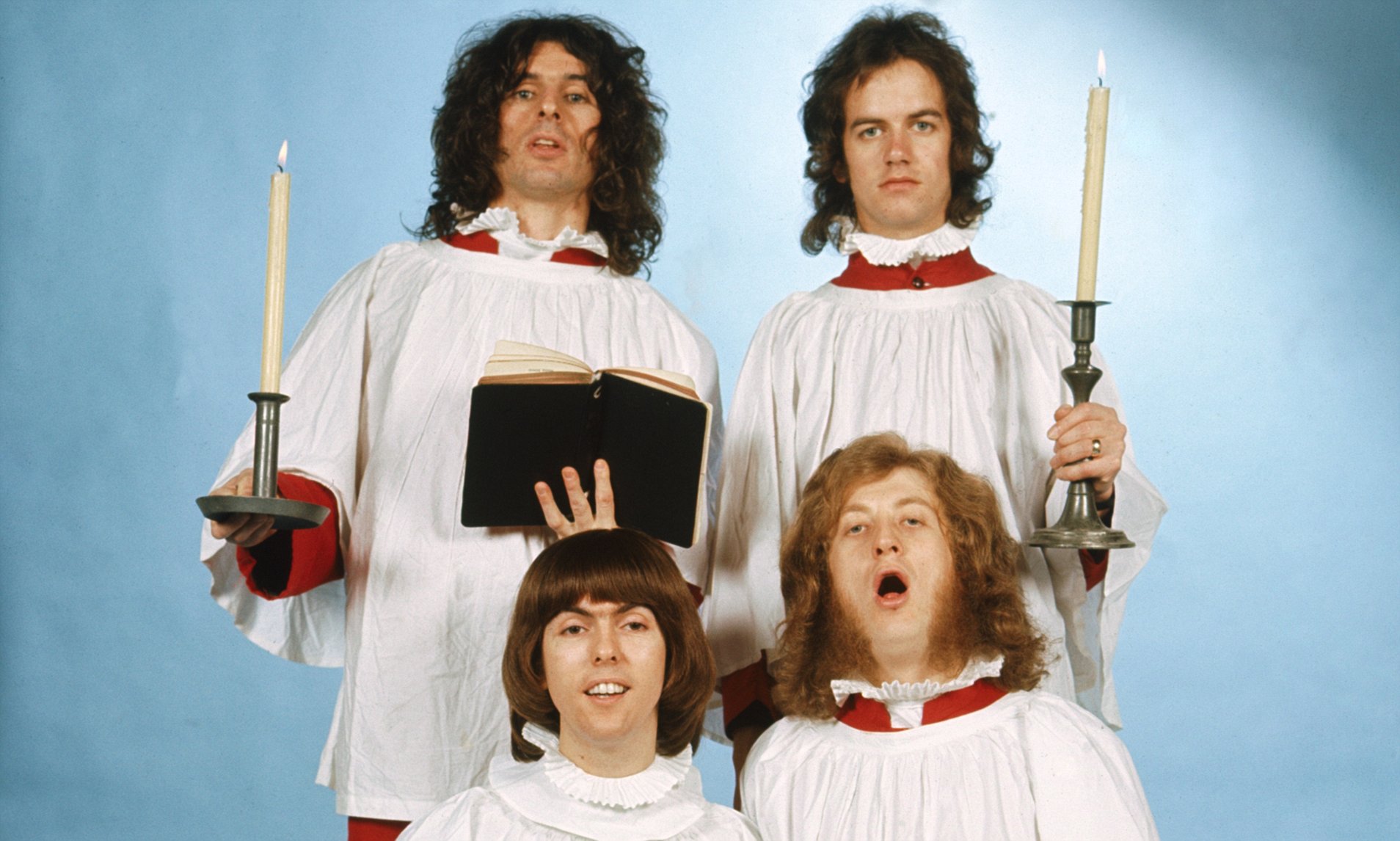
And if you have time, why not have a look back through some of my many Christmas-themed posts from over the years. Starting with, of course, our hallowed Xmas Number Ones. In the fifty years I’ve covered there have been twelve #1s with an explicitly festive theme. From Dickie Valentine in 1955, through (deep breath) Harry Belafonte, Slade, Mud, Johnny Mathis, Boney M, Band Aid (and Band Aid II), Shakin’ Stevens, to Cliff (and more Cliff, and even more Cliff…)
In fact, why not check out the polls I ran a couple of years ago, in which you can vote for your favourite (and least favourite) festive chart-topper. The initial results saw Slade as winners, and a tie between Blobby and the St. Winifred’s kids for worst, but the polls remain open and votes are coming through every so often. Your vote still counts!
Moving away from actual number one singles, I’ve also done posts on two festive perennials which probably should have made the top. Wizzard’s 1973 #4 hit ‘I Wish It Could Be Christmas Everyday’ is one of my all-time favourites, but isn’t all that well-known outside of the UK. While John & Yoko’s ‘Happy Xmas (War Is Over)’ is another, somewhat more melancholy, classic that probably was the unofficial number one single in the weeks after Lennon’s murder (all of which I explain in this post here.)
And finally, last year I did a ‘Cover Versions of Christmas #1s’ post, featuring Oasis (and Steps) doing Slade, Korn doing Pink Floyd, and Shaky covering himself!
All that’s left to do now is to wish you all one more Merry Christmas, and to leave you with a festive classic that has never made it beyond #10 in the UK, but which may well go higher this year due to the sad news of Chris Rea’s death yesterday.
We’ll be back before 2026, with a special New Years post.
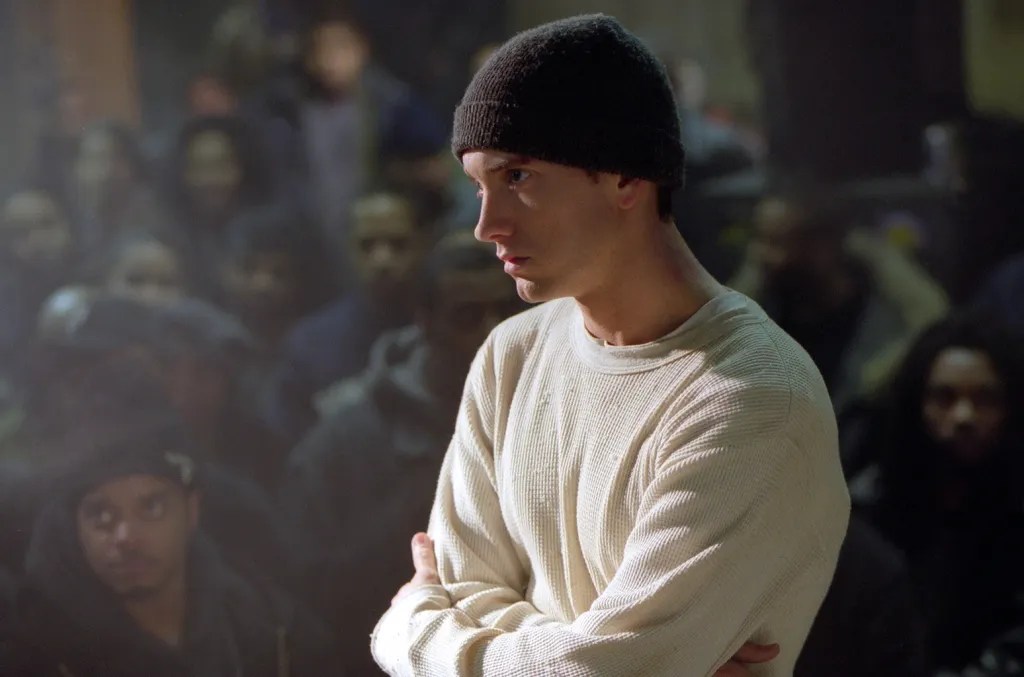
The third and final part of Eminem’s era-defining triptych. Scary Eminem, Funny Eminem, Motivational Eminem…
Lose Yourself, by Eminem (his 4th of eleven #1s)
1 week, 8th – 15th December 2002
‘Lose Yourself’ was probably Eminem at the peak of his fame and success, as not only was it a huge hit record, it also came from the soundtrack to ‘8 Mile’, a huge hit movie in which Eminem played a character loosely based on himself. If he has a signature song, then it’s probably this.
Before we get to the lyrics, I’d also say that this is Eminem’s strongest number one musically. The slow building intro, the heavy, dramatic chords, the piano line that slinks around the beat (and I’ve just realised the ‘Succession’ theme writers totally nicked a trick here). Some of his other, funnier chart-toppers tend towards cheap, rinky-dink beats. Not this one. It’s lush, and cinematic.
Lyrically, ‘Lose Yourself’ is about taking chances, with the movie’s protagonist about to take part in a rap battle that could lead to a way out of poverty. You only get one shot, Do not miss your chance to blow, This opportunity comes once in a lifetime… I am usually immune to the charms of anything that could be labelled as ‘motivational’, but this works because it focuses on the fear of failure rather than on the glory of winning, as the delivery grows more intense verse by verse. No ‘search for the hero inside yourself’ here. Instead it’s: I’ve got to formulate a plot, Or end up in jail or shot, Success is my only motherfucking option, Failure’s not…
Surprisingly, that ‘motherfucker’ is one of very few curse words in the song, making this surely Eminem’s cleanest chart-topper. For the first time in four we also do not need to sound the homophobia klaxon, as this track also features zero gay slurs. This is basically a hymn by Eminem’s standards…
I also think, as it’s not about murdering your girlfriend, and features no puerile humour, that this was the song which convinced most anti-rap types of Eminem’s talent. I think it comes across as a little bit ‘newly graduated English teacher desperate to look cool’ when one compares Eminem’s lyrics to poetry, but the opening lines – His palms are sweaty, Knees weak, Arms are heavy, There’s vomit on his sweater already, Mom’s spaghetti – set a scene in less than twenty words that most writers could only dream of. In the third verse, he sets off on a staccato flow that very few, if any, other rappers could pull off.
Having said that, of his three peerless #1s, I enjoy ‘Lose Yourself’ the least. It’s great, impressive; but it’s also very earnest. What it says about me, that I prefer the song about murdering your girlfriend, or the one with the video in which Eminem surfs on a turd, I don’t want to explore. What’s for sure is that this was the end of Eminem’s imperial phase. ‘Lose Yourself’ might have been the first rap song to win the Oscar for Best Original Song, a genuine cultural moment, but he certainly did ‘lose it’ with his fifth number one…
This will be my last regular post for the year. I’ll do a couple of festive posts over Christmas and New Year, and resume with the number ones in early January.
Daniel Bedingfield’s debut hit, ‘Gotta Get Thru This’, was a breath of fresh air: a fun moment that balanced garage and dance nicely, in a way that summed up the sound of the early ‘00s.
If You’re Not the One, by Daniel Bedingfield (his 2nd of three #1s)
1 week, 1st – 8th December 2002
It was also a bit of a false dawn, because I think gloop like this is what Daniel Bedingfield is better remembered for these days, if he’s remembered for anything at all. Syrupy, heartfelt ballads. And syrupy, heartfelt ballads are not my thing. But I will try to see the best in this record, which I remember being fairly inescapable for a good few months.
That word: heartfelt. This definitely is, and Bedingfield’s commitment to the soppy sentiments makes it bearable. Even the falsetto note he hits at the end of each chorus. Then there’s the doubt, the fact that this song is about being with someone but worrying they might not stay. I hope I love you all my life… is probably the most powerful line. Plus, there’s something about the relatively low-key production, the heartbeat drums and echoing synths, that reminds me of Phil Collins’ ‘In the Air Tonight’
I’m actually surprised that I’m enjoying listening to this song, as I hated it at the time. Not only was it soppy, but it was everywhere. I remember it climbed back into the Top 10 for Valentine’s Day, a good two and a half months after it was released, something that didn’t happen often in the charts of the early ‘00s.
Daniel himself, though, went on record saying that he found the song too cheesy, and didn’t want it included on his debut album. He had, he said, deliberately set out to write a Westlife-ish song. And I’d say he failed, because this is quite subtly heartfelt, lacking the bombastic cheese of most Westlife tunes, and because there’s no key change. As far as I can tell all the interviews in which he said these things came from 2003 onwards, and I’d also say it’s easy to claim you don’t like a song once it’s been at #1 and made you lots of money.
I’m also sceptical of Bedingfield’s claims because his not far-off final chart-topper is an equally simpering ballad. If you don’t like these songs, why do you keep writing, recording and releasing them then, Daniel?








 The UK Number Ones Blog