1012. ‘Axel F’, by Crazy Frog

The intro to our next number one poses a pertinent question. Wha-wha-what’s going on…?

Axel F, by Crazy Frog (its 1st and only #1)

4 weeks, from 29th May – 26th June 2005

Well, quite. At least the answer comes promptly… This is the crazy frog!

Yes, the animated ‘frog’ (it looks nothing like a frog!) that started life as a seventeen-year-old boy impersonating a motorcycle engine, became a sound effect, then a ringtone, then a huge chart-topping artiste. Ding ding!

It’s hard to imagine now, in a world where everyone has their phone on silent, but ringtones were a huge deal back in the mid ‘00s. And for some reason they had to be as annoying as possible. And we paid good money for them. It really was bizarre. In the early days they were basic monotones (with which you really had to take a leap of faith that they sounded like the intended song), then polytones (with layered melodies), and then realtones. Crazy Frog, AKA The Annoying Thing (that’s not just my opinion – it’s what his creator called him), was born from this world. Ding ding!

He came with two controversies. One was that his company Jamster were saturating TV advertising breaks with his nonsense. In May 2005, apparently 87% of the British population saw a Crazy Frog advert an average of twenty-six times. The other was that he had a small but clearly visible penis and scrotum, which some claimed was inappropriate for children. Ding… dong!

Perhaps inevitably, and thoroughly unhampered by these controversies, the cash-in single came along. It had Crazy Frog bababaabababaaba-ing and ringdingding-ing to the classic ‘Beverley Hills Cop’ theme, originally by Harold Faltermeyer, which had been a #2 hit in 1985. Of all the songs he could have desecrated, this was probably a good choice. It somehow, almost, works… The Frog’s garbled engine noises manage to fit around a sped-up version of the iconic synth riff. Of course, it’s insanely annoying. That goes without saying. But it also, I will admit, kind of exists capably as a song. Ding ding!

My problem here is not with Crazy Frog, or with novelty singles in general. One thousand and twelve number ones in, we’ve seen our fair share of silly songs. And I think Crazy Frog deserves a place up with there with the legendarily crap chart-toppers, like ‘Shaddap You Face’, ‘Star Trekkin’’ and ‘Mr. Blobby’. Not only was it era defining, and successful (four weeks on top, third best-selling single of the year, number one in thirteen countries around the world), but it claimed a huge scalp in keeping an established, real band off top spot. Crazy Frog released in the same week as Coldplay’s ‘Speed of Sound’, and outsold it by four copies to one… Ding ding!

No, my problem is with the fact that this did not end at ‘Axel F’. All the most heinous of novelties – your Blobbys, your St. Winifred’s kiddies, your Teletubbies – had the good grace to remain largely one-hit wonders. Crazy Frog dragged this out for four more Top 20 hits, and three full-length albums! Who in the name of God was sitting through entire albums of this garbage?! Not until 2009 was the Frog retired by its creators. And then in 2020 he was resurrected. Yes, right at the height of Covid, someone thought ‘You know what the world needs now? The Crazy Frog’. 

Ding ding!

Advertisements

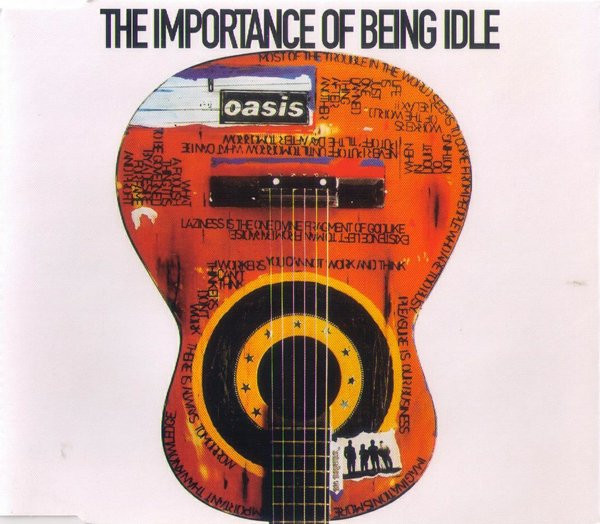
1011. ‘Lyla’, by Oasis

I’m sure I preface every Oasis chart-topper by saying this, but they really were good at choosing their comeback singles. The first singles from each new album: ‘Some Might Say’, ‘D’You Know What I Mean’, ‘Go Let It Out’, ‘The Hindu Times’, all big, banging statements of intent, and all number one hits.

Lyla, by Oasis (their 7th of eight #1s)

1 week, from 22nd – 29th May 2005

As it is with ‘Lyla’, lead single from their sixth studio album ‘Don’t Believe the Truth’, which was released almost exactly a decade on from their first #1. It is not particularly clever, or subtle; but it is big. It’s a grandiose grower, too, taking well over a minute of layered drums, droning guitars and vocals before we arrive at the chorus.

Speaking of vocals, I’m not sure Liam has sounded better on any of their previous six chart-toppers. He sounds refreshed and upbeat, yet still snarly and full of attitude. In the video too he looks resplendent in a cravat, confirming once again that he was Britain’s last true rock star. 

Musically this also feels like a band revitalised. It’s widely accepted that the addition of Gem Archer and Andy Bell to the band allowed Oasis to develop musically (Noel is a good songwriter, but not an amazing guitarist), and the album was the band’s most democratically written, with even Liam contributing three tracks. ‘Lyla’ sounds more classic rock than Britpop, the instruments coming through clearer in the mix, with a nice, twangy solo. It isn’t smothered in layers of over-production like some of their turn of the century singles. There’s a lyrical backstory too, with Lyla apparently the sister of Sally from ‘Don’t Look Back in Anger’. My biggest complaint about it is that, with the extended intro and the long coda, the actual song is much shorter than the record’s 5:12 runtime. But it’s far from the first time that Oasis have dragged the arse out of a record unnecessarily. 

Some people at the time commented on how this sounds somewhat indebted to the Rolling Stones’ ‘Street Fighting Man’. Which is perhaps true, and is most evident on the extended fade-out; but I also think it’s harsh, and nothing compared to Oasis’s other musical borrowings (see also: this LP’s second single…) At this point some people were determined to criticise what they saw as a bloated legacy act in any way possible. 

Oasis sort of were a bloated legacy act, even in 2005. And yet, they were the ones still sitting at number one, while the cooler, younger indie acts of the day could only gaze up in envy. During the promo for the album, the Gallaghers had a field day passing judgement on these up and comers. Franz Ferdinand were ‘Right Said Fred’, Kaiser Chiefs ‘a bad Blur’, and the Libertines ‘smackheads needing a slap’. Twats they may be, but the brothers always give good copy.

Advertisements

1010. ‘Lonely’, by Akon

In which we meet one of the 21st century’s annoying contributions to popular music: the sped-up sample…

Lonely, by Akon (his 1st of three #1s)

2 weeks, from 8th – 22nd May 2005

Also known as chipmunk soul, it usually involves a sample of an older song sped or pitched way up. Kanye West is seen by most as the inventor of this genre, on his debut album in 2004, most famously in his use of Chaka Khan on ‘Through the Wire’. In Akon’s case it was Bobby Vinton’s 1962 hit ‘Mr. Lonely’. Unless we count Eminem’s use of ‘Toy Soldiers’, which is debatable as the sample is nowhere as squeaky and distorted as it is here, this is the first chart-topping single to employ the technique, and one of the worst.

It’s funny, because not for the first time in recent posts, I am reconciling the feelings I had about a 2005 #1 at the time with the feelings I have now. And I’m sure I remember liking ‘Lonely’ at the time… Liking the novelty of it. Liking the retro vibes of it. But listening now, it’s garbage.

Not only is the sample irritating, but the lyrics are pedestrian and whiny. Plus, Akon’s voice sounds flat for much of the song. He’s cheated on his girl, she’s got tired of his bullshit, and she’s left him. Been all around the world, Ain’t never met a girl that could take the things that you’ve been through, Never thought the day would come when you would get up and run… No admission of guilt, no reflecting on his actions. He just doesn’t like being lonely. It’s Shaggy’s ‘It Wasn’t Me’ without the silliness, or Eamon’s ‘Fuck It (I Don’t Want You Back)’ without the swearing. 

In fact, the spectre of ho-wop lingers heavily over this record. Maybe if this song had come first it would be more palatable, but Eamon really had ruined the doo-wop/hip-hop crossover movement for all involved. Yet… I do think, in the long run, songs like this made it more acceptable for modern pop songs to borrow pre-Beatles melodies and sounds. Without this, maybe there’s no Meghan Trainor, or Doja Cat Vs Paul Anka, or Connie Francis going viral with ‘Pretty Little Baby’.

Akon is a Senegalese-American singer and producer, who would go on to be one of the biggest pop stars of the ‘00s (‘Lonely’ was his second hit), with two further chart-toppers to come before the decade is out. My favourite fact about Akon is that despite claiming he’d done three years in jail, despite his debut single being called ‘Locked Up’, despite starting at least half his records by shouting ‘Kon-vict’ and adding a ‘jail door slamming shut’ sound effect, he has never actually served a prison sentence. Once you learn that about Akon, him releasing a record this slickly insincere makes much more sense.

Advertisements

1009. ‘(Is This the Way To) Amarillo’, by Tony Christie ft. Peter Kay

So… You should know by now that the charts don’t follow the rules. That they don’t play fair. That they don’t bend for tastes and trends. That they only respond to cold, hard sales (or, nowadays, streams). So it is that the longest-running #1 of the ‘00s so far, and the 4th highest-seller of the entire decade, is a re-released #18 hit from 1971.

(Is This the Way To) Amarillo, by Tony Christie (his 1st and only #1) ft. Peter Kay (his 1st of two #1s)

7 weeks, from 20th March – 8th May 2005

Back in 2005, I don’t think I’d ever heard ‘(Is This the Way To) Amarillo’, but it felt familiar. In that sense, it was probably a good choice for this project. Known enough to evoke nostalgia in the middle-aged, and insistently silly enough for us young ‘uns who were fresh to it. I’m not sure that this reason alone should add up to colossal sales, and seven weeks at the top, but perhaps that can be explained by the charity factor, and the involvement of the immensely popular Peter Kay. He had used the song in a 2002 episode of his sitcom ‘Phoenix Nights’, and the feel of it fits in perfectly with his old-school, working men’s club schtick.

I was never quite taken with the song, though. And I’m not just saying that retrospectively; it annoyed me with all its sha-la-la-las and perky horns. (This is me speaking as someone who is not usually put off by sha-la-la-las and perky horns.) Plus, it seriously did overstay its welcome. Maybe it’s because I was an avid chart-watcher at the time – and despite modern chart-runs making this one look positively brief – but I felt every moment of its forty-nine days at number one. Or maybe I was just annoyed that it kicked McFly prematurely off top.

Tony Christie was a crooner in the Tony Orlando, Tom Jones sort of mould, and had scored a #2 in the early ‘70s with ‘I Did What I Did for Maria’, about a condemned man who had blah blah blah you can guess the rest. He hadn’t been near the singles charts for thirty years, except for a bizarre cameo on electronic-indie act The All Seeing I’s 1999, Jarvis Cocker-penned #10 hit ‘Walk Like a Panther’. Despite the ‘ft.’ credit, this was not a remix, or a re-recording. How or why Peter Kay got a credit, when Jay-Z and Justin Timberlake have sung actual verses and choruses on recent chart-toppers without mention, I do not know.

The video was all Kay’s work, though, in which he marches to the song’s oompah beat alongside some particularly British celebrities. Parky, Ronnie Corbett, Tracy and Ken Barlow, Keith Harris and Orville, Sooty and Sweep, and more. Plus some slightly more dubious appearances from a football team with dwarfism, a Mahatma Ghandi lookalike who may or not have really been Indian, and a cigar-toting, shiny tracksuit wearing DJ and TV presenter who has been erased from more recent edits… It may only be twenty-one years old, but watching the video reminds you that the past really is a foreign country.

(If we follow the rule that says Peter Kay can get his name on a #1 single for mugging his way through the video, we should also be awarding a second chart-topper to Mr Blobby, a fifth to Shakin’ Stevens, and a seventh to Queen’s Brian May and Roger Taylor. And a first but by no means last number one of the year for Shaun Ryder.)

Peter Kay is the king of the strange credit on number one singles. He doesn’t sing on his one other official chart-topper (another charity effort coming up in 2009) but contributes vocals to a 2007 #1 in character, though he’s not credited as Peter Kay. All very complicated. Suffice to say, of the three number ones he’s been involved in, ‘Amarillo’ is the best. Make of that what you will.

This also gave Christie a brief chart renaissance, with a rerelease of his 1972 hit ‘Avenues and Alleyways’ making #26, eleven places higher than it had originally charted. He also returned to the Top 10 the following summer with ‘(Is This the Way To) The World Cup’, a classic example of why other parts of the UK take such pleasure in England not winning things…

A final thing to note is that one of the biggest ever changes to chart rules occurred right in the middle of this record’s run at the top: the incorporation of download sales. Not that it made a huge impact, as only songs with a current physical release had their downloads counted, and ‘Amarillo’s run at the top continued unabated. Nor did it mean a huge improvement in sales in general, with chart-topping singles still regularly struggling to sell more than 30,000 in a week for the next several years.

*Just a note to say that I’ll be slowing down the number of posts over the next month, as I will be travelling. I may take a while replying to comments as well. We should be back up to speed by mid September*

A shorter, sex-offender free version of the video:

The 2005 original video, if you don’t mind you-know-who…

Advertisements

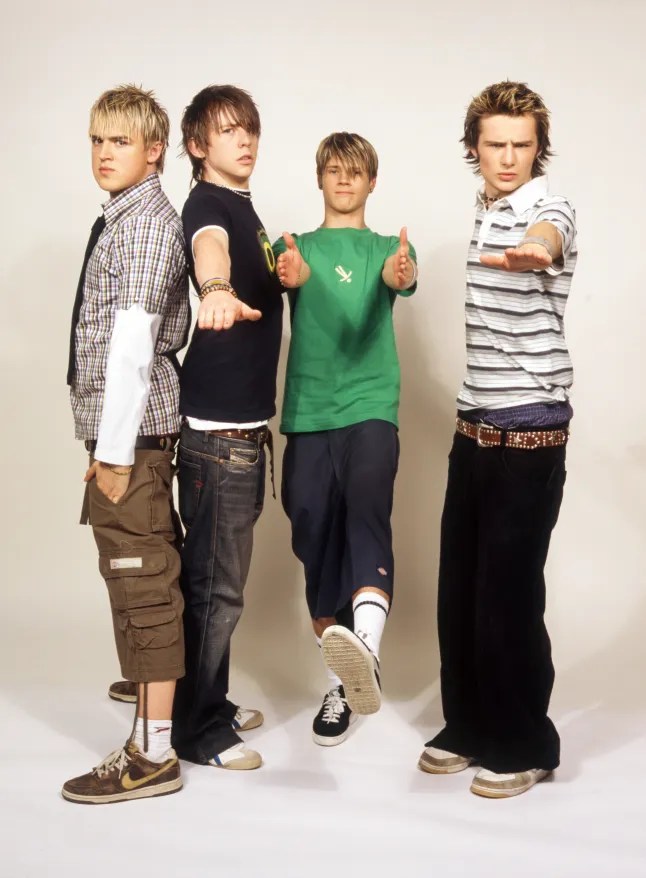
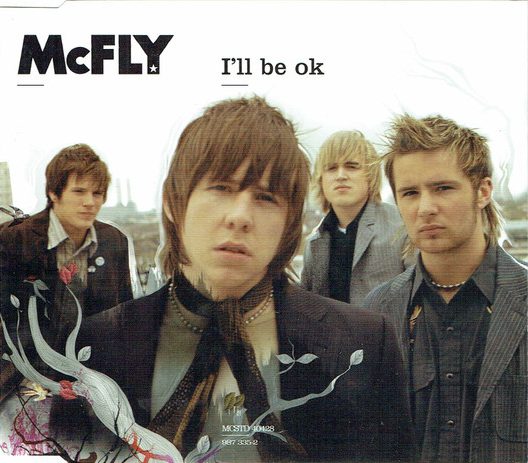
1008. ‘All About You’ / ‘You’ve Got a Friend’, by McFly

And so we arrive at the ultimate love song. The song I will have played at my wedding…

All About You / You’ve Got a Friend, by McFly (their 3rd of seven #1s)

1 week, from 13th – 20th March 2005

Two slight caveats here: you must always allow me room for hyperbole when it comes to McFly, and I have little-to-no plans to ever get married. But still, I do think that ‘All About You’ is a lovely song.

First we have to skip the cheesy harps and strings intro, and imagine they’re being delivered with a knowing wink. Skip straight to the harmonies in the first chorus, and the pretty verses, with their timeless melodies. It is hard to write timeless, hard to write a song that sounds like it might always have existed.

The acoustic guitar solo is more of its time – though that ‘time’ would be a soft-rock song from the eighties – and the second bridge and chorus, when the band finally come in, is pure power-pop. Okay the lyrics are trite – Dancing on the kitchen tiles, Yes you made my life worthwhile, So I told you with a smile… – but eighteen year olds can get away with trite.

McFly songs provide a real chicken vs egg scenario for me. Do I blindly argue their brilliance because I think McFly are a truly underrated band; or are songs like ‘All About You’ truly great and deserve to have me arguing for them? I’ve been a McFly fan for so long now that I can’t judge this clearly.

Actually that’s a lie. The other side of this double-‘A’ will give me a chance to appraise McFly impartially. Since this was the official Red Nose Day single for 2005, the suits presumably needed a song with more of a message (and a music video in which the band could run around with lots of Ugandan orphans…) So they chose Carole King’s classic ‘You’ve Got a Friend’.

It is on the one hand completely unnecessary. It does not improve in any way on King’s original, or on James Taylor’s definitive cover. And I really don’t like all the woodwind. (See, I can write something bad about McFly.) But Tom’s voice sounds nice on the first verse. Plus, I sang this in my primary school choir, and it really does have one of the most heart-string tugging choruses in all of pop history.

The flutes, and the full-blown orchestra in the background of ‘All About You’, bring up one of the reasons why McFly’s second album, ‘Wonderland’, is my least favourite. They threw the kitchen sink at it, production-wise, with string sections and three-part rock operas about teen suicide. I think it was an attempt to prove themselves, to show that they weren’t just a boyband; but it led to bloat, and some boringly worthy music. By their third album, they seemed to have shaken that monkey off their back, and returned to making great pop-rock.

As this was the official Red Nose Day single, it opened with McFly’s highest ever weekly sale. It also meant this record didn’t have the massive second week collapse that they would become synonymous with. And yet, ‘All About You’ was still eclipsed by the unofficial Red Nose Day single, which brought about one of the biggest, and unlikeliest, hits of the entire decade, and which is up next.

Just the audio…

Advertisements

1007. ‘Dakota’, by Stereophonics

We’re slap bang in the middle of the ‘00s. I was nineteen, in my second year at university, and out at the dancing three or four times a week…

Dakota, by Stereophonics (their 1st and only #1)

1 week, from 6th – 13th March 2005

Before you fear that I’ll turn this post into a nostalgia-fest, and start banging on about blue WKDs and skinny jeans, I’m getting to a salient point. A lot of the music I heard on those nights out wasn’t just the pop and dance we’ve been hearing in recent posts. It was, as the Killers sang, indie rock and roll for me.

So ‘Dakota’ is a mini landmark number one, as it is the first chart-topper from the mid-00s indie revival. Think Franz Ferdinand, think Arctic Monkeys, think Kaiser Chiefs, Libertines, the Strokes, White Stripes and more. Like Britpop a decade earlier, it didn’t get a whole lot of representation at the very top of the charts, but there will at least be a few more rocking #1s in the coming months, and that is something to celebrate after the very pop-heavy opening years of the 21st century.

Of course, Stereophonics predated all these new-kid-on-the-block indie acts. You could class them as Britpop, but they weren’t that either. They emerged during that post-Britpop comedown that also gave us Travis, and Coldplay (a period Alan McGee famously dubbed ‘bedwetter indie’). They were probably overdue a number one single, as Britain’s pre-eminent rock group of the very early ‘00s.

But for this comeback single they were tapping into the sounds of the time, taking a step away from their usual pub rock anthems. ‘Dakota’ sounds like the Killers, with its synth stabs, crossed with U2 in the humungous chorus, and some Manics in the spiky guitars. It’s a big tune, clearly written for tens of thousands to sing along to in stadiums, and while I liked it at the time I’m finding it a bit plodding now.

The chord progression in the chorus is still good, and the thrashing I don’t know where we are going… break is still impressively heavy. But I’ve always had mixed feelings about Stereophonics. For every song of theirs I like – the bitchy ‘Mr Writer’, for example – there’s a song I find bloated and dull – i.e. ‘Just Looking’. And Kelly Jones’ sandpaper drawl is a voice I can only take for three songs at a time.

I also think ‘Dakota’ is a bit of an inferior retread of Stereophonics’ previous single, ‘Moviestar’ – a slinkier, more sinister slice of electro-rock. But, this is the record that brought them a belated #1 after nine earlier Top 10 hits. And it was their chart peak, after a very slow ascent, and they have never returned to the Top 10 since.

But hey, at least they kicked off the ‘mid-00s indie rock revival’. Not quite as catchy a genre title as ‘punk’ or ‘glam’, but still. It was probably rock music’s very last hurrah as a chart force. And I may be biased, as it was the soundtrack to my yoof, but it also gave us some great tunes. Not ‘Dakota’, not quite, but there’s better to come soon.

Advertisements

1006. ‘Over and Over’, by Nelly ft. Tim McGraw

In this post-Lil Nas X world, mixing country and rap together is nothing new. But I recall this next number one feeling like a bit of a novelty at the time…

Over and Over, by Nelly (his 3rd of four #1s) ft. Tim McGraw (his 1st and only #1)

1 week, from 27th February – 6th March 2005

Not that ‘Over and Over’ is particularly ‘country’. It’s a gentle pop song, with a lilting guitar. The most country thing about is Tim McGraw’s raspy drawl, and the Stetson he wears in the video. At the same time, this isn’t particularly a rap track either. Nelly even sings. Sort of. So, having called this ‘country rap’, in the end we’re left with more of a smooth R&B record.

That novelty feeling is about the only thing I recall about this song, as it is relatively unmemorable. It starts off lowkey, with both men singing like they’re babysitting and are just getting the kid off to sleep, but never really picks up. It’s fine. It’s a nice enough slow jam. I’m just not sure why this had the legs to make it to #1. Was it the lack of competition, and low sales? Was it Nelly’s star power? Was it said novelty factor? Whatever it was, Nelly becomes the third act in a row to enjoy a chart-topping spring follow-up to an autumnal lead single #1.

Looking into it a little more, country rap (also known, quite wonderfully, as ‘hick-hop’) had originated back in the late ‘90s. So perhaps we can view a record like this as being a breakthrough moment for the genre, with it making #1 in the UK and Australia, and #3 in the US. It is interesting that it made the top in Britain, and not America, but – like reggae – C&W has been an intermittently popular genre in the UK since the charts began.

Not only did this blending of genres lead to some of the huge country-rap hits of recent years, it also led to ‘bro-country’, in which male country stars started incorporate rapping and syncopated beats into songs about trucks, guns, beer and the like. Tim McGraw himself could be seen as a forefather of that genre. Bro-country (thankfully) hasn’t made much of an impact in the UK charts, while this is by far the biggest of Tim McGraw’s British hits, and the only one to ever make the Top 40.

This was also the tail-end of a career high for Nelly who, although he would return to the Top 10, and to #1 one final time, wouldn’t manage hit singles quite as consistently with his subsequent albums. He was always an interesting rapper, one who seemed a bit removed from the bigger, more posturing personalities of say 50 Cent or Jay-Z, and one who seemed happier to embrace a pop sound on his records. Which is probably why he has several more #1s than those more illustrious hip-hop stars.

Advertisements

1005. ‘Get Right’, by Jennifer Lopez

Like ‘Goodies’ a few weeks earlier, this is a song I remember from the time, but that I haven’t properly heard since it left the charts…

Get Right, by Jennifer Lopez (her 2nd of three #1s)

1 week, from 20th – 27th February 2005

Unlike ‘Goodies’ however, it is not with fondness that I remember ‘Get Right’. I remember it being distinctly irritating. Perhaps, more than twenty years on, it is time to reassess?

But the high-pitched, looped horn riff is just as confronting as I remember it. It sounds like the mating call of an exotic bird. Not being nineteen, and not being determined to have strong opinions on anything and everything, I can sort of admit that it has a wonderful funkiness to it. It makes you move. Though it could have done with occasionally changing key, or varying notes slightly. Especially by the time the ‘solo’ comes along, and just it’s twenty seconds straight of the same bloody horns.

Not that the horns don’t have an illustrious history to them, as a sample from ‘Soul Power ‘74’, by Maceo & the Macks, AKA James Brown’s backing band. But the riff that makes up the entirety of ‘Get Right’ is a tiny fraction of the free-styling saxophone on that record, which had been trimmed to the sample used here by Usher, in an unreleased track named ‘Ride’.

What of J-Lo, belatedly appearing on her second UK number one, after so many of her classic early ‘00s hits had failed to make top spot? I’d say this song could be sung by anyone, really. While not a spectacular vocalist, I think Lopez is someone whose voice can be easily recognised. But not on this one, for some reason. She even sounds a little strained, as if maintaining this sort of intense funk for four minutes is beyond her.

So, consider this record reassessed. Partly, at least. I like it more than my teenage self did, though would still label it as something I’d have to be in the mood for. And there are certainly better J-Lo tunes that didn’t make it to #1. But her longevity is impressive, with three chart-toppers stretched out over a decade or more.

As I mentioned, this isn’t the first forgotten number one of 2005, and we’ve barely made it to spring. ‘Goodies’ was a nice rediscovery, as was ‘Sometimes You Can’t Make It on Your Own’, which would surely be a great Pointless answer when listing U2 #1s. Once again we have to recognise that poor record sales were allowing for some interesting chart-toppers. Is this the most forgotten period in UK chart history? In fact we’re in the middle of a run of eleven one-weekers – the second longest such run in chart history – and I’d also challenge anyone to hum the chorus of our next number one…

Advertisements

1004. ‘Sometimes You Can’t Make It on Your Own’, by U2

U2 end a seventeen-year chart-topping career with an understated, and perhaps forgotten, little gem.

Sometimes You Can’t Make It on Your Own, by U2 (their 7th and final #1)

1 week, from 13th – 20th February 2005

Understatement is all relevant, of course, and for many acts this would count as a bombastic power-ballad. By U2’s standards though, it is gentle and stripped-back. It had been written around five years earlier, about Bono’s father, who died from cancer in 2001. (The line: It’s you when I look in the mirror, And it’s you when I don’t pick up the phone…taps so sharply into many father-son relationships.) According to the band, the song went through a lot of workshopping, away from a traditional Irish sound to something more contemporary. And I’m glad they spent the time to bring it to fruition.

It still has a folksy feel, especially in the intro, which reminds me of Fleetwood Mac’s ‘Man of the World’. Bono’s vocals are impressive – possibly his best performance on any of their chart-toppers – especially in the middle-eight, in which the song switches to something more predictably soaring. The Edge’s guitar chimes in trademark fashion, and we get briefly swamped in over-production, before ending on a sparser note.

I suppose it would be a lot to expect the biggest band in the world™ not to give in to that glossy sheen, when they have unfettered access to the best equipment and producers, but I would be interested to hear an even more restrained version of this ballad. Not that this gets spoiled by the production, not at all, but it’s a tempting thought. We have the low sales climate of early 2005 to thank for U2 enjoying two #1s from the same album for the first time, and their first chart-topper that isn’t a lead single. Not for the first time in the last couple of years a grim situation for the record industry has led to some interesting chart hits. This is also one of the longest-titled number one singles, from one of the shortest-titled chart-topping acts.

Actually, despite often being down on U2, and Bono in particular, I have enjoyed almost all of their six number ones, with one notable exception. Not counting their feature on ‘Take Me to the Clouds Above’, I would rank them thusly, in ascending order. ‘Beautiful Day’ >>>>>>>>>>>> ‘The Fly’ > ‘Discotheque’ > ‘Sometimes You Can’t Make It on Your Own’ > ‘Desire’ > ‘Vertigo’. Because, at the end of the day, rock bands are at their best when they rock.

Advertisements

1003. ‘Like Toy Soldiers’, by Eminem

In which Eminem redeems himself after the execrable ‘Just Lose It’. A bit, at least…

Like Toy Soldiers, by Eminem (his 6th of eleven #1s)

1 week, from 6th – 13th February 2005

Things I like about this song are: A) The clever title. It is ‘like’ ‘Toy Soldiers’, the 1989 #5 hit for Martika that it samples. While Eminem’s acolytes that he refers to in the lyrics are like toy soldiers for him, in his many beefs with various other rappers. B) The sample I think is inspired, and it lends a soaring quality to the chorus. C) The added marching drumbeat, and the fact that Martika’s voice is pitched slightly faster and higher than the very plodding, power-ballad original. It improves it, in my opinion.

The fact that it’s taken six chart-toppers for Eminem to make such prominent use of a sample is surprising, given hip-hop’s love for ‘borrowing’ beats. Musically some of Eminem’s #1s have been a little lightweight, even a bit rinky-dink (‘Without Me’ is great, but it’s all about the lyrics not the production); while this one is way more impressive musically than lyrically.

So yes, what I don’t particularly like about this record are the lyrics. Not because they’re offensive, or provocative. More because they’re boring. They’re a five minute explanation of a disagreement between Eminem, 50 Cent, and Ja Rule. As a teacher, it sounds a lot like hearing a naughty kid try trying to explain why something isn’t their fault and how life is unfair: We actually tried to stop the 50 and Ja beef from happenin’, Me and Dre had sat with him, Kicked it and had a chat with him, And asked him not to start it, He wasn’t gonna go after him, Until Ja started yappin’ in magazines how we stabbed him…

I mean. I really couldn’t care less. Grown men – very rich grown men – acting the fool like kids in a playground. Anyone over the age of fifteen shouldn’t be allowed to have ‘beef’ with anyone. Grow up. By the end of the song, Eminem is calling for a truce in whatever rap battles have been going on, how he’s going to be the bigger man. And yet. Any five-second Google search throws up any number of post-2005 beefs that Eminem has rapped about.

Because, in hip-hop, beefing sells. All the posturing, the not backing down, the having your homies’ backs, is a huge part of the genre’s image. And I don’t want to sound too much like a middle-aged white guy (which I unmistakeably am), but I’ve never really seen the appeal of this side of rap music. And it leads to lop-sided songs like this, where I grow bored in the middle of every verse, as Eminem drones on about how nothing’s his fault, waiting for the far better chorus to swing by again.

‘Like Toy Soldiers’ brings to an end Eminem’s imperial phase. Seven #1s in less than five years, yet he won’t score another number one as lead artist until 2013. He won’t be absent from the charts – and in that time he’ll score one of the biggest non-chart topping hits of all time – but a mix of time away due to addiction and uneven output will mean he isn’t as untouchable as he once was.

Advertisements