294. ‘I Hear You Knocking’, by Dave Edmunds

And so we arrive at a song I know very well – a song I’ve loved for a long time. It’s one of my earliest memories of popular music, this song – so early that I have no idea how it got to be there, buried in my consciousness.
0ba342e82e864d007e7e89610152248d

I Hear You Knocking, by Dave Edmunds (his 1st and only #1)

6 weeks, from 22nd November 1970 – 3rd January 1971

I love the choppy guitar, and the fried vocals. The trippy effects in the background, too, that sound like weird sea-creatures calling to one another across the deep. And I love the fact that at heart it’s just a straight-up, chugging, no frills rock ‘n’ roll number. You went away and left me, Long time ago, And now you’re knockin’, On my door…

It’s a sassy song – the singer telling his ex to get the hell out with their sweet words. I hear you knockin’, But you can’t come in… Go back where you been! She left him, though he begged her not to, and Edmunds still isn’t over it. Though he later reveals that this all happened in ’52, when he told her that I would never go with you… Which is both contradictory to what he sang two verses earlier, and a hell of a long time to hold a grudge…

Who cares. Careless lyrics aside, this is a rocking record. Our second whiff of glam at the top of the charts – after ‘Spirit in the Sky’ – and a bit of a throwback. (Over the chorus, Edmunds starts shouting out the names of some fifties rock ‘n’ roll stars – Chuck Berry! Fats Domino! – to leave us in no doubt about to whom this song owes a debt.) Something that sounds like a steam train gets added to the insistent rhythm, and then we get the piece de resistance of the whole record: the single, clanging note from a honky-tonk piano. Dung! Next verse!

71wOD2SwYUL._SL1024_

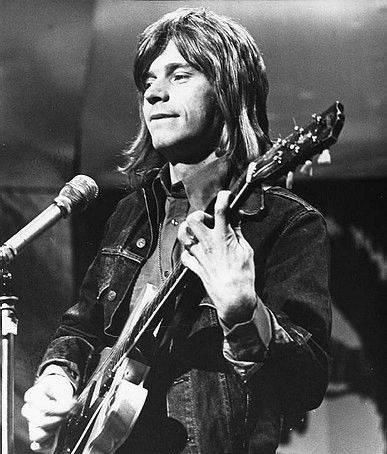
Despite ‘I Hear You Knocking’ sounding like it just crawled out of a Louisiana swamp, Dave Edmunds is actually Welsh. He had had one UK Top 10 with his blues band Love Sculpture, and this was his first, and by far his biggest, solo hit. It’s a staple of 70s Compilations, which is probably where first I heard it as a kid. ‘I Hear You Knocking’ was first recorded in the mid-fifties, by Smiley Lewis (Edmunds also shouts his name out during the solo) and then Fats Domino. Edmunds himself just recently retired from touring in his mid-seventies.

I do love this song, but am struggling to write much more about it. Really though – it’s not the sort of song that needs much writing about. If this record were a person, it’d be a doer, not a thinker. It gets you tapping your feet, and shaking your shoulders, rather than working your brain. I’d simply suggest that you click on the link below and get doing the same…

Actually, one thing that’s worth noting here is how long this, and so many other records, have spent at the top this year. ‘I Hear You Knocking’ got six, as did Elvis and Freda Payne. Mungo Jerry got seven, Edison Lighthouse five. If you look a little further, to the tail end of 1969, Rolf Harris also got six, while The Archies spent eight weeks up there! Not sure what this signifies, other than the fact that we are in the company of some monster hits at the moment – and that they’re going to keep on coming (and staying).

Listen to every number one so far on my Spotify playlist.

293. ‘Voodoo Chile’, by The Jimi Hendrix Experience

Our last number one had the title ‘Woodstock’, but didn’t really get going in terms of capturing the feel of the planet’s biggest ever music festival… But now… Now we have a song that people actually heard. At Woodstock. Performed by one of the weekend’s most famous acts…

1_m7nepYvCfBLqnI4WfkUcXA

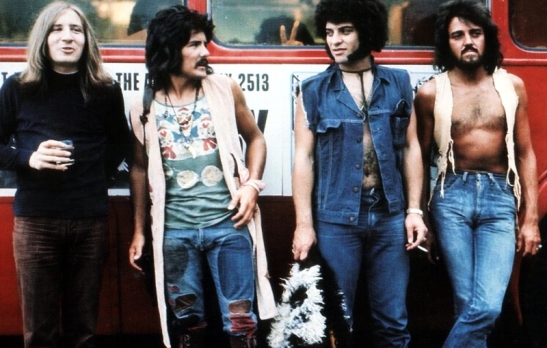
Voodoo Chile, by The Jimi Hendrix Experience (their 1st and only #1)

1 week, from 15th – 22nd November 1970

It starts with a riff – a riff that everyone has heard – and a tickle from the drum kit. And then, the moment when the twangy, chicka-chucka intro to ‘Voodoo Chile’ cuts out and we slam into the brutally simple main riff is genuinely one of the most thrilling seconds in any chart-topping single. Hard rock from the ultimate rock star. A brilliantly heavy, undiluted record at the top of the pop charts.

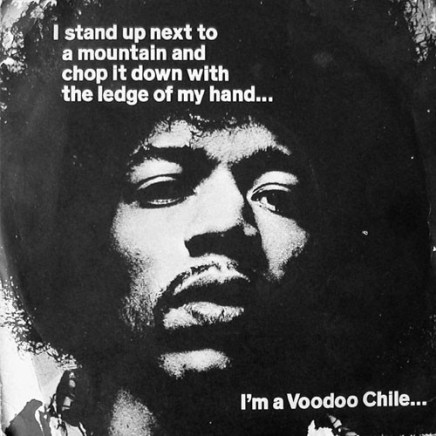
Well I stand up next to a mountain, And I chop it down with the edge of my hand… If you’re ever feeling down, ahead of a tough day, I’d recommend putting this on in your headphones and stepping out of the door just as Jimi sings that line… Cause I’m a voodoo child, Lord knows I’m a voodoo child… It’s a badass song, with a badass message. I didn’t mean to take up too much of your sweet time, I’ll give it right back to ya one of these days… Haha… What exactly is a ‘voodoo child’? Dunno, but it doesn’t sound like something you’d want in the house.

Not that the lyrics make up much of this song. There’s an electrifying solo between the first and second verses. And then the whole second half is given over to some serious head-banging and wah-wah pedalling. It might sound like Hendrix showing off, if it didn’t sound so damn good. It’s controlled chaos, a record that sounds like a live-recording, bottled lightning. And it really makes use of your stereo speakers, with the riffs chasing one another left to right, back and forth…

R-556557-1148199414.jpeg

(coolest single artwork so far, by far!)

God this is good. I knew ‘Voodoo Child’, of course, but it’s not in ‘overplayed’ territory for me. I really should listen to more Hendrix. By November 1970, when he grabbed his one and only week at #1, he was already dead, having joined the 27 Club two months earlier. The line: If I don’t meet you no more in this world, I’ll meet ya on the next one, And don’t be late…! makes it a very appropriate posthumous hit. It’s a shame that it took his death to get him to the top, though he had scored big, Top 10 hits consistently following his debut in 1966 with ‘Hey Joe’.

But who cares why this got to number one. Let’s just rejoice in the fact that it did. It ends abruptly, ricocheting to silence all of a sudden, and you get the feeling it could have been much longer. This ‘Voodoo Chile’ was based on a fifteen minute long, much more laid-back and bluesy, song of the same name that featured on his ‘Electric Ladyland’ album. This version was a reprise – the very last track on the LP – hence the ‘Slight Return’ on the track listing. It should actually be ‘Voodoo Child’, but the record company misnamed it when they released it.

While we wonder just what else 1970 has in store for us in this most schizophrenic of years, we should probably make a confession. At the start I billed this as the pinnacle of Woodstock, by its biggest star. Only problem is… Thanks to bad weather and technical issues, Hendrix actually went on stage at 08:30 on the Monday morning, after most people had begun to pack up and head home. The 500,000 strong crowd had dwindled to around 40,000. But what the hell, who cares. Let’s rewrite history, and imagine him playing this as the sun set, half a million extremely high people swaying along…

Find me on Spotify here.

Never Had a #1 Hit… Ricky Nelson

I’m taking a quick break from the usual rundown to give a mention to the bands and artists that we will never meet at the top of the UK singles chart. If you were following along, wondering when (*insert name of your favourite act*) were going to finally appear in this countdown, then I got some bad news for you…

(I’ll do this in chronological order, with acts whom we would have met by now – i.e. in the fifties, sixties and early seventies.)

I wanted to include an early rock ‘n’ roller in this feature, and the obvious one would have been Little Richard. But, as legendary a figure as Richard was, a lot has been written about him since his death a fortnight ago. And, in terms of chart hits without reaching top-spot, one star of the late fifties and early sixties stands out even more…

6cdec6fc32669f6646e455bf6b4b9732

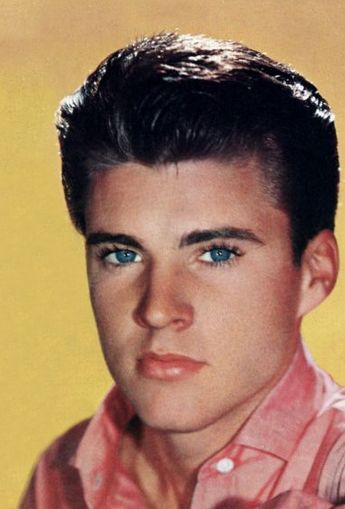
Look at those eyes! Nelson was quite ridiculously good-looking. The son of two well-known celebrities of the 1930s and 40s, he made his way in typical teen-idol fashion, first through radio sitcoms as a child, then TV shows and films as a teenager, and then, in 1957, he released his first single, aged seventeen. He scored tons of Billboard Top 10 hits, as well as two #1s, and while he wasn’t as successful in the UK, here are his five biggest:

‘Travellin’ Man’ / ‘Hello Mary Lou’, #2 in 1961

A pretty standard, Neil Sedaka-ish early sixties pop song for the first half of this double-‘A’, in which Nelson sings about the girls he has around the world. He’s got a little Eskimo girl in Alaska, and a China-doll in ol’ Hong Kong. Simpler times, simpler times…

A much better song on the flip side: a rolling country beat and a simple tale of falling in love with a pretty young gal called Mary-Lou.

‘It’s Late’, #3 in 1959

Great, light rock ‘n’ roll song, and a common theme for the time: a young couple stay out past their curfew, and dad’s gonna be mad. Ricky hopes this won’t be their last date…

‘Poor Little Fool’, #4 in 1958

Another fifties standard. His first US #1, and the new chart-topper on the first-ever Billboard Hot 100. Not his greatest song, though. A little dull. Nice enough. Next.

‘Someday’, #9 in 1958

Suspiciously similar in theme and sound to Connie Francis’s ‘Who’s Sorry Now’… The follow-up to ‘Poor Little Fool’ was an older country song given a light rock ‘n’ roll makeover, which is how around fifty percent of the chart-toppers in 1958 came about.

To be honest, Ricky Nelson’s biggest hits aren’t his best. I love his version of ‘Fools Rush In’, and his sarcastic seventies comeback ‘Garden Party’. And then there is the majestic ‘Lonesome Town’ – one of the 1950’s sparsest, most haunting hit records. As the sixties progressed, he dropped the ‘y’ from his name as the hit singles and big movie roles dried up. He struggled through a very messy divorce, and drug problems, before dying in a plane crash in 1985.

Hope you enjoyed this short interlude. I’ll do another three artistes-sans-#1s in the autumn…


Never Had a #1 Hit… The Doors

I’m taking a quick break from the usual rundown to give a mention to the bands and artists that we will never meet at the top of the UK singles chart. If you were following along, wondering when (*insert name of your favourite act*) were going to finally appear in this countdown, then I got some bad news for you…

(I’ll do this in chronological order, with acts whom we would have met by now – i.e. in the fifties, sixties and early seventies.)

Up today… One of the sixties’ most iconic bands…

Doors-4

I dunno about The Doors, really. Do I like them? Were they as good, or as bad, as people say? They’re a band that seem to inspire extreme reactions, based around whether you think Jim Morrison was a lizard-leather-sex-God, or a bit of an arse.

Plus, most of the Doors’ songs that I enjoy never made it to the British charts – ‘Touch Me’, ‘Love Her Madly, ‘Love Me Two Times’, ‘People Are Strange’… In fact, for such an iconic, influential band, they only ever had four charting singles in the UK Top 75! Which shocked me, I have to admit. Here they are:

‘Light My Fire’, #7 in 1967

A US #1, and their only Top 10 hit in Britain. A sixties classic, and a pretty simple song really. It’s either about sex, or drugs, or both, with a snazzy Louis XIV riff to start and end. I like that the backdrop to this performance in the video is lots and lots of doors hanging on the wall. (Meanwhile, ‘Light My Fire’ will top the charts, much later, and in a very different version.)

‘Hello, I Love You’, #15 in 1967

Another US #1 – part of the reason why I chose The Doors for this feature is the difference between their success in the two countries – with a cool riff and some trippy sound-effects. There was only three years between ‘Oh, Pretty Woman’ and this and, while they cover the same topic, the difference in sound is quite something.

‘Riders on the Storm’, #22 in 1971

A seven-minute-long bit of self-indulgence, if you ask me… But the band’s 3rd highest charting single in the UK!

‘Break On Through (To the Other Side)’, #64 when re-released in 1991

This is more like it. Quiet, then loud – loud, then quiet. Morrison sounds raw and ferocious, before the drugs took their toll. And that was it. Four hits (if you can call reaching #64 in the charts, twenty years later, a ‘hit’.) They’re a band that managed to go a long way – and become pretty legendary – without much of a back catalogue. Style and looks over substance?

One more chart-topper-less artist, coming up tomorrow…. And we’re going back a little further to find him. A rock ‘n’ roll idol, dead now, (and he didn’t die recently, if that’s who you’re thinking of…)

291. ‘Band of Gold’, by Freda Payne

A funky bass riff takes us into our next #1, a huge hit single that settled in for a long stretch at the top of the charts in the autumn of 1970…

p01bqv4q

Band of Gold, by Freda Payne (her 1st and only #1)

6 weeks, from 13th September – 25th October 1970

It’s a fun mix of a single. It’s soulful, it’s Motownish, it’s got strings, with some very early-seventies sounding electric sitar for the solo. Not that it’s a messy mix, not at all. It all comes together to make a great pop single. ‘Band of Gold’ was a perennial long car journey favourite as a kid, an ever present on my parents’ ‘Best of the ‘70s’ compilation tapes. It’s been nice getting to know it again.

And even as a child, I could tell that this record’s lyrics stood out. They tell a story… Since you’ve been gone, All that’s left is a band of gold… A young woman, left alone and crushed on her wedding night. Long before I knew what was meant to happen on one’s wedding night, it still drew me in, intrigued. You took me, From the shelter of my mother, I had never known, Or loved any other… Freda and her fiancé exchange vows, and kiss, but that night, on their honeymoon, they sleep in separate rooms…

This is the plot of a soap-opera, not the lyrics to a #1 single! Is she rich, and he only married her for her money? Was it an arranged marriage? Is he gay, and in need of a beard? Is he impotent?? (These are all bona fide theories that have been espoused over the years.) We never find out, left hanging as the song fades out.

Freda never stops hoping that he’ll walk… Back through that door, And love me, Like you tried before… He has tried to love her, then… The plot thickens. I love the image of her left in the dark, with her band of gold (it took me a long time, as a child, to work out that she was singing about her wedding ring.) Payne sings it forcefully, and the drumbeat comes down on every word. You can really picture her beating her chest in sorrow.

s-l400

‘Band of Gold’ was written by the Motown legends Holland-Dozier-Holland, but it wasn’t released on Motown due to an ongoing dispute between the writing team and the label. Which means it’s half a Motown hit, and frustrating as it deprives us of two-in-a-row following Smokey and the Miracles’ ‘The Tears of a Clown’. Ron Dunbar, who worked on the song alongside the trio, blames all the theories on the fact that he had to cut a line about the singer being the one who turned her husband away, to keep the runtime down. The full story can be heard on the 7” version…

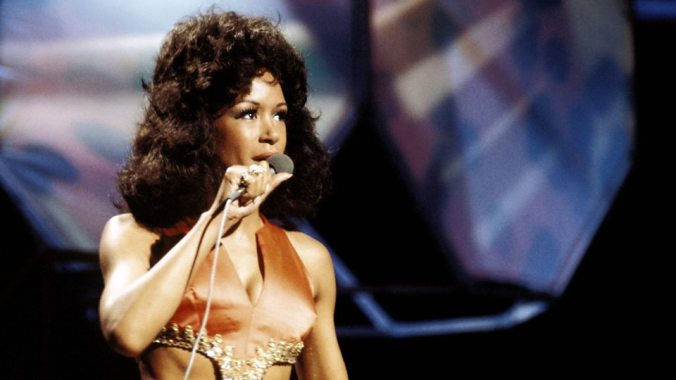
I love the way that Freda Payne really lets loose for the final Since you’ve been go-o-o-ne… as she takes it home. Though apparently she had to be persuaded to record the song. She did, and it gave her what would be by far her biggest hit. In fact, ‘Band of Gold’ was Payne’s only Top 10 hit in either Britain or the US. She kept releasing music until the early eighties, when she moved into TV work and acting. She was married to fellow singer Gregory Abbott, for three years. Not a long marriage, but at least it got past the honeymoon.

Why not listen to all the #1 singles in one handy place, with my Spotify playlist?

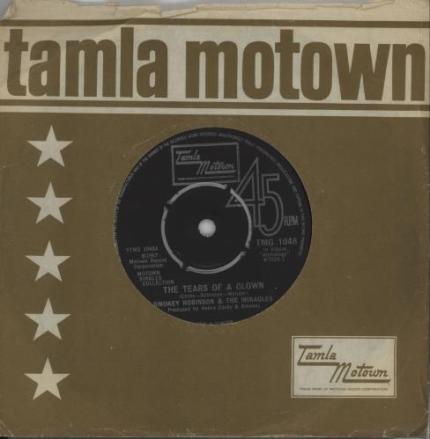
290. ‘The Tears of a Clown’, by Smokey Robinson & The Miracles

A perky riff kicks off this next number one, one that sounds like something The Pied Piper would play while leading the kids out of Hamelin. A jester’s riff, one that might play as a clown enters a room… It’s a riff, a motif, that repeats and holds the song together, while the rest is pure Motown.

ea6cd4a37212d4e210d47e8ca77489ea

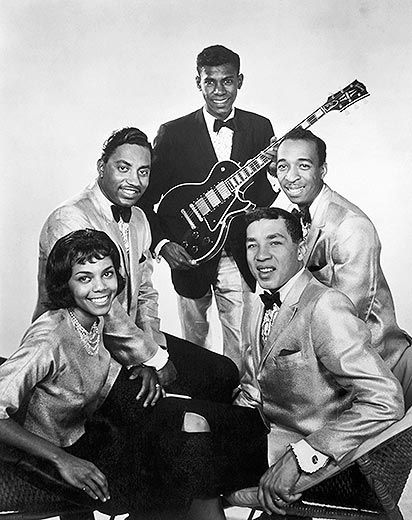
The Tears of a Clown, by Smokey Robinson (his 1st of two #1s) & The Miracles

1 week, from 6th – 13th September 1970

Yes, Motown’s 4th #1 single in the UK, from one of its biggest acts, one that had been scoring Top 10 hits throughout the sixties in the States. And it’s another sad-lyrics-with-upbeat-accompaniment number… Really I’m sad, Oh, sadder than sad, You’re gone and I’m hurting so bad, Like a clown I’ll pretend to be glad…

It’s a song about putting a brave face on things, about not letting on when you’re heart is breaking. And it’s very wordy record… Sample lyric: Now if I appear to be carefree, It’s only to camouflage my sadness… There aren’t many #1 singles throwing words like ‘camouflage’ around. By the end Smokey’s referring to the famous clown opera ‘Pagliacci’… All very highbrow.

But it’s catchy, too. This is Motown after all. I have to admit that, for all this is a very highly regarded record, I’m struggling to really love it… Though I do love the bubblegum hook in the chorus: Now there’s some sad things known to man, But ain’t too much sadder than… The tears of a clown… 1970 really is jumping around all over the place, evading all attempts to define the ‘sound’ of the year. Some of its chart-topping singles have been true classics, others just truly dreadful. ‘The Tears of a Clown’ I’d place right in the middle, one of the purest ‘pop’ moments of the year.

-600883

It had actually been recorded back in 1967, and was only released due to Robinson’s reluctance to record new music with the band. It hit #1 on both sides of the Atlantic, and Smokey was convinced to spend another couple of years with them. He did eventually go solo, and he’ll go it alone at the top of the charts in a decade or so. The Miracles continued too, and had their own successes through the seventies. Also of note is the fact that ‘The Tears of a Clown’ was co-written by Stevie Wonder, who we have yet to meet in this countdown. I think it’s not giving too much away for me to say that this, his first writing credit at #1, is far better than either of the chart-toppers he’ll get under his own name…

Follow my Spotify playlist as we go!

289. ‘The Wonder of You’, by Elvis Presley

Well, look who’s back! Over five years on from his last #1, Elvis is back in the building. What version of Elvis are we on now? We’ve had the ‘Sun’ Records Elvis, Elvis the Pelvis, Army Elvis, Post-Army-Chart-Dominator Elvis, Terrible Movie Soundtrack Elvis…

ce30a99eda621f97208bdefcb6d247e9

The Wonder of You, by Elvis Presley (his 16th of twenty-one #1s)

6 weeks, from 26th July – 6th September 1970

’68 Comeback Special Elvis has been and gone – he didn’t make the top of the charts, though ‘Suspicious Minds’, ‘In the Ghetto’ and ‘If I Can Dream’ were all decent-sized hits. Now we’ve arrived at Vegas Elvis. The jumpsuits, the rhinestones… It’s one of his most distinctive looks, the favoured outfit of the modern Elvis impersonator.

‘The Wonder of You’ sweeps in, the instruments sounding brassy and confident, as if the very fact that they are being played on an Elvis record is giving them an extra decibel. And the man himself can’t wait to get singing, joining in with the intro: Woah-woah-woah-woah… His voice sounds deeper, thicker than when we last heard him, crooning on ‘Crying In the Chapel’.

When no-one else can understand me, When everything I do is wrong… I’m not going to lie, this record is a big bucket of schmaltz… You give me hope and consolation, You give me strength to carry on… But I love it. I especially love giving it a good old belt out in the shower. Elvis has plenty of excellent shower-songs, but this is the ultimate. I guess I’ll never know, The reason why, You love me as you do… That’s the wonder, The wonder of you… Who is the ‘you’ in the title? Priscilla? God? The listener? It works, because any old schmuck can sing it to their loved-one and come away looking cute.

R-1023324-1227378003.jpeg

Completing the ‘Elvis at the MGM’ feel are the crowd noises. Yes, we have our first ‘live’ number one since, I think, Lonnie Donegan a decade ago. They applaud at the start, when The King begins to sing, and they cheer at the end when the song rises to its finale. He never actually recorded ‘The Wonder of You’ in a studio, amazingly. At the very end, as the final note appears over the horizon, Elvis’s voice is faded right back into the mix. It’s a disappointingly muted end, a sign perhaps that his voice was beginning to fade. Of course, the next Elvis (Elvis MK VIII?) will be prescription drugs ‘n’ burgers Elvis.

And, sadly, the next Elvis we’ll meet on this countdown will be The Late Elvis. Yep, this is the last UK chart-topper of his lifetime. ‘The Wonder of You’ had been around for a while, though. It was written in 1959 by one Ray Peterson, and recorded by Ronnie Hilton (remember him, from way back in 1956?) and The Platters. Their versions are fine, though a lot stiffer than this one. Apparently Elvis had asked Peterson’s permission to record the song, and Peterson had replied with an ‘Um, you don’t really need to ask, cause you’re, you know, Elvis…’

Very few acts who scored number ones in the sixties managed to keep their runs going in the sixties. There was a sudden and sharp cut off: The Beatles (to be fair, they split up in 1970), The Stones, The Beach Boys, all the Beat bands… The door slammed down on New Year’s Eve 1969. Except, obviously, these rules didn’t apply to The King. In fact, with his 16th #1 he creates a whole new club: artists who have scored chart-toppers in three different decades. Even now it’s a select club, reserved for big names: Madonna, Michael Jackson (if you count The Jacksons), Eminem, Kylie… and Cliff Richard, who has hit #1 in an outrageous five different decades. Yep, plenty more Cliff to look forward to, coming up right here…

Follow along with the UK #1s Blog Spotify playlist here.

288. ‘In the Summertime’, by Mungo Jerry

So we reach one of the most distinctive intros ever. Is it beatboxing? A comb and paper? A kazoo? Uh, ch-ch-ch… Who cares, it’s groovy, silly, fun, and it sets the tone for a brilliant #1 hit.

mungojerry002

In the Summertime, by Mungo Jerry (their 1st of two #1s)

7 weeks, from 7th June – 26th July 1970

Maybe it helps that I’m writing this in the garden on a fine spring afternoon, as the world prepares to tick over into what is hopefully a long, hot summer. But I’m sure that even if I were listening to this on a frigid mid-January’s morn, I’d get that holiday feeling. It’s irresistible – a record that sounds exactly as its title suggests. You can see why it settled in for a long old stretch at the top of the charts over June and July.

In the summertime, When the weather is high, You can stretch right up and touch the sky… It’s a little reggae-ish. There’s a music-hall piano in the mix, and a gentle guitar. Plus all the zzzhhs and the ooops that create the distinctive rhythm. It sounds like lots of things, and yet it’s distinctly original… Wiki lists it as ‘Skiffle’ and, yep, I can see that too… When the weather’s fine, You got women on your mind…

A group of lads, out looking for fun. The lyrics hit a little harder than the carefree beat suggests. Have a drink, Have a drive… (not a line you’d get away with these days, and indeed Shaggy had changed it by the time he took the song back into the Top 5 in the mid-nineties…) Go out and see what you can find…

And then a classic piece of advice: If her daddy’s rich take her out for a meal, If her daddy’s poor just do what you feel… They get away with it, though, by sounding like clumsy kids just looking for a good time. You can imagine them giving a cheeky wink as they sing it, the rascals. Life’s for livin’ that’s our philosophy…

R-4325405-1408464197-6623.jpeg

We get a little break, and some motorbike-revving sound effects thrown into the eclectic mix. Imagine driving along country roads to this, windows down, roof off. I have to admit I thought, right up until now, that the line in the second verse went ‘You can make it really good in the lay-by…’, you know, what with the driving theme. But no, that was just my mind in the gutter as usual. It’s: You can make it, make it good and really fine…

Mungo Jerry were a band led by Ray Dorset and an ever-changing cast of other musicians – even before they’d recorded this, their first hit, the line-up had changed, and it will do so again before their second chart-topper next year. The only thing I really knew about them, prior to writing this, was that Dorset had some spectacular lamb chop side-burns. But, they grew so big so quickly in the summer of 1970 that the phrase ‘Mungomania’ was coined. ‘In the Summertime’ hit #1 in a staggering twenty-six countries! We’ll meet them one more time, like I said, before long.

This is our third ‘summer’ themed number one, after Jerry Keller’s ‘Here Comes Summer’ and Cliff’s ‘Summer Holiday’, but I’d suggest that this is the definitive summer hit, one that still hits the spot fifty years on. Plus, it’s the only one of the three to actually hit #1 in the summer! Uh, ch-ch-ch… Uh, ch-ch-ch…

(EDIT! Having watched this video I’m now convinced that I’m correct on the ‘lay-by’ line! Watch his lips… And, to answer my question from the start – it’s a bottle!)

286. ‘Back Home’, by The England World Cup Squad ’70

On paper, I should love this next #1. It combines my two great passions-since-childhood: the pop charts and the World Cup. Except… Music isn’t something you enjoy on paper. It has to go in between your ears. Which is where the problems start with this song.

England-World-Cup-Squad-on-TOTP-in-1970

Back Home, by The England World Cup Squad ‘70 (their 1st and only #1)

3 weeks, from 10th – 31st May 1970

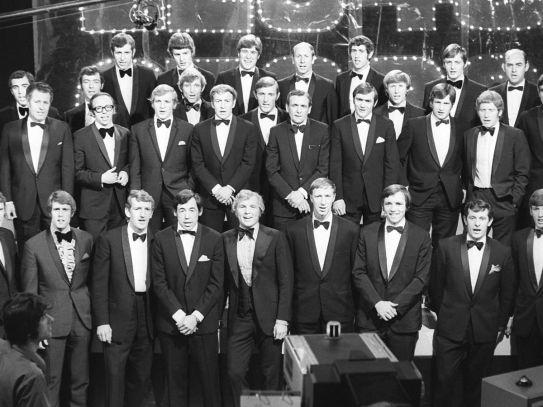
First, some history. England had hosted and won their first, and so far only, football World Cup in 1966, beating West Germany 4-2 in the final. Four years on they were off to Mexico to defend their title. This record, then, was an au revoir to the fans. And it gets going with hand claps and that beat that goes with any sporting occasion – you know: da da dadada dadadada da da. Does it even have a name? Then it’s a marching band and some rousing lyrics.

Back home, They’ll be thinking about us, When we are far away… Back home, They’ll be really behind us, In every game we play… The players put their all into it, singing it like they’re down the pub, rolling out the barrel. We’ll give all we’ve got to give, For the folks… back… home… Interestingly, there’s no explicit mention of them winning the cup, which I suppose is quite modest and sensible.

I have to admit that I’m not a neutral party here. I’m Scottish. Scotland have a fairly terrible football team, and have done for a long time. They last qualified for a major tournament when I was twelve. So for me and most of my fellow countrymen and women – and I’m not proud to admit this but here we are – much of our enjoyment during a World Cup comes from England getting beaten. I hold my hands up. I am biased when it comes to this record.

Then again, even the most ardent England fan would struggle to argue that ‘Back Home’ has much merit beyond nostalgia for a time when they were the world champions. Midway through we get a trumpet solo and some piped-in crowd noises. I half expect Kenneth Wolstenholme’s ‘They think it’s all over…’ commentary, but no.

R-2100102-1264768525.jpeg

It reminds me of a song from the trenches (unfortunately not the last time that the English will equate football with the World Wars.) There’s the simple music hall melody for a start. And the lyrics are all about the folks ‘back home’, as if the team is homesick before they’ve even left, as if they’re missing their sweethearts, as if they don’t really want to go…

And with good reason, perhaps. Their campaign in Mexico was fairly disastrous. Captain Bobby Moore was falsely arrested for stealing a bracelet, keeper Gordon Banks was knocked out by food poisoning (some have since suggested foul-play) and West Germany exacted their revenge by beating them 3-2 in the quarter-finals. Brazil went on to win an iconic final against Italy – Pele, Carlos Alberto and all that.

I accept that there would have been a lot of hype surrounding the defence of their title – they released this record a full two months before the World Cup started – and that this song is fairly inoffensive in the grand scheme of things. At least it’s short, wrapped up in exactly two minutes. But I’d happily never listen to it again. The players clearly enjoyed their experience in the recording studio though, as they went and made a whole album! Ever wondered what ‘Congratulations’, ‘Lily the Pink’ and ‘Sugar Sugar’ sound like when sung by footballers? Wonder no more – the whole album’s on Spotify.

If anybody out there actually enjoyed this latest chart-topper – and who am I to judge? – then you’ll be happy to hear that this is the first of four World Cup themed #1s (plus a European Championship themed #1 for good measure.) They will all be about England – boo! But most of them will be better than ‘Back Home’ – yay! And, just to show that I may be biased but not that biased, here’s a link to the Scotland World Cup Squad’s highest charting single: ‘We Have a Dream’, which reached #5 in 1982. (Spoiler Alert: It’s just as bad, if not worse, than ‘Back Home’.)

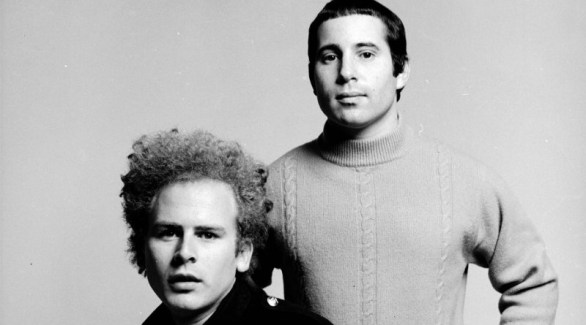
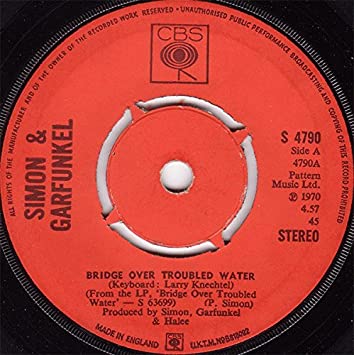
283. ‘Bridge Over Troubled Water’, by Simon & Garfunkel

A couple of times already, I’ve written about pop music as hymn. ‘Hey Jude’ was one. Here’s another. The one, and only, British chart-topping single for America’s foremost pop duo. (Sorry Don and Phil, Hall and Oates…)

mainSIMGARF-800x445

Bridge Over Troubled Water, by Simon & Garfunkel (their 1st and only #1)

3 weeks, from 22nd March – 12th April 1970

I’m only going to write good things about ‘Bridge Over Troubled Water’, but I have to get off my chest first and foremost that I didn’t always like this song. It was a big presence in my childhood – my parents are big fans – but for a long time I thought it was a bit proper, a bit overwrought, a bit… too much like a hymn! Art Garfunkel certainly does enunciate his lines properly (the cut-glass ‘t’ in when tears are in your eyes…) and, if you were being cruel, he does sound a little like a choir-boy.

But you’re allowed to make dubious musical choices when you’re young (*cough* Kid Rock *cough*). I have since come to see the error of my ways. This is an undeniable classic, from the understated confidence of the opening piano, to the giant crescendo of an ending.

And, fittingly for a song that sounds angelic, the lyrics are apparently sung by an angel. Someone looking out for you, someone who’s on your side. Like a bridge over troubled water, I will lay me down… They will follow you even at your lowest ebb, down and out on the streets, as darkness comes. Theories abound that the voice singing is that of heroin, the drug, and that the listener is an addict, which would be a spectacular twist in such a Christian sounding song. Simon and Garfunkel have always denied it.

After two verses of just voice and piano, in come the drums, like gunshots in the distance. And we start to build… I think the moment that this goes from being a great song and becomes one of the greatest is when Art’s voice dips: Oh, If you need a friend… Then the chorus comes in, and what was a simple ballad has grown into something massive without you even really noticing. Suddenly it’s ending with strings, and cymbals, and what sounds like fireworks. Suddenly it’s midnight on New Year’s Eve.

61BAj+jfwTL._SY355_

It’s superb. It’s timeless. It’s a classic. To think I used to prefer ‘Cecilia’. Seriously, though, I think ‘Bridge Over Troubled Water’ does sometimes lose something in its ubiquity. Twice in the past few years – decades after it originally hit #1 – the song has reached the top of the UK charts in the form of well-intentioned but fairly dreadful charity singles. It’s kind of easy to lump this record in with other easy-listening, uplifting MOR hits, but that would be a mistake.

And, like many of the best pop songs, there’s a friction working under the surface of ‘Bridge Over Troubled Water’. Simon and Garfunkel weren’t the best of friends by this point, and would split up later in the year. Simon apparently resents the fact that he wrote their biggest hit but Garfunkel gets remembered for singing it. When he performed it on his farewell tour, in fact, he introduced the song by saying “I’m going to reclaim my lost child.”

Actually, I have to confess that I’ve been slow to realise the merits of not just this song, but of Paul Simon and Art Garfunkel’s entire back-catalogue. I was force-fed them on childhood car journeys and, while I’ve come to recognise that ‘The Sound of Silence’, ‘Mrs. Robinson’ and ‘Homeward Bound’ are great, and ‘The Boxer’ a work of art, I still find the likes of ‘I Am a Rock’, ‘America’ and ‘Wednesday Morning, 3 A.M.’ a bit twee. I can’t stand their version of ‘El Condor Pasa’. And part of me is still seven-years-old, and still loves the outright catchiness of ‘At the Zoo’ and ‘Cecilia’. In fact, there probably is no other act about which I am so undecided. I genuinely have no idea whether or not I like Simon and Garfunkel! I do definitely like ‘Bridge Over Troubled Water’, though, and definitely think you should press play below and enjoy it one more time…