282. ‘Wand’rin’ Star’, by Lee Marvin

The seventies’ second number one… is not what I was expecting. Not by a long stretch.
5b18b0aba7b32184792db93d93f58a7a

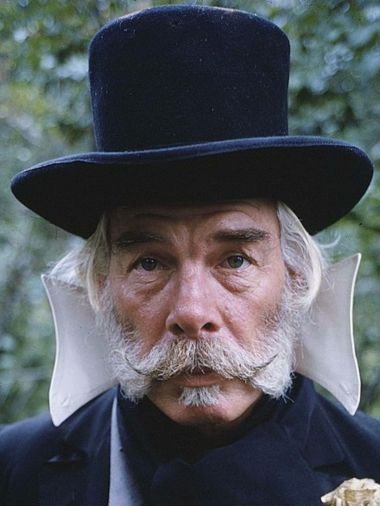
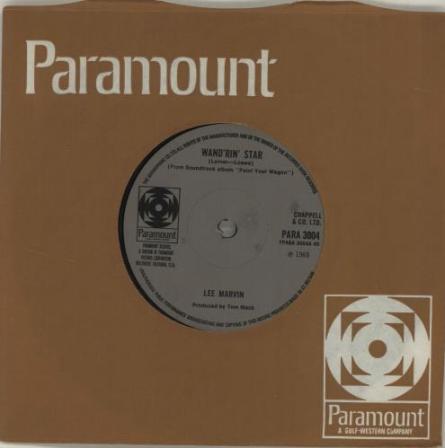
Wand’rin’ Star, by Lee Marvin (his 1st and only #1)

3 weeks, from 1st – 22nd March 1970

For a start, it’s got one of the longest intros to a number one single, surely, ever. A gentle, countryish rhythm, some horse hooves clip-clopping, and lots of humming. For a full minute and fifteen seconds. They hum through an entire chorus and verse! Apparently the radio-edit was shorter, but it seems that the single version was the full four and a half minutes, with the added humming. I can’t find a shorter version anywhere.

Finally the vocals come in. And my, what a voice. Chiselled straight from granite, like a statue come to life. A series of deep vibrations, rather than actual words. I… Was born… Under a wand’rin’… Star… The singer is a traveller, one born to roam. Wheels are made for rollin’, Mules are made to pack, I’ve never seen a sight that didn’t look better lookin’ back… Harmonicas trill in the background, while the slight rhythm carries, and on. The wagon keeps headin’ west…

‘Wand’rin’ Star’ is a showtune, that much is clear from the first listen (it’s the backing singers that give it away) and Lee Marvin an Oscar-winning actor. He sung (whispered, grunted, grumbled… I can think of so many better verbs for his performance than plain old ‘sung’) this in the character of Ben Rumson, a gold prospector, in the movie version of ‘Paint Your Wagon’.

To be fair to Marvin, he perks up a little in the verses. I especially like the third, in which he appeals to anti-social people everywhere: Do I know where hell is? Hell is in ‘Hello’… Heaven is ‘Goodbye’ forever, It’s time for me to go… He’s happiest alone, heading somewhere new. Home is a place best dreamt of. There’s something quite romantic in the song’s cynicism.

In the following chorus, he lets the final ‘star’ flop out of his mouth, as if he’d like to go back to sleep, and you presume that’s that. But no, the song keeps plodding along, Marvin keeps chewing his tabaccy. It’s almost a lullaby – parents of the time could have used this record, and Marvin’s spectacularly sonorous voice, to get their babies to sleep.
Lee+Marvin+Wandrin+Star+-+Solid-585856

‘Wand’rin’ Star’ could have been a hit in the early-fifties, for someone like Frankie Laine. That’s the kind of territory we’ve temporarily slipped back into. The musical version of ‘Paint Your Wagon’ did debut in 1951, in fact, though the movie version had been released just the year before this single hit #1. It is apparently a ‘not very good film’, though one I’ve never seen, which didn’t make a lot of money. The soundtrack, though, made up for it. If you’ve ever wondered what Clint Eastwood would sound like singing a song called ‘I Talk to the Trees’ then check it out (he’s got a surprisingly light voice!)

Lee Marvin stuck to the acting after this, never releasing another single. Which means we’ve had two one-hit wonders in a row! He passed away in 1987, with full military honours thanks to his service in WWII. To be fair: an Oscar, a #1 single, several military medals… a life well-lived. ‘Wand’rin’ Star’ has an equally interesting postscript, including a cover version by Julian Clary (if you don’t know who he is then please, please follow this link) and being played at Joe Strummer’s funeral.

281. ‘Love Grows (Where My Rosemary Goes)’, by Edison Lighthouse

The first #1 of a new decade, and it’s a good ‘un. I love the simple, growling riff that starts us off, that grows and grows, has some horns added to it, and then…

p036gpsd

Love Grows (Where My Rosemary Goes), by Edison Lighthouse (their 1st and only #1)

5 weeks, from 25th January – 1st March 1970

She ain’t got no money, Her clothes look kinda funny, Her hair is kinda wild and free… Rosemary is a bit of a manic pixie dream girl – or a bit of a hippy, as they might have said at the time – who turns guys’ worlds upside down. Oh but love grows, Where my Rosemary goes, And nobody knows like me…

It’s a soaring pop song, one that seem to be constantly heading upwards, one that pushes all the right pleasure receptors in your brain and makes you smile. I might even go as far as to describe it as euphoric. Rosemary talks funny, and nobody knows where she came from, but she casts a spell. I imagine a girl in a floaty dress, with flowers in her hair, turning the world from black and white into technicolour as she skips past…

It’s a cheesy song, but one that stays on the right side of cheesy. Any song that includes a line like I’m a lucky feller and I just gotta tell her… is flying close to the wind, but ‘Love Grows…’ gets away with it. By the time we get to the end, which sounds a bit like a refrain of the main melody with extra strings and horns, I’m ready to say it. It’s pop perfection.

I’m not sure if this is simply because I know it’s the first number one of the 1970s, but something about this disc sounds new. Yes it sounds like some of the late-sixties bubblegum records – ‘Dizzy’, ‘Sugar Sugar’ – and the like, but it also sounds like the next step. A glossier, poppier take on sixties rock. But that might only be because I’m expecting it to be the next step… Either way, it’s a great start to the decade.

edison-lighthouse-love-grows-(where-my-rosemary-goes)

Edison Lighthouse were a London-based band – mildly surprising, because they sound very American to my ears – and ‘Love Grows…’ was their biggest hit by far. Their second highest charting single, ‘It’s Up to You, Petula’ made #49, which means they are officially one-hit wonders. Their lead singer, Tony Burrows, had a long career beyond the band, recording with Brotherhood of Man, who we’ll meet before long, and singing backing vocals for Elton John and Cliff Richard among others. Also, Edison Lighthouse are probably the only chart-topping act to be named after an actual lighthouse (Eddystone Lighthouse, in Devon.)

Records like this are, at the end of the day, what the pop charts are for. It’s interesting when strange hits make it to the top, ones that push boundaries – for better or worse – but there will always be a place for well-made, catchy pop. Plus, we can now add ‘Rosemary’ to our growing list of girls names which have made #1, alongside *deep breath* Rose Marie, Josephine, Diana, Mary, Cathy, Laura, Diane, Juliet, Michelle, Eleanor Rigby, Bonnie, Lady Madonna, Jude (though that could be a boy), Lily and Yoko!

Listen back to every number one from the sixties (and the fifties) here:

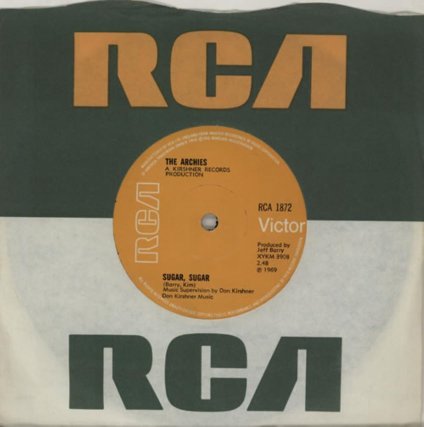
279. ‘Sugar, Sugar’, by The Archies

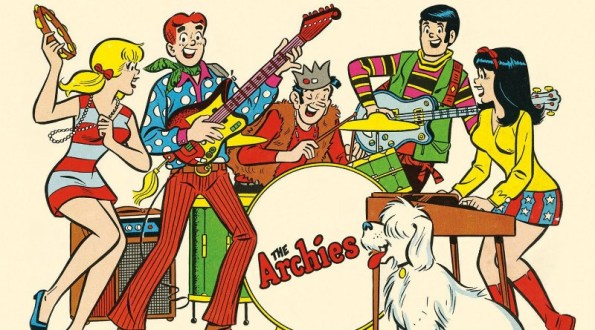
The second last #1 of the 1960s brings up one of its biggest hits. Eight whole weeks at the top, tying with Elvis’s ‘It’s Now or Never’ (1960) and The Shadows’ ‘Wonderful Land’(1962) for the honour of longest-running chart-topper of the decade. And when you hear the chorus, you begin to understand why…

mainARCHIES53-800x445

Sugar, Sugar, by The Archies (their 1st and only #1)

8 weeks, from 19th October – 14th December 1969

Sugar – do-do-do-do-do-do… Awww honey, honey – do-do-do-do-do-do… You are my candy girl… And you got me wanting you… It’s a chorus that everyone can sing, imprinted on our collective consciousness. In fact, to call it a ‘chorus’ isn’t very accurate – it is pretty much the entire song. As a record, it is undeniably catchy…

But then so are crabs. To be honest – ‘Sugar, Sugar’ is annoying, it’s simplistic, it’s basic… It’s bubble gum, and then some. Candy floss, sherbet and a huge dose of saccharine for good measure. I just can’t believe the loveliness of loving you… I just can’t believe the wonder of this feeling too… After a couple of listens you start to get a sugar-headache.

It’s one of pop music’s great clichés – love as candy. We’ve already had ‘Sweets for My Sweet’ at #1, and there will be more to come. ‘Candy Girl’, ‘Sweet Like Chocolate’, ‘Sugar Baby Love’… You can make quite the list… ‘Pour Some Sugar On Me’ (a classic, I won’t deny), ‘Brown Sugar’ (a filthy Stones’ take on the theme.) You catch my drift…

There are glimmers of hope here: the low-key verses contrast nicely with the all-out bubble gum of the chorus. And the ‘ad-libs’ towards the end are fun. Pour a little sugar on me honey… Aw yeah… (maybe a young Def Leppard were listening.) All in all though, and I say this as someone who loves pop music, ‘Sugar, Sugar’ is a bit much. I’m glad when it’s over.

61srqjm+c6L._SL1280_

Adding to the sickly effect is the fact that The Archies were a cartoon band, plus a dog, that featured in their own TV variety show, ‘The Archie Show’. To me, they look like the ‘cast’ of ‘Scooby-Doo’ went and formed a band. Their records were recorded by session musicians, several of whom quit when they didn’t get any royalties from their hits. Despite the fact that just two weeks ago we had simulated orgasms at #1, I’d have to say that ‘Sugar, Sugar’ is the more offensive record.

In fact, this is perhaps the icing on the cake for the cynical second half of 1969. We’ve had horrifying visions of an apocalyptic future, and now an equally pessimistic vision of the future of pop music. We’ve had a pre-manufactured band from a TV show at #1 already, but it feels very unfair to compare The Monkees to this… They were real musicians who quickly broke away from their confines. Here you can’t help picturing a cynical record executive laughing and chucking wads of dollar bills in the air… “Who needs real people? Who needs real instruments? It’s mine! All mine!”

Or maybe that’s too much. We’ve had so much amazing music hit number one over the past decade, so perhaps we can cut this record some slack. It what it is, and what it is is fine in small doses. Assembly-line bubblegum is here to stay, and we’ll have to get used to it as we delve into the 1970s…

278. ‘I’ll Never Fall in Love Again’, by Bobbie Gentry

After all the in-your-face sex and apocalyptic predictions of the past few #1s, it’s nice to hear the gentle piano and bass intro of ‘I’ll Never Fall in Love Again’. The musical equivalent of closing your eyes and taking a deep breath.

bobbie10

I’ll Never Fall in Love Again, by Bobbie Gentry (her 1st and only #1)

1 week, from 12th – 19th October 1969

Not that this record is all sweetness and light, though. The title kind of gives that away. What do you get when you fall in love…? A guy with the pin to burst your bubble… Bobbie is convinced that she’s done with love. That’s what you get for all your trouble…

I love her voice – all tired and husky. It lends a perfect edge to possibly the best rhyming couplet ever to feature in a #1 single: What do you get when you kiss a guy…? You get enough germs to catch pneumonia, After you do he’ll never phone ya… Bacharach and David – racking up another UK chart-topper here – added the line after Burt had been hospitalised with the flu. It does make sense when you realise that this is a B&D number, with its gently soaring melody. They had written it for a musical called ‘Promises, Promises’, and Dionne Warwick had had the hit version of this song in the States.

You could add ‘I’ll Never Love Again’ to our run of recent cynical number ones – crushing the closing months of the swinging sixties – but for one line: So for at least, Until tomorrow… Who knows? She might just meet the man of her dreams tomorrow morning… And I’d argue that there’s something very late-sixties-positive about a young female artist singing about her love life in a matter-of-fact way: I’ve been there and glad I’m out… Women’s Lib reaching the top of the charts right here.

BOBBIE_GENTRY_ILL+NEVER+FALL+IN+LOVE+AGAIN+-+4+PRONG-654324

The fact that Bobbie Gentry is a woman is worth noting in itself. She’s the sole female chart-topper of 1969. In fact, in the past three years, only Bobbie, Mary Hopkin, Sandie Shaw and Petula Clark have topped the singles charts as solo females (Esther Obarim, Nancy Sinatra and Jane Birkin did so by duetting with men.) It really is surprising how few women topped the charts throughout the sixties, compared to later decades… I would work out the percentage, if I had any kind of mathematical ability.

Bobbie Gentry is also another artist whom I racially-profiled as a kid… Add her to the list along with Chris Farlowe and Georgie Fame. She isn’t black, she’s another white singer with a bit of soul in her voice, an American Dusty. My first exposure to her was through the superb ‘Ode to Billie Joe’, which was her biggest US hit – a gothic novel in a four-minute pop song – which shockingly only reached #13 in the UK… As nice as ‘I’ll Never Fall in Love Again’ is, it’s no ‘Ode to Billie Joe’.

But it is nice. Better than nice. It’s a great, late-sixties pop song with a hint of country. Bobbie Gentry has become very reclusive in her later years, not recording, performing or giving interviews since 1982. She lives to this day, people believe, in Memphis. And with that, we reach the penultimate number one single of the 1960s…

275. ‘In the Year 2525 (Exordium and Terminus)’, by Zager & Evans

You see the title of this next #1 hit, and you prepare yourself for something special. We’re off to the year 2525… With a duo that sound like a second-rate magic act.

mainZAGER

In the Year 2525 (Exordium and Terminus), by Zager and Evans (their 1st and only #1)

3 weeks, from 24th August – 14th September 1969

It gets underway with a Spanish guitar and Mariachi-band backing. It reminds me of Dave Dee and Co’s ‘The Legend of Xanadu’, another Latin-flavoured glimpse into a strange world. In the year 2525, If man is still alive, If woman can survive, They may find…

In comes a relentless galloping beat, over which a terrifying vision of the future is unveiled. By the year 3535, you’ll be taking pills to tell you what to think, by 4545 you won’t need your teeth or your eyes… You won’t find a thing to chew, Nobody’s gonna look at you… In 5555, the machines will have taken all the jobs, rendering our limbs obsolete. And by 6565: Ain’t gonna need no husband, Won’t need no wife… You’ll pick your son, Pick your daughter too, From the bottom of a long glass tube… Woah-woah…

Fair to say it’s a pretty pessimistic view of the future. It has the air of a crazed evangelist, preaching angrily from his pulpit, as all the while the beat goes on, and on. The predictions change to years ending in ten, for rhyming purposes, as we go forward. And by 8510, God will have had enough, and will come down to rip it all up and start again. It’s a crazy record. I’m not sure I like it all that much, but it is entertaining…

The final verse is probably the most prescient. In the year 9595, I’m kinda wonderin’, If man is gonna be alive, He’s taken everything this old earth can give, And he ain’t put back nothin’… Woah-woah… Doesn’t that pretty much sum up the fears of 2020, with our rising temperatures, killer viruses and plastic-swilling oceans? In fact, Zager & Evans’ vision of the future hinges on its opening line: If man is still alive… Who here’s willing to put money on humans being around in 2125, let alone 2525?

ZAGER_&_EVANS_IN+THE+YEAR+2525-640089

We’re used to science fiction that looks into the near-future: ‘Back to the Future’ in 2015, ‘Terminator’ in 2029 and so on, so that we can chuckle when we reach the date in question and point out that none of what was predicted has come to pass. But who can actually get their head around the year 2525? It’s five hundred and five years away! And the year 9595, on which the song ends – it is practically impossible for the human mind to imagine that far forward in time. ‘In the Year 2525’ was nominated for a ‘Hugo Award’, for the best science fiction / fantasy works of the year, though, so who am I to question it?

Denny Zager and Rick Evans were a duo from Lincoln, Nebraska, and they are the purest of one-hit wonders. None of their subsequent follow-ups made the charts. This is their sole chart-topping single, on either side of the Atlantic (fittingly, it was #1 in the US as Neil Armstrong set foot on the moon.) Zager is still alive, but Evans sadly passed-away in 2018.

We’re drawing to the end of the 1960s, and this record is almost the direct antithesis of a lot of the positivity we’ve seen in pop music throughout the decade. In fact, 1969 has been a year for some pretty cynical chart-toppers: Peter Sarstedt’s cutting ‘Where Do You Go To…’, The Beatles sarcastic ‘Ballad of John and Yoko’, The Move’s melodramatic break-up in ‘Blackberry Way’. Now this anti-flower power anthem. Two years ago it was ‘All You Need Is Love’; now it’s all the ways in which we, as a race, are doomed…

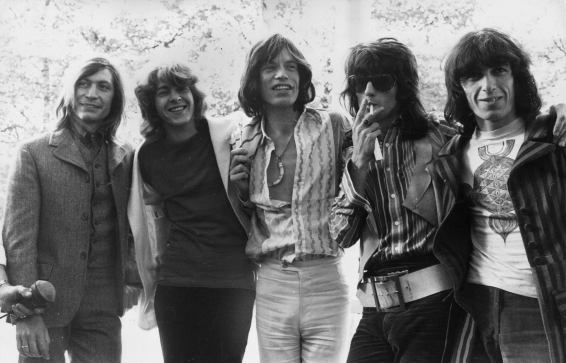
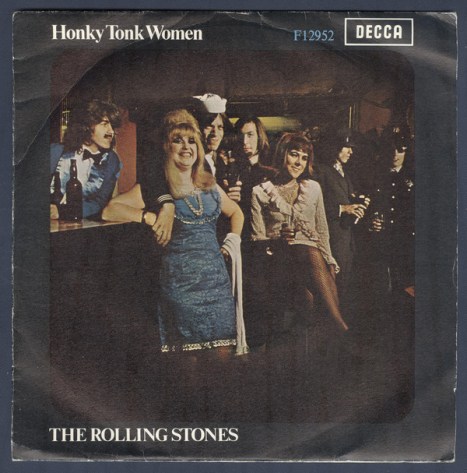
274. ‘Honky Tonk Women’, by The Rolling Stones

A few weeks after bidding The Beatles farewell, we’ve now reached the end of The Rolling Stones’ chart-topping career.

rollingstoneshydeparkextra1969a-5

Honky Tonk Women, by The Rolling Stones (their 8th and final #1)

5 weeks, from 23rd July – 24th August 1969

But, while The Fab Four bowed out with a not-very-Beatles-sounding #1, The Stones wrap things up by doing what they do best – some low-down, dirty rhythm and blues. It starts with a cow-bell, Charlie’s drums, some filthy guitar licks, and Mick’s drawl: I met a gin-soaked bar-room queen in Memphis… (was there ever a more Stonesy opening line than that?) She tried to take me upstairs for a ride…

In my post on their last #1, I wrote that ‘Jumpin’ Jack Flash’ was a new leaf for The Stones, in that they gave up on their attempts at flower-power and psychedelica, and returned to straight-up rock ‘n’ roll. ‘Honky Tonk Women’, then, is a consolidation of that. It sets the template for the next fifty years of the band, through the twin glories of ‘Sticky Fingers’ and ‘Exile on Main St’, through to them becoming the biggest stadium fillers the world has ever seen.

It’s also, basically, Mick Jagger listing women that he’s shagged. The bar-room queen is followed by a divorcee in New York City, and the outrageous She blew my nose and then she blew my mind… line. Goodness. It’s the ho-o-o-onky tonk women, Gimme, gimme, gimme the honky tonk blues… It’s always easy to forget that Mick and Keith were from Dartford, Kent and not Tennessee or Alabama, such is the Americana that fills some of their biggest hits.

There is an elephant in the room, though. This is the first Stones’ single not to feature founding member Brian Jones, whose slow and acrimonious departure from the band had been confirmed earlier in the year. He was found dead in his swimming pool just three weeks before ‘Honky Tonk Women’ hit #1. A blues purist; we can but wonder if this song would have sounded different with him playing on it.

R-387942-1492417780-3326.jpeg

Who knows? As it stands we get a sax solo, and a punch the air Woooo! at the very end. It must have been a fun song to write, to record, and to perform every night for the past half-century. I love it. A pure, unadulterated blast of rock ‘n’ roll. You can hear the seventies hits-to-come buried in it – the likes of ‘Brown Sugar’, ‘Tumbling Dice’, ‘It’s Only Rock ‘n’ Roll’ and the like, right through to ‘Start Me Up’. Unfortunately, none of those records will reach top spot in the UK. The Rolling Stones bow out on eight.

Impressively, their final chart-topper gave them their longest run at number one. Quite unusual, that. Though the particularly eagle-eyed among you will notice that 23rd July to 24th August isn’t quite the five-weeks advertised. This is due to the chart publication dates, and collation methods, changing in the midst of ‘Honky Tonk Women’s’ run.

Farewell to The Rolling Stones, then. Without them and The Beatles around to hit #1 every few weeks it leaves a lot of room for some new guys to come along and dominate. The Stones would slowly fade into obscurity as their chart-topping days receded into the distance… Only joking! They remain a going concern – give or take a few changes in line-up – well into their seventies, while Keith Richards’ continued existence remains one of life’s great mysteries… Their most recent album ‘Blue and Lonesome’, even hit #1 in the UK in 2016.

I’ll maybe do a Stones Top 10 soon, covering all their UK singles, but just for fun here’s my ranking of their eight British chart-toppers – based completely on personal preference – from ‘worst’ to best. *Clears throat*:

‘Little Red Rooster’ > ‘It’s All Over Now’ > ‘The Last Time’ > ‘Paint It, Black’ > ‘Jumpin’ Jack Flash’‘Honky Tonk Women’ > ‘Get Off Of My Cloud’ > ‘(I Can’t Get No) Satisfaction’

Let me know if you agree, or not.

Listen to every number one, including all eight from The Stones, here:

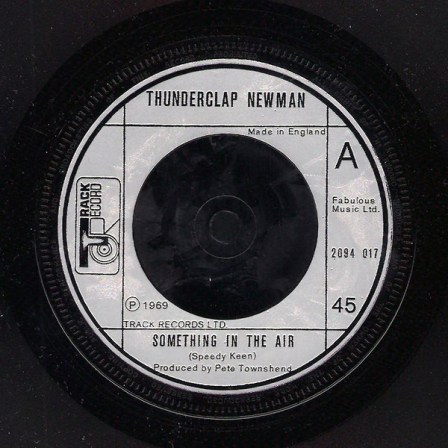
273. ‘Something In the Air’, by Thunderclap Newman

The first number one of the post-Beatles era. One of those songs where you press play and go ah yes… I know this…

500

Something in the Air, by Thunderclap Newman (their 1st and only #1)

3 weeks, from 2nd – 23rd July 1969

It was in an advert for something, I realise, midway through the first listen, and it is prefect background-music-for-an-advert. Light, floaty, chords forever heading upwards… A positive sounding song. The lyrics are forward-facing too – There’s something in the air – a change is a-coming. We have got to get it together, now… They are very sixties-ish lyrics. The revolution’s here… You know it’s right… They sound more like a bunch of slogans strung together than an actual song. A gentle clarion call for young, liberal types. Hippies, but with sensible shoes.

I called it the start of the post-Beatles era, but the Fab Four’s influence is here in this record. In my last post, I mentioned all the times that a Beatle will top the charts solo. I should also have mentioned all the acts that will top the charts by channelling The Beatles’ sound. And here one is – straight away.

Midway through, and I’m starting to get a bit bored. It’s fine, it’s nice, it’s a bit bland. Thank God, then, for the demented piano solo that comes along out of nowhere, all jazzy and jarring. Like someone doing the Charleston on acid. Why? I don’t know. But it saves this record from slipping into slightly dull and forgettable territory.

thecrazyworldofarthurbrownthunderclapnewman-firesomethingintheair

Normal service is resumed for the final verse, as the revolutionary fervour is upped. Hand out the arms and ammo, We’re gonna blast our way through here… It’s a deceptively angry song. I just wish it had a little more oomph to it. (In keeping with the theme of ‘revolution’, the song apparently has a snippet of ‘La Marseillaise’ towards the end, though I can’t hear it.)

And, after a bit of research, I can confirm that ‘Something in the Air’ has been used to advertise British Airways, Austin Minis, Coca-Cola and mobile phones. It’s clearly a song that lends itself well to advertisements – make up your own mind as to whether or not this is a good thing.

Thunderclap Newman, which is a great name for a band to be fair, were the brain-child of The Who’s Pete Townshend, and he actually plays bass on this single, which is as close as a member of The Who is going to get to a #1 single, sadly. Andy ‘Thunderclap’ Newman was the man who pulled out the brilliant piano solo. Their guitarist, Jimmy McCulloch, was only fifteen when they recorded their sole chart-topper, making him a de facto member of the Youngest Chart-Toppers club. He would go on to join Wings. Which means that, in wrapping up the 1st post-Beatles chart-topper, I’ve managed to end with another Beatles reference. There really is no escaping them…

272. ‘The Ballad of John and Yoko’, by The Beatles

Well then. For one last time, for the 17th time in just over six years, for the 67th, 68th and 69th weeks in total… The Beatles top the UK singles chart.

Beatles1969_5_18

The Ballad of John and Yoko, by The Beatles (their 17th and final #1)

3 weeks, from 11th June – 2nd July 1969

Coming so hot on the heels of ‘Get Back’ – only 1 week of Tommy Roe splits them – ‘The Ballad of John and Yoko’ sounds like an off-cut from the same recording session. It’s a bit rough and ready, there are the same squiggly guitars that we heard on ‘Get Back’, the same country-rock feel… Famously it features only John and Paul, no George or Ringo. I know it didn’t happen like this, but I do like to imagine the pair – the most famous song writing partners in British rock history – waiting behind after all the others had gone home for the day, putting their ever-growing differences aside and recording one last smash hit in a semi-lit studio.

As the title suggests, this is the story of John and his new wife Yoko, and the story of their marriage. They tried to get married in Paris, managed to do it in Gibraltar, and honeymooned in Amsterdam, in the face of some stiff opposition. All told over a simple riff, with Lennon’s vocals growing ever angrier as the verses rattle on.

I get about half the references… Drove from Paris to the Amsterdam Hilton, Talkin’ in our beds for a week… = the pair’s ‘Bed-In’ against the Vietnam War. The newspapers said, She’s gone to his head, They look just like two gurus in drag… = Lennon’s feelings of victimisation around his divorce and his new, foreign wife. The way things are goin’, They’re gonna crucify me… A cheeky reference to Lennon’s remarks from a few years earlier, about The Beatles being bigger than Jesus.

Other references are more obscure. The trip to Vienna, eating chocolate cake in a bag is a reference to their ‘bagism’ phase, where they wore bags over their heads in a statement against racial prejudice (everyone looks the same in a bag, right?) The fifty acorns tied in a sack? That took some digging, but is apparently about a pair of acorn trees that John and Yoko planted in the grounds of Coventry Cathedral.

And then there’s the blasphemy. The Christ! that kicks off every chorus – I always enjoyed shouting it out in the car as a kid – with the final one being particularly venomous. Perhaps predictably, this caused a big kerfuffle in the States, with several radio stations at best bleeping the word out or, at worst, refusing to play the record at all. The BBC avoided it, too. 1969 is truly becoming the year in which swearing makes it to the top of the charts, after Peter Sarstedt’s ‘damn’ in ‘Where Do You Go To…’ Meanwhile, in Spain, ‘The Ballad of John and Yoko’ caused controversy not because of the Christ!s but because of the references to Gibraltar being ‘near’ Spain. As far as Franco was concerned, Gibraltar was very much part of Spain, muchas gracias

8c115fcdcc97d80a379331da5a7e557f

Is it slightly disappointing that this song is the final Beatle’s record we get to hear in this countdown? Before writing, I would have said yes; but the more I listen and the more I find out about this record, I’m not so sure. It’s John at his spikiest, it’s Lennon and McCartney reunited, it’s quite funny in places… Sure it doesn’t sound much like The Beatles, but what Beatles #1 since 1966 has? Plus, the riff that closes out ‘The Ballad of John and Yoko’, the final notes of their final number one, is lifted from an old rock ‘n’ roll number, ‘Lonesome Tears in My Eyes’, by Johnny Burnette, which The Beatles, or The Quarrymen, used to play way back in the early days. Which is lovely.

I was going to rank all The Beatles 17 #1s in order of preference, but to be honest I can’t face it. I’d need a spare half-day to decide… Of course, this isn’t their final hit single. ‘Come Together’, ‘Something’, ‘Let It Be’ and ‘The Long and Winding Road’ are all still to come. Abbey Road hasn’t been released yet. But, the limitations of this blog are clear: if it doesn’t get to #1 then it doesn’t get a look-in.

And, of course, John, Paul and George will pop up many, many more times in this countdown as solo stars, as part of new bands, in re-releases and in amongst charity singles, well into the 2000s. There is only one man we need to bid farewell to here, then. Ringo. He will go on to achieve great things without bothering over the trifling business of topping the pop charts; namely narrating ‘Thomas the Tank Engine’, and becoming the most influential voice of my pre-school days… (apologies to my parents.)

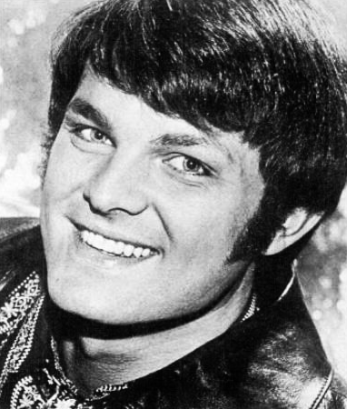
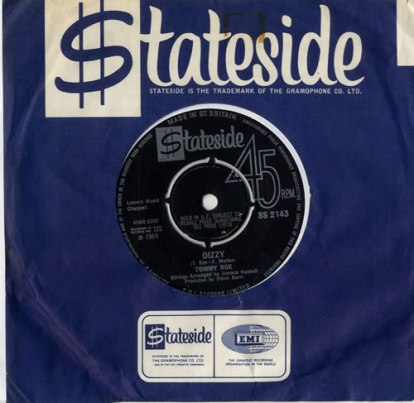
271. ‘Dizzy’, by Tommy Roe

Into the next thirty #1s, with perhaps the most ‘sixties’ sounding chart-topper that we’ve come across yet. It’s pure swinging-sixties montage music, a pop song that you would use in between scenes in an Austin Powers movie. You can see swirling lava-lamp colours, and mini-skirted girls jiving. Yeah baby!

Tommy_Roe

Dizzy, by Tommy Roe (his 1st and only #1)

1 week, from 4th – 11th June 1969

It’s a song that just about manages to stay on the right side of ‘cool’, rather than ‘cheesy.’ And considering that this is a song that uses terms like ‘fellas’ and ‘sweet pet’ in its lyrics, that’s a pretty impressive feat. It’s catchy, that’s for sure, and the drums are real swingin’. The strings too, have a kind of tongue-in-cheek drama to them. Plus, I keep losing count of how many key changes are crammed into its three minute run-time.

The title itself is also very sixties. ‘Dizzy’, because he’s in love, man. You’re makin’ me dizzy, My head is spinnin’, Like a whirlpool it never ends… I’d say it’s a chorus that’s entered the common tongue – though whether that’s down to this original or the comedy version that will take it back to the top of the charts in twenty years’ time I don’t know.

I prefer the pre-chorus, though – one that builds up an irresistible head of steam: Girl you’ve got control of me, Cos I’m so dizzy I can’t see, I need to call a doctor for some help… I like it. A nice palate-cleanser of a disc. A short, sweet blast of late-sixties goodness.

TOMMY_ROE_DIZZY+-+4PR-595290

Tommy Roe’s story is quite interesting. ‘Dizzy’ was a huge comeback for a singer who had failed to have a chart hit of any kind in the UK since 1962-63, when he had had big success with the Buddy Holly influenced ‘Sheila’ – a US #1. Considering the massive changes in popular music that have happened in the past seven years, this was a pretty impressive feat. Not that the comeback lasted very long… One #24 follow-up single and that was that.

Still, it might go some way to explaining the winning combination of bubble-gum and mild psychedelica that makes ‘Dizzy’ such a funky pop tune. One foot in the past, one very much in the present. Tommy Roe continued to record and tour throughout the seventies and eighties, before announcing his retirement officially in 2018, aged seventy-five.

Top 10s – The Kinks

Time for a Top 10! When you think of British beat bands from the 1960s – AKA ‘British Invasion’ bands in the US – you think The Beatles, yup, then The Stones, okay, then…

Who were the 3rd biggest band of the decade? So many beat combos rose and fell during that time – The Searchers, Manfred Mann, The Tremeloes, The Hollies, the list goes on – but I’d stick my neck out and say that in the bronze medal position stand The Kinks. (There is also, of course, The Who, but they never made #1 in the UK, and so I have to pretend they never existed.)

the-kinks-1965-portrait-u-billboard-1548

And because of publishing rights preventing huge sixties acts like Elvis, The Beatles and The Stones from appearing on the ’60s compilations that my parents owned, The Kinks were probably the first band I truly remember being aware of, and thinking this sounds good… (Well, them and The Spice Girls…)

Led by brothers Ray and Dave Davies, The Kinks gave us some of the best pop singles, not just of the decade but, let’s be honest, of all time. And they changed and experimented like the two bigger bands of the time, in their own, unique, Kinks-y way. Here’s my Top 10. (As before, to qualify for my list a song has to have been a chart hit in the UK – no album tracks or B-sides allowed…)

10. ‘See My Friends’, 1965, reached # 10

One of their smaller, early hits, in which their trademark crunchy guitar is twinned with a droney, sitar-sounding vibe. Released a few months after ‘Ticket to Ride’, and before ‘Norwegian Wood’, it puts The Kinks right at the forefront of pop’s sonic expansion. Not a sound they would keep up for long, but proof that they were a very versatile band.

9. ‘Come Dancing’, 1982, reached #12

The Kinks released music throughout the seventies and eighties and I really tried to include more of their later singles in this list… but, to be honest, most of them just aren’t as good as their big sixties hits. With some exceptions… This slice of nostalgia, for example, – a tale of the Davies’s sister going out dancing to the ‘Pally on a Saturday night. Years later I realised that, even though he sings about his sister in the present tense – If I asked her, I wonder if she would… Come dancing… – she had in fact died when they were young boys. Which gives this swansong hit an even more bittersweet edge.

8. ‘You Really Got Me’, 1964, reached #1

A sledgehammer riff, that many have claimed invented heavy metal, punk rock and more. The band’s 3rd single and first hit, it still sounds raw and wild in 2020, and must have sounded even more wonderful at the time. Read my original post here.

7. ‘Autumn Almanac’, 1967, reached #3

One that I used to dislike, but have really grown to love in recent years… I like my football, On a Saturday, Roast beef on Sundays, All right… While many bands went psychedelic in 1967, the Kinks were singing about toasted currant buns and going to Blackpool for their holidays… And the fuzzy guitar before the chorus? Great stuff.

6. ‘Dead End Street’, 1966, reached #5

But The Kinks could also be very cynical in their takes on British society, discs like ‘Dead End Street’ the yin to ‘Autumn Almanac’s yang. There’s a crack up in the ceiling, And the kitchen sink is leaking… while the music hall pianos play. Apparently it was banned by the BBC for being too biting! You can hear the debt bands like Blur would owe to The Kinks thirty years later, too…

5. ‘Lola’, 1970, reached #2

One of their last big hits. A man falls for a ‘lady’ who walks like a woman but talks like man… It attracted some controversy at the time, and still does today. But any song with a line like Girls will be boys, And boys will be girls, It’s a mixed up muddled up shook up world, Except for Lola… is all right by me. Live your life, love who you love… Fun fact: I once performed this song live to a school-hall full of bemused looking Thai children.

4. ‘Dedicated Follower of Fashion’, 1966, reached #4

The first Kinks’ song I loved, and it’s probably higher in the list than it should be if I weren’t being so subjective. A simply skiffle riff and Ray’s arched-eyebrow, high-camp delivery. More social commentary, aimed light-heartedly at the dapper men about town in the swinging sixties. Their clothes were loud, but never square…

3. ‘All Day and All Of the Night’, 1964, reached #2

The Kinks’ second big hit single, and very much an ‘if it ain’t broke’ approach to songwriting. It sounds like ‘You Really Got Me’ Pt II, and turns the crunchy, proto-punk power chords up a notch, which is why I’m placing it higher. As a kid I loved the Oh, come on! and what sounds like someone being strangled before the frenetic solo. Imagine how thrilling / terrifying this must have sounded if you were first hearing it in October ’64.

2. ‘Sunny Afternoon’, 1966, reached #1

A song that perhaps doesn’t get the recognition it deserves in the Sixties Hall of Fame, maybe because it’s got a pantomime-y edge. Another social commentary, this time in the character of an aristocrat being squeezed by the taxman and a ‘big fat mama’, which is no way to talk about your ex-wife, really. Perfect pop. (And singing it in the snow above seems a very Kinksy thing to do.) Read my original post on this chart-topper here.

1. ‘Waterloo Sunset’, 1967, reached #2

Could it be any other? ‘Waterloo Sunset’ has a Liverpool-like lead at the top of this table. It’s atmospheric, it’s beautiful, it’s haunting. A hymn to those that observe. And somehow it manages to sound like a sunset. When I first visited London, aged eight or so, I remember looking out of my window, hoping to see a Waterloo Sunset, hoping to see Terry and Judy. Sounds ridiculous, but it shows how long this song has been part of my life. At the time, it was kept off the top-spot by the bland ‘Silence Is Golden’. An absolute crime!

I’ll do another Top 10 soon enough. Up next, the 271st UK #1 single…