179. ‘Oh, Pretty Woman’ by Roy Orbison

In comes an intro that isn’t messing around… Sturdy, confident drums… Then Dun-dun-dun-dun-dun… An intro that builds – a layer added with every repetition – until it morphs into a chain-link of a riff.

0002611_oh-pretty-woman-roy-orbison-bill-dees-recorded-by-roy-orbison_550

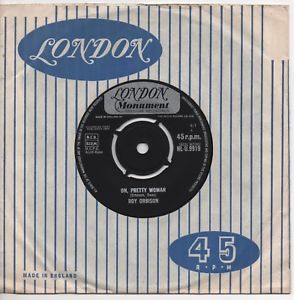
Oh, Pretty Woman, by Roy Orbison (his 3rd and final #1)

2 weeks, from 8th – 22nd October / 1 week, from 12th – 19th November 1964 (3 weeks total)

And then in comes that voice. The Big O. Reigning it in a little compared to his last, full on operetta of a #1 single, ‘It’s Over’Pretty woman, Walkin’ down the street, Pretty woman, The kind I’d like to meet…  Now, let’s pause for just a second. That ‘I’d’ right there, twenty seconds in, makes or breaks this song. ‘I’d like to meet…’ suggests that he’s been a little unlucky in love. Make it ‘I like to meet…’ as some sources do claim, and the singer suddenly becomes a player, a predator, and the song a little icky. I’m going to trust that it’s an ‘I’d’…

Anyway. Roy’s just hanging out, chilling, watching the girls go by. Pretty woman… I don’t believe you, You’re not the truth, No-one could look as good as you… And then a spoken Mercy! that is truly sublime. Pretty woman, Won’t you pardon me, Pretty woman, I couldn’t help but see… That you look lovely as can be, Are you lonely, Just like me…? He may be ogling and approaching passers-by, but he’s a perfect gentleman about it. Plus, he’s lonely. There’s a tenderness to this song that lifts it above other stalker-anthems like ‘I’m Walking Behind You’ and ‘Every Breath You Take.’

Then, though, Roy does something that even he probably can’t get away with. The grrrrrooooowwwwllllll. Let’s pretend the growl never happens, OK? We get to the bridge – a real fifties rock ‘n’ roll throwback – that seals this record’s place among the greats. Pretty woman, Stop a while, Pretty woman, Talk a while… while the drums roll, and a piano tinkles.

As with ‘It’s Over’, ‘Oh, Pretty Woman’ stands out against the musical landscape of 1964. It could have been a hit five years earlier, or ten years later. I’m not sure you could say the same of ‘Do Wah Diddy Diddy’. The Roy Orbison renaissance (the Roynaissance, if I may) of ’64 is probably the most pleasant surprise in a spectacular year of pop music. Though to be honest, he hadn’t been anywhere, and had been scoring big hits throughout the early sixties. It’s just that none of them had made it to the top of the charts.
s-l300 (3)

We get to the climax of the song, and an already brilliant song is elevated even further. The rules of pop music never applied to Roy Orbison, and he bends them to great effect here. He serves us a cliff-hanger, similar to the one he dishes up at the end of ‘Running Scared’. The woman doesn’t stop, and he’s left disappointed. He slows it down, in his trademark talking-singing-freestyling style: Don’t walk away, Hey…. OK… If that’s the way it must be, OK… Then another moment of perfection – But, wait… Cut to the same drumbeat that opened the song. What’s that I see…? She’s turned around. She’s coming back! Of course she’s coming back. Was there a woman alive who could resist the Orbison charm?

I, as I’m sure you’ve realised, love this record. It’s a Rolling Stone Top 500, Rock n Roll Hall of Fame kind of record. A song that nobody can say a bad word about. I love Roy Orbison too, and still remember getting his greatest hits as a Christmas present back as a kid. Perhaps with the exception of Elvis, no other star of the fifties and sixties had an identifiable image like Roy Orbison. Dark suit, dark glasses, guitar, quiff. It’s up there with Michael Jackson’s hat and glove, and Madonna’s pointy bra. You may think it’s superficial; but it’s a hallmark of the very best pop stars.

Following this, Orbison suffered some pretty lean years in terms of chart hits, and some unimaginable tragedies: he lost his wife and his two eldest sons in the space of two years. But, as with all the greats he came back – The Travelling Wilburys, ‘You Got It’ and all that. And then, just as his comeback was picking up speed, and in a twist befitting one of his greatest ballads, he had a heart-attack and died, in 1988, aged just fifty-two. He’s a legend – plain and simple. The songs that defied convention, the operatic voice, and the dark glasses. The Big O.

158. ‘Do You Love Me’, by Brian Poole & The Tremeloes

Our next chart-topper is, perhaps, a bit of a come-down after we scaled such euphoric heights with ‘She Loves You’. I suppose that is a hard act to follow. But The Tremeloes’ debut at the top isn’t without its merits.

Brian-667382

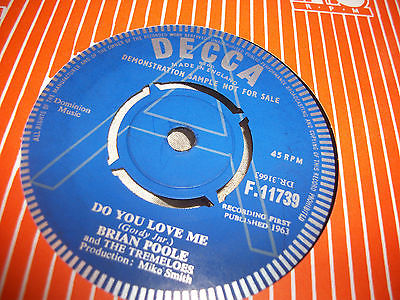
Do You Love Me, by Brian Poole (his 1st and only #1) & The Tremeloes (their 1st of two #1s)

3 weeks, from 10th – 31st October 1963

For the second chart-topper in three we get an intro that builds… You broke my heart, ‘Cos I couldn’t dance, You didn’t even want me around… in a way that strongly signals that this is a song about to explode (imagine a huge sign saying ‘Up-tempo Pop Song Ahead – 10 seconds’)… But now I’m back, To let you know, That I can really shake ‘em down… It might, off the top of my head, be the very first ever spoken intro we’ve heard on this countdown.

Anyway, the singer clearly went off and had some dancing lessons, or at least a shot or two of tequila, and he’s returned to let his girl know that he can, indeed, cut some shapes. The rest of the song’s lyrics are pretty nonsensical – standard dance music catchphrases from the fifties and sixties: do the mashed potato, you can do the twist, shake it up, shake it down, a little bit of soul now, do you like it like this… And of course, the big question, over and over: Do you love me? Do you love me? Do you love me? Now that I can dance….? (Watch me now!)

I used to work in the bar of a bowling alley (as you do), and every Saturday night we’d have a live DJ (hi, DJ Brian) and this was, without fail, one of the last songs he’d play every week. Because there is no better song for yelling along to at the top of your voice, when it’s just past midnight and you’re drunk in a bowling alley, than ‘Do You Love Me’. Take the ‘Now that I can dance’ line, and the layered, ascending ‘Daaaaannnnn Daaaannnnnn Dannnnnnccceeee!’ I will find it impossible to dislike any song that employs this device. They could shove it in the middle of ‘God Save the Queen’ (the national anthem that is; not the Sex Pistols one) and it would work.

201417730734

This was, as perhaps you know, originally a Motown record, released one year before by The Contours. It had been a US #1, but hadn’t charted in the UK. I’ve put a link in for comparing and contrasting purposes. For what it’s worth – as with ‘Sweets for my Sweet’ a few posts ago – I like the Motown original a shade better as a song (the tempo is slightly slower, and I think it’s a song that works more effectively with a vocal group rather than with an instrument-playing band). But… The Tremeloes’ version does have an irresistible madcap energy to it – the last chorus, where all the band members yelp and yell over and under one another, is possibly the rawest five seconds of any chart-topper thus far.

The Tremeloes, and Brian Poole, were the first Beat chart-toppers not to come from the North-West of England (they were from Dagenham, just outside London). This was their second hit, and they would go on to score hits – with or without their lead singer Brian Poole – throughout the sixties. We’ll be meeting them one more time, with a record that’s the polar opposite of this. Though, I do have to say, ‘Do You Love Me’ is a record that wins you over by the end. It would have won me over quicker, I suspect, if I’d had a few before writing this post. ‘Do You Love Me’, if you’ll allow me a moment of metaphor, is like a sloppy, untrainable puppy that’s just made a mess of a houseplant. You want to hate it, and maybe get rid of it, but one look at its loveable eyes and everything’s forgiven.

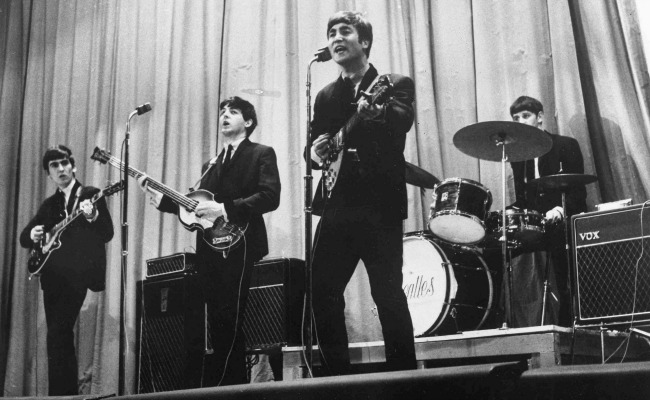
157. ‘She Loves You’, by The Beatles

The record with which The Beatles went stratospheric. Woooosh. That’s them. Off they go. This next song takes everything that was good about their debut chart-topper ‘From Me to You’, everything good about this burgeoning Merseybeat movement, puts it in a rocket, sets engines to warp, and…

beatles1963_650

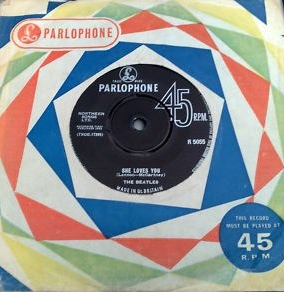
She Loves You, by The Beatles (their 2nd of seventeen #1s)

4 weeks, from 12th September – 10th October / 2 weeks, from 28th November – 12th December 1963 (6 weeks total)

Take the opening drum roll for a start. It takes up less than a second of the song – it is literally a drum roll – but it sets the frantic pace that grips this record and propels it right the way through. And then in thumps the chorus. You’ve heard it, you’ve heard it again, you’ve heard it in German – but it bears repeating: She loves you, Yeah yeah yeah, She loves you, Yeah yeah yeah, She loves you, Yeah, yeah, yeah, yeah… That is it. That is all there is to it. But there’s a manic energy in those ‘Yeahs’ that even today gives you goose-bumps.

Lyrically this is step up from songs like ‘Sweets For My Sweet’ and ‘I Like It’ – a little more complex. It’s about a man convincing his friend that his sweetheart still loves him: She said she loves you! And you know that can’t be bad… She said she loves you! And you know you should be glad… While the second verse shows that the friend has actually been a bit of a dick: She said you hurt her so, She almost lost her mind… And the final verse is a bit of a lecture: You know it’s up to you, I think it’s only fair, Pride can hurt you too, Apologise to her… What all this means, most importantly, is that it’s not a traditional ‘Love Song’. This is a ‘Rock Song’, with all the yelling and thrashing that that entails. There’s a strong hint of The Everly Brothers in the way that the ‘Bads…’ and ‘Glads…’ at the end of the lines in the bridge split into a high note and a low note. And then those ‘Ooohs’. Oh those ‘ooohs’.

One thing I’ve noticed about ‘She Loves You’ after repeated listens (I’m up to six as I write this paragraph, and I’m far from sick of it yet) is how melancholy the chord structures are, especially in the verses. It’s something The Beatles were excellent at early in their careers, combining the majors and the minors, from ‘P.S I Love You’, through ‘All My Loving’ to the pinnacle of sad-pop, ‘Help!’ If you stripped away the frantic drums, and the ‘Yeah Yeah Yeahs’, and the ‘Ooooohs’ from ‘She Loves You’ – you’d have a sad old song on your hands.

beatles-she-loves-uk-1st-small-font_360_01f0ec61cab2e77d016a4df3fa275ae8

But that’s a big ‘If’. The unhinged energy of this song, the madcap beat and tempo, are a huge part of its charm. It’s unsubtle, it’s cheesy, it’s glorious. It’s Sledgehammer Pop! Actually no, we don’t need another sub-category. I am, though, going to add ‘She Loves You’ to my oh-so-select list of ‘Time Capsule Pop’ records – the discs that need buried in the ground for all eternity so that the aliens can see what all the fuss was about, can see exactly why humans went crazy for this thing called ‘popular music.’ I invented the category for The Everly’s ‘Cathy’s Clown’, and then retrospectively added Johnnie Ray’s ‘Such a Night’, The Crickets ‘That’ll Be the Day’ and Jerry Lee’s ‘Great Balls of Fire.’ ‘She Loves You’, then, becomes the fifth disc in the pod. And I’d say that, while they will better this disc with some of their later chart-toppers (fifteen still to come, folks!), they will never sound more like The Beatles than they do here. This is the Beatlest Beatles #1 single.

Some facts and figures, before I go. ‘She Loves You’ is the band’s biggest seller in the UK. It is the 9th biggest selling hit ever. It was also #1 in the US, where it was part of the famous all-Beatles Top 5 on the Billboard 100 in early 1964. This was ‘Beatlemania’ – bigger than Sinatra in the forties and Elvis in the fifties. This was HUGE. Back in the UK, ‘She Loves You’ dipped down from the top-spot for an amazing seven weeks before returning to the top in late-November. Even today, no record has had a longer gap between stays at number one, without being re-released. It knocked ‘Bad to Me’ – another Beatles composition – off the top and was then itself finally knocked off the summit by ‘I Want to Hold Your Hand’. The charts of autumn ’63 were well and truly owned by The Fab Four. We are in the presence of greatness, here.

I have one personal story to tell involving ‘She Loves You’. Back fifteen years or so ago, I went to see McFly in concert (another of the best bands ever, fight me!) and midway through they announced that they were going to play a song that they’d just written backstage that very night. The twelve-year-old girls screamed. They then launched into a cover of ‘She Loves You’. The twelve-year-old girls still screamed. To this day I still wonder how many of them didn’t work it out…

Follow, and listen to every #1 so far, with this Spotify playlist:

154. ‘(You’re the) Devil in Disguise’, by Elvis Presley

Oh hey, Elvis. You still here? You want one more go at the top, before your glory days are well and truly over? Go on then…

maxresdefault

(You’re the) Devil in Disguise, by Elvis Presley (his 14th of twenty-one #1s)

1 week, from 1st – 8th August 1963

I know this song, I love this song, I’ve been playing air guitar to it since I was a nipper. I know it’s a rocker, and I can’t wait to write a blog post about it. But, to hear it coming after Elvis has bored us into submission with his recent #1s: (‘Good Luck Charm’), (‘She’s Not You’), or scared us off completely: (‘Rock-A-Hula Baby). Well, it’s like a real shot of adrenalin.

It starts off sedately: You look like an angel, Walk like an angel, Talk like an angel… But I got wise… I love the filthy, twangy guitar that sounds like a motorbike revving. And then boom! You’re the devil in disguise, Oh yes you are, Devil in disguise…

It’s a song about a girl that just can’t be trusted… You fooled me with your kisses, You cheated and you schemed, Heaven knows how you lied to me, You’re not the way you seemed…

His band are tight, and Elvis really lets loose. It’s good, nay great, to hear him really go for it after his half-arsed recent efforts. I think the fact that this disc wasn’t from a bloated film soundtrack helped here. And, if this is the end of Elvis as a chart-humping global icon (he will only have 2 (two!) further UK #1s in his lifetime!) then what a way to go!

But, the piece de resistance in this record has nothing to do with Elvis himself. Step forward Grady Martin with his swooping, twanging solo, possibly the rocking-est solo to appear at the top of the charts thus far. Back when I was a lad, and harboured (very) short-lived dreams about playing the guitar, this was the first solo that I wanted to learn. Now I know that there are better, more accomplished guitar solos out there but still… There’s something about the rawness and looseness of this one, especially coming from way back in 1963.

Then it’s a pause – You’re the devil in disguise – Ba dum dum dum – and in comes the low-voiced man, Ray Walker, who Elvis saves only for his very best songs, to echo his Oh yes you are… And there we have it. The King’s 10th chart-topper in just over two and a half years. Off the top of my head, I wouldn’t have guessed that Elvis and The Beatles crossed paths at the top of the charts, but they did. Here. Just the once. (Actually twice, but that’s a story for another day…) I like to think he had heard those young upstarts, and that’s what’s pushed him to really give it his all on this disc. It’s not perfect – it’s a bit Vegasy and Elvis’s voice is still in crooner-mode – but I love it. And, at the end of the day, that’s all that matters…

71O9RISCggL._SX355_

Just because – he is Elvis F’ing Presley after – let’s go all Buzzfeed and rank his post-army #1s. In ascending order then, with double ‘A’-sides split apart:

‘Wooden Heart’ (ugh) >>>>>>> ‘Rock-A-Hula Baby’ (woah) >>>>>>> ‘Good Luck Charm’ (meh) >>>>>>> ‘It’s Now or Never’ (controversially low?) >>>>>>> ‘She’s Not You’ (so-so) >>>>>>> ‘Surrender’ (silly but decent) >>>>>>> ‘Return to Sender’ (soft-spot) >>>>>>> ‘(You’re the) Devil in Disguise’ (yep) >>>>>>> ‘Little Sister’ >>>>>>> ‘Can’t Help Falling in Love’ >>>>>>> ‘His Latest Flame’ >>>>>>> ‘Are You Lonesome Tonight?’

There you have it. Let me know in the comments if you agree or think I’ve lost my faculties. For The King, this is over-and-out for a while. Elvis has not quite left the building, but he’s gone for a long walk. It’ll probably do him some good…

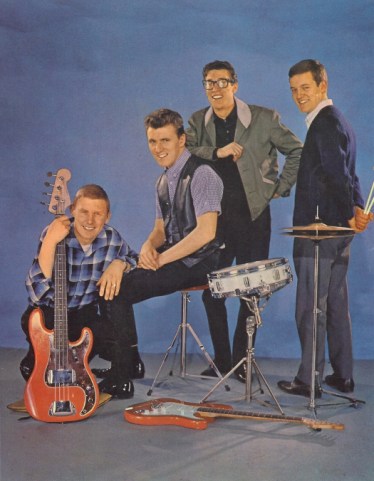
149. ‘Foot Tapper’, by The Shadows

Once again, The Shadows replace themselves at #1, and all I have to say is ‘Thank God!’ Thank God that ‘Summer Holiday’ wasn’t their final UK chart topper. For the group that contributed more to British rock ‘n’ roll than any other act to bow out from the top spot with a record as sickeningly twee and limp as that would have been a travesty.

shadows_014

Foot Tapper, by The Shadows (their 12th and final #1)

1 week, from 28th March – 4th April 1963

Thank God for ‘Foot Tapper’, then, as it ensures that Hank, Bruce and the other two score their final number one with, in my opinion, the best of the lot. OK, ok, ‘Foot Tapper’ might not be as sweeping as ‘Apache’, as epic as ‘Wonderful Land’ and it might not rock as hard as ‘Kon-Tiki’; but it is an insanely catchy little number.

What does it consist of? A light and limber riff? Check. Natty little drum fills? Check. A bouncy bassline? Check. A super-appropriate title? Check. (Go on – press play on the link below and watch your feet start tappin’.) Unlike their previous #1, ‘Dance On’, this one really does get you moving. This record just has a joie de vivre about it, a certain je ne sais quoi… It’s a song of such special potency that it’s got me speaking French.

It’s a very fitting way to round off three months of unparalleled Shadows dominance in the UK Singles charts. We’ve had The Shadows with Cliff twice (‘The Next Time’ and ‘Summer Holiday’), we’ve had solo-Shadows (‘Dance On!’ and now this) and we’ve had ex-Shadows (‘Diamonds’ from Jet Harris and Tony Meehan). They’ve replaced themselves at the top twice this year already, and now sit right behind Elvis Presley himself as the act with the most #1s in chart history. (Skip forward forty-six years, and The Shadows still remain joint-fifth in the all-time #1s list – level with Take That, and behind only Elvis, The Beatles, Cliff, Westlife and Madonna.)

And while we’re on the theme of Dominance, it is worth noting that ‘Foot Tapper’ is the 3rd chart-topper to be taken from the soundtrack to ‘Summer Holiday’. I’m not sure that there has ever been a more successful soundtrack than that. And… these Cliff ‘n’ Shadows number ones over the past few months have all been produced by the same man: Norrie Paramor. The same Paramor that also produced the only non-Shadows chart-topper of 1963 so far, Frank Ifield’s ‘The Wayward Wind’. So it could be argued that it is he that truly has the charts in a chirpy, string-drenched stranglehold.

shadows-the-foot-tapper-the-breeze-and-i-db-4984-3572-p

Back to the record in question, though, and I am not alone in holding ‘Foot Tapper’ in high-regard. The tune was, of course, the theme to ‘Sounds of the Sixties’ on Radio 2 – a show that I’ve mentioned before and will happily mention again whenever the opportunity arises. This meant that, no matter what tunes had been played in the preceding two hours – Procol Harum, Velvet Underground, experimental Scott Walker ‘B’-sides… – the last tune you always heard was this. Da-da-da-doo-doo, Doo-doo-dun-dun-da-da…

And so. We arrive at the end of an era. And I don’t just mean in the sense that we’ll never hear from The Shadows again. I mean that this is officially the end of the ‘rock ‘n’ roll age’, which we’ve been wading through ever since Bill Haley shouted ‘One, two, three o’clock…’ back in November 1955. Because of this I’m going to break my own rules slightly and do the next recap one song early (Gasp!) The first number one single after said recap will then be the starting pistol for perhaps the biggest, most influential movement in British popular music history! I’m excited! Are you…?

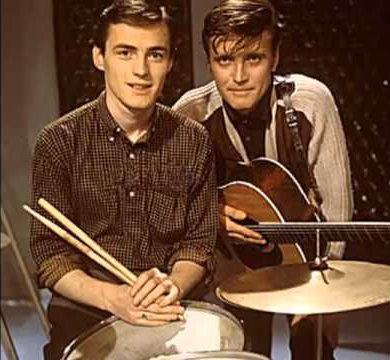
146. ‘Diamonds’, by Jet Harris & Tony Meehan

Here’s a record I’d never heard before; and a rockin’ little record it is too. A hidden ‘gem’ (gettit?) of a record. Not to rag on the previous #1, ‘Dance On!’, too much, but this is how you do instrumental rock ‘n’ roll!

hqdefault

Diamonds, by Jet Harris & Tony Meehan (their 1st and only #1s)

3 weeks, from 31st January – 21st February 1963

We start with a cool drum intro, and then a riff straight from the spaghetti-est of spaghetti westerns. Imagine the villain of the piece striding over a sun-baked hill, heat-haze rising around him. He stops and fixes the camera with a thousand-yard stare, spitting his tobacco over the dusty ground…

Then we get horns – Ba! Babababa-Ba! – and it feels as if the sixties, the ‘Swinging Sixties’ ™ are born. It goes from menacing to groovy in 0.5 seconds. First ‘Lovesick Blues’, and now this, have had what I would call a quintessentially ‘sixties’ sound – the sound that will define the next three or four years. And it’s great, the call and response from the brass section, but it’s not the best thing about this record. Because next we get…

A. Drum. Solo. In a number one hit single. I kid you not. What I thought the reserve of eighties hair metal bands and Phil Collins were around as early as 1963! I wish I could somehow describe it; but how on earth can you describe a drum solo? It lasts a good twenty seconds – one-tenth of the whole record! – and is great. That’s my official line on it. ‘Great.’

This whole song sounds familiar. But not. Like The Shadows… But not. It almost sounds as if it’s been recorded by The Shadows alter-egos, as if Hank, Bruce and the boys were moonlighting as darker, less clean-cut, slightly more evil versions of themselves…

Which may be a fitting description, as the two men playing on this record – Jet Harris and Tony Meehan – were (dun dun dun!) ex-Shadows. Harris, who we’ve heard playing bass on all but one Shadows chart-topper, had left the group in 1962 because of his drinking habits. Meehan, he of drum solo fame, had left a few months before that to go into producing. Thus, in the space of a few weeks we’ve had The Shadows supporting Cliff at #1 with ‘The Next Time / Bachelor Boy’, then going it alone with ‘Dance On!’, and now two former band members taking their turn at the top. Utter Shadows domination of the UK charts!

JET_HARRIS_&_TONY_MEEHAN_DIAMONDS-269873

I’m not sure if Harris and Meehan were on good terms with the other band members after their departures, but I do like the image of the pair celebrating their revenge in knocking their former band off the top of the charts. Interestingly (perhaps…) is the fact that Meehan left in October 1961, when ‘Kon-Tiki’ was at #1, and Harris left in April ’62, when ‘Wonderful Land’ was in the middle of its run at the top. Going out on a high, I suppose. The pair never re-joined The Shadows; but did occasionally collaborate during the eighties and nineties. Meehan died in 2005, Harris in 2011.

If we were to make this into a contest – Shadows Vs Ex-Shadows – then the latter win, hands down. ‘Diamonds’ is a clearly superior record to ‘Dance On!’. But… Harris and Meehan’s solo careers were short lived; almost at a one-hit-wonder level. While The Shadows are one of the most successful British groups of all time. ‘Diamonds’, though, stays with you: that riff and those horns running through your head long after the record has stopped.

Two interesting tit-bits before I finish. In 1962, Tony Meehan had the chance to sign The Beatles for Decca Records. He turned them down… And, the rhythm guitar on ‘Diamonds’ was played by one Jimmy Page, in one of his first session musician, pre-Yardbirds and Led Zeppelin gigs. Which is as close as one of the most famous guitarists in the history of rock ‘n’ roll will ever get to a #1 single!

145. ‘Dance On!’, by The Shadows

I might have suggested in my last post that Cliff and The Shadows utterly dominating the early months of 1963 would be a bad thing. I feel I spoke in haste; and would like to take it back. Especially when I see that The Shadows only have a handful of #1s left to come. We’ll be missing them soon enough.

82041_20070212160346_the-shadows-19632

Dance On!, by The Shadows (their 10th of twelve #1s)

1 week, from 24th – 31st January 1963

Besides – this is a significant moment in British chart history. Fresh from accompanying Cliff on ‘The Next Time’ and ‘Bachelor Boy’, The Shadows now grab a week at the summit for themselves. Not content with being the first act to replace themselves at #1 – back when ‘Apache’ took over from ‘Please Don’t Tease’ – they’ve only gone and done it again!

And unlike their most recent releases, there’s neither a piano nor any strings in sight. It’s just the guitars, the bass and the drums – four boys having a tight little boogie. It’s unmistakably a Shadows record – you’d know as much when Hank Marvin’s lead guitar comes in on ten seconds. I like the bass here, and the way the main riff is drenched in echo. Plus the false endings, where the guitar crunches back to life like a motorbike revving, are cool.

These things aside, though, it is a bit of a throwaway disc. Nice enough, but you’ve pretty much forgotten how it went five seconds after it ends. It’s The Shadows at their most Russ Conway-ish: a decent melody in search of a purpose. Even the name of the record – ‘Dance On!’ – is pretty basic compared to the ‘Boy’s Own’ adventures conjured up by their earlier #1s: ‘Apache’ and ‘Kon-Tiki’They sounded as if they wanted to tell a story; this just wants you to shake your hips.

THE-SHADOWS-DANCE-ON-Very-rare

Which, I suppose, is a fundamental aspect of pop music. That’s what it all boils down to at the end of the day: shaking your hips. And you never get the feeling that this record is trying to be anything more than something you can dance (on!) to. Which makes it kind of hard to write about…

There you have it, then. The Shadows follow Elvis in hitting a double-figured amount of chart-topping discs. Hurrah! And, if you thought them replacing themselves at the top for the second time was an impressive act of chart dominance, you’ll never believe who is about to cut short the reign of ‘Dance On!’ at the top …

137. ‘Come Outside’, by Mike Sarne with Wendy Richard

The charts of spring/summer 1962 have proven to be a little schizophrenic… We’ve veered from the safe ‘Wonderful Land’ to the zany ‘Nut Rocker’ to the bland ‘Good Luck Charm’, and now to this. How to describe this latest #1? This… This is a ‘Carry On…’ film distilled into a two and a half minute pop song.

wr_g1

Come Outside, by Mike Sarne with Wendy Richard (their 1st and only #1s)

2 weeks, from 28th June – 12th July 1962

Mike Sarne is at a dance with his girl. She wants to keep dancing; he wants to get her outside for a spot of you-know-what. Little doll, We’ve been jivin’ all night long, Little doll, got a feelin’ something’s wrong, Cause it ain’t right to wanna keep on dancin’, There won’t be any time left, For romancin’… The chords are copy-paste rock ‘n’ roll, the backing singers straight out of a Neil Sedaka number.

It’s a novelty record; but it’s a very listenable novelty record. That’s one thing worthy of noting: so far all the ‘silly’ chart-toppers have still had a high level of musicianship and song-writing go into them. From ‘That Doggie in the Window’, to ‘Hoots Mon!’ to the aforementioned ‘Nut Rocker’ – they may have been at various points irritating, cloying and/or twee, but they were all still produced with the same level of skill and attention as a ‘straight’ hit single. Whereas, growing up as a child of the nineties, ‘novelty’ songs meant cheap and nasty tracks like ‘Mr Blobby’, ‘Bob the Builder’ and the ‘Crazy Frog’.

So, I wonder when we’ll have our first truly bad novelty chart-topper. ‘Come Outside’ certainly isn’t it. This is a loving pastiche of all that’s great about rock ‘n’ roll music, with a very British twist. You can tell that Sarne isn’t a natural born singer, yet he tries his best, plays it straight, and I love his sub-cockney accent. Richard, his co-star, doesn’t sing any lines herself – she’s there to voice her objections to his advances. ‘Vocal interjections’ are, I believe, the technical term… Sarne: Come outside… Richard: What for? S: Come outside… R: What’s the rush? S: There’s a lovely moon out there… R: It’s cold outside…

dedae2d4922d292e46309c108364555b

This is a linguistic time-capsule of a record. When Richard shouts ‘Belt up!’ and ‘Give over!’, it suddenly sounds very old-fashioned, and I’m pretty sure that nobody has referred to ‘slap and tickle’ for at least thirty years. Plus, the reason that Sarne is so desperate to get his bird outside is because he’s promised her old man to have her home ‘bout  half past ten, which is peak-1962. By the final chorus Sarne has gotten very insistent – perhaps a little too insistent to these post-#metoo ears – causing Richard to shout ‘Lay off!’ and ‘Stop shoving!’. But, to be fair, she sounds like she could take care of herself, and come the end she’s given in very easily: Come outside… You are a one… Come outside… Oh all right… Come outside… Not for too long… The fade-out, in which the couple make their way out of the dancehall, bickering about how he needs a shave, is the high point of the whole disc.

Mike Sarne had a handful of minor hits in the UK, none of which came close to matching this debut. He went into acting, presenting and directing. Wendy Richard went on to become one of the most recognisable actresses on British television, starring in ‘Are You Being Served?’ (a show every bit as silly and camp as this song) and, of course, in ‘EastEnders’ for twenty-odd years. She died in 2009.

While I do like this record on its own merits; it also reminds me of lazy, hazy Saturday mornings a decade or so ago listening to ‘Sounds of the Sixties’ on Radio 2. My radio alarm would wake me to the voice of the late, great Brian Matthew – a voice, rich and syrupy, that I would happily have paid to hear read the phone-book. It was on one such morning that I heard ‘Come Outside’ for the first time, and it’s had a spot on my playlists ever since.

135. ‘Nut Rocker’, by B. Bumble & The Stingers

Now this is how you make an instrumental rock ‘n’ roll record! At the risk of sounding like a complete pleb, this latest chart-topper is ten-times better than its highly-regarded (but pretty dull) predecessor, The Shadows’ ‘Wonderful Land’.

bbumblestingers00

Nut Rocker, by B. Bumble & The Stingers (their 1st and only #1)

1 week, from 17th – 24th May 1962

Imagine a Buzzfeed listicle entitled ‘23 Things You Never Knew You Needed in Your Life, But Totally Do’. Top-spot on that list would surely go to “the march from The Nutcracker done in a rollicking, boogie-woogie-slash-rock ‘n’ roll style”. And as it so happens – that is exactly what ‘Nut Rocker’, by B. Bumble & The Stingers, is!

This is a bizarre, wacky, completely unexpected record. Coming as it does after pretty sedate efforts from Cliff, The Shadows and Elvis, it sounds like a drunken uncle bundling his way onto the dance-floor at a wedding. And I mean that as a good thing. This is a superb record. I might even go as far as saying that it’s life-affirming. This is why humans were put on the planet – to make songs such as this. This needs to swap places with ‘Wonderful Land’ as the record that spent eight weeks atop the charts.

I don’t actually have much to write about the song itself – I tried to take notes, but ended up just smiling and tapping my feet. Plus, it races to an end in under two minutes. But those two minutes include the following: a stupidly dramatic intro, piano riffs, superb drum fills, and a natty little guitar solo. It is undeniably the march from ‘The Nutcracker’, but it’s so much more than just the march from ‘The Nutcracker’. Listen to that here, then listen to ‘Nut Rocker’ through the link below. It’s pretty special, actually, how they’ve stayed true to the original piece of classical music but added everything you need for a rock ‘n’ roll song. It is a novelty, it is silly; but I wouldn’t call it a piss-take. It’s clearly done with love.

B._BUMBLE_&_THE_STINGERS_NUT+ROCKER-570931

For perhaps the first time in this countdown, I can remember exactly where I was when I first heard this song. I was in the passenger seat of my mum’s car, aged fourteen or so, on a Saturday afternoon in May. We were listening to ‘Pick of the Pops’, a radio show that replays the charts from any given year. That week it was the chart from 1962, and we had been guessing who might have been at the top of the charts – Cliff? Elvis? Roy Orbison? It was a bit too early for The Beatles… When B. Bumble & The Stingers were announced as the #1 we… well, we burst out laughing. In a good way. It’s that kind of record.

The Stingers were very much a flash-in-the-pan kind of act. They had had success with a version of ‘Flight of the Bumblebee’ before ‘Nut Rocker’, and they followed their sole chart-topper up with a version of the William Tell Overture ,‘Apple Knocker’, and ‘Dawn Cracker’ – based on Greig’s ‘Morning Mood’ (they had clearly found their niche). All were done in the same boogie-woogie style, but having had a listen I can confirm that none come close to the genius of this track. ‘Nut Rocker’ really was a case of capturing lightning.

Just in case you somehow remain unconvinced about how good, yet slightly mental, this record is, here are a couple of things to chew on before we finish. One – this song was almost banned by the BBC, as they had a policy of not playing records which parodied classical music. How dare these teddy boy upstarts lampoon proper music! (In the end they let it pass, as even the stuffed-suits in Broadcasting House saw ‘Nut Rocker’ for the heartfelt homage that it clearly was.) Two – and if this doesn’t convince then you are beyond redemption – it means that Pyotr Ilyich Tchaikovsky has a writing-credit on one of the silliest chart-topping records in history. Roll over Beethoven, indeed…

134. ‘Wonderful Land’, by The Shadows

In the wake of Elvis scoring his tenth #1 single, The Shadows are just about keeping up the pace with their eighth. With added strings! And horns!

A1x5FMeD9GL._SL1000_

Wonderful Land, by The Shadows (their 8th of twelve #1s)

8 weeks, from 22nd March – 17th May 1962

Just as they did with Cliff on ‘The Young Ones’, Hank, Bruce and the boys have gone all orchestral. ‘Wonderful Land’ soars high, off above the clouds and away, sounding for all the world like the theme to a middle-of-the-road Western.

I wonder – as I wondered with Cliff on ‘The Young Ones’ – if the band were looking to broaden their appeal, to go after the teeny-boppers and their parents (and maybe even their grandparents). Whatever the plan – it clearly worked. Only two other records in the whole of the 1960s spent eight weeks at number one.

Personally, I am really struggling to see why this record connected in such a way with the general, record-buying public. It’s nice enough; but eight weeks at the top of the charts…? It’s not that nice. I’ll refer back to my complaint about previous instrumental chart-toppers – that an instrumental simply has to try that much harder than a song with lyrics. The lyrics are what draw you in, are 70% of what you remember about a song. Ok, ok, so you might remember a riff, or an intro, or a guitar solo – but not in the same way that you connect with a song’s lyrics. It means that, to me, instrumental records remain a little abstract; difficult to truly love. A few instrumentals get it so, so right (‘Cherry Pink and Apple Blossom White’, by ‘Prez’ Prado) while most fall flat to some degree (‘Side Saddle’, by Russ Conway.) For me, ‘Wonderful Land’ falls into the latter category. But maybe I’m just a philistine.

THE_SHADOWS_WONDERFUL+LAND+-+2ND-570309

I do like the bit with the jingly-jangly guitars, the flickery bit… I have no idea what the official guitaring terminology is… Lightly-plucked? It’s cool, and drenched in an other-worldly echo. And ‘Wonderful Land’ gets a lot of love – even to this day – as one of The Shadows best songs. But I enjoyed their previous chart-topper, the crunchy, surfy ‘Kon-Tiki’, more than this. What do I know?

I feel like I should be giving a record such as this – a colossal, chart-humping giant of a record – more of a write-up. But I’m pretty much out of things to say. It’s not like this is the last we’ll hear from The Shadows – they’ll be back soon enough (with much better songs!) Still, worthy of note is the fact that, after 1961 gave us lots of one-week chart-toppers, lots of bye-roads to wander up and get lost in; the first three #1 singles of 1962 have taken us right into the middle of May!