186. ‘You’ve Lost That Lovin’ Feelin”, by The Righteous Brothers

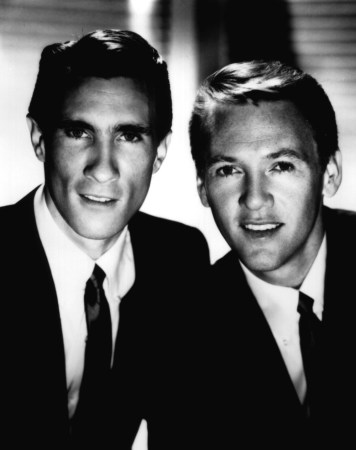
Oh baby, baby… For our next chart-topper, we take a step into the realm of the super-cool. An empty stage… A sole spotlight shining its beam through the dusty air… A mic on a stand… Thick curtains part, and on step two men…

21584a935b760f20b4b08f7f9ddd012c12437798

You’ve Lost that Lovin’ Feelin’, by The Righteous Brothers (their 1st of two #1s)

2 weeks, from 4th – 18th February 1965

And then that voice. Sonorous. Rich. Velvety and comforting, but authoritative too. You never close your eyes, Anymore when I kiss, Your li-ips… It’s a voice that is somehow both low and high within the same line – sometimes within the same word. And there’s no tenderness like before, In your fingerti-ips… A voice that goes from velvety soft to a gravelly rasp in seconds (see that Baby! Something beautiful’s dying! line.) Said voice is Bill Medley’s, and it’s unlike anything we’ve heard before in this countdown. Apparently, at the time, it was so deep and treacly that people thought they were listening to the record on the wrong speed. I’d rate it instantly alongside Roy Orbison and Shirley Bassey as the best voice to have topped the charts, up to now. It’s a voice that it’s almost impossible to mimic… Anyone can pretend to be Elvis, or Mick Jagger, and just about get away with it. Not this voice.

The backing music is way off in the background, too – a softly shaken out drum and some ethereal strings. This record, to start with anyway, is all about the voice. Apparently Bobby Hatfield, the other Righteous Brother (they weren’t biological brothers – something I just found out…) was pissed off that they weren’t starting the song by singing together. But you’d have to say the producer got it right on that front. That producer, by the way…? One Phil Spector.

Hatfield soon gets his moment, though. Come the chorus, the two voices ring out: You’ve lost that lovin’ feelin, Now it’s gone, gone, gone, Woah-woah-oh… Then they intertwine for the superb crescendo that leads to the final chorus. You know, the bit that starts with an angelic Baby, baby, I’ll get down on my knees for you… and soars into call-and-response Babys! and Pleases! and I need your loves! It is pop perfection… as trite as that phrase sounds. Time-capsule pop, as I coined it in an earlier post. Two voices that are as good as The Everly Brothers; but that are completely different too.

THE_RIGHTEOUS_BROTHERS_YOUVE+LOST+THAT+LOVIN+FEELIN+-+1ST-504151

In keeping with more recent #1s, ‘You’ve Lost That Lovin’ Feeling’ is a very sophisticated song. It’s pop for adults. A world away from the teeny-bopping Mersey sound that encapsulated 1963-’64. It’s perhaps the first example of the American response to the British invasion – a record, like The Supremes from a few weeks earlier, which has that US gloss. You just know that the Righteous Brothers had perfectly white teeth…

Some of this is to do with the lyrics. With lines like And now your starting to, Criticise little things that I do… it’s looking at love in a way that Herman’s Hermits, or Billy J. Kramer, or even The Beatles, weren’t. But it’s more to do with Spector’s soaring, crashing, grandiose Wall of Sound production. The strings. The drums. The stereo sound that fills the room. I wrote a post recently on how it was a crime that ‘Be My Baby’ didn’t make #1. But, while that is a peerless pop disc; I hadn’t noticed that this record was coming up. I knew that this was a good song – a classic – but I had forgotten (or perhaps had never realised) just how good it was. Listening to it now… Oh boy. Phil Spector may be many things (most of them awful), but nobody – nobody I say! – knew their way around a pop record like him back in his heyday.

Like most eighties kids, my first exposure to ‘You’ve Lost That Lovin’ Feeling’ was in, ahem, ‘Top Gun’. Maverick and Goose, all in white, serenading Kelly McGillis… And this is just one of the ways in which this song has grown its own legend. It’s been covered by everyone: Cilla Black, Dionne Warwick, Hall & Oates… It caused Brian Wilson to tell the writers – Barry Mann and Cynthia Weil – that he had been “ready to quit the music business, but this has inspired me to write again”… We are in Rolling Stone Top 10, BMI most-played songs of all time territory here. We won’t meet many bigger songs than this one as we move on. Finally, and perhaps most excitingly of all, mixed in amongst the backing singers on the disc, was an up-and-coming young woman by the name of Cher.

We will hear from The Righteous Brothers again. But not for a long time, and in somewhat specific circumstances. It’s a lifetime away – one of the biggest gaps between #1 singles in history. This was, then, to all intents and purposes, their only chart-topping hit in their ‘lifetime’. Relish it, appreciate it… Just be grateful that it exists…

Catch up with the previous #1 singles here:

181. ‘Baby Love’, by The Supremes

For the intro to this next post, I was going to go all overboard on how this was the first time in ages that two female acts had replaced one another at the top of the UK charts. Sandie Shaw making way for The Supremes’ girl-group stylings. The first time that this had happened since September 1956!!!! Except… For a week in between, ‘Oh, Pretty Woman’, by most-definitely-a-man Roy Orbison, sneaked back to the top of the charts. Ah.

So I need a new intro… How about: And so, with this next number one, Motown arrives at the top of the singles chart! And what a record with which to arrive. A piano intro that slides down the scales – in stereo it sounds as if it’s travelling right to left through your brain – and then the voice of one of the most renowned female singers in pop history:

maxresdefault

Baby Love, by The Supremes (their 1st and only #1)

2 weeks, from 19th November – 3rd December 1964

Oooh-hooo-oo… Baby love, My baby love, I need ya, Oh how I need ya…. A girl loves a boy, but he doesn’t seem to be returning the sentiment. All he does is treat her bad, breaks her heart and leaves her sad… Baby love, My baby love, Been missin’ ya, Miss kissin’ ya…

It’s a gorgeous song, the production all warm and glossy, the drums keep swinging time, a mournful sax comes in mid-way through… And Diana Ross’s honeyed voice. A voice that sounds effortlessly perfect. It’s a world away from some of the other female voices we’ve heard so far – she doesn’t belt like Shirley Bassey or sparkle like Helen Shapiro – but it has a special quality to it. In the closing lines – Need to hold you, Once again my love, Feel your warm embrace my love… you can really feel her pleading.

The lyrics, as a whole, though, are pretty meh. Standard ‘Oh baby come back to me I’ll do what you want and give you all my love’ kind of stuff. The default setting for sixties girl-groups. And I don’t want to go all ‘woke’ here but, I’d like a little more sass and swagger from my girl groups. Look back a few years, and Rosemary Clooney and Connie Francis were serving up plenty of attitude in ‘Mambo Italiano’, say, or ‘Who’s Sorry Now’. ‘Baby Love’ comes across as soppy next to those discs.

The other two Supremes – Florence Ballard and Mary Wilson – have equal billing here but aren’t much more than backing singers. 70% of the time they’re chanting Don’t throw our love away… Which they do beautifully, but you can see why the group soon became Diana Ross & The Supremes. Ms. Ross was definitely front and centre from the start. In the UK this would be their only #1 (though we will be hearing from Ms. Ross again), while in the US they enjoyed a staggering twelve (12!) chart-toppers between 1964 and 1969. Of course, classics like ‘You Can’t Hurry Love’, ‘Stop! In the Name of Love’ and ‘The Happening’ were big British hits; but another chart-topper always eluded them.

s-l1000 (1)

A few weeks ago, I did a series of posts on songs that should have topped the charts, in which I included Best Pop Song Ever ™ ‘Be My Baby’, by The Ronettes. ‘Baby Love’ isn’t in the same league as that, but in hitting the top spot I feel it kind of represents for all the sixties girl groups (all of them American) that missed out. For The Ronettes, The Crystals, The Shangri-Las, The Marvelettes, The Vandellas… Plus, this is also basically ground-zero for all the girl groups that are yet to come. When I was a teen they were ten-a-penny – The Spice Girls, Eternal, En Vogue, All Saints, B*Witched… They can all be traced back through these three girls and this sweetly sung chart-topper.

A final thought: ‘Baby Love’ really stands out when you hear it in context. On a ‘Motown’s Greatest Hits Compilation’ it might have passed you by; but hearing it now, after months, years even, of boys with guitars and their beat-pop ditties, this record hits you like a crisp, clean breath of Detroit air. Inhale it, and enjoy.

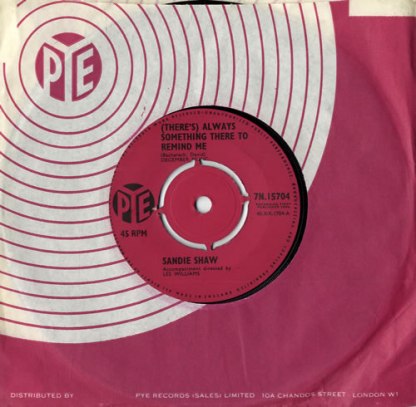
180. ‘(There’s) Always Something There to Remind Me’, by Sandie Shaw

This next chart-topper is a record that you can date pretty much instantly. Pretend, for a second, that you haven’t been following this countdown, and that you don’t know we are currently in October 1964. Just drop the needle, and listen. You know, straight away – it’s just got that mid-sixties vibe…

hqdefault

(There’s) Always Something There to Remind Me, by Sandie Shaw (her 1st of three #1s)

3 weeks, from 22nd October – 12th November 1964

There are soft, warm horns, and a little cha-cha-cha, bossanova beat. The ting of a typewriter reaching the end of a line. And a warm, playful voice… I walk along the city streets you used to walk along with me… Cute and glamorous – it kind of sounds like a French person singing in English (not that Sandie Shaw is French in any way – she’s Dagenham born and bred.)

It’s a song about a lost love, about how small things – streets and cafes – can remind you of the ones that got away. Oh how can I, Forget you, When there is always something there to remind me…? But, at the same time, it’s not a sad song. I’m not really sure what ‘kind’ of song it is…

It straddles lots of borders: it’s a bit of a ballad, a bit of a torch song, a bit of a standard pop song with a rock song looking to burst through. Listen to all the instruments involved: the horns, the orchestral strings, the twangy, Shadows-esque guitars. Plus the way Shaw sings – soft and lovelorn in the verses; shouty for the chorus. And then there’s the woah-waoh-waaaaa! and the cascading piano that bookmark either end of the violin solo.

There’s a lot going on here, but I like it. ‘(There’s) Always Something There to Remind Me’ is another song I knew – I could have sung the chorus – but had never listened to in any detail. It’s another Bacharach & David number (they’re starting to rack up) and I love the completely pointless brackets in the title. I like it because it doesn’t know, and probably doesn’t care, what kind of song it is. Everything’s been chucked in and given a good mix, and the end result is a classy little #1 hit.

SANDIE_SHAW_(THERES)+ALWAYS+SOMETHING+THERE+TO+REMIND+ME-560281

The only bit that jars is the I was born to love you, And I will never be free… line, because this might have been the swinging sixties, but girls were still expected to pine after their want-away men. Still, Shaw just about sells it with vocals that are both spunky and a little vulnerable.

Sandie Shaw herself is, to me anyway, super-sixties. Just the name, without knowing anything about her, and its playful alliteration dates it to within a couple of years (her real name was Sandra.) And pictures of her taken in late ’64, when this was sitting atop the charts, show a foxy, mascaraed, chunky-fringed girl (she was but seventeen) in knee-high floral dresses. You can easily picture her racing around swinging London town on the back of a scooter, bouncing from glamorous party to glamorous party, from Carnaby Street to King’s Cross.

But… perhaps this tune is actually a victim its era. It’s a good record – a sad song with an upbeat vibe – and yet it pales a little in comparison to some of the era-defining records that have topped the charts recently. A nice song lost among the greats? Our next post is a recap, and so we’ll be able to wade back through all the recent #1s, and really sort the downright brilliant hits from the simply very good. Until then…

Follow along with this Spotify playlist:

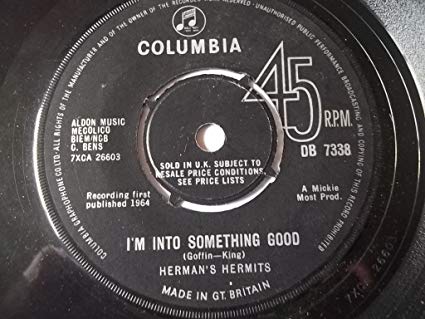
178. ‘I’m Into Something Good’, by Herman’s Hermits

After the gritty garage riffing of The Kinks’ ‘You Really Got Me’, it’s time for something different. Proving just how much of a golden age this was for British pop music, our next chart-topper is the complete opposite of the last; but is equally brilliant.

8e09292fb5bc6321d8f350a845d3dbc0.377x377x1

I’m Into Something Good, by Herman’s Hermits (their 1st and only #1)

2 weeks, from 24th September – 8th October 1964

In fact, I might be as bold as to claim that we are in the midst of the strongest ever run of UK #1 singles. Ever. In history. Past and present. Starting with, and including, Cilla’s ‘You’re My World’ back in June, the past nine chart-toppers have all been solid eight (or more) out of tens. No duds, no slip ups. And all have been wildly different sounding discs.

This one kicks off with a gently rumbling piano and a softly chugging riff. The sound of someone pulling their curtains open one morning to see the sun, and flowers, and butterflies, and frolicking lambs. Someone’s clapping; someone’s shaking a tambourine. Like I said, a world away from ‘You Really Got Me’. Except… It’s another song about falling head over heels for someone.

Woke up this morning, Feeling fine, There’s something special on my mind, Last night I met a new girl in the neighbourhood… is how it starts, and then it goes on to explain how the singer and the new girl danced, walked home, and how he asked to see her next week. Something tells me I’m into something good…

Ok, yes. It’s very PG. Herman’s Hermits were all about holding hands and going steady, whereas I’ll bet The Kinks were looking to get straight behind the bike shed for a bit of a fumble. But as a description of a first, teenage crush it works well. The lead singer, Peter Noone (AKA Herman) was literally just sixteen years old when this hit the top spot, which may explain how he could convincingly sell such a cutesy, starry-eyed song without it coming off as cheesy.

As a direct contrast to Noone’s grinning delivery, I love the deadpan backing singers. Whether they meant it, or whether they really were just extremely monotone singers, it works – it sounds like they’re very much over their friend’s romantic mooning, and would like him to shut up. Plus, the gentle piano-slash-guitar riff with the ooo-weee-ooos is giving me strong Beach Boys vibes.

7107RA+fIFL._SX425_

Which kinda makes sense, as the original songwriters – a pair no less distinguished than Gerry Goffin and Carole King – wrote it with the melodies of Brian Wilson in mind. This is yet another Beat song originally written by American bands and/or songwriters. It may have been The British Invasion, but it was heavily funded by the US. And it’s another hit that claims to have featured Jimmy Page as a session guitarist. Seriously, pretty much every #1 at the moment seems to have claimed a ‘featuring J. Page’ credit. He (probably) didn’t play on this one.

Another theme that I’ve noticed cropping up recently, and one that reaches its peak with this record, is how brilliant the band names were during the Beat era. From the cool (‘The Dakotas’, ‘The Animals’) to the quirky (‘The Kinks’) to the pun-tastic (‘The Beatles’ – ubiquity really has stopped people from realising how clever a name that is) to the downright silly (‘Manfred Mann’ and now ‘Herman’s Hermits’) – this truly was a great time to form, and name, a band.

Herman’s Hermits would go on to score hits right through until disbanding in 1970. In the US they would hit #1 with ‘classics’ such as ‘Mrs. Brown You’ve Got a Lovely Daughter’ and ‘I’m Henry VIII, I Am’, in which they camped up their Britishness in a manner so appalling that these records never saw the light of day in the UK. File them alongside Dick Van Dyke’s chimney-sweep and Daphne’s brothers from ‘Frasier’. No, back home their sole chart-topper was this paean to a first crush, one of the cutest #1 singles ever. He asked to see her next week, and she told him he could… Aww. Bless.

Follow along with this handy playlist:

176. ‘Have I the Right?’, by The Honeycombs

What’s that? What’s this? Why, it’s the sound of Merseybeat being fed through an electronic blender…

the_honeycombs_have_i_the_right_ep_spain_500_49412

Have I the Right?, by The Honeycombs (their 1st and only #1)

2 weeks, from 27th August – 10th September 1964

This is a Beat-pop song, with everything in the right place: verses, choruses, a solo. Lyrics about love. Have I the right to hold you, You know I’ve always told you, That we must never, ever part… Some whoah-oahs. But… Something doesn’t sound quite right. And by ‘not quite right’ I don’t mean it sounds ‘wrong’ – far from it. I mean it sounds… completely unique.

Take the drums for a start. They are deep and bouncy, and echoey. The drummer might well be in a completely different room from the rest of the band. In the chorus, as they pound out on every note, they sound like one of those huge Japanese drums, echoing across a misty forest.

Then there are the jabs of electronic keyboard that pierce the end of every line in the verses, like a ray-gun in a cheapo fifties ‘B’-movie. The guitar too is sharp, and clean as a knife; but again there’s something kooky about it, as if you were listening to pop music from a different but not too distant dimension. These two instruments combine on the solo and then, perhaps midway through, you realise what this song reminds you of: the one and only, the era-defining, blast from the future that was ‘Telstar’.

That particular #1 was produced by the legendarily maverick Joe Meek, and so was this. All three of his chart-toppers – this, ‘Telstar’ and John Leyton’s ‘Johnny Remember Me’ – were recorded in his apartment in Islington. All three are unique songs; but all contain recognisable characteristics. They’re drenched in overdubbing, they’re tweaked and tucked, they twang with reverb, and they are just all a little bit weird.

Here, for instance, is just one of the tales from the recording of ‘Have I the Right?’ Those drums I mentioned earlier? They were enhanced, not digitally, but by members of The Honeycombs stamping their feet on the stairs outside the studio. A tambourine was thumped against a microphone. And then, for the finishing touch, the tape was sped up. So much for the misty Japanese forest…

HONEYCOMBS-HAVE-I-THE

This record isn’t quite ‘Telstar’ – how could you recreate one of the most innovative and forward-gazing pop songs ever recorded? But it is still a brilliant #1. And in some ways, maybe, this is actually the more impressive feat. Here, Meek had to use his powers in the confines of a ‘regular’ mid-sixties pop song; while on ‘Telstar’ he was allowed to completely let loose… When we get to the chorus – Come right back, I just can’t bear it, I got some love and I need to share it… The lyrics look normal on paper – a little basic even. It’s the sound, and the propulsive, endearingly home-made feel of this song that makes it what it is.

Joe Meek, while never actually featuring in any of his chart-topping hits, was the main star of all three. From the gothic melodrama of ‘Johnny…’, to the space-age transmission of ‘Telstar’, to this piece of electronically blended Merseybeat. And, as is befitting one of pop music’s greatest innovators, he was an extremely eccentric character. His Wikipedia entry ranges from the bizarre (his belief that he could communicate with the dead, including through the meows of a cat), to the sad (he struggled through long-term drug addiction), to the downright tragic (he shot his landlady, and then himself, in 1967 after a depression brought on by the drugs, impending plagiarism lawsuits and the fear that he was about to be outed as gay.)

Under all this, The Honeycombs – understandably – have to play second fiddle. This was their debut hit and, although Meek produced several of their follow-ups, they struggled to match the success of ‘Have I the Right?’ Their second most successful single could only hit #12, and they broke up in 1967 after several line-up changes. Perhaps the most remarkable thing about them is that their drummer and founding member – Honey Lantree – was a woman.

Let us celebrate, then, this progressive sounding chart-topper, ‘Have I the Right?’, with a progressive bunch of people at the helm: a gay producer, a female-drummer, and a bunch of guys stamping on the stairs…

Follow along here:

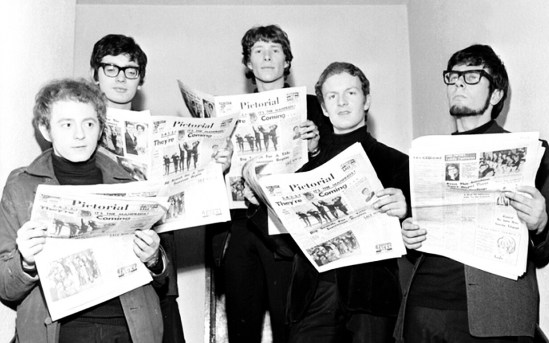
175. ‘Do Wah Diddy Diddy’, by Manfred Mann

‘Pop Music’… an ultra-generic term, but hey… What’s the first thing that pops (gettit?) into your head when you hear that term? Feel-good, catchy hits. Bubble-gum and bright colours. Popular songs that sell loads of copies. And yet, many, if not most, pop songs are more complex than that. Look at the songs to have hit #1 in 1964, and you’ll find a lot of bittersweet emotion: ‘Needles and Pins’, ‘Anyone Who Had a Heart’, ‘A World Without Love’, two songs titled ‘It’s Over’ and ‘It’s All Over Now’. Plus a song about a boy driven to ruin in a gambling den-slash-whorehouse. Only one – ‘Glad All Over’ – could potentially have filled all the ‘feel-good, catchy, bubblegum’ criteria this year so far. Make that two, now.

ManfredMann01

Do Wah Diddy Diddy, by Manfred Mann (their 1st of three #1s)

2 weeks, from 13th – 27th August 1964

There she was, Just a-walkin’ down the street, Singin’… Do wah diddy diddy dum diddy doo…! I forgot to add one more requirement to the ‘Pop Music’ manifesto – a memorable hook. And has there ever been a more memorable hook than Do wah diddy diddy dum diddy doo? Add it to the wopbopaloomas, the ramalamadingdongs and the zig-ah-zig-ahs of pop lore. As usual, I took a pre-post listen to this song, and tried to jot down some notes. But I found I didn’t write very much. I was too busy enjoying what is a great little pop song.

We come to a goofy call-and-response section: She looked good… (looked good…) She looked fine…( looked fine…) And I nearly lost my mind… And then it’s the bridge – another great bridge in an era of absolutely superb middle-eights. Woah-oh-woah, I knew we were falling in lo-o-o-ve… coupled with a twangy, rock ‘n’ roll throwback guitar. And we finish with, of course, a happy ending: with the loved-up couple together every single day, singing… You know exactly what they were singing: Do wah diddy diddy…

Musically, we can still hear the slow disintegration of the Merseybeat sound, now with organs, and maracas, and deep, bouncy, almost synthetic sounding drums. We’re approaching what I would think is peak-sixties, and this is a very sixties-sounding disc. And I’m looking at what I’ve written so far, and thinking it’s a pretty short post for a pretty high-quality song… But at the same time, ‘Do Wah Diddy Diddy’ is pretty close to pop perfection; and pop don’t need no analysing. That’s not really what pop music is for.

Manfred-Mann-Do-Wah-Diddy-Diddy-b-w-What

Plus, Manfred Mann will be chart staples for the entirety of the 1960s, managing what many of their Beat contemporaries couldn’t – to adapt their sound and score hits (including two more chart-toppers) all the way through to 1969. So I can’t even pad this post out with a career round-up.

This record made them the first non-Liverpudlian/Mancunian US chart-toppers during the British Invasion of 1964. In actual fact, though, ‘Do Wah Diddy Diddy’ was a cover. US girl group The Exciters had had a minor hit on the Billboard Hot 100 with it earlier in the year. Give that version a listen here. It’s a sign of the song’s strength, I’d say, that it works just as well in the hands of a female vocal group as it does in the hands of a raucous Beat-combo, and sounds as if it was originally written for them both. A stone-cold pop classic.

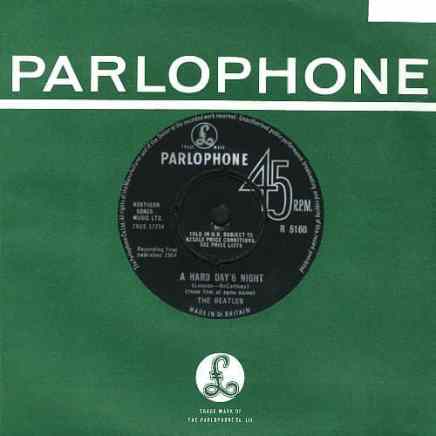
174. ‘A Hard Day’s Night’, by The Beatles

Has there ever been a more memorable, yet concise, intro in the history of pop? One chord. Literally just one chord. But I’d bet anyone with even a passing interest in popular music would be able to identify it.

The_Beatles_Hard_Day_s_Night_1964_l

A Hard Day’s Night, by The Beatles (their 5th of seventeen #1s)

3 weeks, from 23rd July – 13th August 1964

I’d also wager that entire theses have been devoted to this chord… (*Edit* Check out a 2004 report entitled “Mathematics, Physics, and ‘A Hard Day’s Night’” if that’s your thing.) As chords go, it’s quite a complicated one, with George Harrison playing an F and a G, while Paul McCartney adds a D on the bass, plus lots of other bits of wizardry from George Martin. Try the Wiki entry on the song for more detail. I didn’t really understand…

To the actual song, then. The intro fades, and we race into the first verse. It’s been a hard day’s night, And I’ve been working like a dog… And what’s that in the background, setting the frantic pace… Bongos?? Sure sounds like it. It’s been a hard day’s night, I should be sleepin’, Like a log…

Coming hard on the heels of two R&B chart-toppers, ‘House of the Rising Sun’ and ‘It’s All Over Now’, this sounds a bit light. Perhaps even a bit dated. So 1963… The But when I get home to you, I find the things that you do… line sounds like the climax to a cheesy sitcom theme. (‘One Foot in the Grave’, maybe…)

But the bridge comes in, and blasts all these doubts away. When I’m home, Everything seems to be right… Insistent cowbell, and the way that Paul half-screams Tight… Yeah! It’s actually a pretty filthy song. When he gets home to his girl, he finds the things that she does, make him feel alright… Who knows, maybe she’s just fetching him his pipe and slippers… Then scream! And solo. I love a scream before a solo. It’s second only to shouting the guitarist’s name in my list of ‘Brilliant Ways to Introduce a Solo’.

uk_a-hard-days-night_single

Actually, listening properly to ‘A Hard Day’s Night’ for the first time in years, it feels like this is actually four songs in one. You’ve got the intro, the cheesy verses, the intense bridge, then the outro… The jingly, jangly, echoey outro that sounds as if it’s coming from a year or two in the future. It kills of Beatles Mk I, and suddenly this record doesn’t sound lightweight, or like a re-tread of their previous hits. Those last five seconds basically announce that Merseybeat is dead; but that The Fab Four will continue setting the tone for the next few years. Everyone knows that The Beatles were ‘very good’; but it’s tiny moments like this that confirm it.

This song was, of course, from a film of the same name, all about the boys carousing their way around London, getting up to all sorts of hi-jinks. It was their first feature film appearance and, whaddya know, it’s one of the most influential music-movies ever made. Even their films turned out that way. They simply had the Midas touch.

Interestingly, what with this disc being released at the height of Beatlemania, as part of the soundtrack to the biggest film of the year, it didn’t enter the charts at #1. Entering the chart at the top was a big deal back then – Elvis had done it twice, Cliff once… That’s it. It seems natural to assume that The Beatles would have done so too in pretty short order. But they never did. ‘A Hard Day’s Night’ entered at #3, before climbing. They would have to wait until ‘Get Back’, their penultimate #1 in 1969, to hit the summit in release week… I say ‘interesting’; but maybe it’s just me. A strange quirk, anyway. Onwards.

167. ‘A World Without Love’, by Peter & Gordon

With Beatlemania at its scream-until-you-vomit height, it should come as no surprise to learn that one Fab Four song is replacing another at the top of the charts. Except, one glance at the act involved in this latest #1 gives the game away… There was neither a Peter nor a Gordon in The Beatles.

2afb763c73b7bbf623a484ef19a42c1bec9500cd

A World Without Love, by Peter & Gordon (their 1st and only #1)

2 weeks, from 23rd April – 7th May 1964

For those keeping track, this is the 6th Lennon & McCartney composition to take the top spot in the UK: four recorded by The Beatles themselves; two covered by other artists. But even if you hadn’t been filled in beforehand, the second the needle drops on ‘A World Without Love’ you know it’s a L&M number.

Is it the chord progressions? The harmonies? The fact it’s a catchy song with a sad underbelly? Is it all those things; or none? I can’t put my finger on it – but it’s there throughout the song. That Lennon & McCartney fairy dust. At the same time, though, this disc doesn’t sound exactly like a Beatles’ number. They were still, at this point, a guitars and drums pop group; while this record is driven by a bass riff and an organ.

The voices are different too – softer, more Everly Brothers than Beatles. They’re nice, drenched in echo… Please, lock me away… And don’t allow the day… Here inside, Where I hide, With my loneliness… It’s a song about how awful the world looks after a break-up. And this particular break-up must have hit pretty darn hard… Birds sing out of tune, And rainclouds hide the moon… By the end, the duo are begging to be locked away, hidden from all, rather than staying in a world without love.

I’ve mentioned it before, but it is surprising just how melancholy and melodramatic some of these Beat #1s were. You think it’s all youthful exuberance and ‘Yeah Yeah Yeahs’, but when you sit down and listen intently you notice that songs like ‘Bad to Me’, ‘She Loves You’ and ‘Needles and Pins’ are more concerned with the downsides of love, and that it’s not all sweetness and light. Apparently this song was written by Paul McCartney aged just sixteen, and that makes complete sense. That line about ‘hiding with his loneliness’ is pure teen-angst; while the bridge – in which it is revealed that the singer still holds out hope of his beloved returning to him – is pure youthful optimism. Although the line When she does (come back) I lose… adds an ambiguous element into the mix. Does he want her to come back? Or is he enjoying his gloomy wallow a little too much?

Peter-And-Gordon-A-World-Without-Love-Beatles

Peter Asher and Gordon Waller were school friends, and ‘A World Without Love’ was their debut hit. Asher was the brother of Paul McCartney’s girlfriend, Jane, and actually shared a room with Paul when he first moved to London, hence how he got to know him and was allowed to ‘borrow’ one of his songs. All the duo’s biggest hits were covers – ‘True Love Ways’ and a version of ‘To Know Him Is To Love Him’ followed – before, as with so many of the bands that broke through in the Beat explosion, their careers crumbled circa 1966/67.

McCartney was honest enough to admit that he thought ‘A World Without Love’ wasn’t good enough for his own band, and so they never recorded so much as a demo of it. I think that’s a little harsh – it’s a neat slice of pop that’s the equal of many Beatles’ album tracks. But I also get what he means. Nothing here matches the euphoric rush of ‘She Loves You’ or the guitar on ‘I Want to Hold Your Hand’. They may have had cute hairstyles and cheeky grins, but The Beatles, and Lennon & McCartney in particular, knew what they were doing, taking control of their careers from the off.

166. ‘Can’t Buy Me Love’, by The Beatles

Our next #1 is a record that wastes no time in getting to the heart of what it’s all about. The song is called ‘Can’t Buy Me Love’, and the intro goes:

main_900

Can’t Buy Me Love, by The Beatles (their 4th of seventeen #1s)

3 weeks, from 2nd – 23rd April 1964

Can’t buy me love…. No-oh…. Can’t buy me lo-ve… It’s a jarring intro – a bit too in your face – but things improve a lot with the verses. I’ve always liked the swinging, bluesy rhythm on this record and today, listening to it for the first time in ages, I still do. Buy you a diamond ring my friend, If it makes you feel alright, I’ll get you anything my friend, If it makes you feel alright…

It’s a song about money not being everything; which is a topic that always sounds a bit off coming from hugely successful and completely loaded musicians. But I think The Beatles were young enough, and sufficiently green behind the ears, in early-’64, to get away with it. Actually, in a similar manner to ‘She Loves You’, Lennon & McCartney take a familiar theme here and add a layer or two. The lyrics aren’t about not needing money; they’re about having money and not really caring what you do with it. I don’t care too much for money, Money can’t buy me love…

It’s also a kind of contradictory message, as they then list the things they’ll give someone – as long as they love them back. Give you all I’ve got to give, If you say you’ll love me too… So money can buy you love…? I’m confused, guys. Perhaps we’re getting a first glimpse, four number #1s into their career, of The Fab Four’s disillusionment with fame and riches…? Especially in the final verse, where they hope that the girl wants the kind of things that money just can’t buy. Had they already been burned by gold-digging groupies…? It ends on what almost sounds like a wistful sigh… Ohhhhh….

s-l1000

Musically, it’s a little basic. At least, it’s Beatles-basic (which means that most other bands would have bitten your hand off for a chance to record it.) The high points are the ear-splitting shriek before the solo, and the echoey, plucked guitar that follows. It’s never been one of my favourite Beatles songs – I guess I always overlooked it in favour of the ‘bigger’ hits – but it’s been nice to re-discover it for this post. For some reason I will always associate it with an episode of The Simpsons, in which Grandpa and his friends frolic in a meadow (I’m sure I’m not imagining that…)

‘Can’t Buy Me Love’ ensured that The Beatles joined both Elvis and Frank Ifield in scoring 4 #1s in a year (though only Elvis did it in a calendar year.) In fact, this record hit the top simultaneously in the UK and the US and pretty much marks the absolutely demented, scream your head off and throw your panties height of Beatlemania. It was #1 in the week of the famous all-Beatles Top 5 in the Billboard Hot 100, and followed directly on from ‘I Want to Hold Your Hand’ and ‘She Loves You’ in occupying pole position. These three discs hogged the top spot over there for a full fourteen consecutive weeks.

Back on the other side of the Atlantic, though, you could be forgiven for thinking that a three-week stint at the top of the charts seems a little short for a hot new single from The Biggest Band the World Had Ever Seen. Perhaps, but they were about to be replaced at #1 by one of their own songs… again…

Listen to all the #1s so far by following my playlist:

165. ‘Little Children’, by Billy J. Kramer with The Dakotas

One of the earliest stars of the Beat explosion, Billy J. Kramer, returns for one last go on top. And he starts this latest #1 off with an intro full of intrigue. An intriguing intro. It’s a little slow and shuffling, a little woozy, like a pub band that’ve had one too many warming up for their final encore of the night. All that’s missing is a harmonica…

6cc7e1b14fc26365e667d3fc768e5a9d

Little Children, by Billy J. Kramer with The Dakotas (their 2nd and final #1)

2 weeks, from 19th March – 2nd April 1964

Then the lyrics come in, and the intrigue grows ten-fold. Little children, You better not tell on me… I’m telling you… Little children, You better not tell what you see… It’s a song that tells a story – rather than the traditional ‘I love you, I’m in heaven, Hold my hand’ kind of songs that we’ve had a lot of recently – and that’s always a good thing. It makes them easier to write about for a start. But… And I’m sure you noticed it too… Those opening lines do sound kinda creepy.

It gets worse, too, before it gets better. I’ll give you candy, And a quarter, If you’re quiet, Like you oughta be, And keep the secret with me… Yep. I know. But, just as you reach for the phone to call ChildLine, all becomes clear. He wants the children to bugger off so that he can kiss and cuddle with their – presumably safely over-age – older sister. Nothing more sinister here than a spot of mild bribery. Phew.

Still, this is a strange little song. And not just because of those lyrics. I like it, the slightly seedy rhythm and the fact that it paints a picture of a very specific and believable scenario. Why does he not want his secret exposed? You saw me kissing your sister, You saw me holding her hand, But if you snitch to your mother, Your father won’t understand… Are her parents simply over-protective? Or has he got a reputation as a bit of a bounder? The best bits are the growled asides: I wish they would take a nap… And the simple, snide Go anywhere…! Add to this the fact that there isn’t really a chorus or a solo, just four ascending verses in which the singer grows more and more frustrated about not being left alone with his beau. I like it, even though it’s a strange song. I like it because it’s a strange song.

Billy-J-Kramer-The-Dakotas-Little

Given all the American references littered throughout the song – ‘quarters’, ‘movies’, ‘going steady’ – I was convinced that this #1 was going to add to the list of Beat-hits-that-were-actually-covers, but no. It was written by two American songwriters – J. Leslie McFarland and Mort Shuman – but Billy J. and The Dakotas recorded the first and only version. Apparently Kramer had been offered another Lennon and McCartney song but turned it down for something quirkier. Kudos to him for that. Although it has to be said that, as fun as this record is, ‘Bad to Me’, their first, Beatles-written, chart-topper is the superior disc.

That was it for Billy J. and number one hits. In a similar fashion to Gerry & The Pacemakers, his career fell off a cliff in 1965 as the Beat movement split into all its different sub-factions. He would only have one further UK Top 10, and parted from The Dakotas in 1967. In the seventies he worked in cabaret and regional television, and to this day he still does a turn on the oldies circuits. He has also been married twice, and so he must have persuaded those pesky kids to clear off, eventually…