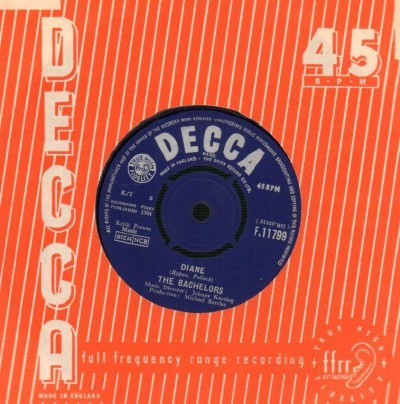
163. ‘Diane’, by The Bachelors

Ladies and Gentlemen! ‘Diane’, by The Bachelors, is the UK’s one hundred and sixty-third number one single… Nope. Me neither.

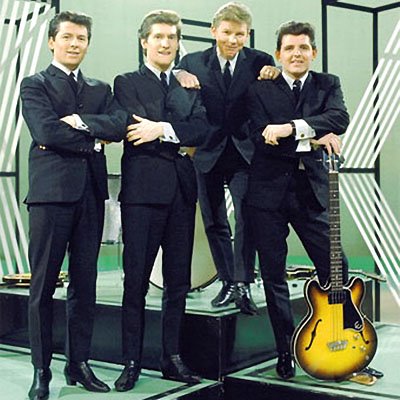
The-Bachelors-signed-music-memorabilia-singer-legend-autograph-I-Believe-Ramona-Sound-of-Silence-Diane-Conleth-Cluskey,-con-dec-declan-john-stokes.jpg.opt600x374o0,0s600x374

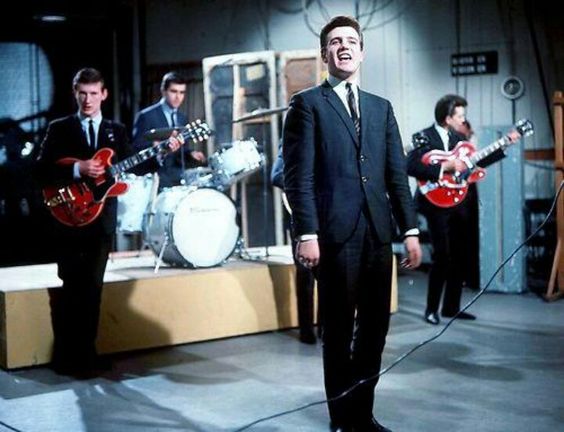
Diane, by The Bachelors (their 1st and only #1)

1 week, from 20th – 27th February 1964

It’s been a good long while since we arrived at a chart-topper that I’d never, ever heard before. Yodeller par excellence Frank Ifield’s version of ‘Confessin’ was probably the last. But even before pressing play, I can kind of predict what we’re heading for here. ‘Diane’, by ‘The Bachelors’ doesn’t, to me, scream rock ‘n’ roll abandon.

And yup, the intro has a strong whiff of barbershop quartet: Smile for me-e-e-e…. My Diane… Close harmonies, and long drawn out notes. But no sooner has this opener swooped to a close than in comes a lilting country rhythm. I’m in heaven, When I see you smile, Smile for me, My Diane… It’s a song about a woman, called Diane, and how much a boy loves her. She lights the road home. No matter where he roams etc. etc. (Has there ever been a non-country and western song featuring the word ‘roam? I don’t think so…)

The Beat-invasion may have had a strong chokehold on the charts at this time, but other songs could still poke through. This had a solitary week at the top, and I have the feeling that that was because there was little in the way of competition – a default #1 because, well, something has to be number one. It’s cute, and pleasant enough, but…

I’m not too sure what to make of it. Maybe it’s insignificant enough for me to simply make nothing of it. It’s a country-ish, barbershop-ish (I do like the ah-oh-oh-ohs!) little ditty that I have to admit I was singing along to by the fourth listen. Actually, I’ve just realised that I’m also getting hints of Cliff – in both the swaying guitars last heard in ‘Summer Holiday’ and the band’s name (Bachelors, get it?)

7M_1085

Who exactly were these Bachelors? Well, they were Irish, which makes them the very first Irish act to top the British charts, preceding U2 and Boyzone, and the other Irish chart-dominators of the eighties and nineties. So that’s something. There were three of them – Conleth, Declan and John, and they made a decent mid-sixties career out of re-interpreting old tunes from the 1920s and ‘30s in a vaguely Beat-ish way. ‘Diane’ was originally written as the theme song to a 1927 silent movie, for example. Slim Whitman, Jim Reeves and Vic Damone all did their own versions at one time or another. The lads also scored hits with covers of songs like ‘I Believe’ and ‘Hello Dolly!’ While other Beat groups were looking forward; The Bachelor-boys were looking back.

Nothing dates this song, though, as much as the ending. Back in the dark and distant Pre-Rock days almost every song ended with a huge, soaring climax that had been signposted a mile off. And The Bachelors here do their best to recapture those halcyon days. The song slows down, the singer revs up and… Smile for meeeeeee, My… Di….AAAAAAANE! We finish all misty-eyed for the days of Al Martino and David Whitfield.

I don’t begrudge this song its week on top of the charts; but at the same time I’m not terribly sad that we won’t be hearing from The Bachelors ever again. Interestingly, not only does this record give us our first Irish #1, it also sees the name Diane (or variants thereof) sprint into the lead as the name featured in the most chart-topping singles. With two. This, and Paul Anka’s ‘Diana’. We’ve also had a Joe, a Rose Marie, a Hernando, a Josephine, a Mary, a Cathy, a Laura, a Johnny and a Michael, all on one chart-topper each. Not something I ever thought I’d keep an eye on but, now that I have done, it’s kind of fascinating. Which name will be the winner? And who’d have thought that a Josephine would have topped the charts before, say, a Sue or a Jenny?

162. ‘Needles and Pins’, by The Searchers

The Searchers return for a second run at the top. And if their first #1 – ‘Sweets For My Sweet’ – was a cute little slice of Beat-pop; then this is next-level stuff entirely. This baby is a classic!

The_Searchers_1965-resize

Needles and Pins, by The Searchers (their 2nd of three #1s)

3 weeks, from 30th January – 20th February 1964

We start with a simple, chiming riff. In my previous post on The Searchers, I mentioned that they had a sound slightly removed from frenetic Merseybeat – a bit more sedate, a bit more melancholic – a sound that wouldn’t sound out of place on Indie records of the 1980s. Well, that sound is back here.

Lyrically, too, this is a more complex record than the likes of ‘Do You Love Me’ and other such pub-singalongs. And no, ‘Needles and Pins’ doesn’t refer to waking up with a dead arm; it’s about the feeling you get when you see a lost love. One that did you wrong. I saw her today, I saw her face, It was a face I loved, And I knew, I had to run awa-y…

It’s also a song about bruised pride… Because of all my pride, The tears I gotta hide… and a song with an air of revenge about it: Let her go ahead, And take his love instead, And one day she will see, Just how to say please, And get down on her knees, Yeah that’s how it begins, She’ll feel those needles and pins, Hurtin’, Hurtin’… This is one grown-up love song. It’s like the sophisticated older brother of discs like our last chart-topper, ‘Glad All Over’, looking down his nose at his younger siblings’ silly little songs.

I wish I had the musical vocabulary to describe the chord structures and the key and whatever it is that gives this record its ‘mood’. Whatever it is that makes this song so good. But then again, if I could dissect it and pinpoint it’s genius maybe it would lose some of its magic. It’s a sad-sounding song about a sad-sounding break-up; and it’s superb. By the final verse, it’s reached a bit of a crescendo. Two voices – the lead singer (Mike Pender) and a high-pitched back-up which just adds to the emotion. Oh, needles and pins… And those drum-fills. Oh those drum-fills.

the-searchers-needles-and-pins-7-45_44502391

I’ve been kind of surprised, listening to them all in a row, how cheesy (for want of a better word) these early Beat #1s have been. Musically they’ve been a huge step forward but, in lyrical terms, records like ‘From Me to You’, ‘Bad to Me’, and ‘I Like It’ haven’t moved on much from the 1950s.

‘Needles and Pins’ is different. Though I was shocked to find out that it is actually a cover. It’s a song I’ve loved for a long time and have assumed for years was a Searcher’s original. But no. It’s a Jack Nitzsche and Sonny Bono song, originally recorded by Jackie DeShannon in 1963. I feel betrayed… I really do. This – and I realise that this is a bold statement to make – is the first pop song I ever loved. I must have been maybe seven, and it was on a sixties mix-tape (which I’m sure I’ve mentioned before) in our family car. It would be playing on a Sunday evening as we drove home from dinners at my grandparents, along dark roads under orange streetlights. A melancholy scene for a melancholy song.

Actually, that’s another thing that has surprised me – just how many of these early Beat chart-toppers were covers. Since Gerry & The Pacemakers kicked the movement off in April ’63, I make this six covers out of eleven (I’m counting ‘You’ll Never Walk Alone’ in this, though it isn’t your average Beat-pop number). I just assumed these boys with guitars were all writing their own songs. How wrong I was!

Anyway, the ‘Needles and Pins’ story doesn’t end with The Searchers. It’s classic status is confirmed by the fact it’s been covered by The Ramones and Tom Petty. It’s a song so good that it might just give you needles and pins! (Though I’ve always said ‘pins and needles’ – I guess that didn’t scan quite as well…)

Follow along with my Spotify playlist:

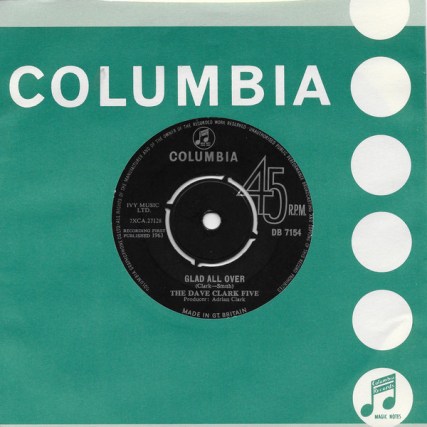
161. ‘Glad All Over’, by The Dave Clark Five

And so we launch head-first into 1964. Suddenly we are in the mid-sixties! Doesn’t time fly! And kicking off the new year are some newbies at the top of the UK singles charts: The Dave Clark Five.

mezzanine_296

Glad All Over, by The Dave Clark Five (their 1st and only #1)

2 weeks, from 16th – 30th January 1964

Interestingly, none of the acts that topped the charts in 1963 were one-offs. Every single one of them had hit #1 previously, or would go on to hit #1 again. But the very first chart-topping act of 1964 are… drum roll… one #1 wonders!

Anyway, this a barnstorming way to start off. We get a thumping, grinding drum-beat designed to blow away any lingering new year hangovers, which is quickly joined by a bass and a stabbing saxophone. Then the singer (Mike Smith, not Dave Clark) jumps in: You say that you love me, All of the time, You say that you need me, You’ll always be mine…

The beat then morphs into an insistent, irresistible galloping-horse rhythm that will last for the whole song. And then comes a chorus that pretty much everyone knows: And I’m feelin’… Glad all over…Yes, I’m a-… Glad all over…!

It’s an non-stop sledgehammer of a song, with large swathes of call-and-response and a key-change that is pointless trying to resist. Other girls may try to take me away… (you can just pictures the girl’s eyes rolling at this point)… But you know, It’s by your side, I will stay… It’s a fun disc. File it under ‘unsophisticated’. This and The Tremeloes’ ‘Do You Love Me’ from a few posts ago would make a great drunken-1am-singalong double-header.

R-5972494-1481232145-4446.jpeg

Like ‘You’ll Never Walk Alone’, this is also a huge football, and rugby, crowd song – the call and response bits work perfectly – and is usually played after a home-team scores (Crystal Palace started it when ‘Glad All Over’ was still in the charts and lots of other teams followed suit). It was last seen in the UK charts a couple of years ago when Glasgow Rangers fans did a mass-download campaign. In fact, I’d have to say that this is just the latest in a run of chart-toppers that have entered the public consciousness like few previous #1s have. From ‘Sweets For My Sweet’ through ‘Do You Love Me’, plus the recent Beatles chart-toppers… I’ll bet most people on the streets could sing a line or two from all of these songs, even today. Just goes to show how much the music from this era lingers on.

Since we’ll never hear from them again on this countdown – just who were The Dave Clark Five? Well, you’ll be shocked to discover that there were five of them, and that they were ‘led’ by one Dave Clark, who also drummed on all their hits. They were from Tottenham, in North London, and were at the vanguard of the ‘Tottenham Sound’ -which I’m not sure sounded any different to the Mersey-sound, or any other variety of Beat-band sound, but hey – they were representing. As I mentioned, this was their one and only #1; but they scored Top 10s throughout the sixties before splitting up in 1970.

There you have it then. 1964 is off and running with a boisterous pop number. I don’t go in for previews very often in these posts, but I have to mention here that ’64 is going to be a stellar year for chart-topping singles. One of the very best… if not the best… years in terms of #1 quality. Over the course of the next twenty-two hits we’ll hear some classics, meet some legends, and have a generally pretty ‘groovy’ time (that’s how people talked back in the sixties…)

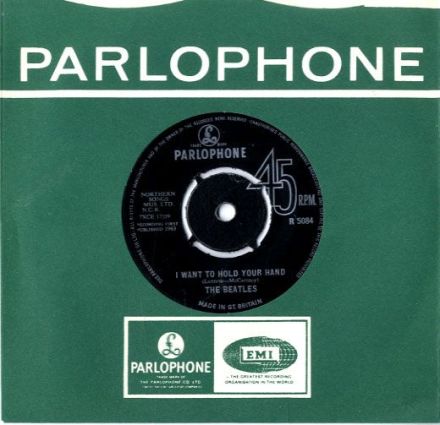
160. ‘I Want To Hold Your Hand’, by The Beatles

Oh yeah I’ll, Tell you somethin’, I think you’ll understand… Well, what you need to understand is that we end 1963 with the biggest band of the year. Three #1s spread out over a staggering eighteen weeks! The band that would go on to become the biggest band of the decade and then the biggest band of all time.

the beatles john lennon george harrison ringo starr paul mccartney 1280x1024 wallpaper_www.wallpapername.com_64

I Want to Hold Your Hand, by The Beatles (their 3rd of seventeen #1s)

5 weeks, from 12th December 1963 – 16th January 1964

And what a cheesy wonder this song is. When I wrote about ‘She Loves You’, I mentioned that it was quite a sophisticated pop song, with a pseudo-3rd person narrative and melancholy chord progressions. Well, all that sophistication was dumped at the studio door when the lads turned up to record ‘I Want to Hold Your Hand.’

Oh please, Say to me, You’ll let me be your man, And please, Say to me, You’ll let me hold your hand… It’s so twee, so innocent. Can I be your boyfriend? I just really, really, really want to… hold your hand. I’ve listened to it several times now, scouring the lyrics for a hint of double-entendre, but no. And when I touch you… promising… I feel happy inside… Oh. It’s as chaste and vanilla a record as you’ll find.

This is not to suggest that I don’t like it. Who doesn’t like this record? It’s probably been proven, by a team of crack scientists, that it’s impossible for a fully-functioning human being to dislike this record. You’ve got that intro, for a start. Dun-dan-ding, Dun-dan-ding… And some quality drum fills from Ringo. And that twangy guitar – George Harrison’s, I’m guessing. And some clapping (Yes, clapping!) My personal highlight, though, is the Everly Brothers’ harmonising on the ‘Ha-a-a-a-a-nd’.

beatles-the-i-want-to-hold-your-hand-this-boy-r-5084-decca-pressing-77189-p

Nope, we’re pretty close to pop-perfection here. It’s not quite in the same league as ‘She Loves You’, but it’s pretty, pretty, pre-tty good. The greatest threat to songs like ‘I Want to Hold Your Hand’ is ubiquity – the fact that most people have heard them three hundred times already. You have to remind yourself that The Beatles were re-inventing pop music as they went here, have to imagine yourself as a sixteen-year-old in the winter of 1963, hearing this for the first time…

I think this might become a theme whenever a Beatles disc crops up on this countdown but, hey: some statistics. The band replaced themselves at #1 with this disc (‘She Loves You’ having returned to #1 after seven weeks, remember) becoming only the second ever act to do this. (Plus, The Shadows replaced themselves with records on which they were the featured, not the lead, artists, so…) ‘I Want to Hold Your Hand’ is their biggest selling record worldwide, having sold 12 million copies.

It also holds an important place in pop-music folklore. Bob Dylan famously thought that they were singing I get high… when they were actually singing I can’t hide… and was shocked to find out that they had never smoked weed. And it was so good that it made Brian Wilson and Mike Love convene a special Beach Boys meeting to discuss the threat The Beatles posed to their position as America’s #1 band. (I love that – pop music meets military strategy.)

In the end, even Sgts Wilson and Love couldn’t hold back the British Invasion. ‘I Want to Hold Your Hand’ was their 1st US #1 a few weeks after it hit the top back home. It was part of the all-Beatles Billboard Top 5 in April ’64. Suddenly they were HUGE. Bigger even – some might have said – than Jesus himself…

Follow along with my Spotify playlist:

156. ‘Bad to Me’, by Billy J. Kramer with The Dakotas

A crooning little intro has us fearing the worst as the needle drops on our latest chart-topper … If you ever leave me, I’ll be sad and blue… A guitar strums plaintively… Don’t you ever leave me, I’m so in love with you… But it’s an intro that you know is going somewhere – something in that last ‘you…’ just brims with promise – and yes, the guitar, clear as a bell, kicks in and we’re off into another solid Beat #1.

kramer-centre-with-his-second-band-the-dakotas-in-the-1960s-518505

Bad to Me, by Billy J. Kramer with The Dakotas (their 1st of two #1s)

3 weeks, from 22nd August – 12th September 1963

The birds in the sky would be, Sad and lonely, If they knew that I’d lost my, One and only… And if, as this song unfolds, you get the feeling that it all sounds very familiar – something in the chord progressions and the notes that Billy J. Kramer leaves hanging in the air – then you’d be on to something. For the next seven years of the UK pop charts there will be two main categories of number one single: those recorded by The Beatles, and those written by The Beatles (or, rather, by Lennon & McCartney). Hot on the heels of their 1st #1 as performers, ‘Bad to Me’ is their first #1 as writers.

That’s not to say that Billy J. and his Dakotas don’t make this song their own. The band is crisp and tight, and Kramer’s voice is strong too. I like the flip and the little groan as he takes us through the But I know you won’t leave me cos you told me so… line. He treads a fine line between singing properly but not crooning. He doesn’t have as strong an accent as, say, John Lennon or Gerry Marsden; but he doesn’t sound like Perry Como either. In fact, we’re five #1s into the Merseybeat revolution and I don’t think I’ve struggled to make out a single line. We await the deterioration of diction in pop music – possibly the late-twentieth century’s greatest crime, according to my late Grandma – with bated breath. My money’s on Jagger.

Anyway, I like this song. We’ve got piano, some nice harmonies, and some standard Merseybeat drums. We even get my favourite type of guitar solo: one that mimics the verses note for note. It’s lazy; but works every time. And… done. A song that wasn’t completely unfamiliar to me; but one to which I had never really paid much attention. I’ll add it to my playlists.

BILLY-J-KRAMER-THE-DAKOTAS-Bad-To

With this disc we keep up our run of young whippersnappers topping the charts (Kramer had just turned twenty when this reached the summit.) However we break our run of Liverpudlians! Billy J was from Bootle but the Dakotas were from all the way over in Manchester. (Still, we manage to keep it in the North-West of England, for now.) Their partnership was something of a marriage of convenience: Kramer needed a band and Brian Epstein persuaded The Dakotas to leave their original singer and team up with him. They debuted with another Beatles cover – ‘Do You Want to Know a Secret?’ – which had hit #2 earlier in the year.

Two more things to mention before we wrap up. If you’re thinking “Hey, with a name like Billy J. Kramer there’s no way he wasn’t going to be a rock star!” then you’d be sorely misguided. His real name was William Howard Ashton – a Vicar’s name if ever there was one. And secondly… ‘Bad to Me’, when you think about it, is a very misleading song title when you consider that the whole entire song is about how the girl is not bad to him. It’s as if ‘Why Do Fools Fall in Love?’ was just called ‘In Love.’ Something to mull over, as I leave it there for now.


155. ‘Sweets For My Sweet’, by The Searchers

Everybody back aboard the Merseybeat bus, for a trip that’s going to take us well into 1964. The initial beat-bands to top the charts – Gerry & The Pacemakers and The Beatles – are now joined by another bunch of Liverpudlians.

Searchers

Sweets For My Sweet, by The Searchers (their 1st of three #1s)

2 weeks, from 8th – 22nd August 1963

I can’t imagine another time when one sound monopolised the top of the charts in such a fashion. From now – early August 1963 – to the middle of February 1964, every UK #1 will have a Merseybeat flavour to it. And we kick off with this one, and a chorus that most will know…

Sweets for my sweet, Sugar for my honey, Your first sweet kiss, Thrills me so… It’s a step back from the frenetic tempo of ‘From Me to You’ and ‘How Do You Do It?’, the guitars here chime rather than rattle; the drums roll rather than thump. There’s a hint of a chugging little riff buried in there too. In fact, I’d say that musically this is a step ahead of the earlier beat chart-toppers. I’m getting hints of The Byrds in the guitars and The Beach Boys in the ‘oooh-eeeh-oooh’ backing vocals. In fact, I can hear the foundations of ‘80s indie in that chiming solo that follows the choruses. You tell me that that doesn’t sound like something the Stone Roses might have come out with.

On the flip side… there’s always a flip side… the lyrics here are a step back from the cheeky charms of John Lennon and Gerry Marsden. They were giving us little vignettes about running fingers through hair, and kisses that would keep you satisfied… relatable stuff. The Searchers still sing in scouse accents but are giving us: If you wanted that star that shines so brightly, To match the stardust in your eyes, Darling I would chase that bright star nightly, And try to steal it from the sky… And then there’s some nonsense about the Sandman, like it was still 1954 or something.

The-Searchers-Sweets-For-My-Sweets-UK

There’s a good reason for this. I said that the chorus should be familiar to all, but to American readers it might be more famous in the form of The Drifters 1961 original. (Yes, I too was slightly surprised to find out that it was a cover, and that in fact all The Searchers’ chart-toppers would be covers.) These lyrics work well in the hands of The Drifters. But 1963 is a long way, musically, from ’61. Times have changed, and if you came out with these lyrics in a playground in Liverpool you’d probably get beaten up.

The Searchers were, like the bands that went immediately before them in establishing this new sound at the top of the charts, a four-piece, young (early twenties) and, of course, from the north-west of England. They will hit the top spot twice more in very short order, and next time it will be with a much better song…!

That’s not to be too harsh on ‘Sweets For My Sweet’, it’s a perfectly good pop song. It’s just a bit… Cheesy? Simplistic? Trite? Maybe it’s a victim of time. If The Drifters had taken it to #1 two years earlier I might have loved it. One thing’s for sure, though, when that perfect little drum roll at the end, which is so mid-sixties, pops up you are just about ready to forgive all the sins that went before.

Follow the official playlist for the blog at….

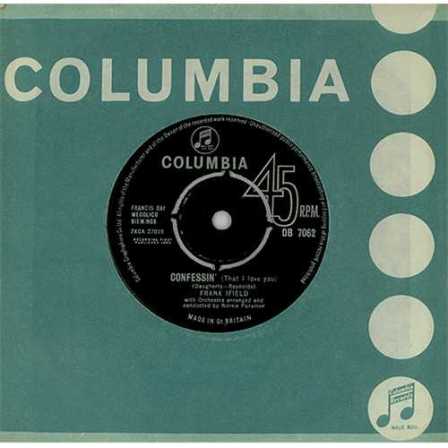
153. ‘Confessin’ (That I Love You)’, by Frank Ifield

In my last post, I indulged in a bit of metaphor-making and compared the Merseybeat wave that was sweeping the charts to a meteor – a mop-topped meteor that flattened all the musical dinosaurs who were clogging the charts. Except, as beautiful as that image is, reality gets in the way here. We briefly have to return to the old ways. The corpse, it seems, is still twitching.

im-confessin-that-i-love-you-featuring-frank-ifield

Confessin’ (That I Love You), by Frank Ifield (his 4th and final #1)

2 weeks, from 18th July – 1st August 1963

Frank Ifield, after dominating the latter half of 1962, still had enough in the tank to claim one final #1 single. The three he’s had so far have ranged from dull (‘The Wayward Wind’) to demented (‘Lovesick Blues’), but none have been very good. Can ‘Confessin’’ save the day?

It starts with a smooth rhythm – a bossanova? – and, naturally, a harmonica. And then the syrupy tones of ol’ Frank. I’ve said it before but it bears repeating – for all his many faults, this guy could sing. I’m confessin’ that I love yo-ooou, Tell me do you love me to-ooo, I’m confessin’ that I need you, Honest I do… Need you ev’ry moment…

It’s a lot more understated than his previous chart-toppers, even his trademark yodelling works here, in that it fits in with the lilting rhythm of the song and doesn’t just sound like him showing off. I kind of like it… I mean, I’ve forgotten it pretty much as soon as it’s done, and the lyrics are a kind of nothingy mulch about how much he loves a girl, and how he hopes she returns his feelings: I’m afraid someday you’ll leave me, Saying can we still be friends… To suggest that it has redeemed the chart-topping career of Yodelling Frank, however, would be a step too far.

If I’ve learned anything over my past four Ifield-based posts, it’s that this will be an old song done up to suit modern ears. It’s what Frank did. And in fact, ‘Confessin’ (That I Love You)’ dates further back than any Ifield #1 has done so far. It’s had the treatment from pretty much everyone, many of whom we’ve met before on this countdown: Tony Bennett, Rosemary Clooney, Doris Day, Perry Como, Frankie Laine, Kay Starr, Dean Martin and Johnnie Ray, as well as others like Judy Garland and the wonderfully named Chester Gaylord, who had the original hit way back in 1930.

FRANK_IFIELD_CONFESSIN+(THAT+I+LOVE+YOU)-294599

It’s a perfectly nice record, but one that I doubt would have come anywhere near the top of the charts had it been Ifield’s first release. It definitely needed the goodwill and borrowed lustre of his earlier, much bigger hits to drag it to the summit. Way, way back – when I wrote about Frankie Laine’s follow up to the monster-hit ‘I Believe’ – I invented the idea of a shadow-hit, a hit record kind of like those tiny birds that hang out picking the flies off hippos, and this is definitely what’s happening here.

And so ends the chart-topping career of Frank Ifield. He burned brightly but oh-so briefly – his four #1s squeezed into just under a year. I must admit I made a grave error when I got excited about Elvis doing four-in-a-year and struggled to find any other act that had managed it… Our Frank was hiding right here under our very noses. But that kind of sums up his career and his legacy, as I’d say he’s been pretty much forgotten. He was bulldozed from collective memory by The Beatles et al, and now rarely gets mentioned… He had one more Top Ten hit following this, and has been inducted into both the Australian Music Hall of Fame and, more importantly, the Coventry Music Wall of Fame. In the eighties he contracted pneumonia, which left him unable to yodel… He’s still going, though, aged eighty-one.

Frank Ifield, then, ladies and gentlemen. First Australian to top the UK charts, the Great Yodeller, forgotten superstar of the 1960s… A round of applause, please. And onwards.

Follow along, and listen to every #1 covered so far, on my Spotify playlist:

152. ‘I Like It’, by Gerry & The Pacemakers

Act III of the Merseybeat spring offensive sees Gerry and the lads score a quick return to the top. ‘How Do You Do It?’ and ‘I Like It’ acting as the bread; The Beatles’ ‘From Me to You’ as the filling. A sandwich to change pop music as we know it.

gerry-pacemakers-500

I Like It, by Gerry & The Pacemakers (their 2nd of three #1s)

4 weeks, from 20th June – 18th July 1963

The previous two songs were super perky, ultra-upbeat, and positively dripping in youthful enthusiasm, and the formula isn’t altered very much here. We get a swingin’ little intro, and then: I liiike it, I liiike it…! If you didn’t know that Gerry & The Pacemakers were Liverpudlian, then you do know. This is a great record, but Gerry Marsden’s scouse rasp is possibly the highlight of the whole shebang.

I liiike it…. I liiike itI like the way you run your fingers through my hair… And I like the way you tiddle my chin… I docked ‘From Me to You’ a couple of points for being a little simple, a little gauche. And I suppose I’ll have to do the same thing here… Except. The charm of this song – of this whole embryonic musical movement – is its down-to-earth charm. These are regular blokes singing a regular, catchy song about love; there are no flowery romantic declarations from note-perfect crooners (see: Frank Ifield) or glossy-teethed American superstars (see: Elvis) here.

Look, for example, at the line: And I like the way you straighten my tie, And I like the way you’re winkin’ your eye, And I know I like you…! Or the And I like the way you let me come in, When your mama ain’t there…. (wink wink) It could have been written by a fourteen-year-old, and that’s all part of the allure. I suppose all the big British pop movements had their roots with kids on the streets: punk, Britpop, garage… and Merseybeat is no different. Music for kids; by kids.

gerry-and-the-pacemakers-i-like-it-1963-14

Just like its immediate predecessors, ‘I Like It’ is another short, sharp pop song; another two minute wonder. And like all the best pop songs there’s nothing too sophisticated going on here. In fact, I’ve covered many better-sung and better-performed songs on this countdown. But… this is the glorious sound of four boys jamming away in their garage, and it presses all my buttons. And ‘boys’ they truly were – Gerry, his brother Fred, Les and Arthur were all aged around twenty when their careers went stratospheric. For a while, in the summer of ’63, the smart money might have been on this four-piece going on to be the biggest band on the planet…

But, of course, that didn’t happen. Perhaps the reason I was a bit harsh on ‘From Me to You’ in my last write-up is that it comes loaded with the knowledge of what The Beatles would go on to do. It’s a perfectly decent pop song but, in my opinion, wouldn’t come near a Beatles Top 20. Whereas, ditties like ‘How Do You Do It?’ and ‘I Like It’ were as good as it got for Gerry and the gang. This is all we know them for; and that’s fine.

Before we finish, I’d like to indulge in a bit of a metaphor. Bear with me, and picture if you can these three Merseybeat chart-toppers from April-July 1963 as a huge meteor killing off hundreds of dinosaurs. These dinosaurs being… *clears throat* … Adam Faith, Anthony Newley, Michael Holliday, Frankie Vaughan, Alma Cogan, Helen Shapiro, The Everly Brothers, Tommy Steele and countless other artists who never topped the UK charts and who I can’t therefore link to… Their careers were all pretty much obliterated (or, at least, heavily affected by) this unstoppable Merseybeat fireball. May they rest in peace. Vive la revolution!

151. ‘From Me To You’, by The Beatles

Where to start… How do you introduce the most successful, most influential, most important, so on and so forth, band ever? Um….

rs-7349-20121003-beatles-1962-624x420-1349291947

From Me to You, by The Beatles (their 1st of seventeen #1s)

7 weeks, from 2nd May – 20th June 1963

Maybe I don’t need to. Anyone with even a passing interest in pop music will have heard this song. Da da da da da dun dun daaa… chiming harmonica and exuberant vocals – you can just picture two mop-heads leaning in towards the mic… If there’s anything that you want, If there’s anything I can dooooo, Just call on me, And I’ll send it along, With love, From me, To You…

Gerry & The Pacemakers set the Merseybeat pace with ‘How Do You Do It?’, but this takes things up another level again – as if someone has just found the warp button and pressed it twice in quick succession, leaving Cliff Richard and Frank Ifield as specks in the distance. There’s a lot of great stuff here: the rasp in John’s voice, the camp little ‘oohs!’ at the end of each line, and Ringo’s drum-fills (I’ve never subscribed to the ‘Ringo wasn’t that good a drummer’ theory – he’s the main man here.) And the saucy line in the bridge: I’ve got lips that long to kiss you, And keep you satisfied… Ooh!

But… ‘From Me to You’ isn’t an amazing, Grade-A, one-of-a-kind, bury it in a time capsule for future generations kind of record. Not quite. They will certainly come for The Beatles, of course; but this isn’t it. It’s a little too cheesy, for a start – a little too close to a nursery rhyme in some of its lyrics: I got everything that you want, Like a heart that’s oh so true… Meh. Plus, they should have brought a guitar in on the solo, rather than reusing the harmonica. It makes the record harmonica-heavy, which is never a good thing. I’d even go so far as suggesting that ‘Please Please Me’ would have made a better first Beatles #1… (in my humble opinion…) It’s funny: criticising anything about The Beatles seems kind of futile, like suggesting Shakespeare should have made ‘King Lear’ a bit shorter, or that Da Vinci should have painted the ‘Mona Lisa’s eyes a little further apart… Futile, and way too late.

uk-19

What ‘From Me to You’ is, then, is a rip-roaring intro to the band that will dominate the sixties and beyond. The band that every other rock ‘n’ roll band from now to eternity will rip off, even if they don’t realise it. And, having listened to this record now five or six times in quick succession, it really does sound like a band that knew they were going to be huge. There’s a self-confidence to this record, a swagger and a wink. Maybe that’s just the hindsight talking; though I’m pretty sure it isn’t.

It feels slightly disrespectful to end my first post on The Beatles – my introductory post on the Biggest Band in the History of Popular Music ™ – so quickly. I do usually try to write a bit about the band in these types of posts, a bit of background to the song and so on… Here goes: The Beatles consisted of John Lennon, Paul McCartney, George Harrison and Ringo Starr and you know the rest. Everyone does. I can’t remember the first time I heard them. They were just always there, and I was born fifteen years after they stopped making music, when one of them was already dead and another was narrating ‘Thomas the Tank Engine’ (actually, that was probably my first ever exposure to a Beatle, aged three.) My parents love them. My friends love them. I’ve taught English lessons to young kids in Asia using Beatles songs, and they loved them. I have one friend who claims to not like them; but he’s an idiot.

We will hear from them again soon. Then again. And again until the sixties are out. The Beatles have officially landed, and nothing will ever be the same again…

Follow the OFFICIAL playlist to this blog, updated along with every post, here….

150. ‘How Do You Do It?’, by Gerry & The Pacemakers

It comes on like some kind of whirlwind, this new sound. A whip-snapping intro with a jabbing piano riff, tight guitars and machine-gun drums. The revolution is here.

191370

How Do You Do It?, by Gerry & The Pacemakers (their 1st of three #1s)

3 weeks, from 11th April – 2nd May 1963

It’s kind of like rock ‘n’ roll music has undergone a software update – the way that your laptop updates, say, Skype without you knowing and now it’s still Skype but with new colours and maybe rounded corners… This is clearly rock ‘n’ roll – we’ve got guitars and drums and perky lyrics about being in love – but it sounds so fresh, so new. Same same; but different.

How do you do what you do to me, I wish I knew, If I knew how you do it to me, I’d do it to you… These are pretty relatable lyrics – no flowery pretence here. In fact, they could be interpreted as pretty raunchy: When I do it to you… Do what, sir! And to whom!?

The bridge is my favourite bit here – the Like an arrow, passin’ through it… line really works. And then he yelps the song’s title – desperate and frenzied – How do you do it!? As a song it’s very short, and to the point. Four verse-choruses, two bridges and a solo rattle by in one minute fifty-five. Then it’s done; but pop music has changed.

I think it might all be in the voice. Bear with me. Gerry Marsden has an accent – a scouse, Irish accent – that makes him sound like a bloke from down the pub. All the British singers to have topped the chart, with the exception perhaps of Lonnie Donegan, have sounded ‘proper’. Or, in the case of Tommy Steele, they were putting on an accent. But here, Marsden is just singing like he speaks, with a rasp in his vowels, squeezing ‘suppose’ into ‘spose.

I can think of only one record that we’ve heard so far, that’s sounded like such a leap forward, and that was ‘Rock Around the Clock’. I’ve said it before, but hearing these #1s in context, in the order that they topped the charts, really makes the truly special ones stand out. Listening to ‘How Do You Do It?’ barging in after so much Cliff, mid-career Elvis, and Frank Ifield, really does make it sound like a shot of adrenalin, rather than the mid-level Merseybeat pop that it might come across as on a compilation album. And, to me, the fact that this was Gerry & The Pacemakers debut chart hit makes it all the better – they really are arriving out of nowhere to shake up the charts.

R-551583-1295334932.jpeg

Of course, it might have been even better if The Beatles had been the first ever Merseybeat #1. They came close (there’s a lot of controversy about ‘Please Please Me’ topping various charts in early-1963, but not the ‘official’ ‘Record Retailer’ chart) but it wasn’t to be. In truth, Gerry and the Pacemakers were The Beatles Mk II. They were from Liverpool, cut their teeth in the same clubs and bars, were discovered by Brian Epstein and produced by George Martin. The Beatles did record ‘How Do You Do It?’, but rejected it as a single. Things might have been so different…

But The Fab Four didn’t have long to wait for their own chart-topping run to begin, and within a year they had surpassed their local rivals, conquered Britain, then the US, then the world. But for most of 1963, Gerry and the gang were every bit as big as John, Paul and co. We’ll be hearing from them again very soon, with what I’d class as an ever better song that this.

When I was eleven or twelve, I started making mix-tapes based on hits from particular decades. Nineties, seventies – I wasn’t big on the eighties back then – and sixties. But my ‘sixties mixes’ always started in 1963, with Merseybeat. Everything before that just sounded really old – very misty and a little bit scary… Like I was listening to ghosts. Then, eventually, I discovered Elvis, then Chuck and Buddy, and realised that this wasn’t true. But, there’s still a feeling – shared by many – that modern pop music started in the spring of ’63. That this is Pop Year Zero. And I can see why. Listen to ‘The Wayward Wind’, by Frank Ifield. That’s an old-fashioned, easy-listening track that could have been a hit ten years back. ‘How Do You Do It?’ sounds so fresh that it mightn’t have been a hit ten weeks back.

It’s been fun, writing about the previous hundred and forty-nine UK number one singles. I’ve discovered some great new songs, and found unexpected layers to what I’d previously thought of as simply ‘Pre-Rock’ and ‘Rock ‘n’ Roll’. But with this latest chart-topper, we’ve well and truly opened a new chapter… Onwards!