148. ‘Summer Holiday’, by Cliff Richard & The Shadows

The doors are locked, the suitcases stowed in the boot, the dog’s at the kennels. Dad starts the car and mum turns to the kids in the backseat. We’re all going on a summer holiday… she sings… No more working for a week or two…

602bb35a-ef2d-4113-b481-6ad4b02f8f33_1.bfe8d4d664a2e2f37aa93658ea409266

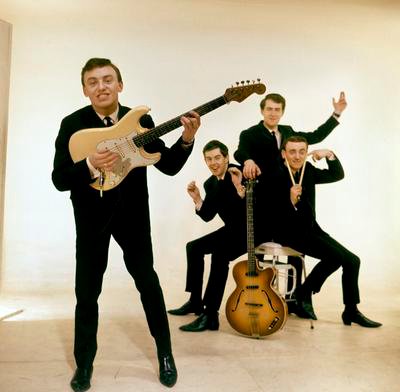
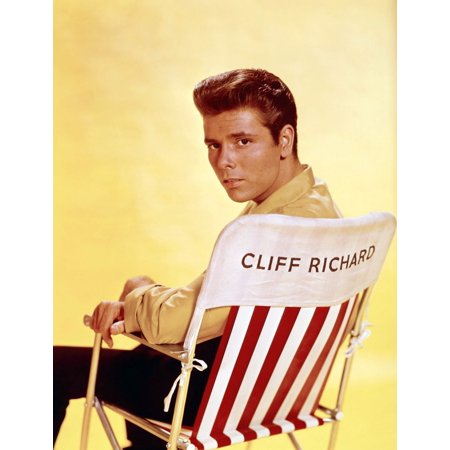
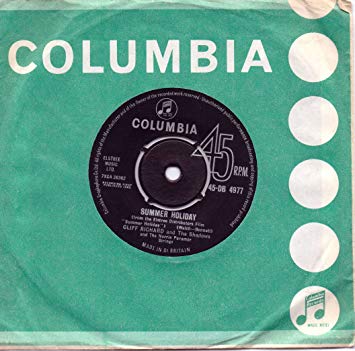
Summer Holiday, by Cliff Richard (his 7th of fourteen #1s) & The Shadows (their 11th of twelve #1s)

2 weeks, from 14th – 28th March / 1 week, from 4th – 11th April 1963 (3 weeks total)

Chances are, if you had any sort of semi-regular, middle-class British childhood in the latter half of the twentieth century, you will have lived through that very scene. I know I have – more than once. There can’t be many better known #1 hits than this? I’m racking my brain to think of chart-toppers that more people will know the words to, and I can come up with ‘Hey Jude’, and ‘Bohemian Rhapsody’…

We’re goin’ where the sun shines brightly, We’re goin’ where the sea is blue, We’ve seen it in the movies, Now let’s see if it’s true… It’s a horrendously twee song. The jaunty guitar ‘riff’, the glockenspiel, the strings that are apparently now a constant part of Cliff’s musical journey… And those lyrics. So we’re goin’ on a summer holiday, To make our dreams come tr-u-u-u-ue… Fo-or me and you… ‘Trite’ doesn’t even begin to cover it. Then there’s the key-change, and the humming to fade. Humming!

This should be an awful song. It is awful. And yet, it’s not. Not really. Because deep down in even the hardest, most cynical and blackened hearts there remains a kernel of the-child-that-was. And that little kid, in the backseat of his family’s Ford Escort, cares not for the sickeningly perky guitar and the vomit-inducing lyrics; to him it is simply the sound of, well, the summer holidays.

91ueecyvlfL._SX355_

This song is Cliff doing what he does best. Cliff at his Cliffest. Peak Cliff. This will be his last chart-topper for a while, and it’s kind of fitting that we pause here. ‘Summer Holiday’ draws to an end his teeny-bopper stage – very soon he’ll be usurped by a four-piece from Liverpool as Britain’s foremost pop-act of the age. And it’s the perfect song to do so with, as any lingering hope that Cliff was Britain’s great rock ‘n’ roll hope is finally, brutally, irrevocably snuffed out in this record’s opening chords. Looking back at his seven #1s so far, only ‘Please Don’t Tease’ came anywhere close to being a rocker; and even then it was a super-mild rocker. The coconut korma of rock ‘n’ roll records. ‘Summer Holiday’ is, of course, one of the songs that Cliff performed on Wimbledon’s Centre Court during that rain delay, a moment still commemorated every year in Middle England’s village halls…

‘Summer Holiday’ is also the second chart-topping record from the hit movie of the same name, after ‘The Next Time’ / ‘Bachelor Boy’. Which is impressive – not many movies spawn two #1s (and it’s not finished with the chart-toppers yet!)

It also, and this is something that’s just came to me, confirms ‘Summer’ as the biggest single theme in pop music, after Christmas. We’ve already had ‘Here Comes Summer’ by Jerry Keller as a chart-topper in 1959, and I can think of at least three more summer-themed number ones through the years (there are surely others…) Which makes it all the odder that winter was barely finished when this song actually topped the charts… The power of Cliff! Even the seasons couldn’t contain him!

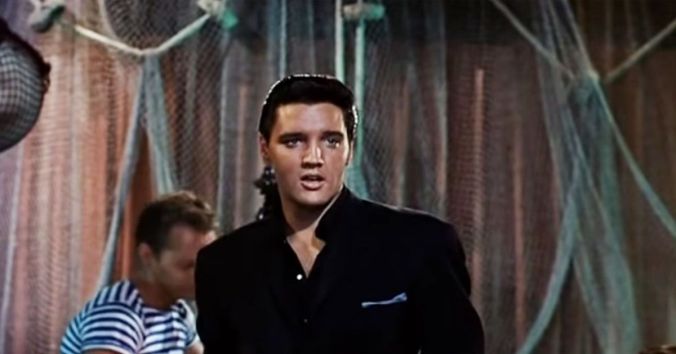
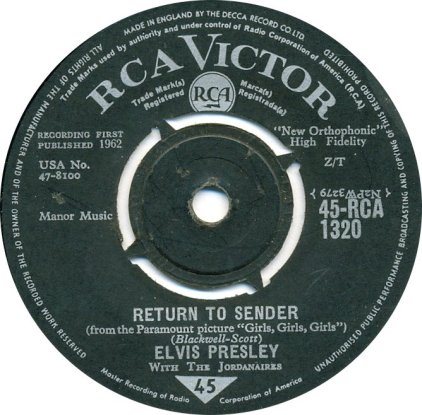
143. ‘Return to Sender’ by Elvis Presley

In which Elvis does something unprecedented and – to this very day – unmatched. Two years, eight number ones singles. Four in 1961. Four in 1962. Of the 110 chart-weeks that have passed since he returned from his army-enforced hiatus, Elvis has been at #1 for forty-one of them… The record with which The King sealed this feat…?

767443674e89abb4f5a207ea43f83b12

Return to Sender, by Elvis Presley (his 13th of twenty-one #1s)

3 weeks, from 13th December 1962 – 3rd January 1963

…is utter, utter cheese. Elvis wrote a letter to a girl; it came back. Return to sender, Address unknown, No such number, No such zone… They had a quarrel – a lover’s spat – and no matter how much he apologises his girl ain’t having it. That’s about it.

It’s Elvis at his most unimaginative: an early to mid-sixties movie soundtrack that got to the top of the chart by default just because it had the name ‘Elvis Presley’ on the cover. But… I love this song. Have done for years. Back when I first got my much-mentioned Elvis ‘Best Of’ as a teenager this was one of the songs I would skip to first. At the time I even went so far as to list it as my favourite Elvis song… ever. I know, I know, I was young and have since seen the error of my youthful ways. It’s not my favourite Elvis song, honest. And it’s nowhere near being his best song. But it has a charm to it, a swing and a swagger to it, that is hard to deny.

For example, I love it when the backing singers – the Jordanaires – pop up with their baritone The writing on it… before every chorus. I love it when Elvis launches into the final verse, as if impatient for it to begin: This time I’m gonna take it myself, And put it right in her ha-and… And I love the line I write I’m sorry but my letter keeps coming back… for the rasp in Elvis’s voice that went missing circa-1959, and for the fact that to someone from Scotland it sounds like he’s saying ‘Aye right, I’m sorry…’ (And therefore isn’t sorry in the slightest.)

elvis-presley-return-to-sender-1962-5

At the very least, Elvis sounds more alive during this than he did in his last two chart toppers – the dull ‘Good Luck Charm’ and the slightly better ‘She’s Not You’. There’s a hiccup in his voice and a wink in his eye that suggest he might even be enjoying himself here. It’s a solid pop song – very jaunty without being irritating. It sounds a bit like a mellower version of a Neil Sedaka hit. ‘Calendar Girl’, maybe.

However, this doesn’t mean that ‘Return to Sender’ is signalling an upturn in Elvis’s career. As I mentioned, this was yet another movie soundtrack tie-in – this time from ‘Girls! Girls! Girls!’, which currently holds a 40% rating on Rotten Tomatoes. (Sample lyric from the title track: Big and brassy, Small and sassy, Just give me one of each kind…) In fact, you could say that this hit marks the end of Elvis’s ‘Imperial Phase’. People were getting tired of the same sub-standard pop, and a star name can only get you so far – even when that star name is The One-And-Only Elvis Presley. Amazingly, after this, Elvis will score just three more UK number one singles in his lifetime!

There we have it, then. It’s weird to think that from now on every fifth number-one I write about won’t be by The King. But I’ll cope. While it’s undeniably impressive to have had four chart-toppers a year, two years in a row; when that run includes tracks like ‘Wooden Heart’, ‘Rock-a-Hula Baby’ and ‘Good Luck Charm’ then some of the shine is inevitably lost…

142. ‘Lovesick Blues’, by Frank Ifield

It had been a while since I arrived at a record about which I know nothing. Zilch. Nada. Until Frank Ifield came along. I should relish these moments of blissful ignorance. They are becoming rarer and rarer the further we move into the rock age…

frank-ifield-lovesick-blues-1962-19

Lovesick Blues, by Frank Ifield (his 2nd of four #1s)

5 weeks, from 8th November – 13th December 1962

Upon pressing play, however, and unleashing this next #1, I find myself wishing for a quick return to those halcyon times, just two minutes back, when I had never heard this song.

‘Lovesick Blues’ could be a decent song. It’s fun, it’s up-tempo. It’s got a strong hook and a funky trumpet. It’s a record with an old-world, showtune charm (it was originally written in 1922) and a super-sixties rhythm section. It’s cheesy, sure, but that’s OK. I can imagine it as the theme to a silly sitcom, or an Austin Powers movie. I could live very easily with this as a huge chart-topping record; if it weren’t for one very big problem…

The yodelling. Oh God, the yodelling. In my post on Ifield’s first number one – ‘I Remember You’ – I was surprised to find him labelled as a ‘yodeller’. He doesn’t yodel that much, I thought. One listen of ‘Lovesick Blues’, however, and my doubts are dispelled. Frank Ifield = Yodeller.

A Brief History of Yodelling. Originally used by Alpine herders calling to their cattle, or to send messages from one village to another, yodelling was gradually incorporated into traditional songs and stage shows. And then, for some reason, it crossed the Atlantic and made it into country music. We’ve had yodelling before in this countdown – without me even noticing it! – thanks to Slim Whitman in 1955. Once you start looking, the breadth and depth of yodelling around the world is quite terrifying. Switzerland is where it started, obviously, but it can also be found in the folk music of Romania, Scandinavia, Georgia, Central Africa and Hawaii… Hank Williams was a good yodeller. As was, believe it or not, Bill Haley (he gave it up when he jumped on the rock ‘n’ roll bandwagon.) The mind boggles.

I want, as I usually do in these posts, to quote some lyrics from this song, to explore some of the themes that are present etc. and so on. But to be honest, I can’t really focus on the words. Ifield rattles through the song at breakneck speed, adding twelve notes to a word when just one would do. It’s a song, I believe, about feeling blue when lovesick.

FRANK_IFIELD_LOVESICK+BLUES+-+1ST-294596

He’s a good singer, is Frank Ifield. He’s an excellent yodeller, if that’s your kinda thing. But when he hits that drawn-out final note… Oh boy. In the interests of fairness, I gave the Hank Williams version of ‘Lovesick Blues’ a go. But nope, I wasn’t feeling it. Little Richard recorded a version, and I love me some Little Richard, but, again, it ain’t doing nothing for me. Maybe the song’s just cursed… Plus, the ‘B’-side to ‘Lovesick Blues’ was a ditty titled ‘She Taught Me How to Yodel.’ I’ve put in a link, but I would urge you to only click on it if you are in a sound-proofed room with hard liquor to hand.

There’s clearly a reason why this is a very forgotten chart-topper; why this was the first #1 in a long time that I’d never heard before. I bet nobody’s listened to this for years… And for it to follow on from the sublime ‘Telstar’!? Talk about coming back to earth with a bump. You can still see the crater…

‘Lovesick Blues’ does, though, mark an important milestone in British chart history. Its second week at the top coincided with the chart’s 10 year anniversary. From ‘Here in My Heart’ to now. One decade; 142 chart-topping discs. That’s an average of one #1 every twenty-six days. From pre-rock, to rock ‘n’ roll, to post rock ‘n’ roll, to yodelling… If I continue at this rate I’ll reach the 1970s by next summer, the 1980s by 2022, the 1990s hopefully before the 2030s… Still with me…?

140. ‘She’s Not You’, by Elvis Presley

Ladies and Gentlemen! For the eighth time in under two years! It’s… Oh, I can’t be arsed. Not really. Look – Elvis is #1. Again.

elvis-presley-shes-not-you-1962-2

She’s Not You, by Elvis Presley (his 12th of twenty-one #1s)

3 weeks, from 13th September – 4th October 1962

In my post on his last chart-topper – the soporific ‘Good Luck Charm’ – I crafted a pretty nifty (if I do say so myself) metaphor in which Elvis’s career equalled a long-haul flight. We were five hours in, meal-trays cleared, lights dimmed etc. etc. Very smooth sailing. And if you were hoping for a bit of turbulence with this latest record then you will be left disappointed. ‘She’s Not You’ is basically ‘Good Luck Charm’ Pt. II. Same tempo, same half-asleep Elvis. In fact, I’m pretty sure that both songs use the very same backing track (**stokes chin thoughtfully**)

Her hair is soft, And her eyes are oh so blue… She’s all the things a girl should be, But she’s not you… Elvis has a new girl, but still loves the old girl. Sigh. She knows just how to make me laugh when I feel blue… She’s everything a man could want, But she’s not you…

I must admit that, despite this song’s utter basic-ness and the fact that clearly very little effort went into the writing or the recording of it, I do like it. I always have liked it, ever since I got that Elvis Greatest Hits collection way back when. There are the bumbabumbabumbabums for a start, and the piano solo that always makes me imagine a bumblebee hovering over a flower. And it has a bit of a swing to it, most notable in the bridge, when Elvis slurs that line: And when we’re dancing, It almost feels the same… (For years I thought it was It’s so confusing…) There’s something cool, really, about auto-pilot Elvis. About Elvis not even trying, yet still dragging songs like this to the top of the charts just because he was Elvis Fucking Presley.

712827128207_1

Interestingly, this is the first time since the 1950s that Elvis has hit the top with two similar sounding discs. Last year, he was veering from opera to rockabilly to lederhosen. Maybe, then, the similarities between ‘Good Luck Charm’ and ‘She’s Not You’ – his eleventh and twelfth UK #1 singles – say it all about his mid-career malaise. And it’s needless to say that there is absolutely no rock ‘n’ roll to be found here. This song has had the rock sucked right out of it. This is pure, 100% middle of the road pop.

As I find in every post I write about Elvis these days, I’m out of things to say pretty quickly. We all know he’ll be along again soon, so let’s save it for whenever we see him next. I do want to note, however, just how quickly we are racing through 1962. ’61 took us on a variety of detours, down all sorts of one-week bye-ways, but ’62 has been marked by big records spending huge chunks of time at the top. Only twelve songs will make #1 in this year, the fourth lowest total in chart history (after 1954, 1992 and 2016, fact fans.) After just three more chart-toppers we will be in 1963: the official start of the ‘Swinging Sixties’ and modern pop music as we know it… Hold on, people. It’s coming.

139. ‘I Remember You’, by Frank Ifield

For the 3rd post in a row, we have somebody new at the top of the charts. Mr. Frank Ifield is going to burn very brightly, and very briefly, across British pop in 1962-63 and he kicks things off here with a big ol’ seven-week stay at #1.

p021yt5y

I Remember You, by Frank Ifield (his 1st of four #1s)

7 weeks, from 26th July – 13th September 1962

Let’s get down to business, then. What is this new and rather sudden singing phenomenon all about? On first listen… I’m not sure. There’s a nice, rolling C&W rhythm, and a lot of harmonica. This is a record that is harmonica-heavy. I remember you-oooh… You’re the one who made my dreams come true, A few, Kisses ago…

He’s got a distinctive voice, does Frank Ifield. It’s a good voice; but not what I’d call a particularly enjoyable voice. He has a tendency to launch into extremely high notes at the end of each line, for a start. Then there’s the way he takes the phrase out of the blue, and adds about eight extra syllables onto the end. Wiki describes Ifield as a ‘singer and guitarist who often incorporated yodelling’, but I wouldn’t describe what he’s doing here as ‘yodelling’ exactly. It’s more that he’s just fannying about when he should be getting on with singing the song.

Singing style aside, I’m not terribly sure what this song is about, either. He ‘remembers’ a girl, but that’s because he just kissed her. When my life is through, And the angels ask me, To recall, The thrill of them all… That’s a strange thing to think, as you kiss the love of your life – that you’ll remember it on your deathbed. Or is it extremely romantic? Kind of? Contrast these very lightweight lyrics with those of Ray Charles in the previous chart-topper. Big difference.

FRANK_IFIELD_I+REMEMBER+YOU+-+2ND-571711

If you’re getting the feeling that I’m not terribly into this record, then you’d be right. This is the first time I’ve ever heard it and, to be honest, it’s average. Even the music is a weird kind of Americana: a British interpretation of Country & Western (Ifield was British-Australian). You can imagine him on a music-hall stage, perched on a wooden fence, chewing a bit of straw. Howdy pardner…! But – and this might just be me – I’m also getting slight Merseybeat vibes. Maybe it’s the way his sentences run on – You’re the one who said I love you too, Yes I do, Didn’t you know…. – or maybe it’s the chord progression. The harmonica ‘riff’ which I complained about at the start kind of reminds me of ‘Please Please Me’ by The Beatles. The Merseybeat explosion is less than a year off, and the bands that would lead it were already around and making music, and so perhaps it’s not so far-fetched to be hearing the sounds already creeping through.

The end of ‘I Remember You’ sounds pretty cheesy and cheap, and I, personally, was glad that we got there in just over two minutes. If ‘I Can’t Stop Loving You’ was a Champions League kind of record; then this is solidly League One. The Scunthorpe United of chart-topping singles. It’s a cover of an old forties standard – which means that the blame can’t be heaped wholly at Frank Ifield’s door and that the people of 1962 would perhaps have already known the song, giving it a head start in its bid for the top. Yet, I remain unconvinced that this is what the charts needed. And why on earth it stayed at #1 for seven weeks, selling over a million copies in the process, is a real mystery. Maybe it shouldn’t be, though: bland and accessible sells – always has, always will.

I’ll hold off on any Frank Ifield biography for now – this is just the beginning of a big twelve months for him, and we’ll be hearing a lot more from him very, very soon. For now, let’s leave the bio at him being (half) Australian, and thus the first in a very long line of Aussie chart-toppers. To be at the head of a list that contains Kylie, The Seekers, Olivia Newton-John and Peter Andre is a proud achievement indeed…

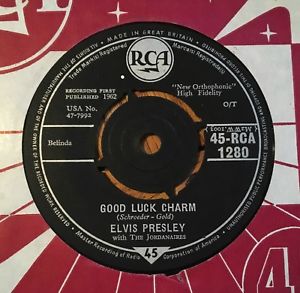
136. ‘Good Luck Charm’, by Elvis Presley

Uh-huh-huh, Uh-huh-huh, Uh-huh-huh, Oooh yeah… Sorry, I think I just dosed off. Where was I? Oh, right. It’s Elvis again. How many #1s is that, now? I’ve lost track… Eleven? Thanks.

1a05378768dab97cbc98827b6cd5841c

Good Luck Charm, by Elvis Presley (his 11th of twenty-one #1s)

5 weeks, from 24th May – 28th June 1962

This is the sound of Elvis in complete cruise-control. If his career were a long-haul flight (bear with me…) then we would currently be five-hours in, cruising at 37,000 feet, meals served, lights dimmed, pilots snoozing with their feet up.

Don’t want a four-leaf clover, Don’t want an old horse-shoe… These are the things Elvis doesn’t need – along with a silver dollar, a rabbit’s foot on a string and a lucky penny – because he has his girl. Come on and… Be my little good luck charm, You sweet delight… I want a good luck charm, A-hangin’ on my arm, To have, To hold, Tonight…

And that’s pretty much it. Elvis sounds bored. The music sounds like one of the pre-set backing rhythms on an old Casio keyboard that I had as a kid. After two verses and two choruses, we get to the spot where the solo should be. And the solo is Elvis going ‘Uh-huh-huh’… over and over again. When you think back to the energy of his fifties number ones – his growl on ‘Jailhouse Rock’, for example – or the startling newness of his Sun Record, pre-chart topping days, then you have to feel sad that he had been reduced to songs like this. It’s not awful. It’s OK. But the problem is that it’s not trying to be anything more than just OK.

s-l300

And coming as it does, hot on the heels of Elvis’s best two post-army chart toppers – ‘Little Sister / Her Latest Flame’ and ‘Can’t Help Falling in Love’ – it really does feel like a step backwards. He was capable of so much more. It’s a well-known fact that Elvis was up for recording pretty much anything that his manager, Colonel Parker, suggested, and that Col. Parker had absolutely no qualms about milking his hit-record machine for all he was worth. (‘Song of the Shrimp’, ‘(There’s) No Room to Rhumba in a Sports Car’ and ‘Petunia, the Gardner’s Daughter’ are all titles of songs recorded by ‘The King of Rock ‘n’ Roll’ between 1961 and 1967.) ‘Good Luck Charm’ is probably the one UK chart-topper record that best encapsulates this mid-career malaise.

I wrote in my previous post that the zany ‘Nut Rocker’ was just what we needed to liven things up at the top of the charts. This, however, is just what we didn’t need. I’ve listened to it six or seven times while writing this post and am pretty sure that my brain has started to melt. To think that this was the country’s number one selling song for five (5!) weeks. Really, record buying public of 1962? Really…?

132. ‘The Young Ones’, by Cliff Richard & The Shadows

We enjoyed/suffered through (delete according to personal preference) a Cliff-less 1961. But Britain’s great rock ‘n’ roll hope kicks off 1962 with… (pause for dramatic effect)… his most famous hit?

The-Young-Ones-1961-film-images-630814b5-6ace-499e-8614-12e90dccdd6

The Young Ones, by Cliff Richard (his 5th of fourteen #1s) and The Shadows (their 7th of twelve #1s)

6 weeks, from 11th January – 22nd February 1962

OK, there are the Christmas songs. And ‘Summer Holiday’. And ‘Congratulations’… Let’s just say that this is his most famous song not about festivities and/or vacations. Though this latest chart-topper is a celebration of sort – a celebration of being young!

Its starts with some Shadows ™ guitar, before Cliff comes in with his gossamer-light voice… The young ones, Darlin’ we’re the young ones, And the young ones, Shouldn’t be afraid… I am slightly loathe to admit it, but I have missed that voice of late… To live, Love, While the flame is young, ‘Cause we may not be the young ones very long… Any song performed by The Shadows and sung by Cliff can’t fail to be of a certain standard. It may well be cheesy, and the lyrics might be very trite, but downright bad? Unlikely.

And ‘The Young Ones’ does have its moments. I love the beat-band drum fills, while the guitars are very reminiscent of Buddy Holly’s mid-tempo hits – ‘Heartbeat’, ‘Maybe Baby’ and the like. Yet it’s far from perfect –  corny couplets like: Oh I need you, And you need me, Oh my darlin’, Can’t you see…? make sure of that.

And then there are the violins. Yep, Cliff’s gone orchestral. By the end the strings are swirling and cascading, drowning out Hank and Bruce’s guitars. (I can’t help wondering if this was one of those tracks, like the minimalist ‘Travellin’ Light’, on which The Shadows were a little bored…) I had to double-check that I was listening to the original version, rather than some kind of polished re-release… I’d see this as Cliff’s attempt to move away from teeny-bop discs like ‘Please Don’t Tease’ and ‘I Love You’ – his bid for adult-artist longevity.

7140gXm67-L._SL1280_

In that regard it’s a very clever record. The lyrics are about being young; and yet the production is very grown-up. It isn’t enough of a departure to alienate the screaming fifteen year-olds, but it’s classy enough to get grandma interested. And there’s a bittersweet edge to the closing lyrics that will appeal to mum and dad: And someday, When the years have flown, Darlin’ then we’ll teach the young ones, Of our own…

I wouldn’t call it a sell-out in the same way that Elvis prancing about in Lederhosen singing ‘Wooden Heart’ was a sell-out. Because, let’s face it, Cliff has never – in terms of his chart-topping singles, at least – managed to justify his tag as Britain’s foremost rock ‘n’ roller. From the opening chords of his first #1 he’s been planted firmly in the middle of the road. But… Something definitely clicked here, and his career has kicked up a gear. Thanks to its role on the soundtrack to Cliff’s movie of the same name, ‘The Young Ones’ had built up a staggering 500,000 pre-orders before its release, meaning that it rocketed straight in to the charts at Number One – only the 3rd single (and the 1st single not released by a certain Elvis Presley) to do so. It remains his biggest seller in the UK.

And its legacy was such that twenty years later it became the theme tune to BBC sitcom ‘The Young Ones’, in which Rik Mayall played a lisping, tantrum-throwing, anarchy-loving Cliff fan. The joke of course being that, by 1982, young people with any aspirations towards being cool couldn’t possibly be Cliff fans. But, the eighties are a long way off yet in our world. It’s January of 1962, Cliff and The Shadows are the biggest pop-stars in the country, and they’ve just scored their biggest hit yet. Though, as with all of us, they may not be the young ones very long…

131. ‘Moon River’ by Danny Williams

Before we begin our next post, can I take a moment to praise the year that has just been? The year that this next #1 single will bring to a close. I know it isn’t time for a recap, but 1961 has been an unprecedented year in terms of the breadth and depth of its chart-toppers.

The twenty-one number ones from this year have taken us from gloriously pure pop (Johnny Tillotson, Helen Shapiro) through to tongue-in-cheek pastiche jazz (The Temperance Seven), from doo-wop (The Marcels) to pure rock (The Everly Brother’s ‘Temptation’), from the sublime (‘Runaway’) to the ridiculous (‘Wooden Heart’). There’s been room for piano instrumentals from Floyd Cramer, guitar instrumentals from The Shadows and showtunes from Shirley Bassey. There’ve been a couple of crooners – Frankie Vaughan and Eden Kane – and we’ve even found time for two ‘death-discs’ and a spot of collegiate folk. We’ve also had glimpses into the future with electronic solos on the Musitron and Joe Meek twiddling his dials. And the fact that all this has managed to shine through in a year utterly dominated by The King of Rock ‘n’ Roll, and his eighteen weeks at the top, is just superb. 1961, I take my hat off to you. My favourite chart year so far, by miles.

And to finish the year off we have room for one more. An absolute classic…

Danny Williams

Moon River, by Danny Williams (his 1st and only #1)

2 weeks, from 28th December 1961 – 11th January 1962

Moon river, Wider than a mile, I’m crossing you in style someday… Oh dream maker, You heart breaker… Wherever you’re going, I’m going your way… It’s a song, and a voice, drenched in a romantic echo – an evocative song, that really does lull you into imagining that you’re drifting down a river, water flat as glass, the moon a white diamond in the sky… I’d say that it’s the atmosphere that pervades this whole song – that haunting melody, rather than the lyric – which has made this such a famous record.

Because, for perhaps the first time in the entire countdown, I’m not terribly sure what the actual lyrics of this song are about. Two drifters, Off to see the world… OK, I can picture that. We’re after the same rainbow’s end, Waiting round the bend… And I get that they’re floating downriver to some unspecified destination. My Huckleberry friend… Which I’m guessing is a reference to one of literature’s most famous river-floaters, Huck Finn. Moon river, And me…

OK, in actual fact I do get what the song’s about. But – it is still pretty abstract, very poetic, in a way that, say, your average Elvis song isn’t. It’s also got an air of old-Americana that to me, as a small-town Scot, sounds very alluring and exotic. When the backing singers take-over for the final verse it sends a shiver down your spine. This is a standard – a song that could have been a hit in any era.

R-6657991-1424024305-7352.jpeg

‘Moon River’ is, of course, from the film adaptation of ‘Breakfast at Tiffany’s’, sung originally by Audrey Hepburn, sat in a window, plucking at her guitar. But in 1961-’62, there were a lot of versions of ‘Moon River’ to choose from – you could have had the instrumental version by the song’s composer Henry Mancini, Jerry Butler’s version – which was the first one to hit the charts, the definitive version from Andy Williams… This Danny Williams version, which claimed a fortnight at the top in the UK, is pretty far down the list. Williams was a South-African born crooner who didn’t do an awful lot more, in terms of chart hits, than cover this song.

I have to admit: I like this song, I respect it, I admire it… But I can’t bring myself to love it. It’s beautiful; but it’s not a warm beauty. It most reminds me of Tony Bennett’s 1955 #1, ‘Stranger in Paradise’, which had similarly flowery lyrics and dwelt on similarly abstract themes. Also, it’s been a while since I saw it but I really have no idea what the song’s relevance is to a movie about a party-hopping socialite in New York.

Maybe we’re not meant to understand. Maybe we should just stand back and appreciate ‘Moon River’ for what it is – a piece of art too valuable for plebs like me. And as we stand there, lulled by its haunting strains, we can look ahead to 1962, and hope for as much variety and innovation as we had in the year just past…

130. ‘Tower of Strength’, by Frankie Vaughan

And so we resume normal service. Since I first listened to this next Number One single, in preparation for writing this post, I’ve been trying to place it. Trying to put my finger on what exactly is happening here… What box does this fit into? Why did it prove such a popular song in December of 1961…?

xo4c63c9oxj66j96

Tower of Strength, by Frankie Vaughan (his 2nd and final #1)

3 weeks, from 7th – 28th December 1961

What’s happening here is simple: Frankie Vaughan is singing a song – and having the time of his life doing so. This is an irresistible song – it barrels in the front door and wallops you over the head with a rollicking sax riff (you can have a saxophone riff, right?)… baaa da da-na da-na… And then in comes Frankie.

If I were a tower of strength, I’d walk away, I’d look in your eyes, And here’s what I say… If he were a tower of strength, a man of action, someone with a bit of backbone, he’d tell his wayward lover: I don’t want you, I don’t need you, I don’t love you anymore… Said woman would , cry, plead and beg him to stay. Simple. Except, plot twist… A tower of strength is something, I’ll never be…

That’s pretty much it as far as the lyrics are concerned. The main attraction here is the absolute gusto with which Frankie Vaughan belts his way through this song. He yelps, he growls, he hits some scandalously high notes, and he gives us the biggest finish we’ve had a number of years: I’ll… Ne-ver… BEEEE-EEEEEE! It’s the sort of ending that was done to death in the mid-fifties – the THIS IS THE END OF THE SONG! kind of finale – but in the right hands it can still sound superb. For some reason I’m imagining this scenario where the sound engineer and the producer are goading Vaughan, suggesting that he might not be up to singing this particular song, not able to hit all the notes, and Frankie just looks at them and says: “Press the red button, punks…”

FRANKIE-VAUGHAN-Tower-Of-Strength-Rachel-7

I first came across this song a few years ago when it appeared on my Spotify feed, and it lifts me every time it pops up on a shuffle. It’s the sort of tune you should throw on when you’re in a mid-afternoon slump, or nursing a mild hangover – an aural espresso. When it finishes, you draw breath, half-expecting to look around the room and see the lampshade swinging, pieces of paper floating to the ground, pictures on the wall knocked squint…

What I didn’t realise until now is that Vaughan’s version of ‘Tower of Strength’ was a cover. The original was released by one Gene McDaniels – an American soul singer. It’s a fine version, a slightly slicker, Sam Cooke-ish version, that was a big hit in the US – though it could only creep to #49 in the UK. But… There’s something so relentlessly likeable about this version, something so fabulously uncool about Vaughan’s dad-at-a-wedding vocals, that I’d say his is definitive.

Of course, we have heard from Mr. Vaughan before in this countdown. Way, way back in January 1957 – nigh on five years ago – with ‘The Garden of Eden’. A song which was, in its own way, every bit as weird as this. While a five year gap between #1s isn’t that odd; he has basically straddled the rock ‘n’ roll era – bookending it with his two chart-toppers. Very few of the chart stars from 1957 – Tommy Steele, Guy Mitchell and Tab Hunter were his contemporaries at the top the first time around – were still managing it in the early sixties, and so credit where it’s due. In total, Vaughan’s recording career lasted from 1950 through to 1987 and, again, that ain’t to be sniffed at. He was an old-fashioned type – the sort of Butlins holiday-camp performer turned everyman pop star that seems to be a constant trope in British music, no matter the era – think Dickie Valentine through to Olly Murs.

We’ll leave him here, belting out ‘Tower of Strength’ to his heart’s content. And while we won’t be hearing from Frankie again, our ears will still be ringing for some time to come…

‘Starry Eyed’, by Michael Holliday – The UK Number 1s Blog Anniversary Special

This week marks the 1st anniversary of The UK Number 1s Blog (** Trumpet Fanfare**)! In the past year we’ve covered the period from Nov. ’52 to Nov’ 61, with 129 chart-topping songs featured. We’ve survived pre-rock, rode the rock ‘n’ roll revolution, and are now well on our way towards the swinging sixties… Thanks to everyone who has read, followed, commented and enjoyed.

To celebrate this milestone, I’m going to take a short break from the usual countdown to repost seven songs that I have really enjoyed discovering over the past year. These aren’t necessarily the best songs to have topped the charts – there’ll be no Buddy Holly, Johnnie Ray, Connie Francis, Elvis or The Everly Brothers (follow the links if you want to read about them) – as I’ve been listening to, and loving, those artists for years. This week will be all about the forgotten gems, the hits I’d never heard before, the songs that have slipped through the cracks…

My final choice is ‘Starry Eyed’, by Michael Holliday. As we moved further into the rock ‘n’ roll age, the songs that hit the top spot became more and more familiar. But in amongst all the Cliff and Elvis came this little gem – the first #1 of the sixties. It’s not the most instant song, but it snags on something and stays with you long after you expect it to have faded. It’s ethereal and dreamy, but with a solid pop hook. Enjoy.

(PS. That’s it for my week-long anniversary recap of my favourite chart-topping discoveries. Normal service will resume with my next post – the 130th UK #1 single.)

BtTnVMQBmkKGrHqEH-D8EvE9BvcOBL7ZdIM5g_12

Here we go then. One tentative foot in front of the other. A hop and a skip and… We’re into the 1960s! Hurrah! It’s one small step for man… as someone will quite famously say before this decade is through.

Starry Eyed, by Michael Holliday (his 2nd of two #1s)

1 week, from 29th January – 5th February 1960

On first listen, however, the 1960s sounds suspiciously like the 1950s. Backing singers? Check. Basic rock ‘n’ roll guitar? Check. Croony male lead singer? Check. Where’s the innovation? Where are the groovy new sounds? Where are all the drugs and free love?

Bum-bam-bum-bam-bum… Why am I so starry-eyed, Starry-eyed and mystified, Every time I look at you, Fallin’ stars come into view… So far so standard. A song about being in love, and about seeing stars because you’re so in love, and to be honest it’s been done a million times before. When we touch I hear angels sing, When we kiss I hear wedding bells ring… Yeah yeah, blah blah blah.

But actually, to dismiss this song because of its unremarkable lyrics would be to do it a huge disservice. Because, on a second, third and fourth listen, this record has got a lot going for it. Firstly there are the backing singers and their Bum-bam-bums. They’re not just any old Bum-bam-bums – they sound echo-y and ethereal, like woozy church bells or a trippy version of the intro to ‘Mr. Sandman.’ It’s really cool.

Adding to this effect is the guitar, which is restricted to a few strums during the verses and chorus but which comes in nice and layered, fed through the same robotic distortions as the backing singers, during the solo. It gives the record a real dreamy quality, like the singer’s dazed after a blow to the… Wait, I get it! He’s starry-eyed. He has been whacked over the head. With love!

78964385

I could complain about Michael Holliday’s sonorous voice being a little too sombre, a little too straight-laced for this song but, after a few listens, it kind of works. His voice has an innocence to it, as he gazes into his lovers mystical eyes and his pupils morph into cartoon love-hearts. Underpinning it all there’s a groovy little rhythm – a bossanova? – that actually makes it quite a sexy record. A record to which there’s more than meets the ear and which improves with every listen. We’re not in the swinging sixties just yet; but this is a sniff of what’s to come…

‘Starry Eyed’ is certainly a lot better than the song which first brought Mr. Holliday to our attention a couple of years back – the fairly bland and saccharine ‘The Story of My Life’. I mentioned then that he only ever scored a handful of hits in his career – in fact he managed to squeeze two #1s from just three top ten hits. The story of his life – see what I did there! – is in truth quite a tragic one. Holliday suffered from crippling stage fright and, shortly after ‘Starry Eyed’ hit the top spot, he suffered a nervous breakdown. He took drugs to keep going and sadly died of an overdose in 1963, aged just thirty-eight. He joins the ‘Died Far Too Early’ club along with the likes of Dickie Valentine and Buddy Holly, perhaps proving that pop stars have always died young and in dubious circumstances, and that it didn’t just start with Jimi Hendrix. Remember him this way: by discovering – as I’ve just done – this forgotten gem of a UK Number One.