Time for another look back at some famous moments in music history, and the chart-topping hits that go along with them…
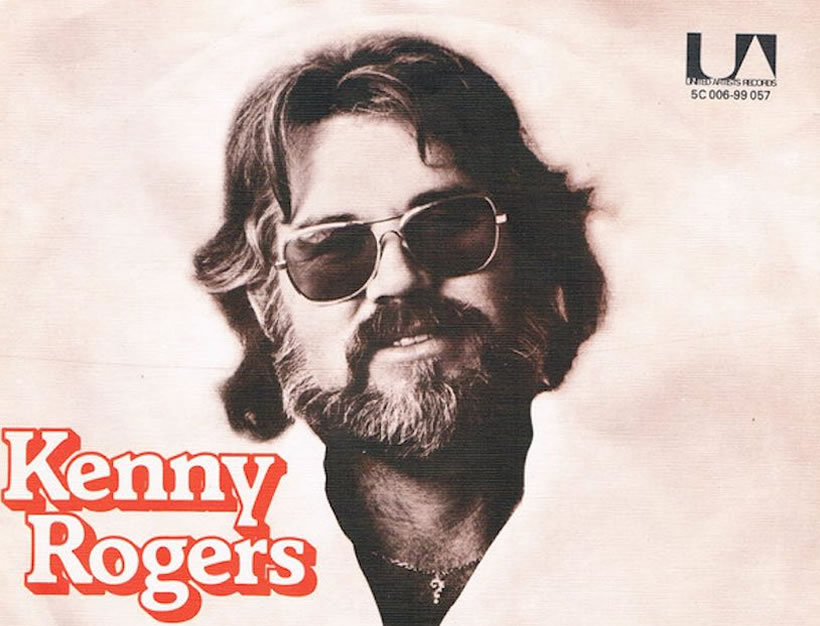
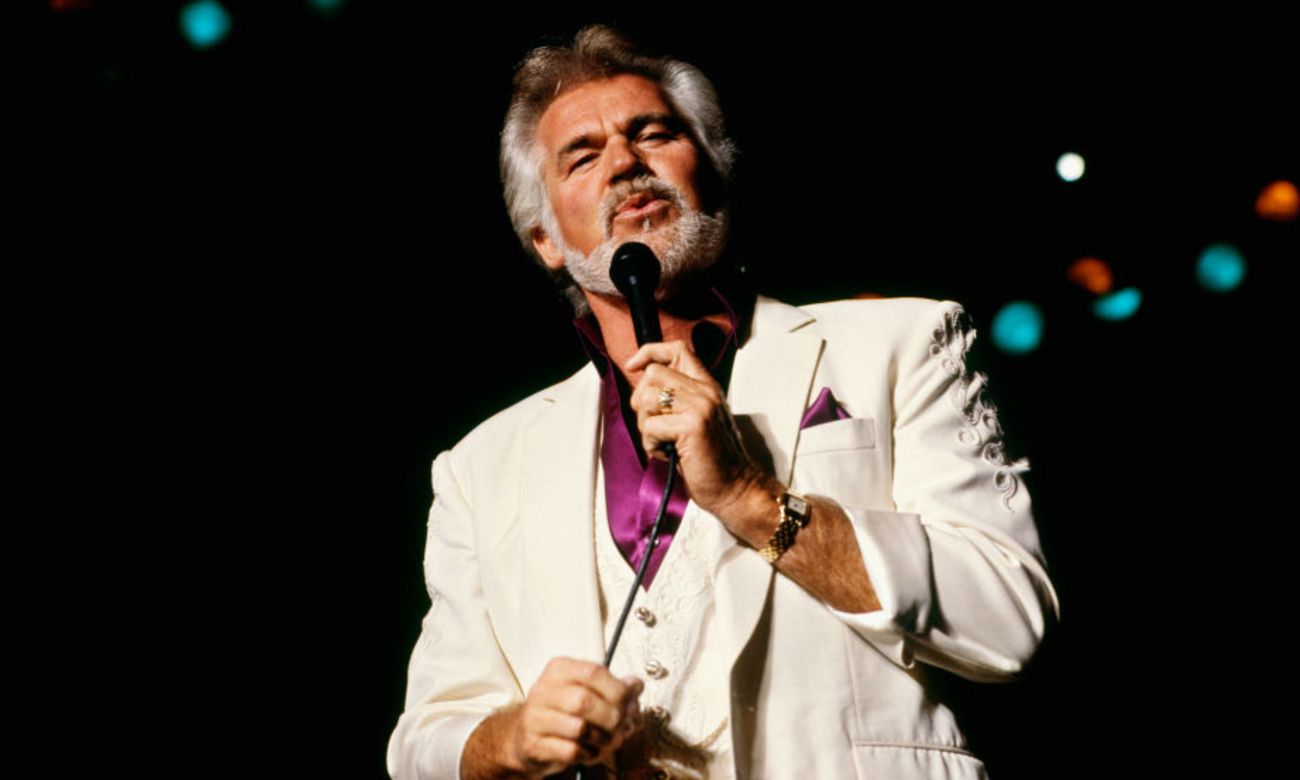
Starting with a birth and a death. March 20th 2020 saw the passing of country icon Kenny Rogers, who had managed two UK number ones in the late seventies and early eighties. Both songs were slightly out-of-kilter for the disco, punk and new-wave sounds of the time, but if listening to every single number one single has taught me anything, it’s that country and western (and reggae) are immune to popular tastes, and keep popping up time and again.
Here’s his first chart-topper, ‘Lucille’ (original post here), about a man who meets a downtrodden woman drowning her sorrows. I am a fan of a good opening line, and there have been few finer than In a bar in Toledo, Across from the depot, On a barstool she took off her ring…
Over a century before, March 20th 1917 saw the birth of Vera Lynn. A legendary name in British popular music, she began performing aged seven, released her first single in 1935 (aged eighteen), and scored her final Top 10 album in 2017 (aged one-hundred), giving her a career spanning ninety-six years! Despite this astounding longevity, Lynn only managed one UK #1: ‘My Son, My Son’ (original post here).
I won’t claim to particularly enjoy this very old-fashioned record, but Dame Vera doesn’t half sing the life out of it. And you can really make out what she’s singing, something my dear departed Gran was very particular about. Plus, I think it prominently features a clarinet, something not many other #1s have. I also did a Remembering post on Lynn, when she died in 2020.
Meanwhile, on this day in 1991, Michael Jackson signed what was the biggest record contract in history, with Sony. Both the advance, and his share of future record profits, were beyond anything seen before. You can see why the execs went out their way to keep hold of Jackson, given that his previous LPs, ‘Thriller’ and ‘Bad’, had been two of the highest sellers of all time. But you can also argue that this was the start of Jackson’s slow slide into creative inertia and over-indulgence, as little of his nineties output can rival that of his eighties hits. Still, here’s ‘Black and White’ the first single from the first album to be released under the new contract, ‘Dangerous’ (original post here).
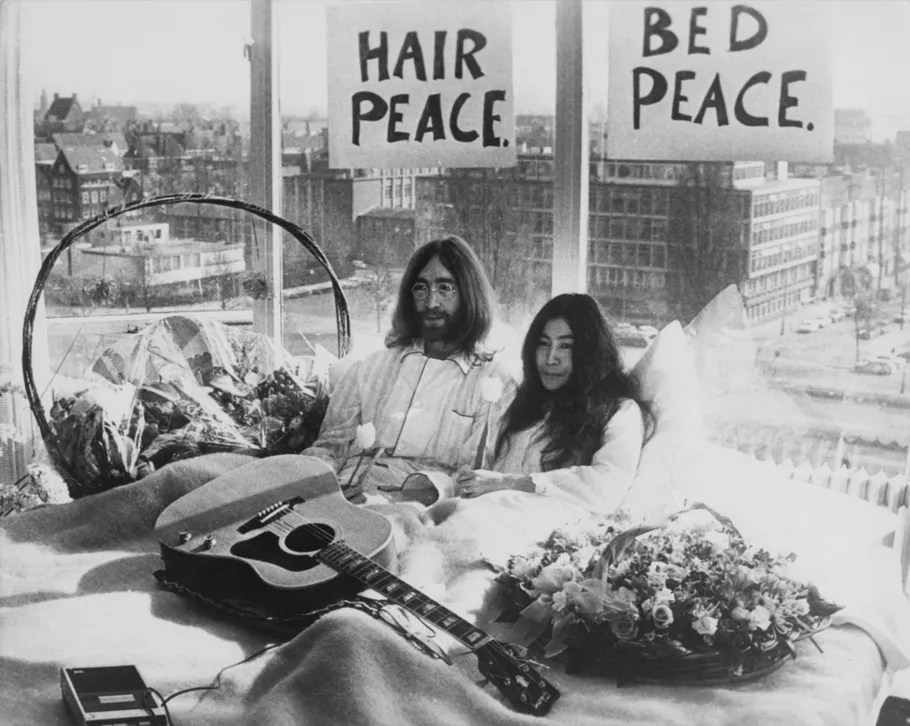
March 20th 1969 was also the day on which John Lennon married Yoko Ono at the British Consulate in Gibraltar (near Spain), before heading to the Amsterdam Hilton and talking in their beds for a week… Of course, these are not my own words, and so why don’t we let ‘The Ballad of John and Yoko’ tell the full story. This seemed for a long, long time to have been the Beatles’ final number one (though it famously only features John and Paul), until ‘Now and Then’ in 2023 (original post here).
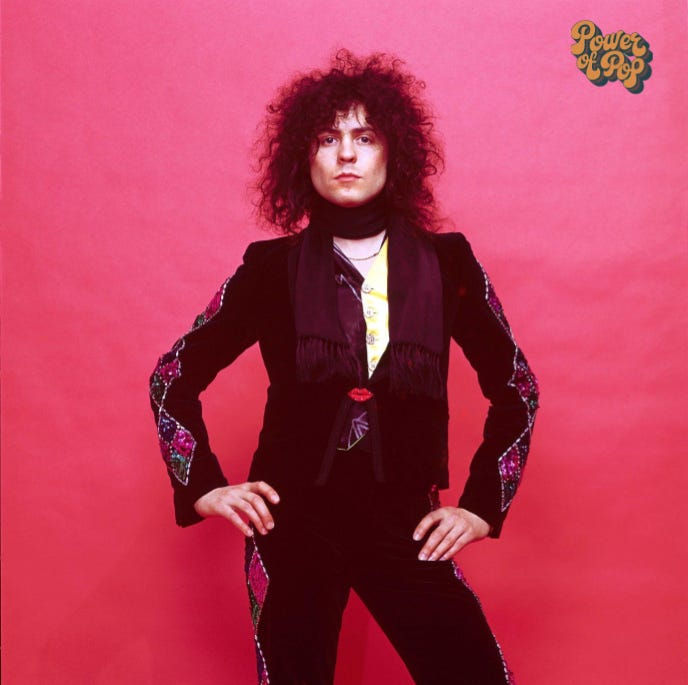
Lastly, on this day in 1977, T. Rex played their final British concert at the Locarno in Portsmouth. Their final ever live appearance would come a couple of months later in Stockholm, and three months after that Marc Bolan would die in a car crash. Neatly bookmarking T. Rex’s career, though, is the fact that ‘Hot Love’ was two weeks into a six-week residence on top of the charts on this day in 1971 (see original post here). Whether or not it was indeed the first glam rock #1 is up for debate. What is not up for debate is the song’s audacity (half of it is just nanananas), or its brilliance.
That one goes out to all those who are faster than most and who live on the coast… Regular posting resumes in a few days!
Time for another look back at a date in chart history. What were the songs and the stories at number one on December 6th through the years…
On this day in 1980, ABBA were about to begin their thirty-first and final week on top of the UK singles chart with ‘Super Trouper’. My favourite ABBA chart-topper probably changes on a weekly basis, and I could make a case for all of them (apart from ‘Fernando’, sorry). ‘Super Trouper’ is a late-era classic, with that perfect balance of upbeat melancholoy. Songs about how tiring it is being famous can be, well, tiring; but this is a colossus of the genre. I was sick and tired of everything, When I called you last night from Glasgow… is a quintessential ABBA opening line: slightly odd, poetic, beautifully to the point.
Eleven years earlier, on this day in 1969, the Rolling Stones headlined the infamous Altamont Free Concert in California. Supposed to be the West Coast’s answer to Woodstock, it ended up becoming synonymous with the end of the swinging sixties and the death of the hippy dream. Violence which had been brewing throughout the day erupted during the Stones’ delayed set, and ended in the death of an eighteen year old spectator, Meredith Hunter, stabbed by one of the Hells Angels who had been brought in as security.
The Stones are perhaps the perfect band to encapsulate that loss of ’60s innocence, as they had never been particularly innocent, and had struggled with the psychedelic, hippy side of things. Also, they’re the sixties juggernaut that has lasted, and lasted, and lasted, far beyond the decade that birthed them… Here then is their big hit from earlier that year, their final UK #1, and perhaps the ultimate rock and roll tune, ‘Honky Tonk Women’.
In recent posts I’ve been bemoaning/celebrating the end of the Golden Era of the Boyband, which I think came to an end in late 2002. There are arguments to be had for boybands dating back to the fifties, with the likes of the Teenagers, or to the Monkees in the sixties. New Edition in 1983 and Bros in 1988 could lay claim to being the first modern boyband, but for my money the true holders of that title, and the openers of the floodgates, were New Kids on the Block. Who just so happened to be sitting at #1 on this day in 1989 with ‘You Got It (The Right Stuff)’. They were the first of twelve boybands (fourteen, if we bend my rules and count Hanson and Blazin’ Squad) to provide forty (or forty-two) #1s over thirteen years…
Let’s go way back now, sixty-seven years to be exact. Number one on this day in 1958 is what I called ‘the Scottish #1’ at the time, and which I still intend to make our national anthem when I become First Minister, replacing the dirge that is ‘Flower of Scotland’. The fifties was at times a musical desert, strewn with overwrought ballads, and the occasional rock ‘n’ roll tune. Then there were the novelties. So many novelties. Of which ‘Hoots Mon’ stands out as one of the finest. It’s got a wonderful rock ‘n’ roll energy, but it’s also a relic of a much earlier music hall era, with its singalong spirit and its Hammond organ. It’s based on an old folk tune, ‘A Hundred Pipers’, and features classic phrases such as ‘och aye’, ‘there’s a moose loose aboot this hoose’ and ‘it’s a braw, bricht, moonlicht nicht’, none of which a Scotsperson has ever actually uttered.
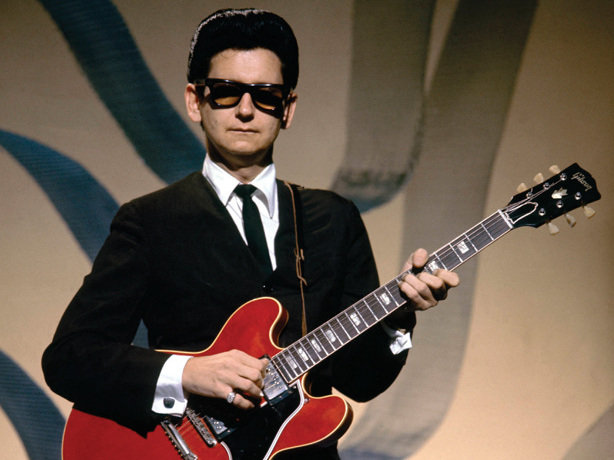
Finally, 6th December is perhaps best known as a date in music history for being the anniversary of Roy Orbison’s untimely death. In 1988, Orbison was just getting his career back on track through the success of the Travelling Wilburys, his supergroup alongside George Harrison, Bob Dylan, Jeff Lynne and Tom Petty, whose first album had been released earlier that year. Orbison had also just put the finishing touches to his first solo album in a decade, when he died suddenly, of a heart attack. The album ‘Mystery Girl’, and the lead single ‘You Got It’, posthumously returned him to the Top 10 the following year. But to celebrate his genius, let’s go back to 1960, and enjoy his first of three UK #1s: the hauntingly dramatic ‘Only the Lonely’.
Earlier this week the sad news of Connie Francis’ death was announced, aged eighty-seven, closing the door on yet another chapter from the earliest chart years. There can’t be many, if any, older chart-toppers than Francis still around… And there were precious few women, either, who were scoring rock ‘n’ roll hits and competing with the big male stars of the late fifties.
Francis scored two huge, six-weeks-apiece #1s in 1958, the sassy ‘Who’s Sorry Now’ and the whipcracking ‘Stupid Cupid’ (twinned with ‘Carolina Moon’). I also covered her 1960 hits ‘Mama’ and ‘Robot Man’ as a Random Runner-Up. Follow those links to hear those tunes, and to read my original posts. But since writing those posts – and this has been one of the best things about doing this blog, discovering artists’ non-chart topping back catalogues – I’ve fallen in love with many of Connie’s other hits. So let’s share some here, in her memory.
‘Lipstick on Your Collar’ – #3 in 1959
I love the camp melodrama of this bop, about a cheating boy given away by lipstick smudges. How does Connie know the lipstick isn’t hers? Well, eagle-eyed, she notices his is red, while hers is baby pink. Coleen Rooney eat your heart out. Turns out that floozy Mary Jane had been smooching her man right outside the juke joint. But, as with so many of her early records, Connie does not wallow in heartbreak. In fact, she seems almost thrilled to have rumbled him…
‘Plenty Good Lovin” – #18 in 1959
A similarly uptempo, more swinging, hit from the same year. And this one is positively raunchy by 1959 standards. In fact, I’m not sure Connie isn’t simulating orgasm during the break in the middle… She sings the praises of a man who doesn’t have a nice car, can’t play guitar, is neither intelligent nor particularly good-looking, but who’s got somethin’ that’s better by far… I mean, gurrrrlllll… Plenty of things that he don’t know, But this boy shines when the lights are low…
‘Everybody’s Somebody’s Fool’ – #3 in 1960
Her first US #1, and in fact the first Billboard Hot 100 number one by a female singer (the chart having launched well over a year earlier). Which just goes to prove how impressive Francis’s hit making was, stacked against the likes of Elvis, Pat Boone, Ricky Nelson and co. I love the honky-tonk feel to this, with the rolling organ and the rickety, country beat, and her voice drenched in echo.
‘Where the Boys Are’ – #5 in 1961
Francis made her acting debut in 1961, in the movie ‘Where the Boys Are’. And the title track gave her another big hit, proving that she could sing something a little more traditional to go along with all the rock ‘n’ roll. In 1978, as she was attempting a career comeback, Connie recorded a disco version. If that doesn’t grab you, how about a Japanese version? Today’s female stars could only dream of such versatility.
‘Vacation’ – #10 in 1962
Despite not having an original bone in its body, and already sounding dated in 1962, I love this throwaway tune. ‘Vacation’ was Francis’s last Top 10 hit in both the US and the UK, as the Merseybeat acts prepared to render so many stars obsolete. But it’s hard not to get carried along with this record’s exuberance. Maybe because I’m an English teacher in my day job, I’m instinctively drawn to songs that spell words out in the lyrics. Similarly, it’s probably why I’m drawn to songs about the summer holidays. So this one works for me on many levels.
‘Pretty Little Baby’
It would be wrong to finish without mentioning her final ‘hit’. ‘Pretty Little Baby’ was a B-side back in 1962, but in recent months you’ll surely have heard it if you’ve spent any amount of time scrolling on Instagram or TikTok. In one of her final interviews, Francis claimed to have forgotten of the song’s existence, but that she was touched by its resurgence, and how even kindergartners now know her music. Back to teaching for a moment, I can attest to this as I have a student who has been singing this to himself for several months now… Musically this is cute, and I love whatever early electronic device the solo was recorded on.
From the mid-sixties onwards the hits dried up, and Connie Francis’s personal life took several dark turns. The Guardian published a good article on her many highs and lows yesterday, and she became an advocate for mental health following various traumatic experiences. Having read that, it feels impressive that she lived such a long life and fulfilled life. She returned to music, and only officially retired a few years ago.
Connie Francis, December 12th 1937 – July 16th 2025
Tomorrow marks that one day of the year in which Europe (plus some countries technically in Asia, and Australia for some reason) comes together to celebrate the joys of music. Or at least to celebrate the joys of cheesy riffs, simplistic lyrics, unhinged dance routines, and a whole load of camp. Yes, it’s the…
Held every year since 1956 (2020 excepted, thanks to COVID), Eurovision was invented through collaboration between seven nations’ broadcasting corporations, as a means of testing out the capacities of live broadcasting. The first contest featured just those seven – France, Switzerland, Italy, Belgium, West Germany, Luxembourg and the Netherlands – and was won by the Swiss. The UK made their first appearance the following year, when a public vote was brought in to help decide the winning song. Ever since then there have been plenty of complaints about political voting (usually from us Brits, when nobody gives us any points) with neighbouring countries, and nations with a shared ethnicity, trading points based perhaps more on kinship rather than on musical quality.
A maximum of forty-four countries can enter – qualifiers were introduced in the 1990s – and as of 2024, twenty-seven different nations have won the contest. Sweden and Ireland have the most wins with seven, and Britain holds the record for finishing second. Norway, meanwhile, holds the record for finishing last, and has ended with the dreaded nul points four times.
Eurovision is famous for launching the careers of ABBA, who won with ‘Waterloo’ in 1974, but it has also played a part in helping Celine Dion, Julio Iglesias, and Olivia Newton-John become world famous. Other legends to take part include Sandie Shaw, Cliff, Lulu, Bonnie Tyler, Engelbert Humperdinck, Nana Mouskouri and, um, Flo Rida. And of course we’ve already met plenty of Eurovision number ones during our chart-topping journey… Who could forget Dana, Brotherhood of Man, Bucks Fizz, Nicole, Johnny Logan, or Gina G…?
Part of the reason why I chose to do this post now is that in the 21st century there have been no further Eurovision chart-toppers. Plenty of songs have gone close, but none have made it to the top. And so, having covered all the Eurovision #1s in the regular blog, it’s time to check out the Best of the Rest. I’m only counting songs that made the UK Top 10, and have whittled a thirty-odd longlist down to ten.
‘Volare’, by Domenico Modugno (3rd place for Italy in 1958)
Probably rivalling ‘Waterloo’ as Eurovision’s most famous song, this was the first big Eurovision hit, making #10 in the UK and top spot in the States (it remains the only Eurovision chart-topper on the Billboard 100). Dean Martin’s version is now perhaps more popular, of the hundreds that have since been recorded, but this was the original. Ubiquity has not, and seemingly cannot, dull the laidback coolness of this classic.
‘Boom Bang-a-Bang’, by Lulu (joint 1st place for the UK in 1969)
Och, if it isn’t lovely wee Lulu. Nonsense song titles have long been a Eurovision cliché, and you have to think ‘Boom Bang-a-Bang’ helped in that. (We’ve since had winners titled ‘Ding-a-Dong’, ‘A-Ba-Ni-Bi’ and ‘Diggi-Loo Diggi-Ley’.) If it were just the verses, this wouldn’t have stood a chance of making the list, as they make Sandie Shaw’s ‘Puppet on a String’ sound subtle. But it is in that nonsense chorus that the song soars. Watch the performance above, and marvel at Lulu – the consumate performer that she is – selling the living daylights out of this tosh. She dragged it to a joint first place finish (the only time there’s ever been a tie) and to #2 in the charts. The contest was held in Madrid that year, and in true Brits-abroad fashion Lulu finishes her performance with a big ‘Olé!’ Who says we don’t try to learn the local languages…?
‘Jack in the Box’, by Clodagh Rodgers (4th place for the UK in 1971)
Lyrically this is ‘Puppet on a String’ Pt II – I’m just your Jack-in-the-Box, You know whenever love knocks, I’m gonna bounce up and down on my spring – and musically it’s not a million miles from ‘Boom Bang-a-Bang’. It didn’t do as well as either of those earlier entries (4th place in the contest, #4 in the charts) but I’d argue it’s a better song than both. Especially when, in the best music hall fashion, things slow down for a big, showstopping final chorus. Clodagh Rodgers, from Northern Ireland, received death threats from the IRA for representing the UK. (Interestingly, the year before Ireland had won through London-born Dana.) This was Rodgers’ third and final UK Top 10 hit. She sadly died just a few weeks ago, in April 2025, aged seventy-eight.
‘Beg, Steal or Borrow’, by The New Seekers (2nd place for the UK in 1972)
Going by my choices, the late-sixties to early-seventies was the golden age of British entries at Eurovision. A world away from the British acts that were setting the standard and pushing the envelope in those days when pop music was developing at a heady pace; it was a world of bubblegum, easy-listening, and schlager. Which was a wise choice, and why so many of those entries placed very high, such as this runner-up performance from 1972. (Pink Floyd probably wouldn’t have done well at Eurovision…) But representing the UK were acts that, while not the avant-garde, were still very famous names: Cliff, Lulu, Sandie Shaw, Clodagh Rodgers, and the New Seekers above. Going to Eurovision was seen as a big thing, a beneficial thing, whereas in the 21st century it is the reserve of the has-been, or of the unknown act looking for any sort of break they can get. Anyway, ‘Beg, Steal or Borrow’ is perfectly decent pop – better than the New Seekers’ saccharine Coca-Cola anthem, but not as good as their sadly forgotten second chart-topper.
‘Go’, by Gigliola Cinquetti (2nd place for Italy in 1974)
A case of right song, wrong time, as Gigliola Cinquetti’s gloriously sultry ballad came up against ABBA’s ‘Waterloo’. Still, it made the Top 10 in the UK (re-recorded in English, which means that I’m not technically choosing the Eurovision version, but hey ho…) The original has exactly the same melody and instrumentation, but is entitled ‘Sí’, which means ‘Yes’. Cinquetti had actually won the contest a decade before, aged sixteen, with a song entitled ‘Non ho l’etá’ (‘I’m Not Old Enough’), meaning she came close to becoming the first act to win Eurovision twice. In Italy, the song’s title caused drama as the contest coincided with a referendum on making divorce illegal (it having just been legalised a few years earlier) and authorities believed that a song featuring the word ‘yes’ sixteen times might subliminally influence the vote… Even the contest itself wasn’t broadcast in Italy until a month afterwards. In the end the divorce laws stayed, and Cinquetti also went on to host the contest in the 1990s.
‘Love Shine a Light’, by Katrina & the Waves (1st place for the UK in 1997)
It would be remiss of me not to include the song that last won the contest for Britain, almost thirty (30!) years ago now. ‘Love Shine a Light’ manages – just about – to straddle the line between genuinely inspiring and sentimental schmaltz (a battle that Eurovision songwriters have been waging ever since 1956). It provided an unexpected career coda for Katrina & the Waves, who had struggled for a follow up hit ever since their 1985 breakthrough ‘Walking on Sunshine’. ‘Love Shine a Light’ peaked at #3, beating even ‘Walking on Sunshine’, but the band split the following year.
You may have noticed a twenty-three year gap between our last two entries, after a run of sixties and seventies hits. There weren’t that many Top 10 hits from Eurovision in the eighties (apart from those that went all the way to #1), and I doubt many people could name any of the winners between Bucks Fizz and Katrina & the Waves.
‘Flying the Flag’ by Scooch (22nd place for the UK in 2007)
Making Steps look like the Velvet Underground, it’s Scooch! There are compelling arguments for this being Britain’s worst ever Eurovision entry, and I get it, I do… But I will never not enjoy this psychopathically tacky number. It’s too much, really, to even have been considered as a parody of a Eurovision entry; and yet we actually sent this to Helsinki in 2007. Where it finished joint second-last, with a grand total of nineteen points. The flying theme is taken to the extreme, with plenty of European capitals name-checked, and an impressive attempt to sexualise a pre-flight safety demonstration. One of the band’s job is solely to make saucy spoken asides ‘in character’ as a gay flight attendant, culminating in him making the lascivious offer to the captain: Would you like something to suck on for landing, Sir…? Whether it went over the heads (pun intended) of the audience I do not know, I’m just forever grateful that it happened. It seems to have been viewed more fondly in its home country, as the British public sent it flying all the way to #5 in the charts.
‘Calm After the Storm’, by the Common Linnets (2nd place for the Netherlands in 2014)
A much more sedate number now, from a Dutch country rock duo. This doesn’t tick any of the typical Eurovision boxes, and yet it’s a lovely, atmospheric ballad. The band had only formed the year before entering the contest, and ‘Calm After the Storm’ was their first release. Interestingly, this was only the 4th non-winning, non-British entry to enter the Top 10 (after ‘Volare’, and ‘Go’, and another Dutch entry from 1975), reaching #9.
‘Space Man’, by Sam Ryder (2nd place for the UK in 2022)
After years in the Eurovision doldrums, of Jemini (nul points), Scooch, Engelbert Humperdinck, and Blue, Britain finally finished strongly in 2022. (We probably would have won, had Ukraine not had the goodwill of the continent behind them.) For years people had claimed that it was all political: that Britain placed low because of Iraq, Brexit, and because we make such obnoxious tourists. But as it turns out, all we needed do was to enter a half decent song! ‘Space Man’ is a strong pop-rock single, that felt like we were finally taking the contest seriously again. I find Sam Ryder to be fairly irritating (I’ve seen him described as a golden retriever in human form, and am still unsure as to why that is a compliment) but I seem to be in the minority. ‘Space Man’ came agonisingly close to being the first Eurovision chart-topper in twenty-five years, only to be be beaten at the last by Harry Styles. Sadly, in the two contests since ‘Space Man’, the United Kingdom has reverted back to type and placed fairly low. Hopes are mixed, then, for Remember Monday this year.
‘Cha Cha Cha’, by Käärijä (2nd place for Finland in 2023)
The first and so far only song sung in Finnish to make the UK Top 10, we end our run down with ‘Cha Cha Cha’. And this, really, is what Eurovision is all about: it’s loud, brash, chaotic, camp. Terrible, and yet brilliant. A metal-dance-pop fusion, featuring a dance routine in which Käärijä rides his backing dancers while they do the human centipede. The song is apparently about getting drunk, specifically on pina coladas. But you don’t really need to understand the lyrics. The charm of this song, and of Eurovision in general, is getting behind songs you don’t understand, by artists you’ve never heard of, and celebrating being part of the smallest but most culturally diverse continent on the planet.
I’m revamping the ‘Random Runners-Up’ feature. From this post on, you’ll be getting three tunes for the price of one. All of them sitting at number two on a specific date. All of them still – hand on heart – chosen completely at random. Starting with…
A good old-fashioned novelty. With emphasis on the ‘old-fashioned’ bit, because we had definitely dropped the ‘Simple’ by the time I was playing Simon Says in the late eighties. Let’s not get all self-righteous, though, as this is fun slice of late-sixties pop: a nicely judged blend of bubblegum and garage rock. Not something I’d add to a playlist, but an undeniably catchy way to spend two minutes.
It’s also sent me down the rabbit hole of discovering who Simon was, and apparently it goes back to Simon de Montford, Earl of Leicester in the 13th century, or perhaps even Cicero in ancient Rome, which sounds sort of like ‘Simon’. The ‘simple’ came, perhaps, from an 18th century London begging ‘simpleton’ named Simon Edy. It’s a shame this never got to number one, really, as that’s a fairly unique backstory. As for the 1910 Fruitgum Company, they were one-hit wonders in the UK, but remained popular for a while longer in their native US. They reformed in 1999, and Wikipedia lists over thirty past and present members of the band.
‘Back Off Boogaloo’, by Ringo Starr #2 for 2 weeks in 1972, behind ‘Amazing Grace’
Ringo is, of course, the only Beatle not to manage a solo UK #1. The Victoria Beckham of his day, as it were. But oh, if only. If only this glam rock stomper had managed to outsell the bagpipes and drums of the Royal Scots Dragoon Guards. I’m not exaggerating, but this would probably have been my favourite ex-Beatle number one. Yes, ahead of ‘My Sweet Lord’. Yes, ahead of ‘Imagine’.
The lore surrounding this song is legendary. George Harrison co-wrote it, and played slide guitar on it. The bizarre video, in which Ringo is followed around by a Frankenstein’s monster, was filmed in John Lennon’s garden. The ‘boogaloo’ is Marc Bolan, who Starr was making a movie about (‘Born to Boogie’) at the same time. The line give me something tasty was inspired by none other than Jimmy Hill, he of the legendary chin, who often used ‘tasty’ to describe a piece of footballing skill. My favourite fact, though, is that Starr offered the song to Cilla Black, who turned it down. I would give good, good money to hear Cilla’s interpretation… One thing that Ringo has denied is that the nasty ‘boogaloo’ is Paul McCartney, with whom he was wasn’t on the best of terms at the time.
‘Opposites Attract’, by Paula Abdul & The Wild Pair #2 for 1 week in 1990, behind ‘Vogue’
Number two on this day thirty-five years ago, a perfect example of early-nineties synth-funk, with a healthy splash of new jack swing. Paula Abdul never came close to replicating her US success in Britain (this was her fourth of six Billboard #1s in a row). But we chose the best song to become her biggest hit, as this is gloriously catchy.
The video is a treat too, and pretty impressive from a technical point of view, as Paula dances, frolics, and at one point strangles, a cartoon cat (MC Skat Kat). The raps and male vocals are provided by the Wild Pair, regular backing vocalists for Abdul. And it would be remiss not to include a link to Peter Griffin’s famous interpretation of the song too.
It’s time for part two of our semi-regular B-sides feature. My first was on Oasis, the band perhaps most famous for the quality of their B-sides. For my second I’m turning to one of the great chart-topping singles…
‘Space Oddity’ was David Bowie’s first chart hit, and his first number one. Not at the same time, however. It made #5 on its first release in 1969, tying in with the Apollo 11 moon landing, before belatedly making #1 six years later, after a re-release. (Read my original post here.)
For the 1975 rerelease, another old tune was chosen as the first B-side. ‘Changes’ had featured on Bowie’s 1971 album ‘Hunky Dory’, but had flopped completely as a single in early 1972. (Amazingly, Bowie had been looking like a one-hit wonder following the original ‘Space Oddity’, and had to wait until his Ziggy Stardust era for another hit.)
Despite now being one of his signature songs, you can kind of see why ‘Changes’ failed to catch on at the time. What exactly is it? Is it glam? Is it jazz? The chorus and the middle-eight are great power pop. It’s listed as ‘Art-pop’, but then that sounds like the sort of genre given to songs that nobody can quite place.
The second 1975 B-side was an offcut from the Ziggy Stardust sessions, ‘Velvet Goldmine’. Testament to the depth of Bowie’s career, this is another now-classic that went unnoticed at the time. Bouncy, theatrical and fruity, with a brilliant humming-slash-whistling outro that reminds me of Lee Marvin’s ‘Wand’rin Star’. Unlike ‘Wand’rin Star’, however, this is an ode to blowjobs: I had to ravish your capsule, Suck you dry… The song is now so well-respected in the annals of glam that it lent its name to the 1998 movie ‘Velvet Goldmine’, about a fictional glam-rock star.
A bonus for you here, as ‘Wild Eyed Boy from Freecloud’ was the B-side to the original 1969 release of ‘Space Oddity’. It’s an epic tale about… something. When I reluctantly admit that I’m not a fully paid up member of the Bowie fanclub, it’s songs like this that have put me off. This single version is quite sparse – just a guitar and some trings – but he re-recorded it for his eponymous second album, with an orchestra, and that version has an appealing grandeur about it. (I’m still not sure what it’s about, though…)
It’s been a while since I did a ‘Remembering’ post, so here’s two for the price of one. Two big stars of the pre-Beatles age, both of whom died within a couple of weeks in February 1990.
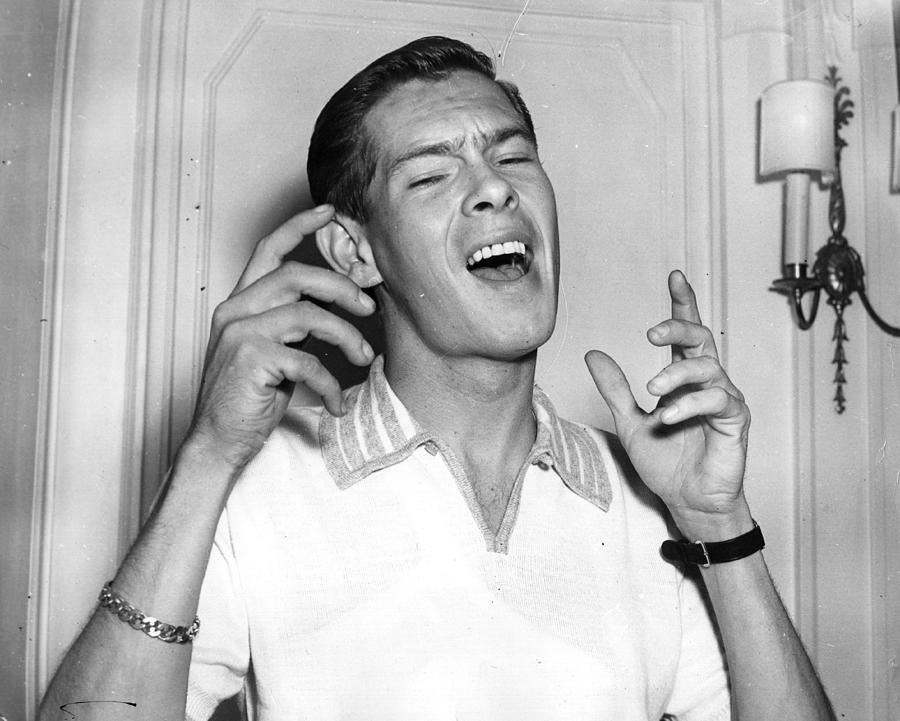
Before starting this blog, I knew Johnnie Ray by name and not much else. He after all is referenced in the opening line of ‘Come On Eileen’ (Poor old Johnnie Ray…) But I will now be forever grateful to him, for making the earliest years of the charts bearable, when it sometimes felt like one po-faced ballad after another, after another. His first #1 was the incredibly steamy (by 1954 standards) ‘Such a Night’, and he had a seven-week run with the whistle-tastic ‘Just Walkin’ in the Rain’ before ending things with the zippy ‘Yes Tonight, Josephine’. All three are well worth a listen if you’ve not heard them before, and proof that pop music could be fun in the prehistoric era. Below I’ll highlight a few of my other favourites of his.
Released in 1951, before Britain even had a singles chart, we can assume that ‘Cry’ would have been a multi-week number one. The missing link between Sinatra and Elvis, Ray’s wonderfully histrionic performance shows why he was known as the ‘Nabob of Sob’ and the ‘Prince of Wails’, surely two of pop music’s best nicknames. His exaggerated, stagey way of singing may have been linked to the fact that he was partially deaf.
‘Ain’t Misbehavin’ is a standard, recorded by everyone from Louis Armstrong and Ella Fitzgerald, to Robson & Jerome. And while I’ll admit to not having heard every version, I’d suggest that you’d struggle to find a performance more committed than Johnnie Ray’s. The man was the epitome of the phrase ‘sing it for the back row’.
Fond of a whistle, Ray made #10 with ‘You Don’t Owe Me A Thing’ in early 1958, a perfect example of how rock ‘n’ roll was making its presence felt in records that weren’t actually rock songs.
By the early 1960s, like so many fifties stars, Ray’s career had tailed off. It’s surprising that he managed to have a career in the first place, after he was arrested for soliciting an undercover policeman in a public toilet in 1951. Rumours about Ray’s sexuality continued, but didn’t seem to harm his sales until another arrest in 1959. He was openly bisexual to many in the music industry, and married a woman named Marilyn Morrison in 1952, who claimed she would ‘straighten him out’. They separated after a year.
Ray also had problems with alcohol, which worsened in the sixties. He would sporadically tour small venues and appear on television in the States, while commanding much larger audiences in the UK and Australia (where he remained most popular) right up until his death from liver failure on February 24th 1990. He was sixty-three.
Del Shannon scored his sole chart-topper a few years after Ray’s time at the top. And what a chart-topper it was. ‘Runaway’ is possibly the most inventive, most exciting, most propulsive #1 of that supposedly fallow period between Elvis and The Beatles. It made top spot in the summer of 1961, and features an innovative Musitron solo, making it arguably the first electronic hit. But even if that solo was played on a clapped out old piano it would take nothing from the record’s innate quality. Anyway, I discussed all this in more detail in my post on ‘Runaway’ here.
‘Runaway’ is so good that it tends to completely overshadow anything Del Shannon released afterwards. But ‘Little Town Flirt’ is another great slice of malt shop pop, making #4 in early 1963. He had a good line in heartbreak, and woman shaming, usually singing about runaways and flirts, and in ‘Hats Off to Larry’ he indulges in a bit of schadenfreude as his ex is dumped and left as heartbroken as he had been.
Shannon had a style, and came pretty close to shamelessly ripping himself off on some records (check out how close ‘Two Kinds of Teardrops’ is to ‘Little Town Flirt!) But on ‘So Long Baby’ he managed to recycle the energy of ‘Runaway’ into a deranged oompah beat and create a #10 hit that sounds both frivolous and terrifying.
Like Johnnie Ray, Del Shannon’s career slowed down towards the end of the sixties and into the seventies as he battled alcoholism. He worked with Tom Petty and Dave Edmunds, and by the ’80s he had sobered up and started something of a comeback. He worked with Jeff Lynne, and was touted as a replacement for Roy Orbison in The Travelling Wilburys. Sadly, though, he shot himself on February 8th 1990, apparently after having a negative reaction to the Prozac he was taking for depression. He was just fifty-five.
A very Happy New Year to you all, and a warm welcome back to the UK Number Ones Blog. I hope you had a good festive period, managed to celebrate, relax, and (in my case) catch up with writing about some soon-to-come number ones. Before we resume our journey through the late, late-nineties, I’m debuting a new feature!
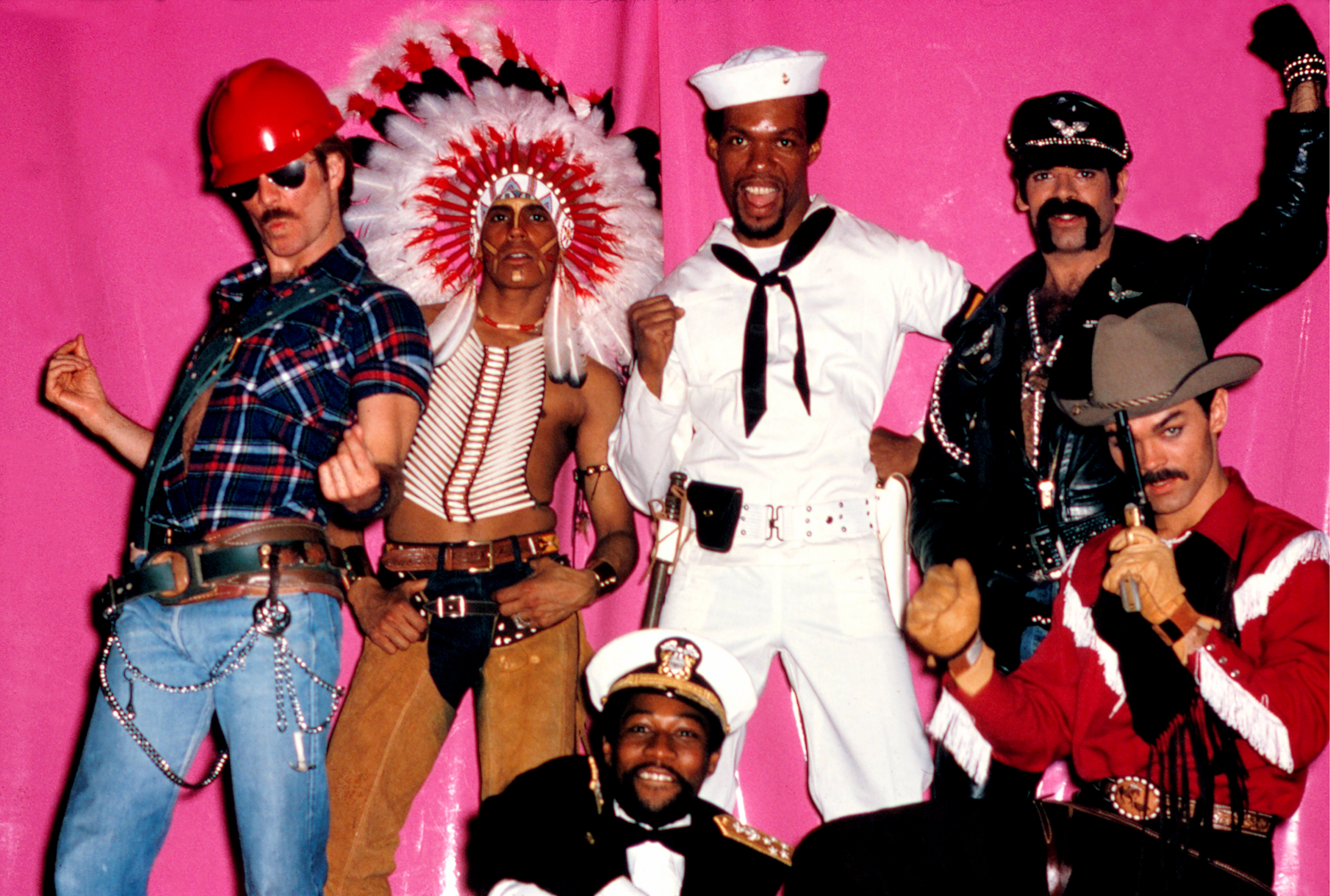
The Village People, group portrait, New York, 1978. (Photo by Michael Putland/Getty Images)
‘On This Day…’ will do pretty much exactly what it says on the tin. I’ll intro a few of the records that have been top of the charts on a particular date in history, as well as mentioning a few births, a few deaths, and a few interesting occasions that tie into a particular chart-topper. The hope is that readers will be able to delve into my back-catalogue of posts, and find something I wrote long before they started following this blog. Or people can, y’know, just enjoy the tunes!
First up, number one on this day in 1962, we have a stone-cold classic:
‘Moon River’, from the soundtrack to ‘Breakfast at Tiffany’s’ is one of the great songs of that supposedly fallow period between rock ‘n’ roll and The Beatles. In the film it is sung by Audrey Hepburn, at the Academy Awards that year it was performed by Andy Williams, while an instrumental version by the song’s composer Henry Mancini and a version by Jerry Butler were hits in the US. In the UK, however, it was left to South African-born Danny Williams to have the most succesful version of all. You can read my original post on ‘Moon River’ here.
Meanwhile on this day in 1923, radio host, record producer, and founder of the legendary Sun Records label, Sam Phillips was born in Alabama. He is most famous for his work with a young Elvis Presley, although he also produced Roy Orbison, Johnny Cash, Carl Perkins and many of the other early rock and roll stars. His only contribution to the top of the UK singles chart, however, was this banger:
Here’s my original post on ‘Great Balls of Fire’. If you’re only going to top the charts once, might as well make it good ‘un. Speaking of which, number one on this day in 1979 we have perhaps the ultimate guilty pleasure. There is not a soul alive who hasn’t done the dance to the ‘YMCA’, however grudgingly, and not even the recent gyrations of Donald Trump can truly sour this wedding reception classic. Even more recently, Village Person Victor Willis (AKA the cop) has been threatening to sue anyone who claims that ‘YMCA’ – a song with the lyric: They have everything for young men to enjoy, You can hang out with all the boys… – has any homosexual connotations. Whatsover. No sirree. To which we can all say, ‘Okay honey…’ (Original post here.)
In sadder news, on this day in 1998, Sonny Bono died following a skiing accident in Nevada. He was of course the singing partner, and former husband, of Cher, with whom he enjoyed his sole chart-topper ‘I Got You Babe’ in 1965. I wrote about it, the 201st #1 single, way back in 2019.
Finally, one of the least likely number one singles of all time was sitting astride the charts on January 5th 1991. Early January is a bit of a dead zone for chart-toppers, as in most years the Christmas leftovers are still clinging on top with little competition. Iron Maiden spotted an opportunity, and released ‘Bring Your Daughter… To the Slaughter’ in the final week of 1990. Their devoted fanbase, as well as the publicity of knocking the God-bothering Cliff Richard’s ‘Saviour’s Day’ off #1, delivered the heavy metal legends their biggest hit. (Original post here.)
I hope everyone enjoyed this new feature, and won’t mind if it pops back up ever few weeks. I’m also going to be doing more regular posts on cover versions, number two singles, ‘Remembering’ features, ‘Best of the Rests’ and ‘Today’s Top 10s’, as well as a new look at the ‘B’-sides to famous number ones. The main focus will of course still be on the chart-toppers; just a little more regularly interspersed with interesting detours through chart history!
The two earlier ‘Today’s Top 10’s I’ve done were pretty succesful. Thanks to all who had a look, liked and commented. I was wondering what to do with the feature going forward, and I think I’ll use it to take a deeper look at interesting periods in chart history. What can the Top 10 tell us about where pop music was at a particular time and place?
So, we’ve done the death of the ’60s, and we’ve done the Summer of Love. Now we turn to perhaps one of the most exciting times in modern popular music: late-1963. The moment when the sixties finally started to swing. Thanks, mainly, to the Beatles. But not, as this chart will hopefully prove, solely because of them. For those interested in significant world events, this was also the Top 10 on the week that JFK was assassinated.
10. Let It Rock / Memphis, Tennessee, by Chuck Berry – down 4 (7 weeks on chart)
But what’s this…? Two rock ‘n’ roll tunes first released in 1959. How the charts like to mess with us… The reason is tied to the times, though. The Godfathers of rock, Buddy Holly, Jerry Lee Lewis, and Chuck Berry, had inspired the new Beat groups that we’ll be meeting further up this chart. The Beatles early albums were full of Berry songs, while the Stones’ first hit had been a cover of ‘Come On’ earlier in 1963. Pye Records saw an opportunity, and released some of these influential tunes for the first time in the UK. Amazingly, this was Berry’s first ever visit to the UK Top 10. A runaway train might not be the most obvious topic for a rock ‘n’ roll tune, but this wasn’t Berry’s first time singing about a railroad. And the way he makes his guitar sound like a train horn is iconic.
It was paired with the more laidback ‘Memphis, Tennessee’, which had also been a hit in a version by Dave Berry & the Cruisers around the same time. It pulls the same trick as such classics as Gilbert O’ Sullivan’s ‘Clair’, and Brotherhood of Man’s ‘Save Your Kisses for Me’, by tricking the listener into thinking that the singer is singing about a girlfriend, when he is actually singing about a small child. Berry, though, consumate storyteller that he was, manages to do it in a far less creepy manner, making the song more about the messy break-up, and the father’s regret, than about dodgy double entendres.
9. I’ll Keep You Satisfied, by Billy J. Kramer & The Dakotas – up 2 (3 weeks on chart)
This one’s much more 1963. One of the big beat combos that had broken through earlier in the year (with another three to come higher up), and who had been at #1 just a few weeks earlier with the Lennon-McCartney tune ‘Bad to Me’. ‘I’ll Keep You Satisfied’ is another L&M composition and, while it would peak decently at #4, it isn’t quite as good. Still, it’s better than the Dakota’s next hit, the dubious ‘Little Children’. Watching the video above, the music may be (slightly) rocking, but Billy J. is giving good crooner energy. Nothing to worry grandma… yet.
8. I (Who Have Nothing), by Shirley Bassey – up 1 (9 weeks on chart)
A constant presence on the charts of the ’50s and ’60s: a bit of Bassey. This is three minutes of pure melodrama, as Shirley watches an old-flame woo his new girl. ‘I (Who Have Nothing)’ was adapted from an Italian hit, which was something of a theme in the early sixties. It’s a classic of its genre: an intro of swirling strings, quiet bits, and bits where she lets loose, belting out high notes like nobody else can. I always find Shirley Bassey somewhat lacking in subtlety, but then again – if you’ve got it flaunt it. If I could sing like her then I’d be belting out my Starbucks orders.
7. Blue Bayou / Mean Woman Blues, by Roy Orbison – down 3 (10 weeks on chart)
Another double-‘A’ side from an American rocker, who had been around since the ’50s. Unlike the Chuck Berry record, though, this was a new hit. ‘Blue Bayou’ is one of Orbison’s gentler numbers – for the Big ‘O’ could of course give Shirley Bassey a run for her money in the belting stakes – but it’s always been one of my favourites. Even as a young ‘un who had no idea what the hell a ‘bayou’ was. Linda Rondstadt recorded a famous cover in 1977, though that didn’t make the UK Top 10.
On the flipside of this disc was a cover of ‘Mean Woman Blues’, an Elvis track from 1957. Personally, while they are both fine singers, I prefer Elvis’s version. I prefer bombastic, overblown Orbison to rocking Orbison. On this record he tries out the famous Grrrrrr, which he’d use to great effect on his chart-topping ‘Oh, Pretty Woman’ the following year.
6. Secret Love, by Kathy Kirby – up 6 (3 weeks on chart)
We’re keeping an eye out for the bands that came along in 1963 and changed popular music forever. But for every beat combo that made it big, there were plenty of British women who were just as instrumental in making the sixties swing. Kathy Kirby’s name hasn’t lasted alongside the likes of Cilla, Dusty, Lulu or Sandie Shaw, but here she is, enjoying her biggest hit. Her take on ‘Secret Love’ starts off very bombastically, much like Doris Day’s chart-topping original from a decade earlier, but soon a groovy guitars-and-backing-singers beat takes over, nicely updating the song for a new era. Plus, she has a great voice, with a bit of bite to it. Kirby may have retired from showbusiness in the early eighties and died in relative obscurity, but for a while she was a huge name: representing the UK at Eurovision in 1965 (finishing as runner-up) and hosting her own television programme.
5. Don’t Talk to Him, by Cliff Richard & The Shadows – up 2 (3 weeks on chart)
Common knowledge would have it that with the arrival of the Beatles et al the career of Cliff Richard – the hottest star in the land just a year or so earlier – fell off a, well, cliff. But glance at any Top 40 from any random moment post-1962, and it quickly becomes clear that Cliff went nowhere. Okay, he didn’t hit #1 as regularly, but ‘Don’t Talk to Him’ was one of an astounding 33 Top 10 hits he achieved across the sixties. I’d never heard this before, but it’s actually a really good song, combining a latin rhythm with some very current, beat guitars. This could easily have been written and recorded by one of the acts a couple of places up this chart, proving that Cliff gave those young whippersnappers a stronger run for their money than the history books suggest. *Some sources disagree as to whether this was Cliff solo, or Cliff with the Shadows, but I’ve gone with the latter*
4. Be My Baby, by the Ronettes – up 1 (6 weeks on chart)
The first of two all-time great, hall of fame pop songs in this week’s Top 4. The fact that this never made it higher than number four is a shock, and I’ve already done a post on how this really Should Have Been a #1. Even on this chart, in the year that it was recorded, where girl groups like the Ronettes were common, ‘Be My Baby’ stands out as special. It would stand out as special on any chart, in any era, simply because it is better than 99.95% of anything else in the history of pop.
3. Sugar and Spice, by the Searchers – down 1 (5 weeks on chart)
Here we are then, a purely Liverpudlian Top 3. The Searchers had been the 3rd Merseybeat band to make number one that year, after the two acts ahead of them in this chart, with their cover of The Drifters’ ‘Sweets for My Sweet’. Although still on the candy theme, ‘Sugar and Spice’ was an original, written by producer Tony Hatch. The chiming guitars and harmonies, as well the almost skiffle rhythm section, are pleasant, almost proto jangle-pop. But within a year, once the Stones, Kinks and Animals started making the upper reaches of the charts, it would start to sound a bit safe. The Searchers had two much better hits to come: their majestic second #1 ‘Needles and Pins’, and their cover of ‘When You Walk in the Room’. Like so many Beat bands that didn’t, or couldn’t, write their own material, the Searchers’ chart shelf-life was limited.
2. She Loves You, by The Beatles – up 1 (13 weeks on chart)
The song that officially kicked off the swinging sixties? The way that ‘She Loves You’ barrels in, chorus-first, on a wave of tight guitars and precision drumming, and yeah yeah yeahs. In France, this style of Beat music literally became known as ‘Yé-yé’ (and surely everyone knows by now how Mr McCartney Senior thought ‘yes, yes, yes’ would have sounded much more proper…) It is utterly perfect pop, to rank alongside the Ronettes a couple of places below it on this week’s chart. Although they developed their sound so far beyond this, I would still rank ‘She Loves You’ in my personal Beatles Top 3. You can read my original post on it, as a number one, here. On this week in November 1963, it was on its way back to number one, having already spent a month there that autumn, and on its way to becoming the biggest-selling single ever, at that point, in the UK (where it remains the Fab Four’s highest seller). Also, the seven-week gap between its two runs at the top remains a record to this day.
1. You’ll Never Walk Alone, by Gerry & the Pacemakers – non-mover (7 weeks on chart)
The 4th Beat group in the Top 10 on this day sixty-one years ago, Gerry & the Pacemakers had made history by being the first act to make #1 with their first three singles. This was the final week of a month-long run for ‘You’ll Never Walk Alone’, and it would also be The Pacemakers final week on top of the charts. (You can read my original post on it here.) The fact that for only their 3rd single the band had turned to a cover of a song from a 1945 musical is telling. While the Beatles were just warming up, their contemporaries were often relying on covers (or on handouts from Lennon & McCartney). Plus there was the fact that for record labels and producers, rock and roll was still a very new thing, one that many were convinced wouldn’t last. It was seen as essential for bands to branch out, and to nurture a wider appeal.
Of course we know now that rock ‘n’ roll was here to stay, even if Gerry & The Pacemakers weren’t. ‘You’ll Never Walk Alone’ was also here to stay, and by the end of its initial chart run it had already been adopted by the crowd at Anfield as Liverpool FC’s unofficial anthem, to be belted out pre-match from here to eternity. The song returned to number one in a charity version by The Crowd, following the Bradford City fire, while it also made top spot for a third time in 2020 in a version featuring Michael Ball and the 100-year-old Captain Tom Moore, a phenomenon that can only be explained by how crazy we all went during lockdown. It is nothing short of a modern-day hymn, given the song’s role in the current British psyche.
I hope you enjoyed this flashback to Today’s Top 10 in 1963. What a snapshot of popular music that was, as Britain finally cast off the shadow of the War and started to get a little groovy. Up next we’ll return to 1999, and to a country just a few months away from the terrifying uncertainty of a new millenium. Would all the computers crash? Would planes start dropping from the sky…? Nobody knew, so confused and distracted were people that they kept buying Ronan Keating records in large quantities. Stress will do that to you…
Another trip back in time then, with my second ever ‘Today’s Top 10’ (we went back to 1970 a few months ago – check it out if you have the time). This time I thought we’d go back to the summer of 1967… AKA The Summer of Love, in which for a few months the hippy ideal looked like perhaps becoming reality. Three very famous flower-power anthems topped the charts that summer, and all three are on this chart, dated 26th July-1st August 1967. But was the rest of the Top 10 as awash with peace and love? Let’s find out…
#10 – ‘Death of a Clown’, by Dave Davies (up 13 / 2 weeks on chart)
We start with a couple of big climbers, as Dave Davies’ debut solo effort enters the Top 10 this week. ‘Death of a Clown’ often gets classed as a Kinks’ song, and in fairness it does feature all four Kinks playing on it, and it did appear on the album ‘Something Else by the Kinks’. But it charted as a Dave solo number, with Ray contributing the la-la-la refrain, sung by his then wife. Its subject matter is that old rock ‘n’ roll chestnut – the grind of endless touring: I’m drownin’ my sorrows in whisky and gin… Dave Davies, who often chafed under his big brother’s domination of the group’s songwriting, had hoped that this song’s success (it would peak at #3) might lead to a solo album, but it didn’t. As a starter for our 1967 countdown it doesn’t scream ‘Summer of Love’, but Davies’ cravate in the video below is possibly the perfect encapsulation of the phrase ‘baroque pop’.
#9 – ‘Up, Up and Away’, by the Johnny Mann Singers (up 17 / 3 weeks on chart)
A bit more like it, now. An appropriately high climb for the Johnny Mann Singers going ‘Up, Up and Away’ in their beautiful balloons. It’s hardly the height of psychedelia, and it has much more of an upbeat, cabaret cheesiness to it, but it could also serve as a metaphor for indulging in some mind-bending substances. Most of the world knows it as a hit for the 5th Dimension but their version didn’t chart in the UK, leaving the coast clear for composer/arranger Johnny Mann and his singers.
#8 – ‘There Goes My Everything’, by Engelbert Humperdinck (down 2 / 10 weeks on chart)
Hang around the charts of 1967 long enough, and sooner rather than later you’ll come across Engelbert Humperdinck. He had two monster #1s, ‘Release Me’ and ‘The Last Waltz’, with this #2 smash sandwiched in between. ‘There Goes My Everything’ had been a huge US country hit for Jack Greene, before The Hump brought it to the pop charts. There’s more than a whiff of ‘The Green, Green Grass of Home’, a massive success for Tom Jones a few months earlier. Not very ‘Summer of Love’ but, let’s be honest, who could say no to a night of passion with this magnificent pillow-lipped crooner.
#7 – ‘A Whiter Shade of Pale’, by Procol Harum (down 3 / 10 weeks on chart)
Aha! Here we are then. One of the big three Summer of Love anthems, which had been at number one for six weeks and was now on its way down the chart. A stone cold, all-time classic which I’ve already named as one the Very Best #1s. Not much more to say, other than read my original post on it here, and give it a play regardless of how many times you’ve heard it before.
#6 – ‘See Emily Play’, by Pink Floyd (up 2 / 6 weeks on chart)
And if Procol Harum weren’t trippy enough, here is some true psychedelica from up and comers Pink Floyd. Written by founder member Syd Barrett, about a girl that he had seen in a forest while tripping on LSD. It is a deeply strange pop single, with lyrics about losing your mind, a demented harpsichord break, and a discordant, feedback-drenched solo. It was only their second single, and Barrett was opposed to releasing it as he didn’t think it was up to scratch. He would leave the band only a few months later, with mental health problems possibly brought on by drug use, and became a famous recluse. Pink Floyd meanwhile went on to release some of the biggest albums of the ’70s. They didn’t release many singles, though, and the next time they visited the Top Ten was with their surprise 1979 Christmas number one, ‘Another Brick in the Wall Pt. II’.
#5 – ‘She’d Rather Be With Me’, by The Turtles (up 2 / 7 weeks in chart)
Into the Top 5, with one of the decade’s great forgotten pop records, by one of the decade’s great forgotten pop groups. If the Turtles have made it into the public consciousness, then it’s for the single that they released just before this, the Billboard #1 ‘Happy Together’. Surprisingly for a song that constantly pops up in movies and on TV as shorthand for ‘The Swinging Sixties!’, ‘Happy Together’ only made #12 in the UK. Perhaps buoyed by that song’s greatness, ‘She’d Rather Be With Me’ went all the way to #4 later in August ’67. And for my money, it’s even better. Chunky production, unashamedly cheerful lyrics, cowbells, and a big, brassy marching band finish crammed into a little over two minutes. The Turtles would have one further Top 10, ‘Elenore’, which they wrote as a parody of ‘Happy Together’, but which manages to be even more ludicrously catchy.
#4 – ‘Alternate Title’, by The Monkees (down 2 / 4 weeks on chart)
Even The Monkees get into the spirit of the time, releasing a record as trippy as anything a better respected band might have put out. ‘Alternate Title’ is a very literal name for this record, as it was released elsewhere as ‘Randy Scouse Git’. (RCA refused to put it out in the UK with that name, as it sounded “somewhat rude to a British audience”.) Micky Dolenz had heard the phrase on the sitcom ‘Till Death Do Us Part’, which British audiences had somehow managed to watch without reaching for the smelling salts. If the Monkees were better respected, then the lyrics to this might warrant as much chin scratching as ‘American Pie’. It’s a bonkers record, with the verses telling the story of a party, referencing The Beatles (the four kings of EMI), the model – and Dolenz’s future wife – Samantha Juste (the being known as ‘Wonder Girl’), and Mama Cass in a yellow dress. The shouty chorus meanwhile represents the establishment yelling at the youth of the day (why don’t you cut your hair?!). And when I call it ‘bonkers’, I mean it in the best possible sense of the word.
#3 – San Francisco (Be Sure to Wear Some Flowers in Your Hair), by Scott McKenzie (up 2 / 3 weeks on chart)
On its way to the top, another anthem for the Summer of Love: an ode to the city where it all began. In fact, ‘San Francisco’ was written as promotion for the Monterey International Pop Festival, held in June that year. So it’s basically an advert… which isn’t super compatible with the hippy ethos, but hey ho. It worked, and young folks flocked to the city that summer, many with the requisite flowers in their hair. Of the three Summer of Love anthems, this one is perhaps the most stuck in that time, and hasn’t transcended to become an all-time classic. But it’s hard to argue with that sweet, wistful melody. Read my original post on it here.
#2 – It Must Be Him (Seul Sur Son Etoile), by Vikki Carr (up 1 / 9 weeks on chart)
Just to remind us that the singles chart is at heart a collection of songs ordered by cold, hard data, with no interest in the trends of the time, this was the #2 single as the Summer of Love reached its peak. American Vikki Carr provides the easy-listening filling between two hippy anthems, with a tune originally written and sung in French. In ‘It Must Be Him’, Carr – who has a lovely, strident voice – waits by the phone hoping her ex will call: Let it please be him, Oh dear God, It must be him, Or I shall die... I’d suggest Vikki might have played it a bit cooler, if only because all that talk of death and God probably brought this close to a BBC ban…
#1 – ‘All You Need Is Love’, by The Beatles (non-mover / 3 weeks on chart)
In the middle of a 3-week run at the top, this chart’s third, and perhaps ultimate, flower-power anthem. You can read my original post here. (I can’t remember what I wrote five years ago, but I’m sure it was largely positive!) Listening again now, I’m struck by how much fun this record is. From the opening bars of La Marseillaise, through Paul’s ‘all together now’s, the snatches of Bach, ‘Greensleeves’, and ‘In the Mood’, to brief glimpses of ‘Yesterday’ and ‘She Loves You’, the worthy message is dressed up in a lot of singalong fun. Brian Epstein, who would die just a few weeks later, described the band’s performance of the song for the ‘Our World’ television link-up as their finest moment.
So I’d say half the Top 10 for this week in July 1967 does the Summer of Love (and LSD) proud. The other half is more standard sixties: middle-of-the-road ballads, quality pop, and some high-grade crooning. Hope you enjoyed this detour, and I’ll do another one before the year is out.








 The UK Number Ones Blog