For our latest B-sides feature, I thought I’d look back at the man who belted his way through a greatest hits set during the Glastonbury ‘Legends’ slot last weekend. He may be eighty, but Rod the Mod still has a bit of life left in him yet.
Rod scored six UK #1s between 1971 and 1983, and here are the B-sides to three of those chart-toppers…
A lively rocker, very much in the folksy story-teller vein of his earliest hits. And much like ‘Maggie May’, it’s another tale of Rod upping and leaving a lady. But unlike the older Maggie, the unamed filly in this one may be dubiously young… Your ridiculous age, Start a state outrage, And I’ll end up in a Mexican jail… (Ah, the nineteen seventies…) It ends in a flurry of guitar licks and a brass band, and is a whole lot of fun.
Another rocker, this time with a countryish bent. The bar room piano, the glam rock licks… Why wasn’t this version of Rod a greater presence at the top of the charts, over the more earnest (and sometimes slightly dull) balladeer? Plus, we have lyrics which argue that waking up hungover in an alley is worth it as long as you had a wild night (a compelling debate topic, for sure). But on Thursday prepare for your weekend, And let Friday disappear into Saturday morning, When you’re stone cold sober again… Nobody plays the loveable rogue better than Rod Stewart. Speaking of which…
Those who feel that he slipped too much into parody with ‘Da Ya Think I’m Sexy’ had better avoid the B-side, in which he’s off over the border again… This bawdy barroom brawl of a tune peaks in the second verse, which deserves to be quoted in full:
I’ll bring the red wine, You bring the ‘ludes, Your mother’s doctor must be quite a dude… We’ll hang a ‘don’t disturb’ outside our door, I’m gonna rock you ’till your pussy’s sore…
I mean… It’s preposterous. But I love it. In the eighties he tried to, probably sensibly, move away from this uber-lothario image, yet I respect the fact that he spent the entire second half of the seventies making a career out of being a borderline sex pest, culminating in this ode to banging your best friend’s girl under a fake name in Mexico. And he brings ‘Dirty Weekend’ to an abrupt end inside two and a half minutes, as if fully aware that this nonsense can go on no longer.
If anything, it’s also been nice featuring some guitar-heavy, balls to the proverbial wall, rock ‘n’ roll tunes back on this blog. I’ll have to do it again sometime soon. Next time we’ll be back to the regular rundown, in 2001, where guitars have become endangered beasts, and rock music but a distant memory…
This latest randomly chosen Top 10 truly was randomly chosen. Other ‘Today’s Top 10’ posts have been themed around the Summer of Love, or the Merseybeat Explosion, or my birthday. This one though doesn’t feel like it has a theme. Yet mid-1979 was an interesting time for the charts – late-stage disco and cutting-edge new wave jostling to be the sound of the era – and I’d count the late seventies to early eighties one of the most fertile periods for number ones during our regular countdown. So, I’m intrigued and excited to hear what the top ten selling singles were this week forty-six years ago! Let’s do it…
10. ‘H.A.P.P.Y. Radio’ by Edwin Starr (up 12 / 4 weeks on chart)
Setting the tone for what is a fairly toe-tapping chart, it’s Edwin Starr and a disco-soul beauty crashing into the Top 10. ‘Songs celebrating the joy of listening to the radio’ is a not insignificant sub-genre, especially in the seventies and eighties, and this is a great addition to the canon. It’s a musical natural high… Edwin growls, over a high-tempo beat and funky horns. I had never heard this before – the only Starr song I knew was ‘War’ – but this was his third biggest hit in the UK (ascending to its #9 peak a week later). And he is an absolute dude in the video above, shimmying like a pro while some very perky backing dancers cut shapes behind him.
9. ‘Theme from the Deer Hunter (Cavatina)’, by The Shadows (up 1 / 8 weeks on chart)
If I’d sat down to make a list of acts I might have expected to see in the Top 10 in June 1979, then I think it would have taken me several days to suggest the Shadows. But here they are. For their recent ‘String of Hits’ album they had covered several big seventies hits, such as ‘Bridge Over Troubled Water’, ‘Baker Street’ and ‘You’re the One That I Want’ (link provided, because that’s just too intriguing not to…) Their take on ‘Don’t Cry for Me Argentina’ had made #5 a few months before, and now this cavatina – Italian for a simple melody – gave them their sixteenth Top 10 hit (or their forty-first, if you include all their Cliff features). It’s a beautiful melody, much more mature and restrained than their earlier work, but Hank Marvin’s guitar chimes as crystal clear as ever.
8. ‘We Are Family’, by Sister Sledge (up 13 / 4 weeks on chart)
Here comes the disco, then. Despite how close to the genre was to imploding through over-exposure (more so in the US, with ‘disco sucks’ and all that, than in the UK), the first six months of 1979 brought us some of disco’s biggest hits. ‘I Will Survive’, ‘Tragedy’, not to mention ‘Y.M.C.A’. In fact, just cast your eyes further down this Top 10 to see the extent of the disco domination. ‘We Are Family’ was the follow-up to Sister Sledge’s breakthrough hit ‘He’s the Greatest Dancer’, and surprisingly for such a ubiquitous anthem it managed no higher than #8 (then #5 after a remix in 1993). It was written by Nile Rodgers and Bernard Edwards, the first song they had ever written and not recorded with Chic.
7. ‘Are “Friends” Electric’, by Tubeway Army (up 13 / 5 weeks on chart)
Disco may have been reigning supreme, but there were signs that its days were numbered. Here comes the sound of the future: Gary Numan and Tubeway Army storming into the Top 10 on their way to number one. Not technically the first new-wave #1, but certainly one of the most arresting of all time. And almost certainly the only one about a robot prostitute. Read my original post here.
6. ‘Shine a Little Love’, by Electric Light Orchestra (non-mover / 5 weeks on chart)
Every band seemingly had a disco phase in the late-seventies, and ELO were no different. Though they were hardly the most unlikely candidates to do so, being always willing to try out various pop sounds in their fantastic run of singles throughout the decade. There’s so much more to this record than the disco strings: the galloping beat, the falsetto chorus, the groovy bassline… Great stuff.
5. ‘Ain’t No Stopping Us Now’, by McFadden & Whitehead (up 3 / 5 weeks on chart)
Disco could often veer towards cheesiness – see the record on top of this chart – but the record peaking this week at #5 is as classy and soulful as the genre got. Despite sounding more like a law firm, McFadden and Whitehead were R&B producers du jour throughout the seventies, working with acts like Gloria Gaynor, The Jacksons, James Brown and Gladys Knight, before releasing their own recordings. ‘Ain’t No Stopping Us Now’ was their one big hit, but it has gone down in history as an anthem of Black Americans: I know you refuse to be held down no more… Its fantastic bassline has also lived on, and provided the foundations for Madison Avenue’s 2000 chart-topper ‘Don’t Call Me Baby’.
4. ‘Boogie Wonderland’, by Earth, Wind & Fire and The Emotions (non-mover / 6 weeks on chart)
Disco-ed out yet? Hopefully not, for here we have one of the most disco-drenched records of all time. ‘Boogie Wonderland’ delivers on its titular promise, providing five minutes of dramatic strings, falsetto vocals and funky bassline. The video gives the impression of a massive jam session, with the members of Earth, Wind and Fire, along with female vocalists the Emotions, having a grand old time on stage. It was inspired, though, by the story of a murdered schoolteacher, with ‘Boogie Wonderland’ representing a mythical place where troubles could be forgotten.
3. ‘Dance Away’, by Roxy Music (down 1 / 8 weeks on chart)
Perhaps the outlier in this week’s Top 10, as Roxy Music give us a slice of smooth, smooth soft rock. It was their first big hit in almost four years, and marked a new chapter after their emergence as a maverick glam rock act at the start of the decade. ‘Dance Away’ was dropping from its #2 peak, making it Roxy Music’s joint-biggest hit in the UK, and it set the tone for their second era of chart dominance, which would end in a belated #1, with their cover of ‘Jealous Guy’ in the wake of John Lennon’s assassination.
2. ‘Sunday Girl’, by Blondie (down 1 / 5 weeks on chart)
Dropping after three weeks on top, it’s Blondie’s second British number one. Perhaps the most forgotten of their six chart-toppers? But considering that Blondie had one of the strongest runs of hitmaking in pop history, even their less well-remembered tunes are crackers. It’s also their poppiest number one, with a retro girl-group feel among the new-wave power chords. Read my original post on it here.
1. ‘Ring My Bell’, by Anita Ward (up 2 / 3 weeks on chart)
And climbing to the top for the first week of a fortnight at number one, one of the last huge disco hits. In fact, you could argue that this was the last true disco chart-topper, as it was followed by Tubeway Army, the Boomtown Rats, the Police and the Buggles. Of course plenty of number ones since have had disco touches, all the way through to the nu-disco dance hits that we’ve been covering throughout 2000, but they all feel more like they’re using it as a reference, rather than being born of the movement.
So, if ‘Ring My Bell’ was indeed the last true disco #1, it is both a classic of the genre, and an explanation for why some were growing sick of it. For everyone who enjoys the pew-pew sound effects and the high-pitched innuendo of the chorus, there will be others who find it gimmicky and annoying. I could go either way on this record, depending on my mood.
And that was the Top 10 on this day forty-six years ago. A real uptempo run of hits, dominated by disco, but with enough of a hint of the decade to come to keep things interesting. And, of course, the Shadows, too. Up next, we will be heading into 2001…
As part of our drive to diversify, I’m going to start sprinkling my ‘Random Runners-Up’ at fittingly random points in the schedule (as opposed to devoting a week to them every year), and also tying them to the date on which I’m posting. And so, at number two in the charts on this day fifty-four years ago, we have something that sounds a little familiar…
The Pushbike Song, by The Mixtures
#2 for 4 weeks, from 31st January – 28th February 1971
The percussion and proto-beatboxing that the Mixtures, an Australian band, use here are the spit of Mungo Jerry’s monster hit from the previous year, ‘In the Summertime’. To complicate matters further, the Mixtures had already had a huge hit in their homeland with a cover of ‘In the Summertime’. (Their version had in fact knocked Mungo Jerry’s off number one). This was apparently brought about by a ‘pay for play’ dispute between Aussie broadcasters and record labels, leading to a surge of copycat cover versions of popular hits.
But what this tune lacks in originality, it makes up in catchy enthusiasm. The British public clearly enjoyed this sound as, fresh from making ‘In the Summertime’ the biggest selling single of 1970, they helped ‘The Pushbike Song’ spend a full month in the runners-up position in February 1971, behind George Harrison’s ‘My Sweet Lord’. Incredibly, the record that finally knocked them down to #3 was… ‘Baby Jump’ by Mungo Jerry.
And after all the many rock songs about hot rods and hogs, who would deny the humble pedal bike its moment in the sun? Round, round wheels going round, round, Down up pedals up down… Queen may have since recorded the definitive bike song, but The Mixtures made their own contribution to the cycling canon. They didn’t do much else mind, and are bona fide one-hit wonders on the British chart.
For our last post of the year, let’s take a look at some classic Christmas number ones, but in versions you might not have heard before… Some good, some not so good, some just plain odd.
Starting with the daddy of all festive chart-toppers, Slade’s ‘Merry Xmas Everybody’. Noel Gallagher recorded a cover for the ‘Royle Family’ Christmas special in 2000 (a sitcom that his band had famously contributed the theme song for). It sounds exactly as you’d expect Noel Gallagher doing a cover of Slade’s Christmas classic would. Except it lacks the raucous energy of the original, instead opting for a woozy drone. And there’s no It’s Chriiiiissssttttmmmmmaaaaasssss…. So shame on you, Noel.
That same year, way over on the other side of the pop spectrum, Steps recorded their own version, and is it wrong that I’m enjoying this version more…? For a start, they lead with It’s Christmaaaaaas… so bonus points there. But there’s also something in the propulsively camp beat, and the faux-Cher autotune, that is more in keeping with the anarchic original.
Or if neither of those straight covers do it for you, then how about this remix that made #30 in 1998? It’s a bizarre record: a fairly anonymous trance beat over which Slade occasionally pop up. Flush were a Swedish act, and this was presumably made with Slade’s permission, given that it’s Noddy Holder’s vocals.
Christmas #1 the year following Slade’s colossus, Mud took a more sombre approach to festive pop on ‘Lonely This Christmas’. In 2013 Traitors! recorded this fun pop-punk version for a charity album called ‘It’s Better to Give than to Receive’. And that’s about all I know. The band don’t have a website or Wiki page, and their only other release seems to have been a four track EP. I don’t even remember where I heard this version first, but it’s been on my festive playlist for a few years now. So thank you Traitors!, whoever you are/were.
Of course, Christmas is actually about more than just presents and gluttony… There’s also ‘Die Hard’. I mean, there’s also the birth of our Lord and Saviour, Jesus H Christ. And sometimes religious songs have made Christmas number one, such as in 1976. Johnny Mathis’s version of ‘When a Child Is Born’ is fairly gentle and respectful, not enough to wake the sleeping babe in his crib. The same cannot be said for larger than life Greek Demis Roussos, who rattles the gates of heaven with his bombastic take. If I were Jesus, I know which approach I’d prefer.
And then there are the times when the festive number one isn’t about Christmas at all. in 1979, Pink Floyd made number one with their first chart hit in over a decade, ‘Another Brick in the Wall Pt II’. In 2004, nu-metal band Korn covered all three parts of the song (Pt II starts around the 1:30 mark). It was described as “one of the worst classic rock covers of all time” by Ultimate Classic Rock magazine, but I suspect they might be a tad biased against anything released post-1980. I’d call it a brutally efficient cover version.
‘Another Brick in the Wall Pt II’ then returned to the charts in 2007 when remixed by Swedish DJ Eric Prydz. His take, ‘Proper Education’, made #2, and gave us an interesting video in which a group of young hooligans break into some flats and… turn off all the energy wasting devices.
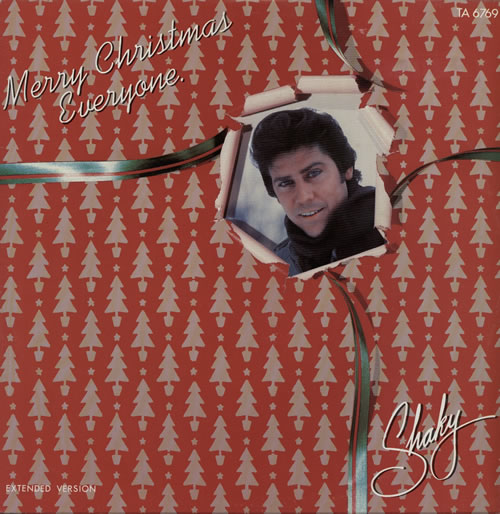
Our final cover is a 2015 remake of Shakin’ Stevens’ 1985 Xmas #1 ‘Merry Christmas Everyone’, by Shaky himself. ‘Echoes of Merry Christmas Everyone’ is a completely re-imagined bluegrass version, with lots of banjo and harmonica, recorded to raise money for the Salvation Army, and it’s amazing how a jaunty, slightly irritating original, was transformed into a melancholy, slightly haunting cover.
That’s it from the UK Number Ones Blog for 2024! I’m going to take a couple of weeks off, before returning in the first week of January, when I’ll be launching a couple of new features to mix things up in amongst all the usual chart toppers. I’d like to thank everyone who has read, followed, liked and commented this year, and wish you all a very merry Christmas and a happy new year!
A Happy Easter to all who celebrate it. I’m launching a new feature this Easter Sunday, something to enjoy while rendered immobile by one too many chocolate eggs… ‘Today’s Top 10’! My blog focuses very intently on every song that’s made #1 in the UK, and I often try to draw conclusions on how popular music has been shaped, and has shifted, over the years based on one tune alone. Which is actually quite limiting, because the singles charts have always been about more than just the number one. Over the 70-plus years of the singles chart, we’ve had a weekly Top 12, a Top 30, a Top 40, a Top 75, and now a Top 100.
So I want to, every so often, single out a random Top 10 from history, to look at in more detail. My version of ‘Pick of the Pops’, if you will. Cue the music….! Completely at random, using an online date generator, the first to come out the hat was 1970: the singles chart as it stood fifty-four years ago today. It features, inevitably, a #1 we’ve met before (plus one former #1), as well as songs by some of the biggest acts of all time. So let’s crack on…
#10 – ‘Don’t Cry Daddy’, by Elvis Presley (down 1 / 6 weeks on chart)
The early-seventies was a sort of musical wilderness: after the post-sixties comedown, a year or so out from the glam rock takeover of 1972-73. Speaking of musical wildernesses, here’s Elvis with a maudlin ballad about a break-up (or is it a mother’s death?) written from the POV of the couple’s daughter. Elvis croons the life out of it, and that voice could sell anything, but even he struggles to imbue lines like Daddy you’ve still got me and little Tommy, Together we’ll find a brand new mommy… with any sort of gravitas. He was still capable of greatness in the early seventies – in a few months he’d be back on top with one of his biggest hits, ‘The Wonder of You’ – but this is pretty saccharine.
#9 – ‘Everybody Get Together’, by The Dave Clark Five (down 1 / 5 weeks on chart)
The DC5 had scored their one and only #1, the stomping ‘Glad All Over’, more than six years earlier. So it is impressive that they were still hanging around the Top 10, when so many of their ’60s contemporaries had already faded away. This is a call-to-arms, a song with a message: Everybody get together, Try to love one another right now… Originally written as a folk song, and a hit in 1967 for the Youngbloods at the height of flower-power, The Dave Clark Five clearly felt that the sentiment was worth one more go. But there’s a droning, heavy feel to this version that feels weary, as if they’ve given up on the message even before the end of the song. It’s appropriately downbeat, perhaps, for the end of the sixties and the start of an uncertain new decade. Fitting too, as this was the Five’s final Top 10 hit. They would disband by the end of the year.
#8 – ‘Something’s Burning’, by Kenny Rogers & The First Edition (up 3 / 9 weeks on chart)
New to this week’s Top 10, and maintaining our run of hits by artists that we’ve already met in the #1 position, it’s Kenny Rogers and The First Edition with a sexy, sexy song. The verses are soft and slinky, lines like You lie in gentle sleep beside me, I hear your warm and rhythmic breathing… but it builds to a heated crescendo in the chorus. Kenny growls Here it comes, Can’t you feel it baby… and we know he’s not talking about the No. 42 bus. Lord have mercy…! It’s a world away from his much more gentle, much more ‘country’, solo hits like ‘Lucille’.
#7 – ‘Let It Be’, by The Beatles (down 3 / 4 weeks on chart)
Some of you may have heard this one before… The last single released before Paul McCartney’s departure heralded the end of history’s greatest group. There’s nothing new I can say about the record as a whole, so I’ll single out my two personal favourite moments. George Harrison’s snarling solo (especially on the album version) and the way Paul’s scouse accent sneaks through in the word ‘trouble’. Perhaps I’m just used to the streaming age, where songs hang around the charts for……ever, but for a song as legendary as ‘Let it Be’ not to make #1, and then be slipping down to #7 after just four weeks, seems surprising.
#6 – ‘That Same Old Feeling’, by Pickettywitch (down 1 / 6 weeks on chart)
I can’t say I’ve ever heard this one, though it had been as high as #5. It’s a nice enough, Motown-leaning tune done in a late-sixties, bubblegum style. Pickettywitch – I can’t decide if that’s a great or a terrible name – are another sign that though we may be in March of 1970, we’re still in the sixties going by much of this Top 10. Lead singer Polly Brown has a decent voice, reminding me of Diana Ross.
#5 – ‘Young, Gifted and Black’, by Bob & Marcia (up 1 / 4 weeks on chart)
I’ve made many a reference to the fact that reggae is the most indestructible of genres on the UK singles chart. Never the defining sound of an age, but always popping up when you least expect it. In 1970, it really was a new sound, Desmond Dekker having scored the first ‘official’ reggae #1 (if you ignore The Equals, and ‘Ob La Di…’) the year before. This is reggae + , with lots of strings, and rocking drums, but I’d say it still counts. More significant, though, are the lyrics: In the whole world I know, There’s a million boys and girls, That are young, gifted and black… And that’s a fact! Written and originally recorded by Nina Simone a few months earlier, right at the end of the decade that had brought the Civil Rights Movement to a head, for this to make the Top 10 in the UK feels very significant, and the second song in this rundown that could be described as a ‘rallying cry’.
#4 – ‘Wand’rin’ Star’, by Lee Marvin (down 2 / 9 weeks on chart)
A former number one – which I go into much more detail on here – that had kept ‘Let It Be’ from top spot a few weeks before. It was taken from the movie version of ‘Paint Your Wagon’, which was a box office flop. A bizarre #1 at the start of a decade full of bizarre #1s, Lee Marvin officially has the lowest voice ever heard on a chart-topping single (*disclaimer – may not be true*), and uses it brilliantly on this anti-social anthem: I never seen a sight that didn’t look better lookin’ back…
#3 – ‘Can’t Help Falling in Love’, by Andy Williams (non-mover / 4 weeks on chart)
Elvis makes a second appearance in the Top 10, in spirit at least, with Andy Williams’ belting cover of the King’s 1962 #1, ‘Can’t Help Falling in Love’. If it was impressive that the DC5 were still having hits in 1970, then we should also give a nod to the fact that Williams debuted with ‘Butterfly’ – his sole chart-topper – in 1957. But then again, crooners like Williams are timeless, much less prey to shifting trends than pop groups. The video above, which I think comes from later in the decade, is a spectacular glimpse into ’70s variety shows: the multi-coloured steps, the giant ‘ANDY’, the cardigan…
#2 – ‘Knock, Knock Who’s There?’, by Mary Hopkin (up 5 / 2 weeks on chart)
Venture deep enough into a springtime chart, and there’s a good chance you’ll meet a Eurovision Song Contest entry. ‘Knock, Knock Who’s There?’ was the UK’s 1970 offering, finishing second on the night to Ireland’s Dana. This is very schmaltzy, very middle of the road – not a patch on Hopkin’s huge breakthrough #1 ‘Those Were the Days’ – but it’s a darn sight better than the horrible ‘All Kinds of Everything’. This was a big departure from Hopkin’s usual, folky offerings, and she wasn’t a fan: “I was so embarrassed about it. Standing on stage singing a song you hate is just awful.” Hate it though she might have, it brought about her final Top 10 hit.
#1 – ‘Bridge Over Troubled Water’, Simon & Garfunkel – (non-mover / 7 weeks on chart)
In the middle of a three-week run at the top, ‘Bridge Over Troubled Water’ was just the 3rd number one of the 1970s, but is probably one of the decade’s biggest and best-loved songs. Simon wrote it, while Garfunkel gave one of the great vocal performances (something that apparently irks Paul to this day…) You can read my original post here.
In a way, ‘Bridge Over Troubled Water’ is the perfect number one for this chart. March 1970 wasn’t the sixties, but it’s wasn’t the seventies as we remember it either. ‘Bridge…’ is timeless, not beholden to many of the styles of the time, and could have been a #1 at most points in chart history. Elsewhere in the Top 10, we tick a few common chart boxes: soundtrack hits, Eurovision, Elvis, The Beatles… Maybe the two most relevant songs, though, are ‘Everybody Get Together’, and ‘Young, Gifted and Black’, which represent the social and civil rights movements that had defined the latter part of the 1960s. The hippy dream may have died, Dr King may have been killed, but hope springs eternal…
That was fun, and hopefully worthwhile. I’ll do another one sometime, as a break from our normal proceedings. Next up it’s back to 1996…
It’s that time of year, when I fire up my random date generator (random.org, for all your randomly generated needs) and choose some number two singles from across the ages.
In the main Number Ones blog we’ve reached mid-1993, and so the runners-up I picked could have come from any chart dated between then, and the very first in November 1952. I’m not choosing these hits because I like them, or dislike them… I may not have even heard of them. It’s all random. And yet, the first #2 that pops up just happens to be one of the most famous of all time…
On the one hand, great that this classic gets a post. It’s a #1 on every metric – cultural heft, recognisability, singalongability – except the one metric that matters when it comes to getting a #1: sales. On the other hand… What’s left for little old me to write about this colossus?
Thirteen-year-old Don McLean was doing his paper round, or so the story goes, in February 1959, when he read the news of the plane crash that killed Buddy Holly, Richie Valens and the Big Bopper (and their pilot) AKA ‘The Day the Music Died’. February made me shiver, With every paper I’d deliver…
The song then goes on to detail the history of rock music from the late fifties to the early seventies, with cryptic references to Elvis, Dylan, the Beatles, the Stones and more, as well as nods to the big news events of the age: the Kennedy assasination, the Cuban Missile Crisis, and the Manson family among them. I know this not because I understand the lyrics; I just read the Wikipedia page.
Like all great poetry, it could mean all the above, or it could mean something completely different. When asked what it’s all about, McLean famously answered: ‘It means I don’t ever have to work again…’ When talking more seriously, he’s compared it to Impressionism. And of course, his next big single would be about a very famous (post) impressionist… Which would make #1.
At over eight and half minutes long, ‘American Pie’ initially had to be split over two sides of a 45′ record, which means people (including me) are much more familiar with the first four minutes than the latter four. In fact, listening to the pub singalong last chorus now, I’m not sure I’d ever heard it before. It is the sixth longest record to chart in the US, and held the record for the longest ever Billboard #1 until 2021.
Before I end this post, I have to give an advance trigger warning. ‘American Pie’ may not have made #1 in its original form, but a version by a certain Queen of Pop will make the top of the charts in the early 2000s. I’m someone who will defend Madonna until the cows come home, but even I might struggle to justify that particular musical decision…
Writing a post on Phil Collins’ chart-topping cover of ‘You Can’t Hurry Love’ made me realise how little we have heard from The Supremes on this blog. In fact, most of the comments on that post turned to the joys of the Supremes, rather than the merits of Collins’ cover. Which inspired this post!
There was a huge disparity between the girl-group’s US and UK chart fortunes. One #1 in Britain (‘Baby Love’), to twelve Billboard #1s between 1964-69! Here, then, are the ten Supremes singles that came closest to matching their only number one… ranked by chart position, rather than by preference.
‘You Keep Me Hangin’ On’ – reached #8 in 1966
Perhaps a little surprising that this doesn’t come in higher up. The ‘morse code’ guitar lick that comes in and out is great – this is possibly one of their ‘rockier’ hits – and I just noticed the galloping, hand-played drums. It’s not in the very highest echelon of Supremes songs, though. Not for me. It was later covered in a sprawling, psychedelic version by Vanilla Fudge, which manages to outdo the original, and then taken back to #1 in the US – and all the way to #2 in the UK – by Kim Wilde.
‘Stop! In the Name of Love’ – reached #7 in 1965
An even bigger surprise, that this one would be so low down the list. ‘Stop!’ is another classic, one of their best-loved tunes, and a song that practically begs you to do a certain dance move. More songs need exclamation marks in their titles, no? The video above is from a TV performance, but the trio seem to be singing live, showing off just how good their voices were.
‘Up the Ladder to the Roof’ – reached #6 in 1970
While The Supremes couldn’t match their home success in the sixties, by the 1970s they were scoring hits in the UK that struggled on the Billboard charts. ‘Up the Ladder to the Roof’ was their first release without Diana Ross. Jean Terrell is the new lead singer, and she has a throatier voice which she uses to full effect in the final chorus. I hadn’t heard this one before, however, and I’m not sure it will linger very long in the memory.
‘The Happening’ – reached #6 in 1967
From a movie, apparently, of the same name that’s been completely forgotten. This was the final single they released as ‘The Supremes’, before Ross got top billing. And it’s one of my favourites: playful, light, catchy as anything, frantic, slightly demented… Not everyone shares my enthusiasm for it, but that’s just fine.
‘Reflections’ – reached #5 in 1967
And here’s the first of their songs released as ‘Diana Ross & The Supremes’. It feels like a bit of a fresh start, the trio’s classic sound updated with some space-age, psychedelic sound effects. (Which I’m not sure the song really needs, but OK…)
‘Nathan Jones’ – reached #5 in 1971
Their best post-Diana moment? (Ok, there’s one more song to come that could claim that title…) But ‘Nathan Jones’ is my personal favourite. It takes the group’s sound in a very trippy, early-seventies directions, especially in the extended mix above, and is one of the few Supremes records where lead vocals are shared. I’m always amused by the normal-ness of the title. There must be tens of thousands of Nathan Joneses in the world, haunted by this song…
‘I’m Gonna Make You Love Me’ (with The Temptations) – reached #3 in 1969
The last four songs in this countdown all peaked at #3, starting with this A-List Motown collab. It’s every bit as smooth and classy as you’d expect a record by two of the 1960s great vocal groups to be. Diana Ross’ verse is excellent here, with a real playfulness in her voice…
‘Stoned Love’ – reached #3 in 1970
How about this, their joint second-highest UK chart hit is a Jean Terrell number…! The Supremes call for world peace… by getting stoned. Goodness. Either that, or by rhinestoning another fabulous dress… Both might work. Motown tried to distance themselves from the suggestion that it was about drugs, though the lines about lighting up the world suggest otherwise to me…
‘Where Did Our Love Go’ – reached #3 in 1964
Their breakthrough hit… The Supremes first US #1, and their first UK Top 10 hit. My favourite of their big hits? Probably. The boot stomping intro is iconic, especially in stereo as it travels across the room. The rest of the song is quite understated, compared to some of the bells and whistles tunes we’ve seen above. In fact, the girls thought the same, and were unsure about recording it to begin with, thinking it lacked a hook (further proof that most pop stars can’t spot a hit song if it bites them on the arse…)
‘You Can’t Hurry Love’ – reached #3 in 1966
And we end with the song that inspired this ‘Best of the Rest’, the one that made #1 in 1983 thanks to Phil Collins. It’s a bouncy, upbeat classic, though not one of my very favourite Supremes songs. It is, though, probably their most famous hit – it’s by some distance their most listened to song on Spotify – even more famous than the one Supremes single that charted higher.
I hope you enjoyed this short journey back to the sixties/early-seventies. Back on the regular countdown, things are getting even more ’80s… Coming soon!
‘Happy Xmas (War Is Over)’, by John & Yoko with The Plastic Ono Band & The Harlem Community Choir
reached #4 in December 1972 / #2 in January 1981
Not many festive hits start in such an accusatory tone. Not many festive hits sound like this classic, though. Yes, there are jingling bells and a choir. But there’s no talk of Santa, or snow, or stockings stuffed with presents. This record has it sights set higher: peace on earth.
In my post on ‘Imagine’, which hit #1 shortly after Lennon’s murder, I said that nowadays it could feel a little too idealistic, and a little preachy. Why, then, can I tolerate this song year after year? Is it just because I’m more receptive to songs about war being over, if I want it, when I’m stuffed full of mulled wine and mince pies? Maybe…
I think actually that it’s Phil Spector’s production: taking Lennon’s song and giving them his full Christmas treatment. Strings, chiming bells, beefy drums… It may not have worked on ‘Let It Be’, but it really does here. Despite not actually being much about Christmas, this song sounds like Christmas should.
I’m not posting this song just because I really like it, though. I do, but I also think there’s a chance that it genuinely should have been #1. In its first chart-run, in 1972, it made #4 fair and square, behind the likes of T. Rex and Little Jimmy Osmond. But in 1980, re-released in the wake of Lennon’s death, it also made #4 for Christmas, while the delights of St. Winifred’s School Choir wafted down from top-spot.
Back in those pre-computer days, when everyone at the chart-keeping company was on Christmas holiday, the post-Xmas chart was usually a copy-paste of the previous week’s. St. Winifred’s remained top, John and Yoko at #4. The week after, though, it rose to #2, behind the also re-released ‘Imagine’. I wonder… If the sales of the ‘Happy Xmas’ – which was presumably selling very well in the days leading up to Christmas – were counted, and the chart hadn’t simply been repeated… Could it have been a number one? I guess we’ll never know.
Though it never made #1, ‘Happy Xmas (War Is Over)’ makes the chart every year now thanks to festive streaming. It’s currently perched at #34 in the charts, and will presumably rise even higher next week. With that, I’d like to wish all my readers a very merry Christmas, and a happy new year… Let’s hope it’s a good one… wherever this holiday season finds you. (I’d also like to wish for war to be over, but I think I may be overreaching…)
I wrote in the recap just gone that the eighties had officially begun, kicked off by none other than Shakin’ Stevens. But with all due respect to Shaky, up next we have perhaps the ultimate ‘80s pop icon.
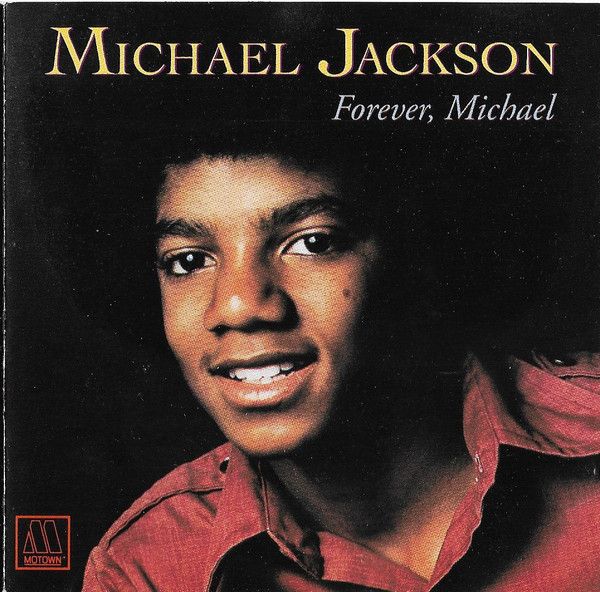
One Day in Your Life, by Michael Jackson (his 1st of seven #1s)
2 weeks, 21st June – 5th July 1981
MJ has his first solo #1. But it’s not as simple as all that. ‘One Day in Your Life’ is hardly one of his signature tunes. In fact, it’s two years older than the chart-topper he managed with his brothers in 1977: ‘Show You the Way to Go’. The Michael Jackson of 1981 was coming off the success of ‘Off the Wall’, poised, only a year away from ‘Thriller’ and world domination. But here we are.
He was just sixteen when this was recorded, in 1974, and he still sounds very young, caught between the high-pitched little kid from ‘I Want You Back’ and the megastar that recorded ‘Don’t Stop ‘til You Get Enough’. And it’s nice to be reminded that Jackson could actually sing – there’s no sign here of the vocal tics and squeals that make up his later hits.
It’s a song about longing, and waiting. He’s waiting for the day when his ex wakes up and realises what she’s lost: One day in your life, You’ll remember a place, Someone touching your face… And it’s a glossy, beautifully produced, slow-dance number, a good companion to the Smokey Robinson record that it knocked off the top. Like ‘Being With You’, it’s a record that reveals itself slowly. I was underwhelmed and a little bored with it at first – and it does sound dated compared to what was in the charts at this time, and compared to what Jackson was recording – but it’s a really nice song. I can’t help hearing it in a female voice, though: Dionne Warwick maybe, or Dusty…
Just call my name, And I’ll be there… I wonder if that’s a deliberate allusion to his group’s earlier hit of the same name. There are similarities between this and ‘I’ll Be There’ (they’re both ballads, for a start): this is a grown-up sequel, more teenage angst than childish optimism. Why was ‘One Day in Your Life’ a hit six years after its recording, though? It was released as the lead single from a hits compilation, and perhaps a combination of his ‘Off the Wall’ hits and The Jacksons’ second wind with disco hits like ‘Can You Feel It’ and ‘Blame It On the Boogie’ helped. It was the year’s 6th biggest selling hit, but it feels almost forgotten now, overshadowed by his monster smashes from later in the decade.
My favourite fact about Michael Jackson’s chart-career is that he only ever reached #1 in odd-numbered years (all his solo #1s, his Jacksons’ #1, even ‘We Are the World’… ’77, ’81, ’83, ’85, ’87 and so on…) It’s probably fitting, as there have been few pop stars as ‘odd’ as Jackson. Listening to this song, it’s so easy to forget the more uncomfortable side of his legacy. Probably because the teenager singing on this record was, to all intents and purposes, a completely different person to the Wacko Jacko of Bubbles the chimp, Neverland, his ‘sleepovers’, and beyond…
Yesterday I ranked the songs that didn’t quite make my Top 10 of ABBA’s non-#1s. Here, then, is the main event…
10. ‘Does Your Mother Know’ – reached #4 in 1979
The only ABBA hit on which one of the boys took lead vocals, and their final glam-rock stomper. The lyrics are very of their time BUT, crucially, Bjorn acts like a true gentleman towards this teenage tearaway. Take it easy… Does your mother know? You can picture him helping the girl out the club, giving her a bottle of water, and waiting with her until the Uber arrives.
9. ‘Under Attack’ – reached #26 in 1982
One that benefits from not being over-played… This was the last single released before the band split up in December 1982. Sadly it didn’t help them go out with a bang, and limped to a Top 30 peak over Christmas. I love it though: it keeps the moodiness from ‘The Visitors’ album in the verses before dishing out a classic ABBA chorus. Never has a line like: Under attack, I’m being taken… sounded so positive.
8. ‘Don’t Shut Me Down’ / ‘I Still Have Faith in You’ – reached #9 / # 14 in 2021
The comeback hits. One of which, astonishingly, restored ABBA to the Top 10 for the first time in forty years. I’m treating them as a double-‘A’, as in days gone by that’s presumably what they would have been released as. I don’t really know where to place them, how to assess them with regards to the rest of their output yet, so have plonked them right in the middle. One things for sure: both songs hold their own with those from decades before. ‘Don’t Shut Me Down’, to my ears, combines ‘Dancing Queen’ and ‘One of Us’, two of the band’s best. ‘I Still Have Faith in You’ I found a little underwhelming on first listen, but in time it’s grown into an epic that could only have been created by one band.
7. ‘Head Over Heels’ – reached #25 in 1982
The single that broke their run of 18 uninterrupted Top 10 hits… But I think it’s a mini-classic. It’s ABBA at their frothiest, and is definitely the lightest moment on ‘The Visitors’ album. It helps that you rarely hear it these days – perhaps if it was as played as ‘Dancing Queen’ I’d be ranking it lower. The video, in which Frida plays a messy It girl, is cheap and cheerful, but Good God those jumpsuits! She’s extreme, If you know, What I mean…
6. ‘Gimme! Gimme! Gimme! (A Man After Midnight)’ – reached #3 in 1979
Until their re-evaluation in the ’90s, the ABBA flame was kept alight in gay bars. Most claim ‘Dancing Queen’ to be their gay anthem, for obvious reasons, but surely they were never gayer than when Frida and Agnetha were demanding a man after midnight. Those exclamation marks after each ‘Gimme’ in the title are everything, as is the pounding, horse-hoof beat, that sounds as close as disco ever came to splicing with a spaghetti-western soundtrack. It was later sampled by Madonna for one of her best songs, however I can’t listen to it now without hearing it sung in the style of Kathy Burke.
5. ‘SOS’ – reached #6 in 1975
I’ve heard this referred to as ABBA’s heavy-metal moment, ABBA’s emo moment, ABBA’s finest moment… I’d say it’s simply pure power-pop perfection. ‘SOS’ was their first big post-‘Waterloo’ hit, and it set them up for half a decade of chart domination. Even this early in their career, with both couples still happily together, ABBA’s melodies and hooks were underscored by melancholy. Even Pierce Brosnan couldn’t ruin this one…
4. ‘The Day Before You Came’ – reached #32 in 1982
Just what is this record about…? Is it the day before meeting the man of your dreams? Is it the day before your death? Your murder? Suicide?? A biting satire on the meat-grinder that capitalism throws us through in the name of a career…? Whatever it might be about, this six-minute, chorus-less epic is probably the most experimental moment of ABBA’s career. The hits were drying up, so why bother trying to write a hit? It was also the very last song they ever recorded (until the comeback). Legend has it that Agnetha recorded her vocals alone, in a darkened recording studio, before walking out and drawing ABBA to a close. Those vocals contain some of the band’s best lines, picking out the mundanity of this woman’s life. I must have lit my seventh cigarette at half past two… and There’s not, I think, a single episode of ‘Dallas’ that I didn’t see… She isn’t at all sure of what happened that day, really; a very unreliable narrator. You could write a dissertation on the many way this song can be interpreted. Who know, someone might already have. Strange, sinister perfection.
3. ‘Voulez-Vous’ / ‘Angeleyes’ – reached #3 in 1979
Apart, neither ‘Voulez-Vous’ nor ‘Angeleyes’ would get this high… As a double-‘A’ side, though, their combined forces get third place. (And, without giving the game away, the highest-placing of ABBA’s ’70s hits…) Both songs are disco heaven, and both are about a sleaze-ball of a man. The same sleaze-ball? In ‘Angeleyes’ the girls want to warn his new lover not to trust him, to warn her away… While in ‘Voulez-Vous’, in the heat of the dance floor, they give in and ask him bluntly: Voulez-vous? Take it now or leave it…
2. ‘Lay All Your Love on Me’ – reached #7 in 1981
In which ABBA move from disco, into electronic dance. The bass slaps (I believe that’s the term), the beat is unrepentant, and the lyrics are classic ABBA (how many dance tracks have words like ‘incomprehensible’ in them…?) My favourite bits are the violins that come in at the end, and the synthesised drops before the choruses, but really it’s all great. This was never intended to be a single, and when it was released it was only put out on 12″, which explains the relatively low peak. Though it was, at the time, the best selling 12″ record ever.
1. ‘One of Us’ – reached #3 in 1981
The first song the band released as two divorced couples; and the last genuine hit single they had. A coincidence…? It has everything you want from an ABBA single: singing through the tears, glorious harmonising from the girls, just the right number of cheesy touches (the parping bass, for example). I’m not sure it’s their best song, but something about it just hits a sweet spot – the Wishing she was somewhere else instead… line is perfection – and so it gives me great pleasure to name ‘One of Us’ as the best of ABBA’s rest.





 The UK Number Ones Blog