787. ‘It’s Like That’, by Run-D.M.C. vs Jason Nevins

Check this out… Just a couple of weeks after Norman Cook worked his magic on Cornershop’s ‘Brimful of Asha’, American house DJ Jason Nevins has his wicked way with a hip hop golden oldie…
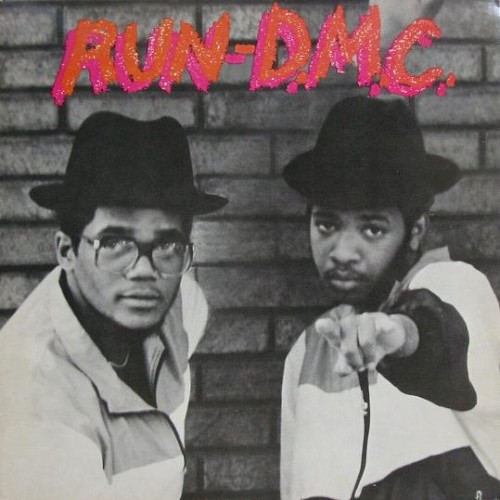
It’s Like That, by Run-D.M.C. vs Jason Nevins (their 1st and only #1s)

6 weeks, from 15th March – 26th April 1998

I remember this being huge, an omnipresent hit that spring. And six weeks at number one is a very impressive run for the late-nineties (only one song will beat that total in 1998). But listening now, I’m a bit stumped trying to work out why it was quite so popular… It’s a bit repetitive, a sledgehammer beat that goes on, and on, with a less stardust sprinkled by Nevins compared to Fatboy Slim. Some of the transitions are predictable, and the original Run-D.M.C. vocals feel off in the mix.

Not that it’s bad, or that I don’t enjoy it on a certain level, or that it doesn’t unleash a heady wave of nostalgia listening to it again in 2024. I just mean that I can’t really locate the reason that it became the year’s 3rd best-selling single and – even more impressively – the only record to ever hold a Spice Girls’ song off number one in the UK (this was released in the same week as ‘Stop’, which it beat to the top by well over 100,000 copies).

The original ‘It’s Like That’ had featured on Run-D.M.C.’s debut album in 1984, and was released as the LP’s first single. It’s a call-to-arms – a spikier, more cynical ‘What’s Going On’ for a new decade: Unemployment at record highs, People coming, People going, People born to die… Don’t ask me because I don’t know why, It’s like that, And that’s the way it is… What’s interesting about the original is that the 1998 hit is there, fully formed. If anything, the beat is even heavier. Nevins does little more than tart it up with a standard dance rhythm and some up-to-date flourishes (which admittedly is also what Norman Cook did on ‘Brimful…’, I just like that song better).
The one notable thing that Nevins does add is the sped-up Run DMC and Jam Master Jay! break, along with a bit off beatboxing. That’s the part I most remember, perhaps the hook that sold this as a hit. But in actual fact it last barely ten seconds, before that relentless beat comes slamming back in. (I always assumed that ‘Jam Master Jay’ was Jason Nevins, but he was actually the DJ in Run-D.M.C, who was sadly shot dead in 2002.)

Not surprisingly, this would be both Run-D.M.C.’s and Jason Nevin’s biggest ever hit. Nevins has only returned to the Top 10 one further time, although he’s gone on to work with stars like Nelly and Ariana Grande. For Run-D.M.C., this was their second Top 10, a decade on from ‘Walk This Way’ – in which they and Aerosmith fused rap with rock, much like Nevins was fusing rap and dance on this record.

Is it too early to call this the Age of the Remix? It is true that we’ve had two in quick succession, and that remixed hits will be more noticeable at the top of the charts as the century turns. I think it’s the fact that this is the first ‘versus’ record to make #1, as opposed to a plain old ‘featuring’ or an understated ‘&’. It feels so very turn of the twenty-first century (though a quick scan has shown me that there will actually only be a couple of other ‘someone versus someone else’ number ones between now and 2005.)

770. ‘I’ll Be Missing You’, by Puff Daddy & Faith Evans ft. 112

And so we meet the year’s third now-problematic chart-topper. I have to admit that I’m not quite up on what Sean Combs has/hasn’t been accused of*, while I think a lawyer would advise me to mention that he’s not been found guilty of anything. It seems, though, he’s quickly heading the way of R. Kelly and Michael Jackson.

I’ll Be Missing You, by Puff Daddy (his 1st of three #1s) & Faith Evans ft. 112

3 weeks, from 22nd June – 13th July 1997 / 3 weeks from 20th July – 10th August 1997 (6 weeks total)

Back in 1997, Combs was head of his own label, Bad Boy Records. He’d signed the rapper Notorious B.I.G., and had produced for acts like Usher, TLC, Mariah Carey, even Aretha Franklin. That March, B.I.G. had been shot dead just as Combs had been preparing his own debut album. ‘I’ll Be Missing You’ is a hastily-recorded tribute to his dead pal, featuring fellow Bad Boy artists 112, and Faith Evan’s (Biggie’s widow).

So, on the one hand, it feels churlish to criticise a tribute to a recently deceased man. On the other… there’s just so much to criticise. Reviews at the time called it ‘maudlin’, and ‘turgid’, and it’s hard to disagree. The lyrics – which I once knew word-for-word – are extremely clunky. It’s kinda hard with you not around, Know you’re in heaven smiling down… Watchin’ us while we pray for you, Every day we pray for you…

It’s main hook is that it’s based around ‘Every Breath You Take’, by The Police, as well as the hymn ‘I’ll Fly Away’. In earlier posts I bemoaned not knowing the difference between a sample and an interpolation, so imagine my joy to discover that ‘I’ll Be Missing You’ features both! So blatant is it that Sting and Co., who hadn’t been asked permission, sued for 100% of the royalties (and won).

The clear highlight of this saccharine number is Evans, whose voice soars above the sentimentalism, especially in her middle-eight: Somebody tell me why… Other than that, it is catchy, and it is heartfelt. But I can’t help but see something cynical in the way it goes for the heartstrings so remorselessly. It reminds me of Wiz Khalifa’s ‘See You Again’, another rap/pop crossover about a dead man, which I think is one of the sickliest pieces of music ever recorded (sorry, spoilers, but it’s a while before we’ll come to it…)

Thing is, though, I loved this song as an eleven year old. Like I said, I knew all the words. If I’d been eleven when ‘See You Again’ came out, I’d probably have felt the same about it. But that’s the song’s problem: it lacks nuance, depth, and relies too much on simplistic lyrics about turning back the hands of time, and living life after death. If this record helps a kid process their emotions following a loved one’s death, then great. But as an adult I would need something a little more substantial.

Though maybe I’m in the minority on this, as ‘I’ll Be Missing You’ stayed at number one for six weeks in total (an impressive feat, as chart turnover was ever increasing) and would have been 1997’s biggest-seller, if it weren’t for the small matter of the most succesful record ever released coming along a few weeks later: another tribute to a dead person. It remains the 23rd highest-selling record in the UK, and the country’s biggest-ever hip-hop song. Sean Combs, AKA Puff Daddy, AKA P. Diddy, AKA Diddy (I believe he’s the only artist to have topped the charts under three different stage names) will return to this countdown eventually, though with nothing resembling the success of his first big hit.

*Long before the current accusations against him, there was a rumour that Diddy had put the hit out on the Notorious B.I.G. himself.

759. ‘Ain’t Nobody’, by LL Cool J

Five weeks into 1997, and we’ve had five different number ones (if you count ‘2 Become 1’, leftover from the year before). Dance, indie, rock, and now…

Ain’t Nobody, by LL Cool J (his 1st and only #1)

1 week, from 2nd – 9th February 1997

One of hip-hops OGs. Ladies Love Cool James, or just LL Cool J to his friends. I’m the best when it comes to making love all night… LL announces in this record’s opening lines… Go deep till the full moon turns to sunlight… before commencing on a four-minute rap Kama Sutra, full of lines about bodies intertwining, animal attraction, all that jazz.

It’s based around ‘80s classic ‘Ain’t Nobody’, and I did wonder if it was a full-blown sample, meaning that Chaka Khan could grab a second #1 by association. But no, it’s an interpolation (one day I’ll have to work out the difference). The chorus is sung by an uncredited lady, who doesn’t have Chaka’s pipes, but LL does a neat little reference to ‘I Feel for You’, as he freestyles towards the end.

I’ve talked for a long time about hip-hop gradually coming of age, especially in recent years with hits from Coolio and the Fugees. I’d add this one to the pile. The rapping is tighter, faster, and obsessed with sex. Still no swearing (the Outhere Brothers remain an outlier), though we’re slowly getting saucier: see the lines above, as well as treats like I’m exploring your body and your erogenous zones, Like a black tiger caged up till you come home… And I’m sure he didn’t mean it, but the refrain of You can take it girl, Stop runnin’, Uh… sure does sound a bit dubious to today’s ears.

Other than that, the sample (sorry, interpolation!) works well. I don’t love the song as a whole, and it’s not a patch on the original, but wouldn’t leave the dancefloor if it came on. Plus it sounds like a modern pop song, once again, furthering my argument that late ’96 / early ’97 marked one of those shifts that pop music goes through every decade or so.

This record, standard 90s hip-hop that it is, came from the unlikely source of the soundtrack to ‘Beavis and Butt-head Do America’, which I haven’t seen, and cannot imagine how it fits into the plot. The ‘B’-side was called ‘Come to Butt-head’, which seems much more appropriate.

Despite rap still being a relatively new chart-topping genre, LL Cool J had been around since the early ‘80s, which is seriously early in hip-hop terms. ‘I Need Love’, his slow-jam from 1987, was one of the first fully-rapped songs to be a chart hit in the UK, reaching #8 (meaning LL had a UK Top 10 several years before he managed one on the Billboard 100). ‘Ain’t Nobody’ was his third, and it set him up for a decade’s worth of regular hit making. And before I go, I’ll give a shout out to one of his other 1997 hits, which should have been the #1, ‘the frenetically funky ‘Phenomenon’.

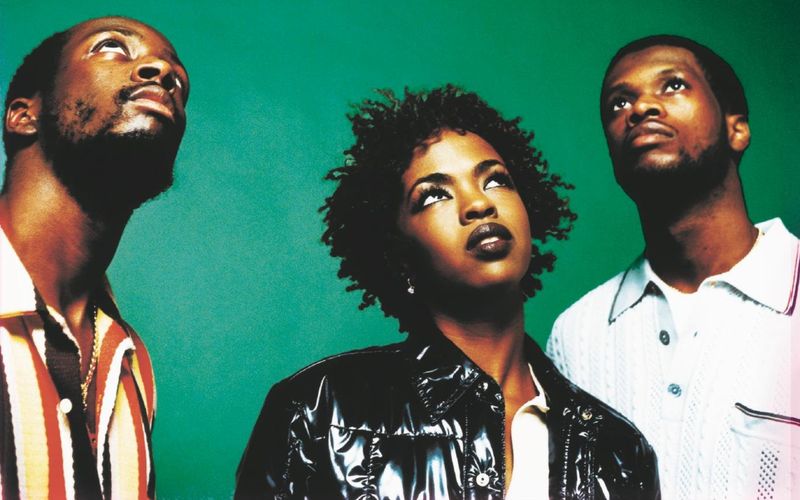
745. ‘Ready or Not’, by The Fugees

I first proposed the existence of ‘shadow #1s’ way back at the start of this blog when covering Frankie Laine’s ‘Hey Joe’, which had made top spot shortly after his mega-hit ‘I Believe’ (the song that still holds the record for weeks at number one). ‘Hey Joe’ was a zany, whip-crackin’ country ditty, a world away from the spiritual ‘I Believe’, and I suggested that the reflected glow of the earlier hit had paved the way for the follow-up.

Ready or Not, by The Fugees (their 2nd and final #1)

2 weeks, from 15th – 29th September 1996

It’s a phenomenon we’ve seen repeated a few times. ‘Baby Jump’ by Mungo Jerry springs to mind as one of the most obvious. ‘Shadow #1s’ don’t even have to follow a chart-topper, as both Alvin Stardust and a-Ha achieved their only number ones after their much more famous number twos… All of which is my long-winded way of introducing ‘Ready or Not’, one of the ultimate shadow #1s…

I tried to claim that The Fugees earlier cover of ‘Killing Me Softly’ was hip-hop’s big arrival as a chart force. But actually, this is the moment. This is no funky cover of a seventies classic; this is uncompromising rap. (Though it is built around a very distinctive, very haunting sample from Enya, so I suppose it does have some mum-friendly credentials.) Like Peter Andre’s ‘Flava’, which was a particularly modern sounding pop song, this is modern rap – East Coast rap, apparently, though I’m not qualified to clarify what that actually means – and could have been a credible chart-topper anytime between 1996 and now.

It still makes use of Lauryn Hill’s amazing voice, in the chorus, but while she sang angelically on ‘Killing Me Softly’, her voice now drips with deadpan attitude. Ready or not, Here I come, You can’t hide… Around this, each of the three MCs take turns telling us how the Fugees are poised for world domination. I like Hill’s alliterative voodoo line, as well as: While you’re imitating Al Capone, I’ll be Nina Simone, And defecating on your microphone… But perhaps the most important verse is Pras Michel’s, which focuses on the group’s immigrant background: I refugee from Guantanamo Bay, Dance around the border like Cassius Clay… (the band name is, after all, short for ‘Refugees’).

Although uncompromising, this isn’t gangsta rap. Hill’s verse even calls out stereotypical rappers: Frontin’ n*ggas give me heebeejeebees… Enya threatened to sue the trio for sampling ‘Boadicea’ before she realised that the lyrics went deeper than just guns and pimping. (Although, while there’s no swearing, there is the above-mentioned debut appearance of the n-word in a UK #1.) Meanwhile, though it isn’t strictly a sample, the chorus is heavily based around the Delfonic’s ‘Ready or Not Here I Come (Can’t Hide from Love)’, a minor hit in 1969.

In calling this a ‘shadow #1’, I don’t mean to suggest that this doesn’t have musical merit. The verses are impressive both lyrically and in the way they are delivered, while the use of ‘Boadicea’ is one of the all-time great samples (so effective that this won’t be its only appearance in a number one single…) There was also the small matter of a multi-million dollar video featuring submarines, sharks and helicopters to promote it. But no, all that aside, this is an impressive and important song, and I say that as someone with a fairly low tolerance for rap.

The Fugees weren’t together for long after their chart-topping summer of ‘96, with the members moving on to solo projects by the following year. All three will have their own hits, but only Wyclef Jean will feature on another #1. Lauryn Hill has had the most interesting post-Fugees career, involving both charity work and other philanthropic endeavours, jail time for tax fraud, as well as the small matter of eight Grammy awards and the title of ‘Greatest Female Rapper’. The group have reunited twice over the years.