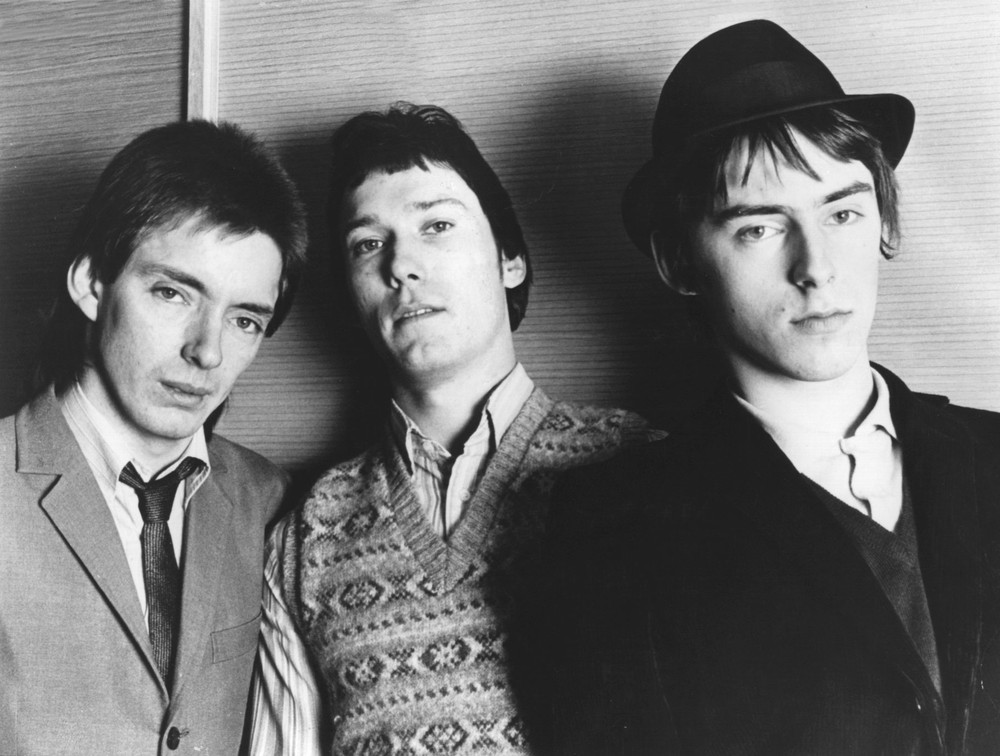
511. ‘Beat Surrender’, by The Jam

On with the next thirty. And to start, The Jam return for one final chart-topper.
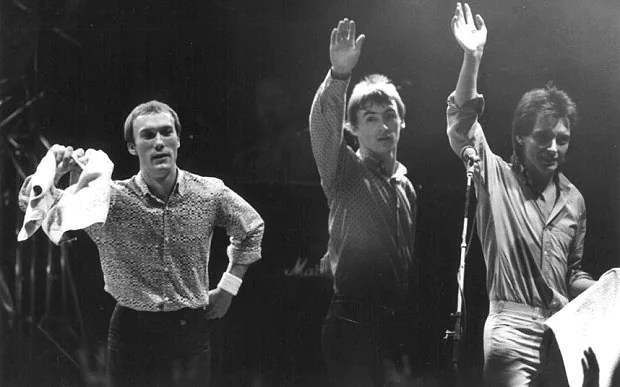
Beat Surrender, by The Jam (their 4th and final #1)

2 weeks, 28th November – 12th December 1982

In my last post on them – ‘Town Called Malice’ / ‘Precious’ – Paul Weller and his bandmates had made some sonic advancements. Away from punk; into soul, funk and Motown. ‘Beat Surrender’ is more of the same. It’s intro, for a start, is the love-child of ‘I Will Survive’s piano flutter, and ‘Dancing Queen’s glissando.

I’m not even sure there’s a guitar involved here. Certainly not a lead guitar. There’s a piano, and lots of horns. It’s slick and glossy. But that’s not to suggest that The Jam have lost their edge. It’s still a great pop song, with a great hook: Come on boy, Come on girl, Succumb to the beat surrender…

And like most Jam songs, it’s lyrically dense. The title is a play on ‘Sweet Surrender’ and the idea of beating a retreat, which makes sense when you realise that this was The Jam’s final release, their farewell single. Weller intended it as a call to their fans, to young, up and coming bands: Seize the young determination, Show the fakers you ain’t foolin’…

The band also drop some pearls of wisdom from their time as one of the country’s biggest acts: Bullshit is bullshit, It just goes by different names… A line that I think – unless I’m forgetting something obvious – delivers our first example of swearing in a #1 single. Lonnie Donegan, The Stones, Billy Connolly have all flirted with it, but didn’t go all the way. It took five hundred and eleven chart-toppers, though, which is impressive. Safe to say this won’t be the last…

I do admire the way that The Jam didn’t stand still, never seemed to recycle a sound or a style, in their five years of success. Here we have a great moment, when the soulful riffs of the first two verses drops down to a galloping disco bassline. It’s a risk, for a rock act, you could alienate your fans by daring to try new things (gasp!). But it didn’t seem to hurt The Jam. ‘Beat Surrender’ entered at #1 – making them the second act to do this three times (after Slade). Of course, announcing that this record was to be their final ever release probably didn’t hurt its chances, and ensured a fair bit of demand…

 Though I’d say that it hasn’t remained in the collective memory as much as their three previous number ones. It’s a good one – none of their chart-toppers are anything less than a seven-out-of-ten – but perhaps its success wasn’t just for musical reasons. Anyway, after this Paul Weller formed The Style Council, with whom he continued his chart-success (though they never made it to #1) and then found himself cast as the cool uncle of British rock in the 1990s (‘The Modfather’), enjoying a hugely popular solo career that shows no signs of ending: his latest release topped the album charts just last year. Bruce Foxton, the bassist, formed ‘From the Jam’ in the mid-2000s, and Paul Weller has guested on some of his tracks, though he seems pretty set against a full-on reformation.

Advertisements

502. ‘Goody Two Shoes’, by Adam Ant

In which Adam breaks away from the Ants, and goes solo with a chilled-out, lo-fi, slow-burn debut…

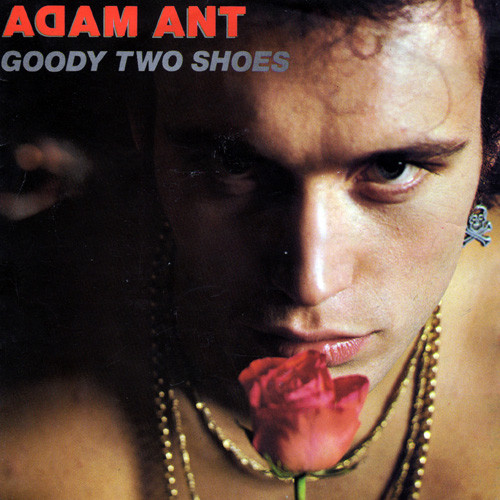
Goody Two Shoes, by Adam Ant (his 1st and only solo #1)

2 weeks, 6th – 20th June 1982

Or not. ‘Goody Two Shoes’ is even more frenetic than either of his band’s chart-toppers. It’s a bit of throwback – twanging rockabilly mixed with a jiving big-band brass section – and it’s all kept galloping along by a relentlessly simple drum beat that Does. Not. Let. Up. Once.

Like ‘Prince Charming’ it is a repetitive song that you need to be in the mood for. Goody two goody two goody goody two shoes… I can see why this might get on some people’s nerves. But if you are in the mood for Adam’s hyperactive musical mind, then this is a great pop single, and the perfect song on which to launch a solo career. We don’t follow fashion, That would be a joke…

People repeat to Adam (in the video it’s a crowd of journalists) the song’s iconic hook: Don’t drink, Don’t smoke, What do you do…? He doesn’t give the press what they want! He doesn’t conform! Is he up to something…!? This might be the first chart-topping example of a ‘haters gonna hate’ hit, the art form so beloved of Taylor Swift. No-one’s gonna tell me, Who to eat with, Sleep with…

What does he do, then? In the lyrics, the answer is an ambiguous: Must be something inside… In the video it’s a little less subtle: he takes the sexiest journalist to bed and shows her just what he does do. Phwoar! It is a bit repetitive, but it’s short, and pacy, and doesn’t outstay its welcome. Of Ant’s three number ones in just over a year, I’d sandwich this nearer to ‘Stand and Deliver!’ (the best) than ‘Prince Charming’ (the worst).

For this record he kept a guitarist and the drummer from his earlier band, letting the other members go due to a ‘lack of enthusiasm’. Sadly this didn’t launch Adam Ant to a long-lasting solo career. He’d have two more Top 10s and two more albums before moving into acting later in the decade (shout out here for my favourite of his solo singles, the characteristically bonkers ‘Apollo 9’). There have been a few comeback albums, alongside some mental health issues. He still writes and performs, and has a tour ready to go when covid allows.

I may not have truly loved any of his chart-toppers, but I am glad that Adam Ant has had his moment at the top of the UK charts. A year in which he was undeniably the biggest pop star in the country. He’s a true British eccentric, always interesting, with a great sense for the theatricality of pop. Line this up alongside the preceding #1, Madness’s ‘House of Fun’, and it has made for a technicoloured, hyperactive double at the top of the charts.

Advertisements

501. ‘House of Fun’, by Madness

On then with the next five hundred. With only the second ska act to hit top spot…

House of Fun, by Madness (their 1st and only #1)

2 weeks, 23rd May – 6th June 1982

In many ways this is a world away from The Specials, both the punky snarl of ‘Too Much Too Young’ and the subtle anger of ‘Ghost Town’. And yet there are clear similarities too. There are a lot of the same instruments here, for example. They’re just being used in a more fun way. A lot of horns (‘horn’ being the key word here…)

Not many songs have been written about the ordeals of teenage boys trying to buy their first box of condoms. There may only have been one: this one. But ‘House of Fun’ is pretty definitive. After this, nobody else needed to bother. Sixteen today, And up for fun, I’m a big boy now, Or so they say… The lad knows what he wants, but he can’t bring himself to say it. He asks for ‘balloons’, ‘party poppers’ and ‘party hats with the coloured tips’…

Welcome to the house of fun, Now I’ve come of age… Fittingly, the song title itself is a double-entendre. The ‘House of Fun’ refers to the terrifying world of sex that this boy is glimpsing… Welcome to the lion’s den, Temptation’s on its way… But it’s also the name of the joke shop that the cashier packs him off to with a flea in his ear.

I’m loathe to say it, because I don’t think our sense of humour is as unique as we like to think, but this is very British. Very music-hall-for-the-1980s, pantomime, nudge nudge wink wink… It’s cheeky, and chirpy, and genuinely funny in the third verse when the boy’s nosy neighbours enter the shop and sense gossip unfolding. Madness are not a band I know especially well, away from the big hits, and I’ve always found them slightly… annoying? ‘Driving in My Car’ and ‘Our House’ are a bit too perky for my liking. Here, though, the cheekiness of the song sees it through. I’m glad that it was this record that gave the band their sole number one.

Another similarity to their chart-topping ska predecessors is the way in which this record mimics ‘Ghost Town’s fairground vibe. That was the haunted house, obviously, while this is a runaway rollercoaster. The album version in particular has a pretty cool finale in which the song crashes to an end and fades out on an old-fashioned organ. Interestingly, ‘House of Fun’ existed for a long time without the chorus, which was created in order for it be released as a single.

Madness, then, join the illustrious club of huge acts with just one #1 to their name… Dusty Springfield, Status Quo, ELO… ‘House of Fun’ was the band’s eleventh Top 10 single. I was first aware of them thanks to lead singer Suggs’ solo career in the mid-90s, when he re-introduced the world to Simon & Garfunkel’s ‘Cecilia’. But his band were untouchable in the early-‘80s, with only one release from a run of sixteen (!) failing to make the Top 10, between 1979 and 1983. They are the band with the highest number of weeks in the charts for the entire decade (tied with UB40), and were scoring hits well into the 21st century.

Advertisements

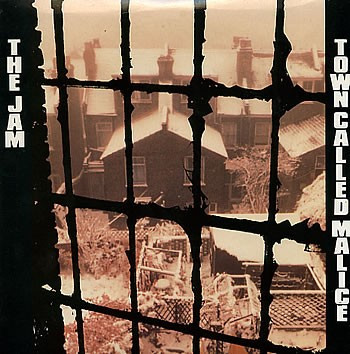
495. ‘Town Called Malice’ / ‘Precious’, by The Jam

Straight in at number one with the lead-single from their final album… The Jam do Motown.

Town Called Malice / Precious, by The Jam (their 3rd of four #1s)

3 weeks, 7th – 28th February 1982

We’ve been treated to some iconic intros in recent weeks: ‘Under Pressure’, ‘Don’t You Want Me’, ‘The Model’… ‘Town Called Malice’ is right up there too. It’s not really a riff, more an explosion of exuberance, a technicoloured smile with a jaunty bassline and a cheesy organ. I know it’s The Jam, because it’s a well-played classic, but it sounds a world away from their earlier #1s.

This being Paul Weller and The Jam, however, things aren’t as rosy as they sound. The title perhaps gives it away, and a quick google of the lyrics (sorry Paul, but they are quite hard to make out) reveals a deeply downtrodden song. Malice is a town where people dream of rosy days and the quiet life, where decisions have to be made: buy beer or clothes for the kids. Some of it is darn near poetic: Rows and rows of disused milk floats stand dying in the dairy yard, And a hundred lonely housewives clutch empty milk bottles to their hearts…

When he starts to sing about Sunday’s roast beef, I get a huge sense that this is an early-eighties take on Ray Davies’ suburban odes from a generation earlier. Weller wrote it based on his childhood in Woking, a commuter town outside London. Funnily enough, this middle-eight is the most modern-sounding bit of the song, as we go from The Supremes to The Specials’ ska tones. And at its core – which wasn’t always the case with The Kinks – I think ‘Town Called Malice’ is optimistic. It’s up to us to change, A town called Malice… Life may be shit, but you still have to live it as best you can.

Despite being as biting as ever, The Jam do sound happier than they did in 1980. Success puts distance between you and any hardships you’ve endured, and maybe that left them feeling free to experiment with different sounds. It’s certainly a sneak-preview of the soulful sounds that Weller would push to the forefront with The Style Council. And in my mind this song will forever be associated with the scene in ‘Billy Elliot’, where he dances across the rooftops of County Durham (though, much like the contrast between ‘Malice’s melody and lyrics, Billy was dancing in frustration, rather than joy…)

For the second post in a row, we have a double-‘A’ to write about. I’m not sure how much airplay ‘Precious’ got, but the history books have it at #1 and so we must give it a spin. If ‘Town Called Malice’ was a departure for The Jam, then ‘Precious’ is a giant leap. I’d describe it as ‘disco-funk’. There are chucka-chucka guitars, there are horns… I’m half-waiting for Weller to shout ‘Shaft!’ It’s another moment where you can see that The Jam were nearing the end of their shelf-life.

Not that it’s bad. Or that bands shouldn’t try new things. But when you’ve gone from punk to funk in barely five years, it’s clear that the confines of a three-piece, guitar, bass ‘n’ drums band are not enough to satisfy the members’ creativity. Like ‘Malice’, the lyrics are very hard to make out, but unlike ‘Malice’, I feel no compulsion to look them up. This record is a groove, a mood. There’s a short single edit and a longer album version, towards the end of which things go very acid, with a free-styling saxophone.

It all adds to the fact that this has been a brilliantly eclectic start to 1982, with all four number ones (six songs, if you count the two double-‘A’s) bringing something very different to the top of the charts. And for all this talk of the end nearing for The Jam, they have one more #1 to come: their very last release. They’ll be going out on top, then, one of the decade’s most distinct and successful bands. Until then…

488. ‘Every Little Thing She Does Is Magic’, by The Police

Part IV of my ongoing campaign to enjoy The Police more

Every Little Thing She Does Is Magic, by The Police (their 4th of five #1s)

1 week, 8th – 15th November 1981

I do really want to like their records, but there’s always something holding me back. Something about the production, the jaunty reggae rhythms, Sting’s voice… It just doesn’t work for me. Here, the punky edge from their late-seventies records, ‘Message in a Bottle’ in particular, has gone. In its place are synths, and a very MOR piano line.

All of The Police’s chart-toppers so far have centred on not getting what you want (‘Message…’) or what you want not lasting (‘Walking on the Moon’ and, at a stretch, ‘Don’t Stand So Close to Me’). ‘Every Little Thing She Does Is Magic’ falls into the former category. Sting wants to tell a girl all of the feelings he has for her, in his heart, but… alas.

What usually saves Police songs for me are the choruses. They sure could write a killer chorus. The verses might meander, and the fade-outs may be too long, but the choruses kick. Every little thing she does is magic, Everything she do just turn me on… Even though my life before was tragic, Now I know my love for her goes on… The lyrics may look clumsy when typed out, but it’s such an air-punching moment you don’t really notice.

The rest of the song, though? Meh. Something about the mix is quite stodgy, with the voices buried under the instruments. There’s the piano – unusual for a Police song – and African drums. A stripped-back, more guitar-based version would work better for me. But that’s just, like, my opinion. And it’s something I’ll have to get used to as the 1980s wear on: guitars taking much more of a back seat.

This record, the second single from the band’s fourth album, isn’t a giant departure from what went before, but it was different enough for guitarist Andy Summers to object, both to the piano and to the production. It’s definitely The Police’s poppiest #1. And the reason that Sting’s vocals sound so distant may be because the band played over a demo he had recorded months before. And I’m with Summers on this: something about it doesn’t quite click.

So. Four of The Police’s #1s down, one to go. Will the last one – still a year and a half away – finally be the Police song I can love? Well, actually, yes it will. Because their final chart-topper is a decade-defining classic. Until then, then…

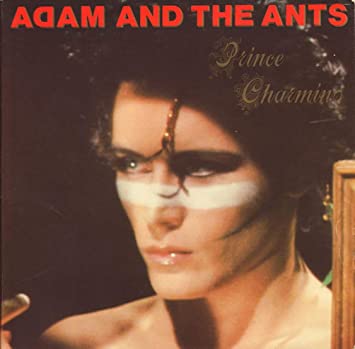
486. ‘Prince Charming’, by Adam & The Ants

A very happy new year to all who read this! In the real world it’s just turned 2022, but in Number Ones World it’s the autumn of 1981…

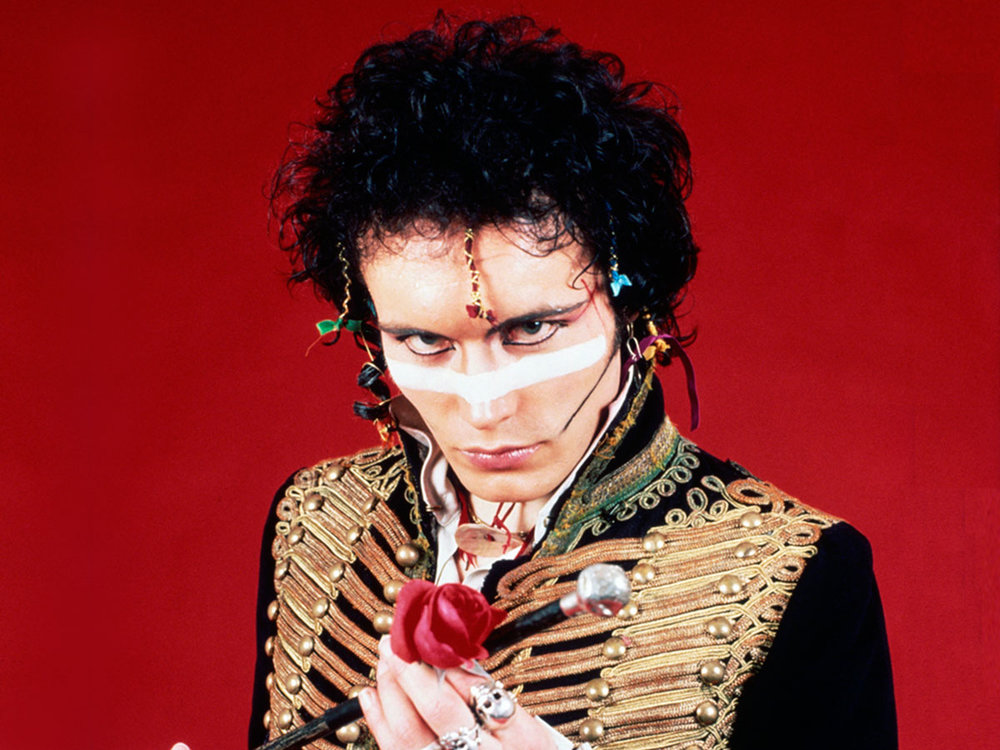
Keeping up the ‘too much sugar before bedtime’ vibe of ‘Stand and Deliver!’, Adam & The Ants second chart-topper comes in with a similarly hyperactive intro. Aaah-haah, heeyyy-haaah! the Ants yodel and chant, like a band who’ve been stranded in the jungle for years, staying alive only by feeding off the flesh of their weakest member…

Prince Charming, by Adam & The Ants (their 2nd and final #1)

4 weeks, 13th September – 11th October 1981

I have the feeling that, back in his youth, Stuart Goddard AKA Adam Ant was the bane of his teachers’ lives (I’m a teacher myself, so can spot them a mile off – the ones you describe as ‘spirited’ and ‘energetic’ in report cards.) Though, to be fair, most pop stars probably were little nightmares in the classroom.

And I think the school analogy can be extended, even after the shouts have faded and the song has slipped into a thumping, clumping rhythm. Don’t you ever, Don’t you ever, Stop being dandy, Showin’ me you’re handsome… It sounds like a playground chant. Prince Charming, Prince Charming, Ridicule is nothing to be afraid of… Or is it a mantra, something that Goddard had to say to himself each morning, before he slipped back into the mascara and lip-gloss required of Adam Ant?

I’m waiting for this song to break out of its plod and really kick. But it never does. There’s a bit more chanting, and a lot of repetition. ‘Stand and Deliver!’ was much more fun. Though, ‘Prince Charming’ is a smash-hit so far removed from the usual structures of a pop song (apparently Goddard chose such a slow pace deliberately, so that it wouldn’t be played in discos) it’s quite impressive how well it did. A sign of just how red-hot The Ants were in 1981.

Like ‘Stand and Deliver!’, ‘Prince Charming’ has another bizarrely entertaining video. Adam plays a male Cinderella, put upon by two dragged-up ugly sisters. Diana Dors, in one of her final screen roles, plays his Fairy Godmother. He goes to the ball, dressed in what is now the iconic Adam Ant look, and the other party-goers gag. At the end, he smashes a mirror, and appears as Clint Eastwood, Alice Cooper, Lawrence of Arabia (?) and, finally, as the Dandy Highwayman from his previous #1. As a video it’s great fun, and as a message it’s actually quite powerful: boys can look rugged as Clint Eastwood and boys can cake themselves in make-up and look like Adam Ant. Ridicule is nothing to be scared of!

I just wish I liked the actual song as much as I do the video. But I’m still finding it a bit of a plod, and isn’t really growing on me. And before you know it, that’s all from Adam & The Ants. They would have just one more hit, the uncharacteristically laid-back (only kidding) ‘Ant Rap’, before splitting up in early 1982. Adam’s solo career will follow on very soon from that, he was very much the driving force behind the band, and we’ll be hearing from him one last time atop the charts very soon.

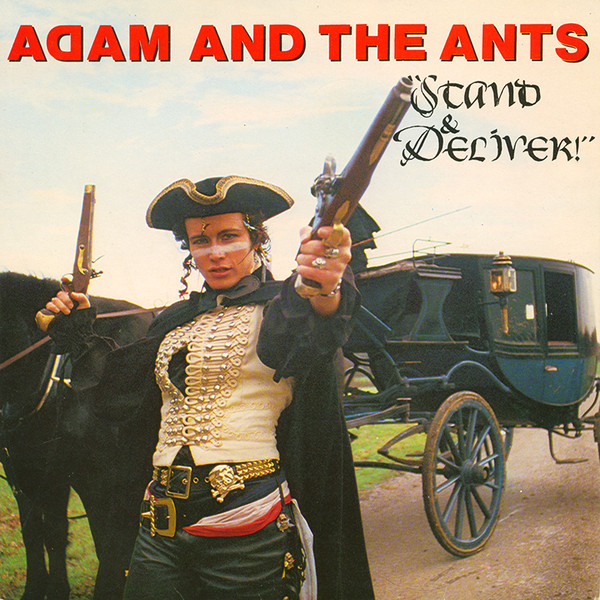
479. ‘Stand and Deliver!’, by Adam & The Ants

I’ve just realised something… The eighties have finally begun. 1980 was full of stars – Blondie, Bowie, ABBA and ELO – but they were stars from the seventies. Our recent number ones have introduced us to some brand new stars, huge names of the early ‘80s: Shakin’ Stevens, Bucks Fizz and now, biggest of all, Adam Ant.

Stand and Deliver, by Adam & The Ants (their 1st of two #1s)

5 weeks, 3rd May – 7th June 1981

Punk, New-Wave and something else collide here. What that something is I couldn’t say… but it is very new and very thrilling. And very eighties. It’s frantic – there are horns, sound effects, nonsense chanting, and a band dressed as eighteenth century highwaymen… As I said in my last post, glam is back, baby!

I’m the dandy highwayman, That you’re too scared to mention, I spend my cash on looking flash, And grabbing your attention… It’s a statement of intent, this record: a war-cry to kids across the land to ditch old-folks’ fashions, to slap chunky blocks of make-up on their faces, and join the insect nation… It’s the sort of song your nan would have screwed her face to during TOTP, wondering just what was wrong with young folk these days.

There’s a bit of everything here. We go from the verses, in which Adam Ant sounds like Ray Davies trying his hand at rapping, to a Shadows-esque surf-rock solo with monkish chanting for backing. And the main hook is a killer: Stand and deliver, Your money or your life… And I mean literally a killer – it’s what Dick Turpin would have shouted back in his heyday. Meanwhile, the music video – we need more and more often to start referencing the videos for #1 singles now – sees Adam and his band holding up carriages full of uncool types clutching their lame records. Rather than robbing them, he shows how terrible they look in his foppish, handheld mirror.

It’s certainly a breath of fresh air, and there’s a feeling of a new musical order starting to assert itself. And there’s a great pop song here, underneath all the frippery (that’s a nice way to sum up the entire 1980s, to be honest). Adam and the Ants hadn’t appeared out of nowhere, though – they had been around since 1977, and had been scoring Top 10 hits for a year or so before this smash.

And a ‘smash’ it was. ‘Stand and Deliver’ entered at #1, which means the band were at the same level of popularity as The Jam and The Police. Plus its five-week run at the top is the longest of the decade so far. They were a band that burned brightly, but briefly, and they and their charismatic leader will be back with a couple more equally manic chart-toppers in pretty soon.

469. ‘The Tide Is High’, by Blondie

I spoke of the variety that 1980 has offered us in my last post, and talking of variety… For their 3rd #1 of the year, Blondie go reggae.

The Tide Is High, by Blondie (their 5th of six #1s)

2 weeks, 9th – 23rd November 1980

It’s a huge departure from their two quick-fire, pounding, disco-rock chart toppers – ‘Atomic’ and ‘Call Me’ – from earlier in the year. I love those two hits and have to admit that, although this is catchy pop, it’s not in the same league. The tide is high, But I’m holding on… coos Debbie Harry, whose voice has lost much of the bite it had in those earlier hits… I’m gonna be your number one…

There are still good things to make a note of. The way Harry flirts with the I’m not the kinda girl, Who gives up just like that… line, for a start. And the extra snarl she gives the hi-igh in the closing lines. Plus there’s a cool drum intro on the album version. But overall, it’s quite sedate, quite pleasant. Quite nice. But I’d say it was the band’s huge fame that took this to the top of the charts, rather than any real ‘wow’ factor that this new single had.

‘The Tide Is High’ is a cover, originally recorded by Jamaican group The Paragons in 1967. Their version has a nice, homely charm to it. Blondie took it, changed the pronouns, and scored a #1 on either side of the Atlantic ahead of their new album. They also made a video for the song: a classic example of the low-budget, pre-MTV age. A flooded apartment, a rocket launch, Darth Vader… What’s not to love?

I’ve recently been listening to all of Blondie’s studio albums and, ‘Parallel Lines’ aside, they definitely come across more as a singles band. That’s not to say the rest is all filler – their first album has some great moments, for example – but the singles they released were consistently outstanding. Few bands can match Blondie’s run of hits between 1976 and 1980.

In conclusion, then… I do like this song. If it were by a lesser band, a one-hit wonder perhaps, then I might be singing its praises. But I expect a little more from Blondie. For this to be their swan-song at the top of the charts feels like a bit of a damp squib. After this came ‘Rapture’ – the first rap #1 on the Billboard charts – and one more studio album, but drugs and in-fighting meant they called it a day in 1982. Then… oh yeah. Forget that stuff about this being a swan-song. Then they reformed, nearly twenty years later, and scored a sensational middle-aged comeback #1, that you’ll be able to read all about if/when I manage to crawl my way to 1999…

467. ‘Don’t Stand So Close to Me’, by The Police

You’ve probably noticed that we’re taking our time to meander through 1980. The #1 records in this year didn’t hang around long at the top, with lots of one or two-week stays. But here comes the longest-lodging chart-topper of the year, the lead single from The Police’s brand-new album, entering at the top, for a whole month.

Don’t Stand So Close to Me, by The Police (their 3rd of five #1s)

4 weeks, 21st September – 19th October 1980

Ominous synths, and some guitar noodling. Not the blockbuster kick-off you might have hoped for. But if The Police’s last #1, ‘Walking on the Moon’, taught me anything it’s that this is a band who don’t mind dragging things out. Then in comes a familiar reggae-rhythm, and in that moment you know exactly who you are listening to.

Young teacher, The subject, Of schoolgirl fantasy… I have a few issues with this record, this eighties reboot of ‘Young Girl’, but first off I do like the short, sharp, tabloidy snippets that make up the lyrics. She wants him, So badly, Knows what she wants to be… Though, the tone is so fraught, the synths so ominous, that I think it would be better suited to an even more serious subject. A killer on the loose, Jack the Ripper, something like that…

As with the band’s first chart-topper, ‘Message in a Bottle’, I’m waiting for something to grab me. Luckily, like ‘Message…’ this record has another great chorus. It whacks the song right into life: Don’t stand, Don’t stand so, Don’t stand so close to me… It’s driving, and catchy, and I wish more Police singles could have kept this sort of pace up throughout.

‘Don’t Stand So Close to Me’ is based on Sting’s own experiences – he was an English teacher before the band took off – and here is where my concerns creep in. ‘Creep’ being the key term. In it the teacher offers the girl a ride, we can assume he sleeps with her, and word travels around… Then we arrive at what is either one of the best or one of the worst rhyming couplets ever to feature in a chart-topping single: It’s no use, He sees her, He starts to shake and cough… Just like the, Old man in, That book by Nabokov… One things for sure: any English teacher worth their salt knows the name of that book!

There is no evidence that Mr Sumners ever had his wicked way with one of his young charges. Though he has gone on record to say that the temptation was real: “I don’t know how I managed to keep my hands off them,” he revealed, in an interview the following year. I mean… I think it might be the modern-day, slightly pretentious, Tantric-sex version of Sting that makes this sit so uncomfortably. Plus, the song comes across as a bit of a humble-brag: oh how awful it was having teenagers throwing themselves at me, so I became a rock star – a profession famous for its limited access to horny sixteen-year-olds…

Anyway. This is an enjoyable song, though I’m still finding it slightly irritating in the same vague and undefinable way that I’ve found all of The Police’s #1s so far. But, not only was it the longest-running #1 of 1980, it was also the year’s biggest selling single. The Police were huge in this moment, at the height of their fame. Four weeks was enough to make this the year’s longest-running, a run which in other years would have been completely average. 1980 will have a total of twenty-four #1s, tied with 1965 for the most up to then. It’s a figure that won’t be matched again until 1996, or beaten until 1998, when #1 turnover was about to reach its peak.

465. ‘Start!’, by The Jam

The Jam make a quick return to top spot, with a very famous bass-line. One that you may have heard before…

Start!, by The Jam (their 2nd of four #1s)

1 week, 31st August – 7th September 1980

‘Start!’ is notoriously indebted to The Beatles’ ‘Taxman’ – there’s no avoiding the fact that the bass riff is pretty much a note for note copy – but while the former has a hash-haze to it, the latter is a squeaky-tight, short and sharp blast of punk-funk. That’s right. I’m inventing new genres as I go along…

It’s a song about a one-night stand… It’s not important for me to know your name… Or some kind of fleeting encounter… If we communicate for two minutes only it will be e-nough… At first glance it’s less of a war cry, compared to the band’s first chart-topper, but it’s actually just as cynical. Knowing that someone in this life, Loves with a passion called hate…

I’m really not sure if Paul Weller is grateful for their two-minute connection, or if he’s glad about never, ever seeing this person again. What I am sure about is that this is a great pop song: minimalist, with razor-sharp guitars and cool drum-fills. It’s as natty as The Jam’s mod-suits and shades combo in the video.

Speaking of the video, the single release of ‘Start!’ shaves fifteen seconds off the album version, trimming the gritty solo and losing the horns that play out over the closing refrain. For me the horns add to the funk here, placing the record firmly in the early-eighties, so if you were choosing between the versions I’d go album every time.

Without wanting to disrespect what I think is a great record, I think a sharp-blasting, one-week #1 like this needs only a sharp blast of a blog post on it. ‘Start!’ probably gets lost among The Jam’s better-known hits, ‘Going Underground’ before it and ‘That’s Entertainment’ after (which charted at #21 by selling only imported copies – a sign of the band’s popularity in 1980). It was also the only one of their four chart-toppers not to enter at the top. But it’s good one, and if this post has just turned you onto the song’s quality, then that will be a start!