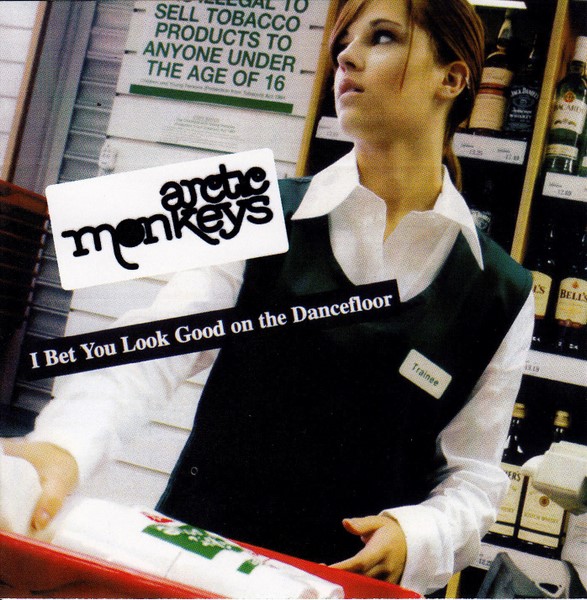
1020. ‘I Bet You Look Good on the Dancefloor’, by Arctic Monkeys

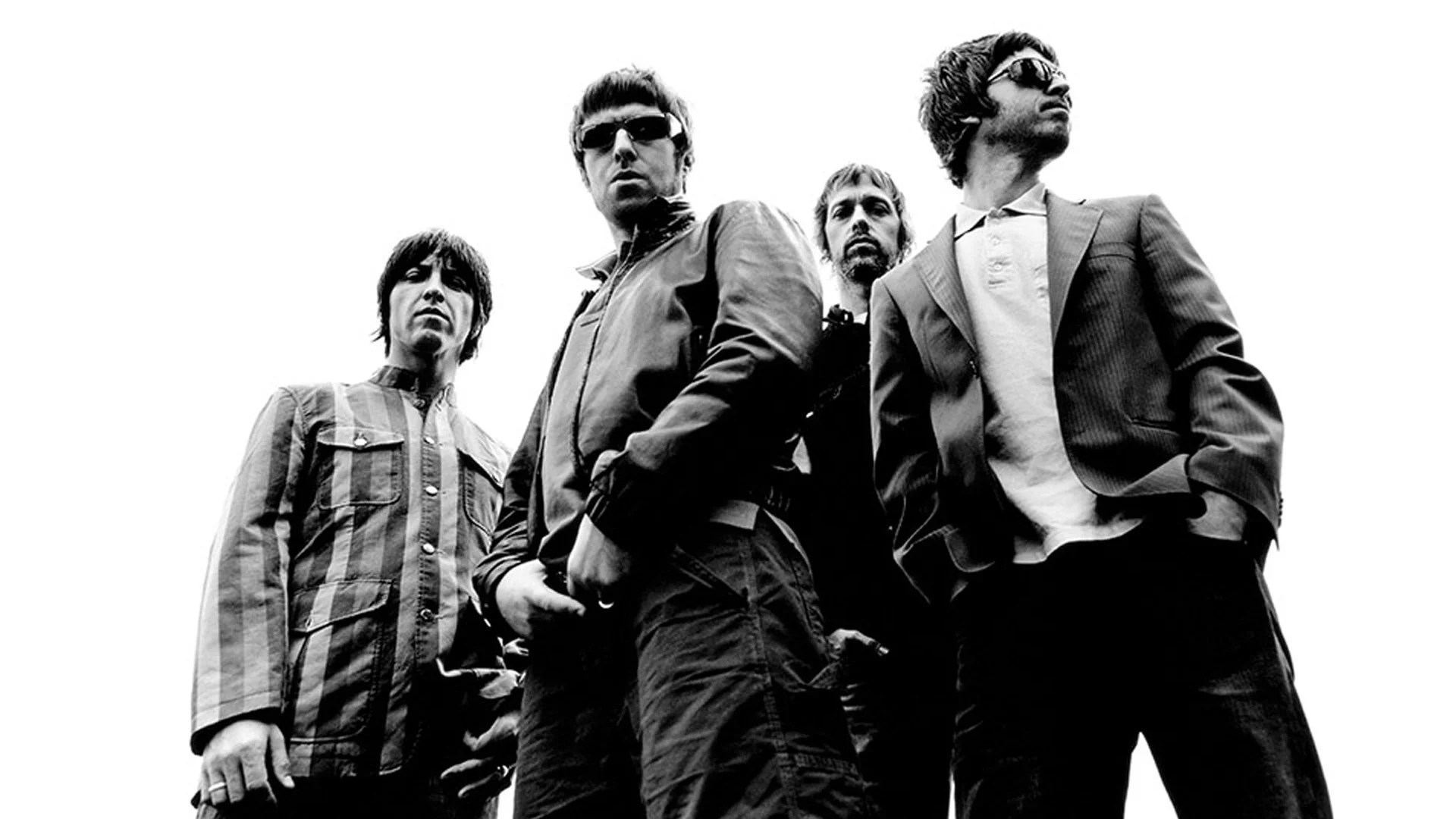
Here we go! Arriving with a jolting, ascending guitar intro, an intro that conveys the sensation of sticking a fork in a toaster, comes British rock’s last hurrah.
I Bet You Look Good on the Dancefloor, by Arctic Monkeys (their 1st of two #1s) 

1 week, from 23rd – 30th October 2005

We’ve heard hints of the arrival of a mid-‘00s indie rock revival in number ones from Stereophonics and Oasis. But both those bands pre-dated the movement by several years. By 2005, indie rock had been a rising force for a while, since bands like the Strokes and Libertines appeared circa 2002, but the genre’s biggest act – the one band from this time who became properly, globally famous and remain a huge deal to this day – took their time in coming along.

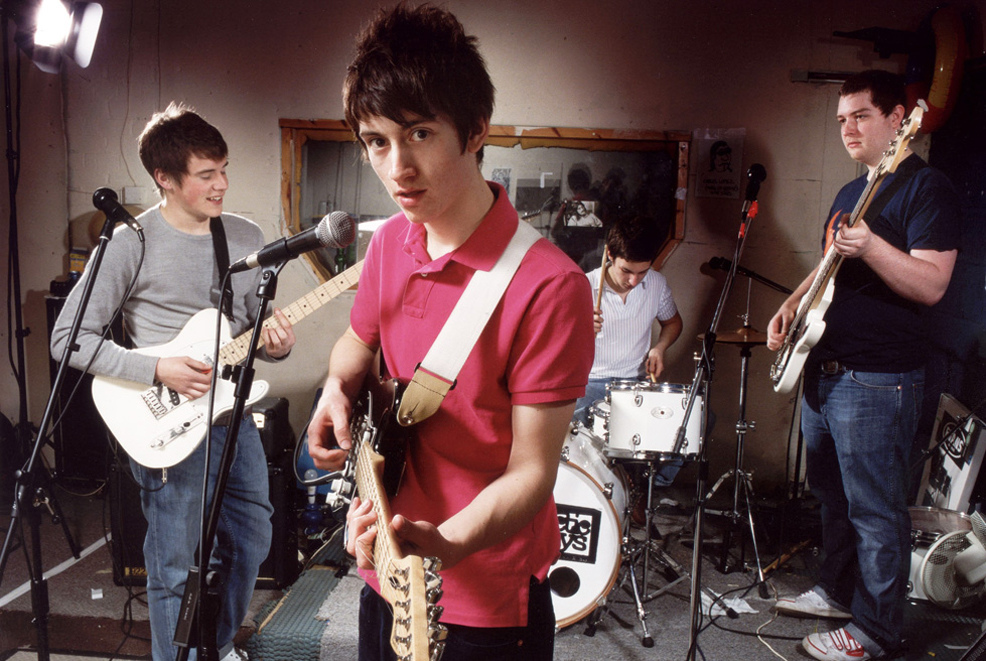
That is probably down to the fact that they were still teenagers when this, their debut single proper, made number one. Arctic Monkeys are, famously, from Sheffield, and Alex Turner sings in an accent so thick that it makes the Gallaghers sound posh. That’s one of the things that makes this record great, and allows me to call it British rock’s last hurrah. It takes elements from everything that went before – the Beatles’ tight harmonies, the Jam’s melodic punk, the Sex Pistols’ spit and vinegar, Oasis’s working class schtick – and still turns out something new. You can tell that the Monkeys grew up listening to rap, in the way that they lyrics are delivered, and were influenced by that very northern British, kitchen sink realism, in the way the song tells its story of an unglamorous dancefloor encounter.

Mid-‘00s indie was a very modern musical movement in general, in that it grew organically on early social media sites like MySpace, and through illegal file sharing services. To the uninitiated, it might have felt like ‘I Bet You Look Good on the Dancefloor’ arrived out of nowhere to debut at #1 in October 2005, with the band having just been signed to a label that June, but in truth their reputation had been growing steadily ever since they’d first released music on bootleg CDs in 2003.
And, in a sign of what pop music was to become, the Arctic Monkeys brought their fans along with them. Their debut album was full of very specifically teenage lyrics, and specifically Yorkshire references. (One of my favourite lyrics of all time is from ‘Fake Tales of San Francisco’, taking aim at poseurs: You’re not from New York City, You’re from Rotherham…!) ‘I Bet You Look…’ doesn’t have a line as good as that, but No there ain’t no love no, No Montagues or Capulets, Just banging tunes and DJ sets… is up there for its clever gaucheness. And, at the end of the day, like all great rock ‘n’ roll, it’s a very horny song at heart.

Having said all that, and having given this track a deservedly glowing write-up, Arctic Monkeys are a band I struggle with. I bought the debut album, and the follow-up, and thought they chose their singles very well. But after that I struggled to love their music, and their last two albums have been a slog to listen to. On the one hand I admire their desire to move between genres, on the other I do think that there’s an element of them disappearing up their own arses. But we’ll have time to consider that after their second #1, coming up soon as part two of a quick fire chart double.
Advertisements

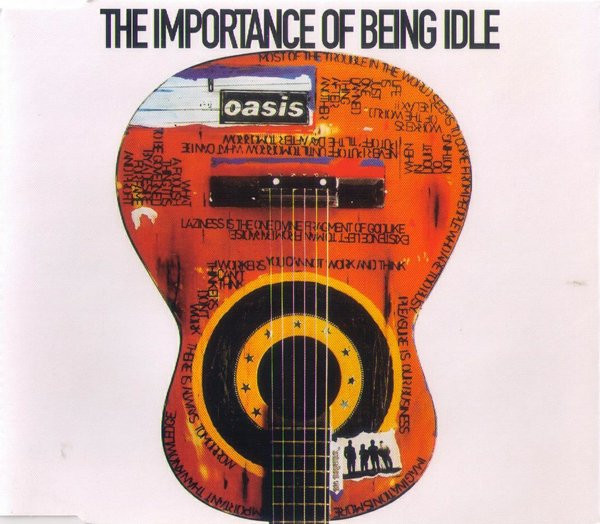
1016. ‘The Importance of Being Idle’, by Oasis

Well how about this… Almost forty years on from their final number one, a stunning, chart-topping comeback for the Kinks…

The Importance of Being Idle, by Oasis (their 8th and final #1)

1 week, from 28th August – 4th September 2005

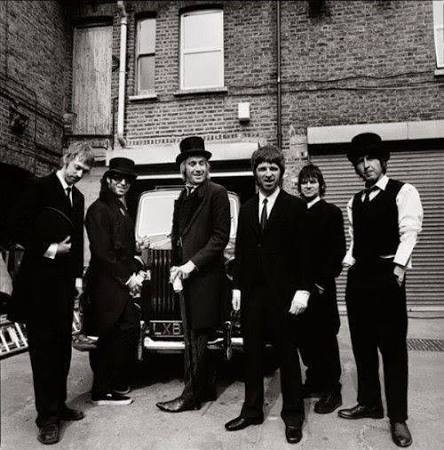
Nah, course not. And to be fair, while this is clearly a Kinks pastiche, it’s not a rip-off of one particular song. If you did have to be specific, you could probably call ‘The Importance of Being Idle’ the bastard offspring of ‘Sunny Afternoon’ and ‘Dead End Street’ (the video is certainly influenced by the famous clip the Kinks did for the latter). Noel also revealed that he borrowed from the La’s ‘Clean Prophet’, in which they too had done their best Kinks impression.

But what of this Frankenstein’s monster of a song… Is it good? Well, yes. Given the parts it’s stitched together from how could it not be? It’s also unlike anything else in the Oasis canon, let alone any of their previous chart-toppers. It’s light and breezy, with a musical hall air and a sense of silliness. In fact, I’m tempted to use a word that has never come within ten feet of any Oasis record up to now: it’s kind of camp. 

For a start, it’s a play on an Oscar Wilde title. But it also has slide whistles, and big boinging drums, and Rhys Ifans prancing around as an undertaker in the video. If only they’d gone the whole hog and put Liam in drag, a la Dave Davies in the Kinks’ original. ‘Lyla’ was a slight musical shift for Oasis, but this is a real hint at what was to come for Noel in his solo career, especially with the High Flying Birds.

We can also, perhaps surprisingly, draw a comparison between this and the McFly song it deposed from the top, as both deal with depression, in their own ways. While McFly had a positive mantra, Noel seems to be wallowing in his life of unpaid bills, frustrated girlfriends, and general laziness… Give me a minute, A man’s got a limit, I can’t get a life if my heart’s not in it…

Continuing the trend of low sales benefiting fanbase acts, Oasis follow U2, Britney, Nelly, McFly and Eminem in taking two singles from their latest albums to the top. This was the third time Oasis had done this, but the first time doing it with consecutive singles, and in the same calendar year. In my post on ‘Lyla’ I wrote of how well Oasis did big, bolshy lead singles. But ‘The Importance of Being Idle’ is a welcome addition to their three non-lead chart-toppers, which have all been a bit different (‘Don’t Look Back in Anger’ and ‘All Around the World’ being the other two). This, their eighth #1, tied them with the Stones, making them the rock act with the joint-third most number ones, behind the Shadows (eleven) and the Beatles (seventeen, at the time).

And this was it from Oasis, from the chart-topping side of things. In fact, it was almost the end from them musically too, with one further album to come before they finally imploded in 2009. Despite the brothers’ recent reconciliation in a touring capacity, there have been no suggestions that they will be getting back into the studio. And it’s a shame that on their recent tour, they pretty much ignored anything released post-2000, meaning that classics like this remain somewhat buried under their biggest hits. Oh what I’d give for this to have a resurgence, and not bloody ‘Wonderwall’ yet again… 

I’m back from a month’s travels, and so we’ll hopefully be picking up the pace again and posting a little more regularly!

Advertisements

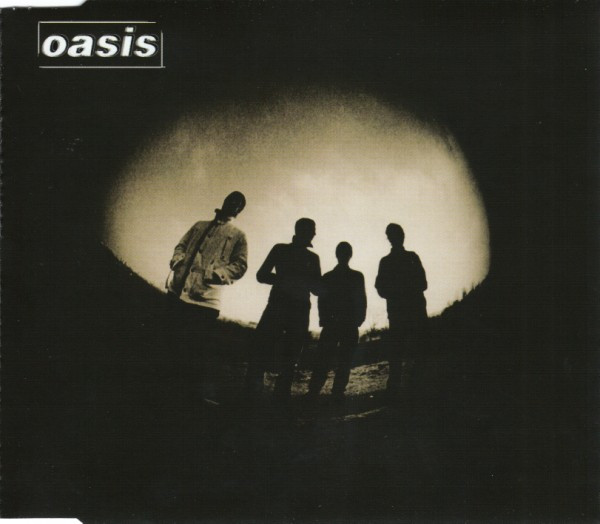
1011. ‘Lyla’, by Oasis

I’m sure I preface every Oasis chart-topper by saying this, but they really were good at choosing their comeback singles. The first singles from each new album: ‘Some Might Say’, ‘D’You Know What I Mean’, ‘Go Let It Out’, ‘The Hindu Times’, all big, banging statements of intent, and all number one hits.

Lyla, by Oasis (their 7th of eight #1s)

1 week, from 22nd – 29th May 2005

As it is with ‘Lyla’, lead single from their sixth studio album ‘Don’t Believe the Truth’, which was released almost exactly a decade on from their first #1. It is not particularly clever, or subtle; but it is big. It’s a grandiose grower, too, taking well over a minute of layered drums, droning guitars and vocals before we arrive at the chorus.

Speaking of vocals, I’m not sure Liam has sounded better on any of their previous six chart-toppers. He sounds refreshed and upbeat, yet still snarly and full of attitude. In the video too he looks resplendent in a cravat, confirming once again that he was Britain’s last true rock star. 

Musically this also feels like a band revitalised. It’s widely accepted that the addition of Gem Archer and Andy Bell to the band allowed Oasis to develop musically (Noel is a good songwriter, but not an amazing guitarist), and the album was the band’s most democratically written, with even Liam contributing three tracks. ‘Lyla’ sounds more classic rock than Britpop, the instruments coming through clearer in the mix, with a nice, twangy solo. It isn’t smothered in layers of over-production like some of their turn of the century singles. There’s a lyrical backstory too, with Lyla apparently the sister of Sally from ‘Don’t Look Back in Anger’. My biggest complaint about it is that, with the extended intro and the long coda, the actual song is much shorter than the record’s 5:12 runtime. But it’s far from the first time that Oasis have dragged the arse out of a record unnecessarily. 

Some people at the time commented on how this sounds somewhat indebted to the Rolling Stones’ ‘Street Fighting Man’. Which is perhaps true, and is most evident on the extended fade-out; but I also think it’s harsh, and nothing compared to Oasis’s other musical borrowings (see also: this LP’s second single…) At this point some people were determined to criticise what they saw as a bloated legacy act in any way possible. 

Oasis sort of were a bloated legacy act, even in 2005. And yet, they were the ones still sitting at number one, while the cooler, younger indie acts of the day could only gaze up in envy. During the promo for the album, the Gallaghers had a field day passing judgement on these up and comers. Franz Ferdinand were ‘Right Said Fred’, Kaiser Chiefs ‘a bad Blur’, and the Libertines ‘smackheads needing a slap’. Twats they may be, but the brothers always give good copy.

Advertisements

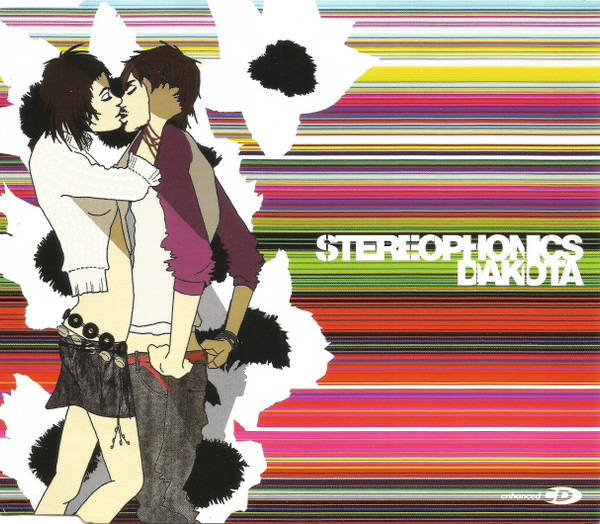
1007. ‘Dakota’, by Stereophonics

We’re slap bang in the middle of the ‘00s. I was nineteen, in my second year at university, and out at the dancing three or four times a week…

Dakota, by Stereophonics (their 1st and only #1)

1 week, from 6th – 13th March 2005

Before you fear that I’ll turn this post into a nostalgia-fest, and start banging on about blue WKDs and skinny jeans, I’m getting to a salient point. A lot of the music I heard on those nights out wasn’t just the pop and dance we’ve been hearing in recent posts. It was, as the Killers sang, indie rock and roll for me.

So ‘Dakota’ is a mini landmark number one, as it is the first chart-topper from the mid-00s indie revival. Think Franz Ferdinand, think Arctic Monkeys, think Kaiser Chiefs, Libertines, the Strokes, White Stripes and more. Like Britpop a decade earlier, it didn’t get a whole lot of representation at the very top of the charts, but there will at least be a few more rocking #1s in the coming months, and that is something to celebrate after the very pop-heavy opening years of the 21st century.

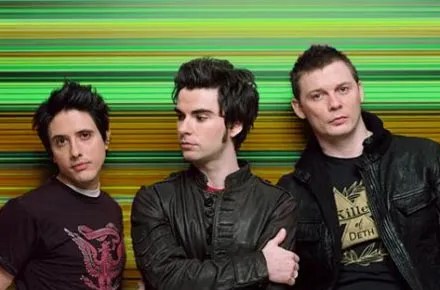
Of course, Stereophonics predated all these new-kid-on-the-block indie acts. You could class them as Britpop, but they weren’t that either. They emerged during that post-Britpop comedown that also gave us Travis, and Coldplay (a period Alan McGee famously dubbed ‘bedwetter indie’). They were probably overdue a number one single, as Britain’s pre-eminent rock group of the very early ‘00s.

But for this comeback single they were tapping into the sounds of the time, taking a step away from their usual pub rock anthems. ‘Dakota’ sounds like the Killers, with its synth stabs, crossed with U2 in the humungous chorus, and some Manics in the spiky guitars. It’s a big tune, clearly written for tens of thousands to sing along to in stadiums, and while I liked it at the time I’m finding it a bit plodding now.

The chord progression in the chorus is still good, and the thrashing I don’t know where we are going… break is still impressively heavy. But I’ve always had mixed feelings about Stereophonics. For every song of theirs I like – the bitchy ‘Mr Writer’, for example – there’s a song I find bloated and dull – i.e. ‘Just Looking’. And Kelly Jones’ sandpaper drawl is a voice I can only take for three songs at a time.

I also think ‘Dakota’ is a bit of an inferior retread of Stereophonics’ previous single, ‘Moviestar’ – a slinkier, more sinister slice of electro-rock. But, this is the record that brought them a belated #1 after nine earlier Top 10 hits. And it was their chart peak, after a very slow ascent, and they have never returned to the Top 10 since.

But hey, at least they kicked off the ‘mid-00s indie rock revival’. Not quite as catchy a genre title as ‘punk’ or ‘glam’, but still. It was probably rock music’s very last hurrah as a chart force. And I may be biased, as it was the soundtrack to my yoof, but it also gave us some great tunes. Not ‘Dakota’, not quite, but there’s better to come soon.

Advertisements