Should Have Been a #1…? ‘Groove Is in the Heart’, by Deee-Lite

In this intermittent series on songs that should have been number ones, we’ve met songs that were classics, deserving of chart glory; songs that may well have been secretly denied top spot; and songs that topped the wrong chart…

But the record I’m featuring today may well have the strongest case to argue in the ‘should have been a #1’ stakes. For no song has ever gone closer…

‘Groove Is in the Heart’, by Deee-Lite – reached #2 in September 1990, behind ‘The Joker’

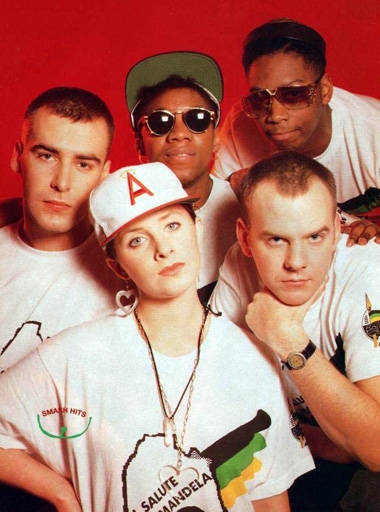
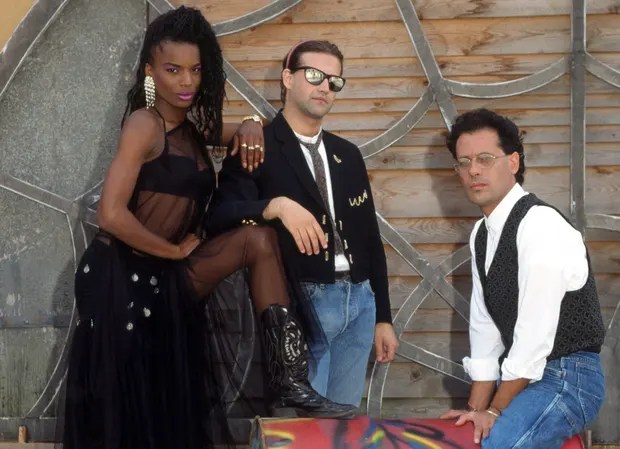
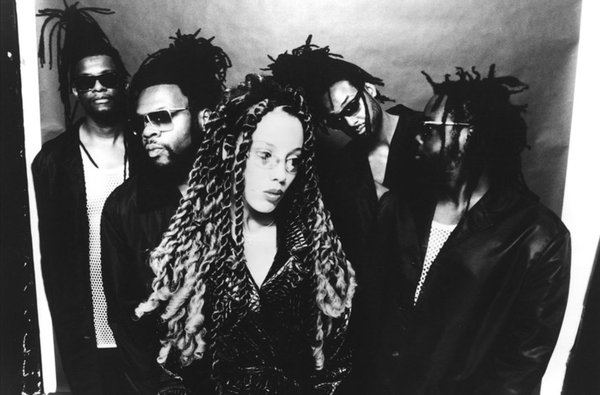
First up, the song itself. And it’s a classic. Is it disco? Funk? Hip-hop? All of the above? Or does anyone really care, when it makes you move like it does? Linked in spirit to the big dance hits of the time, but a world away from them, there are few songs that sound this fun, so full of a joie de vivre that you wish you could bottle and use to live forever. The little touches – the bubble popping, the horns, the looped intro – add to its appeal, and never grate. Deee-Lite were from NYC, and comprised an American singer, a Ukrainian DJ and a Japanese producer (as unusual a mish-mash as their genre-bending hit) plus contributions from rapper Q-Tip and legendary bassist Bootsy Collins.

So, ‘Groove Is in the Heart’ should have been a number one on merit, because it’s great and I said so. And, for the week beginning 9th September 1990, it was. At least, it was in a tie for number one with the Steve Miller Band’s re-released ‘The Joker’. In the 1950s, when sales data was pretty patchy, tied chart positions were commonplace. Since 1973, however, a rule had been in place which stated that the record with the bigger increase in sales week-on-week would ‘win’. Both records had climbed that week, but ‘The Joker’ had done so with a 57% increase. Deee-lite had only improved their sales by 37%. Steve Miller took the #1.

There was consternation, not least from Deee-Lite’s record label, who felt that the new, up-and-coming act (this was their first ever chart hit) should get preference. ‘The Joker’, as fun as it is, was just so 1973. ‘Groove Is in the Heart’ was fresh and funky, and the future. Except, that’s sadly not how the charts work. They’re all about cold, hard sales figures. And The Steve Miller Band’s victory was confirmed once and for all when it turned that the tied position had been down to a rounding error, and that ‘The Joker’ had sold a whopping eight more copies than ‘Groove…’

The next week, ‘The Joker’ remained at #1 fair and square, and ‘Groove…’ started to slip down the chart. Deee-Lite never made it back into the Top 20, and split up in the mid-90s. Still, they leave quiet the legacy: one of the classic wedding disco floor-fillers, and the unluckiest #2 single of all time…

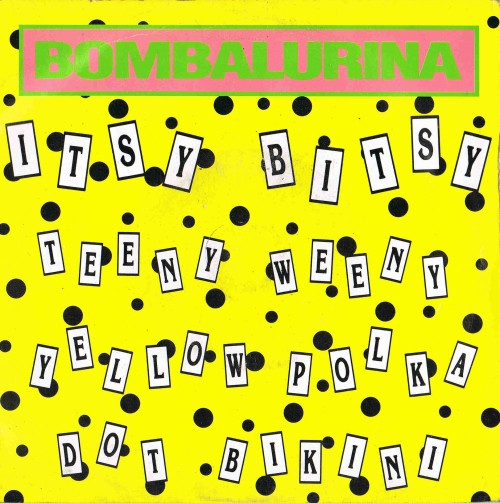
649. ‘Itsy Bitsy Teeny Weeny Yellow Polka Dot Bikini’, by Bombalurina

As with our last chart-topper, ‘Turtle Power’, I am fully convinced that I will hate this next #1 single…

Itsy Bitsy Teeny Weeny Yellow Polka Dot Bikini, by Bombalurina (their 1st and only #1)

3 weeks, from 19th August – 9th September 1990

But wait. As with the Turtles, I might have misjudged… This starts off like a proper, early-nineties dance track. There’s a looped female vocal – Go on girl-go-go-go on girl – and a fairly shameless cribbing of ‘Theme From S-Express’ in the Spanish countdown. This is not the song I vaguely remember from school discos of yore…

Oh wait. No. It is. In comes Timmy Mallett, with a cover of Brian Hyland’s #8 hit from 1960, all about a racy swimwear item, and suddenly it is novelty trash of the calibre of ‘Agadoo’ and ‘The Chicken Song’. As with the Teenage Mutant Hero Turtles, Mallett was another part of my childhood, although less so, because he was on ITV and my mum kept things strictly BBC whenever she could. (Years later, a former backing singer claimed that the vocals on the record were in fact his, and that Mallett couldn’t hit a single good note…)

Except, even at its cheesiest, it still sounds like someone with a working knowledge of dance music was present in the studio as this was being recorded. It never tips over into truly unlistenable territory, with lots of knowing touches and pastiches. (Imagine my surprise to find that one of said people in the studio was Andrew Lloyd-Webber (!), who produced the record in a bet with his wife. Bombalurina is a character from ‘Cats’…) The video too does a decent, if knowing, impression of a real dance track, with buff dancers cutting shapes on a fake beach. It’s nowhere near as creepy as a video featuring Timmy Mallett and a woman in a bikini could have been…

This is the second cover of a Brian Hyland original to make #1 in just over a year. He’s a fairly unlikely figure to have had a rediscovery, but there you go. And I’m not going to go as far as to claim that this is better than Jason Donovan’s ‘Sealed With a Kiss’, but I have enjoyed it more. Which is ultimately all that matters, I suppose.

This record is more than just a summer novelty, for me at least, as I believe it to have been at number one when I started school. I can’t be sure, and it would be much more fitting for it to have been ‘Turtle Power’, but dates-wise I assume it’s this. The big question is, though: do I hate it as much as I was expecting to…? Well, the last few paragraphs have probably given it away, but no. I don’t. It’s cheese, to be filed alongside the likes of ‘Long Haired Lover from Liverpool’, and Renee and Renato’s ‘Save Your Love’. Pure drivel; but far too silly, and catchy, and most importantly tongue-in-cheek, to deny.

645. ‘Killer’, by Adamski

The first word that comes to mind as this next number one begins is ‘lumbering’. Like Godzilla trampling Tokyo underfoot, the beat here is heavy, and relentless…

Killer, by Adamski (his 1st and only #1)

4 weeks, from 6th May – 3rd June 1990

It’s a fourth consecutive dance #1, and each one has done something slightly different within the genre’s confines. ‘Dub Be Good to Me’, ‘The Power’, ‘Vogue’, this. They’ve all had one thing in common, though: pretty low bpm. There have been moments, while listening to each one, in which I’ve wondered whether you could do much dancing to them. The early ‘90s was the height of rave culture in the UK, of people off their tits and mad for it in a field in Hampshire, but you wouldn’t necessarily know it by listening to the most popular dance tracks of the time.

While ‘Vogue’ well and truly warmed up after a slow start, I’m not sure if ‘Killer’ ever quite rises above its plodding beat, decorated with creepy synth effects that sound like aliens trying to broadcast to the mothership. There’s a moment in the middle where some choppy trickery with the vocals turns them into a sort of dance Morse Code, and this kicks things into life. There’s a more traditionally ‘dancey’ piano riff after that, and a moment where you think this might be turning into a banger. But it doesn’t quite manage it.

Solitary brother… I like this line… Is there still a part of you that wants to live…? Again, not your run-of-the-mill dance lyrics. And while we should applaud strangeness, and creativity, and so on; it doesn’t mean that I particularly enjoy this record. I’d file in under ‘interesting’, rather than ‘fun’.

The vocalist was an at the time unknown bloke called Seal. (So unknown that the Official Charts didn’t credit him on the single, which seems a bit harsh.) He’d been a funk and soul singer in Britain and the Far East, and was sleeping on a friend’s sofa when he met DJ and producer Adamski, handing him a demo tape. The rest is history, though nothing he did after his big breakthrough hit has the same oomph. He went back down the smooth soul route, and along the way recorded one of my least favourite songs of all time: ‘Kiss From a Rose’. (It just gives me goosebumps, and not the good kind…)

What’s ‘Killer’ about, though? The lyrics, written by Seal, are an exhortation to freedom and to transcending whatever holds you back, according to the man himself. That sounds more like M People than this weirdly ominous record, while Adamski meanwhile thinks it sounds like the soundtrack to a movie murder scene. It ends with a message: Racism in amongst future kids can only lead to no good… Which is worthy, but which means the record ends on a strangely sombre note.

Seal released his debut solo album later that year, and has gone on to sell twenty million records around the world, and to marry Heidi Klum. Adamski, meanwhile, scored a #7 with the follow-up, before fading from popular view. He still records though, and tours as a DJ.

Of the past four number ones – the spring of dance, I’ll call it – I’d have ‘Vogue’ as my favourite, closely followed by Beats International. But I’d have ‘Killer’ in third, ahead of Snap! It’s a very odd song, an uncomfortable, edgy record; but there’s greatness there, buried somewhere deep. Up next, an act that are undoubtedly dance music pioneers, the daddies of all this electronic business, and one of the most influential bands of the 1980s… With Peter Beardsley.

644. ‘Vogue’, by Madonna

What’re you looking at? snaps Madonna at the start of her seventh, and perhaps most iconic number one. You of course, Madge. You.

Vogue, by Madonna (her 7th of thirteen #1s)

4 weeks, from 8th April – 6th May 1990

At this point, Madonna was hitting at a rate of one #1 per year. 1989’s chart-topper, ‘Like a Prayer’, gave us Madonna the shocker, the church baiting provocateuse. 1990’s chart-topper was the other side of her coin: Madonna the trend-setter, the cultural chameleon (or bandwagon jumper, if you’re not a fan…) For she was off to the ballrooms of Harlem…

‘Vogueing’ as a dance movement had grown there during the 1980s, among black and Latino gay communities. The sudden, sharp movements were supposed to be an impersonation of Egyptian hieroglyphs, or of a star changing poses in a photoshoot for, yes, ‘Vogue’. Madonna had been introduced to it by her own dancers and choreographers. (*Insert complaints about Madonna milking the gay community for her own commercial advantage* Not that I’d at all agree: this was perhaps the start of ‘gay’ culture going mainstream, at the height of the AIDS epidemic, and Madge has always been open about her support of LGBTs.)

Like ‘The Power’, the record it replaced at the top, ‘Vogue’s slick house rhythm doesn’t sound instantly danceable. But it creeps up on you, until two minutes in you realise that you’re shimmying. The tinny drums that lead up to each verse and chorus are very Hi-NRG (dare we say, very SAW?) and the short sharp horn blasts keep you on your feet. By the time she yells the Get up on the dancefloor! line, you’re there. Meanwhile the lyrics are fairly generic dance: Let your body move to the music… You’re a superstar, That’s what you are… etc. etc.

Of course many people at the time, unfamiliar with gay ballroom culture, would have assumed that the title referred to the fashion magazine. Madonna nods to that too, in the spoken word section, as she lists various women with an attitude and fellas who were in the mood from Hollywood’s golden age, on the cover of a magazine. And, just in case this record wasn’t gay enough, it includes the line: They had style, They had grace, Rita Hayworth, Gave good face…

Unlike ‘Like a Prayer’, ‘Vogue’ isn’t from a classic album. It’s the final track, tacked on to ‘I’m Breathless’: the soundtrack to the prohibition-era movie ‘Dick Tracy’. The follow-up single was the ridiculous ‘Hanky Panky’ (nothing like a good spanky!) But ‘Vogue’ has long-outlasted both album and film, to rank alongside Madonna’s very best songs. Whereas I didn’t enjoy listening to ‘Like a Prayer’ as much as I thought I would; the past hour has brought me to realise just how good ‘Vogue’ really is.

Believe it or not, this is the last we’ll be hearing from Madonna for eight whole years. She only has two #1s in the 1990s (while she has as many in the ‘00s as she managed in the ‘80s). Not that she’s going anywhere: aside from those two #1s, the decade will bring her a staggering twenty-two Top 10 hits, including four #2s. And ‘Vogue’, a number one in thirty countries and to date her biggest-seller worldwide, kicked it all off.

643. ‘The Power’, by Snap!

The spring of 1990 truly was an age of interesting intros. Well, I don’t know if two songs quite make an ‘age’, but following on from Beats International’s famous rap, our next #1 kicks off with a burst of Russian LW radio. Something something transceptor technology…

The Power, by Snap! (their 1st of two #1s)

2 weeks, from 25th March – 8th April 1990

Then boom: a riff that sounds like an electric shock, and (another) dance diva with big lungs bellowing about having the power. So far so famous, a hook that pretty much everyone of a certain age knows. Unfortunately, the less-remembered remainder of the song struggles to match the energy of the title line.

It’s much lower-tempo than you’d think: I’d mis-remembered it as a madcap ride, akin to S-Express, but it’s nowhere near as fun. There’s a rapper – in fact this might be the most rap-heavy chart-topper so far, at the start of the decade in which hip-hop will finally go mainstream. Turbo B has a couple of good lines: Maniac, Brainiac, Winnin’ the game, I’m the lyrical Jessie James… and a real clunker: So peace, Stay off my back, Or I will attack, And you don’t want that… While Penny James, the female lead, has a voice that contrasts with him well.

Both the rap and the vocals were based on earlier songs, by a Chill Rob G and a Jocelyne Browne respectively, and for a while it seemed there might be lawsuits on the horizon when the producers tried to use the originals without permission. The record was quickly re-recorded by Turbo B and James, inadvertently setting up Snap! as an actual band with a hit making future rather than a one-hit wonder.

There’s another good moment, when the electric shock riff takes over and performs a bit of a solo; but for me, as a whole, this record struggles to build up a head of steam. I can’t imagine dancing to it, unlike recent dance bangers from Black Box and Beats International. Snap! (note the Wham!-like exclamation mark) were a German creation, and I get “Boney M for the ‘90s” vibes, what with their nationality, their take on Eurodance, and the questions over whose voices you’re actually hearing… (Though both Turbo B and Penny James were American.)

‘The Power’ was Snap!’s first release, and they would go on to have an impressive nine further Top 10 hits between 1990 and 1994. So popular were they that their fifth single was a medley of the previous four, which still made #10. And while this record may not reach the heights of ‘Ride on Time’, you could argue that it was just a warm-up for Snap!’s globe-humping second, and definitive, chart-topper: one of the biggest dance records of all time. Until then, then…

642. ‘Dub Be Good to Me’, by Beats International

Tank fly boss walk jam nitty-gritty, You’re listening to the boy from the big bad city, This is jam hot…

Dub Be Good to Me, by Beats International (their 1st and only #1)

4 weeks, from 25th February – 25th March 1990

I often find writing intros to be the hardest part of a new post. Not today: for who can argue with those opening lines? Jam hot, indeed. (Not that I have a clue what he’s on about, but hey ho…) Off we go, then, into a #1 single a little less intense than ‘Nothing Compares 2 U’, but perhaps every bit as iconic (that word again…)

If you listen carefully, both this record and Sinéad O’Connor’s predecessor follow a similar beat. It’s very nineties, as if both these records were setting the tempo for the decade to come. Other than that, though, they’re very different beasts. ‘Dub Be Good to Me’ takes us for a stroll through the backstreets of the big bad city. The laconic harmonica sounds like a train rumbling past, the horn towards the end sounds like a sad busker, the humming break in the middle sounds like the crazy guy you’d cross the road to avoid…

Meanwhile, you can just picture the singer walking along with a ghetto blaster, singing the title line: I don’t care about your other girls, Just be good to me… Like Soul II Soul and Black Box before it, this record is a more modern, stripped-back version of dance music, another step away from the sample-heavy culture of the 1980s. Just a beat, that harmonica, and a female diva giving it large (Lindy Layton, who in some places gets a ‘featuring’ credit on the record).

Not that ‘Dub Be Good to Me’ doesn’t contain a sample, or two. Actually, it’s pretty much all samples. The lyrics and melody come from The SOS Band’s 1983 song ‘Just Be Good to Me’. The bassline is the Clash’s ‘Guns of Brixton’, the harmonica is from Ennio Morricone’s theme for ‘Once Upon a Time in the West’, and the catchy intro rap is called ‘Jam Hot’, and is by Johnny Dynell. I know that for some sampling is a sin, that music should always be original. But it takes a special ear to hear music from acts as disparate as The Clash, Morricone, and a little-known rapper, and spot a number one hit lurking among the noise. And, unlike some recent dance hits, all the samples seem to have been cleared and consensual, with no subsequent legal battles for Beats International.

For the record, I have no problem with sampling. The more imaginative, the better. Sometimes you’re maybe left with a hot mess. But this record is a masterclass in sampling various pieces into a very smooth, very cool piece of music. Beats International were the brainchild of Norman Cook, whom we last met playing bass for The Housemartins. To say that Beats International were a musical departure for him is something of understatement, but I’d also say that there’s a cheeky, indie ethos to both acts. Beats International are described on Wiki as a ‘loose confederation’ of DJs, rappers and musicians, as well as a graffiti artist who would paint as the band played on stage.

They weren’t around for long, as after two albums they disbanded (they did get one Billy Bragg sampling follow-up Top 10 in the wake of their biggest hit). Cook moved quickly on to form another band, ‘Freak Power, before going it alone as Fatboy Slim. We’ll meet him again before the decade is out. Back in 1990, though, we’re left with a cool and funky glimpse of things to come. And it’s jam hot…

636. ‘You Got It (The Right Stuff)’, by New Kids on the Block

The 1990s, the decade that we are on the verge of entering, will mean many musical delights. Grunge, Britpop, blockbuster movie soundtracks, Girl Power, the Vengaboys… But you could argue that, ahead of everything, it will be the decade of the Boy Band ™

You Got It (The Right Stuff), by New Kids on the Block (their 1st of two #1s)

3 weeks, from 19th November – 10th December 1989

From beginning to end – literally, as the first and last #1s of the decade will be by a boyband – groups of three to five handsome young men in baggy jeans and backward-facing caps will dominate. Boyz II Men, Take That, Boyzone, Hanson, 5ive to name but a few. And all kicked off by five boys from Dorchester, Massachusetts.

Let’s take a moment, before we start dissecting this record properly, to thank the stars that it’s not a ballad. Wherever boybands go, a drippy love song is never far behind. But no, ‘You Got It (The Right Stuff)’ is a classic serving of late-80s R&B fused with hints of new jack swing. The drums ratatat, the synths swoosh, the bassline is actually pretty cool… It all sounds wonderfully dated. And, in true boyband fashion, the lyrics amount to some pretty nothings and some half-hearted innuendo. First kiss was a sweet was a kiss, Second kiss had a twist… What the ‘twist’ is, or indeed the ‘right stuff’ of the title, is never specified. It’s all dates and kisses, with one mildly risqué mention of being ‘turned on’.

The bridge is the most modern part of the record, a soaring template to be followed by every boyband to come. All that I needed was you, Oh girl, You’re so right… You can just picture the clenched fists as the Kids meet that line. And then there’s the hook in the chorus, the oh-oh-ohohohs that’s as catchy as it is annoying. The video – again, as was traditional for ‘90s boybands – sees them dressed like idiots, dancing like idiots, having a great time in a deserted bar. They then chase some girls around a graveyard, for reasons best left mysterious…

To suggest that New Kids on the Block (NKOTB if you’re in the know) were the first boyband is wrong. At the same time, defining a ‘boyband’ is like catching mist in a jar. If you go by the literal definition – boys in a band – then we’re going to go back to the Crickets, at least. If you insist on the manufactured aspect of it, then we start at the Monkees. But what of the Jacksons and the Osmonds? What of New Edition? Bros? (And I was only mentioning acts we’ve met earlier in this blog.)

Let’s say NKOTB are the first ‘modern’ boyband, then. They were managed by Maurice Starr (also the mastermind behind New Edition) and composed of four school friends led by Donnie Wahlberg (brother of actor Mark) and a younger boy, Joey McIntyre. Unlike some boybands, the path to success hadn’t been smooth for NKOTB: they’d been together since 1984 and were on the verge of being dropped by their label before ‘Please Don’t Go Girl’ made #10 in the US. ‘You Got It’ was the second single from their second album, and their first chart hit in the UK. They’d go on to have nine more Top 10 singles between 1989 and 1992, including one further #1 coming up very soon.

And so we enter the era of the (modern) boyband. And for a taster, ‘You Got It (The Right Stuff)’ is neither a classic of the genre, nor terrible. There are much better boyband chart-toppers to come, and much worse.

635. ‘All Around the World’, by Lisa Stansfield

An under-represented genre at the top of the British charts, in the late 1980s, was the neo-soul of Seal, Sade, and Terence Trent D-Arby… Even Prince went without a UK #1 for a long time. Perhaps Lisa Stansfield’s first chart-topper is as close as we’re going to get…

All Around the World, by Lisa Stansfield (her 1st of two #1s)

2 weeks, from 5th – 19th November 1989

If you’re being harsh you might call this sort of smooth and glossy R&B ‘dinner-party soul’ – soft background music you’d hear while munching asparagus tips in an Islington townhouse. And it would be especially harsh on this record, as it’s a lot more lively than some of its contemporaries. I don’t know where my baby is… Lisa Stansfield purrs in the spoken intro… But I’ll find him… She is famously northern, from Manchester, but she does a passable American accent (which was probably wise, as it might not have made #3 in the US if she’d sounded like someone from ‘Coronation Street’).

The verses are a little too tidy, a little too glossy. Bland, even. This is what the late ‘80s would have sounded like without Stock Aitken Waterman to liven them up (I’ve resigned myself to missing SAW when their hits dry up…) But the chorus picks things up, and it comes with a great hook: Been around the world and aye-aye-aye, I can’t find my baby…

There’s drama too, in the strings and the middle-eight: I did too much lyin’, Wasted too much time… and through the length of the record Stansfield shows off the full-range of her vocal talents. She trills, growls, and hits some impressive high-notes. If you didn’t know what she looked like, you might imagine a black soul diva rather than a skinny Manc lass. By the end, as she starts harmonising with herself, it’s a little OTT; but you can forgive the exuberance.

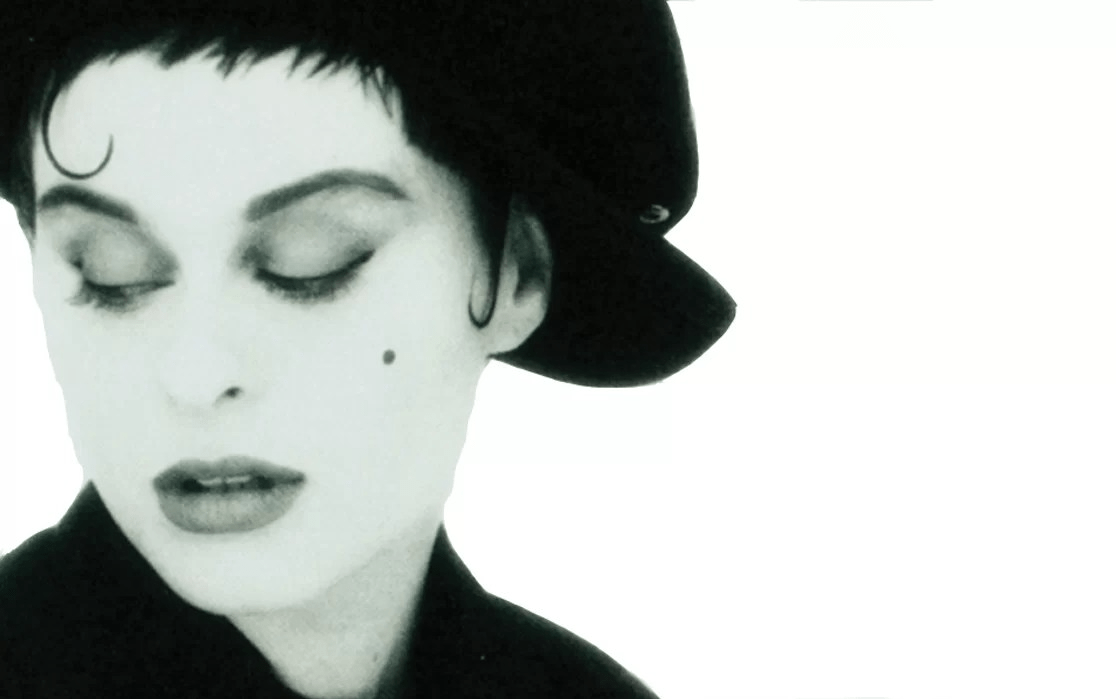
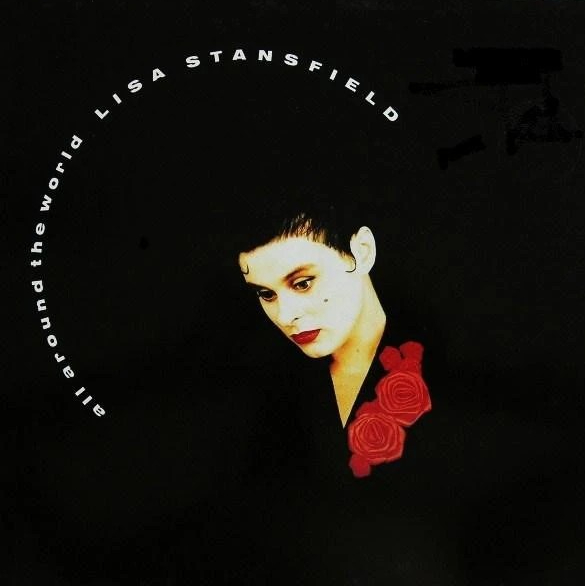
Lisa Stansfield had been releasing music since 1981 – both solo and as part of the band Blue Zone – but to little fanfare until she teamed up with production duo Coldcut. Earlier in ’89 they had released the house classic ‘People Hold On’, establishing her as a vocalist. ‘All Around the World’ was her second solo hit, helped by her distinctive look in the video, the short hair with Betty Boop kiss-curls.

Stansfield would continue scoring Top 10 hits throughout the nineties, including one further chart-topper to come. Meanwhile, we find ourselves with just three #1s left in this decade! Time flies… And if ‘All Around the World’ gives us a perfect mash-up of late-80s/early-90s sounds, our next chart-topper is an ear-popping vision of the decade to come.

633. ‘Ride on Time’, by Black Box

In which we meet the first modern dance record…?

Ride on Time, by Black Box (their 1st and only #1)

6 weeks, from 3rd September – 15th October 1989

I’m a child of the nineties, the decade in which the music we recognise today as ‘dance’ really came into being. There have been dance #1s popping up regularly throughout the second half of the 1980s but, as good as many of them have been (‘Theme from S-Express’ says ‘hello’), they have sounded quite dated – often chaotic mish-mashes of samples and sound effects.

‘Ride on Time’, however, is much less cluttered – just a beat, a few synth hooks, a classic piano riff – but all the more weighty for it. One of the song’s creators mentioned wanting to create a dance track with the power of a rock song. And then there are the vocals. Though I think describing them as just ‘vocals’ isn’t quite doing them justice. They are colossal, momentous… add whatever synonym for ‘very big’ you want. There aren’t many lines, and half of them are just woah-wa-wa-wa-oh, but not for nothing is this record classed under the sub-heading ‘diva house’. The singer does a great job. I hesitate in naming this ‘singer’, as there was a lot of controversy over who they actually were. The record originally used the vocals of a 1980 hit by Loleatta Holloway, called ‘Love Sensation’, which Black Box didn’t have the rights to. They then re-recorded the track with Heather Small, soon to become a star in her own right with M People.

To confuse matters further, the woman in the video and the record sleeve below is model Katrin Quinol, who had been brought in to mime on TV performances and the like. I’m not 100% sure which version I’ve been listening to – a search for ‘Ride on Time Heather Small’ on YouTube throws up nothing – but since Black Box finally bought the rights to ‘Love Sensation’ in 2018 I assume it’s Loleatta Holloway’s big lungs that are blasting my cobwebs away. Sadly she died in 2011, though she did eventually receive enough royalties from the song to, as she put it, buy herself a fur coat.

Every time an electronic dance number one comes along, I feel contractually obliged to mention that it isn’t my favourite genre. I’m guitars and drums all day long. But good dance, just like good rap and good reggae, can transcend my fussy tastes. Good is good, and ‘Ride on Time’ is pretty darn good. (I said a lot of the same stuff about Soul II Soul’s ‘Back to Life’ and, although the two songs have very different vibes, they are two sides of the same futuristic dance coin.) I’d go as far as to say that, in the right nightclub, in the right mood, ‘Ride on Time’ could be euphoric. And it also feels like a direct riposte to the cheap ‘n’ cheesy tat that it replaced at #1…

And as I said above, ‘Ride on Time’ feels much more streamlined and precise after previous years’ big dance hits. But that’s not the only reason, I don’t think, for it being a huge, game-changing hit. It also, cleverly, harks back to disco, with its big-voiced diva on lead vocals, giving a timeless sheen to its very modern sound. And also, we have to nod our heads to acts like Pet Shop Boys, and even Stock Aitken Waterman, for making pop music much more dance-oriented over the past couple of years. In the ‘60s and ‘70s ‘pop’ usually equalled ‘rock’ (think Merseybeat, and glam), while in the 80s ‘pop’ has shifted in a dancier direction. The 90s will see pop shift back to guitars, and then towards an R&B/hip-hop future.

Black Box were an Italian act, kicking off a trend for European DJs and dance acts scoring big hits across the Channel, often in the autumn after Brits had spent the summer on Mediterranean beaches. The Euro-house influences are clear, and very different from the American house we’ve met up to now. Clearer, classier… dare we give into stereotypes and say ‘chic’? My favourite aspect of the song is that the lyrics are clearly Because you’re right on time… But the Italian DJs’ English wasn’t great, and they misheard it as ‘Ride’. Which I think is cute (and much more memorable than the correct phrase).

And yet, for all my talk of game-changing modernity, the charts will do what they always do and completely disprove all my blethering with the next number one. Yes, that damn rabbit is back, next.

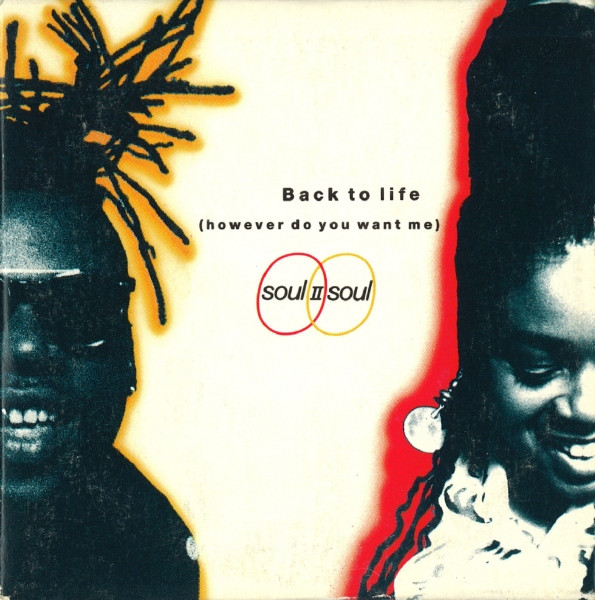
630. ‘Back to Life (However Do You Want Me)’, by Soul II Soul

As fun as 1989 has been so far – and I’ve enjoyed it, at least – it’s not been very cool. Cheesy pop a-plenty, earnest balladeering, charity singles and sixties covers. Madonna romping with our Lord and Saviour in ‘Like a Prayer’ has been as edgy as it’s got…

Back to Life (However Do You Want Me), by Soul II Soul (their 1st and only #1)

4 weeks, from 18th June – 16th July 1989

Until now, though. For ‘Back to Life’ is a cool record. A mix of hip-hop beats and soulful vocals. It’s a little bit of dance, a little bit of house. Wikipedia lists it as ‘proto-jungle’, which sounds slightly terrifying but very fun. Yet for all these influences, it’s not a cluttered track. The production is sparse – just a beat and some strings for the most part – and ‘sparse’ is not something I’ve not been able to say about the sample-heavy dance hits we’ve met in recent years.

It started out life as an a cappella track, which makes sense, as Caron Wheeler’s vocal turn is the stand out star of this record. It’s her that makes me want to announce this as the start of the nineties, six months early, as the next decade will be dotted throughout with dance tracks ft. female divas. Elsewhere, the beat and the production is unfussed, and unhurried, almost unbothered whether you like it or not, whether you think it’s upbeat enough to dance to. It’s very contemporary, a world away from SAW’s cheap and cheerful approach, until a scrrraaatch on the DJ’s decks places it firmly in 1989.

Proto-jungle is not my kind of thing (I prefer my jungle fully formed…), but a good record is a good record, and this is a good record, if you know what I mean. It’s moving things along, like a mini ‘Rock Around the Clock’ or ‘I Feel Love’, and for that I respect it. It’s the future, and we’ll be hearing a lot more like it soon…

Soul II Soul were a musical collective of some nine members, founded by DJ Jazzie B, who ran a club night in Brixton that played music with British, African, Caribbean and American influences. They had even hosted a hot new LA rap group called NWA in 1988. ‘Back to Life’ was just their fourth single, and their second Top 10 hit. ‘Keep On Movin’’ had been their breakthrough, but for me that one’s lacking ‘Back to Life’s hook. Impressively, ‘Back to Life’ also made the Top 10 in the US, where it had homegrown hip-hop/R&B to compete with.

As I mentioned above, the difference between this and the earlier dance #1s, like ‘Pump Up the Volume’ or ‘Theme from S-Express’, is that it’s not at all heavy on the samples. There’s just one: the drums from funk band Graham Central Station’s ‘The Jam’. Or two, if you count Caron Wheeler’s a cappella original. This was Wheeler’s last single with Soul II Soul – she would leave to pursue a solo career before returning in 1996.

So, we start a new chart-topping chapter here. And appropriately enough, before we delve further towards the nineties, we have a recap…