Remember, remember (the singles that were sitting at #2 in the charts on) the 5th of November. Beat groups, new wave, and pop…
Apologies for my non-British readers, who will have no idea what I was reaching for there. Yes, time for another dose of randomly chosen runners-up. Every so often we cast our eyes away from the number one spot, down a place to be precise, and find three classics which fell agonisingly short of featuring in one of my regular blog posts.
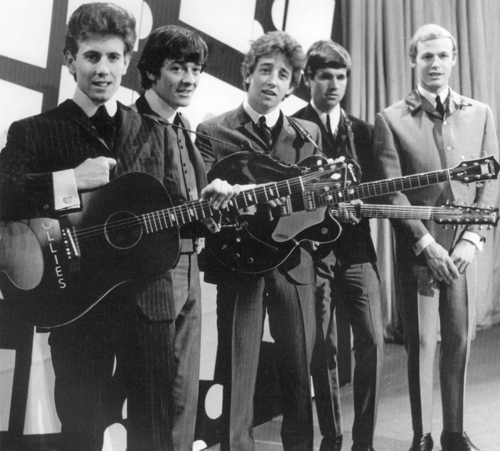
‘Stop Stop Stop’, by the Hollies – #2 for 2 weeks between 3rd – 16th November 1966, behind ‘Reach Out I’ll Be There’.
The Beatles, The Stones, The Who, The Kinks… What’s the correct band to put next in this particular logic puzzle? Probably The Hollies, who scored seventeen Top 10 hits between 1963 and 1974, but only one #1 (the buzzing ‘I’m Alive’). They also made a belated return to top spot in 1988, with a Budweiser inspired re-release of ‘He Ain’t Heavy, He’s My Brother’. I have already featured the classic ‘The Air That I Breathe’ as a random runner-up, but I doubt anyone will begrudge them another appearance.
Like all the best ’60s beat groups, the Hollies adapted their sound almost single by single, and in late 1966 they brought in a distinctive banjo (with added echo to fool people into thinking it was a balalaika) for this tale of a chap who, overcome by the beauty of a belly dancer, ends up knocking tables over and getting chucked out of a club. It fits in well with the year in which any band worth their salt was exploring the sounds of the east and reaching for the sitar, while keeping a uniquely earthy Hollies-ness to it.
Despite there already being a fairly famous tune called ‘Happy Birthday’, dating from 1893, several pop acts have had a go at updating the birthday songbook. The Beatles and Stevie Wonder made probably the two most famous attempts, but not far behind are Scottish new wave act Altered Images.
It’s a fizzing, peppy tune, which sounds perfect for kids to sing along to after filling up on cake and e-numbers. I’ve tried to look at the lyrics for deeper meaning, but there doesn’t seem to be any. Still the glockenspiel and guitar riff is nice, and you can see why this became such a big hit. It was probably helped by frontwoman Claire Grogan (AKA the Scottish Debbie Harry) and her recent appearance in hit movie ‘Gregory’s Girl’, and it set the band up for two years’ worth of success before they split in 1983.
Before moving on to our final #2, I have to address a question that’s been nagging at me for the past ten minutes… What did people in 1892 sing when it was someone’s birthday?
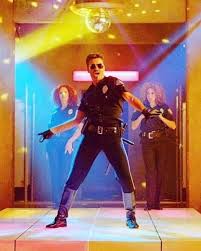
‘Outside’, by George Michael – #2 for 2 weeks, between 25th October – 7th November 1998, behind ‘Believe’
Another question. You are a world-famous pop star caught ‘engaging in a lewd act’ in a public toilet by an undercover police officer. This cowardly sting operation has forced you into declaring that you are gay, at a time when that could have still been a career-damaging, if not ending, announcement. Do you A) lie low for a while? Or B) release a disco-pop banger all about the joys of al fresco shagging? Way to handle a scandal.
George Michael, of course, chose option B. And the result was ‘Outside’. I think I’m done with the sofa, I think I’m done with the hall, I think I’m done with the kitchen table, Baby… His last UK chart-topper, a couple of years earlier, had been the ode to anonymous sex, ‘Fastlove’. But ‘Outside’ makes that tune seem positively chaste. And it’s one of his very best singles: clever, fun, danceable, and unrepentant. I’d service the community… George declares, halo shining… But I already have, You see…
I will admit to, and stand by, being a bit bored of George Michael’s slower, more serious chart-toppers. He always had a playful side, from ‘Faith’ and ‘I Want Your Sex’ through to this, and the similarly saucy ‘Freeek!’ from 2002, which makes brilliant use of a dial-up modem as a base for the beat. Sadly though, it seems that GM could only ever make #1 in the UK if he was on his best behaviour.
Hope you enjoyed this latest detour of what-might-have-been on top of the charts. Back to the regular countdown in a few days!
Welcome to the latest installment of Random Runners-Up, where we celebrate the records that came close, but no cigar. Three records, all sitting at #2 on this date in history…
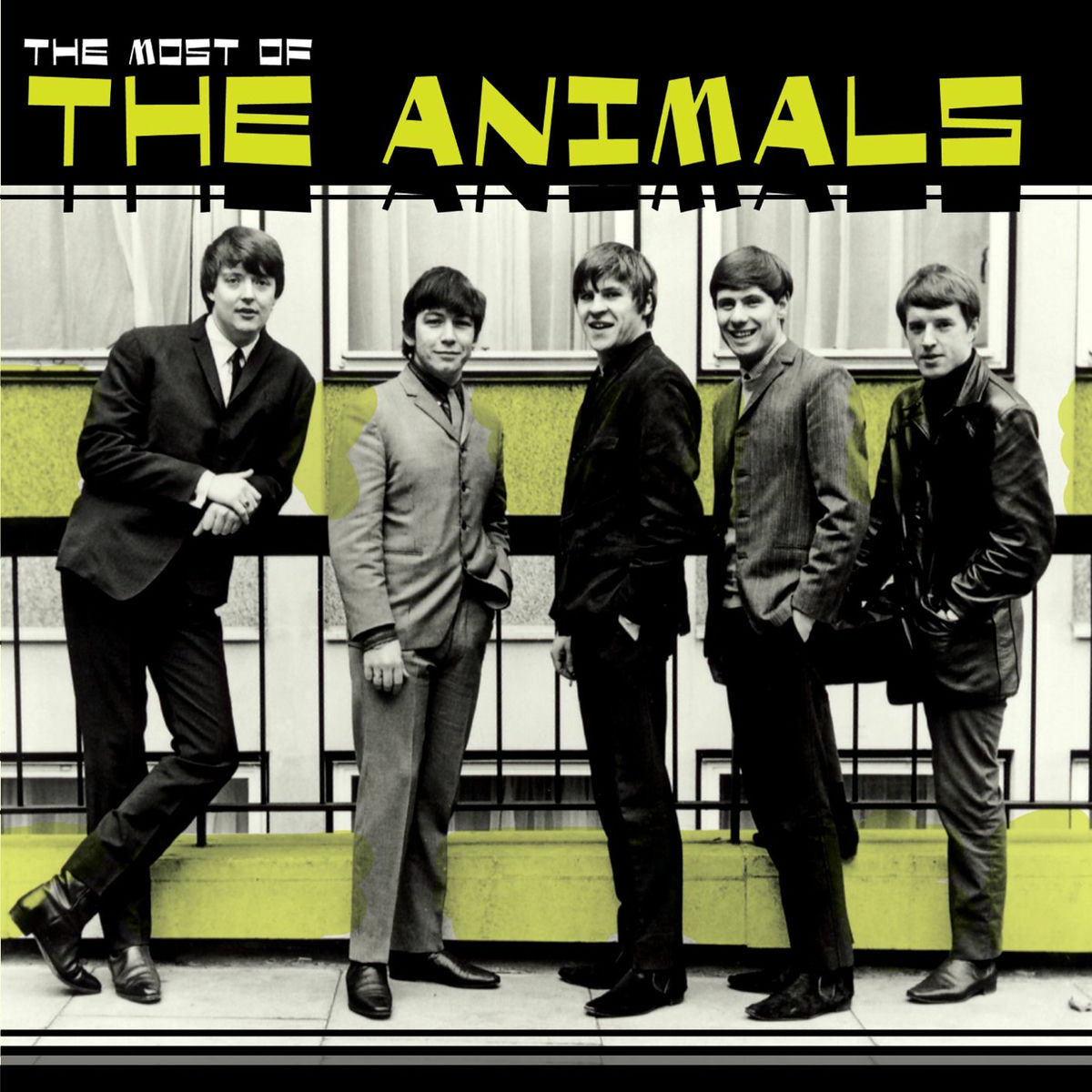
‘We’ve Gotta Get out of This Place’, by the Animals – #2 for 1 week in 1965, behind ‘Help!’
Some classic sixties R&B to start us off. This is gritty stuff, with a winding bassline, snarling guitars, and the gutteral yowl of lead singer Eric Burden telling a tale of hardship and poverty. It was written by Brill Building duo Barry Mann and Cynthia Weil, intended for the Righteous Brothers. The Animals changed the lyrics slightly, to reflect their childhoods in Newcastle. Watch my daddy in bed a-dyin’, Watch his hair been turning grey… And then out of nowhere springs a very upbeat, pop-leaning chorus. It is a positive song, despite the misery of the verses. The singer will get out of this place: Believe me baby, I know it baby, You know it too…
This was the Animals’ second-biggest hit, after their 1964 chart-topper ‘The House of the Rising Sun’, and was one of seven Top 10s the band enjoyed before fracturing in 1966. ‘We’ve Gotta Get out of This Place’ was released right at the start of the Vietnam War, and became an anthem for US soldiers stationed out there in the late-sixties.
‘You Got What It Takes’, by Showaddywaddy – #2 for 1 week in 1977, behind ‘Angelo’
The seventies were a time of great musical innovation… They were also a time of Showaddywaddy. Not that I’m complaining, because I can’t resist Showaddywaddy and their rock ‘n’ roll revival schtick. They had one number one in the UK, ‘Under the Moon of Love’, but were a constant presence in the charts during the latter half of the decade. ‘You Got What it Takes’ was the third in a run of seven straight Top 10 hits, and one of the band’s four #2s.
Like their chart-topper, this was a cover of an oldie: a 1960 #7 hit by Marv Johnson. Musically it owes a great debt to Lloyd Price’s ‘Personality’, and lyrically it tells the tale of a girl who doesn’t doesn’t live in a beautiful place, doesn’t dress with the best of taste… Nature didn’t give you such a beautiful face… And yet she has what it takes. What exactly that is isn’t specified, leaving our imaginations to run riot. Johnny Kidd & The Pirates and the Dave Clark Five also had hits with this tune, which makes it all the more surprising that I had never heard it before today!
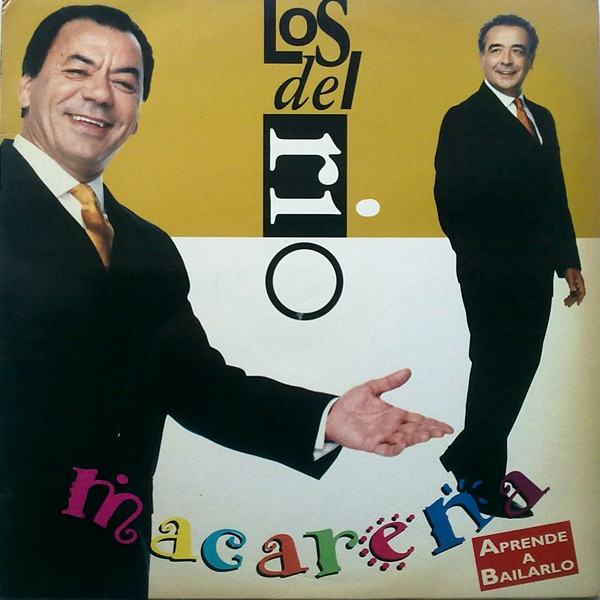
‘Macarena’, by Los Del Rio – #2 for 1 week in 1996, behind ‘Wannabe’
For some reason I had visions of ‘Macarena’ being lodged in the Top 10 for months on end, but in truth it spent just one week at number two and didn’t have a chart run out of the ordinary. I guess I thought it must have hung around like a bad smell because it was the bane of my existance for endless school discos. This, and Whigfield’s ‘Saturday Night’. Both dances looked so simple, and yet… I could never quite get them right. Any dance that involves alternating left and right, or turning, and I short-circuit.
This hit version is a remix of a 1993 original, from Los Del Rio’s 18th studio album. They were (are, in fact, as they’re still going!) a Spanish duo from the sixties, and by the time this made them UK one-hit wonders both men were almost in their sixties. And no, the Macarena is not the name of the dance, but the name of one of the men’s daughters. Britain was one of the few countries where this didn’t go to #1. In the States, it stayed on top for fourteen, presumably very long, weeks…
Earlier this week the sad news of Connie Francis’ death was announced, aged eighty-seven, closing the door on yet another chapter from the earliest chart years. There can’t be many, if any, older chart-toppers than Francis still around… And there were precious few women, either, who were scoring rock ‘n’ roll hits and competing with the big male stars of the late fifties.
Francis scored two huge, six-weeks-apiece #1s in 1958, the sassy ‘Who’s Sorry Now’ and the whipcracking ‘Stupid Cupid’ (twinned with ‘Carolina Moon’). I also covered her 1960 hits ‘Mama’ and ‘Robot Man’ as a Random Runner-Up. Follow those links to hear those tunes, and to read my original posts. But since writing those posts – and this has been one of the best things about doing this blog, discovering artists’ non-chart topping back catalogues – I’ve fallen in love with many of Connie’s other hits. So let’s share some here, in her memory.
‘Lipstick on Your Collar’ – #3 in 1959
I love the camp melodrama of this bop, about a cheating boy given away by lipstick smudges. How does Connie know the lipstick isn’t hers? Well, eagle-eyed, she notices his is red, while hers is baby pink. Coleen Rooney eat your heart out. Turns out that floozy Mary Jane had been smooching her man right outside the juke joint. But, as with so many of her early records, Connie does not wallow in heartbreak. In fact, she seems almost thrilled to have rumbled him…
‘Plenty Good Lovin” – #18 in 1959
A similarly uptempo, more swinging, hit from the same year. And this one is positively raunchy by 1959 standards. In fact, I’m not sure Connie isn’t simulating orgasm during the break in the middle… She sings the praises of a man who doesn’t have a nice car, can’t play guitar, is neither intelligent nor particularly good-looking, but who’s got somethin’ that’s better by far… I mean, gurrrrlllll… Plenty of things that he don’t know, But this boy shines when the lights are low…
‘Everybody’s Somebody’s Fool’ – #3 in 1960
Her first US #1, and in fact the first Billboard Hot 100 number one by a female singer (the chart having launched well over a year earlier). Which just goes to prove how impressive Francis’s hit making was, stacked against the likes of Elvis, Pat Boone, Ricky Nelson and co. I love the honky-tonk feel to this, with the rolling organ and the rickety, country beat, and her voice drenched in echo.
‘Where the Boys Are’ – #5 in 1961
Francis made her acting debut in 1961, in the movie ‘Where the Boys Are’. And the title track gave her another big hit, proving that she could sing something a little more traditional to go along with all the rock ‘n’ roll. In 1978, as she was attempting a career comeback, Connie recorded a disco version. If that doesn’t grab you, how about a Japanese version? Today’s female stars could only dream of such versatility.
‘Vacation’ – #10 in 1962
Despite not having an original bone in its body, and already sounding dated in 1962, I love this throwaway tune. ‘Vacation’ was Francis’s last Top 10 hit in both the US and the UK, as the Merseybeat acts prepared to render so many stars obsolete. But it’s hard not to get carried along with this record’s exuberance. Maybe because I’m an English teacher in my day job, I’m instinctively drawn to songs that spell words out in the lyrics. Similarly, it’s probably why I’m drawn to songs about the summer holidays. So this one works for me on many levels.
‘Pretty Little Baby’
It would be wrong to finish without mentioning her final ‘hit’. ‘Pretty Little Baby’ was a B-side back in 1962, but in recent months you’ll surely have heard it if you’ve spent any amount of time scrolling on Instagram or TikTok. In one of her final interviews, Francis claimed to have forgotten of the song’s existence, but that she was touched by its resurgence, and how even kindergartners now know her music. Back to teaching for a moment, I can attest to this as I have a student who has been singing this to himself for several months now… Musically this is cute, and I love whatever early electronic device the solo was recorded on.
From the mid-sixties onwards the hits dried up, and Connie Francis’s personal life took several dark turns. The Guardian published a good article on her many highs and lows yesterday, and she became an advocate for mental health following various traumatic experiences. Having read that, it feels impressive that she lived such a long life and fulfilled life. She returned to music, and only officially retired a few years ago.
Connie Francis, December 12th 1937 – July 16th 2025
For our second On This Day feature, we start with a birthday. New wave, synth pop, goth rock legend Gary Numan celebrates his 66th today. He is probably best known for his solo number one ‘Cars’, but I’m going to link this to his slightly earlier chart-topper with Tubeway Army, the eerie, industrial ‘Are “Friends” Electric’.
Looking back, I think the period between 1979 and 1981 had some of the strangest, most un-commercial sounding #1s, and this has to be one of the strangest, most un-commercial sounding of the lot.
On this day in 2016, the world bid farewell to producer Sir George Martin. He is of course most famous for his work with the Beatles, but he also sat behind the desk on #1s for Billy J Kramer, Gerry & The Pacemakers, Cilla Black, and on the best selling single of all time, ‘Candle in the Wind ’97’. Here though is his first chart-topper, the completely unexpected, yet quite magical, ‘You’re Driving Me Crazy’, by the Temperance Seven.
While in 2003, March 8th saw the death of one of the first modern British pop stars, Adam Faith. He had two number ones, the second of which, ‘Poor Me’, also happened to be at the top on this day in 1960. I remember quite liking the dramatic strings and Buddy Holly-inspired vocals when I wrote my post on it, and it remains a striking number one record. Faith moved into acting, and remained on stage and screen right through to his death. And on the anniversary of his passing, it would be remiss of me not to quote his supposed final words: “Channel 5 is all shit, isn’t it?” Few truer words have ever been uttered.
It’s been a while since I did a ‘Remembering’ post, so here’s two for the price of one. Two big stars of the pre-Beatles age, both of whom died within a couple of weeks in February 1990.
Before starting this blog, I knew Johnnie Ray by name and not much else. He after all is referenced in the opening line of ‘Come On Eileen’ (Poor old Johnnie Ray…) But I will now be forever grateful to him, for making the earliest years of the charts bearable, when it sometimes felt like one po-faced ballad after another, after another. His first #1 was the incredibly steamy (by 1954 standards) ‘Such a Night’, and he had a seven-week run with the whistle-tastic ‘Just Walkin’ in the Rain’ before ending things with the zippy ‘Yes Tonight, Josephine’. All three are well worth a listen if you’ve not heard them before, and proof that pop music could be fun in the prehistoric era. Below I’ll highlight a few of my other favourites of his.
Released in 1951, before Britain even had a singles chart, we can assume that ‘Cry’ would have been a multi-week number one. The missing link between Sinatra and Elvis, Ray’s wonderfully histrionic performance shows why he was known as the ‘Nabob of Sob’ and the ‘Prince of Wails’, surely two of pop music’s best nicknames. His exaggerated, stagey way of singing may have been linked to the fact that he was partially deaf.
‘Ain’t Misbehavin’ is a standard, recorded by everyone from Louis Armstrong and Ella Fitzgerald, to Robson & Jerome. And while I’ll admit to not having heard every version, I’d suggest that you’d struggle to find a performance more committed than Johnnie Ray’s. The man was the epitome of the phrase ‘sing it for the back row’.
Fond of a whistle, Ray made #10 with ‘You Don’t Owe Me A Thing’ in early 1958, a perfect example of how rock ‘n’ roll was making its presence felt in records that weren’t actually rock songs.
By the early 1960s, like so many fifties stars, Ray’s career had tailed off. It’s surprising that he managed to have a career in the first place, after he was arrested for soliciting an undercover policeman in a public toilet in 1951. Rumours about Ray’s sexuality continued, but didn’t seem to harm his sales until another arrest in 1959. He was openly bisexual to many in the music industry, and married a woman named Marilyn Morrison in 1952, who claimed she would ‘straighten him out’. They separated after a year.
Ray also had problems with alcohol, which worsened in the sixties. He would sporadically tour small venues and appear on television in the States, while commanding much larger audiences in the UK and Australia (where he remained most popular) right up until his death from liver failure on February 24th 1990. He was sixty-three.
Del Shannon scored his sole chart-topper a few years after Ray’s time at the top. And what a chart-topper it was. ‘Runaway’ is possibly the most inventive, most exciting, most propulsive #1 of that supposedly fallow period between Elvis and The Beatles. It made top spot in the summer of 1961, and features an innovative Musitron solo, making it arguably the first electronic hit. But even if that solo was played on a clapped out old piano it would take nothing from the record’s innate quality. Anyway, I discussed all this in more detail in my post on ‘Runaway’ here.
‘Runaway’ is so good that it tends to completely overshadow anything Del Shannon released afterwards. But ‘Little Town Flirt’ is another great slice of malt shop pop, making #4 in early 1963. He had a good line in heartbreak, and woman shaming, usually singing about runaways and flirts, and in ‘Hats Off to Larry’ he indulges in a bit of schadenfreude as his ex is dumped and left as heartbroken as he had been.
Shannon had a style, and came pretty close to shamelessly ripping himself off on some records (check out how close ‘Two Kinds of Teardrops’ is to ‘Little Town Flirt!) But on ‘So Long Baby’ he managed to recycle the energy of ‘Runaway’ into a deranged oompah beat and create a #10 hit that sounds both frivolous and terrifying.
Like Johnnie Ray, Del Shannon’s career slowed down towards the end of the sixties and into the seventies as he battled alcoholism. He worked with Tom Petty and Dave Edmunds, and by the ’80s he had sobered up and started something of a comeback. He worked with Jeff Lynne, and was touted as a replacement for Roy Orbison in The Travelling Wilburys. Sadly, though, he shot himself on February 8th 1990, apparently after having a negative reaction to the Prozac he was taking for depression. He was just fifty-five.
The two earlier ‘Today’s Top 10’s I’ve done were pretty succesful. Thanks to all who had a look, liked and commented. I was wondering what to do with the feature going forward, and I think I’ll use it to take a deeper look at interesting periods in chart history. What can the Top 10 tell us about where pop music was at a particular time and place?
So, we’ve done the death of the ’60s, and we’ve done the Summer of Love. Now we turn to perhaps one of the most exciting times in modern popular music: late-1963. The moment when the sixties finally started to swing. Thanks, mainly, to the Beatles. But not, as this chart will hopefully prove, solely because of them. For those interested in significant world events, this was also the Top 10 on the week that JFK was assassinated.
10. Let It Rock / Memphis, Tennessee, by Chuck Berry – down 4 (7 weeks on chart)
But what’s this…? Two rock ‘n’ roll tunes first released in 1959. How the charts like to mess with us… The reason is tied to the times, though. The Godfathers of rock, Buddy Holly, Jerry Lee Lewis, and Chuck Berry, had inspired the new Beat groups that we’ll be meeting further up this chart. The Beatles early albums were full of Berry songs, while the Stones’ first hit had been a cover of ‘Come On’ earlier in 1963. Pye Records saw an opportunity, and released some of these influential tunes for the first time in the UK. Amazingly, this was Berry’s first ever visit to the UK Top 10. A runaway train might not be the most obvious topic for a rock ‘n’ roll tune, but this wasn’t Berry’s first time singing about a railroad. And the way he makes his guitar sound like a train horn is iconic.
It was paired with the more laidback ‘Memphis, Tennessee’, which had also been a hit in a version by Dave Berry & the Cruisers around the same time. It pulls the same trick as such classics as Gilbert O’ Sullivan’s ‘Clair’, and Brotherhood of Man’s ‘Save Your Kisses for Me’, by tricking the listener into thinking that the singer is singing about a girlfriend, when he is actually singing about a small child. Berry, though, consumate storyteller that he was, manages to do it in a far less creepy manner, making the song more about the messy break-up, and the father’s regret, than about dodgy double entendres.
9. I’ll Keep You Satisfied, by Billy J. Kramer & The Dakotas – up 2 (3 weeks on chart)
This one’s much more 1963. One of the big beat combos that had broken through earlier in the year (with another three to come higher up), and who had been at #1 just a few weeks earlier with the Lennon-McCartney tune ‘Bad to Me’. ‘I’ll Keep You Satisfied’ is another L&M composition and, while it would peak decently at #4, it isn’t quite as good. Still, it’s better than the Dakota’s next hit, the dubious ‘Little Children’. Watching the video above, the music may be (slightly) rocking, but Billy J. is giving good crooner energy. Nothing to worry grandma… yet.
8. I (Who Have Nothing), by Shirley Bassey – up 1 (9 weeks on chart)
A constant presence on the charts of the ’50s and ’60s: a bit of Bassey. This is three minutes of pure melodrama, as Shirley watches an old-flame woo his new girl. ‘I (Who Have Nothing)’ was adapted from an Italian hit, which was something of a theme in the early sixties. It’s a classic of its genre: an intro of swirling strings, quiet bits, and bits where she lets loose, belting out high notes like nobody else can. I always find Shirley Bassey somewhat lacking in subtlety, but then again – if you’ve got it flaunt it. If I could sing like her then I’d be belting out my Starbucks orders.
7. Blue Bayou / Mean Woman Blues, by Roy Orbison – down 3 (10 weeks on chart)
Another double-‘A’ side from an American rocker, who had been around since the ’50s. Unlike the Chuck Berry record, though, this was a new hit. ‘Blue Bayou’ is one of Orbison’s gentler numbers – for the Big ‘O’ could of course give Shirley Bassey a run for her money in the belting stakes – but it’s always been one of my favourites. Even as a young ‘un who had no idea what the hell a ‘bayou’ was. Linda Rondstadt recorded a famous cover in 1977, though that didn’t make the UK Top 10.
On the flipside of this disc was a cover of ‘Mean Woman Blues’, an Elvis track from 1957. Personally, while they are both fine singers, I prefer Elvis’s version. I prefer bombastic, overblown Orbison to rocking Orbison. On this record he tries out the famous Grrrrrr, which he’d use to great effect on his chart-topping ‘Oh, Pretty Woman’ the following year.
6. Secret Love, by Kathy Kirby – up 6 (3 weeks on chart)
We’re keeping an eye out for the bands that came along in 1963 and changed popular music forever. But for every beat combo that made it big, there were plenty of British women who were just as instrumental in making the sixties swing. Kathy Kirby’s name hasn’t lasted alongside the likes of Cilla, Dusty, Lulu or Sandie Shaw, but here she is, enjoying her biggest hit. Her take on ‘Secret Love’ starts off very bombastically, much like Doris Day’s chart-topping original from a decade earlier, but soon a groovy guitars-and-backing-singers beat takes over, nicely updating the song for a new era. Plus, she has a great voice, with a bit of bite to it. Kirby may have retired from showbusiness in the early eighties and died in relative obscurity, but for a while she was a huge name: representing the UK at Eurovision in 1965 (finishing as runner-up) and hosting her own television programme.
5. Don’t Talk to Him, by Cliff Richard & The Shadows – up 2 (3 weeks on chart)
Common knowledge would have it that with the arrival of the Beatles et al the career of Cliff Richard – the hottest star in the land just a year or so earlier – fell off a, well, cliff. But glance at any Top 40 from any random moment post-1962, and it quickly becomes clear that Cliff went nowhere. Okay, he didn’t hit #1 as regularly, but ‘Don’t Talk to Him’ was one of an astounding 33 Top 10 hits he achieved across the sixties. I’d never heard this before, but it’s actually a really good song, combining a latin rhythm with some very current, beat guitars. This could easily have been written and recorded by one of the acts a couple of places up this chart, proving that Cliff gave those young whippersnappers a stronger run for their money than the history books suggest. *Some sources disagree as to whether this was Cliff solo, or Cliff with the Shadows, but I’ve gone with the latter*
4. Be My Baby, by the Ronettes – up 1 (6 weeks on chart)
The first of two all-time great, hall of fame pop songs in this week’s Top 4. The fact that this never made it higher than number four is a shock, and I’ve already done a post on how this really Should Have Been a #1. Even on this chart, in the year that it was recorded, where girl groups like the Ronettes were common, ‘Be My Baby’ stands out as special. It would stand out as special on any chart, in any era, simply because it is better than 99.95% of anything else in the history of pop.
3. Sugar and Spice, by the Searchers – down 1 (5 weeks on chart)
Here we are then, a purely Liverpudlian Top 3. The Searchers had been the 3rd Merseybeat band to make number one that year, after the two acts ahead of them in this chart, with their cover of The Drifters’ ‘Sweets for My Sweet’. Although still on the candy theme, ‘Sugar and Spice’ was an original, written by producer Tony Hatch. The chiming guitars and harmonies, as well the almost skiffle rhythm section, are pleasant, almost proto jangle-pop. But within a year, once the Stones, Kinks and Animals started making the upper reaches of the charts, it would start to sound a bit safe. The Searchers had two much better hits to come: their majestic second #1 ‘Needles and Pins’, and their cover of ‘When You Walk in the Room’. Like so many Beat bands that didn’t, or couldn’t, write their own material, the Searchers’ chart shelf-life was limited.
2. She Loves You, by The Beatles – up 1 (13 weeks on chart)
The song that officially kicked off the swinging sixties? The way that ‘She Loves You’ barrels in, chorus-first, on a wave of tight guitars and precision drumming, and yeah yeah yeahs. In France, this style of Beat music literally became known as ‘Yé-yé’ (and surely everyone knows by now how Mr McCartney Senior thought ‘yes, yes, yes’ would have sounded much more proper…) It is utterly perfect pop, to rank alongside the Ronettes a couple of places below it on this week’s chart. Although they developed their sound so far beyond this, I would still rank ‘She Loves You’ in my personal Beatles Top 3. You can read my original post on it, as a number one, here. On this week in November 1963, it was on its way back to number one, having already spent a month there that autumn, and on its way to becoming the biggest-selling single ever, at that point, in the UK (where it remains the Fab Four’s highest seller). Also, the seven-week gap between its two runs at the top remains a record to this day.
1. You’ll Never Walk Alone, by Gerry & the Pacemakers – non-mover (7 weeks on chart)
The 4th Beat group in the Top 10 on this day sixty-one years ago, Gerry & the Pacemakers had made history by being the first act to make #1 with their first three singles. This was the final week of a month-long run for ‘You’ll Never Walk Alone’, and it would also be The Pacemakers final week on top of the charts. (You can read my original post on it here.) The fact that for only their 3rd single the band had turned to a cover of a song from a 1945 musical is telling. While the Beatles were just warming up, their contemporaries were often relying on covers (or on handouts from Lennon & McCartney). Plus there was the fact that for record labels and producers, rock and roll was still a very new thing, one that many were convinced wouldn’t last. It was seen as essential for bands to branch out, and to nurture a wider appeal.
Of course we know now that rock ‘n’ roll was here to stay, even if Gerry & The Pacemakers weren’t. ‘You’ll Never Walk Alone’ was also here to stay, and by the end of its initial chart run it had already been adopted by the crowd at Anfield as Liverpool FC’s unofficial anthem, to be belted out pre-match from here to eternity. The song returned to number one in a charity version by The Crowd, following the Bradford City fire, while it also made top spot for a third time in 2020 in a version featuring Michael Ball and the 100-year-old Captain Tom Moore, a phenomenon that can only be explained by how crazy we all went during lockdown. It is nothing short of a modern-day hymn, given the song’s role in the current British psyche.
I hope you enjoyed this flashback to Today’s Top 10 in 1963. What a snapshot of popular music that was, as Britain finally cast off the shadow of the War and started to get a little groovy. Up next we’ll return to 1999, and to a country just a few months away from the terrifying uncertainty of a new millenium. Would all the computers crash? Would planes start dropping from the sky…? Nobody knew, so confused and distracted were people that they kept buying Ronan Keating records in large quantities. Stress will do that to you…
Random runners-up is back! Following on from my latest recap, let’s take a break from analysing all those chart-toppers, and lavish some attention on those records that fell at the final hurdle: #2.
These records are genuinely chosen at random (thank you random.org), and this time the generator has kindly thrown up a chart-topper from each of the five decades we’ve covered so far. We’ll be going back as far as 1955, and as close to this blog’s ‘present day’ as 1996. But first up, it’s the sixties.
The generator has also thrown up three acts who we’ve already met in pole position. Fleetwood Mac had scored their only UK number one in January 1969, with the atmospheric instrumental ‘Albatross’.
‘Man of the World’, by Fleetwood Mac
#2 for 1 week, from 28th May – 4th June 1969 (behind ‘Get Back’)
They followed that up with a couple of #2s, the first of which was ‘Man of the World’. It starts off as a simple acoustic number, with some echoey guitar flourishes, and some nice echoes back to ‘Albatross’ in the cymbal crashes and the rhythmic bass. Peter Green, then the band’s main singer and songwriter, mournfully drawls: I could tell you about my life, They say I’m a man of the world… There’s no one I’d rather be… Before howling: But I just wish I’d never been born…
Legend has it that it was these lyrics that first alerted his bandmates to the fact that Green might not have been mentally okay. Just a year later he left the band. It’s a well-worn topic, how fame and fortune don’t always lead to health and happiness, but seldom has it been spelled out as beautifully as on ‘Man of the World’. After a wonderful bluesy middle-eight about how a ‘good woman’ might help, it ends with a murmured AndI wish I was in love…
When I was very young, I had a ‘Best of the Sixties’ cassette compilation. It was cheap, so it didn’t have the huge hits on it; but it had this. And so I knew ‘Man of the World’ long before I’d ever heard ‘Don’t Stop’, or ‘Little Lies’. Which is perhaps fitting, because it is this original incarnation of Fleetwood Mac that had the most UK singles chart success: a chart-topper, and two number twos. They would have to wait almost two decades for their next biggest hit: a #4 for ‘Everywhere’ in 1987.
By then, of course, and for most of their huge seventies successes, Mick Fleetwood and John McVie – whose surnames were combined to create the band’s name – were the two remaining original members. Peter Green meanwhile, struggled with his mental health throughout the seventies and eighties, but was sporadically involved in the music business, and with the other members of Fleetwood Mac. He joined the band for its induction into the Rock and Roll Hall of Fame in 1998, and died in 2020.
Another trip back in time then, with my second ever ‘Today’s Top 10’ (we went back to 1970 a few months ago – check it out if you have the time). This time I thought we’d go back to the summer of 1967… AKA The Summer of Love, in which for a few months the hippy ideal looked like perhaps becoming reality. Three very famous flower-power anthems topped the charts that summer, and all three are on this chart, dated 26th July-1st August 1967. But was the rest of the Top 10 as awash with peace and love? Let’s find out…
#10 – ‘Death of a Clown’, by Dave Davies (up 13 / 2 weeks on chart)
We start with a couple of big climbers, as Dave Davies’ debut solo effort enters the Top 10 this week. ‘Death of a Clown’ often gets classed as a Kinks’ song, and in fairness it does feature all four Kinks playing on it, and it did appear on the album ‘Something Else by the Kinks’. But it charted as a Dave solo number, with Ray contributing the la-la-la refrain, sung by his then wife. Its subject matter is that old rock ‘n’ roll chestnut – the grind of endless touring: I’m drownin’ my sorrows in whisky and gin… Dave Davies, who often chafed under his big brother’s domination of the group’s songwriting, had hoped that this song’s success (it would peak at #3) might lead to a solo album, but it didn’t. As a starter for our 1967 countdown it doesn’t scream ‘Summer of Love’, but Davies’ cravate in the video below is possibly the perfect encapsulation of the phrase ‘baroque pop’.
#9 – ‘Up, Up and Away’, by the Johnny Mann Singers (up 17 / 3 weeks on chart)
A bit more like it, now. An appropriately high climb for the Johnny Mann Singers going ‘Up, Up and Away’ in their beautiful balloons. It’s hardly the height of psychedelia, and it has much more of an upbeat, cabaret cheesiness to it, but it could also serve as a metaphor for indulging in some mind-bending substances. Most of the world knows it as a hit for the 5th Dimension but their version didn’t chart in the UK, leaving the coast clear for composer/arranger Johnny Mann and his singers.
#8 – ‘There Goes My Everything’, by Engelbert Humperdinck (down 2 / 10 weeks on chart)
Hang around the charts of 1967 long enough, and sooner rather than later you’ll come across Engelbert Humperdinck. He had two monster #1s, ‘Release Me’ and ‘The Last Waltz’, with this #2 smash sandwiched in between. ‘There Goes My Everything’ had been a huge US country hit for Jack Greene, before The Hump brought it to the pop charts. There’s more than a whiff of ‘The Green, Green Grass of Home’, a massive success for Tom Jones a few months earlier. Not very ‘Summer of Love’ but, let’s be honest, who could say no to a night of passion with this magnificent pillow-lipped crooner.
#7 – ‘A Whiter Shade of Pale’, by Procol Harum (down 3 / 10 weeks on chart)
Aha! Here we are then. One of the big three Summer of Love anthems, which had been at number one for six weeks and was now on its way down the chart. A stone cold, all-time classic which I’ve already named as one the Very Best #1s. Not much more to say, other than read my original post on it here, and give it a play regardless of how many times you’ve heard it before.
#6 – ‘See Emily Play’, by Pink Floyd (up 2 / 6 weeks on chart)
And if Procol Harum weren’t trippy enough, here is some true psychedelica from up and comers Pink Floyd. Written by founder member Syd Barrett, about a girl that he had seen in a forest while tripping on LSD. It is a deeply strange pop single, with lyrics about losing your mind, a demented harpsichord break, and a discordant, feedback-drenched solo. It was only their second single, and Barrett was opposed to releasing it as he didn’t think it was up to scratch. He would leave the band only a few months later, with mental health problems possibly brought on by drug use, and became a famous recluse. Pink Floyd meanwhile went on to release some of the biggest albums of the ’70s. They didn’t release many singles, though, and the next time they visited the Top Ten was with their surprise 1979 Christmas number one, ‘Another Brick in the Wall Pt. II’.
#5 – ‘She’d Rather Be With Me’, by The Turtles (up 2 / 7 weeks in chart)
Into the Top 5, with one of the decade’s great forgotten pop records, by one of the decade’s great forgotten pop groups. If the Turtles have made it into the public consciousness, then it’s for the single that they released just before this, the Billboard #1 ‘Happy Together’. Surprisingly for a song that constantly pops up in movies and on TV as shorthand for ‘The Swinging Sixties!’, ‘Happy Together’ only made #12 in the UK. Perhaps buoyed by that song’s greatness, ‘She’d Rather Be With Me’ went all the way to #4 later in August ’67. And for my money, it’s even better. Chunky production, unashamedly cheerful lyrics, cowbells, and a big, brassy marching band finish crammed into a little over two minutes. The Turtles would have one further Top 10, ‘Elenore’, which they wrote as a parody of ‘Happy Together’, but which manages to be even more ludicrously catchy.
#4 – ‘Alternate Title’, by The Monkees (down 2 / 4 weeks on chart)
Even The Monkees get into the spirit of the time, releasing a record as trippy as anything a better respected band might have put out. ‘Alternate Title’ is a very literal name for this record, as it was released elsewhere as ‘Randy Scouse Git’. (RCA refused to put it out in the UK with that name, as it sounded “somewhat rude to a British audience”.) Micky Dolenz had heard the phrase on the sitcom ‘Till Death Do Us Part’, which British audiences had somehow managed to watch without reaching for the smelling salts. If the Monkees were better respected, then the lyrics to this might warrant as much chin scratching as ‘American Pie’. It’s a bonkers record, with the verses telling the story of a party, referencing The Beatles (the four kings of EMI), the model – and Dolenz’s future wife – Samantha Juste (the being known as ‘Wonder Girl’), and Mama Cass in a yellow dress. The shouty chorus meanwhile represents the establishment yelling at the youth of the day (why don’t you cut your hair?!). And when I call it ‘bonkers’, I mean it in the best possible sense of the word.
#3 – San Francisco (Be Sure to Wear Some Flowers in Your Hair), by Scott McKenzie (up 2 / 3 weeks on chart)
On its way to the top, another anthem for the Summer of Love: an ode to the city where it all began. In fact, ‘San Francisco’ was written as promotion for the Monterey International Pop Festival, held in June that year. So it’s basically an advert… which isn’t super compatible with the hippy ethos, but hey ho. It worked, and young folks flocked to the city that summer, many with the requisite flowers in their hair. Of the three Summer of Love anthems, this one is perhaps the most stuck in that time, and hasn’t transcended to become an all-time classic. But it’s hard to argue with that sweet, wistful melody. Read my original post on it here.
#2 – It Must Be Him (Seul Sur Son Etoile), by Vikki Carr (up 1 / 9 weeks on chart)
Just to remind us that the singles chart is at heart a collection of songs ordered by cold, hard data, with no interest in the trends of the time, this was the #2 single as the Summer of Love reached its peak. American Vikki Carr provides the easy-listening filling between two hippy anthems, with a tune originally written and sung in French. In ‘It Must Be Him’, Carr – who has a lovely, strident voice – waits by the phone hoping her ex will call: Let it please be him, Oh dear God, It must be him, Or I shall die... I’d suggest Vikki might have played it a bit cooler, if only because all that talk of death and God probably brought this close to a BBC ban…
#1 – ‘All You Need Is Love’, by The Beatles (non-mover / 3 weeks on chart)
In the middle of a 3-week run at the top, this chart’s third, and perhaps ultimate, flower-power anthem. You can read my original post here. (I can’t remember what I wrote five years ago, but I’m sure it was largely positive!) Listening again now, I’m struck by how much fun this record is. From the opening bars of La Marseillaise, through Paul’s ‘all together now’s, the snatches of Bach, ‘Greensleeves’, and ‘In the Mood’, to brief glimpses of ‘Yesterday’ and ‘She Loves You’, the worthy message is dressed up in a lot of singalong fun. Brian Epstein, who would die just a few weeks later, described the band’s performance of the song for the ‘Our World’ television link-up as their finest moment.
So I’d say half the Top 10 for this week in July 1967 does the Summer of Love (and LSD) proud. The other half is more standard sixties: middle-of-the-road ballads, quality pop, and some high-grade crooning. Hope you enjoyed this detour, and I’ll do another one before the year is out.
I have to thank the person who, in the comments section on ‘Firestarter’, pointed me in the direction of this version of the Prodigy’s controversial classic. (Folks, please put your name in the comments!) It’s a complete reinvention – as all the best cover versions are – ‘Firestarter’ as performed by ‘White Album’ era Beatles, and sung by Scott Walker. Still, it retains the song’s ominous, bubbling nastiness, even as it lulls to you to sleep with its droning lullaby beat. It’s performed by Torre Florim, of Dutch band De Staat, and came to prominence on the soundtrack for the video game ‘Just Cause 3’.
‘Honky Tonk Women’, by The Pogues
If ever there were a band to rival the Stones for hellraising and general debauchery, it’s the Pogues. And they covered one of Jagger & Richards debauched classic ‘Honky Tonk Women’ as the ‘B’-side to their single ‘Yeah Yeah Yeah Yeah Yeah’ in 1988. So this must be officially the most rock ‘n’ roll record ever made…? Unusually for a Pogues song at the time, lead vocals are taken by Spider Stacy rather than Shane MacGowan, but the raucous air remains intact. This cover version doesn’t reinvent the wheel, but then sometimes you just don’t need to.
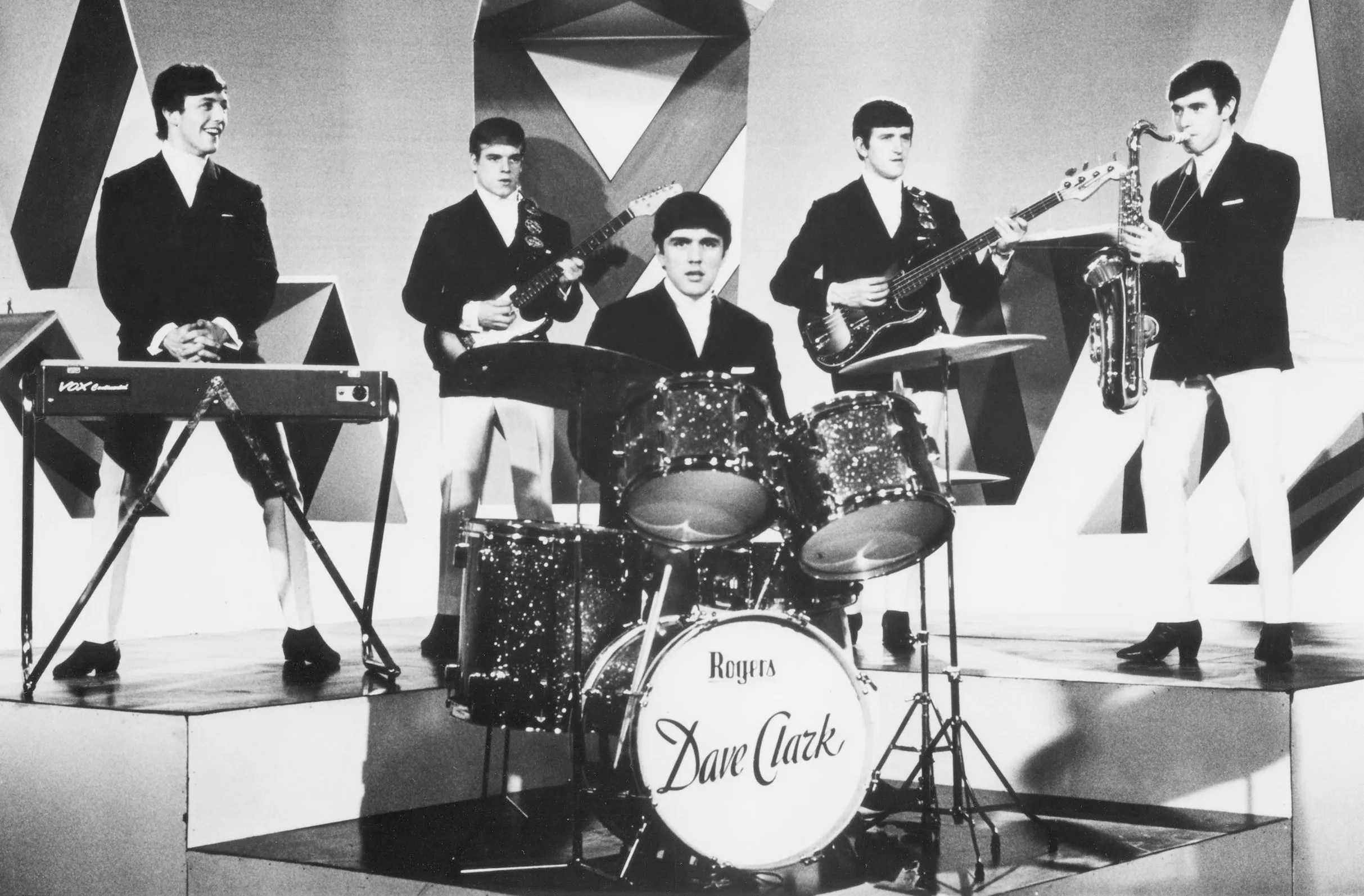
Our next #2 takes us back to the winter of 1967 – The Winter of Love, as nobody called it – and a band who had scored their sole chart-topper almost four years earlier…
Of the five songs that I’ll feature this week, this is the one I’d never heard before writing the post. And it’s a tune that’s very typical of the time. A waltzing rhythm, soaring strings, glossy, chiming guitars… A world away from the pounding pop of ‘Glad All Over’. In fact I’d say it owes a large debt to the big breakout star of 1967 – pillow-lipped crooner extraordinaire, Engelbert Humperdinck. (The Hump went and covered ‘Everybody Knows’ for his ‘Last Waltz’ LP, and made the bold choice to change the lyrics so that he was singing about a man…)
This is a nice enough song, with a lovely key change in the build up to the chorus. But it’s a sign of where pop music was post-British Invasion, when the hippy dream started to go sour, and the sixties started to lose a little of their swing. The best bands ploughed their own furrows: The Beatles went to India; The Stones went satanic; The Kinks hopped down a rabbit-hole of nostalgia… While the rest were left trying to remain relevant. Hence perhaps why The Dave Clark Five ended up sounding like something your gran might shimmy around the living room to, rather than being at the forefront of the hot pop sounds.
Despite it being unashamedly old-fashioned, this single gave the DC5 their biggest hit since ‘Glad All Over’. Possibly the time of year helped, as who can resist a bit of schmaltz at Christmas time? Contrarily, the band had already released a song called ‘Everybody Knows (I Still Love You)’ in 1964, meaning that this one has become unoffically known as ‘Everybody Knows (You Said Goodbye)’. And though it may sound like a swansong, this wasn’t the end for the Five. They still had three Top 10 hits to come, the last of which came in 1970, meaning they outlasted many of their contemporaries.
Tomorrow we’ll have our final runner-up of the series, and if it isn’t another of the most famous #2 singles of all time…










 The UK Number Ones Blog