The Rolling Stones – Best of the Rest

To mark the release of the Stones’ 24th studio album, and their first original recording in almost two decades, let’s delve back into their long chart career, and explore the hits that didn’t make number one.

Over the course of the 1960s, the band scored eight chart toppers, from ‘It’s All Over Now’ in ’64 to ‘Honky Tonk Women’ in ’69. But they didn’t stop when the sixties ended. No, as you may be aware, they kept going. And going. Kept on rolling on. Impressively, their recent comeback single, ‘Angry’, made #34 in the UK, their first Top 40 hit since 2005. But that won’t quite make this list of their ten biggest non-chart toppers. In ascending order, then…

‘Start Me Up’, reached #7 in 1981

The Stones at their Stonesiest. A killer riff, some smutty lyrics, and Mick doing his best Jane Fonda impression in the video. It’s an impressive feat, releasing one of your signature songs two decades into your career. But it also somewhat marked the end of the band as a chart concern – it remains their final UK Top 10 hit – and the start of The Stones TM: the mega-touring, jukebox musical that the band have been for the last forty years. ‘Tattoo You’, the album from which it came, is seen by many as the band’s last great LP, too.

‘Fool to Cry’, reached #6 in 1976

Perhaps the one thing lacking from the Stones’ back-catalogue is a big ballad. (Ok, the next song on the list proves that statement completely wrong…) Anyway, ‘Fool to Cry’ comes close to being that ballad. A slow, bluesy number that takes its time, lingering on some wonderful falsetto notes from Mick. In the first verse he’s feeling low, so he puts his daughter on his knee, and she tells him Daddy, You’re a fool to cry… A bit too sentimental for the Stones? Not to worry, in verse two Mick goes to his mistress, who lives in a po’ part of town… And she says the exact same thing. Much more like it!

‘Angie’, reached #5 in 1973

Of course, if the Stones do have a big ballad, then it’s this one. There was some discussion as to who ‘Angie’ was: David Bowie’s wife, Keith Richard’s daughter, or the actress Angie Dickinson. Whoever it’s about, it’s a beautiful love song, with Jagger’s slurred singing giving the impression that he’s had a shot or two of Dutch courage before suggesting he and Angie call it a day.

‘Tumbling Dice’, reached #5 in 1972

I called ‘Start Me Up’ the Stones at their Stonesiest, but actually… This is the band at the peak of the powers. The lead single from what is widely regarded as their best album (though I’d go for the clean and concise ‘Sticky Fingers’ over the rambling ‘Exile…’) ‘Tumbling Dice’ might be the coolest piece of rock music ever recorded – that boogie-woogie rhythm, Keef’s lazy riff, Charlie’s drums bringing up the rear, the lyrics about being rank outsiders and partners in crime.. To be honest, until watching the lyric video above I had no idea what 90% of the words to ‘Tumbling Dice’ were. But does it matter? Nah. This one’s all about the groove, the attitude, about being the best freakin’ rock and roll band in the world.

‘Have You Seen Your Mother Baby, Standing in the Shadow?’, reached #5 in 1966

It’s easy now, with them in their eighties, to be blasé about how dangerous the Rolling Stones must have seemed in the 1960s. But this mid-decade hit, that begins and ends in a hail of feedback, with ambiguous lyrics that could be about a girl on the streets, taking drugs, or affairs with people’s mothers, proves that they were mad, bad, and dangerous to know… The memorable horn riff is a sign of the direction that the band would take as the sixties progressed. And just to make sure they got some more attention, the band dragged up for the record sleeve. Lock up your daughters, indeed…

‘Miss You’, reached #3 in 1978

A trio of number threes, now. In the late seventies anybody who was anybody had to try out a disco groove and the Stones were no different, in what was seen as a huge departure for them. The band disagree over whether or not it was originally intended as a disco song – Jagger and Wood say no, Richards says yes – but it certainly ended up as one. (There was an even more disco influenced remix released as a 12″.) Meanwhile, Bill Wyman, whose brilliant bassline holds the whole thing together, has claimed he should have had a writing credit. ‘Miss You’ was their last Billboard #1, and their last UK Top 5 hit.

‘Let’s Spend the Night Together’, reached #3 in 1967

It’s funny – this is one of the Stones’ poppier numbers, and yet one of their most controversial. It’s piano and organ driven, seemingly influenced more by Motown and male vocal groups than the band’s normal R&B touchstones. But lyrics like I’ll satisfy your every need, And now I know you’ll satisfy me… were bound to get folks’ knickers in a twist. Radio stations banned it, and Ed Sullivan insisted that the chorus be changed to ‘let’s spend some time together’, an insistence that the band complied with (though Jagger’s theatrical eye-roll meant they weren’t invited back for a while). In some regions it was twinned with ‘Ruby Tuesday’, though the official records don’t list it as a double-‘A’ in the UK.

‘Not Fade Away’, reached #3 in 1964

Where it all began (almost). This Buddy Holly cover was their 3rd single, and their first Top 10 hit. It’s a lot faster, and beefier, than the original, with a touch of the fuzzy, sloppy sounds of the Rolling Stones in their prime, and Brian Jones’ harmonica acting as lead instrument. It came out in early 1964, right at the start of the British Invasion, when bands like The Beatles and the Stones wore their American rock ‘n’ roll influences loud and proud. It serves almost as a timeline of rock’s rapid development through the fifties and sixties: the Stones covering a Buddy Holly hit, which he’d based on the Bo Diddley riff, which in turn goes all the way back to the dawn of the blues.

‘Brown Sugar’ / ‘Bitch’, reached #2 in 1971

Another all-time Stones classic, this time from ‘Sticky Fingers’, with a great riff, a filthy sax solo, and some famously questionable lyrics. For many years I never paid much attention to the nitty-gritty of the song’s subject matter, because it was such an absolute rocker. But then you actually sit down and read the lyrics about slave ships and whipping women at midnight, and wonder if the song is looking at the matter critically, or just celebrating it. Then again, shouldn’t rock ‘n’ roll be provocative? And they’re far from being the Stones’ worst lyrics (‘Under My Thumb’ and ‘Some Girls’ say ‘Hi’…) As if they knew this song would court controversy, they paired it with a more subtle, reflective number, which they called ‘Bitch’… Some countries also list the record as a triple ‘A’-side, with a live cover of Chuck Berry’s ‘Let It Rock’ as the third track.

’19th Nervous Breakdown’, reached #2 in 1966

Come to think of it, the Stones’ other number two hit is hardly the most sympathetic towards women (Oh who’s to blame, That girl’s just insane…) Lost a little amongst their biggest ’60s hits, ’19th Nervous Breakdown’ is the Stones at their snottiest. The Kinks are always cast as the decade’s social commentators, but songs like this (alongside ‘Satisfaction’, and ‘Mother’s Little Helper’) are just as biting satire. It tells the story of a flighty society girl, running around, getting on everyone’s nerves, always on the verge of yet another breakdown… Though we’re left to ponder how much of that is down to her terrible choice in men. The highlight here is Bill Wyman’s ‘divebombing’ bass in the fade-out…

I hope you enjoyed this little interlude! Back on with the regular countdown next week. Meanwhile, I’m off to give ‘Hackney Diamonds’ a listen…
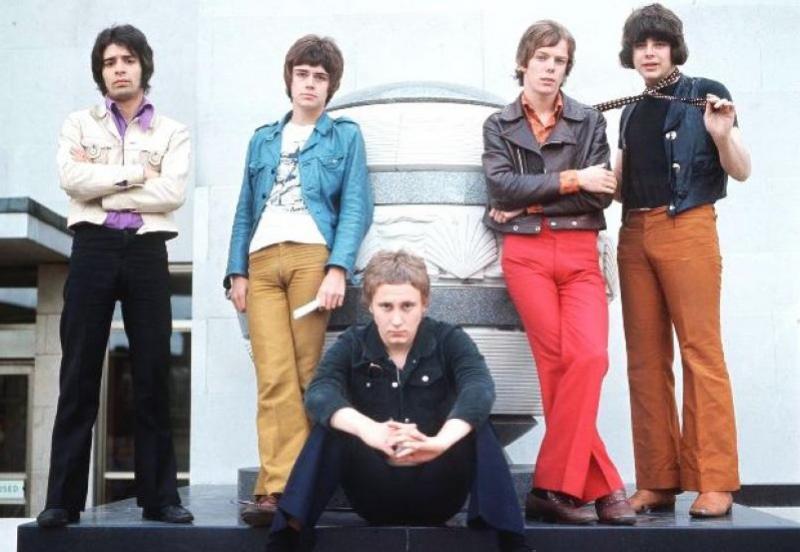
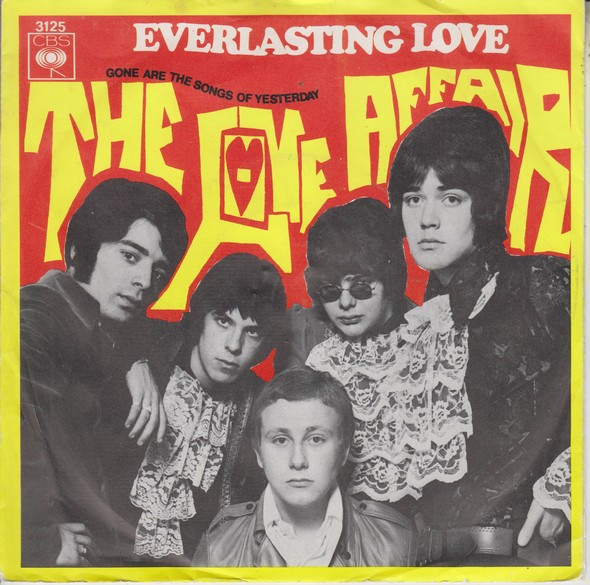
Number 1s Blog 5th Anniversary Special – Readers’ Favourite #1s – ‘Everlasting Love’

In the five years that I’ve been writing these blog posts, I’ve covered thirty-five years of the singles chart, and 615 #1 singles. Which means that we are pretty much exactly halfway between 1952 and 2023! We’re not quite halfway through all the chart-toppers, however, as turnover between #1s really sped up in the late ’90s and early ’00s. Around 800 songs stand between us and February 2023.

Anyway, on to today’s guest writer: Max from PowerPop blog. His blog is a treasure trove of pop culture – music, films, TV shows and more, from the ’60s, 70’s and beyond. I’ve discovered so many cool songs from following his blog, and would recommend that you do so too… If you aren’t already! He’s has chosen Love Affair’s 1968 smash, ‘Everlasting Love’. Take it away, Max…

‘Everlasting Love’, by Love Affair – #1 for 2 weeks in 1968

First, it’s an honor to guest host on this wonderful blog! I have discovered many #1 songs that I never knew existed. It’s been a lot of fun going through history with UK #1s blog. I like learning about songs I like and dislike… The more trivial knowledge I can stuff in my brain the better. I like to give its creator a lot of good-natured fun over my dislike of (I even hate typing the name!) Madonna. I always look forward to commenting here.

I was looking through this blog in 2020 and I noticed this song and it hit me hard. It starts in with a cannon shot from the drums and that bass. I’ve been a bass player for a long time and I would love to get that sound now. I was struck on how modern the sound was, along with how Steve Ellis looked like he came from now not 1968. He didn’t look like he was old enough to drive… much less 18 years old. 

This version was much better than the Carl Carlton version I knew. I’m American and knew nothing about Steve Ellis and Love Affair. This version is not as slick, and it punches you in the face in the intro. The video intrigued me as well. The video is very 1960s with what is going on. The lingering flower power along with some 1920s thrown in. It has a nice vibe to it… the Charlie Chaplin girl and the other girl who are dancing around posters of Jimi Hendrix and LBJ… pure sixties. It makes you feel like you are there.

When you look back to 1968 and the music at that time… it was everywhere on the map. You had rootsy music, as in The Band. The Beatles and Stones also shed their psychedelic stuff for more pure music without the studio tricks. Other bands still explored psychedelic, folk, country rock, hard rock, and pop. The sixties had some of the best pop songs of any decade. This is one of those great pop songs.

Only Steve Ellis played on this recording. Studio musicians did the rest. Love Affair went onto achieve five more UK Top 20 hits on which the entire band did get to perform. ‘Everlasting Love’ peaked at #1 in the UK in 1968. It was written by Buzz Cason and Mac Gayden. It was originally recorded by Ray Knight and peaked at #40 in the UK, and at #13 in the Billboard 100 in 1967. Steve Ellis: “The general opinion seemed to be that I should do it with an orchestra and then give it a Phil Spector-type production. Obviously, I felt odd without the band being in the studio but it was for the good of all involved. Two takes and it was done. The band were not too concerned about this approach to things.”

500 Number Ones Down…

The last chart-topping record I featured was as average as you can get: ‘A Little Peace’. A nice acoustic pop song with nice sentiments sung by a nice girl… Except, it was actually quite a notable chart milestone – the UK’s 500th number one single.

Which means, in just over four earth years we have covered almost thirty chart years! From Al Martino belting out the very first chart-topper, ‘Here in My Heart’ in 1952, past the pre-rock years, rock ‘n’ roll, Elvis, Merseybeat, four lads from Liverpool, the Summer of Love, the come-down, glam, disco, post-punk and new wave… To the spring of 1982.

Which means, at the current pace, we’ll hit the 1990s early next year, and we’ll meet the 1000th UK number one (although, actually, that’s a song which has already featured in the first 500… don’t ask…) sometime in early 2026! But, really, it’s dangerous to look that far ahead in life. I’m in no rush.

The pleasure here is to be had from the slow stroll: the discovery of lost gems, the re-discovery of all-time classics, a shrug of the shoulders at the boring ones, and a crack of the knuckles before I dive in studs-up on an absolute shocker of a song. And, of course, the fact that I’ve picked up so many dedicated followers, readers and commenters, without whom this pursuit would be pointless…

To celebrate this minor achievement, I had a look at my stats, and can now reveal the most viewed posts from each decade I’ve covered. I may have my favourites, but these are apparently the #1s that the good followers of WordPress (and beyond) want to know about…

The 1950s:

‘She Wears Red Feathers’, by Guy Mitchell

The most viewed post from the decade of Elvis, Buddy and the Killer is a song from the days when barely anyone had heard the phrase rock ‘n roll. It was just the 6th song I covered, so I guess it has had a bit of a head start. Read my original post here. (I wasn’t kind…)

The 1960s:

‘House of the Rising Sun’, by The Animals

Probably not the first song you’d guess for the sixties, but an undeniable classic nonetheless. The longest, and possibly the most risqué, song to have topped the charts at that point. Read my original post here.

The 1970s:

‘Rivers of Babylon’ / ‘Brown Girl in the Ring’, by Boney M

Despite coming towards the end of the decade, this one gets all the hits. It’s actually my most viewed post… ever. It’s also one of the best-selling singles of all time. Underestimate Boney M at your peril would be the lesson! Read my original post here.

The 1980s (so far):

‘Green Door’, by Shakin’ Stevens

Despite publishing it barely a month ago, ‘Green Door’ is already my most viewed post from the 1980s. Interestingly, of the four songs, only ‘House of the Rising Sun’ is one that you could find much critical acclaim for. Guy Mitchell, Boney M and Shaky all had something much more elusive (and lucrative)… popular appeal. And apparently still do!

And finally, before I go, a bonus. My least viewed post and, by these metrics, the least popular of the first 500 #1s…

‘Dance On!’, by The Shadows

Yes, this one-week number one from early 1963 has had barely any views. That could be comment on the state of popular music in the months just before the Beatles went supersonic. Or a comment on my writing. But I quite like the tune. Give it some love here.

Thanks everyone for reading and commenting over the past four years. For the rest of the week, I’ll be posting some cover versions of classic #1s. Here’s to the next 500!

Top 10s – The 1960s

Time for a Top 10. A month or so ago I ranked my Top 10 #1 singles of the 1950s. Now that I’ve officially drawn the sixties to a close with my most recent recap, here’s the Official 100% Undisputed Top 10 #1 singles of the 1960s!

The sixties. The decade that brought, many would say, the finest pop music known to man. Malt Shop pop, to Merseybeat, to R & B, Folk, Psychedelic, Hippies and Motown. It had it all.

By ‘My Top 10’, I mean the records that came out on top in my recaps. This isn’t me looking back and choosing; this is me recounting how I felt in the moment, as I encountered these great records in their natural environment, like seeing a pack of majestic lions while on safari… Or something. I only have one rule, and it is simple: one record per artist. 

Here then, in chronological order, are my Top 10 #1 singles of the swinging sixties… (with a bonus or two thrown in for good measure…)

1. ‘Cathy’s Clown’, by The Everly Brothers – #1 for 7 weeks in May/June 1960

Winner in my first sixties recap… Don and Phil relaunch with a mature new sound. They had scored their 1st chart-topper two years earlier with the nice but soppy ‘All I Have to Do Is Dream’. Since then they had changed labels and toughened up, kicking off a run at the top of the UK charts with some of the best harmonising ever heard. The above video doesn’t quite do the recording justice – listen to and read about that here – but apparently the backing group there is none other than The Crickets, and I couldn’t resist…

2. ‘Shakin’ All Over’, by Johnny Kidd & The Pirates – #1 for 1 week in August 1960

For the most part, American rock ‘n’ roll was far superior to the British version. Had it been a boxing match, it would have been a 1st round knockout. In response to Elvis, Chuck, Buddy, Little Richard, Jerry Lee Lewis, Carl Perkins, Fats and Eddie Cochran we had Cliff and, um, Tommy Steele. (OK, OK, simplifying things a bit, but still…) But ‘Shakin’ All Over’ was the moment in which UK rockers truly competed with their counterparts from across the Atlantic, with its timeless riff and racy lyrics. A runner-up in my 1st recap, you can read my original post here.

3. ‘Telstar’, by The Tornadoes – #1 for 5 weeks in October/November 1962

Of course, by the middle of the decade, the Brits were the ones showing the Yanks how to do it. The first sign that the tide was changing, and the first UK band to hit #1 in the US, were The Tornadoes. Masterminded by slightly unhinged genius Joe Meek, this instrumental tells the story of an alien spacecraft that comes to earth for a look around, before shooting back off to whatever galaxy it came from. Except, ‘Telstar’ is an instrumental, so I’ve made up that story entirely. More simply put: a brilliant, brilliant record that blows you away when you hear it in context (the #1s on either side of it were Elvis’s ‘She’s Not You’ and Frank Ifield’s ‘Lovesick Blues’). I named it best chart-topper in my 2nd sixties recap – read my original post here.

4. ‘She Loves You’, by The Beatles – #1 for six weeks in September, October, November & December (!!) 1963

Without my ‘one chart-topper per artist’ rule I’d probably have had 4 Beatles discs in this Top 10. But ‘She Loves You’ is the one that makes it. Yes, yes, yes – in the years following this the band would go way beyond She loves you, And you know you should be glad… both sonically and lyrically. But, to me, this is the moment the 60s really begins. Hell, it’s the moment Britain finally put the war, the rationing and all the misery of the past half-century behind them for good. Imagine being thirteen years old in 1963, and hearing this beauty for the first time…. I named it best chart-topper, and you can read my original post here.

5. ‘Needles and Pins’, by The Searchers – #1 for 3 weeks in January/February 1964

https://www.youtube.com/watch?v=ES05IQwnFUY

A low-key, under-appreciated, melancholy #1 from one of the biggest bands in the country during the first wave of Merseybeat. I called it a runner-up to ‘She Loves You’ in my 3rd recap, and it’s one of my earliest musical memories. Plus, I love the way they bow at the end of the video above. A well brought-up bunch of lads! The original post is here.

6. ‘You’ve Lost That Lovin’ Feelin”, by The Righteous Brothers – #1 for 2 weeks in February 1965

The first five in this rundown are all of a similar pop/rock ‘n’ roll feel… The latter five shoot all over the place, starting with this slice of blue-eyed soul. Now pop music was for grown-ups again, and this glossy hit led the way. The call and response section, with one voice growling and one voice hitting the highest notes a man has ever sung, are simply stunning. I really struggled, long and hard, in choosing between this and the next song for a ‘Best Chart-Topper’ award. Ultimately, I named this as runner-up. Do I regret my decision…? Maybe… If I read my original post again I might change my mind…

7. ‘(I Can’t Get No) Satisfaction’, by The Rolling Stones – #1 for 2 weeks in September 1965

https://www.youtube.com/watch?v=OZ8GZ3PFVGM

The song that pipped The Righteous Brothers to the post… Suddenly rock ‘n’ roll was just ROCK, and the riffs were sledgehammers through your brain. And the lyrics weren’t about meeting your girl at the juke-joint; they were world-weary swipes at phoney advertising campaigns and girls who wouldn’t sleep with you, even though you were a world-famous rock star… It just had to be in this Top 10, plain and simple. Original post here.

8. ‘Good Vibrations’, by The Beach Boys – #1 for 2 weeks in November 1966

A song that needs no further introduction, and one that I struggle to really, really, really love. One that needs respected as a work of art; but not one I listen to all that often. Still, I did name it as runner-up in my 5th sixties recap, so it gets its place in the Top 10. Read my original musings here.

9. ‘A Whiter Shade of Pale’, by Procol Harum – #1 for 6 weeks in June/July 1967

At the start of the Summer of Love, one song redefined what a pop song should sound like, how a pop song should be constructed, what lyrical content huge a #1 hit could cover… Who knows how the hell ‘to skip the light fandango’? Who the hell cares when it sounds as good as this. Winner of my 5th ’60s recap – read my original post here.

10. ‘I Heard It Through the Grapevine’, by Marvin Gaye – #1 for 3 weeks in March/April 1969

Winner of my last sixties recap, when I opted for it at the last minute over ‘Hey Jude’. Motown’s finest moment? Again, a song that I can write nothing new about, so I’ve attached this video of a live version. I love the way that Marvin and one of his band act out the phone call at the start… ‘Somethin’ funky goin’ down’ indeed… Read my original post here.

Bonus 1 – ‘Voodoo Chile’, by The Jimi Hendrix Experience – #1 for 1 week in November 1970

I called this one runner-up in the recap I just posted a couple of days ago, it having reached top-spot a year too late following Hendrix’s death. Had it hit number one at the right place and time, I may well have named it a winner. So, as a consolation, here it is…

Bonus 2 – ‘These Boots Are Made For Walkin”, by Nancy Sinatra – #1 for 4 weeks in February/March 1966

Looking back at this list, one thing struck me: it’s a sausage fest. And then I had a closer look, and was amazed to count that, out of the 185 records that made #1 in the UK between January 1960 and December 1969, only 23 (!!) featured a female artist. If we don’t count duets with men, or male bands with female lead-singers, then there were only 16 (!!!!) #1s by females. Here then, is the record-by-a-girl that came closest to a prize in my recaps… Officially the best female-recorded #1 of the decade : Are you ready boots? Start walkin’!

184. ‘Yeh Yeh’, by Georgie Fame & The Blue Flames

No sooner have I mentioned that 1965 might be a more eclectic year in terms of its chart-topping singles, when along comes one Georgie Fame with a swaying slice of Latin soul.

maxresdefault

Yeh Yeh, by Georgie Fame (his 1st of three #1s) & The Blue Flames (their 1st of two #1s)

2 weeks, from 14th – 28th January 1965

Wham and then Bam. In the space of three #1s we’ve gone BluesBeat rock-Latin. I might even go so far as to describe this as a Bossanova, if I was at all certain what exactly a ‘Bossanova’ was… Whatever it is, it’s not a sound that we’ve heard very often at the top of the UK charts. After months of Merseybeat things are really starting to splinter in different directions.

The song is about a guy who, after finishing work every evening, calls up his baby and asks her what she wants to do… I mention movies, But she don’t seem to dig that, And then she asks me, Why don’t I come to her flat…Yeh Yeh’ is his response. The words are spat out at a rapid pace, half-rapped (this might be the hardest number one yet in terms of making out the lyrics). But it still becomes clear just what his baby’s game is. She suggests supper and listening to some records, and soon the kissing starts: And when she kisses, I feel the fire get hot, She never misses, She gives it all that she’s got…

I love the break in the middle, when one long tongue twister line – We’ll play a melody and turn the lights down low so that none can see… – ascends to a natty drum fill and lots of We gotta do that’s! and Yeh Yehs! Then there’s a full-blown sax solo for all you hip cats out there.

Georgie-Fame-Blue-Flames-Yeh-Yeh

It’s a cool record, there’s no doubting that. I can imagine it as the soundtrack to a lot of groovy, hipster parties during the winter of ’64 – ’65. And Georgie Fame – before googling him I pictured him in a turtle neck and a pork pie hat, and after googling him I was slightly disappointed to find that he favoured suits and sharp ties. (He did like a cigarette, dangling all loose and louche, from the corner of his mouth, however.) Plus, finding out that he was born Clive Powell, in Lancashire, rather than Georgie Fame, New York City, took the shine off even further.

Still, despite being Clive from Lancashire, Fame has a real soulful voice. He goes fast then slow, loud then quiet, and – while the band are really tight – his voice is the most impressive instrument in the record. The way it blends together with the organ and the sax to draw out the final note is particularly cool. The Blue Flames had been the backing band for British rock ‘n’ roller Billy Fury, and Georgie Fame their piano player, but when they parted ways Clive AKA Georgie Fame became their leader and they went off down the path of R&B-slash-soul.

‘Yeh Yeh’ is nice, and funky; but it’s a hard record to classify. The best way I can describe is that it would sit perfectly next to ‘Green Onions’ by Booker T. & The MGs on a compilation called ‘Sexy Sixties’, or something. Plus, both Fame and The Flames will pop up sporadically as the sixties progress, so we’ll save any further bios for another day. In the meantime, sit back, grab a glass, and enjoy the sound of the swinging, sexy sixties floating through your earholes. Yeh Yeh!

Never miss a number one single with this playlist…

Recap: #150 – #180

And so we pause…

These latest thirty #1 records represent perhaps the richest vein of pop music ever to have been hit upon in this country. Much of 1961 and ’62 was spent drilling different holes – occasionally coming up with a beauty (The Tornados); largely hitting a lot of bland MOR (Cliff, Frank Ifield.) But one day, in April 1963, the motherlode was discovered. Merseybeat.

This is the Merseybeat recap. The most homogenous sounding bunch of chart-toppers we are ever likely to meet. Young guys with guitars singing perky songs about falling in love, holding hands and getting into something good. It started with a triple whammy – a call to kids across the land – as Gerry & The Pacemakers and The Beatles arrived at the top of the charts. The Searchers, Billy J. Kramer, The Tremeloes and The Dave Clark Five all soon followed. That stretch, from April ’63 through to the summer of ’64 is probably the most consistent sounding year in UK chart history, one beat-pop number followed by another, with few exceptions and very few duds.

It’s definitely the strongest bunch of #1s yet, and it’s been very hard to pick which ones are merely great and which ones are utterly transcendent. Classics like ‘From Me to You’, ‘I Like It’, ‘Glad All Over’, ‘Do Wah Diddy Diddy’, ‘Have I the Right?’ and ‘I’m Into Something Good’ – which might have made the ‘Best Of’ at any other time – will have to just get left by the wayside. Whole chart-topping careers, those of Billy J., The Searchers, The Pacemakers and Cilla Black, have come and gone in a blink of an eye. For so long we plodded through mediocrity; now we wish things could slow down a little.

Of course, nothing that good can last forever, but I was surprised by how quickly the Merseybeat wave came, conquered and then receded. By July 1964, a harder sound had arrived at the top courtesy of The Animals and The Rolling Stones (Yes, we met the Stones for the first time! What should have been a headline becomes a footnote thanks to the brilliance of those around them.) Beat pop has slowly started to fragment in recent months, into full on rock (‘You Really Got Me’), rhythm and blues (‘It’s All Over Now’), experimental electro pop (‘Have I the Right?’) and easy-listening with a hint-of-Beat (‘(There’s) Always Something There to Remind Me’.)

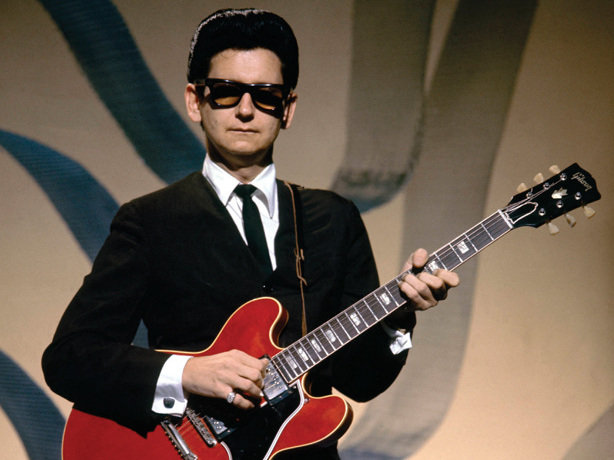
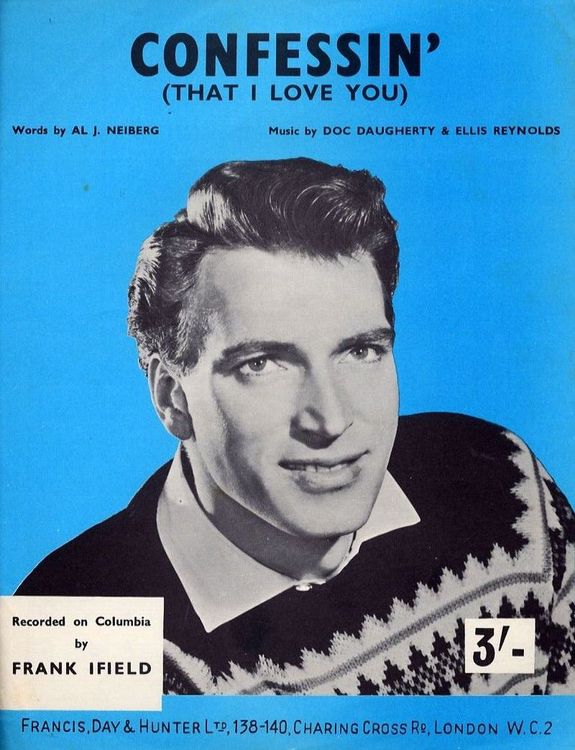
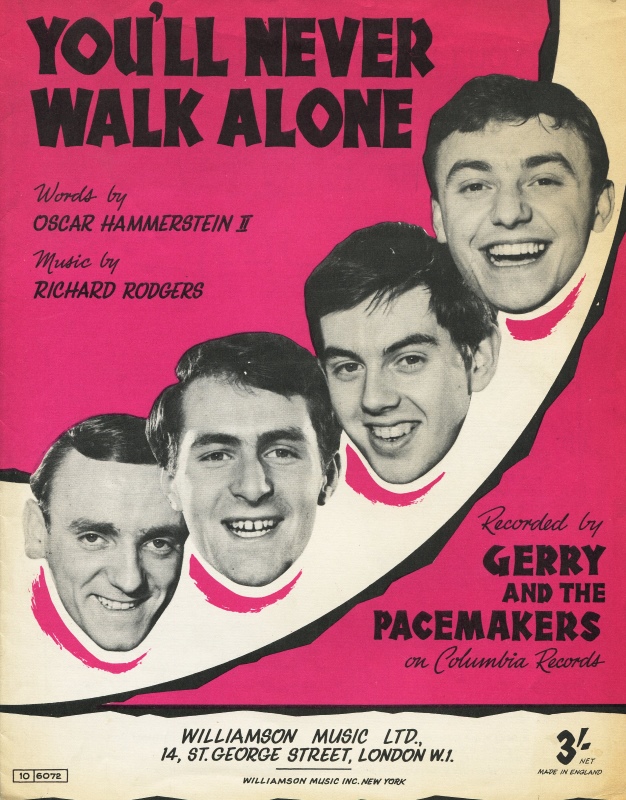
Out of the last thirty-one #1s, I can count only seven outliers. Seven discs that haven’t fit the Beat-pop/rock bill. Cilla’s two proto-power ballads, the best of which was ‘You’re My World’, The Pacemaker’s weird showtune swansong ‘You’ll Never Walk Alone’, a couple of leftovers from the previous era in Elvis’s ‘(You’re the) Devil in Disguise’ and Frank Ifield’s final, and most pleasing, #1 ‘Confessin’ (That I Love You)’. And, of course, the return of Roy Orbison. The Roynaissance. ‘Oh, Pretty Woman’ was the sound of him meeting the Beat-revolution halfway; but his earlier comeback #1, the dramatic and operatic ‘It’s Over’, sounded completely out of place, and all the better for it.

roy-orbison---monument---color1-e23f5a1e868942826513ded7cdd783370ff3fda4-s800-c85maxresdefaultim-confessin-that-i-love-you-featuring-frank-ifield

Which leads me to the latest ‘WTAF’ Award, and a truly tough decision. Do I award it to The Big O, for ‘It’s Over’, or to Gerry & The Pacemakers for the bizarre, and perhaps fatal, decision to record a version of ‘You’ll Never Walk Alone’? I’m going to edge towards The Pacemakers – ‘It’s Over’ merely sounds out of place thanks to its surroundings; in the career of Roy Orbison it makes complete sense. Whereas I’m not sure anyone saw ‘YNWA’ coming. Still, it probably gets played ten times more these days than ‘I Like It’, and it means Gerry and the lads get a nice windfall any time Liverpool win a big match.

gerry-and-the-pacemakers-youll-never-walk-alone-1963-8

Choosing a record to crown as both ‘Meh’ and the Very Worst Chart-Topper is also a tough decision. There simply haven’t been enough terrible records to go around. It’s basically a straight shootout between The Bachelors ‘Diane’ and The Four Pennies ‘Juliet’. Two landfill Merseybeat records, cashing in on the day’s signature sound to make bland MOR; two records named after girls. I’ll give the ‘Meh’ Award to ‘Juliet’ and the Very Worst Chart-Topper to ‘Diane’, as The Four Pennies were merely boring, while I feel there was something sinister in The Bachelors perverting Merseybeat into a record for grannies. Like when Pat Boone released his metal-covers record, or when Tom Jones did Prince…

Before we settle what was the best of the best, one thing that did surprise me as I covered the past thirty-one chart-topping discs was that only three of them were recorded by Americans. Roy Orbison, of course, and one Elvis Presley, who you may remember from previous recaps. Back in my first recap, during the pre-rock days, I commented on how few British acts there seemed to be, and how the big US stars of the day – Kay Starr, Perry Como, Eddie Fisher et al – were bringing the glamour to bombed-out, over-rationed Blighty. Well, ten years on and much has changed. The Brits are the cool ones – it was they who were invading the Billboard Hot 100 across the Atlantic. Except, they were doing so with American-written songs. All The Searchers’ #1s were originally recorded by US vocal groups. Cilla and Sandie Shaw hit big with Bacharach and David numbers. ‘Do You Love Me?’ was a Motown number, while ‘I’m Into Something Good’ was written by Goffin and King. An interesting footnote to the British Invasion.

To the crème de la crème, then… The 6th Very Best Chart-Topper award. I’ve narrowed it down to a top five. ‘How Do You Do It?’, by Gerry and the P’s, for kicking this whole shebang off. Then The Animals, for announcing the end of Merseybeat a year later with the deep-throated, bluesy ‘The House of the Rising Sun’. They’re joint fourth. 3rd place goes to ‘You Really Got Me’ – in which the Kinks invented garage rock, power-pop and, oh yes, heavy metal – and generally grabbed us all by the bollocks and kicked us up the arse. Runner-up goes to the sublime ‘Needles and Pins’ by The Searchers – a moment of sad-pop melancholy in amongst the frenzy. I really wish I could argue a case for this being the very best but… I can’t. Not when The Fab Four are looking on.

Yes, five of the past bunch of chart-toppers were by The Beatles, with a further two written and donated to other acts by Lennon & McCartney. All of which were good-to-great #1s. (Sorry to disappoint, but I won’t have too many bad words to say about any of their seventeen chart-toppers.) One though, stands out above the rest. The one hundred and fifty seventh UK chart-topper, and the moment the world realised that they were in on something spectacular: ‘She Loves You’. Yeah, yeah… Yeah!

the beatles john lennon george harrison ringo starr paul mccartney 1280x1024 wallpaper_www.wallpapername.com_64

To recap the recaps, then:

The ‘Meh’ Award for Forgettability: 1. ‘Hold My Hand’, by Don Cornell. 2. ‘It’s Almost Tomorrow’, by The Dream Weavers. 3. ‘On the Street Where You Live’, by Vic Damone. 4. ‘Why’, by Anthony Newley. 5. ‘The Next Time’ / ‘Bachelor Boy’, by Cliff Richard & The Shadows. 6. ‘Juliet’, by The Four Pennies.

The ‘WTAF’ Award for Being Interesting if Nothing Else: 1. ‘I See the Moon’, by The Stargazers. 2. ‘Lay Down Your Arms’, by Anne Shelton. 3. ‘Hoots Mon’, by Lord Rockingham’s XI. 4. ‘You’re Driving Me Crazy’, by The Temperance Seven. 5. ‘Nut Rocker’, by B. Bumble & The Stingers. 6. ‘You’ll Never Walk Alone’, by Gerry & The Pacemakers.

The Very Worst Chart-Toppers: 1. ‘Cara Mia’, by David Whitfield with Mantovani & His Orchestra. 2. ‘The Man From Laramie’, by Jimmy Young. 3. ‘Roulette’, by Russ Conway. 4. ‘Wooden Heart’, by Elvis Presley. 5. ‘Lovesick Blues’, by Frank Ifield. 6. ‘Diane’, by The Bachelors.

The Very Best Chart-Toppers: 1. ‘Such a Night’, by Johnnie Ray. 2. ‘Cherry Pink and Apple Blossom White’, by Perez ‘Prez’ Prado & His Orchestra. 3. ‘Great Balls of Fire’, by Jerry Lee Lewis. 4. ‘Cathy’s Clown’, by The Everly Brothers. 5. ‘Telstar’, by The Tornadoes. 6. ‘She Loves You’ by The Beatles.

The next thirty will take us from the tail-end of 1964 through to early ’66, and I doubt there will be anything like as clear and definable a ‘sound’ to the coming months. Popular music will continue to fragment. Starting with a brand new first at the top of the UK charts. It’s Motown, baby!