577. ‘True Blue’, by Madonna

After her first statement number one – an anthem for pregnant teens around the world – Madonna goes back to basics…

True Blue, by Madonna (her 3rd of thirteen #1s)

1 week, from 5th – 12th October 1986

Hey!… What?… Listen… I’m going to admit straight off: this is actually one my favourite Madonna singles. I’m a sucker for retro pop, when modern acts go back to the golden age of rock ‘n’ roll, doo-wop or, in this record’s case, sixties girl groups. Yes, it’s lightweight. Sure. And it’s got some basic ol’ lyrics: Cause it’s true love, You’re the one I’m dreamin’ of, Your heart fits me like a glove… (Surely that should be ‘hand’ – that line has always annoyed me…) But then The Supremes, Ronettes and Marvelettes never changed the world with their lyrics either.

The moment Madonna starts in with her own backing vocals is great, as is the middle-eight – No-oh-oh more sadness, I’ll kiss it goodbye… – which is the moment the song remembers that it’s actually 1986, and the drums become sharp and spiky. Is it strange that this straight-up pop tune made #1, when ‘Holiday’, or ‘Like a Virgin’, or many of her ‘90s hits to come didn’t? (She’ll have 23 Top 10 hits in the nineties, but only two chart-toppers.) Maybe. But therein lies the beauty of the charts. Even megastars like Madonna can have odd, ‘forgotten’ number ones…

Madge herself seemed to forget about ‘True Blue’s existence, as she didn’t perform it live for thirty years. Is that a statement on the song’s quality? Or perhaps it was more to do with the fact she wrote it about then-husband Sean Penn, and they divorced in 1989…

You may have noticed that I recently changed this blog’s header image in tribute to Ms Ciccone. It’s an honour I only bestow on the biggest chart stars – Elvis, The Beatles and ABBA have featured before – but I think it’s justified. This is the second of four #1s she’ll have between mid-’86 and mid-’87. She was undoubtedly the biggest star on the planet at the time. Problem is, when acts dominate the charts like this, you’re left with less and less to write about each time… Madonna will be feature on these pages soon enough – and ten more times after! – so let’s just keep ploughing on…

Advertisements

576. ‘Don’t Leave Me This Way’, by The Communards with Sarah Jane Morris

Back to business, then. Our next #1 ups the pace, thankfully, after the past two treacly chart-toppers. It’s a soaring piano ‘n’ strings intro, a mish-mash of ‘I Will Survive’ and ‘It’s Raining Men’ – in my head anyway – which means disco is back, baby, for four weeks at least…

Don’t Leave Me This Way, by The Communards with Sarah Jane Morris (their 1st and only #1)

4 weeks, from 7th September – 5th October 1986

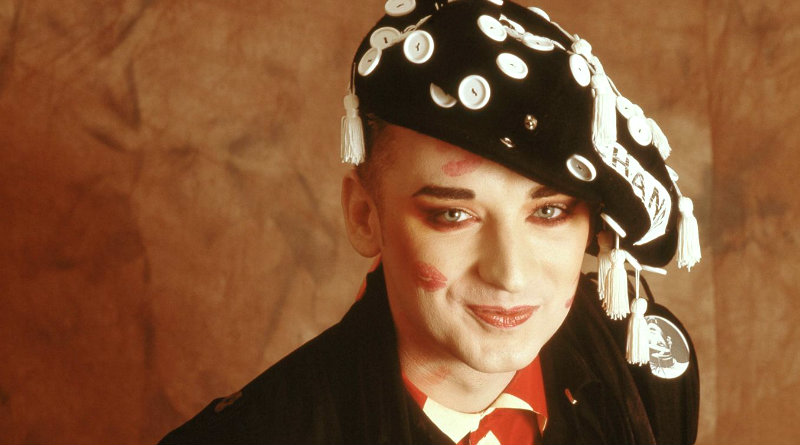
In comes a throbbing, Hi-NRG synth beat, and a high-pitched voice: Don’t leave me this way, I can’t survive, Can’t stay alive… Jimmy Somerville is the latest addition to our list of androgynous eighties voices, a worthy successor to Boy George, Limahl, Pete Burns and co. He hits some genuinely astonishing high notes, especially as the song builds towards the end. The only downside is that he makes this bloody hard to sing along to…

Aaaaah… Baby! That’s a great hook – one that is fun to sing along with – especially when, ahead of the final chorus, the ‘Aaaah’ is drawn out even further and followed by a ridiculously life-affirming key-change. Over the top brilliance! Meanwhile guest singer Sarah Jane Morris, who wasn’t officially a Communard, complements Somerville’s falsetto with a warmer, deeper voice on the second verse and in her Come satisfy me… lines.

Oh and there’s also the ear-catching solo, with a clattering piano and horns. I’m enjoying this. It’s fun, frothy, and full of life (something much of 1986 has been lacking…) ‘Don’t Leave Me This Way’ was a cover of a cover. Harold Melvin & The Blue Notes’ disco-soul original had made #5 in 1977, while a pure disco version by Thelma Houston (on which The Communards’ take is based) had made #13 around the same time.

Houston’s version had been taken on as a gay anthem, with significance added to the lyrics as AIDS swept through the community. Both Communards were gay, Somerville having left the poor area of Glasgow he’d grown up in for London, becoming a sex worker in Soho. He’d been in the Top 10 before, with Bronski Beat, but this was his first and only #1. And if he had the interesting back-story, then keyboardist Richard Coles has had the more interesting after-story, becoming an actual Church of England priest, and radio presenter.

Sarah Jane Morris, meanwhile, worked with the duo on several more songs, before moving into jazz and opera. The Communards were only together for two albums, and for three Top 10 singles. A short and sweet chart-career, though one that did give them the biggest-selling single of 1986. This has felt like a bit of a palate-cleanser after the mix of novelties and mawkish ballads that had begun to bog things down. A straight-up, pop banger for the ages. Aaaaaaaaaah… Baby!

Advertisements

Random Runners-Up: ‘Move It’, by Cliff Richard & The Drifters

Our final #2 of the week, and it’s back to the fifties. To a man we’ve met plenty of times before on these very pages…

‘Move It’, by Cliff Richard & The Drifters

#2 for 1 week, from 24th-31st Oct 1958, behind ‘Stupid Cupid’ / ‘Carolina Moon’

Cliff Richard, in 1958, was Britain’s answer to Elvis. That’s both true, and unfair. True, because he was young, good-looking, and extravagantly quiffed. And unfair, because nobody comes out well from a comparison with Elvis.

This was Cliff’s debut single, his first of sixty-eight (68!) Top 10 hits in the UK, over the course of fifty years. And if you are of a slightly snide disposition – and aren’t we all, sometimes – one could argue that this was the only true rock ‘n’ roll record from Britain’s great rock ‘n’ roll hope.

And it does rock. The opening refrain is great, reminiscent of Buddy Holly, and the purring, driving riff that succeeds it sounds genuinely exciting, almost punk-ish in its simplicity. In the autumn of 1958, it must have been thrilling to hear this growling out of some jukebox speakers, and knowing that the singer was from a London suburb, rather than Memphis.

The lyrics are pretty nonsensical, as all the best rock ‘n’ roll lyrics are… C’mon pretty baby let’s a-move it and a-groove it… while The Drifters sound the equal of any American group. (They wouldn’t become The Shadows until 1959, by which point they had accompanied Cliff on his first of many easy-listening #1s, ‘Living Doll’.)

The one thing that doesn’t quite sell this for me is Cliff himself… He just sounds a bit too nice. And I don’t know if that’s because I can’t seperate the goody-goody, God-bothering, Centre Court-serenading Cliff Richard from the eighteen-year-old version. Still, imagine Elvis mumbling and grunting his way through this…

As I referred to above, Cliff would go on to enjoy some reasonable success over the ensuing decades… I wonder if anyone who bought ‘Move It’ in October 1958 imagined that this hot young rocker would still be touring and recording in 2022, well into his ninth decade… As uncool as he is, I can’t bring myself to dislike Sir Clifford of Richard: he’s a bona-fide pop legend. I can’t say I’m looking forward to reviewing any of his three remaining #1s, though, but that’s a story for another day…

I hope you’ve enjoyed random runners-up week. The regular countdown will resume over the weekend, picking up in the summer of ’86…

Random Runners-Up: ‘Hooked on Classics’, by The Royal Philharmonic Orchestra

For the next in our series of songs that almost made it… It’s time for something a little different…

‘Hooked on Classics’, by the Royal Philharmonic Orchestra

#2 for 2 weeks, from 9th-23rd Aug 1981, behind ‘Green Door’

Disco had wormed its way into pretty much every area of popular music in the late 70s. ABBA went disco, Blondie too. Rod Stewart, of course, even The Stones… By the early eighties, amid the ‘disco sucks’ backlash, ‘cooler’ acts had ditched the glitter ball, new wave had taken over, and we were left with… this?

It’s a medley of classical pieces, performed by the Royal Philharmonic Orchestra, set to a basic, drum-machined disco beat. Nothing more, nothing less. It’s both completely bizarre, and stunningly simple. I’m going to show up my terrible knowledge of classical music by trying to identify some of the pieces involved: there’s the bumblebee one, something by Vivaldi (edit: it’s Beethoven), ‘Rhapsody in Blue’, and the 1812 overture… There’s plenty more that I couldn’t identify, from Mozart, Handel and Grieg.

I’m trying to imagine who bought this? I can’t imagine classical music lovers really being into such dumbing-down of Tchaikovsky and co., nor can I imagine it filling a dancefloor. Perhaps it was bought by people who thought it made them look cultured – the type that call going to see ‘Mamma Mia’ a night out at the theatre (God, that sounded snobby!) At the same time, and as much as I liked ‘Green Door’, I do wish this had made #1. It would have made for one of the strangest chart-toppers of all time… And clearly there was enough of an audience, because the RPO released three entire albums in the ‘Hooked on Classics’ series!

There was a bit of a medley craze in the early eighties, to be fair. Stars on 45 are the big one that springs to mind, their sixties medley made #2, also in 1981, and got all the way to the top in the US. Britain would have to wait a few more years for its own set of chart-topping medleys, courtesy of a cartoon rabbit (don’t ask…) Anyway, here is ‘Hooked on Classics’, to be enjoyed in all its glory below. There aren’t many YouTube videos to choose from, and I’m not sure if this one with all its black and white footage is the original. Trigger warning: the video features more Steve Wright than is ever strictly necessary…

One last #2 up tomorrow!

Random Runners-Up: ‘The Show Must Go On’, by Leo Sayer

For Part III of Random Runners-up week, we’ll be heading back to the seventies…

‘The Show Must Go On’, by Leo Sayer

#2 for 1 week, from 13th-20th Jan 1974, behind ‘You Won’t Find Another Fool Like Me’

We’re also off to the circus… This record starts with the classic Big Top theme, AKA ‘Entrance of the Gladiators’, though I suspect this might just have been the album version. When we finally get to the song proper, it’s a melancholy, rockabilly little number. It thankfully has a lot more life to it than Sayer’s later chart-topper, the snoozy ‘When I Need You’.

There’s a skiffley feel to it – banjos feature heavily – and I like the rasp in his voice. Sayer would perform the song in a pierrot costume, as in the picture above, telling a song of a trapped man: I’ve been used, I’ve been so abused… But I won’t let the show go on! Interestingly, the song’s title is reversed in the lyrics… It’s all about the singer wanting to stop the show. When Three Dog Night recorded their cover (a Top 5 hit in the US) they changed the lyrics to match the title, to Sayer’s chagrin.

I do like this one, even when he starts ooby-doobying. Leo Sayer’s seems to have been a career that covered many bases: rock, disco, pop, as well as soppy ballads. This was his very first hit, the first of ten Top 10s between 1974 and 1982 (not to mention a left-field, chart-topping comeback that will eventually be featuring in my regular countdown…)

There’s a chart-phenomenon that I’ve referred to several times before, that of the January #1. (Basically, it involves stranger than average hits sneaking a week at #1 in the post-Christmas slump, when sales are low and nobody is releasing anything new.) ‘The Show Must Go On’ was a January #2, which by this logic should be even odder than the records one place above them, and it is a strange, but catchy, little record.

Random Runners-Up: ‘So Macho’, by Sinitta

Our second #2 of the week is almost as recent as it was possible to go, and a slight change in mood from Ned Miller…

‘So Macho’, by Sinitta

#2 for 1 week, from 3rd – 10th Aug 1986, behind ‘The Lady in Red’

The world can be a cruel, unjust place. War, famine… ‘The Lady in Red’ keeping this camp classic from reaching #1… plagues, natural disasters…

First things first. This is complete and utter trash. From the clanking, processed, so dated it grates your teeth intro, past the unbelievably cheesy video, and onto the opening couplet: I don’t want no seven-stone weakling, Or a boy who thinks he’s a girl… as Sinitta lays down her dating manifesto (‘man’-ifesto… see what I did there…?) Second things second, I love it.

The chap who wins Sinitta’s heart has to have ‘big blue eyes’ and ‘be able to satisfy’… He’s gotta be big and strong, Enough to turn me on… By the second verse, things have taken a mildly BDSM turn… I’m tired of taking the lead, I want a man who will dominate me… I love these lyrics in part because, let’s be honest, they probably wouldn’t cut the mustard these days.

As much as I love this song, I can admit that, by any barometer of taste and decency, it is pure crap. I assumed it was a SAW production, given the tinny synths, but no. Sinitta was, however, the very first act signed by a young Simon Cowell (the pair even dated for a while). ‘So Macho’ was his first hit single, although it took two re-releases over the course of a year for it to take off. And, as fun as this tune is, if it had flopped we may well have been spared Robson & Jerome, Pop Idol, The X-Factor, Britain’s Got Talent… (Sinitta, what did you unleash…!)

In a shocking and truly unforeseen twist, ‘So Macho’ proved very popular in gay bars and clubs, giving Sinitta a fanbase that meant she was good for a few more Top 10 hits. Since the chart career ended she has gone into appearing on daytime TV, helping Cowell out on his ‘talent’ shows, and dating a pre-fame Brad Pitt! A life well lived…

Another #2 up tomorrow…

Random Runners-Up: ‘From a Jack to a King’, by Ned Miller

Time to step away from our regular parade of #1 singles, and to shine a light on some songs that never quite made it. Yes, it’s Random Runners-Up Week – five posts on five randomly chosen number two hits. The dates used can range from the start of the singles chart in 1952 right up to our current location in time (mid-1986)… And these songs genuinely were chosen at random, and not because I like them (which I hope will become abundantly clear when you see what tunes the date generator threw up this time…)

First up, then…

‘From a Jack to a King’, by Ned Miller

#2 for 3 weeks, from 11th Apr-2nd May 1963, behind ‘How Do You Do It?’

…a simple country ditty. From a Jack to a King, From loneliness to a wedding ring… It’s a ultra-country premise: love as a card game, with lots of references to ‘lady luck’ and ‘winning a queen’. A guitar strums out a simple riff, then plucks out a simple solo, and the backing singers see-saw a simple melody back and forth. Simple, and sweet.

I think I may have overused the word ‘simple’ in that there paragraph. But there’s no better word for this tune, especially when I compare it with the era I’ve been writing about in recent months (the over-produced eighties…) It sounds almost prehistoric by comparison. In fact, this song sounds dated even for 1963!

And that’s because it was actually from 1957. It hadn’t charted – hadn’t even been released at the time – but for reasons I cannot pinpoint it made the Top 10 over five years later. The early sixties were a hot-bed of retrospective and re-released hits, though. And this is a significant #2, because it sat behind the very first Merseybeat #1 from Gerry & The Pacemakers. It’s easy to view the moment that ‘How Do You Do It?’ hit the top as a turning point, as the moment the sixties began to swing, which it was. But things clearly didn’t turn overnight, with Ned Miller crooning away just behind…

Once this record had belatedly become a hit, it quickly became a country standard, covered by Elvis, Jerry Lee Lewis, and Mud. It also ensured that Ned Miller had a fairly succesful career on the US country charts for the rest of the decade. He is so very nearly a UK one-hit wonder, though. His only other single to chart made #48 a few years later…

Another #2 up tomorrow – one that gives us a big ol’ change of tone…

575. ‘I Wanna Wake Up with You’, by Boris Gardiner

Sigh. Another squishy, easy listening ballad. It seems the general public was in a queasily romantic mood during the summer of ’86.

I Wanna Wake Up with You, by Boris Gardner (his 1st and only #1)

3 weeks, from 17th August – 7th September 1986

At least this latest #1 is a reggae ballad. Reggae tinged, at least. There’s the merest hint of reggae in the piano that keeps everything in time, ticking along with a tiny spring in the step, which elevates this record above its gloopy predecessor, ‘The Lady in Red’. I’ve pointed out before the indestructibility of reggae as a chart-topping genre – it’s never been popular enough to dominate any one era, but it also keeps popping up long after other, wilder fads have died away.

I wanna wake up with you… I wanna be there when you open your eyes… The reggae-ness of this song is also the best thing about it (along with the fun, squiggly synths in the intro). The rest is sickly sweet lyrics, and chord progressions so simple that the whole thing could be rewritten as a hymn, the kind kiddies have to sing at Easter assemblies (it had originally been written as a country song). Boris Gardiner croons his way through it like a pro and, like all the best crooners, when he runs out of words he just doo-doo-doos

Gardiner was an established and respected reggae singer, who had been active since 1960 without much major success. His one and only previous UK chart hit, the instrumental ‘Elizabethan Reggae’, had made #14 in early 1970. Which must make that one of the biggest gaps between hit singles, ever. ‘Elizabethan Reggae’ is much more rough-round-the-edges, ‘proper’ reggae. Meanwhile, he wrote the soul soundtrack to the movie ‘Every N***** Is a Star’, the title track to which has been sampled by Kendrick Lamar, and featured in the Oscar-winning film ‘Moonlight’. He had an edge to him, then, and definitely softened his sound for this sweet, if pretty boring, love song. But can you begrudge a bloke one big hit almost thirty years into his career?

The fact that Boris Gardiner was forty-three years old when ‘I Wanna Wake Up with You’ hit number one means 1986 is turning into a very middle-aged year for chart-toppers: Billy Ocean, Diana Ross, Cliff, Hank Marvin, Chris de Burgh and now Boris were all aged between thirty-six and forty-five when scoring their recent chart-toppers. That’s some pretty old pop stars (I write through gritted teeth, as I note that I too would now fall into this group…)

I have no idea why this average little ballad was such a big hit (the 3rd biggest seller of the year!) in 1986. Or why this is turning into the eighties’ version of the Summer of Love. Ok, two songs don’t make a summer, but it is tempting to compare the three all-time classics that made up the original 1967 SoL, with the past two drippy, over-produced #1s from the class of ’86, and draw conclusions on the respective merits of the two decades…

Advertisements

574. ‘The Lady in Red’, by Chris de Burgh

Oooh baby. Who doesn’t love a #1 song that shimmies in, draped in furs and faux-silk, sounding like a soft porn soundtrack…

The Lady in Red, by Chris de Burgh (his 1st and only #1)

3 weeks, from 27th July – 17th August 1986

She’s slick, she’s glossy, she’s the eighties-est thing ever. It’s ‘The Lady in Red’. When Chris de Burgh’s vocals arrive, though, the sexy spell is broken. What diction! Never seen you looking so lovely as you did tonight… Never seen so many men asking if you wanted to dance… (There’s no way of accurately transcribing how he pronounces the word ‘dance’. ‘Darwnce’? De Burgh is the only person who has ever pronounced it this way. With a straight face, at least.)

This is a terrible song. The music is the worst kind of soulless soft-rock, all finger clicks and thick, gloopy synths. The vocals are overwrought. The lyrics are at best cringey, and at worst truly vomit inducing. You can imagine Chris de Burgh writing the chorus… The lady in red, Is dancing with me… And thinking hmmm, that’s just not rotten enough. Aha! I know… *whispers Cheek to cheek…*

Two bits stand out as particularly nauseating. The mm-hmm-hmm in the first verse, as Chris closes his eyes and pictures this goddess. And the whispered I love you… at the very end. Both send shudders right up the spine. ‘The Lady in Red’ was his wife, Diane, who was wearing a red dress on the night she chose him over all the other men who’d asked to dance. De Burgh wrote this, his biggest hit, as an apology after they had argued. (Whatever the fight was about, it wasn’t worth this. I’d have taken the divorce…) The song also – according to de Burgh – reduced none other a Lady than Princess Diana to tears. Whether they were sad tears, tears of boredom, or tears of relief when the song finally ended, remains unclear.

I was expecting this to be awful, and it is. But… But. It isn’t as truly heinous as I had imagined. I thought this would walk straight into the Top 5 Worst #1s ever, alongside J.J. Barrie and the St. Winifred’s kids. Yet there is something epic about the way De Burgh wails his way through it, the way he revels in its utter cheesiness, like a pig rolling in its own filth, that just about drags it out of the gutter. But I hardly know… (It has an extra chorus on top of the regular chorus, for goodness sake!) This beauty by my side…. Plus I kind of like the funky, plucked guitar.

I don’t think Chris de Burgh thought this was cool. I’m not sure he has any idea what ‘cool’ is, and I don’t think he cares. ‘The Lady in Red’ is a stinker; and yet it went to #1 in twenty-five countries… Coolness be damned! Do I want to hear this again, ever? Nope. Do I admire its relentless, undiluted schmaltz? Yes, somewhat (grudgingly…) De Burgh has only had one further UK Top 10 to his name, though he has been in the music business for nigh on fifty years. He continues to record and tour, and to be wildly popular in countries where English isn’t the first language (make of that what you will…)

Advertisements

573. ‘Papa Don’t Preach’, by Madonna

In my post on Madonna’s first UK number one single, ‘Into the Groove’, I found myself looking for controversy in the (slightly) saucy lyrics. When you grew up with Jesus-humping, cone-bra wearing, sex book Madonna then you do expect her to have been raising hackles with every release…

Papa Don’t Preach, by Madonna (her 2nd of thirteen #1s)

3 weeks, from 6th – 27th July 1986

‘Into the Groove’ wasn’t particularly troublesome, while ‘Like a Virgin’ missed #1 altogether, but we haven’t had to wait too long for some top-spot controversy. For her 2nd chart-topper, Madge tells the tale of a pregnant teen looking to her single-parent father for advice. Papa don’t preach, she begs, I’m in trouble deep…

Her Pa had warned her off the boy in question – the one you said I could do without – but he’s promised her a wedding ring. Her friends, meanwhile, say she’s too young. However, despite coming to him for advice, the narrator already seems certain: I’ve made up my mind, I’m keeping my baby…

It’s a grown-up pop song, any controversy is of the thought-provoking rather than the in-your-face kind. Musically, too, ‘Papa Don’t Preach’ mixes a classical intro with synth-pop, and then Latin guitars. The moment where the bass comes in after the violins have reached their crescendo is brilliant, adding another contender to 1986’s gallery of great beat drops. Her voice even sounds a little older – I love the throaty rasp in each pre-chorus ‘please!’

In the video, too, Madonna sports a new cropped hairdo, and switches between leather-jacketed tomboy and blonde-bombshell in a black basque. The song plays as an imagined speech to her father, as she returns home to tell him. At the end of the video she does finally confess, and in the end they embrace. A happy ending.

I was looking for controversy here, and controversy there was. Some claimed it encouraged teen-pregnancy; others that it was anti-abortion. Madonna and her song-writing team were smart enough to use the phrase ‘give it up’ rather than anything more explicit. Madonna has always argued that it’s pro-choice, and has at other times added a ‘not’ to the I’m keeping my baby line when performing the song live. Either way, at least the world has moved on from a time when it was considered controversial for a woman to be the one who decides if she does or doesn’t have a baby………….. (how long does an ellipsis need to be to signify huge sarcasm levels…?)

Under the morals, most importantly, there lies a great pop song. No matter who Madonna has chosen to wind up, she rarely forgets that people come to her, first and foremost, for high-grade tunes. And yet, I feel that ‘Papa Don’t Preach’ is one of her forgotten gems… Other, bigger, more controversial moments have perhaps eclipsed its standing in her back-catalogue? It’s certainly not as played as other Madonna songs. If ‘re-discovering’ is too strong a term, then you can definitely re-acquaint yourself with it, below…

Advertisements