132. ‘The Young Ones’, by Cliff Richard & The Shadows

We enjoyed/suffered through (delete according to personal preference) a Cliff-less 1961. But Britain’s great rock ‘n’ roll hope kicks off 1962 with… (pause for dramatic effect)… his most famous hit?

The-Young-Ones-1961-film-images-630814b5-6ace-499e-8614-12e90dccdd6

The Young Ones, by Cliff Richard (his 5th of fourteen #1s) and The Shadows (their 7th of twelve #1s)

6 weeks, from 11th January – 22nd February 1962

OK, there are the Christmas songs. And ‘Summer Holiday’. And ‘Congratulations’… Let’s just say that this is his most famous song not about festivities and/or vacations. Though this latest chart-topper is a celebration of sort – a celebration of being young!

Its starts with some Shadows ™ guitar, before Cliff comes in with his gossamer-light voice… The young ones, Darlin’ we’re the young ones, And the young ones, Shouldn’t be afraid… I am slightly loathe to admit it, but I have missed that voice of late… To live, Love, While the flame is young, ‘Cause we may not be the young ones very long… Any song performed by The Shadows and sung by Cliff can’t fail to be of a certain standard. It may well be cheesy, and the lyrics might be very trite, but downright bad? Unlikely.

And ‘The Young Ones’ does have its moments. I love the beat-band drum fills, while the guitars are very reminiscent of Buddy Holly’s mid-tempo hits – ‘Heartbeat’, ‘Maybe Baby’ and the like. Yet it’s far from perfect –  corny couplets like: Oh I need you, And you need me, Oh my darlin’, Can’t you see…? make sure of that.

And then there are the violins. Yep, Cliff’s gone orchestral. By the end the strings are swirling and cascading, drowning out Hank and Bruce’s guitars. (I can’t help wondering if this was one of those tracks, like the minimalist ‘Travellin’ Light’, on which The Shadows were a little bored…) I had to double-check that I was listening to the original version, rather than some kind of polished re-release… I’d see this as Cliff’s attempt to move away from teeny-bop discs like ‘Please Don’t Tease’ and ‘I Love You’ – his bid for adult-artist longevity.

7140gXm67-L._SL1280_

In that regard it’s a very clever record. The lyrics are about being young; and yet the production is very grown-up. It isn’t enough of a departure to alienate the screaming fifteen year-olds, but it’s classy enough to get grandma interested. And there’s a bittersweet edge to the closing lyrics that will appeal to mum and dad: And someday, When the years have flown, Darlin’ then we’ll teach the young ones, Of our own…

I wouldn’t call it a sell-out in the same way that Elvis prancing about in Lederhosen singing ‘Wooden Heart’ was a sell-out. Because, let’s face it, Cliff has never – in terms of his chart-topping singles, at least – managed to justify his tag as Britain’s foremost rock ‘n’ roller. From the opening chords of his first #1 he’s been planted firmly in the middle of the road. But… Something definitely clicked here, and his career has kicked up a gear. Thanks to its role on the soundtrack to Cliff’s movie of the same name, ‘The Young Ones’ had built up a staggering 500,000 pre-orders before its release, meaning that it rocketed straight in to the charts at Number One – only the 3rd single (and the 1st single not released by a certain Elvis Presley) to do so. It remains his biggest seller in the UK.

And its legacy was such that twenty years later it became the theme tune to BBC sitcom ‘The Young Ones’, in which Rik Mayall played a lisping, tantrum-throwing, anarchy-loving Cliff fan. The joke of course being that, by 1982, young people with any aspirations towards being cool couldn’t possibly be Cliff fans. But, the eighties are a long way off yet in our world. It’s January of 1962, Cliff and The Shadows are the biggest pop-stars in the country, and they’ve just scored their biggest hit yet. Though, as with all of us, they may not be the young ones very long…
131. ‘Moon River’ by Danny Williams

Before we begin our next post, can I take a moment to praise the year that has just been? The year that this next #1 single will bring to a close. I know it isn’t time for a recap, but 1961 has been an unprecedented year in terms of the breadth and depth of its chart-toppers.

The twenty-one number ones from this year have taken us from gloriously pure pop (Johnny Tillotson, Helen Shapiro) through to tongue-in-cheek pastiche jazz (The Temperance Seven), from doo-wop (The Marcels) to pure rock (The Everly Brother’s ‘Temptation’), from the sublime (‘Runaway’) to the ridiculous (‘Wooden Heart’). There’s been room for piano instrumentals from Floyd Cramer, guitar instrumentals from The Shadows and showtunes from Shirley Bassey. There’ve been a couple of crooners – Frankie Vaughan and Eden Kane – and we’ve even found time for two ‘death-discs’ and a spot of collegiate folk. We’ve also had glimpses into the future with electronic solos on the Musitron and Joe Meek twiddling his dials. And the fact that all this has managed to shine through in a year utterly dominated by The King of Rock ‘n’ Roll, and his eighteen weeks at the top, is just superb. 1961, I take my hat off to you. My favourite chart year so far, by miles.

And to finish the year off we have room for one more. An absolute classic…

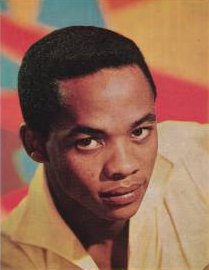
Danny Williams

Moon River, by Danny Williams (his 1st and only #1)

2 weeks, from 28th December 1961 – 11th January 1962

Moon river, Wider than a mile, I’m crossing you in style someday… Oh dream maker, You heart breaker… Wherever you’re going, I’m going your way… It’s a song, and a voice, drenched in a romantic echo – an evocative song, that really does lull you into imagining that you’re drifting down a river, water flat as glass, the moon a white diamond in the sky… I’d say that it’s the atmosphere that pervades this whole song – that haunting melody, rather than the lyric – which has made this such a famous record.

Because, for perhaps the first time in the entire countdown, I’m not terribly sure what the actual lyrics of this song are about. Two drifters, Off to see the world… OK, I can picture that. We’re after the same rainbow’s end, Waiting round the bend… And I get that they’re floating downriver to some unspecified destination. My Huckleberry friend… Which I’m guessing is a reference to one of literature’s most famous river-floaters, Huck Finn. Moon river, And me…

OK, in actual fact I do get what the song’s about. But – it is still pretty abstract, very poetic, in a way that, say, your average Elvis song isn’t. It’s also got an air of old-Americana that to me, as a small-town Scot, sounds very alluring and exotic. When the backing singers take-over for the final verse it sends a shiver down your spine. This is a standard – a song that could have been a hit in any era.

R-6657991-1424024305-7352.jpeg

‘Moon River’ is, of course, from the film adaptation of ‘Breakfast at Tiffany’s’, sung originally by Audrey Hepburn, sat in a window, plucking at her guitar. But in 1961-’62, there were a lot of versions of ‘Moon River’ to choose from – you could have had the instrumental version by the song’s composer Henry Mancini, Jerry Butler’s version – which was the first one to hit the charts, the definitive version from Andy Williams… This Danny Williams version, which claimed a fortnight at the top in the UK, is pretty far down the list. Williams was a South-African born crooner who didn’t do an awful lot more, in terms of chart hits, than cover this song.

I have to admit: I like this song, I respect it, I admire it… But I can’t bring myself to love it. It’s beautiful; but it’s not a warm beauty. It most reminds me of Tony Bennett’s 1955 #1, ‘Stranger in Paradise’, which had similarly flowery lyrics and dwelt on similarly abstract themes. Also, it’s been a while since I saw it but I really have no idea what the song’s relevance is to a movie about a party-hopping socialite in New York.

Maybe we’re not meant to understand. Maybe we should just stand back and appreciate ‘Moon River’ for what it is – a piece of art too valuable for plebs like me. And as we stand there, lulled by its haunting strains, we can look ahead to 1962, and hope for as much variety and innovation as we had in the year just past…

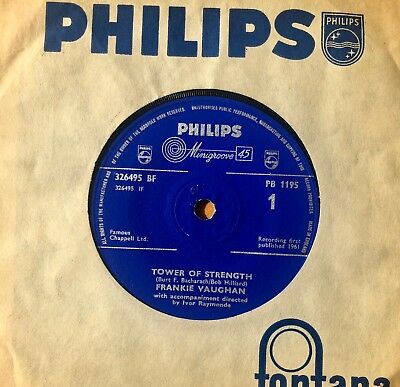
130. ‘Tower of Strength’, by Frankie Vaughan

And so we resume normal service. Since I first listened to this next Number One single, in preparation for writing this post, I’ve been trying to place it. Trying to put my finger on what exactly is happening here… What box does this fit into? Why did it prove such a popular song in December of 1961…?

xo4c63c9oxj66j96

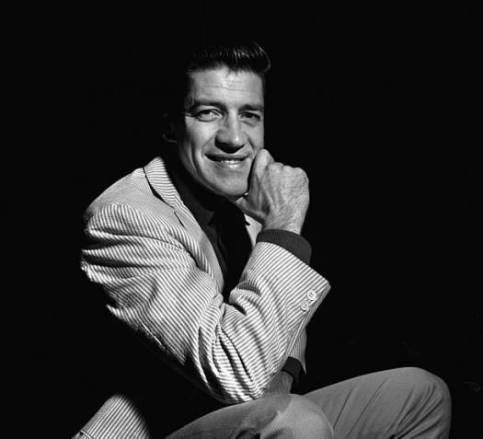
Tower of Strength, by Frankie Vaughan (his 2nd and final #1)

3 weeks, from 7th – 28th December 1961

What’s happening here is simple: Frankie Vaughan is singing a song – and having the time of his life doing so. This is an irresistible song – it barrels in the front door and wallops you over the head with a rollicking sax riff (you can have a saxophone riff, right?)… baaa da da-na da-na… And then in comes Frankie.

If I were a tower of strength, I’d walk away, I’d look in your eyes, And here’s what I say… If he were a tower of strength, a man of action, someone with a bit of backbone, he’d tell his wayward lover: I don’t want you, I don’t need you, I don’t love you anymore… Said woman would , cry, plead and beg him to stay. Simple. Except, plot twist… A tower of strength is something, I’ll never be…

That’s pretty much it as far as the lyrics are concerned. The main attraction here is the absolute gusto with which Frankie Vaughan belts his way through this song. He yelps, he growls, he hits some scandalously high notes, and he gives us the biggest finish we’ve had a number of years: I’ll… Ne-ver… BEEEE-EEEEEE! It’s the sort of ending that was done to death in the mid-fifties – the THIS IS THE END OF THE SONG! kind of finale – but in the right hands it can still sound superb. For some reason I’m imagining this scenario where the sound engineer and the producer are goading Vaughan, suggesting that he might not be up to singing this particular song, not able to hit all the notes, and Frankie just looks at them and says: “Press the red button, punks…”

FRANKIE-VAUGHAN-Tower-Of-Strength-Rachel-7

I first came across this song a few years ago when it appeared on my Spotify feed, and it lifts me every time it pops up on a shuffle. It’s the sort of tune you should throw on when you’re in a mid-afternoon slump, or nursing a mild hangover – an aural espresso. When it finishes, you draw breath, half-expecting to look around the room and see the lampshade swinging, pieces of paper floating to the ground, pictures on the wall knocked squint…

What I didn’t realise until now is that Vaughan’s version of ‘Tower of Strength’ was a cover. The original was released by one Gene McDaniels – an American soul singer. It’s a fine version, a slightly slicker, Sam Cooke-ish version, that was a big hit in the US – though it could only creep to #49 in the UK. But… There’s something so relentlessly likeable about this version, something so fabulously uncool about Vaughan’s dad-at-a-wedding vocals, that I’d say his is definitive.

Of course, we have heard from Mr. Vaughan before in this countdown. Way, way back in January 1957 – nigh on five years ago – with ‘The Garden of Eden’. A song which was, in its own way, every bit as weird as this. While a five year gap between #1s isn’t that odd; he has basically straddled the rock ‘n’ roll era – bookending it with his two chart-toppers. Very few of the chart stars from 1957 – Tommy Steele, Guy Mitchell and Tab Hunter were his contemporaries at the top the first time around – were still managing it in the early sixties, and so credit where it’s due. In total, Vaughan’s recording career lasted from 1950 through to 1987 and, again, that ain’t to be sniffed at. He was an old-fashioned type – the sort of Butlins holiday-camp performer turned everyman pop star that seems to be a constant trope in British music, no matter the era – think Dickie Valentine through to Olly Murs.

We’ll leave him here, belting out ‘Tower of Strength’ to his heart’s content. And while we won’t be hearing from Frankie again, our ears will still be ringing for some time to come…

‘Starry Eyed’, by Michael Holliday – The UK Number 1s Blog Anniversary Special

This week marks the 1st anniversary of The UK Number 1s Blog (** Trumpet Fanfare**)! In the past year we’ve covered the period from Nov. ’52 to Nov’ 61, with 129 chart-topping songs featured. We’ve survived pre-rock, rode the rock ‘n’ roll revolution, and are now well on our way towards the swinging sixties… Thanks to everyone who has read, followed, commented and enjoyed.

To celebrate this milestone, I’m going to take a short break from the usual countdown to repost seven songs that I have really enjoyed discovering over the past year. These aren’t necessarily the best songs to have topped the charts – there’ll be no Buddy Holly, Johnnie Ray, Connie Francis, Elvis or The Everly Brothers (follow the links if you want to read about them) – as I’ve been listening to, and loving, those artists for years. This week will be all about the forgotten gems, the hits I’d never heard before, the songs that have slipped through the cracks…

My final choice is ‘Starry Eyed’, by Michael Holliday. As we moved further into the rock ‘n’ roll age, the songs that hit the top spot became more and more familiar. But in amongst all the Cliff and Elvis came this little gem – the first #1 of the sixties. It’s not the most instant song, but it snags on something and stays with you long after you expect it to have faded. It’s ethereal and dreamy, but with a solid pop hook. Enjoy.

(PS. That’s it for my week-long anniversary recap of my favourite chart-topping discoveries. Normal service will resume with my next post – the 130th UK #1 single.)

BtTnVMQBmkKGrHqEH-D8EvE9BvcOBL7ZdIM5g_12

Here we go then. One tentative foot in front of the other. A hop and a skip and… We’re into the 1960s! Hurrah! It’s one small step for man… as someone will quite famously say before this decade is through.

Starry Eyed, by Michael Holliday (his 2nd of two #1s)

1 week, from 29th January – 5th February 1960

On first listen, however, the 1960s sounds suspiciously like the 1950s. Backing singers? Check. Basic rock ‘n’ roll guitar? Check. Croony male lead singer? Check. Where’s the innovation? Where are the groovy new sounds? Where are all the drugs and free love?

Bum-bam-bum-bam-bum… Why am I so starry-eyed, Starry-eyed and mystified, Every time I look at you, Fallin’ stars come into view… So far so standard. A song about being in love, and about seeing stars because you’re so in love, and to be honest it’s been done a million times before. When we touch I hear angels sing, When we kiss I hear wedding bells ring… Yeah yeah, blah blah blah.

But actually, to dismiss this song because of its unremarkable lyrics would be to do it a huge disservice. Because, on a second, third and fourth listen, this record has got a lot going for it. Firstly there are the backing singers and their Bum-bam-bums. They’re not just any old Bum-bam-bums – they sound echo-y and ethereal, like woozy church bells or a trippy version of the intro to ‘Mr. Sandman.’ It’s really cool.

Adding to this effect is the guitar, which is restricted to a few strums during the verses and chorus but which comes in nice and layered, fed through the same robotic distortions as the backing singers, during the solo. It gives the record a real dreamy quality, like the singer’s dazed after a blow to the… Wait, I get it! He’s starry-eyed. He has been whacked over the head. With love!

78964385

I could complain about Michael Holliday’s sonorous voice being a little too sombre, a little too straight-laced for this song but, after a few listens, it kind of works. His voice has an innocence to it, as he gazes into his lovers mystical eyes and his pupils morph into cartoon love-hearts. Underpinning it all there’s a groovy little rhythm – a bossanova? – that actually makes it quite a sexy record. A record to which there’s more than meets the ear and which improves with every listen. We’re not in the swinging sixties just yet; but this is a sniff of what’s to come…

‘Starry Eyed’ is certainly a lot better than the song which first brought Mr. Holliday to our attention a couple of years back – the fairly bland and saccharine ‘The Story of My Life’. I mentioned then that he only ever scored a handful of hits in his career – in fact he managed to squeeze two #1s from just three top ten hits. The story of his life – see what I did there! – is in truth quite a tragic one. Holliday suffered from crippling stage fright and, shortly after ‘Starry Eyed’ hit the top spot, he suffered a nervous breakdown. He took drugs to keep going and sadly died of an overdose in 1963, aged just thirty-eight. He joins the ‘Died Far Too Early’ club along with the likes of Dickie Valentine and Buddy Holly, perhaps proving that pop stars have always died young and in dubious circumstances, and that it didn’t just start with Jimi Hendrix. Remember him this way: by discovering – as I’ve just done – this forgotten gem of a UK Number One.

‘Hoots Mon’, by Lord Rockingham’s XI – The UK Number 1s Blog Anniversary Special

This week marks the 1st anniversary of The UK Number 1s Blog (** Trumpet Fanfare**)! In the past year we’ve covered the period from Nov. ’52 to Nov’ 61, with 129 chart-topping songs featured. We’ve survived pre-rock, rode the rock ‘n’ roll revolution, and are now well on our way towards the swinging sixties… Thanks to everyone who has read, followed, commented and enjoyed.

To celebrate this milestone, I’m going to take a short break from the usual countdown to repost seven songs that I have really enjoyed discovering over the past year. These aren’t necessarily the best songs to have topped the charts – there’ll be no Buddy Holly, Johnnie Ray, Connie Francis, Elvis or The Everly Brothers (follow the links if you want to read about them) – as I’ve been listening to, and loving, those artists for years. This week will be all about the forgotten gems, the hits I’d never heard before, the songs that have slipped through the cracks…

My penultimate choice is one that pays homage to my homeland – Bonnie Escocia. It’s a song that, at the time of writing, I suggested should become our new national anthem. With the advantage of hindsight… I still think that’s a great idea. This is a record that sounds like it was recorded on a cocktail of Irn-Bru, soor-plooms, the Best Of ‘Oor Wullie’ and just a splash of Buckfast Tonic Wine. It’s a wild and zany chart-topper, that makes no sense and yet complete sense. One more time then… Och Aye!

Lord-Rockingham_s-XI-Hoots-Mon-1958-7”

And so on we roll towards the United Kingdom’s seventy-seventh chart topping single. And it’s a song that I’ve never… No, wait… Ah! I know this… We all know this…

Hoots Mon, by Lord Rockingham’s XI (their 1st and only #1)

3 weeks, from 28th November – 19th December 1958

Dooooo-doo-doo-do-do… Dooooo-doo-doo-do-do… It’s an intro that smacks of slightly misplaced grandeur, like an aged diva swishing onto the stage before slipping on a banana. We know what follows is going to be absurd. And, oh boy, it is…

Na-nana-na-nana, Na-nana-na-nana, Nana-nanananana… Na-nana-na-nana, Na-nana-na-nana, Nananananananana… Apologies for my woeful attempts to render this riff using the medium of ‘na’s. The minute this starts playing you will know it.

It’s an instrumental, and it’s been a while since we featured an instrumental. I make Winny Atwell’s ‘The Poor People of Paris’ our most recent lyric-less number one, and that was two and a half years back. And it is undeniably catchy. It bores its way in on the first listen and will, I’m sorry, remain for days. And days. And days. There are key-changes, oh yes! And the bass! One of my main complaints about the rock ‘n’ roll numbers we’ve heard so far is that, while there have been some undeniable classics – your ‘Great Balls of Fire’s, your ‘That’ll Be the Day’s and your ‘Rock Around the Clock’s – they’ve all sounded a bit light to modern ears. Listen to this, though, especially through headphones. It fills your ears, in a way that makes it sound like a modern record. Every instrument – the throbbing bass, the slapdash drums, the natty organs – are, if you’ll forgive the cliché, turned up to eleven. And a half.

Actually, I called this an instrumental; but it’s not quite. There are a few words, shouted out above the clatter, foremost among them being: There’s a moose loose aboot this hoose… and It’s a braw, bricht, moonlicht nicht… Then there are the Och Ayes! thrown in towards the end and the big Hoots Mon! upon which the record ends. Yes, this is, as they say in theatre circles, The Scottish Number One. All we’re missing is a ‘Help ma Boab!’

large

The ringleader of Lord Rockingham’s XI was a man named Harry Robinson, a Scot if ever there was one. But, being from Scotland myself, I’m not sure how I feel about this record, and the manner in which it reduces the culture, language and heritage of my homeland to a handful of trite, drunken catchphrases…

Actually, screw it. It’s as catchy as crabs and a hell of a lot more fun than some of the more ‘official’ Scottish songs – ‘500 miles’ (Jings!), ‘Scotland The Brave’ (Crivvens!), ‘Caledonia’ (Shudder… and boak!) In fact, I think that this song I hadn’t ever properly listened to until twenty minutes ago should become our new national anthem, in place of the dirge that is ‘Flower of Scotland’. And when I fulfil my manifest destiny in replacing wee Nicky Sturgeon as First Minister, that’ll be the first act I sign into law.

Anyway, file this record under ‘complete and utter novelty’. It’s no coincidence that it hit the top spot in the weeks leading up to Christmas and New Year. Lord Rockingham’s XI wouldn’t go on to much more success and so for the first time, I think, we have two (semi) one-hit wonders replacing one another at the top of the charts. File this also under ‘British Rock ‘n’ Roll’. It’s something that I’ve long been noting – the gradual handing over of the rock ‘n’ roll baton from the US to the UK – and with this anarchic British track following soppy efforts from The Everly Brothers and The Kalin Twins the transition may be complete.

I’ll finish by reminiscing on how this song stirred in me a long-discarded, foggy memory of a commercial for something or other, way back in the late eighties or early nineties… I knew I knew this song, but I didn’t know how I knew it – if you catch my drift. I suppose whatever it was will be forever lost in the mists of time… Actually, no it won’t. The advert was for Maynard’s Wine Gums, back in 1993. Thanks, internet.

‘A Woman in Love’, by Frankie Laine – The UK Number 1s Blog Anniversary Special

This week marks the 1st anniversary of The UK Number 1s Blog (** Trumpet Fanfare**)! In the past year we’ve covered the period from Nov. ’52 to Nov’ 61, with 129 chart-topping songs featured. We’ve survived pre-rock, rode the rock ‘n’ roll revolution, and are now well on our way towards the swinging sixties… Thanks to everyone who has read, followed, commented and enjoyed.

To celebrate this milestone, I’m going to take a short break from the usual countdown to repost seven songs that I have really enjoyed discovering over the past year. These aren’t necessarily the best songs to have topped the charts – there’ll be no Buddy Holly, Johnnie Ray, Connie Francis, Elvis or The Everly Brothers (follow the links if you want to read about them) – as I’ve been listening to, and loving, those artists for years. This week will be all about the forgotten gems, the hits I’d never heard before, the songs that have slipped through the cracks…

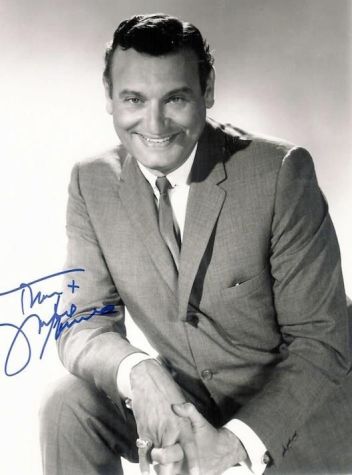
Song number five: the King of Pre-Rock – Mr. Frankie Laine. Laine, along with Guy Mitchell, was the most consistent chart-topper before Elvis came along. His 1st #1 – ‘I Believe’ – still holds the record for most weeks at the top of the charts. ‘A Woman in Love’ was his swan song – one of his last big hits – and I remember thinking, when I wrote this post, that it felt as if it came out of nowhere. The swing and swagger of the big band on this record, and the glint in Laine’s eye as he sang it, were a world away from his earlier, painfully earnest ballads. I can’t say I’m a fan of all his work; but this is a great song…

s-l300 (2)

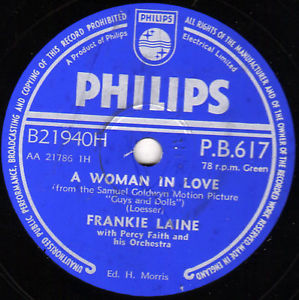
A Woman in Love, by Frankie Laine (his 4th and final #1)

4 weeks, from to 19th October to 16th November 1956

Look who’s back!

Almost three years since we last saw him, Frankie Laine is back at the top of the charts for one final hurrah. And it’s not too much of an exaggeration to say that this is something of a re-invention.

I think this is the very first ‘big band’ #1 we’ve seen. It’s from the film version of ‘Guys and Dolls’, and I think it might be a tango, or a foxtrot (I ain’t no dancer). Either way, it begins with a bang, and then it starts swinging. Frankie Laine is a-swingin’.

Your eyes are the eyes of a woman in love, And oh how they give you away… Why try to deny, You’re a woman in love, When I know very well, When I say…

Who is this woman head over heels with? Well, Frankie of course. At least that’s what he thinks: Those eyes are the eyes of a woman in love, And may they gaze ever more into mine…

Contrast these lyrics with Laine’s last chart-topping single from December ’53. ‘Answer Me’ was all about him pleading for a sign that his lover was still, well, in love with him. In ‘A Woman in Love’ he doesn’t need any reassurance, any prayers answered. He knows she’s hot for him. The times they are a-changing.

And then we have one of the best musical interludes that we’ve heard so far in this countdown. The previous chart-toppers haven’t really gone in for solos, but this one does. The whole band gets stuck into a swinging little thirty seconds. There is a lot of swagger in this record. I’m quite enjoying sticking one-word labels on these recent #1s: Pat BooneCrooner, Anne SheltonTwee, Frankie Laine – Swagger! We’ve had an eclectic run of songs hitting the top spot recently, perhaps the most varied run of this countdown so far, but in a way they’ve all been very of their time. Popular music right on the cusp of the rock ‘n’ roll invasion.

The only thing that spoils this record is the finale. Frankie may have re-invented himself, but he still loves a big ending: Crazily, ga-aze, e-ever mo-ore into MIIIIIIINNNNEEE! Every time I hear an ending like that it sounds more and more old-fashioned. I can’t imagine there’ll be many more, though. Surely. But, overall, this is a small complaint. It’s a great song. Laine’s voice is as warm and as listenable as ever. He and Doris Day should have recorded a duet (*edit* they did – ‘Sugarbush’ back in 1952).

06cab955448883c79c5103ab82addae5--arthur-godfrey-singer

And so we bid farewell to perhaps the biggest of all the pre-rock stars. Four number one singles adding up to 32 (thirty-two!) weeks at the top. That’s pretty darn impressive, and leaves him at 5th place in the all-time list behind only…. I’ll give you a few seconds to guess… Elvis, The Beatles, Cliff and The Shadows. And, actually, I’m harping on about this being a ‘re-invention’ and a ‘comeback’ for Laine, but he hadn’t been anywhere. In the three years between his 3rd and 4th #1s he had still racked up a whole pile of top ten hits. He was huge. ‘A Woman in Love’ would, though, be his penultimate top ten single in the UK.

One final thought… This track made Frankie Laine the artist with the most UK #1s at this point. With four. It’s noticeable that we haven’t yet met an artist who has scored, or will even go on to score, more than four. These early charts were a very egalitarian place – songs only got to the top because they were… I don’t want to say ‘good’ because, well… let’s say: ‘universally popular’. The days of super-star idols, of huge fan-base acts whose every release races to the top of the charts – your Take Thats, Westlifes, Spice Girls – are still not upon us. But they will be sooner than you might think, and their arrival has a lot to do with this new-fangled thing called rock ‘n’ roll.

‘Cherry Pink and Apple Blossom White’, by Perez ‘Prez’ Prado & His Orchestra – The UK Number 1s Blog Anniversary Special

This week marks the 1st anniversary of The UK Number 1s Blog (** Trumpet Fanfare**)! In the past year we’ve covered the period from Nov. ’52 to Nov’ 61, with 129 chart-topping songs featured. We’ve survived pre-rock, rode the rock ‘n’ roll revolution, and are now well on our way towards the swinging sixties… Thanks to everyone who has read, followed, commented and enjoyed.

To celebrate this milestone, I’m going to take a short break from the usual countdown to repost seven songs that I have really enjoyed discovering over the past year. These aren’t necessarily the best songs to have topped the charts – there’ll be no Buddy Holly, Johnnie Ray, Connie Francis, Elvis or The Everly Brothers (follow the links if you want to read about them) – as I’ve been listening to, and loving, those artists for years. This week will be all about the forgotten gems, the hits I’d never heard before, the songs that have slipped through the cracks…

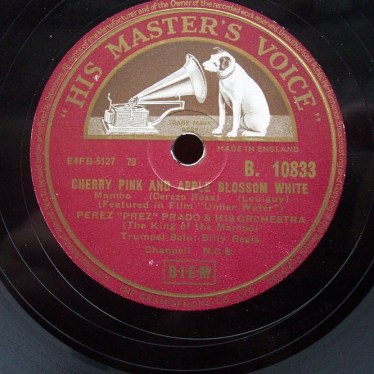
Next up is the one song, out of the 129 covered, that I’m happiest about discovering. Mambo isn’t a style of music that I’m very familiar with, and a trumpet-led instrumental wasn’t the type of record that I expected to blow me away. But, hoo boy, it did. ‘Sexiness’ was in short supply as we plodded through the very earliest UK #1 singles – with the focus on pure and proper romantic declarations from frightfully earnest young singers.  David Whitfield, Eddie Fisher and Vera Lynn I’m looking at you… But ‘Prez’ Prado… well, this disc just oozes sexiness. Listen to that low, low note he hits at strategic moments throughout this song, and try to tell me that it doesn’t put the filthiest thoughts in your mind! I named this as ‘Best Song’ in one of my recaps, and need no excuse to revisit it again here…

s-l1000

Cherry Pink and Apple Blossom White, by Perez ‘Prez’ Prado & His Orchestra (his 1st and only #1)

2 weeks, from 29th April to 13th May 1955

I’ve given instrumentals a hard time so far in this rundown. The lack of any lyrics creates a barrier, for me, between the song and the listener. You can listen to a Mantovani record and think “Isn’t that a nice melody”, but the fact that there are no words to tie it to a particular feeling or experience in your life means that the record is that step further removed from you. Like a film beautifully acted but in a language you cannot understand.

Having said all that… I’m going to prove myself massively wrong with this post. The fourth instrumental to top the UK Singles chart is also, by far, the sexiest record to top said singles charts. And there are no words. Well – there are no words aside from ‘Huh!’, ‘Hah!’ and ‘Oooh’. Which is a large part of this track’s said sexiness.

Following on from ‘Mambo Italiano’ (which wasn’t really a mambo, but hey), the UK was clearly in some sort of Latin fever in early 1955. Though perhaps not, as a quick glance at the chart for the week Perez ‘Prez’ hit the top shows only one other record that sounds vaguely Latino… A different version of ‘Cherry Pink and Apple Blossom White’ (which we’ll meet very soon at the top of the charts). But, for the purposes of this narrative, let’s say that the UK – finally casting off the shackles of rationing and wartime rubble – wanted to shake some booty and, while perhaps not quite ready for straight up rock ‘n’ roll, turned to some equally raunchy mambo. Further evidence towards my idea that rock ‘n’ roll didn’t just arrive with ‘Rock Around the Clock’ – it was slowly filtering in through Rosemary Clooney’s giggle, Winifred Atwell’s boogie and Johnnie Ray’s yelps. And Perez ‘Prez’ Prado’s trumpet.

Except the trumpet that makes this record isn’t being played by the man on the credits. We’ll get to that in a second. First – this record has perhaps the most intense intro we’ve heard yet. Basically it’s BOOM BOOM BOOM BOOM BOOM BOOM BOOM on a load of trumpets and cymbals, before the rhythm kicks in. The lead trumpet was played by a man called Billy Regis, who absolutely makes this record by drawing out one note in particular over and over again, by sliding it down then up in a manner that sounds a little bit drunk, a little bit woozy, and that, most importantly, would allow a couple in a Southend ballroom to draw that little bit closer for a second, before the main melody jumped back in.

R-582429-1341876426-2330.jpeg

Prado was more of a conductor, I guess, and it is his ‘Huhs’ and ‘Hahs’ that can be heard as he exerts his charges to squeeze every drop of sexiness from their instruments (that sounded ruder than I intended – you know what I mean). There are also some other trumpets (I guess they are trumpets) playing notes so low that it’s almost obscene. I recognise them from Lou Bega’s classic cover of ‘Mambo No.5’, from another golden age of Latin music in the UK charts, which we won’t be getting to for a long, long time. Incidentally, Perez Prado recorded the original version of that song, too.

But the final word has to go to Billy Regis, whose trumpet ends the record. He reimagines the bombastic ending – from which so many earlier chart-toppers have suffered – and it works so much better without lyrics. THIS IS THE END OF THE SONG becomes DOOO DOOO (pause) DOOOOOOOOO, and it again allows Janet and John from Southend to draw close and to feel one another’s bodies, taught and trembling from two and a half minutes of intense mambo.

‘Huh!’ and, indeed, ‘Hah!’

‘Look at That Girl’, by Guy Mitchell – The UK Number 1s Blog Anniversary Special

This week marks the 1st anniversary of The UK Number 1s Blog (** Trumpet Fanfare**)! In the past year we’ve covered the period from Nov. ’52 to Nov’ 61, with 129 chart-topping songs featured. We’ve survived pre-rock, rode the rock ‘n’ roll revolution, and are now well on our way towards the swinging sixties… Thanks to everyone who has read, followed, commented and enjoyed.

To celebrate this milestone, I’m going to take a short break from the usual countdown to repost seven songs that I have really enjoyed discovering over the past year. These aren’t necessarily the best songs to have topped the charts – there’ll be no Buddy Holly, Johnnie Ray, Connie Francis, Elvis or The Everly Brothers (follow the links if you want to read about them) – as I’ve been listening to, and loving, those artists for years. This week will be all about the forgotten gems, the hits I’d never heard before, the songs that have slipped through the cracks…

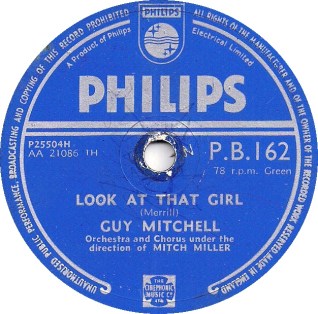
Song Number Three is by the artist that I’ve ‘discovered’ the most over the past year. I’d heard the name ‘Guy Mitchell’ before, but didn’t know any of his songs. His career was the 1950s – he was a regular in the Top 10 between 1952-’59, with four #1s along the way. ‘Look at That Girl’ was his 2nd, and I’ve picked it as I think it was the 1st ‘modern’ pop song (verse-chorus etc) to top the charts, and it was also the first to feature a guitar solo! Plus, he had a voice every bit as sexy and smooth as Elvis. Enjoy!

guy-mitchell-look-at-that-girl-1953-78

Look at That Girl, by Guy Mitchell (his 2nd of four #1s)

6 weeks, from 11th September to 23rd October 1953

Ladies and Gentlemena, we are finally rocking and rolling. The invasion is here!

Not at first, mind. We begin on familiar territory. We’ve got the jaunty guitars from ‘Don’t Let the Stars…’ and Mitchell’s previous #1, ‘She Wears Red Feathers’ (compared to which this is ten times better!), and some trumpets (or clarinets, or bassoons, whatever…), and Mitchell’s voice still sounds like he thinks he should be singing a comedy number.

Look at that girl, she’s like a dream come true… Ah look at that girl, can blue eyes be so blue…? But this is no simple song of longing. No, Sir. It turns out the girl is already his. We think. With each word my heart just skips, oh if I could kiss those lips… He’s keeping it ambiguous. Maybe they’ve got a thing going. Maybe not.

And as the song goes on – we start to rock. And I don’t mean ROCK (tongue out, fist raised). I mean ‘rock’, like it’s 1953. There are hand-claps. Mm-hmm. And a guitar. Woo! And Mitchell has a little call and response with the backing singers, when they take the lead lyric Look at that girl… and he quips back I don’t believe it they’re making it up! And then there are the lyrics: the kissing, the holding her tight… Pass the smelling salts…

GUY_MITCHELL_SHOWCASE+OF+HITS-529846

It sounds to me as if a battle is taking place here, between traditional easy-listening and the burgeoning rock ‘n’ roll movement. On the one hand you’ve got the usual twee backing singers and floaty trumpets, parping away at the end of each line; on the other you have the hand claps and the guitar solo. That’s right. Solo. In a symbolic move, the trumpets begin the solo and play it in tandem with the guitar for a couple of bars, before the guitar takes it over completely.

And having said that Mitchell sings the song with a slight giggle in his voice, after the 3rd or 4th listen it works. He’s having a good time. We’re having a good time. He’s a nice singer – he sounds like he could be belting it out if he wanted to, but he doesn’t. The song doesn’t require belting out (That’s something old Eddie Fisher could have learned to look out for…)

If you stick with this blog for long enough, you’ll soon see I’m a sucker for a straight-up, unpretentious pop song. A couple of verses, couple of choruses, a solo and a final verse. Maybe a key change. Then finish. The sort of song that sounds simple but is pretty darn hard to get right. (I say, having never even attempted to write a song in my life). This is one such song. And I like it. It’s my favourite so far.

‘Don’t Let the Stars Get in Your Eyes’, by Perry Como with The Ramblers – The UK Number 1s Blog Anniversary Special

This week marks the 1st anniversary of The UK Number 1s Blog (** Trumpet Fanfare**)! In the past year we’ve covered the period from Nov. ’52 to Nov’ 61, with 129 chart-topping songs featured. We’ve survived pre-rock, rode the rock ‘n’ roll revolution, and are now well on our way towards the swinging sixties… Thanks to everyone who has read, followed, commented and enjoyed.

To celebrate this milestone, I’m going to take a short break from the usual countdown to repost seven songs that I have really enjoyed discovering over the past year. These aren’t necessarily the best songs to have topped the charts – there’ll be no Buddy Holly, Johnnie Ray, Connie Francis, Elvis or The Everly Brothers (follow the links if you want to read about them) – as I’ve been listening to, and loving, those artists for years. This week will be all about the forgotten gems, the hits I’d never heard before, the songs that have slipped through the cracks…

Next up is Perry Como, with ‘Don’t Let the Stars Get in Your Eyes’ – another song that surprised me with its upbeat tempo (and funky trumpet solo). And like Kay Starr, he was another artist with enough about him to make it out of the pre-rock age alive…

perry-como-with-the-ramblers-dont-let-the-stars-get-in-your-eyes-1953
Don’t Let the Stars Get in Your Eyesby Perry Como with the Ramblers (Como’s 1st of two #1s)

5 weeks, from 6th February to 12th March 1953

One of my biggest chart bugbears, back when I started chart-watching, was one-week number ones. In the late ’90s and early ’00s it seemed like there were a never ending parade of songs waiting to shoot straight in at number one, only to be replaced by another brand new song a week later, as if record companies had worked it all out beforehand in some sort of dastardly pact. And I assumed that it never used to be that way, that ye olden charts were creaky, slow moving things where records languished at the top for weeks and months. Which is true to an extent – Al Martino had nine weeks, and wasn’t alone in having that length of stay, while later in 1953 we’ll reach the song which still holds the record for most weeks at number one…

But what we have here is a fourth new chart topper in as many weeks. It turns out that the record buying public of the pre-rock era were just as fickle as those in 1999! Perry Como, though, did halt the turnover and kept this jaunty little tune at the top for a month and a bit. That’s star quality shining through.

This track is a welcome relief after its overwrought predecessor. Perky guitars, a lively brass section, and tongue-twister lyrics: Love blooms at night in daylight it dies don’t let the stars get in your eyes or keep your heart from me for some day I’ll return and you know you’re the only one I’ll ever love delivered in just the one breath. This seems to have been a thing, a gimmick almost (at least it seems gimmicky to modern ears), as Kay Starr was at it in ‘Comes A-Long A-Love’. It’s not vocal gymnastics of the Mariah Carey kind; more lyrical gymnastics, if such a thing can exist.

We’ve also heard similar lyrics already in this countdown, in that Como is telling his sweetheart not to forget about them, or to stray, while away. The best bit of it all, though, is the trumpet solo. At least I think they’re trumpets; I really can’t tell one brass instrument from the other. Anyway, they put me in mind of the oompah band at a German Bierfest.

The one downside to the song is the backing singers, The Ramblers. They’re just a bit… barbershop, in that they are basically there to repeat verbatim the line that Como just sang. In case some one missed it? I don’t know. And their one bit of improvisation is to sing what sounds like pa-pa-papaya between lines. Are they imitating the trumpets? Is it just gibberish? Are they actually singing about papayas?

600x600

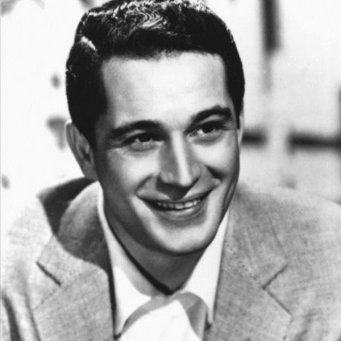
Perry Como (American! Died aged 88! The run continues!) is the biggest name to top the chart so far. I’d say, at least. Both of the female chart toppers were new to me, Al Martino was known to me solely as the singer of the first ever UK #1, and Eddie Fisher had entered my consciousness due to his ladykilling (the romantic type of ladykilling, that is). Perry Como was a big star and I could have named his biggest hit (‘Magic Moments’, fact fans) without looking it up. And after looking up his discography it’s clear that if the the charts had begun earlier he would have racked up a load more hits – he was scoring US #1s throughout the ’40s. Now, in 2018, he’s no longer a household name, a Sinatra or Presley, I wouldn’t have thought. Very few of these stars from sixty-odd years ago are, I suppose.

‘Comes A-Long A-Love’, by Kay Starr – The UK Number 1s Blog Anniversary Special

This week marks the 1st anniversary of The UK Number 1s Blog (** Trumpet Fanfare**)! In the past year we’ve covered the period from Nov. ’52 to Nov’ 61, with 129 chart-topping songs featured. We’ve survived pre-rock, rode the rock ‘n’ roll revolution, and are now well on our way towards the swinging sixties… Thanks to everyone who has read, followed, commented and enjoyed.

To celebrate this milestone, I’m going to take a short break from the usual countdown to repost seven songs that I have really enjoyed discovering over the past year. These aren’t necessarily the best songs to have topped the charts – there’ll be no Buddy Holly, Johnnie Ray, Connie Francis, Elvis or The Everly Brothers (follow the links if you want to read about them) – as I’ve been listening to, and loving, those artists for years. This week will be all about the forgotten gems, the hits I’d never heard before, the songs that have slipped through the cracks…

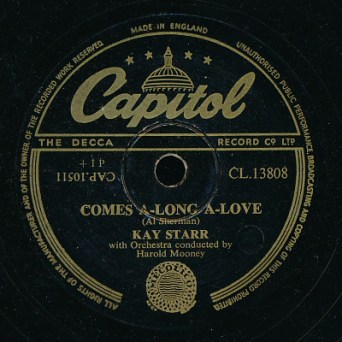
First up: only the 3rd song ever to top the UK charts, in January 1953, and the song that showed me that the pre-rock years weren’t just going to be a procession of melodramatic ballads and perfectly-pronounced pop. Miss Kay Starr, take it away…

R-3253615-1392841568-2094.jpeg

Comes A-Long A-Love, by Kay Starr (her 1st of two #1s)

1 week, from 23rd to 30th January 1953

Snazzy! And jazzy! I really thought – and more fool me – that these pre-Rock ‘n’ Roll hits would be dull, twee, chaste… one step up the danceability chart from hymns, basically. How wrong I was. It wasn’t all bluebirds over the white cliffs of Dover.

Though bluebirds do feature in this song, they do so as a symbol of being in love and suddenly becoming aware of the world around you. Birds! Flowers! The sun! Comes A-Long A-Love suddenly though you never sang you’re always singing… Comes A-Long A-Love suddenly chimes you never heard begin a-ringing… The lyrical message being that falling in love will make you a better, livelier person.

Kay Starr’s voice is in complete contrast to the Jo Stafford record that went before. It’s husky, then sing-songy, she pauses where you least expect it and then rushes through tongue twister lines phrases like petty little things no longer phase you, which I’ll bet you can’t say five times fast. You might even say she’s flirting with the listener… And, yes, a quick search shows Ms. Starr was quite the little minx (that’s what they called them in those days). Those eyebrows! What didn’t they suggest! This song could be seen as a challenge – she’s daring you not to fall in love with her.

kay-starr-cropped

But again, it’s another song that paints love in a positive light. Three number ones in and nobody’s had their heart broken… Even lonely old Al Martino was hopeful that his lover would say ‘yes’. That’s something I’m going to look out for: the first ever reference to heartbreak in a UK number one hit. And, again, Kay Starr enunciates so damn well. This isn’t an easy song to sing, but she makes it sound like she’s ad-libbing her way through it. I’ve got to hand it to these old-timers, before the days of auto-tune, because they really could sing. Gran was right all along…

Some bits do jar, slightly. Starr uses ‘Mister’, and ‘Brother’, in a way that you wouldn’t these days. And the aforementioned reference to being in love and seeing bluebirds is a bit of a Disneyfied image. It must have been easy for songwriters, at the birth of modern pop music – love is great, you see bluebirds, do-bee-do – before people discovered cynicism. So far, though, all three number ones have been recorded by American artists. Perhaps that explains the saccharine sentiments! As everyone knows, Americans are sickeningly positive. How brilliant would it be, then, if the first UK recorded #1 turned out to be a piece of proto-Morrissey miserabilism…

One final thing I’ve noticed, while looking up these first three UK chart toppers, is how long they all lived. Jo Stafford died in 2008, aged ninety. Al Martino died in 2009 at eighty-two. Kay Starr died in November 2016, having reached a grand old innings of ninety-four. That means two of them outlived Michael Jackson, who wouldn’t have his first number one hit for another twenty-eight years. They were made of sterner stuff in those days, mind.