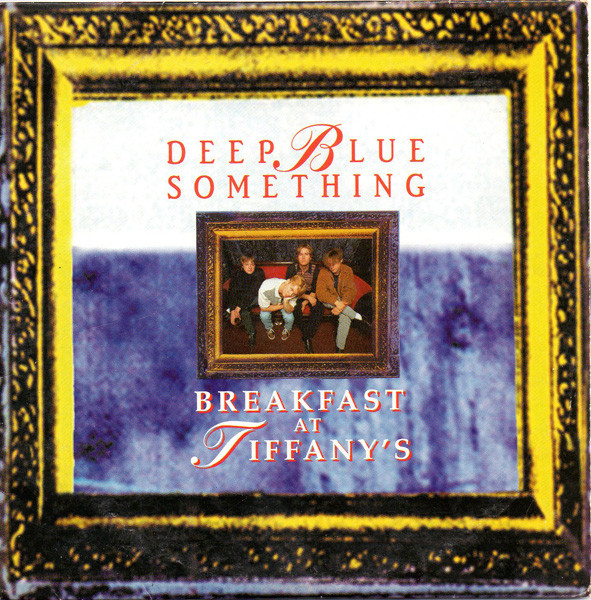
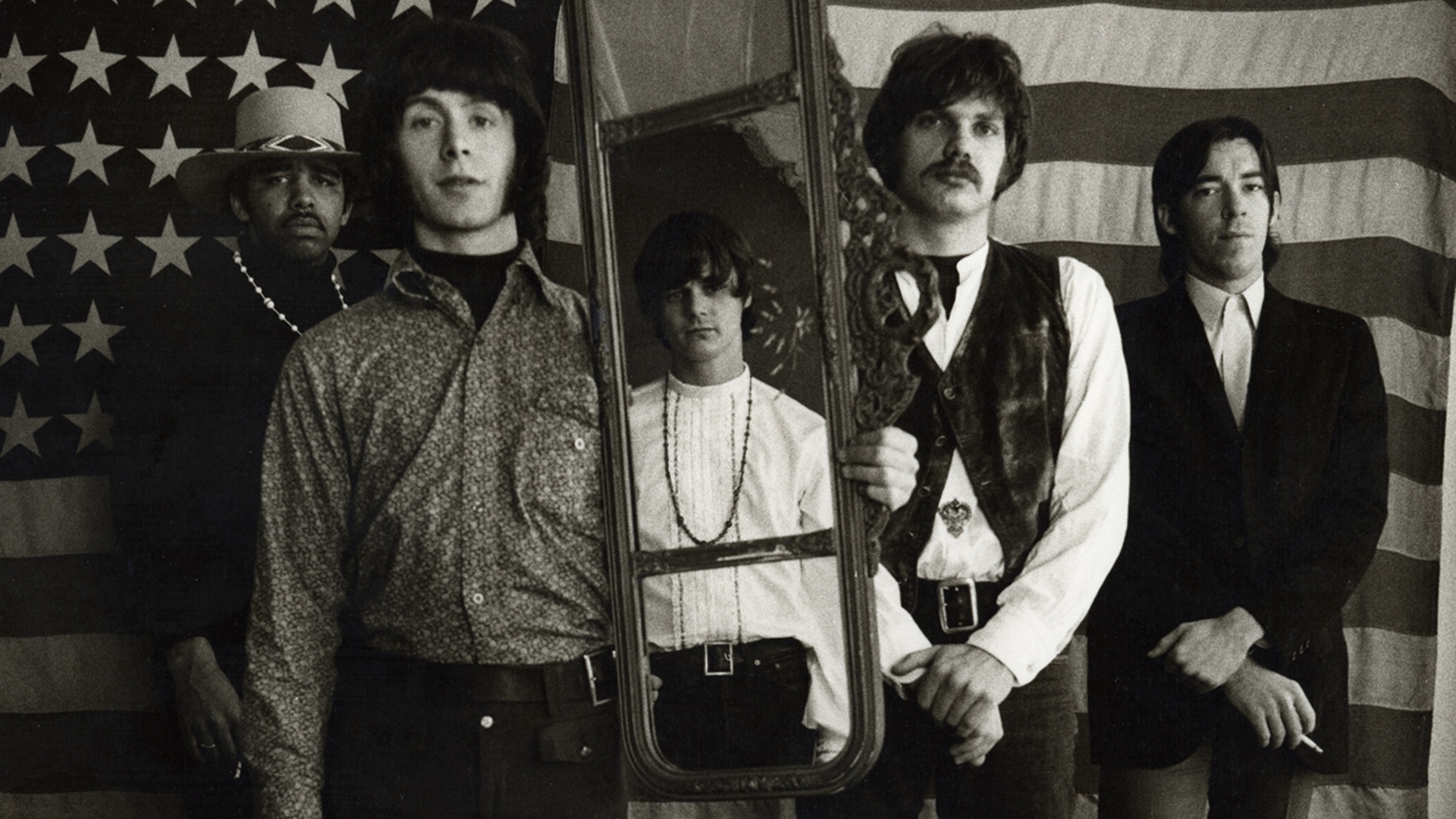
746. ‘Breakfast at Tiffany’s’, by Deep Blue Something

I’ve made a big deal about British rock (‘indie’, ‘Britpop’, call it what you will) not getting its fair share of airtime at the top of the singles chart in the ‘90s. I even did a special post on it. But here’s an even rarer sighting of the US equivalent…

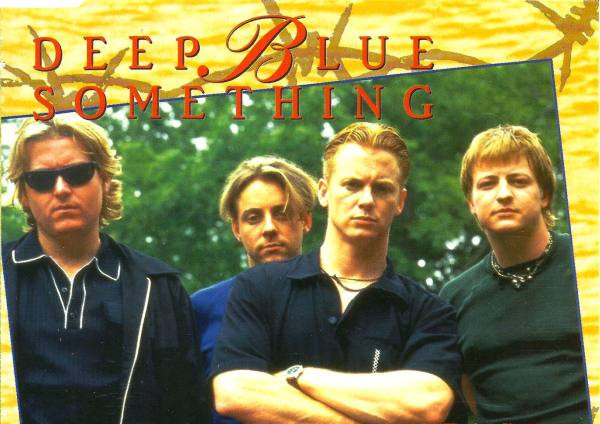
Breakfast at Tiffany’s, by Deep Blue Something (their 1st and only #1)

1 week, from 29th September – 6th October 1996

When I think of US alternative rock, post-grunge, in the mid-1990s, I think of REM, the Chili Peppers, Hootie & the Blowfish, and… I’m struggling, to be honest. Britain was bursting at the seams with their own alt-rock, and not many American acts broke through. Here then is US indie, alt-, college (again, call it what you will) rock’s one week in the sun. I might even go as far as suggesting that this is the first such #1 since The Highwaymen in 1961, though that might be pushing things slightly.

It’s a catchy record, with jangly verses which contrast against the power chords in the chorus. It’s a very different sound to Oasis, or Blur – there’s an earnestness to US rock that its British equivalent often deliberately avoids – but I’m sure the prevalence of Britpop benefitted this in making it to #1. And, though I was still young at the time, I can remember it being everywhere on the radio…

The most interesting thing about this record is the lyrics. Even the title intrigues… ‘Breakfast at Tiffany’s’? I make it only the second number one single to share its name with a book, after ‘Wuthering Heights’, but I’ll happily be proven wrong if I’ve forgotten one! It’s about a dying relationship, that the singer tries to save by thinking of one thing the pair have in common. And I said, What about, ‘Breakfast at Tiffany’s? She said I, Think I, Remember the film… I think we’re meant to assume that this is enough for them to give it another go. I always thought that the next line was And as I recall, I read the book and I liked it… with the film and the book versions of ‘Breakfast at Tiffany’s’ being pretty different and a sign of the couple’s ill-suitedness… Except it turns out that the real line is as I recall I think we both kinda liked it… Call me a cynic, but my subconscious didn’t want them to stay together.

I see a lot of hate for this song online, hate that was also around at the time. And I can kind of see it, the fact that it’s cookie-cutter mid-nineties soft rock. The lyrics could also be seen as contrived, though I think they’re endearingly clumsy. It’s certainly not worthy of #6 on the ‘50 Most Awesomely Bad Songs Ever’ list, as VH1 and ‘Blender’ named it!

Deep Blue Something were from Denton, Texas and, despite forming in 1991 this was their first hit. Their only hit in much of the world, apart from in the UK. We felt sorry for them, and allowed their follow-up ‘Josey’ to make #27, sparing them a one-hit wonder tag. They split in 2001, but reformed in 2014. The members juggle being in Deep Blue Something with other day jobs in the music industry. Apart from, that is, guitarist Clay Bergus, who is a manager of Eddie V’s Prime Seafood restaurant in Fort Worth. Which is great.

734. ‘Don’t Look Back in Anger’, by Oasis

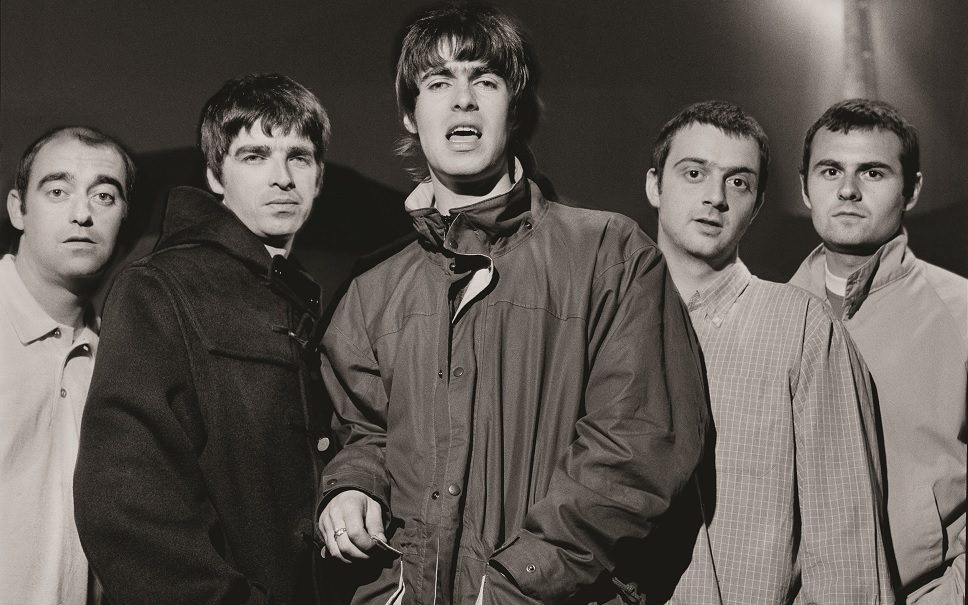
‘Don’t Look Back in Anger’ isn’t Oasis’s best song (that is a question for a different post, but it would probably be something from their debut album). ‘Don’t Look Back in Anger’ is, though, probably the ultimate Oasis song. Oasis at their Oasisest.

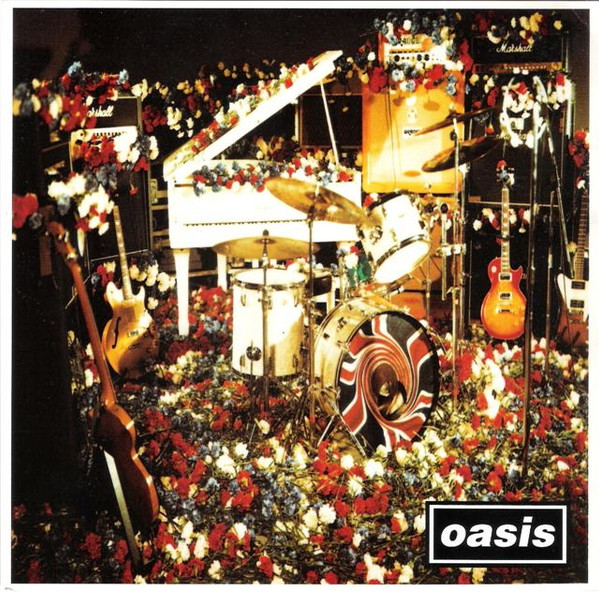
Don’t Look Back in Anger, by Oasis (their 2nd of eight #1s)

1 week, from 24th February – 3rd March 1996

They set out their stall in the opening seconds, with the piano line from ‘Imagine’ which, according to Noel, was a deliberate middle finger to those who claimed Oasis were musical copycats. It hooks you in, declaring that the next five minutes are going to be epic. In fact, every part of this song, from that intro onwards, is a hook.

You can be the type of person who jots down every little chord, lyric or guitar lick that Oasis nicked – and I am that person sometimes – or you can be someone who admires the way they managed to distil British rock history into an elite-level run of singles (and two excellent albums), who admits that when they were good, they were very good. The drum-fill before the final, soaring chorus here is, no hyperbole, one of pop music’s great moments.

‘Don’t Look Back in Anger’ also features some of Noel’s more coherent lyrics. My personal favourite is the Please don’t put your life in the hands, Of a rock n roll band, Who’ll throw it all away… with the squealing guitars in between. A lot of the lines are still nonsense, but they work somehow. I assume it’s about a break-up, given all the stuff about walking on by, and not looking back. Or maybe it’s a mantra for living positively, not lingering on mistakes. Don’t go thinking that ‘Sally’ is anyone important, though. ‘It’s just a word that fit, y’know,’ says Noel. ‘Might as well throw a girl’s name in there.’

A song written and led by Noel has to beg the question: what of Liam? Well, despite having nothing to do, he spends the video mooching around the garden of a stately home in his shades, and still manages to be the star of the show. He is apparently responsible for the song’s most famous line: So Sally can wait… having misheard what Noel was really singing while writing it.

Despite what I wrote earlier, I’m going to briefly be the guy that points out the bits that Oasis nicked. I just now noticed that while everyone was distracted by the ‘Imagine’ piano in the intro, the floaty guitar in the outro is a rip-off of ‘Octopus’s Garden’. Is that common knowledge, or have I just unearthed another, previously undiscovered fossil?

‘Don’t Look Back in Anger’ was the 4th single from an album that had already sold in the multi-millions, and so the fact that it made number one is testament to how truly massive Oasis were in 1996. Over the past twenty-eight (!!!) years, it has gone from a pop song to almost a hymn, or an alternate national anthem. In the wake of the Manchester Arena bombing in 2017, gathering crowds spontaneously began singing it, giving the lyrics an even more resonant feel.

Meanwhile, it has also been voted the 4th Most Popular #1 Single ever, the 2nd greatest Britpop song (after ‘Common People’), and the Greatest Song of the 1990s. (And, most importantly, the 2nd Best Song to Sing Along to While Drunk – controversially robbed of top spot in that poll by Aerosmith’s God-awful ‘I Don’t Want to Miss a Thing’.) It is also by far the best of Oasis’s eight number ones… and I hope that’s not too much of a spoiler for what’s to come!

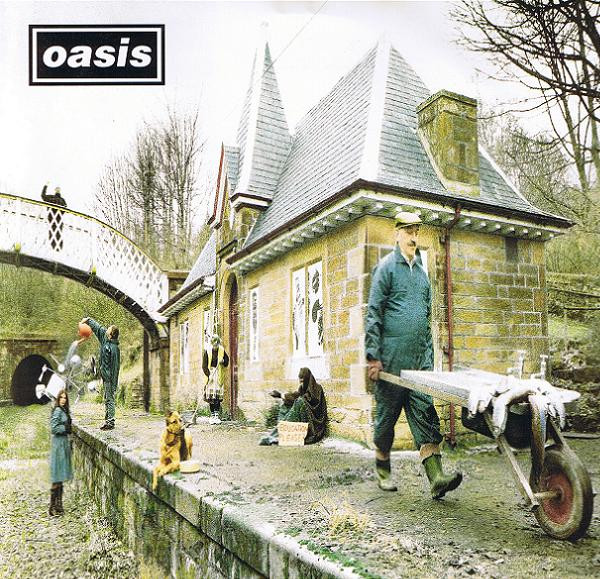
720. ‘Some Might Say’, by Oasis

I’m both thrilled and downhearted that we’ve reached the beginning of the Oasis era. Much like I wrote in the intro to my last post, on Take That’s ‘Back for Good’… What can I add to the three decades’ worth of column inches dedicated to Britain’s most polarising band.

Some Might Say, by Oasis (their 1st of eight #1s)

1 week, from 30th April – 7th May 1995

Basically, what to say about Oasis that isn’t cliched? I need to approach this completely subjectively, then. Which isn’t hard, because Oasis were my first big musical love (OK, second… but we’ll deal with that Spice Girls-shaped elephant in the room when the time comes…) ‘Some Might Say’ has never been among my very favourite Oasis records but, actually, this is a good thing, as far as this post is concerned. It hasn’t been overplayed to death, and I’m glad that this made #1, and not the two #2 hits that followed.

On the other hand, I’d rather their two preceding singles – ‘Whatever’, or ‘Cigarettes and Alcohol’, had been the first chart-topper. ‘Some Might Say’ has some of the vim, the punkish energy of ‘Definitely Maybe’ – I’d say it’s the song from ‘What’s the Story…’ that could most easily slip onto their debut – but signs of bloat are already appearing. After a brilliant glam riff opening, it settles into a slightly plodding, overlong rock song (why, oh why, is this five and a half minutes long?) And, despite the long-held belief that Oasis were a rejection of grunge’s misery and introspection, there are some very heavy, grungy chords in the chorus.

I had a pop at Gary Barlow’s lyrics in that last post, and I have to call Noel out here too, even if this is where I tip into well-trodden cliché. Oasis lyrics walk the line between revelatory and ridiculous. One minute you’re thinking ‘Yes, profound!’. The next you’re thinking ‘Maybe not…’ Some might say they don’t believe in heaven, Go and tell it to the man who lives in hell… is a great line. Some might say you get what you’ve been given, If you don’t get yours I won’t get mine as well… is more at the ‘maybe not’ end. (Though we can all agree that The sink is full of fishes, She’s got dirty dishes on the brain… is a lyric for the ages…)

The star here, as in many of Oasis’s early songs, is the man interpreting these words, and making them his own. Liam. The last true rock star, and one of the all-time great frontmen. A beautiful moron (‘Some Might Say’ doesn’t have a proper video because he never showed up for the shoot), his sweetly aggressive vocals attack his brother’s unwieldy lines and transform them. Just try singing this song like he does. It’s very difficult – your voice ends up straining, and cracking, and getting lost among the walls of guitar (Oasis were, thankfully, never fans of understated production.)

Like I said, I once loved Oasis – growing up male, in small town Scotland, in the late ‘90s/early ‘00s, it was all but mandatory – but it is a love that has faded. I’ve accepted that they were limited, that they did have a habit of ‘borrowing’ riffs and melodies (even now I’ll listen to a Kinks album track and hear a bit that sounds familiar…), and that they believed their own hype a little too much. And yet, they were never as bad, as unoriginal, as much a Bargain Bucket Beatles, as some critics were desperate to make out.

Anyway, I’m writing as if this was their one and only chart-topper, not as if they have seven more to come. It’s easy to forget just how phenomenally successful they were. All seven of their studio albums entered the charts at #1, while ‘Some Might Say’ was the first of eight singles in a row to make either #1 or #2, between 1995 and 2000. It might not be the perfect song to be crowned their first chart-topper – the first chart-topper of the Britpop era even – but Some might say, We will find a brighter day… is perhaps the perfect summation of the Oasis manifesto.

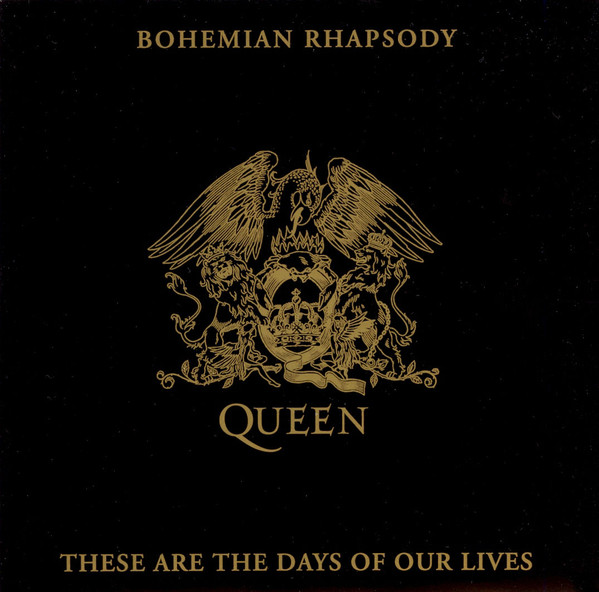
672. ‘Bohemian Rhapsody’ / ‘These Are the Days of Our Lives’, by Queen

On November 23rd 1991, Queen frontman Freddie Mercury released a statement announcing that he was HIV positive, and had developed AIDS, confirming years of speculation about his ailing health. Barely one day later another announcement followed: Mercury was dead, aged just forty-five.

Bohemian Rhapsody / These Are the Days of Our Lives, by Queen (their 4th of six #1s)

5 weeks, from 15th December 1991 – 19th January 1992

Which brings us to the final #1 of the year – the Christmas Number One – and the first time a song has re-topped the charts. How to deal with this? Write about ‘Bohemian Rhapsody’ all over again? I’d rather not… Or just provide a link to my original post on the song, back when it was a nine-week chart-topper (and another Xmas #1) back in 1975-76? Neither seems the perfect solution… ‘Bo Rap’ may well be one of the best-loved, most innovative, outré pop songs of all time; but it has been played to death. We all know what it sounds like. Luckily, Queen twinned it with a song from ‘Innuendo’, their latest album, and gave us something else to talk about!

‘These Are the Days of Our Lives’ couldn’t be more different from its re-released partner. A lounging, glossy soft-rock tune, with a gentle Bossa nova beat. It’s not classic Queen – it sounds more like a Freddie Mercury solo record – until Brian May’s trademark guitar come chiming in towards the end. Lyrically, though, it’s the perfect swansong.

It was written by Roger Taylor, but lines like You can’t turn back the clock, You can’t turn back the tide, Ain’t that a shame… are sung ruefully by Mercury, in what many have claimed were the final vocals he ever recorded. It’s unashamedly sentimental, and usually that would have me running a mile, but when lyrics like Those days are all gone now, But one thing is true, When I look, And I find, I still love you… are sung by a dying man then they hit much harder.

The video – filmed in black and white to hide just how gaunt Mercury was – is certainly the last thing he filmed, six months before his death. Ever the showman – behold the cat waistcoat! – he asked for the closing shot to be re-filmed, in which he chuckles to himself, looks down, then whispers I still love you… Not a dry eye left in the house.

The lyrics shift from ‘those were’ the days of our lives to ‘these are…’, in a positive message, a sign that even in the shadow of death each day is a gift. Again, this is something I might balk at if it weren’t for the fact that a dying man is singing it. If he believes it then who am I to judge? Personally, I’d have liked ‘The Show Must Go On’ as the posthumous single – much more dramatic, much more Queen – but that had been released a couple of months earlier, making #16.

For sure ‘These Are the Days of Our Lives’ wouldn’t have made number one on its own, without either Mercury’s death or ‘Bo Rap’s re-release. A certain run-of-the-mill Elton John song will suffer a similar fate a few years later, caught up in another famous death, becoming one half of the highest-selling single ever in the process. ‘Bohemian Rhapsody’ meanwhile added five more weeks in top spot to its original nine, becoming the third longest-running #1 ever. And this isn’t the end of the chart-topping story for either Queen or Freddie. But it is the end for 1991, one of the more interesting years for chart-topping singles, with Gregorian chants, rapping cartoon characters, sixteen-weekers, Bono in character as ‘The Fly’, Vic Reeves (because why not?), and it all ending on a farewell to the greatest frontman who ever strutted the stage.

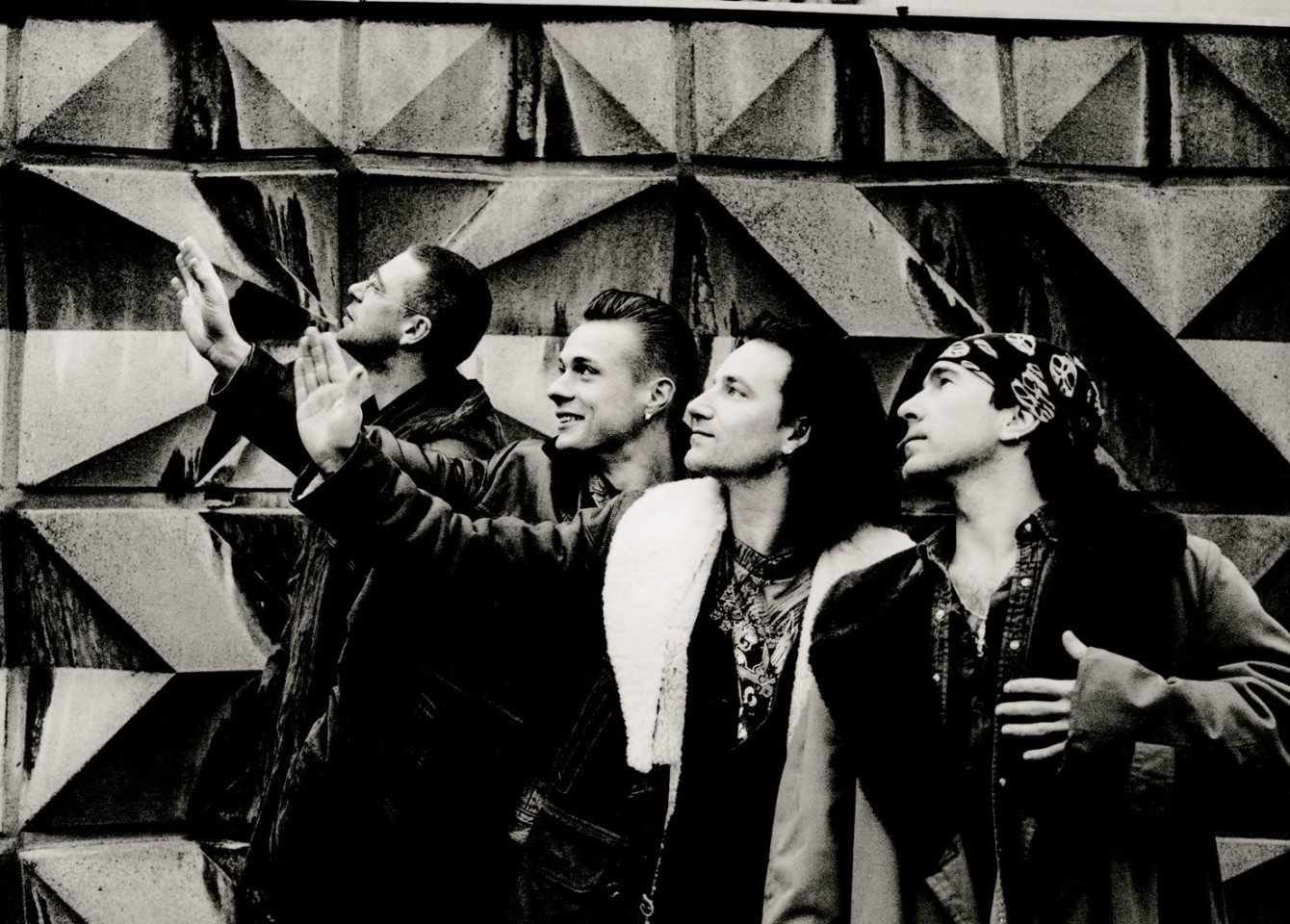
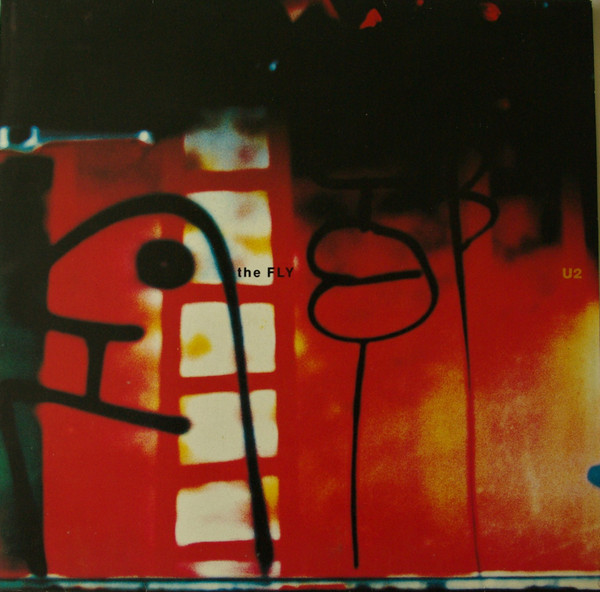
668. ‘The Fly’, by U2

After four months, sixteen weeks, one-hundred and twelve days… a long old time however you want to count it… something desperately needed to end Bryan Adams’ record-breaking run. Thank God for U2, then, and the lead single from their seventh album.

The Fly, by U2 (their 2nd of seven #1s)

1 week, from 27th October – 3rd November 1991

And it’s a real palate cleanser after the thick stodge served up by Bryan. ‘Achtung Baby’ was a big departure for U2, away from the new-wave rock of their early albums. Away even from ‘Rattle and Hum’, and the stripped back rock ‘n’ roll of their first #1 ‘Desire’. ‘The Fly’ was intended as an opening statement: this is where we are now.

Where they were now was distorted, industrial rock, with clear influences from the musical movement of the time: electronic dance. Everything is drenched in a murky reverb, even Bono’s half-rapped verses, and his falsetto vocals in the chorus. It must have surprised fans who’d fallen in love with ‘Pride (In the Name of Love)’, or ‘With or Without You’.

Despite this being U2, and a number one single, I don’t think I’d properly listened to ‘The Fly’ before today. It was the album’s biggest hit, but I’d say the subsequent singles – ‘One’, ‘Mysterious Ways’ and ‘Even Better Than the Real Thing’ – have left a bigger cultural mark. But I like it: it’s uncompromising, innovative, and the most ‘nineties’ number one so far. We’re almost two years into the decade, and this is first chart-topper that categorically couldn’t be mistaken for coming any earlier.

I said we needed something to kick the overblown ‘(Everything I Do)..’ out the way. And it’s funny, because U2 aren’t the first band you’d normally turn to for unpretentious rock ‘n’ roll. If you dig a little deeper into the song, you’ll find that it believes in itself every bit as much as its predecessor. It’s sung, according to Bono, by a character called ‘The Fly’, who’s in hell but who’s actually quite loving life down in the fiery pits: Look I gotta go, yeah, I’m running out of change… the song ends with… There’s a lot of things, If I could I’d rearrange…

Luckily, you can ignore the brainy stuff and lose yourself in the song’s cool groove. It rocks, whatever the message, and U2 are at their best when they rock. Luckily for this blog, many of their lead singles, and therefore their number ones, do instantly leap from the speakers. Oasis were good at this, too: picking for a lead single not the best song on an album, but the one that made the most noise and the biggest statement. Yes we’re back, ‘The Fly’ seems to say, and we’re the biggest band on the goddamn planet!

This record is very modern in another way, too. Since the mid-eighties, guitar-led music has lost its place as the driving force in pop. Rock bands now can often only make #1 with a lead single, such as this, propelled to number one thanks to their fanbase (see also Queen’s ‘Innuendo’, and Iron Maiden’s ‘Bring Your Daughter…’) Rock has made a comeback of sorts in the 1990s, but under limited terms. Never again will it be the default sound of the charts.

661. ‘Should I Stay or Should I Go’, by The Clash

Last week, in a recap of the past thirty chart toppers, I made a lot of just how eccentrically the charts have been behaving over the past year or two. And happily, they show no signs of becoming predictable quite yet…

Should I Stay or Should I Go, by The Clash (their 1st and only #1)

2 weeks, from 3rd – 17th March 1991

For yes, we must sound the ‘random re-release’ klaxon one more time: The Clash score their sole UK #1. And once again, as with ‘The Joker’, it’s Levi’s Jeans we have to thank for giving this classic tune a new lease of life (the ad team knew how to pick them!)

We open with a nonchalantly cool intro. Two guitars have a little call-and-response, before a bass guitar so jagged it almost rips your speakers in two. It’s a simple riff, so easy and familiar that my immediate response is to dredge the memory banks to recall if it’s a cover version. It isn’t, but Mick Jones based it, knowingly or otherwise, on ‘Little Latin Lupe Lu’, a sixties garage-band classic.

The whole thing is loveably ramshackle, and a world away from the polished dance hits that have been the sound of the early 1990s. The guitars crackle, Joe Strummer sneers, and the band holler and screech the backing vocals in Spanish. The main lyrics meanwhile, tell the story of a toxic relationship: It’s always tease, tease, tease, You’re happy when I’m on my knees… and the chaotic ‘chorus’, such as it is, does its best to portray the frenzy of a conflicted mind.

The singer’s happy to remain, no matter the torture doled out, but by the end of the song we’re left none the wiser over whether he stays or goes. (I struggle to see how this helped to advertise jeans, but who am I to question…?) I’d call this record pretty poppy for The Clash, as well as assuming it was one of their early singles. But it was the 3rd release from their 1982 album ‘Combat Rock’, making #17 at the time. And despite coming five years after the band’s sixth and final studio album, this re-release was their first Top 10 hit, let alone their first number one.

Over the past few months, rock music has started to creep back in to the upper reaches of the charts (hurray!) If we start with ‘The Joker’s classic rock, then five of the past twelve #1s have been rock of one kind or another: indie rock (The Beautiful South), heavy metal (Iron Maiden), progressive rock (Queen) and now this. Is ‘Should I Stay or Should I Go’ more classic rock? Or is it garage? Or is it our first real punk rock #1, a decade and a half too late…? Or should we simply not care, and just revel in proper rock ‘n’ roll enjoying its new-found moment in the sun?

658. ‘Innuendo’, by Queen

It feels like a trick pub-quiz question: which number one hit by Queen is over six minutes long, composed of several sections, in several genres…?

Innuendo, by Queen (their 3rd of six #1s)

1 week, from 20th – 27th January 1991

‘Bohemian Rhapsody’ everyone will shout, and everyone will be wrong. (For Bo Rap isn’t quite over six minutes long…) No, ‘Innuendo’ is Queen’s true forgotten epic. And what an epic. It starts off brooding, and ominous, reminiscent of Led Zeppelin’s ‘Kashmir’, with apocalyptic lyrics such as: While there’s a wind and the stars and the rainbow, ‘Til the mountains crumble into the plain… Freddie bemoans mankind’s inability to live in harmony, and its insistence on dividing people by race, religion and creed.

Then come the flamenco guitars, which to my untrained ears sounds like some serious musicianship (it was played by Brian May and Steve Howe of Yes), and a bridge that sounds like a cross between the monkish chants used by Enigma, and a Disney theme. After all that, it’s hard not punch the air when a trademark Brian May guitar solo comes swooping in, saving this monster from disappearing up its own arse.

It ends as it began, ominously stomping its way to the end of time. It’s hard not to read this as Freddie coming to grips with his impending death, when he asks: If there’s a God or any kind of justice under the sky, If there’s a point, If there’s a reason to live or die. He knew that this was the last album Queen would release in his lifetime, and so the line Through our sorrow, All through our splendour, Don’t take offence at my innuendo… almost becomes a farewell to Queen’s fans and detractors alike.

Ultimately, though, it ends on a positive note: Yes, we’ll keep on trying…And that line is the moment in this bizarre epic that sounds like classic Queen. Otherwise, it’s one of the weirdest #1 singles ever, in an era of increasingly weird #1s. And it’s amazing to think that it’s only Queen’s 3rd UK chart-topper, after ‘Under Pressure’ and the aforementioned ‘other’ epic’. Just think of the classic Queen hits, the ‘Radio Gaga’s and the ‘Another One Bites the Dust’s, that didn’t make it while this beast (described beautifully by one journalist at the time as ‘seductively monstrous’) did.

It’s unfair to compare this record to ‘Bohemian Rhapsody’, though it’s perhaps inevitable. Bo Rap was the sound of a band in their infancy, four young men going wild simply because they could, because nobody had told them not to, and there’s a great joie de vivre throughout that song (and I say that as someone who would happily never hear it again). ‘Innuendo’ is far darker and much less optimistic, four middle aged men, one of whom was terminally ill, pledging to ‘keep on trying’ despite the odds being stacked against them, and against mankind.

As a teen, I had Queen’s three-disc Greatest Hits. I usually skipped ‘Innuendo’ in favour of the earlier hits (in fact, I think it was on Disc 3, which I barely bothered playing). But writing this post has given me an appreciation of this dark, strange record. The fact that it was a #1 hit is amazing – down to a combination of low January sales and Queen’s dedicated fanbase – but I’m glad it was. The band will be back before the end of the year, for their fourth #1, under predictably sad circumstances.

650. ‘The Joker’, by The Steve Miller Band

If the most important chart trend of the late-eighties/early-nineties was the emergence and dominance of dance, then the second was surely the random re-releases…

The Joker, by The Steve Miller Band (their 1st and only #1)

2 weeks, from 9th – 23rd September 1990

Such as this! There are usually two reasons for a golden oldie like ‘The Joker’ making number one years after its original release: use in a movie, or use in an advert. Place your bets… Yes, it was an advert this time, for Levi’s, that gave the Steve Miller Band their biggest hit, a mere twenty-five years into their career.

There’s little point in analysing this record from a musical point of view. It’s a strange little country, bluesy, slightly psychedelic number, recorded in 1973; and so in terms of its style and its production values it sounds a world away from ‘The Power’ (I will leave you to decide whether or not that is a good thing). It’s also very silly, with one of rock and roll’s great opening lines: Some people call me the space cowboy, Some call me the gangster of love…

Who is Maurice (wheep whoop)? What is a pompatus? They are references to earlier songs by Steve Miller but also, perhaps, the real answer lies in the Eaglesy chorus: I’m a joker, I’m a smoker, I’m a midnight toker… Yes, it’s an ode to ganja, and the joys of the doobie. It’s ironic that in 1990, as Britain’s youth raved their nights away, it took a seventeen year old AM radio staple to bring the drug references to the top of the charts…

It’s a fairly random, but very welcome, chilled-out, interlude in our countdown. There’s a great solo, played through some cool vocal effects, as well as the ridiculous cat-call effect in the verse. And a wonderfully filthy line towards the end: I really love your peaches, Wanna shake your tree… It didn’t make the UK charts in 1973, but it did make #1 on Billboard, meaning that Steve Miller Band now holds the record for longest gap between transatlantic chart-toppers. (The ‘band’ is basically Steve Miller, and a revolving door of supporting musicians. He’s still going, and was inducted into the Rock and Roll Hall of Fame in the mid-2010s).

They had already come close a decade earlier, when the equally fun ‘Abracadabra’ had peaked at #2. Except, in finally making #1, ‘The Joker’ caused some controversy. It sold what appeared to be exactly the same number of copies as that week’s number two single, Deee-Lite’s fabulous ‘Groove Is in the Heart’. But, rather than have two songs share the top position – as had happened often enough in the 1950s – Steve Miller won out thanks to having seen the largest sales increase over the previous week. You could bemoan the fact that a crusty old re-release beat a fresh and innovative dance number on a technicality – aren’t the charts supposed to be for what’s current and all that? – but ‘The Joker’ is fun and lively enough to get a pass from me. Plus, the chart compilers eventually confirmed, presumably after several recounts, that it had in fact sold a whopping eight copies more than Deee-Lite, and was there on merit. Just…

623. ‘Belfast Child’, by Simple Minds

From the opening notes, before you’ve even glanced at the title, you know that this next #1 isn’t going to be a barrel of laughs…

Belfast Child, by Simple Minds (their 1st and only #1)

2 weeks, from 19th February – 5th March 1989

It’s heavy, portentous, serious. ‘This is an important record’, the stately synths and sparse drums announce. The opening lines from Jim Kerr add another layer of chin-stroking: When my love said to me, Meet me down by the gallow tree, For it’s sad news I bring, About this old town and all that it’s suffering… In comes a penny-whistle, and some violins, for that olde Oirish authenticity.

While I wait for this one to really get going, my mind turns to other number one singles that have featured place names. Off the top of my head, no peeking, I’ve got ‘San Francisco (Flowers in Your Hair)’, ‘Massachusetts’, and ‘The Poor People of Paris’… Answers on a postcard with any others, please! (It would probably arrive before this song ends…)

We reach the three minute mark, and finally things are picking up. A sort of Irish jig is about to break out. This tune’s melody is based on a traditional song ‘She Moved Through the Fair’, with lyrics updated to reflect the Troubles. The war is raging, Through the Emerald Isle… Kerr howls, as things eventually build to a pretty impressive Wall of Sound climax. He was inspired to write the song after watching footage of the Enniskillen tragedy, in which an IRA planted bomb killed twelve people in 1987.

Of course, pop music can deal with weighty issues. It shouldn’t all be love and sex and having a great time. But, can’t it at least be catchy? Not this seven-minute sermon of a song? At the same time, how could you make a catchy pop hit about a terrorist attack? It would hardly be appropriate. It’s a conundrum, though not one Simple Minds apparently struggled with. They threw everything into this epic, and got their biggest British hit. And for one of the eighties’ biggest bands, it feels right that they did eventually manage a chart-topper.

As impressive as this record is – and it does reach a pretty daunting peak, in which voices, synths and guitars swirl around one another – I can’t say I’ve enjoyed it. For the most part, I found it quite dull. I can’t say I’ve ever heard it before, either. In fact, this might be the final #1 that I’d never heard before writing about it…

Nothing here screams ‘#1 hit’, apart from the fact it’s by a popular band. Was it purely a fan purchase? Technically, it was one track from an E.P. that also included ‘Mandela Day’, which the band had performed at Nelson Mandela’s 70th Birthday Concert the year before. Was that perhaps the more on-demand song?

In any case, ‘Belfast Child’ is the song that went down in the record books. It went down in the record books in different sense too, as at 6 minutes 40 seconds it is one of the longest number one singles of all time. I’ve struggled to find a definitive list, but I think at the time it was the 2nd longest (behind ‘Hey Jude’), and it currently sits at 5th in the all-time rankings (the video below is shorter, but the single was released unedited).

616. ‘Desire’, by U2

Go on, who had this down as the song that finally gave U2 their first #1…?

Desire, by U2 (their 1st of seven #1s)

1 week, from 2nd – 9th October 1988

For as good as this record is, and it’s a great little rocker, it’s not the first U2 song that springs to mind for most people. There haven’t been many bluesy chart-toppers, and the ones that have appeared came in the mid-sixties for the likes of the Stones and the Animals. But this one bangs straight in with a Bo Diddley beat, and a tale of an irresistible woman – She’s the candle, In my room… Or is it about drugs – I’m the needle, Needle and spoon…? Either way, it’s about something you just can’t say no to.

For a band not afraid of grandiosity this is a simple song; and all the better for it. They were influenced in recording it by The Stooges, and released what had been the demo version after deciding that the finished take was too polished. It’s short, sharp, and possibly one of Bono’s best vocal performances. Say what you want about Bono (and I just might, over the course of U2’s seven #1s) he’s a great rock star, when he remembers that he is a rock star, and not Jesus. Here he stutters, he growls and he soars, and sounds genuinely like a man crazed with desire.

Then there’s the harmonica which, after ‘He Ain’t Heavy…’ makes it two #1s in a row that have been heavy on the tin sandwich. And whisper it, but is 1988 turning out to be a good year for rock music…? I wasn’t expecting it in the era of SAW and house music, but chart-toppers for Fairground Attraction and Billy Bragg, Beatles covers, glam rock samples, a re-release for the Hollies, now this… It feels like it’s come out of nowhere, but it’s certainly welcome!

‘Desire’ was the lead single from ‘Rattle & Hum’, the follow-up to U2’s worldwide breakthrough album ‘The Joshua Tree’. They were probably the biggest rock band on the planet in 1988, and so whatever they released first from their new album may well have rocketed to the top. I’m glad it was this, though. A lot of U2’s music suffers, in my eyes, from the same problem ‘He Ain’t Heavy…’ suffered: grandiosity, and not a little pomposity. Not this one (and to be fair, not too many of their UK #1s – they usually like to announce a new album with a rocking single).

And so, U2 are up and running as a chart-topping force. Off the top of my head, they’re the 4th most successful rock act in terms of #1s, behind only the Beatles, the Stones and Oasis. But sadly, after me making such a big deal of it, this is where 1988 stops rocking… A block-busting ballad looms over the horizon.