867. ‘We Will Rock You’, by Five & Queen

First of all, let’s get some things straight. I love Queen (who doesn’t?) I like Five (a fun boyband who tended to avoid ballads). I – and I hope my posts on the previous eight hundred and sixty-six number ones have proven this – am no purist. So why does this collaboration annoy me so…?

We Will Rock You, by Five (their 2nd of three #1s) & Queen (their 6th and final #1)

1 week, from 23rd – 30th July 2000

I don’t think it annoys me musically, as it is big, and beefy, and features a nice crunchy guitar solo. Plus, it begins and ends with a massive thunderclap, and has piped in crowd noise. It is not a song which holds back, or is interested in subtlety, and I appreciate that. I think it keeps the energy of the original, but updates it for the early noughties. As Abs so succinctly puts it in his rap: Five bring the funk, Queen bring the rock…

What annoys me is the fact that both acts had far better songs than this which failed to make number one. Five released a great run of hip-pop hits in the late nineties that fell short. Queen have a multitude of huge, household classics that never made #1. It feels that this record made it on novelty value, rather than merit (and it wouldn’t have made number one at all had Ronan Keating not released his dodgy enhanced CDs).

What also annoys me is the fact that Queen are featured and credited. If this was a sample – as Five did very well when using ‘I Love Rock n Roll’ on ‘Everybody Get Up’ – I might view it more favourably. But Brian May and Roger Taylor play their guitar and their drums, scoring Queen a number one to rank alongside ‘Bohemian Rhapsody’ and ‘Under Pressure’, and it just feels a little cheap, a little tawdry. This is how one of Britain’s most legendary rock acts end their chart-topping career: whoring themselves out as a backing band. It may be wishful thinking, but I wonder if Freddie Mercury would have allowed this, had he been around? And given John Deacon’s retirement from the band, and his subsequent comments on their later work, we can assume he wasn’t overly impressed either.

But what annoys me more than anything, really, is the fact that I can’t now listen to the original ‘We Will Rock You’ without wanting to add the moronically catchy We’re gonna rock ya baby! line to the chorus…

Anyway, whatever my objections, this did make number one. The two groups had performed the track together a few months earlier at the Brit Awards, too. Amazingly, Queen now have as many chart-toppers without Freddie as they managed with him. Plus, since we were keeping track of Kylie’s three chart-topping decades, we should mention that this record’s success meant that Queen joined Cliff Richard in having made top spot in four different decades.

865. ‘Breathless’, by The Corrs

Our next number one feels very much of its time – the Corrs were probably playing on at least one British radio station at any given moment between 1998 and 2000 – but also a bit of an outlier among the chart toppers we’ve been working our way slowly through.

Breathless, by The Corrs (their 1st and only #1)

1 week, from 9th – 16th July 2000

‘Breathless’ isn’t dance. It’s not hip-hop. It’s not bubblegum. Instead, we’ve got some good old-fashioned MOR pop-rock. With actual guitars! And it’s a welcome sound!

At the time, as an unsufferable teen, I thought this track was a bit naff. And yes, it has lots of unfashionable touches. There are some cheesy synth fills, revving guitars, and that naggingly catchy (but also pretty annoying) Go-ooh on! Go-ooh on! hook. But the driving riff, and the sheer breeziness of the song wins me over, belatedly. I’m just disappointed that I’d written it off for a quarter of a century!

The fact that I wrote it off, and didn’t pay much attention to it, is probably tied to the fact that, despite being chart-obsessed from the age of eleven, and despite owning every ‘Now That’s What I Call Music’ album between… I think… Now 35 and Now 44; by my mid-teens I’d lost interest. I went from taping the charts from the radio and writing them out in notebooks every week to not really knowing who was who in the Top 10. I knew the big songs, from the radio and from classmates, but couldn’t have told you who was #1 on any given week. This lasted until around late-2002, when my interest in the charts suddenly burst back into life, and has never left!

Anyway, back to the song at hand. It also has some vaguely Celtic touches, which every Irish act had to have at this time, but these are dialled well back from some of the Corrs’ earlier hits. What it reminds me of is Shania Twain’s huge ‘Come On Over’ album from around the same time (now she really should have had a couple of number ones out of that…) It’s no surprise then to learn that this was produced by ‘Mutt’ Lange, producer of, and husband to, Shania. And thanks, presumably to Lange, we are treated to a guitar solo! When was the last time we heard one of those?? (Oasis, a couple of months ago, but you get my point…)

The Corrs are a family group, consisting of siblings Andrea, Sharon, Caroline, and Jim. The three women are raven-haired Irish beauties, which meant the jokes in the playground at the time were mainly at Jim’s expense… ‘Breathless’ was the lead single from the follow-up to the hugely popular ‘Talk On Corners’ album, and so was always positioned to do well. I’m glad it did this well, though, as I’ve been able to rediscover a fine slice of power pop. It represents the pinnacle of the Corrs’ chart fortunes too, as they only managed one further Top 10 hit. They split in 2005, but reformed a decade later and remain a touring and recording concern.

848. ‘Go Let It Out’, by Oasis

New millennium; new Oasis…

Go Let It Out, by Oasis (their 5th of eight #1s)

1 week, from 13th – 20th February 2000

I mean ‘new’ in the sense that they had lost Bonehead, their rhythm guitarist, and bassist Paul ‘Guigsy’ McGuigan’, as well as forming their own record label, Big Brother. I don’t mean it in the sense that the Gallaghers had made many huge changes in sound for the year 2000. It’s largely business as usual.

There is a drum loop, but that’s as big a nod to the sounds of the new millennium as we get. The rest is pure Oasis: big, dumb chords; big, dumb lyrics; and some tricks nicked from the Beatles circa 1967. From this album, ‘Standing on the Shoulder of Giants’, onwards, every one of their lead singles will follow the same formula. To be as loud and as instantly recognisable as possible, announcing to everyone within earshot that the boys are back in town.

So ‘Go Let It Out’ is big, and loud, and Liam is on sneery form. It ticks all the boxes, demanding to be belted out by lads in pubs, with lyrics like We’re the builders of our destiny… But it never manages to rise above the faux-psychedelic sludge. There are some nice touches: the squealing guitars and whistle that introduce the final chorus, the wind-up riff in the fade-out, and the bit where Noel announces Feel the bass… (I have a soft spot for bands introducing their instruments and guitar solos). But overall, I’d say that this is my least favourite of Oasis’s eight chart-toppers.

Meanwhile, ‘Standing on the Shoulder of Giants’ is surely everyone’s least favourite Oasis album. (I have defended ‘Be Here Now’ in my earlier Oasis posts, and am prepared to do so again!) It has a couple of good tracks – ‘Gas Panic’ is a paranoid gem, while ‘Fuckin’ in the Bushes’ is perhaps their second best album opener after ‘Rock ‘n’ Roll Star’ – and a pretty decent single in ‘Sunday Morning Call’, which made #4 later in 2000. But it also has ‘Little James’, so…

Probably the most important thing about ‘Go Let It Out’ was it confirmed that the Oasis of 1994-1996, the biggest band in the land, were not coming back. This is the start of Oasis living on past glories. Noel Gallagher has gone on record as regretting how many good songs he used up as B-sides back in the mid-nineties, such as the three on ‘Some Might Say’ which I featured a couple of weeks back. The thing is, though… the B-side to this record, ‘Let’s All Make Believe’, is genuinely one of the best things Oasis ever recorded. Had it featured on ‘Standing…’ it would have been the best track by a mile. Let’s face it, Noel’s just loves being a contrarian.

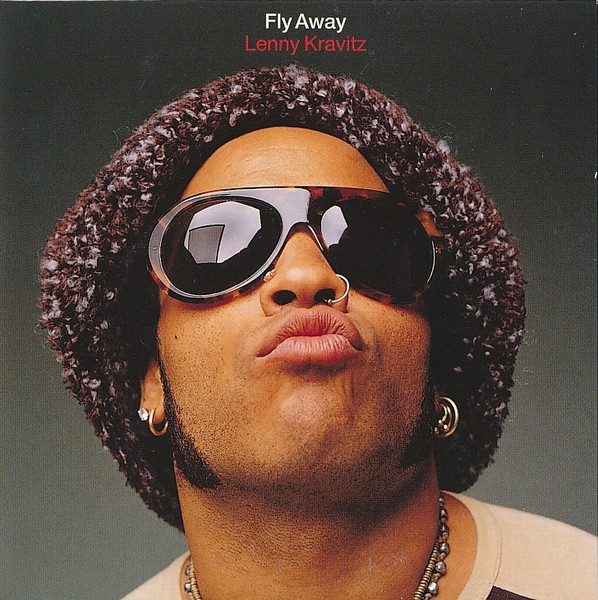
816. ‘Fly Away’, by Lenny Kravitz

Lenny Kravitz then, bringing us three guitar-led number ones out of four…. Heady days!

Fly Away, by Lenny Kravitz (his 1st and only #1)

1 week, from 14th – 21st February 1999

The intro really rocks, a concrete-heavy riff that fills the room, so much that it sets us up for disappointment upon hearing the rest of the song. Not that it’s bad, not really. But the effect-laden guitars in the verses are interesting – I can’t help hearing someone struggling to swallow, in urgent need of a Heimlich manoeuvre – and Lenny Kravitz’s vocals somehow don’t do the tune any favours.

Plus, the lyrics are simplistic, verging on just plain bad. I wish that I could fly, Into the sky, So very high… Just like a dragonfly… Ignoring the fact that dragonflies usually hover at no more than tree-height, the insistence on dragging out rhymes across several lines, entire verses even, is annoying. I want to get away, I want to flyyyyy away… Kravitz pleads, so often that you begin to wish he’d just bloody well go. What’s stopping him?

I’ll admit that my opinion of this track is clouded by the fact I’ve never quite gotten Lenny Kravitz. He seems to me like a parody of an oversexed rock star, desperately wanting to be Prince, or Jimi Hendrix. But then again, Black rock musicians are hardly ten a-penny so I should give him credit for carving out an impressive career. Plus, ‘Are You Gonna Go My Way’ is a ten-out-of-ten classic, and would have made a much more worthy chart-topper.

Having claimed that ‘Fly Away’ isn’t bad, I realise I’ve just spent three paragraphs giving a pretty compelling argument as to why it is. Part of me relishes a brief period of rock dominance at the top of the charts, but at the same time I shouldn’t be uncritical of a song just because it’s got guitars, and isn’t by a boyband or a faceless DJ. This for me doesn’t come close to the gonzo pop-punk of the Offspring, or Blondie’s cool-as-fuck comeback.

It probably wouldn’t have made #1 either, if it hadn’t been used extensively in adverts for Peugeot (for some reason I misremembered it as Vodafone). Kravitz’s only previous visit to the UK Top 10 had been with the already-mentioned ‘Are You Gonna Go My Way’ six years earlier. Songs from Adverts has been a surprisingly successful chart-topping genre over the years, and this won’t be 1999’s last. ‘Fly Away’ does though finally bring to an end our run of ten consecutive one-weekers – by far the longest such run in chart history. It’s been an eclectic quickfire run through Xmas ballads, novelty funk, dance, and some good old fashioned rock and roll. And of course, the record that did finally manage to stay at the top for longer than seven days had to be something pretty special…

815. ‘Maria’, by Blondie

I wonder who had this on their 1999 bingo cards? New-wave icons Blondie stage a comeback, release their first single since 1982, and it only goes and makes number one…

Maria, by Blondie (their 6th and final #1)

1 week, from 7th – 14th February 1999

Okay, the first part had already happened in 1997, with the band spending much of 1998 on tour. But surely nobody expected this… Exactly twenty years since ‘Heart of Glass’ became their first chart-topper, and over eighteen since ‘The Tide Is High’ became what most assumed was their last.

‘Chocolate Salty Balls’ was a recent, perfect example of how to do a novelty hit. ‘Maria’ is, then, a textbook example of how to arrange a comeback smash. They’re still new-wave punks at heart, with razor sharp guitars in the intro and solo, Harry on top vocal form (for that chorus line needs belting out), and some trademark drum fills from Clem Burke. The subject matter also calls to mind earlier Blondie hits-about-girls, like ‘Sunday Girl’ and ‘Rip Her to Shreds’. But the production is clean, crisp, late-nineties alt-rock. A perfect balance that means ‘Maria’ could have come right in the middle of Blondie’s imperial phase; but that also guaranteed radio play in 1999. Plus, there’s wedding bells, which I don’t really get but sound great.

Who is ‘Maria’, though? One of rock’s great femme fatales, she was an imaginary woman, dreamed up by keyboard player Jimmy Destri, who had fantasised about such a girl while at a Catholic school. She sounds pretty high maintenance – She moves like she don’t care, Smooth as silk, Cool as air – but also like you’d give your right eye for her to just notice you. And the line about her Walking on imported air… has to be one of the coolest descriptions in rock ‘n’ roll. Ooh it makes you wanna die…

The slightly surprising thing here is that Blondie weren’t all that old in 1999… They were in their late forties/early fifties, which in 2024, when Beyonce and Eminem can still make number one, doesn’t seem that wild. Debbie Harry was fifty-three, which means she promptly usurps Cher (eleven months her junior) as the oldest female chart-topper. It also meant that Blondie joined a very select group of acts to have made #1 in three different decades, which in 1999 only numbered Cliff, Elvis, the Bee Gees, and Queen (and Paul McCartney, under various guises).

They have gone on to release four more albums since this comeback, the most recent coming in 2017. Chart hits have been harder to come by, but I would point you in the direction of their following lead single, 2003’s cracking ‘Good Boys’. I feel like a Blondie ‘Best of the Rest’ post is overdue…

Finally, we should mention that ‘Maria’ becomes the latest in a long, long line of chart-topping women. Off the top of my head we’ve had Tiffany, Frankie, Josephine, and Eleanor Rigby, but there are many, many more. Though, interestingly, number ones named after women seem to have been much more prevalent in the fifties and sixties than in the 1990s…

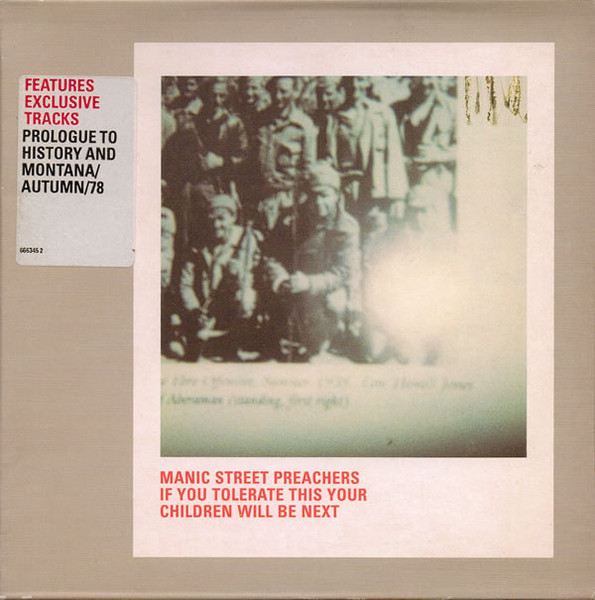
799. ‘If You Tolerate This Your Children Will Be Next’, by Manic Street Preachers

I have a recap coming up in a couple of posts, in which I’ll name the best/worst/weirdest/dullest of the most recent number one singles. But if I ever decide to dish out awards for ‘Best Song Title’, then we’ll have an easy all-time winner…

If You Tolerate This Your Children Will Be Next, by Manic Street Preachers (their 1st of two #1s)

1 week, from 30th August – 6th September 1998

I make the nine-word ‘If You Tolerate This Your Children Will Be Next’, to be the second longest chart-topping title not to feature brackets (and obviously not counting double-‘A’s). Bonus points for naming the eleven-word winner of that award… Anyway, so far so interesting. But is the song any good…?

Well, the dreamy reverb on the guitars is cool, and the song has a big, beefy wall-of-sound feel to it. It’s confident, and orchestral, and as the lead single from their fifth album it declares the Manics to be perhaps the biggest band in post-Britpop Britain. It’s also fairly mid-tempo, a bit Radio 2, when compared to some of their earlier, spikier hits.

Of course, with a title like that, the lyrics were surely going to be the most interesting aspect of this song. And on one level they don’t let us down. So if I can shoot rabbits, Then I can shoot fascists… is a line unlike most others in the preceding seven hundred and ninety-eight #1s. Inspiration for the song came from a Spanish Civil War-era poster, showing a child killed by Franco’s forces with the title-line printed below. The singer is singing from a modern viewpoint though, and feels gutless when he thinks about the generations before him who fought fascism.

The lyrics are also what leave me a little cold, when faced with writing a post on this record. I’d like to celebrate the Manics making number one – a rock song making number one in the very poppy charts of late ’98 – but they have better songs in their canon. And it’s not that I’m put off by the preachy-ness of it (the hint is in the band’s name, after all), but ‘A Design for Life’ did the socialist-statement-with-strings-and-a-massive-chorus much better than this two years earlier (and only made #2). ‘If You Tolerate This Your Children Will Be Next’ is a little too on the nose, a little too much edge without substance. And, removed from the song’s actual lyrics, it can be co-opted by any crackpot conspiracy theorists, as happened in 2009 when the BNP used the song on their website.

I go through phases with the Manics where I listen to them a lot; and then at other times I seem to forget they exist. They always remained somewhat outside the world of Britpop, pre-dating the movement by several years, and by managing hits well into the 2000s, long after most of the other big nineties rock acts had imploded. I do like them, though. And just to prove that I don’t mind political statements in songs, as long as the song itself is strong enough to carry said statement, I will be giving their second number one a glowing write-up.

***I should also mention that I’ve written a post for Kinks Week at Powerpop Blog, which was published earlier today. Please do check it out, along with the rest of Max’s always entertaining and informative posts on music and pop culture!***

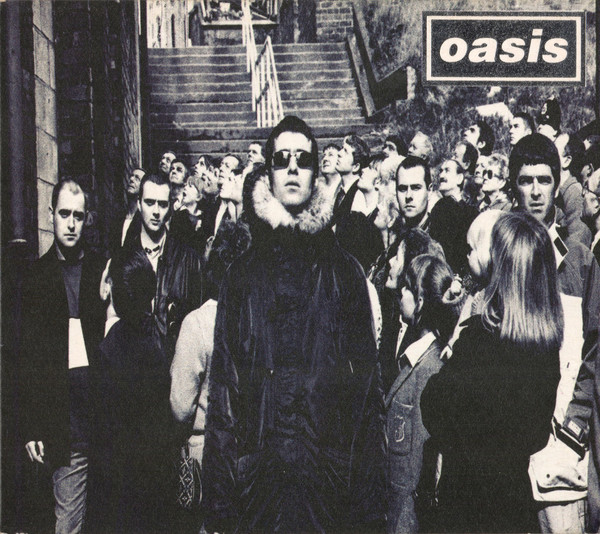
771. ‘D’You Know What I Mean?’, by Oasis

Was this the most anticipated song of the nineties? The decade’s ultimate band, whose previous album had become one of the biggest in history, releasing the lead single from their third LP. In this moment, Oasis were everything, and everywhere.

D’You Know What I Mean?, by Oasis (their 3rd of eight #1s)

1 week, from 13th – 20th July 1997

‘Definitely Maybe’ had the attitude, and the riffs, while ‘What’s the Story’ had the globe-straddling ambition, and huge pop choruses. ‘Be Here Now’ would have to go some to be even bigger than its predecessors… And ‘go some’ it did. Starting with the seven-minute lead…

Seven and a half minutes, in fact, that are completely overblown and ridiculous, and somehow still pretty boring. On the album version, clocking in at almost eight minutes, the scene is set with a full minute of helicopters, feedback, bleeping and blooping, before the song even starts. The first chorus doesn’t arrive until the two and a half minute mark. The final minute or so is more feedback, and psychedelic loops for good measure. Most of the verses are slow and plodding, with so many different tracks welded together that listening to it, especially on headphones, can be a trippy experience. There’s a decent song in there, somewhere, buried under a landslide of sound.

The best thing about ‘D’You Know What I Mean?’ is the lyrics, Oasis at their most Oasis-y. In fact it might as well be the Liam manifesto, with pearls like: Comin’ in a mess, Goin’ out in style, I ain’t good-looking but I’m someone’s child… and I met my maker, Made him cry… Is this his best vocal performance on an Oasis #1? Perhaps. And of course there are two Beatles references (The fool on the hill and I feel fine…) so blatant that Noel was clearly playing to the gallery.

It didn’t really matter what it sounded like, this was always going to go to number one, and the fact that it is so overblown and so far up its own arse makes for an interesting chart-topping record. (Though despite it selling almost 400,000 copies in its first week, Puff Daddy returned to the top a week later.) ‘Be Here Now’ was equally always going to be the year’s biggest album; but after early adulation, the critical response to it quickly soured. It is, how to say… a bit much. Obnoxious, overlong, overproduced, over-the-top. The problem was that Oasis were too big to edit, and they were taking far too much cocaine. Even the title of this record, ‘D’You Know What I Mean?’ sounds like a conversation with a drugged-up bore.

That’s not to say I don’t like ‘Be Here Now’ – it’s got some great tunes buried within it, and gets too much stick from people who probably haven’t listened to it in twenty-five years. And actually, so what if it’s a bloated whale-corpse of a record, made by a band who had spent two years gorging on champagne and coke…? That’s rock ‘n’ roll, baby. Perhaps one of the genre’s last great excesses, just two years out from the horrors of a new millennium. Which of the 21st century’s big rock bands would even attempt something so hideously gargantuan? Coldplay? Snow Patrol? Imagine Dragons…?

In my post on ‘Beetlebum’, I pinpointed that record as the start of the Britpop comedown. Blur had taken themselves off to bed as shivering, sweating wrecks. But ‘D’You Know What I Mean?’ is the sound of Oasis keeping the party going, for better or worse, even though the morning sun is creeping through the cracks in the blinds, as the song drones on and on, and on.

It became the second-longest #1 single ever, ahead of ‘Hey Jude’ but thirty seconds behind Meat Loaf’s ‘I Would Do Anything for Love’. Never ones to be denied, Oasis’s third single from ‘Be Here Now’ will be so long that it will make ‘D’You Know What I Mean?’ seem short and sweet by comparison. And that one will be making number one soon enough.

761. ‘Don’t Speak’, by No Doubt

Without realising it, 1997 has gotten off to a pretty rocking start. Established names like Blur, and U2, have ensured that guitars have been well-represented at the top of the charts. Carrying on the trend are a band enjoying their breakthrough smash…

Don’t Speak, by No Doubt (their 1st and only #1)

3 weeks, from 16th February – 9th March 1997

…which has gone on to become one of the decade’s best-remembered hits. ‘Don’t Speak’ is both of its time – it has that US alt-rock sound, with the post-grunge power chords, that had worked for Deep Blue Something a few months earlier. But it also has some more unusual ideas in the mix: a moody flamenco beat, and melodramatic lyrics delivered more like a showtune (You and me, I can see us dying, Aren’t we…?)

Perhaps, strangest of all, there’s a woman singing! A rock song! Any excuse not to do those dishes… I jest, of course! There have been plenty of women singing rock songs at the top of the chart, and female-fronted rock bands, like Blondie, the Pretenders, T’Pau, and…. You get my point. Gwen Stefani’s fantastic vocal performance was, I’d say, one of the main selling-points.

‘Don’t Speak’ had been around for a while – as had No Doubt, who formed in Anaheim, in 1986, and went through nearly a decade of trying to make it – in a more upbeat form. Stefani re-wrote it after breaking up with the band’s bassist Tony Kanal. The pair then took the leading roles in the video, which plays on the way the media side-lined the three other members to focus on Stefani. The band were on the verge of splitting up, allegedly, on the day they filmed it.

As good as ‘Don’t Speak’ is – and I do like it, though wouldn’t include it my pantheon of all-time nineties classics – it could be seen as a bit of a sell-out for the originally ska/punk No Doubt. The lead single from their 3rd album, the breakneck ‘Just a Girl’ had been a minor hit, and then made #3 on re-release later in 1997, and I do wish that had been the bigger smash.

Maybe it’s just the fact that the peak of their career coincides almost exactly with my formative years, but it seems very odd that this is No Doubt’s, and Gwen Stefani’s, only chart-topper. At least they managed one in the UK, with ‘Don’t Speak’ never officially being released in the US, despite a sixteen-week run on top of the airplay charts. Before we go then I should mention that, in my humble opinion, No Doubt’s grimy ‘Hella Good’, Stefani’s glorious solo debut ‘What You Waiting For?’, and her equally cool, um, ‘Cool’, all should have been number ones. No Doubt, meanwhile, recently reunited for the first time in almost a decade, and played a well-received set at Coachella.

760. ‘Discothèque’, by U2

We come to the last of five one-week number ones, the end of a run of interesting short-stays at the top of the charts. And is this the most interesting?

Discothèque, by U2 (their 3rd of seven #1s)

1 week, from 9th – 16th February 1997

U2 do dance. Or at least, U2 incorporate dance beats, loops and lots of effects into a rock song. Sadly, the title is misleading – there’s no disco to be found here. Bono doing his best Gloria Gaynor is sadly still a pipe-dream, though at various points he does attempt a falsetto to rival the Bee Gees.

No, the ‘dance’ element is firmly nineties-dance – house beats with a techno-ish edge. But underpinning it all is a pretty cool guitar riff, which is fed through different layers of feedback as the song winds on. It is at times crunchy, chiming and, in its best incarnation, gloriously scuzzy. It means that for all Bono’s theatrics, ‘Discothèque’ is actually the Edge’s show, especially when you see his handlebar moustache in the video…

But more on that in a sec. As soon as this single was played on the radio, rock snobs may well have clutched their pearls in horror at what U2 had become. Dance beats! In a rock song! And remixes… by DJs! Pass the smelling salts… But the Prodigy and the Chemical Brothers, even Babylon Zoo, have been pushing this sound for months already, to great success. If anything the critics could have accused U2 of bandwagon jumping. But who cares if it’s not that original – it’s a fun tune. A banger that is sadly forgotten among some of U2’s bigger, more po-faced, hits.

Plus, anyone complaining about this hadn’t been listening to U2 for the better part of a decade. Large swathes of ‘Achtung Baby’ and ‘Zooropa’ had incorporated non-rock influences. Their last #1, ‘The Fly’ was well over five years earlier, but you can hear the roots of ‘Discotheque’ in it, and for most of the 1990s they had been flirting with some avant-garde stuff. So, no, this cannot claim to be the quirkiest of our recent chart-toppers – that accolade remains with White Town. Finally, what confirms this as a good song is that the band look like they’re having great fun in the video, prancing around inside a disco ball, and dressing up as The Village People.

In my posts on U2’s previous number ones, ‘The Fly’ and ‘Desire’, I may have referred to them not being my favourite band, and Bono not being my favourite frontman. But actually, their first three chart-toppers are all very good, and very different. I might even name ‘Discothèque’ as my favourite of all their #1s, if I didn’t know one of the harder-rocking ones to come. It’s definitely better than their next chart-topper, which is U2 by numbers. In fact, this, and the ‘Pop’ album, were probably the last really experimental thing that the band did. For their next LP, in 2000, they went back to the stadium rock anthems that their fanbase loves, but that always leave me a little cold.

758. ‘Beetlebum’, by Blur

Continuing with our run of quirky number ones…

Beetlebum, by Blur (their 2nd and final #1)

1 week, from 26th January – 2nd February 1997

On the one hand, there’s nothing very quirky about Britain’s second biggest band scoring their second chart-topper, with the lead single from their highly anticipated fifth album. And yet… ‘Beetlebum’ isn’t Blur at their most accessible – a fuzzy, droning number about taking heroin. It would actually make a good pub quiz question: name Blur’s two UK number ones. Everyone remembers ‘Country House’ because of the hoo-haa around the Battle of Britpop. But I doubt many casual fans would name this one over ‘Parklife’, or ‘Song 2’.

At the time, ‘Beetlebum’ was seen as a disappointment by some, and it’s hard to imagine this now, as it effectively signalled the start of Blur MK II, the Blur we’ve known for the past two decades. But until now, most of their singles had been laddish and upbeat, delivered with a knowing wink. ‘Beetlebum’ is a much rawer beast, perhaps the first song to mark the comedown from Britpop’s highs.

Damon Albarn was at first reluctant to admit what the song was about, but lines like And when she lets me slip away… Nothing is wrong, I just slip away and I am gone… Plus a whole minute of He’s on, He’s on, He’s on it… give the game away pretty quickly. The song neither glamourises, nor demonises the drug; more gives the feel of what it is like to be under its influence. ‘Sleepy, and sexy’, according to Albarn.

I remember reading a line – though I don’t remember where – describing ‘Beetlebum’ as ‘bum Beatles’. Which is harsh, even if the comparisons to White Album/Abbey Road-era Beatles are obvious, especially in the chorus harmonies. Perhaps because of the Beatles’ influence, Noel Gallagher went on record naming this as the one Blur song he wishes he had written.

And I think nowadays, now that people have got over the disappointment of it not being ‘Girls and Boys Part II’, we can agree that ‘Beetlebum’ is a great song, and if you listen carefully you can hear that it’s as full of hooks as any of their other hits, culminating in one of the creepiest endings to a #1 single – a full minute’s worth of that droning riff, weird noises, effects and alarms, ending with one final click. It’s definitely worthy of being Blur’s ‘other’ chart-topper. Plus, I’ve always had a more personal soft spot for the record, as it was my 11th birthday number one.

They have no further chart-toppers to come, sadly. Follow-up ‘Song 2’, their biggest hit outside the UK, stalled somewhat appropriately at number two, and the lead single from their next album, ‘Tender’, will famously be held off the top by Britney Spears. Damon will be back, though, as the mastermind behind Gorillaz. Two #1s for the best Britpop band (something I’ve just decided this very second, but it feels right) is pretty paltry, so I’ll do a Blur ‘Best of the Rest’ sometime soon.