Random Runners-Up: ‘Everybody Knows’, by The Dave Clark Five

Our next #2 takes us back to the winter of 1967 – The Winter of Love, as nobody called it – and a band who had scored their sole chart-topper almost four years earlier…
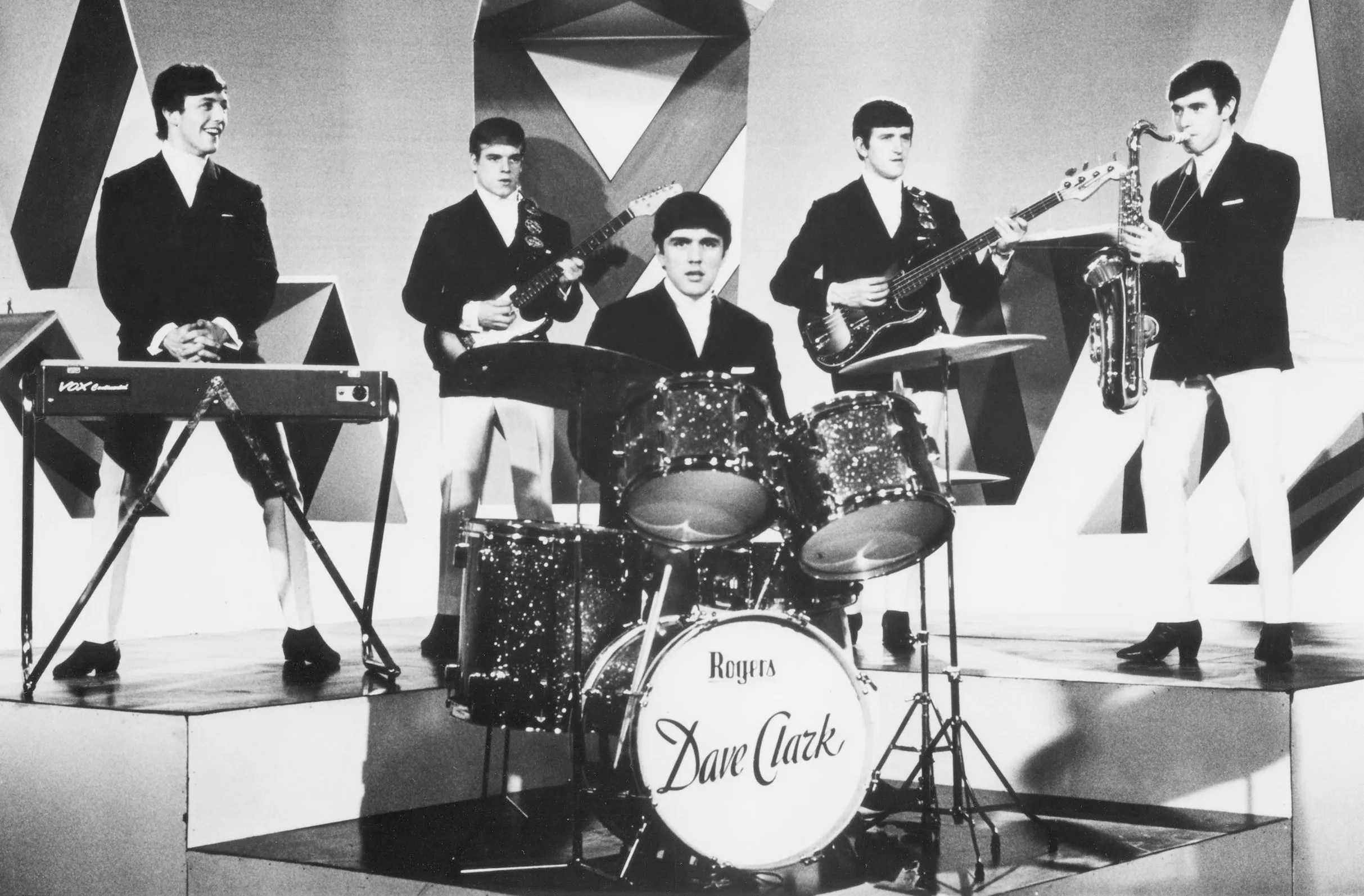
‘Everybody Knows’, by the Dave Clark Five

#2 for 2 weeks, from 29th November to 5th December and 13th to 19th December 1967, behind ‘Let the Heartaches Begin’ and ‘Hello, Goodbye’

Of the five songs that I’ll feature this week, this is the one I’d never heard before writing the post. And it’s a tune that’s very typical of the time. A waltzing rhythm, soaring strings, glossy, chiming guitars… A world away from the pounding pop of ‘Glad All Over’. In fact I’d say it owes a large debt to the big breakout star of 1967 – pillow-lipped crooner extraordinaire, Engelbert Humperdinck. (The Hump went and covered ‘Everybody Knows’ for his ‘Last Waltz’ LP, and made the bold choice to change the lyrics so that he was singing about a man…)

This is a nice enough song, with a lovely key change in the build up to the chorus. But it’s a sign of where pop music was post-British Invasion, when the hippy dream started to go sour, and the sixties started to lose a little of their swing. The best bands ploughed their own furrows: The Beatles went to India; The Stones went satanic; The Kinks hopped down a rabbit-hole of nostalgia… While the rest were left trying to remain relevant. Hence perhaps why The Dave Clark Five ended up sounding like something your gran might shimmy around the living room to, rather than being at the forefront of the hot pop sounds.

Despite it being unashamedly old-fashioned, this single gave the DC5 their biggest hit since ‘Glad All Over’. Possibly the time of year helped, as who can resist a bit of schmaltz at Christmas time? Contrarily, the band had already released a song called ‘Everybody Knows (I Still Love You)’ in 1964, meaning that this one has become unoffically known as ‘Everybody Knows (You Said Goodbye)’. And though it may sound like a swansong, this wasn’t the end for the Five. They still had three Top 10 hits to come, the last of which came in 1970, meaning they outlasted many of their contemporaries.

Tomorrow we’ll have our final runner-up of the series, and if it isn’t another of the most famous #2 singles of all time…

Random Runners-Up: ‘Don’t Worry, Be Happy’, by Bobby McFerrin

Our 3rd random runner-up for the week, and I have to admit I smiled when the date generator threw up this #2 single…

‘Don’t Worry, Be Happy’, by Bobby McFerrin

#2 for 1 week, from 16th – 22nd October 1988, behind ‘One Moment in Time’

I smiled, because I would be able to tell the world how much I detest this song. To say the date generator threw it up feels apt (as does calling it a ‘number two’ single….)

Childish name calling aside, I really do struggle to find anything likeable about this song. Which is strange, because there are few pop songs that have tried as hard to be likeable. The whistling, the finger clicks, the spoken asides… It’s all so folksy, so cute. An a cappella song for all ages – from five to ninety-five – to enjoy.

Except, no. It genuinely makes my skin crawl. And that’s before you get to the lyrics. One critic at the time described it as a ‘formula for for facing life’s trials’, but Bobby’s formula is to simply smile like a lunatic at whatever problems life brings… No money, no partner, rent’s due and the landlord is taking you to court…? Don’t worry, be happy! Why? ‘Cause when you worry your face will frown, And that will bring everybody down… So shut up and smile, you whiny prick!

Maybe I’m reading the song wrong, and am missing a layer of cynicism buried within. Maybe it’s a satire of this sort of life-affirming nonsense. But I doubt it. I’m pretty good at spotting cynicism. No, for me, this is the musical equivalent of a ‘Live, Laugh, Love’ poster, a song for those who refuse to ‘adult’. Plus the song’s crimes go beyond the pop charts: it helped spawn Big Mouth Billy Bass, the mounted fish toy that sings ‘Don’t Worry, Be Happy’ on demand.

While I think it’s bad enough that this made #2 in the UK; it made it to the top in the US, Canada, and Germany. It stayed at #1 for seven weeks Down Under, which confirms every suspicion I ever had about Australians… It was released on the soundtrack to the Tom Cruise movie ‘Cocktail’, which features another all-time classic in The Beach Boys’ ‘Kokomo’. Bobby McFerrin is a one-hit wonder thanks to this tune, but to his credit he moved pretty quickly away from uplifting novelties, and started working in TV and film sountracks, as well as classical, jazz, and musical education in colleges and schools.

Random Runners-Up: ‘Do You Want to Know a Secret?’, by Billy J. Kramer & The Dakotas

Our next randomly selected #2 comes from what, for my money, must have been the most exciting time to be a pop music fan. Come with me back to the summer of 1963, and the Merseybeat explosion…

‘Do You Want to Know a Secret?’, by Billy J. Kramer & The Dakotas

#2 for 2 weeks, from 30th May to 12th June 1963, behind ‘From Me to You’

And its one Liverpudlian act, Billy J. Kramer, covering another, The Beatles. Many of the early beat bands ended up relying on Lennon & McCartney hand-me-downs, and The Dakotas were no different. A few months after this, their debut hit, they would score a first number one with another Beatles cast-off, ‘Bad to Me’.

‘Do You Want to Know a Secret?’ had featured on the Fab Four’s first album, ‘Please Please Me’, released in March that year. (I only just realised that it was sung by George Harrison, who sounds remarkably like Paul McCartney on the recording.) It’s a sweet, simple song, but not one which really indicates that the band were going to be the biggest pop phenomenon the world had ever seen. And The Dakotas’ version is even more diluted, a little more ramshackle, a little old-fashioned in a rockabilly kind of way. Again nice, but they’d pick up the pace on ‘Bad to Me’.

It made #2 during the seven-week run of The Beatles’ first chart-topper, ‘From Me to You’ (not the last time Lennon & McCartney would occupy a Top 2…) It may even have been the best-selling single in the country at some point during its run, but not on the Record Retailer chart, which is what the Official Charts now recognise. It’s the reverse of the situation a few months earlier, when The Beatles’ ‘Please Please Me’ had stalled at #2 in Record Retailer, and therefore the history books, behind yodeller supreme Frank Ifield.

Billy J. Kramer would remain popular for a year or two, scoring a second chart-topper with the ever so slightly creepy ‘Little Children’. Like so many of the earliest Merseybeat stars, though, his star had waned by 1965. The original ‘Do You Want to Know a Secret?’, meanwhile, would go on to be released as a single in the US, where it also made #2.

Random Runners-Up: ‘American Pie’, by Don McLean

It’s that time of year, when I fire up my random date generator (random.org, for all your randomly generated needs) and choose some number two singles from across the ages.

In the main Number Ones blog we’ve reached mid-1993, and so the runners-up I picked could have come from any chart dated between then, and the very first in November 1952. I’m not choosing these hits because I like them, or dislike them… I may not have even heard of them. It’s all random. And yet, the first #2 that pops up just happens to be one of the most famous of all time…

‘American Pie’, by Don McLean

#2 for 3 weeks, from 27th Feb to 18th March 1972, behind ‘Son of My Father’ and ‘Without You’

On the one hand, great that this classic gets a post. It’s a #1 on every metric – cultural heft, recognisability, singalongability – except the one metric that matters when it comes to getting a #1: sales. On the other hand… What’s left for little old me to write about this colossus?

Thirteen-year-old Don McLean was doing his paper round, or so the story goes, in February 1959, when he read the news of the plane crash that killed Buddy Holly, Richie Valens and the Big Bopper (and their pilot) AKA ‘The Day the Music Died’. February made me shiver, With every paper I’d deliver…

The song then goes on to detail the history of rock music from the late fifties to the early seventies, with cryptic references to Elvis, Dylan, the Beatles, the Stones and more, as well as nods to the big news events of the age: the Kennedy assasination, the Cuban Missile Crisis, and the Manson family among them. I know this not because I understand the lyrics; I just read the Wikipedia page.

Like all great poetry, it could mean all the above, or it could mean something completely different. When asked what it’s all about, McLean famously answered: ‘It means I don’t ever have to work again…’ When talking more seriously, he’s compared it to Impressionism. And of course, his next big single would be about a very famous (post) impressionist… Which would make #1.

At over eight and half minutes long, ‘American Pie’ initially had to be split over two sides of a 45′ record, which means people (including me) are much more familiar with the first four minutes than the latter four. In fact, listening to the pub singalong last chorus now, I’m not sure I’d ever heard it before. It is the sixth longest record to chart in the US, and held the record for the longest ever Billboard #1 until 2021.

Before I end this post, I have to give an advance trigger warning. ‘American Pie’ may not have made #1 in its original form, but a version by a certain Queen of Pop will make the top of the charts in the early 2000s. I’m someone who will defend Madonna until the cows come home, but even I might struggle to justify that particular musical decision…

Random Runners-Up: ‘Move It’, by Cliff Richard & The Drifters

Our final #2 of the week, and it’s back to the fifties. To a man we’ve met plenty of times before on these very pages…

‘Move It’, by Cliff Richard & The Drifters

#2 for 1 week, from 24th-31st Oct 1958, behind ‘Stupid Cupid’ / ‘Carolina Moon’

Cliff Richard, in 1958, was Britain’s answer to Elvis. That’s both true, and unfair. True, because he was young, good-looking, and extravagantly quiffed. And unfair, because nobody comes out well from a comparison with Elvis.

This was Cliff’s debut single, his first of sixty-eight (68!) Top 10 hits in the UK, over the course of fifty years. And if you are of a slightly snide disposition – and aren’t we all, sometimes – one could argue that this was the only true rock ‘n’ roll record from Britain’s great rock ‘n’ roll hope.

And it does rock. The opening refrain is great, reminiscent of Buddy Holly, and the purring, driving riff that succeeds it sounds genuinely exciting, almost punk-ish in its simplicity. In the autumn of 1958, it must have been thrilling to hear this growling out of some jukebox speakers, and knowing that the singer was from a London suburb, rather than Memphis.

The lyrics are pretty nonsensical, as all the best rock ‘n’ roll lyrics are… C’mon pretty baby let’s a-move it and a-groove it… while The Drifters sound the equal of any American group. (They wouldn’t become The Shadows until 1959, by which point they had accompanied Cliff on his first of many easy-listening #1s, ‘Living Doll’.)

The one thing that doesn’t quite sell this for me is Cliff himself… He just sounds a bit too nice. And I don’t know if that’s because I can’t seperate the goody-goody, God-bothering, Centre Court-serenading Cliff Richard from the eighteen-year-old version. Still, imagine Elvis mumbling and grunting his way through this…

As I referred to above, Cliff would go on to enjoy some reasonable success over the ensuing decades… I wonder if anyone who bought ‘Move It’ in October 1958 imagined that this hot young rocker would still be touring and recording in 2022, well into his ninth decade… As uncool as he is, I can’t bring myself to dislike Sir Clifford of Richard: he’s a bona-fide pop legend. I can’t say I’m looking forward to reviewing any of his three remaining #1s, though, but that’s a story for another day…

I hope you’ve enjoyed random runners-up week. The regular countdown will resume over the weekend, picking up in the summer of ’86…

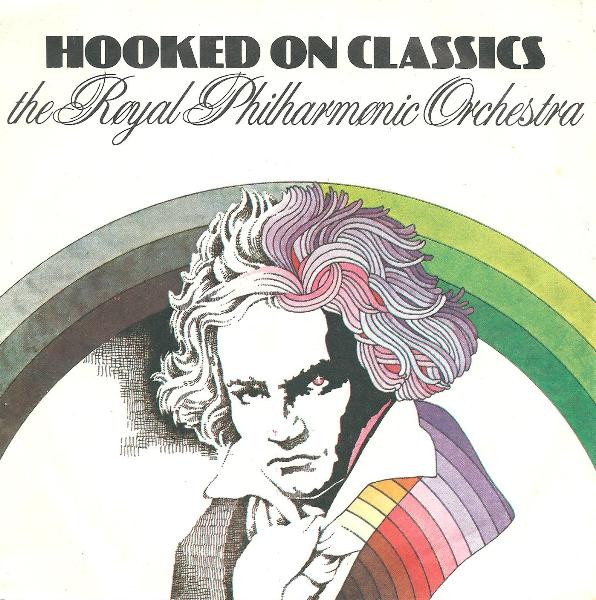
Random Runners-Up: ‘Hooked on Classics’, by The Royal Philharmonic Orchestra

For the next in our series of songs that almost made it… It’s time for something a little different…

‘Hooked on Classics’, by the Royal Philharmonic Orchestra

#2 for 2 weeks, from 9th-23rd Aug 1981, behind ‘Green Door’

Disco had wormed its way into pretty much every area of popular music in the late 70s. ABBA went disco, Blondie too. Rod Stewart, of course, even The Stones… By the early eighties, amid the ‘disco sucks’ backlash, ‘cooler’ acts had ditched the glitter ball, new wave had taken over, and we were left with… this?

It’s a medley of classical pieces, performed by the Royal Philharmonic Orchestra, set to a basic, drum-machined disco beat. Nothing more, nothing less. It’s both completely bizarre, and stunningly simple. I’m going to show up my terrible knowledge of classical music by trying to identify some of the pieces involved: there’s the bumblebee one, something by Vivaldi (edit: it’s Beethoven), ‘Rhapsody in Blue’, and the 1812 overture… There’s plenty more that I couldn’t identify, from Mozart, Handel and Grieg.

I’m trying to imagine who bought this? I can’t imagine classical music lovers really being into such dumbing-down of Tchaikovsky and co., nor can I imagine it filling a dancefloor. Perhaps it was bought by people who thought it made them look cultured – the type that call going to see ‘Mamma Mia’ a night out at the theatre (God, that sounded snobby!) At the same time, and as much as I liked ‘Green Door’, I do wish this had made #1. It would have made for one of the strangest chart-toppers of all time… And clearly there was enough of an audience, because the RPO released three entire albums in the ‘Hooked on Classics’ series!

There was a bit of a medley craze in the early eighties, to be fair. Stars on 45 are the big one that springs to mind, their sixties medley made #2, also in 1981, and got all the way to the top in the US. Britain would have to wait a few more years for its own set of chart-topping medleys, courtesy of a cartoon rabbit (don’t ask…) Anyway, here is ‘Hooked on Classics’, to be enjoyed in all its glory below. There aren’t many YouTube videos to choose from, and I’m not sure if this one with all its black and white footage is the original. Trigger warning: the video features more Steve Wright than is ever strictly necessary…

One last #2 up tomorrow!

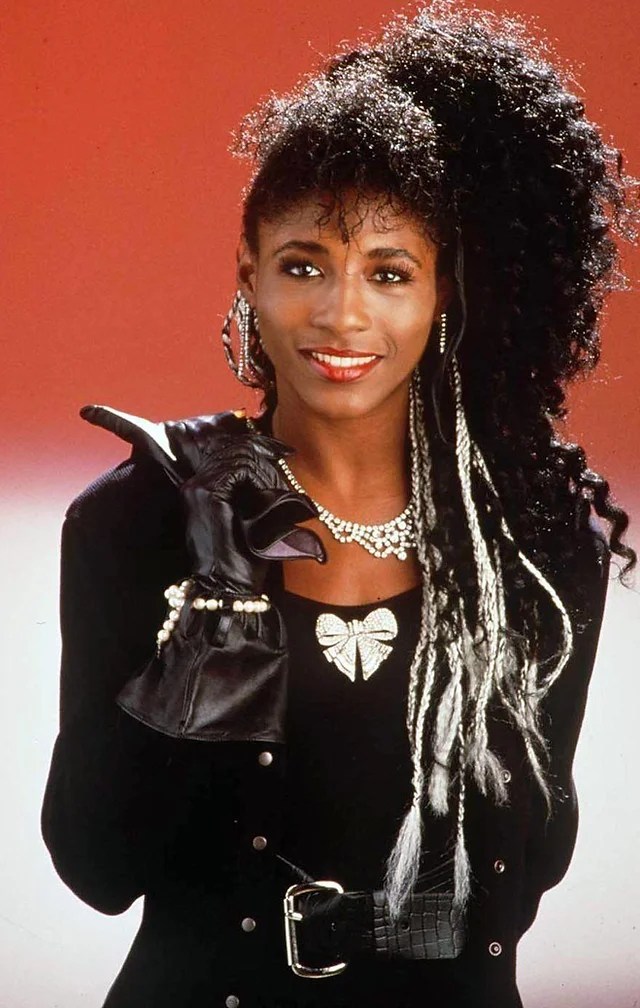
Random Runners-Up: ‘So Macho’, by Sinitta

Our second #2 of the week is almost as recent as it was possible to go, and a slight change in mood from Ned Miller…

‘So Macho’, by Sinitta

#2 for 1 week, from 3rd – 10th Aug 1986, behind ‘The Lady in Red’

The world can be a cruel, unjust place. War, famine… ‘The Lady in Red’ keeping this camp classic from reaching #1… plagues, natural disasters…

First things first. This is complete and utter trash. From the clanking, processed, so dated it grates your teeth intro, past the unbelievably cheesy video, and onto the opening couplet: I don’t want no seven-stone weakling, Or a boy who thinks he’s a girl… as Sinitta lays down her dating manifesto (‘man’-ifesto… see what I did there…?) Second things second, I love it.

The chap who wins Sinitta’s heart has to have ‘big blue eyes’ and ‘be able to satisfy’… He’s gotta be big and strong, Enough to turn me on… By the second verse, things have taken a mildly BDSM turn… I’m tired of taking the lead, I want a man who will dominate me… I love these lyrics in part because, let’s be honest, they probably wouldn’t cut the mustard these days.

As much as I love this song, I can admit that, by any barometer of taste and decency, it is pure crap. I assumed it was a SAW production, given the tinny synths, but no. Sinitta was, however, the very first act signed by a young Simon Cowell (the pair even dated for a while). ‘So Macho’ was his first hit single, although it took two re-releases over the course of a year for it to take off. And, as fun as this tune is, if it had flopped we may well have been spared Robson & Jerome, Pop Idol, The X-Factor, Britain’s Got Talent… (Sinitta, what did you unleash…!)

In a shocking and truly unforeseen twist, ‘So Macho’ proved very popular in gay bars and clubs, giving Sinitta a fanbase that meant she was good for a few more Top 10 hits. Since the chart career ended she has gone into appearing on daytime TV, helping Cowell out on his ‘talent’ shows, and dating a pre-fame Brad Pitt! A life well lived…

Another #2 up tomorrow…

Random Runners-Up: ‘From a Jack to a King’, by Ned Miller

Time to step away from our regular parade of #1 singles, and to shine a light on some songs that never quite made it. Yes, it’s Random Runners-Up Week – five posts on five randomly chosen number two hits. The dates used can range from the start of the singles chart in 1952 right up to our current location in time (mid-1986)… And these songs genuinely were chosen at random, and not because I like them (which I hope will become abundantly clear when you see what tunes the date generator threw up this time…)

First up, then…

‘From a Jack to a King’, by Ned Miller

#2 for 3 weeks, from 11th Apr-2nd May 1963, behind ‘How Do You Do It?’

…a simple country ditty. From a Jack to a King, From loneliness to a wedding ring… It’s a ultra-country premise: love as a card game, with lots of references to ‘lady luck’ and ‘winning a queen’. A guitar strums out a simple riff, then plucks out a simple solo, and the backing singers see-saw a simple melody back and forth. Simple, and sweet.

I think I may have overused the word ‘simple’ in that there paragraph. But there’s no better word for this tune, especially when I compare it with the era I’ve been writing about in recent months (the over-produced eighties…) It sounds almost prehistoric by comparison. In fact, this song sounds dated even for 1963!

And that’s because it was actually from 1957. It hadn’t charted – hadn’t even been released at the time – but for reasons I cannot pinpoint it made the Top 10 over five years later. The early sixties were a hot-bed of retrospective and re-released hits, though. And this is a significant #2, because it sat behind the very first Merseybeat #1 from Gerry & The Pacemakers. It’s easy to view the moment that ‘How Do You Do It?’ hit the top as a turning point, as the moment the sixties began to swing, which it was. But things clearly didn’t turn overnight, with Ned Miller crooning away just behind…

Once this record had belatedly become a hit, it quickly became a country standard, covered by Elvis, Jerry Lee Lewis, and Mud. It also ensured that Ned Miller had a fairly succesful career on the US country charts for the rest of the decade. He is so very nearly a UK one-hit wonder, though. His only other single to chart made #48 a few years later…

Another #2 up tomorrow – one that gives us a big ol’ change of tone…

Random Runners-Up: ‘We Are the Champions’, by Queen

One final runner-up for the week, and a bit of a forgotten classic to finish on…

‘We Are the Champions’, by Queen

#2 for 3 weeks, from 13th Nov-4th Dec 1977 – behind ‘The Name of the Game’ and ‘Mull of Kintyre’

Only kidding. To tell the truth, I always thought that ‘We Are the Champions’ was released as a double-‘A’ with ‘We Will Rock You’. It wasn’t, at least not in the UK, where ‘We Will Rock You’ was the B-side. But if ever there was a song that didn’t need any support, that could stand alone as a statement, ’twas this one.

It’s not that ‘We Are the Champions’ invented the rock opera. But before this, rock operas were spread out over entire albums. Queen managed to get the form down to three perfect minutes. The choruses: rock, soaring rock. The verses: pure Freddie Mercury theatre. The way he toys with the line You brought me fame and fortune and everything that goes with it…! is sublime. It doesn’t come close to scanning with the song’s rhythm, but he makes it work.

This record has been slightly lost to sports events now, blasted out after every cup final and league title because, well, no time for losers. But in its original form it feels like more of a positivity anthem. We are the champions, all of us, and we’ve all had to struggle to get there. Mercury himself, of course, was no stranger to not having things easy, growing up non-white and non-heterosexual in a time not much inclined to accept either of those things. And yet he took the sand kicked in his face and came through…

It’s easy to be cynical, and I can be cynical about most things in life… But I refuse to be cynical about this song. It’s irrepressible. It’s been confirmed, in a 2011 study by actual scientists, to be the catchiest song ever written. And in the recent ‘Bohemian Rhapsody’ biopic, Queen’s performance of this song at Live Aid drew the film to a close and sent me out the cinema thinking, briefly, that I had just seen the best movie ever (I hadn’t, but there are few films that wouldn’t be improved by having a performance of ‘We Are the Champions’ tacked on the end…)

Back to the regular countdown next week.

Random Runners-Up: ‘The Son of Hickory Holler’s Tramp’, by O.C. Smith

The late sixties were one of the most eclectic periods for the UK charts, as the classic mid-sixties beat sound fractured, and a multitude of different genres filled the void.

‘Son of Hickory Holler’s Tramp’, by O. C. Smith

#2 for 3 weeks, from 3rd-24th July 1968, behind ‘Baby Come Back’

Which means country/soul oddities like this were free to spend three weeks at #2, behind the Equals’ reggae-rock chart-toppers. I say ‘country/soul’ because, while the sound is pure rhythm and blues, with a brilliantly funky bass-line, the story it tells is one of pure country woe…

Oh the path was deep and wide, From footsteps leading to our cabin, Above the door there burned a scarlet lamp… Daddy’s a drunk who packed up and left, leaving the weeds high and the crops dry so, yes, mum’s turned to whoring to feed her fourteen children. And yet, it’s an overwhelmingly positive song. Yes, I’m the son of Hickory Holler’s tramp! announces O. C. Smith, unashamed of how his mother made ends meet.

The neighbours did nothing to help, but did plenty of talking, and judging. The children didn’t notice though – all we cared about was momma’s chicken dumplings... – and grew up loved and nurtured. Mum’s dead now, Smith sings, but every Sunday fourteen roses arrive at her graveside. By the end, as Smith declares once again just who he’s the son of… Well, if there isn’t a tear in your eye.

It’s a very progressive song – probably long before ‘progressive’ became a thing – and I wonder why such a big hit has been erased from the sixties canon? Maybe it’s because the subject matter is just a little too on the nose, a little too celebratory towards the world’s oldest profession? Either way, I’m glad the date-generator threw up this forgotten hit. Ocie Lee Smith had many chart entries on the Billboard chart in the sixties and seventies, but in Britain he is a bone-fide one-hit wonder. He died in 2001.

One last number two for you tomorrow, and it’s one we can all sing along to…