228. ‘I’m a Believer’, by The Monkees

We leap into 1967 grins and cheeky winks all round. Hey, hey… It’s The Monkees!

87f124a078fed3759c43f8baf2317a9c

I’m a Believer, by The Monkees (their 1st and only #1)

4 weeks, from 19th January – 16th February 1967

Wham: The organ riff intro. Bam: The guitar lick. This is a record that doesn’t hang around. I thought love was only true in fairy tales, Meant for someone else, But not for me… And then, less than thirty seconds in, we hit the chorus. It feels quick, even though it’s a regular two and a half minute song. Or maybe it feels like boxes are being ticked. Check, check, check. We got ourselves a hit record.

It’s hard to write about The Monkees – and I say that as someone who knows very little about them – without resorting to the clichés. The first manufactured boy-band. They didn’t write their own songs (This one was written by Neil Diamond, no less.) They couldn’t really play their guitars! The TV series. ‘An American rip-off of The Beatles’. All stuff that has passed into pop-culture legend. You can’t help but picture them running goofily along a beach. But, and I hope that this has become apparent as this blog has gone on, I’m no music snob. A good song is a good song, no matter who it was recorded by. And ‘I’m a Believer’ is ‘A Good Song’. It’s an ear-worm. You don’t switch stations when it comes on the radio.

The chorus especially, hits all the right spots. Then I saw her face, Now I’m a believer, Not a trace, Of doubt in my mind… Then the Mmmmhhh… And the perfect hook of rhyming ‘believer’ with ‘couldn’t leave her.’ Yes, the verses are a bit basic: ‘pain’ and ‘rain, and so on. And the topic is love. Or, not love. Lust. But not lust. It’s a song about the general concept of love, with a smudge of lust, for kids who don’t know yet what those feelings are. And it’s not a Beatles ‘rip-off’. Not quite. It’s definitely influenced by the Beat sound, especially the guitar licks between the verses. But the most Beatles thing about The Monkees were their haircuts. It’s a disc that ends on a high too, with that great Yayayayayaay!

SEV928 (265)

‘I’m a Believer’ feels like a moment. The fact that it’s the first #1 of a new year, maybe. Something’s shifting. Is this perhaps the first ‘pop song’? Hear me out… Up to now pop music has been jazz, and swing, and rock ‘n’ roll, R & B, and rock. All those sounds have been popular. But this. This is a song written with the single purpose of being popular. Of promoting a group of young men and forcing them into the hearts, and onto the bedroom walls, of girls aged between nine and, say, fourteen.

What I mean to say is that The Monkees are taking the sound of the mid-sixties: Beat pop mixed with folk and R&B, on the cusp of flower-power, and diluting it into pure pop. But, of course, that’s been happening for years. Paul Anka’s ‘Diana’ was diluted rock ‘n’ roll. Helen Shapiro’s ‘You Don’t Know’ was diluted jazz. The Four Pennies ‘Juliet’ was diluted Merseybeat. I’ve just answered my own question, then. This is not the first ‘pop song’. This isn’t anything new. It’s just a next step in The Evolution of Pop.

I’ll stop before I disappear any further into my own mind. This is a post on ‘I’m a Believer’; not a philosophical dissertation. But it is The Monkees’ one and only appearance on this countdown and so I did need to cram it all in. Anyway, a quick glance at their discography on Wikipedia shows just how much of a monster hit ‘I’m a Believer’ was: #1 across the world, from Australia, to Germany, to Canada. And, like all the best boy-bands, they burned out pretty quickly. Though not before they left us with some great pop songs: ‘Last Train to Clarksville’, ‘Daydream Believer’, ‘Pleasant Valley Sunday’… And one I had never heard of before starting this post, but which may be my new favourite-ever song title: ‘Randy Scouse Git’ (released, perhaps unsurprisingly, as ‘Alternate Title’ in the UK.)

Listen to every #1 so far in this playlist:

226. ‘Good Vibrations’ by The Beach Boys

I read an article once, on The Guardian, about how 1966 was the best year in the history of pop music. You can check it out here. And, as we reach the penultimate #1 of the year, you look around and pretty much have to agree with them. Yes, the standard of chart-topper has been ridiculously high since mid-1963, while 1961 was eclectically fun and there were a few months in 1957-58 when every rock ‘n’ roll legend around was lining up for their moment in the spotlight… But 1966 beats them all. Because 1966 has this song.

AR-AO023_BeachB_FR_20160912131252

Good Vibrations, by The Beach Boys (their 1st of two #1s)

2 weeks, from 17th November – 1st December 1966

How to even contemplate writing a post on ‘Good Vibrations’? How to say anything remotely original, anything that hasn’t been said a thousand times before. The genius of Brian Wilson… The hundreds of hours of tape… The synthesisers… The expense…. You’ve heard it all before.

So let’s listen to it, then, as if it were the first time we were ever hearing this hot new single from America’s biggest band. The follow up to their smash hit ‘God Only Knows’. Is this the disc to give them their long-overdue 1st British #1…?

It comes in all dreamy, and echoey. Angelic vocals and a shimmering backing track. I, I love the colourful clothes she wears… It’s trademark Beach Boys – high-pitched harmonies – but completely different to, say, ‘Barbara Ann’. And when the drums come in, like a drunken horse clomping around its’ stable, it’s gorgeously woozy.

Then woosh! We’re into the chorus. Not hanging around. That insistent bassline. The UFO stylings of the Theramin. I’m pickin’ up good vibrations, She’s givin’ me the excitations… Perfectly nonsensical pop lyrics. More harmonising. Good – ba-ba – Good vibrations – ba-ba…

Verse II. Snap back to woozy bliss. I… I look in her eyes, She goes with me to a blossom world… Trips? To different worlds? Is that a drug reference I smell? Are you boys smoking pot down there…? It’s the summer of love come six months early. Repeat the chorus. You can tell that they were stitching different pieces of music together, in the way that the song swerves this way and that, but it never sounds forced.

Then another sharp turn, into jingle-jangly Baroque pianos. Things get woozier. I don’t know where but she sends me there… We’re mid-trip, but we don’t have time to relax. Because now we’re at a funeral. At least, there’s a funeral organ, and a plaintive chant: Gotta keep those love-good, Vibrations a-happenin’ with her… Which fades away and is replaced by a home-on-the-range whistle, and a throbbing bass… Aaaaaahhhhhh!

Pause.

Good, good, good, good vibrations…! And then by the time you get to the layered na-na-na-nas you just want to say ‘Alright, boys, you’re just showing off now…’ Cue the fade-out, with the Theramin to the fore, as the aliens come and beam us all up. Phew.

It’s still The Beach Boys; but in a dimension we’ve never been to before. And it’s still a pop song; but one from a planet we’ve not managed to reach yet. The sonic shock you get when you hear it, alongside its contemporaries, is similar to that felt from ‘Telstar’, in 1962. Another record from another planet.

BEACH_BOYS_GOOD+VIBRATIONS+-+SOLID-569561

That was fun! I have to admit that for years I’ve viewed ‘Good Vibrations’ as a sort of museum piece – a work of art to be admired, but not enjoyed. Best viewed from afar. That happens with ‘The Classics’. ‘Good Vibrations’ would never crop up in any of my playlists. But maybe it should. Maybe I’ll add it today. It stands up as a pop song. At heart it’s a ditty about falling in love at first sight. Musically, it’s outrageously creative without being pretentious. Perfect.

I love that this was The Beach Boy’s first UK #1. Slamming right in at the top with a little disc called ‘Good Vibrations’… Of course, it wasn’t their first hit. In 1966 alone, they’d had two #2s, with ‘God Only Knows’ and ‘Sloop John B’. In their native US they were huge, and had been for years. The only reason they took a little longer to take off in Britain is that their early surf-rock songs didn’t resonate on an island where any attempt at surfing usually ends in frostbite.

‘Good Vibrations’, and the ‘Pet Sounds’ album that preceded it, was a line in the sand. The Beach Boys were upping their game, and were ready to take on the British big boys: namely John and Paul. Anyway… You can read hundreds of more sophisticated analyses of ‘Good Vibrations’ – the record that changed pop music. You know where to find them. If, though, for reasons best kept to yourself, you have never heard ‘Good Vibrations’ before (or even if you’ve heard 1000 times already) press play on the link below, and get yourself some excitations…

225. ‘Reach Out I’ll Be There’, by The Four Tops

Amongst all the glorious music that has reached the top of the charts over the past few years, as we’ve reached the apex of the swinging sixties – Merseybeat, R&B, folk, soul, garage rock – one genre has been seriously underrepresented. Motown.

Granted it’s not technically a genre, more a record label… but hey – everyone knows the Motown sound. And ‘Reach Out I’ll Be There’, by male vocal group The Four Tops, is only its 2nd ever UK #1, after The Supremes’ ‘Baby Love’. And so, in the context of the charts of 1966, this record stands out every bit as much as its predecessor, Jim Reeve’s croon-tastic ‘Distant Drums’.

AR-AC273_Music1_P_20130424150355

Reach Out I’ll Be There, by The Four Tops (their 1st and only #1)

3 weeks, from 27th October – 17th November 1966

And, though I mentioned the ‘Motown sound’ right there in that last paragraph, the intro to this song is more ‘Spaghetti-Western’. They’re not pan-pipes, are they…? It’s ominous, and thrilling. A horseman clattering round the corner to save his damsel in distress. Now if you feel like you can’t go on, Because all your hope is gone, And your life is filled with much confusion, Until happiness is just an illusion…

It should be a ballad. It should be sung by Lionel Richie at a piano. It’s a brilliant song, but the music and the lyrics don’t really match. The woman in the song isn’t just a little unlucky in love; she’s apparently suicidal. Her world has gone cold, is crumblin’ down, while she drifts out all on her own… I mean, it’s heavy stuff. And all the while The Four Tops charge to her rescue aboard a frantic and incessant groove. Reach out for me…

It’s melodramatic – I get that – and way over the top. It reminds me of John Leyton’s ‘Johnny Remember Me’, possibly the only other #1 single so far to be based on a horse’s gallop. But several things about this record push it above camp curio and into the realm of the classic. There are the ‘Ha’s!’ the pepper the end of lines, the spoken asides – Just look over your shoulder! – and the outrageously funky bass riff before the choruses. And, most of all, the Dar-lin’s!

The Top’s lead singer, Levi Stubbs, commits to each and every line of this record. It’s one of the most memorable vocal performances that we’ve heard in this countdown. He commits to the point where it doesn’t matter how ridiculous the song is. His vocals are the reason that this is a Rolling Stone ‘Top 500 of All Time’ kind of tune.

374x370

It’s a deserved #1. It’s a great song and it’s about time that another Motown disc got there. For a genre that is hugely loved and respected in the UK – think all the compilation CDs and ‘Motown Weeks’ on X Factor – it really never got its due representation at the top of the charts. ‘Reach Out I’ll Be There’ was the label’s 13th Billboard chart-topper. In Britain it was, as I mentioned at the start, its 2nd. They will have 1 (one!) more #1 in the ‘60s, and only eight in total, ever…

And I have to admit that The Four Tops are a band I’d heard of – Motown, sixties, etc. etc. – but didn’t know too much about. The hits were more famous than the group it seems, as scanning through their discography you can see some stone-cold classics: ‘I Can’t Help Myself (Sugar Pie, Honey Bunch)’, ‘Standing in the Shadows of Love’, ‘It’s the Same Old Song’… Not a bad encore. And they do still tour, though ‘Duke’ Fakir is the only surviving original member.

All of a sudden, then, in The Four Tops and Gentleman Jim, two American acts have wrenched us away from what had been ‘the sound of ‘66’. And up next, another bunch of American ‘Boys’ (hint, hint) will drag us even further from our comfort zones with, ah yes, possibly the greatest pop song ever recorded…

Follow along with this handy playlist:

222. ‘Eleanor Rigby’ / ‘Yellow Submarine’, by The Beatles

In my intro to The Beatles’ last #1 – ‘Paperback Writer’ – I said that it was a definitive split away from ‘The Fab Four’. This latest chart-topper from the group, then, is an even greater stride away from the mop-top days.

PtsjOFH

Eleanor Rigby / Yellow Submarine, by The Beatles (their 11th of seventeen #1s)

4 weeks, from 18th August – 15th September 1966

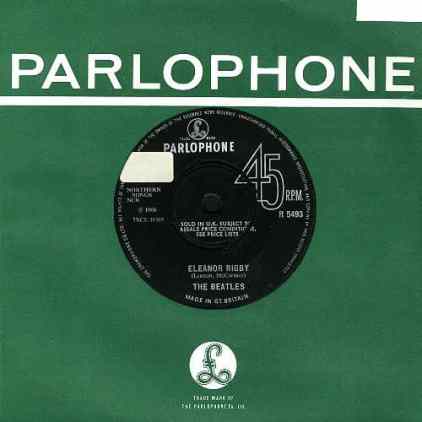
The first side of this double-‘A’ disc contains a song that features no guitars, no drums, no nothing apart from strings. It’s a story about two people: Eleanor Rigby, who lives in a dream and wears a face kept in a jar by the door, and Father McKenzie, who writes sermons that nobody will hear and who spends his nights darning socks… We are a million miles away from ‘I Want to Hold Your Hand’, and that was barely two and a half years ago!

It’s a horribly sad song. Just start with the main refrain: Ah, look at all the lonely people! Then delve into the details. The images. Eleanor sweeping confetti from the floor of a church, after a joyful wedding party has been and gone. The priest and his socks. Eleanor’s funeral, at the end of which Father McKenzie wipes the dirt from his hands and walks back to church alone. No-one was saved…

The characters are fictional, although Paul McCartney has at times been ambiguous when asked about them. The grave of an Eleanor Rigby exists in Liverpool, very near to where Paul and John first met as teenagers. She died in 1939, aged just forty-four, and it does seem slightly too much of a coincidence. But then again, if you were going to invent a fictional old woman’s name, Eleanor Rigby wouldn’t be a bad shout.

Real or invented, Eleanor’s song races along on tight, menacing violins – the story told in barely two minutes. It’s a vignette, a moment in time. You can imagine Paul McCartney viewing the churchyard from the window of a double-decker bus, Eleanor sweeping the church steps, Father McKenzie waiting for the congregation that will never come, and then going home to write the song. Just what is it about? A study in loneliness? The decline of Christianity? A comment on the misery of post-war Britain? The more you listen to it, the more important ‘Eleanor Rigby’ sounds. And the less like a chart-topping record. Only The Beatles could have taken this song to chart success. Largely because only The Beatles were capable of writing pop songs like this.

uk_eleanor-rigby

They were also the only band capable of writing songs like the one on the other side of this disc. We flip the record, and move from the sublime into the ridiculous. As if they thought that ‘Eleanor Rigby’ might be too much of a departure, too avant-garde, and so wanted something childishly reassuring to go along with it. But, in its own way, ‘Yellow Submarine’ is every bit as arresting…

Let me state right here right now – it is impossible to truly hate ‘Yellow Submarine’. It might be irritating, cheesy and pointless… but there’s a loveable nugget buried in there. Perhaps it’s because ‘Yellow Submarine’ is often the first Beatles song people ever hear as toddlers. I think also, for me, it’s the fact that Ringo sings it. There’s something wonderfully soothing about Ringo’s voice. It’s got a melancholy tremble that contrasts nicely with the song’s stupidly optimistic lyrics. Plus, his voice always reminds me of ‘Thomas the Tank Engine’, which was my favourite TV show as a sprog.

In the town, Where I was born, Lived a man, Who sailed to sea… Ringo and chums sail out to find the land of submarines. They live a life of ease, beneath the waves… The end. It’s a complete novelty. The silliest, most childlike chart-topper since ‘(How Much Is) That Doggie in the Window’ from way back when. To pair this with ‘Eleanor Rigby’ reminds me of when Elvis paired ‘Can’t Help Falling in Love’ with ‘Rock-a-Hula Baby’, times ten.

But hey. I like the bit where the band begins to play, and the use of goofy sound effects as the sub gets its journey underway, and the final verse, with the shouted, distorted backing vocals. The band must have enjoyed recording it, as they went and endorsed a whole movie based on the song. The cartoon ‘Yellow Submarine’ is probably one of the iconic Beatles images, along with Sgt Peppers and the EMI stairwell pictures.

Of course, this being The Beatles, the lyrics to ‘Yellow Submarine’ have undergone intense scrutiny. Just what is it about, man? Is it an anti-war statement (Yellow Nuclear Submarine?) Is it an ode to a hippy commune? The band themselves, as they usually did, stated that it was just a children’s song about a big, yellow submarine. Nothing more, nothing less.

So, there you have it. Two completely bizarre songs from the biggest band in history, at the height of their powers. There’s an arrogance to them releasing this disc – in them saying to their adoring public: ‘Here, get your pretty little heads around this!’ And it marks the start of a mini-hiatus from the top of the charts for The Beatles. Their next release, another very famous double-‘A’ side, will (gasp!) not make #1, and we won’t hear from them until almost a whole year has passed. By which time they will have taken another supersonic leap forward…

Follow along here:

219. ‘Getaway’, by Georgie Fame & The Blue Flames

Following on from The Kink’s ‘Sunny Afternoon’, and we are keeping up with the summery theme. For what could be more summery than a little getaway…?

georgie-fame-and-the-blue-flames-1965-resize-1-1280x620

Getaway, by Georgie Fame (his 2nd of three #1s) & The Blue Flames (their 2nd and final #1)

1 week, from 21st – 28th July 1966

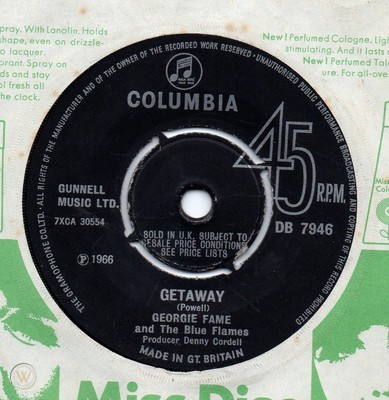
Gotta go, I hope you’re ready cos, Take a look outside… Georgie sings… We’ll leave the city folk, They’ll have to stay… he persuades… Don’t have to pack a thing, Just get away… It’s not as soulful, or as funky, as his previous number one, ‘Yeh Yeh’. It’s a simple enough acoustic riff, with a brass section for back-up. It’s cute. It’s catchy enough. It makes sense when you discover that it was written, initially, as an advertising jingle for a brand of petrol.

A lot of the song, around thirty percent I’d guess, is Fame chanting gotta go over the jaunty rhythm. Dig a little deeper into the remaining lyrics, though, and it turns out that his ‘getaway’ isn’t going to be a particularly luxurious one. I know a little place… A kind of pretty place… But it sounds charming: sun, sea and a bit of peace and quiet. I suppose it speaks to a time when young people didn’t have as much freedom, and perhaps could only truly ‘getaway’ once they were married…

georgie-fame-blue-flames-getaway-1966_360_a14c4c905930e91eb7f8b67044e08e6d

Musically, there are two things of note. There’s an organ solo, which places this song firmly in the mid-sixties. And every few lines a horn gives out a low parp, the sort of sound that usually follows a clown’s pratfall, which lends an (unintentionally?) comic air to the record. Apart from that, there doesn’t seem to be that much to it. It’s a nice enough diversion. Both of Georgie and The Blue Flames’ #1s have been a little off the beaten path compared to the dominant sound of the time. I like that – he was doing his thing and, clearly, people were digging it.

Another point to note – this hit is referred to as both ‘Getaway’ and ‘Get Away’, with different vinyl pressings having one title or the other. The Official Charts list it as one word so that’s what I’m going with… And I’m struggling to write much more about this chart-topper, to be honest. It’s nice. The end.

Plus, Georgie Fame will be making one more appearance at the top of the charts in a year or so, minus his Blue Flames (it is a really cool name for a backing band, isn’t it: The Blue Flames), so we can skip the bio bit. Anyway, I know that I’m publishing this in late October, but close your eyes and imagine that it’s high-summer, as it was when this disc hit the top of the charts. Close your eyes and, for two minutes thirty-one seconds, getaway.

218. ‘Sunny Afternoon’, by The Kinks

It’s high summer. The sun bakes in the sky, heat haze rises from the tarmac, a willow droops lazily by the river. ‘Sunny Afternoon’ is a record that has always, ever since I first heard it as a kid, conjured up an image in my mind. An image of a man, on the lawn of his country house, in a deckchair, with a tall, icy drink in hand.

kinksweb

Sunny Afternoon, by The Kinks (their 3rd and final #1)

2 weeks, from 7th – 21st July 1966

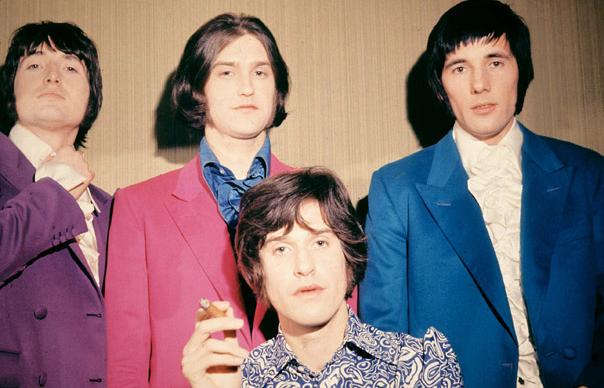
The intro descends, like the weeping willow, into a tale of upper-class woe. I mentioned that the previous #1, ‘Paperback Writer’, had a satirical edge to it, and The Kinks take it up a notch here. The taxman’s taken all my dough, And left me in my stately home, Lazin’ on a sunny afternoon… A rich man has been fleeced, by the government and then by his girlfriend, and has been left with nothing. It’s standard rock star stuff: I’m famous, successful and now I’m being taxed through the nose. They’ve taken my yacht, oh woe is me…. (Another obvious Beatles comparison would be to ‘Taxman’)

Except, The Kinks were cleverer than that. Perhaps aware that people might not be too sympathetic to rich musicians moaning about tax rates, they invented a character to take us through the song. A not terribly nice character: My girlfriend’s run off with my car, And gone back to her ma and pa, Telling tales of drunkenness and cruelty… You don’t feel sorry that he’s been left with nothing but his ice cold beer… They’re complaining, sure (the progressive tax rate at the time was 83%!), but in a very palatable way.

I love this song. It’s a ‘never-skip’ whenever it pops up in a playlist. And I especially love the bridge, with its music-hall piano. Aw, Save me, Save me, Save me from this squeeze…and then a line I loved shouting out as a child… I got a big fat mama, Tryin’ to break me… Those two lines are one of the most brilliant pop moments of the decade. And the song as a whole is near-perfect: it works both as pure summery pop, and as knowing satire. And then there’s the jingly-jangly fade-out, which is very borrowed-from-The Beatles.

The-Kinks-Sunny-Afternoon-1966-on

I also love this version of The Kinks, the one that had moved past the R&B, garage rock of ‘You Really Got Me’, into the uber-British phase of their career – the years of ‘Dedicated Follower of Fashion’, and ‘Autumn Almanac’. I’m going to go a little link-crazy here as, tragically, this is their final UK #1 single. And yes, that does mean ‘Waterloo Sunset’ in 1967, and ‘Lola’ in 1970, two of their best-known and best-loved hits, only reached #2…

It feels as if The Kinks occupy a strange place in pop music history. They were successful, and popular, and very, very good. But they seem to be permanently in the shadow of The Beatles and The Stones, and other stone-cold sixties legends. Elvis, Cliff, Dylan and The Who…  Perhaps they were too British, too playful in the way they leapt between genres, and wrote songs about once-rich aristocrats, London dandies, and drag-queens. They’re big, and very well-respected; but it feels as if they should be bigger, and even better-respected. Take a moment, then, I urge you, to listen to The Kinks today. Starting with this, their final #1 single – as clever as it is catchy. The perfect kind of pop.

Catch up on the previous 217 #1s with this playlist:

214. ‘Pretty Flamingo’, by Manfred Mann

After our Dusty Springfield extravaganza last time out, we’re back with something a little more routine. A little more of its time. Guitars, drums and a husky-voiced man.

6607-manfred-mann

Pretty Flamingo, by Manfred Mann (their 2nd of three #1s)

3 weeks, from 5th – 26th May 1966

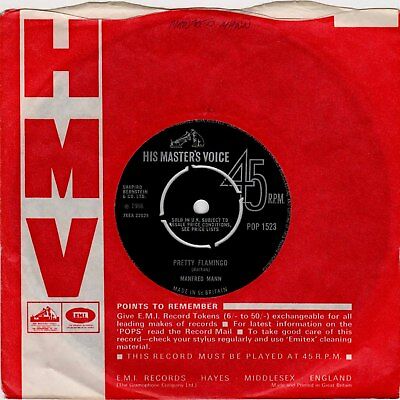
It’s got an intro that has always reminded me of Bob Dylan’s ‘Like a Rolling Stone’, in the way that the bass and the drums roll in, after a couple of guitar chords. It’s a song that I’ve known for quite a while, a perennial of the ‘Best of The Sixties’ tapes and CDs that accompanied long car journeys with my family. And it’s a song I’ve always liked: it’s sunny, breezy, poppy… A song that gives you a pleasant two and a half minutes; but that doesn’t linger too long afterwards.

Manfred Mann have grown up since ‘Do Wah Diddy Diddy’ gave them their first chart-topper nearly two years back. It’s a more mature sound, more laidback and a tiny bit trippy. And, though I described singer Paul Jones’s voice as husky in the intro – it’s not a regular kind of husky. It’s nasally, and a bit rough. An acquired taste. The opening line hits you: On our block, All of the guys call her flamingo… This was one of Jones’s final recordings with the Mann’s – he would leave a couple of months later.

And actually, thinking about it more closely, is calling a girl a ‘flamingo’ that much of a compliment? It kind of suggests you have scrawny legs and a big beak… Or, rather, according to the lyric, it’s: ‘Cos her hair glows like the sun, And her eyes can light the skies… I’m still not convinced. When she walks, She moves so fine, Like a flamingo… (Flamingos are lanky and walk with an old man stoop. I doubt the songwriter had ever actually seen a flamingo…)

Manfred-Mann-–-Pretty-Flamingo-HMV-Records-POP

All lyrical inconsistencies are forgiven, however, when we get to the bridge, which has a hook to die for: When she walks by, She brightens up the neighbourhood… And then we have what sounds like a flute solo, and some sha-la-las to wrap up, because it’s that kind of record. I also like the ‘Ha!’ after the If he just could… line, which suggests that deep down Jones knows it ain’t never happening with Ms Flamingo.

It’s a fun song, a cute song, a song that needs but a short post like this to do it justice. This was the middle disc in Manfred Mann’s chart-topping run, and I like that they straddled the swinging sixties with their #1s: one in 1964, one in ’66, and one to come in ’68. They’re not a name that instantly springs to mind when you think of ‘Biggest Acts of the 60s’, but perhaps they should be. Enjoy!

212. ‘Somebody Help Me’, by The Spencer Davis Group

The Spencer-Davis’s return with a quick-fire #1, barely three months after the first. It’s not a record that rings a bell but, as soon as I press play, I know I’ve heard this before, somewhere, sometime…

Spencer_Davis_Group_1966

Somebody Help Me, by The Spencer Davis Group (their 2nd and final #1)

2 weeks, from 14th – 28th April 1966

Like ‘Keep on Running’, it all kicks off with a bass riff. But one a bit mellower, a bit more understated, and not quite as filthy sounding as in their first chart-topper. Somebody help me, yeah… Somebody help me, now… Won’t somebody tell me what I’ve done wrong…

It’s a song that tells a bit of a story. The singer had a girl, his Queen, back when he was seventeen, but lost her. Since then he’s been unable to find a new one. Now I’m so lonesome, On my own… (If the stalker-ish lyrics to ‘Keep on Running’ were anything to go by, it’s easy to guess why she dumped him.) And that’s about it. A simple enough rock ‘n’ roll record.

Like its predecessor, ‘Somebody Help Me’ has got a nice soulful vibe to it – especially in the bridge – in the I need a girl, To hold me tight… – plus I like the funky guitar licks at the end of the lines. The Spencer-Davis’s liked a crunchy guitar, which gives their songs quite a Kinks-y feel. And it’s the shortest chart-topper we’ve had in a long time, coming in at bang-on two minutes. Which is fine – there’s absolutely no need for this disc to be any longer.

SPENCER_DAVIS_GROUP_SOMEBODY+HELP+ME+-+SOLID-710811

It’s a forgotten record, I’d say. A forgotten gem…? I’m not sure. Is it quite a ‘gem’? It’s definitely a groovy little record (we’re allowed to say ‘groovy’, by the way – it was the style of the time…) One that adds texture to the way Beat pop was splitting into different sub-genres. I’m not sure whether to go as far as calling it a ‘Shadow Number One’ – a song that only hits the top because of its more famous predecessor. Because A) it’s a good enough record to have reached the top on its own merits, and B) it managed a fortnight at the top while ‘Keep on Running’ only got a single week.

Interestingly, this song was, like ‘Keep on Running’, written by reggae singer Jackie Edwards. But he doesn’t seem to have ever recorded it. And, like so many bands of this era, The Spencer Davis Group didn’t last very long. They had a couple more Top 10s – including the classic ‘Gimme Some Lovin’, which is probably better known than either of their chart-toppers – before lead singer Steve Winwood left.

And that was all she wrote for the Spencer-Davis’s at the top of the UK Singles Chart.  They’ve reformed over the years in a variety of guises. Except… Winwood would go on to have a half-decent solo career, with a handful of eighties hits. One of which – ‘Valerie’, from 1982 – went on to be noticed by Swedish DJ Eric Prydz. He loved the vocals, persuaded Winwood to re-record them, and they formed the basis for his 2004 #1 ‘Call on Me’. So… we will hear the soulful tones of Winwood one more time in this countdown, in precisely thirty-eight years’ time. Aren’t the charts fascinating?

211. ‘The Sun Ain’t Gonna Shine Anymore’, by The Walker Brothers

Back to business, then. And not a bad record to get back to! Though it starts with an intro that is as folksy as anything we’ve had so far. Very of its time. Guitars round the campfire, a tambourine shakes… I’m getting Seekers flashbacks. Am I about to be underwhelmed by The Walker Brothers, for the second time…?

The-Walker-Brothers-1

The Sun Ain’t Gonna Shine Anymore, by The Walker Brothers (their 2nd and final #1)

4 weeks, from 17th March – 14th April 1966

Of course not. Because in come the drums. Suddenly it’s not a folk song – it’s gorgeous, string-drenched, Wall of Sound-at-its-finest, pop. Loneliness, Is a cloak you wear… A spaghetti Western lone whistle… Because, why not? A deep shade of blue, Is always there…

Then it all comes together. The drums cascade, the voices swirl together… The sun ain’t gonna shine anymore, The moon ain’t gonna rise in the sky… It’s a song about being dumped, essentially. About being sad and lonesome. But never has sadness sounded so appealing. By the time we get to the Bay-yay-ay-bay! I’m sold. Sign me up for the misery!

It’s a brilliantly melodramatic record. All the things that I didn’t think worked on The Walker’s 1st chart-topper – the slightly knowing ‘Make It Easy on Yourself’ – come together here. I think it’s because the music is so compelling, so lush and enveloping, that the OTT lyrics work. I criticised Scott Walker’s crooning on that record, but I love it here. It all culminates in the middle-eight: Lonely, Without you, Baby… through to a glorious I can’t go o-o-o-on…! It’s a song for wallowing in, with a bottle of wine and the curtains drawn.

The-Walker-Brothers-The-Sun-Aint-Gonna-Shinebw-After

Everything about ‘The Sun Ain’t Gonna Shine Anymore’ points towards one man: Phil Spector. He must, you think, have produced this record. It sounds like the inside of his head. But, no. One Johnny Franz was on production duties. And yet the debt is clear. This is a Phil Spector record, even if he was nowhere near the studio.

It all builds to a climax, with the layered vocals on the fade-out working brilliantly. And it ends on a high, leaving you uplifted despite the subject matter. This could be a sad, depressing song, if you stripped it all back, but it isn’t. Thank God. It is ten, twenty times, better than the Walker’s previous chart-topper, and an early contender for best record in my next recap. It’s that good.

Interestingly, this isn’t the original version of ‘The Sun Ain’t Gonna…’ It had been recorded a year earlier by Frankie Valli. His version sounds a little heavy-handed, but surprisingly similar to this one. It, however, made no impact on the charts. It’s also been covered by Cher, in the ‘90s. She is perhaps the only person who could make this song sound more OTT than Scott Walker…

This was the peak of The Walker Brother’s success, their popularity such that their fan-club allegedly had more members than The Beatles’. They had several further hits, and yet disbanded in 1968, largely due to Scott Walker’s dissatisfaction with being seen as a mere teen-idol. I can’t say I’ve listened to that much of his solo output, though I do know it has a reputation for being ‘challenging’… That’s probably what’s putting me off. It’s also been very influential: David Bowie, Pulp, Radiohead, The Arctic Monkeys… the list is a long one. He passed away in March of this year. John Walker had died in 2011, leaving Gary as the sole surviving ‘brother’.

But we’ll leave them here. Bowing out with their crowning glory. A song I knew was good, but hadn’t realised quite how good. Yet another supreme mid-sixties pop moment. Keep ‘em coming!

Catch up with all the Number Ones so far, here:

210. ‘These Boots Are Made For Walkin”, by Nancy Sinatra

One of the coolest intros ever – a twangy guitar that slides and droops like a wilting sunflower on a southern summer’s day – leads us into one of the coolest number one hits you’re ever likely to hear.

4zdvr1b9qpk11

These Boots Are Made For Walkin’, by Nancy Sinatra (her 1st of two #1s)

4 weeks, from 17th February – 17th March 1966

The sixties are truly swinging. There’s been attitude and swagger, even drug references (!) at the top of the charts. And now here’s Nancy, bringing the sass. The way she pauses between the lines, the way she delivers them like she can’t be bothered, as if the man she’s singing about is barely worth the oxygen.

You keep sayin’, You’ve got something’ for me… Her man’s been taking her for a ride; but Nancy ain’t no fool. You’ve been a-messin’, Where you shouldn’t’ve been messin’… He’s in for it. These boots are made for walkin’, And that’s just what they’ll do… One of these days these boots … cut the beat, leave it all to the vocals… are gonna walk all over you…

It’s a fairly minimalist record – sparse instrumentation and a lot of room for the echoey vocals to do their job. Which means there’s lots of time for all the gorgeous little details that make this such a great song to shine through. The whispered ‘yeah!’ between verses one and two, the sarcastic ‘Ha!’ after the You keep thinkin’, That you’ll never get burned… line. The way the horns come in halfway through, the same horns that will go wild for the fade-out (a very mid-sixties touch.) Then there’s the made up words – the ‘samin’ and the ‘truthin’. Nancy’s too cool to bother with proper English.

NANCY_SINATRA_THESE+BOOTS+ARE+MADE+FOR+WALKIN+-+SOLID-562479

‘These Boots…’ is a big development in terms of female-recorded #1s. In every photo-shoot from the time, Nancy Sinatra appears as a very sensual character: big, just-woken up hair, mascara-ed eyes, lots of cleavage. She’s sexy. A siren. In a way that Cilla (the girl next door) and Sandie Shaw (kooky and cute) weren’t. Helen Shapiro was still a kid, Doris Day was basically your aunt. The closest female star I can think of, from previous #1 hits, is Connie Francis, who was bringing the girl power on ‘Who’s Sorry Now’ seven years ago. But even she pales in comparison with Nancy Sinatra’s mini-skirts and thigh-high boots.

Surprisingly, this wasn’t her first attempt at a singing career. I had imagined that she simply appeared, fully-formed, as the superstar daughter of Frank Sinatra. But she had been releasing singles since 1961, to little interest on either side of the Atlantic. By 1965, she was about to get dropped by her label. It wasn’t until she paired up with Lee Hazelwood (the man with hands down the coolest voice ever committed to vinyl) that success came her way. He wrote ‘These Boots…’, and several other songs before she became his full-on muse and they recorded three albums together.

Though, I wonder … While being daughter of one of the most famous male singers of all time clearly didn’t bring her instant success, did it perhaps help mould her image? She had to distance herself from her fuddy-duddy dad, whose hit single career had stalled of late, hence the sexy looks; while her family name perhaps also gave her a safety net that meant she didn’t need to fit the ‘girl next door’ image adopted by most other female stars of the time. Was she in a constant state of teenage rebellion?

For a star who has become so synonymous with The Swingin’ Sixties TM, Nancy Sinatra wasn’t all that big a deal on the UK singles charts. But the impact left by this record alone is more noteworthy than the careers of many, more ‘successful’ stars. And she does still have one further chart-topper coming up – one of the sweetest (or should that read creepiest) #1 singles ever.