247. ‘Lady Madonna’, by The Beatles

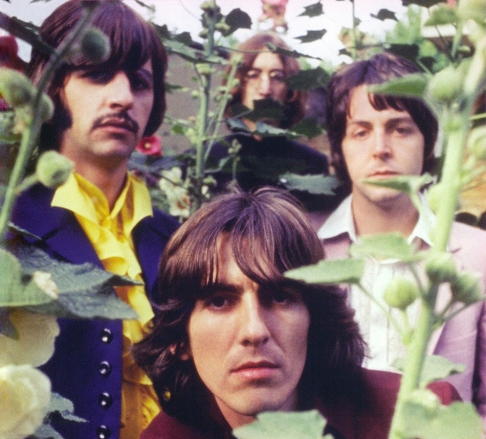
Ah, the Beatles. Bringing some sense and stability to the top of the UK singles charts, after a few months of wackiness. But actually, even this, a famous hit record from the most famous band in the world, stands out. It’s nowhere as weird as we’ve heard this year, but it’s still different…

original

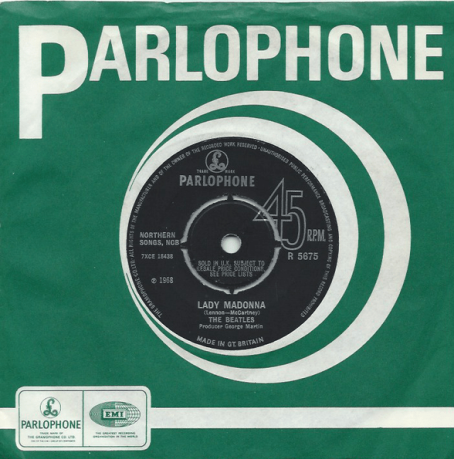
Lady Madonna, by The Beatles (their 14th of seventeen #1s)

2 weeks, from 27th March – 10th April 1968

For a start, ‘Lady Madonna’ is a piano driven song, which is pretty rare for a Beatles’ single. It’s well-known as a tribute to Fats Domino, which means it’s already the second 1968 #1 to reference the famous pianist, after Georgie Fame’s ‘Ballad of Bonnie and Clyde’. Fats scored his biggest hit for a while by releasing his own version later in the year. Incidentally, I just discovered that he only ever had one (!) UK Top 10, which for a founding pillar of rock ‘n’ roll seems scandalous…

Anyway, as good as the piano riff is here, I love it when McCartney’s bass kicks, and even better when the main guitar kicks in for the second verse, growling like a pit-bull. And then comes the saxophone, another instrument that The Fab Four didn’t often use. It’s a song with a swagger and a swing to it. Anyone attempting it at karaoke would have to finish their performance with a mic toss.

In the back of my mind, I know what the song’s about. I’ve read, somewhere and sometime, just who Lady Madonna was. But before I Google and confirm, here’s my interpretation after listening to it for the first time in ages. She’s poor (Wonder how you manage to make ends meet…) with kids (Baby at your breast…), lots of kids (Wonders how you manage to feed the rest…). She’d like to escape (Lady Madonna, Lying on the bed, Listen to the music playing in your head…) but is trapped in a life of drudgery (Thursday night your stockings needed mending…)

f.jwwb.nl_public_m_a_s_temp-hvwbspxqkwxrxgiraevm_xsbo1v_lady1

It’s a kind of ‘Eleanor Rigby’ part II, and again Lennon and McCartney – though by this point they were largely writing separately, this being a Paul composition – prove themselves able to go way beyond the regular confines of pop music. ‘Madonna’ gives the woman in the song saintly connotations and – yes, I remembered correctly! – McCartney was inspired to write the song by a picture of a breastfeeding tribeswoman in a copy of National Geographic. The music here might be back-to-basics rock ‘n’ roll, but the lyrics are some of The Beatles most cutting. See how they run… What’s ‘running’? The kids? The years? The people that see this poor mother in the street…?

On a far more frivolous note, the use of ‘Madonna’ in the title also opens up a fascinating sub-genre: #1 hits that reference other chart-topping artists! Obviously, they weren’t referencing Madonna Ciccone, who was a good fifteen years away from releasing anything, but still… To be honest, I’m struggling to think of others… ‘Moves Like Jagger’ never quite made it to the top. ‘Rock Me Amadeus’, maybe, as had the charts been around in the 1700s Mozart would have done alright… In ‘Return of the Mack’ Mark Morrison was singing about himself… Let me know if you can think of any other. It’s fascinating, but completely pointless. Anyway.

Anyway, anyway, anyway… All of a sudden, we are approaching the end of The Beatles’ chart-topping careers. This was their fourteenth #1, and there are only three more to go! Luckily, two of them are stone-cold classics. The other is, well… We’ll cross that bridge when we come to it.

246. ‘The Legend of Xanadu’, by Dave Dee, Dozy, Beaky, Mick & Tich

Just what on earth was being pumped into the British water supply in early 1968? Trad jazz, Bonnie and Clyde, Eskimos and yodelling duos… Something pretty heavy duty was being passed around, by both record makers and record buyers, to induce this carnival of craziness. And it shows no signs yet of letting up. For we’re off to Xanadu!

61eoLpiILKL._SY355_

The Legend of Xanadu, by Dave Dee, Dozy, Beaky, Mick & Tich (their 1st and only #1)

1 week, from 20th – 27th March 1968

We open on a dusty Andalucian plain. Spanish guitars tremble, somebody mumbles something something esta es… Then wham. A whip cracks. Or somebody shoots a B-movie ray-gun. Whatever it is, it wakes up both you and this song. We’re in cartoon soundtrack territory. Imagine Scooby Doo on a far-away planet that looks a lot like Mexico. That sentence might sound crazy, but that’s where we are right now, with #1 single 246.

You’ll hear my voice, On the wind, ‘Cross the sand… For all the zaniness of the extra bits – the sound effects, the Mariachi band and what have you – the main melody of the song is pretty traditional. Old-fashioned even – something with a hint of 1961 about it. If you should return, To that black, barren land that bears the name of… Xanadu!

The lyrics, as far as I can follow, are about a spurned lover destined to see out his days in a forgotten land. I’m listening carefully, to see if there might be a metaphor hidden away in there – that the singer is actually just imagining himself in this black, barren land – but I can’t find any. This is literally a song about a far-off place called Xanadu, and a lonely man who lives there.

We arrive, of course we do, at a spoken word section that makes this song feel even more like a theme-tune. What was it to you that a man laid down his life for your love…? So wait… he’s dead? And Xanadu is some kind of afterlife? It ends with a question: Will you find your way back someday, To Xanadu…?

71vwdmJYYML._SL1280_

Not if I can help it, mate… I jest. I like this song. It’s grown on me over the past four or five listens. I now find myself swaying and shaking imaginary maracas as it ends. ‘The Legend of Xanadu’ is crazy – the craziest record yet this year (and that’s a high bar!) But I’m going to have to do some research to find out what on earth inspired this hit single and got it all the way to the top of the charts…

It’s not from a movie, nor is it the theme to a cartoon. It’s a stand-alone pop single by an already established band. More on them later. Research into ‘Xanadu’ takes you all the way to Inner Mongolia in the late 13th Century – a capital of China, used as a residence by the Khans and ‘discovered’ by Marco Polo, via the biggest private estate in the world from the movie ‘Citizen Kane’. In both these examples, Xanadu was an example of opulence and splendour; whereas in ‘The Legend of…’ it’s painted as a wasteland, a place of exile. And, famously, this won’t be the last chart-topping single to name-check it…

Dave Dee, Dozy, Beaky, Mick and Tich (with a name like that you couldn’t expect them to release normal music) were several years into their careers by this point, their biggest hits having been ‘Bend It!’, the superb, and really heavy for its time ‘Hold Tight!’, and ‘Zabadak!’ (which makes ‘Xanadu’ sound conventional.) They seem fun, loved an exclamation mark in their titles, and are a band I’m keen to listen to more of. Wiki lists them as ‘Freakbeat’, which I think sums up this song perfectly. Like so many bands we have met these past few years, Dave Dee and Co.’s chart success ended as the sixties drew to a close.

So we forge on, past the Eskimos, the Rockefellas and the Cinderellas, across the sands of Xanadu, to find out what 1968 has in store for us next. Whatever it is, it surely won’t be dull…

243. ‘Everlasting Love’, by The Love Affair

As the new year chimes ring, the musicologists of Britain gather to ponder what the ‘sound of’ the coming year will be. The BBC even runs a ‘Sound Of’ poll every January – recent winners including Adele, Sam Smith and, um, 50 Cent. Anyway… the point being that if you were to wonder what the ‘sound of’ 1968 might be, you could do worse than checking out this next #1.

AFF

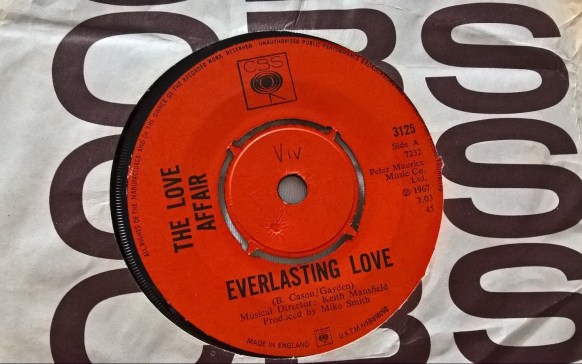
Everlasting Love, by The Love Affair (their 1st and only #1)

2 weeks, from 31st January – 14th February 1968

Because ‘Everlasting Love’ sounds very sixties – you could place it straight away – but it also sounds fresh and new, an update on what’s gone before. It’s soulful, with heavy hints of Motown, and a loveable garage feel to it. And it’s a record that blasts in at full speed…

We soar on drums, and horns, and then a very funky bass riff. Hearts go astray, Leaving hurt when they go… The singer has ended things too early with his love, and now he’s begging to be taken back. Open up your eyes, Then you’ll realise, Here I stand with my, Everlasting love… It’s the hit single equivalent of someone standing drunk under your window at 2am… Need you by my side, Girl to be my bride…

But whereas someone singing drunkenly under your window at 2am is rarely a pleasant experience, ‘Everlasting Love’ is a lot of fun. It’s a relentless disc, one that grabs you and brings you along with it, never once letting up. You could accuse it of being cheesy, and a little saccharine, but you can’t get a word in. So you give up and just enjoy the ride. It’s that kind of song. It’s basically one big chorus from start to finish.

The most interesting bits of the song are musical – the little fills in-between lines. The blasts of horn, the bass and the drum rolls, and the snatch of what sounds like a flute and a triangle (I’m probably very wrong about that) before the glorious fade-out. ‘Everlasting Love’ was originally recorded in a Motown style by Robert Knight, in the US. Listen to his version here – it’s good, but doesn’t have anywhere near as much Ooomph as the Love Affair version.

the-love-affair-uk-cbs-45-everlasting-love-1st-issue-1967-ex_40826652

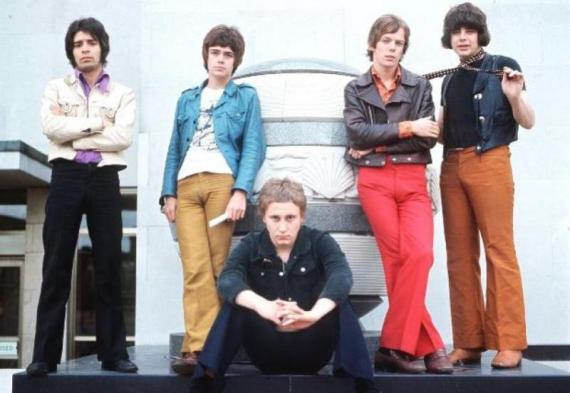
The Love Affair were yet another British soul group, following in the steps of Georgie Fame, The Foundations and The Small Faces. I listed the Small Faces last there as Love Affair’s lead singer, Steve Ellis, sounds a lot like Steve Marriot. The band later admitted that Ellis was the only member to actually feature on this recording – all the instruments were played by session musicians. Controversy! But, we are not here to judge how ‘real’ a record is. We are here to enjoy, and this is a very enjoyable record regardless of who played on it.

Love Affair had a few more Top 10s – this was their first big hit – before fading from view as the decade ended. Ellis left in 1969 and the rest split up in the early seventies. ‘Everlasting Love’ has made more of a lasting impression – it’s been a Top 40 hit, in a variety of versions, in the ‘60s, ‘70s, ‘80s, ‘90s and ‘00s. Sadly, it seems that it couldn’t be revived in the 2010s…

So, after a bit of a false start from Georgie Fame and two infamous serial killers, 1968 is a go-go. I can’t quite explain it, but there’s something very forward-facing and modern sounding about this disc, something that says ‘Welcome to the late-sixties!’ And I’m here for it!

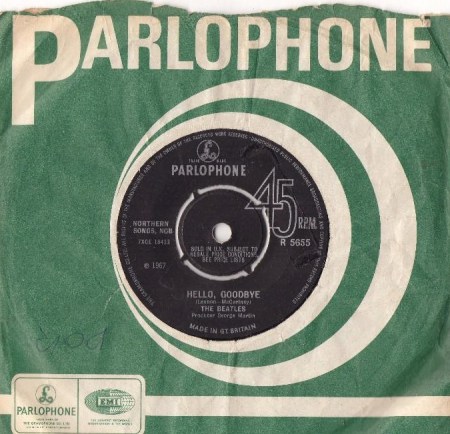
241. ‘Hello, Goodbye’, by The Beatles

We round off 2019 with the final number one from 1967. Top of the charts fifty-two years ago today was…

SgtPepper1_700

Hello, Goodbye, by The Beatles (their 13th of seventeen #1s)

7 weeks, from 6th December 1967 – 24th January 1968

… of course it was. Who else? (As a kid, listening to ‘Pick Of The Pops’ on Radio 2, we’d always have a contest in the car to guess who would be number one. And if it was a chart from the sixties I’d always guess The Beatles because, well, the odds were with you.) And, speaking of being a kid, ‘Hello, Goodbye’ was one of my first favourite Beatles hits. But, to be honest, it’s appeal has faded as the years have gone on, and as I’ve gotten older and more cynical.

You say yes, I say no, You say stop, And I say go, go, go… Oh no… It’s a song that explodes into life – no waiting around. You say goodbye, And I say hello… A song about an argument, about two people that are deliberately disagreeing with one another. One says ‘high’, the other says ‘low’. So on and so forth. It’s tempting to read into it – is it a seemingly nonsensical, childish pop song documenting the start of the slow break-up of the world’s biggest band…? Or a glimpse into the marriage of Paul McCartney and Linda… Actually no, that theory is dead in the water – they didn’t marry until 1969.

McCartney did write this one, which I think is probably quite obvious. It’s got that slightly irritating chipper-ness to it that shows up more often in his solo work, once John wasn’t around to check his worst impulses. Lennon reportedly didn’t care much for ‘Hello, Goodbye’, and pushed for ‘I Am the Walrus’ to be released instead. If only… (‘Walrus’ was the B-side.)

169602920

But, but, but… I’m making it sound as if I hate this record, when I don’t. Beatles’ ‘average’ is still pretty good. I like the backing vocals, which remind me of ‘Help!’ in the way that they sing different lines to the lead, and the reverb on the Why-why-why-why do you say goodbye-bye-bye-bye… And Ringo’s drumming is great on this. The outro, though… The Hare Krishna-ish Hey-la-hey-bah-hello-ah… Nah. Not for me.

Perhaps this is the Beatles playing it safe, worrying that they had spooked people too much with their much more avant-garde stuff: ‘Eleanor Rigby’, ‘Penny Lane’, ‘Strawberry Fields’ and ‘All You Need is Love’. Playing it safe with a huge Christmas hit – their 4th Xmas #1 in five years. It’s just that, for the first time in ages, a Beatles song doesn’t feel like a step forward.

But, what do I know? ‘Hello, Goodbye’ gave The Fab Four their joint-longest run at the top of the charts, tied with their debut #1 ‘From Me to You’. (It has to be mentioned, though, that charts were often repeated for a week over the Christmas and New Year holidays in those days.) It’s also fitting that 1967 ends with a blockbuster number one. It’s been a quick year to get through, with lots of long runs at the top from Tom Jones, Engelbert, Procol Harum and now The Beatles. It’s one of the very few years in chart history where every single #1 stays there for longer than one week.

It’s also fitting that I end 2019 by thanking everyone who has read, liked and commented on this blog over the past twelve months, and wish you all a very happy new year. See you all on the other side… 1968 awaits!

My #1s playlist:

239. ‘Baby, Now That I’ve Found You’, by The Foundations

When I first scanned down my big long list of number ones and saw that ‘Baby, Now That I’ve Found You’ by The Foundations was coming up, I started imagining what it would sound like. I do that with bands and songs that I’ve not heard much before. And I pictured a Detroit four-piece – like The Four Tops, or The Temptations – and lots of vocal harmonies.

the-foundations-feature

Baby, Now That I’ve Found You, by The Foundations (their 1st and only #1)

2 weeks, from 8th – 22nd November 1967

But no. The Foundations were British. And, while I could have sang at least half the chorus of ‘Baby, Now That I’ve Found You’, the rest of the song sounds quite different to how I’d imagined. It is uplifting, and catchy. It soars upwards on line after ascending line. There are strong hints of Motown in there. But it’s a record that owes just as much, if not more, to British soul – the Georgie Fames, Chris Farlowes and The Spencer Davis Groups that have been popping up over the past couple of years.

Baby, Now that I’ve found you I can’t let you go, I’ll build my world around you, I need you so… It could be a Motown recording, if the production were a little slicker, and the vocals a little more polished. But it’s down to Earth-ness, it’s rough around the edges-ness – dare we say its Britishness? – is a big part of this record’s charm. Especially in the bridge, when the drums go all rocky, and the voices all come together like its last orders down the pub: Now you told me that you wanna leave me, Darling I just can’t let you… Clem Curtis, the lead singer, gives it his all.

R-3778913-1397040218-5925.jpeg

It’s a fun song, a catchy interlude that makes 1967 an even more eclectic year in terms of its chart-topping singles. It was the debut single of The Foundations, who are a band that deserve a bit of attention drawn their way. They were the first inter-racial band to have a #1 in the sixties, their members coming from the West Indies, the UK and Sri Lanka. Plus there were – I think – nine people in the band when ‘Baby, Now That I’ve Found You’ was released (I know there are only eight in the picture above, but I’m going on what I’ve read…) That’s a big pop group in anyone’s books, but not a record… The Temperance Seven also numbered nine members back when they hit top spot back in 1961. The Foundations’ oldest member was thirty-eight; the youngest just eighteen.

From the sounds of it, they found it very difficult to keep a band of that size and with that wide an age-range together. They only released ten singles before splitting up in 1970 – the second biggest of which was the even catchier ‘Build Me Up Buttercup’, which would reach #2 in 1968.

To be honest, if a year or so ago somebody had asked me about ‘British soul in the 1960s’ I would have had to politely shrug. But having now written posts on all these hits that have kept on cropping up at the top of the charts for almost three years now, I feel I should hang my head in shame. British soul was a big part of the sixties-sound, that seems to have been overshadowed by the likes of Merseybeat, folk and flower-power… Maybe it’s because, like me, people just assume the songs and the bands were American. Hopefully if you were as oblivious as I was then you too have enjoyed discovering this fascinating sub-genre. And hopefully the British soul hits keep on coming!

238. ‘Massachusetts (The Lights Went Out In)’, by The Bee Gees

A couple of posts ago, as I wrote about Scott McKenzie’s ‘San Francisco’, I made a big deal about #1 hits that reference places, and how uncommon they were. Of course, just to prove me wrong, the charts now throw up a song about Massachusetts.

6709-bee-gees

Massachusetts (The Lights Went Out In), by The Bee Gees (their 1st of five #1s)

4 weeks, from 11th October – 8th November 1967

And that’s not all that this next chart-topper has in common with McKenzie’s hit. It also, you know, sounds a lot like it. The same light guitar and the same chimes. The same chilled-out vibes. It even references San Fran in the second verse. It’s the (Indian) Summer of Love! Is it harsh to suggest that The Bee Gees were simply jumping on the hippy bandwagon?

Actually, yeah, it would be harsh. This is a retort to songs like ‘San Francisco’. It’s being sung from the point of view of someone who has left his home, in Massachusetts, to join in the summer’s festivities, and who now feels a bit homesick. Feel I’m going back to Massachusetts, Something’s telling me, I must go home… He left his girl standing alone, as the lights all went down in Massachusetts… But he’s now seen the error of his ways: They brought me back, To see my way with you…

It’s an interesting concept, and a quick piece of song writing to get the record out and in the charts mere weeks after the hits that it references. It turns what I initially felt was a so-so, slightly bland song into one worthy of note. The lights are going down in Massachusetts because everybody’s buggering off to the West Coast! I will remember Massachusetts… I wonder if the Massachusetts Tourist Board have ever used it in an ad campaign?

Bee+Gees+Massachusetts+-+Solid-300929

Moving on – largely because ‘Massachusetts’ is a really difficult word to keep typing – let’s take a look at the band. The debutants atop the UK Singles Chart. The Bee Gees. You know, the band that in a decade’s time will take disco to the masses. I think that’s the ‘Bee Gees’ that most people think of: jumpsuits and sparkles and you should be dancing… It’s there in this record, mainly in the vocal harmonies that tremble a little higher than your regular pop record. (Though Robin Gibb sang lead on this one, while Barry sang falsetto on most of their seventies hits.)

They’re a fascinating band, actually. They will spread their five chart-toppers over exactly twenty years, covering three completely different versions of themselves, in terms of sound and image. But they’re not a band I’ve ever really been able to love, and I wish I could like their debut #1 more than I do… (Personally I think their final #1 is by far the best of the five.)

Anyway, they will be back soon enough. In between this and their next #1, they will release ‘Words’, which I can look on fondly as one of the first songs I ever learned to play on keyboard. Other interesting, and less self-revolving, bits of trivia about sixties-era Bee Gees include the fact that none of them had ever actually been to Massachusetts – they just liked the sound of it, and the fact that it was about as far away from San Francisco as you can get on the continental USA. (The Bee Gees, of course, weren’t American – they’re British/Australian.) And… I really like this one… ‘Massachusetts’ was the first ever non-Japanese #1 single on the Japanese charts! How about that…

236. ‘San Francisco (Be Sure to Wear Some Flowers in Your Hair)’, by Scott McKenzie

And so we reach the final part of our Summer of Love trilogy. Three songs. Thirteen weeks. One summer that (kind of) changed the world. The psychedelic weirdness of Procol Harum, The Beatles going for a full-on hippy love-in, and now this. An ode to the city where it all started.

483967-g-cvr-120820-mckenzie-638a.jpg

San Francisco (Be Sure to Wear Some Flowers in Your Hair), by Scott McKenzie (his 1st and only #1)

4 weeks, from 9th August – 6th September 1967

If you’re going, To San Francisco, Be sure to wear, Some flowers in your hair… The music is acoustic: folky and wistful… Very 1965 – already sounding a little old-fashioned in mid-’67. Something’s going ‘ting’. Somebody’s clapping their hands. In the streets, Of San Francisco, Gentle people, With flowers in their hair… (Apparently all the references to ‘flowers’ and ‘gentle people’ were added to make hippies sound less frightening!)

The singer, Scott McKenzie, also sounds as if he’s from another time, a little old-fashioned. Kind of clipped and proper. A bit square, if we’re being honest, like he’s chronicling the scenes in the parks of San Francisco, an observer rather than a partaker. I dunno, I’m left slightly underwhelmed. For the ‘unofficial anthem of the flower-power movement’ I’d have expected something a little more revolutionary…

But, you know, it’s a cute song. I like it. I knew it, as most people do, as a chorus in the back of my mind. And the most interesting bit comes in the middle-eight, when McKenzie breaks the fourth wall and explicitly references the counter-culture movement: All across the nation, Such a strange vibration, People in motion… There’s a whole generation, With a new explanation… The beat here is spikier, more urgent. It sounds almost like a rallying call.

879118791154_1

I’ve been to San Francisco twice. Once as a kid, and once just last summer. When one night, in the heart of downtown, a guy walked past us bellowing this very song out at the top of his lungs. San Fran being San Fran, he wasn’t oddest oddball we’d seen that day, or even that evening. But I liked the fact that the song was still there, still an anthem of the city fifty years on. And there is something about San Francisco, still, even if downtown is full of meth addicts and Haight-Ashbury is now a bit of a tourist trap. Something in the air that suggests that it could start a revolution again, if it wanted to…

I’m still not sure if Scott McKenzie himself was much of a hippy. He had quite long hair, but then everybody did in the sixties… What I do know is that he is a near perfect example of a one-hit wonder: his only other charting single in the UK reached #50. He was something of a journeyman singer-songwriter, even in 1967, having been in doo-wop and folk bands since the start of the decade. Post ‘San Francisco’, he performed with The Mamas and the Papas, and co-wrote The Beach Boys’ eighties hit ‘Kokomo’. He passed away in 2012.

So that’s that for the Summer of Love. Three game-changing #1 singles: one timeless, one crazy, and one pretty nice. Up next, we slip right back into the easy-listening mulch that has made up so much of 1967. But let’s not think about that just yet. Let’s focus instead on the fact that this is only the 3rd chart-topper to reference a city, after Jimmy Young’s ‘The Man From Laramie’ in 1955, and Winifred Atwell’s ‘The Poor People of Paris’ back in 1956. If we extend that to ‘places’, we could include The Song from ‘Moulin Rouge’, and, at a bit of a push, ‘The Garden of Eden’… Worth noting, though, as it’s not a common topic for #1 hits…

My Spotify playlist, for your pleasure:

235. ‘All You Need Is Love’, by The Beatles

The top of the British Singles Chart has just endured its longest Beatles-less spell (at least, you know, until they split up and stop making music) but they are back! Though you could be forgiven for thinking that this is a completely different band.

The Fab Four were killed off a year or so ago. Since then they’ve hit #1 with the string drenched ‘Eleanor Rigby’ and the kids’ singalong ‘Yellow Submarine’. Before that came the bass-heavy garage of ‘Paperback Writer’. Both big steps away from the Beat sound that had made them huge. This single is another massive leap away, even compared to their innovation of ’66. This single opens with the French national anthem…

mainBEATLESLOVE

All You Need Is Love, by The Beatles (their 12th of seventeen #1s)

3 weeks, from 19th July – 9th August 1967

Because, why not? They’re The Beatles and they can do whatever the hell they want. ‘La Marseillaise’ doesn’t last for long, and soon we swing into a simple ditty. Love, love, love… and a mantra. Nothing you can do that can’t be done, Nothing you can sing that can’t be sung… On first listen it sounds like a hippy-dippy, peace (man!) anthem for the Summer of Love. But, actually… Nothing you can know that isn’t known, Nothing you can see that isn’t shown… It’s kind of negative. ‘Why bother?’ seems to be the message…

John Lennon allegedly kept the lyrics simple, as the song was to be debuted on TV screens around the globe for ‘Our World’, the first ever global tele-link. But, Lennon being Lennon, I sense a bit of needle in there. A bit of sarcasm, maybe? It’s definitely not as straightforward as it sounds. He later described the lyrics as ‘revolutionary propaganda.’ The chorus, though, is simplicity in action: All you need is love… Love is all you need.

Like ‘Good Vibrations’ – a record that spurred The Beatles on to greater experimentation – ‘All You Need Is Love’ jumps around all over the place, from national anthems, to drunken jazz in the chorus, to an electric guitar solo, to stabbing strings, with some music-hall ‘All together nows’ for good measure.

r5620

And then there’s the finale. Where it all just goes a little bit mental. We get horns from Bach (meaning the 18th Century composer has influenced two #1s in a row!), a snippet of Glen Miller’s ‘In the Mood’ and, naturally, ‘Greensleeves’. From revolutionary France, to WWII mess-halls, to Tudor England in one four minute pop song… And there are snatches of two other Beatles’ classics as well: ‘Yesterday’ and ‘She Loves You’. (Opening up an interesting sub-category: #1 singles that feature in other #1 singles…) All the while the band and guests whoop and holler until the whole messy shebang fades from sight. It sounds like the best party you’ve never been to.

Where to start analysing this? Why even bother? I certainly don’t feel qualified to go into any more detail. With other bands, and other singles, you can see where they were coming from, what they were trying to do, even how you might have done it better. Not with this song, not with The Beatles. It’s unthinkable, really. Throwing out singles that most bands would have built whole careers around, willy-nilly. Here’s ‘She Loves You’, there’s ‘Help!’, watch you don’t trip over ‘Eleanor Rigby’, or ‘Ticket to Ride’ over there in the corner… You’d like a song for a lame TV show? Here’s ‘All You Need Is Love’. And ‘Yesterday’, the song that they reference here – the song that has been covered over 2000 times, the song that has been voted ‘Best Song Ever’ on several occasions? They stuck that away on Side 2 of an album. Oh, The Beatles… Beatles, Beatles, Beatles…

But, just so that they don’t go getting too big-headed, too full of themselves – Paul and Ringo definitely read this blog, right? – I feel compelled to add that when they next appear in this countdown, it’ll be with what I personally think is the worst of their seventeen chart-toppers…

233. ‘Silence Is Golden’, by The Tremeloes

It’s been over three and a half years since The Tremeloes scored their first number one hit, a raucous cover of ‘Do You Love Me’. Since then they’ve dropped Brian Poole – or, rather he’s left to pursue a solo career – and mellowed their sound right down.

4045b26e9793a0ec8f807e95b9d9ea48

Silence Is Golden, by The Tremeloes (their 2nd and final #1)

3 weeks, from 18th May – 8th June 1967

I’m getting a Beach Boys, folky vibe as we start off. ‘Silence Is Golden’ is yet another song I know as being ‘part the swinging sixties canon’, without having ever listened to it properly. It’s a nice melody, the harmonising is nice… It’s a nice song. Oh don’t it hurt deep inside, To see someone do something to her… It’s the song of a watcher, one that either still has feelings for an ex, or that has an unrequited love. He wants to tell her that she’s being taken for a ride: Should I tell her, Or should I be cool…?

In the end he decides that silence is indeed golden, and that he should keep schtum. I like the idea that it’s actually the singer’s conscience singing to him, and that it at one point calls him ‘a fool’, but some time around the second chorus this song starts to get irritating.

It’s the forced falsetto voices, and the cheesy doo-wop backing vocals. It’s the ‘solo’, which is the band converging for a long oooweeeooowaaawaaawooowooow. By the end, when the final note swoops upwards like you’ve changed the speed setting, you’re glad it’s over. Like I said, it’s nice enough… But it’s a bit wishy-washy. It’s trying too hard. If this record were a schoolboy, he’d be getting his lunch money stolen.

R-563702-1400510024-1639.jpeg

(Can we just take a moment to appreciate that this disc appears to have had an actual picture sleeve, which seems to have been very rare thing indeed in Britain in the ’60s! Maybe that’s why it made it to  #1!)

‘Silence Is Golden’ is actually a cover of a Four Season’s ‘B’-side from a few years earlier. I’ll link to it here, but have to admit that that version also leaves me a bit cold. I dunno. Sometimes songs just don’t connect. It is very impressive, though, that The Tremeloes’ chart-topping career spanned the very middle of the 1960s, a time when pop music was developing at lightning speed. Their contemporaries in 1963 were Gerry & The Pacemakers and Billy J. Kramer, who were nowhere near the #1 spot in 1967. (And The Beatles who, to be fair, were still enjoying reasonable success…)

To conclude: file under so-so. The Tremeloes powered on, given a second wind by their second number one, and scored hits right through to the early seventies. They still tour on the oldies circuit, and reunited with Brian Poole for their 40th anniversary. And, since I’m struggling to write much more, I’ll end with a great bit of trivia. The Tremeloes contributed heavily to nineties pop, inadvertently, as the band members’ children included duo Alisha’s Attic and the one and only (gettit?) Chesney Hawkes!

232. ‘Puppet on a String’, by Sandie Shaw

Oh, won’t somebody drag us out of the middle-of-the-road slump we’ve been in for months now…? Can that somebody be Sandie Shaw? I have high-hopes…

8d917f1f-518a-4e31-a3e8-cfb1159edd27

Puppet on a String, by Sandie Shaw (her 3rd and final #1)

3 weeks, from 27th April – 18th May 1967

…that are not disappointed. Roll up! Roll up! This is a crazy little record. From the get-go. From the oompah band intro that morphs into a fairground soundtrack – a demented, horror-movie kind of fairground, that is.

Love is just like a merry-go-round… sings Sandie, like your aunt after a sherry or two… With all the fun of the fair… It’s a fairly simple metaphor: love as fairground ride. But this song takes it all the way, to the extent that we get Big Top sound-effects and crashing cymbals. You really can picture her as a marionette, or as a Judy doll behind a makeshift stage.

If you say you love me madly, I’ll gladly be there, Like a puppet on a string… It’s a fun record. A bit mad. If it were a person you might cross the street to avoid them. But it’s interesting, if nothing else, unlike some of our recent chart-toppers. It’s chanty, and catchy, and Sandie does at least get to stretch her lungs on lines like: Are you leading me on, Tomorrow will you be gone…? At other points she sounds a bit drunk, to be honest. It’s a ‘proper’ pop song, but it’s comes very close to crossing the line into ‘novelty’ territory’.

SANDIE_SHAW_PUPPET+ON+A+STRING+-+4-PR-408516

It makes complete sense that this was a Eurovision Song Contest entry. In fact, it explains a lot. Subtlety and  nuance are not in big supply at Eurovision. And not only was it an entry, it was the winning entry! Britain’s first ever! (Yes, the UK used to win Eurovision.) Sandie had been convinced to perform the British entry to get back into the public’s good books after a divorce scandal, although she hated it. In her own words: ‘I hated it from the first oompah… I was instinctively repelled by its sexist drivel and cuckoo-clock tune.’ Brilliant stuff, up there with Frank Sinatra’s dismissal of ‘Strangers in the Night’.

I think she was a bit harsh, to be honest. It’s fun, camp, silly… Perfect for Eurovision and, most importantly, not a bland, easy listening, country-lite ballad. Had ‘Puppet on a String’ come along elsewhere in our countdown I might have had less patience with it but, as it is, I’m just happy to have it liven proceedings up. And Sandie must have softened towards it, or the royalty cheques it brought her, as she rerecorded it for her sixtieth birthday.

That’s it for Ms. Shaw and the top of the charts. She would only have one more Top 10 – the equally kooky ‘Monsieur Dupont’ in 1969. I’ve enjoyed it every time she’s come along, with the classy ‘(There’s) Always Something There to Remind Me’ and the fluffy ‘Long Live Love’ and now this. She just seems very, I don’t know, sixties. She officially retired from the music business in 2013. And, if nothing else, I appreciate the symmetry of all three of her chart-toppers spending three weeks each at the top!

Follow my Spotify playlist, why don’tcha: