278. ‘I’ll Never Fall in Love Again’, by Bobbie Gentry

After all the in-your-face sex and apocalyptic predictions of the past few #1s, it’s nice to hear the gentle piano and bass intro of ‘I’ll Never Fall in Love Again’. The musical equivalent of closing your eyes and taking a deep breath.

bobbie10

I’ll Never Fall in Love Again, by Bobbie Gentry (her 1st and only #1)

1 week, from 12th – 19th October 1969

Not that this record is all sweetness and light, though. The title kind of gives that away. What do you get when you fall in love…? A guy with the pin to burst your bubble… Bobbie is convinced that she’s done with love. That’s what you get for all your trouble…

I love her voice – all tired and husky. It lends a perfect edge to possibly the best rhyming couplet ever to feature in a #1 single: What do you get when you kiss a guy…? You get enough germs to catch pneumonia, After you do he’ll never phone ya… Bacharach and David – racking up another UK chart-topper here – added the line after Burt had been hospitalised with the flu. It does make sense when you realise that this is a B&D number, with its gently soaring melody. They had written it for a musical called ‘Promises, Promises’, and Dionne Warwick had had the hit version of this song in the States.

You could add ‘I’ll Never Love Again’ to our run of recent cynical number ones – crushing the closing months of the swinging sixties – but for one line: So for at least, Until tomorrow… Who knows? She might just meet the man of her dreams tomorrow morning… And I’d argue that there’s something very late-sixties-positive about a young female artist singing about her love life in a matter-of-fact way: I’ve been there and glad I’m out… Women’s Lib reaching the top of the charts right here.

BOBBIE_GENTRY_ILL+NEVER+FALL+IN+LOVE+AGAIN+-+4+PRONG-654324

The fact that Bobbie Gentry is a woman is worth noting in itself. She’s the sole female chart-topper of 1969. In fact, in the past three years, only Bobbie, Mary Hopkin, Sandie Shaw and Petula Clark have topped the singles charts as solo females (Esther Obarim, Nancy Sinatra and Jane Birkin did so by duetting with men.) It really is surprising how few women topped the charts throughout the sixties, compared to later decades… I would work out the percentage, if I had any kind of mathematical ability.

Bobbie Gentry is also another artist whom I racially-profiled as a kid… Add her to the list along with Chris Farlowe and Georgie Fame. She isn’t black, she’s another white singer with a bit of soul in her voice, an American Dusty. My first exposure to her was through the superb ‘Ode to Billie Joe’, which was her biggest US hit – a gothic novel in a four-minute pop song – which shockingly only reached #13 in the UK… As nice as ‘I’ll Never Fall in Love Again’ is, it’s no ‘Ode to Billie Joe’.

But it is nice. Better than nice. It’s a great, late-sixties pop song with a hint of country. Bobbie Gentry has become very reclusive in her later years, not recording, performing or giving interviews since 1982. She lives to this day, people believe, in Memphis. And with that, we reach the penultimate number one single of the 1960s…
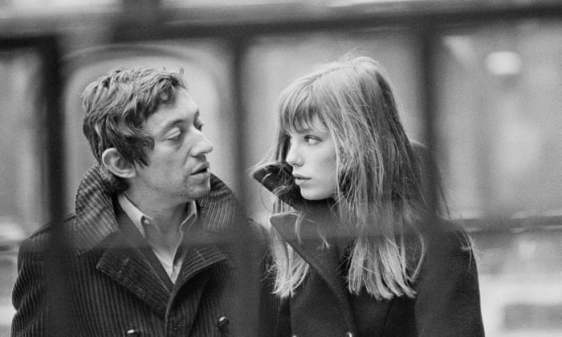
277. ‘Je T’Aime… Moi Non Plus’, by Jane Birkin & Serge Gainsbourg

We end our run of apocalyptic #1s at two, and turn to another of human kind’s most primal concerns. From death and survival, to sex… Though if the end of the world were nigh, you could probably do a lot worse than closing the curtains, dimming the lights, and slipping this disc onto the turntable…

4641

Je T’Aime… Moi Non Plus, by Jane Birkin and Serge Gainsbourg (their 1st and only #1)

1 week, from 5th – 12th October 1969

I mentioned Peter Sarstedt’s ‘Where Do You Go To…’ as a French #1. (Well, it was set in France, and the melody sounded French.) But this is the French #1. For a song to sound any more French, Edith Piaf would need to be singing ‘Frere Jacques’ on top of the Arc De Triomphe.

‘Je T’Aime…’ is a record that you picture in soft focus. All pinks and whites, scattered glasses of champagne with raspberries in them. The organ drones, the drums woozily keep time, and the strings flutter around the edges. I particularly love the filthy growl in the bass just before the main riff. Meanwhile Jane Birkin and Serge Gainsbourg breath, whine, mutter, whisper, and moan… Do everything but actually sing.

The lyrics are all en Francais: Je t’aime, Je t’aime, Oui je t’aime… sings Jane. I love you, Yes I love you! Moi non plus… mutters Serge. Me neither. Jane: Oh, mon amour… It’s been written off as nonsense – ‘I Love You, Me Neither’ – but I think it shows that the singers only have lust on their minds. From now on I’ll write the lyrics in English, even though they sound much better in French…

Like a vacillating wave, I go, I come and go, Inside of you… Ooh la la! Potent stuff. Even worse if you translate the Inside of you line literally. Entre te reins = Between your kidneys. Kind of gross. By the end, Birkin is faking a pretty convincing orgasm. At least, we think she’s faking… At the time there were rumours, or some well-contrived publicity, that ‘Je T’Aime…’ was a chart-topping single with live sex (!) on it.

R-1687183-1236951812.jpeg

Even today, in our cynical world, a record like this would raise eyebrows. In 1969, there was a fair amount of controversy. The record was banned, obviously, from radio, except in France, where it could be played after 11pm. The Vatican excommunicated the Italian label exec. who released it. Gainsbourg was unrepentant, claiming that it wasn’t about sex, but about the impossibility of true love. Others have argued that it is a feminist song, thanks to the line at the end when Birkin breathes: Non! Maintenant! Viens! (No! Come! Now!) She is in control of the love-making.

At the same time, while ‘Je T’Aime…’ is still a fairly attention-grabbing record, it also comes across as very camp and kitschy. I’m sure most people were buying it for a laugh, rather than as a soundtrack to romantic nights in. It’s also suffered the same fate as, say, ‘The Good, The Bad and The Ugly’, in that it’s become a cliché – a piece of music to play over a certain scene: in this case one involving a comical seduction. I’m not sure if or why anyone would want to sit down today and listen to it. Plus, at four and a half minutes it goes on for much longer than it needs to. But… In 1969 people lapped it up. ‘Je T’Aime…’ had already reached #2, been banned, then re-leased to make #1!

Birkin and Gainsbourg were a real-life couple when they recorded their sole chart-topper. She was twenty-three, he was forty-one. Their daughter is the actress Charlotte Gainsbourg. Serge had originally recorded it with Brigitte Bardot, but her husband had stopped them from releasing it. I know very little about their other recordings. Birkin still sings and acts to this day; Gainsbourg meanwhile is a legendary figure in France – provocative and boundary-pushing. It’s sad that most English speakers know him solely for this record, his chain-smoking and for the famous TV interview in which he told a young Whitney Houston that he wanted to ‘fuck her’ (his words.) He died in 1991 after years of alcoholism.

A notable #1 then – the first in a foreign language, the first to feature simulated sex, the first to get somebody excommunicated. And suddenly we’re three chart-toppers away from the 1970s!

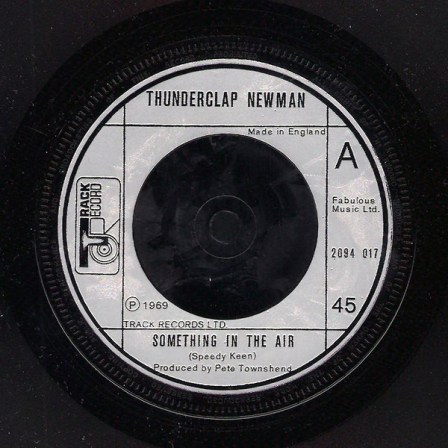
273. ‘Something In the Air’, by Thunderclap Newman

The first number one of the post-Beatles era. One of those songs where you press play and go ah yes… I know this…

500

Something in the Air, by Thunderclap Newman (their 1st and only #1)

3 weeks, from 2nd – 23rd July 1969

It was in an advert for something, I realise, midway through the first listen, and it is prefect background-music-for-an-advert. Light, floaty, chords forever heading upwards… A positive sounding song. The lyrics are forward-facing too – There’s something in the air – a change is a-coming. We have got to get it together, now… They are very sixties-ish lyrics. The revolution’s here… You know it’s right… They sound more like a bunch of slogans strung together than an actual song. A gentle clarion call for young, liberal types. Hippies, but with sensible shoes.

I called it the start of the post-Beatles era, but the Fab Four’s influence is here in this record. In my last post, I mentioned all the times that a Beatle will top the charts solo. I should also have mentioned all the acts that will top the charts by channelling The Beatles’ sound. And here one is – straight away.

Midway through, and I’m starting to get a bit bored. It’s fine, it’s nice, it’s a bit bland. Thank God, then, for the demented piano solo that comes along out of nowhere, all jazzy and jarring. Like someone doing the Charleston on acid. Why? I don’t know. But it saves this record from slipping into slightly dull and forgettable territory.

thecrazyworldofarthurbrownthunderclapnewman-firesomethingintheair

Normal service is resumed for the final verse, as the revolutionary fervour is upped. Hand out the arms and ammo, We’re gonna blast our way through here… It’s a deceptively angry song. I just wish it had a little more oomph to it. (In keeping with the theme of ‘revolution’, the song apparently has a snippet of ‘La Marseillaise’ towards the end, though I can’t hear it.)

And, after a bit of research, I can confirm that ‘Something in the Air’ has been used to advertise British Airways, Austin Minis, Coca-Cola and mobile phones. It’s clearly a song that lends itself well to advertisements – make up your own mind as to whether or not this is a good thing.

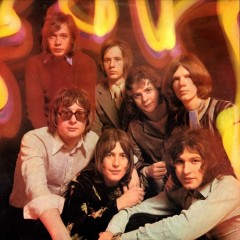
Thunderclap Newman, which is a great name for a band to be fair, were the brain-child of The Who’s Pete Townshend, and he actually plays bass on this single, which is as close as a member of The Who is going to get to a #1 single, sadly. Andy ‘Thunderclap’ Newman was the man who pulled out the brilliant piano solo. Their guitarist, Jimmy McCulloch, was only fifteen when they recorded their sole chart-topper, making him a de facto member of the Youngest Chart-Toppers club. He would go on to join Wings. Which means that, in wrapping up the 1st post-Beatles chart-topper, I’ve managed to end with another Beatles reference. There really is no escaping them…

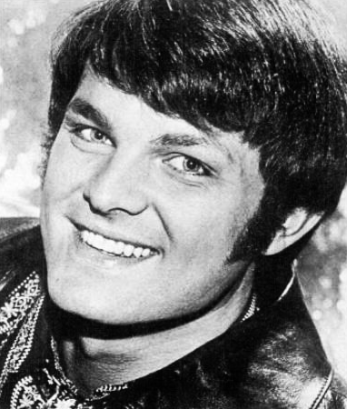
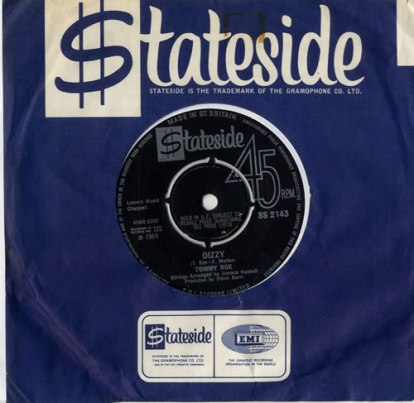
271. ‘Dizzy’, by Tommy Roe

Into the next thirty #1s, with perhaps the most ‘sixties’ sounding chart-topper that we’ve come across yet. It’s pure swinging-sixties montage music, a pop song that you would use in between scenes in an Austin Powers movie. You can see swirling lava-lamp colours, and mini-skirted girls jiving. Yeah baby!

Tommy_Roe

Dizzy, by Tommy Roe (his 1st and only #1)

1 week, from 4th – 11th June 1969

It’s a song that just about manages to stay on the right side of ‘cool’, rather than ‘cheesy.’ And considering that this is a song that uses terms like ‘fellas’ and ‘sweet pet’ in its lyrics, that’s a pretty impressive feat. It’s catchy, that’s for sure, and the drums are real swingin’. The strings too, have a kind of tongue-in-cheek drama to them. Plus, I keep losing count of how many key changes are crammed into its three minute run-time.

The title itself is also very sixties. ‘Dizzy’, because he’s in love, man. You’re makin’ me dizzy, My head is spinnin’, Like a whirlpool it never ends… I’d say it’s a chorus that’s entered the common tongue – though whether that’s down to this original or the comedy version that will take it back to the top of the charts in twenty years’ time I don’t know.

I prefer the pre-chorus, though – one that builds up an irresistible head of steam: Girl you’ve got control of me, Cos I’m so dizzy I can’t see, I need to call a doctor for some help… I like it. A nice palate-cleanser of a disc. A short, sweet blast of late-sixties goodness.

TOMMY_ROE_DIZZY+-+4PR-595290

Tommy Roe’s story is quite interesting. ‘Dizzy’ was a huge comeback for a singer who had failed to have a chart hit of any kind in the UK since 1962-63, when he had had big success with the Buddy Holly influenced ‘Sheila’ – a US #1. Considering the massive changes in popular music that have happened in the past seven years, this was a pretty impressive feat. Not that the comeback lasted very long… One #24 follow-up single and that was that.

Still, it might go some way to explaining the winning combination of bubble-gum and mild psychedelica that makes ‘Dizzy’ such a funky pop tune. One foot in the past, one very much in the present. Tommy Roe continued to record and tour throughout the seventies and eighties, before announcing his retirement officially in 2018, aged seventy-five.

266. ‘(If Paradise Is) Half As Nice’, by Amen Corner

A nice song, to keep 1969 ticking along, nicely. If paradise were half as nice as this song, then paradise would be a perfectly pleasant place to be…

235285

(If Paradise Is) Half As Nice, by Amen Corner (their 1st and only #1)

2 weeks, from 12th – 26th February 1969

Tell the truth, I’m finding it hard to get very excited about this record. I like it, it’s fine, it’s nice… I suppose life would be fairly exhausting if you got excited about every song you heard. Sometimes it’s OK just to think something’s… OK. If paradise is half as nice as, Heaven that you take me to, Who needs paradise, I’d rather have you… It’s cute – a song about being the simple act of falling head over heels in love.

I’ve heard this song before, of course – it’s a bit of a ‘Sixties Best Of’ staple (the copyrights must be cheap?) and a mish-mash of the usual late sixties sounds. There are horns, it’s a bit trippy, and the lead singer has a very soulful voice. That’s my favourite thing about this song, Andy Fairweather Low’s husky voice, and his oh-woah-woah-woahs and oh yes I’d rather have yous in the chorus.

It’s a chilled-out #1, one that floats along and then out on a fluffy cloud. And, if in doubt, always stick in a la-la-la refrain – nobody minds a gentle dose of lalalas. Like a surprising number of previous chart-toppers have been, ‘(If Paradise Is) Half As Nice’ was originally written and recorded in Italian. Not that it sounds particularly Italian compared to, say, Elvis’s pair of operatic hits ‘It’s Now or Never’ and ‘Surrender’, but still.

AMEN_CORNER_(IF+PARADISE+IS)+HALF+AS+NICE+-+4+PRONG-555632

Amen Corner were a Welsh band, named after a soul club-night in a Cardiff ballroom. ‘If Paradise…’ was their 3rd of four Top 10 hits before they split up at the very end of the decade. (That’s something worth noting – how many of the 1960s’ chart-topping acts didn’t make it into the seventies.) Amen Corner recorded the definitive version – in the UK at least – of ‘Bend Me, Shape Me’, which surprises me, as it has a very different vibe to their sole #1.

Amen Corner, then. A short post for a perfectly acceptable song. I like it, but can’t help feeling that it doesn’t give the listener much to get their teeth into. A background number one – helping us float that bit further along on our journey through the years…

Follow every #1 so far here:

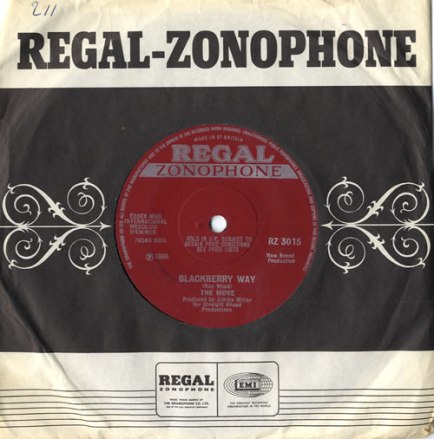
265. ‘Blackberry Way’, by The Move

This next #1 single is one that opens with a bang, right in the middle of the story. ‘In media res’, if you want to be fancy about it. Blackberry way, Absolutely pouring down with rain, It’s a terrible day…

690428-the-move

Blackberry Way, by The Move (their 1st and only #1)

1 week, from 5th – 12th February 1969

I like the absolutely pouring down with rain line – it sounds very British. As the picture is filled in, you really can picture a dull suburban street – probably lined with bungalows – in the rain, as girl ends it with boy. So now I’m standing on the corner, Lost in the things that I said…

It’s a dramatic record. Make that melodramatic. The strings moan like the soundtrack to a haunted house. The drums are thick and portentous. As the singer makes his way from Blackberry Way, through the park and past the boating lake, where the boats float: just like myself they are neglected… Before each chorus, he asks himself: What am I supposed to do now? He gets on the train, with one final look over his shoulder, to see if she’s followed him… We can assume that she hasn’t.

This is kind of fun; if a little OTT. Even though it’s about heartbreak ,the scale of the song, and the lyrics about the mundane things he sees on his walk in the rain, keep it slightly tongue-in-cheek. Only occasionally does it get ahead of itself – what exactly does the line: See the battlefields of careless sins, Cast the to the wind… mean? I like the fact that it’s quite a psychedelic sounding song, but one describing a fairly everyday scene. No flower-power here. And I like the contradiction in the chorus: Goodbye Blackberry Way, I can’t see you, I don’t need you… Sure to want me back another day… Ain’t that just how a break-up goes…?

THE_MOVE_BLACKBERRY+WAY+-+SOLID-296795

The Move were a Birmingham band, that had already enjoyed four Top 5 hits before they scored their sole chart-topper. I always liked ‘Fire Brigade’ as a kid – it must have been on a sixties-hits tape we had lying around – and ‘Flowers in the Rain’ was famously the first ever song played on Radio 1. They were quite a sonically experimental band, mixing Spector-ish production with innovative sounds and effects. You can hear the instruments on ‘Blackberry Way’, straining to make themselves the most important part of the song over the vocals. It’s a record that bursts from the speakers…

Central to The Move was songwriter and singer Roy Wood, who we will meet again in the coming decade – a man who played a big role in shaping the sound of the seventies when The Move morphed into Electric Light Orchestra. Wood didn’t hang around long with ELO, though, leaving to form glam-rockers Wizzard. Luckily for all of us, we’ll meet both of his bands-to-be later in this countdown. Not many artists can claim to have been involved in three hugely successful, chart-topping acts… Kudos to Wood!

263. ‘Ob-La-Di Ob-La-Da’, by The Marmalade

Our first #1 of 1969, which hit the top just as the New Year’s bells rang out. Throughout January it was locked in a bit of a jig with our last chart-topper, ‘Lily the Pink’. Both records replaced one another at the summit. And when you listen to this disc, that makes sense…

c27629b64f9be56ecf844e470e622c78

Ob-La-Di Ob-La-Da, by The Marmalade (their 1st and only #1)

1 week, from 1st – 8th January / 2 weeks, from 15th – 29th January 1969 (3 weeks total)

For ‘Ob-La-Di, Ob-La-Da’ is cut from the same silly, music-hall cloth as Lily and her medicinal compounds. This is another strange tale – the tale of Desmond, Molly and their market stall. Desmond says to Molly girl I like your face, And Molly says this as she takes him by the hand…

You probably know what comes next, because this is a song by a very famous band, from a very famous album. Ob-la-di, Ob-la-da, Life goes on, Wo-oah… La-la how the life goes on… Yep, it’s the fifth cover of a Beatles’ song to make #1 in the UK, following on from ‘Bad to Me’, ‘A World Without Love’, ‘Michelle’, and hitting the top only a couple of months after the last one, ‘With a Little Help From My Friends’. Add these to the Beatles’ fifteen #1s, and that’s a cool twenty chart-toppers for Misters Lennon and McCartney. (Listen to the original here – John apparently hated it.)

Out of the previous covers, I’d say that this has most in common with The Overlanders’ ‘Michelle’. It’s a perfectly functional copy of the original, one that adds nothing new into the mix. It still bounces along on the same ska-ish beat, Desmond still buys Molly a diamond ring, Molly still does her pretty face and sings with her band in the evening – they still have the drag verse at the end – but it’s basically karaoke.

marmalade-ob-la-di-ob-la-da-beatles-song-n-mint-cbs-7-inch-45-rpm

In fact, the bits I like about the original ‘Ob-La-Di…’ are the cut from this. They don’t shout ‘Bra!’ in the chorus, instead changing it to ‘woah’. There’s no ‘ha ha ha ha’ between the bridge and the third verse, no plinky-plonky piano. Plus, at the end they change So if you want some fun… to So if you want some jam… Because, I’m guessing, they were called The Marmalade. So actually, they’ve taken an average song, and made it worse. Oh well.

And it’s sung in a very strange, slightly Indian, slightly Scouse, slightly Fagin from ‘Oliver!’ accent. The Marmalade were from Glasgow, but that ain’t no Glaswegian… It’s tough, I know, to assess a song like this on its own merits, having been familiar with The Beatles’ version since I was about eight. It’s fine, but coming so soon after Cocker’s outrageous interpretation of ‘With a Little Help…’ it falls pretty flat. The Marmalade would, to be fair, have several other, self-written Top 10 hits through to the early seventies. They were no one-hit wonders.

P.S. Before we finish, it’s worth noting the reggae-ish undertones in this disc. Last year we had the first ska-tinted number one from The Equals, while the ‘Desmond’ in this song was apparently inspired by Desmond Dekker, one of the first reggae stars to make it big in the UK. The ‘Bra!’ in the original was apparently meant to be more like ‘Brah!’ – ‘brother’ or ‘friend’ in West Indian patois. Nowadays Paul McCartney would probably get savaged for such cultural appropriation… What it all means is that reggae has arrived at the top of the charts, just in time to add yet another layer to an amazingly diverse musical decade.

P.P.S. This is the 19th disc to have two (or more) separate runs at the top since the charts began sixteen years ago. Amazingly, it will be the last disc to have a return to number one (without being re-released) until 1993!

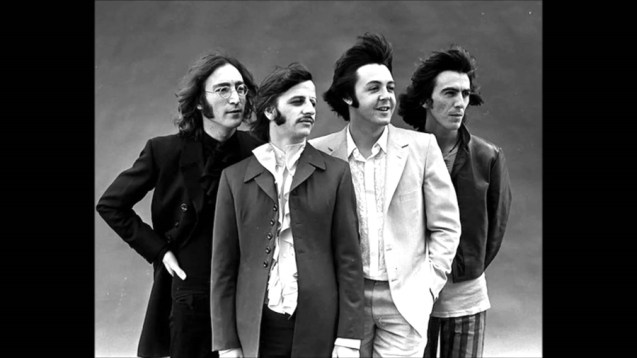
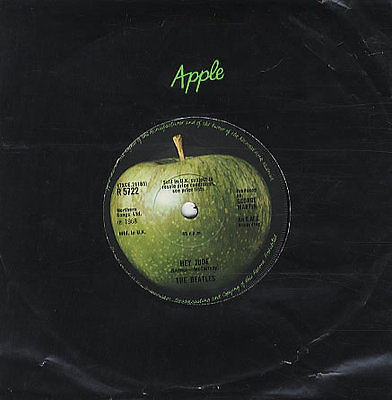
258. ‘Hey Jude’, by The Beatles

Buckle up and make yourselves comfortable, cause we’ve hit our longest number one single yet. One of the longest ever. Seven minutes and ten seconds of Beatlesy goodness.

0007362_900

Hey Jude, by The Beatles (their 15th of seventeen #1s)

2 weeks, from 11th – 25th September 1968

It starts off in beautiful simplicity. Just Paul and a piano. Hey Jude, Don’t make it bad… Take a sad song, And make it better… You’re there, in the studio. You can picture his face as he sings. Remember, To let her into your heart, Then you can start, To make it better…

I love the way the instruments are slowly added into the mix. Before you know it there’s a tambourine, a guitar, then backing vocals and Ringo’s drums. Hey Jude, Don’t be afraid, You were made to, Go out and get her… It sounds like an encouragement to a friend, to go and get the girl he loves, but it was inspired by John’s separation from his first wife Cynthia. Paul wrote it to comfort their son Julian (Julian – Jules – Jude). John, however, claimed that it was about him, and that the song’s lyrics were Paul’s blessing to him and Yoko Ono. Others still – mainly McCartney’s exes – have claimed that it was written about them. Who knows? A great song means something different to everyone.

And this is a great song. I’ve always liked the bridge best: And anytime you feel the pain, Hey Jude, Refrain…  It’s almost, without wanting to sound hopelessly pretentious, spiritual. Pop music as hymn. If I were religious, I’d go to churches where they sang ‘Hey Jude.’ I gave Paul McCartney a hard time in my post on ‘Hello, Goodbye’, and I stand by that, but here… His voice grows ever more soulful. It’s something else – it’s undeniable.

Just over three minutes in we reach the bit that means this record will live on for ever more. When the waves finally lap over the last bit of unsubmerged land left on earth, the final sound man hears will probably be the coda of ‘Hey Jude’. Na-na-na… Nananana! Nananana… Hey Jude! It lives on at karaoke nights, in pubs, outside pubs, in football stadiums… And you can see why. It isn’t hard to remember some ‘nananana’s. Whatever language you speak. Nananana.

271312379723

(‘Hey Jude’ was the 1st single released on The Beatles’ own Apple Label)

I had forgotten – having not actually listened to ‘Hey Jude’ properly for years, how crazy Paul goes over the coda. He riffs, he scats, he howls and yells. By the end he sounds as if he’s properly lost it. This was recorded at a particularly difficult time in The Beatles’ history: John spending all his time with Yoko, Ringo temporarily leaving the band… Maybe he was just letting some frustrations out.

The song starts to fade a full minute and a half before it actually ends. Does it really need to be over seven minutes long? Probably not. But at the same time: why the hell not? By this point in their careers, The Beatles could do whatever they wanted. ‘Hey Jude’ is a full two minutes forty seconds longer than the previous ‘Longest #1 Single’ title-holder, The Animal’s ‘The House of the Rising Sun’. You could play the shortest #1 – Adam Faith’s ‘What Do You Want’ – almost five times before ‘Hey Jude’ plays once. As far as I’m aware, it is still the 4th longest #1 single ever, and won’t be displaced as the longest until 1998, when Oasis will release their cover version… sorry, their completely different song… ‘All Around the World.’

And so we reach the end, finally, as the nananas fade and we are left to return to everyday life. ‘Hey Jude’ is a song that has entered the fabric of British life, of our national identity even… Paul McCartney plays it at most of his concerts, as a tribute to his long-dead song writing partner. It’s only right that it hit number one, but it seems wrong that it stayed at the top for just a fortnight. In the US it tied for the longest-ever run, at nine-weeks. That seems more appropriate. A long old run in pole position, for a long old song… Na-na-na-na!

Listen to all the previous, much shorter, #1 singles here:

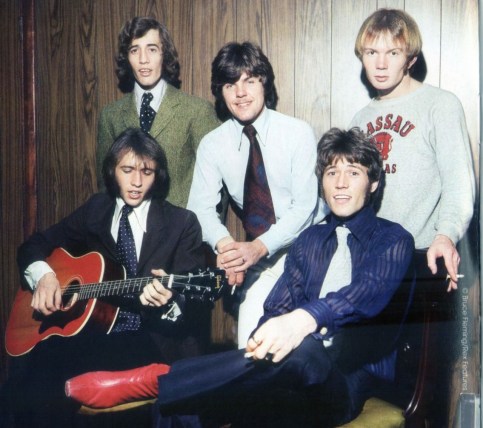
257. ‘I’ve Gotta Get a Message to You’, by The Bee Gees

The Brothers Gibb’s 2nd number one picks up where their first – ‘Massachusetts’ – left off. Melancholy and minor key-ish. This time, though, with a hint of gospel about it, a touch of something more funky. I like it more than ‘Massachusetts’ (and always have done…)

8f4280d96bf857b78c257d3ff7dde874

I’ve Gotta Get a Message to You, by The Bee Gees (their 2nd of five #1s)

1 week, from 4th – 11th September 1968

The lyrics immediately remind me of Tom Jones’ monster hit from a couple of years back, ‘Green, Green Grass of Home’, as they concern a man condemned to die. Is it worth making a new sub-genre of chert-topper? The death row #1? Probably not. In GGGOH, the singer was dreaming in an attempt to escape his inevitable fate. But in this one, the singer is under no illusions. The last rites are being read… The preacher talked with me and he smiled, Said come and walk with me, Come and walk one more mile…

The end is nigh, but he wants to get one last message out to his beloved… I’ve just got to get a message to you, Hold on… Hold on… One more hour and my life will be through… Whether or not he manages to get the message out is never revealed. In the background some very late-sixties percussion and an organ make things sound much cheerier than they should.

Another key difference to GGGOH (something very satisfying about banging that out in caps…) is that we are left in no doubt that the singer dunnit. He killed a man – I did it to him, Now it’s my turn to die… And it might even have been a crime of passion: It’s only her love that keeps me wearing this dirt… Is she grateful, or sad, or has she already shacked up with someone else…?

BEE_GEES_IVE+GOTTA+GET+A+MESSAGE+TO+YOU+-+3PR-255861

For the final verse we get a key change. Which means this record about a murderer preparing to face the electric chair ends on a strangely uplifting vibe. He’s still alive at the end, and the listener is left to wonder if maybe, just maybe… I do like a song that tells a story!

As much I like this record, however, there is something irritating about how The Bee Gees sing. While not quite the falsettos from their disco phase, it’s still a bit nasal, a bit whiny, especially after the key-change. Minor quibbles, though, minor quibbles. They would score further hits with classics like ‘Words’, ‘I Started a Joke’ and ‘World’, the latter of which forever has a place in my heart as one of the very few songs that I ever managed to master on a keyboard. This can be seen as the end of The Bee Gees MK I. They will fade from view, chart-wise, for most of the early-seventies, until disco comes along and we meet them again in a decade or so.

256. ‘Do It Again’, by The Beach Boys

This is a song I’ve known for a long time, from childhood car journeys with The Beach Boys’ Greatest Hits on repeat, and ever since I first heard it I’ve been fascinated by the intro. The pulsing, grinding rhythm that draws us in, sounding like something that Prince would have rejected for being too saucy…

811jnYhbdoL._SS500_

Do It Again, by The Beach Boys (their 2nd and final #1)

1 week, from 28th August – 4th September 1968

Apparently it is several drum sounds merged together and compressed to slightly trippy effect. It doesn’t last long, unfortunately, this electro-beat intro, as The Beach Boy’s familiar chugging surf guitars soon come in. It’s automatic, When I talk with old friends, The conversation turns to girls we knew… It’s an interesting concept, a ‘traditional’ Beach Boys song about girls, surfing, and so on, but written as a reminiscence. It’s barely four years since every song they released was about girls, surfing, and so on, but so much has changed…

California girls and a beautiful coastline, Warmed-up leather let’s, Get together and do it again… In some ways, it’s a run-through of the Boys’ greatest hits: vocal harmonies, oo-bee-dooos and a nifty little guitar solo. But in other ways it’s a completely different band, one that’s been through ‘Pet Sounds’ and a whole load of LSD. It’s a lot slower than, say, ‘I Get Around’, with a very droney vibe. Even the surf-rock solo is crunchy and distorted. And then it fades out with what sounds like a carpenter’s workshop, all sawing and hammering. Repairing a Woodie, perhaps…?

THE_BEACH_BOYS_DO+IT+AGAIN+-+SOLID-76605

It’s short and sweet, a snip over two minutes long, just like its one-week run at the top of the charts. Blink and you’ll have missed The Beach Boys’ second and final number one single, in the UK at least. It’s interesting to me, and a little bittersweet, that none of the early hits that ‘Do It Again’ echoes made #1. ‘California Girls’, ‘Fun, Fun, Fun’, ‘Surfin’ Safari’ and the like all fell short. This is all that remains, an echo of more innocent times. Well, this and ‘Good Vibrations’ – one of the most famous pop songs ever recorded – but still…

Mike Love gets a hard time when people look back at The Beach Boys – the Devil to Brian Wilson’s Messiah. And a lot of its deserved: freezing other members out, resisting change (his ‘don’t fuck with the formula’ quote even has its own Wiki page), writing ‘Kokomo’… But ‘Do It Again’ is his and Brian’s baby, a call-back to when they were the biggest band in the States, selling a glossy, sun-swept vision of American life to gloomy, smoggy, faraway places like Britain.

I’ve always liked this song, even in amongst all the other biggies on their Greatest Hits, and listening to it again now I like it even more. It’s the perfect late-summer hit, as the sun goes down and you lie back in your hammock, cracking open your third beer. And it would be the perfect way to bid farewell to The Beach Boys on this countdown, by pressing play on the link below and doing it again…