144. ‘The Next Time’ / ‘Bachelor Boy’, by Cliff Richard & The Shadows

As in 1962, the first number one of 1963 is by Cliff and his gang. New year; new Cliff? Well, kind of. His sound is changing… For the worse, mostly.

1444315144-a30ba8d4cf695a5867db18bd869743e3-600x337

The Next Time / Bachelor Boy, by Cliff Richard (his 6th of fourteen #1s) and The Shadows (their 9th of twelve #1s)

3 weeks, from 3rd – 24th January 1963

The first thing I noticed after pressing play on ‘The Next Time’ was that there’s an awful lot of piano. Previously, no matter how bland and soppy Cliff got – and he’s been plenty bland and soppy in his five previous chart-toppers – they were all guitar-led tracks. The Shadows are here, apparently, but quite why they were deemed necessary is beyond me. If I were Hank Marvin I wouldn’t have bothered getting out of bed for this one.

Away from the instruments, Cliff is properly crooning. They say I’ll love again someday, A true love will come my way, The ne-e-e-ext time… But after you there’ll never be a next time, Fo-o-o-or me… The song unravels at a snail’s pace, the verses and chorus blending together in a soggy mush. Lord, this is dull. It sounds like something Cliff should have been releasing in his forties; not when he was twenty-two!

There are lots of recurring themes here. It isn’t the first time that The Shadows have had their name on a disc to which their contribution was minimal (see ‘Travellin’ Light’.) It isn’t the first time that Cliff – the man who just three years ago was being hailed as Britain’s great rock ‘n’ roll hope – has released bland, saccharine crap (see ‘I Love You’.) But the more it happens the less I find I have the patience to listen to it.

By the time Cliff’s gone all nineties Hugh Grant, mumbling that he’s Still so very much in love… I’m over it. Grow some balls, Clifford. I can’t think of many previous #1s that were so lacking in oomph, so in need of a kick up the backside.

513F9A3QraL

Can the flip-side of this double-‘A’ redeem it? Well, straight away I’m getting strong whiffs of ‘Whatever Will Be Will Be’, both in the lilting rhythm and in the lyrics. When I was young, My father said, ‘Son I have something to say…’ And what he told me, I’ll never forget, Until my dying day… What is it that his dad imparts, in this testosterone-fuelled ‘Que Sera Sera?’ Well… Son you are a bachelor boy, And that’s the way to stay, Son you be a bachelor boy, Until your dying day…

Why his father is so anti-marriage is not explored, which is a shame, but Cliff wastes no time in putting Pop’s wise words into action. When I was sixteen, I fell in love, With a girl as sweet as can be, But I remembered just in time, What my daddy said to me… There’s no suggestion that he is staying unattached for any kind of racy, sow-my-wild-oats kind of reasons. No, not our saintly Cliff. He concedes, grudgingly, that he probably will fall in love eventually; though he doesn’t sound thrilled at the prospect. Until then though he’s Happy to be a bachelor boy… so on and so forth.

It’s better than ‘The Next Time’, but that’s a very low bar to get over. It’s faster paced, and at two minutes doesn’t outstay its welcome. I suppose this song would have been forgotten completely in the canon of British pop, even in the canon of Cliff, if it hadn’t become a sort of self-fulfilling prophecy: Sir Cliff has famously never married. Never even had a serious girlfriend, it seems. Which means that every time the ‘Daily Mail’ runs a story about Cliff and one of his female friends they will, without fail and to this very day, though he’s pushing eighty, trot out the ‘Bachelor Boy’ headlines. I bet he wishes he’d never recorded the bloody song.

Of course, there have always been rumours that Cliff is something of a ‘confirmed bachelor’, ‘not the marrying kind’, a ‘friend of you-know-who’ if you know what I mean, nudge, nudge… And people always argue that, in these enlightened times, he should just come out with it. But when you’ve been courting the evangelical Christian market for decades, and risk losing the only people that still buy your records in doing so… Anyway, all this is neither here nor there. The fact that I’ve started blethering on about this rather than the chart-topping record in question is a sign that I should wrap up.

Both ‘The Next Time’ and ‘Bachelor Boy’ featured on the soundtrack to ‘Summer Holiday’ – Cliff’s latest box-office smash (the 2nd biggest movie of 1963). And I hope you’re ready for more from Cliff and more from The Shadows, because they are going to utterly dominate the first three months of this year. Yay….

139. ‘I Remember You’, by Frank Ifield

For the 3rd post in a row, we have somebody new at the top of the charts. Mr. Frank Ifield is going to burn very brightly, and very briefly, across British pop in 1962-63 and he kicks things off here with a big ol’ seven-week stay at #1.

p021yt5y

I Remember You, by Frank Ifield (his 1st of four #1s)

7 weeks, from 26th July – 13th September 1962

Let’s get down to business, then. What is this new and rather sudden singing phenomenon all about? On first listen… I’m not sure. There’s a nice, rolling C&W rhythm, and a lot of harmonica. This is a record that is harmonica-heavy. I remember you-oooh… You’re the one who made my dreams come true, A few, Kisses ago…

He’s got a distinctive voice, does Frank Ifield. It’s a good voice; but not what I’d call a particularly enjoyable voice. He has a tendency to launch into extremely high notes at the end of each line, for a start. Then there’s the way he takes the phrase out of the blue, and adds about eight extra syllables onto the end. Wiki describes Ifield as a ‘singer and guitarist who often incorporated yodelling’, but I wouldn’t describe what he’s doing here as ‘yodelling’ exactly. It’s more that he’s just fannying about when he should be getting on with singing the song.

Singing style aside, I’m not terribly sure what this song is about, either. He ‘remembers’ a girl, but that’s because he just kissed her. When my life is through, And the angels ask me, To recall, The thrill of them all… That’s a strange thing to think, as you kiss the love of your life – that you’ll remember it on your deathbed. Or is it extremely romantic? Kind of? Contrast these very lightweight lyrics with those of Ray Charles in the previous chart-topper. Big difference.

FRANK_IFIELD_I+REMEMBER+YOU+-+2ND-571711

If you’re getting the feeling that I’m not terribly into this record, then you’d be right. This is the first time I’ve ever heard it and, to be honest, it’s average. Even the music is a weird kind of Americana: a British interpretation of Country & Western (Ifield was British-Australian). You can imagine him on a music-hall stage, perched on a wooden fence, chewing a bit of straw. Howdy pardner…! But – and this might just be me – I’m also getting slight Merseybeat vibes. Maybe it’s the way his sentences run on – You’re the one who said I love you too, Yes I do, Didn’t you know…. – or maybe it’s the chord progression. The harmonica ‘riff’ which I complained about at the start kind of reminds me of ‘Please Please Me’ by The Beatles. The Merseybeat explosion is less than a year off, and the bands that would lead it were already around and making music, and so perhaps it’s not so far-fetched to be hearing the sounds already creeping through.

The end of ‘I Remember You’ sounds pretty cheesy and cheap, and I, personally, was glad that we got there in just over two minutes. If ‘I Can’t Stop Loving You’ was a Champions League kind of record; then this is solidly League One. The Scunthorpe United of chart-topping singles. It’s a cover of an old forties standard – which means that the blame can’t be heaped wholly at Frank Ifield’s door and that the people of 1962 would perhaps have already known the song, giving it a head start in its bid for the top. Yet, I remain unconvinced that this is what the charts needed. And why on earth it stayed at #1 for seven weeks, selling over a million copies in the process, is a real mystery. Maybe it shouldn’t be, though: bland and accessible sells – always has, always will.

I’ll hold off on any Frank Ifield biography for now – this is just the beginning of a big twelve months for him, and we’ll be hearing a lot more from him very, very soon. For now, let’s leave the bio at him being (half) Australian, and thus the first in a very long line of Aussie chart-toppers. To be at the head of a list that contains Kylie, The Seekers, Olivia Newton-John and Peter Andre is a proud achievement indeed…

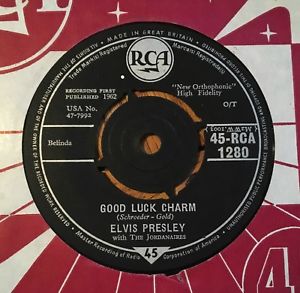
136. ‘Good Luck Charm’, by Elvis Presley

Uh-huh-huh, Uh-huh-huh, Uh-huh-huh, Oooh yeah… Sorry, I think I just dosed off. Where was I? Oh, right. It’s Elvis again. How many #1s is that, now? I’ve lost track… Eleven? Thanks.

1a05378768dab97cbc98827b6cd5841c

Good Luck Charm, by Elvis Presley (his 11th of twenty-one #1s)

5 weeks, from 24th May – 28th June 1962

This is the sound of Elvis in complete cruise-control. If his career were a long-haul flight (bear with me…) then we would currently be five-hours in, cruising at 37,000 feet, meals served, lights dimmed, pilots snoozing with their feet up.

Don’t want a four-leaf clover, Don’t want an old horse-shoe… These are the things Elvis doesn’t need – along with a silver dollar, a rabbit’s foot on a string and a lucky penny – because he has his girl. Come on and… Be my little good luck charm, You sweet delight… I want a good luck charm, A-hangin’ on my arm, To have, To hold, Tonight…

And that’s pretty much it. Elvis sounds bored. The music sounds like one of the pre-set backing rhythms on an old Casio keyboard that I had as a kid. After two verses and two choruses, we get to the spot where the solo should be. And the solo is Elvis going ‘Uh-huh-huh’… over and over again. When you think back to the energy of his fifties number ones – his growl on ‘Jailhouse Rock’, for example – or the startling newness of his Sun Record, pre-chart topping days, then you have to feel sad that he had been reduced to songs like this. It’s not awful. It’s OK. But the problem is that it’s not trying to be anything more than just OK.

s-l300

And coming as it does, hot on the heels of Elvis’s best two post-army chart toppers – ‘Little Sister / Her Latest Flame’ and ‘Can’t Help Falling in Love’ – it really does feel like a step backwards. He was capable of so much more. It’s a well-known fact that Elvis was up for recording pretty much anything that his manager, Colonel Parker, suggested, and that Col. Parker had absolutely no qualms about milking his hit-record machine for all he was worth. (‘Song of the Shrimp’, ‘(There’s) No Room to Rhumba in a Sports Car’ and ‘Petunia, the Gardner’s Daughter’ are all titles of songs recorded by ‘The King of Rock ‘n’ Roll’ between 1961 and 1967.) ‘Good Luck Charm’ is probably the one UK chart-topper record that best encapsulates this mid-career malaise.

I wrote in my previous post that the zany ‘Nut Rocker’ was just what we needed to liven things up at the top of the charts. This, however, is just what we didn’t need. I’ve listened to it six or seven times while writing this post and am pretty sure that my brain has started to melt. To think that this was the country’s number one selling song for five (5!) weeks. Really, record buying public of 1962? Really…?

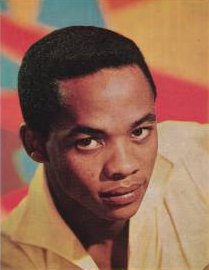
131. ‘Moon River’ by Danny Williams

Before we begin our next post, can I take a moment to praise the year that has just been? The year that this next #1 single will bring to a close. I know it isn’t time for a recap, but 1961 has been an unprecedented year in terms of the breadth and depth of its chart-toppers.

The twenty-one number ones from this year have taken us from gloriously pure pop (Johnny Tillotson, Helen Shapiro) through to tongue-in-cheek pastiche jazz (The Temperance Seven), from doo-wop (The Marcels) to pure rock (The Everly Brother’s ‘Temptation’), from the sublime (‘Runaway’) to the ridiculous (‘Wooden Heart’). There’s been room for piano instrumentals from Floyd Cramer, guitar instrumentals from The Shadows and showtunes from Shirley Bassey. There’ve been a couple of crooners – Frankie Vaughan and Eden Kane – and we’ve even found time for two ‘death-discs’ and a spot of collegiate folk. We’ve also had glimpses into the future with electronic solos on the Musitron and Joe Meek twiddling his dials. And the fact that all this has managed to shine through in a year utterly dominated by The King of Rock ‘n’ Roll, and his eighteen weeks at the top, is just superb. 1961, I take my hat off to you. My favourite chart year so far, by miles.

And to finish the year off we have room for one more. An absolute classic…

Danny Williams

Moon River, by Danny Williams (his 1st and only #1)

2 weeks, from 28th December 1961 – 11th January 1962

Moon river, Wider than a mile, I’m crossing you in style someday… Oh dream maker, You heart breaker… Wherever you’re going, I’m going your way… It’s a song, and a voice, drenched in a romantic echo – an evocative song, that really does lull you into imagining that you’re drifting down a river, water flat as glass, the moon a white diamond in the sky… I’d say that it’s the atmosphere that pervades this whole song – that haunting melody, rather than the lyric – which has made this such a famous record.

Because, for perhaps the first time in the entire countdown, I’m not terribly sure what the actual lyrics of this song are about. Two drifters, Off to see the world… OK, I can picture that. We’re after the same rainbow’s end, Waiting round the bend… And I get that they’re floating downriver to some unspecified destination. My Huckleberry friend… Which I’m guessing is a reference to one of literature’s most famous river-floaters, Huck Finn. Moon river, And me…

OK, in actual fact I do get what the song’s about. But – it is still pretty abstract, very poetic, in a way that, say, your average Elvis song isn’t. It’s also got an air of old-Americana that to me, as a small-town Scot, sounds very alluring and exotic. When the backing singers take-over for the final verse it sends a shiver down your spine. This is a standard – a song that could have been a hit in any era.

R-6657991-1424024305-7352.jpeg

‘Moon River’ is, of course, from the film adaptation of ‘Breakfast at Tiffany’s’, sung originally by Audrey Hepburn, sat in a window, plucking at her guitar. But in 1961-’62, there were a lot of versions of ‘Moon River’ to choose from – you could have had the instrumental version by the song’s composer Henry Mancini, Jerry Butler’s version – which was the first one to hit the charts, the definitive version from Andy Williams… This Danny Williams version, which claimed a fortnight at the top in the UK, is pretty far down the list. Williams was a South-African born crooner who didn’t do an awful lot more, in terms of chart hits, than cover this song.

I have to admit: I like this song, I respect it, I admire it… But I can’t bring myself to love it. It’s beautiful; but it’s not a warm beauty. It most reminds me of Tony Bennett’s 1955 #1, ‘Stranger in Paradise’, which had similarly flowery lyrics and dwelt on similarly abstract themes. Also, it’s been a while since I saw it but I really have no idea what the song’s relevance is to a movie about a party-hopping socialite in New York.

Maybe we’re not meant to understand. Maybe we should just stand back and appreciate ‘Moon River’ for what it is – a piece of art too valuable for plebs like me. And as we stand there, lulled by its haunting strains, we can look ahead to 1962, and hope for as much variety and innovation as we had in the year just past…

‘Starry Eyed’, by Michael Holliday – The UK Number 1s Blog Anniversary Special

This week marks the 1st anniversary of The UK Number 1s Blog (** Trumpet Fanfare**)! In the past year we’ve covered the period from Nov. ’52 to Nov’ 61, with 129 chart-topping songs featured. We’ve survived pre-rock, rode the rock ‘n’ roll revolution, and are now well on our way towards the swinging sixties… Thanks to everyone who has read, followed, commented and enjoyed.

To celebrate this milestone, I’m going to take a short break from the usual countdown to repost seven songs that I have really enjoyed discovering over the past year. These aren’t necessarily the best songs to have topped the charts – there’ll be no Buddy Holly, Johnnie Ray, Connie Francis, Elvis or The Everly Brothers (follow the links if you want to read about them) – as I’ve been listening to, and loving, those artists for years. This week will be all about the forgotten gems, the hits I’d never heard before, the songs that have slipped through the cracks…

My final choice is ‘Starry Eyed’, by Michael Holliday. As we moved further into the rock ‘n’ roll age, the songs that hit the top spot became more and more familiar. But in amongst all the Cliff and Elvis came this little gem – the first #1 of the sixties. It’s not the most instant song, but it snags on something and stays with you long after you expect it to have faded. It’s ethereal and dreamy, but with a solid pop hook. Enjoy.

(PS. That’s it for my week-long anniversary recap of my favourite chart-topping discoveries. Normal service will resume with my next post – the 130th UK #1 single.)

BtTnVMQBmkKGrHqEH-D8EvE9BvcOBL7ZdIM5g_12

Here we go then. One tentative foot in front of the other. A hop and a skip and… We’re into the 1960s! Hurrah! It’s one small step for man… as someone will quite famously say before this decade is through.

Starry Eyed, by Michael Holliday (his 2nd of two #1s)

1 week, from 29th January – 5th February 1960

On first listen, however, the 1960s sounds suspiciously like the 1950s. Backing singers? Check. Basic rock ‘n’ roll guitar? Check. Croony male lead singer? Check. Where’s the innovation? Where are the groovy new sounds? Where are all the drugs and free love?

Bum-bam-bum-bam-bum… Why am I so starry-eyed, Starry-eyed and mystified, Every time I look at you, Fallin’ stars come into view… So far so standard. A song about being in love, and about seeing stars because you’re so in love, and to be honest it’s been done a million times before. When we touch I hear angels sing, When we kiss I hear wedding bells ring… Yeah yeah, blah blah blah.

But actually, to dismiss this song because of its unremarkable lyrics would be to do it a huge disservice. Because, on a second, third and fourth listen, this record has got a lot going for it. Firstly there are the backing singers and their Bum-bam-bums. They’re not just any old Bum-bam-bums – they sound echo-y and ethereal, like woozy church bells or a trippy version of the intro to ‘Mr. Sandman.’ It’s really cool.

Adding to this effect is the guitar, which is restricted to a few strums during the verses and chorus but which comes in nice and layered, fed through the same robotic distortions as the backing singers, during the solo. It gives the record a real dreamy quality, like the singer’s dazed after a blow to the… Wait, I get it! He’s starry-eyed. He has been whacked over the head. With love!

78964385

I could complain about Michael Holliday’s sonorous voice being a little too sombre, a little too straight-laced for this song but, after a few listens, it kind of works. His voice has an innocence to it, as he gazes into his lovers mystical eyes and his pupils morph into cartoon love-hearts. Underpinning it all there’s a groovy little rhythm – a bossanova? – that actually makes it quite a sexy record. A record to which there’s more than meets the ear and which improves with every listen. We’re not in the swinging sixties just yet; but this is a sniff of what’s to come…

‘Starry Eyed’ is certainly a lot better than the song which first brought Mr. Holliday to our attention a couple of years back – the fairly bland and saccharine ‘The Story of My Life’. I mentioned then that he only ever scored a handful of hits in his career – in fact he managed to squeeze two #1s from just three top ten hits. The story of his life – see what I did there! – is in truth quite a tragic one. Holliday suffered from crippling stage fright and, shortly after ‘Starry Eyed’ hit the top spot, he suffered a nervous breakdown. He took drugs to keep going and sadly died of an overdose in 1963, aged just thirty-eight. He joins the ‘Died Far Too Early’ club along with the likes of Dickie Valentine and Buddy Holly, perhaps proving that pop stars have always died young and in dubious circumstances, and that it didn’t just start with Jimi Hendrix. Remember him this way: by discovering – as I’ve just done – this forgotten gem of a UK Number One.

‘Don’t Let the Stars Get in Your Eyes’, by Perry Como with The Ramblers – The UK Number 1s Blog Anniversary Special

This week marks the 1st anniversary of The UK Number 1s Blog (** Trumpet Fanfare**)! In the past year we’ve covered the period from Nov. ’52 to Nov’ 61, with 129 chart-topping songs featured. We’ve survived pre-rock, rode the rock ‘n’ roll revolution, and are now well on our way towards the swinging sixties… Thanks to everyone who has read, followed, commented and enjoyed.

To celebrate this milestone, I’m going to take a short break from the usual countdown to repost seven songs that I have really enjoyed discovering over the past year. These aren’t necessarily the best songs to have topped the charts – there’ll be no Buddy Holly, Johnnie Ray, Connie Francis, Elvis or The Everly Brothers (follow the links if you want to read about them) – as I’ve been listening to, and loving, those artists for years. This week will be all about the forgotten gems, the hits I’d never heard before, the songs that have slipped through the cracks…

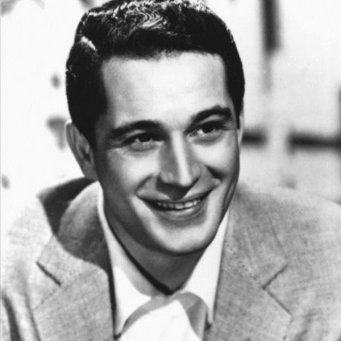
Next up is Perry Como, with ‘Don’t Let the Stars Get in Your Eyes’ – another song that surprised me with its upbeat tempo (and funky trumpet solo). And like Kay Starr, he was another artist with enough about him to make it out of the pre-rock age alive…

perry-como-with-the-ramblers-dont-let-the-stars-get-in-your-eyes-1953
Don’t Let the Stars Get in Your Eyesby Perry Como with the Ramblers (Como’s 1st of two #1s)

5 weeks, from 6th February to 12th March 1953

One of my biggest chart bugbears, back when I started chart-watching, was one-week number ones. In the late ’90s and early ’00s it seemed like there were a never ending parade of songs waiting to shoot straight in at number one, only to be replaced by another brand new song a week later, as if record companies had worked it all out beforehand in some sort of dastardly pact. And I assumed that it never used to be that way, that ye olden charts were creaky, slow moving things where records languished at the top for weeks and months. Which is true to an extent – Al Martino had nine weeks, and wasn’t alone in having that length of stay, while later in 1953 we’ll reach the song which still holds the record for most weeks at number one…

But what we have here is a fourth new chart topper in as many weeks. It turns out that the record buying public of the pre-rock era were just as fickle as those in 1999! Perry Como, though, did halt the turnover and kept this jaunty little tune at the top for a month and a bit. That’s star quality shining through.

This track is a welcome relief after its overwrought predecessor. Perky guitars, a lively brass section, and tongue-twister lyrics: Love blooms at night in daylight it dies don’t let the stars get in your eyes or keep your heart from me for some day I’ll return and you know you’re the only one I’ll ever love delivered in just the one breath. This seems to have been a thing, a gimmick almost (at least it seems gimmicky to modern ears), as Kay Starr was at it in ‘Comes A-Long A-Love’. It’s not vocal gymnastics of the Mariah Carey kind; more lyrical gymnastics, if such a thing can exist.

We’ve also heard similar lyrics already in this countdown, in that Como is telling his sweetheart not to forget about them, or to stray, while away. The best bit of it all, though, is the trumpet solo. At least I think they’re trumpets; I really can’t tell one brass instrument from the other. Anyway, they put me in mind of the oompah band at a German Bierfest.

The one downside to the song is the backing singers, The Ramblers. They’re just a bit… barbershop, in that they are basically there to repeat verbatim the line that Como just sang. In case some one missed it? I don’t know. And their one bit of improvisation is to sing what sounds like pa-pa-papaya between lines. Are they imitating the trumpets? Is it just gibberish? Are they actually singing about papayas?

600x600

Perry Como (American! Died aged 88! The run continues!) is the biggest name to top the chart so far. I’d say, at least. Both of the female chart toppers were new to me, Al Martino was known to me solely as the singer of the first ever UK #1, and Eddie Fisher had entered my consciousness due to his ladykilling (the romantic type of ladykilling, that is). Perry Como was a big star and I could have named his biggest hit (‘Magic Moments’, fact fans) without looking it up. And after looking up his discography it’s clear that if the the charts had begun earlier he would have racked up a load more hits – he was scoring US #1s throughout the ’40s. Now, in 2018, he’s no longer a household name, a Sinatra or Presley, I wouldn’t have thought. Very few of these stars from sixty-odd years ago are, I suppose.

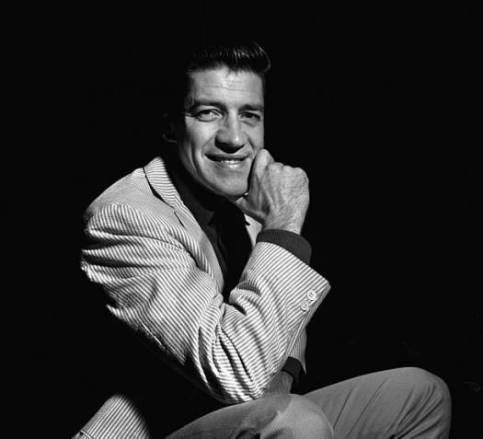
122. ‘Well I Ask You’, by Eden Kane

Imagine the lounge bar of a hotel that’s seen slightly better days. It’s Thursday evening. The bar’s half-full. Eden Kane struts onstage to a smattering of light applause. That’s the vibe I’m getting here.

aae466151d4e035483252322353b5700

Well I Ask You, by Eden Kane (his 1st and only #1)

1 week, from 3rd – 10th August 1961

It’s a song with a bit of a shimmy to it; a song with a knowing grin. Well I ask ya, What a way to treat a guy, What a way to cheat and lie, Because I wanted you… It’s a song about a break-up, with some no-punches-pulled descriptions… Well I ask ya, Did you have to beat me down, Did you have to go to town, And smash my world in two…?

Kane sings it well – gives it lots of little vocal flutters, puts a nice rasp into the We-e-ell I ask ya…, gives us a little Buddy Holly hiccup and an Elvis-ish Oh baby! It’s a hammy performance, which I know is an adjective usually reserved for actors but I feel it’s applicable here. The singer ain’t really heartbroken. Turns out he’s looking for revenge.

A-don’t think you’re getting’ away with it, You’re gonna pay me somehow, You cruelly wrecked my life, But oh you want me now… Maybe it’s just my sensitive little 2019 ears, but there’s something sneering in the singer’s tone as he delivers these lines, something a little sinister. Just you ask me, Get down on your knees and try… If you ask me, the girl’s probably better of out of it. Check your male privilege, Eden. We end with the song’s title on repeat: Well I ask ya… “This girl dares break up with me? We’ll see.”

Or, maybe I’m reading way too much into this little ditty. Maybe it’s an ironic study in masculine fragility? Kane is covering up his heartbreak with a shrug, a wry smile. “Her loss…” Lyrics have in general become a bit sharper recently, a little more biting, and this latest hit is simply following the trend. Think Adam Faith’s ‘Poor Me’, or Emile Ford’s ‘What Do You Want to Make Those Eyes at Me For?’ Since rock ‘n’ roll came along, heartbreak has lost its allure. Faced with rejection in 1961, it simply won’t do to clasp your hands together a la Frankie Laine in ‘Answer Me’, praying for divine intervention in affairs of the heart. Now you need a shrug, a knowing wink and a sassy response. Well, I ask ya…

eden-kanewell-i-ask-youvery-good-1961-decca

Musically this disc isn’t pushing any boundaries. It’s polished enough, and actually pretty funky; but it’s a slight step back to the glossy male crooners that were lining up to top the charts back in the spring of 1960: your Anthony Newleys, Michael Hollidays and Jimmy Jones’s. Kane’s stage name was even inspired by the biblical tones in Adam Faith’s. ‘Eden Kane’ sounds slightly cooler though, perhaps a little more raffish, than any of those guys. Unlike say, Holliday, he doesn’t sound like someone you’d trust backstage with your teenage daughter.

Though I should immediately state that Kane is still alive and with us, aged seventy-eight, and hasn’t had so much as a whiff of scandal over the course of his career. (Just on the off-chance that he reads this and reaches for the phone to his lawyer…) He had a decent strike-rate with his singles in the early sixties – they either made the Top Ten or they failed to chart at all. By the middle of the decade, however, he had turned to acting. As an aside, we’ll meet his younger brother, Peter, right at the end of the 1960s with his very own chart-topping single. Actually, that’s worth considering – how many other siblings have topped the charts separately? Answers on a postcard…

The fact that my mind has wandered down these lines probably suggests that I’ve wrung everything I can out of this latest #1. A funky enough, but pretty much forgotten one-weeker from the summer of ’61. Moving on…

119. ‘Surrender’, by Elvis Presley

This December 24th, I’d like to wish everyone who reads ‘The UK Number Ones Blog’ a very merry Christmas. And to celebrate the festive season, let’s welcome back one of the most famous figures in Western popular culture – a man famous both for his large belly and his garish, all-in-one outfits… No, not Santa… Elvis! Yes, it’s him again. His third chart-topper of the year – and it’s only June! Like that urban myth about rats in a city; in 1961 you were never more than seven feet from an Elvis Presley #1 single.

imagephp402938ma9

Surrender, by Elvis Presley (his 8th of twenty-one #1s)

4 weeks, from 1st – 29th June 1961

Or, more accurately, you’re never more than a month away from an Elvis #1 single. There were just four weeks between ‘It’s Now or Never’ and ‘Are You Lonesome Tonight?’, then another four weeks before ‘Wooden Heart’ came along, and exactly four weeks later here we are with ‘Surrender’. Surrender? The UK Singles Charts surrendered to Elvis a long time ago. And these aren’t just flash-in-the-pan chart toppers either – they’ve all settled in at the top for a long haul. Eight weeks, four weeks, six weeks, and now another four. Very few acts can claim to have had this kind of hold over the top spot.

To the song, then. I’ve long been familiar with this. One of the first tracks on CD2 of the Greatest Hits I bought aged sixteen or so. It’s never been my favourite Elvis song. Nor have I ever hated it. I’ve never had any strong feelings about it, I guess, but I should really muster up some kind of opinion about it or this’ll be my shortest post yet.

The intro is cool – I’ll give it that. It always makes me think of the James Bond theme. Dun-dada-dun-dada-dun-dada-dun… And then The King comes in. When we kiss my heart’s on fire… Burning with a strange desire… I’m still slightly disappointed by his voice, all smooth and honeyed as it is. I have to keep reminding myself that rock ‘n’ roll Elvis is dead, or at least in a decade-long hibernation. He sings it well, though. Obviously he sings it well. It is Elvis, after all.

So my darling please surrender… All your love so warm and tender… Let me hold you in my arms dear… While the moon shines bright above… The lyrics look pretty ridiculous, written out like that. I mentioned in my post on ‘It’s Now or Never’ that Elvis never really did subtle, and this song is ‘It’s Now or Never’ distilled and concentrated. This is Elvis on heat. The best bit is when he comes back round for a final chorus, and murmurs: Won’t you please… Surrender to me… It’s playful, it’s flirty… It’s high camp. I’m being won round as I type this, on the fourth or fifth listen. I’d put it in my Top 10 ‘Elvis Songs to Belt Out in the Shower’ (‘The Wonder of You’ is number one, in case you were wondering.)

51xl3BCMJEL

And in terms of his post-army, sixties number ones thus far – I’d rank ‘Surrender’ as No. 2 of 4. Behind ‘Are You Lonesome Tonight?’ but ahead of this track’s big brother ‘It’s Now or Never’. Incidentally, ‘Surrender’ is also based on an old Neapolitan ballad, ‘Torna a Surriento’ – yet another chart topper harking back to decades earlier. And then ‘Wooden Heart’ ranks fourth. Of course. I hope I’ve left you in no doubt as to how awful that particular song is.

I think one of the reasons why I’ve neither loved, hated nor felt very strongly at all about this record is the fact that it’s so short. One minute fifty-two seconds and out. It’s over before you can really think about it; and it was never worth the effort of skipping on that old Greatest Hits CD.

There’s not much more to say here. Like I said, we’re never far from the next Elvis Presley-based #1. We’ll see him again in fo… No! Shock horror… We will have to wait a full TWENTY weeks until his next chart-topper! Is this the beginning of the end for the King, and his dominance over the UK charts? Is he preparing to leave the building? (*Spoiler Alert* No, it’s not and no, he isn’t.)

115. ‘Wooden Heart’, by Elvis Presley

Oooh, what’s that? An accordion? Yay!… Said no-one ever. Nothing good ever starts with an accordion.

011117podcastmain

Wooden Heart, by Elvis Presley (his 7th of twenty-one #1s)

6 weeks, from 23rd March – 4th May 1961

And what could you possibly add to said accordion to make an even more annoying sound? Ah, yes – an oompah band. Or at least the flaccid remnants of an oompah-band. So with this pair of musical buzzkills we enter Elvis’s short-lived ‘Lederhosen phase’: Can’t you see, I love you, Please don’t break my heart in two, That’s not hard to do, Cos I don’t have a wooden heart…

This is – for want of a better, more descriptive word – bad. At least Elvis has the decency to sing it like he’s embarrassed. He’s on auto-pilot – none of the emotion we were hearing on ‘Are You Lonesome Tonight?’, none of the bombast from ‘It’s Now or Never’ and certainly none of the energy we were hearing from him a couple of years ago on ‘Jailhouse Rock’ and ‘I Got Stung’. The song, like the oompah-rhythm, plods along until it fizzles out.

There’s no strings upon, This love of mine, It was always you from the start… And then, if you thought it sounded lame in English, just wait until you hear it in German! Or, more accurately, in Swabian – a southern German dialect. Interestingly, this adds to the list of unusual-languages-other-than-English to feature on #1 hits. We’ve had cod-Italian (‘Mambo Italiano’), cod-Scots (‘Hoots Mon!’) and now Swabian-German, but still no French, Spanish or Italian…

Anyway, at least Elvis keeps this bilge short. Two minutes; done. ‘Wooden Heart’ featured on the soundtrack to ‘G.I. Blues – the movie shot by Elvis during his time stationed in Germany with the army, in which he plays an American soldier stationed, with the army, in Germany. And if you watch the song in the context of the movie – here – with the puppets and the children and everything it kind of works. It’s kind of cute. Separated from the movie soundtrack, though, and restricted to a black vinyl disc… I struggle to understand why anyone needed to buy this. It’s genuinely one of the worst #1s so far.

Elvis-Presley-Wooden-Heart-Tonight-Is

And. AND! This single didn’t just sneak a week at the top… It spent six weeks there. A month. And a half! This is how famous Elvis was in 1961. Whenever anyone makes the old joke about an artist being so popular that they could release a fart and it would go to #1, this is what they’re talking about – the six weeks across March, April and May 1961 in which ‘Wooden Heart’ was Britain’s top-selling record. Which makes sense, since the oompah parts do, to an infantile mind such as mine, sound a bit like someone farting…

If nothing else, this disc confirms what we have long suspected: that rock ‘n’ roll Elvis is long dead. Long, long dead. ‘Wooden Heart’ isn’t so much the final nail in the coffin of Elvis the rock ‘n’ roller as the litre of gasoline chucked on the coffin while it burns. When I was a teenager just getting into Elvis I always skipped this track on his Greatest Hits. Even then. But – grasping for a silver lining here – at least this means that Ricky Valance has some competition for Worst #1 in my next recap!

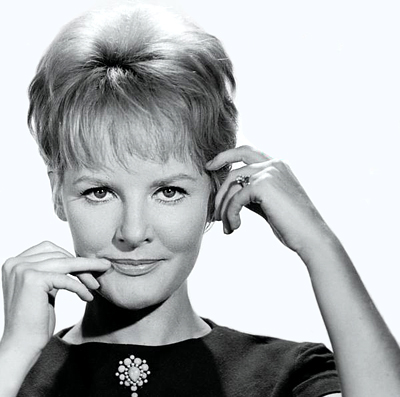
113. ‘Sailor’, by Petula Clark

Ladies and Gentlemen, something strange is about to occur atop the British Singles Chart. For the first time since 20th March 1959 – that’s twenty-three months and thirty-two #1s ago – the following chart-topper will be sung by – dun dun dun – a woman!

clark-p

Sailor, by Petula Clark (her 1st of two #1s)

1 week, from 23rd February – 2nd March 1961

The gap between this song and Shirley Bassey’s ‘As I Love You’ is, I’m going to assume, some kind of record for the longest gap between female-led number ones. Though, quickly glancing down my list o’ chart-toppers, it is genuinely surprising how male-dominated the sixties will be. Certain consistent stars aside – Cilla Black, Sandie Shaw, Nancy Sinatra and the like – there will be huge swathes of #1 territory taken up by blokes with guitars. I wonder that more hasn’t been made of it, to be honest. But, I suppose, that’s all a story for another day. We have a new number one – let’s take a look at it…

It starts with a harmonica, an instrument under-represented so far in this countdown… Sailor, Stop your roamin’, Sailor, Leave the sea… Sailor, When the tide turns, Come home, Safe to me… It’s cute, and lilting, like the waves upon the ocean. Then comes the chorus, and it’s a proper sing-along one: As you sail across the sea all my love is there beside you…

It’s kind of old-fashioned. Kind of cheesy. Above all I’d describe it as ‘sentimental;  what the Germans call a ‘schlager’ song. It’s a hard one to place –  a song that might have been a hit any time between 1940 and 1975 – and one that reminds me of certain #1s from years already gone by. It’s a ‘Come Home to Me, My Love’ kind of song, the sailor in the title presumably being in the navy and separated from his amour against his will, as in Anne Shelton’s 1956 hit ‘Lay Down Your Arms’. But I’m more reminded of Jo Stafford’s ‘You Belong to Me’ – the second ever UK #1 – when Clark lists all the countries to which her man is sailing: In Capri or Amsterdam, Honolulu or Siam… (not sure which war he’s fighting in to take him on that erratic route, but anyway).

And then the pub-at-closing time feel of the chorus puts me in mind of The Stargazer’s 1954 smash ‘I See The Moon’, albeit with the crazy dialled back several shades. It’s a light little song that just about stays on the right side of cheesy, aside from the line about his final destination being ‘the harbour of her heart’…

PETULA_CLARK_SAILOR-419791

To be honest this song is perhaps best used as an excuse to draw people’s attention to the Life and Times of Petula Clark. In my post on the last female chart topper, I referred to Shirley Bassey as the First Lady of British pop. But that title might just as equally go to Ms. Clark. She went from being a childhood star, to a WWII Forces’ Sweetheart, to a global, multi-lingual superstar – equally as popular in France (‘Sailor’ was released there, in French  as ‘Marin’, reaching #2) and the USA as she was in Britain. Her first chart hit – ‘The Little Shoemaker’ – came in 1954, although she had been releasing singles since the dusty pre-chart days of 1949. And then, while all the big female pre-rock stars fell by the wayside – Vera Lynn, Kitty Kallen, Kay Starr, Rosemary Clooney et al – Clark kept going. Rock ‘n’ roll didn’t hurt her. In fact, she grew in popularity. Not even the Merseybeat revolution will be able to see her off!

We’ll meet Petula again in six years or so for her second #1, which is officially A Good Thing. Between then and now she will release her signature hit, ‘Downtown’, and my personal favourite – possibly the most uplifting song ever – ‘I Couldn’t Live Without Your Love’, which featured on a cassette of sixties hits that stayed on heavy rotation in our family car back when I was eight or nine. The songs on it were strictly 2nd-tier hits in chart terms – no Beatles, Elvis or Stones for obvious licensing reasons but plenty of Tremeloes, Emile Ford, Kenny Ball and T. Rex (sixties T. Rex, before they were particularly famous) – but I’d give anything to find out what the hell that tape was called. My love for all this glorious fifties and sixties pop stems directly from that compilation – in fact this very blog probably stems from what that tape awakened in me. As a small child I listened to very little music recorded post-1969. Until I turned ten and The Spice Girls came along, that is… But that’s yet another story for yet another day.