I’ve been threatening this post for quite a while, and I’m sure many readers didn’t take those threats seriously. To them, all I can say is sorry. Never again will you underestimate this blogger’s love for some cheesy pop. Time to begin, so count me in…
Steps were a near-permanent fixture on the singles chart between 1997 and 2001, managing two number ones. Sadly, both of their chart-toppers were fairly average (‘Tragedy’/’Heartbeat’ and ‘Stomp’) while many of their near misses – they had five singles that peaked at #2 – are classics of their time and genre. The turn of the 21st century was a time when disposable, teeny-pop acts were ten-a-penny. But Steps still managed to carve their own niche. They weren’t cool, they weren’t sexy, they weren’t particularly down with the kids. They were camp, and catchy. Who were Steps’ fans? Was their continued success all the fault of gay men? (Probably, yes.)
You may be relieved to hear that I won’t do my usual Top 10 today. I’ll restrict it to a Top 5. But, what a five! Five bubblegum classics of the fin de siecle, and I will entertain no arguments to the contrary…
‘Last Thing on My Mind’ – #6 in 1998
I don’t think many people expected Steps to have any sort of career beyond their debut hit: the ultra-cheesy, line-dancing meets techno ‘5, 6, 7, 8’. But lo and behold, they returned with a proper pop song, combining an ABBA-esque piano line with a cheap and frothy chorus. And the revelation that at least two of the five, Faye and Clare, could actually sing! ‘Last Thing on My Mind’ had originally been recorded by Bananarama in 1992, but had stalled at #72. That version is even more indebted to ABBA, while the song’s author Pete Waterman has claimed it was inspired by Mozart. A bold claim, but I’ll buy it.
‘Better Best Forgotten’ – reached #2 in 1999
One of five Steps singles that fell a place short of top spot, ‘Better Best Forgotten’ is another ABBA(ish) melody with lots of late-nineties dressing. Please bear in mind that by constantly bringing up ABBA I am not being so bold as to claim Steps were in any way comparable to said Swedish Gods and Goddesses, but that the influences were clear… Meanwhile I can’t explain it, but the key change just before the chorus here is hands down the gayest moment in popular music.
‘A Deeper Shade of Blue’ – reached #4 in 2000
The 4th single from their second album was a slightly cooler affair, with an Italo-house beat and some dance diva vocals from Claire. It was another track originally recorded by someone else – in this case Tina Cousins – but Steps stepped in and made it their own. Musical vultures! It is more mature, and more sophisticated, than much of Steps’ earlier work.
‘One for Sorrow’ – reached #2 in 1998
There is a beauty about early Steps videos, which rival the cheapest of stock karaoke videos. Here they cycle, have a kickabout, and generally frolic in long grass and sunflowers somewhere in Italy. And the song is a melancholy dance classic, with the melody deeply in debt to… well, you know who it’s in debt to. Another thing to note is Steps’ consistent dedication to wordplay: One for sorrow, Ain’t it too too bad… (See also the deeper shade of blue/darker shade of me from the previous entry.)
‘Love’s Got a Hold of My Heart’ – reached #2 in 1999
For me, this is peak Steps. All boxes ticked. A candyfloss chorus. A Eurotrash beat. Cheesy dance routine on a pier (all while dressed in canary yellow). Claire absolutely belting it out (the way she lets rip on the resigned to my fate… line is a chef’s kiss moment). It lacks the usual hint of melancholy – making it one of their least ABBA-aping singles – and it sounds excactly like you’d expect Steps to sound, had you only ever seen a picture of them.
If you made it this far through the post, I salute you. Thanks for humouring me. I realise that Steps are written off by many as cheap tat, indicative of a time when pop was at its most disposable. And maybe it’s nostalgia for my youth (though I’d never have admitted to liking Steps at the time!), but I do think the five songs included here deserve their place in the pantheon of pop. Maybe not on the same floor, or even the same wing, but definitely in the same building as the likes of Kylie, or Madonna, or even, yes, ABBA.
Steps split on Boxing Day 2001, but reformed a decade later and have been touring and recording ever since, releasing some pretty decent dance-pop tracks. For reasons that I don’t quite understand, they seem to have acquired Michelle Visage as a part-time sixth member. There’s clearly a lot of people who still hold some affection for Steps. Including me. And I make no apologies for it!
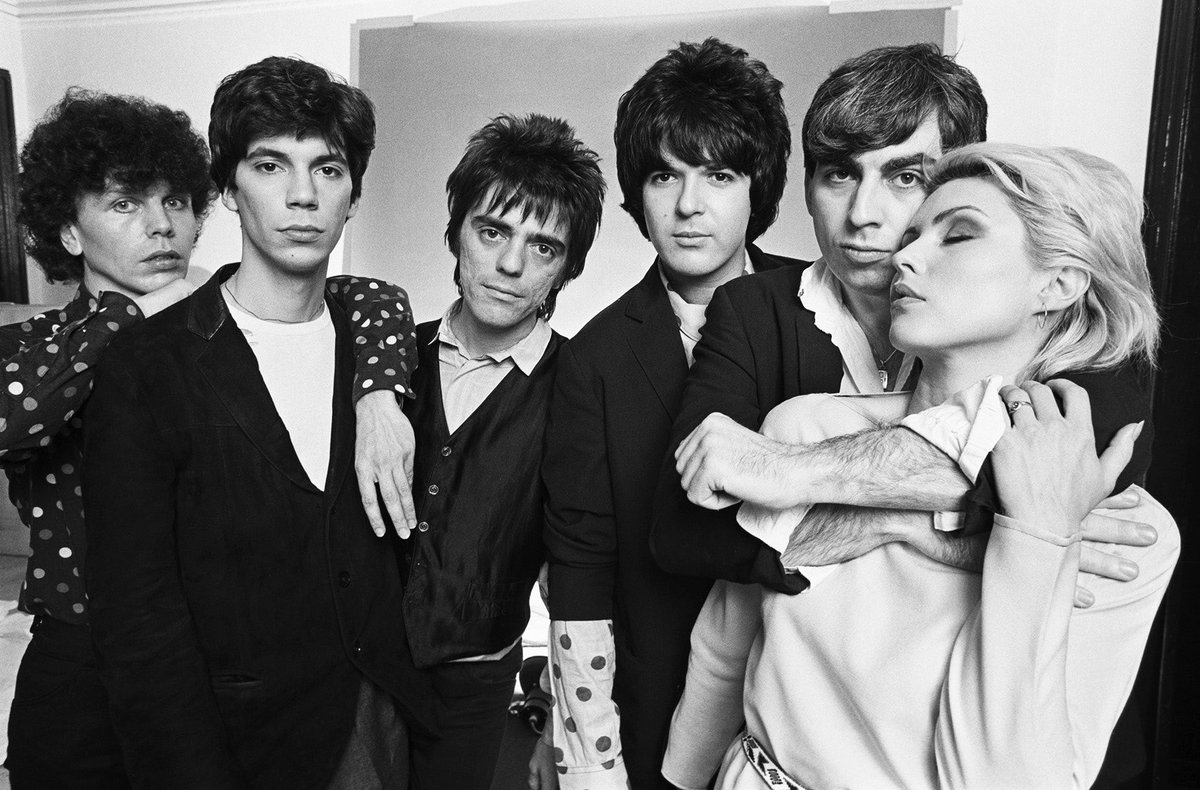
I’ve had this post planned for a long, long time, but had to hold off in the knowledge that Blondie would have the glorious, belated coda to their chart-topping career that was ‘Maria’. Now that their 6th and final number one has been and gone, I can rank the new-wave icons’ eleven other UK Top 40 hits. Hurrah!
Restricting myself to Top 40 hits means that we can’t include that run of glorious early singles – ‘X Offender’, ‘In the Flesh’, ‘Rip Her to Shreds’ – all of which would have come close to topping this list, but which never made the hit parade. It also excludes ‘One Way or Another’, which was never a single and only charted at #98 after One Direction covered it in 2013. On with the countdown!
11. ‘Nothing Is Real But the Girl’ – #26 in 1999
A much more down-to-earth follow-up to the heavenly ‘Maria’. It’s got a good driving beat, Harry on top vocal form, and some quality drum fills. Blondie 101. Plus, as others have pointed out, it shares a bassline with ‘Suzy and Jeffrey’, the great B-side to ‘The Tide Is High’. Still, somehow it doesn’t equal the sum of its parts, and leaves me fairly cold.
10. ‘Island of Lost Souls’ – #11 in 1982
It’s surprising just how quickly Blondie’s chart form fell off a cliff. A year and a half after their ‘final’ number one, the lead single from 6th album ‘The Hunter’ failed to make the Top 10. ‘Island of Lost Souls’ is a more extreme version of ‘The Tide Is High’s reggae leanings, going full-on calypso. I don’t think it’s a particularly bad song, I’m just not sure why Blondie felt the need to record it and/or release it as a single. Still, the line Hey buccaneer, Can you help me get my truck in gear? is enough to prevent this from ranking last.
9. ‘Rapture’ – #5 in 1981
On the one hand, I respect what ‘Rapture’ (RAP-ture, get it?) does. It’s brave, it’s boundary pushing, it’s disco, new wave and hip hop all in one. Plus, it contains lines about men from Mars shooting you dead and eating your head, before ending with a cool guitar-slash-saxophone solo. It was also the first US #1 to feature rapped lyrics. And yet… I’ve never particularly liked it. Sorry.
8. ‘War Child’ – #39 in 1982
‘The Hunter’ is a pretty poor album, from a band that just a few years earlier were churning out classic LPs by the year. But it has two good songs – the Bond-theme that never was, ‘For Your Eyes Only’ – and this, the second single (Blondie’s last for seventeen years). It’s a counterfeit ‘Call Me’, with a propulsive electro beat, some wild saxophoning, and lyrics about Cambodian child soldiers. It deserved better than a #39 peak.
7. ‘(I’m Always Touched By Your) Presence, Dear’ – #10 in 1978
This bit of power-pop showed a softer side to the band’s earlier output, and earned them their second UK Top 10. It could almost be classed as a novelty, in the way it describes being in love with a mind reader, and pokes fun at psychic frequencies and outer entities, though Harry delivers it all in an cooly earnest deadpan. At the very least, someone was taking the piss when placing those brackets in the title…
6. ‘Good Boys’ – #12 in 2003
I’ve seen ‘Good Boys’ described as the great, lost Blondie single. Which feels strange to me, as it’s been one of my favourites for years. But then maybe it was a case of right place right time, as I was at the height of one of my chart-watching phases, and seem to be one of the few who noticed it making #12 in August 2003. A bit poppier, and funkier, than ‘Maria’ a few years earlier, Harry had another crack at rapping on this one, and the band had to acknowledge Queen in the credits after borrowing heavily from ‘We Will Rock You’.
5. ‘Union City Blue’ – #13 in 1979
It’s not up for debate that Blondie were a pretty freakin’ cool band, but have they ever looked cooler than in the video to ‘Union City Blue’, all suited and booted (orange jump suit-booted in Debbie H’s case) on a dry dock? They do their best to spoil all this in the second half of the video, cutting some goofy shapes once night has fallen, but let’s pretend that never happens. This song just sounds so epic, from the cascading intro, to Clem Burke’s majestic drumming, to that revving bass in the break before the final verse.
4. ‘Hanging on the Telephone’ – #5 in 1978
Blondie had a knack for covering the right songs, songs that hadn’t been big hits in the first place and that people would assume were Blondie songs all along… (see the next song in this list for another great example). ‘Hanging on the Telephone’ had been recorded by the Nerves in 1976, and Blondie’s cover is pretty faithful, just a bit tighter, a bit sharper, and a bit better. I can even pinpoint the very moment that this transcends its original version: the extra throaty woahwoahwoah that Harry adds right at the end. It’s also another fine example of what I’ll call Blondie’s knack for stalker-chic – see also ‘X Offender’ and the song at #2 in this list – songs with creepy lyrics that they get away with because Debbie Harry was such a doll.
3. ‘Denis’ – #2 in 1978
Speaking of having a knack for covering the right songs… Though Blondie didn’t so much as cover ‘Denis’ as kidnap it, brainwash it, and convince it that it was their song all along. The original, ‘Denise’, by the excellently named Randy & the Rainbows, was an average slice of mid-tempo doo-wop. In Blondie’s hands it became both a razor-sharp pop tune, and a post-punk classic with just enough cooly detached irony. As well as their first big hit.
2. ‘Picture This’ – #12 in 1978
Blondie seemed to lose some momentum with the release of the lead single from their third album, ‘Parallel Lines’. Of course, that album would go on to do alright for itself, and the subsequent hits would overshadow this brilliant new-wave single. As mentioned, Blondie did a good line in oldies covers, but they also did a great line in making new songs with all the hallmarks of the classics. ‘Picture This’ has hooks galore, and could have been a sixties girl-group hit. Though not many sixties girl-groups would have gotten away with lines like: I will give you my finest hour, The one I spent watching you shower…
1. ‘Dreaming’ – #2 in 1979
Blondie are not a band poorly served by their number one singles. They released some outright, all-time classics, and most of them got to the top of the charts. But if there was one single of theirs that deserved to join the ranks of ‘Heart of Glass’, ‘Atomic’, or ‘Call Me’, then it’s ‘Dreaming’. Like ‘Picture This’, it takes some classic pop group hooks, and melodies, (it’s apparently based on ‘Dancing Queen’, though I don’t hear it myself), and beefs them up into something wonderful. Clem Burke’s drumming is a stand out on this record, though he claims he was over-egging his drum fills, assuming that producer Mike Chapman wouldn’t use that take.
I’ve noticed that I quoted quite a few of the lyrics from the past ten songs, not realising just how epic, and often hilarious, Blondie’s lyrics were. To the ‘hilarious’ pile I’ll add Harry’s opening couplet: When I met you in the restaurant, You could tell I was no debutante… And to the ‘epic’ pile I’ll nominate a sentiment we can all agree with: Dreaming, Dreaming is free…
Thanks for reading, and do let me know if you agree with my ranking in the comments.
Before going, I must mention that over the weekend I wrote a guest blog post for Keith AKA the Nostalgic Italian, all about our memories of the toys that we grew up with. I managed to stay on-brand and tied my post into a number one single. Check it out here!
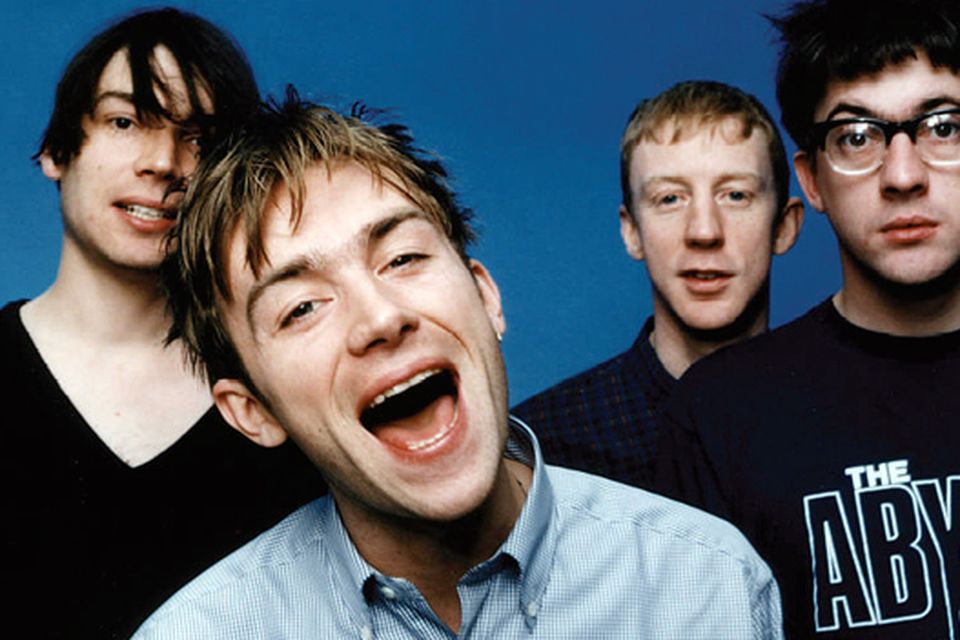
Oi Oi! Here’s a Best Of for Britpop’s cheekiest chappies. And it’s got nothing to do with your Vorsprung durch Technik, y’know… For I haven’t chosen ‘Parklife’ as one of them. Nor have I chosen either of Blur’s #1s – ‘Country House’ and ‘Beetlebum’. What I have done is pick my favourite non-chart topping single (no album tracks allowed) from each of their nine studio albums, plus a couple of standalone singles for good measure. Off we swagger, then…
‘She’s So High’ – from Leisure
Blur’s first album stands out as something of an oddity. Apart from it clearly being Damon Albarn on lead vocals, they don’t sound like the Britpop icons that they would go on to become. ‘She’s So High’ was their first ever release, making #48 in October 1990. It’s very much a shoegaze single, lulling you in with its pounding drone and stoned vocals. It was twinned with ‘I Know’ as a double-‘A’, which is a more uptempo number with a funky Madchester beat. Both songs are a neat time capsule of what indie music sounded like at the dawn of the ’90s, long before anyone had heard of ‘Brit Pop’.
‘Popscene’ – non-album single
I’m cheating a bit here, as ‘Popscene’ wasn’t on any album, but it seems too important to miss off this list. It feels like the sound of Blur coming into their own, the Blur that would go on to become one of the decade’s biggest bands, and is a song that they were proud of and excited to release. When it stalled at #32, in 1992, they were disappointed, and blamed grunge for not allowing upbeat rock music to flourish. Which was sour grapes, even if they did have a point. However, ‘Popscene’ is now regarded as one of, if not the, first real Britpop single. One that would influence a whole genre with its mix of punk and glam, its energy and its snotty Britishness, even if its legacy isn’t reflected in its chart position.
‘Sunday Sunday’ – from Modern Life Is Rubbish
‘Modern Life Is Rubbish’ kicked off the Britpop phase of Blur’s career, and the album’s third single set the template for the sort of perky, Kinks-y hits that they would churn out by the dozen between 1993 and 1996. Many would say they surpassed it a year later on ‘Parklife’, but this song is saved by not having been bludgeoned into our skulls for the past three decades. Plus ‘Parklife’ also doesn’t have ‘Sunday Sunday’s frantic middle-eight, that sounds like a malfunctioning arcade game, or the big brass band that sees us home. The lyrics are no ‘Autumn Almanac’, but there’s charm here in its depiction of a lazy Sunday: He sings the Songs of Praise every week but always falls asleep… The three singles from the album all made the Top 30, and though a good case could be made for ‘For Tomorrow’, I think ‘Sunday Sunday’ best encapsulates Blur on the verge of becoming massive.
‘Girls & Boys’ – from Parklife
And massive they became, thanks to ‘Parklife’, and its lead single ‘Girls & Boys’. Sometimes Britpop gets written off as a regressive movement, a fin de siecle piss-up for the lads and ladettes. But that was just one half of it (the Oasis half). The other half was Brett Anderson’s floppy fringe and amyl nitrate innuendo, Jarvis Cocker’s knowing looks and camp asides. And of course Blur, singing about Girls who want boys, Who like boys to be girls, Who do boys like they’re girls, Who do girls like they’re boys… All over a squelching electro-disco beat, and a brilliantly cheap looking green-screened video. Yes, it’s a satire about 18-30s holidays, and could be viewed in a sneering ‘look at those plebs’ sort of way. But I don’t think you need to overthink brilliant pop like this.
All the singles from ‘Parklife’ could have been chosen, as all have a claim to being among Blur’s best. From the soaring lounge-pop of ‘To the End’, the ubiquity of the title-track, to the bittersweet ‘End of a Century’. But I’ll go with the lead-single, which made #5 in the spring of 1994, and really kicked Britpop into gear.
‘The Universal’ – from The Great Escape
‘The Great Escape’ gave Blur their first number one single, which also brought with it all the hullaballoo of the ‘Battle of Britpop’. But it was the album’s second single, a #5 hit in November 1995, which is the real highlight. It’s a sweeping ballad, more strings than guitars, about a future where technology has taken over. The looming end of the twentieth century was a theme that cropped up throughout Blur’s Britpop phase, never more so than in ‘The Universal’: No-one here is alone, Satellites in every home… Eerily prescient, perhaps, as we look back from our social media age. The video is similarly creepy, a tribute to a ‘A Clockwork Orange’, with Blur all in white, playing to a bar full of uninterested, and increasingly chaotic, yuppies. Can we also take a moment to appreciate Damon Albarn, already the ’90s best-looking frontman, in mascara… (Fun fact: former Tottenham forward and BBC pundit Garth Crooks bought one of the all-seeing golf balls from the video at a charity auction in 1999).
‘Song 2’ – from Blur
I’m going for the second single from their fifth album, as the lead single made #1 and I’ve already covered it. And while I do like ‘Beetlebum’, I probably would have chosen ‘Song 2’ because, well, it bloody rocks. It’s also perfectly named, as not only was it the second single, it is also exactly two minutes long, made #2 in the charts, and it is the second track on the album (the song’s title is a placeholder that they never bothered to change). Things had been going sour for Blur following ‘The Great Escape’, and it’s not much of an exaggeration to say that they helped kill off Britpop with the follow-up. Gone are the larking cheeky-chappies; it is much darker, grittier, electronic in places, and grungier… Speaking of which, since their ill-fated tour of the States in 1992, Blur had spoken out against grunge, and American rock, and some say that ‘Song 2’ was intended as a piss-take of the genre. They apparently had no idea that their label would want the song on the album, let alone want it released as a single. And of course, when it did come it out it became their best-known song in the US. Funny that… Going by Damon’s outburst when they played Coachella earlier this year, he still has some unresolved anger towards Americans…
(Also, an honorable mention to this album’s fourth single, ‘M.O.R.’, which also rocks.)
‘Coffee & TV’ – from 13
Second single from the album, again. ’13’ was even more experimental than ‘Blur’, coming out in 1999 with Britpop going through its death-spasms. The lead-single was the near eight-minute long ‘Tender’, which is a good song – a swampy, gospel oddity – stretched way too thin. It was famously (and rightfully) held off number one by ‘…Baby One More Time’. The follow-up was ‘Coffee & TV’, written and sung by Graham Coxon about his struggles with alcohol. It contains, for my money, one of the greatest opening lines of all time: Do you feel like a chain store, Practically floored… Plus there’s also the award winning video featuring Milky, the animated milk carton.
‘Out of Time’ – from Think Tank
In the four years between ’13’ and ‘Think Tank’, Graham Coxon had left the band and Damon Albarn had released a well-aclaimed and succesful album with Gorillaz. For their seventh album, the remaining three members decamped to Morrocco. ‘Out of Time’, the album’s lead single and Blur’s most recent Top 10 hit, features an orchestra from Marrakesh, who provide the eerie, ethereal sounds that swirl around this gorgeous song. It also features perhaps Albarn’s best vocal performance, so soothing and clear that it works as a form of ASMR. Following this album, and the subsequent tour, Blur disbanded for the better part of a decade. (A shout out too for ‘Think Tank’s second single, the completely different ‘Crazy Beat’, a sort of ‘Song 2’ on steroids.)
‘Under the Westway’ – non-album single
Since we had ‘Popscene’, we can have this one too. An out-of-the-blue release in 2012, of a song written by Albarn and Coxon for a charity performance. Perhaps Blur’s most melancholy ballad, written about a man sitting under the A40 flyover in West London. Think a 21st century ‘Waterloo Sunset’, but far less hopeful. And yet it’s beautiful, ending on a thumping piano note reminiscent of ‘A Day in the Life’. It is the band’s most recent Top 40 hit to date.
‘Ong Ong’ – from The Magic Whip
Blur reformed in the early 2010s, and went out on tour. A new album was not on the cards, however, until a festival they were supposed to be playing in Japan was cancelled, leaving the band in Hong Kong with time to spare. They booked a small studio in Kowloon, and bashed what would go on to become ‘The Magic Whip’ out in five days. ‘Ong Ong’ has a joyful bounciness to it that harks back to the goofiness of ‘Sunday Sunday’ and ‘Parklife’, but also has a middle-aged melancholy buried within. Plus I have somewhat personal reasons for choosing it, as it’s a cute tribute to my home of twelve years, a land of black kites and wishing trees (as well as tarmac that melts on hot, sunny days like today…)
‘St. Charles Square’ – from The Ballad of Darren
I have to admit to not being that enthused by Blur’s most recent album, last year’s ‘The Ballad of Darren’. The standout track by far was the second single, the grungey, crunchy ‘St Charles Square’. It’s a ghost story – theres something down here and it’s living under the floorboards – but they are the ghosts of Britpop past. Apparently ‘Tesco Disco’was a real unlicensed club, next to a Tesco in Notting Hill. Which is brilliant.
I hope you enjoyed this frolic through the best British band of the ’90s… (please do disagree with that statement in the comments below!) Up next we return to regular programming, starting out on 1998!
April 21st marks the 8th anniversary of Prince’s death. One of the most talented musicians of his generation; and one of the most cheated when it comes to UK #1s. Just the one, in fact: 1994’s ‘The Most Beautiful Girl in the World’.
(We of course shouldn’t forget two very famous, and very good, songs written by Prince, that were chart-topping hits for Chaka Khan and Sinead O’Connor.)
So here are the Prince tunes that came closest: 8 records and 10 songs (thanks to two double-‘A’s) spread over quite a few decades… I’ll be the first to admit that I’m not as up on my Prince as I should be, so I’m not ranking them. We’ll just go by ascending chart position. Hopefully, I’ll learn something about the Purple One as we go…
‘Kiss’ (with the Revolution) – #6 in 1986
We start with the first Prince song I was ever aware of. And as an intro to the man, it ticks most of the right boxes… Outrageous funk, untamed horniness, a painfully high falsetto… check, check, check. But actually, the girl he’s looking for should be a blushing rose: no dirty talk, no flirting… You don’t have to watch ‘Dynasty’, To have an attitude… is the pick of the lines. Fun fact: the ‘ah-ah-ah’ effect is a compressed sample from Brenda Lee’s classic ‘Sweet Nothin’s’. A couple of years after the original, a remake by Art of Noise, fronted by Tom Jones, charted one place higher at #5. No comment…
‘Purple Rain’ (with the Revolution) – #6 in 2016
Title track from both an album and a movie, ‘Purple Rain’ is probably Prince’s signature tune. A gospel power-ballad, about the end of the world, it’s never really connected with me. I can respect it wholeheartedly; but I enjoy other Prince songs more. Originally written as a country song, and intended to be a duet with Stevie Nicks, ‘Purple Rain’ wouldn’t have made this list before Prince died, as it only made #8 originally. Upon his sudden death, this was understandably the song fans flocked to, making it re-chart and peak two places higher.
‘Controversy’ – reached #5 in 1993
Another song that peaked much later. Twelve years after it had failed to chart in the UK, ‘Controversy’ was re-released ahead of a Greatest Hits in 1993 and made #5. It’s tight and funky, with a disco beat, and lyrically lives up to its title. Am I black or white…? Prince asks… Am I straight or gay? In the seven-minute album version, he recites the Lord’s Prayer in full, presumably well aware that it would piss off a lot of people. Prince would spend the rest of his career playing up to similar controversy. For example, when I was at primary school, the one thing we all ‘knew’ about Prince was that he’d had two ribs removed in order to… how to put this… auto-fellate?
‘Sexy M.F.’ / ‘Strollin” (with the New Power Generation) – reached #4 in 1992
It took a while for the UK to catch up to Prince’s talents, but by the early nineties his singles were often charting higher in the UK than in the States. This coincided with what I see people now call Prince’s ‘gangsta period’. He raps most of this tune, classic lines like Can’t you see I’m harder than a man can get, I got wet dreams coming out of my ears… It’s a strangely uncommercial tune, all sharp horns and a monotonously funky beat, and that’s before we come to the x-rated title. So, in the UK it was twinned with ‘Strollin”, in the hope that radio would play that one. In the end, they just played an edit of ‘Sexy MF’ (You sexy mother-AOOW…!) ‘Strollin” is a much more jazzy, innocent number: Strollin’, strollin’, We can have fun just strollin’… and it can’t really compete with a sexy MF shakin their ass…
‘Gett Off’ (with the New Power Generation) – reached #4 in 1991
The crowning glory of Prince’s near-pornographic early nineties era. ‘Cream’, ‘Sexy MF’, and ‘Peach’ are all fun, but nothing matches the utter filth of ‘Gett Off’, from the ear-splitting shriek that kicks things off, through a tale of twenty-three positions in a one-night stand, to a brilliant flute-cum-guitar riff. Other highlights include a nod to that urban legend – Whatcha want to eat? “Ribs”, Ha, toy, I don’t serve ribs – and the crackly, funky James Brown tribute in the middle. If I were to rank these singles personally, then this one would be on top. Prince took himself seriously a lot of the time; but ‘Gett Off’ is a load of fun.
‘When Doves Cry’ – reached #4 in 1984
Early-nineties Prince might have been utter filth, but it’s not as if he was particularly pure and chaste before that… The video for ‘When Doves Cry’ caused consternation, setting up the controversy over the ‘Purple Rain’ album, and the introduction of ‘Parental Advisory’ stickers. The best single from the album, it was his breakthrough in the UK – only his second song to chart. It’s a deeply weird, deeply catchy song, that has no bass line.
‘Batdance’ – reached #2 in 1989
So, yep. Prince’s joint-second biggest hit in the UK is this. Recorded, quickly, for the soundtrack to the Michael Keaton ‘Batman’ reboot, ‘Batdance’ is a deeply, deeply strange song. If you can call it a song, which it isn’t in the traditional sense. There’s a lot going on: samples, audio from the movie, Prince’s raps, spoken asides, the classic Bat-maaaan… refrain all against a clanking, metallic beat… Then there’s a slow and funky middle-section that sounds like the needle has slipped on to a completely different song. Prince lovers may argue this an example of the scope of his talent, others might suggest it’s a classic example of over-egging the pudding. The guitar solo is wild, though.
‘1999’ / ‘Little Red Corvette’ – reached #2 in 1985
One of Prince’s more straight-forward pop moments, albeit one with a deeply cool synth-funk riff, and lyrics about dancing towards the apocalypse. ‘1999’ only made the Top 30 initially but made #2 when re-released in 1985. I wonder if ‘1999’ was ever Prince’s most popular hit, as it seems that the longer we get from the actual year in the title the more its fame is overshadowed by other Prince songs. It charted for a third time, making #10, in… 1999. For the ’85 re-release, it was paired with ‘Little Red Corvette’, which had been an even smaller hit originally. In it, Prince carries on the fine rock ‘n’ roll tradition of comparing beautiful women to cars (baby you’re much too fast…) It’s a fine song: a sort of smokey, disco-power ballad. Recorded in 1982, it’s the sound of the 1980s just starting to come into their own.
Aside from the music, there can be no doubt that Prince was one of, in not THE, ultimate rock star. Beautifully androgynous, deeply strange, myths and legends about him sprouting left, right and centre, and most importantly of all supremely talented. RIP.
To mark the release of the Stones’ 24th studio album, and their first original recording in almost two decades, let’s delve back into their long chart career, and explore the hits that didn’t make number one.
Over the course of the 1960s, the band scored eight chart toppers, from ‘It’s All Over Now’ in ’64 to ‘Honky Tonk Women’ in ’69. But they didn’t stop when the sixties ended. No, as you may be aware, they kept going. And going. Kept on rolling on. Impressively, their recent comeback single, ‘Angry’, made #34 in the UK, their first Top 40 hit since 2005. But that won’t quite make this list of their ten biggest non-chart toppers. In ascending order, then…
‘Start Me Up’, reached #7 in 1981
The Stones at their Stonesiest. A killer riff, some smutty lyrics, and Mick doing his best Jane Fonda impression in the video. It’s an impressive feat, releasing one of your signature songs two decades into your career. But it also somewhat marked the end of the band as a chart concern – it remains their final UK Top 10 hit – and the start of The Stones TM: the mega-touring, jukebox musical that the band have been for the last forty years. ‘Tattoo You’, the album from which it came, is seen by many as the band’s last great LP, too.
‘Fool to Cry’, reached #6 in 1976
Perhaps the one thing lacking from the Stones’ back-catalogue is a big ballad. (Ok, the next song on the list proves that statement completely wrong…) Anyway, ‘Fool to Cry’ comes close to being that ballad. A slow, bluesy number that takes its time, lingering on some wonderful falsetto notes from Mick. In the first verse he’s feeling low, so he puts his daughter on his knee, and she tells him Daddy, You’re a fool to cry… A bit too sentimental for the Stones? Not to worry, in verse two Mick goes to his mistress, who lives in a po’ part of town… And she says the exact same thing. Much more like it!
‘Angie’, reached #5 in 1973
Of course, if the Stones do have a big ballad, then it’s this one. There was some discussion as to who ‘Angie’ was: David Bowie’s wife, Keith Richard’s daughter, or the actress Angie Dickinson. Whoever it’s about, it’s a beautiful love song, with Jagger’s slurred singing giving the impression that he’s had a shot or two of Dutch courage before suggesting he and Angie call it a day.
‘Tumbling Dice’, reached #5 in 1972
I called ‘Start Me Up’ the Stones at their Stonesiest, but actually… This is the band at the peak of the powers. The lead single from what is widely regarded as their best album (though I’d go for the clean and concise ‘Sticky Fingers’ over the rambling ‘Exile…’) ‘Tumbling Dice’ might be the coolest piece of rock music ever recorded – that boogie-woogie rhythm, Keef’s lazy riff, Charlie’s drums bringing up the rear, the lyrics about being rank outsiders and partners in crime.. To be honest, until watching the lyric video above I had no idea what 90% of the words to ‘Tumbling Dice’ were. But does it matter? Nah. This one’s all about the groove, the attitude, about being the best freakin’ rock and roll band in the world.
‘Have You Seen Your Mother Baby, Standing in the Shadow?’, reached #5 in 1966
It’s easy now, with them in their eighties, to be blasé about how dangerous the Rolling Stones must have seemed in the 1960s. But this mid-decade hit, that begins and ends in a hail of feedback, with ambiguous lyrics that could be about a girl on the streets, taking drugs, or affairs with people’s mothers, proves that they were mad, bad, and dangerous to know… The memorable horn riff is a sign of the direction that the band would take as the sixties progressed. And just to make sure they got some more attention, the band dragged up for the record sleeve. Lock up your daughters, indeed…
‘Miss You’, reached #3 in 1978
A trio of number threes, now. In the late seventies anybody who was anybody had to try out a disco groove and the Stones were no different, in what was seen as a huge departure for them. The band disagree over whether or not it was originally intended as a disco song – Jagger and Wood say no, Richards says yes – but it certainly ended up as one. (There was an even more disco influenced remix released as a 12″.) Meanwhile, Bill Wyman, whose brilliant bassline holds the whole thing together, has claimed he should have had a writing credit. ‘Miss You’ was their last Billboard #1, and their last UK Top 5 hit.
‘Let’s Spend the Night Together’, reached #3 in 1967
It’s funny – this is one of the Stones’ poppier numbers, and yet one of their most controversial. It’s piano and organ driven, seemingly influenced more by Motown and male vocal groups than the band’s normal R&B touchstones. But lyrics like I’ll satisfy your every need, And now I know you’ll satisfy me… were bound to get folks’ knickers in a twist. Radio stations banned it, and Ed Sullivan insisted that the chorus be changed to ‘let’s spend some time together’, an insistence that the band complied with (though Jagger’s theatrical eye-roll meant they weren’t invited back for a while). In some regions it was twinned with ‘Ruby Tuesday’, though the official records don’t list it as a double-‘A’ in the UK.
‘Not Fade Away’, reached #3 in 1964
Where it all began (almost). This Buddy Holly cover was their 3rd single, and their first Top 10 hit. It’s a lot faster, and beefier, than the original, with a touch of the fuzzy, sloppy sounds of the Rolling Stones in their prime, and Brian Jones’ harmonica acting as lead instrument. It came out in early 1964, right at the start of the British Invasion, when bands like The Beatles and the Stones wore their American rock ‘n’ roll influences loud and proud. It serves almost as a timeline of rock’s rapid development through the fifties and sixties: the Stones covering a Buddy Holly hit, which he’d based on the Bo Diddley riff, which in turn goes all the way back to the dawn of the blues.
‘Brown Sugar’ / ‘Bitch’, reached #2 in 1971
Another all-time Stones classic, this time from ‘Sticky Fingers’, with a great riff, a filthy sax solo, and some famously questionable lyrics. For many years I never paid much attention to the nitty-gritty of the song’s subject matter, because it was such an absolute rocker. But then you actually sit down and read the lyrics about slave ships and whipping women at midnight, and wonder if the song is looking at the matter critically, or just celebrating it. Then again, shouldn’t rock ‘n’ roll be provocative? And they’re far from being the Stones’ worst lyrics (‘Under My Thumb’ and ‘Some Girls’ say ‘Hi’…) As if they knew this song would court controversy, they paired it with a more subtle, reflective number, which they called ‘Bitch’… Some countries also list the record as a triple ‘A’-side, with a live cover of Chuck Berry’s ‘Let It Rock’ as the third track.
’19th Nervous Breakdown’, reached #2 in 1966
Come to think of it, the Stones’ other number two hit is hardly the most sympathetic towards women (Oh who’s to blame, That girl’s just insane…) Lost a little amongst their biggest ’60s hits, ’19th Nervous Breakdown’ is the Stones at their snottiest. The Kinks are always cast as the decade’s social commentators, but songs like this (alongside ‘Satisfaction’, and ‘Mother’s Little Helper’) are just as biting satire. It tells the story of a flighty society girl, running around, getting on everyone’s nerves, always on the verge of yet another breakdown… Though we’re left to ponder how much of that is down to her terrible choice in men. The highlight here is Bill Wyman’s ‘divebombing’ bass in the fade-out…
I hope you enjoyed this little interlude! Back on with the regular countdown next week. Meanwhile, I’m off to give ‘Hackney Diamonds’ a listen…
We’ve left them far behind, but before we draw a line under the decade of synths and hairspray, lets rundown the Top 10 records of that era (according to my very scientific ‘Recap’ posts).
I’ve already done a Top 10 for the 1950s, 1960s and 1970s. Follow the links to see how they panned out.
For the eighties, there are six ‘Very Best’ records, and then four records that came so very close. Oh, and an honorary ‘best’ number one, for reasons that will become evident below. Just to be clear, I’m not retroactively ranking these tunes: these are the ones I picked as we meandered through the decade, even if some I look at now and wonder quite what I was thinking… And I’m restricted to one #1 per artist (the only act who could have had two are… I’ll reveal that later!)
‘Atomic’, by Blondie – #1 for 2 weeks in February-March 1980
We kick off with only the 4th chart-topper of the decade, and a punk-disco-new-wave-funk masterpiece. ‘Atomic’ came in the midst of Blondie’s run of five chart-toppers in just under two years – one of the best runs of number ones the charts has ever seen. Debbie Harry’s vocals (plus her rocking a bin-bag in the video), Clem Burke’s drumming, and Nigel Harrison’s bass playing combine to make something truly explosive (you can read my original post here.) And yet, I didn’t name it as a Very Best Chart-Topper, because Blondie already have one, and this record came along a few months later…
‘The Winner Takes it All’, by ABBA – #1 for 2 weeks in August 1980
What more needs to be written about one of the greatest pop songs of all time? Not much, to be honest, and I already wrote a lot about it here. Usually my ‘Very Best’ Awards are dished out in the heat of the moment (see the next song in this list as proof), but I knew ‘The Winner Takes It All’ would be one of them as soon as I started writing this blog.
‘My Camera Never Lies’, by Bucks Fizz – #1 for 1 week in April 1982
From two all-time classics, to Bucks Fizz’s forgotten final number one. I can still justify picking it, as this is very sophisticated pop, from a band most people only remember as one of Eurovision’s cheesiest winners (a category for which the competition is unimaginably fierce…) Read my reasons for doing so here. And yet, seriously, this is one of the ten best number ones of the eighties?? No Michael Jackson, no Madonna… but Bucks Fizz? To which I say, yes! Why the hell not?? (Though perhaps I should have chosen ‘The Land of Make Believe’ instead…)
‘Total Eclipse of the Heart’, by Bonnie Tyler – #1 for 2 weeks in March 1983
Turn around… The ’80s was very much the decade of ‘bigger is better’, and you don’t get much bigger or better than this power ballad. The first of the great eighties power ballads? That’s up for debate, but it’s certainly one of the very best. Tyler gives a performance of total commitment, unwilling to be eclipsed by the ridiculousness of the song, and yet she seems fully aware that she’s helming something quite ludicrous (other over-earnest balladeers, take note). I named this as runner-up, ahead of ‘Billie Jean’ no less, to the record below… Read my original post here.
‘Relax’, by Frankie Goes to Hollywood – #1 for 5 weeks in January-February 1984
The winner of my 3rd ’80s recap, Frankie and the boys tell us just what to do when we want to… you know what. Chaos ensues: controversy, bans, Mike Read in a tizz… Read all about it here. Meanwhile, in the video, Holly Johnson turns up straight from work to his local leather-bondage-piss bar for a night of wholesome fun. In a twist nobody could have predicted, banning the record turned it into one of the biggest-selling hits of the decade. Though the fact it’s a throbbing, pounding synth-pop banger probably also helped. At the time I asked whether it was a triumph of style of substance, and there may be some truth to that. But substance be damned: it’s just too iconic to have been left out!
‘You Spin Me Round’ Like a Record, by Dead or Alive – #1 for 2 weeks in March 1985
Another synth-pop banger was named as my 4th ‘Very Best’ eighties #1. Frankie Goes to Hollywood, alongside Boy George, and all the New Romantics (there was a lot of make-up around at the time), opened the door for gender-bending oddballs like Pete Burns to score hits. It’s not deep, or very thoughtful, but boy does it get you racing for the dancefloor. It was a sign of the Hi-NRG to come, and was the first hit record produced by Stock Aitken and Waterman (and it wouldn’t be an eighties rundown without them!) Read my original post here.
‘The Power of Love’, by Jennifer Rush – #1 for 5 weeks in October-November 1985
I’m a bit surprised that this makes the cut, but then again there probably is room for one more blockbuster power ballad. Runner-up to Dead or Alive above, ‘The Power of Love’ is a slow-building beast of a love song. (Read my original post here.) And the moody video makes no sense, but provides ample opportunity for Jennifer Rush to wander the streets of New York, showing off her spectacular earrings.
‘It’s a Sin’, by Pet Shop Boys – #1 for 3 weeks in June-July 1987
The final three songs hit a much dancier groove, as the beats per minute rose in the final years of the decade. First up is ‘It’s a Sin’, one of the best pop groups of the decade’s best songs. And yes, you can dance to it, but it’s also a scathing look back at Neil Tennant’s closeted childhood. Never has Catholic guilt sounded so catchy… Original post here. PSBs were the only act that could have featured twice on this list, with their cover of ‘Always on My Mind’ a runner-up in my next recap, which was won by…
‘Theme from S-Express’, by S’Express – #1 for 2 weeks in April-May 1988
Enjoy this trip… The final Very Best Chart-Topper of the 1980s… Uno, dos, tres, quatro…! From the first house #1, ‘Jack Your Body’ in early ’87, sample-heavy dance music had started to break through into the upper reaches of the charts. At first, I felt the random samples stitched together seemingly for novelty value rather than sonic pleasure sounded dated. But S’Express were the first act to really get it right, to prove that effective sampling could create something wonderful. Original post here.
‘Ride on Time’, by Black Box – #1 for 6 weeks in September-October 1989
Runner-up in my last ’80s recap, and sneaking in just a couple of months before the deadline, the last song in our countdown is what I called the first modern dance record in my original post. It’s still all samples, and not all of them obtained legally, but you’d be forgiven if you mistook it for an original club banger. Plus, it contains one of the great mondegreens (the lyrics are clearly ‘right on time’) that confused even Black Box themselves when it came to naming their biggest hit.
Honorary Inclusion
‘Stand by Me’, by Ben E. King – #1 for 3 weeks in February-March 1987
I couldn’t not find a place for one of the best pop songs ever recorded. Back in my 86-87 recap, I was torn between naming this outlier as the ‘Very Best’, and giving it to the much more contemporary ‘It’s a Sin’. The Pet Shop Boys won out, but I invented an honorary award so that Ben E. King could take his rightful place at top table. It didn’t even make the Top 20 on its original release in 1961, but was taken to the top of the charts through a combination of the classic movie and a Levi’s advert (Levi’s adverts being one of the less-likely providers of #1s at the time – this was the first of three…)
And so we can finally bid the 1980s adieu. Next up, I head on into 1992…
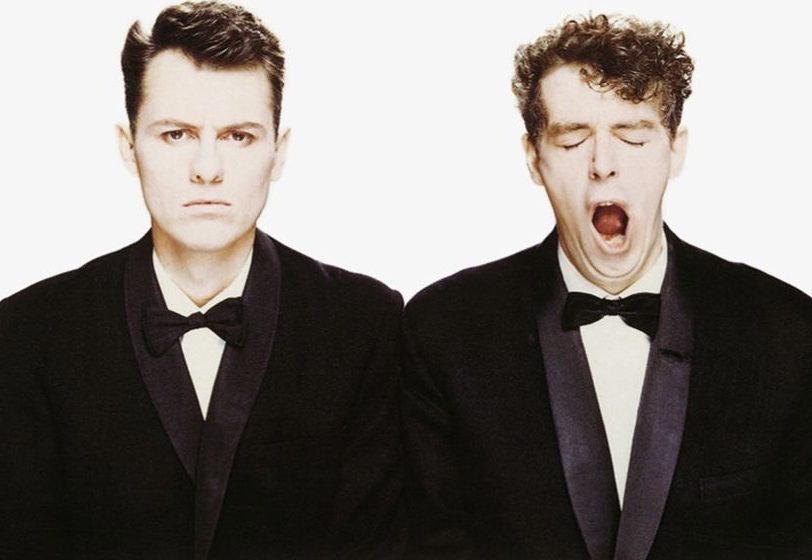
Time for a ‘Best of the Rest’ rundown for one of the most consistent hitmakers of the eighties and nineties. In fact, Pet Shop Boys’ run of Top 10 hits spans exactly twenty years, from their first #1 ‘West End Girls’ in 1986, to 2006’s ‘I’m With Stupid’.
Neil and Chris were a bit short-changed, for my money, in terms of their chart-toppers. Far worse acts have had far more than just four number ones… But, I’ve said it before and may as well say it again, the chart gods are fickle. Here then are PSB’s ten biggest non-number one hits. Unlike similar posts I’ve published in the past, I’m not ranking them – this is all based on cold hard chart-positions. It’s just ‘Highest Charting of the Rest’ as a title doesn’t have quite the same ring to it…
‘Before’ – #7 in 1996
Perhaps not the most instant PSBs track, ‘Before’ was the lead single from their sixth studio album, ‘Bilingual’. There’s a hook there, in the cooing synth line, and a chilled mix of disco and nineties dance. The brief for the video, meanwhile, was clearly to aim for ‘peak 1996’, years before people had though of ‘peak’ anything.
Can You Forgive Her? – #7 in 1993
It’s very Pet Shop Boys to make love sound like a panic attack. You’re short of breath, Is it a heart attack…? It’s both compulsive and threatening, with nice brassy synths. It’s not hard to read a subtext in the lyrics about a woman making fun of a man who prefers disco to rock, and who claims that’s she’s off to find a real man instead… Another striking video, that I imagine looked very impressive at the time.
‘Domino Dancing’ – #7 in 1988
As we’ve seen from our regular rundown, the mid-to-late eighties saw a mini burst of Latin-tinged pop. PSBs got in on the act for the lead single from their third album. I think the guitar and Spanish rhythms mixed with with their regular synths works well, but Neil Tennant sees it as the end of their imperial phase (as well as failing to break the Top 5 in the UK, ‘Domino Dancing’ was their last Top 20 hit in the US). The video features two ridiculously handsome (and permanently topless) twinks competing for the attentions of the same girl, before giving up and wrestling one another on a beach. Rolling Stone described it as ‘probably the most homo-erotic pop video ever made’, and it’s hard to disagree…
‘Absolutely Fabulous’ – #6 in 1994
La-La-Lacroix, darling… A charity single next, for Comic Relief. Lines from the sitcom of the same name are stitched around a thumping techno beat, as Neil Tennant does very little apart from intone Abso-lutely fa-bulous… over it all. It’s an pastiche of the big eighties and nineties dance hits – ‘Pump up the Jam’, ‘Ride on Time’, ‘Rhythm of the Night’ to name a few. Techno, Techno, Bloody techno darling… Few charity singles manage to be this catchy and remain (relatively) funny, so it’s a shame that this has been all but forgotten, even if the duo don’t recognise it as an official single and have never featured it on a Greatest Hits. Strange fact: this was PSB’s highest-charting single in Australia.
‘It’s Alright’ – #5 in 1989
A thirty-five year old song about dictators in Afghanistan, and forest falling at a desperate pace… Glad we’ve made progress since then, huh! To me this sounds like Pet Shop Boys-by-numbers. Nothing wrong with it, but not a patch on their greatest singles.
‘How Can You Expect to Be Taken Seriously?’ / ‘Where the Streets Have No Name (Can’t Take My Eyes of You)’ – reached #4 in 1991
This bitchy number – with lines like: You live within the headlines, so everyone can see, You’re supporting every new cause and meeting royalty – is about the pomposity of pop stars in general. Or is it about someone in particular…? Neil Tennant claimed later that it was about a ‘female pop star from 1989’. Make of that what you will… It features guitars, which is rare for a PSBs single.
It was paired with two covers – U2 and Frankie Valli – melded into one soaring disco anthem. An early form of the mash-up, both songs work well with a churning dance beat and Tennant’s ethereal vocals.
‘So Hard’ – reached #4 in 1990
Another atypical love song, about a toxic relationship in which both parties make it so hard for ourselves… Tennant’s vocals rarely break a sweat, there are some wonderfully dated ‘barking dog’ synths, and a low-key gem of a chorus. ‘So Hard’ was the lead single from their fourth album, and the video is set in the wonderful city of Newcastle. It apparently features Paul Gascoigne’s sister Anna, as well candid clips of Geordies out for a night on the toon.
‘Left to My Own Devices’ – #4 in 1988
Everything great about the PSBs in a just under five-minute edit: a dramatic string intro giving way to a pulsing disco beat, NT’s trademark deadpan delivery, lyrics that are as camp (I could love you, If I tried, I could, And left to my own devices, I propably would) as they are pretentious (Che Guevara and Debussy to a disco beat). Oh and, of course, you can dance to it.
‘Go West’ – #2 in 1993
The mark of a good cover is that you no longer imagine it being performed by the original artist. The Village People took their version, inspired by an old rallying cry used to spur pioneers to head out into the great unclaimed (apart from by, you know, the natives…) American West. PSBs kept most of the original, including the chord progression based on Pachelbel’s Canon, but added lots of glorious other things: horns, a male voice choir, a big female diva (posing as the Statue of Liberty) taking it home at the end. They originally covered it for an AIDS charity concert, then decided to release it, scoring their biggest hit in five years. We can assume the video was inspired by the breakdown of the Soviet Union, with lots of sturdy Russian-looking men heading towards a ‘promised land’. The CGI is so dated that it now looks like a brilliantly judged attempt to be retro.
‘What Have I Done to Deserve This?’ (with Dusty Springfield) – #2 in 1987
I’m not ranking these, but it just so happens that the best is saved for last. For not only do we have Pet Shop Boys in their imperial, huge hits without even trying, phase… (Coincidentally, Neil Tennant is credited with first using the phrase ‘imperial phase’ to describe an artist at the peak of their powers.) Anyway, I digress… We also have Ms Dusty Springfield! Almost two decades into a career slump, filled with alcohol and drug abuse, as well as abusive relationships. Despite this, the sixties diva remained a star, initially turning the duet down because she hadn’t heard of the PSBs. A couple of years later, after hearing ‘West End Girls’ on the radio, she agreed. Neil Tennant was a huge fan, and pushed for her inclusion, despite their label wanting someone less ‘washed up’.
Dusty also took twenty or so takes before she was happy with her vocals. But when she was happy, her voice became an integral part of an ’80s classic. When she comes in for the chorus, slightly raspier but still Dusty, after Tennant has dead-panned the first verse, it’s a goosebumps moment. The song itself is perhaps of its time, a comment on society in the Thatcher-Reagan years: You always wanted a lover, I only wanted a job… It’s also a very subversive number, every bit as gay as ‘Relax’, just less in-your-face, with the lesbian Springfield and the gay Tennant playing a very odd couple.
This record came agonisingly close to the top, peaking at #2 in both the UK and the US. It also sparked a late-career renaissance for Dusty. Tennant and Lowe would go on to produce her comeback album ‘Reputation’ in 1990. She died from cancer in 1999. Pet Shop Boys continue to record and perform to great acclaim, almost forty years later.
December 6th marks the 34th anniversary of Roy Orbison’s death, at the tragically young age of fifty-two. The ‘Big O’ stood apart from other early rock ‘n’ rollers, with his sombre stage persona, his vulnerable, melancholy songs, and his semi-operatic voice.
After his hit-making days ended in the mid-to-late sixties, a decade in the wilderness beckoned. Personal tragedies also unfolded – the deaths of his wife and his two eldest sons in a car crash and house fire respectively. The eighties saw a rediscovery of his work, with hit covers of his songs by Don McClean and Van Halen, and the formation of The Traveling Wilburys supergroup in 1988, alongside Bob Dylan, Jeff Lynne, George Harrison and Tom Petty. On the cusp of a triumphant comeback, Orbison died from a heart attack on December 6th 1988.
I’ve already written about his three chart-toppers (‘Only the Lonely’, ‘It’s Over’ and ‘Oh, Pretty Woman’) – classics the lot of them – and so to mark this day I’ll cover his five next-biggest UK hits…
‘In Dreams’ – #6 in 1963
A candy-coloured clown they call the Sandman, Tiptoes to my room every night… Only Roy Orbison could give a lyric so ridiculous-and-yet-terrifying the weight that it deserves. He dreams of his ex-lover then wakes, bathed in sweat, and alone. (Of course he’s alone – it’s a Roy Orbison song.) It’s got the same build-up as one of The Big ‘O’s very best songs, ‘Running Scared’, which barely scraped into the Top 10. ‘In Dreams’ is not quite as good, but builds to a fine crescendo. Roy, as was his way, hits a note that most humans are incapable of imagining, let along singing. ‘In Dreams’ was used to famous effect in David Lynch’s ‘Blue Velvet’, a move that initially shocked Orbison but one that he came to accept after seeing the film several times (and perhaps, if we’re being cynical, seeing the publicity it brought his music…)
‘Too Soon to Know’ – #3 in 1966
A country cover that, I must admit, I’d never heard before. And yet it’s one of his biggest UK hits. It must have sounded quite unfashionable in the swinging charts of 1966 and yet… When was Roy Orbison ever truly in fashion? Or out of fashion, for that matter? He ploughed his own, spectacular furrow. It’s sweet, but lacking the oomph of Roy’s biggest and best hits.
‘Blue Bayou’ – #3 in 1963
Another bit of country-pop, with a cool bassline. And with Orbison’s angelic tones in the chorus, this is no normal country tune. No matter what genre he turned his hand to – country, pop, rock ‘n’ roll – he couldn’t help doing it a bit different. As a kid, I had no idea what a bayou was, but always thought it sounded nice: where you sleep all day, and the catfish play… I’m still not one-hundred percent certain what a bayou is, but I’d definitely like to hang out there…
‘You Got It’ – #3 in 1989
The comeback hit that never was. Well, it was a hit – one of his biggest – but Roy wasn’t around to enjoy his return to the top end of the charts. And ‘You Got It’ is almost the perfect comeback – a slight updating of Orbison’s sound, with some help from Jeff Lynne, but still a record that could easily slip in amongst his classics from the early sixties. The video above was filmed just a few weeks before his untimely death. It feels churlish to wonder if it would have been such a big hit had he not died… Maybe it would, as it’s a great song.
‘Dream Baby (How Long Must I Dream)’ – #2 in 1962
Interesting that this rockabilly ditty is Roy Orbison’s biggest non-#1. It’s nice enough: a repetitive refrain that turns into a sort of mantra as the song progresses, and it builds to a crescendo as all the best Orbison songs do. But it’s not an all time classic. Not a ‘Crying’, a ‘Running Scared’ or a ‘Blue Angel’ (my personal favourite). The video above is worth a look if not for the song then for the spectacularly uninterested audience. What did he say just before launching into the song…?
Roy Orbison, then. One of the most original chart stars going, with one of the very best voices.
ELO are one of those bands whose back catalogue is so stuffed with hits that their tally of number one hits is genuinely shocking. Just one! ‘Xanadu’, which featured in my countdown a few months back, featuring the sadly departed Olivia Newton-John. I’ve been meaning to do this post for a while, but have barely been managing to keep up with my regular posts, let alone any diversions like this. Still, better late than never… Here, then, are eight of ELO’s ‘other’ hits – chosen for a mix of chart position and my feelings towards them:
‘Roll Over Beethoven’ –#6 in 1973
Putting the ‘Orchestra’ in Electric Light Orchestra, the band’s second Top 10 hit mixed Chuck Berry’s rock ‘n’ roll original with elements of Beethoven’s Fifth Symphony. Roy Wood, previously of The Move, was the driving force behind ELO’s early hits but quit the band before this single had even been released (he quickly went on to form Wizzard). Shout out as well to ‘10538 Overture’, another, more psychedelic, slice of orchestral rock that gave the band their very first hit.
‘Livin’ Thing’ – #4 in 1976
With Wood gone, the weight of the band came to rest on Jeff Lynne’s shoulders. ‘Livin’ Thing’ was the first big hit of the band’s second iteration, and it’s a classic. Why does it have an Arabian, Spanishy, vaguely spaghetti-western sounding intro that bears little relation to the rest of the song….? Jeff Lynne’s approach to pop music appears to be completely based around a ‘why not?’ sort of philosophy, and more often than not it works.
‘Mr. Blue Sky’ – #6 in 1978
Their most famous song. Their best song? That would depend on my mood… And on the weather. On a sunny day this is unbeatable. On a dark and dingy one, it might get a little tiring. It perhaps say s something about me that my favourite part of the song is where Mr Night comes creeping over… It’s very Beatles-y, particularly ‘A Day in the Life’, and that can never be a bad thing.
‘The Diary of Horace Wimp’ – #8 in 1979
A perfectly weird song. Emphasis on the ‘perfect’. For me this song sums up why ELO are such a great pop group. The classical, the experimental, the downright weird bits that this song is chock-full of never take away from the catchiness of the song. (Too many prog acts seem to think that just because they’re very clever and very talented musically they don’t have to bother writing songs people actually want to listen to…)
Advertisements
‘Don’t Bring Me Down’ – #3 in 1979
ELO go disco, as pretty much every act in the world was doing in 1979. The pounding drums at the start make me very happy, as do the Bee Gee falsettos in the chorus. Don’t bring me down… Is it Bruce? Proust? No, it’s apparently ‘Groos’, which is a phonetic spelling of the German word from ‘greeting’. Personally I think Bruce would have worked much better… Still, ‘Groos’ was enough of a hook for ELO to score their second biggest UK chart hit.
‘Confusion’ – #8 in 1979
The follow-up to ‘Don’t Bring Me Down’ dialled things back a few steps. It’s much more typical ELO, with all manner of fun flourishes from the drums and the synths, and the robotic vocal effects. But it might just be their sweetest song: a big comfort blanket of a song, with just enough of a hint of melancholy.
‘All Over the World’ – #11 in 1980
From the ‘Xanadu’ soundtrack, one of ELO’s purest pop moments. The songs appear much better remembered than the movie, and you can understand why when there are low-key gems like this…
‘Hold on Tight’ – #4 in 1981
The band’s last UK Top 10, ‘Hold on Tight’ is a late-era glam rock stomper. I am a sucker for songs that slip into French for no discernible reason (see also Blondie’s ‘Sunday Girl’). Thanks to this record, I now know the French for hold on tight to your dreams, and can only hope for a reason to one day drop it into a spot of parlez-ing.
Hope you enjoyed this interlude. In my next post, we’ll be getting on into 1986…
Writing a post on Phil Collins’ chart-topping cover of ‘You Can’t Hurry Love’ made me realise how little we have heard from The Supremes on this blog. In fact, most of the comments on that post turned to the joys of the Supremes, rather than the merits of Collins’ cover. Which inspired this post!
There was a huge disparity between the girl-group’s US and UK chart fortunes. One #1 in Britain (‘Baby Love’), to twelve Billboard #1s between 1964-69! Here, then, are the ten Supremes singles that came closest to matching their only number one… ranked by chart position, rather than by preference.
‘You Keep Me Hangin’ On’ – reached #8 in 1966
Perhaps a little surprising that this doesn’t come in higher up. The ‘morse code’ guitar lick that comes in and out is great – this is possibly one of their ‘rockier’ hits – and I just noticed the galloping, hand-played drums. It’s not in the very highest echelon of Supremes songs, though. Not for me. It was later covered in a sprawling, psychedelic version by Vanilla Fudge, which manages to outdo the original, and then taken back to #1 in the US – and all the way to #2 in the UK – by Kim Wilde.
‘Stop! In the Name of Love’ – reached #7 in 1965
An even bigger surprise, that this one would be so low down the list. ‘Stop!’ is another classic, one of their best-loved tunes, and a song that practically begs you to do a certain dance move. More songs need exclamation marks in their titles, no? The video above is from a TV performance, but the trio seem to be singing live, showing off just how good their voices were.
‘Up the Ladder to the Roof’ – reached #6 in 1970
While The Supremes couldn’t match their home success in the sixties, by the 1970s they were scoring hits in the UK that struggled on the Billboard charts. ‘Up the Ladder to the Roof’ was their first release without Diana Ross. Jean Terrell is the new lead singer, and she has a throatier voice which she uses to full effect in the final chorus. I hadn’t heard this one before, however, and I’m not sure it will linger very long in the memory.
‘The Happening’ – reached #6 in 1967
From a movie, apparently, of the same name that’s been completely forgotten. This was the final single they released as ‘The Supremes’, before Ross got top billing. And it’s one of my favourites: playful, light, catchy as anything, frantic, slightly demented… Not everyone shares my enthusiasm for it, but that’s just fine.
‘Reflections’ – reached #5 in 1967
And here’s the first of their songs released as ‘Diana Ross & The Supremes’. It feels like a bit of a fresh start, the trio’s classic sound updated with some space-age, psychedelic sound effects. (Which I’m not sure the song really needs, but OK…)
‘Nathan Jones’ – reached #5 in 1971
Their best post-Diana moment? (Ok, there’s one more song to come that could claim that title…) But ‘Nathan Jones’ is my personal favourite. It takes the group’s sound in a very trippy, early-seventies directions, especially in the extended mix above, and is one of the few Supremes records where lead vocals are shared. I’m always amused by the normal-ness of the title. There must be tens of thousands of Nathan Joneses in the world, haunted by this song…
‘I’m Gonna Make You Love Me’ (with The Temptations) – reached #3 in 1969
The last four songs in this countdown all peaked at #3, starting with this A-List Motown collab. It’s every bit as smooth and classy as you’d expect a record by two of the 1960s great vocal groups to be. Diana Ross’ verse is excellent here, with a real playfulness in her voice…
‘Stoned Love’ – reached #3 in 1970
How about this, their joint second-highest UK chart hit is a Jean Terrell number…! The Supremes call for world peace… by getting stoned. Goodness. Either that, or by rhinestoning another fabulous dress… Both might work. Motown tried to distance themselves from the suggestion that it was about drugs, though the lines about lighting up the world suggest otherwise to me…
‘Where Did Our Love Go’ – reached #3 in 1964
Their breakthrough hit… The Supremes first US #1, and their first UK Top 10 hit. My favourite of their big hits? Probably. The boot stomping intro is iconic, especially in stereo as it travels across the room. The rest of the song is quite understated, compared to some of the bells and whistles tunes we’ve seen above. In fact, the girls thought the same, and were unsure about recording it to begin with, thinking it lacked a hook (further proof that most pop stars can’t spot a hit song if it bites them on the arse…)
‘You Can’t Hurry Love’ – reached #3 in 1966
And we end with the song that inspired this ‘Best of the Rest’, the one that made #1 in 1983 thanks to Phil Collins. It’s a bouncy, upbeat classic, though not one of my very favourite Supremes songs. It is, though, probably their most famous hit – it’s by some distance their most listened to song on Spotify – even more famous than the one Supremes single that charted higher.
I hope you enjoyed this short journey back to the sixties/early-seventies. Back on the regular countdown, things are getting even more ’80s… Coming soon!






 The UK Number Ones Blog