258. ‘Hey Jude’, by The Beatles

Buckle up and make yourselves comfortable, cause we’ve hit our longest number one single yet. One of the longest ever. Seven minutes and ten seconds of Beatlesy goodness.
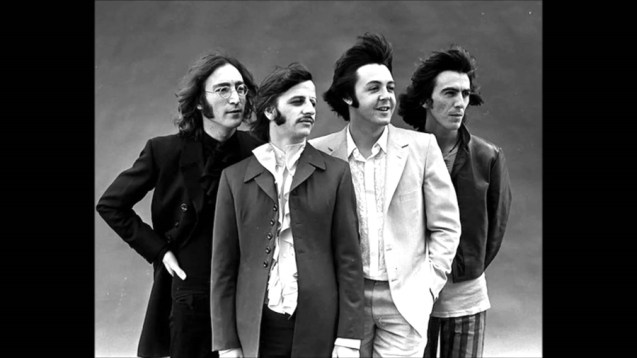
0007362_900

Hey Jude, by The Beatles (their 15th of seventeen #1s)

2 weeks, from 11th – 25th September 1968

It starts off in beautiful simplicity. Just Paul and a piano. Hey Jude, Don’t make it bad… Take a sad song, And make it better… You’re there, in the studio. You can picture his face as he sings. Remember, To let her into your heart, Then you can start, To make it better…

I love the way the instruments are slowly added into the mix. Before you know it there’s a tambourine, a guitar, then backing vocals and Ringo’s drums. Hey Jude, Don’t be afraid, You were made to, Go out and get her… It sounds like an encouragement to a friend, to go and get the girl he loves, but it was inspired by John’s separation from his first wife Cynthia. Paul wrote it to comfort their son Julian (Julian – Jules – Jude). John, however, claimed that it was about him, and that the song’s lyrics were Paul’s blessing to him and Yoko Ono. Others still – mainly McCartney’s exes – have claimed that it was written about them. Who knows? A great song means something different to everyone.

And this is a great song. I’ve always liked the bridge best: And anytime you feel the pain, Hey Jude, Refrain…  It’s almost, without wanting to sound hopelessly pretentious, spiritual. Pop music as hymn. If I were religious, I’d go to churches where they sang ‘Hey Jude.’ I gave Paul McCartney a hard time in my post on ‘Hello, Goodbye’, and I stand by that, but here… His voice grows ever more soulful. It’s something else – it’s undeniable.

Just over three minutes in we reach the bit that means this record will live on for ever more. When the waves finally lap over the last bit of unsubmerged land left on earth, the final sound man hears will probably be the coda of ‘Hey Jude’. Na-na-na… Nananana! Nananana… Hey Jude! It lives on at karaoke nights, in pubs, outside pubs, in football stadiums… And you can see why. It isn’t hard to remember some ‘nananana’s. Whatever language you speak. Nananana.
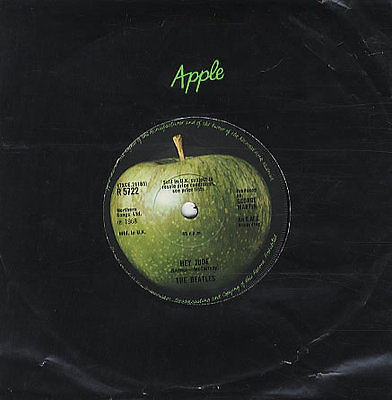
271312379723

(‘Hey Jude’ was the 1st single released on The Beatles’ own Apple Label)

I had forgotten – having not actually listened to ‘Hey Jude’ properly for years, how crazy Paul goes over the coda. He riffs, he scats, he howls and yells. By the end he sounds as if he’s properly lost it. This was recorded at a particularly difficult time in The Beatles’ history: John spending all his time with Yoko, Ringo temporarily leaving the band… Maybe he was just letting some frustrations out.

The song starts to fade a full minute and a half before it actually ends. Does it really need to be over seven minutes long? Probably not. But at the same time: why the hell not? By this point in their careers, The Beatles could do whatever they wanted. ‘Hey Jude’ is a full two minutes forty seconds longer than the previous ‘Longest #1 Single’ title-holder, The Animal’s ‘The House of the Rising Sun’. You could play the shortest #1 – Adam Faith’s ‘What Do You Want’ – almost five times before ‘Hey Jude’ plays once. As far as I’m aware, it is still the 4th longest #1 single ever, and won’t be displaced as the longest until 1998, when Oasis will release their cover version… sorry, their completely different song… ‘All Around the World.’

And so we reach the end, finally, as the nananas fade and we are left to return to everyday life. ‘Hey Jude’ is a song that has entered the fabric of British life, of our national identity even… Paul McCartney plays it at most of his concerts, as a tribute to his long-dead song writing partner. It’s only right that it hit number one, but it seems wrong that it stayed at the top for just a fortnight. In the US it tied for the longest-ever run, at nine-weeks. That seems more appropriate. A long old run in pole position, for a long old song… Na-na-na-na!

Listen to all the previous, much shorter, #1 singles here:

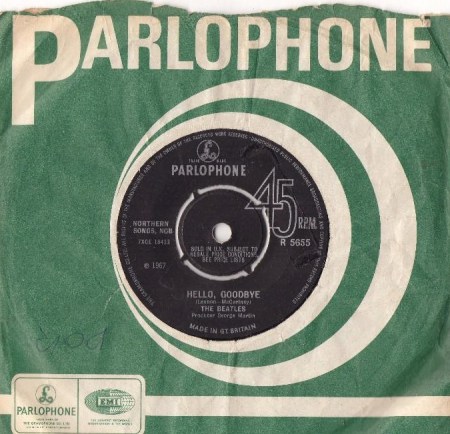
241. ‘Hello, Goodbye’, by The Beatles

We round off 2019 with the final number one from 1967. Top of the charts fifty-two years ago today was…

SgtPepper1_700

Hello, Goodbye, by The Beatles (their 13th of seventeen #1s)

7 weeks, from 6th December 1967 – 24th January 1968

… of course it was. Who else? (As a kid, listening to ‘Pick Of The Pops’ on Radio 2, we’d always have a contest in the car to guess who would be number one. And if it was a chart from the sixties I’d always guess The Beatles because, well, the odds were with you.) And, speaking of being a kid, ‘Hello, Goodbye’ was one of my first favourite Beatles hits. But, to be honest, it’s appeal has faded as the years have gone on, and as I’ve gotten older and more cynical.

You say yes, I say no, You say stop, And I say go, go, go… Oh no… It’s a song that explodes into life – no waiting around. You say goodbye, And I say hello… A song about an argument, about two people that are deliberately disagreeing with one another. One says ‘high’, the other says ‘low’. So on and so forth. It’s tempting to read into it – is it a seemingly nonsensical, childish pop song documenting the start of the slow break-up of the world’s biggest band…? Or a glimpse into the marriage of Paul McCartney and Linda… Actually no, that theory is dead in the water – they didn’t marry until 1969.

McCartney did write this one, which I think is probably quite obvious. It’s got that slightly irritating chipper-ness to it that shows up more often in his solo work, once John wasn’t around to check his worst impulses. Lennon reportedly didn’t care much for ‘Hello, Goodbye’, and pushed for ‘I Am the Walrus’ to be released instead. If only… (‘Walrus’ was the B-side.)

169602920

But, but, but… I’m making it sound as if I hate this record, when I don’t. Beatles’ ‘average’ is still pretty good. I like the backing vocals, which remind me of ‘Help!’ in the way that they sing different lines to the lead, and the reverb on the Why-why-why-why do you say goodbye-bye-bye-bye… And Ringo’s drumming is great on this. The outro, though… The Hare Krishna-ish Hey-la-hey-bah-hello-ah… Nah. Not for me.

Perhaps this is the Beatles playing it safe, worrying that they had spooked people too much with their much more avant-garde stuff: ‘Eleanor Rigby’, ‘Penny Lane’, ‘Strawberry Fields’ and ‘All You Need is Love’. Playing it safe with a huge Christmas hit – their 4th Xmas #1 in five years. It’s just that, for the first time in ages, a Beatles song doesn’t feel like a step forward.

But, what do I know? ‘Hello, Goodbye’ gave The Fab Four their joint-longest run at the top of the charts, tied with their debut #1 ‘From Me to You’. (It has to be mentioned, though, that charts were often repeated for a week over the Christmas and New Year holidays in those days.) It’s also fitting that 1967 ends with a blockbuster number one. It’s been a quick year to get through, with lots of long runs at the top from Tom Jones, Engelbert, Procol Harum and now The Beatles. It’s one of the very few years in chart history where every single #1 stays there for longer than one week.

It’s also fitting that I end 2019 by thanking everyone who has read, liked and commented on this blog over the past twelve months, and wish you all a very happy new year. See you all on the other side… 1968 awaits!

My #1s playlist:

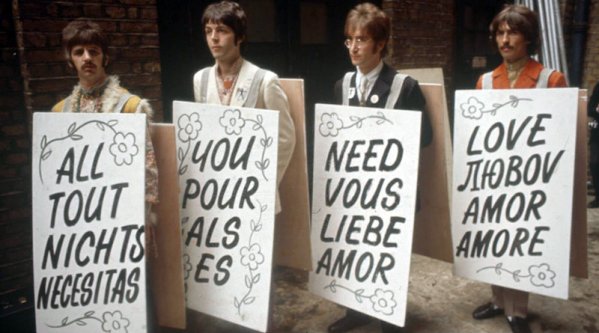
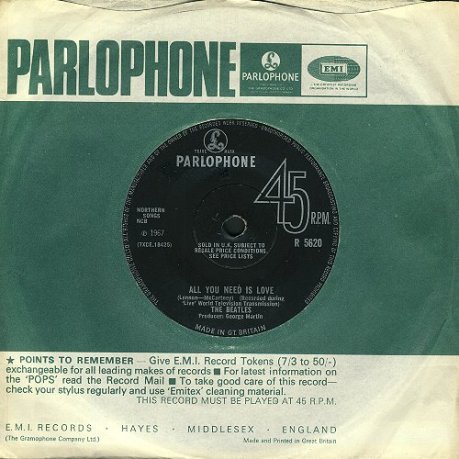
235. ‘All You Need Is Love’, by The Beatles

The top of the British Singles Chart has just endured its longest Beatles-less spell (at least, you know, until they split up and stop making music) but they are back! Though you could be forgiven for thinking that this is a completely different band.

The Fab Four were killed off a year or so ago. Since then they’ve hit #1 with the string drenched ‘Eleanor Rigby’ and the kids’ singalong ‘Yellow Submarine’. Before that came the bass-heavy garage of ‘Paperback Writer’. Both big steps away from the Beat sound that had made them huge. This single is another massive leap away, even compared to their innovation of ’66. This single opens with the French national anthem…

mainBEATLESLOVE

All You Need Is Love, by The Beatles (their 12th of seventeen #1s)

3 weeks, from 19th July – 9th August 1967

Because, why not? They’re The Beatles and they can do whatever the hell they want. ‘La Marseillaise’ doesn’t last for long, and soon we swing into a simple ditty. Love, love, love… and a mantra. Nothing you can do that can’t be done, Nothing you can sing that can’t be sung… On first listen it sounds like a hippy-dippy, peace (man!) anthem for the Summer of Love. But, actually… Nothing you can know that isn’t known, Nothing you can see that isn’t shown… It’s kind of negative. ‘Why bother?’ seems to be the message…

John Lennon allegedly kept the lyrics simple, as the song was to be debuted on TV screens around the globe for ‘Our World’, the first ever global tele-link. But, Lennon being Lennon, I sense a bit of needle in there. A bit of sarcasm, maybe? It’s definitely not as straightforward as it sounds. He later described the lyrics as ‘revolutionary propaganda.’ The chorus, though, is simplicity in action: All you need is love… Love is all you need.

Like ‘Good Vibrations’ – a record that spurred The Beatles on to greater experimentation – ‘All You Need Is Love’ jumps around all over the place, from national anthems, to drunken jazz in the chorus, to an electric guitar solo, to stabbing strings, with some music-hall ‘All together nows’ for good measure.

r5620

And then there’s the finale. Where it all just goes a little bit mental. We get horns from Bach (meaning the 18th Century composer has influenced two #1s in a row!), a snippet of Glen Miller’s ‘In the Mood’ and, naturally, ‘Greensleeves’. From revolutionary France, to WWII mess-halls, to Tudor England in one four minute pop song… And there are snatches of two other Beatles’ classics as well: ‘Yesterday’ and ‘She Loves You’. (Opening up an interesting sub-category: #1 singles that feature in other #1 singles…) All the while the band and guests whoop and holler until the whole messy shebang fades from sight. It sounds like the best party you’ve never been to.

Where to start analysing this? Why even bother? I certainly don’t feel qualified to go into any more detail. With other bands, and other singles, you can see where they were coming from, what they were trying to do, even how you might have done it better. Not with this song, not with The Beatles. It’s unthinkable, really. Throwing out singles that most bands would have built whole careers around, willy-nilly. Here’s ‘She Loves You’, there’s ‘Help!’, watch you don’t trip over ‘Eleanor Rigby’, or ‘Ticket to Ride’ over there in the corner… You’d like a song for a lame TV show? Here’s ‘All You Need Is Love’. And ‘Yesterday’, the song that they reference here – the song that has been covered over 2000 times, the song that has been voted ‘Best Song Ever’ on several occasions? They stuck that away on Side 2 of an album. Oh, The Beatles… Beatles, Beatles, Beatles…

But, just so that they don’t go getting too big-headed, too full of themselves – Paul and Ringo definitely read this blog, right? – I feel compelled to add that when they next appear in this countdown, it’ll be with what I personally think is the worst of their seventeen chart-toppers…

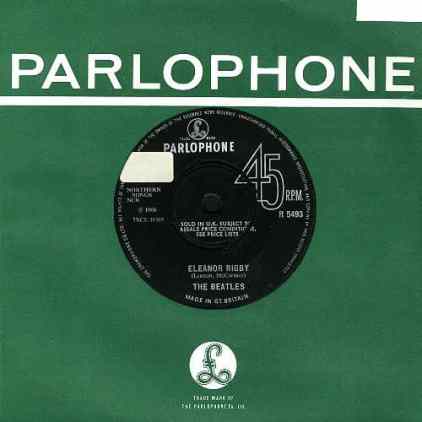
222. ‘Eleanor Rigby’ / ‘Yellow Submarine’, by The Beatles

In my intro to The Beatles’ last #1 – ‘Paperback Writer’ – I said that it was a definitive split away from ‘The Fab Four’. This latest chart-topper from the group, then, is an even greater stride away from the mop-top days.

PtsjOFH

Eleanor Rigby / Yellow Submarine, by The Beatles (their 11th of seventeen #1s)

4 weeks, from 18th August – 15th September 1966

The first side of this double-‘A’ disc contains a song that features no guitars, no drums, no nothing apart from strings. It’s a story about two people: Eleanor Rigby, who lives in a dream and wears a face kept in a jar by the door, and Father McKenzie, who writes sermons that nobody will hear and who spends his nights darning socks… We are a million miles away from ‘I Want to Hold Your Hand’, and that was barely two and a half years ago!

It’s a horribly sad song. Just start with the main refrain: Ah, look at all the lonely people! Then delve into the details. The images. Eleanor sweeping confetti from the floor of a church, after a joyful wedding party has been and gone. The priest and his socks. Eleanor’s funeral, at the end of which Father McKenzie wipes the dirt from his hands and walks back to church alone. No-one was saved…

The characters are fictional, although Paul McCartney has at times been ambiguous when asked about them. The grave of an Eleanor Rigby exists in Liverpool, very near to where Paul and John first met as teenagers. She died in 1939, aged just forty-four, and it does seem slightly too much of a coincidence. But then again, if you were going to invent a fictional old woman’s name, Eleanor Rigby wouldn’t be a bad shout.

Real or invented, Eleanor’s song races along on tight, menacing violins – the story told in barely two minutes. It’s a vignette, a moment in time. You can imagine Paul McCartney viewing the churchyard from the window of a double-decker bus, Eleanor sweeping the church steps, Father McKenzie waiting for the congregation that will never come, and then going home to write the song. Just what is it about? A study in loneliness? The decline of Christianity? A comment on the misery of post-war Britain? The more you listen to it, the more important ‘Eleanor Rigby’ sounds. And the less like a chart-topping record. Only The Beatles could have taken this song to chart success. Largely because only The Beatles were capable of writing pop songs like this.

uk_eleanor-rigby

They were also the only band capable of writing songs like the one on the other side of this disc. We flip the record, and move from the sublime into the ridiculous. As if they thought that ‘Eleanor Rigby’ might be too much of a departure, too avant-garde, and so wanted something childishly reassuring to go along with it. But, in its own way, ‘Yellow Submarine’ is every bit as arresting…

Let me state right here right now – it is impossible to truly hate ‘Yellow Submarine’. It might be irritating, cheesy and pointless… but there’s a loveable nugget buried in there. Perhaps it’s because ‘Yellow Submarine’ is often the first Beatles song people ever hear as toddlers. I think also, for me, it’s the fact that Ringo sings it. There’s something wonderfully soothing about Ringo’s voice. It’s got a melancholy tremble that contrasts nicely with the song’s stupidly optimistic lyrics. Plus, his voice always reminds me of ‘Thomas the Tank Engine’, which was my favourite TV show as a sprog.

In the town, Where I was born, Lived a man, Who sailed to sea… Ringo and chums sail out to find the land of submarines. They live a life of ease, beneath the waves… The end. It’s a complete novelty. The silliest, most childlike chart-topper since ‘(How Much Is) That Doggie in the Window’ from way back when. To pair this with ‘Eleanor Rigby’ reminds me of when Elvis paired ‘Can’t Help Falling in Love’ with ‘Rock-a-Hula Baby’, times ten.

But hey. I like the bit where the band begins to play, and the use of goofy sound effects as the sub gets its journey underway, and the final verse, with the shouted, distorted backing vocals. The band must have enjoyed recording it, as they went and endorsed a whole movie based on the song. The cartoon ‘Yellow Submarine’ is probably one of the iconic Beatles images, along with Sgt Peppers and the EMI stairwell pictures.

Of course, this being The Beatles, the lyrics to ‘Yellow Submarine’ have undergone intense scrutiny. Just what is it about, man? Is it an anti-war statement (Yellow Nuclear Submarine?) Is it an ode to a hippy commune? The band themselves, as they usually did, stated that it was just a children’s song about a big, yellow submarine. Nothing more, nothing less.

So, there you have it. Two completely bizarre songs from the biggest band in history, at the height of their powers. There’s an arrogance to them releasing this disc – in them saying to their adoring public: ‘Here, get your pretty little heads around this!’ And it marks the start of a mini-hiatus from the top of the charts for The Beatles. Their next release, another very famous double-‘A’ side, will (gasp!) not make #1, and we won’t hear from them until almost a whole year has passed. By which time they will have taken another supersonic leap forward…

Follow along here:

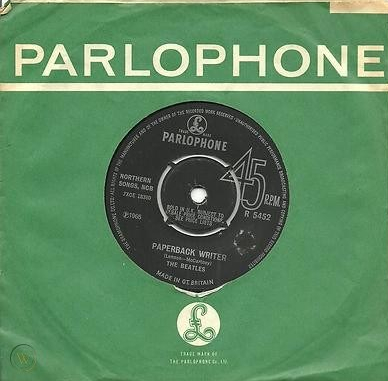
217. ‘Paperback Writer’, by The Beatles

If you can draw a line in the sand, between early-era Beatles #1s and late-era Beatles #1s – if you really want to locate the moment when they stopped being ‘The Fab Four’ – then I’d say this is it.

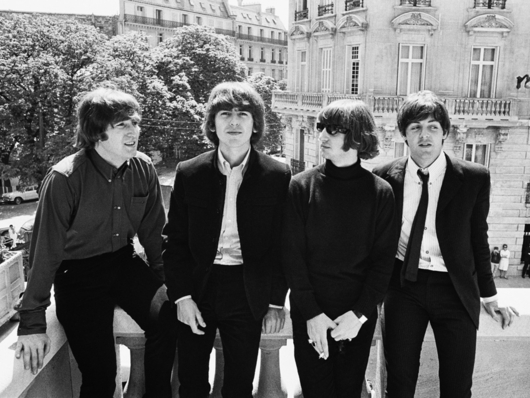
BEATLES PICTURED IN PHOTO RELEASED BY CAPITOL RECORDS

Paperback Writer, by The Beatles (their 10th of seventeen #1s)

2 weeks, from 23rd June – 7th July 1966

There’s the echoey, layered intro – Paperback writer, writer, writer… A simple, harder than anything that’s gone before, riff. A filthy bassline. It’s not a clean line in the sand – it’s not as if The Beatles hadn’t been getting progressively heavier, cooler, druggier with every chart-topper since ‘I Feel Fine’ – but this does feel like a significant step away from their earlier days. 1966 would be the year of ‘Revolver’ and their last ever stadium concerts.

The biggest difference though, for me, comes in the lyrics. All their previous #1s have been boy-meets-girl, girl treats boy well or badly, pop songs (with the exception of ‘Help!’) ‘Paperback Writer’, however, is a song about a, well, a paperback writer, written by Paul McCartney after he was challenged to write a song about anything but ‘love’.

Dear sir or madam, Will you read my book, It took me years to write, Will you take a look…? It’s a song in the form of a letter – our very first epistolary chart topper? – from a wannabe pulp-fiction writer, presumably living in a cramped attic, to some unnamed publishers. It doesn’t, to be honest, sound like a very appealing read: a dirty story of a dirty man (whose) clinging wife doesn’t understand… And the unnamed writer doesn’t sound like much of an artiste: I need a job and so I wanna be a paperback writer…

360_214e15f9f8f054990022bb0ace81d936

It’s actually quite a funny record, satirical even. The hero of this trashy story also wants to be a paperback writer, while the book is already a thousand pages long, with more to come in a week… In the background, the other members of the band harmonise, in falsettos, over the French nursery rhyme ‘Frere Jacques’.

It’s also a short record, just over two minutes long, which sounds loveably rough and ready, as if it were knocked out in one take over a single afternoon. And that’s not a bad thing. It’s probably The Beatles’ heaviest chart-topper, and a song that’s always felt like a bit of an anomaly in their discography. Although, if you think the lyrics to ‘Paperback Writer’ are a big change of pace, their next #1 will be about an old woman who cleans churches…

Before we finish, let’s just pause to notice that the past three chart-toppers have gone The Rolling StonesFrank Sinatra – The Beatles… has there ever been a more illustrious run of #1s?

207. ‘Day Tripper’ / ‘We Can Work It Out’, by The Beatles

The Fab Four claim their third straight Christmas number one (before Christmas number ones were a thing, but still), and they do so with their most straight-up rock record yet.

beatles

Day Tripper / We Can Work It Out, by The Beatles (their 9th of seventeen #1s)

5 weeks, from 16th December 1965 – 20th January 1966

There’s a riff – a riff we all know – dun-duh-duh-duh-duh-dun-dada-da-dada – (riffs never really work when written out…) which keeps on going till the end. It’s a riff record – maybe, just maybe, they’d been listening to The Stones –a great, straight-up rock song.

I like the way the intro builds: guitar, then bass, then drums, and the way that the solo is basically the riff, beefed-up. It’s a simple song – there’s no reinventing the wheel here. I guess it’s experimental, in the sense that they’re experimenting with a heavier sound, but that’s stretching it a bit. It’s a John Lennon number, and one of the things I like most about him is that he never lost his rock ‘n’ roll roots, never stopped being a fan of Chuck and Buddy, no matter how avant-garde he and his bandmates seemed to get.

Of course, like any great rock song, there’s a fair amount of raunch here too. She’s a big teaser, She took me half the way there now… Not much imagination needed. Especially after Lennon admitted that he would have made it ‘prick teaser’, had he been allowed. Tried to please her, She only played one night stands… So on and so forth. Another layer of innuendo comes when you consider the ‘trip’ aspect of the lyrics. A ‘day tripper’ would be someone who only drops acids on special occasions. A weekend hippy, a ‘Sunday driver’.

Whether it’s about drugs or sex, or both, doesn’t really matter, though. This is a cracking rock number – one that I’ve enjoyed reacquainting myself with for this post. It’s one of those Beatles songs that kind of gets lost among the mega-hits. But, actually, listen to the soooooo long growl, and the way that the solo ascends to a climax with a hint of ‘Twist and Shout’, and try telling me that this isn’t one of their best. And, come to think of it, I can think of two other songs off the top of my head in which the ‘Day Tripper’ riff makes an appearance: ‘Hair of the Dog’, which gleefully rips it off to the extent that when Guns N’ Roses covered it they gave up the pretence and by the end were just playing the Beatles’ riff, and The Wildhearts’ ‘My Baby Is a Headfuck’. So maybe I’m underestimating it…

the-beatles-day-tripper-uk-solid-centre-7-vinyl-sold-in-uk-parlo-gramo-vg_44624215

What of the flip-side? We’ve not had a double-‘A’ side #1 for a while (nearly three years to be precise) and ‘We Can Work It Out’ is the perfect companion for ‘Day Tripper’, in that it sounds pretty much the opposite. I’ve always thought that double-‘A’s should contrast, one should be the yin to the other’s yang, and so gone is the electric guitar and the bravado, replaced by acoustics and recriminating.

It’s a folk-rock waltz of a record, in which Paul McCartney muses on a failing relationship: Try to see it my way, Do I have to keep on talking till I can’t go on?… Think of what you’re saying, You can get it wrong and still you think that it’s all right… He remains positive – the title is ‘We Can Work It Out’ after all – but if you listen closely to the lyrics it becomes clear that any compromise will be on his terms: While you see it your way, There’s a chance that we might fall apart before too long… Very passive-aggressive… Actually, the more I listen, the more I realise how the singer of this song is being a bit of a dick. Life is very short, And there’s no time, For fussing and fighting my friend… (So hurry up and just admit I’m right!)

The accordion-slash-harpsichord sounding instrument which characterises this disc – the one that creates the woozy, trippy feel at the end of the bridge, and that closes the song with a little riff – is a harmonium, apparently. This is where pop music has been heading throughout 1965, with the baroque-folk stylings of The Byrds, Sonny and Cher and The Walker Brothers, and it’s nice to close out the year in this way. A sign of where The Beatles were heading. ‘Rubber Soul’ was released while this disc sat at #1, and ‘Revolver’ would be coming up very shortly after.

This was The Beatles first double-‘A’ side as they couldn’t agree on which record was the more commercial sounding. Lennon was the one who forced ‘Day Tripper’ to get equal-billing, but in terms of airplay at the time ‘We Can Work It Out’ was the winner. In the US they were released separately, with ‘We Can Work It Out’ hitting the top of the Billboard 100 and ‘Day Tripper’ only making #5. But for me rock always wins. ‘Day Tripper’ all the way…

And so we cross the midway point of The Beatles’ chart-topping run. Nine down, seven to go. To celebrate, I thought I’d do a quick rank of the hits that have gone so far. Based solely on personal preference not artistic merit. Let me know if you agree or are scandalised by my ignorance. In ascending order (worst – best), then:

We Can Work It Out > Can’t Buy Me Love > From Me To You > I Feel Fine > A Hard Day’s Night > Ticket to Ride > I Want to Hold Your Hand > Day Tripper > Help! > She Loves You

Actually, that was really hard and kind of pointless. I don’t dislike any of those songs. A ‘bad’ Beatles disc is another act’s signature song. But it’ll be interesting to add the next seven to the list, and to see where they fit in. Anyway, look! Suddenly it’s 1966. Onwards!

Listen to every number one so far – by The Fab Four or otherwise – with this playlist:

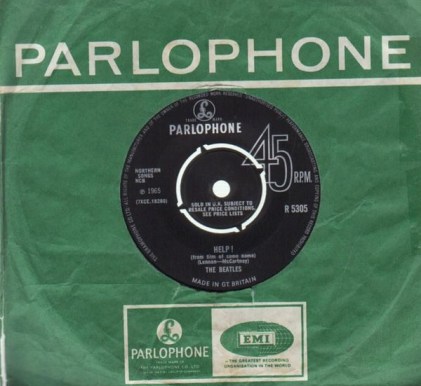
200. ‘Help!’, by The Beatles

And it’s two hundred not out! Two hundred UK #1 singles covered; plenty more where they came from… And this isn’t a bad little record with which to celebrate our mini-milestone!

0003568_beatles-art-beatles-help-canvas-art_510.jpeg

Help!, by The Beatles (their 8th of seventeen #1s)

3 weeks, from 5th – 26th August 1965

Help! I need somebody! Help! Not just anybody! Help! You know I need someone! He-e-elp… It looks ridiculous written out like that, doesn’t it? If you told somebody that you were going to write a pop song with those as the introductory lines they would probably laugh at you. Then look nervously away… But, The Beatles were the some of the best producers of pop that the world has ever seen, and this may well be their best pop moment.

Or, you know, it might be ‘She Loves You’, or ‘Please Please Me’, or ‘I Saw Her Standing There’, or ten other of their songs… Let me rephrase. This may or may not be their best pure pop moment, but it is their last. ‘Help!’ is a bit of a step back, after the stoned haziness of ‘I Feel Fine’ and ‘Ticket to Ride’. This is the same Beatles that gave us ‘A Hard Day’s Night’ and ‘Can’t Buy Me Love’ – all floppy-haired enthusiasm and cheeky winks.

Except… listen to the lyrics. It’s an upbeat, summery pop song (from the soundtrack to their latest movie), but by God the words are bleak. When I was younger, So much younger than today, I never needed anybody’s help in any way… But now these days are gone, I’m not so self-assured… and Every now and then I feel so insecure, I know that I just need you like, I’ve never done before… do not your average pop song make. In the film, the cry for ‘help’ is from Ringo, who finds himself about to become the sacrificial victim of an Oriental cult (as you do…) In real life, the cry for help was John’s. His life, as the leader of the most popular band in the world, was getting to him.

I’ve never suffered from depression. But I know people who have, and the line: Help me if you can, I’m feeling down, And I do appreciate you being round… seems to be just about the most perfect description of the disease. The knowledge that nobody can really help you feel better; but that just knowing people are still around brings you some comfort. That’s it. Summed up in two perfect lines.

the-beatles-help(uk-original.-company-sleeve)

Musically this is a short and simple song. But many of the best pop songs are. With The Beatles it’s often the small things that make their hits stand out over and above their contemporaries. The opening chord on ‘A Hard Day’s Night’, for example. On ‘Help!’, it’s the way that the backing singers’ lines (the countermelody, if you will) weave, and twist, and sometimes even precede the lead vocal. The Now I find… and the My independence… lines are the best examples. It’s the little touches like this that made the Fab Four peerless.

So, that’s it for the ‘pop’ Beatles. In 1966 they’ll stop performing live, smoke even more weed, start getting lost in India… all for another day. For now, press play on the link below and enjoy them as the mop-top Fabs for one last time. Plus, what with this being chart-topper #200, this seems like a good place to stop for a brief moment of reflection.

Chart-topper #1 – Al Martino’s pre-rock epic ‘Here in My Heart’ kicked it all off. It’s from another era – another planet – entirely. By the time we got to chart-topper #100 – Anthony Newley’s twee little ‘Do You Mind’ – we had traversed the rock ‘n’ roll era and were about to get stuck in the early-sixties slump of Elvis soundtrack songs and ‘death-discs’. And now here we are with #200. ‘Help!’ Perhaps the very final Beat-pop number-one. Experimental times lie ahead… I published chart-topper #1 at the end of January last year, to precisely zero interest, and so I’d like to say thank you to everyone who has since decided to join up for the journey. Your views, likes and comments sustain me! #100 was posted at the very start of November last year, and now here’s #200 at the end of August. A rate of a hundred every nine months. So… We should reach #300 by May 2020 (T.Rex, btw!) And which means we should reach the current UK number one (#1357) in about a decade… Hang on in there!

Remind yourself of all 200 of the first chart-toppers, here:

193. ‘Ticket to Ride’, by The Beatles

In my post on the last Beatles’ chart-topper, ‘I Feel Fine’, I suggested that it announced the arrival of Beatles MK II. The cool Beatles. The detached Beatles. The stoner Beatles.

1965_beatles_01

Ticket to Ride, by The Beatles (their 7th of seventeen #1s)

3 weeks, from 22nd April – 13th May 1965

This, their seventh chart-topper in two years (!), is definitely mined from the same groove. It could even have been from the same recording session as ‘I Feel Fine’. The intro isn’t as scuzzy – the chiming guitars actually come across like a church bell on a Sunday morning – but that only lasts a second or two. Soon we lurch into a woozy, droney riff, with drums that roll, then thump, then disappear when you least expect. I’m no drummer, but am pretty sure that ‘Ticket to Ride’ should be produced as the first item of evidence when anyone claims Ringo couldn’t drum.

I think I’m gonna be sad, I think it’s today, Yeah…. The girl that’s drivin’ me mad, Is goin’ away, Yeah… Like most of the big Beatles hits, I grew up listening to this and could sing most of the words. But I’d never really noticed how desolate they were… She said that living with me, Was bringing her down… She would never be free, When I was around… Then how threatening they become: Before she gets to sayin’ goodbye, She oughta think twice, She oughta do right by me…  We’re a long way from ‘I Want to Hold Your Hand’, Toto.

Going by those lines, it seems as if Lennon & McCartney had been taking notes from the Rolling Stone’s book of romance. It’s the same sort of bruised bravado that we’ve heard in ‘The Last Time’ and ‘It’s All Over Now’. And that’s not the only thing they’d noticed – the clanging, ominous guitars here sound very Stonesy. Except… the lead guitar is also very US folk-rock. Very Byrds-y. And the guitar lick that connects the bridge back to the verses is… a mini-metal solo. Like, seriously.

THE-BEATLES-TICKET-TO-RIDE-UK-7-Single

‘Ticket to Ride’ is all about the details. Those drum-fills. That guitar lick. The chiming intro and the falsetto outro – My baby don’t care… – reminiscent of the way that they completely changed track for the last five seconds of ‘A Hard Day’s Night’. The Awww before the final She’s got a ticket to ride… It’s all about the details, because it’s an impossible record to categorise as a whole. It’s a beat-pop song at heart, but it’s also folksy, it’s heavy, it’s got bloody Indian sitar-sounding riffs thrown in…

I’m aware that this is going to be a very short post for a song of this stature. But we are seven songs into The Fab Four’s chart-topping run – there’s no need for an intro. And with ten more #1s to come from them we don’t need much of a postscript. I’ll leave you with a realisation that struck me midway through my sixth listen of ‘Ticket to Ride’… The Beatles were really, really good, weren’t they?

A playlist with all the #1s so far….

183. ‘I Feel Fine’, by The Beatles

And so we hit the mid-point of the swinging sixties. Slap bang in the middle, and The Beatles are knocking The Stones off the #1 spot. How very 1960s. Peak sixties!

i-feel-fine-the-beatles

I Feel Fine, by The Beatles (their 6th of seventeen #1s)

5 weeks, from 3rd December 1964 – 14th January 1965

But this is a new version of the Beatles. I mentioned when covering their last chart-topper, ‘A Hard Day’s Night’, that that was the sound of the MerseyBeatles being killed off – their last pure pop hit. And, as if to make sure of that, their sixth UK number one enters to the sound of feedback. A deliberately jarring intro, one that’s been done to death by now but at the time must have sounded strange indeed.

Their voices, too, have changed. They’re deeper, huskier… manlier? The mop-top boys have grown up. Baby says she’s mine you know, She tells me all the time you know, She said so… There’s an arrogance to it. The girl doesn’t have a name – she’s just ‘baby’. Tomorrow there’ll be a new one. That’s what happens when you’re in the world’s most popular band. She’s in love with me and I feel fine…

The guitar is rocking – apparently the riff came first when Lennon and McCartney were writing it – and drives the song along. The bridge, though, is still pure bubble-gum. Old habits die hard, I guess. I’m so glad, That’s she’s my little girl, She’s so glad, She’s tellin’ all the world… The relationship doesn’t seem to be built on the strongest of foundations, though – it’s more about buying diamond rings to keep his little girl happy.

download

This disc is a world away – both lyrically and sonically – from The Beatles earlier chart-toppers. Think the innocent ‘From Me to You’ and the earnest ‘I Want to Hold Your Hand’. It’s a cool record, the first Beatles record that your older brother would have admitted to liking.

There’s been a lot of discussion, for years, over when and where the band first started taking drugs. As far as I know Bob Dylan thought they must have been smoking as early as 1963, as he misheard the ‘I can’t hide’ lyric in ‘I Want to Hold Your Hand’ as ‘I get high…’ And they definitely were by October 1965, as Paul McCartney admitted to smoking a joint in the toilets of Buckingham Palace when they collected their MBEs.

If I had to guess, I’d narrow it down to the few months between ‘A Hard Day’s Night’ and this release. There’s a glazed, detached air to their voices here… They sound pretty stoned. Plus the name of the song just sounds like something you’d say when you’re high… ‘Dude, I feel fine…’ Then there are the mmmmhhs as the song fades out. The Beatles MK II are here.

It’s the perfect way to end 1964 – by far the best year yet in terms of the quality of its #1s. It has felt like walking through Madame Tussaud’s at times – look there’s Diana Ross, and Roy Orbison, and over there, The Kinks and Cilla Black! So to end it with The Stones and then The Fab Four –the decade’s two biggest bands – is perfect. 1965 looks like being a much more eclectic year, though the overall standard of chart-topper might drop off slightly… Onwards!

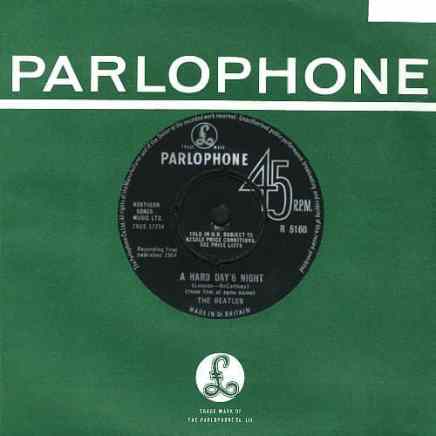
174. ‘A Hard Day’s Night’, by The Beatles

Has there ever been a more memorable, yet concise, intro in the history of pop? One chord. Literally just one chord. But I’d bet anyone with even a passing interest in popular music would be able to identify it.

The_Beatles_Hard_Day_s_Night_1964_l

A Hard Day’s Night, by The Beatles (their 5th of seventeen #1s)

3 weeks, from 23rd July – 13th August 1964

I’d also wager that entire theses have been devoted to this chord… (*Edit* Check out a 2004 report entitled “Mathematics, Physics, and ‘A Hard Day’s Night’” if that’s your thing.) As chords go, it’s quite a complicated one, with George Harrison playing an F and a G, while Paul McCartney adds a D on the bass, plus lots of other bits of wizardry from George Martin. Try the Wiki entry on the song for more detail. I didn’t really understand…

To the actual song, then. The intro fades, and we race into the first verse. It’s been a hard day’s night, And I’ve been working like a dog… And what’s that in the background, setting the frantic pace… Bongos?? Sure sounds like it. It’s been a hard day’s night, I should be sleepin’, Like a log…

Coming hard on the heels of two R&B chart-toppers, ‘House of the Rising Sun’ and ‘It’s All Over Now’, this sounds a bit light. Perhaps even a bit dated. So 1963… The But when I get home to you, I find the things that you do… line sounds like the climax to a cheesy sitcom theme. (‘One Foot in the Grave’, maybe…)

But the bridge comes in, and blasts all these doubts away. When I’m home, Everything seems to be right… Insistent cowbell, and the way that Paul half-screams Tight… Yeah! It’s actually a pretty filthy song. When he gets home to his girl, he finds the things that she does, make him feel alright… Who knows, maybe she’s just fetching him his pipe and slippers… Then scream! And solo. I love a scream before a solo. It’s second only to shouting the guitarist’s name in my list of ‘Brilliant Ways to Introduce a Solo’.

uk_a-hard-days-night_single

Actually, listening properly to ‘A Hard Day’s Night’ for the first time in years, it feels like this is actually four songs in one. You’ve got the intro, the cheesy verses, the intense bridge, then the outro… The jingly, jangly, echoey outro that sounds as if it’s coming from a year or two in the future. It kills of Beatles Mk I, and suddenly this record doesn’t sound lightweight, or like a re-tread of their previous hits. Those last five seconds basically announce that Merseybeat is dead; but that The Fab Four will continue setting the tone for the next few years. Everyone knows that The Beatles were ‘very good’; but it’s tiny moments like this that confirm it.

This song was, of course, from a film of the same name, all about the boys carousing their way around London, getting up to all sorts of hi-jinks. It was their first feature film appearance and, whaddya know, it’s one of the most influential music-movies ever made. Even their films turned out that way. They simply had the Midas touch.

Interestingly, what with this disc being released at the height of Beatlemania, as part of the soundtrack to the biggest film of the year, it didn’t enter the charts at #1. Entering the chart at the top was a big deal back then – Elvis had done it twice, Cliff once… That’s it. It seems natural to assume that The Beatles would have done so too in pretty short order. But they never did. ‘A Hard Day’s Night’ entered at #3, before climbing. They would have to wait until ‘Get Back’, their penultimate #1 in 1969, to hit the summit in release week… I say ‘interesting’; but maybe it’s just me. A strange quirk, anyway. Onwards.