On This Day… 28th August

Welcome one and all to our fourth ‘On This Day’ feature, in which we take a look back at chart-topping history through the records which have made #1. (Please feel free to check out the previous dates that we have covered here, here, and here.)

What, then, were the stories atop the UK singles chart on August 28th through the years…?
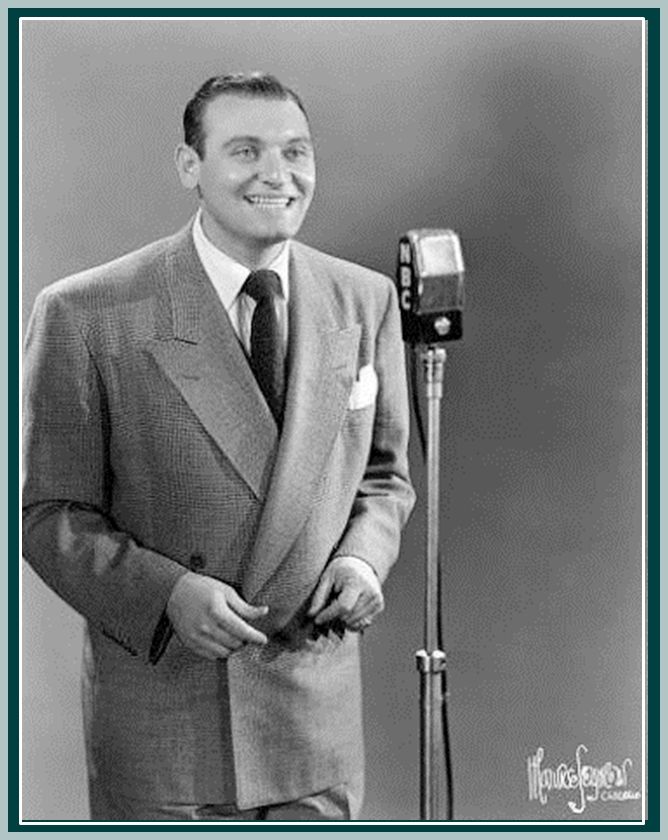
Well, way back in 1953 Frankie Laine’s ‘I Believe’ was starting its seventeenth of eighteen weeks at number one. That’s a lot of weeks. Amazingly, no other record in the intervening seventy-two years has managed to equal it. The record set by just the 9th number one single – the charts having begun less than a year earlier – still stands! Interestingly, two of the records that came closest – ‘(Everything I Do) I Do It for You’ (16 weeks, and the record holder for consecutive weeks) and ‘Love Is All Around’ (15 weeks) – were also both at number one on this date. The only other 15-weeker, Drake’s ‘One Dance’, was sadly not at #1 on the 28th August. ‘I Believe’ returned to #1 in the nineties ‘thanks’ to Robson & Jerome, but I won’t bother linking to that.

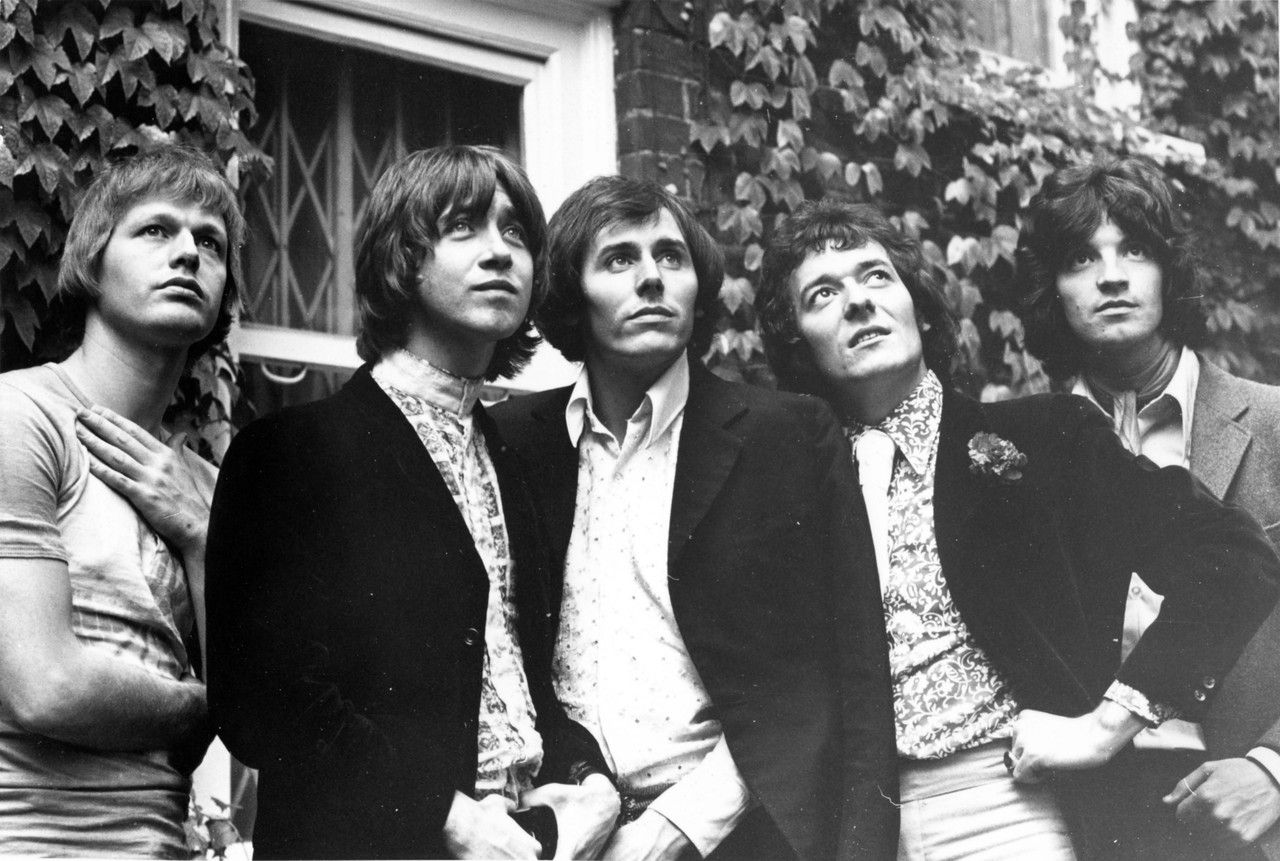
Eleven years later, and sitting at #1 was the Honeycomb’s stomping ‘Have I the Right?’ It was the third and final chart-topper produced by the visionary Joe Meek. Of the three, this is probably the most traditionally ‘pop’ sounding, though it is still crammed with wacky techniques – such as having the band stomping on the staircase outside his studio – and instruments, such as the slicing synths. It hit the charts in that glorious autumn of ’64, one of the most fertile times for British pop with ‘A Hard Day’s Night’, ‘Do Wah Diddy Diddy’, ‘You Really Got Me’, ‘I’m Into Something Good’, and this, taking turns on top.

28th August is also the birthday of The Honeycombs’ female drummer, Honey Lantree. One of few women to take up the sticks – I can only think of Karen Carpenter and Meg White – she had been discovered while working as a hairdresser. Her salon manager was in a band, let her try out, and was so impressed that he incorporated Lantree and her brother into his group. She retired from music when the Honeycombs split in 1967 following Meek’s death, but she rejoined them every so often for tours right up until 2005.

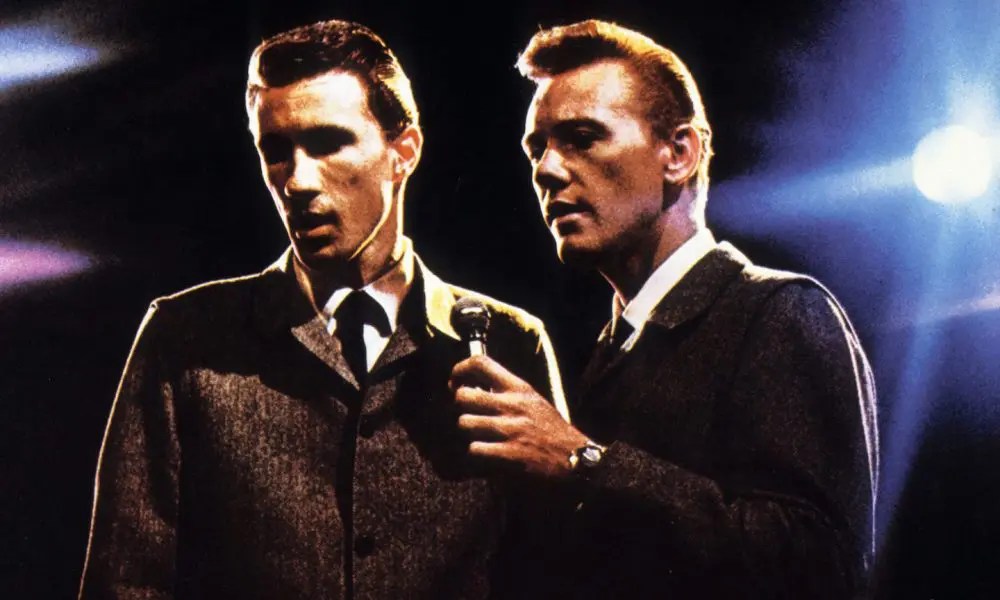
August 28th has seen not one, but two versions of ‘I Got You Babe’ sitting at number one in the singles chart. The original was, of course, by Sonny and Cher in 1965…

It was their only #1 as a duo, and Cher’s first of four, spanning thirty-three years. Exactly twenty years later, and a cover by UB40 and Chrissie Hynde was spending its solitary week on top. I gave this record a ‘Meh’ award, and my opinions on it haven’t changed much. It’s still a bit of a slog…

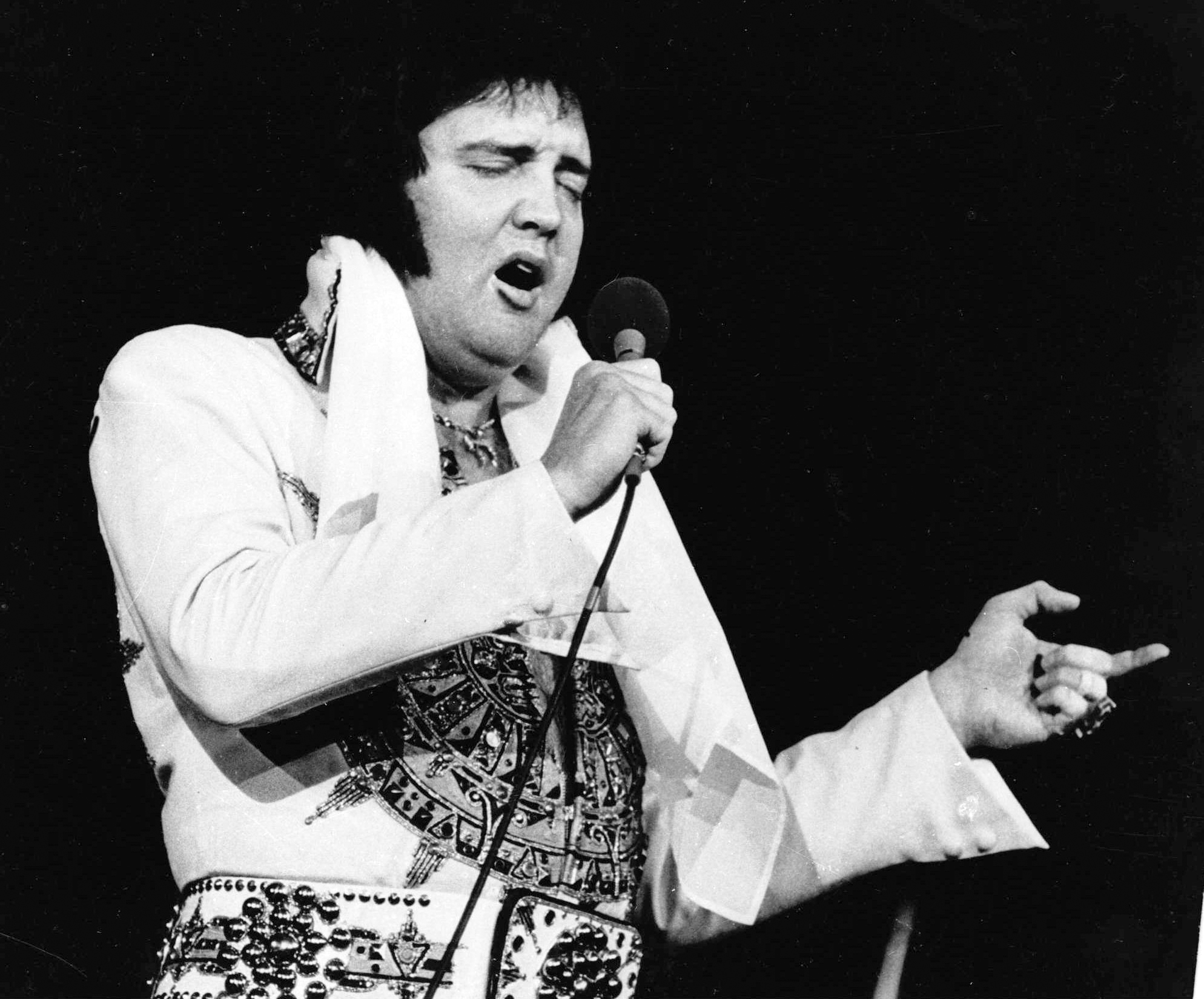
On this day in 1977, and the world still coming to terms with his death aged just forty-two, Elvis Presley’s current single climbed to #1, the first of his record five posthumous chart-toppers. ‘Way Down’ had spent its first two weeks on chart climbing from #46 to #42, so its safe to assume that it wouldn’t have been a massive hit without tragedy striking. However, it would also be wrong to suggest that The King was a spent force at this point in his career, as his previous single ‘Moody Blue’ had made it to #6. In my original post on it, I rejoiced in the fact that fate ensured Elvis’s final single was a rocker, given that he’d spent much of the ’70s releasing schmaltzy ballads. Lyrically, it’s also fitting for the recently deceased star, given that it’s called ‘Way Down’, and compares a woman’s love to prescription drugs… However, fun as the song is, and as lively as Elvis’s perfomance is, the show is stolen by JD Sumner’s astonishingly low closing note.

Finally, on this day in 1993, Culture Beat’s ‘Mr. Vain’ was enjoying its first of four weeks at #1. I bring this to your attention not just because it’s a banger – and it is – but because it was the first chart-topper in forty years not to be released as a 7″ single. Vinyl was on its way out after a century as the medium of choice, to be replaced in the space of twenty years by CDs, then digital downloads, then streaming…

Thanks for joining this delve back through the decades. Next up, we continue our journey through 2001 with a similarly retro reboot…
On This Day… 5th January

A very Happy New Year to you all, and a warm welcome back to the UK Number Ones Blog. I hope you had a good festive period, managed to celebrate, relax, and (in my case) catch up with writing about some soon-to-come number ones. Before we resume our journey through the late, late-nineties, I’m debuting a new feature!

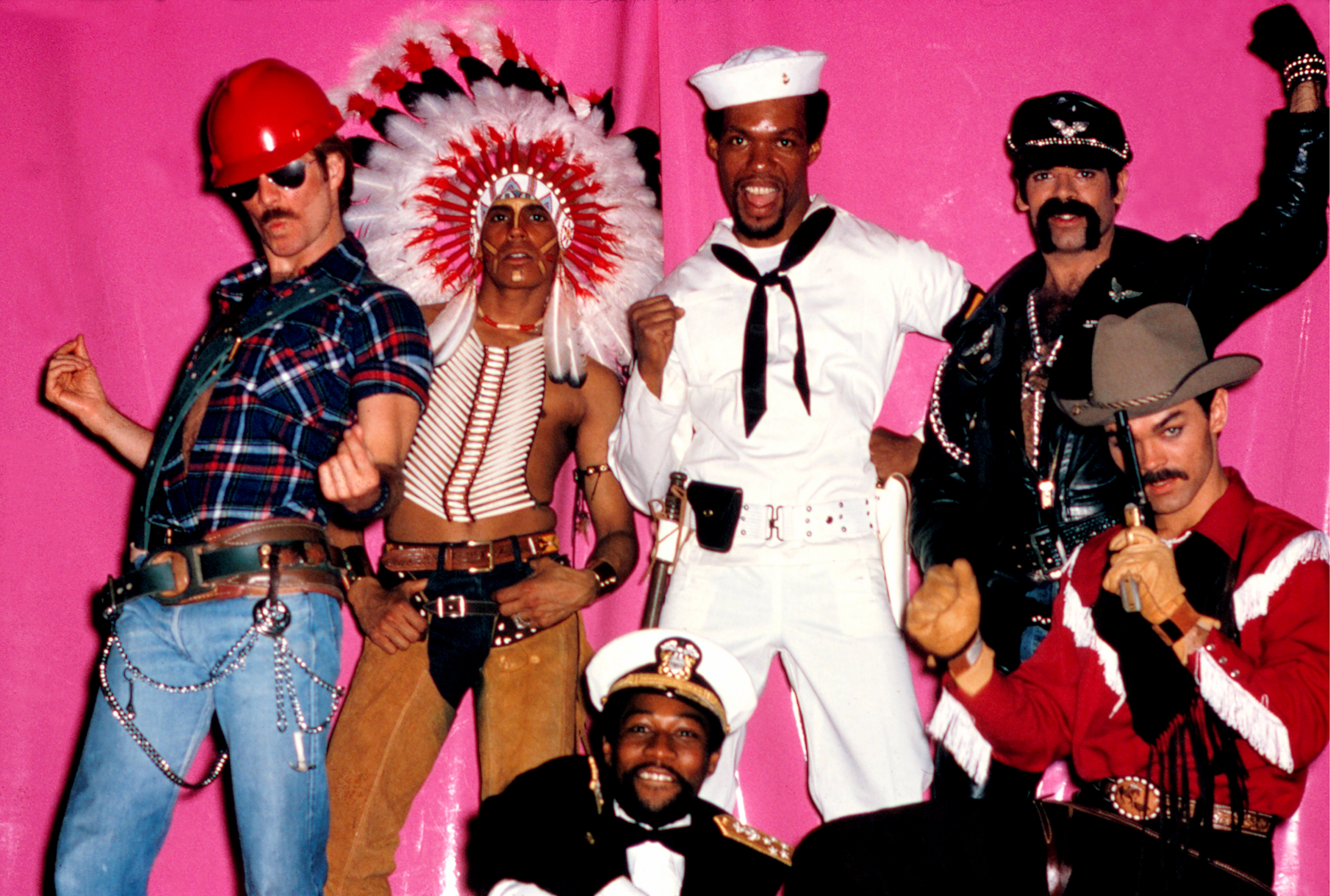
The Village People, group portrait, New York, 1978. (Photo by Michael Putland/Getty Images)

‘On This Day…’ will do pretty much exactly what it says on the tin. I’ll intro a few of the records that have been top of the charts on a particular date in history, as well as mentioning a few births, a few deaths, and a few interesting occasions that tie into a particular chart-topper. The hope is that readers will be able to delve into my back-catalogue of posts, and find something I wrote long before they started following this blog. Or people can, y’know, just enjoy the tunes!

First up, number one on this day in 1962, we have a stone-cold classic:

‘Moon River’, from the soundtrack to ‘Breakfast at Tiffany’s’ is one of the great songs of that supposedly fallow period between rock ‘n’ roll and The Beatles. In the film it is sung by Audrey Hepburn, at the Academy Awards that year it was performed by Andy Williams, while an instrumental version by the song’s composer Henry Mancini and a version by Jerry Butler were hits in the US. In the UK, however, it was left to South African-born Danny Williams to have the most succesful version of all. You can read my original post on ‘Moon River’ here.

Meanwhile on this day in 1923, radio host, record producer, and founder of the legendary Sun Records label, Sam Phillips was born in Alabama. He is most famous for his work with a young Elvis Presley, although he also produced Roy Orbison, Johnny Cash, Carl Perkins and many of the other early rock and roll stars. His only contribution to the top of the UK singles chart, however, was this banger:

Here’s my original post on ‘Great Balls of Fire’. If you’re only going to top the charts once, might as well make it good ‘un. Speaking of which, number one on this day in 1979 we have perhaps the ultimate guilty pleasure. There is not a soul alive who hasn’t done the dance to the ‘YMCA’, however grudgingly, and not even the recent gyrations of Donald Trump can truly sour this wedding reception classic. Even more recently, Village Person Victor Willis (AKA the cop) has been threatening to sue anyone who claims that ‘YMCA’ – a song with the lyric: They have everything for young men to enjoy, You can hang out with all the boys… – has any homosexual connotations. Whatsover. No sirree. To which we can all say, ‘Okay honey…’ (Original post here.)

In sadder news, on this day in 1998, Sonny Bono died following a skiing accident in Nevada. He was of course the singing partner, and former husband, of Cher, with whom he enjoyed his sole chart-topper ‘I Got You Babe’ in 1965. I wrote about it, the 201st #1 single, way back in 2019.

Finally, one of the least likely number one singles of all time was sitting astride the charts on January 5th 1991. Early January is a bit of a dead zone for chart-toppers, as in most years the Christmas leftovers are still clinging on top with little competition. Iron Maiden spotted an opportunity, and released ‘Bring Your Daughter… To the Slaughter’ in the final week of 1990. Their devoted fanbase, as well as the publicity of knocking the God-bothering Cliff Richard’s ‘Saviour’s Day’ off #1, delivered the heavy metal legends their biggest hit. (Original post here.)

I hope everyone enjoyed this new feature, and won’t mind if it pops back up ever few weeks. I’m also going to be doing more regular posts on cover versions, number two singles, ‘Remembering’ features, ‘Best of the Rests’ and ‘Today’s Top 10s’, as well as a new look at the ‘B’-sides to famous number ones. The main focus will of course still be on the chart-toppers; just a little more regularly interspersed with interesting detours through chart history!

Here’s to a great 2025!

Random Runners-Up: ‘Man of the World’, by Fleetwood Mac

Random runners-up is back! Following on from my latest recap, let’s take a break from analysing all those chart-toppers, and lavish some attention on those records that fell at the final hurdle: #2.

These records are genuinely chosen at random (thank you random.org), and this time the generator has kindly thrown up a chart-topper from each of the five decades we’ve covered so far. We’ll be going back as far as 1955, and as close to this blog’s ‘present day’ as 1996. But first up, it’s the sixties.

The generator has also thrown up three acts who we’ve already met in pole position. Fleetwood Mac had scored their only UK number one in January 1969, with the atmospheric instrumental ‘Albatross’.

‘Man of the World’, by Fleetwood Mac

#2 for 1 week, from 28th May – 4th June 1969 (behind ‘Get Back’)

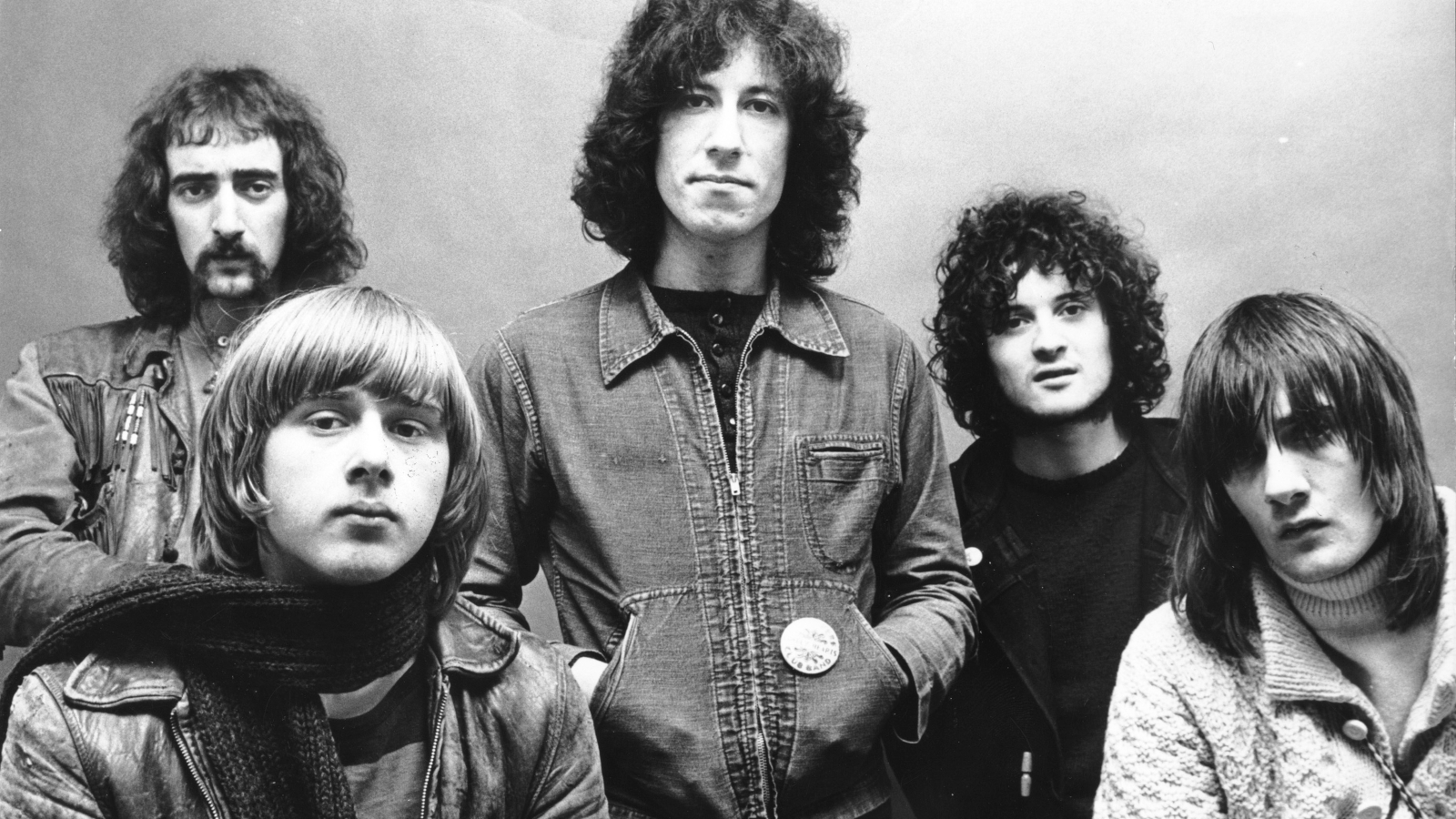
They followed that up with a couple of #2s, the first of which was ‘Man of the World’. It starts off as a simple acoustic number, with some echoey guitar flourishes, and some nice echoes back to ‘Albatross’ in the cymbal crashes and the rhythmic bass. Peter Green, then the band’s main singer and songwriter, mournfully drawls: I could tell you about my life, They say I’m a man of the world… There’s no one I’d rather be… Before howling: But I just wish I’d never been born…

Legend has it that it was these lyrics that first alerted his bandmates to the fact that Green might not have been mentally okay. Just a year later he left the band. It’s a well-worn topic, how fame and fortune don’t always lead to health and happiness, but seldom has it been spelled out as beautifully as on ‘Man of the World’. After a wonderful bluesy middle-eight about how a ‘good woman’ might help, it ends with a murmured And I wish I was in love…

When I was very young, I had a ‘Best of the Sixties’ cassette compilation. It was cheap, so it didn’t have the huge hits on it; but it had this. And so I knew ‘Man of the World’ long before I’d ever heard ‘Don’t Stop’, or ‘Little Lies’. Which is perhaps fitting, because it is this original incarnation of Fleetwood Mac that had the most UK singles chart success: a chart-topper, and two number twos. They would have to wait almost two decades for their next biggest hit: a #4 for ‘Everywhere’ in 1987.

By then, of course, and for most of their huge seventies successes, Mick Fleetwood and John McVie – whose surnames were combined to create the band’s name – were the two remaining original members. Peter Green meanwhile, struggled with his mental health throughout the seventies and eighties, but was sporadically involved in the music business, and with the other members of Fleetwood Mac. He joined the band for its induction into the Rock and Roll Hall of Fame in 1998, and died in 2020.

Tomorrow we have a seventies #2…

The Rolling Stones – Best of the Rest

To mark the release of the Stones’ 24th studio album, and their first original recording in almost two decades, let’s delve back into their long chart career, and explore the hits that didn’t make number one.

Over the course of the 1960s, the band scored eight chart toppers, from ‘It’s All Over Now’ in ’64 to ‘Honky Tonk Women’ in ’69. But they didn’t stop when the sixties ended. No, as you may be aware, they kept going. And going. Kept on rolling on. Impressively, their recent comeback single, ‘Angry’, made #34 in the UK, their first Top 40 hit since 2005. But that won’t quite make this list of their ten biggest non-chart toppers. In ascending order, then…

‘Start Me Up’, reached #7 in 1981

The Stones at their Stonesiest. A killer riff, some smutty lyrics, and Mick doing his best Jane Fonda impression in the video. It’s an impressive feat, releasing one of your signature songs two decades into your career. But it also somewhat marked the end of the band as a chart concern – it remains their final UK Top 10 hit – and the start of The Stones TM: the mega-touring, jukebox musical that the band have been for the last forty years. ‘Tattoo You’, the album from which it came, is seen by many as the band’s last great LP, too.

‘Fool to Cry’, reached #6 in 1976

Perhaps the one thing lacking from the Stones’ back-catalogue is a big ballad. (Ok, the next song on the list proves that statement completely wrong…) Anyway, ‘Fool to Cry’ comes close to being that ballad. A slow, bluesy number that takes its time, lingering on some wonderful falsetto notes from Mick. In the first verse he’s feeling low, so he puts his daughter on his knee, and she tells him Daddy, You’re a fool to cry… A bit too sentimental for the Stones? Not to worry, in verse two Mick goes to his mistress, who lives in a po’ part of town… And she says the exact same thing. Much more like it!

‘Angie’, reached #5 in 1973

Of course, if the Stones do have a big ballad, then it’s this one. There was some discussion as to who ‘Angie’ was: David Bowie’s wife, Keith Richard’s daughter, or the actress Angie Dickinson. Whoever it’s about, it’s a beautiful love song, with Jagger’s slurred singing giving the impression that he’s had a shot or two of Dutch courage before suggesting he and Angie call it a day.

‘Tumbling Dice’, reached #5 in 1972

I called ‘Start Me Up’ the Stones at their Stonesiest, but actually… This is the band at the peak of the powers. The lead single from what is widely regarded as their best album (though I’d go for the clean and concise ‘Sticky Fingers’ over the rambling ‘Exile…’) ‘Tumbling Dice’ might be the coolest piece of rock music ever recorded – that boogie-woogie rhythm, Keef’s lazy riff, Charlie’s drums bringing up the rear, the lyrics about being rank outsiders and partners in crime.. To be honest, until watching the lyric video above I had no idea what 90% of the words to ‘Tumbling Dice’ were. But does it matter? Nah. This one’s all about the groove, the attitude, about being the best freakin’ rock and roll band in the world.

‘Have You Seen Your Mother Baby, Standing in the Shadow?’, reached #5 in 1966

It’s easy now, with them in their eighties, to be blasé about how dangerous the Rolling Stones must have seemed in the 1960s. But this mid-decade hit, that begins and ends in a hail of feedback, with ambiguous lyrics that could be about a girl on the streets, taking drugs, or affairs with people’s mothers, proves that they were mad, bad, and dangerous to know… The memorable horn riff is a sign of the direction that the band would take as the sixties progressed. And just to make sure they got some more attention, the band dragged up for the record sleeve. Lock up your daughters, indeed…

‘Miss You’, reached #3 in 1978

A trio of number threes, now. In the late seventies anybody who was anybody had to try out a disco groove and the Stones were no different, in what was seen as a huge departure for them. The band disagree over whether or not it was originally intended as a disco song – Jagger and Wood say no, Richards says yes – but it certainly ended up as one. (There was an even more disco influenced remix released as a 12″.) Meanwhile, Bill Wyman, whose brilliant bassline holds the whole thing together, has claimed he should have had a writing credit. ‘Miss You’ was their last Billboard #1, and their last UK Top 5 hit.

‘Let’s Spend the Night Together’, reached #3 in 1967

It’s funny – this is one of the Stones’ poppier numbers, and yet one of their most controversial. It’s piano and organ driven, seemingly influenced more by Motown and male vocal groups than the band’s normal R&B touchstones. But lyrics like I’ll satisfy your every need, And now I know you’ll satisfy me… were bound to get folks’ knickers in a twist. Radio stations banned it, and Ed Sullivan insisted that the chorus be changed to ‘let’s spend some time together’, an insistence that the band complied with (though Jagger’s theatrical eye-roll meant they weren’t invited back for a while). In some regions it was twinned with ‘Ruby Tuesday’, though the official records don’t list it as a double-‘A’ in the UK.

‘Not Fade Away’, reached #3 in 1964

Where it all began (almost). This Buddy Holly cover was their 3rd single, and their first Top 10 hit. It’s a lot faster, and beefier, than the original, with a touch of the fuzzy, sloppy sounds of the Rolling Stones in their prime, and Brian Jones’ harmonica acting as lead instrument. It came out in early 1964, right at the start of the British Invasion, when bands like The Beatles and the Stones wore their American rock ‘n’ roll influences loud and proud. It serves almost as a timeline of rock’s rapid development through the fifties and sixties: the Stones covering a Buddy Holly hit, which he’d based on the Bo Diddley riff, which in turn goes all the way back to the dawn of the blues.

‘Brown Sugar’ / ‘Bitch’, reached #2 in 1971

Another all-time Stones classic, this time from ‘Sticky Fingers’, with a great riff, a filthy sax solo, and some famously questionable lyrics. For many years I never paid much attention to the nitty-gritty of the song’s subject matter, because it was such an absolute rocker. But then you actually sit down and read the lyrics about slave ships and whipping women at midnight, and wonder if the song is looking at the matter critically, or just celebrating it. Then again, shouldn’t rock ‘n’ roll be provocative? And they’re far from being the Stones’ worst lyrics (‘Under My Thumb’ and ‘Some Girls’ say ‘Hi’…) As if they knew this song would court controversy, they paired it with a more subtle, reflective number, which they called ‘Bitch’… Some countries also list the record as a triple ‘A’-side, with a live cover of Chuck Berry’s ‘Let It Rock’ as the third track.

’19th Nervous Breakdown’, reached #2 in 1966

Come to think of it, the Stones’ other number two hit is hardly the most sympathetic towards women (Oh who’s to blame, That girl’s just insane…) Lost a little amongst their biggest ’60s hits, ’19th Nervous Breakdown’ is the Stones at their snottiest. The Kinks are always cast as the decade’s social commentators, but songs like this (alongside ‘Satisfaction’, and ‘Mother’s Little Helper’) are just as biting satire. It tells the story of a flighty society girl, running around, getting on everyone’s nerves, always on the verge of yet another breakdown… Though we’re left to ponder how much of that is down to her terrible choice in men. The highlight here is Bill Wyman’s ‘divebombing’ bass in the fade-out…

I hope you enjoyed this little interlude! Back on with the regular countdown next week. Meanwhile, I’m off to give ‘Hackney Diamonds’ a listen…

Random Runners-Up: ‘Do You Want to Know a Secret?’, by Billy J. Kramer & The Dakotas

Our next randomly selected #2 comes from what, for my money, must have been the most exciting time to be a pop music fan. Come with me back to the summer of 1963, and the Merseybeat explosion…

‘Do You Want to Know a Secret?’, by Billy J. Kramer & The Dakotas

#2 for 2 weeks, from 30th May to 12th June 1963, behind ‘From Me to You’

And its one Liverpudlian act, Billy J. Kramer, covering another, The Beatles. Many of the early beat bands ended up relying on Lennon & McCartney hand-me-downs, and The Dakotas were no different. A few months after this, their debut hit, they would score a first number one with another Beatles cast-off, ‘Bad to Me’.

‘Do You Want to Know a Secret?’ had featured on the Fab Four’s first album, ‘Please Please Me’, released in March that year. (I only just realised that it was sung by George Harrison, who sounds remarkably like Paul McCartney on the recording.) It’s a sweet, simple song, but not one which really indicates that the band were going to be the biggest pop phenomenon the world had ever seen. And The Dakotas’ version is even more diluted, a little more ramshackle, a little old-fashioned in a rockabilly kind of way. Again nice, but they’d pick up the pace on ‘Bad to Me’.

It made #2 during the seven-week run of The Beatles’ first chart-topper, ‘From Me to You’ (not the last time Lennon & McCartney would occupy a Top 2…) It may even have been the best-selling single in the country at some point during its run, but not on the Record Retailer chart, which is what the Official Charts now recognise. It’s the reverse of the situation a few months earlier, when The Beatles’ ‘Please Please Me’ had stalled at #2 in Record Retailer, and therefore the history books, behind yodeller supreme Frank Ifield.

Billy J. Kramer would remain popular for a year or two, scoring a second chart-topper with the ever so slightly creepy ‘Little Children’. Like so many of the earliest Merseybeat stars, though, his star had waned by 1965. The original ‘Do You Want to Know a Secret?’, meanwhile, would go on to be released as a single in the US, where it also made #2.

653. ‘Unchained Melody’, by The Righteous Brothers

And so the slew of random re-releases, that have been peppering the number one slot since the late ‘80s, peaks here, towards the end of 1990. And I mean ‘peaks’ both in the sense that we’ve literally just waved a Steve Miller Band tune from 1973 off top spot, and in the sense that nothing can top this gilt-edged beauty of a love song.

Unchained Melody, by The Righteous Brothers (their 2nd and final #1)

4 weeks, from 28th October – 25th November 1990

That’s not to say that ‘Unchained Melody’, in the hands of the Righteous Brothers, isn’t a preposterous, overblown nonsense of a record. It is completely over-the-top, the sort of display of affection that would put most women off a man were he to belt it out ‘neath her window of an evening. How does a lonely river sigh, exactly…? And yet, it is irresistible.

Irresistible because of the vocal performance of Bobby Hatfield (who won the right to record it in a coin-toss with his Righteous partner Bill Medley). It’s spectacular singing all the way through, a true tour-de-force, that culminates in that outrageous note he hits in the final chorus. The strings swell, the percussion crashes, creating a tempest of emotion that will wash over even the most cynical of listener.

Irresistible, too, because it is so different to what has come before it. I’ve enjoyed the recent transition to dance, more than I thought I might, but it’s interesting to hear a big sixties beast cutting through the drum machines and the samples. And despite coming from long before the era of the power-ballad, ‘Unchained Melody’ can compete with contemporary classics like ‘Nothing Compares 2 U’ and ‘Show Me Heaven’ in the chest-thumping melodrama stakes. In fact, could the case be made for this being the very first ‘power ballad’?

It found itself back in the charts thanks to its use in the movie ‘Ghost’, in a famous sex scene involving Patrick Swayze and a pottery wheel (I’ve never seen the film, and don’t intend to, so don’t try to persuade me that this isn’t what happens…) The Brothers did a re-record, which charted in the US, but it was their original that took off again in Britain (it had previously made #14 in 1965). It means that the duo have a twenty-five year gap between their two #1s – beating The Hollies’ previous record of twenty-three years – and that ‘Unchained Melody’ itself has a huge thirty five year span since Jimmy Young took his version to the top in 1955.

Young’s version is half the song that this is, though it feels unfair to judge him against what has since become a standard. A standard that, sadly, subsequent singers have felt the need to compare themselves against. ‘Unchained Melody’ has two further, Righteous Brothers aping versions to come atop the charts… And this also increases the irresistibility of this version: the depths that I know the song will be brought down to.

This record cemented itself as the peak of the re-release era by becoming the highest-selling single of the year. Folks lapped it up (‘Ghost’ was, for a spell, the highest-grossing film of all time in the UK), though I’d say it’s now moved into the realms of cliché, thanks no doubt to the subsequent karaoke cover versions, to the point that any use in a movie today would be done with tongue firmly in cheek.

Before I go, I have to give a shout out to the one version that can compete with the Righteous Brothers’: Elvis’s. It was used to great effect in the recent film biopic (that I thought was OK, but nowhere near as good as some said), and when they spliced it with the famous footage of him singing it a few weeks before his death… Well some dust just went and got in my eye, didn’t it?

Number 1s Blog 5th Anniversary Special – Readers’ Favourite #1s – ‘Hey Jude’

Of the four ‘favourite’ records that I’m featuring this week, three are from the 1960s. The odd-one-out is tomorrow’s choice from 1980, but more on that in twenty-four hours… Whether this says something about the tastes, or the ages, of our guest writers, or whether it says something about the enduring quality of the Swinging Sixties, I’ll leave you to decide… Anyway, there’s nothing uncertain about the quality of today’s featured song, or the band that took it to #1. They had to feature, right? John Swindell AKA popchartfreak has chosen The Beatles’ 1968 epic, ‘Hey Jude’…

‘Hey Jude’, by The Beatles – #1 for 2 weeks in 1968

This record was ground-zero for me in my personal discovery of the UK singles chart rundown on a Sunday, Pick Of The Pops with DJ Alan Freeman, still iconic in his exciting presenting style. “Right? Right!”. Dad came back from work at RAF Swinderby in Lincolnshire, England with the news ‘Hey Jude’ had gone to number one. The longest-single to ever chart, by the biggest pop stars in the world that I’d grown-up with, and seen the films, and played the singles dad bought, were on Top Of The Pops with a great video. And it was exciting discovering the reverse chart-rundown on the radio. I was already a massive pop music fan, but this pushed me further into obsession, so many records I loved!

Until more recently ‘Hey Jude’ was far and away The Beatles most-popular record, in all it’s 7-minute singalong, slow-fade glory, and it was Paul at his ballad best. These days ‘Let It Be’ and ‘Here Comes The Sun’ tend to get the kudos over ‘Hey Jude’, but for me it’s still Jude. Written for young Julian Lennon after his parents split, it’s still got that hopeful sadness to it, being supportive to a child in distress and telling them everything will be alright – but slightly tweaked to make it more universal for everyone. Given the backdrop of assassinations, war, intolerance, racism and much more in 1968, it was a boost we needed. I was 10, but I was aware of all these things on the news.

Does it need to be 7 minutes and 11 seconds long? Yes, it does, it’s part of the build from slow sedate intro to manic screaming as the mood changes from sorrow to a crowd-thrilling climax, it’s still an emotional journey and a gradual build-up. Value for money? One of their biggest-sellers, it had a fabulous free John gem ‘Revolution’ on the B-side, and the only reason it didn’t stay on top for even longer was Paul had signed up folk singer Mary Hopkin to the Fabs new Apple record label and got to her to cover a Russian Folk song, ‘Those Were The Days’, which me and the record-buyers were even more enthusiastic about. In 1976 when all the Beatles singles were reissued with new record sleeves (rubbish ones) ‘Hey Jude’ peaked again at 12, higher than the rest of their back catalogue bar ‘Yesterday’ – which had never been a single before.

I took my mum to see Paul & Linda McCartney and their band in 1989 at Wembley Arena. It was thrilling hearing so many classics, but the peak moment was when Paul started ‘Hey Jude’ and I got goose-bumps. Sadly, as the audience was on its feet, a woman just in front of us took the opportunity to pass-out (overcome by the emotion of the moment) so the furore as staff dashed over to help put a dampener on the moment. Plus side, I can say ‘Hey Jude’ was still having a massive emotional impact on people over 20 years later. It’s still rated by some young music fans who have no memory of the 20th century, so I think that’s a pretty good reason to single it out even if I ignore what it means to me personally!

Number 1s Blog 5th Anniversary Special – Readers’ Favourite #1s – ‘Silence Is Golden’

This week marks FIVE YEARS since I launched this blog with a post on Al Martino’s ‘Here in My Heart’, the first number one single on the first NME chart, published on November 14th, 1952. Over the course of this half-decade, I’ve picked up some dedicated readers and commenters, to whom I’m very grateful for making this whole thing worthwhile. So, to celebrate the milestone, I’m going to hand the blog over to four of my long-time followers. They’ve all chosen their own favourite UK number one single (from between 1952 and 1988 because, well, we don’t want spoilers!)

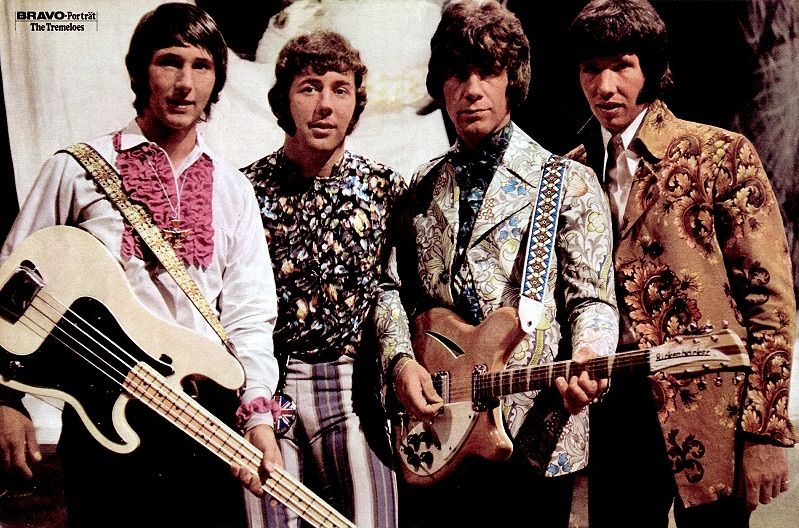
Up first is John Van der Kiste, and his choice of The Tremeloes ‘Silence Is Golden’. John is a writer and historian, whose recent projects include a book on Manfred Mann in the 1970s, and ‘Eagles on Track: Every Album, Every Song’. His work can be found on Amazon.

‘Silence Is Golden’, by The Tremeloes – #1 for 3 weeks in 1967

When Brian Poole and the Tremeloes parted company in 1966, music pundits thought the former would remain a major star while his band would disappear without trace. They were wrong. After struggling with their first two singles, ‘Blessed’ (a Paul Simon song) and ‘Good Day Sunshine’ (Beatles), the band scored with Cat Stevens’ ‘Here Comes My Baby’, a No. 4 in 1967. Stevens disliked their version, complaining that they had turned his heartfelt love-gone-wrong song into a party romp.

For their fourth single, again they decided to take a sad song and make it better (see what I did there). ‘Silence is Golden’, originally the B-side of The Four Seasons’ ‘Rag Doll’ in 1964, was recommended as a potential hit to them by Mick Clarke, who briefly joined as their bassist before being (amicably) replaced by Len Hawkes. Taking a slow, slightly bitter number marked a change in style for them. In three verses and a chorus, the observer tells of his pain at seeing a girl (whom he presumably fancies) being deceived by a guy who obviously doesn’t deserve her. He’s dying to warn her, held back only by the fear that she will tell him he’s lying, so he’d better shut up. A miserable little triangle.

Even so, it flew out of the shops on both sides of the Atlantic. Most of the Trems’ songs featured Hawkes or drummer Dave Munden on lead vocal, but this time they gave the job to lead guitarist Rick West. It shows off the band’s harmonies to perfection. For the most part it follows the arrangement of the original closely with a change in key after the second chorus, the only change coming with a couple of repeats of the final line in a different melody instead of fading out.

1967 may have been the year of Sergeant Pepper, San Francisco and Monterey, but as far as the British charts went, it was big ballad time, with Frank and Nancy Sinatra, Engelbert Humperdinck, Long John Baldry, Tom Jones and The Dave Clark Five all getting sentimental and reaching No. 1 or else getting close. ‘Silence is Golden’ still remains a much-loved staple on 1960s oldies playlists, though some people have never forgiven it for denying The Kinks’ sublime ‘Waterloo Sunset’ the summit after three chart-toppers in three previous years.

(The Trems performing ‘Silence Is Golden’ live in 1967)

The Trems had their chance of repeating history not once but twice, but threw it away. In 1968 they were offered but rejected ‘(If Paradise Is) Half as Nice’, and Amen Corner reaped the benefit. Later they recorded Jeff Christie’s ‘Yellow River’ and scheduled it as a single, though after a change of heart they turned it down, whereupon their producer Mike Smith helped Christie form his own self-named band (with drummer Mike Blakley, whose brother Alan was a Tremeloe) – and take it all the way there in 1970. Also it’s interesting that, of their remaining singles, the most successful were back to the up-tempo party style, with other ballads faring poorly.

Their run of hits continued until 1971 and then faded away (apart from a minor chart entry in 1983 with their version of F.R. David’s ‘Words’), but they have continued to earn a living on the live circuit. Their line-up became something of a revolving door, with West leaving in 1972 after a battle with labyrinthitis, later rejoining on condition that he wouldn’t sing on stage but concentrate on guitar instead. Clarke, who had his moment at the top in 1974 with ‘Sugar Baby Love’ with The Rubettes, has recently been part of the line-up from time to time. The original foursome have all had health issues, with Blakley passing away in 1996 and Munden in 2020, though The Tremeloes have endured in one form or another. Hawkes is still a regular member, while his sons Chesney (as in ‘The One and Only’, No. 1 in 1991) and Jodie often join the line-up on guitar and drums respectively. No mean feat, for a band originally formed in 1958. 

615. ‘He Ain’t Heavy, He’s My Brother’, by The Hollies

A big feature of the late eighties and early nineties, aside from all the dancing, the sampling and the acid house, was classic re-releases…

He Ain’t Heavy, He’s My Brother, by The Hollies (their 2nd and final #1)

2 weeks, from 18th September – 2nd October 1988

One such re-release means that The Hollies score their second #1 single, a full twenty-three years after their first. And like the two most recent belated chart-toppers – ‘Stand By Me’ and ‘Reet Petite’ – this is a classic in every sense. It’s pop as classical music: stately, grandiose, full of portent and power… The road is long, With many a winding turn…

In fact, I’d file this up there with ‘Hey Jude’, and ‘Bridge Over Troubled Water’, as pop music working as a hymn for the secular. And not just because the band do their best impression of a gospel choir towards the end, but also because the title line is from a Christian tale about a sister carrying her brother on her back, uncomplaining. Interestingly, ‘Stand by Me’ also features lines from the bible (while ‘Reet Petite’ does not, unless I missed that particular week of Sunday School…)

The climax is the middle eight, the If I’m laden… At all… part, that positively soars. In fact, it perhaps soars too much, for my tastes. For a band that spent most of the sixties releasing perfectly crafted, snappy pop tunes – from ‘Just One Look’, to their previous #1 ‘I’m Alive’, to ‘Bus Stop’ and on – this is quite the departure. I have to admit that I prefer their pop stuff to this, as impressive as it is, in the same way that ‘Hey Jude’ and ‘Bridge Over Troubled Water’ are not my all-time favourites either.

This song originally came not long after Graham Nash had left the band, to form Crosby, Stills & Nash, leaving the band more reliant on outside songwriters. ‘He Ain’t Heavy…’ had been written for US singer Kelly Gordon, a few months before The Hollies made #3 with it in 1969. (Fun fact: not only is it a belated 2nd #1 for The Hollies, it’s a 2nd #1 for Elton John, who played piano on the track as a pre-fame session musician!) And, for a song with such religious connotations and gospel leanings, it took a much more prosaic reason to finally get it to #1: an advert for Miller-Lite.

In 1969, this hit set the band up to keep going well into the 1970s, something that very few of the big ‘60s acts managed. Their ‘final’ big hit was ‘The Air that I Breathe’ in 1974 (a song I do kind of wish had had the big re-release treatment, instead of this…) And unless I’m missing something obvious, this song’s second round of success meant that The Hollies achieved the longest gap between chart-topping singles, a record they kept for quite a while. On a personal note, and quite fittingly, this was #1 on the day that my own brother was born (but I will refrain from commenting on his heaviness…)

You Decide! Vote for your Best (and worst) Number One Singles!

As we are 600 chart-toppers not out (and 20 recaps down) I thought, just for fun… Let’s a have poll on what you, dear readers of this little blog, think are the best, and the worst, #1s so far.

And my apologies, for you are beholden to the 21 records I’ve chosen as my ‘Very Best Chart-toppers’, and the 20 records I’ve chosen as my ‘Very Worst’, in each recap. But, you can vote for as many of the listed songs as you’d like. And you can always let me know how very wrong I was to choose/not choose a record in the comments. The voting will be open forever in theory, but I’ll report back and let you know the initial results in a week or so…

The Best:

Looking back at my choices, I do wonder what I saw in ‘Cherry Pink and Apple Blossom White’ in my 2nd recap (though pickings were slim in 1955). I’d also, given a do-over, choose ‘Get Off Of My Cloud’ over ‘Satisfaction’ in recap seven. I stand by the rest of them, though. Even Mungo Jerry, Mud, and Bucks Fizz! (Though I might easily have swung for ‘Land of Make Believe’ over ‘My Camera Never Lies’ on a different day…)

The Worst:

As for the worst… Well there are some that are truly heinous (The Firm, J J Barrie, Dana…) and others that seemed to suffer from being around during otherwise stellar periods for pop music. The Bachelors are more bland than terrible, but came out in 1964 which, for my money, is the best ever year for #1s. While I regret using up Cliff’s ‘Worst’ award on a bland country ditty, knowing the horrors he has still to come…

Thanks for taking part! The usual countdown will resume with chart-topper 601 in a few days, fittingly the Christmas #1 for 1987. And it’s a song that veers more towards the ‘Best’ than the ‘Worst’. Yay!