Time for another peek at what was on the flip-side of some classic number ones. Usually my ‘And B-sides…’ posts have been themed around a particular artist, but I’ve decided to every so often throw in some different flip-sides, from acts whose chart-topping careers are too short to fill a whole post.
First of all, a little something to blow the cobwebs away…
This Chuck Berry standard has been covered by the great and the good, from the Beatles, to the Beach Boys, from Tom Jones to Showaddywaddy, and any decent garage band in-between. But I doubt it has ever lived up to its title more then when in the hands of the Manics. Just let me hear some of that rock and roll music… they demand, then deliver three minutes of blistering, gonzo, balls-to-the-wall rock and, yes, roll music.
Another spiky track, inspired apparently by a fight that Bob Geldof got into with another band. Out in the street, They’re usin’ their feet… This is a proper B-side: a very different track to the A-side, not a remix or a retread, a song that could easily have been the single, and a glance back to the Rats’ punky origins. The glorious middle-eight meanwhile, ripped straight from an sixties doo-wop track, shows their musical range. (Thanks to regular reader/commenter John Van der Kiste for suggesting this one!)
‘You Got the Jump on Me’, by Wizzard – B-side to ‘Angel Fingers’
Completing this trio of hard rocking flip-sides, ‘You Got the Jump on Me’ is another song that sounds nothing like the sixties-inspired, glam rock track that made #1. This is potentially as close as Led Zeppelin came to a chart-topper… Written by bassist Rick Price, it has the feel of an extended jam session, especially when the driving riff gives way to a boogie-woogie piano for the last minute or so of its six and a half minute run-time.
Again, most of this information comes from John Van der Kiste, who knows more about Wizzard than I could ever hope to learn. Like many of his peers, Roy Wood was a genuine Led Zep fan. He, Jeff Lynne and Bev Bevan (drummer for ELO and the Move) attended John Bonham’s funeral, which Bevan said afterwards was one of the most miserable, depressing funerals he had ever been to. There was an affinity between them as Bonham and Robert Plant were also from the Black Country. When The Move were being formed late 1965 Bonham, as one of the most renowned drummers in the area and possibly up for grabs, was suggested by someone as a suitable member, but Carl Wayne, who was the eldest of them all, had heard things about him and said no. How different things might have turned out…
Thanks again, John! If any other readers have suggestions for B-sides I can feature in future posts, then do let me know in the comments!
For our latest B-Sides feature, let us return to the glory days of glam. Of platform shoes. Of sequins. Of Noddy Holder’s sideburns and Ziggy Stardust. And most gloriously of all: T-rextasy.
Marc Bolan and co. enjoyed four all-time classic chart-toppers in 1971 and ’72 (okay, three all-timers, and one which is still pretty great). They were also very generous with their B-sides, giving fans two extra songs per number one.
I’ll restrict myself to choosing one B-side from each single, and linking to the other. Starting with…
If there was a track to sum up the band in the moment of their transition from Tyrannosaurus Rex to plain old T. Rex, from ethereal hippyness and lyrics about magical moons to crunching glam guitars, it might be ‘Woodland Rock’. It’s based around a derivative rock ‘n’ roll riff (borrowing liberally from ‘Jailhouse Rock’), but with snatches and loops played in reverse, and an opening verse about a man dancing like a gypsy – so he must be where its at – and houses up trees.
‘Hot Love’s other B-side was ‘The King of the Mountain Cometh’, and that’s even more old-school Tyrannosaurus Rex, if that’s your thing.
Lady you think you’re a champ, But girl you’re nothing but a raw ramp… Me neither, but I don’t think it’s meant to be complimentary. Bolan really was the King of nonsense lyrics that somehow, in some not too distant dimension, work. And then a second later he’s singing Oooh I’m crazy about your breasts. I love the way this track grows from the standard Tyrannosaurus Rex hippy drumbeat, to a full on glam rock out by the end. In fact, the last minute and a half of ‘Raw Ramp’ are a jam known as ‘Electric Boogie’, which sounds like an outtake from the ‘Get It On’ sessions.
The other B-side here was a one-minute long, wistful ballad called ‘There Was a Time’, which is over before it’s even started.
The one B-side that is better than the single? Not that ‘Telegram Sam’ isn’t fun, but it isn’t in the same league as T. Rex’s three other #1s. Interestingly, this is a variant on the same riff from TS, and the chorus is soaring. And who can resist a song that comes in with a One and a two and a bibbety, bobbity boo boo yeah...? Not I. ‘Baby Strange’ featured on ‘The Slider’ album, which is T. Rex’s masterpiece, and the one to listen to if you want an introduction to the group at the height of their powers.
The other B-side was the stomping ‘Cadilac’, in which Bolan indulges in one of his main tropes: comparing women to cars.
If ‘The Slider’ LP was peak T. Rex, then the album’s second single was the apotheosis of the T. Rex glam sound. ‘Metal Guru’ is a two-minute long, glorious moment. And one of my Very Best Number Ones. I’ve heard it described as one long chorus, but I’d say it’s more one long bridge, a tune that soars towards a chorus that never arrives. But it doesn’t matter.
Anyway, enough of the A-side. That’s not what we’re here for. One of the B-sides was ‘Thunderwing’, in which Bolan again gets horny for his car. My little baby she’s a tippy-toed vamp rider, She moves like the sun in the dawn… It’s another glam stomper, with a great groove to it, if a little repetitive. The other B-side was ‘Lady’, a gentler, trippier nod to the Tyrannosaurus Rex days.
T. Rex’s star shone oh so brightly, but fairly briefly. By 1974 they were struggling for hits, and by 1976 Bolan was struggling with addiction. By 1977, he had cleaned up, was recording again and had just been given his own TOTP-style music show, when he and his girlfriend, soul singer Gloria Jones, crashed their car in south London. Bolan died instantly. Jones was seriously injured. I also did a T. Rex Top 10 countdown of their best non-charttoppers, so head on over there if you want more T-rextasy in your life. And we all should, I think.
This latest randomly chosen Top 10 truly was randomly chosen. Other ‘Today’s Top 10’ posts have been themed around the Summer of Love, or the Merseybeat Explosion, or my birthday. This one though doesn’t feel like it has a theme. Yet mid-1979 was an interesting time for the charts – late-stage disco and cutting-edge new wave jostling to be the sound of the era – and I’d count the late seventies to early eighties one of the most fertile periods for number ones during our regular countdown. So, I’m intrigued and excited to hear what the top ten selling singles were this week forty-six years ago! Let’s do it…
10. ‘H.A.P.P.Y. Radio’ by Edwin Starr (up 12 / 4 weeks on chart)
Setting the tone for what is a fairly toe-tapping chart, it’s Edwin Starr and a disco-soul beauty crashing into the Top 10. ‘Songs celebrating the joy of listening to the radio’ is a not insignificant sub-genre, especially in the seventies and eighties, and this is a great addition to the canon. It’s a musical natural high… Edwin growls, over a high-tempo beat and funky horns. I had never heard this before – the only Starr song I knew was ‘War’ – but this was his third biggest hit in the UK (ascending to its #9 peak a week later). And he is an absolute dude in the video above, shimmying like a pro while some very perky backing dancers cut shapes behind him.
9. ‘Theme from the Deer Hunter (Cavatina)’, by The Shadows (up 1 / 8 weeks on chart)
If I’d sat down to make a list of acts I might have expected to see in the Top 10 in June 1979, then I think it would have taken me several days to suggest the Shadows. But here they are. For their recent ‘String of Hits’ album they had covered several big seventies hits, such as ‘Bridge Over Troubled Water’, ‘Baker Street’ and ‘You’re the One That I Want’ (link provided, because that’s just too intriguing not to…) Their take on ‘Don’t Cry for Me Argentina’ had made #5 a few months before, and now this cavatina – Italian for a simple melody – gave them their sixteenth Top 10 hit (or their forty-first, if you include all their Cliff features). It’s a beautiful melody, much more mature and restrained than their earlier work, but Hank Marvin’s guitar chimes as crystal clear as ever.
8. ‘We Are Family’, by Sister Sledge (up 13 / 4 weeks on chart)
Here comes the disco, then. Despite how close to the genre was to imploding through over-exposure (more so in the US, with ‘disco sucks’ and all that, than in the UK), the first six months of 1979 brought us some of disco’s biggest hits. ‘I Will Survive’, ‘Tragedy’, not to mention ‘Y.M.C.A’. In fact, just cast your eyes further down this Top 10 to see the extent of the disco domination. ‘We Are Family’ was the follow-up to Sister Sledge’s breakthrough hit ‘He’s the Greatest Dancer’, and surprisingly for such a ubiquitous anthem it managed no higher than #8 (then #5 after a remix in 1993). It was written by Nile Rodgers and Bernard Edwards, the first song they had ever written and not recorded with Chic.
7. ‘Are “Friends” Electric’, by Tubeway Army (up 13 / 5 weeks on chart)
Disco may have been reigning supreme, but there were signs that its days were numbered. Here comes the sound of the future: Gary Numan and Tubeway Army storming into the Top 10 on their way to number one. Not technically the first new-wave #1, but certainly one of the most arresting of all time. And almost certainly the only one about a robot prostitute. Read my original post here.
6. ‘Shine a Little Love’, by Electric Light Orchestra (non-mover / 5 weeks on chart)
Every band seemingly had a disco phase in the late-seventies, and ELO were no different. Though they were hardly the most unlikely candidates to do so, being always willing to try out various pop sounds in their fantastic run of singles throughout the decade. There’s so much more to this record than the disco strings: the galloping beat, the falsetto chorus, the groovy bassline… Great stuff.
5. ‘Ain’t No Stopping Us Now’, by McFadden & Whitehead (up 3 / 5 weeks on chart)
Disco could often veer towards cheesiness – see the record on top of this chart – but the record peaking this week at #5 is as classy and soulful as the genre got. Despite sounding more like a law firm, McFadden and Whitehead were R&B producers du jour throughout the seventies, working with acts like Gloria Gaynor, The Jacksons, James Brown and Gladys Knight, before releasing their own recordings. ‘Ain’t No Stopping Us Now’ was their one big hit, but it has gone down in history as an anthem of Black Americans: I know you refuse to be held down no more… Its fantastic bassline has also lived on, and provided the foundations for Madison Avenue’s 2000 chart-topper ‘Don’t Call Me Baby’.
4. ‘Boogie Wonderland’, by Earth, Wind & Fire and The Emotions (non-mover / 6 weeks on chart)
Disco-ed out yet? Hopefully not, for here we have one of the most disco-drenched records of all time. ‘Boogie Wonderland’ delivers on its titular promise, providing five minutes of dramatic strings, falsetto vocals and funky bassline. The video gives the impression of a massive jam session, with the members of Earth, Wind and Fire, along with female vocalists the Emotions, having a grand old time on stage. It was inspired, though, by the story of a murdered schoolteacher, with ‘Boogie Wonderland’ representing a mythical place where troubles could be forgotten.
3. ‘Dance Away’, by Roxy Music (down 1 / 8 weeks on chart)
Perhaps the outlier in this week’s Top 10, as Roxy Music give us a slice of smooth, smooth soft rock. It was their first big hit in almost four years, and marked a new chapter after their emergence as a maverick glam rock act at the start of the decade. ‘Dance Away’ was dropping from its #2 peak, making it Roxy Music’s joint-biggest hit in the UK, and it set the tone for their second era of chart dominance, which would end in a belated #1, with their cover of ‘Jealous Guy’ in the wake of John Lennon’s assassination.
2. ‘Sunday Girl’, by Blondie (down 1 / 5 weeks on chart)
Dropping after three weeks on top, it’s Blondie’s second British number one. Perhaps the most forgotten of their six chart-toppers? But considering that Blondie had one of the strongest runs of hitmaking in pop history, even their less well-remembered tunes are crackers. It’s also their poppiest number one, with a retro girl-group feel among the new-wave power chords. Read my original post on it here.
1. ‘Ring My Bell’, by Anita Ward (up 2 / 3 weeks on chart)
And climbing to the top for the first week of a fortnight at number one, one of the last huge disco hits. In fact, you could argue that this was the last true disco chart-topper, as it was followed by Tubeway Army, the Boomtown Rats, the Police and the Buggles. Of course plenty of number ones since have had disco touches, all the way through to the nu-disco dance hits that we’ve been covering throughout 2000, but they all feel more like they’re using it as a reference, rather than being born of the movement.
So, if ‘Ring My Bell’ was indeed the last true disco #1, it is both a classic of the genre, and an explanation for why some were growing sick of it. For everyone who enjoys the pew-pew sound effects and the high-pitched innuendo of the chorus, there will be others who find it gimmicky and annoying. I could go either way on this record, depending on my mood.
And that was the Top 10 on this day forty-six years ago. A real uptempo run of hits, dominated by disco, but with enough of a hint of the decade to come to keep things interesting. And, of course, the Shadows, too. Up next, we will be heading into 2001…
Tomorrow marks that one day of the year in which Europe (plus some countries technically in Asia, and Australia for some reason) comes together to celebrate the joys of music. Or at least to celebrate the joys of cheesy riffs, simplistic lyrics, unhinged dance routines, and a whole load of camp. Yes, it’s the…
Held every year since 1956 (2020 excepted, thanks to COVID), Eurovision was invented through collaboration between seven nations’ broadcasting corporations, as a means of testing out the capacities of live broadcasting. The first contest featured just those seven – France, Switzerland, Italy, Belgium, West Germany, Luxembourg and the Netherlands – and was won by the Swiss. The UK made their first appearance the following year, when a public vote was brought in to help decide the winning song. Ever since then there have been plenty of complaints about political voting (usually from us Brits, when nobody gives us any points) with neighbouring countries, and nations with a shared ethnicity, trading points based perhaps more on kinship rather than on musical quality.
A maximum of forty-four countries can enter – qualifiers were introduced in the 1990s – and as of 2024, twenty-seven different nations have won the contest. Sweden and Ireland have the most wins with seven, and Britain holds the record for finishing second. Norway, meanwhile, holds the record for finishing last, and has ended with the dreaded nul points four times.
Eurovision is famous for launching the careers of ABBA, who won with ‘Waterloo’ in 1974, but it has also played a part in helping Celine Dion, Julio Iglesias, and Olivia Newton-John become world famous. Other legends to take part include Sandie Shaw, Cliff, Lulu, Bonnie Tyler, Engelbert Humperdinck, Nana Mouskouri and, um, Flo Rida. And of course we’ve already met plenty of Eurovision number ones during our chart-topping journey… Who could forget Dana, Brotherhood of Man, Bucks Fizz, Nicole, Johnny Logan, or Gina G…?
Part of the reason why I chose to do this post now is that in the 21st century there have been no further Eurovision chart-toppers. Plenty of songs have gone close, but none have made it to the top. And so, having covered all the Eurovision #1s in the regular blog, it’s time to check out the Best of the Rest. I’m only counting songs that made the UK Top 10, and have whittled a thirty-odd longlist down to ten.
‘Volare’, by Domenico Modugno (3rd place for Italy in 1958)
Probably rivalling ‘Waterloo’ as Eurovision’s most famous song, this was the first big Eurovision hit, making #10 in the UK and top spot in the States (it remains the only Eurovision chart-topper on the Billboard 100). Dean Martin’s version is now perhaps more popular, of the hundreds that have since been recorded, but this was the original. Ubiquity has not, and seemingly cannot, dull the laidback coolness of this classic.
‘Boom Bang-a-Bang’, by Lulu (joint 1st place for the UK in 1969)
Och, if it isn’t lovely wee Lulu. Nonsense song titles have long been a Eurovision cliché, and you have to think ‘Boom Bang-a-Bang’ helped in that. (We’ve since had winners titled ‘Ding-a-Dong’, ‘A-Ba-Ni-Bi’ and ‘Diggi-Loo Diggi-Ley’.) If it were just the verses, this wouldn’t have stood a chance of making the list, as they make Sandie Shaw’s ‘Puppet on a String’ sound subtle. But it is in that nonsense chorus that the song soars. Watch the performance above, and marvel at Lulu – the consumate performer that she is – selling the living daylights out of this tosh. She dragged it to a joint first place finish (the only time there’s ever been a tie) and to #2 in the charts. The contest was held in Madrid that year, and in true Brits-abroad fashion Lulu finishes her performance with a big ‘Olé!’ Who says we don’t try to learn the local languages…?
‘Jack in the Box’, by Clodagh Rodgers (4th place for the UK in 1971)
Lyrically this is ‘Puppet on a String’ Pt II – I’m just your Jack-in-the-Box, You know whenever love knocks, I’m gonna bounce up and down on my spring – and musically it’s not a million miles from ‘Boom Bang-a-Bang’. It didn’t do as well as either of those earlier entries (4th place in the contest, #4 in the charts) but I’d argue it’s a better song than both. Especially when, in the best music hall fashion, things slow down for a big, showstopping final chorus. Clodagh Rodgers, from Northern Ireland, received death threats from the IRA for representing the UK. (Interestingly, the year before Ireland had won through London-born Dana.) This was Rodgers’ third and final UK Top 10 hit. She sadly died just a few weeks ago, in April 2025, aged seventy-eight.
‘Beg, Steal or Borrow’, by The New Seekers (2nd place for the UK in 1972)
Going by my choices, the late-sixties to early-seventies was the golden age of British entries at Eurovision. A world away from the British acts that were setting the standard and pushing the envelope in those days when pop music was developing at a heady pace; it was a world of bubblegum, easy-listening, and schlager. Which was a wise choice, and why so many of those entries placed very high, such as this runner-up performance from 1972. (Pink Floyd probably wouldn’t have done well at Eurovision…) But representing the UK were acts that, while not the avant-garde, were still very famous names: Cliff, Lulu, Sandie Shaw, Clodagh Rodgers, and the New Seekers above. Going to Eurovision was seen as a big thing, a beneficial thing, whereas in the 21st century it is the reserve of the has-been, or of the unknown act looking for any sort of break they can get. Anyway, ‘Beg, Steal or Borrow’ is perfectly decent pop – better than the New Seekers’ saccharine Coca-Cola anthem, but not as good as their sadly forgotten second chart-topper.
‘Go’, by Gigliola Cinquetti (2nd place for Italy in 1974)
A case of right song, wrong time, as Gigliola Cinquetti’s gloriously sultry ballad came up against ABBA’s ‘Waterloo’. Still, it made the Top 10 in the UK (re-recorded in English, which means that I’m not technically choosing the Eurovision version, but hey ho…) The original has exactly the same melody and instrumentation, but is entitled ‘Sí’, which means ‘Yes’. Cinquetti had actually won the contest a decade before, aged sixteen, with a song entitled ‘Non ho l’etá’ (‘I’m Not Old Enough’), meaning she came close to becoming the first act to win Eurovision twice. In Italy, the song’s title caused drama as the contest coincided with a referendum on making divorce illegal (it having just been legalised a few years earlier) and authorities believed that a song featuring the word ‘yes’ sixteen times might subliminally influence the vote… Even the contest itself wasn’t broadcast in Italy until a month afterwards. In the end the divorce laws stayed, and Cinquetti also went on to host the contest in the 1990s.
‘Love Shine a Light’, by Katrina & the Waves (1st place for the UK in 1997)
It would be remiss of me not to include the song that last won the contest for Britain, almost thirty (30!) years ago now. ‘Love Shine a Light’ manages – just about – to straddle the line between genuinely inspiring and sentimental schmaltz (a battle that Eurovision songwriters have been waging ever since 1956). It provided an unexpected career coda for Katrina & the Waves, who had struggled for a follow up hit ever since their 1985 breakthrough ‘Walking on Sunshine’. ‘Love Shine a Light’ peaked at #3, beating even ‘Walking on Sunshine’, but the band split the following year.
You may have noticed a twenty-three year gap between our last two entries, after a run of sixties and seventies hits. There weren’t that many Top 10 hits from Eurovision in the eighties (apart from those that went all the way to #1), and I doubt many people could name any of the winners between Bucks Fizz and Katrina & the Waves.
‘Flying the Flag’ by Scooch (22nd place for the UK in 2007)
Making Steps look like the Velvet Underground, it’s Scooch! There are compelling arguments for this being Britain’s worst ever Eurovision entry, and I get it, I do… But I will never not enjoy this psychopathically tacky number. It’s too much, really, to even have been considered as a parody of a Eurovision entry; and yet we actually sent this to Helsinki in 2007. Where it finished joint second-last, with a grand total of nineteen points. The flying theme is taken to the extreme, with plenty of European capitals name-checked, and an impressive attempt to sexualise a pre-flight safety demonstration. One of the band’s job is solely to make saucy spoken asides ‘in character’ as a gay flight attendant, culminating in him making the lascivious offer to the captain: Would you like something to suck on for landing, Sir…? Whether it went over the heads (pun intended) of the audience I do not know, I’m just forever grateful that it happened. It seems to have been viewed more fondly in its home country, as the British public sent it flying all the way to #5 in the charts.
‘Calm After the Storm’, by the Common Linnets (2nd place for the Netherlands in 2014)
A much more sedate number now, from a Dutch country rock duo. This doesn’t tick any of the typical Eurovision boxes, and yet it’s a lovely, atmospheric ballad. The band had only formed the year before entering the contest, and ‘Calm After the Storm’ was their first release. Interestingly, this was only the 4th non-winning, non-British entry to enter the Top 10 (after ‘Volare’, and ‘Go’, and another Dutch entry from 1975), reaching #9.
‘Space Man’, by Sam Ryder (2nd place for the UK in 2022)
After years in the Eurovision doldrums, of Jemini (nul points), Scooch, Engelbert Humperdinck, and Blue, Britain finally finished strongly in 2022. (We probably would have won, had Ukraine not had the goodwill of the continent behind them.) For years people had claimed that it was all political: that Britain placed low because of Iraq, Brexit, and because we make such obnoxious tourists. But as it turns out, all we needed do was to enter a half decent song! ‘Space Man’ is a strong pop-rock single, that felt like we were finally taking the contest seriously again. I find Sam Ryder to be fairly irritating (I’ve seen him described as a golden retriever in human form, and am still unsure as to why that is a compliment) but I seem to be in the minority. ‘Space Man’ came agonisingly close to being the first Eurovision chart-topper in twenty-five years, only to be be beaten at the last by Harry Styles. Sadly, in the two contests since ‘Space Man’, the United Kingdom has reverted back to type and placed fairly low. Hopes are mixed, then, for Remember Monday this year.
‘Cha Cha Cha’, by Käärijä (2nd place for Finland in 2023)
The first and so far only song sung in Finnish to make the UK Top 10, we end our run down with ‘Cha Cha Cha’. And this, really, is what Eurovision is all about: it’s loud, brash, chaotic, camp. Terrible, and yet brilliant. A metal-dance-pop fusion, featuring a dance routine in which Käärijä rides his backing dancers while they do the human centipede. The song is apparently about getting drunk, specifically on pina coladas. But you don’t really need to understand the lyrics. The charm of this song, and of Eurovision in general, is getting behind songs you don’t understand, by artists you’ve never heard of, and celebrating being part of the smallest but most culturally diverse continent on the planet.
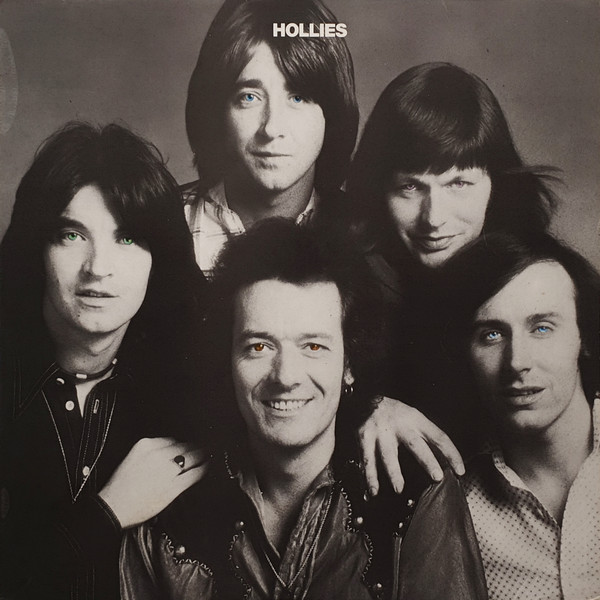
Like Fleetwood Mac yesterday, The Hollies had more succesful eras than the one we’re covering today. Between 1963 and 1970 they racked up a very impressive sixteen Top 10 hits, including the chart-topping ‘I’m Alive’. Also like Fleetwood Mac, by the time their biggest seventies hit came along, two founding members – Graham Nash and Eric Haydock – had left for pastures new.
‘The Air That I Breathe’ is a big, beast of a song. The sort of song that you know is going to be huge from its opening, extended guitar chord. It crams a lot into its four and half minute runtime, including that soaring chorus, and a couple of chiming guitar solos. But for me the best bit is the first bridge, as Alan Clarke floats in the Makin’ love with you, Has left me peaceful, Warm and tired… line without taking a breath. Plus, any pop song which has the confidence to make you wait almost two minutes for the first chorus gets a nod of approval from me.
‘The Air That I Breathe’ has a bit of history to it, before and after this version. It was originally written and recorded by Albert Hammond in 1972, then covered by Phil Everly before becoming a worldwide smash thanks to The Hollies. Twenty years later, and Radiohead fairly obviously cribbed the verse melody for their breakthrough hit ‘Creep’. Hammond and co-writer Mike Hazlewood sued, but accepted only a small amount of co-writing royalties as Radiohead were ‘honest’ about their recycling. Radiohead themselves took Lana Del Rey to court when she released ‘Get Free’ in 2017, again borrowing what is clearly a very potent melody.
A famous sixties act scoring a hit in the seventies is a big thing, as it sometimes feels like there was a clear line in the sand drawn after the Beatles split. The Stones managed it, obviously, and The Who, but most others struggled. ‘The Air That I Breathe’ was The Hollies’ swansong, their last visit to the Top 10. Or should I say it was their ‘first’ swansong, as of course ‘He Ain’t Heavy, He’s My Brother’ found a new lease of life thanks to Miller Lite, and belatedly made #1 in 1988. As much as I do admire ‘He Ain’t Heavy…’, I do rather wish it had been ‘The Air That I Breathe’ that was given a second run at the charts. I’m not sure it’s my favourite Hollies’ song, as some of their sixties beat hits hit just the right spot for me, but its certainly their most epic.
It’s been a while since I did a ‘cover versions’ week, so I thought I’d bring it back to allow us a break from the regular countdown, as we make steady progress through the mid-to-late ’90s. Later on this week I’ll be featuring a cover of one of that period’s most famous hits, but for now we’re focusing on various versions of the same song: Soft Cell’s massive 1981 smash ‘Tainted Love’.
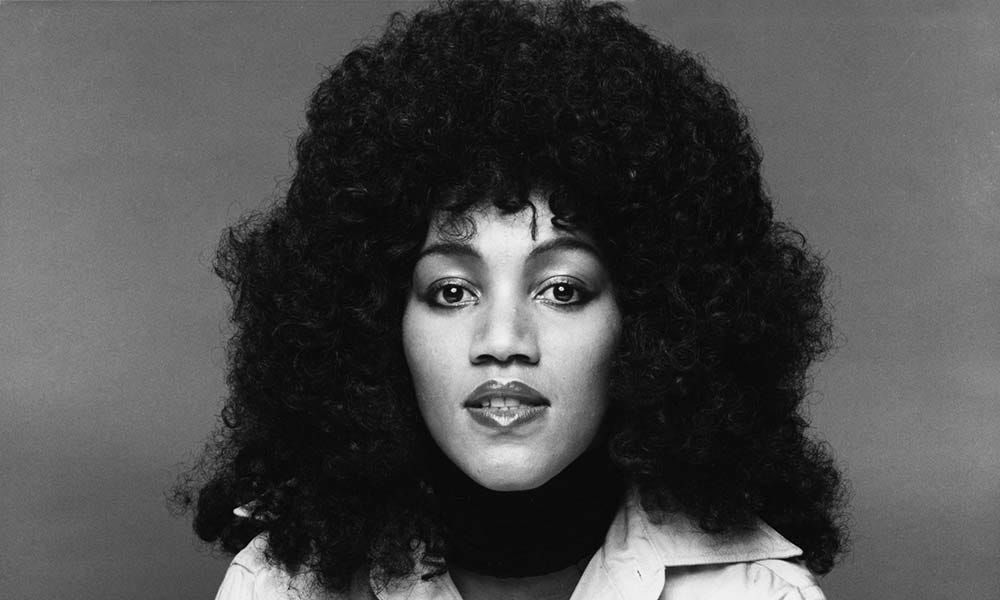
Okay, this means that Gloria Jones’s versions aren’t covers of ‘Tainted Love’… They’re the originals. But it didn’t make #1 either time she recorded it. In fact neither managed to chart at all.
Which is pretty shocking, as the funky, stomping, Motown-influenced track is an instant classic, that should be mentioned in the same breath as The Supremes, the Ronettes, even Aretha. But the charts can be a fickle beast. A decade later, Jones’ original started getting played on the Northern Soul circuit. This encouraged Jones, who had since moved into musical theatre and then into being T. Rex’s backing singer, to have a go at re-recording it in 1976…
The updated version is a bit slicker, a bit less frenetic, and benefits from the advances in recording technology that had taken place. I wouldn’t say it’s an improvement, though I do like the smokiness that Jones’ voice has gained in the twelve intervening years. Jones’ boyfriend Marc Bolan produced the track, but even that couldn’t make it a hit. The following year she was the driver of the car that crashed and killed Bolan, also badly injuring herself. It gave her cause to flee the country (from an impending court case, and from T. Rex fanatics who had looted their house…)
Meanwhile, synth-pop duo Soft Cell heard the song in Northern Soul clubs, and had started incorporating it into their live sets. They were encouraged to record it, released it as their 2nd single, and the rest is chart-topping history, nicely summed up – if I do say so myself – in this post right here. But it seems that ‘Tainted Love’ is a song that demands to be recorded more than once, as Marc Almond also had another go in 1991. This version made #5, and is sometimes mistakenly played as the ‘original’ Soft Cell version (it’s the one with Marc Almond floating among the stars in the video…) God this is a bit complicated…
And then ten years after that, ‘Tainted Love’ returned to the Top 5 with its joint-second most succesful version, from a fairly unlikely source…
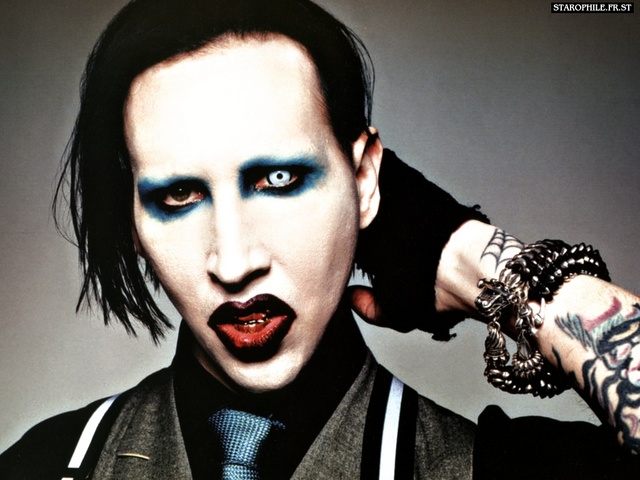
Recorded for the soundtrack to the parody film ‘Not Another Teen Movie’, Marilyn Manson scored his/their only Top 10 hit with this industrial-glam cover. In the video, Manson’s band of freaky goths crash a frat party, and mayhem ensues. For me, this version really works, and goes to show the strength of the song that it can still exist in a sound so removed from its original incarnation. I’m a fan of Manson (the band, and the music; not so much the creepy person behind it all) and am glad that this sent them briefly into the mainstream. You could argue that this was sell-out moment for an act that a few years earlier had been terrifying middle-America, even being blamed for school shootings, but this campy cover just goes to show how ridiculous those fears were.
And that wasn’t it as far as ‘Tainted Love’ and the top-end of the charts were concerned. In 2006, Rihanna made #2 with her Soft Cell sampling, electro-pop banger ‘SOS’. Not a cover version as such, but I’m still embedding the video below because it’s a TUNE.
Join us tomorrow for another ‘Cover Versions of #1s’ special, when you’ll get two songs for the price of one!
We’re also off to the circus… This record starts with the classic Big Top theme, AKA ‘Entrance of the Gladiators’, though I suspect this might just have been the album version. When we finally get to the song proper, it’s a melancholy, rockabilly little number. It thankfully has a lot more life to it than Sayer’s later chart-topper, the snoozy ‘When I Need You’.
There’s a skiffley feel to it – banjos feature heavily – and I like the rasp in his voice. Sayer would perform the song in a pierrot costume, as in the picture above, telling a song of a trapped man: I’ve been used, I’ve been so abused…But I won’t let the show go on! Interestingly, the song’s title is reversed in the lyrics… It’s all about the singer wanting to stop the show. When Three Dog Night recorded their cover (a Top 5 hit in the US) they changed the lyrics to match the title, to Sayer’s chagrin.
I do like this one, even when he starts ooby-doobying. Leo Sayer’s seems to have been a career that covered many bases: rock, disco, pop, as well as soppy ballads. This was his very first hit, the first of ten Top 10s between 1974 and 1982 (not to mention a left-field, chart-topping comeback that will eventually be featuring in my regular countdown…)
There’s a chart-phenomenon that I’ve referred to several times before, that of the January #1. (Basically, it involves stranger than average hits sneaking a week at #1 in the post-Christmas slump, when sales are low and nobody is releasing anything new.) ‘The Show Must Go On’ was a January #2, which by this logic should be even odder than the records one place above them, and it is a strange, but catchy, little record.
ELO are one of those bands whose back catalogue is so stuffed with hits that their tally of number one hits is genuinely shocking. Just one! ‘Xanadu’, which featured in my countdown a few months back, featuring the sadly departed Olivia Newton-John. I’ve been meaning to do this post for a while, but have barely been managing to keep up with my regular posts, let alone any diversions like this. Still, better late than never… Here, then, are eight of ELO’s ‘other’ hits – chosen for a mix of chart position and my feelings towards them:
‘Roll Over Beethoven’ –#6 in 1973
Putting the ‘Orchestra’ in Electric Light Orchestra, the band’s second Top 10 hit mixed Chuck Berry’s rock ‘n’ roll original with elements of Beethoven’s Fifth Symphony. Roy Wood, previously of The Move, was the driving force behind ELO’s early hits but quit the band before this single had even been released (he quickly went on to form Wizzard). Shout out as well to ‘10538 Overture’, another, more psychedelic, slice of orchestral rock that gave the band their very first hit.
‘Livin’ Thing’ – #4 in 1976
With Wood gone, the weight of the band came to rest on Jeff Lynne’s shoulders. ‘Livin’ Thing’ was the first big hit of the band’s second iteration, and it’s a classic. Why does it have an Arabian, Spanishy, vaguely spaghetti-western sounding intro that bears little relation to the rest of the song….? Jeff Lynne’s approach to pop music appears to be completely based around a ‘why not?’ sort of philosophy, and more often than not it works.
‘Mr. Blue Sky’ – #6 in 1978
Their most famous song. Their best song? That would depend on my mood… And on the weather. On a sunny day this is unbeatable. On a dark and dingy one, it might get a little tiring. It perhaps say s something about me that my favourite part of the song is where Mr Night comes creeping over… It’s very Beatles-y, particularly ‘A Day in the Life’, and that can never be a bad thing.
‘The Diary of Horace Wimp’ – #8 in 1979
A perfectly weird song. Emphasis on the ‘perfect’. For me this song sums up why ELO are such a great pop group. The classical, the experimental, the downright weird bits that this song is chock-full of never take away from the catchiness of the song. (Too many prog acts seem to think that just because they’re very clever and very talented musically they don’t have to bother writing songs people actually want to listen to…)
Advertisements
‘Don’t Bring Me Down’ – #3 in 1979
ELO go disco, as pretty much every act in the world was doing in 1979. The pounding drums at the start make me very happy, as do the Bee Gee falsettos in the chorus. Don’t bring me down… Is it Bruce? Proust? No, it’s apparently ‘Groos’, which is a phonetic spelling of the German word from ‘greeting’. Personally I think Bruce would have worked much better… Still, ‘Groos’ was enough of a hook for ELO to score their second biggest UK chart hit.
‘Confusion’ – #8 in 1979
The follow-up to ‘Don’t Bring Me Down’ dialled things back a few steps. It’s much more typical ELO, with all manner of fun flourishes from the drums and the synths, and the robotic vocal effects. But it might just be their sweetest song: a big comfort blanket of a song, with just enough of a hint of melancholy.
‘All Over the World’ – #11 in 1980
From the ‘Xanadu’ soundtrack, one of ELO’s purest pop moments. The songs appear much better remembered than the movie, and you can understand why when there are low-key gems like this…
‘Hold on Tight’ – #4 in 1981
The band’s last UK Top 10, ‘Hold on Tight’ is a late-era glam rock stomper. I am a sucker for songs that slip into French for no discernible reason (see also Blondie’s ‘Sunday Girl’). Thanks to this record, I now know the French for hold on tight to your dreams, and can only hope for a reason to one day drop it into a spot of parlez-ing.
Hope you enjoyed this interlude. In my next post, we’ll be getting on into 1986…
The sad news came through yesterday that Olivia Newton-John has died, aged just seventy-three. She featured three times on this blog with her three chart-topping singles (three singles that accumulated an impressive 18 weeks at #1!)
As well as these chart-toppers, she scored thirteen Top 20 hits between 1971 and 1982. If you count school disco classic ‘The Grease Megamix’ and a remix of ‘You’re the One That I Want’ (and I definitely do) you can extend that to 15 Top 20 hits over twenty-five years…
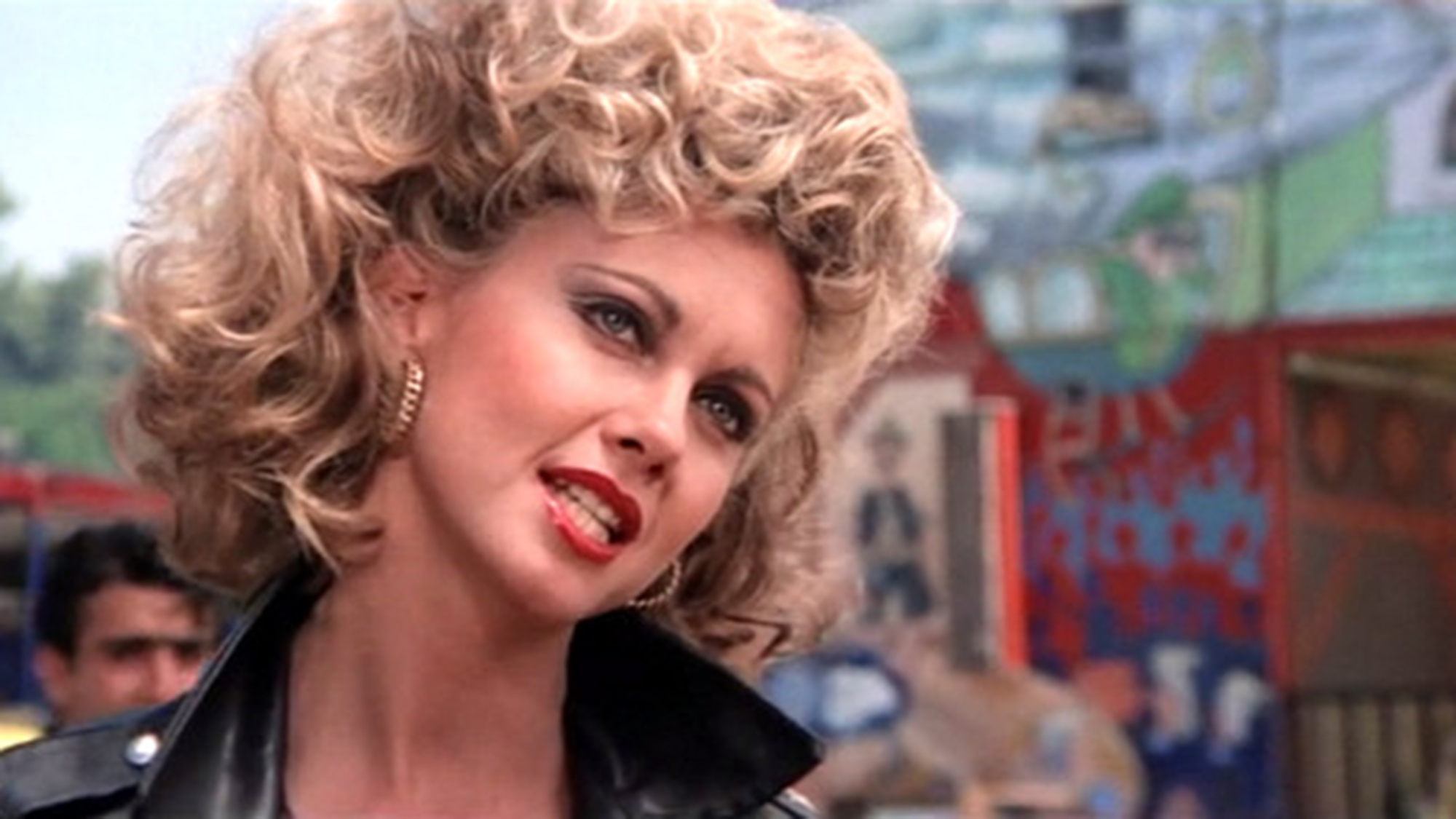
For me, personally, as someone who watched my VHS copy of ‘Grease’ at least once a month between 1997 and 1999, one single moment from her career stands out. Red heels. Black lycra. Black leather. Cigarette in hand. ‘SANdy?’… ‘Tell Me About It… Stud.’
From a moral standpoint, Sandy’s transformation at the ending of Grease is dubious at best. But in terms of iconic movie moments few can beat it. (My twelve-year-old heart certainly ‘beat’ it, even if I’d spent the previous two hours of the film wishing I were Rizzo.) ‘Grease’ gave Newton-John her biggest chart success – you can read my posts on ‘You’re the One That I Want’ and ‘Summer Nights’ here – along with her ELO collaboration ‘Xanadu’. ‘Grease’ also gave her a #2 smash with the classic weepy ‘Hopelessy Devoted to You’.
She had plenty of success away from Rydell High, though. Her first Top 10 came with a Bob Dylan cover: ‘If Not for You’ making #7 in 1971. She ploughed a country furrow for a few years – some might say her cover of ‘Country Roads’ is the better-known version – before representing the UK at Eurovision in 1974 with ‘Long Live Love’. She later admitted that she hated both the song, and the ghastly dress she was forced to wear. ‘Rolling Stone’ at the time descibed her as a seventies version of Doris Day.
A few years in the British chart wilderness – while remaining extremely popular in the US and in her adopted homeland Australia – ended with ‘Sam’, a #6 in 1977. Then came ‘Grease’ and all that that entailed. Her biggest non-soundtrack hit in the UK was ‘A Little More Love’ – very disco, very ABBA -which made #4 in early 1979.
Then came ‘Xanadu’ – by all accounts a thoroughly ludicrous film redeemed by its Jeff Lynne helmed soundtrack. The title track gave ONJ her third and final #1, as well as a worldwide hit in ‘Magic’.
The third and final video I’m going to embed is not the all-conquering ‘Physical’ (a ten-week #1 in the US which only got as high as #7 in the UK). We’ve all heard that plenty, I’d imagine. No, it’s the 3rd single from the ‘Xanadu’ soundtrack, and a duet with her buddy Cliff Richard – who had helped promote her to UK audiences in the early seventies as a regular guest on his TV show. Here’s ‘Suddenly’, which made #15 in 1980.
She contined to record and perform well into the 21st Century, despite a cancer diagnosis in 1992. Away from music she was a passionate animal-rights campaigner, as well as funding a cancer research centre in Melbourne.
Dame Olivia Newton-John, 26th September 1948 – 8th August 2022






 The UK Number Ones Blog