Top 10s – Status Quo

Status Quo. The Quo. Just ‘Quo’. Hated, adored, never ignored… Or is that Manchester Utd? (The single that they released with Status Quo will not be coming anywhere near this Top 10, rest assured…)

Usually with my Top 10s I include any single released, and charted, by an act in the UK. Except, Quo have been around since 1962, charting since 1968. They’ve released a hundred singles over the past fifty-five years! For them, then, I’m only counting singles that made the Top 20.
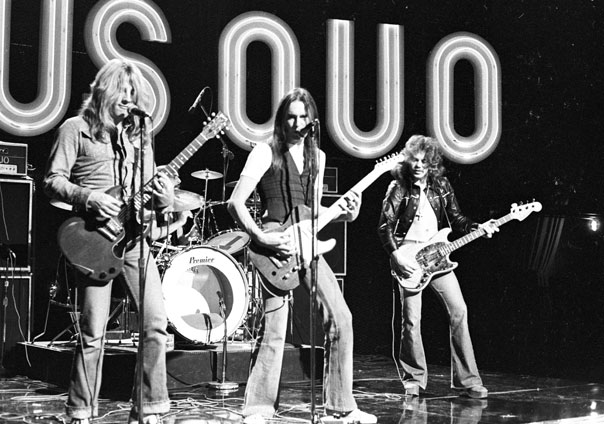
Where to begin? Maybe some facts and figures. Status Quo have 400 weeks on the singles chart (but only one week at #1!), 500 on the albums, and have played Wembley Arena and on Top of the Pops more than any other act. Speaking of Top of the Pops…

10. ‘Jam Side Down’, reached #17 in 2002

Disclaimer: I’m not really including this as Status Quo’s 10th best single. I include it as I have very clear memories of watching TOTP in a friend’s bedroom – Wiki tells me it was the 16th August 2002 – and sixteen year old me being amazed that Status Quo were still on it. In the Top 20. Look at them! They were old men! The tune is pretty catchy, with that trademark Quo chug, and the lyrics silly enough: My bread keeps landin’ jam side down, Say you’ll be there to spread love around… Also on TOTP that evening were Darius Danesh, the legendary Bowling for Soup and an up and coming act called Coldplay. Wonder what happened to them?

9. ‘Down the Dustpipe’, reached #12 in 1970

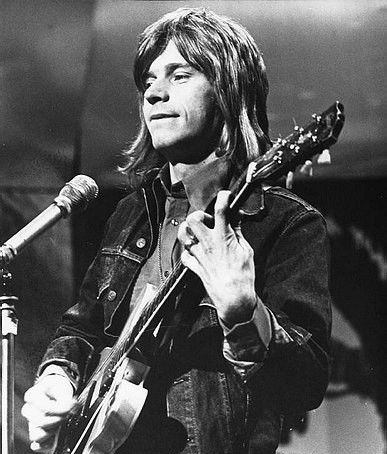
Here they are looking a bit fresher-faced. This is perhaps the purest slice of Quo in this countdown. A two-minute blast of raw boogie-woogie, and the first hit to feature their trademark sound… which was still coming through loud and clear on Top of the Pops thirty-two years later!

8. ‘The Anniversary Waltz Part 1’, reached #2 in 1990

Status Quo do Jive Bunny. There are days when I think this might be the best piece of music ever recorded… And then there are days when I see sense. Quo lost their way a bit in the late-eighties, but still kept having those hits. And there is something about them doing a medley of old rock ‘n’ roll covers – ‘Lucille’, ‘No Particular Place to Go’, ‘Great Balls of Fire’ and more – that ticks a box for me. I love all their covers, ‘Mess of Blues’, ‘Somethin’ Bout You Baby I Like’ et al, but couldn’t in good conscience feature any more of them. Just think… This hot mess of a record came dangerously close to being their 2nd ever #1 single!

7. ‘Marguerita Time’, reached #3 in 1984

A complete cheese-fest that only Francis Rossi liked. Apparently it contributed to bassist Alan Lancaster quitting the band the following year! Yes, it is a million miles from the hard-rocking Quo of the seventies. Yes, there is a ropey synth-riff. Yes, it features actual yodelling. But there is not a week goes by when the lyric: Let’s have a drink, It’s Marguerita time… doesn’t pop into my head, usually around 5pm on a Friday.

6. ‘Again and Again’, reached #13 in 1978

Not one of their biggest or better-known hits, but I love the bluesy riff in this one. Plus, the chorus is peak Quo. Chugging guitars… Again Again Again Again Again Again Again Again, Why don’t do you do it, Why don’t you do it again…? Who said they were a limited and repetitive band…?

5. ‘Ice in the Sun’, reached #8 in 1968

Released as The Status Quo, when they were still a very sixties psychedelic rock act, this is the first Quo song I became aware of as a very little lad. It was on a ’60s Best Of’ cassette that had heavy rotation in my parents’ mustard yellow Ford Escort. It’s a very busy song, with lots of effects and, looking back, some fairly trippy lyrics. ‘Pictures of Matchstick Men’ is probably the better-known of their two sixties hits, but I’ve always liked this one more. Two interesting facts: ‘Ice in the Sun’ was co-written by rock ‘n’ roller Marty Wilde, and it was the Quo’s final hit in the USA!

To the Top 4, and it’s the big seventies hits… but in what order?

4. ‘Down Down’, reached #1 in 1975

Their only #1 single, but one of their hardest-rocking records. Is it just me, or is there something almost punk-like in the tight, fizzy, riff? The video above has a funky little outro that the single version don’t. Read my original post on it here.

3. ‘Paper Plane’, reached #8 in 1972

Another tight, thrashy rocker. ‘Paper Plane’ gave the band their first Top 10 since the psychedelic sixties, and it set the template for Quo from now until the end of time. Though they wouldn’t always be as frantic as this… I have no idea what the song is about, but I do like how it evolves from riding a butterfly to riding a paper plane to riding a Deutsche car… Possibly the least hippy-sounding hippy anthem ever.

2. ‘Rockin’ All Over the World’, reached #3 in 1977

There are some who might argue that this marks the beginning of the end of Status Quo – less of the hard-rock and more of the boogie-woogie cover versions that they flogged to death in the ’80s. And they may have a point. (Though to be honest, I’ve loved this song since I was wee, and didn’t discover that it was a John Fogerty cover for several decades.) But when a tune is as jubilant as this, who cares? When a tune is able to open Live Aid – see above – and get everyone jumping from the off, then it must be alright.

1. ‘Caroline’, reached #5 in 1973

You might struggle to think of a Status Quo riff (or you might struggle to distinguish one from the other…) Except this one. I love the way the entire first minute of the record is devoted to the riff building, adding guitars, drums and bass. No nonsense, heads down, rock the flip out. ‘Caroline’ is another favourite from my childhood, and is possibly the main reason that, to this day, I can’t shrug off the grip of three-chord, three minute rock ‘n’ roll. There are times in life when nothing but Status Quo will do, and this is their finest moment.

363. ‘Down Down’, by Status Quo

Into 1975, then… And with a big ‘hell yes!’, because look. ‘Tis the Quo!

Down Down, by Status Quo (their 1st and only #1)

1 week, from 12th – 19th January 1975

It’s not a very Status Quo-like intro though: it’s light and jangly, almost Baroque, if that isn’t going too far… But then in it comes, the trademark Status Quo chug. They get a bit of stick – most of it completely undeserved – for sticking by this chugging three-chord formula throughout most of their career. But for their one and only UK chart-topper, it had to be there. Get down, Deeper and down, Down down, Deeper and down… That’s the chorus – I’m listening to the lyrics properly for the very first time – I want all the world to see, To see your laughin’, And your laughin’ at me… And that’s the first verse. It’s a tale of a couple trapped in a relationship-gone-very-wrong, and the singer seems hell-bent on mutual destruction. I know what you’re doing, What you’re doing to me, I’ll keep on and say to you, Again, again, again, again…

I suppose you have to get the idea of ‘getting down’ equalling dancing out your heads. That’s why the band didn’t call the song ‘Get Down’ (that and the fact that Gilbert O’Sullivan had had a #1 by that title a couple of years before.) ‘Down Down’, refers to the fact that the couple are dragging one another down into the mire. They really should split up, or at least take a break, but nope. Down they go. It’s a nasty idea for a rock song, backed up by a nasty, tight, gloriously repetitive riff.

Anyway, that was some very in-depth analysis of a Status Quo song. Let’s stop all that, and just enjoy this moment for what it is: one of Britain’s greatest and most successful rock ‘n’ roll band’s solitary week atop the charts. With one of their best singles. One of their heaviest, too. You can split Status Quo’s career into roughly three parts: the psychedelic years of the late sixties, the heavy blues rock of the early seventies, and the glossier, poppier boogie-woogie rock of the late seventies, eighties and beyond. ‘Down Down’ comes at the end of Part II, but it is still one of the heaviest songs to have topped the charts so far.

I love the frenzied fade-out, with the sledgehammer riff boring its way into your eardrums as it goes. (The album version drags it out much longer, with some bass flourishes, for good measure.) And I love Status Quo. I love that they just keep on keeping on, never caring about being cool, just rocking and rolling, rolling and rocking, despite even founder member Rick Parfitt’s death in 2016. They’ve released over one hundred singles, twenty-two of them reaching the Top 10. And they have a new tour just waiting to go, once the pandemic is over. They are legends.

And I wish this wasn’t the only chance I get to write about them. Hell, I’ll do a Status Quo Top 10, soon, just because I can. (They will be involved, uncredited, in one other chart-topper, in the mid-90s, but it is genuinely awful and I can’t bring myself to mention it until I absolutely have to…) I’ve been listening to them since I was a kid, and they are still a go to on the home commute after a hard day. In fact, I might be getting carried away but… I don’t think there’s a more enjoyably unpretentious listening experience to be had than their ‘Anniversary Waltz’ – a ten minute medley of old rock ‘n’ roll covers. Here’s a link… Rock on.

Before we get into 1975, why not listen to (almost) every number one since 1952…

294. ‘I Hear You Knocking’, by Dave Edmunds

And so we arrive at a song I know very well – a song I’ve loved for a long time. It’s one of my earliest memories of popular music, this song – so early that I have no idea how it got to be there, buried in my consciousness.

0ba342e82e864d007e7e89610152248d

I Hear You Knocking, by Dave Edmunds (his 1st and only #1)

6 weeks, from 22nd November 1970 – 3rd January 1971

I love the choppy guitar, and the fried vocals. The trippy effects in the background, too, that sound like weird sea-creatures calling to one another across the deep. And I love the fact that at heart it’s just a straight-up, chugging, no frills rock ‘n’ roll number. You went away and left me, Long time ago, And now you’re knockin’, On my door…

It’s a sassy song – the singer telling his ex to get the hell out with their sweet words. I hear you knockin’, But you can’t come in… Go back where you been! She left him, though he begged her not to, and Edmunds still isn’t over it. Though he later reveals that this all happened in ’52, when he told her that I would never go with you… Which is both contradictory to what he sang two verses earlier, and a hell of a long time to hold a grudge…

Who cares. Careless lyrics aside, this is a rocking record. Our second whiff of glam at the top of the charts – after ‘Spirit in the Sky’ – and a bit of a throwback. (Over the chorus, Edmunds starts shouting out the names of some fifties rock ‘n’ roll stars – Chuck Berry! Fats Domino! – to leave us in no doubt about to whom this song owes a debt.) Something that sounds like a steam train gets added to the insistent rhythm, and then we get the piece de resistance of the whole record: the single, clanging note from a honky-tonk piano. Dung! Next verse!

71wOD2SwYUL._SL1024_

Despite ‘I Hear You Knocking’ sounding like it just crawled out of a Louisiana swamp, Dave Edmunds is actually Welsh. He had had one UK Top 10 with his blues band Love Sculpture, and this was his first, and by far his biggest, solo hit. It’s a staple of 70s Compilations, which is probably where first I heard it as a kid. ‘I Hear You Knocking’ was first recorded in the mid-fifties, by Smiley Lewis (Edmunds also shouts his name out during the solo) and then Fats Domino. Edmunds himself just recently retired from touring in his mid-seventies.

I do love this song, but am struggling to write much more about it. Really though – it’s not the sort of song that needs much writing about. If this record were a person, it’d be a doer, not a thinker. It gets you tapping your feet, and shaking your shoulders, rather than working your brain. I’d simply suggest that you click on the link below and get doing the same…

Actually, one thing that’s worth noting here is how long this, and so many other records, have spent at the top this year. ‘I Hear You Knocking’ got six, as did Elvis and Freda Payne. Mungo Jerry got seven, Edison Lighthouse five. If you look a little further, to the tail end of 1969, Rolf Harris also got six, while The Archies spent eight weeks up there! Not sure what this signifies, other than the fact that we are in the company of some monster hits at the moment – and that they’re going to keep on coming (and staying).

Listen to every number one so far on my Spotify playlist.

Never Had a #1 Hit… The Who

I’m taking a quick break from the usual rundown to give a mention to the bands and artists that we will never meet at the top of the UK singles chart. If you were following along, wondering when (*insert name of your favourite act*) were going to finally appear in this countdown, then I got some bad news for you…

(I’ll do this in chronological order, with acts whom we would have met by now – i.e. in the fifties, sixties and early seventies.)

First up, probably just the biggest and most famous act never to have had a number one single… The Who!

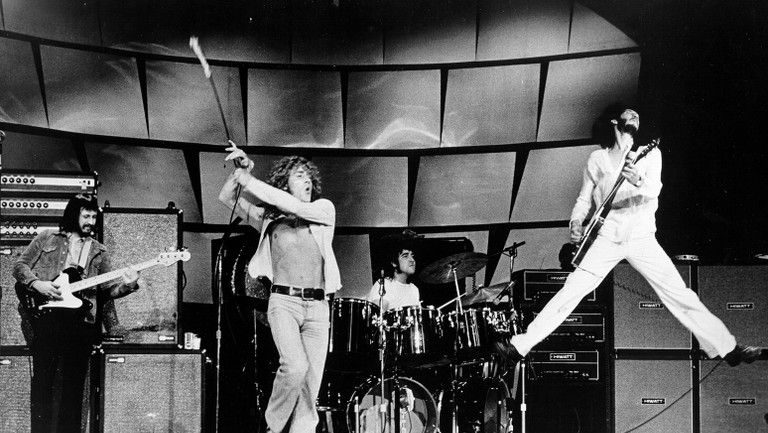
the-who-1973-billboard-bw-1548-768x433

Yup, they’ve come close on plenty of occasions. 14 Top 10 hits between 1965 and 1981. Here are the five that came closest:

‘My Generation’, #2 in 1965

Part of the sixties canon, but a world away from both the optimistic pop of the Merseybeat days and the Summer of Love; The Who were angry young men. Banned by the Beeb because they thought Roger Daltrey’s delivery might offend stutterers, not, as I always thought, because it sounds like he’s about to drop an F-bomb. I’ve attached this live version for some brilliantly pointless guitar and drum smashing at the end. ‘My Generation’ was scandalously kept off the top spot by The Seekers snooze-inducing ‘The Carnival Is Over‘!

‘I’m a Boy’, #2 in 1966

My name is Bill and I’m a head-case… Just as anarchic as ‘My Generation’, though gentler sounding. Bill has four sisters and his ma is hell-bent on having five. He wants to ride his bike, climb trees, come home covered in blood – you know, regular 1960s boy stuff… But mum’s not having any of it. I’m a boy, I’m a boy, But if I say I am I get it! Power pop brilliance.

‘Happy Jack’, #3 in 1966

Happy Jack is a man who lives in the sand on the Isle of Man. Apparently, a real person from Pete Townshend’s childhood, kids bully him, laugh at him, chuck things at him… But nothing stops Jack from being happy. Not my favourite Who song in any way, but a worthy inclusion just for Keith Moon’s drumming.

‘Pictures of Lily’, #4 in 1967

I think people’s impression of The Who leans more nowadays to the hard rocking, stadium band that they became in the 1970s. But as this run-through is showing, their biggest hits came earlier, and were much quirkier. ‘Pictures of Lily’ tells the tale of a young lad who can’t sleep, until one day his dad gives him an old picture of a lady named Lily. Suddenly the boy can sleep the whole night through… Pictures of Lily, Solved my childhood problem… ‘Tis “merely a ditty about masturbation, and its importance to a young man” (Pete Townshend’s words, not mine). When the boy asks his dad if he can meet Lily, he is crushed to find out that she died in 1929…

mw56835

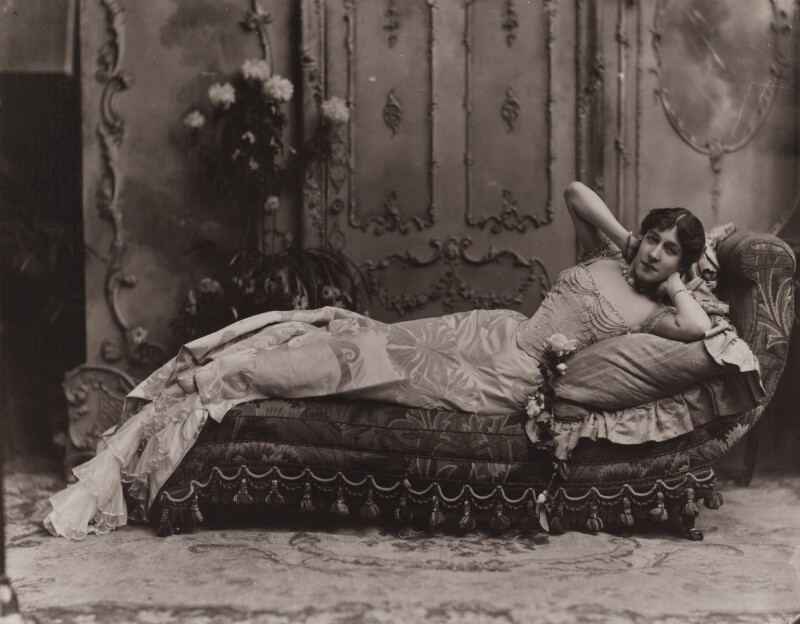
(Actress Lily Langtry, who died in 1929… This could well be the actual ‘Picture of Lily’.)

‘Pinball Wizard’, #4 in 1969

Last but not least… a song about a deaf, dumb and blind kid who sure plays a mean pinball. From the rock-opera ‘Tommy’ this, along with ‘My Generation’ and ‘Won’t Get Fooled Again’, has to be The Who’s signature song, and still a feature of their live shows to this day.

My personal favourite Who single, ‘Substitute’, only made #5, while their big seventies hits like ‘Won’t Get Fooled Again’ and ‘Who Are You’, made #9 and #18 respectively. But, no number one! And that’s why I wrote this post.

Up tomorrow, another hard-rocking, hard-living band, with a member who died too young, this time from the other side of the pond.

Top 10s – The 1950s

Time for a Top 10… Usually I rank the ten best singles from a particular artist (last time it was The Kinks) but I thought I’d fiddle with my criteria a little, and rank my favourite #1 singles from an entire decade.

Starting with the singles chart’s very first decade. Back where it all began, when rock ‘n’ roll was but a twinkle in Elvis’s eye. The list is in chronological order – not ranked in order of preference – and to choose the songs I went back and read through my recaps to see which ones I dug at the time, live, as it were…

So, without further ado, the ten best #1 singles of the 1950s, according to me:

1. ‘Look at That Girl’, by Guy Mitchell – #1 for 6 weeks in Sept/Oct 1953

Only the 12th-ever number one single, from one of the decade’s biggest chart stars, and a runner-up in my first recap. This was the very first whiff of rock ‘n’ roll at the top of the UK charts (a very faint whiff, but still) and I think it appealed more than it probably should have because I’d waded through so much Eddie Fisher and Mantovani to get to it. Still, a catchy, upbeat tune. As I wrote in my original post:

“It sounds to me as if a battle is taking place here, between traditional easy-listening and the burgeoning rock ‘n’ roll movement. On the one hand you’ve got the usual twee backing singers and floaty trumpets, parping away at the end of each line; on the other you have the hand claps and the guitar solo.”

3dfa9028eb05e4f4072a50a1d556666a--american-artists-classic-rock


2. ‘Such a Night’, by Johnnie Ray – #1 for 1 week in April/May 1954

Johnnie Ray was known for his emoting, which lent him two spectacular nicknames: ‘The Prince of Wails’ and ‘The Nabob of Sob’. But for his 1st of three #1s he was overcome with a slightly more enjoyable emotion… lust! By far the sauciest number one of the pre-rock era, I awarded it ‘Best Chart-Topper’ in my 1st recap. I’d go as far as saying it was the best #1 single ever… Until 1957 came along. My original post is here:

“…what makes it, and elevates it to a classic, are Ray’s vocals. Like Doris Day before him there’s an effortlessness to his voice that draws you in and yanks you along. But his voice is nothing like the clean-cut, honeyed tones of Miss Day. ‘Such a Night’ isn’t being sung here – it’s being ridden, it’s being humped… it’s being performed!”

cb7c74a231dcd2dd49842e43981cd00f--josephine-musicians


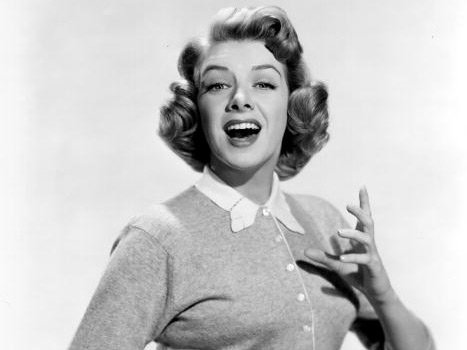
3. ‘Mambo Italiano’, by Rosemary Clooney & The Mellomen – #1 for 3 weeks in Jan/Feb 1955

I remember noting, back in the early days of the charts, that it felt like the girls were having all the fun. Guys were being boringly earnest – Al Martino, Eddie Fisher, David Whitfield all proclaiming overwrought, undying love over heavy orchestration. Meanwhile Rosemary Clooney, in her 2nd #1, was singing in cod-Italian about fish bacalao (which is Portuguese, but whatever.) It’s a song that resonates to this day, with a 00s remix and a 2011 pastiche by Lady Gaga. I named it a runner-up in my first recap:

“…while this is a mambo record, sung by an easy-listening singer-slash-actress, this is rock ‘n’ roll. It may be fun and funky, but it just about manages to retain an air of cool around all the silliness. While we were waiting for Bill Haley to come along and kick-off things off, the ideals and attitudes, if not the actual sounds, of rock ‘n’ roll were being sneaked in right under our noses.”

clooney-94b833378517905808a9405ad88dff3bcfe05e4b-s900-c85


4. ‘Cherry Pink and Apple Blossom White’, by Perez ‘Prez’ Prado & His Orchestra – #1 for 2 weeks in April/May 1955

Another saucy slice of Latin pop, which I named the very best song in my 2nd recap! Again, my opinion of it was probably exaggerated because of all the pre-rock easy-listening mulch surrounding it. It is catchy, though. Just you try not swaying along. Can’t be done! I tried summing up the record’s appeal in my original post

“…it allows Janet and John from Southend to draw close and to feel one another’s bodies, taught and trembling from two and a half minutes of intense mambo.”

R-582429-1341876426-2330.jpeg


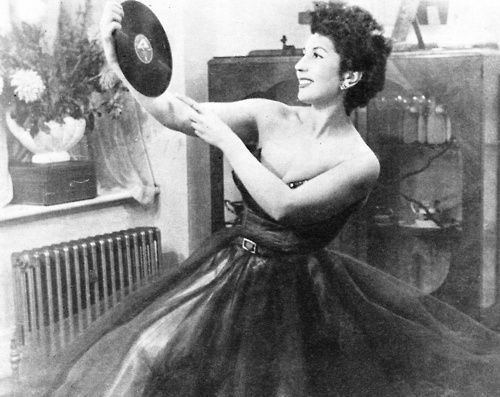
5. ‘Dreamboat’, by Alma Cogan – #1 for 2 weeks in July 1955

The 3rd #1 from 1955, making it officially the best year of the decade… (Hmm…) ‘Dreamboat’ is just a spectacularly fun pop song, sung with a giggle and a wink by perhaps the biggest British female star of the pre-rock age. As I wrote at the time:

“…there isn’t much else to ‘Dreamboat’ -it’s a fun little ditty. Cogan sings it well, with the perfect pronunciation we’ve come to expect but also with a light, playful touch that’s been missing from many of the number ones so far.”

de565d5d80ca47f8aae75ff675d21485--vinyl-records-singers


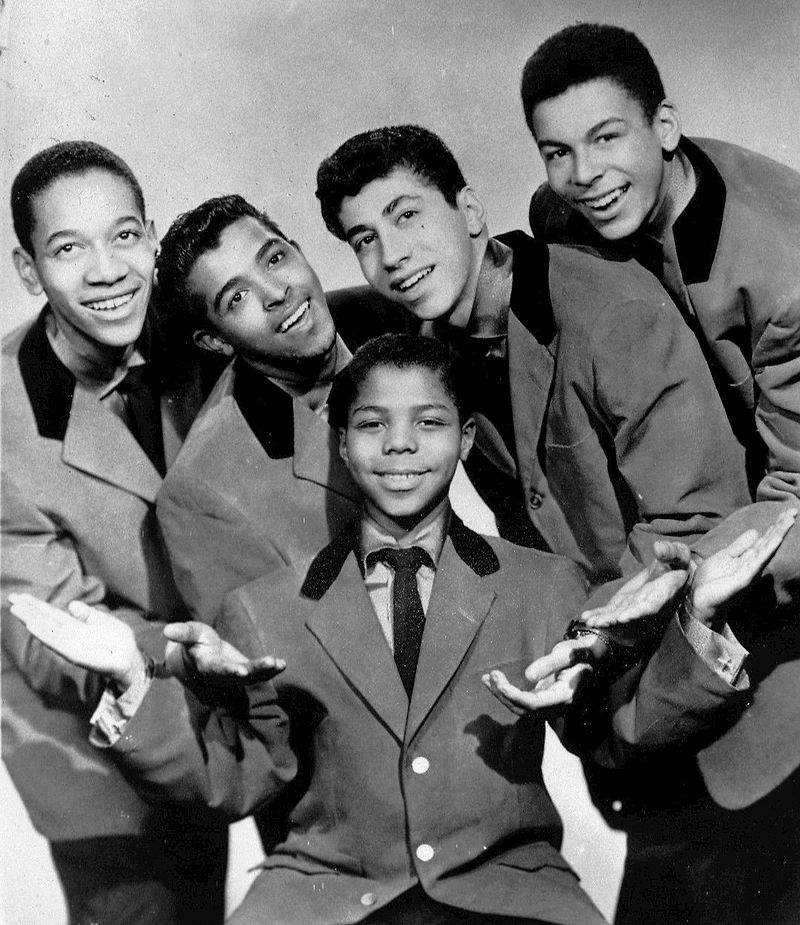
6. ‘Why Do Fools Fall in Love’, by The Teenagers ft. Frankie Lymon – #1 for 3 weeks in July/Aug 1956

Regrets, I have a few… One of them being that I named this classic as a runner-up to Perez Prado in my 2nd recap. What was I thinking? ‘Cherry Pink…’ is great and all, but this is timeless. The first number one by kids, for kids – the Teenagers were all, you guessed it, teenagers – is one of the catchiest, golden pop moments of all time, let alone the decade. As I wrote

“… it’s just a great song. A summer smash. It oozes New York city: steam, water spraying from a sidewalk valve, the sun blasting down, the Jets and the Sharks… (I dunno. I grew up in small town Scotland.)”

Frankie_Lymon_and_the_Teenagers


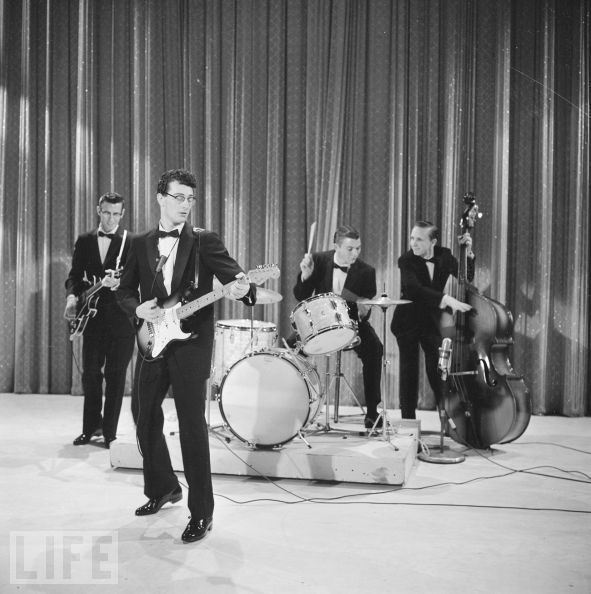
7. ‘That’ll Be the Day’, by The Crickets – #1 for 3 weeks in November 1957

Perhaps the most obvious choice of the ten… What else needs to be said. Press play, gasp at the spectacular intro, and enjoy two and a half minutes of rock ‘n’ roll perfection…

“…Buddy Holly’s voice dances and flirts – toys, almost – with the listener. He coos, he pauses, he growls… The Crickets play tightly, but also very loosely. There’s a great, rough-around-the-edges feel to this record that contrasts with the polished cheese of Paul Anka’s ‘Diana’, whose bumper run at the top this track ended.”

13b76502b2e66b8af543e51889003212


8. ‘Great Balls of Fire’, by Jerry Lee Lewis – #1 for 2 weeks in January 1958

But… I didn’t name ‘That’ll Be the Day’ as one of the very best chart-toppers. Oh no. In my 3rd recap, that honour was reserved for The Killer. On any given day, I could wake up and prefer ‘Great Balls…’ to ‘That’ll Be the Day’, or vice-versa. What’s the point in debating?  These two records were nailed-on to make my 50’s Top 10. Pure rock ‘n’ roll greatness…

“…It’s just an absolute blitz, an assault on the senses, a two-minute blast which takes rock ‘n’ roll up another notch.”

jerryleelewis22


9. ‘Who’s Sorry Now’, by Connie Francis – #1 for 6 weeks in May/June 1958

A spot of schadenfreude in the decade’s sassiest #1 single. Connie got dumped, and is now taking great pleasure that the tables have turned on her ex in his new relationship. You had your way, Now you must pay, I’m glad that you’re sorry now… Who says girls in the 50’s were all sweetness and apple pie? The twang in her voice when she launches into the final verse is something to behold. As I wrote at the time…

“A lot of the female artists we’ve met previously on this countdown have been cute, and flirty, and fun to listen to – Kitty Kallen, Kay Starr, Winifred Atwell… But no girl has brought this level of spunk to the table.”

Connie_Francis_1961


10. ‘Dream Lover’, by Bobby Darin – #1 for 4 weeks in July 1959

Last up –  a record that encapsulates everything great about the 1950s, mixing rock ‘n’ roll with swing, doo-wop and a touch of pre-rock crooning, to create pop perfection. Another runner-up to Jerry Lee in my 3rd recap, but there’s no shame in that. In my original post, I wrote:

“…I don’t want to really write any more about this record. I want to leave it there. Minimalist. This is where easy-listening and pop collide to create a seriously classy song.”

MI0002749454

And there we have it! The ten best #1 singles of the 1950s!

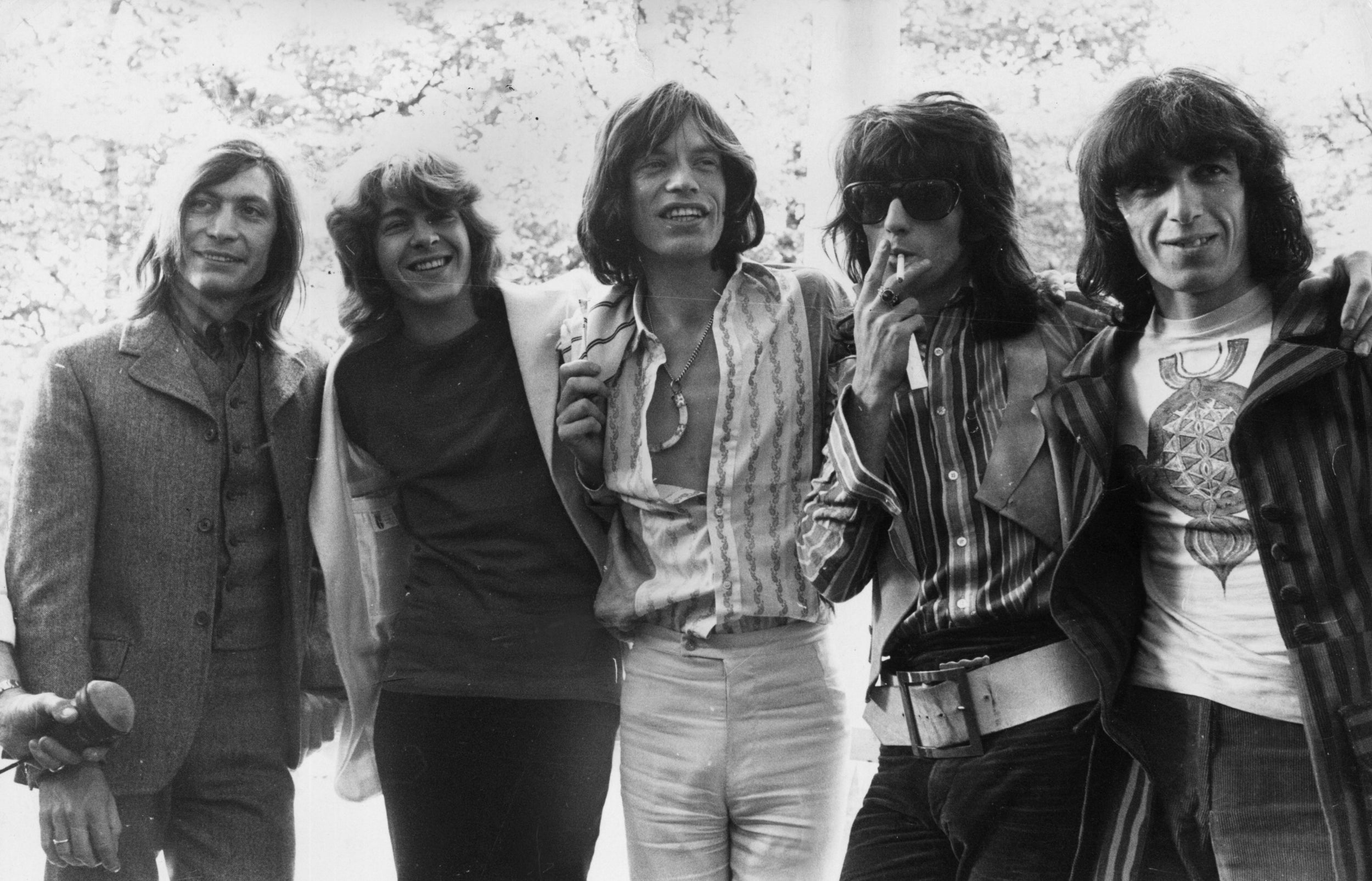
274. ‘Honky Tonk Women’, by The Rolling Stones

A few weeks after bidding The Beatles farewell, we’ve now reached the end of The Rolling Stones’ chart-topping career.

rollingstoneshydeparkextra1969a-5

Honky Tonk Women, by The Rolling Stones (their 8th and final #1)

5 weeks, from 23rd July – 24th August 1969

But, while The Fab Four bowed out with a not-very-Beatles-sounding #1, The Stones wrap things up by doing what they do best – some low-down, dirty rhythm and blues. It starts with a cow-bell, Charlie’s drums, some filthy guitar licks, and Mick’s drawl: I met a gin-soaked bar-room queen in Memphis… (was there ever a more Stonesy opening line than that?) She tried to take me upstairs for a ride…

In my post on their last #1, I wrote that ‘Jumpin’ Jack Flash’ was a new leaf for The Stones, in that they gave up on their attempts at flower-power and psychedelica, and returned to straight-up rock ‘n’ roll. ‘Honky Tonk Women’, then, is a consolidation of that. It sets the template for the next fifty years of the band, through the twin glories of ‘Sticky Fingers’ and ‘Exile on Main St’, through to them becoming the biggest stadium fillers the world has ever seen.

It’s also, basically, Mick Jagger listing women that he’s shagged. The bar-room queen is followed by a divorcee in New York City, and the outrageous She blew my nose and then she blew my mind… line. Goodness. It’s the ho-o-o-onky tonk women, Gimme, gimme, gimme the honky tonk blues… It’s always easy to forget that Mick and Keith were from Dartford, Kent and not Tennessee or Alabama, such is the Americana that fills some of their biggest hits.

There is an elephant in the room, though. This is the first Stones’ single not to feature founding member Brian Jones, whose slow and acrimonious departure from the band had been confirmed earlier in the year. He was found dead in his swimming pool just three weeks before ‘Honky Tonk Women’ hit #1. A blues purist; we can but wonder if this song would have sounded different with him playing on it.

R-387942-1492417780-3326.jpeg

Who knows? As it stands we get a sax solo, and a punch the air Woooo! at the very end. It must have been a fun song to write, to record, and to perform every night for the past half-century. I love it. A pure, unadulterated blast of rock ‘n’ roll. You can hear the seventies hits-to-come buried in it – the likes of ‘Brown Sugar’, ‘Tumbling Dice’, ‘It’s Only Rock ‘n’ Roll’ and the like, right through to ‘Start Me Up’. Unfortunately, none of those records will reach top spot in the UK. The Rolling Stones bow out on eight.

Impressively, their final chart-topper gave them their longest run at number one. Quite unusual, that. Though the particularly eagle-eyed among you will notice that 23rd July to 24th August isn’t quite the five-weeks advertised. This is due to the chart publication dates, and collation methods, changing in the midst of ‘Honky Tonk Women’s’ run.

Farewell to The Rolling Stones, then. Without them and The Beatles around to hit #1 every few weeks it leaves a lot of room for some new guys to come along and dominate. The Stones would slowly fade into obscurity as their chart-topping days receded into the distance… Only joking! They remain a going concern – give or take a few changes in line-up – well into their seventies, while Keith Richards’ continued existence remains one of life’s great mysteries… Their most recent album ‘Blue and Lonesome’, even hit #1 in the UK in 2016.

I’ll maybe do a Stones Top 10 soon, covering all their UK singles, but just for fun here’s my ranking of their eight British chart-toppers – based completely on personal preference – from ‘worst’ to best. *Clears throat*:

‘Little Red Rooster’ > ‘It’s All Over Now’ > ‘The Last Time’ > ‘Paint It, Black’ > ‘Jumpin’ Jack Flash’‘Honky Tonk Women’ > ‘Get Off Of My Cloud’ > ‘(I Can’t Get No) Satisfaction’

Let me know if you agree, or not.

Listen to every number one, including all eight from The Stones, here:

Remembering Frankie Lymon

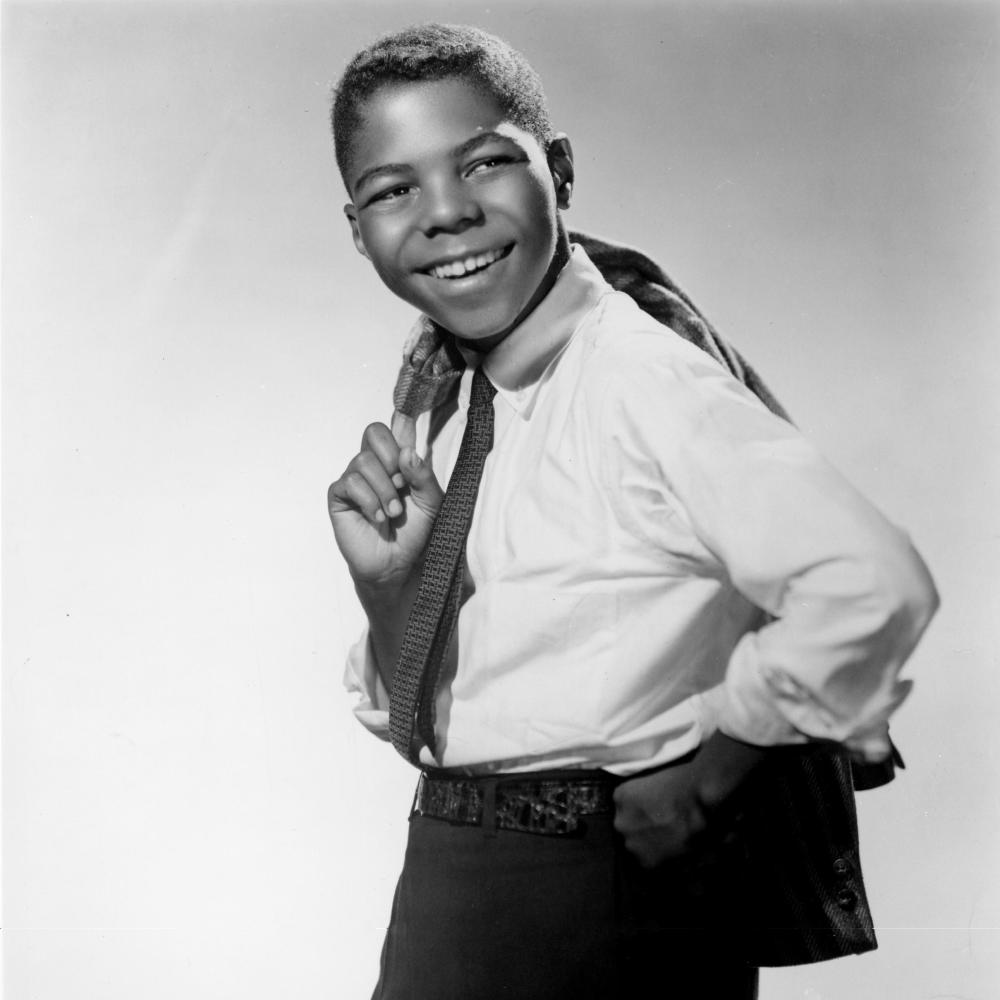
Fifty-two years ago today, one of our youngest chart-topping artists passed away. Franklin Joseph ‘Frankie’ Lymon, the voice of The Teenagers.

Frankie_Lymon_and_the_Teenagers

(The Teenagers, with Frankie Lymon in the centre.)

He barely was – a teenager that is – when their debut hit ‘Why Do Fools Fall in Love’ made #1. Lymon was thirteen when it was recorded, and he sounds his age as you listen to it now, sixty-four years later. His unbroken voice flits like a sparrow around a doo-wop song about heartache, like a choir boy gone rogue. Listen to it below, and read my original post on it here.

(Performing the song on national TV, and bantering with Frankie Laine – a man not short of #1 singles by 1956.)\

Note how early ‘Why Do Fools…’ hit #1. Mid-1956. Only the 2nd ever rock ‘n’ roll chart-topper, after ‘Rock Around the Clock’ (not counting Kay Starr’s in-name-only ‘Rock and Roll Waltz’.) The Teenagers were knocked from the top by Doris Day, after they themselves had deposed Pat Boone. That’s where we were, when five kids from Harlem shook things up. In nearly every one of their songs – which do all sound a bit similar – a saxophone solo comes charging along, sounding as if it is hell-bent on blowing codgers like Boone away for good.

Their only other UK chart hit was the brilliantly titled ‘I’m Not a Juvenile Delinquent’, which made #12 and sounds like the theme song to a misguided government campaign aimed at errant youths. The Teenagers still tour today, Herman Santiago being the only surviving member. But this is not their story. This is Frankie Lymon’s, and he had already left the band by 1957.

tumblr_pufcrtFBxE1ty03mxo1_500

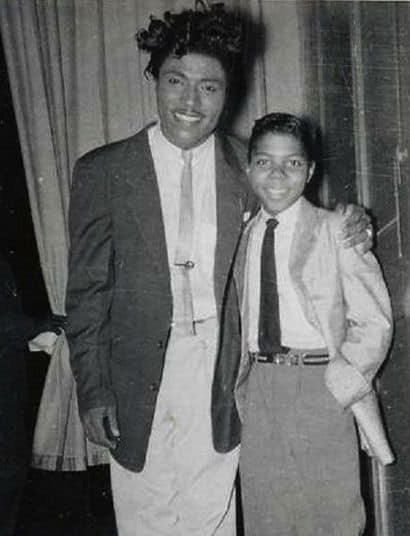
(Lymon with Little Richard)

His first solo release, a cover of the thirties hit ‘Goody Goody’, was fine, but didn’t catch on. And by then, aged fifteen, Lymon was already addicted to heroin. He hadn’t had much of a childhood, he would relate in an ‘Ebony’ magazine interview in 1967, growing up in Harlem around prostitutes and pimps, smoking weed and ‘knowing’ women, all before he even joined The Teenagers. Watching him perform, you can definitely see the street-kid swagger behind the suits and the polished smiles.

(I think this is a genuinely live performance and, if so, then wow! I’m out of breath just from listening.)

The hits dried up as the fifties drew to a close, and the drugs started to take their toll. There was a steady stream of women – fake marriages, then scam marriages in Mexico, making the title of his biggest hit sound ever more prescient. His managers and label offered no help, and there clearly wasn’t much of a support network around him. Eventually he got caught up in drug charges and, rather than go to jail, he was drafted into the army.

In the forces he went clean, and sober, and every-so-often AWOL to perform tiny, low-key gigs, by this point near forgotten amongst the British Invasion acts that were dominating the Billboard Hot 100 at the time. He left the army, recorded a few demos, and by 1968 was preparing a comeback with Roulette Records.

Unfortunately, and in a tragic Hollywood ending, the day before his first recording session with his new label, Lymon was found dead on his grandmother’s bathroom floor, a needle in his arm. He was twenty-five.

frankielymon-1_v1000

You could say this about any child star that goes off the rails, but there’s it’s almost painful to watch Frankie Lymon performing with The Teenagers, the proto-boyband that brought some New York swagger to the staid singles chart of the mid-fifties, and to think what was to come.

Frankie Lymon, September 30th 1942 – February 27th 1968

251. ‘Jumpin’ Jack Flash’ by The Rolling Stones

Normal service is resumed, with a bang. The sixties’ baddest band are back! After a mid-decade run where they never seemed to leave the top of the charts, this is The Stones’ first #1 since ‘Paint It, Black’ a little over two years ago. Has their sound changed while they’ve been away?

4524373-LKRHUBBQ-7

Jumpin’ Jack Flash, by The Rolling Stones (their 7th of eight #1s)

2 weeks, from 19th June – 3rd July 1968

Yes, and no. The second you press play you know it’s a Rolling Stones’ song. It’s got that vibe and that swagger – with an intro that begs to be turned up. But it’s heavier than what came before, heavier even than the pounding ‘Get Off Of My Cloud’, or the cynical ‘Paint It, Black.’ The one thing that we’ve been missing in recent months – years even – amongst all the eclectic, easy-listening, flower-power hits of ’67-’68, is finally here: some down and dirty rock ‘n’ roll.

Watch it! The lyrics are equally in your face: I was born, In a cross-fire hurricane, And I howled in the morning drivin’ rain… (or is it: at my ma in the drivin’ rain….?) Either way, it’s the story of a boy, a creature, who appears to have risen from the deep to terrorise the world… I was raised, By a toothless bearded hag… All told over the same simple, relentless riff. Some sources claim that Jagger and Richards were inspired by the latter’s taciturn gardener, Jack Dyer. Others that it was inspired by the poetry of William Blake. Keith Richard’s biographer claims that the opening lines – the ‘crossfire hurricane’ -refers to the fact that he was born during a German bombing raid in 1943.

Like many legendary rock songs, its origins are perhaps lost to the mist of time (and possibly because the band were too high to remember). Also like many legendary rock songs, the lyrics are pretty out there. The last verse goes all biblical: I fell down, To my feet and saw they bled… I was crowned, With a spike right through my head… ‘Jumpin’ Jack Flash’ was written around the same time as ‘Sympathy for the Devil’, in which they portrayed Satan as a man of wealth and taste. Were they doing the opposite to Jesus here? In the end, though, his tough back-story doesn’t matter. He’s Jumpin’ Jack Flash and life’s a gas, gas, gas… The overriding message being don’t sweat it? Things’ll turn out alright in the end? Enjoy it while it lasts.

The-Rolling-Stones-Jumpin-Jack-Flash-Large-Jukebox

I mentioned in a previous post – ‘The Last Time’, I think – that every time a Stones record comes along at the top it feels like your big brother’s cool but slightly terrifying friends have crashed your party. You’re floating along with your nice Manfred Mann discs and your catchy Union Gap records and then wham! – Mick and the boys rock up. They fade into ubiquity sometimes, and have certainly become caricatures of themselves in their old age, but hearing The Rolling Stones in context like this really shows how thrilling and dangerous they were. This was never my favourite song of theirs growing up, but hearing it now for the first time in a while… I’m enjoying it way more than I thought I would. And I’ve got it turned up loud.

The outro goes slightly trippy, as the band intone Jumpin Jack Flash, It’s a gas… and the organ and the guitars intertwine. At the time, this was a bit of a comeback statement. They had tried to jump on the psychedelic bandwagon with singles like ‘We Love You’ and ‘She’s a Rainbow’ and, while not commercial disasters, they weren’t monster hits like ‘Satisfaction’ either. And let’s face it, you don’t come to the Stones for hippy-love vibes, do you? You want them to rock, and rock this single certainly does. They’ve played it at pretty much every live show since. It’s their most performed song, one of their signature hits. And it’s with a tear in our eyes that we realise they only have one more chart-topper to go…

Top 10s – Buddy Holly

February made me shiver, With every paper I delivered, Bad news on the doorstep, I couldn’t take one more step…

Sixty-one years ago today, a light aircraft slammed into a field in Iowa during a snow-storm, killing everyone on board. The four passengers were Ritchie Valens (a seventeen-year-old up and coming rock ‘n’ roller), J.P. Richardson (AKA The Big Bopper, of ‘Chantilly Lace’ fame), pilot Roger Peterson, and Charles Hardin Holley. Buddy Holly.

The Day the Music Died has passed into folklore. I’m not going to write about that today. Rather, for my 2nd artist’s Top 10 post – check out the first one I did here – I’m going to list my favourite UK hit singles from a man whose legacy stretches far. The Beatles, The Stones, punk rock and power pop – they all owe a big debt to Buddy.

investigators-may-reopen-buddy-holly-plane-crash-fdrmx

As before, I’m restricting myself to ‘A’-sides of singles that charted in the UK. So no ‘Everyday’, no ‘I’m Gonna Love You Too’, no ‘Not Fade Away’, and no ‘You’re So Square… Baby I Don’t Care’. Don’t blame me… Blame the people that didn’t buy those singles, or the record labels that never released them…

10. ‘Think It Over’, with The Crickets, 1958 – peaked at #11

People sometimes forget that Buddy Holly recorded some down and dirty rock ‘n’ roll. Maybe it’s the thick-rimmed glasses that make him seem a little more, how to say, cerebral, than Elvis or Little Richard… But while he was able to add more subtlety than most of his contemporaries, ‘Think It Over’ has swagger and attitude to spare. Is she sure she doesn’t want him? Really sure? Maybe she should think it over… Great piano solo, too.

9. ‘It Doesn’t Matter Anymore’, 1959 – reached #1

Holly’s only solo #1, three months after he died. More strings than you’d expect from a rock ‘n’ roll single, and a very memorable vocal performance. Lots of trademark hiccups and southern drawl. The video above starts with a snippet of ‘Heartbeat’… not sure why. Read my original post on ‘It Doesn’t Matter…’ here.

8. ‘Reminiscing’, 1962 – reached #17

Some sexy sax, and a quality chugging riff. And Buddy’s voice. I’ve always loved the way he has fun with the line You’re a mean mistrea-ea-ea-ter… This peaked in the early sixties, along with several other gems from his back catalogue.

7. ‘What To Do’, 1965 – reached #34

Since this was never a big hit in Holly’s lifetime, you can hear it in all manner of overdubbed and re-imagined versions. I’ve gone for this stripped-back one, though. Just Buddy Holly and a guitar, so close to the mic that you can hear his breathing. It was a minor hit a full six years after his death. I love the lines about ‘soda pops’ and ‘walks to school’, that by the mid-sixties must have sounded very old-hat.

6. ‘Early in the Morning’, 1958 – reached #17

Some more swagger from Mr. Holly. We-e-e-e-el, he crows at the start, You gonna miss me… To be honest he doesn’t sound very heartbroken. In fact he might just be enjoying the break-up. I love his vocals here, one second yelping, the next growling…

The Top 5 were all Top 10 hits in the UK, all priceless slices of rock ‘n’ roll goodness:

5. ‘Maybe Baby’, with The Crickets, 1958 – reached #4

Every Buddy Holly song has a little detail – beyond the lyrics and melody – that makes it stand out. In ‘Maybe Baby’ it’s the reverb on the guitar. A near perfect pop song.

4. ‘Peggy Sue’, 1957 – reached #6


Buddy’s first ‘solo’ single – even thought The Crickets are clearly accompanying him in videos around online… It was written for the drummer, Jerry Allison’s, girlfriend after they had temporarily split up. Probably more groundbreaking than the 3 songs I’ve chosen above it… That drumbeat for a start is like nothing heard in a rock ‘n’ roll single before. Just my personal preference. The moment when the electric guitar comes in. My, my, my…

3. ‘That’ll Be the Day’, with The Crickets, 1957 – reached #1

If the plane crash was The Day the Music Died, then this is the moment it all began. The jingle-jangle intro, the hiccuping voice, the John Wayne inspired hook… My favourite bit has always been the start of the second verse – the country twang on the: well-a, when Cupid shot his dart… Read my original post on this number one record here.

2. ‘Oh Boy!’, with The Crickets, 1957 – reached #3

Teenage angst – you can here my heart a-callin’ –  and lust – a little bit of lovin’ makes the everythin’ alright – in The Crickets 2nd big hit. Holly’s vocals rasp, yelp and strain against the conservatism of 1950s America, and it just pips ‘That’ll Be the Day’ into the runners-up slot…

1. ‘Rave On’, 1958 – reached #5

We-a-he-a-he-al… The opening second of this record already seals its place as an all-time great. The way he stretches out the opening syllable is sublime, and then it morphs into a proto-punk number with its relentless riff surfing along in the background. One minute fifty seconds of rock ‘n’ roll brilliance, the well from which so much modern pop music springs…

Charles Hardin ‘Buddy’ Holley

September 7th 1936 – February 3rd 1959.

Remembering Bobby Darin

Named after a faulty sign outside a Chinese restaurant (the letters M-A-N were blacked out, leaving only D-A-R-I-N), today we remember perhaps the most underrated of the big fifties stars…

MI0002749454

Underrated, perhaps, because nobody knew where to fit him in. He didn’t look much like a teen-idol. He could sing rock ‘n’ roll, as well as more old-fashioned swing and jazz. His hit singles include both self-penned songs, like his debut ‘Splish Splash’, and modern interpretations of standards, such as his 1961 Top 10, ‘You Must Have Been a Beautiful Baby’.

Born in Harlem, New York, in 1936, into a family of low-level mobsters and vaudeville singers, his mother was actually his grandma and his sister his biological mother  – a fact he didn’t find out until he was in his thirties. He was a sickly child, with recurring bouts of rheumatic fever, and always knew that he was not expected to live to an old age.

ss

(The sheet music for Darin’s first big hit.)

Which perhaps explains why he crammed so much into his short life. Songwriter, singer, actor, presenter, political campaigner, chess player… His two UK chart toppers perhaps best sum up his approach to life and music. In the space of four months in 1959 he hit #1 with the swaying rock ‘n’ roll ballad ‘Dream Lover’

And then with a cover of ‘Mack the Knife’, a German musical number from the 1920s, about a murdering, thieving, raping ‘shark’ called MacHeath…

Two number ones of the highest quality. ‘Mack the Knife’ stands out in particular – it doesn’t sound much like any of the other hits of the time, and the lyrics are pretty niche. It’s simply a record that got to #1 because it’s really, really good. Darin continued to have hits through the early sixties, including karaoke standard ‘Beyond the Sea’ and one of my personal faves, ‘Things’.

1960-photo-ed-sullivan-tv-bobby-darin-connie_1_1a60acb097042d853882e5eb19a09d46

(Bobby Darin with Connie Francis – whom he wrote songs for and had a relationship with – and Ed Sullivan in 1960.)

As the sixties progressed he moved into films, then TV and political campaigning. Darin was heavily involved in Robert F. Kennedy’s career, and he went into a deep depression when Kennedy was assassinated, having been present when it happened.

He continued to perform right up until his death, and by the end was on oxygen before and after each performance. Bobby Darin passed away during an operation on his heart, aged just thirty seven.

Bobby-Darin

Bobby Darin, May 14th 1936 – December 20th 1973