42. ‘Memories Are Made of This’, by Dean Martin

Memories-Are-Made-Of-This-Dean-Martin

Memories are Made of This, by Dean Martin (his 1st and only #1)

4 weeks, from 17th February to 16th March 1956

Sweet sweet mem’ries you gave to me…

This is one of those #1s that fall into the ‘I can sing a line or two before listening to it’ category. See also ‘That Doggie in the Window’ and ‘This Ole House’. At first I thought I might have sung this in my days as a primary school choirboy. But then, after listening more closely, I realised that the lyrics are perhaps a bit rich for a group of eight year olds.

Take one fresh and tender kiss, add one stolen night of bliss…

So, yeah… Then I got to thinking that the intro sounds a lot like the intro to ‘King of the Road’ – that sliding da dum dum dum guitar – which I definitely did sing in my primary school choir. So maybe that’s what I was thinking of.

Anyway. I wrote in the last post that we were having a bit of a minimalist phase in terms of our chart topping records, after the bombast of ’53 and ’54, and this track follows suit. There’s a guitar, some backing singers, and Dean Martin. It’s nice.

Lyrically, the song describes the ‘recipe’ for a happy life. Lots of ‘taking’, ‘adding’ and ‘folding’. With His blessings from above, Serve it generously with love… Which is fine. It actually reminds me a bit of ‘Christmas Alphabet’, in a way – another pop song as step by step guide. It is, though, a metaphor which can only go so far. The lines: Then add the wedding bells, One house where lovers dwell, Three little kids for the flavour… Stir carefully through the days, See how the flavour stays… Are either a little too saccharine, or a little too cannibalistic, to really work.

These lines, however, come during the middle-eight in which – and I may be going out on a limb here but bear with me – we have a bit of a rock ‘n’ roll chord progression. I am completely incapable of describing it in words, having no musical ability on which to base my idea, so you’ll just have to take a listen below to see what I mean. The very fact that this is a Verse Chorus Verse Chorus Middle Eight Verse Chorus (Ok, the chorus is one line, but still) kind of song is interesting in itself. It’s by no means a ‘rock’ song; but there’s a whiff of something there.

deanmartin

And it’s another one of those occasions in which we tick off a musical legend’s sole moment at the top of the UK charts. Vera Lynn’s had her moment, Tony Bennett’s had his, now it’s Dean’s turn. It just seems right that he got there at least once. To be honest, I know very few concrete facts about about Dean Martin – I tend to get all the rat-pack type singers muddled up together – but I see that he sang songs that are probably more famous than he now is: ‘Volare’, ‘That’s Amore’, ‘Sway’… In fact, it seems safe to say that ‘Memories Are Made of This’ is Dean Martin’s most famous song in which he wasn’t hamming up his eye-talian side. It sounds like I imagine all Dean Martin records to sound like: laidback, slightly louche, very nonchalant… He sounds as if he’s phoning it in, to an extent, but that just adds to the appeal. ‘The King of Cool’, indeed.

41. ‘Sixteen Tons’, by Tennessee Ernie Ford

s-l300

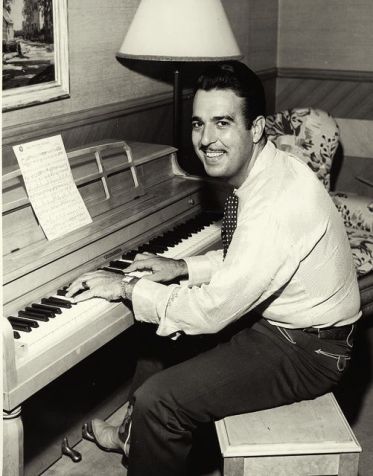
Sixteen Tons, by Tennessee Ernie Ford (his 2nd of two #1s)

4 weeks, from 20th January to 17th February 1956

Hmmm… What’s going on here, then?

It is more interesting, I suppose, approaching these distant number ones – apart from the handful that I already knew – and not knowing what I’m going to get. It wasn’t always like this – for most of 1953 and ’54 the chart toppers followed a rather overwrought formula. Now they are growing much more eclectic.

But, at the same time, I feel ‘Sixteen Tons’ has been done before. We’re back on ‘Man from Laramie’, ‘Hernando’s Hideaway’ territory here – back in the cheesy Western soundtrack album. This is what I expected from a man named Tennessee Ernie Ford, much more so than his earlier, bombastic #1: ‘Give Me Your Word’.

It’s a song about loading something… coal, I think… Loading sixteen tons of it, to be precise. You load sixteen tons, what d’ya get? Another day older and deeper in debt. St Peter don’t you call me cos I can’t go, I owe my soul to the company store… The singer is a hard man; shovellin’ sixteen tons ain’t nothin’ to him, no Sir.

After describing his working day, he goes on to big himself up: raised by a lion, fightin’ and trouble are his middle names, if you see him coming then you better step aside etc. etc. One fist of iron, the other of steel, If the right one don’t get you then the left one will… It’s all a bit silly, but Ford sings it with tongue firmly in cheek. He even giggles at one point, as he delivers the line: Can’t no high-toned woman make me walk the line… He knows it’s silly – and the listener can enjoy it for what it is. But, importantly, he doesn’t disrespect the song. It’s skilfully done. I kind of wish it had been Tennessee Ernie singing ‘The Man from Laramie’, rather than stiff old Jimmy Young, as what that song dearly needed was a slightly looser delivery; a delivery with the eyebrows raised. I’ve had a look, but unfortunately can’t find any sign that he ever recorded a version.

The only musical accompaniment to the lyrics is a guitar/clarinet combo, some light drumming, and some finger clicks. It’s minimalist. In fact, almost all of the most recent number ones have toned down the orchestral accompaniment and the backing singers (‘Rose Marie’ and ‘Christmas Alphabet’, the simple guitar riff of ‘The Man from Laramie’ and ‘Hernando’s Hideaway’s castanets). Unfortunately, at the same time, ‘Sixteen Tons’ resurrects a technique that we haven’t heard for a while – the THIS IS THE END OF THE SONG! technique. We end on a long, drawn out repetition of the final I OOOOOWWWWEEEEEE MY SOOUULLL blah blah blah… line. It spoils the whole song, truly it does. The sooner this trick dies a death the better!

123e46cdd35aa14e0ccd46e41eaa78ee

Each time I’ve listened to this track over the past half hour, somewhere in the back of my mind is the nagging suspicion that I’ve heard this somewhere before. I probably have – it is Ford’s signature hit, after all. And it’s a simple song. So simple that it sounds like it might be… Nope, I can’t place it.

And on that note, we will bid farewell to Tennessee Ernie Ford. But don’t you worry about him. He had a long and distinguished career back in the US, in the Country & Western world, releasing albums such as ‘This Lusty Land’, ‘Great Gospel Songs’, ‘Civil War Songs of the North’ and, er, ‘Civil War Songs of the South’ (maybe it was a ‘Use Your Illusion’ I & II kind of thing?) Whatever, he had clearly found his niche. He also had a TV show – ‘The Ford Show’ – and a catchphrase: ‘Bless your pea-pickin’ heart.’

Yee-hah! Let’s leave it there…

40. ‘Christmas Alphabet’, by Dickie Valentine

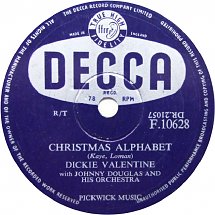
dickie-valentine-christmas-alphabet-decca-78-s

Christmas Alphabet, by Dickie Valentine (his 2nd of two #1s)

3 weeks, from 16th December 1955 to 6th January 1956

And so we come across something I never considered when I started this blog: the fact that I will, every so often, have to listen to Christmas songs on repeat. When it most emphatically isn’t Christmas. No matter. ‘Tis a burden I shall bear stoically.

The very first Christmas song to hit #1 in the UK is based around a simple concept – an acrostic poem as hit single. C is for the candy trimmed around the Christmas tree, H is for the happiness with all the family… All the way to the final S which is for Ol’ Santa who makes every kid his pet, Be good and he’ll bring you everything in your Christmas alphabet… Repeat. Done. Note that I am not referring to it as the very first ‘Christmas Number One’, as that wasn’t a ‘thing’ until the ’70s and, technically, Al Martino, Frankie Laine and Winifred Atwell have all already had one.

It’s kind of cute on first listen, but quickly becomes so sugary sweet that you begin to fear diabetes. As I mentioned at the time of his 1st number one, Dickie Valentine still sings like an American crooner (apart from when his ever-so-proper English accent sneaks through in the line about the ‘tree so tawl’). And while this little ditty is a world away from any kind of rock ‘n’ roll – from the record which bookended this song’s stay at the top, for example – he is cementing his image as the first British teen idol.

dicky-valentine

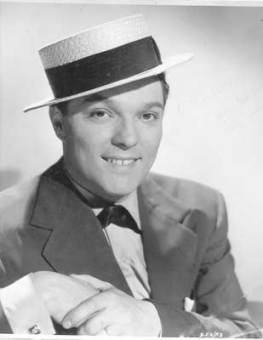
A quick look at the career of Mr. Valentine – which we should do now, as we won’t be hearing from him again – proves this to be true. He made his name singing with big bands, then by impersonating singers such as Frankie Laine and Johnnie Ray. His marriage in 1954 caused hysteria among his young fans, though it clearly didn’t kill his career. An image search throws up lots of cheeky grins, often accompanied by a boater-hat and a bow-tie – a definite ‘cheeky-chappie’. He scored the first and last #1s of 1955 but, like so many of these early chart-toppers, his recording career died a death in the ’60s, and he himself died the most rock ‘n’ roll death of all the artists featured so far: in a car crash aged just 41.

To finish, I do have a little anecdote about Dickie Valentine – and it’ll perhaps be my most tenuous link to any of the artists featuring in this rundown. Years ago (we’re talking early high school, here) I had a friend whose family loved going on cruises. I’ve never understood the appeal of cruises myself, but I suppose that’s irrelevant here. My friend mentioned a cruise they’d been on in which each cabin had – for some reason – a live feed of the ship’s ballroom that passengers could tune into any time of the day or night. My friend was watching it one night – disco night – when an old man, unimpressed by the DJs more modern tastes, walked past the camera and shouted ‘Play some Dickie Valentine!’. I have NO IDEA why my friend told me this uninteresting story; or indeed why I have remembered it to this day. I’d never heard of Dickie Valentine at the time; neither, presumably, had my friend. I suppose it is quite a funny name (‘Hur, hur… Dickie…’). But of all the things in life I’d have been better off remembering… The mind is a strange, strange thing.