For our fourth guest post of the week, Keith (AKA nostalgicitalian) is pondering a philosophical point that all music lovers will have contended with at some time… The enduring popularity of terrible songs.
My friend Stewart, over at The UK Number Ones Blog reached out a while back and asked if I’d participate in a guest feature. By the time this posts, his site will have almost reached its 1000th number one song. This guest post is to help celebrate that amazing achievement.
Stewart gave us guest writers a lot of freedom. We could write whatever we want, as long as it has a connection to the “top of the charts.” With that being said, let’s pause for a moment and define “number one.”
According to Merriam-Webster: “Number one most commonly refers to the primary, most important, or highest-ranking person, thing, or priority in a given group.” I like this definition a little bit better: “Something that is first in rank or highest in quality.”
In other words, a number one song should be something of high quality. It should be the “best” song on the chart, but that isn’t always the case. You can glance over every Billboard Hot 100 chart and see for yourself here.
As I looked over the charts, I found that there were plenty of songs that had me wondering, “Just how did that piece of garbage go to number one?!” For starters, here is a quick list of number one songs from the 1960’s that left me shaking my head: ‘Alley Oop’, ‘Itsy Bitsy Teeny Weeny Yellow Polka Dot Bikini’, ‘Mr. Custer’, ‘Sukiyaki’, ‘Dominique’, ‘Ringo’, ‘Winchester Cathedral’, and ‘Honey’. Some of them were number one for multiple weeks!
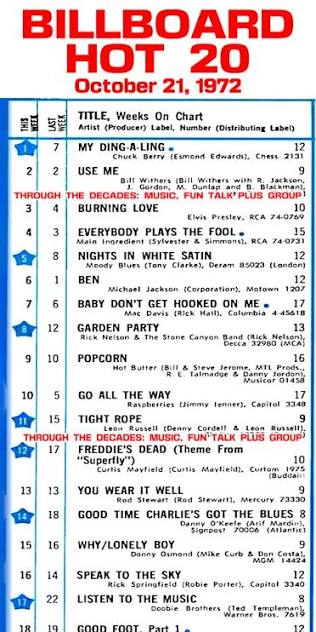
I realize that some of those would be considered novelty songs. Novelty songs would begin to fade from the chart in the ’80s, but there were still some that hit number one in the ’70s. Who can forget ‘The Candy Man’, ‘My Ding-a-Ling’, ‘The Streak’, and the awful ‘Disco Duck’? Maybe I should rephrase the question to read “Who would like to forget them?” When you go back to the definition, is Disco Duck “something that is first in rank or highest in quality?” I highly doubt it!
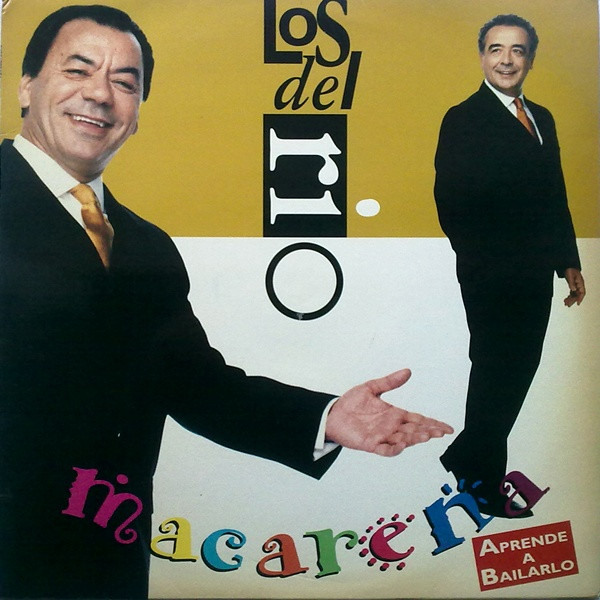
In 1996, the ‘Macarena’ was number one for a whopping fourteen weeks! For what it is worth, it was a dance craze (much like ‘The Twist’ in the ’60s, which also went to number one). It played at weddings and parties as well as on the radio. It truly was popular, but was it really the best song of 1996? There were only nine number one songs that year. You could argue that ‘One Sweet Day’ from Mariah Carey & Boyz II Men (11 weeks) or ‘Because You Loved Me’ from Celine Dion (6 weeks) were better songs, but musical tastes are subjective.
While I don’t find myself listening to much “current” music, there are certainly songs that fall into that category that I like. However, I will offer one more song that I cannot believe spent multiple weeks at number one. Consider 2020’s ‘The Box’ by Roddy Rich. It contains many uses of the F-word and the N-word, and references to female genitalia, sexual acts and sexual innuendo. This was an 11-week number one song.
If a number one song should represent the “highest in quality,” and considering the songs presented above, does a song reaching number one really mean anything? I used to believe it did, but looking back I’m not so sure. One is just a number.
Keith writes about music, pop culture and life at nostalgicitalian.com. Thanks again Keith, for an original take on our topic. And for not giving in to nostalgia, and for pointing out that crap songs have been around for just as long as good ones!
I think this post is the perfect companion for our ongoing polls, in which you can choose your ‘best’ and ‘worst’ from my own favourite and least-favourite chart-toppers. Well over three-hundred and fifty votes have been cast so far, and it is still very tight at the top of both polls. Every vote counts! Results will go out on Sunday.