917. ‘More Than a Woman’, by Aaliyah

We start 2002 with two posthumous number ones, almost like how at the Oscars they do an ‘In Memorandum’ segment. Which pop stars did we lose in the past year?

More Than a Woman, by Aaliyah (her 1st and only #1)

1 week, from 13th – 20th January 2002

Well, we had lost prodigal R&B star Aaliyah in a plane crash back in August, aged just twenty-two. ‘More Than a Woman’ was her first single to be released in the UK since her death, and is a very modern, very of the moment slice of American pop.

It’s cut from the same cloth as earlier Destiny’s Child and Jennifer Lopez #1s, with an almost classical riff playing over a staccato beat. One reviewer at the time described it as ‘Baroque liquid funk’, which is a great description, if a little over the top. It does though, have a bit more beef to it than DC and J-Lo. I especially like the dirty, squelchy synths, which elevate this above some of the other US recent R&B tracks I’ve struggled to enjoy, and which take centre-stage in an extended, funky fade-out.

I was going to accuse this record of not having a real hook, but the more I play it the more it grows on me. And I’ll admit that the strange, slightly off-kilter chorus has stayed in my brain ever since it was in the charts. It’s oddly catchy. In the very ‘of its time’ video, Aaliyah and her backing dancers work it in what looks to be the inside of a combustion engine, and the churning pistons fit the thick and deliberate beat nicely.

Although this probably only got to number one as a tribute, it isn’t hard to imagine ‘More Than a Woman’ spending a January week at #1 even with Aaliyah alive and well. She had been a regular chart presence since her debut in 1994, aged just fifteen. (She was R Kelly’s protégé, something that’s come under more scrutiny since his offences came to light). Her biggest song, ‘Try Again’, had been her only US #1, and only previous British Top 10 hit, in 2000.

She was also a long-time collaborator with Timbaland, meaning that this is the first chart-topping appearance for one of the 2000’s defining producers. After ‘More Than a Woman’, for sadly obvious reasons, the hits dried up for Aaliyah. Her legacy seems to be one of what might have been, for an experimental and talented artist who had already been dubbed the ‘Princess of R&B’.

In part two of our posthumous double-header, she was replaced at the top by another recently deceased artist, whose legacy had long since been established…

916. ‘Somethin’ Stupid’, by Robbie Williams & Nicole Kidman

If someone stopped me in the street and demanded an answer to the question: ‘Does Nicole Kidman have a UK number one single to her name?’, chances are I’d panic and say ‘no’. The existence of this record always passes me by…

Somethin’ Stupid, by Robbie Williams (his 5th of seven #1s) & Nicole Kidman

3 weeks, from 16th December 2001 – 6th January 2002

Yet Nicky K does have a number one, and not just any old number one: a Christmas number one. Why did this happen? It seems incongruous now, looking back, but there must have been a reason for this combo, which we can explore in a bit.

First, though, the song. And it’s a pretty faithful cover of the Frank ‘n’ Nancy classic. A bit more of a bossa nova beat, perhaps, while I don’t personally think it suits Robbie’s voice very well. It’s not that he can’t compete with Sinatra – who wasn’t an amazing singer – more that this song forces a restraint on him that doesn’t work. Kidman, meanwhile, is fine, purring her way through, though I’m not sure you’d ever work out that it was her unless told. They harmonise well, however, it has to be said.

It is far, far from the worst musical crime to be committed at Christmas. The worst accusation you could level at this record is that it’s underwhelming, and fairly superfluous while the original still exists. But we’ve been saying that a lot recently, about covers of golden-oldies which have made #1. And hey, unlike the original, at least Robbie and Nicole aren’t blood relations…

This was the lead single from Robbie’s ‘Swing When You’re Winning’ album of jazz and swing standards, which kicked off a good decade-long resurgence for the genre. Think Rod Stewart’s Great American Songbooks, and endless ‘Big Band Weeks’ on X-Factor. But why Nicole Kidman? There were rumours that she and Robbie may have been an item, but it’s probably as simple as her having starred in the year’s big musical hit ‘Moulin Rouge’, and also having charted earlier in the year with ‘Come What May’, in which she duetted with co-star Ewan McGregor.

And so we come to the end of 2001. Suddenly we’re two whole years into the twenty-first century! And only twenty-three years away from the present day… It’s all getting a bit close. What to make of 2001: a chart odyssey? It hasn’t been a classic year for chart-toppers, if we’re honest. The few classics have been padded out with lots of cheap and cheerful cheese, and it’s felt like a step down from the cool highs of the Year 2000. Heading into 2002 I’m not sure things are going to improve, as we’re about to go into Reality TV overdrive…

915. ‘Gotta Get Thru This’, by Daniel Bedingfield

After working our way through several UK garage #1s, of varying quality, we arrive at the ultimate early-noughties garage anthem…

Gotta Get Thru This, by Daniel Bedingfield (his 1st of three #1s)

2 weeks, from 2nd – 16th December 2001 / 1 week, from 6th – 13th January 2002 (3 weeks total)

That feels like a controversial statement, because garage is a genre of the streets, for young, black kids; whereas Daniel Bedingfield always seemed very white and very middle-class. And he isn’t even British! He’s a Kiwi. Maybe the fact that I’m classing this as the ‘ultimate early-noughties garage anthem’ shows how middle-aged and middle-class I am…

But that’s fine, because it’s a good song. And it still, surprisingly, feels fresh. It blends the garage beats with some nice dance touches, and a big pop sensibility. It’s not confronting, it’s not annoying – unlike some earlier garage chart-toppers – but it doesn’t lose its credibility. (Though, the spelling of ‘through’ as ‘thru’ in the title does come off as trying a little too hard to be ‘with it’.)

My main complaint with 2-step, garage songs is that the beat can be too light, too lacking in oomph. Bedingfield recorded this in his bedroom, using a mic and his PC, and pressed a few early copies which he sent out to DJs. For the label release, D’N’D Productions helped with remixing, and I’m not sure how responsible they were for the beefed up, poppier feel that this has compared to the earlier garage #1s.

‘Gotta Get Thru This’ is also refreshingly short, coming in at well under three minutes, which is another thing that makes it feel very modern. At 2:42, it is the shortest #1 since Robson & Jerome’s ‘I Believe’. And if we (happily) ignore that record’s existence, it is the shortest, semi-relevant chart-topper since Kylie’s ‘Tears on My Pillow’ twelve years before.

Perhaps another aspect of my reluctance to crown Daniel Bedingfield as champion of UK garage is that this record, his debut, wasn’t totally representative of his ‘sound’. His two further number ones are a lot more middle-of-the-road, a lot more mum-friendly (though this is certainly as mum-friendly as garage ever got). He released an impressive six singles – in a variety of genres – from his first album, across almost two years, and five of them made the Top 10.

Another noteworthy thing here is that when ‘Gotta Get Thru This’ returned to the top in the second week of January 2002, it did so with the lowest-ever sales for a number one single (around 25,500 copies). That was a sign of things to come, as the CD-single boom came to a rapid end, and is a record that will be ‘bettered’ by thirteen further #1s between now and 2008, when downloads eventually started to overtake physical sales.

Remembering Jimi Hendrix

Today, September 18th, marks fifty-five years since the death of perhaps the greatest rock guitarist of all time, Jimi Hendrix.

Hendrix’s death in 1970, due to an overdose of barbituates, granted him marquee status in the 27 Club, and also brought about his one and only UK chart-topper. ‘Voodoo Chile’, a previously unreleased track, was released in the wake of his death and spent a week at #1, becoming one of the hardest rocking tracks ever to do so.

It’s fitting that he did manage a posthumous moment on top of the British charts, because he had been consistently more successful in the UK than in his homeland. In fact, Hendrix had moved to London in 1966, after spells in the US Army and then as a backing guitarist for the Isley Brothers and Little Richard. In London he and his manager, Chas Chandler of the Animals, put together a band: The Jimi Hendrix Experience, with Noel Redding on bass and Mitch Mitchell on drums. Their first single was a cover of ‘Hey Joe’, making #6 in early 1967.

The origins of ‘Hey Joe’ are disputed, but despite the first released version being by The Leaves just two years earlier, it had fast become a garage-rock classic, with versions by the Surfaris, the Byrds, and Love before Hendrix’s definitive take. Compare its thick chords and raw production with the poppier acts of the day. It must have sounded wild, with its tale of a man on his way to shoot his unfaithful lover. The follow-up single, ‘Purple Haze’, then gave Hendrix the biggest hit of his lifetime.

It made #3 in May of 1967. Sitting above it in the chart were ‘Puppet on a String’ and ‘Somethin’ Stupid’, both classics of the time, but both blown out of the water by the bloodthirsty energy of this record. Anything released in 1967 with ‘haze’ in the title was going to encourage rumours concerning it being about drugs. Hendrix, though, describes it as a love song. The intro in particular is razor sharp, and jarring. Apparently a dissonant interval such as this is known as diabolus en musica i.e. “Devil in music”. Which is pretty much the most aptly rock ‘n’ roll description going.

Hot on ‘Purple Haze’s heels came The Jimi Hendrix Experience’s third Top 10 in less than six months. Jazzy ballad ‘The Wind Cries Mary’ was recorded in twenty minutes, and was allegedly inspired after an argument with Hendrix’s girlfriend Kathy ‘Mary’ Etchingham over lumpy mashed potatoes. Such an innucuous start for a lyrically dense love song, proof that he was more than just a virtuoso guitar player.

The final Top 10 hit of Hendrix’s short life came a year later, with a cover of Bob Dylan’s ‘All Along the Watchtower’. Despite it being the song most performed by Dylan in concert, it remains synonymous with Hendrix. Here he is performing it at the Isle of Wight Festival in 1970, just weeks before his death.

Rolling Stone Brian Jones, another rock star not long for this world, contributed to the percussion on this track, including the rattles in the intro played on the brilliantly named ‘vibraslap’. Ever since this cover was released, Dylan has peformed it in the style of a tribute to Hendrix.

‘All Along the Watchtower’ was lead single from the Experience’s third album in fourteen months, ‘Electric Ladyland’. In his recording career of barely four years, Hendrix released a total of three studio albums, a live album, and a greatest hits. The final single to chart in his lifetime was not a huge hit (#37), but is my personal favourite: ‘Crosstown Traffic’.

It’s bluesy, it’s psychedelic, it’s headbanging… and yet it’s got a brilliant pop hook. And despite being the greatest guitarist of his age, Hendrix wasn’t ashamed to go back to basics with a paper and comb to make that distinctive riff. That feels like it sums him up: supremely talented, precocious, lyrically mystical, but with an ear for a simple sledgehammer riff and a Top 40 hook. Who knows where the 1970s would have taken Hendrix, had he been around to enjoy them…

Jimi Hendrix, 27th November 1942 – 18th September 1970

914. ‘Have You Ever’, by S Club 7

Our third pop ballad in a row… Bear with us, as this is the last ballad for a (short) while at least…

Have You Ever, by S Club 7 (their 4th and final #1)

1 week, from 25th November – 2nd December 2001

After the success of ‘Never Had a Dream Come True’ a year ago, making #1 and raising lots of money for Children in Need, it makes sense that S Club would have another crack at it. It also feels a little cynical, if you’ll allow: as if they were padding out their chart-topping stats with songs that aren’t remembered as well as some of their other hits.

Compared to the previous two pop ballads, I’d plonk this in the middle. It’s fresher, more modern, less of a slog than Westlife’s ‘Queen of My Heart’; but it doesn’t have the energy of Blue’s ‘If You Come Back’. Musically it is quite similar to the Blue ballad, though, with a skittish R&B beat and a powerhouse vocal performance from Jo O’Meara. I never realised at the time how much she dominated many of S Club’s singles, to the extent that you have to wonder why they needed six other members…

This record also suffers from being the ‘follow-up’ to ‘Never Had a Dream Come True’, which I think is the better ballad, and to ‘Don’t Stop Movin’’, which is one of the decade’s great pop songs. ‘Have You Ever’ feels like an afterthought to both these records. And can I take a moment to bemoan song titles that are questions, but don’t have a question mark? This is far from the first example…

Though S Club 7’s two Children in Need singles topped the charts, and sold a surprisingly identical number of copies in debuting at #1, ‘Never Had a Dream Come True’ was the year 2000’s 9th biggest seller, while ‘Have You Ever’ was 2001’s 21st biggest. Which feels about right. Apparently, though, this song holds the record for the number of voices used in a single recording, as when the band performed the song live for CIN, they were joined by six school choirs via video link, and 3610 other schools on tape, plus spin off group S Club Juniors (two of whom we’ll meet as chart-toppers down the line).

S Club 7 released one further single before Paul Cattermole quit, and they became plain old S Club. The band split in 2003, having managed the impressive feat of charting in the Top 5 with all eleven of their singles. Their post-split careers were a mixed bag of solo success (Rachel Stevens), racism scandals (O’Meara) and student union tours (Bradley McIntosh), while Cattermole declared bankruptcy and Hannah Spearritt claimed to have been made homeless. They reformed in 2023, but Cattermole sadly died of heart failure a few weeks later, aged just forty-six. They are still touring, though, and are currently an S Club 5, with Spearritt having opted out of the comeback. And I’d say that for people of my vintage, no matter how cool they thought they were (or think they still are…), at least one or two S Club tunes hold a place in their hearts.

913. ‘If You Come Back’, by Blue

The boyband third single rule (it has to be a ballad) and the boyband single-for-Christmas rule (it has to be a ballad) combine here… In a big old ballad.

If You Come Back, by Blue (their 2nd of three #1s)

1 week, from 18th – 25th November 2001

At the end of my previous post, I hoped that this next chart-topping ballad would be better than Westlife’s dull ‘Queen of My Heart’. And it is. That much is evident from the modern hip-hop, garage-y backing beat – the lovechild of Atomic Kitten and Craig David – and the fact that Blue still sound quite keen and perky, as if they haven’t yet become jaded after years of being flogged to line Louis Walsh’s pockets.

I did consider claiming that Blue were better singers than Westlife, but I’m not sure that’s what’s happening here. They do sound fresher, but maybe that’s down to this being their second #1, as opposed to their ninth. They’re also let off the leash a little more than Westlife, who had to follow their tried and tested formula to the letter.

Blue’s exuberance gets the better of them, though, and some parts of this record amount to over-singing, as if they were still auditioning, uncertain of their places in the band. Understated confidence, and a more delicate, R&B touch would have perhaps served the song better. At the same time, though, it’s enjoyable to hear them going for it. Lee Ryan especially, who I would contend had the best voice of any nineties-cum-noughties boyband member.

But, just because it is better than ‘Queen of My Heart’, I wouldn’t want to get carried away. If Westlife’s offering was, say, a two out of ten, then this is a solid five. Decent enough, but nothing to linger in the memory for very long. Question is, can the third of our three wintery ballads in a row continue the upward trajectory…?

912. ‘Queen of My Heart’, by Westlife

In an earlier post, I noted the late-nineties phenomenon in which pop acts seemed to be contractually obliged to release a ballad for winter. East 17 were the original and best, but Peter Andre, the Spice Girls, B*Witched, S Club and more have all had a go since. And it seems like this phenomenon now peaks in November 2001… Are you ready for three wintery ballads in a row?

Queen of My Heart, by Westlife (their 9th of fourteen #1s)

1 week, from 11th – 18th November 2001

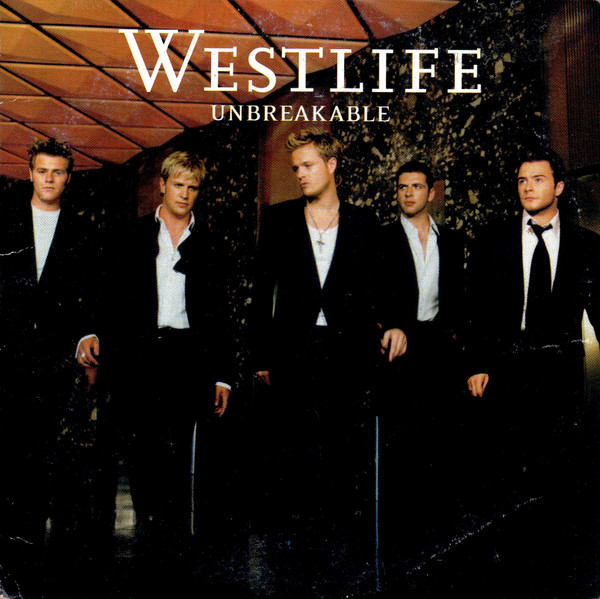
Starting with the daddies of pop balladry, Westlife. It’s actually been a whole year since we endured a Westlife ballad, and this is only their second #1 of the year. Their days of complete and utter chart domination are behind them, but the lead single from their new album is always a good bet for top spot.

Again, like so many of their ballads, I’m getting strong hints of ‘Mull of Kintyre’. Is it possible that their songwriting team started every session by trying to recreate ‘Mull of Kintyre’? If so, I’d say this is as close as they got. Same pace, same-sounding chord progressions. No bagpipes, thank God, but there are accordions for that authentic Irish pub touch. And, naturally, a key change complete with festive bells: a moment that even Paul McCartney would have found too cheesy.

I will admit to having actually enjoyed one (or two) of Westlife’s earlier chart-toppers. I’ve certainly made the best of the previous eight. But I’d say this is the moment where I finally lose patience. This one is dull, and plodding: a complete drag. Every note is cynically sentimental, sucking a tear out of granny’s eye with a vacuum cleaner. My heart sinks to think that we still have five more #1s to come from them…

I’d say that the one slightly interesting thing to note here is that for their third album, Westlife have matured their sound slightly to something a little more Adult Contemporary, with fewer poppy flourishes. But I think that seriousness is what makes this such a slog. That, and the fact that there’s not an original bone in this song’s body. Even their note for note cover of ‘Uptown Girl’ had more originality. By the time the aforementioned key change comes along, it is so signposted, so obviously on its way, that it crashes upon us like an elephant barging into our living room.

So, first ballad down, two more to come. They must be better than this, right…?

Never Had a #1… Part 1

Good morning, pop-pickers! I’m revamping my semi-regular ‘Never Had a Number One’ feature. Instead of featuring a randomly chosen, #1-less, artist for a post, I’m going to start counting down the Top 40 very biggest acts that have never featured at the top of the UK singles charts.

I’m basing it on worldwide sales (in both singles and albums), and have used the ever-trusty Wikipedia as my main source. All the acts to appear in this new feature have sold at least 75 million records across the world. I’ll cover all the Top 40 in eight parts with five acts in each (plus six honorary mentions for acts who have sold loads but have never charted in the UK).

We’ll do it in ascending order, and this first part features the lowest-selling of the bunch (all around the 75 million worldwide sales mark). Starting with…

40. Barry Manilow

Biggest hit: ‘I Wanna Do It With You’ (#8, in 1982)

It is frankly amazing that this was not only Barry Manilow’s biggest UK hit, but his sole Top 10 single in Britain across an entire fifty-year career. I had never heard this song before, but I like it: unashamed soft-rock with cute retro flourishes. And a cracking sax solo. I admire the British public for making this his biggest hit, ahead of schlock like ‘Mandy’, or ‘Copacabana’, and admiration for the British public is not something I’ve had much of recently.

39. Bob Marley

Biggest hit: ‘Sun Is Shining’ (vs Funkstar De Luxe) (#3, in 1999)

A couple of surprises here too. First, that Bob Marley is so far down this list, and that his biggest UK chart hit was a dance remix released almost twenty years after his death. I did a post on Bob Marley a few years ago, so head over that way if you’d like more information on his non-charttopping career.

38. Kenny G

Biggest hit: ‘Songbird’ (#22, in 1987)

Some smooth, smooth jazz now. This list skews towards the US, because that’s where most records have historically been sold. Kenny G was remarkably, some might say bizarrely, popular in the States, and ‘Songbird’ made #4 there. Which is frankly amazing, and can only be explained by thousands of companies buying the record to use as their on-hold music. I have frequently tried to explain why some eighties music leaves me cold, and can offer no better explanation than pointing towards syrupy dross such as this.

37. Bob Seger

Biggest hit: ‘We’ve Got Tonight’ (#22, in 1995)

Another ‘much bigger in the US’ act: roots-rock icon Bob Seger. He released his first single in 1961, but had to wait fifteen years before charting in Britain, and another twenty years for his biggest hit. ‘We’ve Got Tonight’ had been recorded in 1978, and turned into a bigger hit for Kenny Rogers and Sheena Easton in 1983. A re-release in 1995 took it to #22 for Seger, and it finally made the UK Top 10 when covered by Groanin’ Ronan Keating and Lulu in 2002.

36. Alabama

Biggest hit: ‘Feels So Right’ (#91, in 1984)

More Americana now, from a band literally named after a State. Yee-haw! Alabama can count themselves lucky to feature, qualifying thanks to their solitary week’s appearance on the UK singles chart, at #91, in 1984. (KISS are the act they kept out of the Top 40, if you were wondering). They may have had little impact in Britain, but have a staggering thirty-two #1 hits on the Billboard Country Chart.

Hope you enjoyed the first part of this new feature, even if it was hardly a selection of classic records. Manilow and Marley in particular are much further down the list than I’d expected. Part 2 – very rock heavy – will be along in a couple of months!

Of course, these rankings can be disputed, and could be completely wrong. It’s near impossible to know exactly how many records an act has sold in every record shop in every country around the world, and downloads and streaming complicate things further. Wikipedia bases their ranking on ‘claimed sales’ rather than ‘certified units’, and for many artists the latter is much higher than the former. For example, the Beatles (who unsuprisingly are top of the best-sellers list) have certified sales of 296 million, but claimed sales of between 500-600 million. Michael Jackson, second on the list with 400-500 million claimed sales, actually tops the list on certified sales of 297 million.

911. ‘Because I Got High’, by Afroman

It’s been noticeable how, as soon as the 21st century began, the top of the singles chart has been home to all manner of depravity. And here is yet more evidence of slipping societal standards…

Because I Got High, by Afroman (his 1st and only #1)

3 weeks, from 21st October – 11th November 2001

We’ve had the rock ‘n’ roll, we’ve had the sex, and now we have the drugs. Of course, this isn’t the first number one song to reference illegal substances, but usually they’ve been protected by innuendo, by a level of plausible deniability. This record, however, opens with someone asking us to roll another blunt. Less than a decade sits between the nudge-wink of ‘Ebeneezer Goode’, and this unabashed celebration of ganja.

But, actually, is this a celebration? Superficially, yes. But then you listen and notice that this song is a list of unfortunate events brought about by smoking too much weed. First verse: I was gonna clean my room, Until I got high… Second verse: I was gonna go to class, Before I got high… It’s not long before he’s being chased by the police, crashing his car, and ending up a paraplegic.

Obviously, all this is tongue in cheek, a fact highlighted by the fact that the paraplegic verse is followed by one about being unable to function sexually: I was gonna eat your pussy too, But then I got high… (Sadly, Afroman is forced to take matters into his own hands, if you catch my drift.) This is no anti-drug song, no inside job to keep the kids on the straight and narrow. But it works as a satire nonetheless, with Afroman and his homies skewering the reasons that those in authority give to warn people off marijuana. By the end, the fourth wall has been broken: Imma stop singing this song, Because I’m high… And if I don’t sell one copy, I’ll know why…

So I like this record on one level. I also like how stripped back it is, just a bassline and vocals. It’s almost a cappella, with some doo-wop backing touches. But the backing vocals, his gang of stoned buddies whooping and hollering, are also the reason that this song grows old, and quickly. Unless you’re actually high when listening, then you might think that this was the greatest song ever recorded. Which I suppose means that ‘Because I Got High’ is doing its job.

Afroman had been rapping since the 8th grade, when he allegedly recorded a diss track about the teacher who had him expelled for wearing sagging jeans. Which seems unlikely, but it’s a fun origin story… ‘Because I Got High’ could be said to have gone viral, by the standards of the time. It had originally been released a year and half earlier, and had slowly grown in popularity on file-sharing websites. This belated major label release came after the track was featured on the soundtrack to ‘Jay and Silent Bob Strike Back’.

Afroman was good for one more Top 10 hit, ‘Crazy Rap’ in early 2002. And if ‘Because I Got High’ is at the limit of your tolerance, or if you’re a Dolly Parton fan, then I’d say best avoid it. After the hits dried up he started releasing his music independently, and remains active to this day, with his beloved Mary Jane still very much a strong lyrical theme (his album titles include ‘Drunk ‘n’ High’, ‘Waiting to Inhale’ and ‘Marijuana Music’).

910. ‘Can’t Get You Out of My Head’, by Kylie Minogue

After a fairly underwhelming run of boyband fluff and novelty covers, we finally arrive at a number one record worthy of its exalted position…

Can’t Get You Out of My Head, by Kylie Minogue (her 6th of seven #1s)

4 weeks, from 23rd September – 21st October 2001

This is sophisticated pop by the standards of any era, not just when compared to the trash that it regally swept aside to spend a month on top of the charts. Pop to sit with the likes of ‘Dancing Queen’, or ‘Heart of Glass’, or ‘…Baby One More Time’ (not to give away my next Very Best award, or anything…)

And like the best pop songs before it, it has layers. Yes, ‘Can’t Get You Out of My Head’ is catchy, and has a la-la-la hook which lodges itself deep in your brain. But it’s actually quite a sinister record, almost a dirge, with a hypnotic marching beat setting the foundations of this tale of obsession. There’s a dark secret in me, Don’t leave me locked in your heart… Perhaps the most telling line is when Kylie breathes the Set me free… Feel the need in me…

It straddles that fine line of being strange enough to be interesting, yet catchy enough to be a huge hit. You can dance to it, sure, but you can also think about it, and analyse it. You couldn’t do the same with ‘Hand on Your Heart’. And it hasn’t actually got a chorus. Or does it? Are the lalalas the chorus? Is it the Set me free…? Or is it one big chorus? This fluid, hypnotic element means that the song could potentially be played on a never-ending loop and not grow old…

I can remember hearing this record for the first time, on a radio in my old Scout hut. That same night (unless I’m mixing two memories here) I had also been clobbered over the head with a hockey stick and knocked unconscious. I’d like to claim that I came to with the sound of Kylie’s new single in my ears, but I think that really would be stretching things. Anyway, concussed or not, it sounded like the biggest-sounding hit I’d ever heard. My love for Kylie, which had been bubbling away since the early nineties, now came to the boil. She remains an icon, a legend. She is, and always will be, the moment.

Many would claim that this is Kylie’s signature song, but that’s not a simple claim to make. Has any other pop star released their signature song a full fifteen years into their careers? So I’d definitely agree that this the signature song of her post-comeback career, proving that her return the year before, with ‘Spinning Around’, wasn’t going to be a one-album flash in the pan. And Kylie of course remains active, and dare we say relevant, a quarter of a century on. But she also has one final #1 to come, so we won’t wrap things up for her just yet.

‘Can’t Get You Out of My Head’ was a final number one, though, for one of its songwriters, Rob Davis (alongside Cathy Dennis). Davis had an incredible career in music, from his early-sixties debut in a Shadows tribute band, to his role as lead guitarist in Mud, to his three classics of the early ‘00s: ‘Toca’s Miracle’, ‘Groovejet’, and this.

Having waxed lyrical about this record for seven paragraphs, I will spoil it all by admitting that ‘Can’t Get You Out of My Head’ is not my favourite Kylie record. I will never not enjoy it, but like ‘Dancing Queen’ and ‘…Baby One More Time’ before it, copious airplay has taken the edge off. Nowadays I’d rather hear it in the brilliant New Order mash-up ‘Can’t Get Blue Monday Out of My Head’, which Kylie debuted at the 2002 Brit Awards, and subsequently released as a B-side. Get your ears around that, if you never have before…