In my last post I promised you something quirky. Is this quirky enough for you? Are you not quirked??
Your Woman, by White Town (his 1st and only #1)
1 week, from 19th – 26th January 1997
A gender-bending tale, centred around a trumpet sample from the 1930s, all written , recorded and produced by a fairly geeky looking chap in his bedroom. And catchy. I should also mention that it’s incredibly catchy.
It’s also very hard to describe. Is it dance, funk, indie, Britpop…? Is it lo-fi, hip-hop… boom bap?? (I have no idea what ‘boom bap’ is – Wikipedia suggested it, and I just liked the sound of it.) It’s at times creepy – the horn sample sounds like a haunted gramophone – but also quite funny – the middle eight with the plinky-plonky Game Boy sound effect is brilliant, my favourite part of the song, but also surely a musical piss-take.
Most of all it’s pretty subversive. Musically so, because number one singles aren’t meant to be recorded by nerds in their bedroom. And lyrically, because it sounds at first like our most explicitly gay chart-topper since ‘Relax’. A clipped, very English-sounding man delivering lines like: Well I guess what you say is true, I could never be the right kind of boy for you, I could never be your woman… The man behind it has said that it’s not explicitly queer though, more just about loving someone who isn’t right for you, when love and lust get mixed with your highbrow ideals…
The man behind White Town being Jyoti Mishra, born in India and raised in Derby, who had been in bands since the late 1980s and was well-known in underground scenes. ‘Your Woman’ was pushed heavily by Radio 1, leading to it entering the charts at the top, but Mishra struggled to follow it up. Having signed with EMI, he felt a loss of creative freedom, as well as frustration at his sudden fame. Frustrating for me is the fact that the follow-up to ‘Your Woman’ managed to scrape to #57, meaning that White Town isn’t strictly a one-hit wonder.
I mentioned above that the trumpet hook came from the ‘30s, more specifically ‘My Woman’, a 1932 hit written by Bing Crosby. (The music video nicely plays with the 1930s theme, aping the pratfalls and scene fades of old silent films.) The version sampled by Mishra is a different version, still from 1932, by Lew Stone & His Monseigneur Band. It’s been used since by rapper Naughty Boy and, probably most famously, by Dua Lipa on her 2020 song ‘Love Again’. It’s also been suggested that the original trumpet riff inspired one of the world’s most famous pieces of film score: the ‘Imperial March’ from Star Wars.
Jyoti Mishra and White Town were quickly dropped by EMI, and went back to recording independently, releasing their most recent album last year. For the 20th anniversary of ‘Your Woman’, he re-recorded the song using instruments commonly used in 1917. Because why not. Back in 1997, the tune was such a smash that it made its way onto ‘Now That’s What I Call Music 36’, which was the first edition of the series I ever bought, on cassette, probably with my 11th birthday money. And I’m not just inventing a cute ending for this post when I say that back then ‘White Town’ was my favourite track across the whole four sides… It really was.
1997, then. The late ’90s! And we get off to a banging start…
Professional Widow (It’s Got to Be Big), by Tori Amos (her 1st and only #1)
1 week, from 12th – 19th January 1997
‘Professional Widow’ was a track from singer-songwriter Tori Amos’s third studio album, ‘Boys for Pele’, which had made #2 exactly a year before this. It had been released as the album’s third single, making #20. It’s a woozy, rude, barroom stomper of a song, driven by a harpsichord, and Amos’s Kate Bush like vocals. It’s ear-catching, but it does nothing to prepare you for the remix that would eventually top the chart.
The word ‘remix’ doesn’t feel sufficient here. A remix is a song rearranged, extended, or stretched out over a new beat. This is a song completely reimagined, huge chunks chopped off it, with very little of the original remaining. One line is repeated over and over: Honey bring it close to my lips… while the other line – It’s gotta be big – must be somewhere in the original, even if I can’t quite hear it.
It’s amazing how Armand Van Helden, the DJ responsible, could hear the opening harpsichord riff and reimagine it as a modern disco bassline. Some remixes are fairly lazy, with few changes of any note; but not this. It almost samples the original, the riff and the two lines, and creates a completely different song. Van Helden is American, and the track is more house-influenced than our recent dance #1s, but there’s hints of the Prodigy and the Chemical Brothers in the big chunky beats, in the creepy background noises, and the sudden break halfway through.
The ‘Professional Widow’ of the title is apparently a snide reference to Courtney Love, something that Amos has neither confirmed nor outright denied. She had nothing to do with the remix – she was contractually obliged to approve them – but in interviews she has said she enjoys Van Helden’s version. It brought about the biggest hit of her long career, anyway – surpassing the #4 peak of the folksy ‘Cornflake Girl’ from 1994 – and is, to date, Amos’s last visit to the UK Top 10. Armand Van Helden was just getting started, and will go on to be one of the biggest dance producers of all time. He’ll be back at number one, fully credited, fairly soon.
We can’t finish without mentioning the misheard lyric – one of pop’s filthiest mondegreens – where It’s gotta be big becomes… Well, I won’t write it out. Safe to say, once you hear it you can’t unhear it. Misheard or not, it does fit in fairly well with the bawdy original.
You could say that this is a classic January #1 – a fairly random remix sneaking a week at the top in the post-Christmas lull. In fact, January 1997 is one of the best examples the phenomenon, with a run of fun and quirky one-weekers coming up that I’m looking forward to getting into.
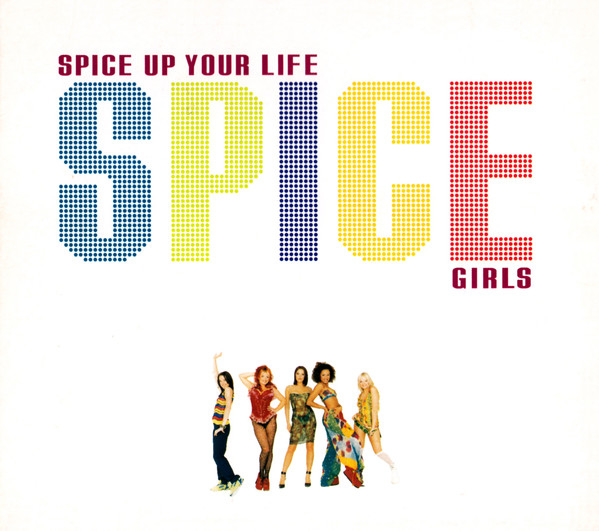
After two pop bangers, introducing the world to the phenomenon that was Baby, Scary, Ginger, Posh, and Sporty, a ballad was needed.
2 Become 1, by The Spice Girls (their 3rd of nine #1s)
3 weeks, from 22nd December 1996 – 12th January 1997
It’s the first rule of nineties pop: any girl group, or boyband, worth their salt needs at least one ballad per year. Especially around Christmas time. And so The Spice Girls start their hattrick of festive chart-toppers with this slow and sultry number.
We’ve gone from friendship never ends on ‘Wannabe’, where boys came a strict second to girl power, to Tonight is the night, When two become one… here. But the ladies are still in control of all the love making. They need the love, they’re the ones who are back for more. It’s a bootie call, basically, two years before All Saints – supposedly the more streetwise girl group – had a hit by that name. The Girls even remind the fellow to rubber up: Be a little bit wiser baby, Put it on, Put it on…
A lot is made nowadays of how nobody realised what this song was about at the time– which is bollocks, frankly, because eleven-year-old me and my friends knew just what they were singing about, and accompanied the lyrics with some predictably childish hand gestures. I will say that, listening now, some of the lines are ropey, such as Any deal that we endeavour, Boys and girls feel good together… And in fact, for the single release, they changed the second half of that line to Love will bring us back together… as they were already aware of their gay fanbase, and wanted to be inclusive. It’s still a clunky line, though.
On the whole, though, it’s a fairly classy first attempt at a ballad, and was always going to be Christmas Number 1, even though they delayed its release so that the Dunblane tribute could have a week at the top. My first thought when I picture ‘2 Become 1’ is the video, with the girls wandering around a time-lapsed version of New York. There’s also the forty-five second fade-out with the violins, in which none of the girls feature, which I’ve always thought was a bold move for a pop single (though radio stations always had the option to cut it early, I suppose).
And so that was 1996. It took us a while to get through in the end, as the turnover of number ones increased. In all, there were eleven one-weekers – which I’m pretty sure is a record for one year– and eight of them came in the second half of the year. 1997 is similarly well spread out, and so we will waste no time in jumping straight into that year, next.
On Wednesday March 13th 1996, the deadliest mass-shooting in British history took place at Dunblane Primary School, near Stirling, Scotland. The murderer entered the school gym, in which a Primary One class were preparing for a PE lesson. He started shooting, and within four minutes had killed sixteen children, as well as their teacher, Gwen Mayor, injuring fifteen others. He then turned the gun on himself. The children who died were all aged between five and six years old.
Knockin’ on Heaven’s Door / Throw These Guns Away, by Dunblane
1 week, from 15th – 22nd December 1996
I sat looking at a blank screen for a good few minutes today, working out how best to start this post. In the end, it I decided it would be easier if I just explained what happened, the history behind this record, and the horrific tragedy that inspired it. There will be no real comment on, or critique of the song, in this post. I wasn’t even sure if I should bother listening to it, as the song is not the story here.
It is, of course, a cover of Bob Dylan’s 1973 hit, which had also charted at #2 for Guns ‘n’ Roses in 1992. Scottish musician Ted Christopher wrote a new verse, one of very few times that Dylan has allowed his lyrics to be altered. Lord these guns have caused too much pain, This town will never be the same… He was supported by Mark Knopfler on guitar (his only appearance on a #1), as well as a choir of children from Dunblane. Christopher also penned the flip-side of the disc, ‘Throw These Guns Away’, which incorporates ‘Auld Lang Syne’. The proceeds from the record’s sales went to various children’s charities.
Over the course of this blog, we’ve featured several songs recorded to commemorate tragedies. Famine in Ethiopia, the Zeebrugge ferry disaster, Hillsborough… All horrible events, marked by largely average songs. But this one… It’s little children murdered in cold blood. I grew up thirty miles from Dunblane, and can remember leaving school that day to news of the mass murder. I remember my mum in tears. Even now, as a teacher in my day job, I’m more emotional than I thought I would be writing this.
The Dunblane Massacre may have been the worst shooting in British history, but thankfully it is unlikely to ever be surpassed. In 1997, two Firearm Acts were passed by parliament, banning almost all privately owned handguns in the UK.
Thanks for reading. If you just stumbled across this blog then please believe that it’s not always like this! Up next, The Spice Girls will be lightening the mood with 1996’s Christmas number one.
A Different Beat, by Boyzone (their 2nd of six #1s)
1 week, from 8th – 15th December 1996
By going down a new-age, world music path, that is. There have been few more distinctive intros to number one singles than this one, with its thunderclaps and African chants. This could be a very interesting song, we think, and hope… and are then left disappointed when it slides into much more predictable, pre-Christmas saccharine
The lyrics are very much of the season: Let’s not neglect our race… Life on earth be one… We are all grains of sand, apparently. At least it’s not Ronan Keating on lead vocals this time, as Stephen Gately’s clear and gentle tones guide us through the verses. Groanin’ Ronan, as we must now and forever refer to him, does get to let rip on the middle eight. He’s seen the rain fall in Africa, and touched the snow in Alaska… And let’s not get into how he pronounces ‘Niagara’, just so the line scans.
It’s easy to be cynical about songs like this, especially coming from bands as lightweight as Boyzone. I salute the message, even if the video – in which the lads descend from the heavens to dance with African children – gives off an iffy, white-saviour message. I have a feeling they were taking their cue from ‘Earth Song’, last year’s messianic Christmas Number One; but neither the song, nor the video, can compete with Michael Jackson’s irrepressible bombast.
This was the only one of Boyzone’s six chart-toppers that the band had a hand in writing, and one of only two that weren’t cover versions. It was also produced, in part, by Trevor Horn of Buggles fame. So, there are much blander offerings to come from Boyzone. There is a decent song buried in here – the title-line hook is good – but it’s smothered in far too much boyband dressing. And it doesn’t build to the big finish that a song like this needs to succeed; it just fizzles out to a simple drumbeat.
I’d assume they were aiming for the festive top spot with this release. But that was never going to happen, what with a record with an even more important message coming up next, and the third single from a certain female five-piece hovering on the horizon.
After partying all night on ‘Flava’, Peter Andre aims for the flip-side of ‘90s R&B: a sickly slow-jam…
I Feel You, by Peter Andre (his 2nd of three #1s)
1 week, from 1st – 8th December 1996
I assumed that by late-1996, as we near my eleventh birthday, there wouldn’t be any number ones that I’d never heard before. But I reckoned against the fact that, as chart-topping turnover increases, there will be lots of one-week wonders to contend with. Like this.
‘I Feel You’ has some nice Boyz II Men style chord changes, a funky bassline and, if you squint your ears (you know what I mean…) you could just about mistake Andre for Michael Jackson. It also has, as most songs of this ilk do, some unintentionally stomach-turning lyrics: I’m thinking about the bedroom, baby, We’d be making love…Making love! As well as a very steamy video featuring, naturally, Andre’s six-pack as one of the main characters.
By and large, though, this song is dull. Spotify only hosts an extended five-minute mix, which is a slog when it comes to a song of this quality. And it’s sexiness is so forced, that anyone who isn’t Pepe Le Pew will be turned off. It’s custom made for horny teenagers to put on their make-out mixtapes, and they were presumably one of the song’s main customer bases in getting it to the top.
This should have been the last we hear from Peter Andre. His star shone brightly, but briefly: seven Top 10 hits between 1996 and 1998. Fate had different ideas, however. It does mean that, in seven years or so, he will reappear, and his best single will belatedly make #1… But at what cost?
Since this is looking like being a very short write-up, I’ll mention something that I’ve hinted at in earlier posts. Late-’96 is the moment that the singles chart became the chart I grew up with – not just in terms of the songs sounding like modern pop, as I’ve discussed before, but in the way they started entering at #1, and staying there for just seven days at a time. As I said above: ‘one-week wonders’, like this one, and the next song we’ll be featuring…
Post-recap, we delve into the next thirty. And it’s a very strong start to the next bunch: more headbanging nastiness from The Prodigy.
Breathe, by The Prodigy (their 2nd and final #1)
2 weeks, from 17th November – 1st December 1996
Is ‘Breathe’ better than ‘Firestarter’? Or is it just more of the same thing? Not that more of the same thing, when the thing in question is ‘Firestarter’, is a bad thing, but still… It’s definitely built around the same foundations: a Drum and Bass beat, a heavy riff, a distinctive sample (that sounds to me like someone throwing nunchuks around), and some pretty aggressive lyrics.
Come play my game… growls Keith Flint, like the villain in a particularly twisted fairy-tale. Inhale, Inhale, You’re the victim! responds rapper Maxim, who also gets the song’s best line: Psychosomatic! Addict! Insane! As with ‘Firestarter’, the lyrics are kept to a minimum, but it seems to be a panic attack set to some Big Beats. The video, featuring lots of creepy-crawlies, darkened rooms, and crazed gurning through holes in walls, certainly emphasises this.
I’d say that if it does pale in comparison with the Prodigy’s previous single, it’s because it lacks the shock factor. Would ‘Breathe’ have been the one that got the tabloids in a tizz, and be better remembered today, if it had come first? Or is it a shadow number-one, that wouldn’t have made it without the controversial predecessor? It’s certainly even heavier than ‘Firestarter’, and less commercial sounding, meaning that it really stands out as one of the angriest, most brutal chart-toppers the UK has ever had.
Again, the song was built around a couple of eclectic samples: a drum fill from Thin Lizzy, and ‘whiplash swords’ (AKA the nunchuks) from the Wu-Tang Clan. It was the 2nd single from the massive ‘Fat of the Land’ album, but it gets overshadowed by the songs released either side of it. Following this came the still-controversial ‘Smack My Bitch Up’, which some say glorified drug use and domestic violence.
But if ‘Breathe’ is overshadowed, then it’s to the song’s benefit. It remains fairly fresh, and still packs a big old punch through your headphones. And whether or not it is better or worse than ‘Firestarter’ is beside the point, really. I’m just glad the Prodigy have been around to add some nasty, punk energy to the top of the charts for 1996.
After this the band took a break for several years, before releasing their fourth album in 2004. They have been putting out new music fairly regularly ever since, though the only consistent member has been founder Keith Howlett, and they scored their most recent Top 10 hit in 2009. Keith Flint, who had struggled with depression and addiction over the years, was tragically found to have hanged himself in 2019.
A Happy Easter to all who celebrate it. I’m launching a new feature this Easter Sunday, something to enjoy while rendered immobile by one too many chocolate eggs… ‘Today’s Top 10’! My blog focuses very intently on every song that’s made #1 in the UK, and I often try to draw conclusions on how popular music has been shaped, and has shifted, over the years based on one tune alone. Which is actually quite limiting, because the singles charts have always been about more than just the number one. Over the 70-plus years of the singles chart, we’ve had a weekly Top 12, a Top 30, a Top 40, a Top 75, and now a Top 100.
So I want to, every so often, single out a random Top 10 from history, to look at in more detail. My version of ‘Pick of the Pops’, if you will. Cue the music….! Completely at random, using an online date generator, the first to come out the hat was 1970: the singles chart as it stood fifty-four years ago today. It features, inevitably, a #1 we’ve met before (plus one former #1), as well as songs by some of the biggest acts of all time. So let’s crack on…
#10 – ‘Don’t Cry Daddy’, by Elvis Presley (down 1 / 6 weeks on chart)
The early-seventies was a sort of musical wilderness: after the post-sixties comedown, a year or so out from the glam rock takeover of 1972-73. Speaking of musical wildernesses, here’s Elvis with a maudlin ballad about a break-up (or is it a mother’s death?) written from the POV of the couple’s daughter. Elvis croons the life out of it, and that voice could sell anything, but even he struggles to imbue lines like Daddy you’ve still got me and little Tommy, Together we’ll find a brand new mommy… with any sort of gravitas. He was still capable of greatness in the early seventies – in a few months he’d be back on top with one of his biggest hits, ‘The Wonder of You’ – but this is pretty saccharine.
#9 – ‘Everybody Get Together’, by The Dave Clark Five (down 1 / 5 weeks on chart)
The DC5 had scored their one and only #1, the stomping ‘Glad All Over’, more than six years earlier. So it is impressive that they were still hanging around the Top 10, when so many of their ’60s contemporaries had already faded away. This is a call-to-arms, a song with a message: Everybody get together, Try to love one another right now… Originally written as a folk song, and a hit in 1967 for the Youngbloods at the height of flower-power, The Dave Clark Five clearly felt that the sentiment was worth one more go. But there’s a droning, heavy feel to this version that feels weary, as if they’ve given up on the message even before the end of the song. It’s appropriately downbeat, perhaps, for the end of the sixties and the start of an uncertain new decade. Fitting too, as this was the Five’s final Top 10 hit. They would disband by the end of the year.
#8 – ‘Something’s Burning’, by Kenny Rogers & The First Edition (up 3 / 9 weeks on chart)
New to this week’s Top 10, and maintaining our run of hits by artists that we’ve already met in the #1 position, it’s Kenny Rogers and The First Edition with a sexy, sexy song. The verses are soft and slinky, lines like You lie in gentle sleep beside me, I hear your warm and rhythmic breathing… but it builds to a heated crescendo in the chorus. Kenny growls Here it comes, Can’t you feel it baby… and we know he’s not talking about the No. 42 bus. Lord have mercy…! It’s a world away from his much more gentle, much more ‘country’, solo hits like ‘Lucille’.
#7 – ‘Let It Be’, by The Beatles (down 3 / 4 weeks on chart)
Some of you may have heard this one before… The last single released before Paul McCartney’s departure heralded the end of history’s greatest group. There’s nothing new I can say about the record as a whole, so I’ll single out my two personal favourite moments. George Harrison’s snarling solo (especially on the album version) and the way Paul’s scouse accent sneaks through in the word ‘trouble’. Perhaps I’m just used to the streaming age, where songs hang around the charts for……ever, but for a song as legendary as ‘Let it Be’ not to make #1, and then be slipping down to #7 after just four weeks, seems surprising.
#6 – ‘That Same Old Feeling’, by Pickettywitch (down 1 / 6 weeks on chart)
I can’t say I’ve ever heard this one, though it had been as high as #5. It’s a nice enough, Motown-leaning tune done in a late-sixties, bubblegum style. Pickettywitch – I can’t decide if that’s a great or a terrible name – are another sign that though we may be in March of 1970, we’re still in the sixties going by much of this Top 10. Lead singer Polly Brown has a decent voice, reminding me of Diana Ross.
#5 – ‘Young, Gifted and Black’, by Bob & Marcia (up 1 / 4 weeks on chart)
I’ve made many a reference to the fact that reggae is the most indestructible of genres on the UK singles chart. Never the defining sound of an age, but always popping up when you least expect it. In 1970, it really was a new sound, Desmond Dekker having scored the first ‘official’ reggae #1 (if you ignore The Equals, and ‘Ob La Di…’) the year before. This is reggae + , with lots of strings, and rocking drums, but I’d say it still counts. More significant, though, are the lyrics: In the whole world I know, There’s a million boys and girls, That are young, gifted and black… And that’s a fact! Written and originally recorded by Nina Simone a few months earlier, right at the end of the decade that had brought the Civil Rights Movement to a head, for this to make the Top 10 in the UK feels very significant, and the second song in this rundown that could be described as a ‘rallying cry’.
#4 – ‘Wand’rin’ Star’, by Lee Marvin (down 2 / 9 weeks on chart)
A former number one – which I go into much more detail on here – that had kept ‘Let It Be’ from top spot a few weeks before. It was taken from the movie version of ‘Paint Your Wagon’, which was a box office flop. A bizarre #1 at the start of a decade full of bizarre #1s, Lee Marvin officially has the lowest voice ever heard on a chart-topping single (*disclaimer – may not be true*), and uses it brilliantly on this anti-social anthem: I never seen a sight that didn’t look better lookin’ back…
#3 – ‘Can’t Help Falling in Love’, by Andy Williams (non-mover / 4 weeks on chart)
Elvis makes a second appearance in the Top 10, in spirit at least, with Andy Williams’ belting cover of the King’s 1962 #1, ‘Can’t Help Falling in Love’. If it was impressive that the DC5 were still having hits in 1970, then we should also give a nod to the fact that Williams debuted with ‘Butterfly’ – his sole chart-topper – in 1957. But then again, crooners like Williams are timeless, much less prey to shifting trends than pop groups. The video above, which I think comes from later in the decade, is a spectacular glimpse into ’70s variety shows: the multi-coloured steps, the giant ‘ANDY’, the cardigan…
#2 – ‘Knock, Knock Who’s There?’, by Mary Hopkin (up 5 / 2 weeks on chart)
Venture deep enough into a springtime chart, and there’s a good chance you’ll meet a Eurovision Song Contest entry. ‘Knock, Knock Who’s There?’ was the UK’s 1970 offering, finishing second on the night to Ireland’s Dana. This is very schmaltzy, very middle of the road – not a patch on Hopkin’s huge breakthrough #1 ‘Those Were the Days’ – but it’s a darn sight better than the horrible ‘All Kinds of Everything’. This was a big departure from Hopkin’s usual, folky offerings, and she wasn’t a fan: “I was so embarrassed about it. Standing on stage singing a song you hate is just awful.” Hate it though she might have, it brought about her final Top 10 hit.
#1 – ‘Bridge Over Troubled Water’, Simon & Garfunkel – (non-mover / 7 weeks on chart)
In the middle of a three-week run at the top, ‘Bridge Over Troubled Water’ was just the 3rd number one of the 1970s, but is probably one of the decade’s biggest and best-loved songs. Simon wrote it, while Garfunkel gave one of the great vocal performances (something that apparently irks Paul to this day…) You can read my original post here.
In a way, ‘Bridge Over Troubled Water’ is the perfect number one for this chart. March 1970 wasn’t the sixties, but it’s wasn’t the seventies as we remember it either. ‘Bridge…’ is timeless, not beholden to many of the styles of the time, and could have been a #1 at most points in chart history. Elsewhere in the Top 10, we tick a few common chart boxes: soundtrack hits, Eurovision, Elvis, The Beatles… Maybe the two most relevant songs, though, are ‘Everybody Get Together’, and ‘Young, Gifted and Black’, which represent the social and civil rights movements that had defined the latter part of the 1960s. The hippy dream may have died, Dr King may have been killed, but hope springs eternal…
That was fun, and hopefully worthwhile. I’ll do another one sometime, as a break from our normal proceedings. Next up it’s back to 1996…
Let’s recap, then. And it’s a landmark: our the 25th, the Silver Recap!
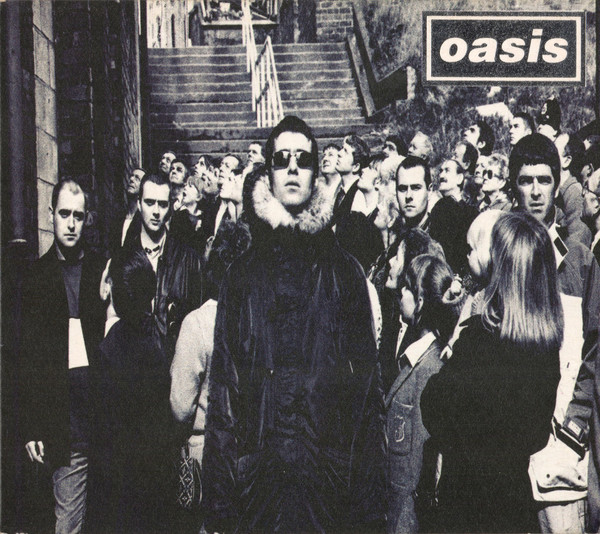
The past thirty #1s have taken us across a regulation year and a half of chart-topping history, from spring 1995 to late autumn 1996. This spell has run pretty much concurrent with the very height of Britpop but, as I discussed in a special post, very little of it actually made the top. We’ve had one each from Oasis and Blur – the latter of whom won the ridiculously hyped ‘Battle of Britpop’ – and not much else.
Away from the Big Two, you could argue that the Lightning Seeds were a Britpop band, and that almost thirty years on their Euro ’96 anthem ‘Three Lions’ is the genre’s most enduring hit. You could also argue that the Prodigy and the Chemical Brothers, while primarily dance acts, had strong Britpop elements in their two #1s (especially ‘Setting Sun’, with Noel Gallagher on vocals). We could even really stretch things and claim Babylon Zoo’s ‘Spaceman’ for Britpop, as there were elements of it mixed in amongst the techno and the grunge. I won’t go so far as to claim Texas-based Deep Blue Something for Britpop; but they did give us our one other rock-based chart-topper, ‘Breakfast at Tiffany’s’.
Britpop aside, one of the other big recent stories was Take That – the decade’s biggest boyband – bowing out after eight number ones in less than three years. They did so with the overblown ‘Never Forget’ and a fairly phoned-in cover of ‘How Deep Is Your Love’, before frontman Gary Barlow launched a solo career with the instantly forgettable ‘Forever Love’. Don’t worry, Take That will be back – just not for a few recaps yet.
1995-6 can also be pinpointed as the moment when rap went mainstream. It’s a genre that has been cropping up in the top spot, every now and then, since the mid-eighties. Often, though, hip-hop has been treated as a novelty: think Vanilla Ice, or Partners in Kryme, or the jarring rap from ‘Rhythm Is a Dancer’. Coolio’s ‘Gangsta’s Paradise’ was uncompromisingly real, though, and had an important message; while The Fugees’ take on Roberta Flack’s ‘Killing Me Softly’ showed how to incorporate rap into a pop song without taking away its edge. This pair remain two of the highest-selling hip-hop records of all time, and paved the way for the likes of ‘Ready or Not’, the Fugees’ much less commercial-sounding follow-up.
Elsewhere, Michael Jackson had his most successful chart period, many years after his true artistic peak, scoring two #1s in four months with the sappy ‘You Are Not Alone’ and the messianic ‘Earth Song’. Another pop superstar, George Michael, bowed out from chart-topping duty with the touching (if a little dull) ‘Jesus to a Child’, and a much more uplifting ode to casual sex in ‘Fastlove’. Shaggy gave us our now mandatory shot of ‘90s reggae, Livin’ Joy provided the dance-banger (though our dance-banger ratio is much down on recent recaps), and Gina G brought us the latest camp Eurovision classic.
One other thing I should mention before we get to the awards is that in the second half of 1996 a pretty big shift occurred. Pop music started to sound very modern. Ground Zero is the Spice Girls’ ‘Wannabe’, which introduced us to a genuine pop phenomenon, and to a breezy, streetwise nineties-bubblegum sound that will set the standard for pop as we barrel towards the new millennium. But it wasn’t just the Spice Girls. Mark Morrison, Peter Andre, and Boyzone, all made the top with songs that sound like pop music will, for better or for worse, from now until the mid-00s. The fact that I was almost eleven at the time of this recap, and for the first time fully aware of what was in the charts, perhaps makes this moment seem bigger than it does for somebody older or younger than me. But I think there’s something in my take on mid-1996 marking a shift into ‘modern’ pop.
Anyway, to the awards. Starting as is now traditional with The ‘Meh’ Award, we peruse the songs that stirred us very little. I have a shortlist that includes MJ’s ‘You Are Not Alone’, George Michael’s ‘Jesus to a Child’, and Boyzone’s simpering cover of ‘Words’. But for the winner I’m choosing Gary Barlow’s utterly underwhelming ‘Forever Love’, which was so dull it basically killed his solo career before it had even begun.
The WTAF Awardfor being interesting if nothing else has a few decent choices this time around. There’s another MJ contender, the overblown ‘Earth Song’. There’s the latest Levi’s Jeans chart-topper: Babylon Zoo’s zany, genre-hopping ‘Spaceman’. There’s the intense ‘Firestarter’, which had Middle England clutching their pearls. There’s even ‘Wannabe’, a phenomenon, yes; but also a truly bizarre pop song when you actually sit down and listen to it. Of the four, ‘Wannabe’ is a stretch, ‘Earth Song’ is a little too well-intentioned, and ‘Firestarter’ a little too good, for this award. Which leaves Babylon Zoo’s nihilistic anthem for the win!
You may have noticed that I haven’t yet mentioned the one act that have dominated the past year and a half of chart action… That’s because I was saving them for TheVery Worst Chart-Topper award. I am talking, of course, about Robson & Jerome, the first (though sadly not the last) of Simon Cowell’s crimes against music. Three #1s, thirteen weeks at the top, seven cover versions spread across their various discs… They are the only contender here, it’s just a question of which record to choose. It makes sense to go for the first one, ‘Unchained Melody’ / ‘White Cliffs of Dover’, because it was A) terrible, B) number one for the longest stretch, and C) it is currently the best-selling single of the entire decade…
Finally, then, the latest Very Best Chart-Topper. Four contenders spring to mind, all from 1996. (It has been a much better year for #1s than 1995, which could probably go down as one of the very worst…) In chronological order we have: Oasis’s soaring ‘Don’t Look Back in Anger’, the Prodigy’s incendiary (gettit?) ‘Firestarter’, the Chemical Brothers’ Beatles-based banger ‘Setting Sun’, and ‘Say You’ll Be There’, AKA The Spice Girls best song.
I’m torn. This is probably my only chance of giving the award to my two favourite childhood groups, Oasis and the Spice Girls. But I think the Spice’s would be a stretch – as fun as SYBT is – and ‘Don’t Look Back in Anger’ has simply been done by this point. ‘Firestarter’ and ‘Setting Sun’ are cut from the same cloth, and going by my write ups I enjoyed the latter more. ‘Firestarter’ was a huge cultural moment, but I think ‘Setting Sun’ is the better record. Plus, with Noel G on vocals it means Oasis still get a look in (and that the Beatles do kind of claim their second ‘Very Best’ award…) The Chemical Brothers it is!
To recap the recaps:
The ‘Meh’ Award for Forgettability
‘Hold My Hand’, by Don Cornell.
‘It’s Almost Tomorrow’, by The Dream Weavers.
‘On the Street Where You Live’, by Vic Damone.
‘Why’, by Anthony Newley.
‘The Next Time’ / ‘Bachelor Boy’, by Cliff Richard & The Shadows.
‘Juliet’, by The Four Pennies.
‘The Carnival Is Over’, by The Seekers.
‘Silence Is Golden’, by The Tremeloes.
‘I Pretend’, by Des O’Connor.
‘Woodstock’, by Matthews’ Southern Comfort.
‘How Can I Be Sure’, by David Cassidy.
‘Annie’s Song’, by John Denver.
‘I Only Have Eyes For You’, by Art Garfunkel.
‘I Don’t Want to Talk About It’ / ‘The First Cut Is the Deepest’, by Rod Stewart.
‘Three Times a Lady’, by The Commodores.
‘What’s Another Year’, by Johnny Logan.
‘A Little Peace’, by Nicole.
‘Every Breath You Take’, by The Police.
‘I Got You Babe’, by UB40 with Chrissie Hynde.
‘Who’s That Girl’, by Madonna.
‘A Groovy Kind of Love’, by Phil Collins.
‘Do They Know It’s Christmas?’, by Band Aid II.
‘Please Don’t Go’ / ‘Game Boy’, by KWS.
‘Dreams’, by Gabrielle.
‘Forever Love’, by Gary Barlow.
The WTAF Award for being interesting if nothing else
‘I See the Moon’, by The Stargazers.
‘Lay Down Your Arms’, by Anne Shelton.
‘Hoots Mon’, by Lord Rockingham’s XI.
‘You’re Driving Me Crazy’, by The Temperance Seven.
‘Nut Rocker’, by B. Bumble & The Stingers.
‘You’ll Never Walk Alone’, by Gerry & The Pacemakers.
‘Little Red Rooster’, by The Rolling Stones.
‘Puppet on a String’, by Sandie Shaw.
‘Fire’, by The Crazy World of Arthur Brown.
‘In the Year 2525 (Exordium and Terminus)’, by Zager & Evans.
‘Amazing Grace’, The Pipes & Drums & Military Band of the Royal Scots Dragoon Guard.
‘Kung Fu Fighting’, by Carl Douglas.
‘If’, by Telly Savalas.
‘Wuthering Heights’, by Kate Bush.
‘Hit Me With Your Rhythm Stick’, by Ian Dury & The Blockheads.
‘Shaddap You Face’, by Joe Dolce Music Theatre.
‘It’s My Party’, by Dave Stewart & Barbara Gaskin.
‘Save Your Love’ by Renée & Renato.
‘Rock Me Amadeus’, by Falco.
‘Pump Up the Volume’ / ‘Anitina (The First Time I See She Dance)’, by M/A/R/R/S.
‘Doctorin’ the Tardis’, by The Timelords.
‘Sadeness Part 1’, by Enigma.
‘Ebeneezer Goode’, by The Shamen.
‘I Would Do Anything for Love (But I Won’t Do That)’, by Meat Loaf.
‘Spaceman’, by Babylon Zoo.
The Very Worst Chart-Toppers
‘Cara Mia’, by David Whitfield with Mantovani & His Orchestra.
‘The Man From Laramie’, by Jimmy Young.
‘Roulette’, by Russ Conway.
‘Wooden Heart’, by Elvis Presley.
‘Lovesick Blues’, by Frank Ifield.
‘Diane’, by The Bachelors.
‘The Minute You’re Gone’, by Cliff Richard.
‘Release Me’, by Engelbert Humperdinck.
‘Lily the Pink’, by The Scaffold.
‘All Kinds of Everything’, by Dana.
‘The Twelfth of Never’, by Donny Osmond.
‘The Streak’, by Ray Stevens.
‘No Charge’, by J. J. Barrie
‘Don’t Give Up On Us’, by David Soul
‘One Day at a Time’, by Lena Martell.
‘There’s No One Quite Like Grandma’, by St. Winifred’s School Choir.
‘I’ve Never Been to Me’, by Charlene.
‘Hello’, by Lionel Richie.
‘I Want to Know What Love Is’, by Foreigner.
‘Star Trekkin’’, by The Firm.
‘Nothing’s Gonna Change My Love for You’, by Glenn Medeiros.
‘Let’s Party’, by Jive Bunny & The Mastermixers.
‘(Everything I Do) I Do It for You’, by Bryan Adams.
‘Don’t Stop (Wiggle Wiggle)’, by The Outhere Brothers.
‘Unchained Melody’ / ‘White Cliffs of Dover’, by Robson & Jerome.
The Very Best Chart-Toppers
‘Such a Night’, by Johnnie Ray.
‘Cherry Pink and Apple Blossom White’, by Perez ‘Prez’ Prado & His Orchestra.
‘Great Balls of Fire’, by Jerry Lee Lewis.
‘Cathy’s Clown’, by The Everly Brothers.
‘Telstar’, by The Tornadoes.
‘She Loves You’ by The Beatles.
‘(I Can’t Get No) Satisfaction’, by The Rolling Stones.
‘A Whiter Shade of Pale’, by Procol Harum.
‘I Heard It Through the Grapevine’, by Marvin Gaye.
‘Baby Jump’, by Mungo Jerry.
‘Metal Guru’, by T. Rex.
‘Tiger Feet’, by Mud.
‘Space Oddity’, by David Bowie.
‘I Feel Love’, by Donna Summer.
‘Heart of Glass’, by Blondie.
‘The Winner Takes It All’, by ABBA.
‘My Camera Never Lies’, by Bucks Fizz.
‘Relax’ by Frankie Goes to Hollywood.
‘You Spin Me Round (Like a Record)’, by Dead or Alive
‘Stand by Me’, by Ben E. King (Honorary Award)
‘It’s a Sin’, by Pet Shop Boys.
‘Theme from S-Express’, by S’Express.
‘Nothing Compares 2 U’, by Sinéad O’Connor.
‘Would I Lie to You?’, by Charles & Eddie.
‘Stay Another Day’, by East 17.
‘Setting Sun’, by The Chemical Brothers.
Up next, we’ll briefly pause the regular countdown. I’m going to launch a new series, and take us back to the 1970s…
Robson & Jerome return for their third and final number one, and bow out with a 100% chart-topping record. Which is something that can’t be sniffed at. Unlike their records, which can. Because they stink.
What Becomes of the Broken Hearted / Saturday Night at the Movies / You’ll Never Walk Alone, by Robson & Jerome (their 3rd and final #1)
2 weeks, from 3rd – 17th November 1996
It’s more of the same: more granny-baiting covers of sixties classics, more cheap and tacky production, more dodgy vocals… Much more, in fact, because they end things with the first and only triple ‘A’-side to make #1. Three songs, give me strength… (How does a triple ‘A’ even work? It’s simple geometry: discs don’t have three sides! Was this released as a triangle?)
The ‘lead’ single from the three is a cover of Jimmy Ruffin’s ‘What Becomes of the Broken Hearted’. As with last time, and the pair’s take on ‘Up on the Roof’, there is an element of this being a good thing. ‘What Becomes…’ is an all-time classic, and even in this highly diluted version it’s good to see it having a moment on top of the charts. And this isn’t as heinous as some of their other chart-topping moments. The production is quite lush and substantial, and they sensibly rope a gospel choir in to do much of the actual singing.
If only they had left it at that… The Official Charts Company lists just the one song, though maybe they simply don’t have the space to squeeze in three fairly long titles. All other sources have this as a threesome though, and so we’ll have to give the other two a spin. Starting with a case of GBH on The Drifters’ ‘Saturday Night at the Movies’. The synthesisers are set for ‘jaunty’, as Jerome Flynn does his best Johnny Moore high-notes… The less said the better. (I will admit that the video is quite fun…)
We end with a song that’s already been #1 twice and that really didn’t need to return, especially not in a version as lightweight as this. ‘You’ll Never Walk Alone’ is a technically demanding song and, although the producers try very hard to drown out Robson & Jerome’s reedy vocals with lots of bombast, we can sadly still hear them. You can see why the OCC has been tempted to erase it from history. Elsewhere on their second album, ‘Take Two’, lurk covers of ‘Oh Pretty Woman’, ‘Keep the Customer Satisfied’ and – presumably because Christmas was just around the corner – ‘Silent Night’.
We can perhaps be glad, then, that they decided to end their music careers rather than release any further singles. They had, after all, been reluctant to do it in the first place, and not even the offer of three million pounds from Simon Cowell could persuade them to do a third album. I can forgive them almost everything, music-wise, knowing how much that must have annoyed Cowell. Unfortunately, he discovered an even more lucrative way of unleashing terrible music on the masses. More on that soon…
To be honest, it’s easy to forgive Robson and Jerome most things, as they both seem like decent blokes. Green has been a fixture on British TV ever since, both in acting and in presenting travel and fishing documentaries. Flynn laid-low for a few years, before returning to the spotlight with a scene-stealing turn as Bronn in ‘Game of Thrones’. The pair are, you’ll be very glad to hear, still firm friends.
Up next, a recap. And I have a feeling that this pair may well be up for an award…