805. ‘Gym and Tonic’, by Spacedust

We’re about to encounter one of the biggest pop songs of all time, from a legendary star. But before that, a brief interlude. A real ‘um, okay’ moment…

Gym and Tonic, by Spacedust (their 1st and only #1)

1 week, from 18th – 25th October 1998

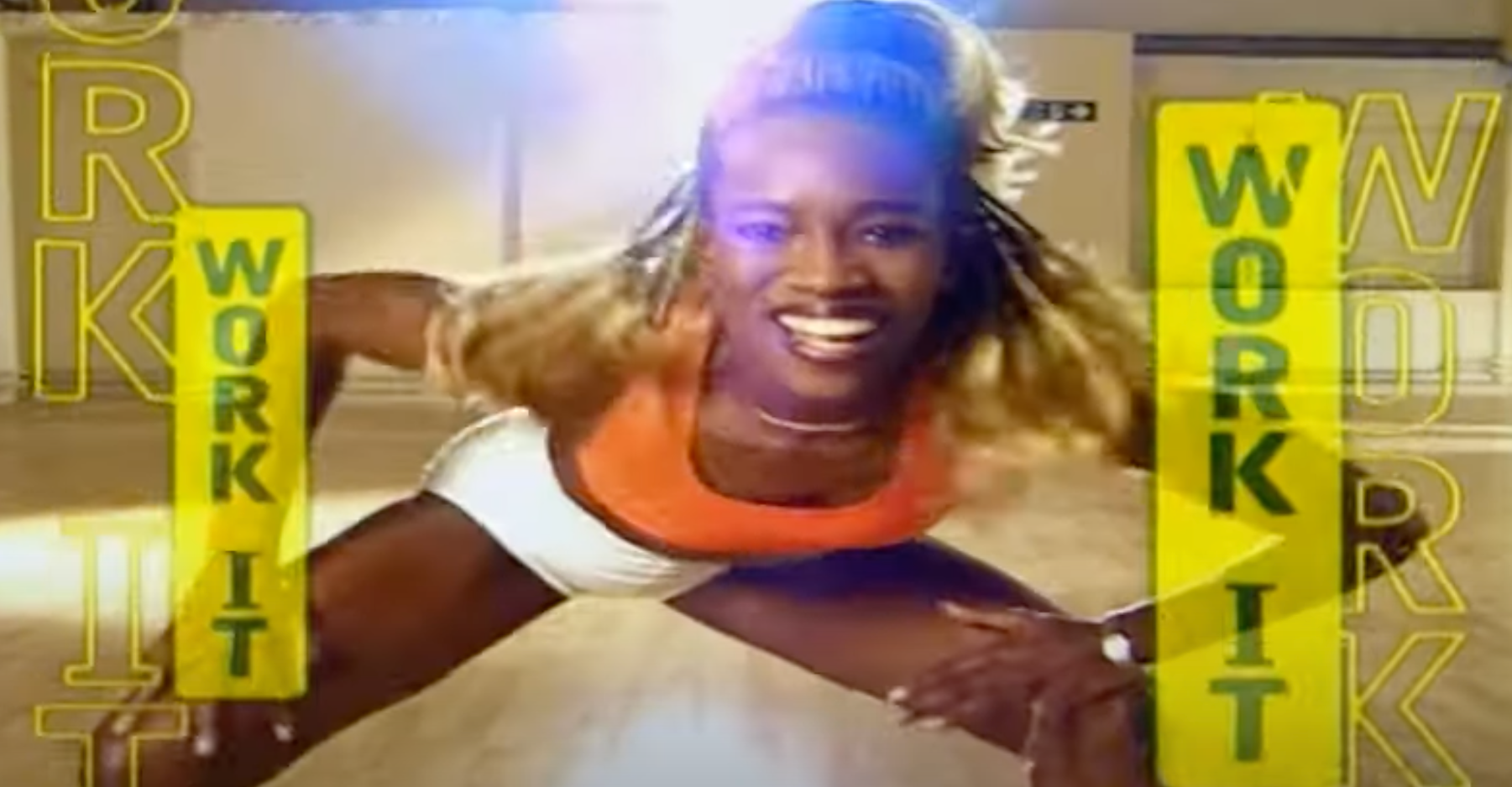
‘Gym and Tonic’ is, essentially, an aerobics workout set to a hi-NRG beat. Stand with your feet parallel, A little more than hip distance apart… Apparently it was based on a Jane Fonda workout from the eighties, with the vocals here re-recorded to avoid a lawsuit. How fun it would have been if Jane had allowed it, and had featured on a number one single!

Although had that been the case, then it would presumably have been the original version by French DJ Bob Sinclar, very popular in Ibiza that summer, that would have been the hit. It was produced by Thomas Bangalter, AKA one half of Daft Punk (Yes, a member of Daft Punk, one of the most respected dance acts of all time, is involved in this nonsense.) Their version was never fully released due to the Fonda sample, but survives on YouTube. I’m not sure even an experienced musicologist could tell the difference between that and the Spacedust version – a few scratchy cuts aside – but they got away with it.

The most interesting thing here, musically, is the Balearic riff that plays over the top of the beat and all the five, six, seven, eight and backs. It sounds like all the dance hits to come between 1999 and the start of the new century. The future of dance music, first revealed in a piece of fluff like this…

Still, you can never underestimate the popularity of a dance song that tells you what to do in the lyrics: ‘The Time Warp’, ‘The Cha-Cha Slide’… This. All big hits. Although ‘Gym and Tonic’ did also strike it lucky by sneaking a week on top with very low sales. It was by far the year’s lowest selling #1, only the 109th biggest selling hit of 1998 (meaning that seventy-nine singles which didn’t make number one outsold it).

Spacedust were a British production duo, and beyond this surprise chart-topper they had one further hit, a #20 with ‘Let’s Get Down’. And I’ll admit I’ve been bopping along to this track for the past half hour, enjoying its infectious energy. It’s silly, but not at all heinous. And the video is a whole lot of camp fun, almost reinventing the phrase ‘cheap and cheerful’. It’s oddities like this which keep writing these posts interesting. It can’t all be era-defining pop classics. Speaking of which…

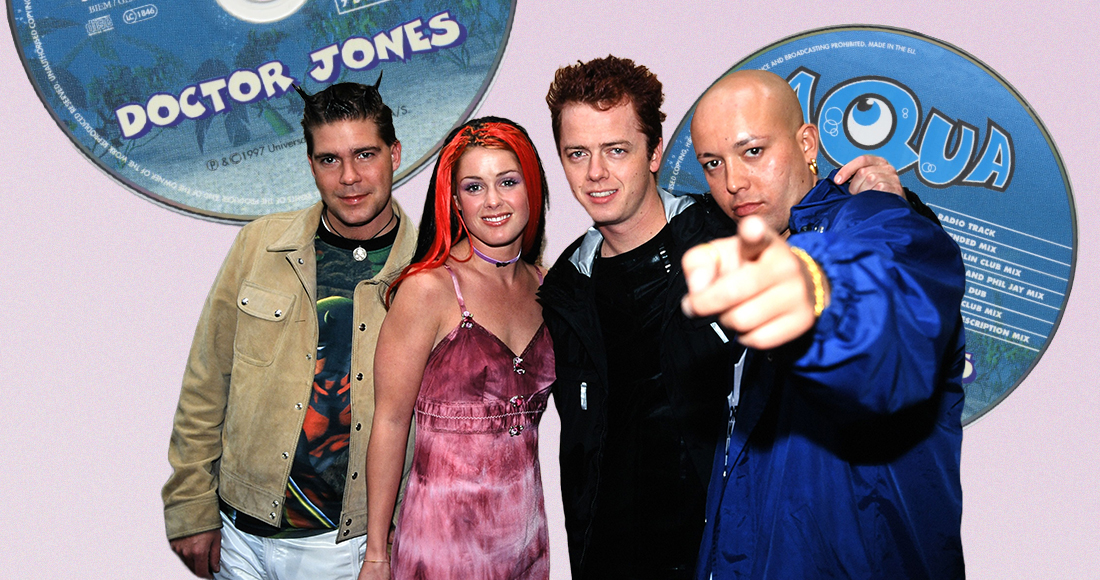
783. ‘Doctor Jones’, by Aqua

Aqua, looking for all the world like they’d be one-hit wonders, surprise us all by returning with not just a second hit, but a second number one.

Doctor Jones, by Aqua (their 2nd of three #1s)

2 weeks, from 1st – 15th February 1998

Perhaps the trick was that they stuck to a clear ‘if it ain’t broke’ formula. Female and male vocals, Eurodance production, about five different ultra-catchy hooks… The demand was obviously there post-‘Barbie Girl’. The tempo is increased from their earlier hit, giving this a proper Hi-NRG bounce to it. And like its predecessor, this single is also based around a pop culture icon.

The ‘Doctor Jones’ of the title is Indiana Jones, as made clear by the video in which Lene (formerly Barbie) and the other two members of Aqua plough through the jungle in search of René (formerly Ken). Doctor Jones, Doctor Jones wake up now… prattles the chorus, and he does wake up just in time to save his bandmates from being boiled alive. As with the ‘Barbie Girl’ video it’s good camp fun.

This whole endeavour, is of course, complete cheese, and if your tolerance for cheesy Eurotrash is low then this record certainly won’t be for you. I’m fairly immune to it, but the ayypee-aieeooaayyoo-ayypeeay-eh (I believe that is the official transliteration…) line in the chorus is annoying even to me. And sadly, René’s role is much less than it was in ‘Barbie Girl’, with his gravelly voice being used mainly to echo Lene’s lead.

It’s not as good as their biggest hit, or as memorable, but it does successfully manage the difficult balancing act of replicating what made the former such a big smash, recycling it cleverly, but without simply churning out ‘Barbie Girl Part II’. That’s quite a hard trick to pull off, especially when their first hit had had such massive success but had been filed away quite firmly in the ‘novelty’ drawer.

I’m starting to sound like quite the Aqua apologist. But it wasn’t just me, honest! 1998 was their year! Not only did they manage this second number one, they will soon manage a third. A third that will prove them capable of writing a proper pop song, and not just novelty dance numbers.

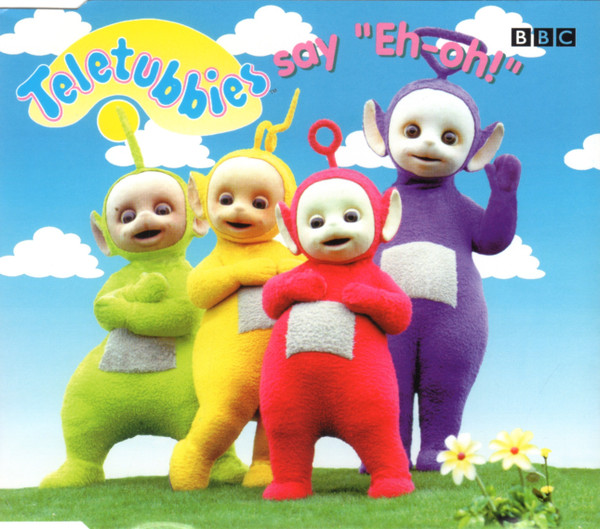
778. ‘Teletubbies Say ‘Eh-Oh!”, by The Teletubbies

From one of the classiest, most understated ‘novelty-in-inverted-commas’ #1s off all time… To the other end of the spectrum…

Teletubbies Say ‘Eh-Oh!’, by The Teletubbies (their 1st and only #1)

2 weeks, from 7th – 21st December 1997

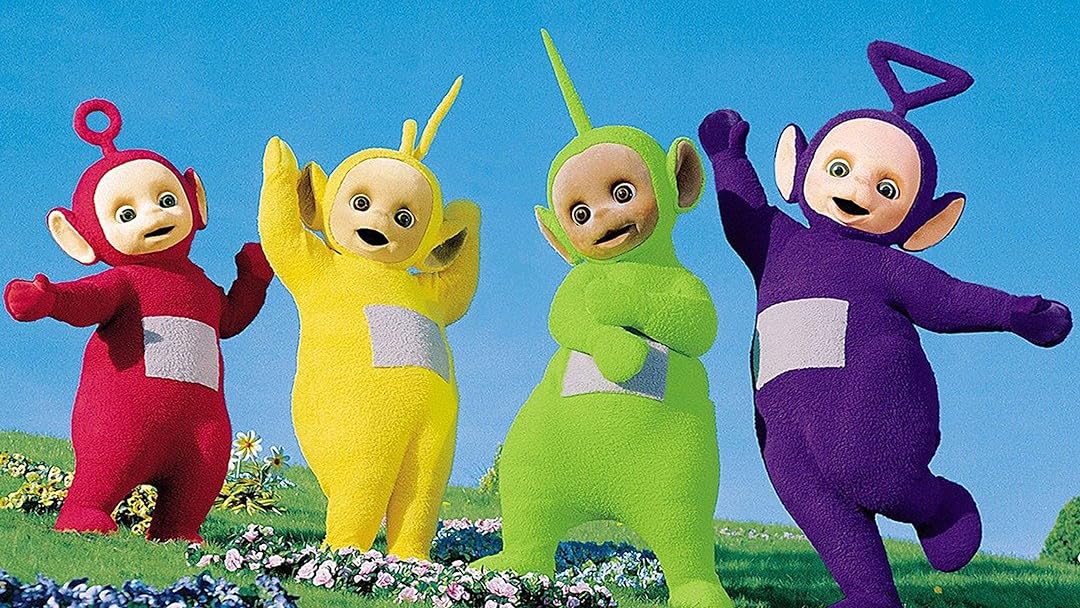
It’s a remix of the theme song to the biggest children’s TV show of the age: the Teletubbies. First aired in March 1997, by August it was reaching an audience of two million. I was one of them, I must admit, though I was a good decade older than the intended audience. I don’t know, there was just something grotesquely fascinating about the four… creatures (what the hell are they?) the grassy dome they lived in, the flowers that talked, the pink pancakes they ate… So huge was the programme that a spin-off single was inevitable, just in time for the Christmas number one race. They didn’t quite make it, but two weeks at number one plus over a million copies sold is pretty impressive.

Sadly, but not surprisingly, as a pop single this is utter garbage. It just about works as a theme-tune (though in these days of streaming you’d happily ‘Skip Intro’) but removed from the context of the show it sounds absolutely bonkers. And not good bonkers. There’s the babyish voices, the rather camp narrator, interludes in which some sheep sing ‘Baa Baa Black Sheep’ and a matronly old lady sings ‘Mary, Mary Quite Contrary’, and a prolonged bout of diarrhoea (which turns out to be the tubby custard machine, when you watch the video…) All set to a rinky-dink synthesised banjo riff.

At the same time, there’s not much point in getting annoyed about this. It is what it is. Crap, but also something of a time capsule, a glimpse back into those carefree, late-twentieth century days. You could raise an eyebrow at the ridiculous quantities of this record that were sold – well over half a million copies during its two weeks at the top – but then single sales were at their highest ever levels in late-1997, something we can perhaps explore in our next post.

The obvious comparison to make here is to cast your minds back four years, to Mr. Blobby’s similarly bizarre festive release. But Blobby’s song has an anarchic quality to it, a level of chaos and a tongue-in-cheek quality that ‘Teletubbies Say “Eh-Oh!”’ lacks. The only way you could find another level on which to enjoy this song is if you were seriously high.

Finally, I have to raise a hand and admit that I am, in my small way, to blame for this record doing so well. Or at least my younger brother is, as he bought me a cassingle copy for Christmas that year. I wonder how many other copies were bought as a joke, rather than for any love of the song. Teletubbies was only on our screens for four years (in its original run) but its cultural impact was massive. In fact, if you have a spare minute, why not remind yourself of the ‘Tinky Winky Controversy’, and feel a sense of relief that something so narrow-mindedly crazy couldn’t happen in today’s level-headed world…

776. ‘Barbie Girl’, by Aqua

One of the reasons that ‘Spice Up Your Life’, the Spice Girls hot new single, didn’t stay at number one for very long is perhaps because Spice mania was cooling off. But another is that one of the year’s (nay, the decade’s) biggest hits was waiting in the wings…

Barbie Girl, by Aqua (their 1st of three #1s)

4 weeks, from 27th October – 23rd November 1997

Hiya Barbie… Hi Ken… Before we get to the song’s subject, and the lyrics, we should note that otherwise this is fairly standard, late-nineties Eurodance beat and production. Synth strings and an airy keyboard line (I think the technical term is ‘Balearic’). Fill it with generic lyrics about reaching for the sky and living it large, and you’d have a standard dance hit, on a par with Whigfield’s ‘Saturday Night’, say. But the melody and the production are not why this was such a big hit.

‘Barbie Girl’ was so huge because of its subject matter, and how it somehow manages to be utterly dumb and yet quite clever; an annoying novelty and yet a total earworm. Take two of the song’s biggest hooks: Come on Barbie, Let’s go party… Ah, ah, ah, yeah… and Life in plastic, It’s fantastic… The first is stupidly simple, and yet it’s been in your head for the best part of three decades. The second is actually quite brilliant. The whole song succeeds because it constantly straddles this line between greatness and nonsense.

You could make too much of the song’s social commentary. It’s got some fun lines, and some borderline innuendo; but it’s hardly a feminist manifesto. The song’s best section is the second verse, because the way the beat rests before swishing into it is great, and because it contains the most ‘challenging’ lyrics. I can act like a star, I can beg on my knees… Barbie chirrups, before Ken ignores her with a Come jump in, Bimbo friend, Let us do it again… (Personally, René Dif’s gravelly, sleazy ‘Ken’ is the reason this song works. I think if it were all on Lene Nystrøm’s high-pitched ‘Barbie’ it would really start to grate.)

I think this also might be an example of the ABBA-factor, which I’ve mentioned before with non-English speaking acts. Because English wasn’t Aqua’s first language, the lyrics are perhaps simpler than someone with a native-level ability would have come up with. But this also means that the lyrics stick very easily. Aqua were Danish, and this was the third single from their debut album. They had been around since 1989, though the closest they’d come to success was as Joyspeed, with this truly spectacular happy-hardcore version of ‘Itsy Bitsy Spider’.

Mattel, the creators of Barbie, were not amused by this global smash, claiming that it besmirched the doll’s image and turned her into a ‘sex object’. They embarked on a five-year lawsuit, while Aqua’s label filed a countersuit for defamation. Both were dismissed, the judge wrapping up with the brilliant line: “Both parties are advised to chill.” By 2009, Mattel’s stance had softened, and they were using the track in adverts. By 2023, they had licensed the song for use in the ‘Barbie’ movie, as well as a remake by Nicki Minaj and Ice Spice. In fact, watching the video to ‘Barbie Girl’ now, it’s interesting to see just how similar it is to the world created for the movie.

You’d have gotten very long odds on Aqua having any follow-up hits, as this has ‘one-hit wonder’ written all over it. Well, not only did they not disappear, they have two further number ones to come…

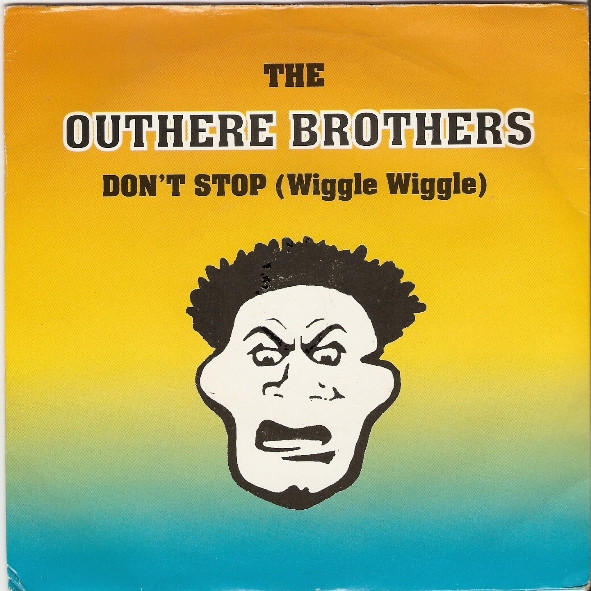
718. ‘Don’t Stop (Wiggle Wiggle)’, by The Outhere Brothers

Is 1995 the year with the biggest disparity between what it is remembered for, and what actually made #1? 1977 might have a case, the year punk exploded yet in which David Soul was the breakthrough star. 1995, though…?

Don’t Stop (Wiggle Wiggle), by The Outhere Brothers (their 1st of two #1s)

1 week, from 26th March – 2nd April 1995

I mention this because this next number one has left me in a state of shock. Shock at how I don’t really remember it. Shock at some of the lyrics. And shock at just how bloody awful it is… Biiiyyaaatch!

I thought that Rednex had my upcoming ‘Worst #1 Award’ in the bag. But as horrible as ‘Cotton Eye Joe’ is, at least it is identifiable as a ‘song’. This is an absolute racket. The pitch of the singer’s voice as he repeats the title line: Don’t stop movin’ baby oh that booty drive me crazy…, the one-note beat and the bubble-popping sound effect, the way that that one line is chopped up over and over again, ad nauseum… Some mixes are better than others – and the video attached at the foot of this post is the most palatable version, with a Hi-NRG beat – but most are dire.

I’m torn between wrapping this post up as soon as possible, trying to forget that this record ever existed, and delving a bit deeper. The radio edit of ‘Don’t Stop (Wiggle Wiggle)’ is repetitively, mind-numbingly, boring. But that wasn’t the reason this made number one. For the other, non-edited mixes reveal this to be the filthiest number one single we’ve heard so far on this countdown.

No, make that one of the filthiest number ones, ever. Period. Even in this post-‘WAP’ world, the lyrics here still raise an eyebrow. There’s that opening Biiiyyaaatch! for a start. Then there’s: Put your ass on my face… I love the way your… No I can’t type the rest. Girl you’ve got to suck my… Nope, still can’t. I’m not a prude, but this isn’t something I’ve never had to consider in my seven hundred and seventeen previous posts. The worst word we’ve encountered so far has been, I think, ‘bullshit’. And that’s a word I heard on Radio 4 the other day… I knew the 1990s would see morals and standards loosen (God, I sound like Mary Whitehouse), but I though it would be gradual. A ‘bitch’ here and a ‘fuck’ there. But no, it all arrived at once, right here: a smorgasbord of vulgarity. Which means that ‘Don’t Stop (Wiggle Wiggle)’ is actually a hugely important chart-topper…

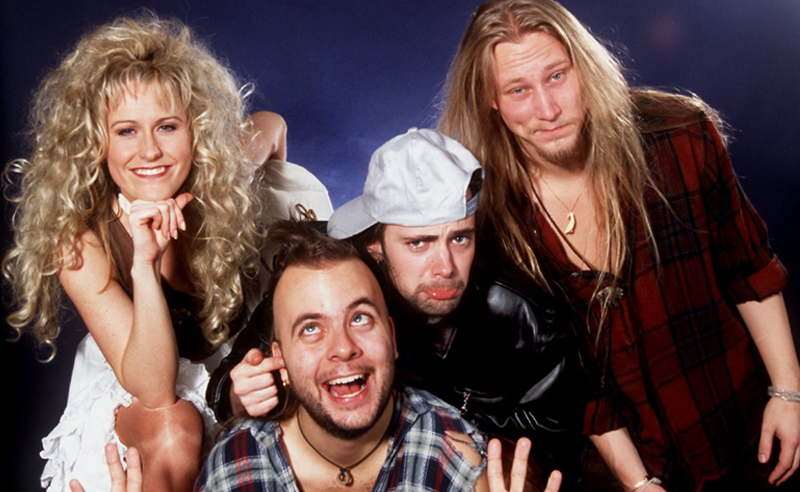
But nah, I don’t want to give it that sort of weight. It happened. Swearing in #1 singles is fine now. Let’s move on. (And anyway, luckily for all of us, The Outhere Brothers have an even bigger hit coming up very soon…) They were a duo from Chicago – yet another pair of fake chart-topping siblings – and this was their breakthrough hit, after previous releases such as ‘Pass the Toilet Paper’ had failed to chart. Thirteen-year-old boys around the world then kept the pair in hits for the next couple of years, though their subsequent album ‘1 Polish, 2 Biscuits and a Fish Sandwich’ wasn’t as successful (and you can look up the meaning of that title, if you dare…)

Back to what I mentioned in the intro, about 1995 being a strange year, in which most of the acts and songs we remember the year for didn’t make the top of the charts. It’s a theme I’ll return to, especially when a different gruesome twosome dominate later in the year. Up next, though, I’m sort of instantly proven wrong, for it’s the decade’s biggest boyband, with one of the nation’s best-loved songs…

(The ‘best’ version of the song…)

(The explicit version, if you must…)

715. ‘Cotton Eye Joe’, by Rednex

We’ve just ticked over the exact midway point of the nineties, as we head into 1995. One of the most renowned years in British music, during which Britpop, and some of the nation’s best-loved bands, went mainstream. And yes, we will get to all that… But kicking off the year we have something much less fondly remembered.

Cotton Eye Joe, by Rednex (their 1st and only #1)

3 weeks, from 8th – 29th January 1995

This jaw-clenchingly, skin tighteningly bad piece of techno-bluegrass can only be explained as a hangover from the festive period, from New Year’s parties full of people too drunk to care what was blasting out over the stereo… Oh, who can I kid? By now it’s clear that the British public need no excuse to send utter dross to the top of the charts. ‘Cotton Eyed Joe’ is shit – so shit it was guaranteed to be massive.

It was a perennial at my school discos, but I didn’t like it aged nine and haven’t chosen to hear it for the better part of thirty years. You need a strong stomach to listen to it even now: the mix of banjos, fiddles and heavy synths makes me feel very tense, something the horse and gunshot sound effects don’t do much to alleviate, while the aggressive chanting makes me wonder if hell is actually being locked in an eternal barn dance.

The video builds on this theme – I’m genuinely not sure if they were going for something funny, or for something more like a horror movie. The Rednex all play straggly-haired, yellow-teethed, rat-fondling hillbillies, who appear to be subjecting a younger, prettier girl to a never-ending ride on a bucking bronco. I don’t say this at all lightly, but I would take ‘Mr Blobby’ over this scary mess.

Rednex were Swedish (not American, sadly) and had stage names like Bobby Sue and Ken Tacky. ‘Cotton Eye Joe’ was their first hit, and in the UK they would manage only one more of note: ‘Old Pop in an Oak’ which made #12. In Sweden they remained successful well into the 2000s, scoring chart-toppers there as late as 2008! The mind boggles… The album that their two biggest hits came from was titled ‘Sex and Violins’, which is possibly the only funny thing the band ever put their name to.

Sad thing is, the history behind ‘Cotton Eye Joe’ is quite interesting. It pre-dates the US Civil War, probably originating among black slaves in the cotton fields. Proposals for what the phrase means vary from someone being drunk, to someone with milky cataracts, to the contrast between black skin and white eyeballs. It was first published in 1882, and has been recorded in country, polka, and trad-Irish versions, as well as featuring in the movie ‘Urban Cowboy’.

All that history has been obliterated by the Rednex version, which became a worldwide hit and which we will all be hearing until our dying days. It even made the charts in the US, which was unusual for a Eurodance track, and became a sports event/kids’ party standard. In recent years, some sports teams have stopped playing it in their stadiums due to the song’s potentially racist origins. Usually I’m not a fan of cancel culture, but I’ll make an exception if it means never hearing this particular chart-topper ever again…

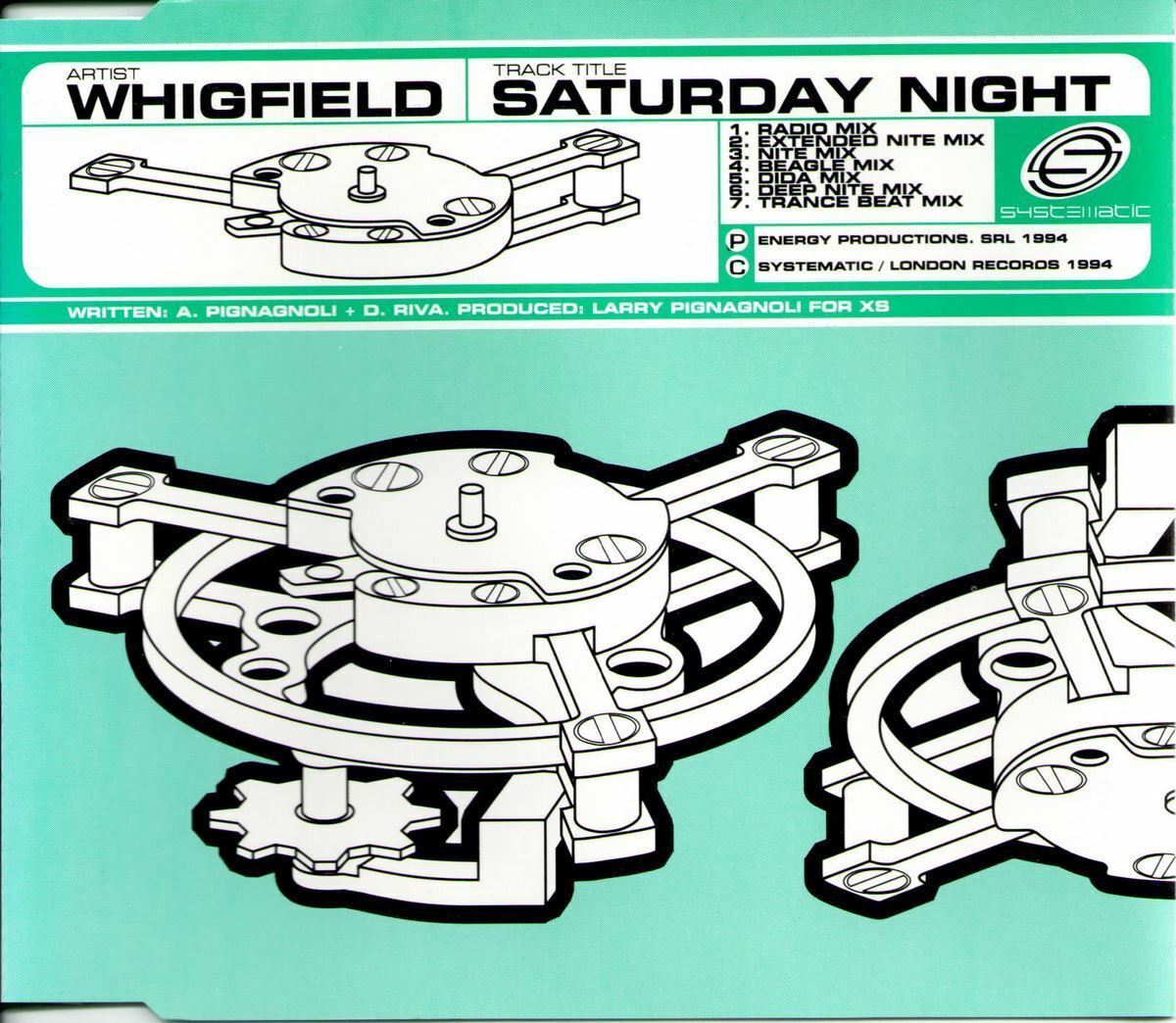
710. ‘Saturday Night’, by Whigfield

After fifteen weeks of ‘Love Is All Around’, I’m sure the nation (including Wet Wet Wet themselves) was happy for literally anything to come along and give us a new number one…

Saturday Night, by Whigfield (her 1st and only #1)

4 weeks, from 11th Sept – 9th Oct 1994

Well, here with the dictionary definition of the phrase ‘careful what you wish for’, is Danish beauty Whigfield, and her ode to the penultimate night of the week. I innocently thought I’d enjoy hearing this tune again, cheese that it is, while assorted memories of primary school discos came flooding back…

But, alas. It’s a bit crap. The first ten seconds are the most interesting. The famous di-di-da-da-da intro and the quacking synths. Here we go, I think, nostalgia central. Except, as ever, nostalgia ain’t what it used to. The remaining four minutes of ‘Saturday Night’ are repetitive and dull. The banal lyrics – Saturday night and I like the way you move… It’s party time and not one minute we can lose… Be my baby… and some la-di-dahs to fill the gaps… – the banal beat, the banal quacking. I notice that as part of the current ‘the nineties were the best decade ever’ movement, there are attempts to cast this as a ‘90s dance classic, up there with ‘Rhythm Is a Dancer’ and ‘Ebeneezer Goode’. But it’s really not.

Not that it’s terrible either. It’s a novelty, but not the most offensive kind. It’s biggest relevance, in chart terms, is in being the ultimate post-summer holiday hit. Presumably played in bars across the continent all summer, it smashed straight in at number one when finally released at the start of September. Oh, and there’s the fact that in entering at #1, Whigfield became the first act to have their debut single do so.

As with Alice Cooper, and Marilyn Manson (two artists to whom I didn’t expect to be drawing a comparison today) people make the mistake of referring to Whigfield as the singer rather than the band (or ‘musical project’ as Wikipedia refers to them). The singer, Sannie Charlotte Carlson, was Danish, and the producers were Italian. Carlson, though, was the very pretty star of the show. I’m sure the video, in which she prances around in a towel, getting ready for a big night out, did the song’s chances no harm. Whigfield would go on to have just two further Top 10 hits, though Carlson continues to record and perform.

I think another reason writing this post didn’t bring about a warm Proustian glow is that my repeated plays of ‘Saturday Night’ have reminded me of the dance routine. Interestingly, Carlson doesn’t do the dance in the video, and the craze seems to have stemmed from her backing dancers when she performed on Top of the Pops. However it started though, it quickly caught on, and the social anxiety that came from the being nine-years-old and the only person in the school who couldn’t do it properly remains to this day (see also: ‘The Macarena’).

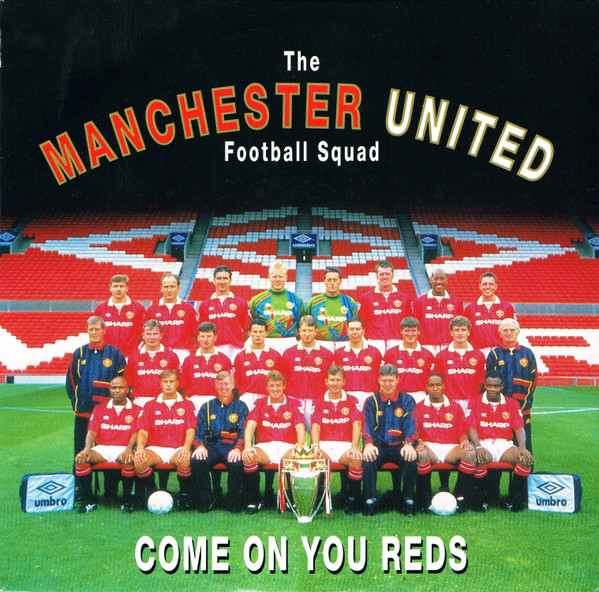
708. ‘Come On You Reds’, by The Manchester United Football Squad

After Tony Di Bart and Stiltskin, we smash one in at the near post to complete a hattrick of long-forgotten number ones…

Come On You Reds, by The Manchester United Football Squad (their 1st and only #1)

2 weeks, from 15th – 29th May 1994

A song featuring Britain’s most popular football team, and one of our longest-lasting rock acts, shouldn’t necessarily be consigned to the history books. And yet we’re probably all glad that this record never became as ubiquitous as some football songs. Because, even against the low bar set by most singing footballers, it’s pretty crap.

All the classic tropes are there. Piped-in crowd noises, commentary clips (‘Which number one single features Jonathon Pearce?’ would make a great pub quiz question), athletes looking far outside their comfort zones sharing a microphone in the video, lyrics that were probably scribbled out on the back of a beer mat: Come on you reds, Come on you reds, Just keep your bottle and use your heads… One verse, in fact, is literally just the team sheet: Robson, Kanchelskis and Giggs…

But away from all that, this is actually a fairly interesting number one. It is, to start with, Status Quo’s lost chart-topper. The records show that they have just the one – 1975’s ‘Down, Down’ – but this record was written and produced by the band, and is based on their 1988 hit ‘Burning Bridges’ (the ‘jig’ portion of which was in turn based on an old folk song called ‘Darby Kelly’). That isn’t one of my favourite Quo songs; but one of the few things that could have redeemed this tripe was if they had received a credit on the sleeve.

In footballing terms, it’s also a bit of a time capsule. It was released in advance of Utd’s FA Cup final against Chelsea (who released their own record for the game, making #23), and the idea that reaching the FA Cup final would merit a song seems bizarre in the modern football world. In fact, teams don’t record songs any more. No modern Premier League player would be seen dead singing along to cheesy lyrics written by some crusty old rockers. Which is both a slightly sad thing, and a great relief.

There have of course been two football number ones before this (‘Back Home’ and ‘World in Motion’) and a few more to come. But they are all songs about England, released ahead of World Cups and European Championships, with a whole country ready and willing to buy the record. ‘Come on You Reds’ is the only #1 by a club side, and they followed it up with two #6 hits for the ’95 and ’96 finals. Yes, not only did Man Utd dominate football in the nineties, they dominated the charts. No wonder we all hate them…

In case anyone is interested, the next biggest football club hits are Chelsea’s ‘Blue Is the Colour’ (#5 in 1972), Spurs’ ‘Ossie’s Dream’ (#5 in 1981), and Liverpool’s legendary ‘Anfield Rap’ (#3 in 1988). Back in the charts of 1994 though, and I’d have to say that the spring of this year has thrown up a run of fairly flash-in-the-pan, forgotten hits: ‘Doop’, ‘The Real Thing’, ‘Inside’, and now this. Up next, however, is a song that stayed at the top so long we had no choice but to remember every note…

(This video sadly cuts the last thirty seconds off the song… But you’ll have gotten the gist by then… It also features footage of the 1994 FA Cup final, suggesting it was produced after the record had made #1.)

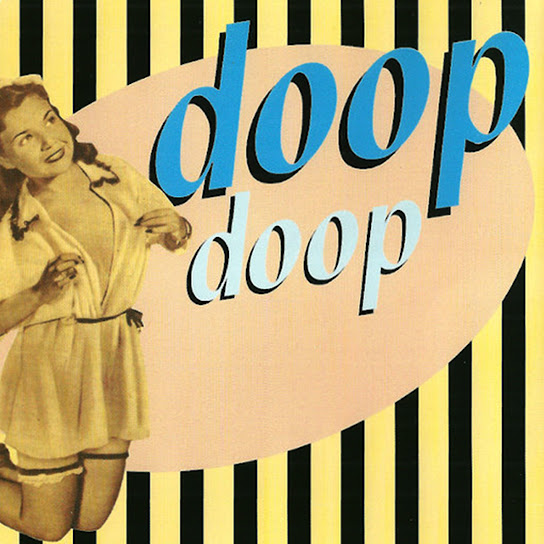
703. ‘Doop’, by Doop

And now for something a little different… Eurodance meets the Charleston.

Doop, by Doop (their 1st and only #1)

3 weeks, from 13th March – 3rd April 1994

More impressively, Eurodance meets the Charleston, and the results aren’t a complete disaster. ‘Doop’s merging of wildly disparate musical eras works. It’s fast, catchy, and fun – a novelty for sure, but not too irritating. It works its way right into your brain, thanks to its frenetic pace and puppy dog energy, and stays there…

It’s a completely instrumental track, apart from the doopy-doopy-do-do-doos which give the song its name. It’s the last instrumental number one since… I’m not sure, to be honest, but it’s been a good while. It’s also probably one of the last, as they’ve become rarer and rarer since their heyday in the late fifties-early sixties.

There’s not much to it – a big band sample stretched out over a techno beat. With the aforementioned doops, of course. The most complex thing about this record is how many remixes there were, and working out which one was actually getting airplay at the time. They all have a varying techno-to-Charleston ratio. The ‘Official Video’ on YouTube is the most modern, a dance beat interspersed with trumpet blasts. I prefer the more big band-heavy versions, such as the Sidney Berlin Ragtime Band mix, from the Maxi-CD release, or the Urge-2-Merge radio edit.

The best mixes are also the ones that keep proceedings down to the three-minute mark for, as fun as this tune is, it can get a little repetitive when stretched over seven minutes. Short and sweet is the order of the day here. Doop were, you’ll be shocked to realise, from the Netherlands, the one country that can rival masters Germany for Europop cheese. And let’s be honest, giving your debut single the same name as your band (or vice-versa) suggests that you’re quite happy in aiming for one-hit wonder status.

In fairness, Doop did manage a #88 follow-up hit with ‘Huckleberry Jam’, in which they tried the same trick using an old blues riff, while an earlier incarnation of the group, Hocus Pocus, made #1 in Australia with a song called ‘Here’s Johnny!’ Really though, this is real one-hit wonder stuff: a flash in the pan, bottled lightning moment, and I’m not sure this track has been played on the radio for years.

It was a trend-setter of sorts, though. I can’t think of many dance tracks that sampled pre-rock and roll music before Doop, but I can think of a few that came afterwards, including at least a couple of number ones. Anyway, I like it, as throwaway as it is. The NME disagree, though, naming it among their ‘25 most annoying songs ever’… Which seems rich given some of the crap they’ve championed over the years.

698. ‘Mr. Blobby’, by Mr. Blobby

From Meat Loaf, to Mr. Blobby. From one larger-than-life epic, to another…

Mr. Blobby, by Mr. Blobby (his 1st and only #1)

1 week, from 5th – 12th December 1993/ 2 weeks, from 19th December 1993 – 2nd January 1994 (3 weeks total)

It’s been a while since I’d last heard this, for obvious reasons, and I thought I’d imagined the farting synths. No, actually, they’re not farting synths. They’re fart sounds. This number one single is built around farts, of the sort seven-year-olds make by blowing into their elbow cracks.

Before we delve any further into this murky swamp, I’d better explain exactly what a Mr Blobby is, for anyone not British, or anyone born in this century. There’s no better place to start than checking the picture embedded at the head of this post. It’s a man in a giant pink and yellow rubber suit, with a perma-grin and googly eyes, who’s only capable of saying ‘blobby’, over and over again in an electronically altered voice. His schtick is that he’s terminally clumsy, and anyone who comes in contact with him will end up flat on the floor and/or with a faceful of something sticky. He rose to fame on ‘Noel’s House Party’, a Saturday evening light entertainment show, set in a fictional mansion named ‘Crinkly Bottom’…

Before we go any further, I must stress that this is a truly heinous piece of music, one that I have no interest in ever hearing again once I’ve finished writing this post. And yet… When this came out, I was that seven-year-old, for whom fart noises, and the sight of Mr. Blobby falling through a drum kit, were the height of comedy. Even now, I’m ashamed to say, the video raises a smile…

In it Mr. Blobby is bathed on a slab, in a recreation of Shakespear’s Sister’s ‘Stay’ video, and leers over his backing band in a recreation of Robert Palmer’s ‘Addicted to Love’, as well as leading a gang of children in what looks like a Satanic ritual. He is chauffeured by Jeremy Clarkson, and has Carol Vorderman as some sort of scientific advisor in his ‘Blobby Factory’. There’s an air of utter anarchy, chaos, not to mention an underlying creepiness (though maybe that’s just the Noel Edmond’s cameo…)

With a lot of the truly terrible #1s that we’ve covered, a large part of what makes them awful is that the writers and performers don’t seem to realise how bad their song is (see ‘No Charge’, or St. Winifred’s, for example). This isn’t the case with ‘Mr. Blobby’ – the creators know they’re unleashing something horrendous on the world, and show a complete lack of contrition. Quite the opposite. So while I’m not going to argue the case for ‘Mr. Blobby’ being any good, I am going to gently suggest that might be one of the few truly punk #1s.

It’s also musically quite… complex? Like the video, the song doesn’t stay with any one sound for long. The farting and the children’s chanting (Blobby, Oh Mr Blobby, Your influence will spread throughout the land…) are constantly interrupted by sudden and incongruous swerves into dance and rap, by key changes and a rising and falling tempo. I jokingly called it an ‘epic’ in my intro, but maybe I wasn’t far off… It’s hyperactive, bright, zany, stupid… It’s ADHD in musical form. Or, rather, it’s a dog whistle for seven-year-olds, who are the only ones for whom this song holds any meaning.

For me, the moment that sums it all up comes towards the end of the video, when there’s footage of Blobby storming out from a helicopter and into the arms of a child, who looks like he’s seen the face of God. It sums up Blobby mania, which culminated here, in him reaching Christmas Number One. He was everywhere: on TV, in panto, in adverts, in a 1994 computer game, even running for election as an MP in 1995 (receiving 0.2% of the vote). Three separate Mr. Blobby theme park attractions were opened over the course of the 1990s, none of which survived the decade…

The fact this made Christmas number one is a story in itself, one that I’ll go into more detail on in my next post. It was initially knocked off the top, before roaring back, and amazingly became the first record in almost twenty-five years to have two separate spells at number one (during the same chart run). This was common in the fifties and sixties, and has become a normal occurrence again in the 21st century, but throughout the entirety of the seventies and eighties no record managed the feat. In terms of returning to number one with a different song, the closest Blobby came was with ‘Christmas in Blobbyland’, which made #36 two years later. He remains active to this day, popping up on ‘Britain’s Got Talent’ just this year…