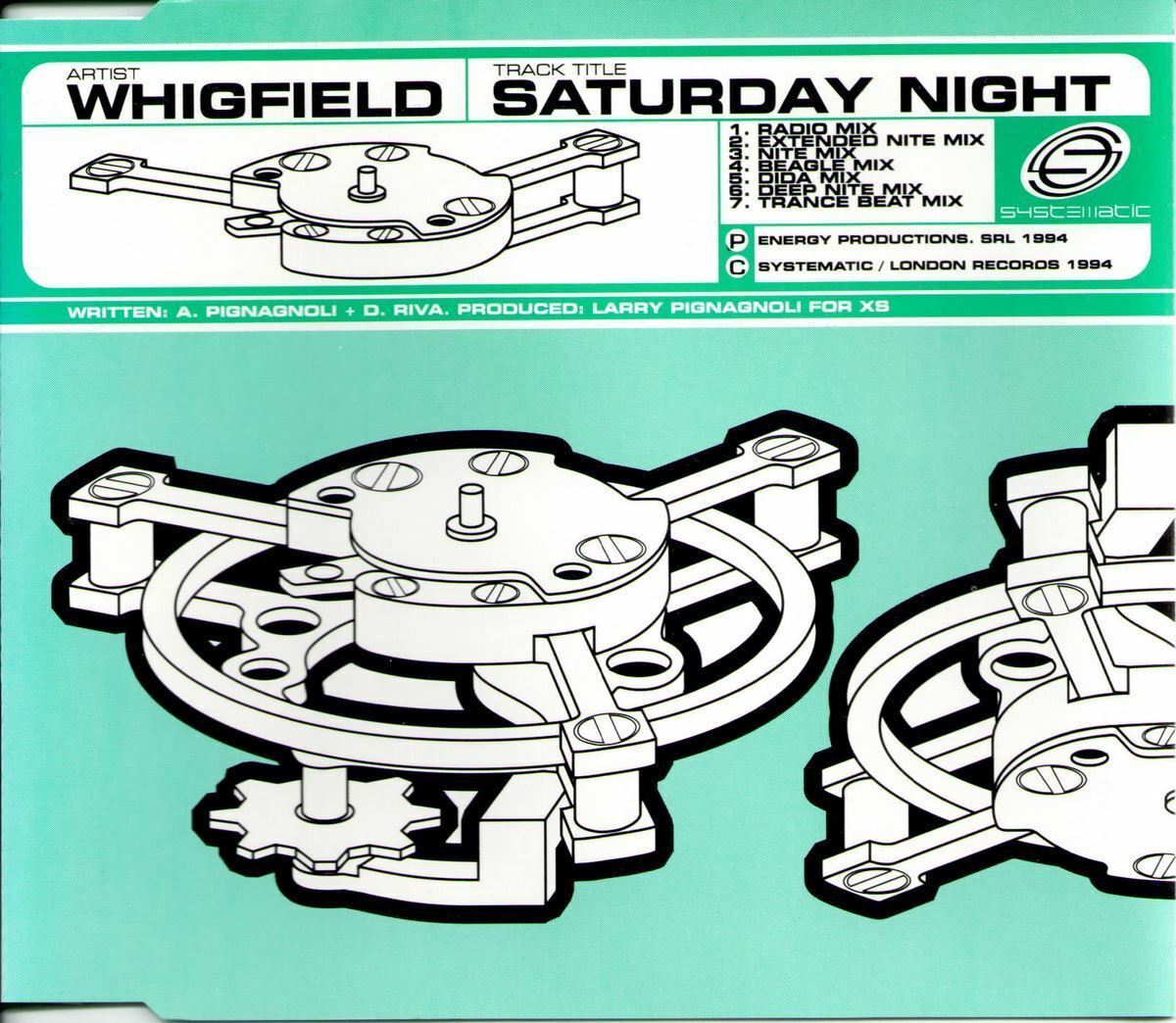
710. ‘Saturday Night’, by Whigfield

After fifteen weeks of ‘Love Is All Around’, I’m sure the nation (including Wet Wet Wet themselves) was happy for literally anything to come along and give us a new number one…

Saturday Night, by Whigfield (her 1st and only #1)

4 weeks, from 11th Sept – 9th Oct 1994

Well, here with the dictionary definition of the phrase ‘careful what you wish for’, is Danish beauty Whigfield, and her ode to the penultimate night of the week. I innocently thought I’d enjoy hearing this tune again, cheese that it is, while assorted memories of primary school discos came flooding back…

But, alas. It’s a bit crap. The first ten seconds are the most interesting. The famous di-di-da-da-da intro and the quacking synths. Here we go, I think, nostalgia central. Except, as ever, nostalgia ain’t what it used to. The remaining four minutes of ‘Saturday Night’ are repetitive and dull. The banal lyrics – Saturday night and I like the way you move… It’s party time and not one minute we can lose… Be my baby… and some la-di-dahs to fill the gaps… – the banal beat, the banal quacking. I notice that as part of the current ‘the nineties were the best decade ever’ movement, there are attempts to cast this as a ‘90s dance classic, up there with ‘Rhythm Is a Dancer’ and ‘Ebeneezer Goode’. But it’s really not.

Not that it’s terrible either. It’s a novelty, but not the most offensive kind. It’s biggest relevance, in chart terms, is in being the ultimate post-summer holiday hit. Presumably played in bars across the continent all summer, it smashed straight in at number one when finally released at the start of September. Oh, and there’s the fact that in entering at #1, Whigfield became the first act to have their debut single do so.

As with Alice Cooper, and Marilyn Manson (two artists to whom I didn’t expect to be drawing a comparison today) people make the mistake of referring to Whigfield as the singer rather than the band (or ‘musical project’ as Wikipedia refers to them). The singer, Sannie Charlotte Carlson, was Danish, and the producers were Italian. Carlson, though, was the very pretty star of the show. I’m sure the video, in which she prances around in a towel, getting ready for a big night out, did the song’s chances no harm. Whigfield would go on to have just two further Top 10 hits, though Carlson continues to record and perform.

I think another reason writing this post didn’t bring about a warm Proustian glow is that my repeated plays of ‘Saturday Night’ have reminded me of the dance routine. Interestingly, Carlson doesn’t do the dance in the video, and the craze seems to have stemmed from her backing dancers when she performed on Top of the Pops. However it started though, it quickly caught on, and the social anxiety that came from the being nine-years-old and the only person in the school who couldn’t do it properly remains to this day (see also: ‘The Macarena’).

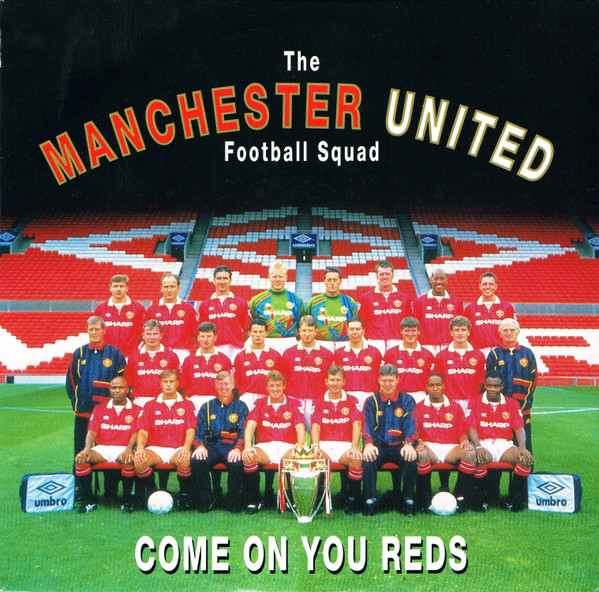
708. ‘Come On You Reds’, by The Manchester United Football Squad

After Tony Di Bart and Stiltskin, we smash one in at the near post to complete a hattrick of long-forgotten number ones…

Come On You Reds, by The Manchester United Football Squad (their 1st and only #1)

2 weeks, from 15th – 29th May 1994

A song featuring Britain’s most popular football team, and one of our longest-lasting rock acts, shouldn’t necessarily be consigned to the history books. And yet we’re probably all glad that this record never became as ubiquitous as some football songs. Because, even against the low bar set by most singing footballers, it’s pretty crap.

All the classic tropes are there. Piped-in crowd noises, commentary clips (‘Which number one single features Jonathon Pearce?’ would make a great pub quiz question), athletes looking far outside their comfort zones sharing a microphone in the video, lyrics that were probably scribbled out on the back of a beer mat: Come on you reds, Come on you reds, Just keep your bottle and use your heads… One verse, in fact, is literally just the team sheet: Robson, Kanchelskis and Giggs…

But away from all that, this is actually a fairly interesting number one. It is, to start with, Status Quo’s lost chart-topper. The records show that they have just the one – 1975’s ‘Down, Down’ – but this record was written and produced by the band, and is based on their 1988 hit ‘Burning Bridges’ (the ‘jig’ portion of which was in turn based on an old folk song called ‘Darby Kelly’). That isn’t one of my favourite Quo songs; but one of the few things that could have redeemed this tripe was if they had received a credit on the sleeve.

In footballing terms, it’s also a bit of a time capsule. It was released in advance of Utd’s FA Cup final against Chelsea (who released their own record for the game, making #23), and the idea that reaching the FA Cup final would merit a song seems bizarre in the modern football world. In fact, teams don’t record songs any more. No modern Premier League player would be seen dead singing along to cheesy lyrics written by some crusty old rockers. Which is both a slightly sad thing, and a great relief.

There have of course been two football number ones before this (‘Back Home’ and ‘World in Motion’) and a few more to come. But they are all songs about England, released ahead of World Cups and European Championships, with a whole country ready and willing to buy the record. ‘Come on You Reds’ is the only #1 by a club side, and they followed it up with two #6 hits for the ’95 and ’96 finals. Yes, not only did Man Utd dominate football in the nineties, they dominated the charts. No wonder we all hate them…

In case anyone is interested, the next biggest football club hits are Chelsea’s ‘Blue Is the Colour’ (#5 in 1972), Spurs’ ‘Ossie’s Dream’ (#5 in 1981), and Liverpool’s legendary ‘Anfield Rap’ (#3 in 1988). Back in the charts of 1994 though, and I’d have to say that the spring of this year has thrown up a run of fairly flash-in-the-pan, forgotten hits: ‘Doop’, ‘The Real Thing’, ‘Inside’, and now this. Up next, however, is a song that stayed at the top so long we had no choice but to remember every note…

(This video sadly cuts the last thirty seconds off the song… But you’ll have gotten the gist by then… It also features footage of the 1994 FA Cup final, suggesting it was produced after the record had made #1.)

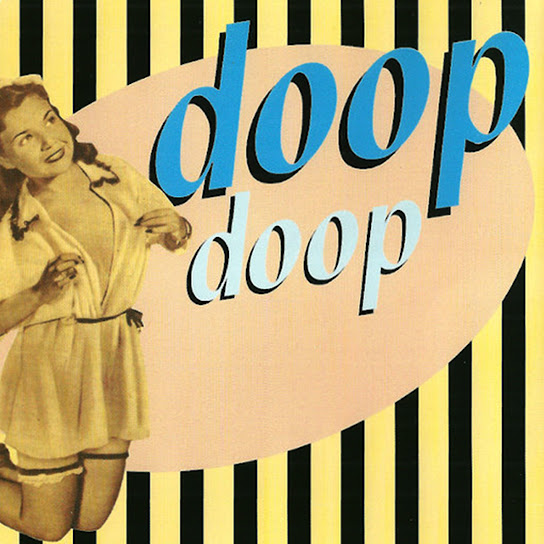
703. ‘Doop’, by Doop

And now for something a little different… Eurodance meets the Charleston.

Doop, by Doop (their 1st and only #1)

3 weeks, from 13th March – 3rd April 1994

More impressively, Eurodance meets the Charleston, and the results aren’t a complete disaster. ‘Doop’s merging of wildly disparate musical eras works. It’s fast, catchy, and fun – a novelty for sure, but not too irritating. It works its way right into your brain, thanks to its frenetic pace and puppy dog energy, and stays there…

It’s a completely instrumental track, apart from the doopy-doopy-do-do-doos which give the song its name. It’s the last instrumental number one since… I’m not sure, to be honest, but it’s been a good while. It’s also probably one of the last, as they’ve become rarer and rarer since their heyday in the late fifties-early sixties.

There’s not much to it – a big band sample stretched out over a techno beat. With the aforementioned doops, of course. The most complex thing about this record is how many remixes there were, and working out which one was actually getting airplay at the time. They all have a varying techno-to-Charleston ratio. The ‘Official Video’ on YouTube is the most modern, a dance beat interspersed with trumpet blasts. I prefer the more big band-heavy versions, such as the Sidney Berlin Ragtime Band mix, from the Maxi-CD release, or the Urge-2-Merge radio edit.

The best mixes are also the ones that keep proceedings down to the three-minute mark for, as fun as this tune is, it can get a little repetitive when stretched over seven minutes. Short and sweet is the order of the day here. Doop were, you’ll be shocked to realise, from the Netherlands, the one country that can rival masters Germany for Europop cheese. And let’s be honest, giving your debut single the same name as your band (or vice-versa) suggests that you’re quite happy in aiming for one-hit wonder status.

In fairness, Doop did manage a #88 follow-up hit with ‘Huckleberry Jam’, in which they tried the same trick using an old blues riff, while an earlier incarnation of the group, Hocus Pocus, made #1 in Australia with a song called ‘Here’s Johnny!’ Really though, this is real one-hit wonder stuff: a flash in the pan, bottled lightning moment, and I’m not sure this track has been played on the radio for years.

It was a trend-setter of sorts, though. I can’t think of many dance tracks that sampled pre-rock and roll music before Doop, but I can think of a few that came afterwards, including at least a couple of number ones. Anyway, I like it, as throwaway as it is. The NME disagree, though, naming it among their ‘25 most annoying songs ever’… Which seems rich given some of the crap they’ve championed over the years.

698. ‘Mr. Blobby’, by Mr. Blobby

From Meat Loaf, to Mr. Blobby. From one larger-than-life epic, to another…

Mr. Blobby, by Mr. Blobby (his 1st and only #1)

1 week, from 5th – 12th December 1993/ 2 weeks, from 19th December 1993 – 2nd January 1994 (3 weeks total)

It’s been a while since I’d last heard this, for obvious reasons, and I thought I’d imagined the farting synths. No, actually, they’re not farting synths. They’re fart sounds. This number one single is built around farts, of the sort seven-year-olds make by blowing into their elbow cracks.

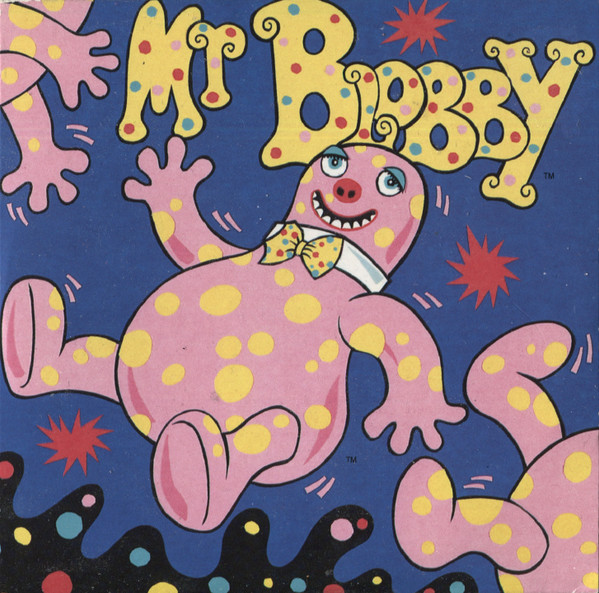
Before we delve any further into this murky swamp, I’d better explain exactly what a Mr Blobby is, for anyone not British, or anyone born in this century. There’s no better place to start than checking the picture embedded at the head of this post. It’s a man in a giant pink and yellow rubber suit, with a perma-grin and googly eyes, who’s only capable of saying ‘blobby’, over and over again in an electronically altered voice. His schtick is that he’s terminally clumsy, and anyone who comes in contact with him will end up flat on the floor and/or with a faceful of something sticky. He rose to fame on ‘Noel’s House Party’, a Saturday evening light entertainment show, set in a fictional mansion named ‘Crinkly Bottom’…

Before we go any further, I must stress that this is a truly heinous piece of music, one that I have no interest in ever hearing again once I’ve finished writing this post. And yet… When this came out, I was that seven-year-old, for whom fart noises, and the sight of Mr. Blobby falling through a drum kit, were the height of comedy. Even now, I’m ashamed to say, the video raises a smile…

In it Mr. Blobby is bathed on a slab, in a recreation of Shakespear’s Sister’s ‘Stay’ video, and leers over his backing band in a recreation of Robert Palmer’s ‘Addicted to Love’, as well as leading a gang of children in what looks like a Satanic ritual. He is chauffeured by Jeremy Clarkson, and has Carol Vorderman as some sort of scientific advisor in his ‘Blobby Factory’. There’s an air of utter anarchy, chaos, not to mention an underlying creepiness (though maybe that’s just the Noel Edmond’s cameo…)

With a lot of the truly terrible #1s that we’ve covered, a large part of what makes them awful is that the writers and performers don’t seem to realise how bad their song is (see ‘No Charge’, or St. Winifred’s, for example). This isn’t the case with ‘Mr. Blobby’ – the creators know they’re unleashing something horrendous on the world, and show a complete lack of contrition. Quite the opposite. So while I’m not going to argue the case for ‘Mr. Blobby’ being any good, I am going to gently suggest that might be one of the few truly punk #1s.

It’s also musically quite… complex? Like the video, the song doesn’t stay with any one sound for long. The farting and the children’s chanting (Blobby, Oh Mr Blobby, Your influence will spread throughout the land…) are constantly interrupted by sudden and incongruous swerves into dance and rap, by key changes and a rising and falling tempo. I jokingly called it an ‘epic’ in my intro, but maybe I wasn’t far off… It’s hyperactive, bright, zany, stupid… It’s ADHD in musical form. Or, rather, it’s a dog whistle for seven-year-olds, who are the only ones for whom this song holds any meaning.

For me, the moment that sums it all up comes towards the end of the video, when there’s footage of Blobby storming out from a helicopter and into the arms of a child, who looks like he’s seen the face of God. It sums up Blobby mania, which culminated here, in him reaching Christmas Number One. He was everywhere: on TV, in panto, in adverts, in a 1994 computer game, even running for election as an MP in 1995 (receiving 0.2% of the vote). Three separate Mr. Blobby theme park attractions were opened over the course of the 1990s, none of which survived the decade…

The fact this made Christmas number one is a story in itself, one that I’ll go into more detail on in my next post. It was initially knocked off the top, before roaring back, and amazingly became the first record in almost twenty-five years to have two separate spells at number one (during the same chart run). This was common in the fifties and sixties, and has become a normal occurrence again in the 21st century, but throughout the entirety of the seventies and eighties no record managed the feat. In terms of returning to number one with a different song, the closest Blobby came was with ‘Christmas in Blobbyland’, which made #36 two years later. He remains active to this day, popping up on ‘Britain’s Got Talent’ just this year…

675. ‘Deeply Dippy’, by Right Said Fred

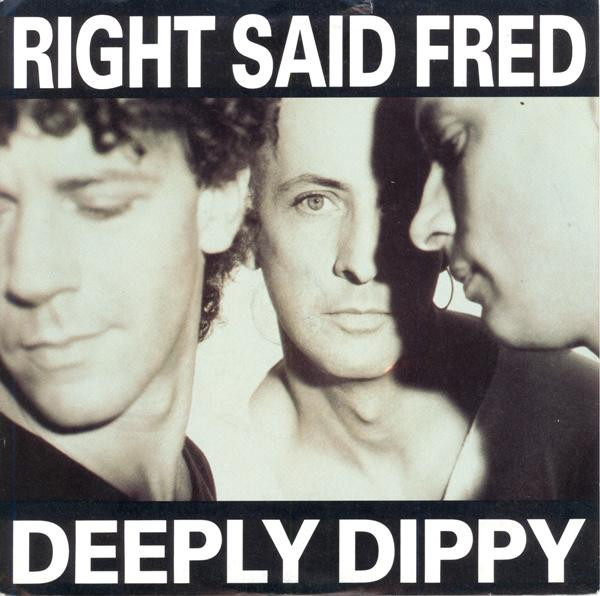
I play the intro to our next number one, and am convinced that I am actually listening to The Proclaimers’ ‘I’m Gonna Be (500 Miles)’. Listen to the two of them back to back, and you won’t be able to un-hear it. But this is not the brothers Reid (their time will eventually come), but the brothers Fairbrass…

Deeply Dippy, by Right Said Fred (their 1st and only #1)

3 weeks, from 12th April – 3rd May 1992

It’s also slightly discombobulating to hear Right Said Fred singing a song that isn’t ‘I’m Too Sexy’, their monster hit from a few months before, which had spent six weeks at #2, prevented from featuring on this blog by the dreaded Bryan Adams. But yes, they had other songs. One of which did make number one. And, in all honesty, it might be the better tune.

I’m finding it hard to write about this record without using horrible words like ‘jaunty’, or ‘ditty’. For this is undeniably a jaunty ditty. From the alliterative title, to the springy acoustic rhythm, to the brass section that comes blasting in mid-way through. And then there’s the nonsense lyrics: Deeply dippy ‘bout the curves you got…

It’s actually just as sex-obsessed as ‘I’m Too Sexy’ – love as a ‘contact sport’ (let the neighbours talk) – but also has a swing at being romantic. Oh my love, Let’s set sail for seas of passion… It’s a song, like Vic Reeve’s ‘Dizzy’ not so long before, that just about manages the balance of being a novelty, and remaining listenable. In fact, if you were in the right mood, the moment where the horns come in could be downright jubilant.

It’s also an odd number one for this moment in time, wedged in among the dance tracks and ballads, one that might have been a hit in any era, that is as likely to get your granny dancing as it is your five-year-old nephew. But there’s little doubt that this wouldn’t have been anywhere near as big a hit without ‘I’m Too Sexy’ laying the groundwork. We can add Right Said Fred to acts like Don McLean, Alvin Stardust, and a-Ha, whose ‘big’ hit isn’t actually their biggest.

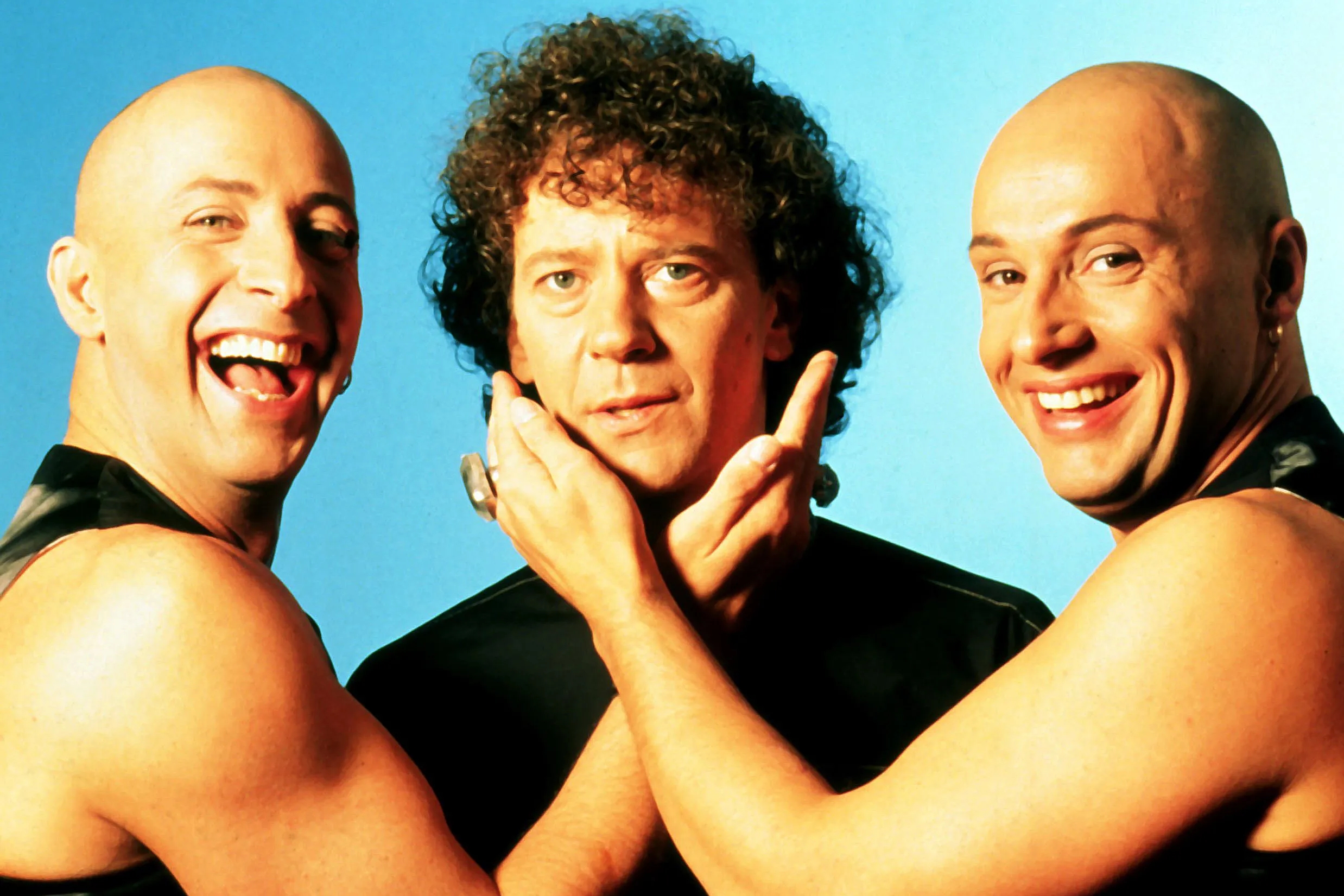
Right Said Fred were Richard and Fred Fairbrass, plus guitarist Rob Manzoli, and were named not for that Fred, but after a Bernard Cribbins song from 1962. Richard had already had a fifteen year career as a bassist for Boy George, Mick Jagger and David Bowie, while Fred had played guitar for Bob Dylan. In the late seventies, the pair toured with Joy Division. So, quite the musical chops for a duo often written off as one-hit wonders.

‘Deeply Dippy’ was the third of four Top 10 hits for Right Said Fred, but they continue to record. Fairbrass the elder has had quite the career since his chart-topping days, hosting ‘GayTime TV’ (the first BBC programme to be aimed at an LGBT audience), being targeted and beaten up by Russian ultra-nationalists, and in later years turning into something of a Twitter conspiracy theorist, as well as most recently accusing Beyonce of ripping him off. Deeply dippy, indeed.

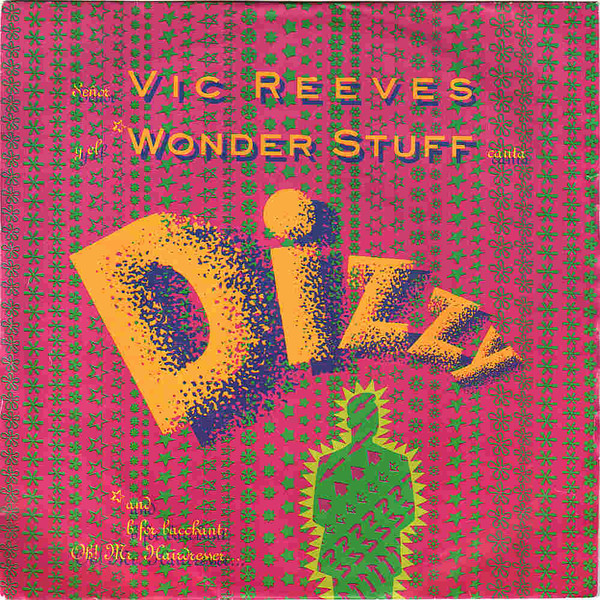
669. ‘Dizzy’, by Vic Reeves & The Wonder Stuff

One glance at our next number one, and there’s an involuntary shiver. A comedian, a cover of a well-loved classic… It’s not that long since Hale and Pace were bothering the charts with their charidee dance-a-thon ‘The Stonk’. Is this the latest assault on the charts in the name of a ‘good cause’…?

Dizzy, by Vic Reeves & The Wonder Stuff (their 1st and only #1s)

2 weeks, from 3rd – 17th November 1991

Thankfully, no. It wasn’t for charity – more of cash-in of Vic Reeves being the hot young thing of British comedy – and, more importantly, it’s actually quite good! It’s a faithful cover of Tommy Roe’s 1969 original: slightly more frenetic, glossier in that early nineties sort of way, with a baggy Madchester beat. You can just about picture Bez shaking his maracas along to it.

Like ‘The Fly’ right before it, this feels very ‘90s’. In fact, could we claim that this is the very first Britpop #1? The Wonder Stuff were an indie band (well, technically they were ‘grebo’) who had been scoring lower-level Top 40 hits since the late 1980s, and had recently made the Top 5 for the first time. And yes, ok, Britpop isn’t officially supposed to start until Suede burst on to the scene a few months after this, but I’m claiming this as a sneak-preview of what’s to come in the middle of the decade. Plus, it’s a sixties throwback, and we know how indebted to that decade Britpop was.

Either way, it’s clear that the past two chart-toppers have been pure palate cleansers, trying to wash away the aftertaste of Bryan Adam’s ‘(Everything I Do)…’, which had been left lying out at number one so long it had started to rot. You always get the #1 that kickstarts a decade starts properly. With the sixties we had to wait until Gerry & The Pacemakers in 1963, while T Rex kicked the seventies off in style with ‘Hot Love’ in early ’71. The eighties were a more complex beast, because in some ways they started with Blondie, Gary Numan and The Boomtown Rats in 1978-9. Or, if your definition of the eighties involves more face-paint, then we had to wait until Adam & The Ants in 1981.

Still, I feel confident in proclaiming that the nineties start (around about) here. Not least because Vic Reeves would become one of the most popular television stars of the decade: ‘Shooting Stars’, ‘Big Night Out’, and ‘The Smell of Reeves and Mortimer’ were all big comedy shows: surreal, anarchic, all capturing the spirit of the time. (His partner for much of this, Bob Mortimer, features as a backing vocalist in the video to ‘Dizzy’.)

Helping this cover even further, as well as a competent indie band and a clever choice of song, is the fact that Reeves can carry a tune. Pre-fame he had played in several bands as a bassist/singer – he was born Jim Moir, and his stage-name is an amalgam of his two favourite singers, and two predecessors at the top of the charts, Vic Damone and Jim Reeves. One of the best things about this song is the fact that his northern accent – he grew up in Darlington – unashamedly shines through.

Up next, for all my talk of it officially being ‘the nineties’, is a gigantic comeback single for a megastar of the 80s. And the 70s. In fact, his very first release was at the end of the sixties…

662. ‘The Stonk’, by Hale & Pace and The Stonkers

Hot on the heels of The Clash, can we also claim this next number one as part of the recent rock revival…?

The Stonk, by Hale & Pace and The Stonkers (their 1st and only #1)

1 week, from 17th – 24th March 1991

Hear me out! There’s a boogie-woogie rhythm, and a honky-tonk piano… The lyrics are somewhat anarchic, vaguely saucy even, if you try hard enough… OK. No, I admit. This isn’t rock and/or roll. This is the return of the chart phenomenon that brought us such treats as Cliff Richard and the Young Ones remake of ‘Living Doll’: the Comic Relief single.

Those of you who live beyond British shores may never have enjoyed this bi-annual TV fundraiser, in which the great and the good of British light entertainment come together for an evening of forced merriment. Hence why the video for ‘The Stonk’ features Bruce Forsyth, Rowan Atkinson as Mr Bean, and (if my eyes didn’t deceive me) David Baddiel, while it opens with newsreader Angela Rippon being whacked out the way by a red-nosed Big Ben. (It is compulsory for Comic Relief to feature newsreaders doing stupid things. It’s funny, you see, because they are usually so serious.)

If this all sounds completely insufferable, then you’d be right. The gags, such as they are, all land flat. Ich bin ein Stonker… announces JFK, while Neil Armstrong claims one giant Stonk for mankind… Even Shakespeare isn’t safe: Shall I compare thee to a summer’s Stonk? someone asks, which makes no sense on any level. It’s shit, and completely unbothered about it. Proud of it, even. Maybe I’m a miserable sod, but I firmly believe that Red Nose Day would make even more money if people donated on the proviso that it would end an hour earlier for every million raised.

(Note the fact that this is advertised as a double-‘A’ side, alongside the much-loved Victoria Wood. The charts only mention Hale & Pace, however. Perhaps this record’s success had something to do with the other song on offer…)

And yet… I can’t list ‘The Stonk’ as one of the all-time worst chart-toppers. It’s not plumbing the depths alongside ‘Star Trekkin’ (which raised not a penny for charity) or ‘No Charge’ (the least humorous ‘novelty’ record of all time). That cheap, relentless boogie-woogie beat, and the chorus’s strong whiff of ‘The Timewarp’, does sort of hook me in. I didn’t want to, honestly I didn’t, but I’ve ended up tapping my feet.

It was written by comedy duo Gareth Hale and Norman Pace who, despite being TV mainstays throughout the 1990s, somehow never managed to become a part of my childhood. I couldn’t name a single one of their sketches or characters. Meanwhile, despite sounding as cheap and cheerful as a Butlin’s ‘knobbly knees’ contest, it does feature ‘proper’ musicians: British rock royalty even, in Queen’s Brian May and Roger Taylor, Black Sabbath’s Tommy Iommi, and Pink Floyd’s David Gilmour.

In wrapping this post up, I have no desire to ever hear this song again. I doubt anybody has actively listened to it since it left the Top 40 (as is the way with most charity singles). It isn’t on Spotify, and all that’s left as proof that this nonsense was, for one week in March 1991, the best-selling single in the country is this grainy YouTube video…

660. ‘Do the Bartman’, by The Simpsons

As with all novelty singles, I approach this next number one with trepidation, my finger hovering reluctantly over the play button. But the intro actually sounds quite cool: a new jack swing beat and a squelchy bassline. Something by Janet Jackson perhaps, or a Prince ‘B’-side…

Do the Bartman, by The Simpsons (their 1st and only #1)

3 weeks, from 10th February – 3rd March 1991

The only version available on Spotify is the five minute (!) album version – from ‘The Simpsons Sing the Blues’ LP – so I don’t know for how long this intro did its funky thing on the single-edit. Eventually Homer comes in, yelling at Bart for some unspecified misdemeanour. Nobody saw me… I didn’t do it…

From here on things follow a fairly formulaic hip-hop single format: i.e. rapper tells us how great he is. Except here the rapper is a yellow cartoon boy, voiced by a thirty-five year woman (kudos to Nancy Cartwright here, as it can’t be easy rapping while putting on such a voice). There are some fun lines: I’m the kid that made delinquency an art, Last name Simpson, First name Bart… but the song ends up caught between not being funny enough to work as a novelty, yet still being gimmicky enough to annoy. The ‘joke’ wears especially thin on the, it bears repeating, five minutes long extended album version.

The fact that this does almost work as a pop song is probably down to the alleged involvement of Michael Jackson. He’s not credited – his label insisted he couldn’t be – and there are differing accounts of what he actually contributed towards the song, but it seems he wrote some of the lyrics and contributed backing vocals, as well as giving the song its title. He also apparently insisted that he be name-checked (If you can do the Bart, You’re bad like Michael Jackson…) Jackson would also feature in an episode of The Simpsons a few months after this had been a hit single. The video too is a six-minute long MJ-esque epic, in which Bart takes over a school talent show with his new dance routine (or was it all a dream…?)

It’s credited to ‘The Simpsons’, but it’s largely just Bart. Lisa gets a saxophone solo, and Homer gets to yell throughout. Marge and Maggie are conspicuous by their absence. I wonder if, to many British listeners, ‘Do the Bartman’ was their first exposure to ‘The Simpsons’. At the time this was released, the show was just halfway through its second season in the US, and was only broadcast on satellite TV in the UK (I remember it coming to terrestrial TV, on Channel 4, much later in the mid-nineties). If so, the song’s success is quite remarkable, as I’m not sure it holds much enjoyment for someone who’s never seen the show.

Anyway, in this moment ‘The Simpsons’ was on the verge of becoming the biggest TV programme in the world. Between series three and ten it was untouchable, and a fixture in my own house every dinner time. They even managed a second Top 10 single, another hip-hop track (and actually much better than this) ‘Deep, Deep Trouble’. After that, the show came to a natural conclusion in the early 2000s, and is remembered as one of the best series ever, and as a lesson in how to go out on top. Right? No…?

649. ‘Itsy Bitsy Teeny Weeny Yellow Polka Dot Bikini’, by Bombalurina

As with our last chart-topper, ‘Turtle Power’, I am fully convinced that I will hate this next #1 single…

Itsy Bitsy Teeny Weeny Yellow Polka Dot Bikini, by Bombalurina (their 1st and only #1)

3 weeks, from 19th August – 9th September 1990

But wait. As with the Turtles, I might have misjudged… This starts off like a proper, early-nineties dance track. There’s a looped female vocal – Go on girl-go-go-go on girl – and a fairly shameless cribbing of ‘Theme From S-Express’ in the Spanish countdown. This is not the song I vaguely remember from school discos of yore…

Oh wait. No. It is. In comes Timmy Mallett, with a cover of Brian Hyland’s #8 hit from 1960, all about a racy swimwear item, and suddenly it is novelty trash of the calibre of ‘Agadoo’ and ‘The Chicken Song’. As with the Teenage Mutant Hero Turtles, Mallett was another part of my childhood, although less so, because he was on ITV and my mum kept things strictly BBC whenever she could. (Years later, a former backing singer claimed that the vocals on the record were in fact his, and that Mallett couldn’t hit a single good note…)

Except, even at its cheesiest, it still sounds like someone with a working knowledge of dance music was present in the studio as this was being recorded. It never tips over into truly unlistenable territory, with lots of knowing touches and pastiches. (Imagine my surprise to find that one of said people in the studio was Andrew Lloyd-Webber (!), who produced the record in a bet with his wife. Bombalurina is a character from ‘Cats’…) The video too does a decent, if knowing, impression of a real dance track, with buff dancers cutting shapes on a fake beach. It’s nowhere near as creepy as a video featuring Timmy Mallett and a woman in a bikini could have been…

This is the second cover of a Brian Hyland original to make #1 in just over a year. He’s a fairly unlikely figure to have had a rediscovery, but there you go. And I’m not going to go as far as to claim that this is better than Jason Donovan’s ‘Sealed With a Kiss’, but I have enjoyed it more. Which is ultimately all that matters, I suppose.

This record is more than just a summer novelty, for me at least, as I believe it to have been at number one when I started school. I can’t be sure, and it would be much more fitting for it to have been ‘Turtle Power’, but dates-wise I assume it’s this. The big question is, though: do I hate it as much as I was expecting to…? Well, the last few paragraphs have probably given it away, but no. I don’t. It’s cheese, to be filed alongside the likes of ‘Long Haired Lover from Liverpool’, and Renee and Renato’s ‘Save Your Love’. Pure drivel; but far too silly, and catchy, and most importantly tongue-in-cheek, to deny.

648. ‘Turtle Power’, by Partners in Kryme

Cowabunga! God, I used to love the Teenage Mutant Hero Turtles. (Not, note, the Ninja Turtles, as the word ‘ninja’ apparently had too many violent connotations for UK audiences). Strangely, though, I was completely unaware of this song. Maybe because it was from the soundtrack to the Turtle’s first live-action movie, which I’ve never seen, rather than the far superior animated TV series.

Turtle Power, by Partners in Kryme (their 1st and only #1)

4 weeks, from 22nd July – 19th August 1990

Still, I was expecting this to be a remake of the classic theme tune (Heroes in a half-shell, Turtle Power!) I was also fully expecting it to be terrible. But… It’s neither of those things. It’s an actually quite funky rap track, with a new jack swing beat and creepy organs. It sounds a little, bear with me, like Dr Dre covering ‘The Monster Mash’.

The verses tell the story of the Turtles, and how they came to be. Splinter’s the teacher, Shredder the bad guy, while April O’Neil’s the reporter. (Partners in Kryme were clearly given a remit to mention every character at least once.) It also has to set up the movie: The crime wave is high with mugging mysterious, All police and detectives are furious, ‘Cause they can’t find the source, Of this lethally evil force… Plus one stanza is given over to ‘believe in yourself kids’ motivation: So when you’re in trouble don’t give in and turn sour, Try to rely on your, Turtle Power…

According to some sources, this is the very first hip-hop track to make #1 in the UK. I’m not sure that New Edition would agree with that, or Snap!, or Soul II Soul, or John Barnes. But I get the point: those acts had elements of it in their hit singles; this is pure hip-hop. Which means that when rap properly debuts atop the British charts, it arrives spitting rhymes like: Pizza’s the food that’s sure to please, These ninjas are into pepperoni and cheese…

I genuinely expected to hate this. But I don’t. The kid in me enjoys the heavily vocodered chorus: T-U-R-T-L-E power…, and then there’s also the nostalgia factor of it being from one of my favourite childhood cartoons. Lyrics aside, I think this might genuinely hold up, in a way that not all early rap does. Partners in Kryme were a duo from New York, made up of DJ Keymaster Snow and MC Golden Voice. I’m not sure if they were formed for this record; but they had no other hits, before or after, making them a classic one-hit wonder. (The ‘Kryme’ in their name stands for Keep Rhythm Your Motivating Element. Which is catchy.)

Whether or not this really was the first hip-hop chart-topper, 1990 was certainly the year it went mainstream. Snap!, John Barnes’ rap, as already mentioned, plus this, and a skinny, Queen-sampling white guy coming up very soon. It’s certainly going mainstream, but it’s still largely seen as a novelty. We’ll have to wait a while for a ‘serious’ rap #1, but when the time does come there’ll be no looking back for hip-hop as chart-topping force.