94. ‘What Do You Want to Make Those Eyes at Me For?’, by Emile Ford & The Checkmates

What’s that I hear? Tick, tick, tick, tick… Is it a clock racing to the turn of a decade? From the Fabulous Fifties to the Swinging Sixties? Tick, tick, tick, tick… Or is it just the intro to this next chart-topper?

s-l640

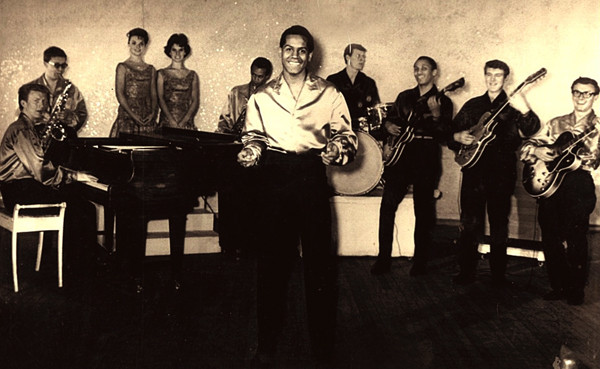
What Do You Want to Make Those Eyes at Me For?, by Emile Ford and The Checkmates (their 1st and only #1)

6 weeks, from 18th December 1959 – 29th January 1960 (including 1 week joint with Adam Faith from 18th – 25th December 1959)

It begins with some ticks, and then the vocals swoop in. This is a Doo-Wop record in the truest sense: in that much of it consists of the backing singers – The Checkmates, presumably – going a-doo-wop bee doo be doo be doo-wop…

I love this song, I do. What with all the doo-wops, the key changes and the brilliant false ending I can’t see how anyone could fail to enjoy it. I first heard it on a compilation called ‘Don’t Stop – Doo Wop’, which must have been released in the early ‘90s and which I picked up in a second hand CD shop years ago. I think I mentioned it in my post on The Teenagers’ ‘Why Do Fools Fall in Love’, which also featured on it.

The lyrics, though, to ‘What Do You Want to Make Those Eyes at Me For?’ (abbreviated forever more into WDYWTMTEAMF because that is a hell of a title to type out in full)… Hmmm. Questionable. What do you wanna make those eyes at me for, If they don’t mean what they say… That sounds like the justifications of a sex pest: “She was askin’ for it, guv! Those eyes!” You’re foolin’ around with me now, We-ell you lead me on and then you run away… She does sound like a tease… Of course, during these enlightened #MeToo times, we know that no means no. In 1959 it was perhaps a different story. We-ell that’s alright, I’ll get you alone tonight… Ok… And baby you’ll find, You’re messing with dynamite… Oo-er. Sexual dynamite? Or is he just going to give the disobedient hussy a black eye?

I jest, I jest… I’m willing to give Emile Ford the benefit of the doubt, as he keeps this song the right side of jaunty throughout and, to be honest, you can listen to it several times – as I did – without ever noticing the slightly sinister lyrical undertones. And, in defence of the 1950s as a whole – a decade, don’t forget, in which certain professions were closed to women, in which hotels could stick ‘No Blacks, No Irish’ in their windows, in which gay men were being slung in jail, in which people could still be sentenced to hanging – there have been very few #1 singles that stand out as troublesome for the modern listener. Very few lyrics have veered away from the catchy or the bland. I’d perhaps nominate WDYWTMTEAMF  and Guy Mitchell’s ‘She Wears Red Feathers’, from way back when (i.e. 1953) as being the most ‘of their time.’
A-347098-1418674966-5971.jpeg

As I mentioned in my last post, this disc was one of the last two records ever to share the top-spot in the UK charts. I suggested earlier that the death of the joint number one was due to a wider range of sales figures coming in but now I’ve just realised another theory: there will never be two such similarly titled #1 singles sitting at the top of the charts. Think about it: people go in to HMV looking to buy ‘What Do You Want?’ by Adam Faith, take a quick glance at the shelves, and come away with ‘What Do You Want to Make Those Eyes at Me For?’ by Emile Ford! Or vice-versa. Must have happened loads! Mystery solved.

WDYWTMTEAMF (that might actually be more of a pain to type than just writing it out in full) has quite the story, beyond this most famous of versions. It was written in 1916 (!) as a duet – in which the woman actually got to defend her wanton ways – and has been recorded by acts as varied as Shakin’ Stevens and former England, Barcelona and Tottenham manager Terry Venables. (Yes. Seriously.)

And so. We come to the end of the 1950s. And the start of the 1960s. Is this the last #1 record of the ‘50s, or the first of the ‘60s? Philosophical questions best left for another day. We are about to delve into a decade that will bring the most innovative pop ever recorded, the birth of modern rock, Merseybeat, Flower Power, psychedelica etc. and so on. So, I thought it might be interesting to gaze forward to the record that will be atop the charts on 31st December 1969, and to wonder at the advancements to come over the next ten years. Except. The final #1 of the sixties will be… ahem… ‘Two Little Boys’ by Rolf Harris. So… From a record with sex-offender lyrics to a record by an actual, convicted sex-offender. Ladies and Gentlemen, I give you the 1960s!

Let’s linger a while yet in the more innocent air of 1959, and end this post as Emile Ford (the first, and presumably only, St. Lucian to hit #1 in the UK – correct me if I’m wrong)  ended his sole chart-topping hit. Possibly the best ending we’ve heard yet. One more time, then: adoo-wop bee doo be doo be doo-wop be doo be doo be doo-wop be doo be doo be doo… Yeah!
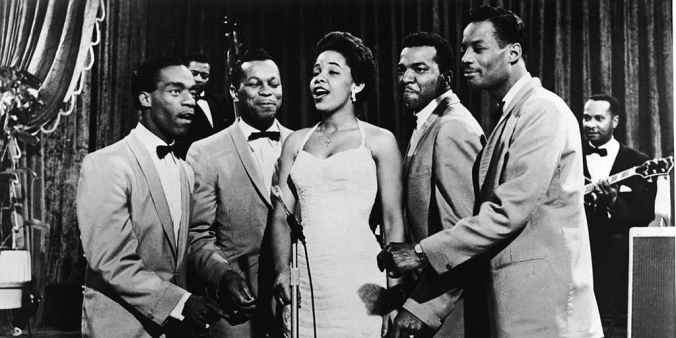
82. ‘Smoke Gets In Your Eyes’, by The Platters

I feel it is time to make one of my semi-regular proclamations about just where we are in popular music history. Remember back in March ’56 when I announced the beginning of the ‘The Post-Pre-Rock Age’ (i.e. after the pre-rock era but before the rock era had really got going)? Or when we killed off the first wave of rock ‘n’ roll in early ’57? Or when we passed through the ‘Age of Whistling’ a year or so ago? Well… What with The Platters’ stately ‘Smoke Gets in Your Eyes’ now grabbing a week at the top, all but one of 1959’s four chart-toppers have been ballads.

THE_PLATTERS_SMOKE+GETS+IN+YOUR+EYES-562934

Smoke Gets in Your Eyes, by The Platters (their 1st and only #1)

1 week, from 20th – 27th March 1959

Elvis aside, we’ve had Jane Morgan’s ‘The Day the Rains Came’ (very jazzy, but still what I’d class as a ballad) and Shirley Bassey’s ‘As I Love You’, plus Conway Twitty’s ‘It’s Only Make Believe’ from the tail-end of last year further slowing things down at the top, and this record does nothing to change the tempo. I’m not sure that this four-month stretch qualifies as an ‘Age’ or an ‘Era’, but I feel confident enough in christening it ‘The Winter of the Ballad’.

I’ve been a bit harsh on ballads recently. I didn’t hate either the Jane Morgan or the Shirley Bassey efforts, but they did rather pass by without grabbing me. I think it’s because, while you can chuck a load of guitars and drums at a rock song and usually come out with something passable, ballads are a lot more delicate. They can be great, or they can go really, really wrong. Lay the strings on a bit thick, let the singer go a little too wild with the vocal gymnastics, or have the writers get too schmaltzy with the lyrics, and you’ve got a mess on your hands. But this… now this is a ballad that gets it RIGHT.

It starts slowly. No dramatic swirl of violins or crashing cymbals. Just a piano, and a voice. They… Ask me how I knew, My true love was true, Oh…. I of course replied, Something here inside, Cannot be denied… The singer is sure that his woman loves him; his friends are less convinced. The singer scoffs. But…

Yet today, My love has flown away, I am without… My… Love… His friends – who sound like dicks, by the way – laugh at him and his misplaced confidence. His reply? I smile and say, When a lovely flame dies, Smoke gets in your eyes…

the-platters

What’s the difference then, between this ballad and the one it replaced at #1: ‘As I Love You’? If pressed, I’d have to say the lyrics. While Shirley Bassey was singing – albeit very beautifully – some trite lines about the thrill of being in love; this song employs some great imagery. Your heart’s on fire – smoke gets in your eyes and stops you from seeing clearly. The flame is extinguished; smoke gets in your eyes and makes you cry…

Still, though, there is a big, bombastic ending – the title of the song belted out at the top of the singer’s voice – which spoils things slightly. I just have to accept that it was the style of the time. It’s a great song, however; a classy song. A classy classic. And a ‘classic’ it truly is, having first been recorded back in 1933. It seems to have been something of a tactic in the late fifties – getting modern singers to record updated versions of songs from the twenties and thirties (Connie Francis did it on ‘Who’s Sorry Now’ and ‘Carolina Moon’, while Tommy Edwards borrowed an old melody for ‘It’s All in the Game’) to lure in both the kids and their parents.

This is The Platters’ one and only appearance at the top of the UK charts, but that does their reputation something of an injustice. They had had several Top 10 hits before this, and were the foremost vocal group in the US – quite an achievement considering that they were five black guys and a girl, and that this is the 1950s we’re talking about. They are still rolling on to this day, albeit with enough line-up changes to make The Sugababes look steady (Wiki lists ten past members).

Unlike the earlier tear-jerkers that have made up this ‘Winter of the Ballad’, I had heard this one before. I’m sure most people will have. It’s one of those songs that have become part of life’s backing track. And to know a song without knowing how you know it – as I’ve said before – is a sure-fire sign that said song is a stone-cold classic.

48. ‘Why Do Fools Fall In Love’, by The Teenagers ft. Frankie Lymon

s-l300 (1)

Why Do Fools Fall in Love, by The Teenagers ft. Frankie Lymon (their 1st and only #1)

3 weeks, from 20th July to 10th August 1956

Ah-doo-ma-da-doo-ma-da-doo-ma-doo-doo-doo…

The perfect antidote to our recent, saccharine-heavy chart toppers.

Ooh-wa-ooh-wa-wa…

This is one of the very few songs we’ve covered so far that I don’t think I need to really describe. Surely everyone knows this?

Why do birds si-ing, so gay? And lovers await the break of day? Why do they fall in love?

It’s a breathless, relentless song: two minutes twenty seconds packed with vocal harmonies, scattish drums and a brilliantly aggressive saxophone solo. There are certain records that simply had to have topped the charts, so seismic are they in shaping the history of pop music. This is one of them. It’s a great record. A classic. I love it.

But… That’s not good enough. I can’t leave it there – the shortest post yet. Let’s do this track justice. Why is it such a classic?

Firstly, Frankie Lymon’s voice. One of the things I know about this track, without doing any research, is that Lymon was just thirteen when he recorded this song. His voice is perfect. Not technically perfect, mind: it cracks and breaks a couple of times. But perfect for a song about first love, about being in love and getting rejected and, rather than wallowing in self-pity and whining about how you’ll wait for ever and a day for your loved one (c.f pretty much every male-led #1 thus far), it’s about shrugging your shoulders and realising what a fool you’ve been. It’s a wonderfully cynical record. Lymon sounds just like a heart-broken teenage boy, full of hurt and bravado. Because he was.

frankielymonteens-56d4fa3a5f9b5879cc92ad60

Which brings us onto the second reason. This is a song for teenagers, by teenagers. Literally: it’s by ‘The Teenagers’. Lymon was the youngest of the five, but none of the others were any older than sixteen when this song hit the top spot. Bill Haley, on the other hand, was thirty. This is the next big step in rock ‘n’ roll’s evolution. While this is strictly a doo-wop record, I make it the 4th rock ‘n’ roll record to top the charts. And I’m being pretty generous in making it four. But, interestingly, the four tracks have all been lyrically very distinct. Bear with me. ‘Such a Night’ was all about sex, ‘Rock Around the Clock’ about partying (and maybe a little bit of sex), ‘Rock And Roll Waltz’ about uncool parents and now ‘Why Do Fools…’ gives us hormonal heartbreak. We just need a song about vomiting all over a friend’s back garden at a house party to get the full set.

Reason number three? This is the first song I’ve covered on this blog, I believe – and bear in mind that we are forty-eight songs in now – in which you can’t make out all the words. The line I quoted back at the start? I had to check the lyrics online. I thought it went And lovers who wait to play all day… And the line: Why does my heart skip a crazy beat? Before I know it will reach defeat… I always thought it was… it will re-tweet tweet… Whatever that might have meant in 1956. A basic cornerstone of rock music is slurred lyrics that you can’t immediately understand and which, more importantly, annoy your parents because they’re not sung PROPERLY!

The fourth, and final, reason…? Well, it’s just a great song. A summer smash. It oozes New York city: steam, water spraying from a sidewalk valve, the sun blasting down, the Jets and the Sharks… I dunno. I grew up in small town Scotland. I first really got to know this song after buying an old second-hand CD compilation called ‘Don’t Stop, Doo-Wop’. It was brilliant; twenty-odd fifties and sixties doo-wop tracks, a few more of which will feature in this countdown. I wish I knew what I’d done with it.

Unfortunately, this will be The Teenagers one and only appearance here. Not that they were one-hit wonders, though, as they followed this classic up with the excellently titled ‘I’m Not a Juvenile Delinquent’.

Even more unfortunately – tragically, in fact – Frankie Lymon trod a very rock ‘n’ roll path following this early success. By 1957 he had struck out on his own, away from The Teenagers. Aged 15, however, he was also a heroin addict and a lover to women twice his age. His career was ended by this addiction, and by the simple fact of his voice breaking. He lost his only child when she was just two days old. He died of an overdose, in 1968, at the horribly young age of twenty-five, on his grandmother’s bathroom floor. I mean… That’s a grim tale. As trite as it sounds though, what better way to remember him than as a fresh-faced, fresh voiced kid singing about fools in love?

One more time then: Ooh-wa-ooh-wa-wa…