723. ‘Boom Boom Boom’, by The Outhere Brothers

In my last post, I asked who were the worse duo: the Outhere Brothers, or Robson & Jerome? Well here they stand, in direct comparison…

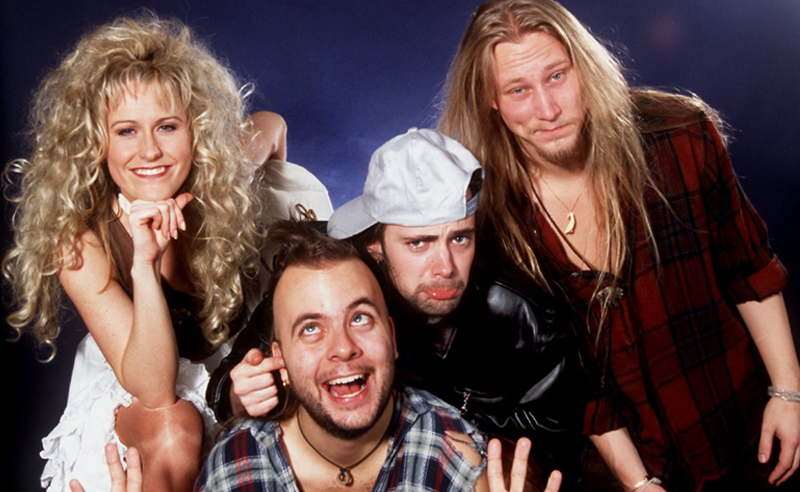
Boom Boom Boom, by The Outhere Brothers (their 2nd and final #1)

4 weeks, from 2nd – 30th July 1995

It’s more obnoxious rap-cum-dance from the Outheres, though I have to admit that this is significantly better than ‘Don’t Stop (Wiggle Wiggle)’. It has a less irritating beat, and something resembling a verse-chorus structure. It hangs together like an actual song, rather than a bunch of samples around which filthy lyrics are shouted.

That’s not to say the lyrics aren’t dirty here; they just don’t reach the same levels of obnoxious vulgarity as their earlier #1. There’s an excellent use of the term ‘nani’, (as in put your nani on my tongue…), as well as various mentions of the brothers’ pet obsession: the booty. And I will confess I smiled at the line: Slip my Peter, Into your folder… I’m no prude, and if rudeness can be both silly and inventive, then I’m all for it.

The vast majority of the song though, is a sledgehammer Eurodance beat, and the call-and-response hook of Boom, boom, boom, Now let me hear you say Way-Oh! That’s what I remember from the school playgrounds of the time, and presumably the reason why this was such a hit. There’s nary a millennial alive who can’t complete the second half of the title line, though back in 1995 innocent little me had no idea that there was an explicit original.

Like ‘Don’t Stop’, it looks like ‘Boom Boom Boom’ had a wide variety of mixes and edits: some radio-friendly, some not. I don’t know if these were a factor in making this record a hit, or whether the British public were just mad for the Outhere Brothers in the summer of ’95. It still does feel very incongruous that slap bang in the middle of the year of Britpop, we had a month of this after seven weeks of Robson & Jerome’s golden-oldies.

This, thankfully, is the last we’ll hear from The Outhere Brothers. They would manage a couple of further Top 10 hits, before fading away. I call this the ‘significantly better’ of their two chart-toppers, but that still doesn’t mean it’s particularly good. The Brothers’ charms remain difficult to place. At least they didn’t outstay their welcome – a quick-fire double and now we can forget they ever existed. Unlike the year’s other duo…

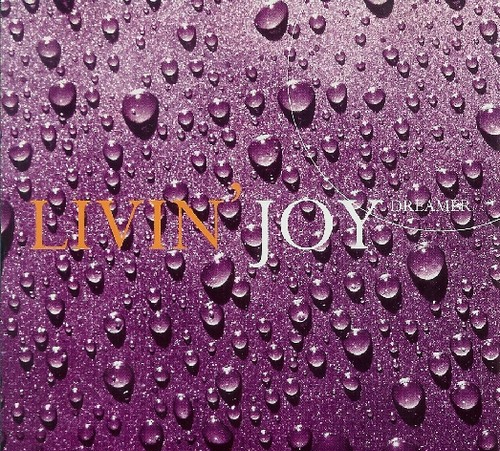
721. ‘Dreamer’, by Livin’ Joy

A very happy new year to all who follow this blog! So, where were we…? In the real world it’s 2024, while back here it’s the spring of 1995…

Dreamer, by Livin’ Joy (their 1st and only #1)

1 week, from 7th – 14th May 1995

We left things a few weeks ago having just welcomed Oasis to the top of the charts with ‘Some Might Say’, officially kicking off the Britpop age. Our next number one is the direct flip-side to that wall of guitar; the other, equally valid, sound of the nineties.

That is, the sound of a hitherto unknown Europop outfit appearing out of nowhere with a proper old-school dance banger. Having it large, mate! Nice one! Big fish, little fish, cardboard box… etc. etc. I may struggle to convince as a dance music fan, but I really do like songs like this. Songs with conviction. Dance music with the power of rock and roll. Hands to the sky, don’t ask why.

Livin’ Joy were a pair of Italian brothers, who took care of the production, and American singer Janice Robinson, who fronted the whole thing. As with all the best dance tracks – ‘Rhythm Is a Dancer’, ‘Let Me be Your Fantasy’ and the like – the vocals are made to be belted out between mouthfuls of dry ice. Probably the closest comparison to be drawn, though, is with Black Box’s ‘Ride on Time’ – not just because they were also Italian, but because Robinson is one of the few dance divas who can compete with Loleatta Holloway in the belting stakes.

And also because ‘Dreamer’ has quite a few retro house touches, especially as we end with the title line on a tight loop, as if the record has stuck, leaving us dancing to it for eternity. I drew a comparison to rock and roll a moment ago, and in all honesty dance music in the 1990s is what rock was in the 1950s… If you wanted to rock around the clock in 1995, you would do so to songs like ‘Dreamer’, with upbeat lyrics like Love, life, and laughter, Is all that I believe… None of that silly introspective nonsense. There’s also a good example of the ‘dance music as church’ phenomenon, in lines like My saviour is pure now, Because my lonely heart would bleed… They don’t mean much, if they mean anything at all, but they sound good in the moment. Euphoric, even.

I say that Livin’ Joy were ‘hitherto unknown’ before this, but in truth ‘Dreamer’ had made #18 – a not inconsiderable hit – just the year before. Its popularity kept growing, causing it to re-enter the lower reaches of the charts a couple of times, before a full re-release sent it walloping straight in at number one.

The band were good for another couple of Top 10 hits, but they did so without Janice Robinson, who left in 1996 to try a solo career. She has toured with Tina Turner and Lionel Richie, and written songs for a variety of different pop singers. Livin’ Joy meanwhile continued on with a different singer in Tameka Star. Wikipedia lists them as still active, but they haven’t released any new music since 1999.

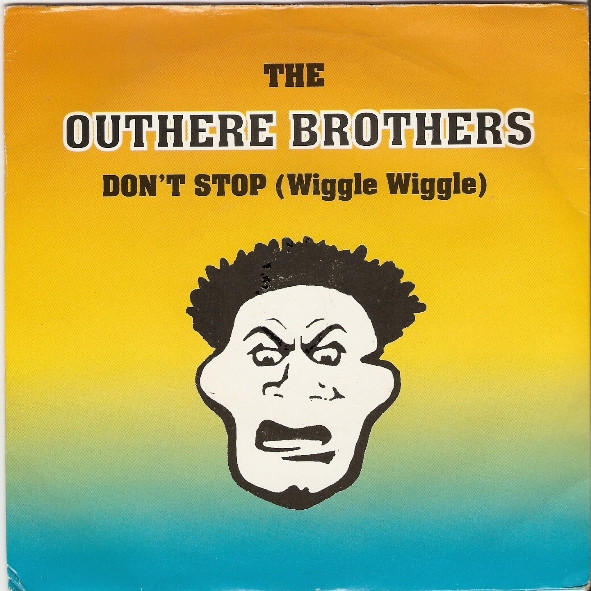
718. ‘Don’t Stop (Wiggle Wiggle)’, by The Outhere Brothers

Is 1995 the year with the biggest disparity between what it is remembered for, and what actually made #1? 1977 might have a case, the year punk exploded yet in which David Soul was the breakthrough star. 1995, though…?

Don’t Stop (Wiggle Wiggle), by The Outhere Brothers (their 1st of two #1s)

1 week, from 26th March – 2nd April 1995

I mention this because this next number one has left me in a state of shock. Shock at how I don’t really remember it. Shock at some of the lyrics. And shock at just how bloody awful it is… Biiiyyaaatch!

I thought that Rednex had my upcoming ‘Worst #1 Award’ in the bag. But as horrible as ‘Cotton Eye Joe’ is, at least it is identifiable as a ‘song’. This is an absolute racket. The pitch of the singer’s voice as he repeats the title line: Don’t stop movin’ baby oh that booty drive me crazy…, the one-note beat and the bubble-popping sound effect, the way that that one line is chopped up over and over again, ad nauseum… Some mixes are better than others – and the video attached at the foot of this post is the most palatable version, with a Hi-NRG beat – but most are dire.

I’m torn between wrapping this post up as soon as possible, trying to forget that this record ever existed, and delving a bit deeper. The radio edit of ‘Don’t Stop (Wiggle Wiggle)’ is repetitively, mind-numbingly, boring. But that wasn’t the reason this made number one. For the other, non-edited mixes reveal this to be the filthiest number one single we’ve heard so far on this countdown.

No, make that one of the filthiest number ones, ever. Period. Even in this post-‘WAP’ world, the lyrics here still raise an eyebrow. There’s that opening Biiiyyaaatch! for a start. Then there’s: Put your ass on my face… I love the way your… No I can’t type the rest. Girl you’ve got to suck my… Nope, still can’t. I’m not a prude, but this isn’t something I’ve never had to consider in my seven hundred and seventeen previous posts. The worst word we’ve encountered so far has been, I think, ‘bullshit’. And that’s a word I heard on Radio 4 the other day… I knew the 1990s would see morals and standards loosen (God, I sound like Mary Whitehouse), but I though it would be gradual. A ‘bitch’ here and a ‘fuck’ there. But no, it all arrived at once, right here: a smorgasbord of vulgarity. Which means that ‘Don’t Stop (Wiggle Wiggle)’ is actually a hugely important chart-topper…

But nah, I don’t want to give it that sort of weight. It happened. Swearing in #1 singles is fine now. Let’s move on. (And anyway, luckily for all of us, The Outhere Brothers have an even bigger hit coming up very soon…) They were a duo from Chicago – yet another pair of fake chart-topping siblings – and this was their breakthrough hit, after previous releases such as ‘Pass the Toilet Paper’ had failed to chart. Thirteen-year-old boys around the world then kept the pair in hits for the next couple of years, though their subsequent album ‘1 Polish, 2 Biscuits and a Fish Sandwich’ wasn’t as successful (and you can look up the meaning of that title, if you dare…)

Back to what I mentioned in the intro, about 1995 being a strange year, in which most of the acts and songs we remember the year for didn’t make the top of the charts. It’s a theme I’ll return to, especially when a different gruesome twosome dominate later in the year. Up next, though, I’m sort of instantly proven wrong, for it’s the decade’s biggest boyband, with one of the nation’s best-loved songs…

(The ‘best’ version of the song…)

(The explicit version, if you must…)

715. ‘Cotton Eye Joe’, by Rednex

We’ve just ticked over the exact midway point of the nineties, as we head into 1995. One of the most renowned years in British music, during which Britpop, and some of the nation’s best-loved bands, went mainstream. And yes, we will get to all that… But kicking off the year we have something much less fondly remembered.

Cotton Eye Joe, by Rednex (their 1st and only #1)

3 weeks, from 8th – 29th January 1995

This jaw-clenchingly, skin tighteningly bad piece of techno-bluegrass can only be explained as a hangover from the festive period, from New Year’s parties full of people too drunk to care what was blasting out over the stereo… Oh, who can I kid? By now it’s clear that the British public need no excuse to send utter dross to the top of the charts. ‘Cotton Eyed Joe’ is shit – so shit it was guaranteed to be massive.

It was a perennial at my school discos, but I didn’t like it aged nine and haven’t chosen to hear it for the better part of thirty years. You need a strong stomach to listen to it even now: the mix of banjos, fiddles and heavy synths makes me feel very tense, something the horse and gunshot sound effects don’t do much to alleviate, while the aggressive chanting makes me wonder if hell is actually being locked in an eternal barn dance.

The video builds on this theme – I’m genuinely not sure if they were going for something funny, or for something more like a horror movie. The Rednex all play straggly-haired, yellow-teethed, rat-fondling hillbillies, who appear to be subjecting a younger, prettier girl to a never-ending ride on a bucking bronco. I don’t say this at all lightly, but I would take ‘Mr Blobby’ over this scary mess.

Rednex were Swedish (not American, sadly) and had stage names like Bobby Sue and Ken Tacky. ‘Cotton Eye Joe’ was their first hit, and in the UK they would manage only one more of note: ‘Old Pop in an Oak’ which made #12. In Sweden they remained successful well into the 2000s, scoring chart-toppers there as late as 2008! The mind boggles… The album that their two biggest hits came from was titled ‘Sex and Violins’, which is possibly the only funny thing the band ever put their name to.

Sad thing is, the history behind ‘Cotton Eye Joe’ is quite interesting. It pre-dates the US Civil War, probably originating among black slaves in the cotton fields. Proposals for what the phrase means vary from someone being drunk, to someone with milky cataracts, to the contrast between black skin and white eyeballs. It was first published in 1882, and has been recorded in country, polka, and trad-Irish versions, as well as featuring in the movie ‘Urban Cowboy’.

All that history has been obliterated by the Rednex version, which became a worldwide hit and which we will all be hearing until our dying days. It even made the charts in the US, which was unusual for a Eurodance track, and became a sports event/kids’ party standard. In recent years, some sports teams have stopped playing it in their stadiums due to the song’s potentially racist origins. Usually I’m not a fan of cancel culture, but I’ll make an exception if it means never hearing this particular chart-topper ever again…

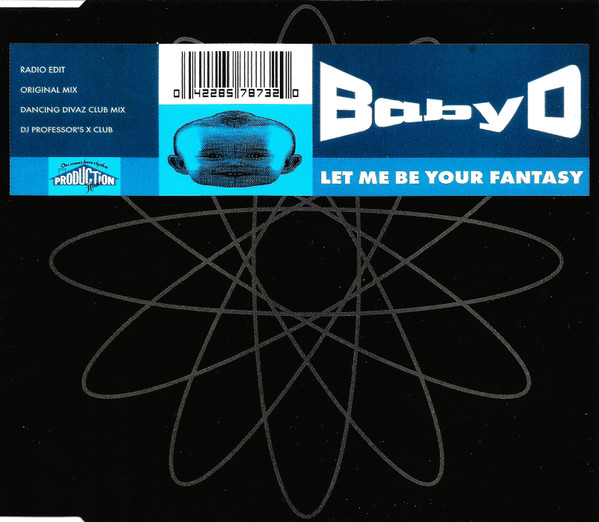
713. ‘Let Me Be Your Fantasy’, by Baby D

I know very little about dance music. I can just about tell my techno from my chillout, but you may have noticed from my previous posts on dance #1s that I play pretty fast and loose with the terminology. So indulge me while I throw around some ideas that may be complete nonsense…

Let Me Be Your Fantasy, by Baby D (their 1st and only #1)

2 weeks, from 20th November – 4th December 1994

‘Let Me Be Your Fantasy’ might be the most ‘hardcore’ dance chart-topper yet. The beat is either ‘house’, if we’re looking backwards, or ‘garage’ if we’re looking forwards. Is it maybe even the first ‘drum ‘n’ bass’ number one? I’ll also throw in the suggestion that it also incorporates ‘jungle’, if only because I think it sounds fun.

I could list dance sub-genres all day long (Wikipedia also suggests ‘breakbeat’ and ‘happy hardcore’) but to be honest, they mean little to me and probably mean as much to you. Let me give the quotation marks a rest, and describe what ‘Let Me Be Your Fantasy’ makes me feel… Well, it’s atmospheric – I like what sounds like a robot breathing in the mellow breaks between the verse – and the vocals are impressive. They’re the part of the song that feels the most familiar: a dance hit helmed by a large-lunged diva a la Black Box, or Snap!. Here the singer is Dorothy ‘Dee’ Galdes (presumably the ‘D’ in Baby D) and she has a wonderfully light-yet-full-bodied voice.

It’s another step towards the dance music that was dominating the charts when I came of age in the later part of the decade – dance music that had moved away from samples and novelty raps, dance music that had the confidence to strip things back, to drop the beats per minute, to let things breathe. This record is similar in that way to 1994’s other ‘cool’ dance hit by Tony Di Bart, rather than the more novelty offerings from Doop and Whigfield.

But I’ll also take that word ‘cool’, strengthen it into ‘cold’, and use it to describe how this song leaves me feeling. It’s not my thing, and as much as I try I can’t move past detached admiration as I listen and critique – much like I would an artefact in a museum – and I move on without particularly wanting to hear it again. I will always, sorry to say, enjoy the inane cheesiness of a 2 Unlimited song more…

Baby D had been around since the late eighties, and had scored a handful of minor hits earlier in the nineties. ‘Let Me Be Your Fantasy’ had been around since 1992, when it made #76 and become something of a lost classic. Until it was ‘found’, re-released, and it reached #1. Baby D followed it up with a couple of #3 hits before fading. Their last hit was a remix of this, their biggest hit, that made #16 in 2000. Their keyboard player, Terry Jones, took a slight change in direction and went on to write and produce for the Backstreet Boys, Eternal, and Peter Andre…

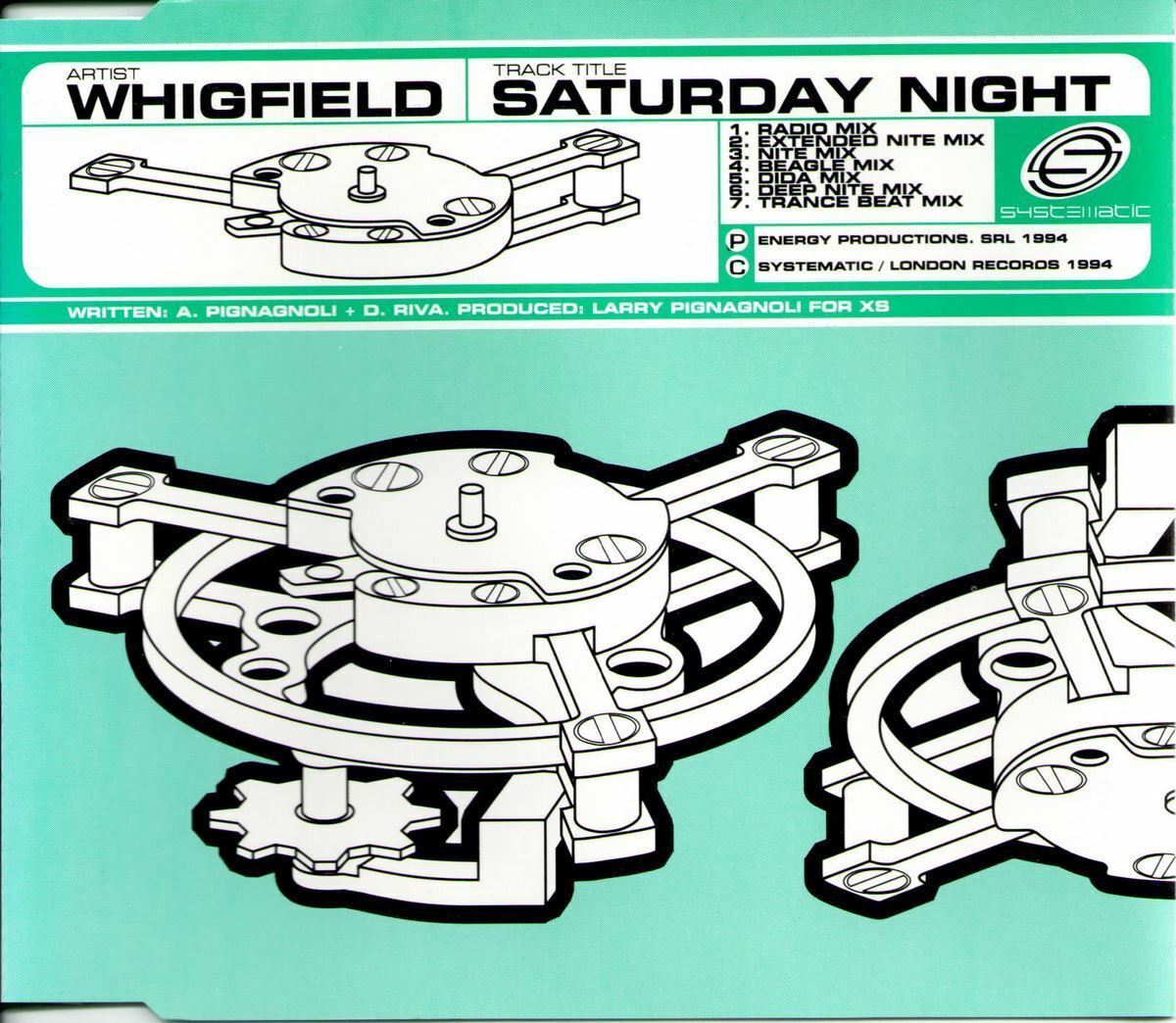
710. ‘Saturday Night’, by Whigfield

After fifteen weeks of ‘Love Is All Around’, I’m sure the nation (including Wet Wet Wet themselves) was happy for literally anything to come along and give us a new number one…

Saturday Night, by Whigfield (her 1st and only #1)

4 weeks, from 11th Sept – 9th Oct 1994

Well, here with the dictionary definition of the phrase ‘careful what you wish for’, is Danish beauty Whigfield, and her ode to the penultimate night of the week. I innocently thought I’d enjoy hearing this tune again, cheese that it is, while assorted memories of primary school discos came flooding back…

But, alas. It’s a bit crap. The first ten seconds are the most interesting. The famous di-di-da-da-da intro and the quacking synths. Here we go, I think, nostalgia central. Except, as ever, nostalgia ain’t what it used to. The remaining four minutes of ‘Saturday Night’ are repetitive and dull. The banal lyrics – Saturday night and I like the way you move… It’s party time and not one minute we can lose… Be my baby… and some la-di-dahs to fill the gaps… – the banal beat, the banal quacking. I notice that as part of the current ‘the nineties were the best decade ever’ movement, there are attempts to cast this as a ‘90s dance classic, up there with ‘Rhythm Is a Dancer’ and ‘Ebeneezer Goode’. But it’s really not.

Not that it’s terrible either. It’s a novelty, but not the most offensive kind. It’s biggest relevance, in chart terms, is in being the ultimate post-summer holiday hit. Presumably played in bars across the continent all summer, it smashed straight in at number one when finally released at the start of September. Oh, and there’s the fact that in entering at #1, Whigfield became the first act to have their debut single do so.

As with Alice Cooper, and Marilyn Manson (two artists to whom I didn’t expect to be drawing a comparison today) people make the mistake of referring to Whigfield as the singer rather than the band (or ‘musical project’ as Wikipedia refers to them). The singer, Sannie Charlotte Carlson, was Danish, and the producers were Italian. Carlson, though, was the very pretty star of the show. I’m sure the video, in which she prances around in a towel, getting ready for a big night out, did the song’s chances no harm. Whigfield would go on to have just two further Top 10 hits, though Carlson continues to record and perform.

I think another reason writing this post didn’t bring about a warm Proustian glow is that my repeated plays of ‘Saturday Night’ have reminded me of the dance routine. Interestingly, Carlson doesn’t do the dance in the video, and the craze seems to have stemmed from her backing dancers when she performed on Top of the Pops. However it started though, it quickly caught on, and the social anxiety that came from the being nine-years-old and the only person in the school who couldn’t do it properly remains to this day (see also: ‘The Macarena’).

706. ‘The Real Thing’, by Tony Di Bart

Well, I didn’t expect this. To get to May 1994 and come across a number one hit I have genuinely never heard before…

The Real Thing, by Tony Di Bart (his 1st and only #1)

1 week, from 1st – 8th May 1994

This record both is, and isn’t, your average mid-nineties dance tune. It’s a banger, all throbbing synths and a bassline that goes right through you, but it’s main references aren’t techno, or Eurodance. It looks back to the house tunes of the late-eighties – meaning it probably qualifies as retro already – and in the beat and the piano chords it nods even further back, to the days of disco.

It’s a slow-build sort of song. I was about to write it off as bland on first listen, but on my second I heard a hook buried in the melancholy chords, and by the third listen I was intrigued. There’s something there. Despite its retro influences, it feels very modern. If I can’t have you, I don’t want nobody baby… Most dance hits in the mid-nineties were euphoric, in-your-face – the likes of 2 Unlimited and Snap! springing to mind. ‘Dancing through the tears’ is a very 21st century concept, popularised by acts like Robyn, and The Weeknd. The latter of whom I bring up, because Tony Di Bart sounds remarkably like Abel Tesfaye, with his falsetto, and the longing in his voice.

The man known as The Weeknd counting Tony Di Bart as an influence seems unlikely, given that ‘The Real Thing’ was the only Top 20, and one of only two Top 40 hits, Di Bart managed. Neither of which did very much in North America. This single hadn’t done much initially in the UK either, when it was released in November 1993. It took a remix to send it up the charts, and that’s why I haven’t attached a video below: none seems to have been made for the much more atmospheric remix. (Listen to the original version here.)

As Italian as Antonio Carmine Di Bartolomeo AKA Tony Di Bart sounds, he was actually from Slough. His Wikipedia page is sparse, with few details given as to how he went from selling bathrooms to the top of the charts. His post-fame entries make for sad reading: one of his more recent public appearances was at a village fête in Buckinghamshire, before he was arrested and pleaded guilty to assaulting a police officer earlier this year.

Still, assault charges or no assault charges, you can’t take away the fact that Tony Di Bart has a number one single. One that is actually quite good, the more you listen and get lost in its wistful synths. Up next, an equally forgotten one-week wonder…

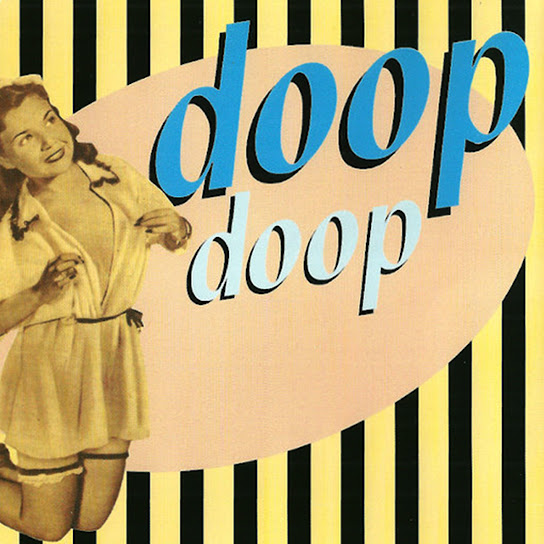
703. ‘Doop’, by Doop

And now for something a little different… Eurodance meets the Charleston.

Doop, by Doop (their 1st and only #1)

3 weeks, from 13th March – 3rd April 1994

More impressively, Eurodance meets the Charleston, and the results aren’t a complete disaster. ‘Doop’s merging of wildly disparate musical eras works. It’s fast, catchy, and fun – a novelty for sure, but not too irritating. It works its way right into your brain, thanks to its frenetic pace and puppy dog energy, and stays there…

It’s a completely instrumental track, apart from the doopy-doopy-do-do-doos which give the song its name. It’s the last instrumental number one since… I’m not sure, to be honest, but it’s been a good while. It’s also probably one of the last, as they’ve become rarer and rarer since their heyday in the late fifties-early sixties.

There’s not much to it – a big band sample stretched out over a techno beat. With the aforementioned doops, of course. The most complex thing about this record is how many remixes there were, and working out which one was actually getting airplay at the time. They all have a varying techno-to-Charleston ratio. The ‘Official Video’ on YouTube is the most modern, a dance beat interspersed with trumpet blasts. I prefer the more big band-heavy versions, such as the Sidney Berlin Ragtime Band mix, from the Maxi-CD release, or the Urge-2-Merge radio edit.

The best mixes are also the ones that keep proceedings down to the three-minute mark for, as fun as this tune is, it can get a little repetitive when stretched over seven minutes. Short and sweet is the order of the day here. Doop were, you’ll be shocked to realise, from the Netherlands, the one country that can rival masters Germany for Europop cheese. And let’s be honest, giving your debut single the same name as your band (or vice-versa) suggests that you’re quite happy in aiming for one-hit wonder status.

In fairness, Doop did manage a #88 follow-up hit with ‘Huckleberry Jam’, in which they tried the same trick using an old blues riff, while an earlier incarnation of the group, Hocus Pocus, made #1 in Australia with a song called ‘Here’s Johnny!’ Really though, this is real one-hit wonder stuff: a flash in the pan, bottled lightning moment, and I’m not sure this track has been played on the radio for years.

It was a trend-setter of sorts, though. I can’t think of many dance tracks that sampled pre-rock and roll music before Doop, but I can think of a few that came afterwards, including at least a couple of number ones. Anyway, I like it, as throwaway as it is. The NME disagree, though, naming it among their ‘25 most annoying songs ever’… Which seems rich given some of the crap they’ve championed over the years.

701. ‘Things Can Only Get Better’, by D:Ream

There’s a niche category of number one singles, one I’m going to name ‘much loved chart-toppers that I don’t really get’ (catchy, isn’t it?) Our next #1 belongs to this category…

Things Can Only Get Better, by D:Ream (their 1st and only #1)

4 weeks, from 16th January – 13th February 1994

I don’t dislike ‘Things Can Only Get Better’; I just don’t quite see why people love it. I think the problem is the intro, the overwrought vocals and weighty piano chords gradually building, very slowly getting to the point. Is this a gospel track? A spiritual? No, it’s just a dance tune, and once the synths and the funky bassline come in, and you know where you stand, things improve.

I have a deep suspicion for songs that could be described as ‘motivational’, which is probably where my issues with this tune lie. ‘Motivational’ means ‘uplifting’, and the next step on the ladder from that is ‘spiritual’, or ‘religious’, and I’m someone who believes very strongly in the separation of church and pop. It’s not just this song – there is a strain of thought (or clever marketing) that positions dance music as a sort of religion, with nightclubs as churches, and the Ministry of Sound as some sort of Holy Father… Religious ecstasy taking on a new meaning in this case…

But then I sit down, and properly listen to the lyrics to ‘Things Can Only Get Better’, and wonder if they aren’t to do with accepting who you are, and holding your head up through scorn and insult… Burn the bridges as you’ve gone, I’m too weak to fight you, I’ve got my personal hell to deal with… Maybe it even alludes to those with AIDS (I must learn to live with this disease…), and I’m starting to feel bad for writing this song off as mindless motivational nonsense.

My favourite part of the song is the ending (and I don’t mean that sarcastically) as the entire song deconstructs, the horn riff goes wonky, and the lyrics taper off. I still don’t love it, but I think I’m beginning to appreciate it a little more. I can see it as a musical sibling of Yazz’s ‘The Only Way Is Up’, which is every bit as positive, but doesn’t quite wear its heart on its sleeve like this one.

D:Ream were the brainchild of Peter Cunnah, a Northern Irish singer-songwriter, who sings the vocals on this track. He sounds a bit like George Michael, actually – one moment light and airy, the next hitting a throaty growl. The other members changed fairly regularly, but one of their more famous alumni is the now TV-scientist Brian Cox, who famously played keyboards when the band performed ‘Things…’ on Top of the Pops.

This was their first big hit, but D:Ream had been plugging away for a few years before breaking through. This track had been released a year earlier, making #24, but its popularity in the clubs kept growing, leading to this re-release. In many ways, this is one of the chart-toppers that sum up the mid-to-late nineties: Britpop, Cool Britannia, Noel’s union jack guitar, Geri’s dress, all that razzamatazz. It was used as a campaign song by the great political hope of the age, New Labour, as they swept to victory in the 1997 general election. It all seems like a very long time ago, now…

694. ‘Mr. Vain’, by Culture Beat

The intro to our next number one kicks in, and I’m struggling to tell if it sounds like something we’ve already met in our journey through the early 90s, or if it was simply copied into ubiquity in the years that followed…

Mr. Vain, by Culture Beat (their 1st and only #1)

4 weeks, from 22nd August – 19th September 1993

On the one hand, ‘Mr. Vain’ is cheesy, throwaway Eurodance – the soundtrack to many a summer holiday in Ibiza (the 1990s is littered with dance hits that made the higher reaches of the charts in early autumn, after everyone had returned home from a fortnight in the Med). On the other, it’s an astute slice of dance-pop so of its time it could be in a museum.

It follows a tried and tested formula: one girl who sings, one boy who raps, over a throbbing beat. It’s amazing how successful this was, over and over again, between 1990 and 1994. Snap!, 2 Unlimited, Culture Beat… ‘Mr. Vain’ is a both a cheap and cheerful rehash of ‘Rhythm Is a Dancer’, especially in the portentous intro, and a slightly less stupid take on ‘No Limit’, with its techno riff and juddering drum machine. It takes what was great about both those records, and creates a streamlined, optimised dance hit – perhaps the epitome of its genre.

Call him Mr Raider, Call him Mr Wrong… Away from the pulsing beat, there are lyrics that just beg to be chanted en masse. I know what I want and I want it now… A decade later, when I started going to nightclubs, this record would still get a regular spin, and girls would pick out their own personal ‘Mr. Vain’ among the strobes and the dry ice. Meanwhile, Mr. Vain responds in the rapped verses: Call me what you like, As long as you call me time and again…

I’m going to take bets on where Culture Beat were from. Place your chips…. There’s no way they were British – the thought didn’t even cross my mind, given that this is dictionary-definition Eurodance. I was tempted to go Dutch, or maybe Belgian… But no. They were a German creation, of course, from a producer with two rent-a-voices, keeping up a grand tradition that stretches all the way back to Boney M. For ‘Mr. Vain’, though, the large-lunged vocals are from a Brit – Tanya Evans – while the rap is supplied by an American – Jay Supreme.

They’d had a couple minor hits previously, but this one sent them into the stratosphere: a number one in eleven countries across Europe, setting them up for a year or so of follow-up Top 10s. In Germany their success lasted the better part of a decade, until a remake of their biggest hit, ‘Mr Vain Recall’, in 2003. Culture Beat remain a going concern, presumably touring festivals across central Europe every summer, with a completely different line-up, Evans and Supreme having left way back in 1997.