706. ‘The Real Thing’, by Tony Di Bart

Well, I didn’t expect this. To get to May 1994 and come across a number one hit I have genuinely never heard before…

The Real Thing, by Tony Di Bart (his 1st and only #1)

1 week, from 1st – 8th May 1994

This record both is, and isn’t, your average mid-nineties dance tune. It’s a banger, all throbbing synths and a bassline that goes right through you, but it’s main references aren’t techno, or Eurodance. It looks back to the house tunes of the late-eighties – meaning it probably qualifies as retro already – and in the beat and the piano chords it nods even further back, to the days of disco.

It’s a slow-build sort of song. I was about to write it off as bland on first listen, but on my second I heard a hook buried in the melancholy chords, and by the third listen I was intrigued. There’s something there. Despite its retro influences, it feels very modern. If I can’t have you, I don’t want nobody baby… Most dance hits in the mid-nineties were euphoric, in-your-face – the likes of 2 Unlimited and Snap! springing to mind. ‘Dancing through the tears’ is a very 21st century concept, popularised by acts like Robyn, and The Weeknd. The latter of whom I bring up, because Tony Di Bart sounds remarkably like Abel Tesfaye, with his falsetto, and the longing in his voice.

The man known as The Weeknd counting Tony Di Bart as an influence seems unlikely, given that ‘The Real Thing’ was the only Top 20, and one of only two Top 40 hits, Di Bart managed. Neither of which did very much in North America. This single hadn’t done much initially in the UK either, when it was released in November 1993. It took a remix to send it up the charts, and that’s why I haven’t attached a video below: none seems to have been made for the much more atmospheric remix. (Listen to the original version here.)

As Italian as Antonio Carmine Di Bartolomeo AKA Tony Di Bart sounds, he was actually from Slough. His Wikipedia page is sparse, with few details given as to how he went from selling bathrooms to the top of the charts. His post-fame entries make for sad reading: one of his more recent public appearances was at a village fête in Buckinghamshire, before he was arrested and pleaded guilty to assaulting a police officer earlier this year.

Still, assault charges or no assault charges, you can’t take away the fact that Tony Di Bart has a number one single. One that is actually quite good, the more you listen and get lost in its wistful synths. Up next, an equally forgotten one-week wonder…

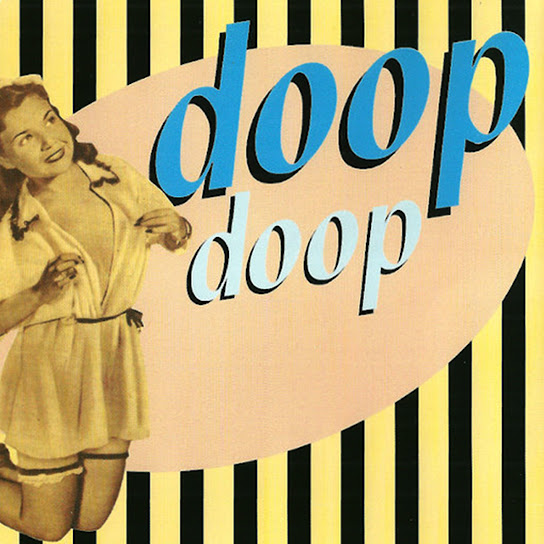
703. ‘Doop’, by Doop

And now for something a little different… Eurodance meets the Charleston.

Doop, by Doop (their 1st and only #1)

3 weeks, from 13th March – 3rd April 1994

More impressively, Eurodance meets the Charleston, and the results aren’t a complete disaster. ‘Doop’s merging of wildly disparate musical eras works. It’s fast, catchy, and fun – a novelty for sure, but not too irritating. It works its way right into your brain, thanks to its frenetic pace and puppy dog energy, and stays there…

It’s a completely instrumental track, apart from the doopy-doopy-do-do-doos which give the song its name. It’s the last instrumental number one since… I’m not sure, to be honest, but it’s been a good while. It’s also probably one of the last, as they’ve become rarer and rarer since their heyday in the late fifties-early sixties.

There’s not much to it – a big band sample stretched out over a techno beat. With the aforementioned doops, of course. The most complex thing about this record is how many remixes there were, and working out which one was actually getting airplay at the time. They all have a varying techno-to-Charleston ratio. The ‘Official Video’ on YouTube is the most modern, a dance beat interspersed with trumpet blasts. I prefer the more big band-heavy versions, such as the Sidney Berlin Ragtime Band mix, from the Maxi-CD release, or the Urge-2-Merge radio edit.

The best mixes are also the ones that keep proceedings down to the three-minute mark for, as fun as this tune is, it can get a little repetitive when stretched over seven minutes. Short and sweet is the order of the day here. Doop were, you’ll be shocked to realise, from the Netherlands, the one country that can rival masters Germany for Europop cheese. And let’s be honest, giving your debut single the same name as your band (or vice-versa) suggests that you’re quite happy in aiming for one-hit wonder status.

In fairness, Doop did manage a #88 follow-up hit with ‘Huckleberry Jam’, in which they tried the same trick using an old blues riff, while an earlier incarnation of the group, Hocus Pocus, made #1 in Australia with a song called ‘Here’s Johnny!’ Really though, this is real one-hit wonder stuff: a flash in the pan, bottled lightning moment, and I’m not sure this track has been played on the radio for years.

It was a trend-setter of sorts, though. I can’t think of many dance tracks that sampled pre-rock and roll music before Doop, but I can think of a few that came afterwards, including at least a couple of number ones. Anyway, I like it, as throwaway as it is. The NME disagree, though, naming it among their ‘25 most annoying songs ever’… Which seems rich given some of the crap they’ve championed over the years.

701. ‘Things Can Only Get Better’, by D:Ream

There’s a niche category of number one singles, one I’m going to name ‘much loved chart-toppers that I don’t really get’ (catchy, isn’t it?) Our next #1 belongs to this category…

Things Can Only Get Better, by D:Ream (their 1st and only #1)

4 weeks, from 16th January – 13th February 1994

I don’t dislike ‘Things Can Only Get Better’; I just don’t quite see why people love it. I think the problem is the intro, the overwrought vocals and weighty piano chords gradually building, very slowly getting to the point. Is this a gospel track? A spiritual? No, it’s just a dance tune, and once the synths and the funky bassline come in, and you know where you stand, things improve.

I have a deep suspicion for songs that could be described as ‘motivational’, which is probably where my issues with this tune lie. ‘Motivational’ means ‘uplifting’, and the next step on the ladder from that is ‘spiritual’, or ‘religious’, and I’m someone who believes very strongly in the separation of church and pop. It’s not just this song – there is a strain of thought (or clever marketing) that positions dance music as a sort of religion, with nightclubs as churches, and the Ministry of Sound as some sort of Holy Father… Religious ecstasy taking on a new meaning in this case…

But then I sit down, and properly listen to the lyrics to ‘Things Can Only Get Better’, and wonder if they aren’t to do with accepting who you are, and holding your head up through scorn and insult… Burn the bridges as you’ve gone, I’m too weak to fight you, I’ve got my personal hell to deal with… Maybe it even alludes to those with AIDS (I must learn to live with this disease…), and I’m starting to feel bad for writing this song off as mindless motivational nonsense.

My favourite part of the song is the ending (and I don’t mean that sarcastically) as the entire song deconstructs, the horn riff goes wonky, and the lyrics taper off. I still don’t love it, but I think I’m beginning to appreciate it a little more. I can see it as a musical sibling of Yazz’s ‘The Only Way Is Up’, which is every bit as positive, but doesn’t quite wear its heart on its sleeve like this one.

D:Ream were the brainchild of Peter Cunnah, a Northern Irish singer-songwriter, who sings the vocals on this track. He sounds a bit like George Michael, actually – one moment light and airy, the next hitting a throaty growl. The other members changed fairly regularly, but one of their more famous alumni is the now TV-scientist Brian Cox, who famously played keyboards when the band performed ‘Things…’ on Top of the Pops.

This was their first big hit, but D:Ream had been plugging away for a few years before breaking through. This track had been released a year earlier, making #24, but its popularity in the clubs kept growing, leading to this re-release. In many ways, this is one of the chart-toppers that sum up the mid-to-late nineties: Britpop, Cool Britannia, Noel’s union jack guitar, Geri’s dress, all that razzamatazz. It was used as a campaign song by the great political hope of the age, New Labour, as they swept to victory in the 1997 general election. It all seems like a very long time ago, now…

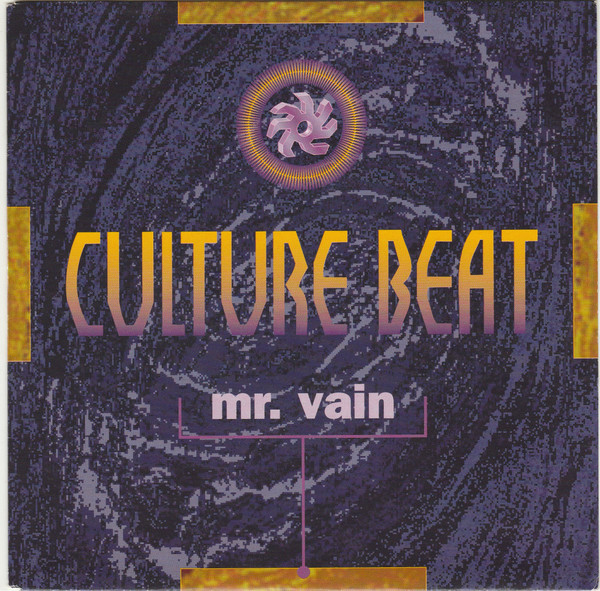
694. ‘Mr. Vain’, by Culture Beat

The intro to our next number one kicks in, and I’m struggling to tell if it sounds like something we’ve already met in our journey through the early 90s, or if it was simply copied into ubiquity in the years that followed…

Mr. Vain, by Culture Beat (their 1st and only #1)

4 weeks, from 22nd August – 19th September 1993

On the one hand, ‘Mr. Vain’ is cheesy, throwaway Eurodance – the soundtrack to many a summer holiday in Ibiza (the 1990s is littered with dance hits that made the higher reaches of the charts in early autumn, after everyone had returned home from a fortnight in the Med). On the other, it’s an astute slice of dance-pop so of its time it could be in a museum.

It follows a tried and tested formula: one girl who sings, one boy who raps, over a throbbing beat. It’s amazing how successful this was, over and over again, between 1990 and 1994. Snap!, 2 Unlimited, Culture Beat… ‘Mr. Vain’ is a both a cheap and cheerful rehash of ‘Rhythm Is a Dancer’, especially in the portentous intro, and a slightly less stupid take on ‘No Limit’, with its techno riff and juddering drum machine. It takes what was great about both those records, and creates a streamlined, optimised dance hit – perhaps the epitome of its genre.

Call him Mr Raider, Call him Mr Wrong… Away from the pulsing beat, there are lyrics that just beg to be chanted en masse. I know what I want and I want it now… A decade later, when I started going to nightclubs, this record would still get a regular spin, and girls would pick out their own personal ‘Mr. Vain’ among the strobes and the dry ice. Meanwhile, Mr. Vain responds in the rapped verses: Call me what you like, As long as you call me time and again…

I’m going to take bets on where Culture Beat were from. Place your chips…. There’s no way they were British – the thought didn’t even cross my mind, given that this is dictionary-definition Eurodance. I was tempted to go Dutch, or maybe Belgian… But no. They were a German creation, of course, from a producer with two rent-a-voices, keeping up a grand tradition that stretches all the way back to Boney M. For ‘Mr. Vain’, though, the large-lunged vocals are from a Brit – Tanya Evans – while the rap is supplied by an American – Jay Supreme.

They’d had a couple minor hits previously, but this one sent them into the stratosphere: a number one in eleven countries across Europe, setting them up for a year or so of follow-up Top 10s. In Germany their success lasted the better part of a decade, until a remake of their biggest hit, ‘Mr Vain Recall’, in 2003. Culture Beat remain a going concern, presumably touring festivals across central Europe every summer, with a completely different line-up, Evans and Supreme having left way back in 1997.

693. ‘Living on My Own’, by Freddie Mercury

It feels like we’ve been bidding farewell to Freddy Mercury for a while now. From the re-release of ‘Bohemian Rhapsody’, paired with ‘These Are the Days of Our Lives’, in the weeks following his death, to George Michael’s tributes on the ‘Five Live EP’, to this.

Living on My Own, by Freddie Mercury (his 1st and only solo #1)

2 weeks, from 8th – 22nd August 1993

And of the three, this remix of his minor 1985 hit is the tribute that Freddie himself might have enjoyed the most. On the one hand it is a shame that his solitary solo number one isn’t a blistering rocker; but then he was a musician who never let himself be restricted within one genre. ‘Living on My Own’ is updated nicely for the early-mid nineties, with a chilled out house beat, by a production trio called No More Brothers and, although it was still listed on the charts as the 1985 original, it was undoubtedly this remix that sent it to #1.

I say that Freddie would have liked this version and, presumptuous as that might be, if you listen to the original, from his ‘Mr. Bad Guy’ solo album, then it was already much more dance than rock. The lyrics, meanwhile, are very personal: Sometimes I feel I’m gonna break down and cry, Nowhere to go, Nothing to do with my time… I get lonely… They’re based heavily on quotations from Greta Garbo (which feels very Freddie Mercury…) and each chorus ends on the positive mantra: Got to be some good times ahead… Though knowing how soon it all would end, that line is tinged with sadness.

I will also give a shoutout to an earlier remix – which I initially thought was the chart-topping version – by Julian Raymond. This is my favourite of the three versions, with a faster, industrial beat, more of Mercury’s trademark yodelling, alongside a frenetic piano line. It was commissioned as part of the ‘Freddie Mercury Album’, released in November 1992 to mark the 1st anniversary of his death, but never released as a single.

The video to the 1993 version of ‘Living on My Own’ was the same as the 1985 one, and featured footage of a Drag Ball held for Mercury’s 39th birthday party. I love this quote: “Because of the garishly costumed homosexuals and transvestites celebrating a decadent, raucous party in the video clip, the BBC long refused to broadcast the music video on its channels.” Good old Beeb, always ready to ban those garish homosexuals…

I hadn’t realised quite how well Freddie Mercury’s solo career – while nothing compared to Queen’s discography – had been ticking along since the mid-80s, when he made the Top 10 with ‘Love Kills’. The ‘Living on My Own’ remix was his seventh, and final, Top 20 hit, and a huge smash across Europe. (Especially in France, where it did a Bryan Adams and stayed at #1 for fifteen weeks! Bryan or Freddie… I know who I’d rather have clogging up the number one spot…)

With this we can finally bid farewell to Freddie Mercury. Three number one singles in his lifetime, two after his death, and one well-intentioned tribute in-between. For my money, he is the greatest frontman of all time. Not only could he rock with the very best; he could do opera, musical theatre, pop, disco, camp ditties about girls with fat bottoms… And he sounds just as at home here, on a house track released two years after his death, as he does anywhere.

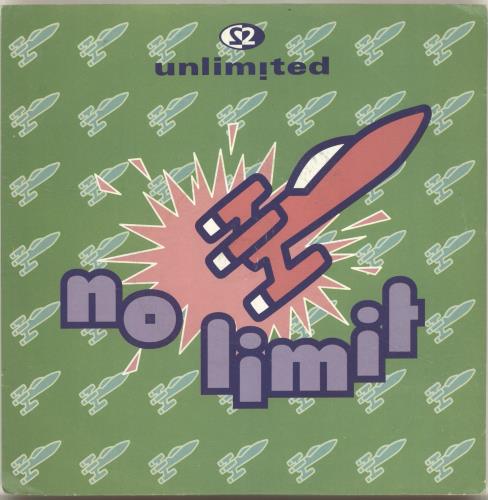
685. ‘No Limit’, by 2 Unlimited

I know that, in the real world, people don’t usually buy records just to get rid of the previous number one. They buy them because they like the song, or they like the singer, or because they found them in the Woolies’ bargain bin… But, after Whitney Houston had set up camp at the summit for the entire winter of 1992-93, the record that finally replaced it feels refreshingly… different.

No Limit, by 2 Unlimited (their 1st and only #1)

5 weeks, from 7th February – 14th March 1993

Let me hear you say yeah! Booting Whitney out the way is a proper slab of early nineties techno (or should that be ‘techno, techno, techno, techno’?) A sledgehammer synth riff, a breakneck tempo, minimalist lyrics, and a rap. Wham, bam, thank you ma’am. Job’s a good ‘un.

No, no, no, no, no, no, no, no, no, no, no, no, There’s no limit… I may have claimed in my post on Snap!’s ‘Rhythm Is a Dancer’ that dance tunes don’t need deep lyrics. But the lyrics to ‘No Limit’ make most dance tunes sound like ‘American Pie’. Lots of ‘no no’s, and a bit about reaching for the sky. The UK release even deleted the rap – a bit too wordy – and replaced it with some more ‘oh’s, and some ‘techno’s.

Is it wrong that I like this more than some (most…) of the earlier dance number ones? Records like ‘Rhythm Is a Dancer’, ‘Killer’, and ‘Ride on Time’ are lauded as classics, while ‘No Limit’ is hidden under the carpet like an embarrassing stain. Well I’m here to reclaim this song. Yes, it’s simplistic, bordering on moronic – three notes and a lot of shouting – but, damn it, it’s fun. I like dance music best when it has the aggression and energy of rock ‘n’ roll and, replace the synths with scuzzy guitars here and you’ve got yourself something pretty punk.

And I admit, I have a soft spot for this tune, because it’s one of the first pop songs that I was aware of at the time. I have distinct memories of this being sung, over and over, in my school playground. 1993 was the year I turned seven, and the songs that made number one started becoming more and more relevant to me. I apologise in advance for any self-indulgence as we head on through the tunes of my childhood, and will try to keep the reminiscing to a minimum…

I’d have put good money on 2 Unlimited being German. Something about the sheer relentlessness of the beat, the ruthless efficiency of the lyrics… National stereotypes aside, most of the finest Europop (think Boney M, Falco and Snap!) has also been of Germanic origin. And I was close! They were Dutch/Belgian, and followed the Snap! formula of a male rapper and a female singer. Between 1991 and 1994 they scored eight UK Top 10s. I’m not sure any are better than ‘No Limit’ – they certainly had a formula, and stuck to it – so it feels right that this was their one and only chart-topper.

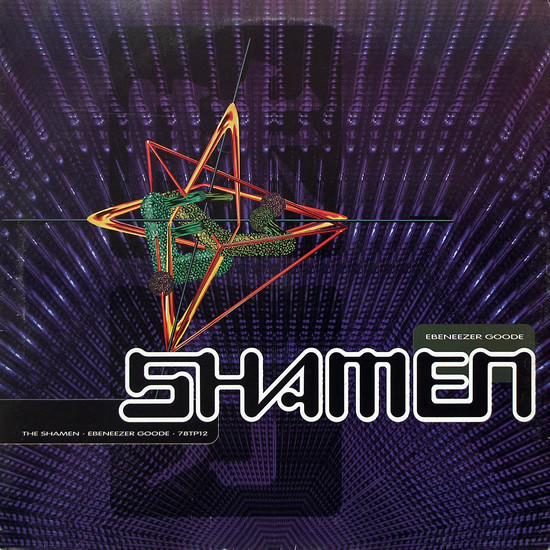
680. ‘Ebeneezer Goode’, by The Shamen

Hot on the heels of ‘Rhythm Is a Dancer’ comes another ‘90s dance classic…

Ebeneezer Goode, by The Shamen (their 1st and only #1)

4 weeks, from 13th September – 11th October 1992

And as magisterial as Snap!’s track was, ‘Ebeneezer Goode’ represents the flip-side of dance music in the early years of the decade. Aggressive and in-your-face, the opening voiceover sets the tone: A great philosopher once wrote… Naughty, naughty, Very naughty…. And off we go, cackling like Sid James…

Since forever, pop music and drugs have gone together. Sex and drugs and rock and roll, and all that. But no genre has ever been quite so entwined with illegal substances as electronic dance, and with one Class-A substance in particular. So when a track comes along by one of the big dance acts of the day, shamelessly celebrating said drug, and getting all the grown-ups’ knickers in a twist at the same time, you know it’s going to be a big old hit.

The clever bit here (I was going to use the word ‘genius’, but I think that would be stretching it slightly) is that the drug reference isn’t immediately obvious. ‘Ebeneezer Goode’, you might think, sounds like a character invented by Charles Dickens. Eezer good, Eezer good, He’s Ebeneezer Goode… A silly novelty song, parents around the country might have thought, as they heard it blaring from their teenagers’ bedrooms. Harmless nonsense. But, wait…

And like the teacher who’s twigged on far too late that the class is having a joke at their expense, the parents realise that the chorus could just as well be saying ‘E’s are good, ‘E’s are good… ‘E’s as in Ecstasy… And look, the song’s at number one already. It’s not big, and it’s not clever, but it is pretty amusing. Very naughty indeed…

But amid all the innuendo, the guffawing and the gurning, this is still a banger. The joke would have worn very thin, very quickly, if this wasn’t a good pop tune. I don’t think it’s quite up there with ‘Rhythm Is a Dancer’, and I don’t think you’d want to hear it all that often, but it’s a lot of fun. And it’s a significant number one because rave culture isn’t really represented at the top of the charts, despite being one of the big musical movements of the day, and while this is diluted, poppy rave, and it lost the Shamen a lot of ‘hardcore’ fans, it still counts.

It’s also, despite the modern sound, a treasure trove of peculiarly British references. We’ve got rhyming slang, and a shout-out to Vera Lynn, of all people: Anybody got any Vera’s…? Lovely… (‘Vera Lynns’ being rhyming slang for ‘skins’, which people used to mix cannabis and ecstasy) and a reference to ‘Mr Punchinella’ AKA Mr Punch from ‘Punch & Judy’. While  in the second verse there’s even a bit of sensible advice: But go easy on old ‘Eezer, ‘E’s the love you could lose… Pop pills responsibly, kids.

The BBC, always up for a good banning, initially refused to air the song, but relinquished when it became a huge hit. Hilariously, the week that ‘Ebeneezer Goode’ climbed to number one was the Corporation’s ‘drug awareness week’. On TOTP the band changed some of the lyrics, including adding a reference to ‘underlay’, which they explained as a ‘gratuitous rug reference’. Boom and indeed tish. It was far from the first hit song to reference an illegal substance – The Beatles were doing it twenty-five years earlier – but few had done it quite so shamelessly.

The Shamen were a Scottish band, formed in Aberdeen in 1985, and had been around since the very earliest days of house music. They started out making psychedelic pop, before moving to a more electronic sound. This wasn’t their first Top 10 hit, but it was so unexpectedly huge that the band decided to delete it while it was still on top of the charts, so that it wouldn’t come to define them. Sadly, though, it still did, and their hits grew smaller and smaller until they split in 1999. But, as founding member Colin Angus says, ‘Uncle Ebeneezer is still looking after me to this day.’ Whether he’s still dropping MDMA, or he’s talking about royalties, I do not know, but it seems fitting to end this post on a double-entendre.

679. ‘Rhythm Is a Dancer’, by Snap!

I’m not a huge dance music fan – I feel I should have that phrase on permanent ‘copy paste’, given how many times I’ve said/will say it – but when a dance song clicks…

Rhythm Is a Dancer, by Snap! (their 2nd and final #1)

6 weeks, from 2nd August – 13th September 1992

‘Rhythm Is a Dancer’ is one of those that just clicks. And it clicks immediately, grabbing you as the atmospheric intro builds, from the three intertwining synth lines, to the drums, to the backing vocals. When the main vocals and the bass eventually kick in together, I’m inspired to compare it with the ultimate slow-build intro, ‘Smoke on the Water’. Yes, rock snobs, I went there…

The song as a whole is slick and streamlined, much more grown-up than Snap’s first chart-topper, ‘The Power’, which I found harsh and gimmicky. The lyrics are very generic – the title itself is nonsense, if you’ve ever stopped to think about it – but no dance tune needs deep lyrics. Rhythm is a dancer, It’s a soul’s companion… Lift your hands and voices, Free your mind and join us, You can feel it in the air… Complete waffle. But when you’re topless in a sweaty club, choking on the dry ice, it might sound like the dance equivalent of a hymn.

What ‘Rhythm Is a Dancer’ is best remembered for today, though – as well as being a 1990s club classic – is for its rapped verse. The fact that there’s a rap in the first place is still worth noting. Today it feels standard, but as I mentioned in my post on ‘Black or White’ the idea of sticking a rapped verse in your dance/pop song was a pretty new one in 1992. (‘The Power’ was one of the very first, in fact.) And this is one of the first raps that doesn’t feel tacked on, or gimmicky, bearing in mind that some previous hip-hop chart-toppers have involved the Teenage Mutant Ninja Turtles, The Simpsons, and Vanilla Ice.

Let the rhythm ride you, Guide you, Sneak inside you… raps Turbo B, sounding like he’s spent the past two years practising. It’s fine, until he reaches the final line, and spoils it: I’m serious as cancer, When I say rhythm is a dancer… In fairness to Turbo, his first reaction was supposedly ‘No way am I singing that shit’. But sing it he did, to a mixed reaction. In my opinion, it’s so crass and so unexpected that it somehow works, and anyway Snap! didn’t invent it – it was a phrase that had been used in hip-hop tracks for years.

My only complaint about this majestic track is that it just glides to a finish. It’s a bit of a flat ending, but then the rest of the song is so cool and icily confident that to finish with something showy might have spoiled it. ‘Rhythm Is a Dancer’ has placed on all sorts of ‘Best Songs of the 90s’ and ‘Greatest Dance Tunes Ever’ sorts of lists, and has been re-recorded and/or re-leased by Snap! three times since this original release.

Despite being remembered now mainly for their two number ones, Snap! were genuinely huge in the first half of the 1990s, scoring nine Top 10 hits between 1990 and 1994. None were bigger than this, however – the second-highest seller of 1992. They remain active today, with original vocalist Penny Ford back on board, though sadly no more Turbo B.

677. ‘ABBA-esque E.P.’, by Erasure

Can there be anything camper than Erasure covering ABBA? How about Erasure recording an entire E.P. of ABBA covers, and called it ‘ABBA-esque’?

ABBA-Esque (E.P.), by Erasure (their 1st and only #1)

5 weeks, from 7th June – 12th July 1992

ABBA scored nine #1s between 1974 and 1980, making them at this point in time the fifth most successful chart-topping act (behind Elvis, the Beatles, Cliff, and The Shadows). But luckily, three of the four tunes Erasure chose to cover didn’t make top spot originally. Starting with, perhaps, ABBA’s greatest non-number one single…

I’m not sure which was the ‘lead’ single from the E.P. – I get the feeling it was track three, but they made videos for all of them – so I’ll go through them in order. We kick off with ‘Lay All Your Love on Me’, which was only ever released by ABBA as a 12” single. It’s the most faithful cover of the four, with the mood and tempo kept, and just the instrumentation updated to a post-SAW, Hi-NRG style. I love that they don’t change the pronouns in the lyrics, as most acts do when covering a song originally sung by a different gender, and we’re treated to Andy Bell asking how a grown up woman can ever fall so easily…

Of the four, I don’t think I’d ever heard their take on ‘S.O.S.’ before. And, of the four, it’s my least favourite. ‘S.O.S.’ is an important song in the ABBA canon: the song that extended ABBA’s career beyond simply being Eurovision winners; a genuine rock classic beloved of Ray Davies, Pete Townshend and The Sex Pistols. This over-processed take, though, fails to capture the soaring joy that can be found in the when you’re gone, how can I even try to go on… line in the original.

Track three then, and the one that represented this E.P. as a whole. ‘Take a Chance on Me’ was an ABBA chart-topper, back in February 1978. It’s an improvement on ‘S.O.S.’, but they’ve gone moodier than the original. They’ve also gone very early-nineties and added a ragga-style rap, or toast, by one MC Kinky. It’s a bold move, but then by this point in the E.P. maybe they were thinking it might have started to feel a bit by-the-numbers. It certainly shakes things up. The video for ‘Take a Chance…’ is the highlight of the entire project: Vince and Andy pout, gurn and flirt with one another, both as themselves and in drag as Agnetha and Frida. I’m sure it was done lovingly, but I do wonder what the ladies thought…

We end on what is probably my favourite of the four: a pounding, throbbing, techno-take on ‘Voulez Vous’. The intro, in fact, isn’t a million miles from something you’d hear at a hardcore rave. Here Erasure succeed in completely updating disco-era ABBA to a 1992 sound, which is testament either to the strength of their interpretation, of Benny and Björn’s songwriting, or maybe both. (‘Voulez Vous’ also includes some of my personal favourite ABBA lyrics: I know what you think, The girl means business so I’ll offer her a drink… and We’ve done it all before, And now we’re back to get some more, You know what I mean…)Years later, a fifth cover – ‘Gimme! Gimme! Gimme!’ – was added to the E.P., but as it wasn’t around when this topped the charts I won’t bring it up.

Are any of the four covers better than the originals? No, of course not. But that doesn’t mean that this wasn’t a worthwhile exercise. For a start it got Erasure an overdue #1, after almost a decade of releases and twelve previous Top 10 hits. But even better than that, it started The ABBA Revival.

It seems strange to say in 2023, but even I can remember a time when ABBA weren’t the world’s most beloved band. By the late-eighties they were a punchline, an embarrassment, records to be hidden under the bed rather than publicly displayed. Erasure unashamedly covering four of their hits, allowing kids to discover them and adults to remember just how good ABBA had been, started us down the road to ‘ABBA Gold’ (which was released later in 1992) becoming one of the biggest-selling albums of all time, to ‘Muriel’s Wedding’, to the ‘Mamma Mia’ stage show and films, to the band’s holographic comeback. As a ‘thank you’, ABBA tribute act Björn Again (who in 1992, believe it or not, opened for Nirvana – Kurt Cobain being another factor in the ABBA-naissance) released ‘Erasure-ish’, with covers of ‘A Little Respect’ and ‘Stop!’

676. ‘Please Don’t Go’ / ‘Game Boy’, by KWS

Do my ears deceive me, or are we entering yet another new phase in dance? As someone who isn’t that into dance music, the way in which I’ve been noticing new trends in the genre has surprised me… From house in the mid-80s, to sampling, to the rave influenced early nineties hits… And now we enter the ‘golden age of dance’.

Please Don’t Go / Game Boy, by KWS (their 1st and only #1)

5 weeks, from 3rd May – 7th June 1992

I don’t think people actually call it that. But between 1992 and 1997, even though Britpop is what the 1990s are remembered for, it was dance music that ruled the charts. And I’d say it starts here, with what is a fairly lacklustre remake of a KC & The Sunshine Band hit from a decade or so earlier…

Even as someone who doesn’t love dance music, I’m excited at the prospect of covering some of the dance number ones on the horizon: the Prodigy, Chemical Brothers… 2 Unlimited. But for every fun and fresh electronic #1, there are lazy remakes like this. It’s got a fairly low beats-per-minute – though not slow enough to be ‘chillout’ – it’s got elements of house, a hint of trance… It dabbles in different styles, but doesn’t commit to any, and ends up quite dull. (To be fair, the original is also fairly pedestrian, compared to KC’s more famous hits. It made #3 in 1980, and was also the first Billboard chart-topper of the ‘80s.)

And yet, this fairly forgettable tune was number one for five weeks… Perhaps now is as good a time as any to address the elephant in the room. We’re almost halfway through 1992, and we’ve only had four number ones. As I mentioned in an earlier post, 1992’s turnover is the slowest for thirty years, and it’s down to two things. We’re in one of those slumps that come along every decade or so: think the early sixties, between rock ‘n’ roll and the Beatles, or the mid-seventies, between glam and new wave. Currently we’re puttering around lost between the SAW-led late-‘80s and Britpop.

In addition, the way people were buying music was changing. After decades as the main format, vinyl ‘45s were slowly being phased out in favour of CD singles. At the peak of vinyl’s popularity, in the late 1970s, an act had to sell an average of 150k copies to make number one; in 1992 it was taking only 60-70k. By the end of this decade, the CD will be at its peak, and the turnover of #1s will be at record-breaking levels (1992 has twelve #1s, 2000 has forty-two!) There will be a similar slow-down in the mid-00s, as CDs die and downloads take over, and then again in the late 2010s as streaming becomes the default for how we consume music.

Anyway, after that detour into chart logistics, we mustn’t forget that this was a double-‘A’ side, and we have another song to write about. A song that is bloody hard to track down. Nothing on Spotify, and one trippy YouTube video, which leads me to assume that ‘Game Boy’ didn’t get much airtime when ‘Please Don’t Go’ was riding high in the charts. And when I listen to it, my doubts are confirmed. It’s probably the closest we’ll ever come to a happy hardcore #1. It’s an instrumental – been a while since we featured one of those – and it feels almost retro in the way it appears to be a bunch of samples strung together to make a hot mess of a tune.

I like it, more than its flip-side, for about a minute. Then it outstays its welcome. Who decides when a ‘B’-side becomes a double-‘A’? Record companies? The band? The charts themselves? Because I’d file this with ‘Girls’ School’ and ‘Anitina’ as an ‘A’-side that is much less well-known than many ‘B’-sides. But it’s there, in the record books, and we have to cover it. And it is, like I said, an aggressive style of dance that wouldn’t have otherwise featured at #1. Plus, it references the classic game console of the age in its title, which is nice.

KWS were a trio from Nottingham, named in ABBA-style as an acronym of the members’ surnames, and this was their first ever chart hit. They owed their chart fortunes to the fact that an Italian group called Double You had covered ‘Please Don’t Go’, but their record company had failed to secure UK distribution. KWS stepped in to record a remarkably similar sounding version, resulting in three years of legal action. By the time the record labels had settled up, KWS had long since ceased to be a chart concern. Their only other Top 10 hit was another remake of a much older dance tune, George McCrae’s early disco hit ‘Rock Your Baby’.