170. ‘You’re My World’, by Cilla Black

A word of warning. If you listen to this next #1 through headphones, and haven’t checked the volume levels on your device, then the violins that open this song may burst your eardrums. Take it from me. They’re the violins from the shower scene in ‘Psycho’, remixed.
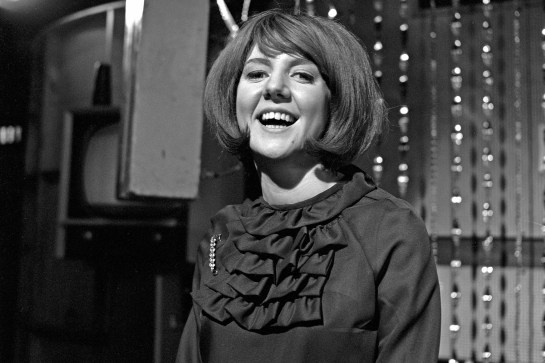
cilla-black

You’re My World, by Cilla Black (her 2nd and final #1)

4 weeks, from 28th May – 25th June 1964

Once they settle down, though, we head into solid ‘sixties ballad’ territory. Dramatic piano, tumbling drums, a soaring chorus… You’re my world, You’re every breath I take, You’re my world, You’re every move I make… The lyrics are trite, no doubt about it – but does that really matter? It’s an over-the-top record, that requires some over-the-top emoting. As the trees reach for the sun, Above, So my arms reach out to you, For love…

I still can’t shake the feeling I had while listening to her first #1: ‘Anyone Who Had a Heart’ – that Cilla was but a second-rate Dusty Springfield. She gives it a good go, and does sing it very well, but her voice just doesn’t have enough behind it – it’s still a little too reedy. It’s harsh, you might argue, to compare a perfectly good singer to the one and only Dusty. And this, after all, is Cilla’s second chart-topper while we are still yet to hear from Ms. Springfield… But. From a 2019 standpoint, the patent on this type of pop-ballad is owned by Dusty, and almost everybody else will fall short of her standards.

Still, when we get to the line that builds up to the chorus – With your hand, Resting in mine… I feel a po-wer, So, divine… I’m completely won over by this song. That’s how you do a chorus. We’re a long way yet from the golden age of the power-ballad; but this is a proto power-ballad. What the V2 rocket was to Apollo 11. It’s a song that manages to cram a lot into it’s three minute run-time. A song that takes you on a journey, and assorted other clichés.

It’s also a song with a bit of a story behind it. It had originally been written the year before, in Italian as ‘Il Mio Mondo’ – which explains the operatic vibe – and translated into English, then French, then Spanish. It was a hit record in whatever language they tried; apart from, interestingly enough, in Italy… George Martin, who had an ear for these kind of things, was the man who spotted its potential and gave it to Cilla…

Cilla-Black-Youre-My-World-45-Parlophone-1964

And so it was her, and her alone, who could break up these nine months of Merseybeat with two #1 blockbuster ballads. She was a huge star, no doubt about that, though with this her chart-topping career ended quite abruptly. Whatever happened to her…? She lasted throughout the sixties – not something that all of her contemporaries managed – scoring nine more Top 10s (the last of which, the sublime ‘Something Tells Me (Something’s Gonna Happen Tonight)’ is the best.)

Oh yes. And then she became one of the most famous TV personalities in the country, as the face of Saturday night light entertainment shows like ‘Surprise, Surprise’ and ‘Blind Date’. I wasn’t allowed to watch ‘Blind Date’ as a kid; my mum thought it was trash. I mean, it was trash – that was the entire point… Anyway, unresolved childhood grievances aside, Cilla Black was part of the fabric of British live in the eighties and nineties and it was genuinely shocking when she died suddenly in 2015. Her death sent a ‘Greatest Hits’ compilation to the top of the UK Album Charts – the first time she had topped any chart since ‘You’re My World’…

I once spent an enjoyable hour reading a thread by anonymous British Airways cabin crew who had had the misfortune to serve Cilla on flights. She could *allegedly* be, shall we say, demanding… It made me love her even more. A proper diva, the likes of whom we see fewer and fewer of these days. RIP, and onwards.

169. ‘Juliet’, by The Four Pennies

Before listening to this next UK chart-topper, I would have put the house on ‘Juliet’ being a doo-wopish, soulful, Motown record and The Four Pennies a black vocal group from Detroit. And if I had, I would now be homeless.

The-Four-Pennies-10-x-8-Photograph-no

Juliet, by The Four Pennies (their 1st and only #1)

1 week, from 21st – 28th May 1964

For this is another Beat record, and The Four Pennies a band from Blackburn, Lancashire. Which goes to show how much of a forgotten #1 single this is. I have genuinely never heard this record before. I suspect most people haven’t. This record is so inconspicuous that I missed it every time I glanced down my list of UK chart-toppers, what with its single week at the top being completely buried amongst large swathes of Beatles, Pacemakers, Searchers and Cilla.

What is it, then – this most forgotten of #1s? Well, if I had to pick one word to describe it that word would be ‘gentle’. A gentle guitar rhythm, gentle drums, and oh-so gentle vocals that give us something approaching a lullaby. There was a love, I knew before, She broke my heart, Left me unsure…. It sounds like the last number played at a spring dance in 1955, a soundtrack to which sweethearts would pair up and decide to ‘go steady’, not a hit single from the swinging sixties. Ju-li-e-e-e-et, Don’t forget… (some high quality rhyming, there.)

It’s got a pleasantly lo-fi, home-demo quality to it, and I quite like the soaring, layered you gave me… line in the bridge. It’s nice that it sneaked a week at the top in amongst all the huge hits of the time; but there’s a good reason as to why ‘Juliet’ has been well-forgotten by the collective conscience… It’s pretty dull. Kind of like The Bachelors from a few weeks back, it’s a case of bandwagon-jumping, or perhaps clever marketing, from four guys with guitars who look like a cool new Beat group, but who are recording music for mums.

R-6644604-1519775926-8356.jpeg

Actually, the more I listen to it, and the more I look at my list of upcoming number one singles, I think this might be the final genuine, Merseybeat chart-topper. Suddenly the movement is dead. Or, if not dead then about to splinter into lots of different styles: R &B, garage, folk… especially once the Americans get involved. But what a run it’s been. I can’t imagine a similarly homogenous run of #1 singles at any other time, before or after. Since The Searchers hit the top back in August ’63 with ‘Sweets For My Sweet’ we’ve had a near flawless procession of Beat pop at the top of the charts. I make it fourteen out of fifteen #1s, with the only exception being Cilla Black’s ‘Anyone Who Had a Heart’, and she was from Liverpool and so was still halfway there.

The Four Pennies weren’t quite one-hit wonders, but ‘Juliet’ was their only Top Ten hit. The follow-up, ‘I Found Out the Hard Way’, could only make #14. By 1966, after only three years together as a recording group, Lionel, Fritz, Alan and Mike had gone their separate ways. Perhaps most tellingly, they were the only group from the Beat movement – and I’m talking about all the bands covered so far in this countdown and all the bands still to come over the next few years – that failed to chart for even a single week in the USA during the famous ‘British Invasion’.

Listen to every #1 so far with this playlist:

Songs That Should Have Been #1… ‘Be My Baby’, by The Ronettes

The Stargazers, Don Cornell, The Johnston Brothers, The Dream Weavers, Jerry Keller…? Nope, me neither. But they’ve all had the honour of topping the UK singles chart.

How well a single performs in the charts can be influenced by various things… promotion, star power, tastes and trends, time of year… pure luck. And that most fickle, unpredictable of  factors: the general public. Do enough of them like your song to make it a smash? Or will they ignore it, and let it fall by the wayside?

I’m taking a short break from the regular countdown to feature five discs that really should have topped the charts. Be it for their long-reaching influence, their enduring popularity or for the simple fact that, had they peaked a week earlier or later, they might have made it. (I’ll only be covering songs released before 1964, as that’s where I’m up to on the usual countdown.)

Last up…? Why, if it isn’t the best pop song of all time!

image

Be My Baby, by The Ronettes

Reached #4 in November 1963

Not sure I have to write much more than that… But I’ll try.

Why is it such a classic? Well… There’s the intro, THE crashing, smashing Wall of Sound, the cascading drums, the melodramatic handclaps, the horns, the over-dubbing, the full-on orchestra in the background, the lyrics that range from girlishly submissive (I’ll make you happy, baby…) to flirty ( …just wait and see) in the space of one line…

Phil Spector may be a terrible person; yet against the backdrop of his crimes, and his truly messed-up relationship with Ronette’s lead singer Veronica ‘Ronnie’ Bennett (the only member of the group to actually sing on this song – every voice in the record is hers) ‘Be My Baby’ shines out even more brightly as a slice of pop perfection. Beauty out of something, or someone, awful.

Put simply, this is an amazing song, and it is a crime that it never topped the charts. I’ll end this mini-countdown imagining a parallel universe, where ‘Be My Baby’ sat astride the UK singles chart for a good month or two…

The usual #1s countdown will resume in a couple of days…

Songs That Should Have Been #1… ‘Please Please Me’, by The Beatles

The Stargazers, Don Cornell, The Johnston Brothers, The Dream Weavers, Jerry Keller…? Nope, me neither. But they’ve all had the honour of topping the UK singles chart.

How well a single performs in the charts can be influenced by various things… promotion, star power, tastes and trends, time of year… pure luck. And that most fickle, unpredictable of  factors: the general public. Do enough of them like your song to make it a smash? Or will they ignore it, and let it fall by the wayside?

I’m taking a short break from the regular countdown to feature five discs that really should have topped the charts. Be it for their long-reaching influence, their enduring popularity or for the simple fact that, had they peaked a week earlier or later, they might have made it. (I’ll only be covering songs released before 1964, as that’s where I’m up to on the usual countdown.)

Next up… A record that changed the course of popular music?

s-l300

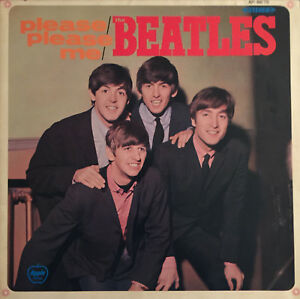
Please Please Me, by the Beatles

Reached #2 in February 1963

As with Elvis, I don’t need to go giving The Fab Four any extra number one singles. By the end of their chart careers, they’d had seventeen of them. And as much as I love this single (if it had been one of their #1s it would probably be in my Top 5) , and as much as I wish that this had been their first ever chart-topper, that isn’t why I’m including ‘Please Please Me’ in this mini-countdown.

I touched on it in my last post, on the mega-long running #2 hit ‘Stranger on the Shore’, but the charts of the 1950s and ’60s were a tad confused. There wasn’t just one of them, for a start. You had the ‘Melody Maker’ chart, the ‘NME’ chart, and the ‘Record Retailer’ chart. None of which offered a complete overview of a week’s sales – they all conducted ‘surveys’ of selected record stores over the phone…

‘Please Please Me’ hit #1 in the NME chart (which had the largest circulation) and ‘Melody Maker’ chart, but it only reached #2 in ‘Record Retailer’, which was the one that the UK Singles Chart chose to follow. So, it may well have been the biggest selling single at some point; we’ll just never know for sure… The history books record it as having stalled behind Frank Ifield’s dull-as-dishwater ‘The Wayward Wind’ for two weeks.

It’s far from the only single to have suffered this unfortunate fate – it wasn’t until 1969 that the UK charts were unified into one – but it’s a landmark single from the biggest pop group in history, with one of the very best middle-eights, ever… So enjoy.

Songs That Should Have Been #1… ‘Stranger on the Shore’, by Mr. Acker Bilk

The Stargazers, Don Cornell, The Johnston Brothers, The Dream Weavers, Jerry Keller…? Nope, me neither. But they’ve all had the honour of topping the UK singles chart.

How well a single performs in the charts can be influenced by various things… promotion, star power, tastes and trends, time of year… pure luck. And that most fickle, unpredictable of  factors: the general public. Do enough of them like your song to make it a smash? Or will they ignore it, and let it fall by the wayside?

I’m taking a short break from the regular countdown to feature five discs that really should have topped the charts. Be it for their long-reaching influence, their enduring popularity or for the simple fact that, had they peaked a week earlier or later, they might have made it. (I’ll only be covering songs released before 1964, as that’s where I’m up to on the usual countdown.)

Next up… a song that I have to admit I don’t know terribly well. In fact, I listened to it for the very first time just before typing these words…

ackerbilk-mr.ackerbilk

Stranger on the Shore, by Mr. Acker Bilk

reached #2 in January 1962

It’s a pleasant enough instrumental, by a clarinetist from Somerset… The theme to a TV programme of the same name. It sounds slightly dated, even for a record released in 1961. Not the type of song I’d usually rush to listen to… I’m including this disc in this mini-countdown for exactly the opposite reasons I included ‘Tutti Frutti’ and ‘Heartbreak Hotel’. ‘Stranger on the Shore’ isn’t revolutionary, or life-changing, or any of that…  But it was a bloody persistent record.

It entered the Top 10 in December of 1961, and it remained, with a couple of drops and re-entries, a Top 10 record in the following… July! Over six months! It remained in the charts for a year. It was the first British single to hit #1 in on the Billboard Hot 100, two years before the British Invasion. It was also the biggest selling hit of 1962 in Britain, and is the biggest selling instrumental record in chart history. It was played in Apollo 10, on its way to the moon…

All the figures suggest that this should have been massive chart-topping smash… except the one that matters most. It never got higher than number two, held off in the most part by Cliff & The Shadows, ‘The Young Ones’. It did top the NME chart, but that wasn’t the official chart, and a lot more on that tomorrow, in my next shoulda-been-number-one post…

Songs That Should Have Been #1… ‘Heartbreak Hotel’, by Elvis Presley

The Stargazers, Don Cornell, The Johnston Brothers, The Dream Weavers, Jerry Keller…? Nope, me neither. But they’ve all had the honour of topping the UK singles chart.

How well a single performs in the charts can be influenced by various things… promotion, star power, tastes and trends, time of year… pure luck. And that most fickle, unpredictable of  factors: the general public. Do enough of them like your song to make it a smash? Or will they ignore it, and let it fall by the wayside?

I’m taking a short break from the regular countdown to feature five discs that really should have topped the charts. Be it for their long-reaching influence, their enduring popularity or for the simple fact that, had they peaked a week earlier or later, they might have made it. (I’ll only be covering songs released before 1964, as that’s where I’m up to on the usual countdown.)

Next up…

Well since my baby left me…

mainELVISPRESL-800x445

Heartbreak Hotel, by Elvis Presley

 reached #2 in June 1956

OK, OK, I know. Elvis doesn’t need any more number one singles. He’s had plenty. Back on my regular countdown, of actual #1s, we’re in 1964 and The King of Rock ‘n’ Roll is on fourteen (14!)

But… His dominance of the charts in the early 1960s is why I wish that this disc could have made the top. He had some brilliant, classic #1s – don’t get me wrong – but he also dragged a lot of crap to the top just through the power of his name. If only we could swap ‘Good Luck Charm’, or ‘Rock-A-Hula Baby’, or ‘Wooden Heart’, for this burst of primal energy.

This was Elvis the hip-swiveller, Elvis as Moral Panic, Elvis the Pelvis edited from the waist down… And it’s a really clever song, too. A broken heart imagined as a real place – a hotel where broken-hearted lovers cry in the gloom, and the desk-clerks are all dressed in black. It was inspired by a real-life suicide, which is some heavy shit for a pop song in 1956 (for comparison, it was kept off the top-spot in Britain by the banal, saccharine stylings of Pat Boone, with ‘I’ll Be Home’.) And when that guitar solo kicks in… Oh boy. The King was most definitely in the building.

Songs That Should Have Been #1… “Tutti Frutti”, by Little Richard

The Stargazers, Don Cornell, The Johnston Brothers, The Dream Weavers, Jerry Keller…? Nope, me neither. But they’ve all had the honour of topping the UK singles chart.

How well a single performs in the charts can be influenced by various things… promotion, star power, tastes and trends, time of year… pure luck. And that most fickle, unpredictable of  factors: the general public. Do enough of them like your song to make it a smash? Or will they ignore it, and let it fall by the wayside?

I’m taking a short break from the regular countdown to feature five discs that really should have topped the charts. Be it for their long-reaching influence, their enduring popularity or for the simple fact that, had they peaked a week earlier or later, they might have made it. (I’ll only be covering songs released before 1964, as that’s where I’m up to on the usual countdown.)

And first up… A-wop-bop-a-loo-mop-a-lop-bom-bom!

little-richard

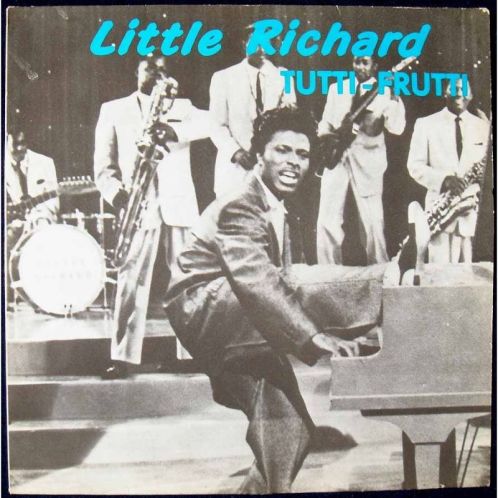
Tutti Frutti, by Little Richard

Recorded in September 1955, peaked at #29 in February 1957

‘Tutti Frutti’ came nowhere near the top of the charts. One week at #29, a year and a half after it was originally recorded. That’s all. But this is the sound of the rock ‘n’ roll starters whistle. This is rock ‘n’ roll: the tempo, the frenzied piano, the orgasmic ‘ooooh’s, the wonderful nonsense of the lyrics… Imagine, for a second, a parallel universe in which this was a chart-topping hit.

In real life, rock ‘n’ roll was announced at the top of the UK charts by ‘Rock Around the Clock’ – which is fine. A classic. A seminal record. We all know it. But if this had been the disc to kick it all off in the autumn of ’55… A flamboyant black pianist, pounding out a song (allegedly) originally written with references to gay sex (Tutti Frutti, Good booty, If it don’t fit, Don’t force it…) All that had been eliminated by the time it came to be recorded properly, but the sanitised version was still saucy enough: Got a girl, Named Sue, She knows just what to do… Imagine that knocking Jimmy Young’s plodding ‘The Man From Laramie’ unceremoniously off the top!

Of the big four rock ‘n’ rollers – Elvis, Chuck, Buddy, and Little Richard – the latter is the only one never to have topped the UK charts. He is the only one still alive so… who knows – there might still be time! The closest he came was with his cover of ‘Baby Face’, which reached #2 in early 1959.

168. ‘Don’t Throw Your Love Away’, by The Searchers

The Searchers complete their hat-trick of #1s, with a very ‘Searchers’ record. Light as a feather guitar, restrained vocals, a hint of melancholy… Check, check, check.

searchers

Don’t Throw Your Love Away, by The Searchers (their 3rd and final #1)

2 weeks, from 7th – 21st May 1964

If The Beatles were the popular kids, and Gerry & The Pacemakers the class clowns, The Searchers were the cool kids in the corner, planning out their next, more grown-up, hit record. ‘Don’t Throw Your Love Away’ is the sort of record your gran wouldn’t have minded; but she would definitely have told you to turn off The Dave Clark Five.

It’s another Beat-pop song with a less-than-positive message. A song about a man who has been burned in the past, and who now sits at the end of the bar doling out advice to anyone who’ll listen. Lovers of today, Just throw their dreams away, And play at love… They give their love away, To anyone who’ll say, I love you… He doesn’t refer to himself specifically; but you just know he’s had his heart broken. Don’t throw your love away… he counsels… For you, Might need it, Someday…

When I first listened to this record a few days ago – a record I was aware of but had never really listened to properly – I noted that I ‘couldn’t really get into it’, that it was a little bland and uninventive. I even jotted down the phrase ‘Landfill Merseybeat’, meaning it in the same way that anyone who wasn’t The Arctic Monkeys, Franz Ferdinand or The Libertines in 2006 was ‘Landfill Indie’. But I’d like to officially change my mind, having listened to it on repeat, and admit that what I mistook for a bland number is actually a very subtle song that simply takes a while to fully reveal itself. The vocal harmonies are cute, and the guitars chime very tightly (I especially like the little ‘Arabian Nights’ fill in the bridge.)

And all credit to The Searchers, for not chasing the ‘Yeah Yeah Yeahs’ of other Beat songs, for ploughing their own furrow and taking this forgotten little slice of sad-pop to number one. This is a very ‘Searchers’ record; and if that means it’s a little hard to get into at first, then fine. I think part of the reason I didn’t get into their first chart-topper, ‘Sweets For My Sweet’, is that that was a song that really needed an up-tempo, grinning approach, which The Searchers couldn’t provide.

THE_SEARCHERS_DONT+THROW+YOUR+LOVE+AWAY+-+SOLID-555644

That’s not to say that they couldn’t do better than ‘Don’t Throw Your Love Away’. ‘Needles and Pins’ stands out clearly as the best of their three #1s, if not one of the best Merseybeat records, period. And their next single but one, the brilliant ‘When You Walk Into the Room’, would have made an even better final chart-topper for the group. It only reached number three…

I really could just cut and paste this next sentence… The Searchers (as with Gerry & The P’s, Billy J, Peter & Gordon et al) couldn’t keep the hits going much longer than this. Their final Top 20 hit came in 1965. Perhaps their biggest problem was that they didn’t write their own hits – all their #1s were covers (‘Don’t Throw Your Love Away’ was originally released, in the US at least, by The Orlons.) In the fifties that would have been fine, but all of a sudden, it seems, acts – especially guitar bands – needed to be writing their own stuff. They tried to move with the times, covering songs by The Stones and The Hollies, but nothing stuck. The line-up changed at an alarming rate, and they now tour as both Mike Pender’s Searchers and the ‘original’ group. But, we can remember them fondly as the band who gave us a breather, with their wistful melodies and hesitant vocals, from the relentless march of the Beat revolution.

167. ‘A World Without Love’, by Peter & Gordon

With Beatlemania at its scream-until-you-vomit height, it should come as no surprise to learn that one Fab Four song is replacing another at the top of the charts. Except, one glance at the act involved in this latest #1 gives the game away… There was neither a Peter nor a Gordon in The Beatles.

2afb763c73b7bbf623a484ef19a42c1bec9500cd

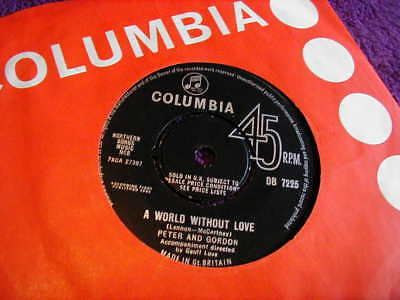
A World Without Love, by Peter & Gordon (their 1st and only #1)

2 weeks, from 23rd April – 7th May 1964

For those keeping track, this is the 6th Lennon & McCartney composition to take the top spot in the UK: four recorded by The Beatles themselves; two covered by other artists. But even if you hadn’t been filled in beforehand, the second the needle drops on ‘A World Without Love’ you know it’s a L&M number.

Is it the chord progressions? The harmonies? The fact it’s a catchy song with a sad underbelly? Is it all those things; or none? I can’t put my finger on it – but it’s there throughout the song. That Lennon & McCartney fairy dust. At the same time, though, this disc doesn’t sound exactly like a Beatles’ number. They were still, at this point, a guitars and drums pop group; while this record is driven by a bass riff and an organ.

The voices are different too – softer, more Everly Brothers than Beatles. They’re nice, drenched in echo… Please, lock me away… And don’t allow the day… Here inside, Where I hide, With my loneliness… It’s a song about how awful the world looks after a break-up. And this particular break-up must have hit pretty darn hard… Birds sing out of tune, And rainclouds hide the moon… By the end, the duo are begging to be locked away, hidden from all, rather than staying in a world without love.

I’ve mentioned it before, but it is surprising just how melancholy and melodramatic some of these Beat #1s were. You think it’s all youthful exuberance and ‘Yeah Yeah Yeahs’, but when you sit down and listen intently you notice that songs like ‘Bad to Me’, ‘She Loves You’ and ‘Needles and Pins’ are more concerned with the downsides of love, and that it’s not all sweetness and light. Apparently this song was written by Paul McCartney aged just sixteen, and that makes complete sense. That line about ‘hiding with his loneliness’ is pure teen-angst; while the bridge – in which it is revealed that the singer still holds out hope of his beloved returning to him – is pure youthful optimism. Although the line When she does (come back) I lose… adds an ambiguous element into the mix. Does he want her to come back? Or is he enjoying his gloomy wallow a little too much?

Peter-And-Gordon-A-World-Without-Love-Beatles

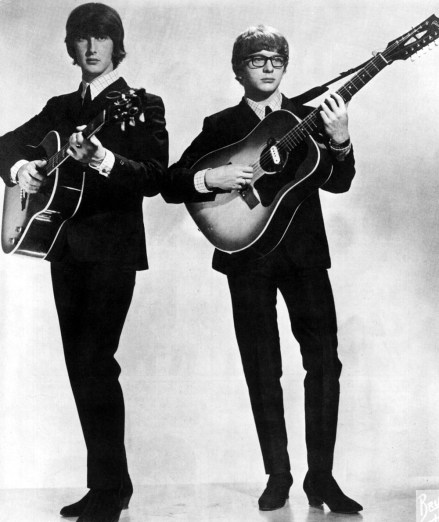
Peter Asher and Gordon Waller were school friends, and ‘A World Without Love’ was their debut hit. Asher was the brother of Paul McCartney’s girlfriend, Jane, and actually shared a room with Paul when he first moved to London, hence how he got to know him and was allowed to ‘borrow’ one of his songs. All the duo’s biggest hits were covers – ‘True Love Ways’ and a version of ‘To Know Him Is To Love Him’ followed – before, as with so many of the bands that broke through in the Beat explosion, their careers crumbled circa 1966/67.

McCartney was honest enough to admit that he thought ‘A World Without Love’ wasn’t good enough for his own band, and so they never recorded so much as a demo of it. I think that’s a little harsh – it’s a neat slice of pop that’s the equal of many Beatles’ album tracks. But I also get what he means. Nothing here matches the euphoric rush of ‘She Loves You’ or the guitar on ‘I Want to Hold Your Hand’. They may have had cute hairstyles and cheeky grins, but The Beatles, and Lennon & McCartney in particular, knew what they were doing, taking control of their careers from the off.

166. ‘Can’t Buy Me Love’, by The Beatles

Our next #1 is a record that wastes no time in getting to the heart of what it’s all about. The song is called ‘Can’t Buy Me Love’, and the intro goes:

main_900

Can’t Buy Me Love, by The Beatles (their 4th of seventeen #1s)

3 weeks, from 2nd – 23rd April 1964

Can’t buy me love…. No-oh…. Can’t buy me lo-ve… It’s a jarring intro – a bit too in your face – but things improve a lot with the verses. I’ve always liked the swinging, bluesy rhythm on this record and today, listening to it for the first time in ages, I still do. Buy you a diamond ring my friend, If it makes you feel alright, I’ll get you anything my friend, If it makes you feel alright…

It’s a song about money not being everything; which is a topic that always sounds a bit off coming from hugely successful and completely loaded musicians. But I think The Beatles were young enough, and sufficiently green behind the ears, in early-’64, to get away with it. Actually, in a similar manner to ‘She Loves You’, Lennon & McCartney take a familiar theme here and add a layer or two. The lyrics aren’t about not needing money; they’re about having money and not really caring what you do with it. I don’t care too much for money, Money can’t buy me love…

It’s also a kind of contradictory message, as they then list the things they’ll give someone – as long as they love them back. Give you all I’ve got to give, If you say you’ll love me too… So money can buy you love…? I’m confused, guys. Perhaps we’re getting a first glimpse, four number #1s into their career, of The Fab Four’s disillusionment with fame and riches…? Especially in the final verse, where they hope that the girl wants the kind of things that money just can’t buy. Had they already been burned by gold-digging groupies…? It ends on what almost sounds like a wistful sigh… Ohhhhh….

s-l1000

Musically, it’s a little basic. At least, it’s Beatles-basic (which means that most other bands would have bitten your hand off for a chance to record it.) The high points are the ear-splitting shriek before the solo, and the echoey, plucked guitar that follows. It’s never been one of my favourite Beatles songs – I guess I always overlooked it in favour of the ‘bigger’ hits – but it’s been nice to re-discover it for this post. For some reason I will always associate it with an episode of The Simpsons, in which Grandpa and his friends frolic in a meadow (I’m sure I’m not imagining that…)

‘Can’t Buy Me Love’ ensured that The Beatles joined both Elvis and Frank Ifield in scoring 4 #1s in a year (though only Elvis did it in a calendar year.) In fact, this record hit the top simultaneously in the UK and the US and pretty much marks the absolutely demented, scream your head off and throw your panties height of Beatlemania. It was #1 in the week of the famous all-Beatles Top 5 in the Billboard Hot 100, and followed directly on from ‘I Want to Hold Your Hand’ and ‘She Loves You’ in occupying pole position. These three discs hogged the top spot over there for a full fourteen consecutive weeks.

Back on the other side of the Atlantic, though, you could be forgiven for thinking that a three-week stint at the top of the charts seems a little short for a hot new single from The Biggest Band the World Had Ever Seen. Perhaps, but they were about to be replaced at #1 by one of their own songs… again…

Listen to all the #1s so far by following my playlist: