‘Hoots Mon’, by Lord Rockingham’s XI – The UK Number 1s Blog Anniversary Special

This week marks the 1st anniversary of The UK Number 1s Blog (** Trumpet Fanfare**)! In the past year we’ve covered the period from Nov. ’52 to Nov’ 61, with 129 chart-topping songs featured. We’ve survived pre-rock, rode the rock ‘n’ roll revolution, and are now well on our way towards the swinging sixties… Thanks to everyone who has read, followed, commented and enjoyed.

To celebrate this milestone, I’m going to take a short break from the usual countdown to repost seven songs that I have really enjoyed discovering over the past year. These aren’t necessarily the best songs to have topped the charts – there’ll be no Buddy Holly, Johnnie Ray, Connie Francis, Elvis or The Everly Brothers (follow the links if you want to read about them) – as I’ve been listening to, and loving, those artists for years. This week will be all about the forgotten gems, the hits I’d never heard before, the songs that have slipped through the cracks…

My penultimate choice is one that pays homage to my homeland – Bonnie Escocia. It’s a song that, at the time of writing, I suggested should become our new national anthem. With the advantage of hindsight… I still think that’s a great idea. This is a record that sounds like it was recorded on a cocktail of Irn-Bru, soor-plooms, the Best Of ‘Oor Wullie’ and just a splash of Buckfast Tonic Wine. It’s a wild and zany chart-topper, that makes no sense and yet complete sense. One more time then… Och Aye!

Lord-Rockingham_s-XI-Hoots-Mon-1958-7”

And so on we roll towards the United Kingdom’s seventy-seventh chart topping single. And it’s a song that I’ve never… No, wait… Ah! I know this… We all know this…

Hoots Mon, by Lord Rockingham’s XI (their 1st and only #1)

3 weeks, from 28th November – 19th December 1958

Dooooo-doo-doo-do-do… Dooooo-doo-doo-do-do… It’s an intro that smacks of slightly misplaced grandeur, like an aged diva swishing onto the stage before slipping on a banana. We know what follows is going to be absurd. And, oh boy, it is…

Na-nana-na-nana, Na-nana-na-nana, Nana-nanananana… Na-nana-na-nana, Na-nana-na-nana, Nananananananana… Apologies for my woeful attempts to render this riff using the medium of ‘na’s. The minute this starts playing you will know it.

It’s an instrumental, and it’s been a while since we featured an instrumental. I make Winny Atwell’s ‘The Poor People of Paris’ our most recent lyric-less number one, and that was two and a half years back. And it is undeniably catchy. It bores its way in on the first listen and will, I’m sorry, remain for days. And days. And days. There are key-changes, oh yes! And the bass! One of my main complaints about the rock ‘n’ roll numbers we’ve heard so far is that, while there have been some undeniable classics – your ‘Great Balls of Fire’s, your ‘That’ll Be the Day’s and your ‘Rock Around the Clock’s – they’ve all sounded a bit light to modern ears. Listen to this, though, especially through headphones. It fills your ears, in a way that makes it sound like a modern record. Every instrument – the throbbing bass, the slapdash drums, the natty organs – are, if you’ll forgive the cliché, turned up to eleven. And a half.

Actually, I called this an instrumental; but it’s not quite. There are a few words, shouted out above the clatter, foremost among them being: There’s a moose loose aboot this hoose… and It’s a braw, bricht, moonlicht nicht… Then there are the Och Ayes! thrown in towards the end and the big Hoots Mon! upon which the record ends. Yes, this is, as they say in theatre circles, The Scottish Number One. All we’re missing is a ‘Help ma Boab!’

large

The ringleader of Lord Rockingham’s XI was a man named Harry Robinson, a Scot if ever there was one. But, being from Scotland myself, I’m not sure how I feel about this record, and the manner in which it reduces the culture, language and heritage of my homeland to a handful of trite, drunken catchphrases…

Actually, screw it. It’s as catchy as crabs and a hell of a lot more fun than some of the more ‘official’ Scottish songs – ‘500 miles’ (Jings!), ‘Scotland The Brave’ (Crivvens!), ‘Caledonia’ (Shudder… and boak!) In fact, I think that this song I hadn’t ever properly listened to until twenty minutes ago should become our new national anthem, in place of the dirge that is ‘Flower of Scotland’. And when I fulfil my manifest destiny in replacing wee Nicky Sturgeon as First Minister, that’ll be the first act I sign into law.

Anyway, file this record under ‘complete and utter novelty’. It’s no coincidence that it hit the top spot in the weeks leading up to Christmas and New Year. Lord Rockingham’s XI wouldn’t go on to much more success and so for the first time, I think, we have two (semi) one-hit wonders replacing one another at the top of the charts. File this also under ‘British Rock ‘n’ Roll’. It’s something that I’ve long been noting – the gradual handing over of the rock ‘n’ roll baton from the US to the UK – and with this anarchic British track following soppy efforts from The Everly Brothers and The Kalin Twins the transition may be complete.

I’ll finish by reminiscing on how this song stirred in me a long-discarded, foggy memory of a commercial for something or other, way back in the late eighties or early nineties… I knew I knew this song, but I didn’t know how I knew it – if you catch my drift. I suppose whatever it was will be forever lost in the mists of time… Actually, no it won’t. The advert was for Maynard’s Wine Gums, back in 1993. Thanks, internet.
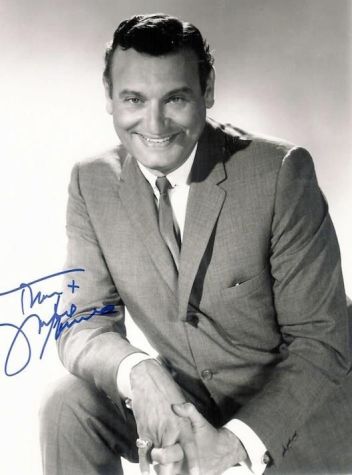
‘A Woman in Love’, by Frankie Laine – The UK Number 1s Blog Anniversary Special

This week marks the 1st anniversary of The UK Number 1s Blog (** Trumpet Fanfare**)! In the past year we’ve covered the period from Nov. ’52 to Nov’ 61, with 129 chart-topping songs featured. We’ve survived pre-rock, rode the rock ‘n’ roll revolution, and are now well on our way towards the swinging sixties… Thanks to everyone who has read, followed, commented and enjoyed.

To celebrate this milestone, I’m going to take a short break from the usual countdown to repost seven songs that I have really enjoyed discovering over the past year. These aren’t necessarily the best songs to have topped the charts – there’ll be no Buddy Holly, Johnnie Ray, Connie Francis, Elvis or The Everly Brothers (follow the links if you want to read about them) – as I’ve been listening to, and loving, those artists for years. This week will be all about the forgotten gems, the hits I’d never heard before, the songs that have slipped through the cracks…

Song number five: the King of Pre-Rock – Mr. Frankie Laine. Laine, along with Guy Mitchell, was the most consistent chart-topper before Elvis came along. His 1st #1 – ‘I Believe’ – still holds the record for most weeks at the top of the charts. ‘A Woman in Love’ was his swan song – one of his last big hits – and I remember thinking, when I wrote this post, that it felt as if it came out of nowhere. The swing and swagger of the big band on this record, and the glint in Laine’s eye as he sang it, were a world away from his earlier, painfully earnest ballads. I can’t say I’m a fan of all his work; but this is a great song…

s-l300 (2)

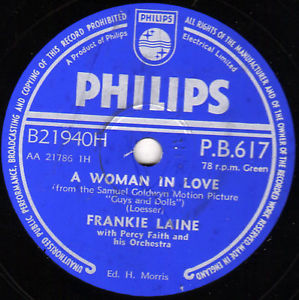
A Woman in Love, by Frankie Laine (his 4th and final #1)

4 weeks, from to 19th October to 16th November 1956

Look who’s back!

Almost three years since we last saw him, Frankie Laine is back at the top of the charts for one final hurrah. And it’s not too much of an exaggeration to say that this is something of a re-invention.

I think this is the very first ‘big band’ #1 we’ve seen. It’s from the film version of ‘Guys and Dolls’, and I think it might be a tango, or a foxtrot (I ain’t no dancer). Either way, it begins with a bang, and then it starts swinging. Frankie Laine is a-swingin’.

Your eyes are the eyes of a woman in love, And oh how they give you away… Why try to deny, You’re a woman in love, When I know very well, When I say…

Who is this woman head over heels with? Well, Frankie of course. At least that’s what he thinks: Those eyes are the eyes of a woman in love, And may they gaze ever more into mine…

Contrast these lyrics with Laine’s last chart-topping single from December ’53. ‘Answer Me’ was all about him pleading for a sign that his lover was still, well, in love with him. In ‘A Woman in Love’ he doesn’t need any reassurance, any prayers answered. He knows she’s hot for him. The times they are a-changing.

And then we have one of the best musical interludes that we’ve heard so far in this countdown. The previous chart-toppers haven’t really gone in for solos, but this one does. The whole band gets stuck into a swinging little thirty seconds. There is a lot of swagger in this record. I’m quite enjoying sticking one-word labels on these recent #1s: Pat BooneCrooner, Anne SheltonTwee, Frankie Laine – Swagger! We’ve had an eclectic run of songs hitting the top spot recently, perhaps the most varied run of this countdown so far, but in a way they’ve all been very of their time. Popular music right on the cusp of the rock ‘n’ roll invasion.

The only thing that spoils this record is the finale. Frankie may have re-invented himself, but he still loves a big ending: Crazily, ga-aze, e-ever mo-ore into MIIIIIIINNNNEEE! Every time I hear an ending like that it sounds more and more old-fashioned. I can’t imagine there’ll be many more, though. Surely. But, overall, this is a small complaint. It’s a great song. Laine’s voice is as warm and as listenable as ever. He and Doris Day should have recorded a duet (*edit* they did – ‘Sugarbush’ back in 1952).

06cab955448883c79c5103ab82addae5--arthur-godfrey-singer

And so we bid farewell to perhaps the biggest of all the pre-rock stars. Four number one singles adding up to 32 (thirty-two!) weeks at the top. That’s pretty darn impressive, and leaves him at 5th place in the all-time list behind only…. I’ll give you a few seconds to guess… Elvis, The Beatles, Cliff and The Shadows. And, actually, I’m harping on about this being a ‘re-invention’ and a ‘comeback’ for Laine, but he hadn’t been anywhere. In the three years between his 3rd and 4th #1s he had still racked up a whole pile of top ten hits. He was huge. ‘A Woman in Love’ would, though, be his penultimate top ten single in the UK.

One final thought… This track made Frankie Laine the artist with the most UK #1s at this point. With four. It’s noticeable that we haven’t yet met an artist who has scored, or will even go on to score, more than four. These early charts were a very egalitarian place – songs only got to the top because they were… I don’t want to say ‘good’ because, well… let’s say: ‘universally popular’. The days of super-star idols, of huge fan-base acts whose every release races to the top of the charts – your Take Thats, Westlifes, Spice Girls – are still not upon us. But they will be sooner than you might think, and their arrival has a lot to do with this new-fangled thing called rock ‘n’ roll.

‘Cherry Pink and Apple Blossom White’, by Perez ‘Prez’ Prado & His Orchestra – The UK Number 1s Blog Anniversary Special

This week marks the 1st anniversary of The UK Number 1s Blog (** Trumpet Fanfare**)! In the past year we’ve covered the period from Nov. ’52 to Nov’ 61, with 129 chart-topping songs featured. We’ve survived pre-rock, rode the rock ‘n’ roll revolution, and are now well on our way towards the swinging sixties… Thanks to everyone who has read, followed, commented and enjoyed.

To celebrate this milestone, I’m going to take a short break from the usual countdown to repost seven songs that I have really enjoyed discovering over the past year. These aren’t necessarily the best songs to have topped the charts – there’ll be no Buddy Holly, Johnnie Ray, Connie Francis, Elvis or The Everly Brothers (follow the links if you want to read about them) – as I’ve been listening to, and loving, those artists for years. This week will be all about the forgotten gems, the hits I’d never heard before, the songs that have slipped through the cracks…

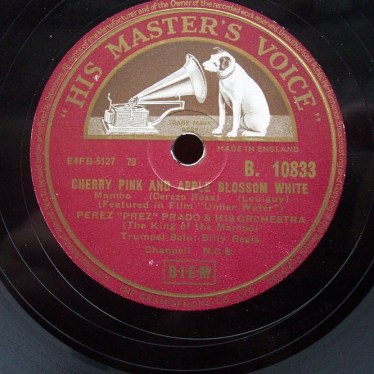
Next up is the one song, out of the 129 covered, that I’m happiest about discovering. Mambo isn’t a style of music that I’m very familiar with, and a trumpet-led instrumental wasn’t the type of record that I expected to blow me away. But, hoo boy, it did. ‘Sexiness’ was in short supply as we plodded through the very earliest UK #1 singles – with the focus on pure and proper romantic declarations from frightfully earnest young singers.  David Whitfield, Eddie Fisher and Vera Lynn I’m looking at you… But ‘Prez’ Prado… well, this disc just oozes sexiness. Listen to that low, low note he hits at strategic moments throughout this song, and try to tell me that it doesn’t put the filthiest thoughts in your mind! I named this as ‘Best Song’ in one of my recaps, and need no excuse to revisit it again here…

s-l1000

Cherry Pink and Apple Blossom White, by Perez ‘Prez’ Prado & His Orchestra (his 1st and only #1)

2 weeks, from 29th April to 13th May 1955

I’ve given instrumentals a hard time so far in this rundown. The lack of any lyrics creates a barrier, for me, between the song and the listener. You can listen to a Mantovani record and think “Isn’t that a nice melody”, but the fact that there are no words to tie it to a particular feeling or experience in your life means that the record is that step further removed from you. Like a film beautifully acted but in a language you cannot understand.

Having said all that… I’m going to prove myself massively wrong with this post. The fourth instrumental to top the UK Singles chart is also, by far, the sexiest record to top said singles charts. And there are no words. Well – there are no words aside from ‘Huh!’, ‘Hah!’ and ‘Oooh’. Which is a large part of this track’s said sexiness.

Following on from ‘Mambo Italiano’ (which wasn’t really a mambo, but hey), the UK was clearly in some sort of Latin fever in early 1955. Though perhaps not, as a quick glance at the chart for the week Perez ‘Prez’ hit the top shows only one other record that sounds vaguely Latino… A different version of ‘Cherry Pink and Apple Blossom White’ (which we’ll meet very soon at the top of the charts). But, for the purposes of this narrative, let’s say that the UK – finally casting off the shackles of rationing and wartime rubble – wanted to shake some booty and, while perhaps not quite ready for straight up rock ‘n’ roll, turned to some equally raunchy mambo. Further evidence towards my idea that rock ‘n’ roll didn’t just arrive with ‘Rock Around the Clock’ – it was slowly filtering in through Rosemary Clooney’s giggle, Winifred Atwell’s boogie and Johnnie Ray’s yelps. And Perez ‘Prez’ Prado’s trumpet.

Except the trumpet that makes this record isn’t being played by the man on the credits. We’ll get to that in a second. First – this record has perhaps the most intense intro we’ve heard yet. Basically it’s BOOM BOOM BOOM BOOM BOOM BOOM BOOM on a load of trumpets and cymbals, before the rhythm kicks in. The lead trumpet was played by a man called Billy Regis, who absolutely makes this record by drawing out one note in particular over and over again, by sliding it down then up in a manner that sounds a little bit drunk, a little bit woozy, and that, most importantly, would allow a couple in a Southend ballroom to draw that little bit closer for a second, before the main melody jumped back in.

R-582429-1341876426-2330.jpeg

Prado was more of a conductor, I guess, and it is his ‘Huhs’ and ‘Hahs’ that can be heard as he exerts his charges to squeeze every drop of sexiness from their instruments (that sounded ruder than I intended – you know what I mean). There are also some other trumpets (I guess they are trumpets) playing notes so low that it’s almost obscene. I recognise them from Lou Bega’s classic cover of ‘Mambo No.5’, from another golden age of Latin music in the UK charts, which we won’t be getting to for a long, long time. Incidentally, Perez Prado recorded the original version of that song, too.

But the final word has to go to Billy Regis, whose trumpet ends the record. He reimagines the bombastic ending – from which so many earlier chart-toppers have suffered – and it works so much better without lyrics. THIS IS THE END OF THE SONG becomes DOOO DOOO (pause) DOOOOOOOOO, and it again allows Janet and John from Southend to draw close and to feel one another’s bodies, taught and trembling from two and a half minutes of intense mambo.

‘Huh!’ and, indeed, ‘Hah!’

‘Look at That Girl’, by Guy Mitchell – The UK Number 1s Blog Anniversary Special

This week marks the 1st anniversary of The UK Number 1s Blog (** Trumpet Fanfare**)! In the past year we’ve covered the period from Nov. ’52 to Nov’ 61, with 129 chart-topping songs featured. We’ve survived pre-rock, rode the rock ‘n’ roll revolution, and are now well on our way towards the swinging sixties… Thanks to everyone who has read, followed, commented and enjoyed.

To celebrate this milestone, I’m going to take a short break from the usual countdown to repost seven songs that I have really enjoyed discovering over the past year. These aren’t necessarily the best songs to have topped the charts – there’ll be no Buddy Holly, Johnnie Ray, Connie Francis, Elvis or The Everly Brothers (follow the links if you want to read about them) – as I’ve been listening to, and loving, those artists for years. This week will be all about the forgotten gems, the hits I’d never heard before, the songs that have slipped through the cracks…

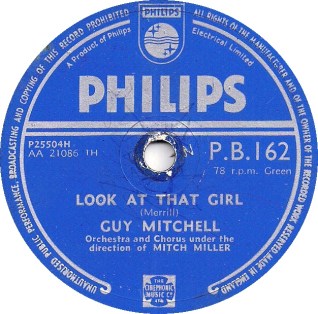
Song Number Three is by the artist that I’ve ‘discovered’ the most over the past year. I’d heard the name ‘Guy Mitchell’ before, but didn’t know any of his songs. His career was the 1950s – he was a regular in the Top 10 between 1952-’59, with four #1s along the way. ‘Look at That Girl’ was his 2nd, and I’ve picked it as I think it was the 1st ‘modern’ pop song (verse-chorus etc) to top the charts, and it was also the first to feature a guitar solo! Plus, he had a voice every bit as sexy and smooth as Elvis. Enjoy!

guy-mitchell-look-at-that-girl-1953-78

Look at That Girl, by Guy Mitchell (his 2nd of four #1s)

6 weeks, from 11th September to 23rd October 1953

Ladies and Gentlemena, we are finally rocking and rolling. The invasion is here!

Not at first, mind. We begin on familiar territory. We’ve got the jaunty guitars from ‘Don’t Let the Stars…’ and Mitchell’s previous #1, ‘She Wears Red Feathers’ (compared to which this is ten times better!), and some trumpets (or clarinets, or bassoons, whatever…), and Mitchell’s voice still sounds like he thinks he should be singing a comedy number.

Look at that girl, she’s like a dream come true… Ah look at that girl, can blue eyes be so blue…? But this is no simple song of longing. No, Sir. It turns out the girl is already his. We think. With each word my heart just skips, oh if I could kiss those lips… He’s keeping it ambiguous. Maybe they’ve got a thing going. Maybe not.

And as the song goes on – we start to rock. And I don’t mean ROCK (tongue out, fist raised). I mean ‘rock’, like it’s 1953. There are hand-claps. Mm-hmm. And a guitar. Woo! And Mitchell has a little call and response with the backing singers, when they take the lead lyric Look at that girl… and he quips back I don’t believe it they’re making it up! And then there are the lyrics: the kissing, the holding her tight… Pass the smelling salts…

GUY_MITCHELL_SHOWCASE+OF+HITS-529846

It sounds to me as if a battle is taking place here, between traditional easy-listening and the burgeoning rock ‘n’ roll movement. On the one hand you’ve got the usual twee backing singers and floaty trumpets, parping away at the end of each line; on the other you have the hand claps and the guitar solo. That’s right. Solo. In a symbolic move, the trumpets begin the solo and play it in tandem with the guitar for a couple of bars, before the guitar takes it over completely.

And having said that Mitchell sings the song with a slight giggle in his voice, after the 3rd or 4th listen it works. He’s having a good time. We’re having a good time. He’s a nice singer – he sounds like he could be belting it out if he wanted to, but he doesn’t. The song doesn’t require belting out (That’s something old Eddie Fisher could have learned to look out for…)

If you stick with this blog for long enough, you’ll soon see I’m a sucker for a straight-up, unpretentious pop song. A couple of verses, couple of choruses, a solo and a final verse. Maybe a key change. Then finish. The sort of song that sounds simple but is pretty darn hard to get right. (I say, having never even attempted to write a song in my life). This is one such song. And I like it. It’s my favourite so far.

‘Don’t Let the Stars Get in Your Eyes’, by Perry Como with The Ramblers – The UK Number 1s Blog Anniversary Special

This week marks the 1st anniversary of The UK Number 1s Blog (** Trumpet Fanfare**)! In the past year we’ve covered the period from Nov. ’52 to Nov’ 61, with 129 chart-topping songs featured. We’ve survived pre-rock, rode the rock ‘n’ roll revolution, and are now well on our way towards the swinging sixties… Thanks to everyone who has read, followed, commented and enjoyed.

To celebrate this milestone, I’m going to take a short break from the usual countdown to repost seven songs that I have really enjoyed discovering over the past year. These aren’t necessarily the best songs to have topped the charts – there’ll be no Buddy Holly, Johnnie Ray, Connie Francis, Elvis or The Everly Brothers (follow the links if you want to read about them) – as I’ve been listening to, and loving, those artists for years. This week will be all about the forgotten gems, the hits I’d never heard before, the songs that have slipped through the cracks…

Next up is Perry Como, with ‘Don’t Let the Stars Get in Your Eyes’ – another song that surprised me with its upbeat tempo (and funky trumpet solo). And like Kay Starr, he was another artist with enough about him to make it out of the pre-rock age alive…

perry-como-with-the-ramblers-dont-let-the-stars-get-in-your-eyes-1953
Don’t Let the Stars Get in Your Eyesby Perry Como with the Ramblers (Como’s 1st of two #1s)

5 weeks, from 6th February to 12th March 1953

One of my biggest chart bugbears, back when I started chart-watching, was one-week number ones. In the late ’90s and early ’00s it seemed like there were a never ending parade of songs waiting to shoot straight in at number one, only to be replaced by another brand new song a week later, as if record companies had worked it all out beforehand in some sort of dastardly pact. And I assumed that it never used to be that way, that ye olden charts were creaky, slow moving things where records languished at the top for weeks and months. Which is true to an extent – Al Martino had nine weeks, and wasn’t alone in having that length of stay, while later in 1953 we’ll reach the song which still holds the record for most weeks at number one…

But what we have here is a fourth new chart topper in as many weeks. It turns out that the record buying public of the pre-rock era were just as fickle as those in 1999! Perry Como, though, did halt the turnover and kept this jaunty little tune at the top for a month and a bit. That’s star quality shining through.

This track is a welcome relief after its overwrought predecessor. Perky guitars, a lively brass section, and tongue-twister lyrics: Love blooms at night in daylight it dies don’t let the stars get in your eyes or keep your heart from me for some day I’ll return and you know you’re the only one I’ll ever love delivered in just the one breath. This seems to have been a thing, a gimmick almost (at least it seems gimmicky to modern ears), as Kay Starr was at it in ‘Comes A-Long A-Love’. It’s not vocal gymnastics of the Mariah Carey kind; more lyrical gymnastics, if such a thing can exist.

We’ve also heard similar lyrics already in this countdown, in that Como is telling his sweetheart not to forget about them, or to stray, while away. The best bit of it all, though, is the trumpet solo. At least I think they’re trumpets; I really can’t tell one brass instrument from the other. Anyway, they put me in mind of the oompah band at a German Bierfest.

The one downside to the song is the backing singers, The Ramblers. They’re just a bit… barbershop, in that they are basically there to repeat verbatim the line that Como just sang. In case some one missed it? I don’t know. And their one bit of improvisation is to sing what sounds like pa-pa-papaya between lines. Are they imitating the trumpets? Is it just gibberish? Are they actually singing about papayas?

600x600

Perry Como (American! Died aged 88! The run continues!) is the biggest name to top the chart so far. I’d say, at least. Both of the female chart toppers were new to me, Al Martino was known to me solely as the singer of the first ever UK #1, and Eddie Fisher had entered my consciousness due to his ladykilling (the romantic type of ladykilling, that is). Perry Como was a big star and I could have named his biggest hit (‘Magic Moments’, fact fans) without looking it up. And after looking up his discography it’s clear that if the the charts had begun earlier he would have racked up a load more hits – he was scoring US #1s throughout the ’40s. Now, in 2018, he’s no longer a household name, a Sinatra or Presley, I wouldn’t have thought. Very few of these stars from sixty-odd years ago are, I suppose.

‘Comes A-Long A-Love’, by Kay Starr – The UK Number 1s Blog Anniversary Special

This week marks the 1st anniversary of The UK Number 1s Blog (** Trumpet Fanfare**)! In the past year we’ve covered the period from Nov. ’52 to Nov’ 61, with 129 chart-topping songs featured. We’ve survived pre-rock, rode the rock ‘n’ roll revolution, and are now well on our way towards the swinging sixties… Thanks to everyone who has read, followed, commented and enjoyed.

To celebrate this milestone, I’m going to take a short break from the usual countdown to repost seven songs that I have really enjoyed discovering over the past year. These aren’t necessarily the best songs to have topped the charts – there’ll be no Buddy Holly, Johnnie Ray, Connie Francis, Elvis or The Everly Brothers (follow the links if you want to read about them) – as I’ve been listening to, and loving, those artists for years. This week will be all about the forgotten gems, the hits I’d never heard before, the songs that have slipped through the cracks…

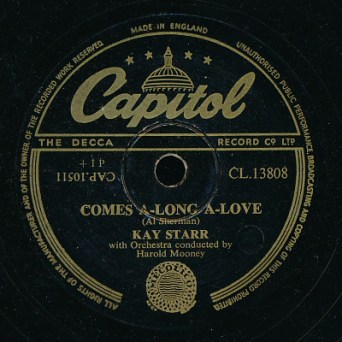
First up: only the 3rd song ever to top the UK charts, in January 1953, and the song that showed me that the pre-rock years weren’t just going to be a procession of melodramatic ballads and perfectly-pronounced pop. Miss Kay Starr, take it away…

R-3253615-1392841568-2094.jpeg

Comes A-Long A-Love, by Kay Starr (her 1st of two #1s)

1 week, from 23rd to 30th January 1953

Snazzy! And jazzy! I really thought – and more fool me – that these pre-Rock ‘n’ Roll hits would be dull, twee, chaste… one step up the danceability chart from hymns, basically. How wrong I was. It wasn’t all bluebirds over the white cliffs of Dover.

Though bluebirds do feature in this song, they do so as a symbol of being in love and suddenly becoming aware of the world around you. Birds! Flowers! The sun! Comes A-Long A-Love suddenly though you never sang you’re always singing… Comes A-Long A-Love suddenly chimes you never heard begin a-ringing… The lyrical message being that falling in love will make you a better, livelier person.

Kay Starr’s voice is in complete contrast to the Jo Stafford record that went before. It’s husky, then sing-songy, she pauses where you least expect it and then rushes through tongue twister lines phrases like petty little things no longer phase you, which I’ll bet you can’t say five times fast. You might even say she’s flirting with the listener… And, yes, a quick search shows Ms. Starr was quite the little minx (that’s what they called them in those days). Those eyebrows! What didn’t they suggest! This song could be seen as a challenge – she’s daring you not to fall in love with her.

kay-starr-cropped

But again, it’s another song that paints love in a positive light. Three number ones in and nobody’s had their heart broken… Even lonely old Al Martino was hopeful that his lover would say ‘yes’. That’s something I’m going to look out for: the first ever reference to heartbreak in a UK number one hit. And, again, Kay Starr enunciates so damn well. This isn’t an easy song to sing, but she makes it sound like she’s ad-libbing her way through it. I’ve got to hand it to these old-timers, before the days of auto-tune, because they really could sing. Gran was right all along…

Some bits do jar, slightly. Starr uses ‘Mister’, and ‘Brother’, in a way that you wouldn’t these days. And the aforementioned reference to being in love and seeing bluebirds is a bit of a Disneyfied image. It must have been easy for songwriters, at the birth of modern pop music – love is great, you see bluebirds, do-bee-do – before people discovered cynicism. So far, though, all three number ones have been recorded by American artists. Perhaps that explains the saccharine sentiments! As everyone knows, Americans are sickeningly positive. How brilliant would it be, then, if the first UK recorded #1 turned out to be a piece of proto-Morrissey miserabilism…

One final thing I’ve noticed, while looking up these first three UK chart toppers, is how long they all lived. Jo Stafford died in 2008, aged ninety. Al Martino died in 2009 at eighty-two. Kay Starr died in November 2016, having reached a grand old innings of ninety-four. That means two of them outlived Michael Jackson, who wouldn’t have his first number one hit for another twenty-eight years. They were made of sterner stuff in those days, mind.

129. ‘Little Sister’ / ‘(Marie’s the Name) His Latest Flame’, by Elvis Presley

Just when you were thinking that we hadn’t heard from him in a while, along comes Elvis with his 4th (fourth!) number one single of the year. I’m not sure when he was first christened ‘The King’, but this is definitely the period in which his reputation as the biggest-star-that-ever-was-and-ever-will-be was confirmed. I recently stuck him up as the header image on this blog’s homepage because, well, he was the UK singles chart between 1960-62.

hqdefault

Little Sister / (Marie’s the Name) His Latest Flame, by Elvis Presley (his 9th of twenty-one #1s)

4 weeks, from 9th November – 7th December 1961

And while a large contributor towards the making of said reputation is the fact that he could release any old shit and watch it soar to the top of the charts (*cough* ‘Wooden Heart’ *cough cough*), this is not such an occasion. Elvis’s 9th #1 is a record worthy of note.

First, though, some housekeeping. To me, ‘His Latest Flame’ is the more famous of these two songs – the ‘main’ side of this particular double ‘A’. It featured on my first ever Elvis Greatest Hits whereas ‘Little Sister’ didn’t. But the Official Charts company lists the latter first, and on the record sleeves of the time ‘Little Sister’ is presented as the main event. Let’s tackle that one first, then, shall we…

It’s not a song that I know at all well, and the first thing that strikes me after pressing play is that they’ve nicked the riff from ‘Shakin’ All Over’. Lil’ sister don’t you… (Diddle-iddle-iddle-iddle-din…) Lil’ sister don’t you… (Diddle-iddle-iddle-iddle-din…) Fair enough, really – it is a peach of a riff. The scuzzy bass is really cool here too. And appropriate, cos this is a scuzzy little song. Elvis, it seems, is chasing two sisters…

Lil’ sister don’t you kiss me once or twice, Then say it’s very nice, And then you run… It’s a ‘dangerous woman’ type of song – the same kind of lyrics we’ve seen crop up recently in ‘Please Don’t Tease’ and ‘Temptation’. But the plot thickens. Lil’ sister don’t you do what your big sister done… Oh Elvis, you dirty, dirty dog.

Big sister, it turns out, ran off with one Jim Dandy while El was buying candy (seriously) at the county show. She’s mean and she’s evil, Like that lil’ ol’ Bo Weevil, Guess I’ll try my luck with you… I mean, yeah. It is 1961, after all. It’s tongue -in-cheek, it’s forgivable.

At least, it’s forgivable until the final verse. That’s where things get creepy, and we begin to wonder at the age-gap between the sisters… Well I used to pull your pig-tails, And pinch your turned up nose, But you’ve been a-growin’, And baby it’s been showin’, From your head down to your toes… And you can tell by the way Elvis lingers over that last line he ain’t just talking about her height.

elvis_presley_(maries+the+name)+his+latest+flame-243646

Still, dubious verses aside, it’s nice to hear Elvis rocking again after all the ballads and the operatics and the lederhosen that have plagued him since his post-army comeback. And – heavens be praised – he keeps it up on the flip side of the disc with a riff that’s even more recognisable.

Dun-da-dun-da-dun…dun-dun, Dun-da-dun-da-dun…dun-dun… The Bo Diddley riff. Used most famously by Bo Diddley, obviously, but also on rock ‘n’ roll standard ‘Not Fade Away’, and now this. The riff follows us, steady and unchanging, as Elvis unfurls his tale of heartache. A very old friend, Came by today, Cause he was tellin’ everyone in town, Of the love that he’d just found, And Marie’s the name, Of his latest flame… His friend talks and talks of his new found love, of her beautiful eyes and long dark hair – Elvis has to just suck it up and smile. It’s a familiar theme given a nice twist. In hearing of his betrayal second-hand, from ‘a very old friend,’ the sense of heartbreak is heightened.

It peaks in the bridge – the only part of the song that breaks from the Bo Diddley riff: Though I smiled the tears inside were a-burnin’, I wished him luck and then he said goodbye, He was gone but still his words kept returnin’, What else was there for me to do but cry…? You can hear the suppressed heartache in Elvis’s voice. It’s not a song that requires much effort, not his most technically challenging vocal performance; but he sells it. The King sells whatever he’s singing. He could sing the phonebook and sell it.

This is my favourite post-army Elvis #1 so far, on a par with his fifties chart-toppers ‘One Night’ and ‘All Shook Up’. I’m in good company on this, too – ‘(Marie’s the Name) His Latest Flame’ is a favourite of punk and alternative bands who want to ‘do Elvis’. Even The Smiths (not a band I’ve ever been able to love, but still) covered it in the eighties, with Morrissey claiming it to be his favourite Elvis song, period.

I started this post by mentioning that fact that this was Presley’s fourth chart-topper of 1961. Take a moment to appreciate this, because it’s is an extremely rare feat – four #1s in a calendar year. Cliff never managed it, The Beatles never managed it. The only other act to ever manage it are… (***spoiler alert***)… Westlife. Yep. In 1999. If you extend the idea of a ‘calendar year’ to being any twelve-month period, rather than insisting on January-December, then you can include The Spice Girls in 1996-97 and B*Witched in 1998-99. But… if you do that then you have to mention the fact that Westlife actually managed FIVE chart-toppers between April 1999 and April 2000.

But, without wanting to go all snobby and belittling of the achievements of these nineties popsters, the charts of the late-nineties were a completely different landscape to those of the early sixties: much faster moving, with a much higher turnover of #1s. Westlife’s five chart-toppers spent a total of nine weeks in the top spot. Elvis’s 1961 chart-toppers amounted to a grand total of eighteen weeks.

Plus… If we’re applying the Westlife-rule to Elvis we have to take into account the fact that ‘It’s Now or Never’ hit #1 in November 1960, exactly one year before ‘Little Sister’ / ‘His Latest Flame’. So, five number ones and a whopping twenty-six weeks at the top… Elvis wins! Hurrah! And just to prove he’s The King, the GOAT in the UK Singles Charts – like Lio Messi bending yet another free-kick into the top corner or Roger Federer lifting his umpteenth Wimbledon title – he’ll do it all over again in 1962.

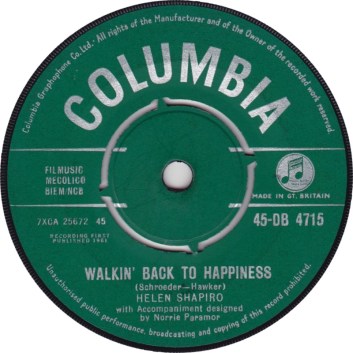
128. ‘Walkin’ Back to Happiness’, by Helen Shapiro

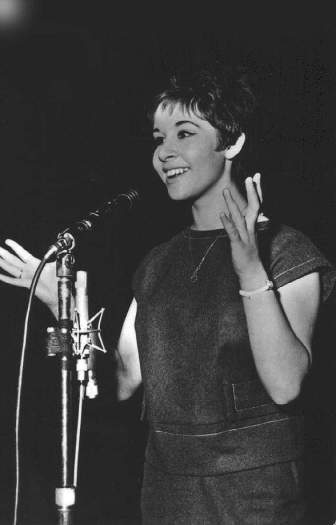
She’s back. Barely two months after a gorgeous slice of teenage angst, ‘You Don’t Know’, made her the youngest ever solo chart topper, our Helen returns to the top of the charts. And this time she’s feeling much perkier.

helen-2

Walkin’ Back to Happiness, by Helen Shapiro (her 2nd and final #1)

3 weeks, from 19th October – 9th November 1961

Funny but it’s true, What loneliness can do… OK, it’s not immediately very perky, but bear with it… Since I’ve been away… Wait for it… I have loved you more each day!

And we’re off. This is a pop record that whips along at breakneck speed – the drums, the guitar, the violins, even the backing singers – none of them linger too long over a single note. Carried along, you really can imagine Miss Shapiro skipping gayly through a field of daffodils. Or something. And the hook; what a hook. Walkin’ back to happiness, Whoopa-oh-yeah-yeah…! Add it to the wop-bop-ba-loomas and the rama-lama-ding-dongs of pop music lore. To most people in 2019, Helen Shapiro’s entire career has probably been reduced to this very line. It certainly had been for me before starting this blog.

Contrast if you can the in-your-face optimism of this tune with the moodiness of her first chart-topper. On ‘You Don’t Know’, Helen was languishing in the exquisite pain of loving a boy who never noticed her. She could never tell him. She was condemned to suffer in silence. Here, though… Spread the news I’m on the way, Whoopa-oh-yeah-yeah, All my blues have blown away, Whoopa-oh-yeah-yeah… Technically this song is about someone returning to their lover (I never knew I’d miss you, Now I know what I must do…), but it’s tempting to view it as a riposte to ‘You Don’t Know’ – now she’s head over heels in love. Maybe it’s with the guy who, just two months before, was passing her by in the corridor?

In terms of managing the career of a teen star, her ‘team’ did very well here (she was managed by Norrie Paramour, fifties/early sixties producer du jour – we’ve already heard his work with stars like Cliff and The Shadows, Ruby Murray and Michael Holliday). Shapiro’s two chart-toppers are simultaneously different and yet complimentary. While so many stars have recently followed up big hits with very-similar-sounding hits (Adam Faith, the Everlys, Cliff) it’s refreshing to hear the youngest star of the time return with something completely different. It reminds me of Connie Francis’s double-whammy of ‘Who’s Sorry Now’ and ‘Stupid Cupid’ from a few years back.

helen-shapiro-walkin-back-to-happiness-1961-16

The best bit of this whole affair is the bridge, when Miss Shapiro lets rip with a Walkin’ back to happiness with yo-ou, mm-hmm-hmm… It’s still hard to imagine that someone with a voice this rich and honeyed was just fifteen when she recorded this. Though I do feel that, as good as this record is, her voice has a natural air of melancholy which suited her previous #1 better. That’s me nit-picking, though. This is a pure pop classic – a disc that can’t help but make you smile.

Helen Shapiro’s star burned brightly but briefly. Her two chart-toppers aside, she only had three other Top 10s, and by the mid-sixties she was struggling to make the Top 40 at all. Going by her Greatest Hits, she had a go at all the pop classics of the day: ‘It’s My Party’, ‘A Teenager in Love’, ‘Please Mister Postman’ and the ultimate teeny-bopper anthem ‘Lipstick on your Collar’ (that Mary-Jane, eh). She then moved into acting – both on TV and in the West End – and officially ‘retired’ from showbiz in 2002.

While we’ve had girls with perky pop songs hitting the top of the charts before now – Rosemary Clooney and Connie Francis say ‘Hi!’ – they were both American. Helen Shapiro is British, and can thus be seen as the start of a chain linking us right through the 1960s, taking us past Cilla Black, Sandie Shaw, Lulu and more. Female chart-toppers are few and far between in this decade, and the ones that do pop up tend to do so with some pretty special songs…

127. ‘Michael’, by The Highwaymen

We begin our next chart-topper with a whistle. We haven’t had a whistle-y #1 for a while, maybe not since the ‘Age of Whistling’ back in 1957-’58. And then an oh-so gentle, almost soothing acoustic guitar comes in…

the-highwaymen_thumb

Michael, by The Highwaymen (their 1st and only #1)

1 week, from 12th – 19th October 1961

Back in my last post, I asked you to imagine this year, 1961, as a huge variety show, with all manner of artists on the bill. Well, keep that image in mind and picture, as The Shadows wrap up their little Hawaiian interlude, the curtains parting to reveal a forest backdrop, a pile of leaves and upturned logs, a ‘fire’ made from strips of crepe paper and a fan, and five fresh-faced boys – The Highwaymen.

The tune is instantly recognisable, by anyone who’s visited a church, or been a Boy Scout, or attended a Primary School… Michael row the boat ashore, Hallelujah, Michael row the boat ashore, Hallelujah… Just when you thought 1961 couldn’t get any more eclectic – we’re getting a hymn!

Fifty percent of this song is that very chorus, repeated over and over, and over. In between, each Highwayman takes turns in singing a single-line verse: Sister help to trim the sails, Hallelujah… The river Jordan is chilly and cold, Hallelujah… The river is deep and the river is wide, Milk and honey on the other side… Hallelujah, Hallelujah and Hallelujah… It ends with the same haunting whistles that kicked us off. And that’s it.

Wiki lists this as ‘Collegiate Folk’, and I am 100% certain that this is the first and only ‘Collegiate Folk’ record to top the UK Singles Charts. It’s a very accurate genre title too, as all five Highwaymen were undergraduate students at Wesleyan University in Connecticut. Under what circumstances they went from a mere college band to trans-Atlantic chart-toppers is unclear. It really does beg the question…

the-highwayman-michael-ex-united-artists-1961

…what in seven hells is this doing atop the UK hit parade? If you thought The Temperance Seven or Shirley Bassey’s show-tunes were a bit on the random side then this is completely out of the left-field. At the same time, though, I will at some point have to realise and accept that literally anything can top the singles chart. We’ve had some weird number ones; and there is weirder to come, trust me on that.

And yet… This may be a weird chart-topper; but it’s a very simple, very normal song. Kinda dull. You can understand why Benny Hill, and Mr Blobby, and The Teletubbies – with all their technicolour silliness – have UK #1s more than you can understand this becoming the biggest selling single in the country for one week in the autumn of ’61. The five boys in this band – Dave, Bob, Chan and two Steves – are spectacular in their ordinariness. They look like the sweetest bunch of apple-pie lovin’, church-goin’, all-American boys-next-door. A ‘highwayman’, as far as British readers will be aware, was a 17th-18th century armed robber, which makes it look like an odd choice of band name for such sweet looking lads. Even their voices are – how to put this nicely? – fairly ordinary. But what do I know – maybe their ordinariness is what won people over? They are clearly not trying to be Elvis, or Liberace, or even Cliff, and people do like an everyman with an acoustic guitar…

I have to admit that – as one of the most irreligious people around – I want to hate this record. But I can’t. It’s a nice song. It’s soothing. I’ll put it on next time I can’t sleep. And The Highwaymen didn’t much bother the charts after this. All but one of them returned to their studies after the success died down. But maybe, just maybe, the folk scene that grew so big in the mid-to-late sixties – The Byrds, The Seekers, Peter, Paul and Mary, even Bob Dylan – can perhaps trace a small part of its popularity back to this unlikely smash hit.

Two other things to mention before we’re done… One: that these Highwaymen are in no way related to the Willie Nelson, Johnny Cash supergroup (though they did try to sue them for appropriating their name). And two: the fact that this great African-American gospel hymn was white-washed to such success at the height of the US Civil Rights movement perhaps says something about American society at the time… Something that I am in no way qualified to discuss and will just leave hanging here…

That aside, I’m just excited to see what on earth 1961 will throw up at the top of the UK singles charts next! Pan-pipes? The can-can? Mongolian throat-singing?? Whatever’s coming – bring it on!

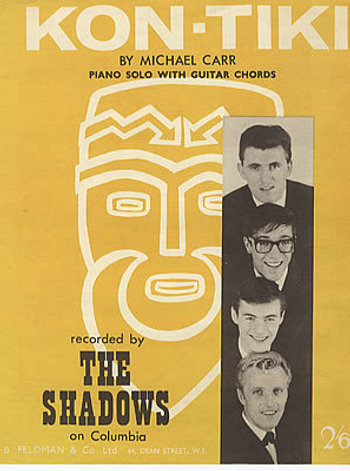
126. ‘Kon-Tiki’, by The Shadows

As we continue our slow meander along the highways and bye-ways of 1961 –it does feel that this year is taking a little longer to get through than previous ones – it’s time for a little interlude.

the-shadows-kon-tiki-1961-5

Kon-Tiki, by The Shadows (their 6th of twelve #1s)

1 week, from 5th – 12th October 1961

Picture, if you possibly can, the year 1961 as a TV variety show. On the bill are some huge, established stars – Elvis, the Everlys, Shirley Bassey – along with some new up and coming teen sensations – Johnny Tillotson, Helen Shapiro – and some quirky little gems – Floyd Cramer and The Temperance Seven. Maybe Cliff – who won’t actually be hitting #1 this year – can be the MC. OK? Well, to this weird mental image you can add the house band, the ones that pop up and play as the curtains drop and the scenery gets shifted. They are, of course, The Shadows.

‘Kon-Tiki’ is another instrumental. A lilting little slice of surf-rock. It’s got cool drum-fills, a nice crunchy, tinny edge to the guitars and a hint of reverb around the main riff. There’s a couple of call and response bits between the lead and the bass, and the ending has some gnarly (did they say ‘gnarly’ in the early sixties?) echo. It’s a decent enough record – I’m not sure that the Shadows made many poor ‘solo’ records – but when it ends less than two minutes in you’re left wondering… Is that it?

It’s far from being one of their bigger hits (I wasn’t particularly familiar with it before starting this post) and it kind of feels like filler. Something thrown together as the guys were jamming. A ‘B’-side, maybe? But hey, what do I know. It was a UK number one single; only the band’s second solo chart-topper.

the-shadows-kon-tiki-36.jpg

The Kon-Tiki was actually a raft used in a 1947 expedition across the Pacific Ocean by the Norwegian explorer, Thor Heyerdahl. ‘Kon-Tiki’ was chosen as it was an old name for the Incan sun-god. What all this had to do in inspiring the writing of this perky guitar instrumental is, to be honest, unknown. My best guess is that it sounds kinda tropical, kinda surfy, and could work well as the soundtrack to a sunset luau on the beaches of Hawaii. Compared to ‘Apache’, which really did conjure up images of Indian braves galloping across the plains, ‘Kon-Tiki’ is a little more abstract.

Maybe that’s fine, though. It’s a nice enough tune, a pleasant one-week interlude on our journey through 1961. It reminds us that The Shadows are still around, are still the biggest British band of the time. Maybe it needs no further meaning than that.

As I mentioned at the start of this post, it does feel like we’ve been lingering in 1961 for quite a while now. In actual fact, with twenty-one number one singles, 1961 has by far the most chart-toppers of any year yet covered. But that’s OK. It’s proving a nice place to be. Jazz, rock, showtunes, instrumentals… all genres are welcome here. And, if you thought it’s been eclectic recently; just wait till you hear what’s up next!