For our next cover versions interlude, here are three covers of chart-topping hits with a little Motown flavouring.
Starting with possibly Motown’s biggest star, Stevie Wonder…
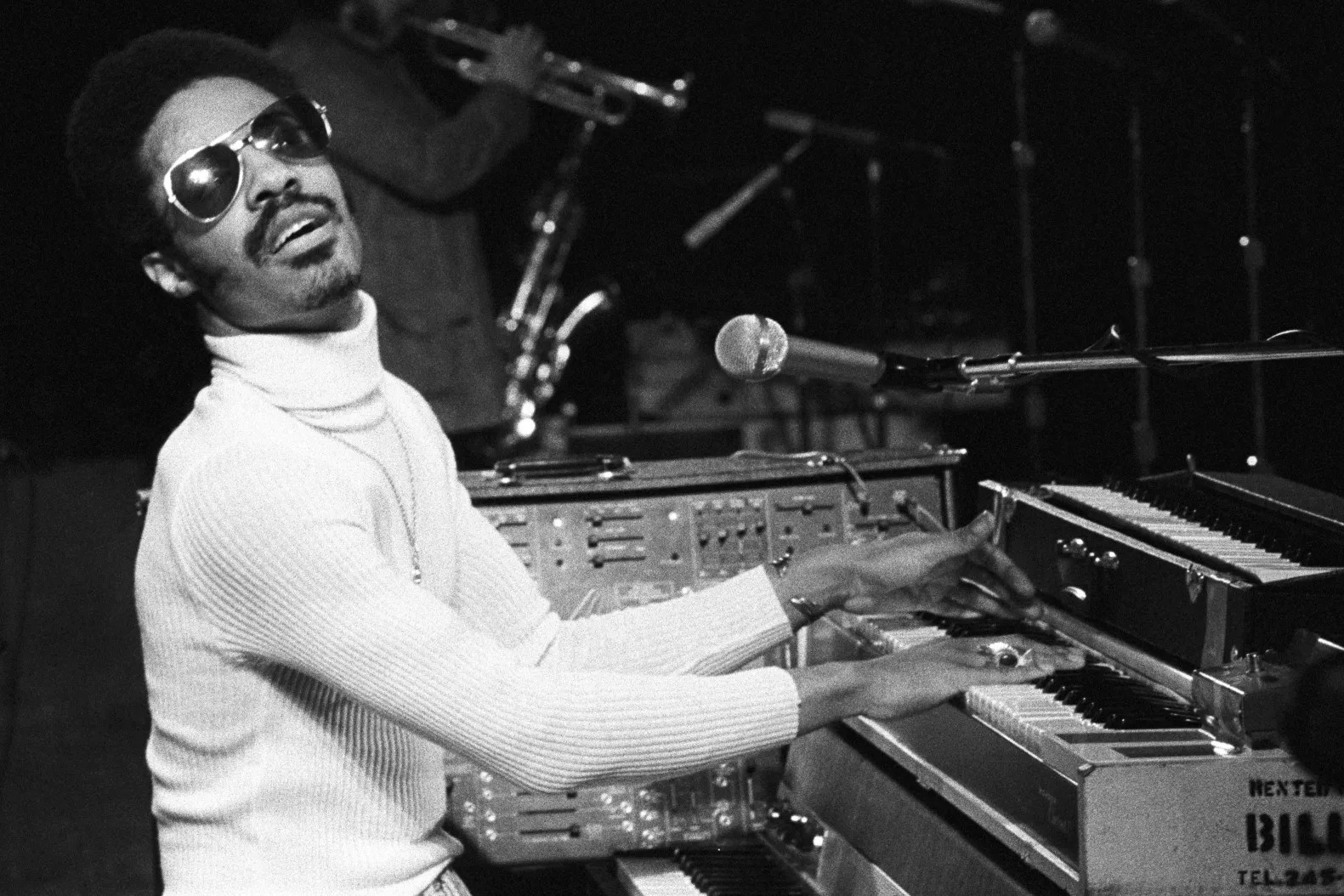
Wonder covered ‘We Can Work it Out’ for his 1971 album ‘Signed, Sealed, Delivered’, and it made #13 on the Billboard 100 when released as a single. He was still only twenty-one, though already a full decade into his recording career. Of course, Stevie Wonder’s career would cross paths with a Beatle again in the eighties, with the not-quite-as-classic ‘Ebony and Ivory’ hitting #1. Wonder then performed for Paul McCartney’s Grammy Lifetime Achievement Award ceremony a few years later, singing this very tune.
Sonically, this is very early-seventies Stevie, with a brilliant fried-funk bassline, and a harmonica solo. It’s also a much more positive sounding record than the baroque pop original, with the soaring vocals and backing leaving us in no doubt that whatever is wrong will indeed be worked out.
And if Stevie Wonder is Motown’s biggest star, then Smokey Robinson can’t be far behind…
He scored a belated number one with the Miracles in 1970 with the classic ‘The Tears of a Clown’, which was also co-written by Wonder. A decade later, in that incredibly fertile post-punk/new-wave landscape, the Beat (or English Beat, or British Beat, depending on where you’re from) took this ska cover version to #6 in the opening weeks of the 1980s.
I wouldn’t count myself as the biggest fan of ska, but I am a fan of hearing great songs that work in very different arrangements, and the staccato riff, played like a circus theme in the original, sounds great in a two-tone style.
My third cover is bending the rules a little. Or completely…
For years I assumed the Foundations were a Motown act, or at the very least Americans from somewhere near Detroit. But of course they were British, and released their music on Pye Records. I’ll class them as honourary Motown stars, though, as hits like ‘Build Me Up Buttercup’ and ‘Baby, Now That I’ve Found You’ are so very indebted to the Tamla sound.
Not that Alison Krauss’s bluegrass inflected version sounds anything like that. It is stripped back, richly smooth, almost haunting. It was recorded in 1995, and didn’t do much on the charts, but won a Grammy for Female Country Vocal Performance and has featured on Best Country Songs lists. Despite this, I like it because it’s not too country, if you know what I mean.
Hope you enjoyed these not too oft-heard cover versions of three sixties classics. Back to the regular countdown next, and we are only ten chart-toppers away from a very special anniversary!
The Fab Four claim their third straight Christmas number one (before Christmas number ones were a thing, but still), and they do so with their most straight-up rock record yet.
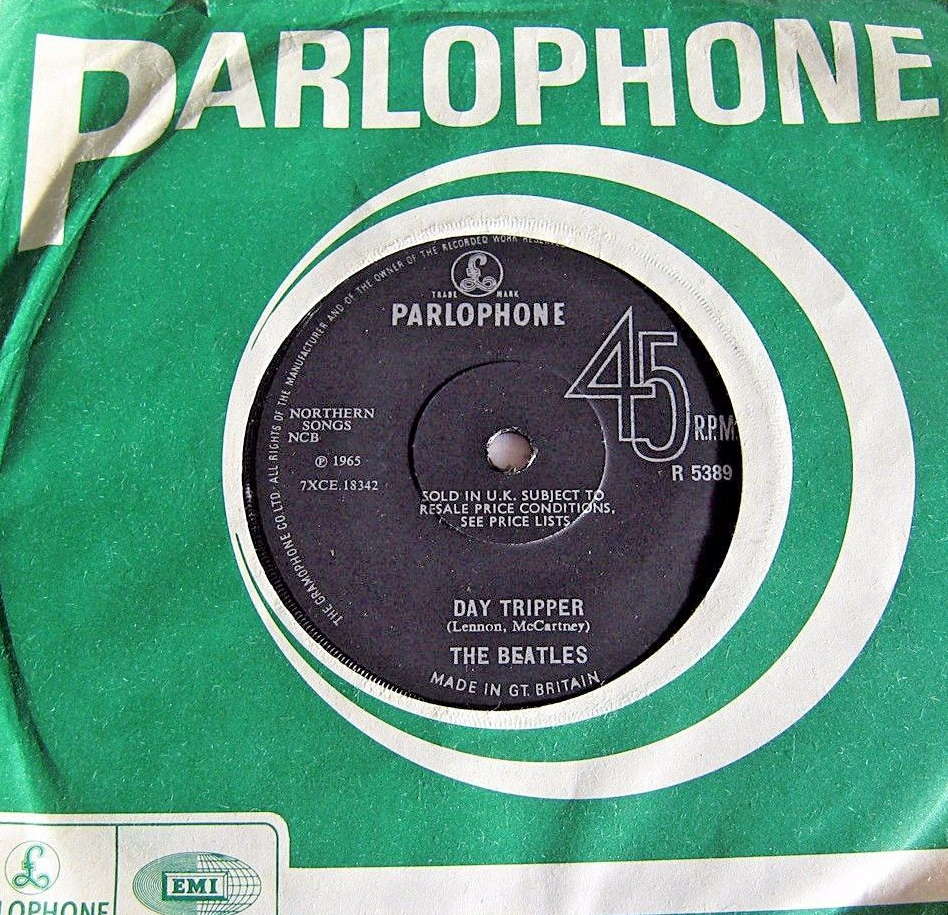
Day Tripper / We Can Work It Out, by The Beatles (their 9th of seventeen #1s)
5 weeks, from 16th December 1965 – 20th January 1966
There’s a riff – a riff we all know – dun-duh-duh-duh-duh-dun-dada-da-dada – (riffs never really work when written out…) which keeps on going till the end. It’s a riff record – maybe, just maybe, they’d been listening to The Stones –a great, straight-up rock song.
I like the way the intro builds: guitar, then bass, then drums, and the way that the solo is basically the riff, beefed-up. It’s a simple song – there’s no reinventing the wheel here. I guess it’s experimental, in the sense that they’re experimenting with a heavier sound, but that’s stretching it a bit. It’s a John Lennon number, and one of the things I like most about him is that he never lost his rock ‘n’ roll roots, never stopped being a fan of Chuck and Buddy, no matter how avant-garde he and his bandmates seemed to get.
Of course, like any great rock song, there’s a fair amount of raunch here too. She’s a big teaser, She took me half the way there now… Not much imagination needed. Especially after Lennon admitted that he would have made it ‘prick teaser’, had he been allowed. Tried to please her, She only played one night stands… So on and so forth. Another layer of innuendo comes when you consider the ‘trip’ aspect of the lyrics. A ‘day tripper’ would be someone who only drops acids on special occasions. A weekend hippy, a ‘Sunday driver’.
Whether it’s about drugs or sex, or both, doesn’t really matter, though. This is a cracking rock number – one that I’ve enjoyed reacquainting myself with for this post. It’s one of those Beatles songs that kind of gets lost among the mega-hits. But, actually, listen to the soooooo long growl, and the way that the solo ascends to a climax with a hint of ‘Twist and Shout’, and try telling me that this isn’t one of their best. And, come to think of it, I can think of two other songs off the top of my head in which the ‘Day Tripper’ riff makes an appearance: ‘Hair of the Dog’, which gleefully rips it off to the extent that when Guns N’ Roses covered it they gave up the pretence and by the end were just playing the Beatles’ riff, and The Wildhearts’ ‘My Baby Is a Headfuck’. So maybe I’m underestimating it…
What of the flip-side? We’ve not had a double-‘A’ side #1 for a while (nearly three years to be precise) and ‘We Can Work It Out’ is the perfect companion for ‘Day Tripper’, in that it sounds pretty much the opposite. I’ve always thought that double-‘A’s should contrast, one should be the yin to the other’s yang, and so gone is the electric guitar and the bravado, replaced by acoustics and recriminating.
It’s a folk-rock waltz of a record, in which Paul McCartney muses on a failing relationship: Try to see it my way, Do I have to keep on talking till I can’t go on?… Think of what you’re saying, You can get it wrong and still you think that it’s all right… He remains positive – the title is ‘We Can Work It Out’ after all – but if you listen closely to the lyrics it becomes clear that any compromise will be on his terms: While you see it your way, There’s a chance that we might fall apart before too long… Very passive-aggressive… Actually, the more I listen, the more I realise how the singer of this song is being a bit of a dick. Life is very short, And there’s no time, For fussing and fighting my friend… (So hurry up and just admit I’m right!)
The accordion-slash-harpsichord sounding instrument which characterises this disc – the one that creates the woozy, trippy feel at the end of the bridge, and that closes the song with a little riff – is a harmonium, apparently. This is where pop music has been heading throughout 1965, with the baroque-folk stylings of The Byrds, Sonny and Cher and The Walker Brothers, and it’s nice to close out the year in this way. A sign of where The Beatles were heading. ‘Rubber Soul’ was released while this disc sat at #1, and ‘Revolver’ would be coming up very shortly after.
This was The Beatles first double-‘A’ side as they couldn’t agree on which record was the more commercial sounding. Lennon was the one who forced ‘Day Tripper’ to get equal-billing, but in terms of airplay at the time ‘We Can Work It Out’ was the winner. In the US they were released separately, with ‘We Can Work It Out’ hitting the top of the Billboard 100 and ‘Day Tripper’ only making #5. But for me rock always wins. ‘Day Tripper’ all the way…
And so we cross the midway point of The Beatles’ chart-topping run. Nine down, seven to go. To celebrate, I thought I’d do a quick rank of the hits that have gone so far. Based solely on personal preference not artistic merit. Let me know if you agree or are scandalised by my ignorance. In ascending order (worst – best), then:
Actually, that was really hard and kind of pointless. I don’t dislike any of those songs. A ‘bad’ Beatles disc is another act’s signature song. But it’ll be interesting to add the next seven to the list, and to see where they fit in. Anyway, look! Suddenly it’s 1966. Onwards!
Listen to every number one so far – by The Fab Four or otherwise – with this playlist: