Best of the Rest – Steps

I’ve been threatening this post for quite a while, and I’m sure many readers didn’t take those threats seriously. To them, all I can say is sorry. Never again will you underestimate this blogger’s love for some cheesy pop. Time to begin, so count me in…

Steps were a near-permanent fixture on the singles chart between 1997 and 2001, managing two number ones. Sadly, both of their chart-toppers were fairly average (‘Tragedy’/’Heartbeat’ and ‘Stomp’) while many of their near misses – they had five singles that peaked at #2 – are classics of their time and genre. The turn of the 21st century was a time when disposable, teeny-pop acts were ten-a-penny. But Steps still managed to carve their own niche. They weren’t cool, they weren’t sexy, they weren’t particularly down with the kids. They were camp, and catchy. Who were Steps’ fans? Was their continued success all the fault of gay men? (Probably, yes.)

You may be relieved to hear that I won’t do my usual Top 10 today. I’ll restrict it to a Top 5. But, what a five! Five bubblegum classics of the fin de siecle, and I will entertain no arguments to the contrary…

‘Last Thing on My Mind’ – #6 in 1998

I don’t think many people expected Steps to have any sort of career beyond their debut hit: the ultra-cheesy, line-dancing meets techno ‘5, 6, 7, 8’. But lo and behold, they returned with a proper pop song, combining an ABBA-esque piano line with a cheap and frothy chorus. And the revelation that at least two of the five, Faye and Clare, could actually sing! ‘Last Thing on My Mind’ had originally been recorded by Bananarama in 1992, but had stalled at #72. That version is even more indebted to ABBA, while the song’s author Pete Waterman has claimed it was inspired by Mozart. A bold claim, but I’ll buy it.

‘Better Best Forgotten’ – reached #2 in 1999

One of five Steps singles that fell a place short of top spot, ‘Better Best Forgotten’ is another ABBA(ish) melody with lots of late-nineties dressing. Please bear in mind that by constantly bringing up ABBA I am not being so bold as to claim Steps were in any way comparable to said Swedish Gods and Goddesses, but that the influences were clear… Meanwhile I can’t explain it, but the key change just before the chorus here is hands down the gayest moment in popular music.

‘A Deeper Shade of Blue’ – reached #4 in 2000

The 4th single from their second album was a slightly cooler affair, with an Italo-house beat and some dance diva vocals from Claire. It was another track originally recorded by someone else – in this case Tina Cousins – but Steps stepped in and made it their own. Musical vultures! It is more mature, and more sophisticated, than much of Steps’ earlier work.

‘One for Sorrow’ – reached #2 in 1998

There is a beauty about early Steps videos, which rival the cheapest of stock karaoke videos. Here they cycle, have a kickabout, and generally frolic in long grass and sunflowers somewhere in Italy. And the song is a melancholy dance classic, with the melody deeply in debt to… well, you know who it’s in debt to. Another thing to note is Steps’ consistent dedication to wordplay: One for sorrow, Ain’t it too too bad… (See also the deeper shade of blue/darker shade of me from the previous entry.)

‘Love’s Got a Hold of My Heart’ – reached #2 in 1999

For me, this is peak Steps. All boxes ticked. A candyfloss chorus. A Eurotrash beat. Cheesy dance routine on a pier (all while dressed in canary yellow). Claire absolutely belting it out (the way she lets rip on the resigned to my fate… line is a chef’s kiss moment). It lacks the usual hint of melancholy – making it one of their least ABBA-aping singles – and it sounds excactly like you’d expect Steps to sound, had you only ever seen a picture of them.

If you made it this far through the post, I salute you. Thanks for humouring me. I realise that Steps are written off by many as cheap tat, indicative of a time when pop was at its most disposable. And maybe it’s nostalgia for my youth (though I’d never have admitted to liking Steps at the time!), but I do think the five songs included here deserve their place in the pantheon of pop. Maybe not on the same floor, or even the same wing, but definitely in the same building as the likes of Kylie, or Madonna, or even, yes, ABBA.

Steps split on Boxing Day 2001, but reformed a decade later and have been touring and recording ever since, releasing some pretty decent dance-pop tracks. For reasons that I don’t quite understand, they seem to have acquired Michelle Visage as a part-time sixth member. There’s clearly a lot of people who still hold some affection for Steps. Including me. And I make no apologies for it!

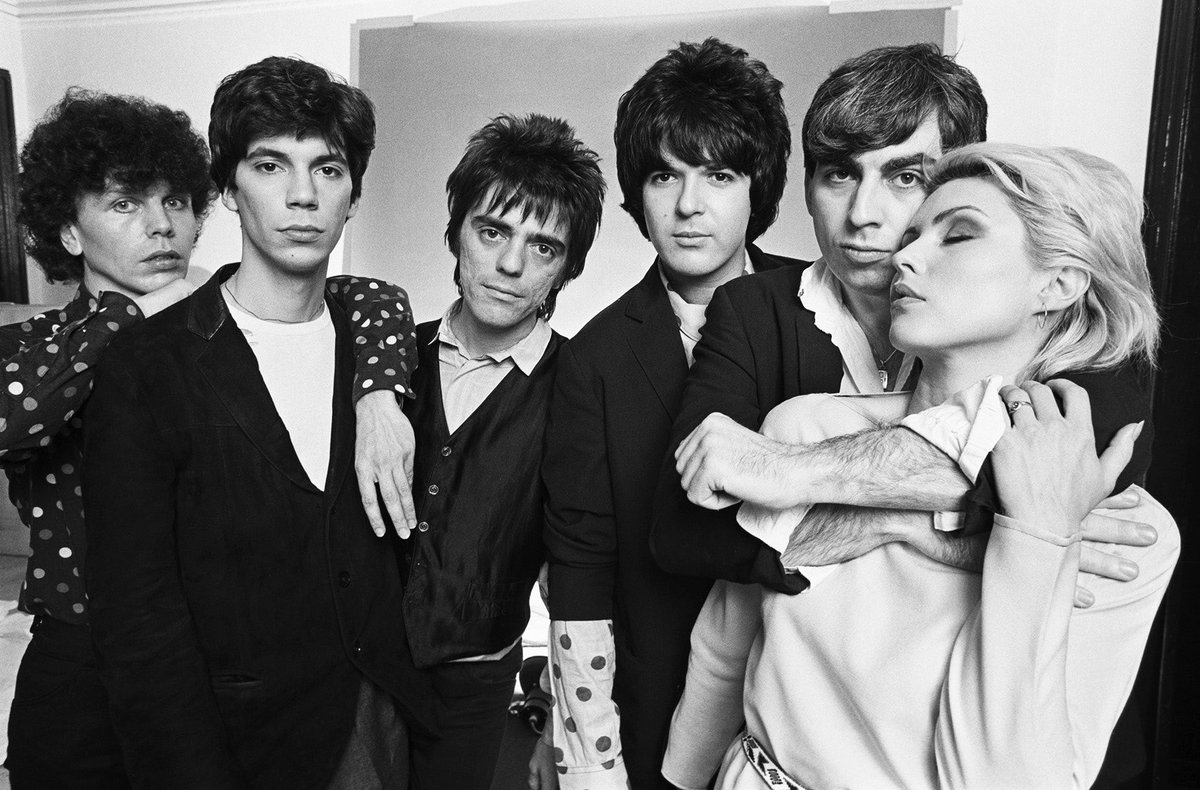
Blondie – Best of the Rest

I’ve had this post planned for a long, long time, but had to hold off in the knowledge that Blondie would have the glorious, belated coda to their chart-topping career that was ‘Maria’. Now that their 6th and final number one has been and gone, I can rank the new-wave icons’ eleven other UK Top 40 hits. Hurrah!

Restricting myself to Top 40 hits means that we can’t include that run of glorious early singles – ‘X Offender’, ‘In the Flesh’, ‘Rip Her to Shreds’ – all of which would have come close to topping this list, but which never made the hit parade. It also excludes ‘One Way or Another’, which was never a single and only charted at #98 after One Direction covered it in 2013. On with the countdown!

11. ‘Nothing Is Real But the Girl’ – #26 in 1999

A much more down-to-earth follow-up to the heavenly ‘Maria’. It’s got a good driving beat, Harry on top vocal form, and some quality drum fills. Blondie 101. Plus, as others have pointed out, it shares a bassline with ‘Suzy and Jeffrey’, the great B-side to ‘The Tide Is High’. Still, somehow it doesn’t equal the sum of its parts, and leaves me fairly cold.

10. ‘Island of Lost Souls’ – #11 in 1982

It’s surprising just how quickly Blondie’s chart form fell off a cliff. A year and a half after their ‘final’ number one, the lead single from 6th album ‘The Hunter’ failed to make the Top 10. ‘Island of Lost Souls’ is a more extreme version of ‘The Tide Is High’s reggae leanings, going full-on calypso. I don’t think it’s a particularly bad song, I’m just not sure why Blondie felt the need to record it and/or release it as a single. Still, the line Hey buccaneer, Can you help me get my truck in gear? is enough to prevent this from ranking last.

9. ‘Rapture’ – #5 in 1981

On the one hand, I respect what ‘Rapture’ (RAP-ture, get it?) does. It’s brave, it’s boundary pushing, it’s disco, new wave and hip hop all in one. Plus, it contains lines about men from Mars shooting you dead and eating your head, before ending with a cool guitar-slash-saxophone solo. It was also the first US #1 to feature rapped lyrics. And yet… I’ve never particularly liked it. Sorry.

8. ‘War Child’ – #39 in 1982

‘The Hunter’ is a pretty poor album, from a band that just a few years earlier were churning out classic LPs by the year. But it has two good songs – the Bond-theme that never was, ‘For Your Eyes Only’ – and this, the second single (Blondie’s last for seventeen years). It’s a counterfeit ‘Call Me’, with a propulsive electro beat, some wild saxophoning, and lyrics about Cambodian child soldiers. It deserved better than a #39 peak.

7. ‘(I’m Always Touched By Your) Presence, Dear’ – #10 in 1978

This bit of power-pop showed a softer side to the band’s earlier output, and earned them their second UK Top 10. It could almost be classed as a novelty, in the way it describes being in love with a mind reader, and pokes fun at psychic frequencies and outer entities, though Harry delivers it all in an cooly earnest deadpan. At the very least, someone was taking the piss when placing those brackets in the title…

6. ‘Good Boys’ – #12 in 2003

I’ve seen ‘Good Boys’ described as the great, lost Blondie single. Which feels strange to me, as it’s been one of my favourites for years. But then maybe it was a case of right place right time, as I was at the height of one of my chart-watching phases, and seem to be one of the few who noticed it making #12 in August 2003. A bit poppier, and funkier, than ‘Maria’ a few years earlier, Harry had another crack at rapping on this one, and the band had to acknowledge Queen in the credits after borrowing heavily from ‘We Will Rock You’.

5. ‘Union City Blue’ – #13 in 1979

It’s not up for debate that Blondie were a pretty freakin’ cool band, but have they ever looked cooler than in the video to ‘Union City Blue’, all suited and booted (orange jump suit-booted in Debbie H’s case) on a dry dock? They do their best to spoil all this in the second half of the video, cutting some goofy shapes once night has fallen, but let’s pretend that never happens. This song just sounds so epic, from the cascading intro, to Clem Burke’s majestic drumming, to that revving bass in the break before the final verse.

4. ‘Hanging on the Telephone’ – #5 in 1978

Blondie had a knack for covering the right songs, songs that hadn’t been big hits in the first place and that people would assume were Blondie songs all along… (see the next song in this list for another great example). ‘Hanging on the Telephone’ had been recorded by the Nerves in 1976, and Blondie’s cover is pretty faithful, just a bit tighter, a bit sharper, and a bit better. I can even pinpoint the very moment that this transcends its original version: the extra throaty woahwoahwoah that Harry adds right at the end. It’s also another fine example of what I’ll call Blondie’s knack for stalker-chic – see also ‘X Offender’ and the song at #2 in this list – songs with creepy lyrics that they get away with because Debbie Harry was such a doll.

3. ‘Denis’ – #2 in 1978

Speaking of having a knack for covering the right songs… Though Blondie didn’t so much as cover ‘Denis’ as kidnap it, brainwash it, and convince it that it was their song all along. The original, ‘Denise’, by the excellently named Randy & the Rainbows, was an average slice of mid-tempo doo-wop. In Blondie’s hands it became both a razor-sharp pop tune, and a post-punk classic with just enough cooly detached irony. As well as their first big hit.

2. ‘Picture This’ – #12 in 1978

Blondie seemed to lose some momentum with the release of the lead single from their third album, ‘Parallel Lines’. Of course, that album would go on to do alright for itself, and the subsequent hits would overshadow this brilliant new-wave single. As mentioned, Blondie did a good line in oldies covers, but they also did a great line in making new songs with all the hallmarks of the classics. ‘Picture This’ has hooks galore, and could have been a sixties girl-group hit. Though not many sixties girl-groups would have gotten away with lines like: I will give you my finest hour, The one I spent watching you shower…

1. ‘Dreaming’ – #2 in 1979

Blondie are not a band poorly served by their number one singles. They released some outright, all-time classics, and most of them got to the top of the charts. But if there was one single of theirs that deserved to join the ranks of ‘Heart of Glass’, ‘Atomic’, or ‘Call Me’, then it’s ‘Dreaming’. Like ‘Picture This’, it takes some classic pop group hooks, and melodies, (it’s apparently based on ‘Dancing Queen’, though I don’t hear it myself), and beefs them up into something wonderful. Clem Burke’s drumming is a stand out on this record, though he claims he was over-egging his drum fills, assuming that producer Mike Chapman wouldn’t use that take.

I’ve noticed that I quoted quite a few of the lyrics from the past ten songs, not realising just how epic, and often hilarious, Blondie’s lyrics were. To the ‘hilarious’ pile I’ll add Harry’s opening couplet: When I met you in the restaurant, You could tell I was no debutante… And to the ‘epic’ pile I’ll nominate a sentiment we can all agree with: Dreaming, Dreaming is free…

Thanks for reading, and do let me know if you agree with my ranking in the comments.

Before going, I must mention that over the weekend I wrote a guest blog post for Keith AKA the Nostalgic Italian, all about our memories of the toys that we grew up with. I managed to stay on-brand and tied my post into a number one single. Check it out here!

Today’s Top 10 – July 28th, 1967

Another trip back in time then, with my second ever ‘Today’s Top 10’ (we went back to 1970 a few months ago – check it out if you have the time). This time I thought we’d go back to the summer of 1967… AKA The Summer of Love, in which for a few months the hippy ideal looked like perhaps becoming reality. Three very famous flower-power anthems topped the charts that summer, and all three are on this chart, dated 26th July-1st August 1967. But was the rest of the Top 10 as awash with peace and love? Let’s find out…

#10 – ‘Death of a Clown’, by Dave Davies (up 13 / 2 weeks on chart)

We start with a couple of big climbers, as Dave Davies’ debut solo effort enters the Top 10 this week. ‘Death of a Clown’ often gets classed as a Kinks’ song, and in fairness it does feature all four Kinks playing on it, and it did appear on the album ‘Something Else by the Kinks’. But it charted as a Dave solo number, with Ray contributing the la-la-la refrain, sung by his then wife. Its subject matter is that old rock ‘n’ roll chestnut – the grind of endless touring: I’m drownin’ my sorrows in whisky and gin… Dave Davies, who often chafed under his big brother’s domination of the group’s songwriting, had hoped that this song’s success (it would peak at #3) might lead to a solo album, but it didn’t. As a starter for our 1967 countdown it doesn’t scream ‘Summer of Love’, but Davies’ cravate in the video below is possibly the perfect encapsulation of the phrase ‘baroque pop’.

#9 – ‘Up, Up and Away’, by the Johnny Mann Singers (up 17 / 3 weeks on chart)

A bit more like it, now. An appropriately high climb for the Johnny Mann Singers going ‘Up, Up and Away’ in their beautiful balloons. It’s hardly the height of psychedelia, and it has much more of an upbeat, cabaret cheesiness to it, but it could also serve as a metaphor for indulging in some mind-bending substances. Most of the world knows it as a hit for the 5th Dimension but their version didn’t chart in the UK, leaving the coast clear for composer/arranger Johnny Mann and his singers.

#8 – ‘There Goes My Everything’, by Engelbert Humperdinck (down 2 / 10 weeks on chart)

Hang around the charts of 1967 long enough, and sooner rather than later you’ll come across Engelbert Humperdinck. He had two monster #1s, ‘Release Me’ and ‘The Last Waltz’, with this #2 smash sandwiched in between. ‘There Goes My Everything’ had been a huge US country hit for Jack Greene, before The Hump brought it to the pop charts. There’s more than a whiff of ‘The Green, Green Grass of Home’, a massive success for Tom Jones a few months earlier. Not very ‘Summer of Love’ but, let’s be honest, who could say no to a night of passion with this magnificent pillow-lipped crooner.

#7 – ‘A Whiter Shade of Pale’, by Procol Harum (down 3 / 10 weeks on chart)

Aha! Here we are then. One of the big three Summer of Love anthems, which had been at number one for six weeks and was now on its way down the chart. A stone cold, all-time classic which I’ve already named as one the Very Best #1s. Not much more to say, other than read my original post on it here, and give it a play regardless of how many times you’ve heard it before.

#6 – ‘See Emily Play’, by Pink Floyd (up 2 / 6 weeks on chart)

And if Procol Harum weren’t trippy enough, here is some true psychedelica from up and comers Pink Floyd. Written by founder member Syd Barrett, about a girl that he had seen in a forest while tripping on LSD. It is a deeply strange pop single, with lyrics about losing your mind, a demented harpsichord break, and a discordant, feedback-drenched solo. It was only their second single, and Barrett was opposed to releasing it as he didn’t think it was up to scratch. He would leave the band only a few months later, with mental health problems possibly brought on by drug use, and became a famous recluse. Pink Floyd meanwhile went on to release some of the biggest albums of the ’70s. They didn’t release many singles, though, and the next time they visited the Top Ten was with their surprise 1979 Christmas number one, ‘Another Brick in the Wall Pt. II’.

#5 – ‘She’d Rather Be With Me’, by The Turtles (up 2 / 7 weeks in chart)

Into the Top 5, with one of the decade’s great forgotten pop records, by one of the decade’s great forgotten pop groups. If the Turtles have made it into the public consciousness, then it’s for the single that they released just before this, the Billboard #1 ‘Happy Together’. Surprisingly for a song that constantly pops up in movies and on TV as shorthand for ‘The Swinging Sixties!’, ‘Happy Together’ only made #12 in the UK. Perhaps buoyed by that song’s greatness, ‘She’d Rather Be With Me’ went all the way to #4 later in August ’67. And for my money, it’s even better. Chunky production, unashamedly cheerful lyrics, cowbells, and a big, brassy marching band finish crammed into a little over two minutes. The Turtles would have one further Top 10, ‘Elenore’, which they wrote as a parody of ‘Happy Together’, but which manages to be even more ludicrously catchy.

#4 – ‘Alternate Title’, by The Monkees (down 2 / 4 weeks on chart)

Even The Monkees get into the spirit of the time, releasing a record as trippy as anything a better respected band might have put out. ‘Alternate Title’ is a very literal name for this record, as it was released elsewhere as ‘Randy Scouse Git’. (RCA refused to put it out in the UK with that name, as it sounded “somewhat rude to a British audience”.) Micky Dolenz had heard the phrase on the sitcom ‘Till Death Do Us Part’, which British audiences had somehow managed to watch without reaching for the smelling salts. If the Monkees were better respected, then the lyrics to this might warrant as much chin scratching as ‘American Pie’. It’s a bonkers record, with the verses telling the story of a party, referencing The Beatles (the four kings of EMI), the model – and Dolenz’s future wife – Samantha Juste (the being known as ‘Wonder Girl’), and Mama Cass in a yellow dress. The shouty chorus meanwhile represents the establishment yelling at the youth of the day (why don’t you cut your hair?!). And when I call it ‘bonkers’, I mean it in the best possible sense of the word.

#3 – San Francisco (Be Sure to Wear Some Flowers in Your Hair), by Scott McKenzie (up 2 / 3 weeks on chart)

On its way to the top, another anthem for the Summer of Love: an ode to the city where it all began. In fact, ‘San Francisco’ was written as promotion for the Monterey International Pop Festival, held in June that year. So it’s basically an advert… which isn’t super compatible with the hippy ethos, but hey ho. It worked, and young folks flocked to the city that summer, many with the requisite flowers in their hair. Of the three Summer of Love anthems, this one is perhaps the most stuck in that time, and hasn’t transcended to become an all-time classic. But it’s hard to argue with that sweet, wistful melody. Read my original post on it here.

#2 – It Must Be Him (Seul Sur Son Etoile), by Vikki Carr (up 1 / 9 weeks on chart)

Just to remind us that the singles chart is at heart a collection of songs ordered by cold, hard data, with no interest in the trends of the time, this was the #2 single as the Summer of Love reached its peak. American Vikki Carr provides the easy-listening filling between two hippy anthems, with a tune originally written and sung in French. In ‘It Must Be Him’, Carr – who has a lovely, strident voice – waits by the phone hoping her ex will call: Let it please be him, Oh dear God, It must be him, Or I shall die... I’d suggest Vikki might have played it a bit cooler, if only because all that talk of death and God probably brought this close to a BBC ban…

#1 – ‘All You Need Is Love’, by The Beatles (non-mover / 3 weeks on chart)

In the middle of a 3-week run at the top, this chart’s third, and perhaps ultimate, flower-power anthem. You can read my original post here. (I can’t remember what I wrote five years ago, but I’m sure it was largely positive!) Listening again now, I’m struck by how much fun this record is. From the opening bars of La Marseillaise, through Paul’s ‘all together now’s, the snatches of Bach, ‘Greensleeves’, and ‘In the Mood’, to brief glimpses of ‘Yesterday’ and ‘She Loves You’, the worthy message is dressed up in a lot of singalong fun. Brian Epstein, who would die just a few weeks later, described the band’s performance of the song for the ‘Our World’ television link-up as their finest moment.

So I’d say half the Top 10 for this week in July 1967 does the Summer of Love (and LSD) proud. The other half is more standard sixties: middle-of-the-road ballads, quality pop, and some high-grade crooning. Hope you enjoyed this detour, and I’ll do another one before the year is out.

Prince: Best of the Rest

April 21st marks the 8th anniversary of Prince’s death. One of the most talented musicians of his generation; and one of the most cheated when it comes to UK #1s. Just the one, in fact: 1994’s ‘The Most Beautiful Girl in the World’.

(We of course shouldn’t forget two very famous, and very good, songs written by Prince, that were chart-topping hits for Chaka Khan and Sinead O’Connor.)

So here are the Prince tunes that came closest: 8 records and 10 songs (thanks to two double-‘A’s) spread over quite a few decades… I’ll be the first to admit that I’m not as up on my Prince as I should be, so I’m not ranking them. We’ll just go by ascending chart position. Hopefully, I’ll learn something about the Purple One as we go…

‘Kiss’ (with the Revolution) – #6 in 1986

We start with the first Prince song I was ever aware of. And as an intro to the man, it ticks most of the right boxes… Outrageous funk, untamed horniness, a painfully high falsetto… check, check, check. But actually, the girl he’s looking for should be a blushing rose: no dirty talk, no flirting… You don’t have to watch ‘Dynasty’, To have an attitude… is the pick of the lines. Fun fact: the ‘ah-ah-ah’ effect is a compressed sample from Brenda Lee’s classic ‘Sweet Nothin’s’. A couple of years after the original, a remake by Art of Noise, fronted by Tom Jones, charted one place higher at #5. No comment…

‘Purple Rain’ (with the Revolution) – #6 in 2016

Title track from both an album and a movie, ‘Purple Rain’ is probably Prince’s signature tune. A gospel power-ballad, about the end of the world, it’s never really connected with me. I can respect it wholeheartedly; but I enjoy other Prince songs more. Originally written as a country song, and intended to be a duet with Stevie Nicks, ‘Purple Rain’ wouldn’t have made this list before Prince died, as it only made #8 originally. Upon his sudden death, this was understandably the song fans flocked to, making it re-chart and peak two places higher.

‘Controversy’ – reached #5 in 1993

Another song that peaked much later. Twelve years after it had failed to chart in the UK, ‘Controversy’ was re-released ahead of a Greatest Hits in 1993 and made #5. It’s tight and funky, with a disco beat, and lyrically lives up to its title. Am I black or white…? Prince asks… Am I straight or gay? In the seven-minute album version, he recites the Lord’s Prayer in full, presumably well aware that it would piss off a lot of people. Prince would spend the rest of his career playing up to similar controversy. For example, when I was at primary school, the one thing we all ‘knew’ about Prince was that he’d had two ribs removed in order to… how to put this… auto-fellate?

‘Sexy M.F.’ / ‘Strollin” (with the New Power Generation) – reached #4 in 1992

It took a while for the UK to catch up to Prince’s talents, but by the early nineties his singles were often charting higher in the UK than in the States. This coincided with what I see people now call Prince’s ‘gangsta period’. He raps most of this tune, classic lines like Can’t you see I’m harder than a man can get, I got wet dreams coming out of my ears… It’s a strangely uncommercial tune, all sharp horns and a monotonously funky beat, and that’s before we come to the x-rated title. So, in the UK it was twinned with ‘Strollin”, in the hope that radio would play that one. In the end, they just played an edit of ‘Sexy MF’ (You sexy mother-AOOW…!) ‘Strollin” is a much more jazzy, innocent number: Strollin’, strollin’, We can have fun just strollin’… and it can’t really compete with a sexy MF shakin their ass…

‘Gett Off’ (with the New Power Generation) – reached #4 in 1991

The crowning glory of Prince’s near-pornographic early nineties era. ‘Cream’, ‘Sexy MF’, and ‘Peach’ are all fun, but nothing matches the utter filth of ‘Gett Off’, from the ear-splitting shriek that kicks things off, through a tale of twenty-three positions in a one-night stand, to a brilliant flute-cum-guitar riff. Other highlights include a nod to that urban legend – Whatcha want to eat? “Ribs”, Ha, toy, I don’t serve ribs – and the crackly, funky James Brown tribute in the middle. If I were to rank these singles personally, then this one would be on top. Prince took himself seriously a lot of the time; but ‘Gett Off’ is a load of fun.

‘When Doves Cry’ – reached #4 in 1984

Early-nineties Prince might have been utter filth, but it’s not as if he was particularly pure and chaste before that… The video for ‘When Doves Cry’ caused consternation, setting up the controversy over the ‘Purple Rain’ album, and the introduction of ‘Parental Advisory’ stickers. The best single from the album, it was his breakthrough in the UK – only his second song to chart. It’s a deeply weird, deeply catchy song, that has no bass line.

‘Batdance’ – reached #2 in 1989

So, yep. Prince’s joint-second biggest hit in the UK is this. Recorded, quickly, for the soundtrack to the Michael Keaton ‘Batman’ reboot, ‘Batdance’ is a deeply, deeply strange song. If you can call it a song, which it isn’t in the traditional sense. There’s a lot going on: samples, audio from the movie, Prince’s raps, spoken asides, the classic Bat-maaaan… refrain all against a clanking, metallic beat… Then there’s a slow and funky middle-section that sounds like the needle has slipped on to a completely different song. Prince lovers may argue this an example of the scope of his talent, others might suggest it’s a classic example of over-egging the pudding. The guitar solo is wild, though.

‘1999’ / ‘Little Red Corvette’ – reached #2 in 1985

One of Prince’s more straight-forward pop moments, albeit one with a deeply cool synth-funk riff, and lyrics about dancing towards the apocalypse. ‘1999’ only made the Top 30 initially but made #2 when re-released in 1985. I wonder if ‘1999’ was ever Prince’s most popular hit, as it seems that the longer we get from the actual year in the title the more its fame is overshadowed by other Prince songs. It charted for a third time, making #10, in… 1999. For the ’85 re-release, it was paired with ‘Little Red Corvette’, which had been an even smaller hit originally. In it, Prince carries on the fine rock ‘n’ roll tradition of comparing beautiful women to cars (baby you’re much too fast…) It’s a fine song: a sort of smokey, disco-power ballad. Recorded in 1982, it’s the sound of the 1980s just starting to come into their own.

Aside from the music, there can be no doubt that Prince was one of, in not THE, ultimate rock star. Beautifully androgynous, deeply strange, myths and legends about him sprouting left, right and centre, and most importantly of all supremely talented. RIP.

Today’s Top 10 – March 31st, 1970

A Happy Easter to all who celebrate it. I’m launching a new feature this Easter Sunday, something to enjoy while rendered immobile by one too many chocolate eggs… ‘Today’s Top 10’! My blog focuses very intently on every song that’s made #1 in the UK, and I often try to draw conclusions on how popular music has been shaped, and has shifted, over the years based on one tune alone. Which is actually quite limiting, because the singles charts have always been about more than just the number one. Over the 70-plus years of the singles chart, we’ve had a weekly Top 12, a Top 30, a Top 40, a Top 75, and now a Top 100.

So I want to, every so often, single out a random Top 10 from history, to look at in more detail. My version of ‘Pick of the Pops’, if you will. Cue the music….! Completely at random, using an online date generator, the first to come out the hat was 1970: the singles chart as it stood fifty-four years ago today. It features, inevitably, a #1 we’ve met before (plus one former #1), as well as songs by some of the biggest acts of all time. So let’s crack on…

#10 – ‘Don’t Cry Daddy’, by Elvis Presley (down 1 / 6 weeks on chart)

The early-seventies was a sort of musical wilderness: after the post-sixties comedown, a year or so out from the glam rock takeover of 1972-73. Speaking of musical wildernesses, here’s Elvis with a maudlin ballad about a break-up (or is it a mother’s death?) written from the POV of the couple’s daughter. Elvis croons the life out of it, and that voice could sell anything, but even he struggles to imbue lines like Daddy you’ve still got me and little Tommy, Together we’ll find a brand new mommy… with any sort of gravitas. He was still capable of greatness in the early seventies – in a few months he’d be back on top with one of his biggest hits, ‘The Wonder of You’ – but this is pretty saccharine.

#9 – ‘Everybody Get Together’, by The Dave Clark Five (down 1 / 5 weeks on chart)

The DC5 had scored their one and only #1, the stomping ‘Glad All Over’, more than six years earlier. So it is impressive that they were still hanging around the Top 10, when so many of their ’60s contemporaries had already faded away. This is a call-to-arms, a song with a message: Everybody get together, Try to love one another right now… Originally written as a folk song, and a hit in 1967 for the Youngbloods at the height of flower-power, The Dave Clark Five clearly felt that the sentiment was worth one more go. But there’s a droning, heavy feel to this version that feels weary, as if they’ve given up on the message even before the end of the song. It’s appropriately downbeat, perhaps, for the end of the sixties and the start of an uncertain new decade. Fitting too, as this was the Five’s final Top 10 hit. They would disband by the end of the year.

#8 – ‘Something’s Burning’, by Kenny Rogers & The First Edition (up 3 / 9 weeks on chart)

New to this week’s Top 10, and maintaining our run of hits by artists that we’ve already met in the #1 position, it’s Kenny Rogers and The First Edition with a sexy, sexy song. The verses are soft and slinky, lines like You lie in gentle sleep beside me, I hear your warm and rhythmic breathing… but it builds to a heated crescendo in the chorus. Kenny growls Here it comes, Can’t you feel it baby… and we know he’s not talking about the No. 42 bus. Lord have mercy…! It’s a world away from his much more gentle, much more ‘country’, solo hits like ‘Lucille’.

#7 – ‘Let It Be’, by The Beatles (down 3 / 4 weeks on chart)

Some of you may have heard this one before… The last single released before Paul McCartney’s departure heralded the end of history’s greatest group. There’s nothing new I can say about the record as a whole, so I’ll single out my two personal favourite moments. George Harrison’s snarling solo (especially on the album version) and the way Paul’s scouse accent sneaks through in the word ‘trouble’. Perhaps I’m just used to the streaming age, where songs hang around the charts for……ever, but for a song as legendary as ‘Let it Be’ not to make #1, and then be slipping down to #7 after just four weeks, seems surprising.

#6 – ‘That Same Old Feeling’, by Pickettywitch (down 1 / 6 weeks on chart)

I can’t say I’ve ever heard this one, though it had been as high as #5. It’s a nice enough, Motown-leaning tune done in a late-sixties, bubblegum style. Pickettywitch – I can’t decide if that’s a great or a terrible name – are another sign that though we may be in March of 1970, we’re still in the sixties going by much of this Top 10. Lead singer Polly Brown has a decent voice, reminding me of Diana Ross.

#5 – ‘Young, Gifted and Black’, by Bob & Marcia (up 1 / 4 weeks on chart)

I’ve made many a reference to the fact that reggae is the most indestructible of genres on the UK singles chart. Never the defining sound of an age, but always popping up when you least expect it. In 1970, it really was a new sound, Desmond Dekker having scored the first ‘official’ reggae #1 (if you ignore The Equals, and ‘Ob La Di…’) the year before. This is reggae + , with lots of strings, and rocking drums, but I’d say it still counts. More significant, though, are the lyrics: In the whole world I know, There’s a million boys and girls, That are young, gifted and black… And that’s a fact! Written and originally recorded by Nina Simone a few months earlier, right at the end of the decade that had brought the Civil Rights Movement to a head, for this to make the Top 10 in the UK feels very significant, and the second song in this rundown that could be described as a ‘rallying cry’.

#4 – ‘Wand’rin’ Star’, by Lee Marvin (down 2 / 9 weeks on chart)

A former number one – which I go into much more detail on here – that had kept ‘Let It Be’ from top spot a few weeks before. It was taken from the movie version of ‘Paint Your Wagon’, which was a box office flop. A bizarre #1 at the start of a decade full of bizarre #1s, Lee Marvin officially has the lowest voice ever heard on a chart-topping single (*disclaimer – may not be true*), and uses it brilliantly on this anti-social anthem: I never seen a sight that didn’t look better lookin’ back…

#3 – ‘Can’t Help Falling in Love’, by Andy Williams (non-mover / 4 weeks on chart)

Elvis makes a second appearance in the Top 10, in spirit at least, with Andy Williams’ belting cover of the King’s 1962 #1, ‘Can’t Help Falling in Love’. If it was impressive that the DC5 were still having hits in 1970, then we should also give a nod to the fact that Williams debuted with ‘Butterfly’ – his sole chart-topper – in 1957. But then again, crooners like Williams are timeless, much less prey to shifting trends than pop groups. The video above, which I think comes from later in the decade, is a spectacular glimpse into ’70s variety shows: the multi-coloured steps, the giant ‘ANDY’, the cardigan…

#2 – ‘Knock, Knock Who’s There?’, by Mary Hopkin (up 5 / 2 weeks on chart)

Venture deep enough into a springtime chart, and there’s a good chance you’ll meet a Eurovision Song Contest entry. ‘Knock, Knock Who’s There?’ was the UK’s 1970 offering, finishing second on the night to Ireland’s Dana. This is very schmaltzy, very middle of the road – not a patch on Hopkin’s huge breakthrough #1 ‘Those Were the Days’ – but it’s a darn sight better than the horrible ‘All Kinds of Everything’. This was a big departure from Hopkin’s usual, folky offerings, and she wasn’t a fan: “I was so embarrassed about it. Standing on stage singing a song you hate is just awful.” Hate it though she might have, it brought about her final Top 10 hit.

#1 – ‘Bridge Over Troubled Water’, Simon & Garfunkel – (non-mover / 7 weeks on chart)

In the middle of a three-week run at the top, ‘Bridge Over Troubled Water’ was just the 3rd number one of the 1970s, but is probably one of the decade’s biggest and best-loved songs. Simon wrote it, while Garfunkel gave one of the great vocal performances (something that apparently irks Paul to this day…) You can read my original post here.

In a way, ‘Bridge Over Troubled Water’ is the perfect number one for this chart. March 1970 wasn’t the sixties, but it’s wasn’t the seventies as we remember it either. ‘Bridge…’ is timeless, not beholden to many of the styles of the time, and could have been a #1 at most points in chart history. Elsewhere in the Top 10, we tick a few common chart boxes: soundtrack hits, Eurovision, Elvis, The Beatles… Maybe the two most relevant songs, though, are ‘Everybody Get Together’, and ‘Young, Gifted and Black’, which represent the social and civil rights movements that had defined the latter part of the 1960s. The hippy dream may have died, Dr King may have been killed, but hope springs eternal…

That was fun, and hopefully worthwhile. I’ll do another one sometime, as a break from our normal proceedings. Next up it’s back to 1996…