After all the celebrations as we reached the 1000th #1 – a re-release of the 80th #1 ‘One Night’, which gave Elvis his 20th UK #1 – I thought an interesting way to wrap the festivities would be to go back to where it all started.
For Elvis, that is. I’ve done several ‘Today’s Top 10’ posts, but have never delved as far back as the fifties. Here then, is the UK Top 10 as it stood on this day sixty-nine years ago, which just so happens to have been the very first of Elvis’s eighty weeks on top of the charts…

10. ‘Butterfingers’, by Tommy Steele & The Steelemen – up 2 / 10 weeks on chart
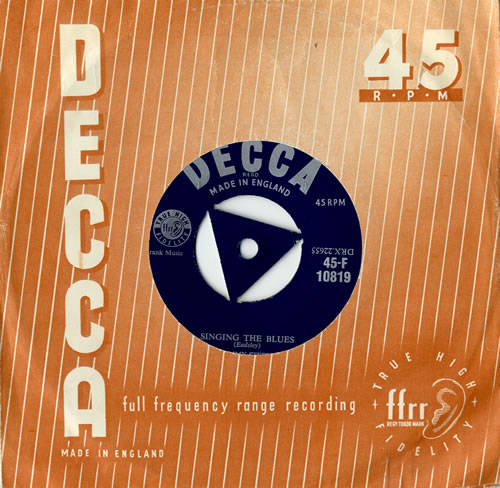
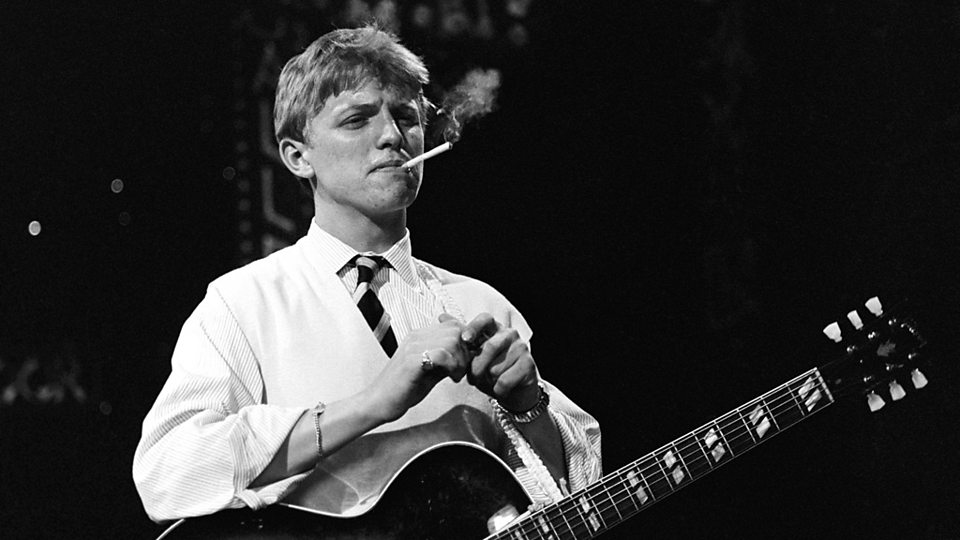
First up Tommy Steele, one of the British rockers who were trying their best to emulate their pearly-teethed, slick-haired American idols. Steele had scored his sole #1 a few months earlier, with a cover of Guy Mitchell’s ‘Singing the Blues’ (which had knocked Mitchell’s original off the top). From the title I expected a novelty rocker, but this is an over-sung ballad about letting a girl slip away. Oops, butterfingers. Listen to Steele’s yelping, and then the Elvis record on top of this chart, and tell me who did it better.
9. ‘Around the World’, by Bing Crosby – up 1 / 8 weeks on chart
The crooners’ crooner, and a fixture of the pre-rock charts. This is what I remember much of the 1950s sounding like as we worked through the earliest number ones. From the soundtrack to an adaptation of ‘Around the World in Eighty Days’, this could have been a hit in the 1930s, and proves just how badly Elvis and co. were needed.
8. ‘A White Sport Coat (And a Pink Carnation)’, by The King Brothers – up 1 / 7 weeks on chart
This is a bit more like it. Still far from rocking, but at least it swings. A natty young man – I’m just picturing that white coat/pink pocket combo – is dressed up for the dance, but has to go stag. Such were the problems face by youngsters in the fifties. In the US, the song’s writer Marty Robbins had a hit with ‘A White Sports Coat…’, but in the UK vocal group the King Brothers took it into the Top 10 for their only such success.
Fun fact, Paul McCartney wore a white sports coat to a village fete on July 6th 1957, apparently inspired by this song. That was, of course, the day he met John Lennon. Whether or not he wore a pink carnation has been lost to history.
‘When I Fall in Love’, by Nat ‘King’ Cole – down 1 / 13 weeks on chart
Another crooner. I don’t know why, but Nat ‘King’ Cole’s crooning is far more palatable than Bing Crosby’s. He just had a bit more pizzazz about him. (I mean, the man had ‘King’ for a middle name.) I did a post on how Cole is one of the unluckiest chart stars, in terms of never managing a number one. ‘When I Fall in Love’ is one of his hits that peaked at #2. It also made #4 on rerelease in 1987, on the back of Rick Astley’s cover version.
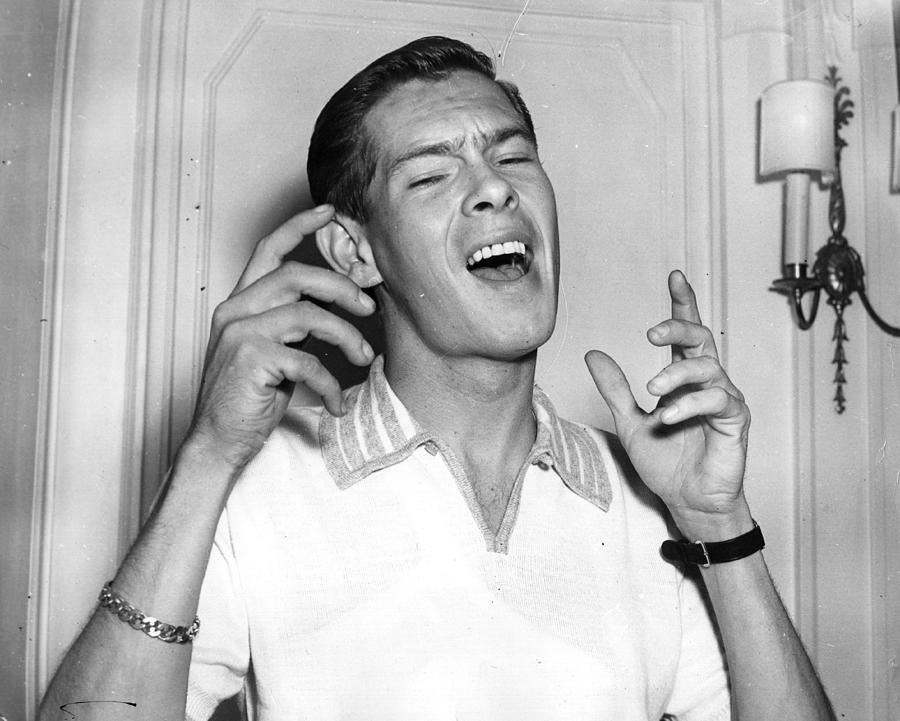
‘Yes Tonight Josephine’, by Johnnie Ray – down 3 / 10 weeks on chart
On its way down from #1, pre-rock star Johnnie Ray’s final UK chart-topper (read my original post here). Ray was one of my favourite discoveries from the early months of doing this blog, as one of the few artists before Elvis to trade on sex and charisma. ‘Yes Tonight Josephine’ is a little throwaway compared to some of his other hits, but it is catchy and perky and, most importantly, not one of the many saccharine ballads that filled the charts in the early to mid 1950s. Speaking of which…
‘We Will Make Love’, by Russ Hamilton – up 3 / 8 weeks on chart
The worst of the 1950s. Elvis was doing a public service by consigning tripe like this to the history books. The song’s title promises something raunchy, or potentially problematic (We will make love, and there’s nothing you can do about it…) But you have to remember that ‘making love’ in 1957 probably meant nothing more than what those old swimming pool ‘Dos and Don’ts’ posters referred to as ‘heavy petting’.
‘Around the World’, by Ronnie Hilton – non-mover / 8 weeks on chart
Another annoying idiosyncrasy of ’50s charts was the fact that people were rarely satisfied with one version of a popular song. On a couple of occasions we even had two versions of the same tune replacing one another at number one. And so it is in this week’s chart, not content with Bing Crosby’s ‘Around the World’, we had to have some homegrown crooning, from Hull’s very own Ronnie Hilton. For what it’s worth, I do think Hilton’s cover has a little more oomph about it, and it did chart higher than Crosby’s.
‘Little Darlin”, by The Diamonds – up 2 / 7 weeks on chart
So far so bland. But luckily for us, searching for a whiff of rock and roll, the Top 3 on this week’s chart seems to have been beamed down from a different planet to the easy listening schmaltz that we’ve just waded through. Not that ‘Little Darlin” is strictly rock ‘n’ roll, but doo-wop had the tempo and the sexiness to allow it to go toe-to-toe with rock on the jukebox. I love the castanets and the harp flourishes, two silly touches that make this record pop in comparison to Ronnie Hilton. It was written, amazingly, by a sixteen-year-old Maurice Williams, who would later go on to form the Zodiacs. Incidentally, I always assumed the Diamonds were black, but no. They were a Canadian vocal quartet, who still exist today minus any original members, and with a past members list that hits thirty.
‘Gamblin’ Man’ / ‘Puttin’ on the Style’, by Lonnie Donegan – down 1 / 6 weeks on chart
People always cite Cliff, or Marty Wilde, or even Tommy Steele, as Britain’s first homegrown rock ‘n’ roll star. But for my money, this week’s #2 record was true British rock ‘n’ roll. Skiffle pioneer Lonnie Donegan’s second #1 of the year might have fallen one place on this chart, but ‘Gamblin’ Man’ rocks harder than most chart-toppers, of any era. Listen to this next to one of the strained ballads further back in this Top 10, and it’s not hard to appreciate how seismic a change rock and roll was in 1957. And why many older people thought it was the devil incarnate.
‘Putting on the Style’ is a little more traditional, with a music-hall singalong chorus, but it’s still fairly raucous. When a young Paul McCartney, in his white sports coat, met a young John Lennon, Lonnie Donegan tunes were among the first songs they performed together. Read my original post on this #1 here.
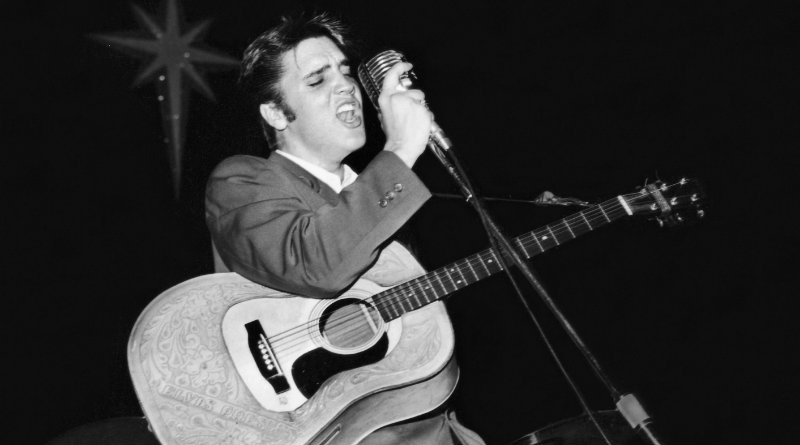
‘All Shook Up’, by Elvis Presley – up 1 / 4 weeks on chart
And so here it is. Elvis Presley’s first week on top of the British charts. It wasn’t his first hit – ‘Heartbreak Hotel’ had made #2 a year before and his star had grown consistently from there – and ‘All Shook Up’ doesn’t have the raw power of a ‘Heartbreak Hotel’, or a ‘Hound Dog’. It’s an understated groove of a record, with a runtime of less than two minutes. But Elvis spends those two minutes purring, murmuring, growling… in short seducing the listener. The way his voice slips up an octave for the It scares-a me to death… line is great. And the little uh before the final chorus is sex itself.
‘All Shook Up’ would spend seven weeks at number one, and within eight years Elvis would score fifteen chart-toppers. The British chart’s most successful act was up and running. As was, belatedly, the rock ‘n’ roll era. In the months following this, both Buddy Holly and Jerry Lee Lewis would join Elvis in topping the charts.