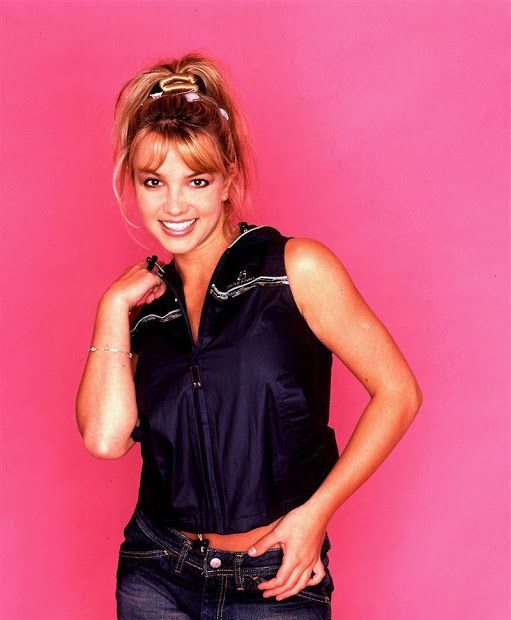
For our latest covers special, we bring you two covers. One of the legendary Miss Britney Spears, and one by the legendary Miss Britney Spears….
In 1999, Britney was the big new pop superstar on the block, while Travis were the big new indie band. Travis were either part of the tail-end of Britpop, or part of the start of the ’00s indie revival, or a bridge between the two, and were hugely popular. They were also divisive, part of a group, alongside the likes of Coldplay, Embrace and Starsailor, who many felt compared poorly to the big Britpop acts, and whom Oasis’s manager Alan McGee had infamously dubbed ‘indie bedwetters’. I always quite liked Travis though, as they had a great ear for catchy melodies, and weren’t as whiny as Chris Martin and chums.
And in covering Britney’s ‘…Baby One More Time’ they kick-started something that would define British pop music in the 21st century. I’m not sure if it was definitely the first ever ‘Live Lounge’ performance for Radio 1, but the novelty of it went viral, by the standards of 1999, and helped create a phenomenon which carries on to this day. It is a simple enough premise for a radio feature: a popular act of the day perform a live version of their current single, and a live cover of a song in a genre with which they aren’t usually associated. Which in the early days of Live Lounge usually meant guitar bands doing goofy and knowing covers of pop tracks (see above).
On the one hand, it could be fun to hear, say, Arctic Monkeys covering Girls Alouds’ ‘Love Machine’. It was all part of the blurring between rock and pop, mainstream and indie, cool and uncool, that happened during the 2000s. And occasionally a Live Lounge track would go on to become a bona-fide hit single, such as Jamie Cullum’s cover of Pharrell’s ‘Frontin’. There have been Live Lounge tours, and Live Lounge compilation albums. Lady Gaga, Bruno Mars, and Taylor Swift have all done Live Lounge. Walls have broken down, genres blurred, love has reigned…
But I was a regular Radio 1 listener in those days, and half the time I turned off when Live Lounge came around. Not because the covers were bad, but because the tone of it was so bloody self-congratulatory and back-slappy. Jo Whiley purring in reverential tones, as if she’d been on the rooftop with the Beatles in 1969, when in actual fact she’d just heard the Zutons covering the Scissor Sisters. They’re musicians, I’d think to myself, of course they can pull a half-arsed cover out of the bag.
So, I chose this Travis version of Britney’s biggest hit precisely because it is so half-arsed, and also because it sparked a genuine British pop music phenomenon, for better or worse. Anyway, to prove that I’m not precious about pop acts going rock, or vice-versa, here’s Britney herself. Covering the Stones.
Brit’s version of ‘Satisfaction’ is ten-times better than Travis’s barroom singalong of ‘…Baby’ because a) she’s treating the source material with respect, and because b) she does something different with the song, seamlessly updating the sound for the Y2K generation.
It’s not as good as the original, of course it isn’t, not even close. But it is a worthwhile exercise. It was also fairly well-received by critics. At the same time, it annoyed rock snobs who probably didn’t even listen to it before railing against popular music going to hell in a handcart.
The year after this cover, Britney and Mick Jagger met at the VMAs for a slightly awkward interview in which Britney looked like she wasn’t 100% sure who the old man next to her was, and Mick claimed unconvincingly that she did ‘very well’ covering ‘Satisfaction’. Then Britney went off and performed with a snake around her neck. It was quite the time to be alive…
Our regular posts will resume in a couple of days…
Time for another look back at a date in chart history. What were the songs and the stories at number one on December 6th through the years…
On this day in 1980, ABBA were about to begin their thirty-first and final week on top of the UK singles chart with ‘Super Trouper’. My favourite ABBA chart-topper probably changes on a weekly basis, and I could make a case for all of them (apart from ‘Fernando’, sorry). ‘Super Trouper’ is a late-era classic, with that perfect balance of upbeat melancholoy. Songs about how tiring it is being famous can be, well, tiring; but this is a colossus of the genre. I was sick and tired of everything, When I called you last night from Glasgow… is a quintessential ABBA opening line: slightly odd, poetic, beautifully to the point.
Eleven years earlier, on this day in 1969, the Rolling Stones headlined the infamous Altamont Free Concert in California. Supposed to be the West Coast’s answer to Woodstock, it ended up becoming synonymous with the end of the swinging sixties and the death of the hippy dream. Violence which had been brewing throughout the day erupted during the Stones’ delayed set, and ended in the death of an eighteen year old spectator, Meredith Hunter, stabbed by one of the Hells Angels who had been brought in as security.
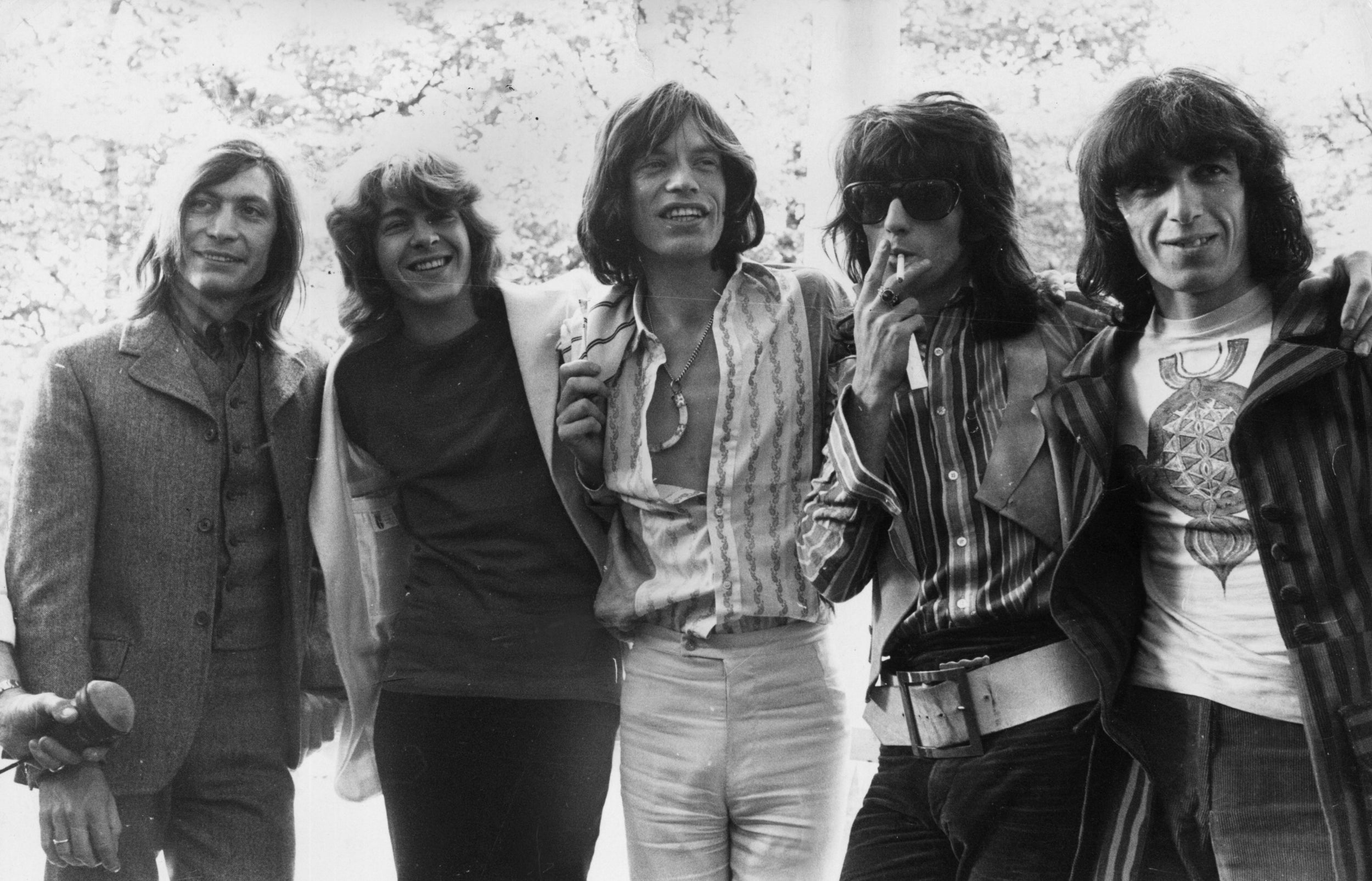
The Stones are perhaps the perfect band to encapsulate that loss of ’60s innocence, as they had never been particularly innocent, and had struggled with the psychedelic, hippy side of things. Also, they’re the sixties juggernaut that has lasted, and lasted, and lasted, far beyond the decade that birthed them… Here then is their big hit from earlier that year, their final UK #1, and perhaps the ultimate rock and roll tune, ‘Honky Tonk Women’.
In recent posts I’ve been bemoaning/celebrating the end of the Golden Era of the Boyband, which I think came to an end in late 2002. There are arguments to be had for boybands dating back to the fifties, with the likes of the Teenagers, or to the Monkees in the sixties. New Edition in 1983 and Bros in 1988 could lay claim to being the first modern boyband, but for my money the true holders of that title, and the openers of the floodgates, were New Kids on the Block. Who just so happened to be sitting at #1 on this day in 1989 with ‘You Got It (The Right Stuff)’. They were the first of twelve boybands (fourteen, if we bend my rules and count Hanson and Blazin’ Squad) to provide forty (or forty-two) #1s over thirteen years…
Let’s go way back now, sixty-seven years to be exact. Number one on this day in 1958 is what I called ‘the Scottish #1’ at the time, and which I still intend to make our national anthem when I become First Minister, replacing the dirge that is ‘Flower of Scotland’. The fifties was at times a musical desert, strewn with overwrought ballads, and the occasional rock ‘n’ roll tune. Then there were the novelties. So many novelties. Of which ‘Hoots Mon’ stands out as one of the finest. It’s got a wonderful rock ‘n’ roll energy, but it’s also a relic of a much earlier music hall era, with its singalong spirit and its Hammond organ. It’s based on an old folk tune, ‘A Hundred Pipers’, and features classic phrases such as ‘och aye’, ‘there’s a moose loose aboot this hoose’ and ‘it’s a braw, bricht, moonlicht nicht’, none of which a Scotsperson has ever actually uttered.
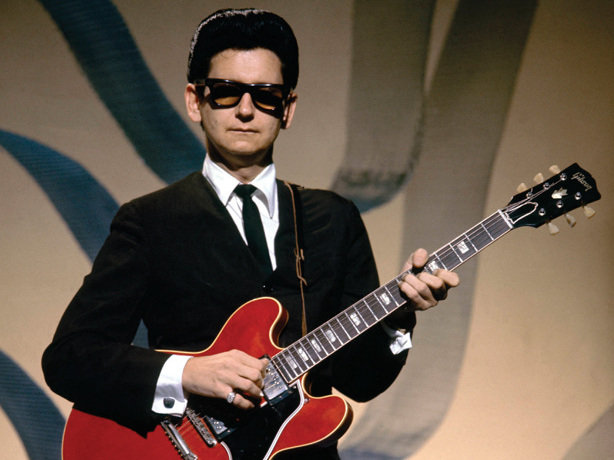
Finally, 6th December is perhaps best known as a date in music history for being the anniversary of Roy Orbison’s untimely death. In 1988, Orbison was just getting his career back on track through the success of the Travelling Wilburys, his supergroup alongside George Harrison, Bob Dylan, Jeff Lynne and Tom Petty, whose first album had been released earlier that year. Orbison had also just put the finishing touches to his first solo album in a decade, when he died suddenly, of a heart attack. The album ‘Mystery Girl’, and the lead single ‘You Got It’, posthumously returned him to the Top 10 the following year. But to celebrate his genius, let’s go back to 1960, and enjoy his first of three UK #1s: the hauntingly dramatic ‘Only the Lonely’.
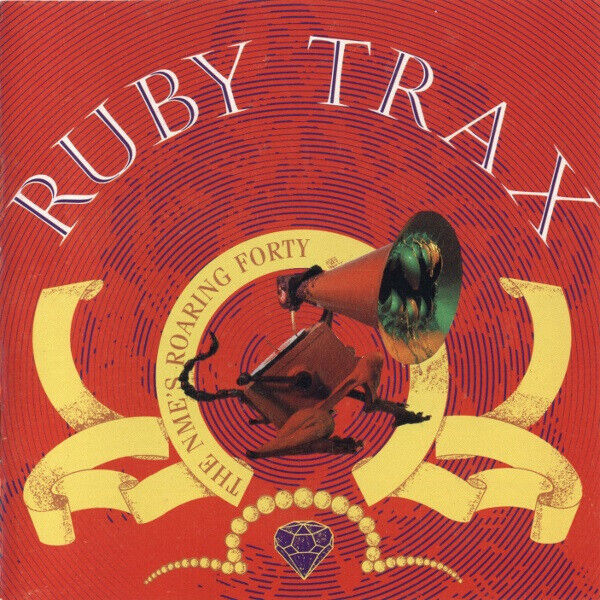
As in my two previous Cover Versions of #1s posts, I’m returning to Ruby Trax, a compilation released in 1992 to celebrate the 40th anniversaries of both the NME and the UK singles chart.
It’s a veritable gold mine of weird and wonderful covers of chart-topping hits by the big (and not so big) acts of the day. While this is the last time I’m going to feature these Trax, for a while at least, the album is definitely worth checking out if you enjoyed the covers by Bob Geldof and Sinead O’Connor, or Suede and Manic Street Preachers.
And of course, for a compilation of tracks celebrating number one singles, there had to be room for some interesting interpretations of Britain’s two greatest groups, the Beatles and the Stones. Some might say they are sacrosanct, I say have at them!
Probably sensibly, both covers are of the legendary acts’ less famous number ones. And it’s quite fun to hear ‘Lady Madonna’, famously Paul McCartney’s boogie-woogie tribute to Fats Domino, reimagined for guitars. Or maybe its because my favourite bit of the original is when George Harrison’s snarling guitar comes in for the second verse. At the same time, despite the switch in lead instrument, this is a fairly faithful cover.
I had never heard of Kingmaker before writing this post, and going by the limited number of views the above video has had on YouTube I think they’ve very much been consigned to the pre-Britpop dustbin. It seems they were nearly the next big thing back in the 1992-93, with a couple of #15 hits and tours with Radiohead and Suede as their support acts, before a falling out with their record label.
A much bigger name are ’80s shoegaze icons, and East Kilbride’s finest, The Jesus and Mary Chain. Their scuzzy, distorted, feedback drenched take on ‘Little Red Rooster’, the Stones’ 2nd #1 back in 1964, is a much more impressive proposition. The song dates back to the early sixties, written by Willie Dixon and made famous by Howlin’ Wolf, and despite all the noise-pop dressing the JAMC sensibly keep that driving blues riff as the song’s focal point.
‘Little Red Rooster’ may or may not be a phallic metaphor (the Stones’ version wasn’t released as a single in the US allegedly because of this), but the Jesus and Mary Chain replace bawdiness with menace. You would not be messing with this particular little red rooster on the prowl, who isn’t so much horny as he is looking for a fight.
If you are interested in hearing more of this album, it can be a bit tricky to Trax down, with many of the forty songs not available on Spotify or YouTube, at least not in great quality uploads. But if the idea of EMF covering ‘Shaddap You Face’, or Boy George doing ‘My Sweet Lord’, Vic Reeves doing ‘Vienna’ (they bent the rules to include that one…) or Billy Bragg covering The Three Degrees appeals to you, or at least sounds morbidly fascinating, then do have a browse. The full forty-track listing is here, on the LP’s Wikipedia page.
Time for another instalment of ‘On This Day’, and how the 27th May has tied in to various number one singles over the years (links to my original posts for each one).
Starting off with the record sitting atop the charts sixty-seven years ago today…
Many of the 1950s’ biggest hits were boringly straight-faced declarations of love, done in a bombastic fashion. Thank goodness for Connie Francis’s classic tale of sass and schadenfreude, then, which is one of my favourite number ones of the decade. I love the bluntness of the closing line: I’m glad that you’re sorry now…‘Who’s Sorry Now’ isn’t a fifties original however, as it dates all the way back to 1923. What’s amazing is that 1923 to 1958 is what 1990 is to 2025… Like Sabrina Carpenter covering ‘Vogue’, or something. All of which begs a discussion as to how much popular music changed between 1923 and 1958, and how much it hasn’t changed in the past thirty-five years. A discussion for another day, perhaps. Anyway, Connie Francis is still with us, aged eighty-seven, having only retired from music in 2018.
Meanwhile on this day in 1943, ‘ar Cilla was born in Liverpool. Proud achiever of eleven top ten singles between 1964 and 1971, the first two of which gave her a brace of #1 singles, before she moved more into TV. ‘Anyone Who Had a Heart’ was the UK’s biggest-selling single by a female artist through the entirety of the 1960s – a fine achievement considering some of the legendary divas she was up against.
Next up, a Stones double-header. For not only was ‘Paint It, Black’ number one on this day in 1966 (meaning that the coolest comma in rock history had its moment in the sun), but on May 27th two years earlier newspapers were reporting that eleven fifth-form boys had been suspended from Woodlands Comprehensive School in Coventry for having ‘Mick Jagger haircuts’. Donald Thompson, their headmaster, decried the boys’ hair as ‘long and scruffy’, and that they could return to school only ‘with a neat Beatle cut’. We can clearly see what side of that great rock rivalry Mr Thompson was on…
Finally, on May 27th 1977, just in time for Her Majesty’s Silver Jubilee, the Sex Pistols released the number one that never was. In my Should Have Been a #1 post on ‘God Save the Queen’ I erred on the side of caution, not committing to sensationalism without proper evidence like a proper, upstanding blogger. This time, though, I’m just going to come out and say it: ‘God Save the Queen’ was the best-selling single the week of the Silver Jubilee, but was kept from the top by some very selective book-keeping. (For one week only, records bought in a shop owned by the label they were released under didn’t count towards the chart. It’s as if they knew Virgin’s Sex Pistols might sell quite a few singles in Virgin Megastores…)
It seems I’m not alone, as many sources have retrospectively awarded the Sex Pistols a number one, and the furore over it now seems incredibly quaint. How society has changed in forty-eight years… And hey, being blocked from number one by the establishment is way more punk than actually getting there. I’m sure Johnny Rotten and co. weren’t at all bothered.
I have to thank the person who, in the comments section on ‘Firestarter’, pointed me in the direction of this version of the Prodigy’s controversial classic. (Folks, please put your name in the comments!) It’s a complete reinvention – as all the best cover versions are – ‘Firestarter’ as performed by ‘White Album’ era Beatles, and sung by Scott Walker. Still, it retains the song’s ominous, bubbling nastiness, even as it lulls to you to sleep with its droning lullaby beat. It’s performed by Torre Florim, of Dutch band De Staat, and came to prominence on the soundtrack for the video game ‘Just Cause 3’.
‘Honky Tonk Women’, by The Pogues
If ever there were a band to rival the Stones for hellraising and general debauchery, it’s the Pogues. And they covered one of Jagger & Richards debauched classic ‘Honky Tonk Women’ as the ‘B’-side to their single ‘Yeah Yeah Yeah Yeah Yeah’ in 1988. So this must be officially the most rock ‘n’ roll record ever made…? Unusually for a Pogues song at the time, lead vocals are taken by Spider Stacy rather than Shane MacGowan, but the raucous air remains intact. This cover version doesn’t reinvent the wheel, but then sometimes you just don’t need to.
To mark the release of the Stones’ 24th studio album, and their first original recording in almost two decades, let’s delve back into their long chart career, and explore the hits that didn’t make number one.
Over the course of the 1960s, the band scored eight chart toppers, from ‘It’s All Over Now’ in ’64 to ‘Honky Tonk Women’ in ’69. But they didn’t stop when the sixties ended. No, as you may be aware, they kept going. And going. Kept on rolling on. Impressively, their recent comeback single, ‘Angry’, made #34 in the UK, their first Top 40 hit since 2005. But that won’t quite make this list of their ten biggest non-chart toppers. In ascending order, then…
‘Start Me Up’, reached #7 in 1981
The Stones at their Stonesiest. A killer riff, some smutty lyrics, and Mick doing his best Jane Fonda impression in the video. It’s an impressive feat, releasing one of your signature songs two decades into your career. But it also somewhat marked the end of the band as a chart concern – it remains their final UK Top 10 hit – and the start of The Stones TM: the mega-touring, jukebox musical that the band have been for the last forty years. ‘Tattoo You’, the album from which it came, is seen by many as the band’s last great LP, too.
‘Fool to Cry’, reached #6 in 1976
Perhaps the one thing lacking from the Stones’ back-catalogue is a big ballad. (Ok, the next song on the list proves that statement completely wrong…) Anyway, ‘Fool to Cry’ comes close to being that ballad. A slow, bluesy number that takes its time, lingering on some wonderful falsetto notes from Mick. In the first verse he’s feeling low, so he puts his daughter on his knee, and she tells him Daddy, You’re a fool to cry… A bit too sentimental for the Stones? Not to worry, in verse two Mick goes to his mistress, who lives in a po’ part of town… And she says the exact same thing. Much more like it!
‘Angie’, reached #5 in 1973
Of course, if the Stones do have a big ballad, then it’s this one. There was some discussion as to who ‘Angie’ was: David Bowie’s wife, Keith Richard’s daughter, or the actress Angie Dickinson. Whoever it’s about, it’s a beautiful love song, with Jagger’s slurred singing giving the impression that he’s had a shot or two of Dutch courage before suggesting he and Angie call it a day.
‘Tumbling Dice’, reached #5 in 1972
I called ‘Start Me Up’ the Stones at their Stonesiest, but actually… This is the band at the peak of the powers. The lead single from what is widely regarded as their best album (though I’d go for the clean and concise ‘Sticky Fingers’ over the rambling ‘Exile…’) ‘Tumbling Dice’ might be the coolest piece of rock music ever recorded – that boogie-woogie rhythm, Keef’s lazy riff, Charlie’s drums bringing up the rear, the lyrics about being rank outsiders and partners in crime.. To be honest, until watching the lyric video above I had no idea what 90% of the words to ‘Tumbling Dice’ were. But does it matter? Nah. This one’s all about the groove, the attitude, about being the best freakin’ rock and roll band in the world.
‘Have You Seen Your Mother Baby, Standing in the Shadow?’, reached #5 in 1966
It’s easy now, with them in their eighties, to be blasé about how dangerous the Rolling Stones must have seemed in the 1960s. But this mid-decade hit, that begins and ends in a hail of feedback, with ambiguous lyrics that could be about a girl on the streets, taking drugs, or affairs with people’s mothers, proves that they were mad, bad, and dangerous to know… The memorable horn riff is a sign of the direction that the band would take as the sixties progressed. And just to make sure they got some more attention, the band dragged up for the record sleeve. Lock up your daughters, indeed…
‘Miss You’, reached #3 in 1978
A trio of number threes, now. In the late seventies anybody who was anybody had to try out a disco groove and the Stones were no different, in what was seen as a huge departure for them. The band disagree over whether or not it was originally intended as a disco song – Jagger and Wood say no, Richards says yes – but it certainly ended up as one. (There was an even more disco influenced remix released as a 12″.) Meanwhile, Bill Wyman, whose brilliant bassline holds the whole thing together, has claimed he should have had a writing credit. ‘Miss You’ was their last Billboard #1, and their last UK Top 5 hit.
‘Let’s Spend the Night Together’, reached #3 in 1967
It’s funny – this is one of the Stones’ poppier numbers, and yet one of their most controversial. It’s piano and organ driven, seemingly influenced more by Motown and male vocal groups than the band’s normal R&B touchstones. But lyrics like I’ll satisfy your every need, And now I know you’ll satisfy me… were bound to get folks’ knickers in a twist. Radio stations banned it, and Ed Sullivan insisted that the chorus be changed to ‘let’s spend some time together’, an insistence that the band complied with (though Jagger’s theatrical eye-roll meant they weren’t invited back for a while). In some regions it was twinned with ‘Ruby Tuesday’, though the official records don’t list it as a double-‘A’ in the UK.
‘Not Fade Away’, reached #3 in 1964
Where it all began (almost). This Buddy Holly cover was their 3rd single, and their first Top 10 hit. It’s a lot faster, and beefier, than the original, with a touch of the fuzzy, sloppy sounds of the Rolling Stones in their prime, and Brian Jones’ harmonica acting as lead instrument. It came out in early 1964, right at the start of the British Invasion, when bands like The Beatles and the Stones wore their American rock ‘n’ roll influences loud and proud. It serves almost as a timeline of rock’s rapid development through the fifties and sixties: the Stones covering a Buddy Holly hit, which he’d based on the Bo Diddley riff, which in turn goes all the way back to the dawn of the blues.
‘Brown Sugar’ / ‘Bitch’, reached #2 in 1971
Another all-time Stones classic, this time from ‘Sticky Fingers’, with a great riff, a filthy sax solo, and some famously questionable lyrics. For many years I never paid much attention to the nitty-gritty of the song’s subject matter, because it was such an absolute rocker. But then you actually sit down and read the lyrics about slave ships and whipping women at midnight, and wonder if the song is looking at the matter critically, or just celebrating it. Then again, shouldn’t rock ‘n’ roll be provocative? And they’re far from being the Stones’ worst lyrics (‘Under My Thumb’ and ‘Some Girls’ say ‘Hi’…) As if they knew this song would court controversy, they paired it with a more subtle, reflective number, which they called ‘Bitch’… Some countries also list the record as a triple ‘A’-side, with a live cover of Chuck Berry’s ‘Let It Rock’ as the third track.
’19th Nervous Breakdown’, reached #2 in 1966
Come to think of it, the Stones’ other number two hit is hardly the most sympathetic towards women (Oh who’s to blame, That girl’s just insane…) Lost a little amongst their biggest ’60s hits, ’19th Nervous Breakdown’ is the Stones at their snottiest. The Kinks are always cast as the decade’s social commentators, but songs like this (alongside ‘Satisfaction’, and ‘Mother’s Little Helper’) are just as biting satire. It tells the story of a flighty society girl, running around, getting on everyone’s nerves, always on the verge of yet another breakdown… Though we’re left to ponder how much of that is down to her terrible choice in men. The highlight here is Bill Wyman’s ‘divebombing’ bass in the fade-out…
I hope you enjoyed this little interlude! Back on with the regular countdown next week. Meanwhile, I’m off to give ‘Hackney Diamonds’ a listen…
A few weeks after bidding The Beatles farewell, we’ve now reached the end of The Rolling Stones’ chart-topping career.
Honky Tonk Women, by The Rolling Stones (their 8th and final #1)
5 weeks, from 23rd July – 24th August 1969
But, while The Fab Four bowed out with a not-very-Beatles-sounding #1, The Stones wrap things up by doing what they do best – some low-down, dirty rhythm and blues. It starts with a cow-bell, Charlie’s drums, some filthy guitar licks, and Mick’s drawl: I met a gin-soaked bar-room queen in Memphis… (was there ever a more Stonesy opening line than that?) She tried to take me upstairs for a ride…
In my post on their last #1, I wrote that ‘Jumpin’ Jack Flash’ was a new leaf for The Stones, in that they gave up on their attempts at flower-power and psychedelica, and returned to straight-up rock ‘n’ roll. ‘Honky Tonk Women’, then, is a consolidation of that. It sets the template for the next fifty years of the band, through the twin glories of ‘Sticky Fingers’ and ‘Exile on Main St’, through to them becoming the biggest stadium fillers the world has ever seen.
It’s also, basically, Mick Jagger listing women that he’s shagged. The bar-room queen is followed by a divorcee in New York City, and the outrageous She blew my nose and then she blew my mind… line. Goodness. It’s the ho-o-o-onky tonk women, Gimme, gimme, gimme the honky tonk blues… It’s always easy to forget that Mick and Keith were from Dartford, Kent and not Tennessee or Alabama, such is the Americana that fills some of their biggest hits.
There is an elephant in the room, though. This is the first Stones’ single not to feature founding member Brian Jones, whose slow and acrimonious departure from the band had been confirmed earlier in the year. He was found dead in his swimming pool just three weeks before ‘Honky Tonk Women’ hit #1. A blues purist; we can but wonder if this song would have sounded different with him playing on it.
Who knows? As it stands we get a sax solo, and a punch the air Woooo! at the very end. It must have been a fun song to write, to record, and to perform every night for the past half-century. I love it. A pure, unadulterated blast of rock ‘n’ roll. You can hear the seventies hits-to-come buried in it – the likes of ‘Brown Sugar’, ‘Tumbling Dice’, ‘It’s Only Rock ‘n’ Roll’ and the like, right through to ‘Start Me Up’. Unfortunately, none of those records will reach top spot in the UK. The Rolling Stones bow out on eight.
Impressively, their final chart-topper gave them their longest run at number one. Quite unusual, that. Though the particularly eagle-eyed among you will notice that 23rd July to 24th August isn’t quite the five-weeks advertised. This is due to the chart publication dates, and collation methods, changing in the midst of ‘Honky Tonk Women’s’ run.
Farewell to The Rolling Stones, then. Without them and The Beatles around to hit #1 every few weeks it leaves a lot of room for some new guys to come along and dominate. The Stones would slowly fade into obscurity as their chart-topping days receded into the distance… Only joking! They remain a going concern – give or take a few changes in line-up – well into their seventies, while Keith Richards’ continued existence remains one of life’s great mysteries… Their most recent album ‘Blue and Lonesome’, even hit #1 in the UK in 2016.
I’ll maybe do a Stones Top 10 soon, covering all their UK singles, but just for fun here’s my ranking of their eight British chart-toppers – based completely on personal preference – from ‘worst’ to best. *Clears throat*:
Normal service is resumed, with a bang. The sixties’ baddest band are back! After a mid-decade run where they never seemed to leave the top of the charts, this is The Stones’ first #1 since ‘Paint It, Black’ a little over two years ago. Has their sound changed while they’ve been away?
Jumpin’ Jack Flash, by The Rolling Stones (their 7th of eight #1s)
2 weeks, from 19th June – 3rd July 1968
Yes, and no. The second you press play you know it’s a Rolling Stones’ song. It’s got that vibe and that swagger – with an intro that begs to be turned up. But it’s heavier than what came before, heavier even than the pounding ‘Get Off Of My Cloud’, or the cynical ‘Paint It, Black.’ The one thing that we’ve been missing in recent months – years even – amongst all the eclectic, easy-listening, flower-power hits of ’67-’68, is finally here: some down and dirty rock ‘n’ roll.
Watch it! The lyrics are equally in your face: I was born, In a cross-fire hurricane, And I howled in the morning drivin’ rain… (or is it: at my ma in the drivin’ rain….?) Either way, it’s the story of a boy, a creature, who appears to have risen from the deep to terrorise the world… I was raised, By a toothless bearded hag… All told over the same simple, relentless riff. Some sources claim that Jagger and Richards were inspired by the latter’s taciturn gardener, Jack Dyer. Others that it was inspired by the poetry of William Blake. Keith Richard’s biographer claims that the opening lines – the ‘crossfire hurricane’ -refers to the fact that he was born during a German bombing raid in 1943.
Like many legendary rock songs, its origins are perhaps lost to the mist of time (and possibly because the band were too high to remember). Also like many legendary rock songs, the lyrics are pretty out there. The last verse goes all biblical: I fell down, To my feet and saw they bled… I was crowned, With a spike right through my head… ‘Jumpin’ Jack Flash’ was written around the same time as ‘Sympathy for the Devil’, in which they portrayed Satan as a man of wealth and taste. Were they doing the opposite to Jesus here? In the end, though, his tough back-story doesn’t matter. He’s Jumpin’ Jack Flash and life’s a gas, gas, gas… The overriding message being don’t sweat it? Things’ll turn out alright in the end? Enjoy it while it lasts.
I mentioned in a previous post – ‘The Last Time’, I think – that every time a Stones record comes along at the top it feels like your big brother’s cool but slightly terrifying friends have crashed your party. You’re floating along with your nice Manfred Mann discs and your catchy Union Gap records and then wham! – Mick and the boys rock up. They fade into ubiquity sometimes, and have certainly become caricatures of themselves in their old age, but hearing The Rolling Stones in context like this really shows how thrilling and dangerous they were. This was never my favourite song of theirs growing up, but hearing it now for the first time in a while… I’m enjoying it way more than I thought I would. And I’ve got it turned up loud.
The outro goes slightly trippy, as the band intone Jumpin Jack Flash, It’s a gas… and the organ and the guitars intertwine. At the time, this was a bit of a comeback statement. They had tried to jump on the psychedelic bandwagon with singles like ‘We Love You’ and ‘She’s a Rainbow’ and, while not commercial disasters, they weren’t monster hits like ‘Satisfaction’ either. And let’s face it, you don’t come to the Stones for hippy-love vibes, do you? You want them to rock, and rock this single certainly does. They’ve played it at pretty much every live show since. It’s their most performed song, one of their signature hits. And it’s with a tear in our eyes that we realise they only have one more chart-topper to go…
Picture a mid-summer’s evening: a soft, dusty light, some people gathered around an ancient stone circle, having a sing-song. Long hair and baggy clothes. Pagans? Hippies? Look a little closer, though. They look familiar… Why, it’s The Rolling Stones! Conducting a full-blown Satanic ritual!
Paint It, Black, by The Rolling Stones (their 6th of eight #1s)
1 week, from 26th May – 2nd June 1966
I’ve used many words to describe the chart-toppers we’ve covered so far. Catchy, dull, quirky, God-awful… ‘Paint It, Black’, though, is the first I’ve had to consider calling ‘evil’… It’s a hulking, threatening, malignant brute of a #1 single. From the opening riff, it’s as if an evil spirit is taking up residence in your ears. Brain Jones is playing a sitar, and sitars, to me, usually sound blissed-out, and spiritual – the background soundtrack to massages and yoga sessions. Not when The Stones get their hands on one…
Then there’s the lyrics. I see a red door, And I want it painted black, No colours any more, I want them to turn black… Jagger’s voice melts into the insistent, pounding rhythm – sometimes soft and coaxing, sometimes aggressive and half-crazed. What is it about? Depression? Drug-induced psychosis? A funeral (as the line about a line of black cars suggests)? Whatever it is, it’s a bleak, bleak record. I see people turn their heads and quickly look away… or I look inside myself and see my heart is black… And then there’s the serial killer line: I see the girls walk by dressed in their summer clothes, I have to turn my head until my darkness goes…
It’s an amazing song. A song I respect a lot. I love that it was a #1 hit. But I can’t bring myself to love it. It’s not a song to put on in the background. It’s a song that you have to be in the right mood to deal with. In many ways it’s a weird song – not helped by the fact that, for years, I thought one of its lines went: No more will my green seagull turn a deeper blue… (It is, of course, ‘my green sea go’. Which makes even less sense…)
By the end, our hilltop ceremony is reaching its climax. The bass grinds, the sitar dances, the band are humming with intent, and Jagger is crowing: I wanna see it painted, Painted black, Black as night, Black as coal…! He wants to see the sun blotted out… He wants to end it all… The record slowly fades to a frenzied close. This was only top of the charts for a week. That’s probably all the country could deal with from such a relentlessly nasty disc.
Back when I first got into The Stones, with their Greatest Hits etc, ‘Paint It, Black’ (apparently the comma was just a record-company typo, though it does lend a nicely pretentious air) blended in amongst the hits. Its edge was dulled. Not here, though, doing this countdown in real-time. It really makes you stop and think… This was a best-selling single. It’s a superb piece of music; but only one act could have pulled it off and still kept it commercially viable.
I’ll say it again… The Stones’ hits might never quite have matched the Beatles in ‘musical’ terms. But they were pushing the boundaries of what could be considered ‘pop music’. The Fab Four used sitars, yes, to write cute acoustic numbers like ‘Norwegian Wood’; while Jagger, Richards and Jones were using one to summon the Devil.
This is something of an end of an era moment for the Stones, too. They’ve crammed four number one hits into just over a year – all of them towering slices of swagger, anger and petulance. But we won’t hear from them now for over two years. By which point they will have tried their hand at flower-power, gone hard on the drugs, driven Brian Jones out of the band… This is a moment. And not just for The Stones. For the singles charts. For British music. For popular music as a whole. Go on… Paint it,… Black!
Catch up with all the #1s so far – including five other Stones’ hits:
We last recapped in late 1964, and the past thirty #1s have brought us right through 1965 and out the other side. The very middle of the mid-sixties. And, to be honest, we’ve been spoiled.
For example. This was a genuine, consecutive run of chart-topping singles, from the summer of ’65: ‘Mr. Tambourine Man’, by The Byrds… followed by The Beatles, with ‘Help!’… then ‘I Got You Babe’… and finally ‘(I Can’t Get No) Satisfaction’, by The Rolling Stones. No filler in between. Those singles, over the course of just nine weeks, were the top selling songs in Britain. Timeless hit after timeless hit. Songs that are still ubiquitous to this day, some fifty-five years later. Amazing.
This is why it’s good to pause, momentarily, and look back. Otherwise I’d start taking for granted the huge musical moments that are becoming almost commonplace. Dotted around elsewhere in the past year or so we’ve had non-consecutive gems too: our first Motown #1 from The Supremes, a karaoke classic from Tom Jones, the distilled essence of The Swinging Sixties TM from Nancy Sinatra and a contender for best pop song ever from The Righteous Brothers. It’s like the best all-you-can-eat buffets – you never have enough room to appreciate every morsel.
The sound of these number ones has also been moving forward at lightning speed. We’ve seen the Beat sound disintegrate into straight-up blues, folk, baroque pop, and garage rock. Glance back two years, to early 1964, and things were much more homogenous. Merseybeat followed by Merseybeat followed by – hey – more Merseybeat. And most of those discs were great. But variety is the spice of life. I’m really loathe to be one of those ‘things were much better back in the day’ types… but… compare pop music from 2019 with that of 2017 – or even 2007 – and would you see that much of a difference? Of course, everything here was new, just waiting to be discovered and experimented with. Dirges and harpsichords on hit singles? Why not!
Even the outliers, the singles that deviated from the irresistible forward thrust, had the good sense to be eclectic. Elvis returned and took us to church, Georgie Fame gave us some Latin soul, Roger Miller represented the country side of things while, in Unit 4 + 2, we had genuine one-hit wonders. We’ve also heard several more female voices than we have in past recaps: Sandie, Jackie, Nancy, Diana Ross and the gang, and a lady called Cher.
All of which means I’m struggling to dish out the more negative awards – the ‘Meh’ Award and my equivalent of a Razzie: The Very Worst Chart-Topper. But let’s not kid ourselves. I’ve not enjoyed every single song going. I struggled to get the appeal of The Seekers after hearing their bland chart-topping double. Meanwhile, Cliff returned as boring as ever… Plus there’s my unresolved childhood history with The Moody Blues, which means I want to award one to ‘Go Now!’, even though I love that one song. ‘Where Are You Now (My Love)’ was OK, though I’m struggling to really remember it, while The Overlanders’ cover of ‘Michelle’didn’t really need to exist. And then there was Ken Dodd’s ‘Tears’ – the 3rd biggest selling single of the decade. Yes, you read that correctly. But that would be like kicking a puppy, naming that as the worst record…
Ken Dodd with his golden disc for 100, 000 copies of his record sold “Tears” presented to him in his dressing room at the London Palladium.
I’ve got it. The ‘Meh’ Award goes to ‘The Carnival Is Over’, by The Seekers. A funeral dirge, plain and simple, with some cheek for having the word ‘Carnival’ in the title. I still can’t believe it sold over a million. And the very worst of the past bunch goes to Country Cliff, for the soporific ‘The Minute You’re Gone’. Compared to some of the past ‘worst #1s’ it’s fairly inoffensive. Russ Conway, David Whitfield and Elvis in Lederhosen were much worse crimes against music. It’s just that, while everybody was twisting, Cliff was sticking, even going backwards.
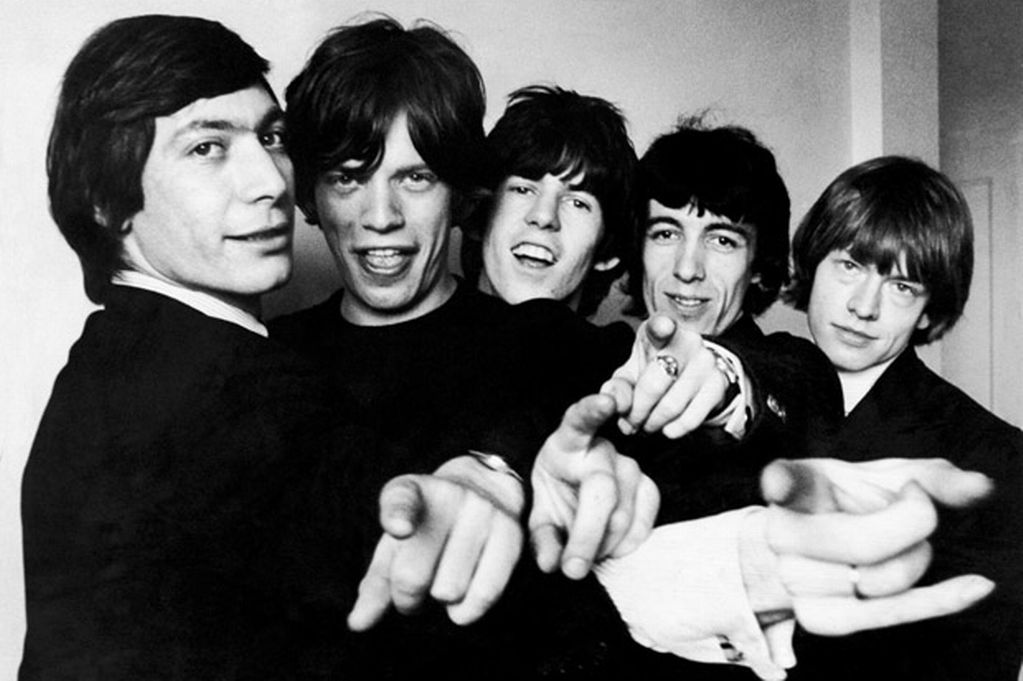
Before we choose the ‘good’ awards, we should mention that over the past thirty #1s, one of the greatest ‘rivalries’ in pop music has really taken off. After the last recap, everybody was trailing in The Beatles’ wake. But… The Stones have arrived. Both bands have scored four chart-toppers in this segment. In a recent post I claimed that, for the moment, The Stones were ahead of The Fabs, just. Those of you who took the bait disagreed… But I’m sticking with it. Yes, ‘I Feel Fine’, ‘Ticket to Ride’, ‘Help!’ and ‘Day Tripper’ / ‘We Can Work It Out’ are superb records. No debate. Imperious. But look at The Stones’ four: ‘Little Red Rooster’ (authentic, full-on Blues), ‘The Last Time’ (the weakest, for sure, but still a great, swaggering rock song), ‘Satisfaction’ and then ‘Get Off Of My Cloud’ (those riffs, along with a tonne of angst and venom, and general dissatisfaction with the world around them – It’s punk, metal, emo… It’s the future!) On that note, I’m going to give the ‘WTAF’ Award, the award for our more ‘out there’ #1s, to ‘Little Red Rooster’, because that’s a slice of pure Chicago blues that had no business getting to the top of the British singles charts – though I’m so glad it did.
Which just leaves the crème de la crème. As always, I’ve got it down to four. ‘You’ve Lost That Lovin’ Feelin’’, ‘Help!’, ‘Satisfaction’, and our most recent #1: ‘These Boots Are Made for Walkin’’. And I’m going to instantly eliminate The Beatles and Nancy Sinatra for being great, but just not great enough. So… Perhaps the toughest decision I’ve ever had to make. The Righteous Brothers, or The Rolling Stones. I’m listening to both songs one more time as I mull…. God, why don’t I just call a tie…? No, that sets a dangerous precedent for me (in this completely unnecessary and self-imposed situation)… Ga! I love rock music, at heart. Rock ‘n’ roll always wins. As great as ‘…Lovin’ Feelin’’ is, it ain’t rock. ‘Satisfaction’ takes it.
The Very Worst Chart-Toppers: 1. ‘Cara Mia’, by David Whitfield with Mantovani & His Orchestra. 2. ‘The Man From Laramie’, by Jimmy Young. 3. ‘Roulette’, by Russ Conway. 4. ‘Wooden Heart’, by Elvis Presley. 5. ‘Lovesick Blues’, by Frank Ifield. 6. ‘Diane’, by The Bachelors. 7. ‘The Minute You’re Gone’, by Cliff Richard.
Phew. We’ll pause for a bit, before hitting the next thirty. Thirty discs that’ll take us through the ‘Summer of Love’ and beyond. Next up, I’m going to spend a week looking at some of the people behind the #1s… Coming soon, to a blog feed near you…








 The UK Number Ones Blog