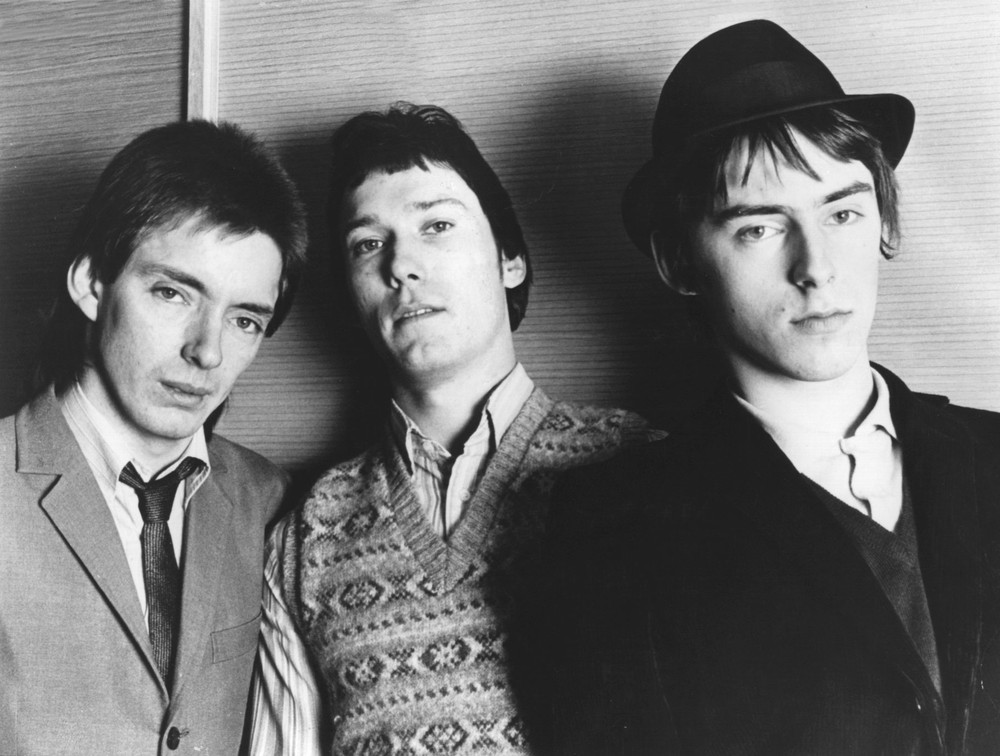
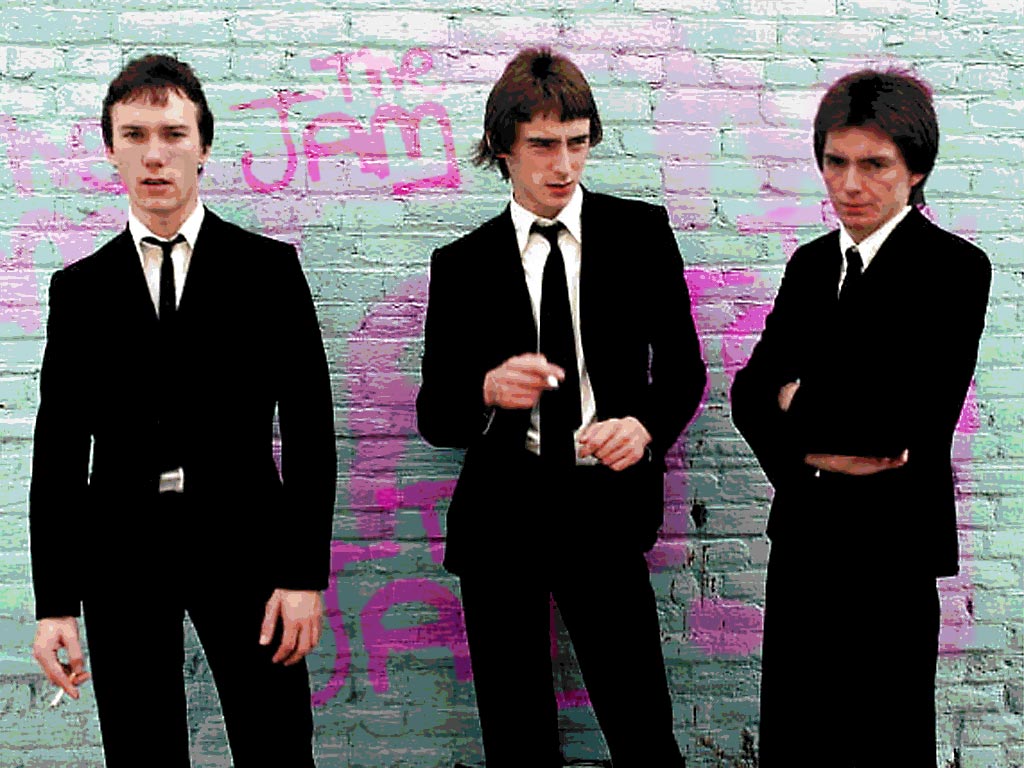
511. ‘Beat Surrender’, by The Jam

On with the next thirty. And to start, The Jam return for one final chart-topper.
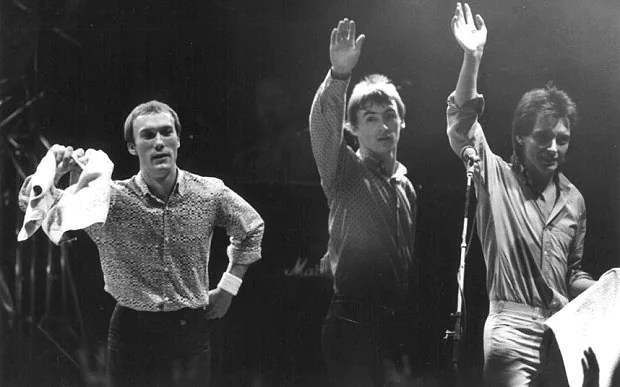
Beat Surrender, by The Jam (their 4th and final #1)

2 weeks, 28th November – 12th December 1982

In my last post on them – ‘Town Called Malice’ / ‘Precious’ – Paul Weller and his bandmates had made some sonic advancements. Away from punk; into soul, funk and Motown. ‘Beat Surrender’ is more of the same. It’s intro, for a start, is the love-child of ‘I Will Survive’s piano flutter, and ‘Dancing Queen’s glissando.

I’m not even sure there’s a guitar involved here. Certainly not a lead guitar. There’s a piano, and lots of horns. It’s slick and glossy. But that’s not to suggest that The Jam have lost their edge. It’s still a great pop song, with a great hook: Come on boy, Come on girl, Succumb to the beat surrender…

And like most Jam songs, it’s lyrically dense. The title is a play on ‘Sweet Surrender’ and the idea of beating a retreat, which makes sense when you realise that this was The Jam’s final release, their farewell single. Weller intended it as a call to their fans, to young, up and coming bands: Seize the young determination, Show the fakers you ain’t foolin’…

The band also drop some pearls of wisdom from their time as one of the country’s biggest acts: Bullshit is bullshit, It just goes by different names… A line that I think – unless I’m forgetting something obvious – delivers our first example of swearing in a #1 single. Lonnie Donegan, The Stones, Billy Connolly have all flirted with it, but didn’t go all the way. It took five hundred and eleven chart-toppers, though, which is impressive. Safe to say this won’t be the last…

I do admire the way that The Jam didn’t stand still, never seemed to recycle a sound or a style, in their five years of success. Here we have a great moment, when the soulful riffs of the first two verses drops down to a galloping disco bassline. It’s a risk, for a rock act, you could alienate your fans by daring to try new things (gasp!). But it didn’t seem to hurt The Jam. ‘Beat Surrender’ entered at #1 – making them the second act to do this three times (after Slade). Of course, announcing that this record was to be their final ever release probably didn’t hurt its chances, and ensured a fair bit of demand…

 Though I’d say that it hasn’t remained in the collective memory as much as their three previous number ones. It’s a good one – none of their chart-toppers are anything less than a seven-out-of-ten – but perhaps its success wasn’t just for musical reasons. Anyway, after this Paul Weller formed The Style Council, with whom he continued his chart-success (though they never made it to #1) and then found himself cast as the cool uncle of British rock in the 1990s (‘The Modfather’), enjoying a hugely popular solo career that shows no signs of ending: his latest release topped the album charts just last year. Bruce Foxton, the bassist, formed ‘From the Jam’ in the mid-2000s, and Paul Weller has guested on some of his tracks, though he seems pretty set against a full-on reformation.

Advertisements

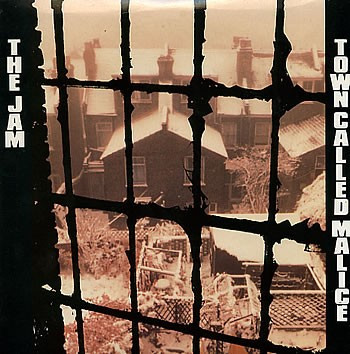
495. ‘Town Called Malice’ / ‘Precious’, by The Jam

Straight in at number one with the lead-single from their final album… The Jam do Motown.

Town Called Malice / Precious, by The Jam (their 3rd of four #1s)

3 weeks, 7th – 28th February 1982

We’ve been treated to some iconic intros in recent weeks: ‘Under Pressure’, ‘Don’t You Want Me’, ‘The Model’… ‘Town Called Malice’ is right up there too. It’s not really a riff, more an explosion of exuberance, a technicoloured smile with a jaunty bassline and a cheesy organ. I know it’s The Jam, because it’s a well-played classic, but it sounds a world away from their earlier #1s.

This being Paul Weller and The Jam, however, things aren’t as rosy as they sound. The title perhaps gives it away, and a quick google of the lyrics (sorry Paul, but they are quite hard to make out) reveals a deeply downtrodden song. Malice is a town where people dream of rosy days and the quiet life, where decisions have to be made: buy beer or clothes for the kids. Some of it is darn near poetic: Rows and rows of disused milk floats stand dying in the dairy yard, And a hundred lonely housewives clutch empty milk bottles to their hearts…

When he starts to sing about Sunday’s roast beef, I get a huge sense that this is an early-eighties take on Ray Davies’ suburban odes from a generation earlier. Weller wrote it based on his childhood in Woking, a commuter town outside London. Funnily enough, this middle-eight is the most modern-sounding bit of the song, as we go from The Supremes to The Specials’ ska tones. And at its core – which wasn’t always the case with The Kinks – I think ‘Town Called Malice’ is optimistic. It’s up to us to change, A town called Malice… Life may be shit, but you still have to live it as best you can.

Despite being as biting as ever, The Jam do sound happier than they did in 1980. Success puts distance between you and any hardships you’ve endured, and maybe that left them feeling free to experiment with different sounds. It’s certainly a sneak-preview of the soulful sounds that Weller would push to the forefront with The Style Council. And in my mind this song will forever be associated with the scene in ‘Billy Elliot’, where he dances across the rooftops of County Durham (though, much like the contrast between ‘Malice’s melody and lyrics, Billy was dancing in frustration, rather than joy…)

For the second post in a row, we have a double-‘A’ to write about. I’m not sure how much airplay ‘Precious’ got, but the history books have it at #1 and so we must give it a spin. If ‘Town Called Malice’ was a departure for The Jam, then ‘Precious’ is a giant leap. I’d describe it as ‘disco-funk’. There are chucka-chucka guitars, there are horns… I’m half-waiting for Weller to shout ‘Shaft!’ It’s another moment where you can see that The Jam were nearing the end of their shelf-life.

Not that it’s bad. Or that bands shouldn’t try new things. But when you’ve gone from punk to funk in barely five years, it’s clear that the confines of a three-piece, guitar, bass ‘n’ drums band are not enough to satisfy the members’ creativity. Like ‘Malice’, the lyrics are very hard to make out, but unlike ‘Malice’, I feel no compulsion to look them up. This record is a groove, a mood. There’s a short single edit and a longer album version, towards the end of which things go very acid, with a free-styling saxophone.

It all adds to the fact that this has been a brilliantly eclectic start to 1982, with all four number ones (six songs, if you count the two double-‘A’s) bringing something very different to the top of the charts. And for all this talk of the end nearing for The Jam, they have one more #1 to come: their very last release. They’ll be going out on top, then, one of the decade’s most distinct and successful bands. Until then…

465. ‘Start!’, by The Jam

The Jam make a quick return to top spot, with a very famous bass-line. One that you may have heard before…

Start!, by The Jam (their 2nd of four #1s)

1 week, 31st August – 7th September 1980

‘Start!’ is notoriously indebted to The Beatles’ ‘Taxman’ – there’s no avoiding the fact that the bass riff is pretty much a note for note copy – but while the former has a hash-haze to it, the latter is a squeaky-tight, short and sharp blast of punk-funk. That’s right. I’m inventing new genres as I go along…

It’s a song about a one-night stand… It’s not important for me to know your name… Or some kind of fleeting encounter… If we communicate for two minutes only it will be e-nough… At first glance it’s less of a war cry, compared to the band’s first chart-topper, but it’s actually just as cynical. Knowing that someone in this life, Loves with a passion called hate…

I’m really not sure if Paul Weller is grateful for their two-minute connection, or if he’s glad about never, ever seeing this person again. What I am sure about is that this is a great pop song: minimalist, with razor-sharp guitars and cool drum-fills. It’s as natty as The Jam’s mod-suits and shades combo in the video.

Speaking of the video, the single release of ‘Start!’ shaves fifteen seconds off the album version, trimming the gritty solo and losing the horns that play out over the closing refrain. For me the horns add to the funk here, placing the record firmly in the early-eighties, so if you were choosing between the versions I’d go album every time.

Without wanting to disrespect what I think is a great record, I think a sharp-blasting, one-week #1 like this needs only a sharp blast of a blog post on it. ‘Start!’ probably gets lost among The Jam’s better-known hits, ‘Going Underground’ before it and ‘That’s Entertainment’ after (which charted at #21 by selling only imported copies – a sign of the band’s popularity in 1980). It was also the only one of their four chart-toppers not to enter at the top. But it’s good one, and if this post has just turned you onto the song’s quality, then that will be a start!

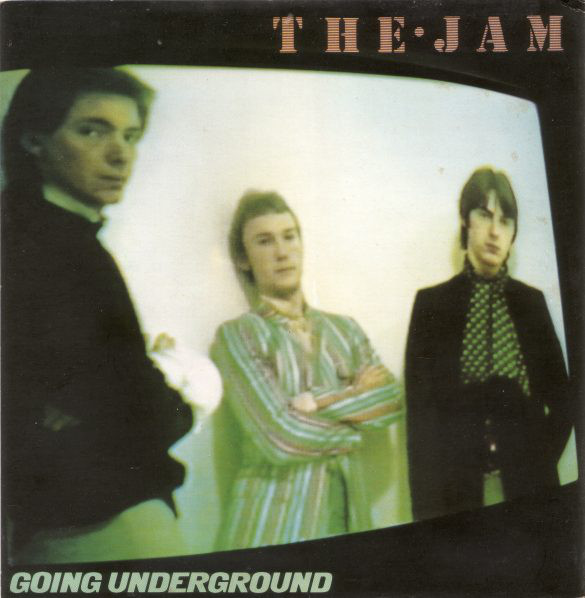
454. ‘Going Underground’ / ‘The Dreams of Children’, by The Jam

Well, isn’t this quite the shot of adrenaline! The line between new-wave and punk becomes very blurred as The Jam score their first number one single…

Going Underground / The Dreams of Children, by The Jam (their 1st of four #1s) 

3 weeks, 16th March – 6th April 1980

The guitars are tight, and fast. Lead-singer Paul Weller spits the opening lines out with venom: Some people might say my life is in a rut! But I’m quite happy with what I’ve got! It’s a record that grabs you by the lapels of your smart, modish suit and doesn’t let you go. These angry young men are not happy with modern life, with their leaders’ lies and atomic crimes, and are off underground.

The lyrics are not always easy to make out – delivered as if Weller just has to get them off his chest before their three minutes are up – but one line stands out: The public wants what the public gets, But I don’t get what this society wants… I’m going underground…! And then there’s the ‘braying sheep’ on his TV screen. They’re words that ring just as true today – you could probably apply them to any point since WWII, to be fair – but after an economically difficult seventies, and less than a year into Thatcher’s government, dissent is growing…

‘Going Underground’ really does sound very raw, and very punk. It could be a hit from 1977, and is much more primitive when compared to new-wave’s two other big guitar bands, Blondie and The Police. This is perhaps The Jam’s last moment as an ‘underground’, if you will, band. This hits number one, and their sound expands and progresses. Only in the break, before the final chorus, does it sound a little more of its time, drippy and echoey, but only for a second before the guitars chop right back in.

‘Going Underground’ was actually only listed as the double-‘A’ due to a printing error. ‘The Dreams of Children’ was intended to be the lead, and it does sound much more of the moment. It starts with a cool false-beginning, guitars and vocals played in reverse, and has a great, chiming riff. But, I’d say it lacks the urgency of the flip-side. I hope that whoever buggered things up at the printing plant wasn’t punished too harshly…

If you were hoping for a more positive take on modern life here… well, nope. Paul Weller is having sweet dreams – the innocent dreams of a child – but wakes sweating and paranoid to this modern nightmare… I was alone and no-one was there… Before long, the song has turned into a sort of horror movie theme, voiced by a sinister dream-catcher.

Something’s gonna crack on your dreams tonight, You will crack on your dreams tonight… he sings, as the twiddly backwards effects return and things get genuinely creepy. Sorry kids, your dreams are just that: dreams. Real-life will grind you down. I mean, it’s not your run-of-the-mill #1 single material, but everything can’t be all sweetness and light. Neither of these songs sounds like a chart-topper, but it’s great that they got there.

And they got there in some style. This was the first record to enter at #1 since Slade did it with ‘Merry Xmas Everybody’ over six years ago. Elvis, Cliff, The Beatles and, er, Gary Glitter were the only other acts to have achieved this feat before 1980. It pretty much announces The Jam as one of, if not the, biggest band in the country (or at least the band with the most devoted fanbase, who ran out to buy the song as soon as it was released…)

However, can I just add before I go that it is a shame that The Jam’s previous single – their first Top 10 hit – wasn’t the big #1 debut. As great as this record I’ve reviewed today is, ‘The Eton Rifles’ stands as a brilliant commentary on the British class system: angry, and funny, and another one that still rings true today. We just don’t learn, do we?