917. ‘More Than a Woman’, by Aaliyah

We start 2002 with two posthumous number ones, almost like how at the Oscars they do an ‘In Memorandum’ segment. Which pop stars did we lose in the past year?

More Than a Woman, by Aaliyah (her 1st and only #1)

1 week, from 13th – 20th January 2002

Well, we had lost prodigal R&B star Aaliyah in a plane crash back in August, aged just twenty-two. ‘More Than a Woman’ was her first single to be released in the UK since her death, and is a very modern, very of the moment slice of American pop.

It’s cut from the same cloth as earlier Destiny’s Child and Jennifer Lopez #1s, with an almost classical riff playing over a staccato beat. One reviewer at the time described it as ‘Baroque liquid funk’, which is a great description, if a little over the top. It does though, have a bit more beef to it than DC and J-Lo. I especially like the dirty, squelchy synths, which elevate this above some of the other US recent R&B tracks I’ve struggled to enjoy, and which take centre-stage in an extended, funky fade-out.

I was going to accuse this record of not having a real hook, but the more I play it the more it grows on me. And I’ll admit that the strange, slightly off-kilter chorus has stayed in my brain ever since it was in the charts. It’s oddly catchy. In the very ‘of its time’ video, Aaliyah and her backing dancers work it in what looks to be the inside of a combustion engine, and the churning pistons fit the thick and deliberate beat nicely.

Although this probably only got to number one as a tribute, it isn’t hard to imagine ‘More Than a Woman’ spending a January week at #1 even with Aaliyah alive and well. She had been a regular chart presence since her debut in 1994, aged just fifteen. (She was R Kelly’s protégé, something that’s come under more scrutiny since his offences came to light). Her biggest song, ‘Try Again’, had been her only US #1, and only previous British Top 10 hit, in 2000.

She was also a long-time collaborator with Timbaland, meaning that this is the first chart-topping appearance for one of the 2000’s defining producers. After ‘More Than a Woman’, for sadly obvious reasons, the hits dried up for Aaliyah. Her legacy seems to be one of what might have been, for an experimental and talented artist who had already been dubbed the ‘Princess of R&B’.

In part two of our posthumous double-header, she was replaced at the top by another recently deceased artist, whose legacy had long since been established…

868. ‘7 Days’, by Craig David

Of all the year 2000’s many, many number ones (this being twenty-four out of forty-two), is Craig David’s ‘7 Days’ its most famous…?

7 Days, by Craig David (his 2nd and final #1)

1 week, from 30thJuly – 6th August 2000

There aren’t many Brits of my vintage who can’t still recite Craig’s week of wooing: I met this girl on Monday, Took her for a drink on Tuesday, We were making love by Wednesday, and on Thursday, and Friday, and Saturday… (sounds exhausting, to be honest…) We chilled on Sunday…

Like his first chart-topper, ‘Fill Me In’, this is light and airy commercial garage. The Spanish guitar riff and insistent beat make it more instantly appealing than its predecessor, and the chorus is as memorable as they come. It’s calmer, more confident, a fact also reflected in the lyrics. No longer is Craig David creeping around behind his girlfriend’s parents’ backs. Oh no, here he’s picking up a twenty-four year old ‘cinnamon queen’ in an underpass… She asks him for the time, and the rest is history.

The call and response bit, in which his friends quiz him on his conquest, is fun too, Was it for real…? Damn sure… It’s like ‘Summer Nights’ for the new millennium. Elsewhere, though, it does meander a little. Again, this is garage’s problem, in that it is so breezy in places that sometimes it fails to land. But, I’ll stick with my initial claim, in terms of the record’s sound being peak-2000, and the chorus being an era-defining earworm.

It also feels very old-fashioned too, twenty-five years down the line, when everyone now meets their romantic partners on the apps. Imagine approaching someone in a subway (he’s using the word in the British sense, rather than the American) and asking them out on a date. The 2025 version of this song wouldn’t get past day one, and would probably end in a restraining order.

It would be easy to argue that Craig David’s career peaked early, with his first two solo singles giving him his only two number ones. But he’s had a near twenty-year stretch of Top 40 hits, and thirteen further Top 10s. I’ll give a shout out to ‘Walking Away’ and ‘Don’t Love You No More (I’m Sorry)’ as two favourites of mine. However, he is probably just as well known in Britain for being played in caricature by Leigh Francis on ‘Bo’ Selecta!’, a massively popular comedy. David has both claimed to have been fine with his portrayal in the show; and has described it as “racist blackface”, and “hurtful beyond belief”. He probably does have a point, though, in claiming that it affected his career.

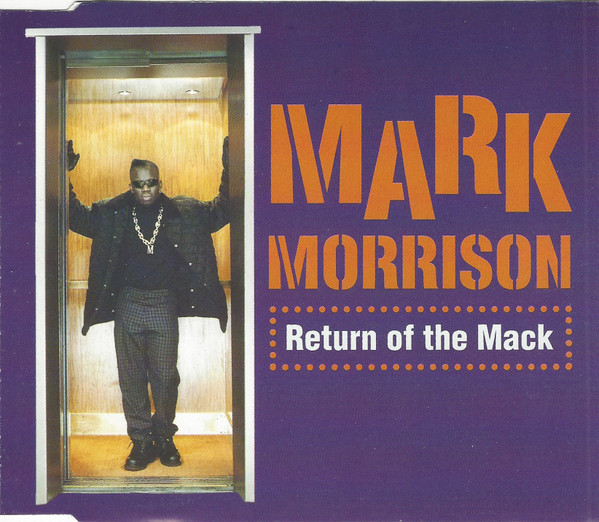
737. ‘Return of the Mack’, by Mark Morrison

I did say, a post or two ago, that we were hitting a golden vein of chart-toppers. In fact, Take That’s feeble swansong aside, 1996 has already been a vast improvement on the year before, and we’re only in April…

Return of the Mack, by Mark Morrison (his 1st and only #1)

2 weeks, from 14th – 28th April 1996

‘Return of the Mack’ is completely different from our last number one – the Prodigy’s searing ‘Firestarter’ – but it’s every bit as catchy. It’s slick, very mid-nineties R&B; but I don’t mean slick in a boring way. More in a supremely confident, honeyed, knows exactly what it’s doing sort of way.

You could easily believe that this was being sung by a US soul superstar, a Boyz II Men-Bobby Brown hybrid of some sort, apart from one detail: it’s actually quite fun, and doesn’t take itself too seriously. A lot of US R&B at this time was spotlessly honed to the point of being completely transparent and unmemorable. We had a taster of it when Michael Jackson’s ‘You Are Not Alone’ was at #1, but thankfully this sound never dominated the British charts like it did the Billboard.

I assume that the ‘Mack’ in the chorus is supposed to be Mark Morrison himself, and this self-referencing adds another layer of braggadocio to what is already a swaggering tune. He’s back, feeling better than ever, and ready to lord it over his ex… So I’m back up in the game, Running things to keep my swing, Letting all the people know, That I’m back to run the show… It’s not harsh to suggest that Morrison has a unique singing voice – high-pitched and nasal – and the way he enunciates certain words, like ‘swing’, adds another hook to the record.

We’re getting deep into the pop stars of my childhood now, and two things I remember about Mark Morrison were his very cool slanted mohawk hairdo, and the fact that ‘Return of the Mack’ was about his release from jail. Except, my mind is playing tricks on me… Morrison did do jailtime, for the always inadvisable crime of trying to take a gun onto an aeroplane, but not until a year after ‘Return of the Mack’ made number one.

Although he was released from his three month stretch just as the song started to climb the US charts, eventually settling at an impressive #2, so I wasn’t completely wrong. The fact that this up-tempo R&B did so well in the land of down-tempo R&B suggests that even Americans might have been growing weary of all the syrupy ballads. It was the first of an impressive five Top 10 UK hits from the one album (though, in the States, Morrison remains a one-hit wonder).

Gun-toting on aircraft wasn’t Morrison’s only brush with the law, and he’s also been in trouble for affray, assault, driving without a licence, suspected kidnapping, and for paying a lookalike to do his community service. An eventful life, then, though he has remained active in the music industry throughout. More recently, he seems to have been rediscovered by modern rap and R&B stars, being sampled by Chris Brown and working with Post Malone.

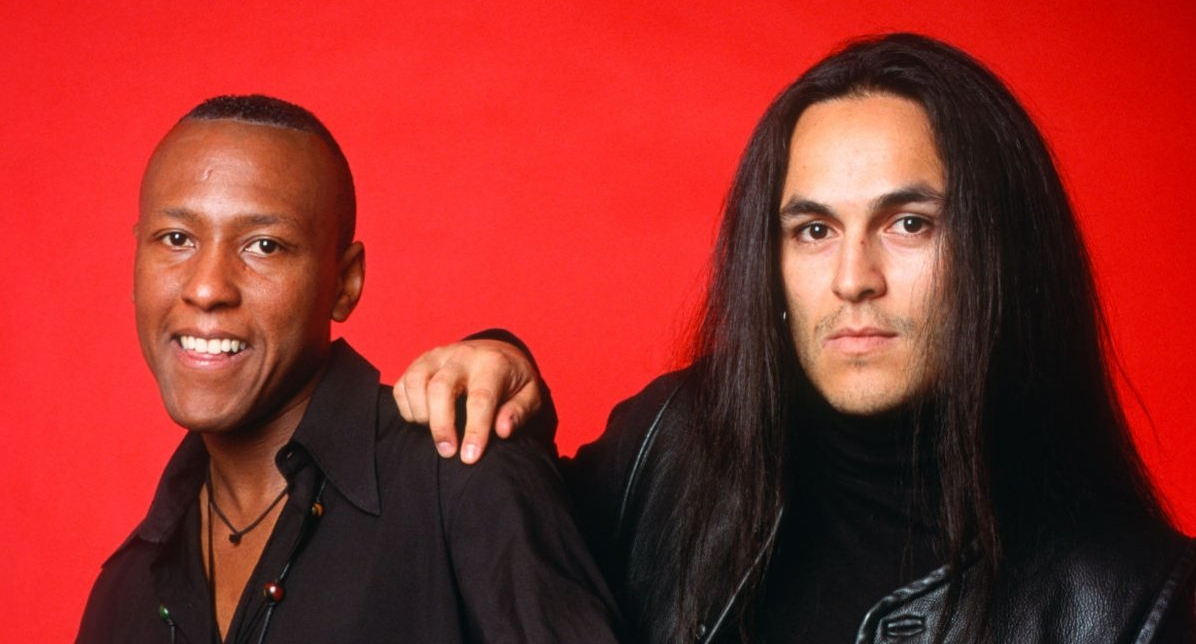
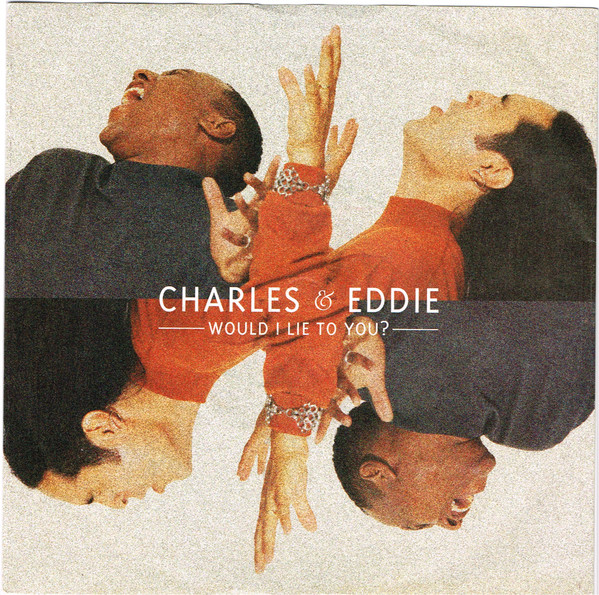
683. ‘Would I Lie to You?’, by Charles & Eddie

Well, would you look at that. We’ve literally just had the 1990’s biggest R&B/pop/soul hybrid act at number one – Boyz II Men with ‘End of the Road’ – but it turns out that they were but a warm-up act for… checks notes… the decade’s greatest soul single.

Would I Lie to You?, by Charles & Eddie (their 1st and only #1)

2 weeks, from 15th – 29th November 1992

Usually I see a great song coming, and semi-prepare what I’m going to write in advance. You don’t want to do the classics wrong, do you? But despite ‘Would I Lie to You?’ being on the horizon for a while now, and despite me being pretty familiar with it, I was caught off guard by how good it actually is.

The main reason it’s an improvement on ‘End of the Road’, is that it doesn’t go down the default drippy approach of so much ‘90s soul and R&B. The sort of slushy sentiment that Boyz II Men excelled at. No, Charles & Eddie keep things sassy and upbeat in the verses: Everbody’s got their history, On every page a mystery…  Before switching to a heartstring-tugging bridge: I’m tellin’ you baby, You will never find another girl, In this heart of mine…

And OK, the lyrics in the chorus are stock-standard love song: Don’t you know it’s true, Girl there’s no-one else but you… but they’re wrapped up in such a timeless melody that you don’t really notice. Plus, whether or not Charles and Eddie are indeed telling the truth is never established. Part of this song’s attraction, to a cynical mind like mine anyway, is that behind their honeyed voices and gorgeous harmonies they could be full of shit…

But back to that word ‘timeless’. That’s the other, even greater, attraction that this record has. It borrows the best of sixties and seventies soul, of Motown and the Temptations (and with the gospel backing, the organ and the near calypso-sounding drum break it is pretty much a soul music ‘How To…’ guide), but it still sounds perfectly placed in the early ‘90s. It’s authentic enough to stand up on its own, and to not sound like a well-intentioned pastiche. In short, it’s a brilliant record.

Charles Pettigrew and Eddie Chacon met on the New York subway in 1990, when one spotted the other carrying a Marvin Gaye LP. Which for an origin story sounds as great as it does unlikely. Members of twelve-year-old Chacon’s first band, interestingly, went on to join Metallica and Faith No More. He and Charles are, like Tasmin Archer a couple of posts previously, marked down as one-hit wonders, despite producing two studio albums, and three further Top 40 hits.

They split in 1999, with Chacon continuing to work intermittently, and he has released two well-received solo albums in the 2020s. Sadly, Pettigrew died of cancer two years after their split, aged just thirty-seven. This post then can hopefully serve as a tribute, to him, and to the greatest soul chart-topper of the decade.

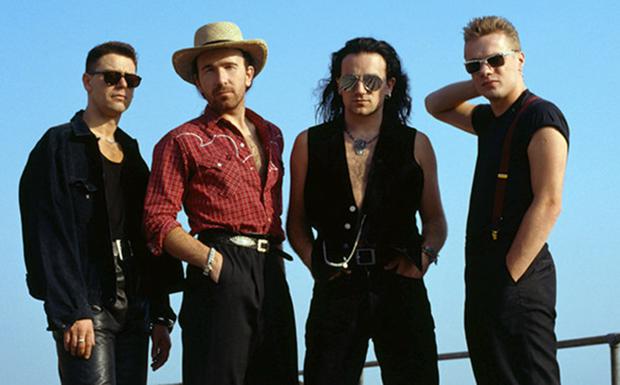
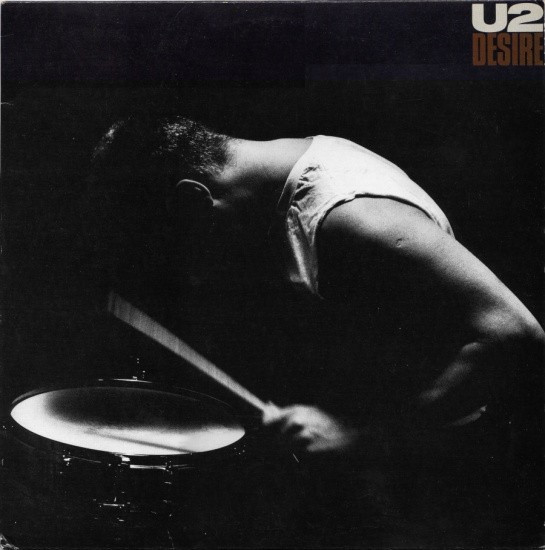
616. ‘Desire’, by U2

Go on, who had this down as the song that finally gave U2 their first #1…?

Desire, by U2 (their 1st of seven #1s)

1 week, from 2nd – 9th October 1988

For as good as this record is, and it’s a great little rocker, it’s not the first U2 song that springs to mind for most people. There haven’t been many bluesy chart-toppers, and the ones that have appeared came in the mid-sixties for the likes of the Stones and the Animals. But this one bangs straight in with a Bo Diddley beat, and a tale of an irresistible woman – She’s the candle, In my room… Or is it about drugs – I’m the needle, Needle and spoon…? Either way, it’s about something you just can’t say no to.

For a band not afraid of grandiosity this is a simple song; and all the better for it. They were influenced in recording it by The Stooges, and released what had been the demo version after deciding that the finished take was too polished. It’s short, sharp, and possibly one of Bono’s best vocal performances. Say what you want about Bono (and I just might, over the course of U2’s seven #1s) he’s a great rock star, when he remembers that he is a rock star, and not Jesus. Here he stutters, he growls and he soars, and sounds genuinely like a man crazed with desire.

Then there’s the harmonica which, after ‘He Ain’t Heavy…’ makes it two #1s in a row that have been heavy on the tin sandwich. And whisper it, but is 1988 turning out to be a good year for rock music…? I wasn’t expecting it in the era of SAW and house music, but chart-toppers for Fairground Attraction and Billy Bragg, Beatles covers, glam rock samples, a re-release for the Hollies, now this… It feels like it’s come out of nowhere, but it’s certainly welcome!

‘Desire’ was the lead single from ‘Rattle & Hum’, the follow-up to U2’s worldwide breakthrough album ‘The Joshua Tree’. They were probably the biggest rock band on the planet in 1988, and so whatever they released first from their new album may well have rocketed to the top. I’m glad it was this, though. A lot of U2’s music suffers, in my eyes, from the same problem ‘He Ain’t Heavy…’ suffered: grandiosity, and not a little pomposity. Not this one (and to be fair, not too many of their UK #1s – they usually like to announce a new album with a rocking single).

And so, U2 are up and running as a chart-topping force. Off the top of my head, they’re the 4th most successful rock act in terms of #1s, behind only the Beatles, the Stones and Oasis. But sadly, after me making such a big deal of it, this is where 1988 stops rocking… A block-busting ballad looms over the horizon.

584. ‘I Knew You Were Waiting (For Me)’, by Aretha Franklin & George Michael

I spent much of my last new post hailing a brave new world of modern dance. As is often the way, the song that follows a ground-breaking #1 proves the more things change the more they stay the same… Or something… For we are still firmly in the mid-1980s here – ‘peak mid-eighties’, if you will – and when the mid-1980s are giving us songs as fun as this, why would we want to leave?

I Knew You Were Waiting (For Me), by Aretha Franklin (her 1st and only #1) & George Michael (his 3rd of seven solo #1s)

2 weeks, from 1st – 15th February 1987

I love the revving guitar in the intro, and the glossy period-piece drums. It’s a lot beefier, a lot more upbeat than either of George Michael’s two previous chart-toppers. There’s a swagger to it, a confidence. It’s very ‘American’, for want of a more sensible expression. On ‘Careless Whisper’ and ‘A Different Corner’, Michael was sad and introspective. Here he’s bubbling with confidence. And that’s probably because he’s duetting with an icon. The motherfunking Queen. Of. Soul.

It’s Aretha who kicks off the first verse. In fact, Aretha takes control of the second verse, too. Make no mistake: this is her song. George Michael may have been one of the hottest pop stars on the planet, but he’s very much the understudy here. He was apparently terrified when he got the call – who wouldn’t be? – but he keeps up nicely. Like all the best duets, the couple riff off one another well: I kept my faith… sings George… I know ya did… replies Aretha.

There’s a clear nod to a Motown classic in the chorus: When the river was deep, I didn’t falter… When the mountain was high, I still believed… Which is great. In the video, the pair perform in front of a screen showing other legendary duets – Ike and Tina, Sonny and Cher, Marvin Gaye and Tammi Terrell. And I also love the way Aretha starts letting loose in the second half of the song: belting, trilling and whooping, as if she knows this will (unjustly) be her one and only moment atop the British singles chart.

You could say that Franklin’s hit-scoring days were over by 1987, though it wouldn’t strictly be true – she had visited the Top 10 the year before in a duet with Eurythmics on ‘Sisters Are Doin’ It for Themselves’. But if we’re being honest, she never really scored many hits in the UK. She’d had just two Top 10 hits in the sixties – ‘Respect’ and ‘I Say a Little Prayer for You’ – and none in the seventies. In the US she was much more successful, but this record still brought about her first chart-topper since she’d spelled out those seven famous letters.

Meanwhile, this was quite the statement for George Michael in his first release following his split from Andrew Ridgeley. Ahead of him lay ‘Faith’ and solo superstardom (though none of those late-eighties hits will feature in this countdown), and here he was, duetting with one of his heroes. I admit I was surprised to see that ‘I Knew You Were Waiting (For Me)’ is GM’s 6th most listened to song on Spotify, as I don’t think it’s one you hear too often these days. It feels as if it’s been overshadowed by his other big duet from a few years later, with another famous diva: Elton John. For my money, though, this one’s better, and ripe for re-discovery…

Advertisements

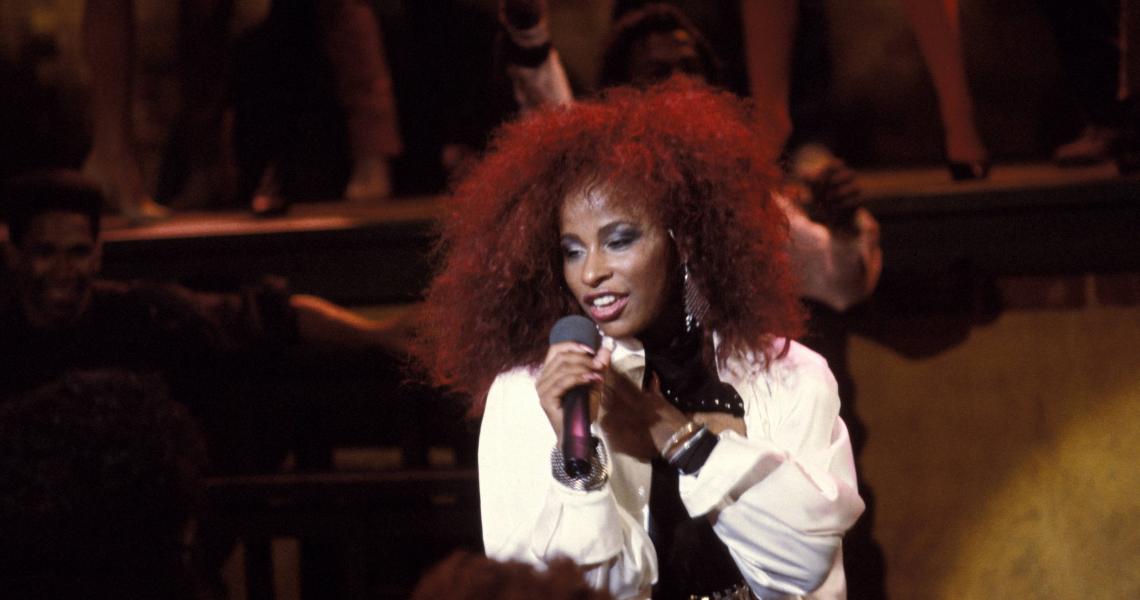
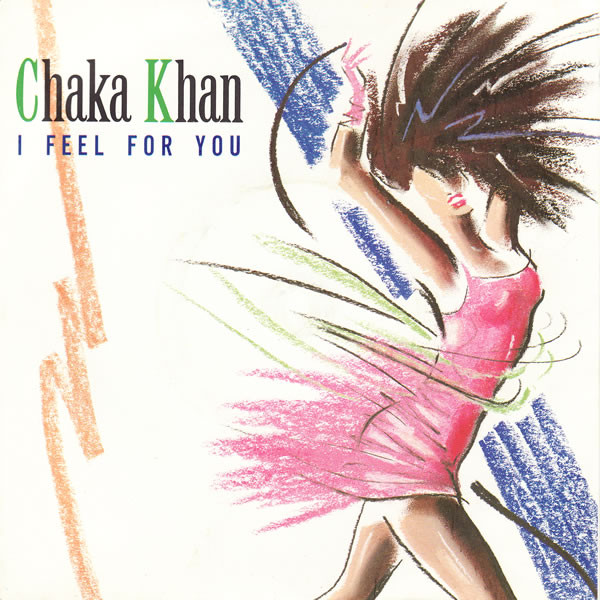
540. ‘I Feel for You’, by Chaka Khan

Chakakakakakaka-chakakhan… 1984 truly was the year of the in-your-face intro. ‘The Reflex’, ‘Wake Me Up Before You Go-Go’, now this. The most in your face of the lot?

I Feel for You, by Chaka Khan (her 1st and only #1)

3 weeks, from 4th – 25th November 1984

It probably stands out so much because of the rapping. Only the second example of rap at the top of the charts and, with all due respect to New Edition, this is the real stuff. The Lemme rock you Chaka Khan… lines are delivered at break-neck speed by one of hip-hop’s founding fathers, Melle Mel of Grandmaster Flash. It feels incredibly modern, a female singer being introduced at the start of a song, decades before Beyonce and Jay-Z, or Rihanna and Drake.

I did wonder if the rap might have been supplied by the writer of this song, one Prince Rogers Nelson. Prince is someone with a giant discrepancy between his fame and his UK chart-toppers (one, fairly lame, #1 a decade from now). But here at least is one of his songs, transformed from the slinky disco-soul original into a clattering beast of a record.

It seems that every song which topped the charts in 1984 was either a ballad or a banger, and ‘I Feel for You’ is very much the latter. Like Frankie and Duran Duran before, this record grinds and pounds, chops and changes, with that mid-eighties reimagining of Phil Spector’s Wall of Sound that’s become the vibe of the year. But while much of ‘84 has been Brit-dominated, this is a very American sounding disc, with its snatches of harmonica and horns, and its new jack swing energy.

Said harmonica was actually played by the last chart-topper but one, Stevie Wonder, while the song also features samples from his 1963 hit ‘Fingertips’, though you’d be hard-pressed to pick them out. It’s a bit of an all-star ensemble then: Chaka Khan, Melle Mel and Stevie Wonder, on a song by Prince. And it delivers: this is a great dance song, with a brilliantly funky bassline, a song that sounds like nothing we’ve heard at #1 before…

You can tell that this was written by Prince. Few people could throw out a line like I wouldn’t lie to you baby, I’m physically attracted to you… and make it work. Khan, in a brilliant move, delivers the lines like Prince, especially in the chorus: I fee-eel for you-oo… The one thing that I would change is that her voice is a little too far back in the mix.

The video ups the ‘80s Americana even further. Khan performs in an inner-city courtyard, with graffiti and wire fences, while a DJ scratches and spins, and break dancers throw shapes around her. It looks a bit funny now, but again must have looked very modern and very cool to suburban Britain in November 1984. In fact, ‘I Feel for You’ feels both new, in terms of its position in this countdown, and pretty dated, when you listen to it through your 2022 ears.

Maybe that’s why Khan’s only #1 isn’t as well remembered as her two other big hits: ‘I’m Every Woman’ and ‘Ain’t Nobody’, which would both chart twice, before ‘I Feel for You’ and then a few years later in remixes. It’s possibly the hip-hop element – of all the genres, rap ages the worst – but it’s a shame. It’s been great to discover this funky gem. Next up: a recap. Could ‘I Feel for You’ contend for the top prize…? Watch this space…

Advertisements

Random Runners-up: ‘Let’s Work Together’, by Canned Heat

My special feature for the week is a moment in the sun for the singles that didn’t quite make it to the top. These aren’t particularly long-running, or unlucky #2 singles. They may not even be particularly good… They all simply peaked in the runners-up position.

Last one, and we’re off to the seventies today…

‘Let’s Work Together’, by Canned Heat

#2 for 1 week, behind ‘Love Grows (Where My Rosemary Goes)‘, from 15th – 22nd Feb. 1970

A groovy last runner-up for the week. It’s got that slightly fried feel of some of the late-sixties/early-seventies #1s – ‘Spirit in the Sky’, ‘Bad Moon Rising’ and ‘I Hear You Knocking’ – as if the band has been keeping the party going that little bit too long.

The message is positive, though: Together we stand, Divided we fall… Every boy, every woman and a-man…! while the frazzled lead guitar chops and changes, and the rhythm section chugs along with a nasty edge. It really feels like this should be the backing to a tale of sleaze and sauciness – a ‘Honky Tonk Women’ Pt II, for example – not such a feel-good rallying cry.

Lead-singer on this record, Bob Hite, also gives the lyrics a threatening edge. He snarls, rather than encourages. Come on, come on, Let’s work together… he sings, though I’m not sure I would, with him. I like it though, this scuzzy, bluesy, boogie-woogying tune.

It had been written and recorded in 1962, as ‘Let’s Stick Together’ by Wilbert Harrison, before being rerecorded in 1969, by the same guy, as ‘Let’s Work Together’. His version was the hit in the US, while Canned Heat had the success in the UK. It was by far their biggest hit here. I knew it best through the Bryan Ferry version, which he turned back to ‘Let’s Stick Together’… Way to complicate things… Ferry took that to #3 in 1976 – a great, if slightly glossier, reimagining in which he pleads with his wife not to divorce him.

I’ll leave you with the version that made #2 in early 1970, behind ‘Love Grows…’ (what a great top 2!) Enjoy. I’ll do another blast of random runners-up sometime, it was fun. The regular countdown will resume over the weekend.

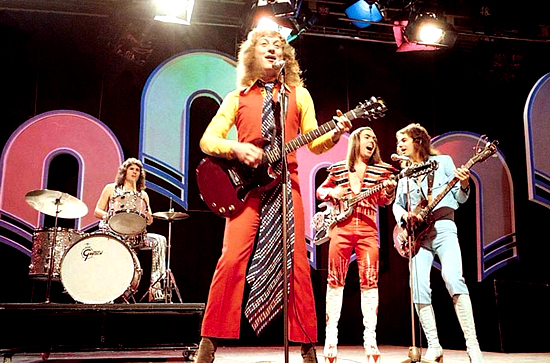
315. ‘Take Me Back ‘Ome’, by Slade

As great as our last chart-topper ‘Vincent’ was, you wouldn’t want to listen to it every day. Thank God, then, for Slade, getting us back into a hard-rocking, glam-boogying groove.

Slade 00

Take Me Back ‘Ome, by Slade (their 2nd of six #1s)

1 week, from 25th June – 2nd July 1972

Their first number one, ‘Coz I Luv You’, was great but, as I noted at the time, it didn’t sound like the Slade that would go on to grab the charts by the balls. Their second chart-topper, though, sounds 100% like Slade. We’ve got Noddy hollering, a nasty riff, and some

Imagine the scene: closing time at a pub in Wolverhampton. Last orders, in more ways than one. Noddy needs a girl for the night, so he gets a wooing. Came up to you one night, Noticed the look in your eyes, Saw you was on your own, And it was alright… He has a way with words to rival Mungo Jerry and their attempts on ‘Baby Jump’: You and your bottle of brandy, Both of you smell the same… Is she really as rough as she sounds, or is he just a brute? Either way, I love the complete and utter lack of glamour.

So take me back home, Take me back home, And we can find plenty to do, And that will be alright… It’s an unsophisticated song. The hook is simply Holder drawing out his ‘all-rights’ in a sneery way. But, it’s great. I kept thinking that the riff sounded familiar, and then I realised that it simply sounds like 50% of Oasis’s mid-nineties output. (They always get the Beatles comparisons, but to me they ripped Slade off just as much. Anyway, more on Oasis in twenty years or so.)

SLADE_TAKE+ME+BAK+OME+-+WIDE-686833

By the second verse, the handclaps have turned into terrifying horse-whips, increasing the glam-stop even further. And by the third verse, the girl’s boyfriend, who’s twice the size of Noddy, has turned up. I didn’t stay around to say goodnight… But it was alright… We fade out with Holder trying to punch through brick walls with his voice, then doing his best Marc Bolan stutter.

So Slade are a-go. Although I’d rank ‘Take Me Back ‘Ome’ more alongside the Stones’ bluesy numbers from the sixties, ‘Honky Tonk Women’, ‘Little Red Rooster’ and the like, than  the pure glam that was to come. Few #1s have been as low-down and dirty as this. But, I like that this came just two weeks after T. Rex’s final chart-topper, ‘Metal Guru’, and that it feels like a passing of the glam-rock flame. Slade were now poised to become the biggest band in the country, and we’ll hear a lot more from them in the next year and a half.